
Showing 325 items matching "coastal victoria"
-
 Orbost & District Historical Society
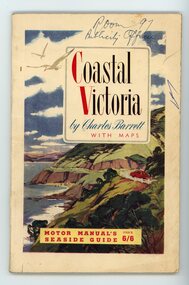
Booklet - Coastal Victoria, Charles Barrett, c.1950s
... Coastal Victoria...Coastal Victoria......Coastal Victoria...This Motor Manual for Coastal Victoria is c.1950s and represents a must-have for the growing population of motoring public in Australia after World War II....Coastal Victoria by Charles Barrett with maps MOTOR MANUAL'S SEASIDE GUIDE price 6/6...This Motor Manual for Coastal Victoria is c.1950s and represents a must-have for the growing population of motoring public in Australia after World War II. ...This Motor Manual for Coastal Victoria is c.1950s and represents a must-have for the growing population of motoring public in Australia after World War II.This booklet is significant because it relates to the growing population of Australians with cars following World War II, people who were keen to explore Victoria. A booklet of 106 pages. Front cover has a coloured illustration of a red car driving around hills with the ocean below on the left hand side. Back cover has a map of Victoria shown in a reddish colour with roads and locations marked on it. Coastal Victoria by Charles Barrett with maps MOTOR MANUAL'S SEASIDE GUIDE price 6/6motoring, tourism, coastal victoria -
 Koorie Heritage Trust
Booklet, Aboriginal Affairs Victoria, Conserving Aboriginal places in coastal Victoria, 2000
... Conserving Aboriginal places in coastal Victoria...Conserving Aboriginal places in coastal Victoria Booklet Aboriginal Affairs Victoria Melbourne VIC : Aboriginal Affairs Victoria ...Preservation of Aboriginal sites on the Victorian coast.40 p. : col. ill. ; 17 x 21 cm.Preservation of Aboriginal sites on the Victorian coast.aboriginal australians -- victoria -- antiquities. | cultural property -- protection -- victoria. | historic sites -- victoria -- conservation and preservation. | victoria -- antiquities. -
 Warrnambool and District Historical Society Inc.
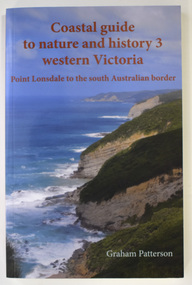
Book - Coastal Western Victoria, Graham Patterson, Coastal Guide to Nature and History 3 Western Victoria, 2022
... Coastal Western Victoria...Coastal Guide to Nature and History 3 Western Victoria...This book by Graham Patterson contains details on the coastline in Victoria from Point Lonsdale to the South Australian Border. Information is given on the landforms, geology, history, coastal management and animals and plants....The pages contain printed text, maps and illustrations, and black and white and colour photographs Coastal Guide to Nature and History 3 Western Victoria Book Coastal Western Victoria Graham Patterson Southern Impact ...Description of Western Victorian Coast from Point Lonsdale to South Australian BorderThis is a book of 188 pages. The cover has colour photographs and printing in red and white. The pages contain printed text, maps and illustrations, and black and white and colour photographsnon-fictionDescription of Western Victorian Coast from Point Lonsdale to South Australian Borderwestern victoria coastline, graham patterson, warrnambool, shipwreck coast -
 Victorian Aboriginal Corporation for Languages
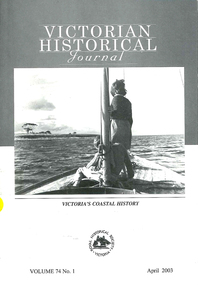
Periodical, Royal Historical Society of Victoria, Victorian historical journal : Victoria?s coastal history, 2003
... Victorian historical journal : Victoria?s coastal history...maps, b&w illustrations, b&w photographs Victorian historical journal : Victoria?s coastal history Periodical Royal Historical Society of Victoria ...maps, b&w illustrations, b&w photographs -
 Bellarine Historical Society Museum
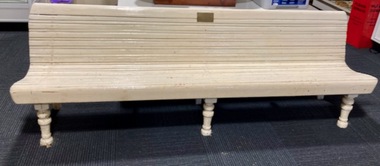
Furniture - Deck Seat SS Edina, Barclay and Curle Co, 1873
... ...Coastal Runs Victoria...Her active service included the North Sea trade, ‘Crimean War’, ‘American Civil War’, Victoria’s west coast run, New Zealand to Melbourne trade, Queensland coastal trade, and of course, the Port Phillip Bay runs between the years 1880 to 1938. ...Australian Shipping Coastal Runs Victoria Deck seat from SS Edina 1854 to 1938 Restored by Shiplovers Society of Victoria and presented by them to Melbourne Maritime Museum April 26 1980 Restored wooden slat seat from the deck of SS Edina probably originating from an overall in 1873, painted cream. ...SS Edina was a screw steamer build by Barclay and Curle, Glasgow Scotland in 1854. Her active service included the North Sea trade, ‘Crimean War’, ‘American Civil War’, Victoria’s west coast run, New Zealand to Melbourne trade, Queensland coastal trade, and of course, the Port Phillip Bay runs between the years 1880 to 1938. IN 1873, she underwent a significant renovation which included adding covered deck seating. This seat probably originates from that time. ‘SS’ being an abbreviation for ‘Screw Steamer’ signifying that she was propelled bya steam engine rotating a single propeller, or ‘screw’ as it was know at the time.The SS Edina was an iconic and affectionately regarded part of Port Phillips maritime history and culture. It is historically significant for being internationally famous as the worlds oldest working screw steamship between 1912 and 1938. Its career was varied and interesting and it is considered significant for its involvement in the Crimean War, US Civil War, NZ gold rushes, and locally for its career as a western district steamship and Bay steamer. When Edina was retired in 1938 it as the world's oldest working steamer. Had travelled more than 1 million km. Was finally broken up by George Seelf on the banks of the Maribyrnong in 1957. This seat is one of the few remnants of the steamer in an intact condition.Restored wooden slat seat from the deck of SS Edina probably originating from an overall in 1873, painted cream. Brass inscribed plaque attached to middle of top slat on backrest of seat.Deck seat from SS Edina 1854 to 1938 Restored by Shiplovers Society of Victoria and presented by them to Melbourne Maritime Museum April 26 1980australian shipping, coastal runs victoria -
 Flagstaff Hill Maritime Museum and Village
Functional object - Courier Bag, Late 19th to mid 20th centuries
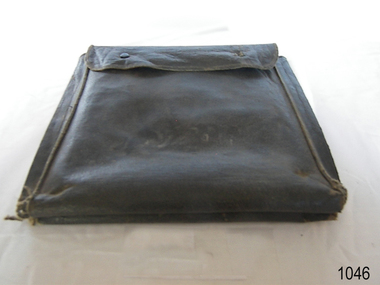
... Victoria...19th century...20th century...railway...rural business...rural trade...coastal...Those cash bags transported money between the railway stations of Grassdale and Merino in Victoria's western district in the late 19th and early-to-mid 20th centuries. Perhaps the bag was used by the coastal trading vessels that operated in southwest Victoria until around the 1940s....Warrnambool Shipwreck Coast Flagstaff Hill Flagstaff Hill Maritime Museum Flagstaff Hill Maritime Village bag pouch imitation leather artificial leather faux leather synthetic leather British Products Pty Ltd document pouch courier bag western district western Victoria 19th century 20th century railway rural business rural trade coastal trader Southwest Victoria "British Products Pty Ltd" Courier bag; black imitation leather pouch, square with wide seams and a flap with sttud closure at the top. ...The black imitation leather or leatherette bag or pouch could have been used by a courier to transfer documents, letters or business records between offices or from business to customer. Imitation leather was invented in the late 1800s and improved as time went on. The manufacture of synthetic leather began around the 1930s. The courier bag may have been used for a s similar purpose as the cash bags in our collection. Those cash bags transported money between the railway stations of Grassdale and Merino in Victoria's western district in the late 19th and early-to-mid 20th centuries. Perhaps the bag was used by the coastal trading vessels that operated in southwest Victoria until around the 1940s.This courier bag is an example of the connections made between people in the remote areas of Victoria. It could have been used by the railway system or the coastal trader vessels that shipped people, goods, documents and cash between the districts in western Victoria.Courier bag; black imitation leather pouch, square with wide seams and a flap with sttud closure at the top. Made by British Products Pty Ltd. "British Products Pty Ltd"warrnambool, shipwreck coast, flagstaff hill, flagstaff hill maritime museum, flagstaff hill maritime village, bag, pouch, imitation leather, artificial leather, faux leather, synthetic leather, british products pty ltd, document pouch, courier bag, western district, western victoria, 19th century, 20th century, railway, rural business, rural trade, coastal trader, southwest victoria -
 Flagstaff Hill Maritime Museum and Village
Photograph - Vessels, Steam and Sail, Vessels in the bay, 1890's
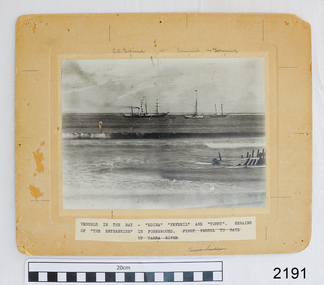
... ...coastal trader...cargo...victoria...Victoria. The Warrnambool Steam Packet Company purchased SS Edina in 1867; she was now commanded by Captain John Thompson and Chief Engineer John Davies. She survived several mishaps at sea, had a complete service and overhaul and several changes of commanders. In 1870 SS Edina was in Lady Bay, Warrnambool, when a gale sprung up and caused a collision with the iron screw steamer SS Dandenong. SS Edina’s figurehead was broken into pieces and it was not ever replaced. SS Edina was re-fitted in 1870 and was then used as a coastal...The wreck was also significant for its association with the local indigenous hero, Buckawall, who saved the lives of the five crew on board. flagstaff hill warrnambool shipwrecked-coast flagstaff-hill flagstaff-hill-maritime-museum maritime-museum shipwreck-coast flagstaff-hill-maritime-village enterprize port of warrnambool warrnambool harbour peveril tommy ss edina lighter dinah warrnambool steam packet company lady bay pleasure steamer edina trade travel screw ship coastal trader cargo victoria buckawall indigenous rescue indigenous hero Typed label under the photograph “VESSELS IN THE BAY – “EDINA” “PEREVIL” AND “TOMMY”. / REMAINS OF “THE ENTERPRISE” IN FOREGROUND. ...The photograph, taken in the 1890s, shows sailing ships and a wreck in Lady Bay, Warrnambool. Lady Bay was once a very busy port of trade in Warrnambool and was also called the Port of Warrnambool or Warrnambool Harbour. ENTERPRISE (1847-1850) NOTE: The “Enterprise” wrecked in 1850 in Warrnambool should not be confused with John Pascoe Faulkner’s ‘Enterprise’, which was wrecked in NSW in 1847. The 58-ton schooner Enterprise was built by David Hay in Waiheke, New Zealand in 1847 and registered by owners John Watson and Edward Byam in Melbourne, Australia. She was a single-deck sailing ship with two masts, used for carrying cargo such as local agricultural produce and general commodities between Melbourne and other colonial ports. On September 14th, 1850 the Enterprise had sailed from Melbourne under the control of the ship’s Master, James Gardiner Caught, and was moored in at the Tramway Jetty in Lady Bay, laden with wheat and potatoes. The vessel rode out a south-easterly gale but eventually dragged anchor and was beached, bow first and then broadside. Buckwall, a local indigenous man, braved the heavy surf and reached the stricken vessel with a rescue line, saving all five crew on board. There were no passengers on board. The Enterprise wreck was in an area called Tramway Jetty in Lady Bay. Since then the area has become the location of Lady Bay Hotel and now, in 2019, it is in the grounds of the Deep Blue Apartments. In fact, with the constantly changing coastline through built-up sand, the wreck site is now apparently under the No 2 Caravan Park on Pertobe Road, perhaps 150 metres from the high tide. Its location was found by Ian McKiggan (leader of the various searches in the 1980s for the legendary Mahogany Ship). The Warrnambool Wreck Enterprise is listed on the Victorian Heritage Database VHR S238. DIFFERENTIATING the New Zealand Schooner “Enterprise” from John Fawkner’s “Enterprize“ Dr Murray Johns, Melbourne, says in his article The Mahogany Ship Story, “…the Enterprise, wrecked in Lady Bay, Warrnambool in 1850 ... was soon covered by sand but was exposed again after several storms in 1887. “Samples of timber were then cut from the wreck, which would then have been buried for 37 years. In November 1887 the Warrnambool Standard reported that “the timber looks sound and hard, a penknife scarcely making any impression.” “For many years there was confusion about the identity of that ship in Lady Bay. Most people believed it was the wreck of John Pascoe Fawkner’s Enterprize, which had sailed from Tasmania to Victoria bringing the pioneer settlers to Melbourne in 1835. “In fact, as I documented in 1985, the Warrnambool wreck was of an entirely different ship, also called Enterprize [Enterprise], but built in New Zealand in 1847. Fawkner’s ship had already been sold to Captain Sullivan in 1845 and was wrecked on the Richmond Pier in northern New South Wales early in 1847. “In 1985 a piece of timber from the local Enterprise, which had been kept at the Warrnambool Museum since 1892, was identified histologically as a New Zealand timber, not Tasmanian timber such as blue gum, from which Fawkner’s Enterprize would have been built in 1830. This confirmed the identity of the Warrnambool Enterprize.”[Dr. M.W. Johns later wrote an article called “The Schooner Enterprise: A Final Word on a Historic Wreck.”] ABOUT THE S S EDINA The three-masted iron screw steamer SS Edina was built in Glasgow, Scotland, in 1854 by Barclay and Curle. She was adorned with the figurehead of the ‘fair maid of Judea’. The many years of service made SS Edina famous worldwide as the longest-serving screw steamer. (The term screw steamer comes from being driven by a single propeller, sometimes called a screw, driven by a steam engine.) SS Edina’s interesting history includes English Chanel runs, serving in the Crimean Ware carrying ammunition, horses and stores to the Black Sea, and further service in the American Civil War and later, serving in the western district of Victoria as well as in Queensland and carried gold, currency and gold prospectors Australia to New Zealand. SS Edina had the privilege of being an escort vessel to H.R.H. the Duke of Edinburgh during his visit to Australia in 1867. In March 1863 SS Edina arrived in Port Phillip Bay, Melbourne and was bought by Stephen Henty, of Portland fame, to work the cargo and passenger run from Melbourne – Warrnambool – Port Fairy - Portland. After a short time of working the run from Australia to New Zealand, with passengers and cargo that included gold and currency, she returned to her Melbourne - Warrnambool – Port Fairy run, with cargo including bales of wool produced in the western district of Victoria. The Warrnambool Steam Packet Company purchased SS Edina in 1867; she was now commanded by Captain John Thompson and Chief Engineer John Davies. She survived several mishaps at sea, had a complete service and overhaul and several changes of commanders. In 1870 SS Edina was in Lady Bay, Warrnambool, when a gale sprung up and caused a collision with the iron screw steamer SS Dandenong. SS Edina’s figurehead was broken into pieces and it was not ever replaced. SS Edina was re-fitted in 1870 and was then used as a coastal trader in Queensland for a period. She was then brought to Melbourne to carry cargo and passengers between Melbourne and Geelong and performed this service from 1880-1938. During this time (1917) she was again refitted with a new mast, funnel, bridge and promenade deck, altering her appearance. In 1938, after more collisions, SS Edina was taken out of service. However, she was later renamed Dinah and used as a ‘lighter’ (a vessel without an engine or superstructure) to be towed and carry wool and general cargo between Melbourne and Geelong. In 1957, after 104 years, the SS Edina was broken up at Footscray, Melbourne. Remains of SS Edina’s hull can be found in the Maribyrnong River, Port Phillip Bay. This photograph is significant for its association with the screw steamer SS Edina, heritage listed on the Victorian Heritage Database VHR S199. She had endeared herself to the people of Port Phillip Bay as a passenger ferry, part of their history and culture. She played a significant role in the Crimean War, the American Civil War and the gold rush in New Zealand. She also served western Victoria for many years in her cargo and passenger runs. The SS Edina is famous for being the longest-serving screw steamer in the world. After spending her first nine years overseas she arrived in Melbourne and her work included running the essential service of transporting cargo and passengers between Melbourne and the western Victoria ports of Warrnambool, Port Fairy and Portland. The SS Edina was purchased in the late 1860s by the local Warrnambool business, the Warrnambool Steam Packet Co. and continued trading from there as part of the local business community. Her original ‘fair maid of Judea’ figurehead was broken to pieces in a collision with another vessel (the SS Dandenong) in a gale off Warrnambool, Victoria, in 1870. The photograph is significant for its association wreck of the Victorian Heritage Listed schooner Enterprise, VHR S238, being a New Zealand-built but Australian-owned coastal trader. The wreck was also significant for its association with the local indigenous hero, Buckawall, who saved the lives of the five crew on board. Photograph "Vessels in the Bay". Black and white photograph of several vessels in Lady Bay, Warrnambool, including some small vessels and "S.S. Edina", the "Peveril" and "Tommy", plus the remains of the wrecked vessel "Enterprise" in the foreground. Photograph is mounted on beige card with label describing the vessels, plus pencilled vessel names. There are several pin holes in each corner of the photograph. Typed label under the photograph “VESSELS IN THE BAY – “EDINA” “PEREVIL” AND “TOMMY”. / REMAINS OF “THE ENTERPRISE” IN FOREGROUND. (Also crossed out on the label “FIRST VESSEL TO SAIL UP YARRA RIVER). In pencil script above the vessels on the photograph “S.S. Edina”, “Peveril” “Tommy”. On the reverse is a printed sticker with “F-Ph 59/2 74”, red felt-tip pen “88”, green pen script repeating the text that is under the photograph on the front.flagstaff hill, warrnambool, shipwrecked-coast, flagstaff-hill, flagstaff-hill-maritime-museum, maritime-museum, shipwreck-coast, flagstaff-hill-maritime-village, enterprize, port of warrnambool, warrnambool harbour, peveril, tommy, ss edina, lighter dinah, warrnambool steam packet company, lady bay, pleasure steamer, edina, trade, travel, screw ship, coastal trader, cargo, victoria, buckawall, indigenous rescue, indigenous hero -
 Peterborough History Group
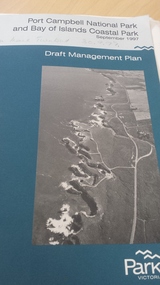
Book, Port Campbell National Park and Bay of Islands Coastal Park Draft Management Plan September 1997, 1997
... coastal park...parks victoria - peterborough...Contributes information on the history and development of the Bay of Islands Coastal Park peterborough 3270 bay of islands coastal park parks victoria - peterborough Bay of Islands Government published 81 page + maps book. ...Information re planning for Park released for public comment in 1997.Contributes information on the history and development of the Bay of Islands Coastal ParkGovernment published 81 page + maps book.peterborough 3270, bay of islands coastal park, parks victoria - peterborough, bay of islands -
 Truganina Explosives Reserve Preservation Society Inc (TERPS)
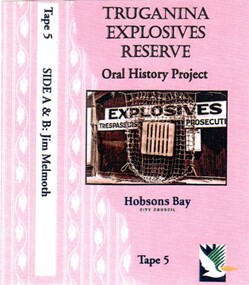
Digitised Oral History – Truganina Explosives Reserve - Tape 9 Andrew Shannon and Judy Hindle, 2018
... ...coastal vegetation...Parks Victoria...A primary source of information on memories of the Truganina Explosives Reserve and Altona,Victoria Chirnside explosives tin fence coastal vegetation Parks Victoria Joan Kirner Cheetham Wetlands Doug Grant gahnia salt marsh sand ridges Rob Andrew Nessie Hardy aboriginal middens Altona Truganina Swamp Digital copy of original cassette recorded in 2000 and digitised in 2018 Digitised Oral History – Truganina Explosives Reserve - Tape 9 Andrew Shannon and Judy Hindle ...The interviews were recorded in 2000 by Bronwen Gray and Alan Young for the production of Unreserved, Stories from Truganina Explosives Reserve, animated stories from past residents, workers and interested people of the Reserve (subject to copyright 2004). Judy Hindle and Andrew Shannon worked jointly on saving the Truganina Explosives Reserve from being sold for development by the State Government. Judy was an Altona resident and Andrew was an environment planner, first with Parks Victoria and then the local council. Their motivation was to not only save the site for open space but to capture what Judy described as the only in-tact historical site in the area. A primary source of information on memories of the Truganina Explosives Reserve and Altona,VictoriaDigital copy of original cassette recorded in 2000 and digitised in 2018chirnside, explosives, tin fence, coastal vegetation, parks victoria, joan kirner, cheetham wetlands, doug grant, gahnia, salt marsh, sand ridges, rob andrew, nessie hardy, aboriginal middens, altona, truganina swamp -
 Kew Historical Society Inc
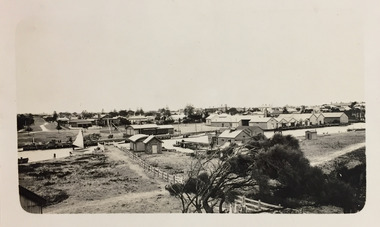
Photograph - Wharves and harbour on the Moyne River at Port Fairy, c.1926
... In what would appear to be one of his rare trips to coastal Victoria, Henry Christian took this photo of the wharves and harbour on the Moyne River at Port Fairy in c.1926. ...In what would appear to be one of his rare trips to coastal Victoria, Henry Christian took this photo of the wharves and harbour on the Moyne River at Port Fairy in c.1926. ...Henry Beater Christian (1886-1962) , was a descendant of one of the earliest settler families in Kew. Employed at the Kew Asylum as a 'public servant', he was a skilled amateur photographer, photographing numerous scenes in Kew and on his travels around Victoria. The majority of his photographs date from 1916 to 1929. His finest photographs are housed in two photograph albums. Digital copy of a photograph from page 24 of the 47-page photograph album containing 261 gelatinous silver images, loaned by Diane Washfold with permission given to digitise and hold a copy in our collection. In what would appear to be one of his rare trips to coastal Victoria, Henry Christian took this photo of the wharves and harbour on the Moyne River at Port Fairy in c.1926. The photograph shows the buildings along the river and parts of the township in the distance. henry beater christian (1886-1962), landscape photography, christian-washfold collection, photograph albums, moyne river, port fairy (vic.) -
 Ballarat Heritage Services
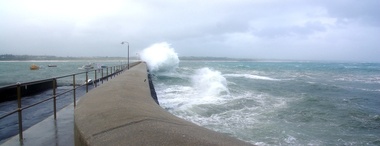
Digital photographs, L.J. Gervasoni, Warrnambool breakwater waves, c2011
... Warrnambool is a coastal town in Victoria...Warrnambool is a coastal town in Victoria warrnambool Warrnambool breakwater waves beach Colour photographs of waves breaking on the Warrnambool breakwater. ...Warrnambool is a coastal town in VictoriaColour photographs of waves breaking on the Warrnambool breakwater. warrnambool, warrnambool breakwater, waves, beach -
 Victorian Interpretive Projects Inc.
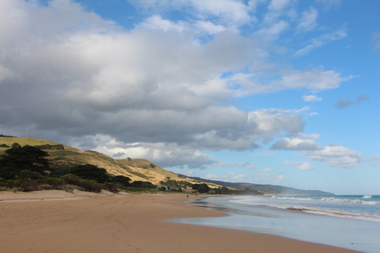
Photograph -Colour, Apollo Bay, Victoria, 2105, 25/01.2015
... Apollo Bay is a coastal town in Victoria. ...Apollo Bay is a coastal town in Victoria. Apollo Bay coast beach sea seaside surf A number of colour photographs of the coast at Apollo Bay, Victoria. ...Apollo Bay is a coastal town in Victoria. A number of colour photographs of the coast at Apollo Bay, Victoria.apollo bay, coast, beach, sea, seaside, surf -
 Victorian Aboriginal Corporation for Languages
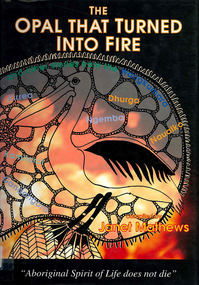
Book, Isobel White, The opal that turned into fire : and other stories from the Wangkumara, 1994
... These stories are written versions of legends handed down through the oral tradition of Aboriginal storytellers from the Riverina of New South Wales and Victoria, coastal regions and other parts of Australia....Wongaibon Kamilaroi Kirrea Dharawal Ualarai Gandangara Darkinjung Dhurga Ngemba Bandjalang Wiradjuri Muruwari Riverina Lake Eyre Murray River Colour photographs, illustrations, maps These stories are written versions of legends handed down through the oral tradition of Aboriginal storytellers from the Riverina of New South Wales and Victoria, coastal regions and other parts of Australia. ...These stories are written versions of legends handed down through the oral tradition of Aboriginal storytellers from the Riverina of New South Wales and Victoria, coastal regions and other parts of Australia.Colour photographs, illustrations, mapswongaibon, kamilaroi, kirrea, dharawal, ualarai, gandangara, darkinjung, dhurga, ngemba, bandjalang, wiradjuri, muruwari, riverina, lake eyre, murray river -
Glenelg Shire Council Cultural Collection
Souvenir - Souvenir Tea Towel - Australia's Shipwreck Coast, n.d
... Australia's Shipwreck Coast - images of ships wrecked in SW Victoria and coastal scenes, including the Portland lifeboat....Australia's Shipwreck Coast - images of ships wrecked in SW Victoria and coastal scenes, including the Portland lifeboat. ...Souvenir tea towel, 100% cotton. Australia's Shipwreck Coast - images of ships wrecked in SW Victoria and coastal scenes, including the Portland lifeboat.souvenir, portland, portland lifeboat, south west coastline, shipwreck coast -
 Lakes Entrance Historical Society
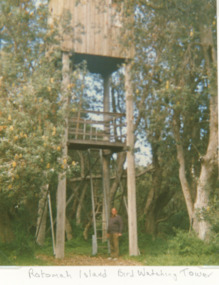
Photograph, Vera Bennett, Rotamah Island, Gippsland Lakes Victoria, 1/04/1989 12:00:00 AM
... Tower situated amongst coastal banksias Gippsland Lakes Victoria. Also another colour photograph of bird watching tower...Tower situated amongst coastal banksias Gippsland Lakes Victoria. Also another colour photograph of bird watching tower Rotamah Island, Gippsland Lakes Victoria Photograph Vera Bennett ...Colour photograph of the bird watching tower on Rotamah Island showing a timber hut and viewing platform supported on four timber poles accessed by steel ladders. Tower situated amongst coastal banksias Gippsland Lakes Victoria. Also another colour photograph of bird watching towerpeople, wildlife, topography, waterways -
 Orbost & District Historical Society
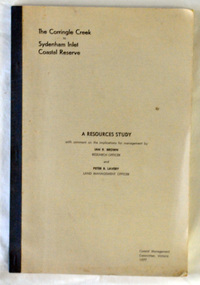
Book - front cover, The Corringle Creek to Sydenham Inlet Coastal Reserve A RESOURCES STUDY, 1977
... LAVERY Land Management Oficer. Coastal management Committee Victoria 1977. Published under the authority of the Coastal Management Committee by the Department of Crown Lands and Survey, Victoria 1977. ...LAVERY Land Management Oficer. Coastal management Committee Victoria 1977. Published under the authority of the Coastal Management Committee by the Department of Crown Lands and Survey, Victoria 1977. ...This 1977 Resources Study was a joint project of the Shire of Orbost & the Dept. of Crown Lands & Survey with the purpose of collating information on natural resources, pattern of public use, and constraints on future use so that management can be formulated.This report gives and understanding of the resources and management directions of coastal land in East Gippsland in 1977. A buff coloured cover with black printing and blue tape binding. 71 pages + maps/charts. THE CORRINGLE CREEK TO SYDENHAM INLET COASTAL RESERVE. A resources study with comment on the implications for management by IAN R. BROWN Research officer and PETER B. LAVERY Land Management Oficer. Coastal management Committee Victoria 1977. Published under the authority of the Coastal Management Committee by the Department of Crown Lands and Survey, Victoria 1977. Printed by James Yeates Printing, Bairnsdale 3875.corringle creek, sydenham inlet, natural resources survey -
 Victorian Interpretive Projects Inc.
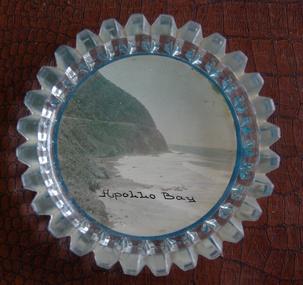
Image of souvenir ware, Apollo Bay
... Apollo Bay is located between Wye River and Cape Otway on Victoria's scenic coastal route, the Great Ocean Road. ...Apollo Bay is located between Wye River and Cape Otway on Victoria's scenic coastal route, the Great Ocean Road. ...Apollo Bay is located between Wye River and Cape Otway on Victoria's scenic coastal route, the Great Ocean Road. In the 1840s the Henty brothers established a whaling station at Point Bunbury on the western end of the bay. The bay was named by Captain Loutit in 1845 when he sheltered his vessel, the Apollo during a storm. (http://en.wikipedia.org/wiki/Apollo_Bay)A coloured picture of a coastline attached to a glass butter plate. The coastline is Cape Patton, Apollo Bay, Victoria"Apollo Bay"apollo bay, beach, coast, souvenir -
 Flagstaff Hill Maritime Museum and Village
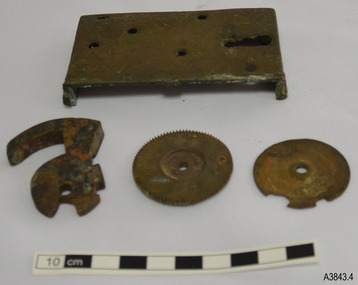
Functional object - Lock, 1800s to early 1900s
... This lock was recovered from an unknown shipwreck in the coastal waters of Victoria in the late 1960s to early 1970s. ...This lock was recovered from an unknown shipwreck in the coastal waters of Victoria in the late 1960s to early 1970s. ...This lock was recovered from an unknown shipwreck in the coastal waters of Victoria in the late 1960s to early 1970s. It is part of the John Chance Collection. The small size of the lock indicates that it was possibly used for cabinetry such as a cupboard, desk or wardrobe. It may have been part of the ship’s fittings or perhaps luggage or cargo. The blue-green patina on the metal is caused by a reaction from its exposure to external elements such as the sea water. The lock is likely to have been in the water for over 100 years, as the more widely known shipwrecks along Victoria’s Shipwreck Coast date from 1837 to 1940. Although the lock is not linked to a particular shipwreck, it is recognised as being historically significant as an example of hardware either as part of the ship’s fittings or imported for use in Colonial Victoria in the 19th to early 20th century. The lock is also significant as it was recovered by John Chance, a diver in Victoria’s coastal waters in the late 1960s to early 1970s. Items that come from several wrecks have since been donated to the Flagstaff Hill Maritime Village’s museum collection by his family, illustrating this item’s level of historical value. Lock, brass, with separated moving parts. Rectangular plate with keyhole, plus two cogs and a latch.flagstaff hill, warrnambool, flagstaff hill maritime museum, maritime museum, shipwreck coast, flagstaff hill maritime village, great ocean road, john chance, hardware, door fitting, ship’s fitting, furniture fitting, security, 19th century lock, cabinetry, brass lock -
Glenelg Shire Council Cultural Collection
Poster - Poster - Portland Upwelling Festival, Oct-09
... The Upwelling Festival is a free one day event that brings the community and visitors together to celebrate what is unique about our beautiful coastal environment in Portland Victoria....The Upwelling Festival is a free one day event that brings the community and visitors together to celebrate what is unique about our beautiful coastal environment in Portland Victoria. Upwelling community festival program marine Two A3 sized posters promoting Portland's Upwelling Festival, Saturday October 31 2009. ...The Bonney Upwelling is the epic natural ocean occurrence that powers a 7 month ( November – May ) feeding frenzy of marine animals, supporting an incredibly rich ecological food web. The Upwelling is at its greatest off the coast of Portland and is the corner stone of our lucrative fishing and tourism industries. Presented by the Upwelling Festival Committee Inc. The Upwelling Festival is a free one day event that brings the community and visitors together to celebrate what is unique about our beautiful coastal environment in Portland Victoria.Two A3 sized posters promoting Portland's Upwelling Festival, Saturday October 31 2009. Shiny White paper. Printed over with pale grey. Blue outline of whale in blue sea; Dark/light blue and green ribbons of colour lead to lighthouse. Features of Festival printed in dark/light blue,green,grey. sponsors names and logos along bottom edge.upwelling, community, festival program, marine -
 Flagstaff Hill Maritime Museum and Village
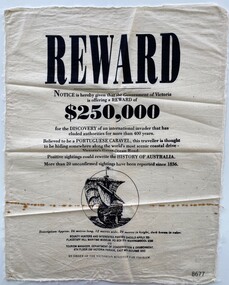
Article - Reward Poster - Portuguese Caravel, 1992
... Printed text: REWARD Notice is hereby given that the Government of Victoria is offering a REWARD of $250,000 for the DISCOVERY of an international invader that has eluded authorities for more than 400 years. Believed to be a PORTUGUESE CARAVEL, this traveller is thought to be hiding somewhere along the world's most scenic coastal drive- Victoria's Great Ocean Road. ...Flagstaff Hill Maritime Museum and Village Great Ocean Road Shipwreck Coast Warrnambool Port Fairy Portuguese Caravel Mahogany ship Reward Poster Victorian Government Printed text: REWARD Notice is hereby given that the Government of Victoria is offering a REWARD of $250,000 for the DISCOVERY of an international invader that has eluded authorities for more than 400 years. Believed to be a PORTUGUESE CARAVEL, this traveller is thought to be hiding somewhere along the world's most scenic coastal drive- Victoria's Great Ocean Road. ...The mystery of the Portuguese Caravel, commonly known as the ‘Mahogany Ship’ is today regarded as legend and refers to an ancient wreck that is said to lie beneath the sand between Warrnambool and Port Fairy. Its location is currently unknown, but many people have searched for it through the years since the first reported sighting of an unidentified wreck in 1836. For over a century this mystery has fascinated Australians because the existence of such a vessel could throw light on the earliest phase of exploration of Eastern Australia by Europeans. The interest in the mystery was high enough for the Victorian Government to offer a reward in 1992 which was subsequently withdrawn a year later with no monies being paid.This item is historically significant because of its relationship to an ongoing mystery (the Mahogany Ship) that may throw light on the early exploration of Australia. The offering of a reward, 150+years after the first recorded sighting, by the Victorian Government points to the ongoing fascination with this subject to the Victorian people.A reward poster printed on calico. Even though the poster was created in 1992 it follows the regular structure of a reward poster from earlier times; the word REWARD in large print at the top, the amount $250,000 in bold type and an imagined drawing of the missing Portuguese Caravel.Printed text: REWARD Notice is hereby given that the Government of Victoria is offering a REWARD of $250,000 for the DISCOVERY of an international invader that has eluded authorities for more than 400 years. Believed to be a PORTUGUESE CARAVEL, this traveller is thought to be hiding somewhere along the world's most scenic coastal drive- Victoria's Great Ocean Road. Positive sightings could rewrite the HISTORY OF AUSTRALIA. More than 20 unconfirmed sightings have been reported since 1836. Description: Approx. 26 metres long, 12 metres wide, 20 metres in height, dark brown in colour. BOUNTY HUNTERS AND INTERESTED PARTIES SHOULD APPLY TO: FLAGSTAFF HILL MARITIME MUSEUM, PO BOX 574 WARRNAMBOOL 3280 OR TOURISM MANAGER, DEPARTMENT OF CONSERVATION & ENVIRONMENT, 8TH FLOOR 250 VICTORIA PARADE, EAST MELBOURNE 3002 BY ORDER OF THE VICTORIAN MINISTER FOR TOURISM. Printed image: back view of a Caravel in full sail flagstaff hill maritime museum and village, great ocean road, shipwreck coast, warrnambool, port fairy, portuguese caravel, mahogany ship, reward poster, victorian government -
 Flagstaff Hill Maritime Museum and Village
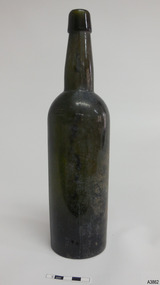
Container - Bottle, Mid-to-late 1800s
... The bottle was recovered from an unnamed shipwreck in the coastal water of Victoria. It is part of the John Chance Collection. ...The bottle was recovered from an unnamed shipwreck in the coastal water of Victoria. It is part of the John Chance Collection. ...This olive green bottle was handmade by a glassblower and is the typical shape of a ‘gallon’ type liquor bottle, which has the capacity of one-sixth of an imperial gallon, about 750ml. It was made around the mid-to-late 1800s. The bottle was recovered from an unnamed shipwreck in the coastal water of Victoria. It is part of the John Chance Collection. Glassblowers made bottles like this one by blowing into a long metal pipe or reed with a blob of molten glass at the end of it. The shape of the glass would be blown out to fit into the shape of the mould. Once it set, the glass was removed from the mould and the glassblower would continue using the pipe to create the neck and another tool to finish the base. The bottle would be cracked off the end of the glassblower’s pipe and a blob of molten glass would be added to the top to form the mouth and lip of the bottle. The seal was usually a cork, often held in place with tape. Although the bottle is not linked to a particular shipwreck, it is recognised as being historically significant as an example of bottles imported for use in Colonial Victoria in the mid-to-late 1800s. The bottle is also significant as it was recovered by John Chance, a diver in Victoria’s coastal water in the late 1960s to early 1970s. Items that come from several wrecks have since been donated to the Flagstaff Hill Maritime Village’s museum collection by his family, illustrating this item’s level of historical value. Bottle, dark olive green glass, tall thin Gallon type. Lip is straight, deep, with thin horizontal lines in glass. Neck has gradual flare, body has side seams, heel has uneven thickness, and base is concave, without pontil mark. No inscriptions. Glass has imperfections. Handmade in mould. Body has score marks and is worn down one side. flagstaff hill, warrnambool, flagstaff hill maritime museum, maritime museum, shipwreck coast, flagstaff hill maritime village, great ocean road, shipwreck artefact, john chance, glass bottle, antique bottle, gallon bottle, handmade, mouth blown, pontil mark, blown bottle, liquor bottle, 19th century bottle, collectable, olive glass, green glass, mould, 1800s bottle -
 Flagstaff Hill Maritime Museum and Village
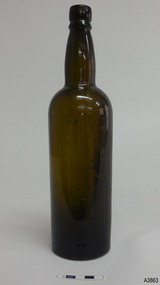
Container - Bottle, Mid-to-late 1800s
... The bottle was recovered from an unnamed shipwreck in the coastal water of Victoria. It is part of the John Chance Collection. ...The bottle was recovered from an unnamed shipwreck in the coastal water of Victoria. It is part of the John Chance Collection. ...This olive green bottle was handmade by a glassblower and is the typical shape of a ‘gallon’ type liquor bottle, which has the capacity of one-sixth of an imperial gallon, about 750ml. It was made around the mid-to-late 1800s. The bottle was recovered from an unnamed shipwreck in the coastal water of Victoria. It is part of the John Chance Collection. Glassblowers made bottles like this one by blowing into a long metal pipe or reed with a blob of molten glass at the end of it. The shape of the glass would be blown out to fit into the shape of the mould. Once it set, the glass was removed from the mould and the glassblower would continue using the pipe to create the neck and another tool to finish the base. The bottle would be cracked off the end of the glassblower’s pipe and a blob of molten glass would be added to the top to form the mouth and lip of the bottle. The seal was usually a cork, often held in place with tape. Although the bottle is not linked to a particular shipwreck, it is recognised as being historically significant as an example of bottles imported for use in Colonial Victoria in the mid-to-late 1800s. The bottle is also significant as it was recovered by John Chance, a diver in Victoria’s coastal water in the late 1960s to early 1970s. Items that come from several wrecks have since been donated to the Flagstaff Hill Maritime Village’s museum collection by his family, illustrating this item’s level of historical value. Bottle, dark olive green glass, tall thin Gallon type. Lip is double; rounded upper, flared lower. Neck is slightly bulbous. Body has shoulder seam, then tapers inwards to base. Concave base with small pontil mark. No inscriptions. Handmade in mould. Body has sediment inside, top to bottom. Glass is worn down one side. flagstaff hill, warrnambool, flagstaff hill maritime museum, maritime museum, shipwreck coast, flagstaff hill maritime village, great ocean road, shipwreck artefact, john chance, glass bottle, antique bottle, gallon bottle, handmade, mouth blown, pontil mark, blown bottle, liquor bottle, 19th century bottle, collectable, olive glass, green glass, mould, 1800s bottle, bulbous neck -
 Flagstaff Hill Maritime Museum and Village
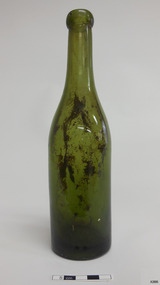
Container - Bottle, c. 1840s - 1870s
... The bottle, possibly used to store or soda or mineral water, was found in the coastal waters of Victoria. It is part of the John Chance Collection. ...The bottle, possibly used to store or soda or mineral water, was found in the coastal waters of Victoria. It is part of the John Chance Collection. ...This green glass bottle has been handmade from about the 1840s to 1870s. The bottle, possibly used to store or soda or mineral water, was found in the coastal waters of Victoria. It is part of the John Chance Collection. Glassblowers made bottles like this one by blowing air through a long pipe into the molten glass blob at the end of the pipe. The glass was blown out to fit into the shape of the cylindrical dip mould. Once it hardened, the glass was removed from the mould and the glassblower would continue using the pipe to create the neck while carefully using a tool to hold the base. A 'ponty' tool would have been used to form the base. The mouth of the bottle was cut off from the blowpipe and a piece of soft glass would be added to the mouth to then form the blob collar. Bottles like this would usually be sealed with a cork. Although this bottle is not linked to a particular shipwreck, it is recognised as a historically significant example of handmade, 1840s to 1870s beverage bottles imported for use in Colonial Victoria. The bottle is also significant for its association with John Chance, a diver in Victoria’s coastal waters in the late 1960s to early 1970s. Items that come from several shipwrecks have since been donated to the Flagstaff Hill Maritime Village’s museum collection by his family, illustrating this item’s level of historical value.Bottle, green glass. Applied blob lip with bubble and lump in glass. Shoulder seam, body tapers inward towards base. Thick heel, shallow uneven base. Sediment inside on glass.flagstaff hill, warrnambool, flagstaff hill maritime museum, maritime museum, shipwreck coast, flagstaff hill maritime village, great ocean road, shipwreck artefact, john chance, glass bottle, antique bottle, handmade, mouth blown, blown bottle, collectable, bottle, dip mould, soda bottle, beverage bottle, green glass, blob top -
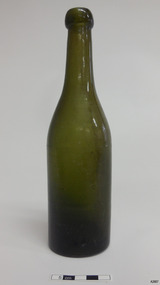 Flagstaff Hill Maritime Museum and Village
Container - Bottle, c. 1840s - 1870s
... The bottle, possibly used to store or soda or mineral water, was found in the coastal waters of Victoria. It is part of the John Chance Collection. ...The bottle, possibly used to store or soda or mineral water, was found in the coastal waters of Victoria. It is part of the John Chance Collection. ...This green glass bottle has been handmade from about the 1840s to 1870s. The bottle, possibly used to store or soda or mineral water, was found in the coastal waters of Victoria. It is part of the John Chance Collection. Glassblowers made bottles like this one by blowing air through a long pipe into the molten glass blob at the end of the pipe. The glass was blown out to fit into the shape of the cylindrical dip mould. Once it hardened, the glass was removed from the mould and the glassblower would continue using the pipe to create the neck while carefully using a tool to hold the base. A 'ponty' tool would have been used to form the base. The mouth of the bottle was cut off from the blowpipe and a piece of soft glass would be added to the mouth to then form the blob collar. Bottles like this would usually be sealed with a cork. Although this bottle is not linked to a particular shipwreck, it is recognised as a historically significant example of handmade, 1840s to 1870s beverage bottles imported for use in Colonial Victoria. The bottle is also significant for its association with John Chance, a diver in Victoria’s coastal waters in the late 1960s to early 1970s. Items that come from several shipwrecks have since been donated to the Flagstaff Hill Maritime Village’s museum collection by his family, illustrating this item’s level of historical value.Bottle, green glass. Applied blob lip. Shoulder seam, ripples in body, which tapers inwards towards base. Thick heel, shallow uneven base. Sediment inside bottle. Scratches in glass. flagstaff hill, warrnambool, flagstaff hill maritime museum, maritime museum, shipwreck coast, flagstaff hill maritime village, great ocean road, shipwreck artefact, john chance, glass bottle, antique bottle, handmade, mouth blown, blown bottle, collectable, bottle, dip mould, soda bottle, beverage bottle, green glass, blob top -
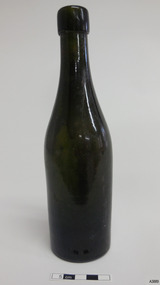 Flagstaff Hill Maritime Museum and Village
Container - Bottle, c. 1840s - 1870s
... The bottle, possibly used to store or soda or mineral water, was found in the coastal waters of Victoria. It is part of the John Chance Collection. ...The bottle, possibly used to store or soda or mineral water, was found in the coastal waters of Victoria. It is part of the John Chance Collection. ...This olive green glass bottle has been handmade from about the 1840s to 1870s. The bottle, possibly used to store or soda or mineral water, was found in the coastal waters of Victoria. It is part of the John Chance Collection. Glassblowers made bottles like this one by blowing air through a long pipe into the molten glass blob at the end of the pipe. The glass was blown out to fit into the shape of the cylindrical dip mould. Once it hardened, the glass was removed from the mould and the glassblower would continue using the pipe to create the neck while carefully using a tool to hold the base. A 'ponty' tool would have been used to form the push-up base. The mouth of the bottle was cut off from the blowpipe and a piece of soft glass would be added to the mouth to then form the collar. Bottles like this would usually be sealed with a cork.Although this bottle is not linked to a particular shipwreck, it is recognised as a historically significant example of handmade, 1840s to 1870s beverage bottles imported for use in Colonial Victoria. The bottle is also significant for its association with John Chance, a diver in Victoria’s coastal waters in the late 1960s to early 1970s. Items that come from several shipwrecks have since been donated to the Flagstaff Hill Maritime Village’s museum collection by his family, illustrating this item’s level of historical value.Bottle, olive glass. Applied straight lip with bumps and bubbles. Shoulder seam. Body tapers inwards towards base. Heel has uneven thickness. Concave push--up base. Some imperfections, blow lines and scratches in glass. flagstaff hill, warrnambool, flagstaff hill maritime museum, maritime museum, shipwreck coast, flagstaff hill maritime village, great ocean road, shipwreck artefact, john chance, glass bottle, antique bottle, handmade, mouth blown, blown bottle, collectable, bottle, dip mould, soda bottle, beverage bottle, green glass, olive glass -
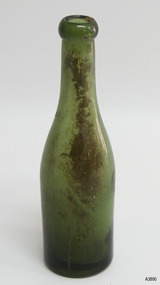 Flagstaff Hill Maritime Museum and Village
Container - Bottle, c. 1840s - 1870s
... The bottle, possibly used to store or soda or mineral water, was found in the coastal waters of Victoria. It is part of the John Chance Collection. ...The bottle, possibly used to store or soda or mineral water, was found in the coastal waters of Victoria. It is part of the John Chance Collection. ...This green glass bottle has been handmade from about the 1840s to 1870s. The bottle, possibly used to store or soda or mineral water, was found in the coastal waters of Victoria. It is part of the John Chance Collection. Glassblowers made bottles like this one by blowing air through a long pipe into the molten glass blob at the end of the pipe. The glass was blown out to fit into the shape of the cylindrical dip mould. Once it hardened, the glass was removed from the mould and the glassblower would continue using the pipe to create the neck while carefully using a tool to hold the base. A 'ponty' tool would have been used to form the shallow base. The mouth of the bottle was cut off from the blowpipe and a piece of soft glass would be added to the mouth to then form the lip. Bottles like this would usually be sealed with a cork.Although this bottle is not linked to a particular shipwreck, it is recognised as a historically significant example of handmade, 1840s to 1870s beverage bottles imported for use in Colonial Victoria. The bottle is also significant for its association with John Chance, a diver in Victoria’s coastal waters in the late 1960s to early 1970s. Items that come from several shipwrecks have since been donated to the Flagstaff Hill Maritime Village’s museum collection by his family, illustrating this item’s level of historical value.Bottle, green glass. Applied blob lip with glass blister. Shoulder seam, body tapers inwards towards base. Thick heel, shallow base. Blow creases and bubbles in glass. Sediment along inside of bottle.flagstaff hill, warrnambool, flagstaff hill maritime museum, maritime museum, shipwreck coast, flagstaff hill maritime village, great ocean road, shipwreck artefact, john chance, glass bottle, antique bottle, handmade, mouth blown, blown bottle, collectable, bottle, dip mould, soda bottle, beverage bottle, green glass -
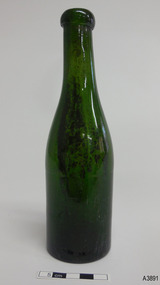 Flagstaff Hill Maritime Museum and Village
Container - Bottle, c. 1840s - 1870s
... The bottle, possibly used to store or soda or mineral water, was found in the coastal waters of Victoria. It is part of the John Chance Collection. ...The bottle, possibly used to store or soda or mineral water, was found in the coastal waters of Victoria. It is part of the John Chance Collection. ...This green glass bottle has been handmade from about the 1840s to 1870s. The bottle, possibly used to store or soda or mineral water, was found in the coastal waters of Victoria. It is part of the John Chance Collection. Glassblowers made bottles like this one by blowing air through a long pipe into the molten glass blob at the end of the pipe. The glass was blown out to fit into the shape of the cylindrical dip mould. Once it hardened, the glass was removed from the mould and the glassblower would continue using the pipe to create the neck while carefully using a tool to hold the base. A 'ponty' tool would have been used to form the shallow base. The mouth of the bottle was cut off from the blowpipe and a piece of soft glass would be added to the mouth to then form the lip. Bottles like this would usually be sealed with a cork.Although this bottle is not linked to a particular shipwreck, it is recognised as a historically significant example of handmade, 1840s to 1870s beverage bottles imported for use in Colonial Victoria. The bottle is also significant for its association with John Chance, a diver in Victoria’s coastal waters in the late 1960s to early 1970s. Items that come from several shipwrecks have since been donated to the Flagstaff Hill Maritime Village’s museum collection by his family, illustrating this item’s level of historical value.Bottle, green glass. Applied blop lip, deep scratch on neck. Shoulder seam, body tapers inward towards base. Wide heel, shallow base. Glass has ripples, creases, scratches and has a rough surface on the outside on one side. Sediment inside bottle.flagstaff hill, warrnambool, flagstaff hill maritime museum, maritime museum, shipwreck coast, flagstaff hill maritime village, great ocean road, shipwreck artefact, john chance, glass bottle, antique bottle, handmade, mouth blown, blown bottle, collectable, bottle, dip mould, soda bottle, beverage bottle, green glass -
 Merri-bek City Council
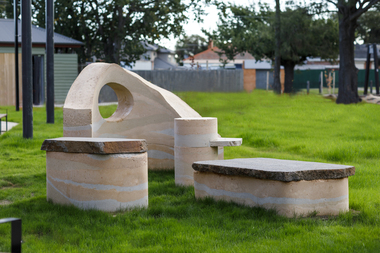
Sculpture - Rammed earth, basalt, mudstone, Isadora Vaughan, Terra Pneumatics, 2021
... Victoria, with soil and bluestone derived from ancient volcanic lava flows. Vaughan’s sculpture is created from these locally found sediments with the range of colours and textures reflecting the changing use of the land as various soils, rocks and sand were introduced from the coastal areas of Victoria. ...Victoria, with soil and bluestone derived from ancient volcanic lava flows. Vaughan’s sculpture is created from these locally found sediments with the range of colours and textures reflecting the changing use of the land as various soils, rocks and sand were introduced from the coastal areas of Victoria. ...Located at the Glenroy Community Hub, Isadora Vaughan’s rammed earth and bluestone sculpture draws attention to the continual transformation of Glenroy’s geology and its communities. The City of Merri-bek and Glenroy lie on the Western Basalt plains of Victoria, with soil and bluestone derived from ancient volcanic lava flows. Vaughan’s sculpture is created from these locally found sediments with the range of colours and textures reflecting the changing use of the land as various soils, rocks and sand were introduced from the coastal areas of Victoria. These forms reflect Glenroy’s changing communities, emphasising our relationship with the earth, and have been shaped to enable connection through offering places to sit, lean, play and to gather. Terra Pneumatics embodies the history and sediment of Glenroy —both human and geological — and invites the community to become part of this process of layering and transformation.merri-bek public art collection -
 Flagstaff Hill Maritime Museum and Village
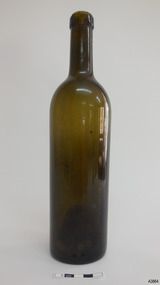
Container - Bottle, Mid-to-late 1800s
... The bottle was recovered from an unnamed shipwreck in the coastal water of Victoria. It is part of the John Chance Collection. ...The bottle was recovered from an unnamed shipwreck in the coastal water of Victoria. It is part of the John Chance Collection. ...This olive green bottle was handmade by a glassblower and is the typical shape of a ‘gallon’ type liquor bottle, which has the capacity of one-sixth of an imperial gallon, about 750ml. It was made around the mid-to-late 1800s. The bottle was recovered from an unnamed shipwreck in the coastal water of Victoria. It is part of the John Chance Collection. The elongated bubbles in the glass are likely from the glass being blown into a mould. Glassblowers made bottles like this one by blowing into a long metal pipe or reed with a blob of molten glass at the end of it. The shape of the glass would be blown out to fit into the shape of the mould. Once it set, the glass was removed from the mould and the glassblower would continue using the pipe to create the neck and another tool to finish the base. The bottle would be cracked off the end of the glassblower’s pipe and a blob of molten glass would be added to the top to form the mouth and lip of the bottle. The seal was usually a cork, often held in place with tape. Although the bottle is not linked to a particular shipwreck, it is recognised as being historically significant as an example of bottles imported for use in Colonial Victoria in the mid-to-late 1800s. The bottle is also significant as it was recovered by John Chance, a diver in Victoria’s coastal water in the late 1960s to early 1970s. Items that come from several wrecks have since been donated to the Flagstaff Hill Maritime Village’s museum collection by his family, illustrating this item’s level of historical value. Bottle, dark olive green glass, tall thin Gallon type. Mouth is applied roughly, lip is straight and narrow. Body has no visible seams; tapers gently inwards to base. Concave base is deep and has a pontil mark. No inscriptions. Handmade bottle has elongated air bubbles and imperfections in glass.flagstaff hill, warrnambool, flagstaff hill maritime museum, maritime museum, shipwreck coast, flagstaff hill maritime village, great ocean road, shipwreck artefact, john chance, glass bottle, antique bottle, gallon bottle, handmade, mouth blown, pontil mark, blown bottle, liquor bottle, 19th century bottle, collectable, olive glass, green glass, mould, 1800s bottle -
 Flagstaff Hill Maritime Museum and Village
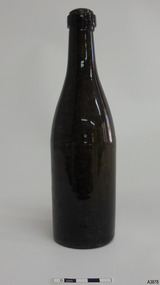
Container - Bottle, circa 1870-1910
... The bottle, possibly used to store ale or soda or mineral water, was found in the coastal waters of Victoria. It is part of the John Chance Collection. ...The bottle, possibly used to store ale or soda or mineral water, was found in the coastal waters of Victoria. It is part of the John Chance Collection. ...This brown glass bottle has been handmade from about the 1870s-1910s. The bottle, possibly used to store ale or soda or mineral water, was found in the coastal waters of Victoria. It is part of the John Chance Collection. Glassblowers made bottles like this one by blowing air through a long pipe into the molten glass blob at the end of the pipe. The glass was blown out to fit into the shape of the cylindrical dip mould. Once it hardened, the glass was removed from the mould and the glassblower would continue using the pipe to create the neck while carefully using a tool to hold the base. A 'ponty' (pontil) tool would been used to complete the shape, pushing up the base. A tool would have been used to cut off the bottle from the blowpipe and apply and form the ring band on the neck. Bottles like this would usually be sealed with a cork, which may have been held in place with wax or wire and tape. Although this bottle is not linked to a particular shipwreck, it is recognised as a historically significant example of handmade, late 19th to early 20th century beverage bottles imported for use in Colonial Victoria. The bottle is also significant for its association with John Chance, a diver in Victoria’s coastal waters in the late 1960s to early 1970s. Items that come from several shipwrecks have since been donated to the Flagstaff Hill Maritime Village’s museum collection by his family, illustrating this item’s level of historical value.Bottle, brown glass, tall and slim, cork-top style. Tooled finish on mouth with applied ring, shoulder seam, body tapers inwards towards base. Concave base has pontil mark. Sediment inside bottle. Glass has shiny surface and diagonal rings from shoulder to mouth, then is less shiny and has an slightly undulating surface from shoulder to base. The surface is markedly raised where base and shoulder meet. Glass has many scratches.flagstaff hill, warrnambool, flagstaff hill maritime museum, maritime museum, shipwreck coast, flagstaff hill maritime village, great ocean road, shipwreck artefact, john chance, glass bottle, antique bottle, handmade, mouth blown, blown bottle, collectable, bottle, dip mould, soda bottle, brown glass, ale bottle, beverage bottle
