
Showing 3 items matching "combustion chamber"
-
 Moorabbin Air Museum
Manual - Pratt & Whitney engines, PW125B Training Guide Build Spec 647 Pratt & Whitney Canada
... ...Combustion chamber...Pratt & Whitney engines Engine cross section Stations & flanges Bearings Inlet & compressor Gas generator case Cabin bleed system Combustion chamber Electrical system Indicating system Bearing compartment sealing & turbine cooling Inlet airflows Assorted components & systems. ...Overview of Pratt & Whitney PW125B turboprop engine .Spiral bound book style manualnon-fictionOverview of Pratt & Whitney PW125B turboprop engine . engine cross section, stations & flanges, bearings, inlet & compressor, gas generator case, cabin bleed system, combustion chamber, electrical system, indicating system, bearing compartment sealing & turbine cooling, inlet airflows, assorted components & systems. -
 Puffing Billy Railway
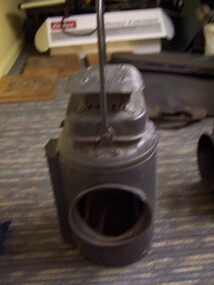
Non Sweating Lamp, The Adlake
... Short-globe lanterns came about because manufacturers figured out how to get a lantern to burn properly with a shorter combustion chamber, which allowed lanterns to be shorter and cheaper. ...Short-globe lanterns came about because manufacturers figured out how to get a lantern to burn properly with a shorter combustion chamber, which allowed lanterns to be shorter and cheaper. ...The Adlake Non Sweating Lamp "THE ADLAKE NON SWEATING LAMP CHICAGO" Adlake is a shortened name of the "Adams and Westlake" company. They began doing business in 1857 in Chicago. They manufactured railroad supplies and hardware in Chicago. In 1927, they moved to Elkhart, Indiana, where they remain in business today. The difference between "lamp" and "lantern" is that the lamp is meant to be hung on a post or a hook during use and the lantern is hand-held and only used when a person is directing traffic. It has four lenses- two amber and two blue. Adams & Westlake, also known as A&W or Adlake, became a dominant maker of short-globe lanterns and their #200, #250, and plain “Kero” (sometimes known as #300 or #400) models were sold by the thousands to the entire range of railroads. Short-globe lanterns came about because manufacturers figured out how to get a lantern to burn properly with a shorter combustion chamber, which allowed lanterns to be shorter and cheaper. Adams & Westlake began selling #200 Kero lanterns around 1921 and they sold well, the #250 Kero lantern was released in the mid 1920’s as an improvement over the #200 version, with a new burner design. FInally, around 1930 Adams & Westlake released models marked simply “Kero” but are sometimes known as the #300 or #400 models, which are further refinements. The #200, #250, and “Kero” models all look very similar in design and in fact they are all pretty much the same frame design with a couple of minor differences on the later “Kero” models. Short globe lanterns are still very easy to find because they were produced well into the mid 1900s. Adams & Westlake short globe lanterns can usually be dated by looking for a two-part date code on the bottom of the lantern. The first digit will be 1,2,3, or 4 followed by a dash and then a two digit number. Sample code: 2-39 would mean that the lantern was produced in the 2nd quarter (Apr-Jun) of 193Historic - Railways - Adlake Non Sweating LampAdlake Non Sweating Lamp made of metal and glass Metal with handle, painted black, oil Bullseye lens, 13 cm diameter, green Circular lens on opposite site, 5 cm diameter, clear Sliding panel provides access to burner Rain shield embossed 'THE ADLAKE NON SWEATING LAMP' 'LAMP MFG 7 RLY SUPPLIES LONDON''THE ADLAKE NON SWEATING LAMP' 'LAMP MFG 7 RLY SUPPLIES LONDON'puffing billy, adlake non sweating lamp -
 Puffing Billy Railway
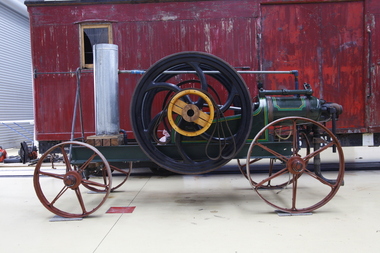
Blackstone Oil Engine, 6 November 1908
... combustion engine. It is an engine in which fuel is ignited by being brought into contact with a red-hot metal surface inside a bulb, followed by the introduction of air (oxygen) compressed into the hot-bulb chamber by the rising piston. ...combustion engine. It is an engine in which fuel is ignited by being brought into contact with a red-hot metal surface inside a bulb, followed by the introduction of air (oxygen) compressed into the hot-bulb chamber by the rising piston. ...8HP Blackstone Lamps Start Oil Engine engine number 71076 Engine Details Maximum operating RPM of 240. Fitted with a 3'9" Flywheel Tested on the 6th of November 1908. Shipped to Cluter buck South Australia for installation on concrete base. Recovered and restored during the 80's in South Australia Purchased privately in 2013 in Tailem Bend South Australia and transported to Victoria. Currently on loan to the Puffing Billy Museum at Menzies Creek as an operating exhibit. Blackstone & Co. was a farm implement maker at Stamford, Lincolnshire, United Kingdom. In 1896 they built lamp start oil engines. The Lamp or hot-bulb engine (also hotbulb or heavy-oil engine) is a type of internal combustion engine. It is an engine in which fuel is ignited by being brought into contact with a red-hot metal surface inside a bulb, followed by the introduction of air (oxygen) compressed into the hot-bulb chamber by the rising piston. There is some ignition when the fuel is introduced, but it quickly uses up the available oxygen in the bulb. Vigorous ignition takes place only when sufficient oxygen is supplied to the hot-bulb chamber on the compression stroke of the engine. Most hot-bulb engines were produced as one-cylinder, low-speed two-stroke crankcase scavenged units Historic - Industrial - single cylinder, horizontal, 4 stroke, hot-bulb ignition oil engine Blackstone 8HP Oil Engine made from steel, wrought iron and brassOval Plate with Black Stones and Clutter Buck Brass Plaque engine number 71076blackstone, oil engine, clutter buck, black stone, puffing billy, hit and miss, engine, blackstone & co
