
Showing 6 items matching "communist take-over"
-
 National Vietnam Veterans Museum (NVVM)
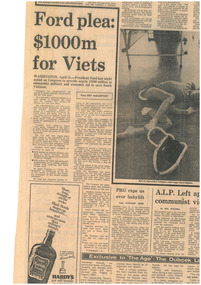
Newspaper - Articles about attitudes to end of war and Operation Babylift, The Age, 12 April, 1975
... ...communist take-over...The Age President Ford ALP Vietnam Babylift Operation Babylift Post-war vietnam Military aid fall of saigon communist take-over Two newspaper article from The Age, Saturday April 12, 1975 The Age, 12 April, 1975 Newspaper Articles about attitudes to end of war and Operation Babylift ...Two newspaper articles from The Age in 1975 that contributes to an understanding of those involved in the war in Vietnam (1962 -1972) other than Australian servicemen.Two newspaper article from The Age, Saturday April 12, 1975the age, president ford, alp, vietnam, babylift, operation babylift, post-war vietnam, military aid, fall of saigon, communist take-over -
 Eltham District Historical Society Inc
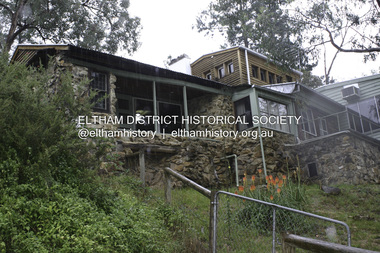
Photograph - Digital Photograph, Alan King, Stonygrad, 34 Hamilton Road, North Warrandyte, 30 January 2008
... In 1944 he helped defeat a communist attempt to take over the Contemporary Art Society. ...In 1944 he helped defeat a communist attempt to take over the Contemporary Art Society. ...Vassilieff dynamited rock from his own property to build his house. Stonygrad is reminiscent of a grotto and in parts, of a sculpture. Covered under Heritage Overlay, Nillumbik Planning Scheme. Published: Nillumbik Now and Then / Marguerite Marshall 2008; photographs Alan King with Marguerite Marshall.; p135 Stonygrad, the home built by Expressionist painter and sculptor Danila Vassilieff, is reminiscent of a grotto and in parts, of a sculpture. Vassilieff, who amongst others influenced painter Sydney Nolan and Albert Tucker, was a member of the artists group the Angry Penguins. He was also a highly regarded art teacher at the nearby Koornong Experimental School and taught at Eltham High School. Art critic Robert Hughes described Vassilieff’s painting as ‘lyrical without social commentary’, and said Vassilieff was ‘the most oddly neglected artist in recent Australian History’. Vassilieff, who was born in 1897 in Russia, had an unusually adventurous life before he settled in Warrandyte. The 12th of 18 children, he lived on a farm in the Don Basin. Vassilieff trained with the Imperial Military Academy at St Petersburg and fought in World War One as an officer in the White Russian Army against the communists. In 1920 he was captured, then escaped from prison, stole a horse and rode bareback 150 miles to the Black Sea, helped at first by Tartar freebooters. He then travelled to India, Shanghai and arrived in Queensland as a refugee in 1923 where he began painting. He and his wife Anisia bought a sugar farm near Ingram, and later he constructed railway lines at Mataranka, in the Northern Territory.4 In 1929 Vassilieff went to Brazil for formal art training from former fellow-officer Dmitri Ismailovich, but he soon left to travel up the Amazon River. He then worked as a sidewalk artist in the West Indies and travelled for two years in England, France and Spain. In 1937 he arrived in Melbourne where he lived until his death in 1958. His first major Australian series was the Carlton streetscapes and from 1951 he sculpted in local hard limestone. Vassilieff rejected all dogma and regarded religious subjects as suitable only for decorative arts. In 1944 he helped defeat a communist attempt to take over the Contemporary Art Society. For a short time, from around 1955, Vassilieff taught at various Victorian schools. The Angry Penguins painted mainly between 1937 and 1947, and included Arthur Boyd, Albert Tucker, Sidney Nolan and Joy Hester. The group formed as they felt isolated from European thought and art (including Surrealism) from which their work was derived. They were also angry at what they considered to be the complacency and insularity of their society. They maintained Australians at first were scarcely aware of the threats of the Wall Street Crash and Hitler and were little interested in the Spanish Civil War. The Angry Penguins also objected to the White Australia Policy. Hughes said although most of the Melbourne Expressionists in the 1940s were unskilled and their work crude in style, they helped jolt Australian painting from its pastoral complacency. Their style influenced nearly every painting produced by significant figurative artists in Melbourne in the 1950s such as Charles Blackman. From 1939 Vassilieff built Stonygrad, mainly with local stone. The house stands at the end of a private road surrounded by trees with the quiet occasionally broken by the sounds of bellbirds. To build his house Vassilieff dynamited rock and cut trees from his own property. The original section of the three-level house is of irregular-shaped pieces of solid stone, exposed inside like the exterior. Vassilieff later built sections with timber and brick. Inside is rustic and cave-like, and several rooms are linked by arched openings with no doors. One undulating wall was carved out of rock from which two sculptured heads protrude. Several ceilings are of rough-hewn logs and the built-in table and bookcase are rough, as is a timber ladder leading to a bedroom. Not for the elderly or unsteady! Yet the general impression in the muted light is beautiful, with artistic originality.This collection of almost 130 photos about places and people within the Shire of Nillumbik, an urban and rural municipality in Melbourne's north, contributes to an understanding of the history of the Shire. Published in 2008 immediately prior to the Black Saturday bushfires of February 7, 2009, it documents sites that were impacted, and in some cases destroyed by the fires. It includes photographs taken especially for the publication, creating a unique time capsule representing the Shire in the early 21st century. It remains the most recent comprehenesive publication devoted to the Shire's history connecting local residents to the past. nillumbik now and then (marshall-king) collection, danila vassilieff, hamilton road, north warrandyte, stonygrad -
 Monbulk RSL Sub Branch
Book, Osprey Publishing, Allied aces of the Korean war, 2001
... take on MiG-15s of the North Korean and Chinese air forces. Although the Allied pilots were initially taken aback by the ability of the communist fighter in combat, sound training and skilful leadership soon enabled Sabre pilots to dominate the dogfights over the Yalu River. ...The first virtually all-jet war, the conflict in Korea saw F-86 Sabres of the USAF take on MiG-15s of the North Korean and Chinese air forces. Although the Allied pilots were initially taken aback by the ability of the communist fighter in combat, sound training and skilful leadership soon enabled Sabre pilots to dominate the dogfights over the Yalu River. In all 39 F-86 pilots achieved ace status, and a number of these are profiled in this volume, as are notable pilots from the US Navy, Marine Corps and Royal Navy and, for the first time, the handful of MiG-15 aces.Ill, p.64.non-fictionThe first virtually all-jet war, the conflict in Korea saw F-86 Sabres of the USAF take on MiG-15s of the North Korean and Chinese air forces. Although the Allied pilots were initially taken aback by the ability of the communist fighter in combat, sound training and skilful leadership soon enabled Sabre pilots to dominate the dogfights over the Yalu River. In all 39 F-86 pilots achieved ace status, and a number of these are profiled in this volume, as are notable pilots from the US Navy, Marine Corps and Royal Navy and, for the first time, the handful of MiG-15 aces.korean war 1950-1953 - history, korean war - aerial combat -
 National Vietnam Veterans Museum (NVVM)
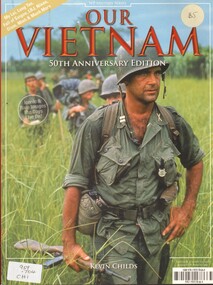
Book, Childs, Kevin, Our Vietnam: 50th Anniversary Edition (Copy 1), 2014
... 1961-1975 -- History Vietnam War 1961-1975 -- Psychological aspects If I left the Communists take over South Vietnam, then I would be seen as a coward and my nation would be seen as an appeaser, and we would both find it impossible to accomplish anything for anybody anywhere on the entire globe. ...If I left the Communists take over South Vietnam, then I would be seen as a coward and my nation would be seen as an appeaser, and we would both find it impossible to accomplish anything for anybody anywhere on the entire globe.If I left the Communists take over South Vietnam, then I would be seen as a coward and my nation would be seen as an appeaser, and we would both find it impossible to accomplish anything for anybody anywhere on the entire globe. 1961-1975 -- history, vietnam war, 1961-1975 -- psychological aspects -
 National Vietnam Veterans Museum (NVVM)
Book, Childs, Kevin, Our Vietnam: 50th Anniversary Edition (Copy 2), 2014
... 1961-1975 -- History Vietnam War 1961-1975 -- Psychological aspects If I let the Communists take over South Vietnam, then I would be seen as a coward and my nation would be seen as an appeaser, and we would both find it impossible to accomplish anything for anybody anywhere on the entire globe. ...If I let the Communists take over South Vietnam, then I would be seen as a coward and my nation would be seen as an appeaser, and we would both find it impossible to accomplish anything for anybody anywhere on the entire globe.If I let the Communists take over South Vietnam, then I would be seen as a coward and my nation would be seen as an appeaser, and we would both find it impossible to accomplish anything for anybody anywhere on the entire globe. 1961-1975 -- history, vietnam war, 1961-1975 -- psychological aspects -
 Wodonga & District Historical Society Inc
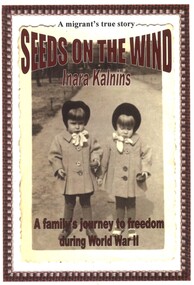
Book - Seeds on the Wind, Inara Kalnins, 2003
... Post World War 11 Migration Refugees - Australia Inara Kalnins This book tells the story of the struggle of the author's family for survival after their way of life was cruelly destroyed by a brutal communist take-over of their homeland. In 1944 they were forced to flee Latvia with no idea of the trauma and tragedy which lay ahead. ...This book tells the story of the struggle of the author's family for survival after their way of life was cruelly destroyed by a brutal communist take-over of their homeland. In 1944 they were forced to flee Latvia with no idea of the trauma and tragedy which lay ahead. After spending some time in a refugee camp in Italy, the family arrived in Australia in May 1949 with their first temporary "home" being at Bonegilla Migrant Reception Centre near Wodonga, Victoria. The book documents their early struggles in Australia and their journey to their new life, as well as what happened to the family they had to leave behind.A publication of 225 pages including black and white images and a detailed index.non-fictionThis book tells the story of the struggle of the author's family for survival after their way of life was cruelly destroyed by a brutal communist take-over of their homeland. In 1944 they were forced to flee Latvia with no idea of the trauma and tragedy which lay ahead. After spending some time in a refugee camp in Italy, the family arrived in Australia in May 1949 with their first temporary "home" being at Bonegilla Migrant Reception Centre near Wodonga, Victoria. The book documents their early struggles in Australia and their journey to their new life, as well as what happened to the family they had to leave behind.post world war 11 migration, refugees - australia, inara kalnins
