
Showing 27 items matching "coranderrk healesville"
-
 Marysville & District Historical Society
Article (item) - Newpaper Article, Champion of his people, 28-02-2012
... coranderrk...healesville...A newspaper article regarding William Barak, an Aboriginal leader who was instrumental in 1863 in the creation of Coranderrk Aboriginal station near Healesville in Victoria....A newspaper article regarding William Barak, an Aboriginal leader who was instrumental in 1863 in the creation of Coranderrk Aboriginal station near Healesville in Victoria....A newspaper article regarding William Barak, an Aboriginal leader who was instrumental in 1863 in the creation of Coranderrk Aboriginal station near Healesville in Victoria. A newspaper article regarding William Barak, an Aboriginal leader who was instrumental in 1863 in the creation of Coranderrk Aboriginal station near Healesville in Victoria. william barak kulin nation john batman victorian indigenous hall of fame beruk woiwurrang language victoria bebejan billibellary wurundjeri ngurungaetas coranderrk healesville board for protection of aborigines robert wandin thomas dunolly simon wonga graham bell anne bon yarra mission school native police corps A newspaper article regarding William Barak, an Aboriginal leader who was instrumental in 1863 in the creation of Coranderrk Aboriginal station near Healesville in Victoria. ...A newspaper article regarding William Barak, an Aboriginal leader who was instrumental in 1863 in the creation of Coranderrk Aboriginal station near Healesville in Victoria.A newspaper article regarding William Barak, an Aboriginal leader who was instrumental in 1863 in the creation of Coranderrk Aboriginal station near Healesville in Victoria.william barak, kulin nation, john batman, victorian indigenous hall of fame, beruk, woiwurrang language, victoria, bebejan, billibellary, wurundjeri ngurungaetas, coranderrk, healesville, board for protection of aborigines, robert wandin, thomas dunolly, simon wonga, graham bell, anne bon, yarra mission school, native police corps -
Mount Evelyn History Group
Book Aboriginal Database, Tarcoola Press, Coranderrk Database, 2012
... Coranderrk...Aboriginal...Healesville...Writings about Coranderrk Aboriginal Station, Healesville (1863-1924) in the words of contemporaries. ...Writings about Coranderrk Aboriginal Station, Healesville (1863-1924) in the words of contemporaries. ...Writings about Coranderrk Aboriginal Station, Healesville (1863-1924) in the words of contemporaries. Arranged under headings taken from the writings. Includes chronology of Coranderrk.Companion volume to 'Birrarung Database' by the same compiler. Sepia toned soft cover book.coranderrk, aboriginal, healesville, barak, bon, green, woiwod -
Eltham District Historical Society Inc
Document - Folder, Nixon, Bruce
... ...Coranderrk Healesville...Bruce Nixon Charles Joseph La trobe Tarcoola Press Waterdale Road Ivanhoe Ivanhoe State School Knox Church Ivanhoe Ivanhoe Swimming Club Donaldson family of Kangaroo Ground Thomson family of Kangaroo Ground James Bruce Donaldson James Thomas Donaldson John Donaldson Wallace thomson George Donaldson James Williams bushranger Andrew Ross Andrew Ross Museum Mick Woiwod Wurundjeri people of Kangaroo Ground Coranderrk Healesville Walter Bruce Nixon Newspaper clippings, A4 photocopies, etc Nixon, Bruce Document Folder ...Walter Bruce Nixon (20.11.1934-8.9.2012) lived at Yarra Glen and was a bus line owner. He also ran a company, Tarcoola Press, which published books on the history of the Nillumbik and Yarra Valley area, and generously supported organisations such as the Andrew Ross Museum and the C J La Trobe Society. Contents Newspaper article: "Revealed: the stark beauty of an early settlement", The Age, 19 November 1999, Bruce Nixon underwrote publication of a book of C J La Trobe's drawings and paintings of Melbourne. Newsletter extract: "Bruce Nixon: a boyhood in Ivanhoe", Heidelberg Historian No.270 June 2012, Bruce Nixon's memories of growing up in Ivanhoe from the 1930s and on Mick Woiwod's books. Order of Service: Walter Bruce Nixon, 14 September 2012. Flier: "Recent works by Mick Woiwod", notes the support provided by Bruce Nixon.Newspaper clippings, A4 photocopies, etcbruce nixon, charles joseph la trobe, tarcoola press, waterdale road ivanhoe, ivanhoe state school, knox church ivanhoe, ivanhoe swimming club, donaldson family of kangaroo ground, thomson family of kangaroo ground, james bruce donaldson, james thomas donaldson, john donaldson, wallace thomson, george donaldson, james williams bushranger, andrew ross, andrew ross museum, mick woiwod, wurundjeri people of kangaroo ground, coranderrk healesville, walter bruce nixon -
 Greensborough Historical Society
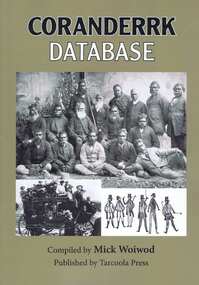
Mixed media - Book and CD, Coranderrk Database: compiled by Mick Woiwod, 2012
... coranderrk...healesville...Coranderrk was an Aboriginal station near Healesville (1863-1924). ...As the 150th anniversary of the founding of Coranderrk station (2013) approaches, detailed information such as this will be valuable to researchers. yarra valley aborigines victoria coranderrk healesville mick woiwod Signed by compiler Paperback. 242 pages, illus. ...Coranderrk was an Aboriginal station near Healesville (1863-1924). This book is a chronological outline of public records relating to Coranderrk Station. Full text is included for some records and provenance is given for each entry.As the 150th anniversary of the founding of Coranderrk station (2013) approaches, detailed information such as this will be valuable to researchers.Paperback. 242 pages, illus. Includes CD-Rom "Coranderrk database compiled by Mick Woiwod.Signed by compileryarra valley, aborigines victoria, coranderrk, healesville, mick woiwod -
 Marysville & District Historical Society
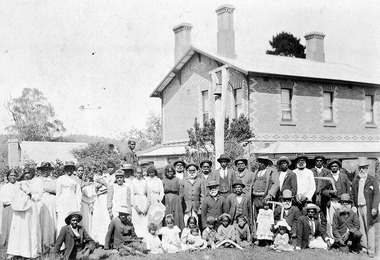
Photograph (item) - Black and white photograph, Unknown
... coranderrk...john green...kulin nation...healesville...An early black and white photograph of the residents of Coranderrk Aboriginal Station near Healesville in Victoria....An early black and white photograph of the residents of Coranderrk Aboriginal Station near Healesville in Victoria....An early black and white photograph of the residents of Coranderrk Aboriginal Station near Healesville in Victoria. An early black and white photograph of the residents of Coranderrk Aboriginal Station near Healesville in Victoria. coranderrk john green kulin nation healesville An early black and white photograph of the residents of Coranderrk Aboriginal Station near Healesville in Victoria. ...An early black and white photograph of the residents of Coranderrk Aboriginal Station near Healesville in Victoria.An early black and white photograph of the residents of Coranderrk Aboriginal Station near Healesville in Victoria.coranderrk, john green, kulin nation, healesville -
Marysville & District Historical Society
Article (item) - Museum Victoria Australia Article, Museum Victoria Australia, Aboriginal Land, Unknown
... ...healesville...coranderrk...A brief history of the Kulin clan in Victoria. kulin clan great dividing range yarra river goulburn river tonne-be-wong toole-be-wong donne-be-wong mount riddell ben cairn donna buang port phillip settlement john batman james dredge port phillip protectorate for aborigines duang wurrung king parrot creek acheron river mitchellstown william le souef murchison woi wurrung boon wurrung warrandyte mordialloc little river william thomas acheron station mohican run john green mohican station badger creek healesville coranderrk black's spur christmas bush prostanthera lasianothos geringdah A brief history of the Kulin clan in Victoria. ...A brief history of the Kulin clan in Victoria.A brief history of the Kulin clan in Victoria.kulin clan, great dividing range, yarra river, goulburn river, tonne-be-wong, toole-be-wong, donne-be-wong, mount riddell, ben cairn, donna buang, port phillip settlement, john batman, james dredge, port phillip protectorate for aborigines, duang wurrung, king parrot creek, acheron river, mitchellstown, william le souef, murchison, woi wurrung, boon wurrung, warrandyte, mordialloc, little river, william thomas, acheron station, mohican run, john green, mohican station, badger creek, healesville, coranderrk, black's spur, christmas bush, prostanthera lasianothos, geringdah -
Marysville & District Historical Society
Article (item) - Newspaper article, The Alexandra and Eildon Standard, Indigenous history in the shire after colonisation, 08-03-2017
... ...healesville...coranderrk...A newspaper article regarding indigenous history in the Murrindindi Shire after colonisation of the region. alexandra kulin taungurung goulburn woi wurrung yarra acheron river little river dandenong ranges land board aboriginal guardian william thomas aboriginal station lands minister acheron station mohican run rubicon river cathedral mountain john green mohican station upper yarra yarra tribe woori yallock hoddles creek yarra river badger creek healesville coranderrk christmas bush prostanthera lasianthos black's spur Wednesday, March 8, 2017 A newspaper article regarding indigenous history in the Murrindindi Shire after colonisation of the region. ...A newspaper article regarding indigenous history in the Murrindindi Shire after colonisation of the region.A newspaper article regarding indigenous history in the Murrindindi Shire after colonisation of the region.Wednesday, March 8, 2017alexandra, kulin, taungurung, goulburn, woi wurrung, yarra, acheron river, little river, dandenong ranges, land board, aboriginal guardian, william thomas, aboriginal station, lands minister, acheron station, mohican run, rubicon river, cathedral mountain, john green, mohican station, upper yarra, yarra tribe, woori yallock, hoddles creek, yarra river, badger creek, healesville, coranderrk, christmas bush, prostanthera lasianthos, black's spur -
Marysville & District Historical Society
Article (item) - Book Extract, Aboriginal History, Unknown
... ...healesville...coranderrk...The extract also covers current (1991) status of Aboriginal affairs and European settlement of the area. kulin nation woiworung taungurong bunurong watherong jajowrong wurrundjeri-willam waring-ilam-balluk goulburn valley acheron valley upper goulburn district eildon-thornton eildon homestead o'rourke thornton assistant protector thomas yarra valley kilmore mount william jt gellibrand william buckley major mitchell port phillip murray river yorta yorta yowung-illam-balluk waring-illam-balluk ngurai-illam-wurrung kurnai nation protectorate system victoria george robinson chief protector willam thomas james dredge edward parker charles sievewright central board for the protection of aborigines presbyterian mission anglican mission moravian mission wonga munnarin beaning murrin murrin parugean baruppin koo-gurrin acheron river little river acheron run peter snodgrass stephen jones barak dividing range black spur watts river badger creek healesville coranderrk victorian christmas bush aboriginal and torres strait islander heritage protection act 1984 archaelological and aboriginal relics preservation act 1972 camp jungai rubicon warrawa college victorian archaeological survey hume and hovell molesworth broadford william hamilton alexandra mansfield avenel tallarook worrough john cotton trawool valley seymour pyalong gold mining central victoria strath creek reedy creek yea jamieson marysville jordan goldfields comet mine wandong melbourne-albury railway rabbit plague narbethong lord kitchener puckapunyal military camp 1944 decentralisation policy eildon weir hume freeway bypass timber industry australian paper manufacturers mill An extract from a book regarding a brief history of the Kulin nation of the North Central district of Victoria. ...An extract from a book regarding a brief history of the Kulin nation of the North Central district of Victoria.An extract from a book regarding a brief history of the Kulin nation of the North Central district of Victoria. This history covered is both prior to European history and post-European history. The extract also covers current (1991) status of Aboriginal affairs and European settlement of the area.kulin nation, woiworung, taungurong, bunurong, watherong, jajowrong, wurrundjeri-willam, waring-ilam-balluk, goulburn valley, acheron valley, upper goulburn district, eildon-thornton, eildon homestead, o'rourke, thornton, assistant protector thomas, yarra valley, kilmore, mount william, jt gellibrand, william buckley, major mitchell, port phillip, murray river, yorta yorta, yowung-illam-balluk, waring-illam-balluk, ngurai-illam-wurrung, kurnai nation, protectorate system, victoria, george robinson, chief protector, willam thomas, james dredge, edward parker, charles sievewright, central board for the protection of aborigines, presbyterian mission, anglican mission, moravian mission, wonga, munnarin, beaning, murrin murrin, parugean, baruppin, koo-gurrin, acheron river, little river, acheron run, peter snodgrass, stephen jones, barak, dividing range, black spur, watts river, badger creek, healesville, coranderrk, victorian christmas bush, aboriginal and torres strait islander heritage protection act 1984, archaelological and aboriginal relics preservation act 1972, camp jungai, rubicon, warrawa college, victorian archaeological survey, hume and hovell, molesworth, broadford, william hamilton, alexandra, mansfield, avenel, tallarook, worrough, john cotton, trawool valley, seymour, pyalong, gold mining, central victoria, strath creek, reedy creek, yea, jamieson, marysville, jordan goldfields, comet mine, wandong, melbourne-albury railway, rabbit plague, narbethong, lord kitchener, puckapunyal military camp, 1944 decentralisation policy, eildon weir, hume freeway bypass, timber industry, australian paper manufacturers mill -
Koorie Heritage Trust
Book, Buggy, Terry et al, Race relations in colonial Australia : an enquiry approach, 1982
... SI55) | Sydney (NSW SI56-05) | Healesville / Coranderrk (E Vic Yarra Valley SJ55-06) |.... - To 1900 | Poonindie (West SA SI53-11) | Southwest New South Wales (SW NSW SI54 SI55) | Sydney (NSW SI56-05) | Healesville / Coranderrk (E Vic Yarra Valley SJ55-06) | A history text for secondary students. ...A history text for secondary students. It explores three main areas of conflict in 19th century, Aboriginal relations with white settlers in Sydney area; Poonindie; Coranderrk; uses period documents.vi, 154 pages : illustrations, facsimiles, maps, portraits ; 26 cm.A history text for secondary students. It explores three main areas of conflict in 19th century, Aboriginal relations with white settlers in Sydney area; Poonindie; Coranderrk; uses period documents.australia -- race relations | race relations. australia, 1800-1900. for schools | australia -- race relations. | settlement and contacts - colonisation - 1851- | education - indigenous studies - secondary | race relations - violent - massacres, murders, poisonings etc. - to 1900 | poonindie (west sa si53-11) | southwest new south wales (sw nsw si54, si55) | sydney (nsw si56-05) | healesville / coranderrk (e vic yarra valley sj55-06) | -
 Eltham District Historical Society Inc
Photograph, Fay Bridge, Eastern boundary of former Warrandyte Aboriginal Reserve, North Warrandyte, 7 November 2016
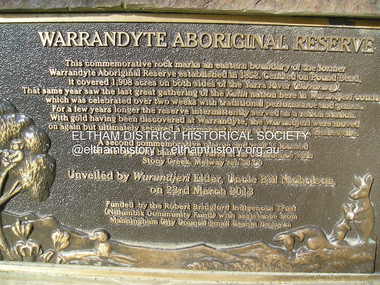
... For a few years longer the reserve intermittently served as a ration station.With gold having been discovered at Warrandyte, the Wurundjeri were moved on again but ultimately secured a permanent home at Coranderrk, Healesville. A second commemorative plaque and rock is located on the opposite bank of the Yarra and its confluence with Stony Creek. ...For a few years longer the reserve intermittently served as a ration station.With gold having been discovered at Warrandyte, the Wurundjeri were moved on again but ultimately secured a permanent home at Coranderrk, Healesville. A second commemorative plaque and rock is located on the opposite bank of the Yarra and its confluence with Stony Creek. ...Two bronze commemorative plaques on rocks, unveiled by Wurundjeri Tribe Council Elders, mark two eastern boundaries of the former Warrandyte Aboriginal Reserve on the north and south sides of the Yarra. This project was initiated by Nillumbik Reconciliation Group in close association with Reconciliation Manningham and the Wurundjeri Tribe Council, as a means of commemorating the last great corroboree of the Kulin Nation which was held at Pound Bend in March 1852. This plaque is on the Nillumbuk side of the Yarra, accessed via The Boulevard, North Warrandyte. The plaque is set on a rock approximately 50 metres before the turning circle at the end of The Boulevard. Plaque : Warrandyte Aboriginal Reserve This commemorative rock marks an eastern boundary of the former Warrandyte Aboriginal Reserve established in 1852. Centred on Pound Bend, it covered 1,908 acres on both sides of the Yarra River (Birrarung). That same year saw the last great gathering of the Kulin nation here in Wurundjeri country which was celebrated over two weeks with traditional performance and games. For a few years longer the reserve intermittently served as a ration station.With gold having been discovered at Warrandyte, the Wurundjeri were moved on again but ultimately secured a permanent home at Coranderrk, Healesville. A second commemorative plaque and rock is located on the opposite bank of the Yarra and its confluence with Stony Creek. Melway ref : 23 C 9 Unveiled by Wurundjeri Elder, Uncle Bill Nicholson on 23rd March 2013 Funded by the Robert Bridgford Indigenous Trust (Nillumbik Community Fund) with assistance from Manningham City Council Small Grants Program Ref: Monument Autralia https://monumentaustralia.org.au/themes/culture/indigenous/display/99680-warrandyte-aboriginal-reserve-fay bridge collection, 2016-11-07, aboriginal reserve, north warrandyte, plaques, warrandyte aboriginal reserve -
 Emerald Museum & Nobelius Heritage Park
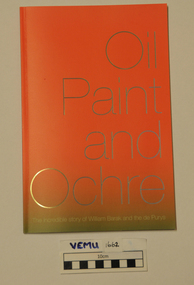
Book, Yarra Ranges Regional Museum, Oil Paint and Ochre, The incredible story of William Barak and the de Purys, 2015
... Also the establishment of Coranderrk Aborignal Station at Healesville and the growth of the wine industry in the Yarra Valley. ...Also the establishment of Coranderrk Aborignal Station at Healesville and the growth of the wine industry in the Yarra Valley. ...This book tells the story of William Barak and the de Pury family, where descendants of both sides still live today. It also has national significance as a story that explores the complex, first generation negotiations between Aboriginal and European people. Also the establishment of Coranderrk Aborignal Station at Healesville and the growth of the wine industry in the Yarra Valley. William Barak was a Wurundjeri leader and the de Purys' were a wine making family. The book complemented and exhibition called Oil Paint and Ochre 29 Aug - 22 Nov 2015.Soft cover paperbackwilliam barak, de purys, corranderk -
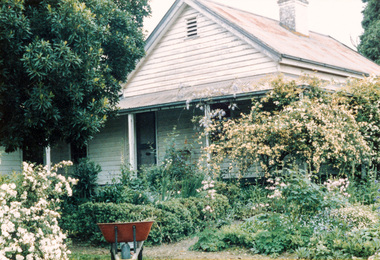 Eltham District Historical Society Inc
Photograph, M. North, Gulf Station, Yarra Glen, 26 October 1986, 26/10/1986
... We also had time to visit the Coranderrk Aboriginal Cemetery at Healesville on the way to Toolangi. ...We also had time to visit the Coranderrk Aboriginal Cemetery at Healesville on the way to Toolangi. ...[from EDHS Newsletter No. 51, November 1986:] RECENT ACTIVITIES: The associated events of the September meeting and the bus trip to Gulf Station and Toolangi proved quite successful. Caroline Phillips' talk and slides on Gulf Station were an excellent preparation for the trip. The bus trip was at a more leisurely pace than some we have done. There was adequate time to explore Gulf Station and its re-created old world garden. We also had time to visit the Coranderrk Aboriginal Cemetery at Healesville on the way to Toolangi. At Toolangi we were treated to an excellent guided tour of the "Singing Garden" of C.J. Dennis by Jan Williams, proprietor of the Arden Tea Rooms. As well as describing the various features of the gardens, Jan was able to introduce many anecdotes about the famous poet and his wife (who seemed to have a major responsibility for the creation of the gardens).Seven colour photographsactivities, gulf station -
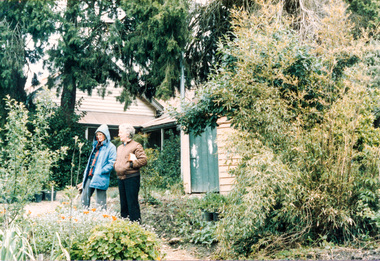 Eltham District Historical Society Inc
Photograph, M. North, Mary Reagan (left) and Rita Greenway, Gulf Station, Yarra Glen, 26 October 1986, 26/10/1986
... We also had time to visit the Coranderrk Aboriginal Cemetery at Healesville on the way to Toolangi. ...We also had time to visit the Coranderrk Aboriginal Cemetery at Healesville on the way to Toolangi. ...[from EDHS Newsletter No. 51, November 1986:] RECENT ACTIVITIES: The associated events of the September meeting and the bus trip to Gulf Station and Toolangi proved quite successful. Caroline Phillips' talk and slides on Gulf Station were an excellent preparation for the trip. The bus trip was at a more leisurely pace than some we have done. There was adequate time to explore Gulf Station and its re-created old world garden. We also had time to visit the Coranderrk Aboriginal Cemetery at Healesville on the way to Toolangi. At Toolangi we were treated to an excellent guided tour of the "Singing Garden" of C.J. Dennis by Jan Williams, proprietor of the Arden Tea Rooms. As well as describing the various features of the gardens, Jan was able to introduce many anecdotes about the famous poet and his wife (who seemed to have a major responsibility for the creation of the gardens).Colour photographactivities, gulf station -
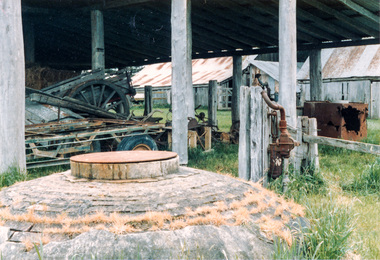 Eltham District Historical Society Inc
Photograph, M. North, The old well, Gulf Station, Yarra Glen, 26 October 1986, 26/10/1986
... We also had time to visit the Coranderrk Aboriginal Cemetery at Healesville on the way to Toolangi. ...We also had time to visit the Coranderrk Aboriginal Cemetery at Healesville on the way to Toolangi. ...[from EDHS Newsletter No. 51, November 1986:] RECENT ACTIVITIES: The associated events of the September meeting and the bus trip to Gulf Station and Toolangi proved quite successful. Caroline Phillips' talk and slides on Gulf Station were an excellent preparation for the trip. The bus trip was at a more leisurely pace than some we have done. There was adequate time to explore Gulf Station and its re-created old world garden. We also had time to visit the Coranderrk Aboriginal Cemetery at Healesville on the way to Toolangi. At Toolangi we were treated to an excellent guided tour of the "Singing Garden" of C.J. Dennis by Jan Williams, proprietor of the Arden Tea Rooms. As well as describing the various features of the gardens, Jan was able to introduce many anecdotes about the famous poet and his wife (who seemed to have a major responsibility for the creation of the gardens).Colour photographactivities, gulf station -
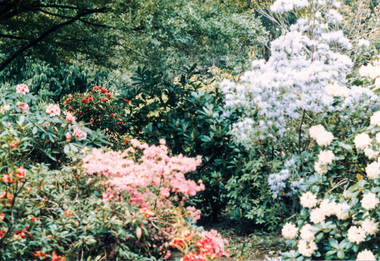 Eltham District Historical Society Inc
Photograph, M. North, Azaleas in "The Singing Garden", previous home of C.J. Dennis, Toolangi, 26 October 1986, 26/10/1986
... We also had time to visit the Coranderrk Aboriginal Cemetery at Healesville on the way to Toolangi. ...We also had time to visit the Coranderrk Aboriginal Cemetery at Healesville on the way to Toolangi. ...[from EDHS Newsletter No. 51, November 1986:] RECENT ACTIVITIES: The associated events of the September meeting and the bus trip to Gulf Station and Toolangi proved quite successful. Caroline Phillips' talk and slides on Gulf Station were an excellent preparation for the trip. The bus trip was at a more leisurely pace than some we have done. There was adequate time to explore Gulf Station and its re-created old world garden. We also had time to visit the Coranderrk Aboriginal Cemetery at Healesville on the way to Toolangi. At Toolangi we were treated to an excellent guided tour of the "Singing Garden" of C.J. Dennis by Jan Williams, proprietor of the Arden Tea Rooms. As well as describing the various features of the gardens, Jan was able to introduce many anecdotes about the famous poet and his wife (who seemed to have a major responsibility for the creation of the gardens).Three colour photographsactivities, arden, c.j. dennis, toolangi -
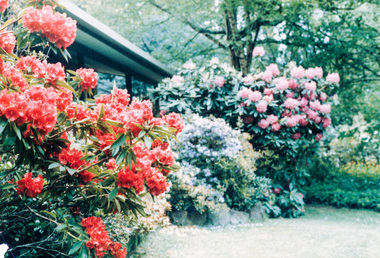 Eltham District Historical Society Inc
Photograph, M. North, Rhododendrons in "The Singing Garden", previous home of C.J. Dennis, Toolangi, 26 October 1986, 26/10/1986
... We also had time to visit the Coranderrk Aboriginal Cemetery at Healesville on the way to Toolangi. ...We also had time to visit the Coranderrk Aboriginal Cemetery at Healesville on the way to Toolangi. ...[from EDHS Newsletter No. 51, November 1986:] RECENT ACTIVITIES: The associated events of the September meeting and the bus trip to Gulf Station and Toolangi proved quite successful. Caroline Phillips' talk and slides on Gulf Station were an excellent preparation for the trip. The bus trip was at a more leisurely pace than some we have done. There was adequate time to explore Gulf Station and its re-created old world garden. We also had time to visit the Coranderrk Aboriginal Cemetery at Healesville on the way to Toolangi. At Toolangi we were treated to an excellent guided tour of the "Singing Garden" of C.J. Dennis by Jan Williams, proprietor of the Arden Tea Rooms. As well as describing the various features of the gardens, Jan was able to introduce many anecdotes about the famous poet and his wife (who seemed to have a major responsibility for the creation of the gardens).Colour photographactivities, arden, c.j. dennis, toolangi -
Marysville & District Historical Society
Article (item) - Magazine Article, Coranderrk-A Station Never a Mission, Unknown
... coranderrk station...dr marie hansen fels...healesville...A magazine article on the history of Coranderrk based on a historical component of a survey of Coranderrk Station. coranderrk coranderrk station dr marie hansen fels healesville and district aboriginal community john green healesville acheron river mohican native police corps merri creek closer settlement act badger creek hops cattle royal commission of 1877 board of enquiry 1881 lake tyers A magazine article on the history of Coranderrk based on a historical component of a survey of Coranderrk Station. ...A magazine article on the history of Coranderrk based on a historical component of a survey of Coranderrk Station.A magazine article on the history of Coranderrk based on a historical component of a survey of Coranderrk Station.coranderrk, coranderrk station, dr marie hansen fels, healesville and district aboriginal community, john green, healesville, acheron river, mohican, native police corps, merri creek, closer settlement act, badger creek, hops, cattle, royal commission of 1877, board of enquiry 1881, lake tyers -
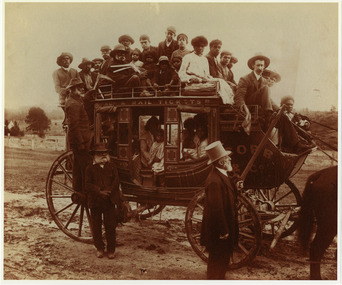 Marysville & District Historical Society
Photograph (item) - Black and white photograph, Nicholas John Caire, 1884
... coranderrk station...mr john cato...aboriginal station...john green...healesville...An early black and white photograph taken by Nicholas John Caire in 1884, of a large group of Aborigines on board a Cobb & Co Coach on their way to Coranderrk Aboriginal Settlement. nicholas john caire cobb & co coranderrk station mr john cato aboriginal station john green healesville badger creek An early black and white photograph taken by Nicholas John Caire in 1884, of a large group of Aborigines on board a Cobb & Co Coach on their way to Coranderrk Aboriginal Settlement. ...An early black and white photograph taken by Nicholas John Caire in 1884, of a large group of Aborigines on board a Cobb & Co Coach on their way to Coranderrk Aboriginal Settlement.An early black and white photograph taken by Nicholas John Caire in 1884, of a large group of Aborigines on board a Cobb & Co Coach on their way to Coranderrk Aboriginal Settlement.nicholas john caire, cobb & co, coranderrk station, mr john cato, aboriginal station, john green, healesville, badger creek -
Healesville Sanctuary Heritage Centre
Newspaper - Newspaper Cutting, Report, The Herald Melbourne, The Sanctuary, 15 January 1946
... Healesville Sanctuary. And if the Sanctuary is to prosper it must be extended to take in part of the old Coranderrk reservation. ...Loose talk about the bad conditions at Healesville Sanctuary. And if the Sanctuary is to prosper it must be extended to take in part of the old Coranderrk reservation.photocopy Loose talk about the bad conditions at Healesville Sanctuary. And if the Sanctuary is to prosper it must be extended to take in part of the old Coranderrk reservation.1940s -
Healesville Sanctuary Heritage Centre
Newspaper - Cutting, Endacott, Frank, Sanctuary at Healesville, 17 March 1963
... 1960s Sanctuary escapes fire which hit Coranderrk bushlands but writer states Sanctuary authorities have failed to put in place preventative want the council to close public road which gives access for firefighters; by Frank Endacott. This item has an inscription and legibility of the text is fair. original x 1 photocopy x 1 Sanctuary at Healesville Newspaper Cutting Endacott, Frank The Age, Melbourne ...Sanctuary escapes fire which hit Coranderrk bushlands but writer states Sanctuary authorities have failed to put in place preventative want the council to close public road which gives access for firefighters; by Frank Endacott.original x 1 photocopy x 1non-fictionSanctuary escapes fire which hit Coranderrk bushlands but writer states Sanctuary authorities have failed to put in place preventative want the council to close public road which gives access for firefighters; by Frank Endacott.1960s -
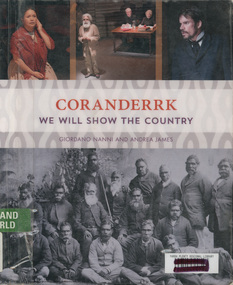 Eltham District Historical Society Inc
Book, Giordano Nanni et al, Coranderrk; We will show the country, 2013
... Coranderrk...First Nations People...Healesville...Retrieved from http://www.minutesofevidence.com.au/education/coranderrk-we-will-show-the-country-book/ Aboriginal Australians Coranderrk First Nations People Healesville indigenous history Performance Play Ex Yarra Plenty Regional Library copy Paperback 224 pages; 23 x 18.8 x 1.6cm Coranderrk; We will show the country Book Book Giordano Nanni Andrea James Aboriginal Studies Press ...Comprises twenty-three extracts from the Minutes of Evidence of the Coranderrk Inquiry, accompanied by an analysis of the historical text and context. The book relies strongly on primary-source materials and accurately references historical analysis from scholarly and Aboriginal perspectives. This book is derived from a verbatim-theatre performance in which professional actors portrayed the witnesses who gave evidence before the 1881 Coranderrk Inquiry.; Inscriptions and Markings: illustrations, photographs, facsimiles, maps, portraits About the book One of the first sustained campaigns for justice, land rights and self-determination in colonial Australia was undertaken by the Aboriginal people of Coranderrk reserve in central Victoria. Despite having created an award-winning farm they were targeted for removal to make way for white settlement. As skilled communicators and negotiators, they lobbied the government, in alliance with their white supporters, and succeeded in triggering a Parliamentary Inquiry in 1881. Coranderrk – We Will Show The Country derives from a unique verbatim-theatre performance where professional actors brought to life the witnesses who gave evidence before the 1881 Parliamentary Coranderrk Inquiry. Rescued from dusty archives, and including renowned Wurundjeri leader, William Barak, those witnesses continue to speak to contemporary audiences. Here, their powerful petitioning can be read alongside that of their non-Aboriginal allies, and those who would move them off their land. The book features a concise and accessible history of the Coranderrk Aboriginal Station and of the events that led to the appointment of the 1881 Parliamentary Coranderrk Inquiry. The book also contains a special edition of the verbatim script which has been annotated and referenced so as to provide a blueprint of how the original minutes of evidence from the 1881 Parliamentary Coranderrk Inquiry were adapted into a theatre script. Each scene of the play has also been introduced with a short biography of each character and a discussion of the key themes raised in their testimony. Supplementing the verbatim script of the performance, the book includes a range of historical images and stills from the ILBIJERRI Theatre Company’s production. Coranderrk – We Will Show The Country celebrates the spirit of collaboration between black and white in pursuit of justice, and offers an engaging way to learn about our past – and to think about our future. Coranderrk - We Will Show The Country. (2023, October 19). Retrieved from http://www.minutesofevidence.com.au/education/coranderrk-we-will-show-the-country-book/Ex Yarra Plenty Regional Library copyaboriginal australians, coranderrk, first nations people, healesville, indigenous history, performance, play -
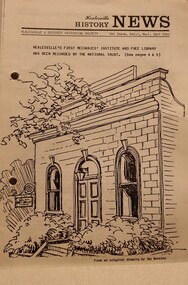 Healesville and District Historical Society
Newsletter (Item) - Volume 1; No. 1, Healesville History News, July 1984, July-1984
... Contents: - The Calling of Mt Riddell (Frank Endacott), - With its wooden walls still shadowed by lilacs (Pam Firth), - Mechanic Institute (Eric and Pam Firth), - Coranderrk Aboriginal Cemetery , - Our Mob: Interesting Healesville connections (Connections to Captain Cook philately and Red Baron of WW1 notoriety), - Plus more...Mt Riddell Mechanic Institute Coranderrk Periodic member newsletter of the Healesville & District Historical Society. ...Contents: - The Calling of Mt Riddell (Frank Endacott), - With its wooden walls still shadowed by lilacs (Pam Firth), - Mechanic Institute (Eric and Pam Firth), - Coranderrk Aboriginal Cemetery , - Our Mob: Interesting Healesville connections (Connections to Captain Cook philately and Red Baron of WW1 notoriety), - Plus moreThe first newsletter of the Society was issued July 1984 and has been published continuously ever since on a quarterly basis....mt riddell, mechanic institute, coranderrk -
 Healesville and District Historical Society
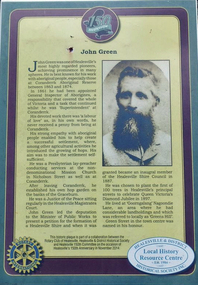
Sign - John Green & Coranderrk, Green Street - Healesville Historic Walk
... Green Street - Healesville Historic Walk Sign John Green & Coranderrk ...Information sign at corner of Green Street and Maroondah Highway, Healesville.See image. -
 Healesville and District Historical Society
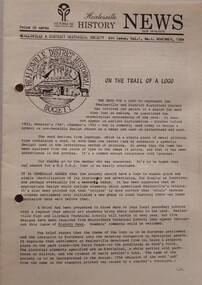
Newsletter (Item) - Volume 1; No. 4, Healesville History News, November 1984, November-1984
... Contents: On the trail of a logo Billy Hughes visited Healesville Miss Mabel Sutherland Morwell Hodges A boy from Coranderrk Pam Firth resigns Historic Photographic exhibition catalogue and program Echoes of Healesville Victoria 150th anniversary programme - Plus more...Contents: On the trail of a logo Billy Hughes visited Healesville Miss Mabel Sutherland Morwell Hodges A boy from Coranderrk Pam Firth resigns Historic Photographic exhibition catalogue and program Echoes of Healesville Victoria 150th anniversary programme - Plus more The first newsletter of the Society was issued July 1984 and has been published continuously ever since on a quarterly basis. ...Contents: On the trail of a logo Billy Hughes visited Healesville Miss Mabel Sutherland Morwell Hodges A boy from Coranderrk Pam Firth resigns Historic Photographic exhibition catalogue and program Echoes of Healesville Victoria 150th anniversary programme - Plus moreThe first newsletter of the Society was issued July 1984 and has been published continuously ever since on a quarterly basis. The collection provides a valuable resource about the Society's activities, office bearers and committee members and, especially, many relevant items of local historical interest. -
 Whitehorse Historical Society Inc.
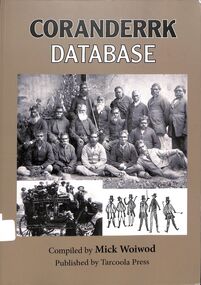
Book, Coranderrk Database, 2012
... Coranderrk was an aboriginal station established in the Yarra Valley outside Healesville in 1863...Coranderrk was an aboriginal station established in the Yarra Valley outside Healesville in 1863 Coranderrk Aborigines Aboriginal Languages A book and computer database detailing the story of Coranderrk. ...A book and computer database detailing the story of Coranderrk.non-fictionA book and computer database detailing the story of Coranderrk.coranderrk, aborigines, aboriginal languages -
![Scene near Corranderrk Station / [by] Nicholas Caire, circa 1876](/media/collectors/550653872162f11fb04854aa/items/57774ae0d0cdd10a5c12f2d7/item-media/57774b61d0cdd10a5c132dac/item-fit-380x285.jpg?cb=6) Kew Historical Society Inc
Kew Historical Society IncPhotograph, Anglo-Australasian Photographic Company, Scene near Corranderrk Station, c. 1876
... coranderrk aboriginal station aborigine yarra river badger creek first peoples aboriginal and torres straight islander printed in ink on support l.c.: SCENE NEAR "CORRANDERRK" STATION. / COPYRIGHT REGISTERED. printed in ink on support reverse c.: VIEWS OF VICTORIA. / (GENERAL SERIES.) / No. 9. / SCENE NEAR "CORRANDERRK" STATION. / This scene was taken from the hill near Rourke's Bridge, on the Healesville Road, and displays in the foreground / the River Yarra. ...Nicholas Caire was born on Guernsey in the Channel Islands in 1837. He arrived in Adelaide with his parents in about 1860. In 1867, following photographic journeys in Gippsland, he opened a studio in Adelaide. From 1870 to 1876 he lived and worked in Talbot in Central Victoria. In 1876 he purchased T. F. Chuck's studios in the Royal Arcade Melbourne. In 1885, following the introduction of dry plate photography, he began a series of landscape series, which were commercially successful. As a photographer, he travelled extensively through Victoria, photographing places few of his contemporaries had previously seen. He died in 1918. Reference: Jack Cato, 'Caire, Nicholas John (1837–1918)', Australian Dictionary of Biography. The 1860s marked the beginning of the era of reserves and missions. Six Aboriginal reserves were established during the 1860s. These were under the control of the Board for the Protection of Aborigines. Four were Christian missions receiving government aid. These were Lake Tyers (Anglican) and Ramahyuck (Presbyterian/Moravian) in eastern Victoria for the Gunai/Kurnai clans; Ebenezer (Moravian) in north-west Victoria for the clans of the Wimmera and Lower Murray; and Lake Condah (Anglican) in south-west Victoria. The other two were secular government controlled reserves: Framlingham which, like Lake Condah, was established for the Mara-speaking Gunditjmara and Kirrae-wurrung people of south-west Victoria; and Coranderrk, located about 60 kilometres north-east of Melbourne, for the Kulin clans of central Victoria. In 1863, after a period of devastation to the Kulin people, Coranderrk was established at the junction of the Yarra River and Badger Creek. Reference: http://coranderrk.com/, accessed 24 December 2016An original, rare photograph from the series 'Views of Victoria: General Series' by the photographer, Nicholas Caire (1837-1918). The series of 60 photographs that comprise the series was issued c. 1876 and reinforced a neo-Romantic view of the Australian landscape to which a growing nationalist movement would respond. Nicholas Caire was active as a photographer in Australia from 1858 until his death in 1918. His vision of the Australian bush and pioneer life had a counterpart in the works of Henry Lawson and other nationalist poets, authors and painters.Albumen silver photograph mounted on boardprinted in ink on support l.c.: SCENE NEAR "CORRANDERRK" STATION. / COPYRIGHT REGISTERED. printed in ink on support reverse c.: VIEWS OF VICTORIA. / (GENERAL SERIES.) / No. 9. / SCENE NEAR "CORRANDERRK" STATION. / This scene was taken from the hill near Rourke's Bridge, on the Healesville Road, and displays in the foreground / the River Yarra. The roadway which is seen in the mid-distance has lately been constructed by the Government, / as the old tracks which formerly existed, were liable to be swamped by the periodical overflowing of the River. Mount / Ridell can be seen in the extreme distance immediately behind the roadway. / Corranderrk is the local habitation / for the natives of this district, and is situated on the right hand side of the picture, about a mile and a half / from the roadway. printed in ink on support reverse l.c.l.: J.W. FORBES, Agent, printed in ink on support reverse l.c.: ANGLO-AUSTRALASIAN PHOTOGRAPHIC COMPANY, MELBOURNE. printed in ink on support reverse l.c.r.: 10 Temple Court, Collins Street West.nicholas caire (1837-1918), coranderrk aboriginal station, aborigine, yarra river, badger creek, first peoples, aboriginal and torres straight islander -
 City of Melbourne Libraries
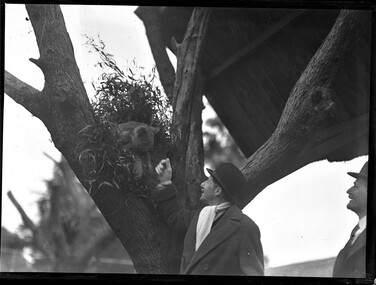
Photograph, Bull, Hugh Jones, 1897-1993, Vice-regal visit to zoo: Governor (Lord Huntingfield) and koala
... In 1934, a “Wild Zoo”, the Sir Colin Mackenzie Sanctuary, opened on 32 hectares of land, formerly part of Coranderrk Aboriginal Reserve in the Yarra Valley, exclusively displaying Australian native animals, birds and reptiles. It was later renamed Healesville...In 1934, a “Wild Zoo”, the Sir Colin Mackenzie Sanctuary, opened on 32 hectares of land, formerly part of Coranderrk Aboriginal Reserve in the Yarra Valley, exclusively displaying Australian native animals, birds and reptiles. It was later renamed Healesville ...Published: (1934, June 26). The Age (Melbourne, Vic. : 1854 - 1954), p. 11. Published title: VICE-ROYALTY GREETS THE KING OF THE BEASTS AT THE ZOO. Published caption: Lord Huntingfield experienced a pleasant “induction ceremony” as Patron of the Royal Zoological and Acclimatisation Society yesterday, when he made a tour of the Zoological Gardens. The picture shows the Governor, accompanied by Lady Huntingfield, inspecting the King of Beasts, who is submitting to a little playful treatment from the Director of the Gardens, Mr. Wilkie, while the Director whispers in his ear that a distinguished visitor has come to see him. (Inset), is a picture of Lord Huntingfield greeting one of the Koalas. Trove article identifier: http://nla.gov.au/nla.news-article204818472 Description: A man wearing a hat, scarf and overcoat reaches up to pat a koala in a tree watched by a man in a hat and suit. Research by project volunteer, Fiona Collyer: In 1932, the Zoo built an Australian native animal enclosure which visitors could enter and closely view koalas, wallabies, kookaburras and magpies all placed together. The branches of the trees in the enclosure were cut so that visitors could easily see and feed the koalas sitting in them. The cost to feed each koala fresh gum leaves was fifteen shillings per week. By 1924, Queensland was the last stronghold in Australia for the koala. They were functionally extinct in South Australia, only a few hundred in NSW, and an estimated population of 1000 animals remained in Victoria. There had been a six-month open season on koalas in Queensland in 1919 where over a million had been slaughtered, however with its vast, dense forests it was impossible to accurately know their numbers. Koala fur is tough, warm and waterproof and was in high demand from consumers in Canada, Britain and the US to make hats and gloves and for lining greatcoats. In 1927, with Queensland suffering a crippling drought and high unemployment, the cash-strapped McCormack Labor Government declared an “Open Season” on koalas and “opossums” for their skins, for the month of August. (Possums were often called “opossums” at this time but they are actually possums). There were widespread protests from many groups including the Nature Lovers League, Wild Life Preservation Society of Australia, Queensland Museum, C.W.A. Royal Australian Ornithologist Union, Boy Scouts, religious and women’s groups. There were letters to newspapers from ordinary people, editorials and pleas to women to refuse to wear or purchase koala fur. People questioned the masculinity of koala hunters as it was felt that no proper bushman or sportsman would kill such a defenceless creature. The Brisbane Courier newspaper led the campaign, devoting six columns a day to “Spare the Bear”. Author Vance Palmer sent an impassioned letter to the editor of the The Brisbane Courier, 19 July 1927: “Sir- It is be hoped that the disgust which all humane people have felt at the declaration of an open season for native bears in August will not be allowed to fade away until some protest... so overwhelming and effective that the question will never be raised again. For the shooting of our harmless and loveable native bear is nothing less than barbarous. His case is entirely different from that of other furred animals. No one has ever accused him of spoiling the farmers’ wheat, eating the squatters’ grass or even spreading the prickly pear. There is not a social vice that can be put down to his account. In addition, he is comparatively defenceless. He affords no sport to the gunman, and can be trusted to present a sitting target to the creature mean enough to aim at him. For this reason he has been almost blotted out already from some areas, in days when our fauna and flora were held in such little regard that the settlers’ first instinct was to shoot every strange animal and to sink his axe into every unfamiliar tree.” The Anglican Archbishop of Brisbane, Gerald Sharp, had his letter published in The Brisbane Courier on 16 July 1927: “Sir... The extermination of fauna so distinctive of our country, especially of such harmless and pretty creatures as our native bears, seems to me a shameful thing, and this is likely to mean their extermination.” But it was all to no avail. Known as “Black August”, the government was unmoved by the public’s outrage. 10,000 licences were issued to hunters and “the slaughter of the innocents” went ahead. The newspapers were full of stories of dreadful cruelty against the helpless, benign creatures by the heartless hunters who not only used guns and spotlights but wire snares and cyanide baits so that pelts wouldn’t be damaged. Infant koalas were left orphaned and unlikely to survive without their mothers. Top quality pelts were sold at an average price of 56 shillings and 9 pence per dozen, poor quality skins for as little as 2 1/2 pence each. In December 1927, the Minister for Agriculture and Stock, Mr W. Forgan Smith told the Parliament that during the August open season 597,985 koala pelts worth £139,595 had netted the state’s coffers £6000. 952,194 “opossum” pelts were sold and £9000 made for the State. The backlash that followed helped topple the Queensland Labor Government in 1929. The Wild Life Preservation Society of Australia lobbied the Prime Minister Mr Stanley Bruce to refuse to issue exportation permits for koala pelts and from 10 November 1927 the Commonwealth Government suspended the issuing of permits. In 1930, the Society made a direct appeal to USA President Herbert Hoover and he signed an order prohibiting the importation of koala and wombat fur to USA, eliminating a major market. Koala pelts were often deliberately mislabelled “wombat” to get around restrictions. The ban most likely saved the koala from probable extinction. Three years later the Australian Federal Government banned the export of koala products. This movement against koala killing was really the first conservation campaign in Australia. It raised awareness of the vulnerability of a beloved animal and eventually brought about national parks and national laws for their protection. By 1936, community opposition to possum open seasons was beginning. The koala was made a Protected Species in all states in 1937, meaning no one is allowed to harm a koala, however the laws protecting the gum trees they rely on for food and shelter are weak. The Australian Government estimates the wild koala population in Australia is between 225,000 and 500,000 in 2024. The Australian Koala Foundation estimates the national population at less than 60,000 in 2021 with a 30% decline in three years. Habitat loss from land clearing, dog attacks, road deaths, chlamydia, bushfires and drought exacerbated by climate change, continues to cause their decline. Over eight million koalas were killed for their pelts between 1888 and 1927. Any one of the annual harvests killed more koalas than are alive now. At this time, children were also being taught to appreciate Australian native animals. In 1933, “Blinky Bill: The Quaint Little Australian” book for children was published by Angus and Robertson. It was written and illustrated by New Zealand-born author Dorothy Wall and “Dedicated to my son Peter and all other Peters and Johns and Bobs and Toms and Marys and Bettys and Joans and Pats and all kind children.” The book tells the story of Blinky Bill - a mischievous, patched knickerbocker-wearing koala and his mother and father. The story has messages of conservation and instances of human unkindness and cruelty. Mr. and Mrs. Koala and young Blinky lead a mostly idyllic family life amongst a variety of other animals in the forest. However it all changes in chapter two, when Blinky Bill’s father is distressingly shot by a hunter. There is a harrowing description of Mr. Koala’s shooting and eventual death. “The Koala family lived so happily; never thinking of harm, or that anything could happen to disturb their little home, as all they asked for were plenty of fresh gum-leaves and the warm sun. They had no idea such things as guns were in the world or that a human being had a heart so cruel that he would take a pleasure in seeing a poor little body riddled with bullets hanging helplessly from the tree-top... That same being might just as well take his gun and shoot baby kookaburras, so helpless were they all and so trusting.” “Poor Mr. Koala one day was curled up asleep in his favourite corner, when the terrible thing happened. Bang! He opened his eyes in wonder. What was that? Did the limb of the tree snap where that young cub of his was skylarking? ... bang! again. This time he felt a stinging pain in his leg... Peering over the bough of the tree he saw a man on the ground with something long and black in his arms... Another bang and his ear began to hurt. Bang! again and now his little body was stinging all over. He grunted loudly and slowly climbed up the tree, calling Mrs. Koala and Blinky as he went. He managed to reach the topmost branch... Tears were pouring down his poor little face. He brushed them away with his front paws and cried just like a baby. Fortunately Mrs. Koala and Blinky Bill were hiding in the leaves quite motionless, and the shadows of the tree made them appear as part of it. The man with the gun stood and waited a long time, then walked away, whistling as he went - the only sound to be heard in the bush except the cries of the little bear far up in the tree.” Blinky and his mother quietly and fearfully wait for Mr. Koala to wake. In the morning, grunting and crying, they feel his lifeless body with their paws. Eventually Mrs. Koala realises that her husband is dead and that they need to move to a safe place. After travelling deeper into the forest, Mrs. Koala and Blinky meet koalas Mrs. Grunty and her son Snubby and she describes how she was captured as a baby by koala fur trappers to be a pet for a little girl. The trapper forgot to bring gum leaves for the koala so they try to feed her cake, milk and bananas, making her sick. The little girl’s father relays something he read in the paper: “During the year 1920 to 1921, two hundred and five thousand six hundred and seventy-nine koalas were killed and their skins sold to the fur market, under the name of wombat.” They place the koala in a box with a teddy bear for company. The baby koala’s health deteriorates and the alarmed trapper returns her to the bush. Mrs. Grunty tells Mrs. Koala that she and Blinky are the only bears that she has seen for ten years: “I remember well the little girl’s father telling her... that not so many years ago the bush was alive with us bears, from Queensland to the south of Victoria. Now, we are so rare that we have become a curiosity, something to put in zoos, for children to see; and actually in museums. I believe our grandparents sit there in glass cases, stuffed with something inside to make them appear alive, and, oh dear, glass eyes. In New South Wales, I think we could wander for miles from one corner to another and never meet a bear. I don’t know why we were all killed. As you know, we don’t eat the farmers’ crop or ruin their orchards. All we asked for were our own gum-trees.” At the end of the book, Dorothy tells her readers - “The kindest action of all would be to leave the koala baby in his own bushland, among his own playmates, with the sun, the sky, the birds, and the gum-trees, where he will grow to manhood and live for many years - happy as he should be.” In 1934, a “Wild Zoo”, the Sir Colin Mackenzie Sanctuary, opened on 32 hectares of land, formerly part of Coranderrk Aboriginal Reserve in the Yarra Valley, exclusively displaying Australian native animals, birds and reptiles. It was later renamed Healesville Sanctuary and is now managed by Melbourne Zoo and home to over 200 species of Australian native fauna. The Sanctuary is committed to rescuing, breeding, researching and raising awareness of the vulnerability of Australian animals. Andrew Arthur Wellesley Wilkie, 1853-1948, was Director of the Melbourne Zoo from 1923 to 1936 and was associated with the zoo for 70 years. He first worked as a horticultural assistant to Government botanist Baron Ferdinand von Mueller at the Botanical Gardens at the age of 13, along with his older brother David. One of Andrew’s jobs was to capture moths for the National Herbarium. In 1857, a group of prominent Melburnians assembled at St. Patrick’s Hall to form the Zoological Society of Victoria, with the aim of introducing animals and plants from overseas. It was conceived, “For the purposes of science and for that of affording the public the advantages of studying the habits of the animal creation in properly arranged zoological gardens.” The Victorian Government granted 32 acres (13 hectares) of land to the Zoological Society at the southern end of Richmond Paddock on the opposite bank to the Botanical Gardens. (This is where AAMI Stadium and Collingwood Football Club now stand.) In 1861, the Zoological Society of Victoria was renamed The Acclimatisation Society of Victoria. Unfortunately the Yarra River frontage was damp, swampy and subject to flooding, so the animals were briefly housed at the Botanical Gardens until in 1862, the City of Melbourne donated 55 acres (22 hectares) of land at Royal Park for the fledgling zoo. Baron von Mueller secured employment at Royal Park for Andrew and David and they helped to lay out the gardens, plant trees and take care of a collection of deer, pheasants, hares and partridges. Initially the zoo was used for the acclimatisation of animals recovering from the long voyage to Australia and for breeding them for sport. In 1872, the zoo bought two lions, a leopard and a cheetah that had been seized from circus showmen Keith and Phillips when they were unable to pay the bill of butcher Mr T K Bennet of Bourke Street. The first zoo director, Mr. Albert Le Souef, negotiated with captains of ships to buy animals at overseas ports they visited and soon a multitude of exotic species arrived, including a ten-year-old Indian elephant in 1878. In 1923, after being head keeper for some years, Andrew was appointed director of the zoo. By 1933, the zoo had 110 different species of animals, 200 species of birds and 72 species of reptiles under Andrew’s care. He had personally planted all but six trees and laid out the garden beds. As director he lobbied authorities for funds to build more humane enclosures for the animals. In June 1928, Table Talk magazine wrote of Andrew Wilkie: “Up at the Zoo there is a humble gentleman who is a lion among the lions, who knows the proper specific to employ when the boa constrictor has chilblains, and who is a friend and confidant of Queenie the elephant. His fount of zoological lore has never been plumbed. It is bottomless, like his good fellowship and geniality. Every day he may be seen somewhere in the grounds of that growing sanctuary for the strange and arresting fauna and creeping things of the world, and I assure you as one who is privy to his passion that that area and its inhabitants are rarely out of his thoughts.” Andrew retired from the zoo in 1936 at the age of 83 and in 1948 died at his home in Brunswick aged 94. He and his wife Josephine had six children. The Victorian Acclimatisation Society was founded in 1861 by Edward Wilson, 1813-1878, then owner and editor of The Argus newspaper. He said that Australian indigenous animals were practically useless, providing only “a little sport and an occasional meal”. The Society believed that Australia’s plants and animals were vastly inferior to those in Europe. They wanted to introduce and acclimatise to Victoria “all innoxious animals, birds, fishes, insects and vegetables, whether useful or ornamental” for sport and for the table, and to spread indigenous animals and plants from the colony around the world. Their motto was “if it lives, we want it”. The Society was primarily responsible for introducing sparrows, starlings, sambar and hog deer, ostriches, brown trout, blackberries, and carp to the Murray River. They released the European songbirds, thrush and blackbird to quell the homesickness of British settlers. The Society also sent Australian animals like platypus, echidnas, kangaroos and koalas to Europe for scientific and novelty purposes. Thomas Austin, a wealthy sheep farmer of Barwon Park, Winchelsea (property now owned by the National Trust) was a member and in 1859 he introduced hares, blackbirds, thrushes and partridges onto his property. He is probably best known for introducing 24 breeding rabbits onto his estate as game for shooting parties. Thomas quipped, “The introduction of a few rabbits could do little harm and might provide a touch of home, in addition to a spot of hunting." In 2022, genomic data confirmed that Australia’s feral rabbit population is entirely descended from these rabbits. Biological control has brought the rabbit population down from an estimated high of 10 billion rabbits in the 1920s to approximately 200 million today, inhabiting 70% of Australian landmass (5.3 million square kilometres). In 1872, the Acclimatisation Society was renamed The Zoological and Acclimatisation Society of Victoria and they focused on importing exotic animals for display purposes to the zoo. In 1937, the Royal Acclimatisation Society of Victoria was recreated as the Zoological Board of Victoria with a focus on research of native animals threatened with extinction. In an editorial for The Argus newspaper, 16 March 1856, Edward Wilson lamented: "...this country has been shamelessly stolen from the blacks. Had they been like the New Zealanders or the North American Indians, we should have bought their land, and supplied them with the means of living when we took it... In less than twenty years we have nearly swept them off the face of the earth. We have shot them down like dogs. In the guise of friendship we have issued corrosion sublimate in their damper, and consigned whole tribes to the agonies of an excruciating death. We have made them drunkards, and infected them with disease which has rotted the bones of their adults, and made such few children as are born amongst them a sorrow and a torture from the very instant of their birth. We have made them outcasts on their own land, and are rapidly consigning them to entire annihilation. There are but a few of them left, comparatively. This is what we would do for that few. We would feed and clothe every one of them.” [Note: this last sentence is italicized in the original newspaper article text]. Lord Huntingfield, (William Charles Arcedeckne Vanneck) 1883-1969, Governor of Victoria 1934-1939, was a British Conservative Party politician and the first ever Australian-born Governor of an Australian state (although he was always considered British). He was patron of the Royal Zoological and Acclimatisation Society of Victoria and was acting Governor-General for six months during the absence of Lord Gowie in 1938. Lady Huntingfield (née Margaret Eleanor Crosby) 1884-1943, his American-born wife showed great interest in social welfare and the advancement of women and children. She was president of the City Newsboys Society and Patroness of the Girls Friendly Society. In 1937, rose breeder Alister Clark named a yellow hybrid tea rose for her. In 1940, the City of Melbourne opened the Lady Huntingfield Free Kindergarten in North Melbourne, now the Lady Huntingfield Early Learning and Family Services Centre. Lady Huntingfield died in London in 1943 after her house was bombed during a German airstrike. The Lady Huntingfield Memorial Scholarship was established after the City of Melbourne raised £1000 in a public appeal conducted in her memory for students undertaking a Social Work degree at the University of Melbourne. It is awarded annually to this day. The Queen Victoria Hospital named a bed in her honour. References: VICE-ROYALTY GREETS THE KING OF BEASTS AT THE ZOO. (1934, June 26). The Age (Melbourne, Vic. : 1854 - 1954), p. 11. Retrieved August 23, 2024, from http://nla.gov.au/nla.news-article204818472 Prominent Personalities ANDREW WILKIE (1928, June 7). Table Talk (Melbourne, Vic. : 1885 - 1939), p. 15. Retrieved August 29, 2024, from http://nla.gov.au/nla.news-article146562949 'Edward Wilson (journalist)', Wikipedia, https://en.wikipedia.org/wiki/Edward_Wilson_(journalist) 'Thomas Austin (pastoralist)', Wikipedia, https://en.wikipedia.org/wiki/Thomas_Austin_(pastoralist) 'The Acclimatisation Society was driven by misguided ideals about 'fixing nature' in Australia', ABC News, https://www.abc.net.au/news/2022-11-04/acclimatisation-society-introduced-species-history-listen/101588262?utm_campaign=abc_news_web&utm_content=link&utm_medium=content_shared&utm_source=abc_news_web Blinky Bill: the quaint little Australian (eBook); by Dorothy Wall, 1933, 2023, Project Gutenberg Australia, https://gutenberg.net.au/ebooks04/0400571h.html "Black August": Queensland's Open Season on koalas in 1927 (thesis); Glenn Fowler, 1993, Australian National University, https://www.savethekoala.com/wp-content/uploads/2018/11/Black-August.pdf Unfair game: Queensland's Open Season on koalas in 1927; Jacqui Donegan, 2000, University of Queensland, https://mesto-ku.narod.ru/koalas.pdf OPEN SEASON CONDEMNED. (1927, July 19). The Brisbane Courier (Qld. : 1864 - 1933), p. 15. Retrieved September 5, 2024, from http://nla.gov.au/nla.news-article21863465 COUNTRY WOMEN'S ASSOCIATION. (1927, July 30). The Brisbane Courier (Qld. : 1864 - 1933), p. 25. Retrieved September 20, 2024, from http://nla.gov.au/nla.news-article21866965 AUSTRALIA: Barnardo's children at Melbourne Park Zoo (1929), British Pathé, YouTube, https://www.youtube.com/watch?v=_Wcrbo_cHpI 'Kodak Cinegraph Compilation No 8', ACMI Collection, https://www.youtube.com/watch?v=MCrBng5RwFI KOALA SKINS. EXPORT BAN SOUGHT. (1927, August 4). The Brisbane Courier (Qld. : 1864 - 1933), p. 10. Retrieved September 15, 2024, from http://nla.gov.au/nla.news-article21868746 THE ABORIGINES. (1856, March 16). The Argus (Melbourne, Vic. : 1848 - 1957), p. 5. Retrieved September 28, 2024, from http://nla.gov.au/nla.news-article4833244 Koala Bears (1937), British Pathé, YouTube, https://www.youtube.com/watch?v=XbqgMtyuzwE Australian Koala Bear (Earliest Archive Footage: 1929), Pond5, https://www.pond5.com/stock-footage/item/152767491-australian-koala-bear-earliest-archive-footage-1929Photographer notations on slide: "Vice Regal visit to zoo B42".1930-1939, zoos, governors, koalas, conservation, possums, botanic gardens
