
Showing 21 items matching "country fire brigades board"
-
 Clunes Museum
Document, 1935
... ...Country Fire Brigades Board...6 x Foolscap size sheets of paper listing the Duties of the Country Fire Brigade Board Brigade Secretary. Dated August 1935...Sinclair, Secretary Sinclair Country Fire Brigades Board Secretarial Duties 6 x Foolscap size sheets of paper listing the Duties of the Country Fire Brigade Board Brigade Secretary. ...Document written by G. G. Sinclair, Secretary6 x Foolscap size sheets of paper listing the Duties of the Country Fire Brigade Board Brigade Secretary. Dated August 1935sinclair, country fire brigades board, secretarial duties -
 Clunes Museum
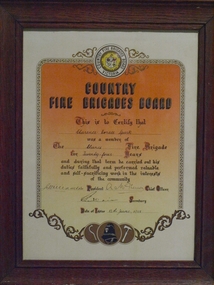
Certificate, 12TH JUNE 1941
... AWARDED BY THE COUNTRY FIRE BRIGADES BOARD OF VICTORIA ON THE 12TH JUNE 1941...FRAMED CERTIFICATE AWARDED TO CLARENCE HORACE SPARK, A MEMBER OF CLUNES FIRE BRIGADE FOR TWENTY-FOUR YEARS SERVICE BY THE COUNTRY FIRE BRIGADES BOARD OF VICTORIA 12TH JUNE 1941...AWARDED BY THE COUNTRY FIRE BRIGADES BOARD OF VICTORIA ON THE 12TH JUNE 1941 LOCAL HISTORY CERTIFICATES SPARK FIRE BRIGADE MRS.C.SPARK 15 EDWARD STREET, FOOTSCRAY 300 LATE OF ALBERT ST. ...AWARDED BY THE COUNTRY FIRE BRIGADES BOARD OF VICTORIA ON THE 12TH JUNE 1941FRAMED CERTIFICATE AWARDED TO CLARENCE HORACE SPARK, A MEMBER OF CLUNES FIRE BRIGADE FOR TWENTY-FOUR YEARS SERVICE BY THE COUNTRY FIRE BRIGADES BOARD OF VICTORIA 12TH JUNE 1941MRS.C.SPARK 15 EDWARD STREET, FOOTSCRAY 300 LATE OF ALBERT ST. NORTH CLUNES VICTORIA AUSTRALIAlocal history, certificates, spark, fire brigade -
Clunes Museum
Document - BOOKS, RULES AND DOCUMENTS FOR COUNTRY FIRE AUTHORITY, COUNTRY FIRE BRIGADE BOOKS
... .1 OFFICIAL FIRE BRIGADE BOOK, LIST OF MEMBERS WITH DATES OF SERVICE RECORD OF ATTENDANCE FROM 31/12/1938 TO 31/03/1944 STATEMENT OF EXPENDITURE OF MINOR SUPPLIES 1938 TO 1944 .2 RED BOOKLET COUNTRY FIRE BRIGADES BOARD REGULATIONS 1931 - 12 PAGES .3 RULES OF THE CLUNES FIRE BRIGADE, ESTABLISHED 1864 .4 BOOKLET - 25 PAGES COUNTRE FIRE AUTHORITY ACT 1944 EXTRACT FRIN TGE VUCTIRUAB GIVERNEBT GAZETTE NO 96 18/07/1945 .5 12 PAGES - POWERS AND DUTIES OF FIRE GRIGADES AND OFFICERS ETC. .6 CIRCULARCOMMITTEE 22/3/1944 .7 CIRCULAR01/112/1944 .8 LETTER FROM RURAL FIRE CONTROL COMMITTEE 22/03/1944 .9 THREE ENTRY FORMS "FORM OF ATTESTATION" .10 THREE ENTRY FORMS "FIRE UNDERWRITERS ASS. ....1 STICKER ON THE INSIDE: : THIS BOOK IS THE PROPERTY OF THE COUNTRY FIRE BRIGADE'S BOARD...CLUNES FIRE BRIGADE COUNTRY FIRE BRIGADE RURAL FIRE CONTROL COMMITTEE .1 STICKER ON THE INSIDE: : THIS BOOK IS THE PROPERTY OF THE COUNTRY FIRE BRIGADE'S BOARD .1 OFFICIAL FIRE BRIGADE BOOK, LIST OF MEMBERS WITH DATES OF SERVICE RECORD OF ATTENDANCE FROM 31/12/1938 TO 31/03/1944 STATEMENT OF EXPENDITURE OF MINOR SUPPLIES 1938 TO 1944 .2 RED BOOKLET COUNTRY FIRE BRIGADES BOARD REGULATIONS 1931 - 12 PAGES .3 RULES OF THE CLUNES FIRE BRIGADE, ESTABLISHED 1864 .4 BOOKLET - 25 PAGES COUNTRE FIRE AUTHORITY ACT 1944 EXTRACT FRIN TGE VUCTIRUAB GIVERNEBT GAZETTE NO 96 18/07/1945 .5 12 PAGES - POWERS AND DUTIES OF FIRE GRIGADES AND OFFICERS ETC. .6 CIRCULARCOMMITTEE 22/3/1944 .7 CIRCULAR01/112/1944 .8 LETTER FROM RURAL FIRE CONTROL COMMITTEE 22/03/1944 .9 THREE ENTRY FORMS "FORM OF ATTESTATION" .10 THREE ENTRY FORMS "FIRE UNDERWRITERS ASS. ....1 OFFICIAL FIRE BRIGADE BOOK, LIST OF MEMBERS WITH DATES OF SERVICE RECORD OF ATTENDANCE FROM 31/12/1938 TO 31/03/1944 STATEMENT OF EXPENDITURE OF MINOR SUPPLIES 1938 TO 1944 .2 RED BOOKLET COUNTRY FIRE BRIGADES BOARD REGULATIONS 1931 - 12 PAGES .3 RULES OF THE CLUNES FIRE BRIGADE, ESTABLISHED 1864 .4 BOOKLET - 25 PAGES COUNTRE FIRE AUTHORITY ACT 1944 EXTRACT FRIN TGE VUCTIRUAB GIVERNEBT GAZETTE NO 96 18/07/1945 .5 12 PAGES - POWERS AND DUTIES OF FIRE GRIGADES AND OFFICERS ETC. .6 CIRCULARCOMMITTEE 22/3/1944 .7 CIRCULAR01/112/1944 .8 LETTER FROM RURAL FIRE CONTROL COMMITTEE 22/03/1944 .9 THREE ENTRY FORMS "FORM OF ATTESTATION" .10 THREE ENTRY FORMS "FIRE UNDERWRITERS ASS. OF AUSTRALIA".1 STICKER ON THE INSIDE: : THIS BOOK IS THE PROPERTY OF THE COUNTRY FIRE BRIGADE'S BOARDclunes fire brigade, country fire brigade, rural fire control committee -
 Ballarat Fire Brigade
Certificate
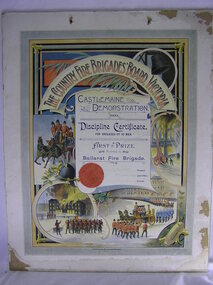
... Coloured certificate from 1900 Country Fire Brigades Board Castlemaine Demonstration for 1st prize in the discipline event for brigades of 30 men. ...THE COUNTRY FIRE BRIGADES BOARD, VICTORIA / CASTLEMAINE / DEMONSTRATION / 1900 / Discipline Certificate / FOR BRIGADES OF 30 MEN / FIRST PRIZE / Awarded to / Ballarat Fire Brigade / President / Chief Officer / Secretary...THE COUNTRY FIRE BRIGADES BOARD, VICTORIA / CASTLEMAINE / DEMONSTRATION / 1900 / Discipline Certificate / FOR BRIGADES OF 30 MEN / FIRST PRIZE / Awarded to / Ballarat Fire Brigade / President / Chief Officer / Secretary Coloured certificate from 1900 Country Fire Brigades Board Castlemaine Demonstration for 1st prize in the discipline event for brigades of 30 men. ...Coloured certificate from 1900 Country Fire Brigades Board Castlemaine Demonstration for 1st prize in the discipline event for brigades of 30 men. Certificate has various pictures of fire activities, a horse drawn steam pumper, a mannual pump at a multi story building fire, a multi story building fire with a fireman up a ladder, a number of brigades marching and a bell ringing. There are various pieces of firefighting equipment around the border of the picture. Certificate is signed by the President, Chief officer and Secretary of the CFBBTHE COUNTRY FIRE BRIGADES BOARD, VICTORIA / CASTLEMAINE / DEMONSTRATION / 1900 / Discipline Certificate / FOR BRIGADES OF 30 MEN / FIRST PRIZE / Awarded to / Ballarat Fire Brigade / President / Chief Officer / Secretary -
 Ballarat Fire Brigade
Certificate
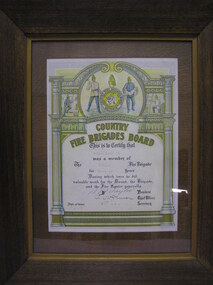
... Certificate of service from the Country Fire Brigades Board presented to William Ernest Roff for 25 years service to the Ballarat Fire Brigade. ...COUNTRY / FIRE BRIGADES BOARD / This is to Certify that / William Ernest Roff / was a member of / The Ballarat Fire Brigade / for Twenty Five Years / During which term he did / valuable work for the Board, the Brigade / and the Fire Service generally / ? ...Certificate presented to members upon retirement from the CFBB COUNTRY / FIRE BRIGADES BOARD / This is to Certify that / William Ernest Roff / was a member of / The Ballarat Fire Brigade / for Twenty Five Years / During which term he did / valuable work for the Board, the Brigade / and the Fire Service generally / ? ...Certificate presented to members upon retirement from the CFBBCertificate of service from the Country Fire Brigades Board presented to William Ernest Roff for 25 years service to the Ballarat Fire Brigade. It is signed by the president, chief officer and secretary of the CFBB on the 29th April 1937. Coloured certificate depicts various (4) fireman in various poses with the CFBB logo in the top centre of the certificate. Certificate is framed in a brown timber frame trimmed with a gold edge. COUNTRY / FIRE BRIGADES BOARD / This is to Certify that / William Ernest Roff / was a member of / The Ballarat Fire Brigade / for Twenty Five Years / During which term he did / valuable work for the Board, the Brigade / and the Fire Service generally / ? ? Taylor President / a McPherson Chief Officer / ? ? ?????? Secretary / Date of issue / 29th April, 1937 -
 Warrnambool and District Historical Society Inc.
Document - Charles Geary Collection, 1915-1922
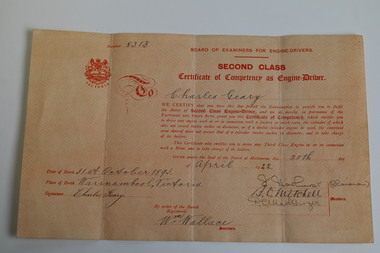
... ...Country Fire Brigades Board of Victoria...Fire Brigade World War 1 Honour Roll as an active member. Charles Geary Australian Army Medical Corps Dental Reserve A.A.M.C. Robinson's Motor Proprietary Limited Geo Powell Country Fire Brigades Board of Victoria Hackney Carriage Driver's License second class engine driver dental mechanic (.1) Typewritten refence on Robinson's Motor Pty. ...This collection of six documents (1915-1922) belonged to Charles Geary who was born in Warrnambool, the son of Thomas and Martha Ellen Geary in 1893. The collection documents his joining the Australian Imperial Expeditionary Force A.A.M.C. Dental Reserve, his subsequent discharge and post military employment in the Town of Warrnambool as a Hackney Carriage Driver and later as a second class engine driver.. This collection gives examples of references and certificates of leave required to join the A.I.F. in 1916. The discharge certificate is a good example of what was given to military personnel after their services were no longer required. The llicense and certificate of competency show some of Charles' post war endeavours. Charles is listed on the Warrnambool Fire Brigade World War 1 Honour Roll as an active member. (.1) Typewritten refence on Robinson's Motor Pty. Ltd. green and navy printed letterhead with a purple ink stamp and black written signature and embossed company seal. (.2) Reference, handwritten in black ink on blue 8mm lined white paper with a 38mm printed margin. (.3) Black print on a cream certificate completed in black ink. (.4) Cotton woven paper certificate completed in blue, black and red ink with black ink thumb prints. (.5) Black printed Certificate number 1069 on cream paper completed in black ink. (.6) Peach coloured certificate with red printing on heavy weight paper completed in black ink and numbered 8313charles geary, australian army medical corps dental reserve, a.a.m.c., robinson's motor proprietary limited, geo powell, country fire brigades board of victoria, hackney carriage driver's license, second class engine driver, dental mechanic -
 The Beechworth Burke Museum
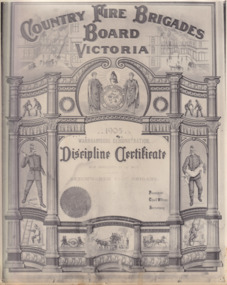
Photograph - Certificate, 1905
... Obverse: Country Fire Brigades Board Victoria / 1905 / Warrnambool Demonstration / Discipline Certificate / For brigades of men / Beechworth Fire Brigade...Photo reproduction of a discipline certificate awarded to the Beechworth Fire Brigade at the Warrnambool Demonstration in 1905 burke museum beechworth emergency services fire brigade warnambool fire country fire brigade victoria Obverse: Country Fire Brigades Board Victoria / 1905 / Warrnambool Demonstration / Discipline Certificate / For brigades of men / Beechworth Fire Brigade Reproduction of a rectangular certificate printed in black and white and on matte photographic paper Photograph Certificate ...Photo reproduction of a discipline certificate awarded to the Beechworth Fire Brigade at the Warrnambool Demonstration in 1905Reproduction of a rectangular certificate printed in black and white and on matte photographic paperObverse: Country Fire Brigades Board Victoria / 1905 / Warrnambool Demonstration / Discipline Certificate / For brigades of men / Beechworth Fire Brigadeburke museum, beechworth, emergency services, fire brigade, warnambool, fire, country fire brigade, victoria -
Tarnagulla History Archive
Tarnagulla Fire Brigade Book, 1926-1934
... Brigade Book of the Country Fire Brigades Board, Tarnagulla Fire Brigade. ...Murray Comrie Collection. tarnagulla fire brigade fire fighting emergency workers volunteers CFA CFBB Brigade Book of the Country Fire Brigades Board, Tarnagulla Fire Brigade. ...Murray Comrie Collection. Brigade Book of the Country Fire Brigades Board, Tarnagulla Fire Brigade. Contains records of call-outs to fires ((1930s), roll calls/attendance records for meetings and training (1926-1934) and financial records (1926 to 1934). tarnagulla, fire, brigade, fire fighting, emergency workers, volunteers, cfa, cfbb -
 Bendigo Historical Society Inc.
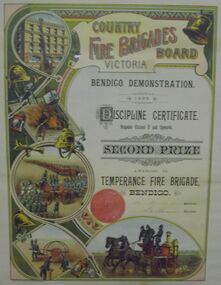
Document - COUNTRY FIRE BRIGADES CERTIFICATE, 1895
... Certificate awarded to Temperance Fire Brigade Bendigo from the Country Fire Brigade's Board Victoria for second prize in Discipline Certificate - Brigades Classed D and Upwards. ...ORGANIZATION Government bendigo fire brigade Certificate awarded to Temperance Fire Brigade Bendigo from the Country Fire Brigade's Board Victoria for second prize in Discipline Certificate - Brigades Classed D and Upwards. ...Certificate awarded to Temperance Fire Brigade Bendigo from the Country Fire Brigade's Board Victoria for second prize in Discipline Certificate - Brigades Classed D and Upwards. Printed on stiff paper with illustrations of horse drawn fire vehicles and firemen. Markings - Sands & McDougall Limited, Melbourne.organization, government, bendigo fire brigade -
Tatura Irrigation & Wartime Camps Museum
Badge, Stokes and Sons, Tatura Fire Brigade Long Service
... Centre white circle has shield in maroon and gold surrounded by blue band with gold Country fire Brigades Board Victoria. This is surrounded by a gold wreath which is mounted on a back plate with 8 points. ...Long service badge given to Roy Dick Tatura Fire Brigade Tatura CFA Tatura CFA long service badge Tatura CFA long service badge recipients as above Brass and enamel badge with lugs attached. Centre white circle has shield in maroon and gold surrounded by blue band with gold Country fire Brigades Board Victoria. ...Long service badge given to Roy DickBrass and enamel badge with lugs attached. Centre white circle has shield in maroon and gold surrounded by blue band with gold Country fire Brigades Board Victoria. This is surrounded by a gold wreath which is mounted on a back plate with 8 points. At top of point is the axe and hose and helmet of a fire fighter. At the bottom is a blue enamel scroll with long service in silver.as abovetatura fire brigade, tatura cfa, tatura cfa long service badge, tatura cfa long service badge recipients -
 Chelsea & District Historical Society Inc
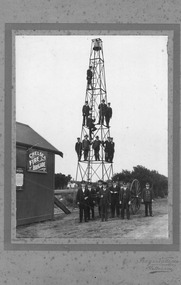
Photograph - Chelsea Fire Brigade, Members of the Chelsea Fire Brigade standing in front of the of the Fire station, on the bell and the hose tower, c 1920
... The Chelsea Fire Brigade in Victoria, Australia, began as a volunteer unit around 1912 to serve the growing beachside suburb. Officially registered with the Country Fire Brigades Board in 1925, the brigade was a vital community service for decades. ...The Chelsea Fire Brigade in Victoria, Australia, began as a volunteer unit around 1912 to serve the growing beachside suburb. Officially registered with the Country Fire Brigades Board in 1925, the brigade was a vital community service for decades. ...The Chelsea Fire Brigade in Victoria, Australia, began as a volunteer unit around 1912 to serve the growing beachside suburb. Officially registered with the Country Fire Brigades Board in 1925, the brigade was a vital community service for decades. In March 2006, the brigade amalgamated with the Carrum Fire Brigade to form the Patterson River Fire Brigade. Black and White photo of the members of the Chelsea Fire Brigade, standing in front of the station which was situated on Point Nepean Road. Four members Have been identified: Standing on ground from the right, Captain J. J. Smith, Frank Jennings, Mr Frickie, Zeke Smith.firefighters, chelsea, chelsea fire brigade, fireman, fire equipment -
 Fire Services Museum of Victoria
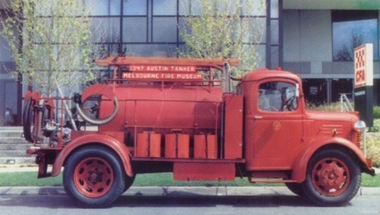
LU 600 1947 Austin Tanker
... Country Fire Authority. (CFA) The late Wally Titheridge, Chief Mechancal Officer of the Country Fire Brigades Board, CFBB, and its successor the CFA, stated in an interview in the early 1990's that the vehicle was designed by himself, and built by a body builder in Preston. ...Country Fire Authority. (CFA) The late Wally Titheridge, Chief Mechancal Officer of the Country Fire Brigades Board, CFBB, and its successor the CFA, stated in an interview in the early 1990's that the vehicle was designed by himself, and built by a body builder in Preston. ...LU 600 the first of the Small Town Units, designed and built by the Country Fire Authority. (CFA) The late Wally Titheridge, Chief Mechancal Officer of the Country Fire Brigades Board, CFBB, and its successor the CFA, stated in an interview in the early 1990's that the vehicle was designed by himself, and built by a body builder in Preston. This was the first of many hundreds of the Small Town Units, on maily Austin, but also Bedford, Leyland, and BMC Chassis. The early series trucks had a 200 gallon (900 Litre) tank, which was proving usefull, but "more is always better" , so the next series had 400 gallon (1000 litre) tanks. -
Stawell Historical Society Inc
Uniform - Costume and Accessories
... STAWELL FIRE BRIGADE RED COAT HISTORICAL DETAILS ON VICTORIAN URBAN FIRE BRIGADE RED COATS These words are gathered from two booklets written by Ex Captain Neil Bennett and Ex Resident Officer Jenean Sparrow. At a special meeting held 27 November 1921 it was agreed to purchase enough cloth to make 30 Red coats. Between 1921-1922 there was a disagreement between Stawell Urban Fire Brigade and the Country Fire Brigade Board...STAWELL FIRE BRIGADE RED COAT HISTORICAL DETAILS ON VICTORIAN URBAN FIRE BRIGADE RED COATS These words are gathered from two booklets written by Ex Captain Neil Bennett and Ex Resident Officer Jenean Sparrow. At a special meeting held 27 November 1921 it was agreed to purchase enough cloth to make 30 Red coats. Between 1921-1922 there was a disagreement between Stawell Urban Fire Brigade and the Country Fire Brigade Board ...STAWELL FIRE BRIGADE RED COAT HISTORICAL DETAILS ON VICTORIAN URBAN FIRE BRIGADE RED COATS These words are gathered from two booklets written by Ex Captain Neil Bennett and Ex Resident Officer Jenean Sparrow. At a special meeting held 27 November 1921 it was agreed to purchase enough cloth to make 30 Red coats. Between 1921-1922 there was a disagreement between Stawell Urban Fire Brigade and the Country Fire Brigade Board over the wearing of the red coats. The brigade having purchased the red cloth, sent a request to the board for a donation toward the cost of the new coats which drew the reply that there was no permission granted for the red coats. The Brigade did not accept the decision and called for tenders to supply the red coats and approached members of the Country Fire Brigades Board for permission to be granted. By February of that year permission was granted for the red coats to be worn on parades and at annual demonstrations. A Mr Harding was the successful tender to supply the 30 red coats at one pound each, the Board to supply buttons and hooks. The red fabric was supplied by North Western Woolen Mills of Stawell. In 1986 one of the oldest surviving items associated with Stawell Urban Fire Brigade was lost. After 113 years the Brigade lost its red coats, Stawell, Ararat, Ballarat and Geelong being the last brigades to wear the red coats. After many disagreements, first with the SFBB and then CFA the red coats were gone. Replaced with the Navy Blue jacket and trousers that you see today. Stawell Urban Fire Brigade Uniform (complete) Red Flannel Jacket. Black Trousers. White Shirt. Black Tie. G Carr CFA memberstawell clothing material -
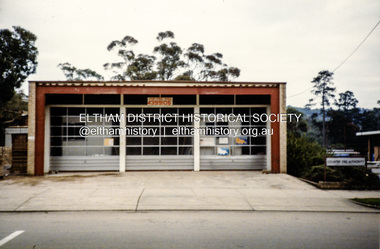 Eltham District Historical Society Inc
Photograph, Eltham Fire Station, 909 Main Road, Eltham, July 1986
... By November 1933 the Country Fire Brigades’ Board advised it was considering the matter of a new cation and fire station for Eltham. ...By November 1933 the Country Fire Brigades’ Board advised it was considering the matter of a new cation and fire station for Eltham. ...Located at 909 Main Road, Eltham. Opened 7 October 1966 Eltham's Fire Stations by Peter Pidgeon Article published EDHS Newsletter No.287 April 2026 Where was Eltham’s first fire station and how many have there been? Following the formation of the Eltham Volunteer Fire Brigade in March 1926, firefighting equipment was initially housed in a shed on Captain H. Warren’s property. A more permanent solution was required. In May 1927 a proposal was made to build a fire station and meeting hall at the corner of Luck Street and Main Road where the present railway station carpark is located. An application was approved by Council in September to build the fire station consisting of a galvanised iron shed on the land in Luck Street, However, in April 1928 when E.O. Egan, Secretary, Eltham Volunteer Fire Brigade sought permission to erect a fire station on the continuation of Luck Street, Council advised they had no power to act on this as they did not own the land. Cr. Ernie Andrew offered to loan a site on his own land in Arthur Street (where the entrance to the carpark under Woolworths is situated) and by September 1928 the new fire station was being erected consisting of a building to house the reel and other equipment as well as a meeting room. It was constructed with a concrete floor and painted. A purpose-built cupboard had been constructed for the hose by local carpenter, Mr. Fraser and Mr. Frank Jones arranged for electric lighting to be installed. Many donations were made by the community to assist in paying off the debt on the station. The first meeting in the new fire station was held November 12, 1928, with a large attendance of members. The official opening was to be held in the New Year on January 8, 1929. In February 1930, Eltham Council agreed to place the Eltham Volunteer Fire Brigade under the control of the Country Fire Brigades’ Board. Further discussions were held in May regarding their area of responsibility to cover as well as questions about a suitable block of land and relocation of the brigade’s buildings. In August 1930, the Chief Officer of Country Fire Board visited Council to select a suitable site. He did not approve of any that Council suggested but encouraged Council to buy land for the purpose. Enquiries were made about a block in Henry Street adjacent to the Public Hall which the Chief Officer favoured. Cr Price investigated and learned the block could be purchased, £10 would secure it if the people of Eltham were willing to raise a further £30-40. All were in favour of proceeding. By February 1931, £40 had been raised by the community, in addition to £20 added by Council and £20 by the Fire Brigades’ Board making £80 total to purchase the site. Several working bees were held between May and July 1931 to level the ground in preparation for relocation of the station building from Arthur Street to the new site in Henry Street. It was not long before the Henry Street site had proven to be not all that was desired. Access to the Henry Street site from Main Road was steep and not suited for man handling a heavy hose reel. By November 1933 the Country Fire Brigades’ Board advised it was considering the matter of a new cation and fire station for Eltham. On February 23, 1934, the Advertiser reported a new Fire Station was to be built on an alternate site at a cost of £600. In August, the Country Fire Brigades’ Board notified it intended to build a new fire station at no cost to Eltham if the brigade could purchase a block of land. An appeal was established by the brigade to raise funds for the purchase of the new site between the residence and confectionery shop owned by Mr. G.H. Browne and Ryan Bros. butchers on the eastern side of Main Road between Arthur and Dudley streets. An inspection of the site by the Chief Officer of Country Fire Brigades' Board was undertaken September 28. It was directed that tenders for the erection of the building were to be called immediately and construction to start the next month. By New Year 1935 the erection of the third station building was well in progress and was completed by mid-February. The station was officially opened April 26, 1935, and a new 35 feet high bell tower was erected in December 1935. This fire station, the third erected in six years, served the community for the next thirty years. In 1962, land for a new (fourth) Eltham Fire Station on the opposite (western) side of Main Road was acquired from the Eltham War Memorial Trust. The new station was opened October 7, 1966. In 1970 the former fire station building on the eastern side of Main Road was relocated to Research Park for use by the 1st Research Scout group. The site is now part of the current Coles supermarket and Eltham Village complex. A new fifth fire station was erected in Brougham Street at a cost of $9.6m and officially opened December 2015. It was intended for use by both career and volunteer firefighters. The former site was to be made available for community access. However, the mixed functional role presented operational difficulties at the new station and after three years, the Eltham CFA volunteers moved back to the former site towards the end of 2018 following a $500,000 upgrade to the facility. So nowadays the career Fire Rescue Victoria members of Eltham Fire Brigade operate out of Eltham’s fifth fire station in Brougham Street and the volunteer Eltham CFA Brigade operate out of Eltham’s fourth station, or could it be considered the sixth?Colour photograph of Eltham Fire Station, Main Road, July 1986eltham fire brigade, eltham fire station, eltham shops, main road eltham -
Eltham District Historical Society Inc
Document - Folder, Marshall, Neil Leslie
... Neil Leslie Marshall, a Panton Hill resident, had various roles in the Country Fire Authority, from firefighter to Deputy Chair of the CFA Board. In 2023, he was awarded an Australian Fire Service Medal. He joined the Panton Hill Fire Brigade...Neil Leslie Marshall, a Panton Hill resident, had various roles in the Country Fire Authority, from firefighter to Deputy Chair of the CFA Board. In 2023, he was awarded an Australian Fire Service Medal. He joined the Panton Hill Fire Brigade ...Neil Leslie Marshall, a Panton Hill resident, had various roles in the Country Fire Authority, from firefighter to Deputy Chair of the CFA Board. In 2023, he was awarded an Australian Fire Service Medal. He joined the Panton Hill Fire Brigade in 1960 and later was active in arranging support and welfare for brigade families affected by fire. Contents Newspaper article: "Plaudits for top citizens", Diamond Valley Leader, 5 February 2020, Names of Nillumbik Council's Australia Day awards: Neil Marshall, Carol Jenkinson, Tony Barbeta (photograph also includes Robert Marshall) Newspaper article: "Neil Marshall's service to CFA spans more than 61 years", Manningham and Nillumbik Bulletin, February 2023, Neil Marshall awarded Australian Fire Service Medal in 2023 Australia Day Honours for his contribution to the emergency services and communities of Victoria. Newspaper clippings, A4 photocopies, etcneil marshall, panton hill victoria, australian fire service medal, country fire authority, ash wednesday fire, north warrandyte victoria, brian potter, st andrews victoria, carol jenkinson, diamond valley college, hurstbridge wattle festival, tony barbeta, st andrews mens shed, nillumbik youth productions, robert marshall -
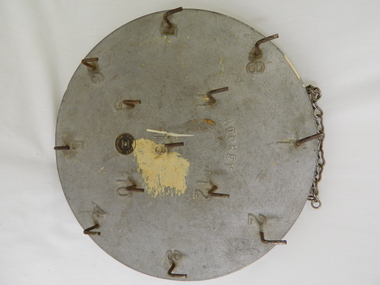 Kiewa Valley Historical Society
Hookey Board
... board was made of metal unlike many made of wood. The Mt Beauty Rural Fire Brigade was established by the State Electricity Commission of Victoria as an 'industry' brigade. When Mt Beauty was handed over to the Shire in 1961, the Fire Brigade became a member of the Country Fire Authority (C.F.A.). ...board was made of metal unlike many made of wood. The Mt Beauty Rural Fire Brigade was established by the State Electricity Commission of Victoria as an 'industry' brigade. When Mt Beauty was handed over to the Shire in 1961, the Fire Brigade became a member of the Country Fire Authority (C.F.A.). ...This Hookey board was made of metal unlike many made of wood. The Mt Beauty Rural Fire Brigade was established by the State Electricity Commission of Victoria as an 'industry' brigade. When Mt Beauty was handed over to the Shire in 1961, the Fire Brigade became a member of the Country Fire Authority (C.F.A.). Today it is an urban fire brigade.This Hookey board was used by the members of the Mt Beauty Rural Fire Brigade from 1948 when the State Electricity Commission established the brigade. Grey metal round board with edge. 13 metal hooks spaced on front with embossed numbers 1 - 13 under each. A small circular engraved brass plaque under No. 13 and between No.s 9 & 10. Metal chain attached at top (for hanging). Embossed "Hookey"between No.s 1 and 13. Embossed numbers 1 - 13. Plaque "C A V .. Sales" on top. "Melbourne" on Bottom. "Quality Products" in middle. Cream paint splash right of centre and slightly on plaque.hookey; mt beauty; rural fire brigade; entertainment; -
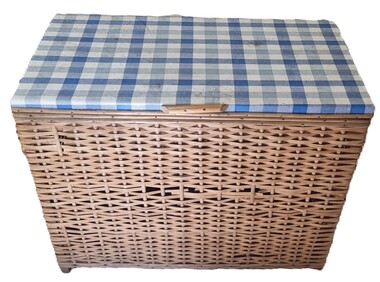 Wodonga & District Historical Society Inc
Domestic object - Cane Laundry Basket, 1959
... board since 1954. He held a seat on the Victorian Country Fire Authority for many years until his death in 1970, having been a member of Wodonga Urban Fire Brigade since 1940. ...board since 1954. He held a seat on the Victorian Country Fire Authority for many years until his death in 1970, having been a member of Wodonga Urban Fire Brigade since 1940. ...This laundry basket was made by Mr Walter Bullock helped by his son John at his workshop behind his house at No 35 High Street, Wodonga. This business was known as "Cantetex" and was given as a wedding present to Colin and Jennifer Hore in 1959. Mr Bullock passed away in Wodonga on 20 November 1973. Colin Hore is the son of Jack Hore, a very prominent member of the Wodonga Community. Jack Hore was awarded the Order of the British Empire, MBE in January 1962 for service as a Councillor of the Wodonga Shire Council. He held a Council seat continuously for 32 years, including eight terms as President. He also served two terms as Chairman of the Wodonga District Hospital Board 1961-62, having been a member of the board since 1954. He held a seat on the Victorian Country Fire Authority for many years until his death in 1970, having been a member of Wodonga Urban Fire Brigade since 1940. Jack played football with Wodonga for 14 years and coached the team to premiership honours in the Chiltern and District League in 1926. He was club treasurer from 1926 to 1940. Jack was also a Foundation member of Wodonga Show Society.This item is significant because it belonged to a member of a prominent Wodonga family and was manufactured in Wodonga.A laundry basket made from rattan cane work. The lid is cover in blue and white textile.walter bullock, cane furniiture, jack hore mbe -
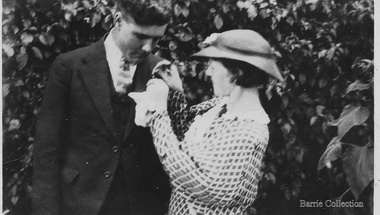 Melton City Libraries
Photograph, Tom and May Barrie, 1935
... Melton Bush Fire Brigade 1941 Member Melton Bush Fire Brigade Registered No. 425 1942 1942 2nd Lieutenant 1943 – 1944 4th Lieutenant Country Fire Authority Rural Services Award 1963 20 Years Long Service Badge Scots Presbyterian Church Melton Member of the Board of Management 1947 – 1969 information from Annual Reports note more research needed at Uniting Church Archives Tom farmed the family property with his father and brothers, and later the Ferris Road property which continued with his son Ian. ...Melton Bush Fire Brigade 1941 Member Melton Bush Fire Brigade Registered No. 425 1942 1942 2nd Lieutenant 1943 – 1944 4th Lieutenant Country Fire Authority Rural Services Award 1963 20 Years Long Service Badge Scots Presbyterian Church Melton Member of the Board of Management 1947 – 1969 information from Annual Reports note more research needed at Uniting Church Archives Tom farmed the family property with his father and brothers, and later the Ferris Road property which continued with his son Ian. ...Ferris Road–Ferris Lane family farm of John and Elizabeth Ferris until 1939, until daughter Marion married Thomas Linsday Barrie. Marion Elizabeth nee Ferris born 29th of August 1914 -died 5th of June 1990 SUMMARY - Thomas Lindsay Barrie 1914 – 1990 A life long resident of Melton Son of Jessie and Charles Ernest Barrie of Darlingsford Melton Married Marion Ferris at Christ Church Melton on 11th May 1939. They lived on the family farm at Ferris Road Melton. They had one son, Ian who has continued in farming in Melton. He served the community in the following – Shire of Melton Councillor Member for 32 years 1941 – 1970 Elected as Councillor for Melton South 1970 – 1973 Councillor for Rockbank 1943 – 1944 Shire President for three terms 1958 – 1959 ditto 1964 – 1965 ditto Council Representative: Bacchus Marsh High School and Western Suburbs Municipalities. Representative on delegation to prevent Melton post primary students being sent to Deer Park prior to the establishment of Melton High School. Melton Bush Fire Brigade 1941 Member Melton Bush Fire Brigade Registered No. 425 1942 1942 2nd Lieutenant 1943 – 1944 4th Lieutenant Country Fire Authority Rural Services Award 1963 20 Years Long Service Badge Scots Presbyterian Church Melton Member of the Board of Management 1947 – 1969 information from Annual Reports note more research needed at Uniting Church Archives Tom farmed the family property with his father and brothers, and later the Ferris Road property which continued with his son Ian. His childhood interest in horses began with the draft horses kept at the bluestone stable and barn at Darlingsford. When the stables were empty in the late 1980s visit, he vividly recalled the names of the horses he had handled in his youth. When the draft horse became obsolete with the introduction of tractors and trucks this interest continued with the breeding and training of harness racers. Darlingsford Drafts and Ponies. Order of Stalls Clydesdales – Dick, Dolly, Flower, Nugget, Blossom, Lofty, Prince. Roger, Rose, Violet, Don, Beauty, Baldy, Diamond. Cart and Mounts Creamy, Digger, Popsy Couple at Francis McGregor Barrie and Linda Willaton's wedding at Sunshine Methodist Church 20th April 1935?local identities -
 Melton City Libraries
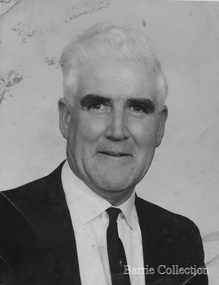
Photograph, Tom Barrie, Unknown
... Melton Bush Fire Brigade 1941 Member Melton Bush Fire Brigade Registered No. 425 1942 1942 2nd Lieutenant 1943 – 1944 4th Lieutenant Country Fire Authority Rural Services Award 1963 20 Years Long Service Badge Scots Presbyterian Church Melton Member of the Board of Management 1947 – 1969 information from Annual Reports Tom farmed the family property with his father and brothers, and later the Ferris Road property which continued with his son Ian. ...Melton Bush Fire Brigade 1941 Member Melton Bush Fire Brigade Registered No. 425 1942 1942 2nd Lieutenant 1943 – 1944 4th Lieutenant Country Fire Authority Rural Services Award 1963 20 Years Long Service Badge Scots Presbyterian Church Melton Member of the Board of Management 1947 – 1969 information from Annual Reports Tom farmed the family property with his father and brothers, and later the Ferris Road property which continued with his son Ian. ...Son of Jessie and Charles Ernest Barrie of Darlingsford Melton Married Marion Ferris at Christ Church Melton on 11th May 1939. They lived on the family farm at Ferris Road Melton. They had one son, Ian who has continued in farming in Melton. He served the community in the following – Shire of Melton Councillor Member for 32 years 1941 – 1970 Elected as Councillor for Melton South 1970 – 1973 Councillor for Rockbank 1943 – 1944 Shire President for three terms 1958 – 1959 ditto 1964 – 1965 ditto Council Representative: Bacchus Marsh High School and Western Suburbs Municipalities. Representative on delegation to prevent Melton post primary students being sent to Deer Park prior to the establishment of Melton High School. Melton Bush Fire Brigade 1941 Member Melton Bush Fire Brigade Registered No. 425 1942 1942 2nd Lieutenant 1943 – 1944 4th Lieutenant Country Fire Authority Rural Services Award 1963 20 Years Long Service Badge Scots Presbyterian Church Melton Member of the Board of Management 1947 – 1969 information from Annual Reports Tom farmed the family property with his father and brothers, and later the Ferris Road property which continued with his son Ian. His childhood interest in horses began with the draft horses kept at the bluestone stable and barn at Darlingsford. When the stables were empty in the late 1980s visit, he vividly recalled the names of the horses he had handled in his youth. When the draft horse became obsolete with the introduction of tractors and trucks this interest continued with the breeding and training of harness racers. Darlingsford Drafts and Ponies. Order of Stalls Clydesdales – Dick, Dolly, Flower, Nugget, Blossom, Lofty, Prince. Roger, Rose, Violet, Don, Beauty, Baldy, Diamond. Cart and Mounts Creamy, Digger, Popsy Black and white photographs of Tom Barrielocal identities -
 Melton City Libraries
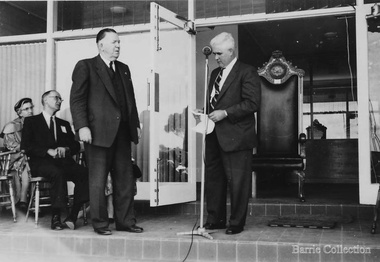
Photograph, Opening of the Shire Hall, c.1964
... Melton Bush Fire Brigade 1941 Member Melton Bush Fire Brigade Registered No. 425 1942 1942 2nd Lieutenant 1943 – 1944 4th Lieutenant Country Fire Authority Rural Services Award 1963 20 Years Long Service Badge Scots Presbyterian Church Melton Member of the Board of Management 1947 – 1969 information from Annual Reports note more research needed at Uniting Church Archives to determine the earliest and last date. ...Melton Bush Fire Brigade 1941 Member Melton Bush Fire Brigade Registered No. 425 1942 1942 2nd Lieutenant 1943 – 1944 4th Lieutenant Country Fire Authority Rural Services Award 1963 20 Years Long Service Badge Scots Presbyterian Church Melton Member of the Board of Management 1947 – 1969 information from Annual Reports note more research needed at Uniting Church Archives to determine the earliest and last date. ...Summary of Thomas Lindsay Barrie (1914 – 1990) A life long resident of Melton Son of Jessie and Charles Ernest Barrie of Darlingsford Melton Married Marion Ferris at Christ Church Melton on 11th May 1939. They lived on the family farm at Ferris Road Melton. They had one son, Ian who has continued in farming in Melton. He served the community in the following – Shire of Melton Councillor Member for 32 years 1941 – 1970 Elected as Councillor for Melton South 1970 – 1973 Councillor for Rockbank 1943 – 1944 Shire President for three terms 1958 – 1959 ditto 1964 – 1965 ditto Council Representative: Bacchus Marsh High School and Western Suburbs Municipalities. Representative on delegation to prevent Melton post primary students being sent to Deer Park prior to the establishment of Melton High School. Melton Bush Fire Brigade 1941 Member Melton Bush Fire Brigade Registered No. 425 1942 1942 2nd Lieutenant 1943 – 1944 4th Lieutenant Country Fire Authority Rural Services Award 1963 20 Years Long Service Badge Scots Presbyterian Church Melton Member of the Board of Management 1947 – 1969 information from Annual Reports note more research needed at Uniting Church Archives to determine the earliest and last date. Tom farmed the family property with his father and brothers, and later the Ferris Road property which continued with his son Ian. His childhood interest in horses began with the draft horses kept at the bluestone stable and barn at Darlingsford. When the stables were empty in the late 1980s visit, he vividly recalled the names of the horses he had handled in his youth. When the draft horse became obsolete with the introduction of tractors and trucks this interest continued with the breeding and training of harness racers. Darlingsford Drafts and Ponies. Order of Stalls Clydesdales – Dick, Dolly, Flower, Nugget, Blossom, Lofty, Prince. Roger, Rose, Violet, Don, Beauty, Baldy, Diamond. Cart and Mounts Creamy, Digger, Popsy Compiled by Wendy Barrie 2013 Councillor Tom Barrie, Shire President and a group of children at the opening of the building.council, local identities -
 City of Melbourne Libraries
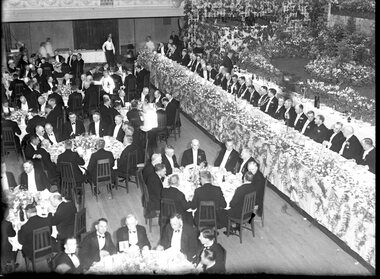
Photograph, Bull, Hugh Jones, 1897-1993, Lord Mayor's Dinner, Melbourne Town Hall
... Fire Brigades Board (1936), and Chairman of the Public Works Committee (1937-39). In 1936 he was elected to the Legislative Council with United Australia Party support, but later resigned over possible State government contract tender irregularities. Wales received "the customary reward” of a knighthood and was invested at Buckingham Palace by King George VI whose coronation he attended in 1937. He was an early director of what is now Ampol, and helped the development of the petroleum industry in Australia after visiting the USA in 1943 and 1946. He was impressed by that country’s...Fire Brigades Board (1936), and Chairman of the Public Works Committee (1937-39). In 1936 he was elected to the Legislative Council with United Australia Party support, but later resigned over possible State government contract tender irregularities. Wales received "the customary reward” of a knighthood and was invested at Buckingham Palace by King George VI whose coronation he attended in 1937. He was an early director of what is now Ampol, and helped the development of the petroleum industry in Australia after visiting the USA in 1943 and 1946. He was impressed by that country’s ...Photographer notations on slide: "General View Of Lord Mayor's Dinner At Town Hall Nov 1936 B112" Published: The Age, Tuesday 10 November 1936, page 13 Published title: LORD MAYOR'S BANQUET Published caption: The brilliant scene inside the Melbourne Town Hall last night during the Lord Mayor’s banquet. Trove article identifier: http://nla.gov.au/nla.news-article205939431 Description: 700 guests (all men) are seated around numerous tables in the Melbourne Town Hall for the Lord Mayor's dinner in November 1936. Before the stage is a top table of 35 men, all dressed smartly in black dinner suits, with either a black or white bow tie. Many are wearing their medals. The Lord Mayor has on his Mayoral chains, and to his right is the Governor of Victoria, Lord Huntingfield. The stage is heavily decorated with fresh flowers. Research by project volunteer, Louise McKenzie: This image takes up one quarter of the photographic space on page 13 of The Age on 10 November 1936, reflecting the importance of the event and also the sheer dramatics of the image: 700 guests (all men), a top table of 35, and all dressed smartly in black dinner suits, with either a black or white bow tie. Many are wearing their medals. The Lord Mayor has on his Mayoral chains, and to his right is the Governor of Victoria, Lord Huntingfield. Further to his right is a man with an impressive sash across his chest. It is a very animated, and rather informal, moment. Banks of fresh flowers smother the stage, which is decorated in the manner of a terrace at an English stately home. Tables are laden with food, drink and decorations, and the wait staff (men and women) are also formally dressed, in the manner of Downton Abbey. It is spectacular, dramatic, and luxurious, and perpetuates the proud descriptor of “Marvellous Melbourne” as conferred by London Journalist George Augustus Sala when he visited the city in 1885. During its 1880s boom, Melbourne was the second-largest city in the British Empire, after London, and reputedly the richest city in the world. At times the expression was used with some irony, but "...in Victoria’s centenary year, 1934, with the city mired in another depression, a publisher bravely entitled a book of souvenir photographs Marvellous Melbourne, claiming that the subject ‘still finds apt expression in the happy one-time sobriquet’.” This photo seems to reflect an ongoing pride in Melbourne and a desire for it to live up to its descriptor and celebrate its post-centenary era in style. So it is no surprise to find that on page 11 of The Age on the same day, a second photo is to be found – a cropped view of one table – along with a very detailed description of the night, its purpose, and a surprise announcement. But, who was the Lord Mayor in whose honour the dinner was held? In 1934, the Lord Mayor of Melbourne was Cr. Alexander George Wales, (born Richmond, 11 October 1885, died Elsterwick, 31 May 1962). His father was a contractor and quarry-owner, but was blinded in an industrial accident in 1899. Consequently Alexander, then aged 14, left Brunswick State School to become a railway labourer working at a quarry, and in 1903 joined the Commonwealth public service as a clerk and began studying at night school, determined to improve himself. In 1907 he was appointed secretary of the Albion Quarrying Co. (in which the family had an interest), then its managing director and chairman. As the Australian Dictionary of Biography notes, he was instrumental in expanding the company’s interests, "...becoming director of the Hardware Co. of Australia Pty Ltd, the Twentieth Century Building and Investment Society, the Albion Sand Co. and the Geelong Brick Co.”. His public career began in 1914 when he was elected to the Brunswick council. He was mayor 1917-18, and in 1925 progressed to the Melbourne City Council where he remained for 29 years, being a member of most council committees. He served three successive terms as lord mayor (1934-37), was Chairman of the council’s decorations committee for Melbourne’s centenary, president of the Metropolitan Fire Brigades Board (1936), and Chairman of the Public Works Committee (1937-39). In 1936 he was elected to the Legislative Council with United Australia Party support, but later resigned over possible State government contract tender irregularities. Wales received "the customary reward” of a knighthood and was invested at Buckingham Palace by King George VI whose coronation he attended in 1937. He was an early director of what is now Ampol, and helped the development of the petroleum industry in Australia after visiting the USA in 1943 and 1946. He was impressed by that country’s wartime shipbuilding efforts and supported closer ties with the USA. “While president (1947-48) of the Melbourne Chamber of Commerce, Wales was a vocal critic of the Federal Labor Government, ...a staunch anti-socialist ... and a focus for conservative opposition to the Curtin and Chifley governments...” He is described as “a natural leader in business and civic politics,... a powerful force in the Melbourne City Council... opposing democratic reforms such as the creation of a Greater Melbourne Council and the abolition of plural voting, but advocat[ing] the redevelopment of city-owned property like the Eastern and Western markets...” So, this Lord Mayor’s dinner marks the third successive term in office for Governor Cr. A G Wales. The room is filled with powerful and influential men, and provided a platform for the Premier of Victoria, Albert Dunstan (1882-1950, United Country party) to announce that if the City Council would bear half the cost the State Government would build a bridge at Punt Road “at once”. He announced that the Government proposed to have the bridge built by the Country Roads Board, and allow the City Council to pay its share on convenient terms, and further, it would investigate the shared provision of more Yarra bridges. The proposal for the Punt Road Bridge was met with applause as the Yarra River constituted a serious traffic barrier. On 12 November 1936, two days after the Lord Mayor’s dinner, The Age published an article, “Building without a Plan”. It questions the appropriateness of the next Yarra bridge being the one at Punt Road, and encourages a “proper procedure” to look at the provision of additional Yarra bridges as a whole. But in fact this topic had been canvassed back in August when Melbourne City Council’s public works committee had recommended the replacement of the footbridge at Punt Road with a bridge, and if the Country Roads Board would declare this portion of Punt Road, including the river crossing, a State Highway, this could give the Board authority to construct the bridge and allocate the cost. Hence the reference at the dinner to a shared expense. Still an integral part of traffic management today, the Hoddle Bridge carries Punt Road over the Yarra River between Richmond and South Yarra in Melbourne. It is a five-lane road bridge with narrow footpaths on either side. It is of continuous reinforced concrete T-beam construction with five segmental arched spans, supported on transverse piers, and linked by concrete cross-beams. “The piers terminate in a series of tapered concrete pillars with Art Deco-styled steamlined decoration. Each pillar supports a Victorian-style lamp. The infill railings are geometric-patterned painted metal. Construction began in late 1937, and it was opened by Premier Albert Dunstan on 22 December 1938. It replaced an earlier footbridge, which in turn had replaced a punt service. The bridge (originally referred to as Punt Road Bridge) was named after Robert Hoddle, who planned central Melbourne’s Hoddle Grid, the grid of streets which form Melbourne’s central business district. Hoddle arrived in Australia from the UK in 1823 and went on to carry out surveys in NSW and Queensland before arriving in Melbourne in 1837. He designed layouts for both Melbourne and Williamstown, and later Geelong and other Victorian country areas. He was keen that major streets be at least 30 metres wide. ”With remarkable foresight he provided for wide boulevards from the city to the suburbs, but the subdivisions of early speculators in inner suburbs created the bottle-necks of today. After the separation of the colony in 1851, he became Victoria’s first surveyor-general... and advocated the provision of three-chain (60 m) roads and the widening of all existing main roads from one (20 m) to three chains." However, he was met with constant opposition and in 1853, was eased out of office. As a small and interesting aside: Hoddle was appointed auctioneer for the first sale of crown land in Melbourne on 1 June 1837. His commission was 57 pounds 12s 7d. and he bought two allotments for himself at a cost of 54 pounds. After he died his second wife married Richard Buckhurst Buxton, a member of the family which in 1860s Melbourne established the Australian property dynasty of Buxton Real Estate, Becton, MAB Corporation etc. Returning to the dinner and The Age article of 10 November 1836: Another topic of the after-dinner speeches was a reference to the upcoming Armistice Day. “The Minister of Customs (Mr White) said the proximity of Armistice day reminded us that eighteen years ago we had high hopes of prolonged peace.” The term “Armistice Day” was coined after WWI: “At 11 am on 11 November 1918, the guns on the Western Front fell silent after more than four years of continuous warfare. The Germans called for an armistice (suspension of fighting) in order to secure a peace settlement. They accepted the allied terms on unconditional surrender. Therefore on the 11th hour of the 11th day of the 11th month, a minute’s silence is observed and dedicated to those soldiers who died fighting to protect the nation. Originally known as Armistice Day, it was renamed Remembrance Day after World War Two to commemorate those who were killed in both World Wars. Today it refers to the loss of Australian lives from all wars and conflicts, accompanied by the words, "We will remember them, Lest we forget"." There was comment at the dinner about the need to remain firm in supporting the “democratic government in the British Empire to avoid a “plunge into savagery”. There was a grave responsibility on the British people to keep democracy alive, and that could not be done without adequate defence forces... Many weak governments in non-British countries had been swept aside by strong-fisted dictators, who now were the real threat to peace”. With the benefit of hindsight these were very pertinent comments and tragically prophetic. The Melbourne Shrine of Remembrance had only been dedicated two years earlier, at a ceremony attended by the Duke of Gloucester, son of King George V. Over 300,000 citizens attended: one third of the population of Melbourne. It became the location for the Anzac Day Dawn Service. Originally the march travelled from the Shrine into the city, however, in 1936, this was reversed, and the Shrine became the termination point for Anzac Day Marches. Also significant in 1936, was the installation of a statue in the west forecourt of the Shrine: “The Man with the Donkey” (aka 'Private John Simpson and his Little Donkey'). The work is said to represent the “valour and compassion of the Australian soldier”. Its full citation, according to the City of Melbourne City Collection is: West Side of Base: "The / Man with his Donkey / Gallipoli, April 25 to May 19 / in Commemoration / of the valour and compassion / of the Australian Soldier" AFTER LANDING AT GALLIPOLI, SIMPSON, WITH HIS LITTLE DONKEY, WORKED ALONE, DAY AND NIGHT TAKING WATER TO THE FRONT LINE AND CARRYING THE WOUNDED BACK TO THE DRESSING STATIONS. HE AND HIS DONKEY WERE KILLED BY A SHRAPNEL SHELL ON THE 19TH MAY, 1915. SIMPSON WAS MENTIONED IN DISPATCHES BY SIR IAN HAMILTON, COMMANDER-IN-CHIEF OF THE MEDITERRANEAN EXPEDITIONARY FORCE. / Erected by Public Subscription under auspices of the / Red Cross Society. East Side of Base: Private John Simpson." Their summary in background states: "A bronze figure of Simpson and his donkey with a wounded man on the donkey's back on a granite pedestal. Private John Simpson Kirkpatrick’s intrepid and short-lived exploits during the Gallipoli campaign have made him a popular figure of World War One. He has been mythologised to represent the lauded values of the digger, and he symbolises all those who went into battle unarmed. Born in England in 1892, he came to Australia in 1910. He enlisted to make his way back to England, but as a member of the 3rd Field Ambulance AIA was sent to Gallipoli. After just three weeks of bearing wounded soldiers across Shrapnel Gully on the back of his donkey, Simpson was killed by shrapnel fire. Simpson’s story became a powerful propaganda tool for enlistment in Australia, but following the war he was quickly forgotten. With the Shrine of Remembrance nearing completion in 1933, the memory of Simpson was rekindled to commemorate all who gave their lives to help others during the war. One plaque reads: ‘The / Man with his donkey / Gallipoli … / In commemoration / of the valour and compassion / of the Australian soldier’. In 1935, Wallace Anderson’s design for the memorial was selected though a competition organised by the Australian Red Cross. Anderson had served during the war and worked at the Australian War Memorial after his return. His Man with the Donkey was cast in Italy, and after some debate was sited near the shrine. Unveiled 20th June, 1936." The sculptor, Victorian-born William Wallace Anderson (1888-1975), served in France during WWI and afterwards produced a number of bronze war memorials and memorial portraits, predominantly in Victoria. “His most famous work is that of Simpson and his Donkey (1935), which he completed after winning a competition conducted by the Victorian Division of the Australian Red Cross. Anderson’s fee was 350 pounds; the cast, made by the Chiurazzi Foundry, Naples, Italy, cost 40 pounds. The work... has become well known as a symbol of the Anzac tradition.” A debate as to the siting of the statue arose from a strong view expressed by General Sir John Monash that no representation of individual members of the Australian Defence Force be located on the Shrine itself. Hence its location off to the northwest of the forecourt, in a garden of rosemary. And finally we return to the photo of the grand Lord Mayor’s dinner! An article in The Argus of 4 November 1936 refers to “Brilliant Scene at Lord Mayor’s Ball – Hall Becomes a Garden”. So now it becomes clear why the Town Hall, location of the Lord Mayor’s Dinner on 10 November 1934, only 6 days later, is so lavishly decorated. The floral decorations from the Ball are still in place - an early example of “recycling”, which is gratifying to note at a time of Depression. The reporter has captured the scene with enthusiasm: “Hundreds of tiny rose lights, hidden among pink roses, transformed the Melbourne Town Hall into a magical garden last night, when the Lord Mayor and Lady Mayoress (Councillor A. C. Wales, M.L.C., and Mrs. Wales) entertained about 3,500 guests at a ball. His Excellency the Governor (Lord Huntingfield) and Lady Huntingfield were present, while Rear-Admiral and Mrs. Lane Poole and officers from the visiting squadron were among the special guests. The balconies all round the hall were hidden by a white trellis, covered with pink blossoms and greenery. Rosy flowers were issued up every pillar, and great golden lamps, hanging from the door, were seated in greenery and trails of sweet peas. The organ gallery was converted into a terrace garden with stone steps leading to banks of pink azaleas, pink pelargoniums, masses of calceolarias, and the lovely deep mauve and blue of cinerarias. Slender Japanese maples and poplar trees grew from the higher slopes amid thickets of hostas, while a fascinating illusion was created by the lofty conservatory windows, which formed the background, and which were tinted cerulean blue to simulate the sky seen through glass. Large fern baskets hung from the conservatory roof, and the whole scene was enclosed in trellises of blossom. In the entrance palm green shrubs stood like sentinels round the passed floor, and flowers bloomed in misty golds. The long corridor upstairs leading to the council chamber was lined with an avenue of poplar trees in tubs. In the Lower Town Hall great banks of calceolarias and azaleas decked the upper dais, and each supper table was adorned with a different coloured flower with sprays of roses and Japanese maple laid on the snowy cloths. The adjoining supper-rooms were fragrant with the scent of huge bowls of stock in mauve, purple, and pink, while the white walls were covered with palm leaves and flowers. The roof garden below the clock tower was enclosed as a buffet with rose wreathed walls, and flowers were arranged attractively in the Lady Mayoress's rooms." References: LORD MAYOR'S BANQUET. CENTURY MAKERS AT THE M.C.G. BEFORE THE CHANGE. (1936, November 10). The Age (Melbourne, Vic. : 1854 - 1954), p. 13. Retrieved September 4, 2024, from http://nla.gov.au/nla.news-article205939431 'Portrait of Sir George Wales (Lord Mayor 1934-1937)', City Collection, City of Melbourne, https://citycollection.melbourne.vic.gov.au/portrait-of-sir-george-wales-lord-mayor-1934-37/ Graeme Davison, 'Marvellous Melbourne', eMelbourne, https://www.emelbourne.net.au/biogs/EM00906b.htm THE LORD MAYOR'S BANQUET. (1936, November 10). The Age (Melbourne, Vic. : 1854 - 1954), p. 11. Retrieved September 26, 2024, from http://nla.gov.au/nla.news-article205939643 BRILLIANT SCENE AT LORD MAYOR'S BALL Hall Becomes a Garden (1936, November 4). The Argus (Melbourne, Vic. : 1848 - 1957), p. 14. Retrieved September 26, 2024, from http://nla.gov.au/nla.news-article11932746 'Hoddle Bridge', Wikipedia, https://en.wikipedia.org/wiki/Hoddle_Bridge 'Hoddle Bridge', Victorian Heritage Database Report, Victorian Heritage Council, https://vhd.heritagecouncil.vic.gov.au/places/195689/download-report David Dunstan, 'Wales, Sir Alexander George (1885–1962)', Australian Dictionary of Biography, National Centre of Biography, Australian National University, https://adb.anu.edu.au/biography/wales-sir-alexander-george-8951/text15737, published first in hardcopy 1990, accessed online 26 September 2024. Marjorie J. Tipping, 'Hoddle, Robert (1794–1881)', Australian Dictionary of Biography, National Centre of Biography, Australian National University, https://adb.anu.edu.au/biography/hoddle-robert-2190/text2823, published first in hardcopy 1966, accessed online 26 September 2024. BUILDING WITHOUT A PLAN. (1936, November 12). The Age (Melbourne, Vic. : 1854 - 1954), p. 8. Retrieved September 26, 2024, from http://nla.gov.au/nla.news-article205949762 NEW BRIDGE AT PUNT ROAD (1936, August 12). The Argus (Melbourne, Vic. : 1848 - 1957), p. 10. Retrieved September 26, 2024, from http://nla.gov.au/nla.news-article11902131 'The Shrine of Remembrance', Beaconsfield’s Soldiers: https://beaconsfield.org.au/digitalmemorial/shrine-introduction/ 'Shrine of Remembrance', Wikipedia, https://en.wikipedia.org/wiki/Shrine_of_Remembrance Ken Scarlett, 'Anderson, William Wallace (1888–1975)', Australian Dictionary of Biography, National Centre of Biography, Australian National University, https://adb.anu.edu.au/biography/anderson-william-wallace-9362/text16441, published first in hardcopy 1993, accessed online 26 September 2024. 'Man with the Donkey', City Collection, City of Melbourne, https://citycollection.melbourne.vic.gov.au/man-with-the-donkey-aka-private-john-simpson-and-his-little-donkey/ 'Remembrance Day', Australian Army, https://www.army.gov.au/about-us/history-and-research/traditions/remembrance-day Photographer notations on slide: "General View Of Lord Mayor's Dinner At Town Hall Nov 1936 B112".melbourne town hall, mayors, lord mayors, centenaries, bridges, dinners, clothing and dress, festive decorations, dances and balls, eating and drinking, shrine of remembrance, governors, monuments and memorials, 1930-1939, plants
