
Showing 124 items matching "cr. j. white"
-
 Eltham District Historical Society Inc
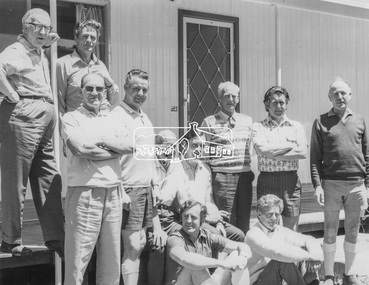
Photograph, Shire of Eltham Councillors visit to the Board of Works, Upper Thomson's Quarters, West Gipplsand, 3-5 December, 1971, 1971
... cr. a. glover...Colin J. Bock...Cr. Ingersole...cr. e.a. hale...Cr. G.C. Dreverman...Cr. J. white...Bock (Shire Secretary/ Chief Administrative Officer), standing - Cr. J. White, Cr. L.E. Clarke, Mr. H. Jackson (M.M.B.W.) ...Bock (Shire Secretary/ Chief Administrative Officer), standing - Cr. J. White, Cr. L.E. Clarke, Mr. H. Jackson (M.M.B.W.) ...Original Title: Visit to Upper Thomson's Quarters, Board of Works, 3-5 December, 1971 Shire of Eltham Councilors and an ex councilor visiting the early works leading up to the construction of the Thomson Dam, located in West Gippsland, Victoria. Standing Back (L-R): Ex. Cr. H. Bartlett, Cr. P. Graham Middle Row (L to R): Cr. D. Ingersole, Cr. A. Glover (Shire President), seated - Cr. E.A. Hale, Cr. C.J. Bock (Shire Secretary/ Chief Administrative Officer), standing - Cr. J. White, Cr. L.E. Clarke, Mr. H. Jackson (M.M.B.W.) Seated Front (L-R): Cr. G.C. Dreverman and Cr. A.S. Knox Source: Shire of ElthamThis photo forms part of a collection of photographs gathered by the Shire of Eltham for their centenary project book,"Pioneers and Painters: 100 years of the Shire of Eltham" by Alan Marshall (1971). The collection of over 500 images is held in partnership between Eltham District Historical Society and Yarra Plenty Regional Library (Eltham Library) and is now formally known as the 'The Shire of Eltham Pioneers Photograph Collection.' It is significant in being the first community sourced collection representing the places and people of the Shire's first one hundred years.Digital imagealistair knox, cr. a. glover, colin j. bock, cr. ingersole, cr. e.a. hale, cr. g.c. dreverman, cr. j. white, les clarke, cr. p. graham, melbourne metropolitan board of works, mmbw, h jackson, shire of eltham pioneers photograph collection, thomson dam -
 Flagstaff Hill Maritime Museum and Village
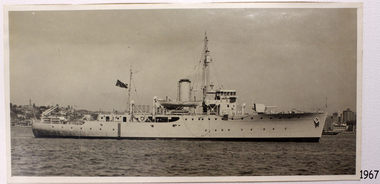
Photograph - Vessel, Steam Ship, H.M.A.S. Warrnambool J202, 1941-1947
... Warrnambool HMAS Warrnambool HMAS Warrnambool I HMAS Warrnambool J202 HMAS Swan II J202 World War II Bathurst class corvette Royal Australian Navy RAN Sydney built ship Bass Strait patrol sea mine patrol Mine sweeper Mine clearance Navy divers Great Barrier Reef Cockburn Reef Southern Cross Diving and Salvage Warrnambool City Council Cr J R Astbury Mayor J R Astbury Warrnambool Patriotic Fund Seal Coat of Arms Ship’s Bell HMAS Warrnambool 1941 Shipwreck by sea mine 1947 Sinking ship Sunk ship Sea rescue life saving Lifesaving minesweeper Photograph, black and white, HMAS Warrnambool J202 in water with land and buildings in background. ...This photograph is connected to the first HMAS Warrnambool J202, which was commissioned by the Royal Australian Navy for use as a minesweeper during World War II. The Bathurst Class Corvette, fitted out with a range of armaments, was launched in Sydney 1941. The ship began service in Bass Strait in 1941. At the end of the year it called into its namesake city, Warrnambool, where the crew paraded for the public marching eastwards along Timor Street. A gift of books for the ship’s personnel and a plaque bearing the City of Warrnambool’s Coat of Arms were presented to the ship. The ship was involved in evacuating a family of nine from the Dutch East Indies that was later successful in its challenge of Australia’s Immigration Restriction Act (White Australia Polity). The ship had many other appointments around Australia. On 13th September 1947 HMAS Warrnambool was leading a flotilla of minesweepers in northern Queensland’s coastal waters, clearing mines previously laid to defend Australia. The ship hit a mine, which exploded and very quickly sunk the ship. Boats from the nearby ships rescued most of the seamen although one was killed at the time. The survivors were taken by the HMAS Swan II to Darwin, and they went from there to hospitals in Brisbane and Sydney. Three of these men later died from their injuries. A number of items were recovered by Navy divers in 1948 including the ship’s bell and a plaque with Warrnambool’s Coat of Arms. In 1972-75 the wreck was sold and other items were salvaged. In 1995 a memorial plaque was erected in Warrnambool near the RSL. NOTE: The RAN built a second HMAS Warrnambool FCPB204, launched in 1981 and decommissioned in 2005. There was also a steam ship SS Warrnambool built in London 1892 and broken up in 1926. [A more detailed history can be found in our Collection Record 3477.] This photograph is significant for its association with Royal Australian Navy and its vessel, HMAS Warrnambool (j202). The HMAS Warrnambool played a nationally significant role in overturning Australia’s Immigration Restriction Act 1901 (colloquially known as the White Australia policy). The ship rescued, and brought to Australia, Samuel and Annie Jacob and their family after they evacuated Dutch East India. The family was threatened with deportation and made the first successful appeal to High Court regarding that Act. The HMAS Warrnambool has - Local significance for being the namesake of the City of Warrnambool - Local significance, having docked in Warrnambool Harbour - Local significance, the crew having paraded in Timor Street, Warrnambool - State significance for its first patrol being in Bass Strait. - National significance, being present in Timor at the Japanese surrender - National significance as part of Australia’s defence force history, being one of only four Bathurst class corvettes lost while in Australian service, the only Bathurst class corvette lost after World War II, the only RAN vessel to be sunk by a mine, and associated with the last four Navy deaths of WWIIPhotograph, black and white, HMAS Warrnambool J202 in water with land and buildings in background. Ship is flying a dark flag with Union Jack in corner and star below it. Lifeboat suspended above deck in centre of ship. Top of funnel has a black band. flagstaff hill, warrnambool, shipwrecked-coast, flagstaff-hill, flagstaff-hill-maritime-museum, maritime-museum, shipwreck-coast, flagstaff-hill-maritime-village, maritime village, maritime museum, shipwreck coast, mort's dock & engineering co ltd, h.m.a.s. warrnambool, hmas warrnambool, hmas warrnambool i, hmas warrnambool j202, hmas swan ii, j202, world war ii, bathurst class corvette, royal australian navy, ran, sydney built ship, bass strait patrol, sea mine patrol, mine sweeper, mine clearance, navy divers, great barrier reef, cockburn reef, southern cross diving and salvage, warrnambool city council, cr j r astbury, mayor j r astbury, warrnambool patriotic fund, seal, coat of arms, ship’s bell, hmas warrnambool 1941, shipwreck by sea mine 1947, sinking ship, sunk ship, sea rescue, life saving, lifesaving, minesweeper -
 Flagstaff Hill Maritime Museum and Village
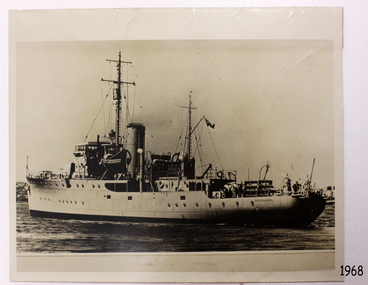
Photograph - Vessel, Steam Ship, HMAS Warrnambool J202, Between 1941-1947
... Warrnambool HMAS Warrnambool HMAS Warrnambool I HMAS Warrnambool J202 HMAS Swan II J202 World War II Bathurst class corvette Royal Australian Navy RAN Sydney built ship Bass Strait patrol sea mine patrol Mine sweeper Mine clearance Navy divers Great Barrier Reef Cockburn Reef Southern Cross Diving and Salvage Warrnambool City Council Cr J R Astbury Mayor J R Astbury Warrnambool Patriotic Fund Seal Coat of Arms Dedicatory plaque HMAS Warrnambool 1941 Shipwreck by sea mine 1947 Sinking ship Sunk ship minesweeper On side of ship "WARRNAMBOOL" Photograph of HMAS Warrnambool near land. Black and white ...The photograph shows the vessel HMAS Warrnambool J202, which was commissioned by the Royal Australian Navy for use as a minesweeper during World War II. The Bathurst Class Corvette, fitted out with a range of armaments, was launched in Sydney 1941. The ship began service in Bass Strait in 1941. At the end of the year it called into its namesake city, Warrnambool, where the crew paraded for the public marching eastwards along Timor Street. A gift of books for the ship’s personnel and a plaque bearing the City of Warrnambool’s Coat of Arms were presented to the ship. The ship was involved in evacuating a family of nine from the Dutch East Indies that was later successful in its challenge of Australia’s Immigration Restriction Act (White Australia Polity). The ship had many other appointments around Australia. On 13th September 1947 HMAS Warrnambool was leading a flotilla of minesweepers in northern Queensland’s coastal waters, clearing mines previously laid to defend Australia. The ship hit a mine, which exploded and very quickly sunk the ship. Boats from the nearby ships rescued most of the seamen although one was killed at the time. The survivors were taken by the HMAS Swan II to Darwin, and they went from there to hospitals in Brisbane and Sydney. Three of these men later died from their injuries. A number of items were recovered by Navy divers in 1948 including the ship’s bell and a plaque with Warrnambool’s Coat of Arms. In 1972-75 the wreck was sold and other items were salvaged. In 1995 a memorial plaque was erected in Warrnambool near the RSL. NOTE: The RAN built a second HMAS Warrnambool FCPB204, launched in 1981 and decommissioned in 2005. There was also a steam ship SS Warrnambool built in London 1892 and broken up in 1926. [A more detailed history can be found in our Collection Record 3477.] This photograph of HMAS Warrnambool is significant for its association with Royal Australian Navy and its vessel, HMAS Warrnambool (J202). The HMAS Warrnambool played a nationally significant role in overturning Australia’s Immigration Restriction Act 1901 (colloquially known as the White Australia policy). The ship rescued, and brought to Australia, Samuel and Annie Jacob and their family after they evacuated Dutch East India. The family was threatened with deportation and made the first successful appeal to High Court regarding that Act. The HMAS Warrnambool has - Local significance for being the namesake of the City of Warrnambool - Local significance, having docked in Warrnambool Harbour - Local significance, the crew having paraded in Timor Street, Warrnambool - State significance for its first patrol being in Bass Strait. - National significance, being present in Timor at the Japanese surrender - National significance, shown by the significance of the ship’s bell being curated as Military Heritage and Technology at the Australian War Memorial. - National significance as part of Australia’s defence force history, being one of only four Bathurst class corvettes lost while in Australian service, the only Bathurst class corvette lost after World War II, the only RAN vessel to be sunk by a mine, and associated with the last four Navy deaths of WWIIPhotograph of HMAS Warrnambool near land. Black and white photograph shows a steam and sail vessel in calm water beside land. Figures are standing on board. A flag flies on a mast. The ship's name is on the stern. The light coloured funnel has emitted a small amount of smoke.On side of ship "WARRNAMBOOL"flagstaff hill, maritime village, maritime museum, warrnambool, shipwreck coast, mort's dock & engineering co ltd, h.m.a.s. warrnambool, hmas warrnambool, hmas warrnambool i, hmas warrnambool j202, hmas swan ii, j202, world war ii, bathurst class corvette, royal australian navy, ran, sydney built ship, bass strait patrol, sea mine patrol, mine sweeper, mine clearance, navy divers, great barrier reef, cockburn reef, southern cross diving and salvage, warrnambool city council, cr j r astbury, mayor j r astbury, warrnambool patriotic fund, seal, coat of arms, dedicatory plaque, hmas warrnambool 1941, shipwreck by sea mine 1947, sinking ship, sunk ship, minesweeper -
 Federation University Historical Collection
Booklet, J.A. Hoskin & Son, Ballarat School of Mines Students' Magazine, 1946, 1946
... Sports Committee 1946, Senior Sport, Commercial Notes, Preparatory Girls, Junior Technical School Section, Junior Technical School Ballarat Students' 1946, ballarat school of mines magazine j. walter k. whiter k. bremner d. spence n. reave p. banfield r. sudholz n. lumsden j. procter p. wilson j. jolly s. parker j. mckenzie b. burgess p. maloney f. daykin m. mcleod dr. j. r. pound p. marxsen f. g. procter c. fairbank d. williams c. hoffman t. trengrove n. t. bunning d. t. kellock a. f. heseltine cr. h. l. coburn gwen spiers max berlyn dr. h. hirst w. s. stuckey e. j. mcconnon f. l. collins a. w. bridson j. j. hanrahan h. brew g. w. cornell j. t. collins r. w. whitla s. mayo n. bunning l. o. brown g. v. bergin r. r. watson t. kellock a. j. murdoch r. w. richards a. c. miller a. v. gilpin t. r. gordon r. p. flower h. yates d. mullins w. wilkinson l. hillman a. johnson a. jones m. fogarty h. darby j. allsop w. paterson a. lambert h. goldsmith m. mctaggett c. king m. harland n. w. penrose r. r. calder s. williams c. f. jeffrey d. i. johnston j. sutherland r. h. lonie f. e. ferguson b. law j. lochhead david coburn peter marxsen jack scala kingsley bremner douglas dean alan wison doris pengalley roma sudholz ken palmer winnie beckwith tonie hilton jean waller david hobson w. rowe john procter neville reeve joan walter robert allen mrs smail betty young william blackie alfred mckenzie peggy crosbie dawn williams lloyd lehmann j. waller p. crosbie w. beckwith w. stevens o. whitworth d. harper d. judd j. blainey d. coburn r. mawby m. connell i. mclachlan d. dean r. holliocke d. jelbart f. savage b. hewitt m. murray g. sewell l. pattenden n. morton w. wray b. sherritt r. jillet n. hornbuckle j. sewell m. walsh m. ross m. james n. sewell r. gladman n. pitcher h. duncan p. gleeson edna stevens reita rowe rosemary gillett roy mawby kevin whiter robert morgan don lucas laurie krausgrill j. hanrahan w. sutherland b. bowman l. clifton w. coad i. james k. eberhart g. jukes k. dean k. george r. montgomery t. aggett r. hocking m. grinham m. lawless k. cartledge g. clifton d. halson g. hindson w. haire r. sargent m. mccarthy a. spicer w. nunn m. tweedale ronald healey howard mcwilliam l. weir r. watson gilbert j. troplis l. wilson k. spalding k. east w. holdsworth e. jackson j. anderson t. shaw w. whittle d. morris w. fisher g. toplis a. hughes w. coles f. atchison f. gallagher t. hewitt a. ward w. hon r. lambert w. brogden r. farquhar j. james l. keen i. wilson s. h. jones White and yellow front soft covered magazine with green and blue font. 92 pages including advertisements. ...Ballarat School pf Mines Council, Members of Staff, List of Full Course Students' 1946, Magazine Committee, Editorial, Editor's Notes, News and Notes, Obituary - W. S. Stuckey, The Head - A. F. Heseltine, Staff 1946, The Literary Society, Science Section, Art Section, S.M.B. Sports Committee 1946, Senior Sport, Commercial Notes, Preparatory Girls, Junior Technical School Section, Junior Technical School Ballarat Students' 1946,White and yellow front soft covered magazine with green and blue font. 92 pages including advertisements.ballarat school of mines, magazine, j. walter, k. whiter, k. bremner, d. spence, n. reave, p. banfield, r. sudholz, n. lumsden, j. procter, p. wilson, j. jolly, s. parker, j. mckenzie, b. burgess, p. maloney, f. daykin, m. mcleod, dr. j. r. pound, p. marxsen, f. g. procter, c. fairbank, d. williams, c. hoffman, t. trengrove, n. t. bunning, d. t. kellock, a. f. heseltine, cr. h. l. coburn, gwen spiers, max berlyn, dr. h. hirst, w. s. stuckey, e. j. mcconnon, f. l. collins, a. w. bridson, j. j. hanrahan, h. brew, g. w. cornell, j. t. collins, r. w. whitla, s. mayo, n. bunning, l. o. brown, g. v. bergin, r. r. watson, t. kellock, a. j. murdoch, r. w. richards, a. c. miller, a. v. gilpin, t. r. gordon, r. p. flower, h. yates, d. mullins, w. wilkinson, l. hillman, a. johnson, a. jones, m. fogarty, h. darby, j. allsop, w. paterson, a. lambert, h. goldsmith, m. mctaggett, c. king, m. harland, n. w. penrose, r. r. calder, s. williams, c. f. jeffrey, d. i. johnston, j. sutherland, r. h. lonie, f. e. ferguson, b. law, j. lochhead, david coburn, peter marxsen, jack scala, kingsley bremner, douglas dean, alan wison, doris pengalley, roma sudholz, ken palmer, winnie beckwith, tonie hilton, jean waller, david hobson, w. rowe, john procter, neville reeve, joan walter, robert allen, mrs smail, betty young, william blackie, alfred mckenzie, peggy crosbie, dawn williams, lloyd lehmann, j. waller, p. crosbie, w. beckwith, w. stevens, o. whitworth, d. harper, d. judd, j. blainey, d. coburn, r. mawby, m. connell, i. mclachlan, d. dean, r. holliocke, d. jelbart, f. savage, b. hewitt, m. murray, g. sewell, l. pattenden, n. morton, w. wray, b. sherritt, r. jillet, n. hornbuckle, j. sewell, m. walsh, m. ross, m. james, n. sewell, r. gladman, n. pitcher, h. duncan, p. gleeson, edna stevens, reita rowe, rosemary gillett, roy mawby, kevin whiter, robert morgan, don lucas, laurie krausgrill, j. hanrahan, w. sutherland, b. bowman, l. clifton, w. coad, i. james, k. eberhart, g. jukes, k. dean, k. george, r. montgomery, t. aggett, r. hocking, m. grinham, m. lawless, k. cartledge, g. clifton, d. halson, g. hindson, w. haire, r. sargent, m. mccarthy, a. spicer, w. nunn, m. tweedale, ronald healey, howard mcwilliam, l. weir, r. watson, gilbert j. troplis, l. wilson, k. spalding, k. east, w. holdsworth, e. jackson, j. anderson, t. shaw, w. whittle, d. morris, w. fisher, g. toplis, a. hughes, w. coles, f. atchison, f. gallagher, t. hewitt, a. ward, w. hon, r. lambert, w. brogden, r. farquhar, j. james, l. keen, i. wilson, s. h. jones -
 City of Moorabbin Historical Society (Operating the Box Cottage Museum)
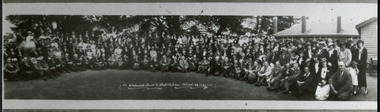
Photograph - Back to Cheltenham State School - A memento 28.11.1936, 1936
... A black and white photograph of a large group of men and women in a semicircle on a school play yard beside a weatherboard building .They all appear to be smartly dressed, many women wearing hats and the men in suits. Cheltenham School Reunion. The third annual "Back to Cheltenham State school" reunion attracted an attendance of 600 former scholars to the school on Saturday afternoon. The proceedings were opened by tho mayor of Moorabbin (Cr. J...A reunion gathering for past students of Cheltenham State School held in November 1936 Cheltenham Primary School state school charman road cheltenham school charman stephen gettens mary spring grove balcombe road nepean road dairy farmers market agrdeners poultry farmers methodist church cancel 1936 A black and white photograph of a large group of men and women in a semicircle on a school play yard beside a weatherboard building .They all appear to be smartly dressed, many women wearing hats and the men in suits. Cheltenham School Reunion. The third annual "Back to Cheltenham State school" reunion attracted an attendance of 600 former scholars to the school on Saturday afternoon. The proceedings were opened by tho mayor of Moorabbin (Cr. J ...A reunion gathering for past students of Cheltenham State School held in November 1936A black and white photograph of a large group of men and women in a semicircle on a school play yard beside a weatherboard building .They all appear to be smartly dressed, many women wearing hats and the men in suits. Cheltenham School Reunion. The third annual "Back to Cheltenham State school" reunion attracted an attendance of 600 former scholars to the school on Saturday afternoon. The proceedings were opened by tho mayor of Moorabbin (Cr. J. W. Allnut). The oldest teacher present was Mrs. Grant, of Sorrento, who, as Miss Fraser, had charge of the school from 1880 to 1883. Another old identity was Mr. T. Evans, of Kew, who is 82 years of age — he was the head teacher from 1802 to 1800. Photographs were taken of Mrs. Grant with fifteen of her former pupils, and of Mr. Evans, who mustered 72 of his old scholars. The roll call showed that there were 50 pupils present who attended tho school more than half a century ago. Mrs. Buckley, of Mentone, who is 84, and Mr. W. P. Fairlam, of Cheltenham, 80 years, were the oldest former scholars in attendance. Mr. Fairlam, notwithstanding his age, still carries on the business of an auctioneer. Bouquets were presented to Mrs. Grant and Mrs Buckley by the president of the mothers' club (Mrs. Marshall). An enjoyable day was wound up by a dance at night in the mechanical institute, when 200 attended. (Age, Monday 30 November 1936, page 5)cheltenham primary school, state school, charman road, cheltenham, school, charman stephen, gettens mary, spring grove, balcombe road, nepean road, dairy farmers, market agrdeners, poultry farmers, methodist church, cancel, 1936 -
Glenelg Shire Council Cultural Collection
Programme - Programme - official opening of the Portland airport, 1982, 17/09/1982
... White card, printed both sides, depiction of terminal in shades of blue. Printed history of airport and how it came to be called the 'Frank Lennon' terminal. Photo of Cr. J...White card, printed both sides, depiction of terminal in shades of blue. Printed history of airport and how it came to be called the 'Frank Lennon' terminal. Photo of Cr. J ...DL Flyer, programme for official opening of Portland airport, 17 Sept. 1982. White card, printed both sides, depiction of terminal in shades of blue. Printed history of airport and how it came to be called the 'Frank Lennon' terminal. Photo of Cr. J. Patterson, chairman of Portland/Cashmore Joint Aerodrome Committee. -
 City of Moorabbin Historical Society (Operating the Box Cottage Museum)
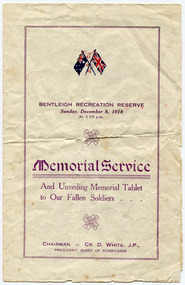
Programme - Memorial Service - Bentleigh Recreation Reserve, Unveiling Memorial Tablet to Our Fallen Soldiers, 1918
... Cr. D. White, was introduced to those present, by Cr T Marriott. Mr O. R. Snowball, M.L.A., unveiled the memorial tablet, which was inscribed as follows :-- “To the memory of Bentleigh boys who died for their country in the Great War 1914.18,. Greater love hath no Man than this, that a man lay down his life for his friends.” OUR FALLEN HEROES Austin, R J...Cr. D. White, was introduced to those present, by Cr T Marriott. Mr O. R. Snowball, M.L.A., unveiled the memorial tablet, which was inscribed as follows :-- “To the memory of Bentleigh boys who died for their country in the Great War 1914.18,. Greater love hath no Man than this, that a man lay down his life for his friends.” OUR FALLEN HEROES Austin, R J ...The memorial service held at the Bentleigh Recreation Reserve on Sunday, December 8, 1918. It was largely attended. The president of the Sire, Cr. D. White, was introduced to those present, by Cr T Marriott. Mr O. R. Snowball, M.L.A., unveiled the memorial tablet, which was inscribed as follows :-- “To the memory of Bentleigh boys who died for their country in the Great War 1914.18,. Greater love hath no Man than this, that a man lay down his life for his friends.” OUR FALLEN HEROES Austin, R J, (M.M.); Mitchell, R A; Baker, O R; Manfield G S; Bevis, D E; Norris, H; Crutchfield, C; Odgen, A.; Dodson, H E; Perry, L.; Dunigan, F J; Sharpin, G; Hill, G; Searle, J H; Jones, C; Smith, E R Bentleigh residents remembers the "Bentleigh Boys" that were killed in World War One, the sons of pioneer familiies of the districtFour page Programme, for the Memorial Service and unveiling of memorial Table to the Shire of Moorabbin's fallen Soldiers.world war one, wwi, memorial, bentleigh recreation reserve, moorabbin, bentleigh, shire of moorabbin, austin, mitchell, baker, manfield g s, bevis, norris, crutchfield, odgen, perry, dunigan, sharpin, hill, searle, smith, dodson -
 Glenelg Shire Council Cultural Collection
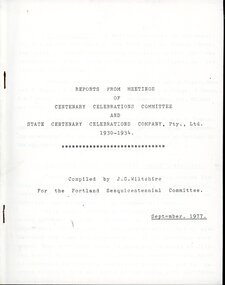
Administrative record - Reports from Meetings - Centenary Celebrations Committee, 1934
... Cr J L Wyatt with a view to considering necessary action for the celebration of the State of Victoria at Portland. It was resolved that all present should form as a committee with power to add, with the object of determining and implementing arrangements for the celebration of the Centenary at Portland on the appropriate date. centenary committee minutes administration 1934 Portland Sesquicentennial Committee J L Wyatt Cr Pumpa Cr A Hogan S Segal W Millard Beglen H Annett P Hodge E Davis E N T Henry N Learmonth E Andrews Sutton Day Millard Pettit Twenty page booklet, white paper, stapled; containing reports from meetings of centenary celebrations committee and State Centenary Celebrations Co. ...A meeting convened by the Mayor Cr J L Wyatt with a view to considering necessary action for the celebration of the State of Victoria at Portland. It was resolved that all present should form as a committee with power to add, with the object of determining and implementing arrangements for the celebration of the Centenary at Portland on the appropriate date. Twenty page booklet, white paper, stapled; containing reports from meetings of centenary celebrations committee and State Centenary Celebrations Co. Pty Ltd. 1930 - 1934. Compiled September 1977.centenary, committee, minutes, administration, 1934, portland sesquicentennial committee, j l wyatt, cr pumpa, cr a hogan, s segal, w millard, beglen, h annett, p hodge, e davis, e n t henry, n learmonth, e andrews, sutton, day, millard, pettit -
Glenelg Shire Council Cultural Collection
Newspaper - Newspaper Clipping - Descendants of Henty family being greeted at foundation celebrations by the Mayor of Portland 1929, 21/11/1929
... Black and white photo with inscription beneath, from newspaper dated 21 NOV 1929. Descendants of Henty family being greeted at foundation celebrations by the Mayor of Portland, Cr. J...Foundation Celebrations 1929 Black and white photo with inscription beneath, from newspaper dated 21 NOV 1929. Descendants of Henty family being greeted at foundation celebrations by the Mayor of Portland, Cr. J ...Foundation Celebrations 1929Black and white photo with inscription beneath, from newspaper dated 21 NOV 1929. Descendants of Henty family being greeted at foundation celebrations by the Mayor of Portland, Cr. J. L. Wyatt. Stuck to white cardboard. -
Glenelg Shire Council Cultural Collection
Photograph - Photograph - Councillor J.L. Wyatt, J.P, Lockwood Studios, Geelong, c. 1924
... Cr. J. L. Wyatt J.P./1914-15-16-17-22-23-24 (plaque, lower centre) Sepia photograph of a man dressed in a three-piece suit with a pale bow tie and white high-collar shirt. ...Records of the Borough of PortlandSepia photograph of a man dressed in a three-piece suit with a pale bow tie and white high-collar shirt. He wears a badge on his left lapel. One-third length portrait, with head tilted up and eye-line to upper left of camera. The man has short hair (wavy) parted on the left, and a full moustache. Framed under glass with grey and tan double matt, in a white wooden frame with plaque attached bottom centre. Chain across waiscoat.Front: The Lockwood Studios/-Geelong - (lower right, on photograph) Cr. J. L. Wyatt J.P./1914-15-16-17-22-23-24 (plaque, lower centre)councillor wyatt, jp, official photography, portrait, civic photography -
Glenelg Shire Council Cultural Collection
Photograph - Photograph - Shire of Glenelg Councillors, c. 1963
... Cr. J.R. Hargreaves' - handwritten pencil Black and white photo. Three councillors for the Central Riding, Shire of Glenelg 1962/3, sitting behind desk, Honour Board on wall behind them, with names of Past Presidents of the Shire of Glenelg, 1863 - 1963 Left to right: H. D Mitchell, J.J. Howlett, J ...Sourced from Casterton Town Hall (Former Shire of Glenelg)Black and white photo. Three councillors for the Central Riding, Shire of Glenelg 1962/3, sitting behind desk, Honour Board on wall behind them, with names of Past Presidents of the Shire of Glenelg, 1863 - 1963 Left to right: H. D Mitchell, J.J. Howlett, J. R Hargreaves Council chambers, Casterton Town HallBack: Black stamp '003635. Letter 'A' heavy pencil. Blue biro line, arrowed each end, drawn across photo. '3" ' above line. 'Councillors central Riding 1962/3 '1/4 black' -pencil L to R Cr H.D. Mitchell Cr. JJ. Howlett Cr. J.R. Hargreaves' - handwritten pencil -
Glenelg Shire Council Cultural Collection
Photograph - Photograph - Shire of Glenelg Councillors, c. 1963
... Cr. J.P. Neylon' handwritten in blue biro Black and white photo. Three East Riding Councillors for Shire of Glenelg, sitting at desk, Honour Board on wall behind them with names of Past Presidents of the Shire of Glenelg 1863 -1963 Left to right T. J ...Sourced from Casterton Town Hall (Former Shire of Glenelg)Black and white photo. Three East Riding Councillors for Shire of Glenelg, sitting at desk, Honour Board on wall behind them with names of Past Presidents of the Shire of Glenelg 1863 -1963 Left to right T. J. Carey (in glasses), D. P. Mullane, J. P. Neylon, Council chambers, Casterton Town HallBack: Black stamp ;\' 003826' ' B' pencil Blue biro line arrowed both ends, drawn across photo. '3" ' above line ''Councillors East Riding' L to R Cr T.J Carey Cr. D. P. Mullane Cr. J.P. Neylon' handwritten in blue birotj carey, d p mullane, jp neylon -
Glenelg Shire Council Cultural Collection
Photograph - Photograph - Councillor J. B. Hansen, c. 1963
... white photo. Shire Secretary. Cr. J.B. Hansen sitting behind desk. Dressed in suit, hands not visible. Photograph Photograph - Councillor J. ...Sourced from Casterton Town Hall (Former Shire of Glenelg)Black and white photo. Shire Secretary. Cr. J.B. Hansen sitting behind desk. Dressed in suit, hands not visible.Back: Black stamp '004144' -
 Orbost & District Historical Society
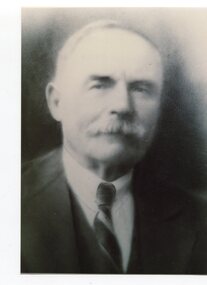
black and white photograph, C1928
... The shire covered an area of 9,347 square kilometres and existed from 1892 until 1994 when it became part of the East Gippsland Shire Council. armstrong-joseph orbost-shire-council on back - "Cr J. Armstrong J.P." A black / white head and shoulders portrait photograph of a man in a suit. ...This photograph is of Orbost Shire Councillor Joseph Armstrong who represented East Riding 1918. He was president twice.This item is associated with the Orbost Shire Council. The shire covered an area of 9,347 square kilometres and existed from 1892 until 1994 when it became part of the East Gippsland Shire Council.A black / white head and shoulders portrait photograph of a man in a suit. There is also a framed copy.on back - "Cr J. Armstrong J.P."armstrong-joseph orbost-shire-council -
 Orbost & District Historical Society
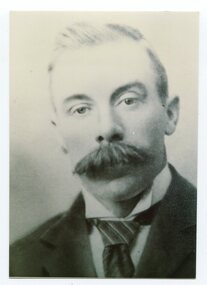
black and white photograph, C1926
... Cr J. Walker, East Riding 1915-1926" A black / white head and shoulders portrait photograph of a moustached man in a suit. black and white photograph ...This is a photograph of Councillor J. Walker who represented East Riding on the Orbost Shire council from 1915 - 1926.This item is associated with the Orbost Shire Council. The shire covered an area of 9,347 square kilometres and existed from 1892 until 1994 when it became part of the East Gippsland Shire Council.A black / white head and shoulders portrait photograph of a moustached man in a suit.on back - "Cr J. Walker, East Riding 1915-1926"walker-j. orbost-shire-council -
 Orbost & District Historical Society
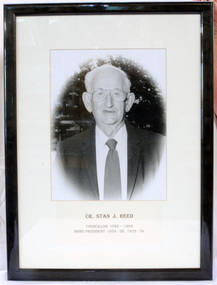
framed photograph, Ian Clues Photography
... J. Reed was an Orbost Shire Councillor from 1950-1993. He represented North Riding. municipal orbost-shire-council reed-stan government Cr Stan J. Reed Orbost Shire Councillor-Represented North Riding 1950-1993 Shire President: Four terms 1954-55 , 1955-56 1972-73 & 1973-74 A black and white photograph of Councillor Stan J. ...Stanley J. Reed was an Orbost Shire Councillor from 1950-1993. He represented North Riding.A black and white photograph of Councillor Stan J. Reed in a black wooden frame.Cr Stan J. Reed Orbost Shire Councillor-Represented North Riding 1950-1993 Shire President: Four terms 1954-55 , 1955-56 1972-73 & 1973-74 municipal orbost-shire-council reed-stan government -
 Flagstaff Hill Maritime Museum and Village
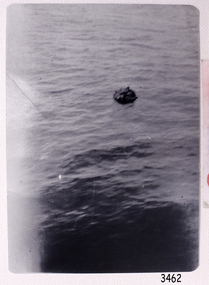
Photograph - Shipwreck rescue, 13-09-1947
... Warrnambool HMAS Warrnambool HMAS Warrnambool I HMAS Warrnambool J202 HMAS Swan II J202 World War II Bathurst class corvette Royal Australian Navy RAN Sydney built ship Bass Strait patrol sea mine patrol Mine sweeper Mine clearance Navy divers Great Barrier Reef Cockburn Reef Southern Cross Diving and Salvage Warrnambool City Council Cr J R Astbury Mayor J R Astbury Warrnambool Patriotic Fund Seal Coat of Arms Dedicatory plaque HMAS Warrnambool 1941 Shipwreck by sea mine 1947 Sinking ship Sunk ship Sea rescue life saving Lifesaving lifeboat minesweeper Photograph of rescue of crew from H.M.A.S. Warrnambool, sunk on 13-09-1947. Men in life boat surrounded by water. This black and white ...This photograph was taken at the scene of the wreck of the HMAS Warrnambool J202 on September 13th 1947.The photographer has captured the crew in a lifeboat surrounded by sea. The lifeboat is approaching the HMAS Swan II. The HMAS Warrnambool J202 was commissioned by the Royal Australian Navy for use as a minesweeper during World War II. The Bathurst Class Corvette, fitted out with a range of armaments, was launched in Sydney in May 1941. The ship began service in Bass Strait in 1941. At the end of the year it called into its namesake city, Warrnambool, where the crew paraded for the public marching eastwards along Timor Street. A gift of books for the ship’s personnel and a plaque bearing the City of Warrnambool’s Coat of Arms were presented to the ship. The ship was involved in evacuating a family of nine from the Dutch East Indies that was later successful in its challenge of Australia’s Immigration Restriction Act (White Australia Polity). The ship had many other appointments around Australia. On 13th September 1947 HMAS Warrnambool was leading a flotilla of minesweepers in northern Queensland’s coastal waters, clearing mines previously laid to defend Australia. The ship hit a mine, which exploded and very quickly sunk the ship. Boats from the nearby ships rescued most of the seamen although one was killed at the time. The survivors were taken by the HMAS Swan II to Darwin, and they went from there to hospitals in Brisbane and Sydney. Three of these men later died from their injuries. A number of items were recovered by Navy divers in 1948 including the ship’s bell and a plaque with Warrnambool’s Coat of Arms. In 1972-75 the wreck was sold and other items were salvaged. In 1995 a memorial plaque was erected in Warrnambool near the RSL. NOTE: The RAN built a second HMAS Warrnambool FCPB204, launched in 1981 and decommissioned in 2005. There was also a steam ship SS Warrnambool built in London 1892 and broken up in 1926. [A more detailed history can be found in our Collection Record 3477.] This photograph is significant for its association with the lifesaving rescue of the crew and the sinking Royal Australian Navy vessel, HMAS Warrnambool (J202). The HMAS Warrnambool played a nationally significant role in overturning Australia’s Immigration Restriction Act 1901 (colloquially known as the White Australia policy). The ship rescued, and brought to Australia, Samuel and Annie Jacob and their family after they evacuated Dutch East India. The family was threatened with deportation and made the first successful appeal to High Court regarding that Act. The HMAS Warrnambool has - Local significance for being the namesake of the City of Warrnambool - Local significance, having docked in Warrnambool Harbour - Local significance, the crew having paraded in Timor Street, Warrnambool - State significance for its first patrol being in Bass Strait. - National significance, being present in Timor at the Japanese surrender - National significance, shown by the significance of the ship’s bell being curated as Military Heritage and Technology at the Australian War Memorial. - National significance as part of Australia’s defence force history, being one of only four Bathurst class corvettes lost while in Australian service, the only Bathurst class corvette lost after World War II, the only RAN vessel to be sunk by a mine, and associated with the last four Navy deaths of WWII Photograph of rescue of crew from H.M.A.S. Warrnambool, sunk on 13-09-1947. Men in life boat surrounded by water. This black and white photograph is one of a series of photographs taken at that time. flagstaff hill, maritime village, maritime museum, warrnambool, shipwreck coast, mort's dock & engineering co ltd, h.m.a.s. warrnambool, hmas warrnambool, hmas warrnambool i, hmas warrnambool j202, hmas swan ii, j202, world war ii, bathurst class corvette, royal australian navy, ran, sydney built ship, bass strait patrol, sea mine patrol, mine sweeper, mine clearance, navy divers, great barrier reef, cockburn reef, southern cross diving and salvage, warrnambool city council, cr j r astbury, mayor j r astbury, warrnambool patriotic fund, seal, coat of arms, dedicatory plaque, hmas warrnambool 1941, shipwreck by sea mine 1947, sinking ship, sunk ship, sea rescue, life saving, lifesaving, lifeboat, minesweeper -
 Flagstaff Hill Maritime Museum and Village
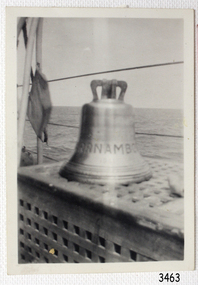
Photograph - Ship's Bell, Royal Australian Navy (RAN), HMAS Warrnambool 1941, 1948
... Warrnambool HMAS Warrnambool HMAS Warrnambool I HMAS Warrnambool J202 HMAS Swan II J202 World War II Bathurst class corvette Royal Australian Navy RAN Sydney built ship Bass Strait patrol sea mine patrol Mine sweeper Mine clearance Navy divers Great Barrier Reef Cockburn Reef Southern Cross Diving and Salvage Warrnambool City Council Cr J R Astbury Mayor J R Astbury Warrnambool Patriotic Fund Seal Coat of Arms Dedicatory plaque HMAS Warrnambool 1941 Shipwreck by sea mine 1947 Sinking ship Sunk ship Sea rescue life saving Lifesaving HMAS Warrnambool ship’s bell Ship’s Bell minesweeper In photograph, inscription on bell "- ARNAMB-" [WARRNAMBOOL] Photograph of ship bell from shipwreck of HMAS Warrnambool, sunk on 13-09-1947. The black and white ...This photograph was taken at the wreck site of the HMAS Warrnambool J202, wrecked on September 13th 1947. The bell was recovered in 1948 by the Royal Australian Navy. The ship's bell has been of great importance to a ship for hundreds of years. The bell is used for the timing of ships watches, for emergencies and many other purposes. It is also a prized possession when a ship is wrecked or broken up, as lasting memorial of the ship's existence. The HMAS Warrnambool J202 was commissioned by the Royal Australian Navy for use as a minesweeper during World War II. The Bathurst Class Corvette, fitted out with a range of armaments, was launched in Sydney 1941 and was. The ship began service in Bass Strait in 1941. At the end of the year it called into its namesake city, Warrnambool, where the crew paraded for the public marching eastwards along Timor Street. A gift of books for the ship’s personnel and a plaque bearing the City of Warrnambool’s Coat of Arms were presented to the ship. The ship was involved in evacuating a family of nine from the Dutch East Indies that was later successful in its challenge of Australia’s Immigration Restriction Act (White Australia Polity). The ship had many other appointments around Australia. On 13th September 1947 HMAS Warrnambool was leading a flotilla of minesweepers in northern Queensland’s coastal waters, clearing mines previously laid to defend Australia. The ship hit a mine, which exploded and very quickly sunk the ship. Boats from the nearby ships rescued most of the seamen although one was killed at the time. The survivors were taken by the HMAS Swan II to Darwin, and they went from there to hospitals in Brisbane and Sydney. Three of these men later died from their injuries. A number of items were recovered by Navy divers in 1948 including the ship’s bell and a plaque with Warrnambool’s Coat of Arms. In 1972-75 the wreck was sold and other items were salvaged. In 1995 a memorial plaque was erected in Warrnambool near the RSL. NOTE: The RAN built a second HMAS Warrnambool FCPB204, launched in 1981 and decommissioned in 2005. There was also a steam ship SS Warrnambool built in London 1892 and broken up in 1926. [A more detailed history can be found in our Collection Record 3477.] This photograph is significant for its association with the lifesaving rescue of the crew and the sinking Royal Australian Navy vessel, HMAS Warrnambool (J202). The HMAS Warrnambool played a nationally significant role in overturning Australia’s Immigration Restriction Act 1901 (colloquially known as the White Australia policy). The ship rescued, and brought to Australia, Samuel and Annie Jacob and their family after they evacuated Dutch East India. The family was threatened with deportation and made the first successful appeal to High Court regarding that Act. The HMAS Warrnambool has - Local significance for being the namesake of the City of Warrnambool - Local significance, having docked in Warrnambool Harbour - Local significance, the crew having paraded in Timor Street, Warrnambool - State significance for its first patrol being in Bass Strait. - National significance, being present in Timor at the Japanese surrender - National significance, shown by the significance of the ship’s bell being curated as Military Heritage and Technology at the Australian War Memorial. - National significance as part of Australia’s defence force history, being one of only four Bathurst class corvettes lost while in Australian service, the only Bathurst class corvette lost after World War II, the only RAN vessel to be sunk by a mine, and associated with the last four Navy deaths of WWII Photograph of ship bell from shipwreck of HMAS Warrnambool, sunk on 13-09-1947. The black and white photograph of the bell shows its inverted 'U' shaped fitting on top and inscribed letters around it. The flared base of the bell has concentric rings as decoration. In photograph, inscription on bell "- ARNAMB-" [WARRNAMBOOL]flagstaff hill, maritime village, maritime museum, warrnambool, shipwreck coast, mort's dock & engineering co ltd, h.m.a.s. warrnambool, hmas warrnambool, hmas warrnambool i, hmas warrnambool j202, hmas swan ii, j202, world war ii, bathurst class corvette, royal australian navy, ran, sydney built ship, bass strait patrol, sea mine patrol, mine sweeper, mine clearance, navy divers, great barrier reef, cockburn reef, southern cross diving and salvage, warrnambool city council, cr j r astbury, mayor j r astbury, warrnambool patriotic fund, seal, coat of arms, dedicatory plaque, hmas warrnambool 1941, shipwreck by sea mine 1947, sinking ship, sunk ship, sea rescue, life saving, lifesaving, hmas warrnambool ship’s bell, ship’s bell, minesweeper -
 Flagstaff Hill Maritime Museum and Village
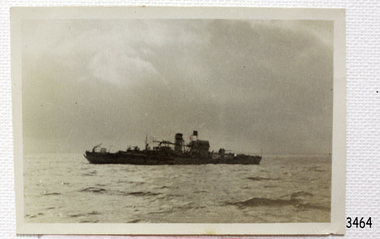
Photograph - Shipwreck rescue, Royal Australian Navy (RAN), 13-09-1947
... Warrnambool HMAS Warrnambool HMAS Warrnambool I HMAS Warrnambool J202 HMAS Swan II J202 World War II Bathurst class corvette Royal Australian Navy RAN Sydney built ship Bass Strait patrol sea mine patrol Mine sweeper Mine clearance Navy divers Great Barrier Reef Cockburn Reef Southern Cross Diving and Salvage Warrnambool City Council Cr J R Astbury Mayor J R Astbury Warrnambool Patriotic Fund Seal Coat of Arms Dedicatory plaque HMAS Warrnambool 1941 Shipwreck by sea mine 1947 Sinking ship Sunk ship minesweeper Photograph of the sinking of the ship HMAS Warrnambool, sunk on 13-09-1947. This black and white ...This photograph was taken at the scene of the wreck of the HMAS Warrnambool J202 on September 13th 1947. The photographer has captured the ship as it sinks at sea. The HMAS Warrnambool J202 was commissioned by the Royal Australian Navy for use as a minesweeper during World War II. The Bathurst Class Corvette, fitted out with a range of armaments, was launched in Sydney in 1941. The ship began service in Bass Strait in 1941. At the end of the year it called into its namesake city, Warrnambool, where the crew paraded for the public marching eastwards along Timor Street. A gift of books for the ship’s personnel and a plaque bearing the City of Warrnambool’s Coat of Arms were presented to the ship. The ship was involved in evacuating a family of nine from the Dutch East Indies that was later successful in its challenge of Australia’s Immigration Restriction Act (White Australia Polity). The ship had many other appointments around Australia. On 13th September 1947 HMAS Warrnambool was leading a flotilla of minesweepers in northern Queensland’s coastal waters, clearing mines previously laid to defend Australia. The ship hit a mine, which exploded and very quickly sunk the ship. Boats from the nearby ships rescued most of the seamen although one was killed at the time. The survivors were taken by the HMAS Swan II to Darwin, and they went from there to hospitals in Brisbane and Sydney. Three of these men later died from their injuries. A number of items were recovered by Navy divers in 1948 including the ship’s bell and a plaque with Warrnambool’s Coat of Arms. In 1972-75 the wreck was sold and other items were salvaged. In 1995 a memorial plaque was erected in Warrnambool near the RSL. NOTE: The RAN built a second HMAS Warrnambool FCPB204, launched in 1981 and decommissioned in 2005. There was also a steam ship SS Warrnambool built in London 1892 and broken up in 1926. [A more detailed history can be found in our Collection Record 3477.] This photograph is significant for its association with the lifesaving rescue of the crew and the sinking Royal Australian Navy vessel, HMAS Warrnambool (J202). The HMAS Warrnambool played a nationally significant role in overturning Australia’s Immigration Restriction Act 1901 (colloquially known as the White Australia policy). The ship rescued, and brought to Australia, Samuel and Annie Jacob and their family after they evacuated Dutch East India. The family was threatened with deportation and made the first successful appeal to High Court regarding that Act. The HMAS Warrnambool has - Local significance for being the namesake of the City of Warrnambool - Local significance, having docked in Warrnambool Harbour - Local significance, the crew having paraded in Timor Street, Warrnambool - State significance for its first patrol being in Bass Strait. - National significance, being present in Timor at the Japanese surrender - National significance, shown by the significance of the ship’s bell being curated as Military Heritage and Technology at the Australian War Memorial. - National significance as part of Australia’s defence force history, being one of only four Bathurst class corvettes lost while in Australian service, the only Bathurst class corvette lost after World War II, the only RAN vessel to be sunk by a mine, and associated with the last four Navy deaths of WWII Photograph of the sinking of the ship HMAS Warrnambool, sunk on 13-09-1947. This black and white photograph showing the vessel at sea is one of a series of photographs taken at the time.flagstaff hill, maritime village, maritime museum, warrnambool, shipwreck coast, mort's dock & engineering co ltd, h.m.a.s. warrnambool, hmas warrnambool, hmas warrnambool i, hmas warrnambool j202, hmas swan ii, j202, world war ii, bathurst class corvette, royal australian navy, ran, sydney built ship, bass strait patrol, sea mine patrol, mine sweeper, mine clearance, navy divers, great barrier reef, cockburn reef, southern cross diving and salvage, warrnambool city council, cr j r astbury, mayor j r astbury, warrnambool patriotic fund, seal, coat of arms, dedicatory plaque, hmas warrnambool 1941, shipwreck by sea mine 1947, sinking ship, sunk ship, minesweeper -
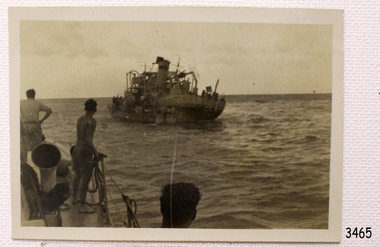 Flagstaff Hill Maritime Museum and Village
Photograph - Shipwreck rescue, Royal Australian Navy (RAN), 13-09-1947
... Warrnambool HMAS Warrnambool HMAS Warrnambool I HMAS Warrnambool J202 HMAS Swan II J202 World War II Bathurst class corvette Royal Australian Navy RAN Sydney built ship Bass Strait patrol sea mine patrol Mine sweeper Mine clearance Navy divers Great Barrier Reef Cockburn Reef Southern Cross Diving and Salvage Warrnambool City Council Cr J R Astbury Mayor J R Astbury Warrnambool Patriotic Fund Seal Coat of Arms Dedicatory plaque HMAS Warrnambool 1941 Shipwreck by sea mine 1947 Sinking ship Sunk ship Sea rescue life saving Lifesaving minesweeper Photograph of the sinking of the ship HMAS Warrnambool, sunk on 13-09-1947. Figures onboard a vessel are looking towards figures on the sinking vessel. This black and white ...This photograph was taken at the scene of the wreck of the HMAS Warrnambool J202 on September 13th 1947. The photographer has captured the ship as it sinks at sea. The photograph is taken from a nearby vessel, likely to be the HMAS Swan II, which took the survivors onboard. The HMAS Warrnambool J202 was commissioned by the Royal Australian Navy for use as a minesweeper during World War II. The Bathurst Class Corvette, fitted out with a range of armaments, was launched in Sydney in 1941. The ship began service in Bass Strait in 1941. At the end of the year it called into its namesake city, Warrnambool, where the crew paraded for the public marching eastwards along Timor Street. A gift of books for the ship’s personnel and a plaque bearing the City of Warrnambool’s Coat of Arms were presented to the ship. The ship was involved in evacuating a family of nine from the Dutch East Indies that was later successful in its challenge of Australia’s Immigration Restriction Act (White Australia Polity). The ship had many other appointments around Australia. On 13th September 1947 HMAS Warrnambool was leading a flotilla of minesweepers in northern Queensland’s coastal waters, clearing mines previously laid to defend Australia. The ship hit a mine, which exploded and very quickly sunk the ship. Boats from the nearby ships rescued most of the seamen although one was killed at the time. The survivors were taken by the HMAS Swan II to Darwin, and they went from there to hospitals in Brisbane and Sydney. Three of these men later died from their injuries. A number of items were recovered by Navy divers in 1948 including the ship’s bell and a plaque with Warrnambool’s Coat of Arms. In 1972-75 the wreck was sold and other items were salvaged. In 1995 a memorial plaque was erected in Warrnambool near the RSL. NOTE: The RAN built a second HMAS Warrnambool FCPB204, launched in 1981 and decommissioned in 2005. There was also a steam ship SS Warrnambool built in London 1892 and broken up in 1926. [A more detailed history can be found in our Collection Record 3477.] This photograph is significant for its association with the lifesaving rescue of the crew and the sinking Royal Australian Navy vessel, HMAS Warrnambool (J202). The HMAS Warrnambool played a nationally significant role in overturning Australia’s Immigration Restriction Act 1901 (colloquially known as the White Australia policy). The ship rescued, and brought to Australia, Samuel and Annie Jacob and their family after they evacuated Dutch East India. The family was threatened with deportation and made the first successful appeal to High Court regarding that Act. The HMAS Warrnambool has - Local significance for being the namesake of the City of Warrnambool - Local significance, having docked in Warrnambool Harbour - Local significance, the crew having paraded in Timor Street, Warrnambool - State significance for its first patrol being in Bass Strait. - National significance, being present in Timor at the Japanese surrender - National significance, shown by the significance of the ship’s bell being curated as Military Heritage and Technology at the Australian War Memorial. - National significance as part of Australia’s defence force history, being one of only four Bathurst class corvettes lost while in Australian service, the only Bathurst class corvette lost after World War II, the only RAN vessel to be sunk by a mine, and associated with the last four Navy deaths of WWII Photograph of the sinking of the ship HMAS Warrnambool, sunk on 13-09-1947. Figures onboard a vessel are looking towards figures on the sinking vessel. This black and white photograph is one of a series of photographs taken at the time.flagstaff hill, maritime village, maritime museum, warrnambool, shipwreck coast, mort's dock & engineering co ltd, h.m.a.s. warrnambool, hmas warrnambool, hmas warrnambool i, hmas warrnambool j202, hmas swan ii, j202, world war ii, bathurst class corvette, royal australian navy, ran, sydney built ship, bass strait patrol, sea mine patrol, mine sweeper, mine clearance, navy divers, great barrier reef, cockburn reef, southern cross diving and salvage, warrnambool city council, cr j r astbury, mayor j r astbury, warrnambool patriotic fund, seal, coat of arms, dedicatory plaque, hmas warrnambool 1941, shipwreck by sea mine 1947, sinking ship, sunk ship, sea rescue, life saving, lifesaving, minesweeper -
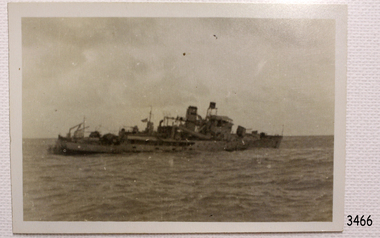 Flagstaff Hill Maritime Museum and Village
Photograph - Shipwreck rescue, Royal Australian Navy (RAN), HMAS Warrnambool J202, 13-09-1947
... Warrnambool HMAS Warrnambool HMAS Warrnambool I HMAS Warrnambool J202 HMAS Swan II J202 World War II Bathurst class corvette Royal Australian Navy RAN Sydney built ship Bass Strait patrol sea mine patrol Mine sweeper Mine clearance Navy divers Great Barrier Reef Cockburn Reef Southern Cross Diving and Salvage Warrnambool City Council Cr J R Astbury Mayor J R Astbury Warrnambool Patriotic Fund Seal Coat of Arms Dedicatory plaque HMAS Warrnambool 1941 Shipwreck by sea mine 1947 Sinking ship Sunk ship Sea rescue life saving Lifesaving minesweeper Photograph of the starboard side of the sinking ship HMAS Warrnambool, sunk on 13-09-1947. This black and white ...This photograph was taken at the scene of the wreck of the HMAS Warrnambool J202 on September 13th 1947. The photographer has captured the ship as it sinks at sea. The HMAS Warrnambool J202 was commissioned by the Royal Australian Navy for use as a minesweeper during World War II. The Bathurst Class Corvette, fitted out with a range of armaments, was launched in Sydney in 1941. The ship began service in Bass Strait in 1941. At the end of the year it called into its namesake city, Warrnambool, where the crew paraded for the public marching eastwards along Timor Street. A gift of books for the ship’s personnel and a plaque bearing the City of Warrnambool’s Coat of Arms were presented to the ship. The ship was involved in evacuating a family of nine from the Dutch East Indies that was later successful in its challenge of Australia’s Immigration Restriction Act (White Australia Polity). The ship had many other appointments around Australia. On 13th September 1947 HMAS Warrnambool was leading a flotilla of minesweepers in northern Queensland’s coastal waters, clearing mines previously laid to defend Australia. The ship hit a mine, which exploded and very quickly sunk the ship. Boats from the nearby ships rescued most of the seamen although one was killed at the time. The survivors were taken by the HMAS Swan II to Darwin, and they went from there to hospitals in Brisbane and Sydney. Three of these men later died from their injuries. A number of items were recovered by Navy divers in 1948 including the ship’s bell and a plaque with Warrnambool’s Coat of Arms. In 1972-75 the wreck was sold and other items were salvaged. In 1995 a memorial plaque was erected in Warrnambool near the RSL. NOTE: The RAN built a second HMAS Warrnambool FCPB204, launched in 1981 and decommissioned in 2005. There was also a steam ship SS Warrnambool built in London 1892 and broken up in 1926. [A more detailed history can be found in our Collection Record 3477.] This photograph is significant for its association with the lifesaving rescue of the crew and the sinking Royal Australian Navy vessel, HMAS Warrnambool (J202). The HMAS Warrnambool played a nationally significant role in overturning Australia’s Immigration Restriction Act 1901 (colloquially known as the White Australia policy). The ship rescued, and brought to Australia, Samuel and Annie Jacob and their family after they evacuated Dutch East India. The family was threatened with deportation and made the first successful appeal to High Court regarding that Act. The HMAS Warrnambool has - Local significance for being the namesake of the City of Warrnambool - Local significance, having docked in Warrnambool Harbour - Local significance, the crew having paraded in Timor Street, Warrnambool - State significance for its first patrol being in Bass Strait. - National significance, being present in Timor at the Japanese surrender - National significance, shown by the significance of the ship’s bell being curated as Military Heritage and Technology at the Australian War Memorial. - National significance as part of Australia’s defence force history, being one of only four Bathurst class corvettes lost while in Australian service, the only Bathurst class corvette lost after World War II, the only RAN vessel to be sunk by a mine, and associated with the last four Navy deaths of WWII Photograph of the starboard side of the sinking ship HMAS Warrnambool, sunk on 13-09-1947. This black and white photograph is one of a series of photographs taken at the time.flagstaff hill, maritime village, maritime museum, warrnambool, shipwreck coast, mort's dock & engineering co ltd, h.m.a.s. warrnambool, hmas warrnambool, hmas warrnambool i, hmas warrnambool j202, hmas swan ii, j202, world war ii, bathurst class corvette, royal australian navy, ran, sydney built ship, bass strait patrol, sea mine patrol, mine sweeper, mine clearance, navy divers, great barrier reef, cockburn reef, southern cross diving and salvage, warrnambool city council, cr j r astbury, mayor j r astbury, warrnambool patriotic fund, seal, coat of arms, dedicatory plaque, hmas warrnambool 1941, shipwreck by sea mine 1947, sinking ship, sunk ship, sea rescue, life saving, lifesaving, minesweeper -
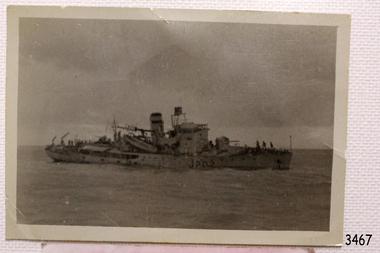 Flagstaff Hill Maritime Museum and Village
Photograph - Shipwreck rescue, Royal Australian Navy (RAN), HMAS Warrnambool J202, 13-09-1947
... Warrnambool HMAS Warrnambool HMAS Warrnambool I HMAS Warrnambool J202 HMAS Swan II J202 World War II Bathurst class corvette Royal Australian Navy RAN Sydney built ship Bass Strait patrol sea mine patrol Mine sweeper Mine clearance Navy divers Great Barrier Reef Cockburn Reef Southern Cross Diving and Salvage Warrnambool City Council Cr J R Astbury Mayor J R Astbury Warrnambool Patriotic Fund Seal Coat of Arms Dedicatory plaque HMAS Warrnambool 1941 Shipwreck by sea mine 1947 Sinking ship Sunk ship Sea rescue life saving Lifesaving minesweeper Text on side of ship "J202" Photograph of the sinking ship HMAS Warrnambool, sunk on 13-09-1947. Figures can be seen onboard the damaged vessel. The number of the ship-type is clearly visible on this starboard profile of the ship. This black and white ...This photograph was taken at the scene of the wreck of the HMAS Warrnambool J202 on September 13th 1947. The photographer has captured the sinking ship with the crew still onboard. The HMAS Warrnambool J202 was commissioned by the Royal Australian Navy for use as a minesweeper during World War II. The Bathurst Class Corvette, fitted out with a range of armaments, was launched in Sydney in 1941 . The ship began service in Bass Strait in 1941. At the end of the year it called into its namesake city, Warrnambool, where the crew paraded for the public marching eastwards along Timor Street. A gift of books for the ship’s personnel and a plaque bearing the City of Warrnambool’s Coat of Arms were presented to the ship. The ship was involved in evacuating a family of nine from the Dutch East Indies that was later successful in its challenge of Australia’s Immigration Restriction Act (White Australia Polity). The ship had many other appointments around Australia. On 13th September 1947 HMAS Warrnambool was leading a flotilla of minesweepers in northern Queensland’s coastal waters, clearing mines previously laid to defend Australia. The ship hit a mine, which exploded and very quickly sunk the ship. Boats from the nearby ships rescued most of the seamen although one was killed at the time. The survivors were taken by the HMAS Swan II to Darwin, and they went from there to hospitals in Brisbane and Sydney. Three of these men later died from their injuries. A number of items were recovered by Navy divers in 1948 including the ship’s bell and a plaque with Warrnambool’s Coat of Arms. In 1972-75 the wreck was sold and other items were salvaged. In 1995 a memorial plaque was erected in Warrnambool near the RSL. NOTE: The RAN built a second HMAS Warrnambool FCPB204, launched in 1981 and decommissioned in 2005. There was also a steam ship SS Warrnambool built in London 1892 and broken up in 1926. [A more detailed history can be found in our Collection Record 3477.] This photograph is significant for its association with the lifesaving rescue of the crew and the sinking Royal Australian Navy vessel, HMAS Warrnambool (J202). The HMAS Warrnambool played a nationally significant role in overturning Australia’s Immigration Restriction Act 1901 (colloquially known as the White Australia policy). The ship rescued, and brought to Australia, Samuel and Annie Jacob and their family after they evacuated Dutch East India. The family was threatened with deportation and made the first successful appeal to High Court regarding that Act. The HMAS Warrnambool has - Local significance for being the namesake of the City of Warrnambool - Local significance, having docked in Warrnambool Harbour - Local significance, the crew having paraded in Timor Street, Warrnambool - State significance for its first patrol being in Bass Strait. - National significance, being present in Timor at the Japanese surrender - National significance, shown by the significance of the ship’s bell being curated as Military Heritage and Technology at the Australian War Memorial. - National significance as part of Australia’s defence force history, being one of only four Bathurst class corvettes lost while in Australian service, the only Bathurst class corvette lost after World War II, the only RAN vessel to be sunk by a mine, and associated with the last four Navy deaths of WWII Photograph of the sinking ship HMAS Warrnambool, sunk on 13-09-1947. Figures can be seen onboard the damaged vessel. The number of the ship-type is clearly visible on this starboard profile of the ship. This black and white photograph is one of a series of photographs taken at the time.Text on side of ship "J202"flagstaff hill, maritime village, maritime museum, warrnambool, shipwreck coast, mort's dock & engineering co ltd, h.m.a.s. warrnambool, hmas warrnambool, hmas warrnambool i, hmas warrnambool j202, hmas swan ii, j202, world war ii, bathurst class corvette, royal australian navy, ran, sydney built ship, bass strait patrol, sea mine patrol, mine sweeper, mine clearance, navy divers, great barrier reef, cockburn reef, southern cross diving and salvage, warrnambool city council, cr j r astbury, mayor j r astbury, warrnambool patriotic fund, seal, coat of arms, dedicatory plaque, hmas warrnambool 1941, shipwreck by sea mine 1947, sinking ship, sunk ship, sea rescue, life saving, lifesaving, minesweeper -
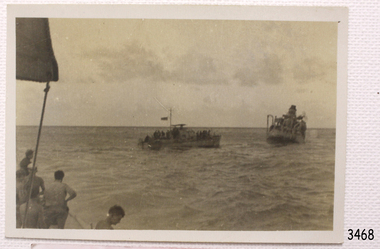 Flagstaff Hill Maritime Museum and Village
Photograph - Shipwreck rescue, Royal Australian Navy (RAN), HMAS Warrnambool J202, 13-09-947
... Warrnambool HMAS Warrnambool HMAS Warrnambool I HMAS Warrnambool J202 HMAS Swan II J202 World War II Bathurst class corvette Royal Australian Navy RAN Sydney built ship Bass Strait patrol sea mine patrol Mine sweeper Mine clearance Navy divers Great Barrier Reef Cockburn Reef Southern Cross Diving and Salvage Warrnambool City Council Cr J R Astbury Mayor J R Astbury Warrnambool Patriotic Fund Seal Coat of Arms Dedicatory plaque HMAS Warrnambool 1941 Shipwreck by sea mine 1947 Sinking ship Sunk ship Sea rescue life saving Lifesaving minesweeper Photograph of rescue of the crew from shipwreck HMAS Warrnambool, sunk on 13-09-1947. Figures onboard a larger vessel look across at rescue vessel heading towards the sinking ship. This black and white ...This photograph was taken at the scene of the wreck of the HMAS Warrnambool J202 on September 13th 1947. The photographer has captured the rescue boat approaching the sinking ship with the crew onboard. There small boat has several figures onboard. The HMAS Warrnambool J202 was commissioned by the Royal Australian Navy for use as a minesweeper during World War II. The Bathurst Class Corvette, fitted out with a range of armaments, was launched in Sydney in 1941. The ship began service in Bass Strait in 1941. At the end of the year it called into its namesake city, Warrnambool, where the crew paraded for the public marching eastwards along Timor Street. A gift of books for the ship’s personnel and a plaque bearing the City of Warrnambool’s Coat of Arms were presented to the ship. The ship was involved in evacuating a family of nine from the Dutch East Indies that was later successful in its challenge of Australia’s Immigration Restriction Act (White Australia Polity). The ship had many other appointments around Australia. On 13th September 1947 HMAS Warrnambool was leading a flotilla of minesweepers in northern Queensland’s coastal waters, clearing mines previously laid to defend Australia. The ship hit a mine, which exploded and very quickly sunk the ship. Boats from the nearby ships rescued most of the seamen although one was killed at the time. The survivors were taken by the HMAS Swan II to Darwin, and they went from there to hospitals in Brisbane and Sydney. Three of these men later died from their injuries. A number of items were recovered by Navy divers in 1948 including the ship’s bell and a plaque with Warrnambool’s Coat of Arms. In 1972-75 the wreck was sold and other items were salvaged. In 1995 a memorial plaque was erected in Warrnambool near the RSL. NOTE: The RAN built a second HMAS Warrnambool FCPB204, launched in 1981 and decommissioned in 2005. There was also a steam ship SS Warrnambool built in London 1892 and broken up in 1926. [A more detailed history can be found in our Collection Record 3477.] This photograph is significant for its association with the lifesaving rescue of the crew and the sinking Royal Australian Navy vessel, HMAS Warrnambool (J202). The HMAS Warrnambool played a nationally significant role in overturning Australia’s Immigration Restriction Act 1901 (colloquially known as the White Australia policy). The ship rescued, and brought to Australia, Samuel and Annie Jacob and their family after they evacuated Dutch East India. The family was threatened with deportation and made the first successful appeal to High Court regarding that Act. The HMAS Warrnambool has - Local significance for being the namesake of the City of Warrnambool - Local significance, having docked in Warrnambool Harbour - Local significance, the crew having paraded in Timor Street, Warrnambool - State significance for its first patrol being in Bass Strait. - National significance, being present in Timor at the Japanese surrender - National significance, shown by the significance of the ship’s bell being curated as Military Heritage and Technology at the Australian War Memorial. - National significance as part of Australia’s defence force history, being one of only four Bathurst class corvettes lost while in Australian service, the only Bathurst class corvette lost after World War II, the only RAN vessel to be sunk by a mine, and associated with the last four Navy deaths of WWII Photograph of rescue of the crew from shipwreck HMAS Warrnambool, sunk on 13-09-1947. Figures onboard a larger vessel look across at rescue vessel heading towards the sinking ship. This black and white photograph is one of a series of photographs taken at the time.flagstaff hill, maritime village, maritime museum, warrnambool, shipwreck coast, mort's dock & engineering co ltd, h.m.a.s. warrnambool, hmas warrnambool, hmas warrnambool i, hmas warrnambool j202, hmas swan ii, j202, world war ii, bathurst class corvette, royal australian navy, ran, sydney built ship, bass strait patrol, sea mine patrol, mine sweeper, mine clearance, navy divers, great barrier reef, cockburn reef, southern cross diving and salvage, warrnambool city council, cr j r astbury, mayor j r astbury, warrnambool patriotic fund, seal, coat of arms, dedicatory plaque, hmas warrnambool 1941, shipwreck by sea mine 1947, sinking ship, sunk ship, sea rescue, life saving, lifesaving, minesweeper -
 Flagstaff Hill Maritime Museum and Village
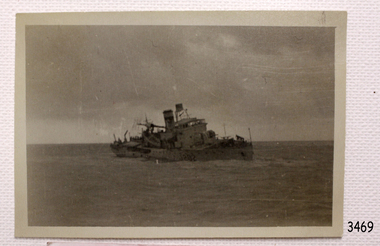
Photograph - Shipwreck rescue, Royal Australian Navy (RAN), HMAS Warrnambool J202, 13-09-1947
... Warrnambool HMAS Warrnambool HMAS Warrnambool I HMAS Warrnambool J202 HMAS Swan II J202 World War II Bathurst class corvette Royal Australian Navy RAN Sydney built ship Bass Strait patrol sea mine patrol Mine sweeper Mine clearance Navy divers Great Barrier Reef Cockburn Reef Southern Cross Diving and Salvage Warrnambool City Council Cr J R Astbury Mayor J R Astbury Warrnambool Patriotic Fund Seal Coat of Arms Dedicatory plaque HMAS Warrnambool 1941 Shipwreck by sea mine 1947 Sinking ship Sunk ship Sea rescue life saving Lifesaving minesweeper Photograph of the sinking ship HMAS Warrnambool, sunk on 13-09-1947. The image shows the damaged ship tilting down on the starboard side. The ship-type number is still mostly visible. This black and white ...This photograph was taken at the scene of the wreck of the HMAS Warrnambool J202 on September 13th 1947. The photographer has captured the ship as it sinks at sea. The HMAS Warrnambool J202 was commissioned by the Royal Australian Navy for use as a minesweeper during World War II. The Bathurst Class Corvette, fitted out with a range of armaments, was launched in Sydney in 1941. The ship began service in Bass Strait in 1941. At the end of the year it called into its namesake city, Warrnambool, where the crew paraded for the public marching eastwards along Timor Street. A gift of books for the ship’s personnel and a plaque bearing the City of Warrnambool’s Coat of Arms were presented to the ship. The ship was involved in evacuating a family of nine from the Dutch East Indies that was later successful in its challenge of Australia’s Immigration Restriction Act (White Australia Polity). The ship had many other appointments around Australia. On 13th September 1947 HMAS Warrnambool was leading a flotilla of minesweepers in northern Queensland’s coastal waters, clearing mines previously laid to defend Australia. The ship hit a mine, which exploded and very quickly sunk the ship. Boats from the nearby ships rescued most of the seamen although one was killed at the time. The survivors were taken by the HMAS Swan II to Darwin, and they went from there to hospitals in Brisbane and Sydney. Three of these men later died from their injuries. A number of items were recovered by Navy divers in 1948 including the ship’s bell and a plaque with Warrnambool’s Coat of Arms. In 1972-75 the wreck was sold and other items were salvaged. In 1995 a memorial plaque was erected in Warrnambool near the RSL. NOTE: The RAN built a second HMAS Warrnambool FCPB204, launched in 1981 and decommissioned in 2005. There was also a steam ship SS Warrnambool built in London 1892 and broken up in 1926. [A more detailed history can be found in our Collection Record 3477.] This photograph is significant for its association with the lifesaving rescue of the crew and the sinking Royal Australian Navy vessel, HMAS Warrnambool (J202). The HMAS Warrnambool played a nationally significant role in overturning Australia’s Immigration Restriction Act 1901 (colloquially known as the White Australia policy). The ship rescued, and brought to Australia, Samuel and Annie Jacob and their family after they evacuated Dutch East India. The family was threatened with deportation and made the first successful appeal to High Court regarding that Act. The HMAS Warrnambool has - Local significance for being the namesake of the City of Warrnambool - Local significance, having docked in Warrnambool Harbour - Local significance, the crew having paraded in Timor Street, Warrnambool - State significance for its first patrol being in Bass Strait. - National significance, being present in Timor at the Japanese surrender - National significance, shown by the significance of the ship’s bell being curated as Military Heritage and Technology at the Australian War Memorial. - National significance as part of Australia’s defence force history, being one of only four Bathurst class corvettes lost while in Australian service, the only Bathurst class corvette lost after World War II, the only RAN vessel to be sunk by a mine, and associated with the last four Navy deaths of WWII Photograph of the sinking ship HMAS Warrnambool, sunk on 13-09-1947. The image shows the damaged ship tilting down on the starboard side. The ship-type number is still mostly visible. This black and white photograph is one of a series of photographs taken at the time.flagstaff hill, maritime village, maritime museum, warrnambool, shipwreck coast, mort's dock & engineering co ltd, h.m.a.s. warrnambool, hmas warrnambool, hmas warrnambool i, hmas warrnambool j202, hmas swan ii, j202, world war ii, bathurst class corvette, royal australian navy, ran, sydney built ship, bass strait patrol, sea mine patrol, mine sweeper, mine clearance, navy divers, great barrier reef, cockburn reef, southern cross diving and salvage, warrnambool city council, cr j r astbury, mayor j r astbury, warrnambool patriotic fund, seal, coat of arms, dedicatory plaque, hmas warrnambool 1941, shipwreck by sea mine 1947, sinking ship, sunk ship, sea rescue, life saving, lifesaving, minesweeper -
 Flagstaff Hill Maritime Museum and Village
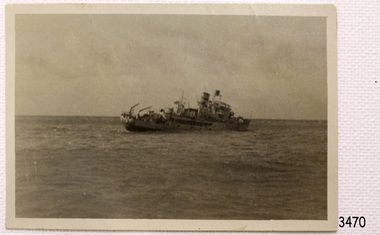
Photograph - Shipwreck rescue, Royal Australian Navy (RAN), HMAS Warrnambool J202, 13-09-1947
... Warrnambool HMAS Warrnambool HMAS Warrnambool I HMAS Warrnambool J202 HMAS Swan II J202 World War II Bathurst class corvette Royal Australian Navy RAN Sydney built ship Bass Strait patrol sea mine patrol Mine sweeper Mine clearance Navy divers Great Barrier Reef Cockburn Reef Southern Cross Diving and Salvage Warrnambool City Council Cr J R Astbury Mayor J R Astbury Warrnambool Patriotic Fund Seal Coat of Arms Dedicatory plaque HMAS Warrnambool 1941 Shipwreck by sea mine 1947 Sinking ship Sunk ship Sea rescue life saving Lifesaving minesweeper Photograph of the sinking ship HMAS Warrnambool, sunk on 13-09-1947. The image shows the ship leaning at an angle towards the sea. There appears to be figures near the bow. This black and white ...This photograph was taken at the scene of the wreck of the HMAS Warrnambool J202 on September 13th 1947. The photographer has captured the ship as it sinks at sea, with, it seems, crew still on board.. The HMAS Warrnambool J202 was commissioned by the Royal Australian Navy for use as a minesweeper during World War II. The Bathurst Class Corvette, fitted out with a range of armaments, was launched in Sydney in 1941. The ship began service in Bass Strait in 1941. At the end of the year it called into its namesake city, Warrnambool, where the crew paraded for the public marching eastwards along Timor Street. A gift of books for the ship’s personnel and a plaque bearing the City of Warrnambool’s Coat of Arms were presented to the ship. The ship was involved in evacuating a family of nine from the Dutch East Indies that was later successful in its challenge of Australia’s Immigration Restriction Act (White Australia Polity). The ship had many other appointments around Australia. On 13th September 1947 HMAS Warrnambool was leading a flotilla of minesweepers in northern Queensland’s coastal waters, clearing mines previously laid to defend Australia. The ship hit a mine, which exploded and very quickly sunk the ship. Boats from the nearby ships rescued most of the seamen although one was killed at the time. The survivors were taken by the HMAS Swan II to Darwin, and they went from there to hospitals in Brisbane and Sydney. Three of these men later died from their injuries. A number of items were recovered by Navy divers in 1948 including the ship’s bell and a plaque with Warrnambool’s Coat of Arms. In 1972-75 the wreck was sold and other items were salvaged. In 1995 a memorial plaque was erected in Warrnambool near the RSL. NOTE: The RAN built a second HMAS Warrnambool FCPB204, launched in 1981 and decommissioned in 2005. There was also a steam ship SS Warrnambool built in London 1892 and broken up in 1926. [A more detailed history can be found in our Collection Record 3477.] This photograph is significant for its association with the lifesaving rescue of the crew and the sinking Royal Australian Navy vessel, HMAS Warrnambool (J202). The HMAS Warrnambool played a nationally significant role in overturning Australia’s Immigration Restriction Act 1901 (colloquially known as the White Australia policy). The ship rescued, and brought to Australia, Samuel and Annie Jacob and their family after they evacuated Dutch East India. The family was threatened with deportation and made the first successful appeal to High Court regarding that Act. The HMAS Warrnambool has - Local significance for being the namesake of the City of Warrnambool - Local significance, having docked in Warrnambool Harbour - Local significance, the crew having paraded in Timor Street, Warrnambool - State significance for its first patrol being in Bass Strait. - National significance, being present in Timor at the Japanese surrender - National significance, shown by the significance of the ship’s bell being curated as Military Heritage and Technology at the Australian War Memorial. - National significance as part of Australia’s defence force history, being one of only four Bathurst class corvettes lost while in Australian service, the only Bathurst class corvette lost after World War II, the only RAN vessel to be sunk by a mine, and associated with the last four Navy deaths of WWII Photograph of the sinking ship HMAS Warrnambool, sunk on 13-09-1947. The image shows the ship leaning at an angle towards the sea. There appears to be figures near the bow. This black and white photograph is one of a series of photographs taken at the time.flagstaff hill, maritime village, maritime museum, warrnambool, shipwreck coast, mort's dock & engineering co ltd, h.m.a.s. warrnambool, hmas warrnambool, hmas warrnambool i, hmas warrnambool j202, hmas swan ii, j202, world war ii, bathurst class corvette, royal australian navy, ran, sydney built ship, bass strait patrol, sea mine patrol, mine sweeper, mine clearance, navy divers, great barrier reef, cockburn reef, southern cross diving and salvage, warrnambool city council, cr j r astbury, mayor j r astbury, warrnambool patriotic fund, seal, coat of arms, dedicatory plaque, hmas warrnambool 1941, shipwreck by sea mine 1947, sinking ship, sunk ship, sea rescue, life saving, lifesaving, minesweeper -
 Flagstaff Hill Maritime Museum and Village
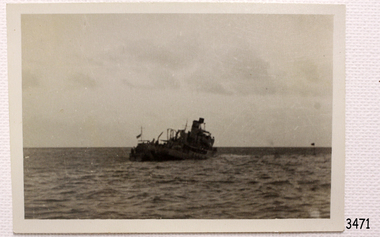
Photograph - Shipwreck rescue, Royal Australian Navy (RAN), HMAS Warrnambool J202, 13-09-1947
... Warrnambool HMAS Warrnambool HMAS Warrnambool I HMAS Warrnambool J202 HMAS Swan II J202 World War II Bathurst class corvette Royal Australian Navy RAN Sydney built ship Bass Strait patrol sea mine patrol Mine sweeper Mine clearance Navy divers Great Barrier Reef Cockburn Reef Southern Cross Diving and Salvage Warrnambool City Council Cr J R Astbury Mayor J R Astbury Warrnambool Patriotic Fund Seal Coat of Arms Dedicatory plaque HMAS Warrnambool 1941 Shipwreck by sea mine 1947 Sinking ship Sunk ship Sea rescue life saving Lifesaving minesweeper Photograph of the sinking ship HMAS Warrnambool, sunk on 13-09-1947. The image shows the ship tilting towards port side and the bow dipping. This black and white ...This photograph was taken at the scene of the wreck of the HMAS Warrnambool J202 on September 13th 1947. The photographer has captured the ship as it sinks at sea. The HMAS Warrnambool J202 was commissioned by the Royal Australian Navy for use as a minesweeper during World War II. The Bathurst Class Corvette, fitted out with a range of armaments, was launched in Sydney in 1941. The ship began service in Bass Strait in 1941. At the end of the year it called into its namesake city, Warrnambool, where the crew paraded for the public marching eastwards along Timor Street. A gift of books for the ship’s personnel and a plaque bearing the City of Warrnambool’s Coat of Arms were presented to the ship. The ship was involved in evacuating a family of nine from the Dutch East Indies that was later successful in its challenge of Australia’s Immigration Restriction Act (White Australia Polity). The ship had many other appointments around Australia. On 13th September 1947 HMAS Warrnambool was leading a flotilla of minesweepers in northern Queensland’s coastal waters, clearing mines previously laid to defend Australia. The ship hit a mine, which exploded and very quickly sunk the ship. Boats from the nearby ships rescued most of the seamen although one was killed at the time. The survivors were taken by the HMAS Swan II to Darwin, and they went from there to hospitals in Brisbane and Sydney. Three of these men later died from their injuries. A number of items were recovered by Navy divers in 1948 including the ship’s bell and a plaque with Warrnambool’s Coat of Arms. In 1972-75 the wreck was sold and other items were salvaged. In 1995 a memorial plaque was erected in Warrnambool near the RSL. NOTE: The RAN built a second HMAS Warrnambool FCPB204, launched in 1981 and decommissioned in 2005. There was also a steam ship SS Warrnambool built in London 1892 and broken up in 1926. [A more detailed history can be found in our Collection Record 3477.] This photograph is significant for its association with the lifesaving rescue of the crew and the sinking Royal Australian Navy vessel, HMAS Warrnambool (J202). The HMAS Warrnambool played a nationally significant role in overturning Australia’s Immigration Restriction Act 1901 (colloquially known as the White Australia policy). The ship rescued, and brought to Australia, Samuel and Annie Jacob and their family after they evacuated Dutch East India. The family was threatened with deportation and made the first successful appeal to High Court regarding that Act. The HMAS Warrnambool has - Local significance for being the namesake of the City of Warrnambool - Local significance, having docked in Warrnambool Harbour - Local significance, the crew having paraded in Timor Street, Warrnambool - State significance for its first patrol being in Bass Strait. - National significance, being present in Timor at the Japanese surrender - National significance, shown by the significance of the ship’s bell being curated as Military Heritage and Technology at the Australian War Memorial. - National significance as part of Australia’s defence force history, being one of only four Bathurst class corvettes lost while in Australian service, the only Bathurst class corvette lost after World War II, the only RAN vessel to be sunk by a mine, and associated with the last four Navy deaths of WWII Photograph of the sinking ship HMAS Warrnambool, sunk on 13-09-1947. The image shows the ship tilting towards port side and the bow dipping. This black and white photograph is one of a series of photographs taken at the time.flagstaff hill, maritime village, maritime museum, warrnambool, shipwreck coast, mort's dock & engineering co ltd, h.m.a.s. warrnambool, hmas warrnambool, hmas warrnambool i, hmas warrnambool j202, hmas swan ii, j202, world war ii, bathurst class corvette, royal australian navy, ran, sydney built ship, bass strait patrol, sea mine patrol, mine sweeper, mine clearance, navy divers, great barrier reef, cockburn reef, southern cross diving and salvage, warrnambool city council, cr j r astbury, mayor j r astbury, warrnambool patriotic fund, seal, coat of arms, dedicatory plaque, hmas warrnambool 1941, shipwreck by sea mine 1947, sinking ship, sunk ship, sea rescue, life saving, lifesaving, minesweeper -
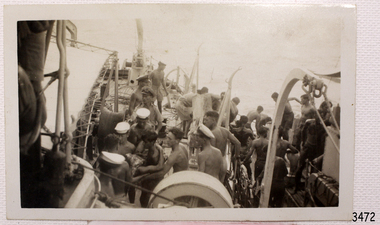 Flagstaff Hill Maritime Museum and Village
Photograph - Shipwreck rescue, Royal Australian Navy (RAN), 13-09-1947
... Warrnambool HMAS Warrnambool HMAS Warrnambool I HMAS Warrnambool J202 HMAS Swan II J202 World War II Bathurst class corvette Royal Australian Navy RAN Sydney built ship Bass Strait patrol sea mine patrol Mine sweeper Mine clearance Navy divers Great Barrier Reef Cockburn Reef Southern Cross Diving and Salvage Warrnambool City Council Cr J R Astbury Mayor J R Astbury Warrnambool Patriotic Fund Seal Coat of Arms Dedicatory plaque HMAS Warrnambool 1941 Shipwreck by sea mine 1947 Sinking ship Sunk ship Sea rescue life saving Lifesaving minesweeper Photograph of the rescue of the crew from shipwreck HMAS Warrnambool, sunk on 13-09-1947. Survivors are helped from one vessel to another by seamen. This black and white ...This photograph was taken at the scene of the wreck of the HMAS Warrnambool J202 on September 13th 1947. The photographer has captured the crew being rescued, transferring from one vessel to another, which is likely to be the HMAS Swan II. The HMAS Warrnambool J202 was commissioned by the Royal Australian Navy for use as a minesweeper during World War II. The Bathurst Class Corvette, fitted out with a range of armaments, was launched in Sydney 1941. The ship began service in Bass Strait in 1941. At the end of the year it called into its namesake city, Warrnambool, where the crew paraded for the public marching eastwards along Timor Street. A gift of books for the ship’s personnel and a plaque bearing the City of Warrnambool’s Coat of Arms were presented to the ship. The ship was involved in evacuating a family of nine from the Dutch East Indies that was later successful in its challenge of Australia’s Immigration Restriction Act (White Australia Polity). The ship had many other appointments around Australia. On 13th September 1947 HMAS Warrnambool was leading a flotilla of minesweepers in northern Queensland’s coastal waters, clearing mines previously laid to defend Australia. The ship hit a mine, which exploded and very quickly sunk the ship. Boats from the nearby ships rescued most of the seamen although one was killed at the time. The survivors were taken by the HMAS Swan II to Darwin, and they went from there to hospitals in Brisbane and Sydney. Three of these men later died from their injuries. A number of items were recovered by Navy divers in 1948 including the ship’s bell and a plaque with Warrnambool’s Coat of Arms. In 1972-75 the wreck was sold and other items were salvaged. In 1995 a memorial plaque was erected in Warrnambool near the RSL. NOTE: The RAN built a second HMAS Warrnambool FCPB204, launched in 1981 and decommissioned in 2005. There was also a steam ship SS Warrnambool built in London 1892 and broken up in 1926. [A more detailed history can be found in our Collection Record 3477.] This photograph is significant for its association with the lifesaving rescue of the crew and the sinking Royal Australian Navy vessel, HMAS Warrnambool (J202). The HMAS Warrnambool played a nationally significant role in overturning Australia’s Immigration Restriction Act 1901 (colloquially known as the White Australia policy). The ship rescued, and brought to Australia, Samuel and Annie Jacob and their family after they evacuated Dutch East India. The family was threatened with deportation and made the first successful appeal to High Court regarding that Act. The HMAS Warrnambool has - Local significance for being the namesake of the City of Warrnambool - Local significance, having docked in Warrnambool Harbour - Local significance, the crew having paraded in Timor Street, Warrnambool - State significance for its first patrol being in Bass Strait. - National significance, being present in Timor at the Japanese surrender - National significance, shown by the significance of the ship’s bell being curated as Military Heritage and Technology at the Australian War Memorial. - National significance as part of Australia’s defence force history, being one of only four Bathurst class corvettes lost while in Australian service, the only Bathurst class corvette lost after World War II, the only RAN vessel to be sunk by a mine, and associated with the last four Navy deaths of WWII Photograph of the rescue of the crew from shipwreck HMAS Warrnambool, sunk on 13-09-1947. Survivors are helped from one vessel to another by seamen. This black and white photograph is one of a series of photographs taken at the time.flagstaff hill, maritime village, maritime museum, warrnambool, shipwreck coast, mort's dock & engineering co ltd, h.m.a.s. warrnambool, hmas warrnambool, hmas warrnambool i, hmas warrnambool j202, hmas swan ii, j202, world war ii, bathurst class corvette, royal australian navy, ran, sydney built ship, bass strait patrol, sea mine patrol, mine sweeper, mine clearance, navy divers, great barrier reef, cockburn reef, southern cross diving and salvage, warrnambool city council, cr j r astbury, mayor j r astbury, warrnambool patriotic fund, seal, coat of arms, dedicatory plaque, hmas warrnambool 1941, shipwreck by sea mine 1947, sinking ship, sunk ship, sea rescue, life saving, lifesaving, minesweeper -
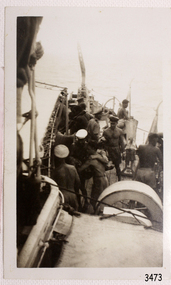 Flagstaff Hill Maritime Museum and Village
Photograph - Shipwreck rescue, Royal Australian Navy (RAN), 13-09-1947
... Warrnambool HMAS Warrnambool HMAS Warrnambool I HMAS Warrnambool J202 HMAS Swan II J202 World War II Bathurst class corvette Royal Australian Navy RAN Sydney built ship Bass Strait patrol sea mine patrol Mine sweeper Mine clearance Navy divers Great Barrier Reef Cockburn Reef Southern Cross Diving and Salvage Warrnambool City Council Cr J R Astbury Mayor J R Astbury Warrnambool Patriotic Fund Seal Coat of Arms Dedicatory plaque HMAS Warrnambool 1941 Shipwreck by sea mine 1947 Sinking ship Sunk ship Sea rescue life saving Lifesaving minesweeper Photograph of the rescue of the crew from shipwreck HMAS Warrnambool, sunk on 13-09-1947. The image shows injured men being assisted onboard a vessel at sea. This black and white ...This photograph was taken at the scene of the wreck of the HMAS Warrnambool J202 on September 13th 1947. The photographer has captured the crew being rescued. The HMAS Warrnambool J202 was commissioned by the Royal Australian Navy for use as a minesweeper during World War II. The Bathurst Class Corvette, fitted out with a range of armaments, was launched in Sydney, 1941. The ship began service in Bass Strait in 1941. At the end of the year it called into its namesake city, Warrnambool, where the crew paraded for the public marching eastwards along Timor Street. A gift of books for the ship’s personnel and a plaque bearing the City of Warrnambool’s Coat of Arms were presented to the ship. The ship was involved in evacuating a family of nine from the Dutch East Indies that was later successful in its challenge of Australia’s Immigration Restriction Act (White Australia Polity). The ship had many other appointments around Australia. On 13th September 1947 HMAS Warrnambool was leading a flotilla of minesweepers in northern Queensland’s coastal waters, clearing mines previously laid to defend Australia. The ship hit a mine, which exploded and very quickly sunk the ship. Boats from the nearby ships rescued most of the seamen although one was killed at the time. The survivors were taken by the HMAS Swan II to Darwin, and they went from there to hospitals in Brisbane and Sydney. Three of these men later died from their injuries. A number of items were recovered by Navy divers in 1948 including the ship’s bell and a plaque with Warrnambool’s Coat of Arms. In 1972-75 the wreck was sold and other items were salvaged. In 1995 a memorial plaque was erected in Warrnambool near the RSL. NOTE: The RAN built a second HMAS Warrnambool FCPB204, launched in 1981 and decommissioned in 2005. There was also a steam ship SS Warrnambool built in London 1892 and broken up in 1926. [A more detailed history can be found in our Collection Record 3477.] This photograph is significant for its association with the lifesaving rescue of the crew and the sinking Royal Australian Navy vessel, HMAS Warrnambool (J202). The HMAS Warrnambool played a nationally significant role in overturning Australia’s Immigration Restriction Act 1901 (colloquially known as the White Australia policy). The ship rescued, and brought to Australia, Samuel and Annie Jacob and their family after they evacuated Dutch East India. The family was threatened with deportation and made the first successful appeal to High Court regarding that Act. The HMAS Warrnambool has - Local significance for being the namesake of the City of Warrnambool - Local significance, having docked in Warrnambool Harbour - Local significance, the crew having paraded in Timor Street, Warrnambool - State significance for its first patrol being in Bass Strait. - National significance, being present in Timor at the Japanese surrender - National significance, shown by the significance of the ship’s bell being curated as Military Heritage and Technology at the Australian War Memorial. - National significance as part of Australia’s defence force history, being one of only four Bathurst class corvettes lost while in Australian service, the only Bathurst class corvette lost after World War II, the only RAN vessel to be sunk by a mine, and associated with the last four Navy deaths of WWII Photograph of the rescue of the crew from shipwreck HMAS Warrnambool, sunk on 13-09-1947. The image shows injured men being assisted onboard a vessel at sea. This black and white photograph is one of a series of photographs taken at the time.flagstaff hill, maritime village, maritime museum, warrnambool, shipwreck coast, mort's dock & engineering co ltd, h.m.a.s. warrnambool, hmas warrnambool, hmas warrnambool i, hmas warrnambool j202, hmas swan ii, j202, world war ii, bathurst class corvette, royal australian navy, ran, sydney built ship, bass strait patrol, sea mine patrol, mine sweeper, mine clearance, navy divers, great barrier reef, cockburn reef, southern cross diving and salvage, warrnambool city council, cr j r astbury, mayor j r astbury, warrnambool patriotic fund, seal, coat of arms, dedicatory plaque, hmas warrnambool 1941, shipwreck by sea mine 1947, sinking ship, sunk ship, sea rescue, life saving, lifesaving, minesweeper -
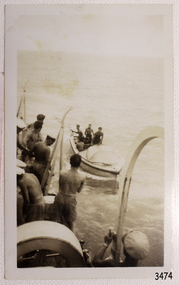 Flagstaff Hill Maritime Museum and Village
Photograph - Shipwreck rescue, Royal Australian Navy (RAN), 13-09-1947
... Warrnambool HMAS Warrnambool HMAS Warrnambool I HMAS Warrnambool J202 HMAS Swan II J202 World War II Bathurst class corvette Royal Australian Navy RAN Sydney built ship Bass Strait patrol sea mine patrol Mine sweeper Mine clearance Navy divers Great Barrier Reef Cockburn Reef Southern Cross Diving and Salvage Warrnambool City Council Cr J R Astbury Mayor J R Astbury Warrnambool Patriotic Fund Seal Coat of Arms Dedicatory plaque HMAS Warrnambool 1941 Shipwreck by sea mine 1947 Sinking ship Sunk ship Sea rescue life saving Lifesaving minesweeper Photograph of the rescue of the crew from shipwreck HMAS Warrnambool, sunk on 13-09-1947. Image shows men in a lifeboat beside men in a ship, at sea. This black and white ...This photograph was taken at the scene of the wreck of the HMAS Warrnambool J202 on September 13th 1947. The photographer has captured the crew being rescued. The HMAS Warrnambool J202 was commissioned by the Royal Australian Navy for use as a minesweeper during World War II. The Bathurst Class Corvette, fitted out with a range of armaments, was launched in Sydney 1941. The ship began service in Bass Strait in 1941. At the end of the year it called into its namesake city, Warrnambool, where the crew paraded for the public marching eastwards along Timor Street. A gift of books for the ship’s personnel and a plaque bearing the City of Warrnambool’s Coat of Arms were presented to the ship. The ship was involved in evacuating a family of nine from the Dutch East Indies that was later successful in its challenge of Australia’s Immigration Restriction Act (White Australia Polity). The ship had many other appointments around Australia. On 13th September 1947 HMAS Warrnambool was leading a flotilla of minesweepers in northern Queensland’s coastal waters, clearing mines previously laid to defend Australia. The ship hit a mine, which exploded and very quickly sunk the ship. Boats from the nearby ships rescued most of the seamen although one was killed at the time. The survivors were taken by the HMAS Swan II to Darwin, and they went from there to hospitals in Brisbane and Sydney. Three of these men later died from their injuries. A number of items were recovered by Navy divers in 1948 including the ship’s bell and a plaque with Warrnambool’s Coat of Arms. In 1972-75 the wreck was sold and other items were salvaged. In 1995 a memorial plaque was erected in Warrnambool near the RSL. NOTE: The RAN built a second HMAS Warrnambool FCPB204, launched in 1981 and decommissioned in 2005. There was also a steam ship SS Warrnambool built in London 1892 and broken up in 1926. [A more detailed history can be found in our Collection Record 3477.] This photograph is significant for its association with the lifesaving rescue of the crew and the sinking Royal Australian Navy vessel, HMAS Warrnambool (J202). The HMAS Warrnambool played a nationally significant role in overturning Australia’s Immigration Restriction Act 1901 (colloquially known as the White Australia policy). The ship rescued, and brought to Australia, Samuel and Annie Jacob and their family after they evacuated Dutch East India. The family was threatened with deportation and made the first successful appeal to High Court regarding that Act. The HMAS Warrnambool has - Local significance for being the namesake of the City of Warrnambool - Local significance, having docked in Warrnambool Harbour - Local significance, the crew having paraded in Timor Street, Warrnambool - State significance for its first patrol being in Bass Strait. - National significance, being present in Timor at the Japanese surrender - National significance, shown by the significance of the ship’s bell being curated as Military Heritage and Technology at the Australian War Memorial. - National significance as part of Australia’s defence force history, being one of only four Bathurst class corvettes lost while in Australian service, the only Bathurst class corvette lost after World War II, the only RAN vessel to be sunk by a mine, and associated with the last four Navy deaths of WWII Photograph of the rescue of the crew from shipwreck HMAS Warrnambool, sunk on 13-09-1947. Image shows men in a lifeboat beside men in a ship, at sea. This black and white photograph is one of a series of photographs taken at the time.flagstaff hill, maritime village, maritime museum, warrnambool, shipwreck coast, mort's dock & engineering co ltd, h.m.a.s. warrnambool, hmas warrnambool, hmas warrnambool i, hmas warrnambool j202, hmas swan ii, j202, world war ii, bathurst class corvette, royal australian navy, ran, sydney built ship, bass strait patrol, sea mine patrol, mine sweeper, mine clearance, navy divers, great barrier reef, cockburn reef, southern cross diving and salvage, warrnambool city council, cr j r astbury, mayor j r astbury, warrnambool patriotic fund, seal, coat of arms, dedicatory plaque, hmas warrnambool 1941, shipwreck by sea mine 1947, sinking ship, sunk ship, sea rescue, life saving, lifesaving, minesweeper -
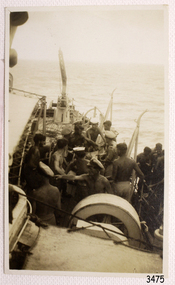 Flagstaff Hill Maritime Museum and Village
Photograph - Shipwreck rescue, Royal Australian Navy (RAN), 13-09-1947
... Warrnambool HMAS Warrnambool HMAS Warrnambool I HMAS Warrnambool J202 HMAS Swan II J202 World War II Bathurst class corvette Royal Australian Navy RAN Sydney built ship Bass Strait patrol sea mine patrol Mine sweeper Mine clearance Navy divers Great Barrier Reef Cockburn Reef Southern Cross Diving and Salvage Warrnambool City Council Cr J R Astbury Mayor J R Astbury Warrnambool Patriotic Fund Seal Coat of Arms Dedicatory plaque HMAS Warrnambool 1941 Shipwreck by sea mine 1947 Sinking ship Sunk ship Sea rescue life saving Lifesaving minesweeper Photograph of the rescue of the crew from shipwreck HMAS Warrnambool, sunk on 13-09-1947. The image shows men being taken onboard a ship from a small boat. This black and white ...This photograph was taken at the scene of the wreck of the HMAS Warrnambool J202 on September 13th 1947. The photographer has captured the crew being rescued, transferring from a lifeboat to the ship. The HMAS Warrnambool J202 was commissioned by the Royal Australian Navy for use as a minesweeper during World War II. The Bathurst Class Corvette, fitted out with a range of armaments, was launched in Sydney 1941. The ship began service in Bass Strait in 1941. At the end of the year it called into its namesake city, Warrnambool, where the crew paraded for the public marching eastwards along Timor Street. A gift of books for the ship’s personnel and a plaque bearing the City of Warrnambool’s Coat of Arms were presented to the ship. The ship was involved in evacuating a family of nine from the Dutch East Indies that was later successful in its challenge of Australia’s Immigration Restriction Act (White Australia Polity). The ship had many other appointments around Australia. On 13th September 1947 HMAS Warrnambool was leading a flotilla of minesweepers in northern Queensland’s coastal waters, clearing mines previously laid to defend Australia. The ship hit a mine, which exploded and very quickly sunk the ship. Boats from the nearby ships rescued most of the seamen although one was killed at the time. The survivors were taken by the HMAS Swan II to Darwin, and they went from there to hospitals in Brisbane and Sydney. Three of these men later died from their injuries. A number of items were recovered by Navy divers in 1948 including the ship’s bell and a plaque with Warrnambool’s Coat of Arms. In 1972-75 the wreck was sold and other items were salvaged. In 1995 a memorial plaque was erected in Warrnambool near the RSL. NOTE: The RAN built a second HMAS Warrnambool FCPB204, launched in 1981 and decommissioned in 2005. There was also a steam ship SS Warrnambool built in London 1892 and broken up in 1926. [A more detailed history can be found in our Collection Record 3477.] This photograph is significant for its association with the lifesaving rescue of the crew and the sinking Royal Australian Navy vessel, HMAS Warrnambool (J202). The HMAS Warrnambool played a nationally significant role in overturning Australia’s Immigration Restriction Act 1901 (colloquially known as the White Australia policy). The ship rescued, and brought to Australia, Samuel and Annie Jacob and their family after they evacuated Dutch East India. The family was threatened with deportation and made the first successful appeal to High Court regarding that Act. The HMAS Warrnambool has - Local significance for being the namesake of the City of Warrnambool - Local significance, having docked in Warrnambool Harbour - Local significance, the crew having paraded in Timor Street, Warrnambool - State significance for its first patrol being in Bass Strait. - National significance, being present in Timor at the Japanese surrender - National significance, shown by the significance of the ship’s bell being curated as Military Heritage and Technology at the Australian War Memorial. - National significance as part of Australia’s defence force history, being one of only four Bathurst class corvettes lost while in Australian service, the only Bathurst class corvette lost after World War II, the only RAN vessel to be sunk by a mine, and associated with the last four Navy deaths of WWII Photograph of the rescue of the crew from shipwreck HMAS Warrnambool, sunk on 13-09-1947. The image shows men being taken onboard a ship from a small boat. This black and white photograph is one of a series of photographs taken at the time.flagstaff hill, maritime village, maritime museum, warrnambool, shipwreck coast, mort's dock & engineering co ltd, h.m.a.s. warrnambool, hmas warrnambool, hmas warrnambool i, hmas warrnambool j202, hmas swan ii, j202, world war ii, bathurst class corvette, royal australian navy, ran, sydney built ship, bass strait patrol, sea mine patrol, mine sweeper, mine clearance, navy divers, great barrier reef, cockburn reef, southern cross diving and salvage, warrnambool city council, cr j r astbury, mayor j r astbury, warrnambool patriotic fund, seal, coat of arms, dedicatory plaque, hmas warrnambool 1941, shipwreck by sea mine 1947, sinking ship, sunk ship, sea rescue, life saving, lifesaving, minesweeper
