
Showing 12 items matching "cummeragunja"
-
 Victorian Aboriginal Corporation for Languages
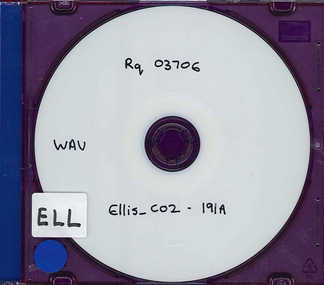
Audio CD, Music recorded at Gerard Mission, Cummeragunja, Barmah and Deniliquin, 1963
... Music recorded at Gerard Mission, Cummeragunja, Barmah and Deniliquin......Cummeragunja...Songs performed by Annie Mason, Cyril Gerard and Cyril Lindsay at Gerard Mission; Sophie and Coral Briggs at Cummeragunja; Aaron Briggs at Barmah; Ralph Day and Dennis Atkinson at Deniliquin....Music recorded at Gerard Mission, Cummeragunja, Barmah and Deniliquin Audio CD Catherine Ellis ...Songs performed by Annie Mason, Cyril Gerard and Cyril Lindsay at Gerard Mission; Sophie and Coral Briggs at Cummeragunja; Aaron Briggs at Barmah; Ralph Day and Dennis Atkinson at Deniliquin.CD, recording notes (for tracks 00191a and 00191b)gerard mission, cummeragunja, barmah, deniliquin, annie mason, cyril gerard, cyril lindsay, sophie briggs, coral briggs, aaron briggs, ralph day, dennis atkinson -
 Victorian Aboriginal Corporation for Languages
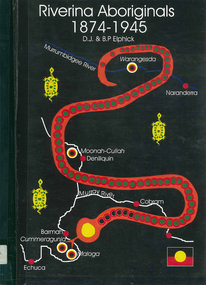
Book, Riverina Aboriginals : 1874-1945, 1996
... ...Cummeragunja...Lists of residents of the Warangesda 1880-1925, Maloga 1874-1888, Cummeragunja 1889-1953 (Stn) 1883 - present (Res) Moonah Cullah 1910-1952(Stn) 1896-1962(Res) Aboriginal Stations and other Rivereina Aboriginals 1874-1954...Yorta Yorta Wemba Wemba Wiradjuri Warangesda Maloga Cummeragunja Moonah Cullah maps, b&w photographs, registry listings Lists of residents of the Warangesda 1880-1925, Maloga 1874-1888, Cummeragunja 1889-1953 (Stn) 1883 - present (Res) Moonah Cullah 1910-1952(Stn) 1896-1962(Res) Aboriginal Stations and other Rivereina Aboriginals 1874-1954 Riverina Aboriginals : 1874-1945 Book D J Elphick B P Elphick ...Lists of residents of the Warangesda 1880-1925, Maloga 1874-1888, Cummeragunja 1889-1953 (Stn) 1883 - present (Res) Moonah Cullah 1910-1952(Stn) 1896-1962(Res) Aboriginal Stations and other Rivereina Aboriginals 1874-1954maps, b&w photographs, registry listingsyorta yorta, wemba wemba, wiradjuri, warangesda, maloga, cummeragunja, moonah cullah -
 Victorian Aboriginal Corporation for Languages
Book, Donna Leslie, Aboriginal art : creativity and assimilation, 2008
... ...Cummeragunja...Yorta Yorta Cummeragunja Albert Namatjira Les Griggs Lin Onus Indigenous art colour photographs, b&w photographs, colour illustrations, document reproductions Chapters entitled History of Aboriginal Art, Imagining Albert Namatjira, Indigenous Renaissance, Creative Revolution, The Art of Les Griggs and The Art of Lin Onus. ...Chapters entitled History of Aboriginal Art, Imagining Albert Namatjira, Indigenous Renaissance, Creative Revolution, The Art of Les Griggs and The Art of Lin Onus.colour photographs, b&w photographs, colour illustrations, document reproductionsyorta yorta, cummeragunja, albert namatjira, les griggs, lin onus, indigenous art -
 Victorian Aboriginal Corporation for Languages
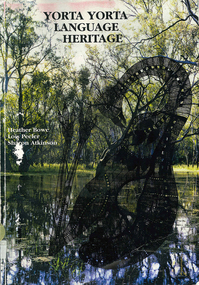
Book, Heather Bowe et al, Yorta Yorta language heritage, 1997
... ...Cummeragunja...Yorta Yorta Yabula Yabula Bangerang language revival Geraldine Briggs hymns Murray Goulburn Cummeragunja Maloga Mission place names Maps, b&w photographs, dictionary, word lists, worksheets, An account of the Yorta Yorta language, with a full Yorta Yorta-English dictionary, a detailed grammar section, background information about previous language revival projects, hymns, historical records and place names. ...An account of the Yorta Yorta language, with a full Yorta Yorta-English dictionary, a detailed grammar section, background information about previous language revival projects, hymns, historical records and place names. A chapter devoted to Yabula Yabula is also included.Maps, b&w photographs, dictionary, word lists, worksheets,yorta yorta, yabula yabula, bangerang, language revival, geraldine briggs, hymns, murray goulburn, cummeragunja, maloga mission, place names -
 Victorian Aboriginal Corporation for Languages
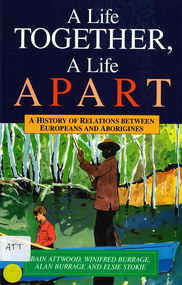
Book, Bain Attwood et al, A life together, a life apart : a history of relations between Europeans and Aborigines, 1994
... ...Cummeragunja...Sevington Cummeragunja Moonahcullah Victorian history New South Wales history race relations racism government relations Indigenous reserves oral histories B&w photographs A history of several Aboriginal reserves, containing long transcribed narratives from those who lived there as well as letters and general information about Aboriginal-white relations in the early 20th century. ...A history of several Aboriginal reserves, containing long transcribed narratives from those who lived there as well as letters and general information about Aboriginal-white relations in the early 20th century.B&w photographssevington, cummeragunja, moonahcullah, victorian history, new south wales history, race relations, racism, government relations, indigenous reserves, oral histories -
 Victorian Aboriginal Corporation for Languages
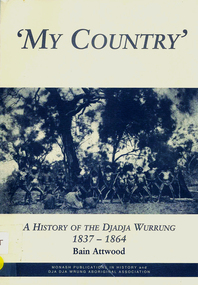
Book, Bain Attwood, 'My country' : a history of the Djadja Wurrung 1837-1864, 1999
... ...Cummeragunja...Djadja Wurrung Dja Dja Wurrung Dja Dja Wrung Aboriginal Association Beembarmin Victorian pastoral leases Franklinford Fernihurst Edward Parker Caroline Morgan Thomas Dunolly Cummeragunja racial conflict racism Victorian social history maps, b&w illustrations, b&w photographs A description of the invasion of Djadja Wurrung land in Central Victoria which began in the mid 1830s. ...A description of the invasion of Djadja Wurrung land in Central Victoria which began in the mid 1830s.maps, b&w illustrations, b&w photographsdjadja wurrung, dja dja wurrung, dja dja wrung aboriginal association, beembarmin, victorian pastoral leases, franklinford, fernihurst, edward parker, caroline morgan, thomas dunolly, cummeragunja, racial conflict, racism, victorian social history -
 Ballarat Heritage Services
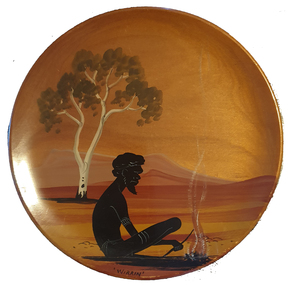
Photograph - Photograph - Colour, 'Wirrin' by Bill Onus
... William (Bill) ONUS (15 November 1906-1968) Born Cummeragunja Aboriginal Reserve, Murray River, New South Wales Clan: Wiradjuri William Townsend (Bill) Onus was a shearer, actor and activist who revived the Australian Aboriginese League in Melbourne in 1946. ...William (Bill) ONUS (15 November 1906-1968) Born Cummeragunja Aboriginal Reserve, Murray River, New South Wales Clan: Wiradjuri William Townsend (Bill) Onus was a shearer, actor and activist who revived the Australian Aboriginese League in Melbourne in 1946. ...William (Bill) ONUS (15 November 1906-1968) Born Cummeragunja Aboriginal Reserve, Murray River, New South Wales Clan: Wiradjuri William Townsend (Bill) Onus was a shearer, actor and activist who revived the Australian Aboriginese League in Melbourne in 1946. He retired from politics in to start the Aboriginal Enterprises workship in Belgrave with his brother Eric. They produced boomerangs, woomeras, fabrics and greeting cards imprinted with Aboriginal motifs. He ran the business from his small factory and shop at Belgrave in the Dandenong Ranges. To promote his wares Bill Onus toured widely in Victoria and beyond as a travelling showman, giving demonstrations of boomerang-throwing, which he advocated as a national sport. (ADB) Bill Onus adopted similar imagery to that which appeared in mass-produced indigenised design; however, he used such works to draw attention to his political work with the ‘Committee for Aboriginal Citizen Rights’ and the ‘Australian Aborigines League.’ William McLintock (Lin) Onus is the son of Bill Onus. Wooden plate decorated with Aboriginal design by Bill Onus.Stamped on back "Made in Australia Bill Onus"aboriginal, bill onus, aboriginal enterprise novelties, ceramics -
 Ballarat Heritage Services
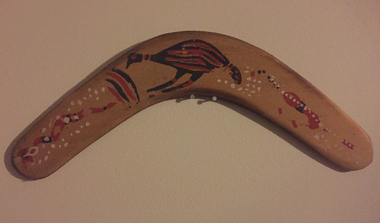
Photograph - Photograph - Colour, Boomerang, Probably by Bill Onus, c1960s, 1960s
... William (Bill) ONUS (15 November 1906-1968) Born Cummeragunja Aboriginal Reserve, Murray River, New South Wales Clan: Wiradjuri William Townsend (Bill) Onus was a shearer, actor and activist who revived the Australian Aboriginese League in Melbourne in 1946. ...William (Bill) ONUS (15 November 1906-1968) Born Cummeragunja Aboriginal Reserve, Murray River, New South Wales Clan: Wiradjuri William Townsend (Bill) Onus was a shearer, actor and activist who revived the Australian Aboriginese League in Melbourne in 1946. ...William (Bill) ONUS (15 November 1906-1968) Born Cummeragunja Aboriginal Reserve, Murray River, New South Wales Clan: Wiradjuri William Townsend (Bill) Onus was a shearer, actor and activist who revived the Australian Aboriginese League in Melbourne in 1946. He retired from politics in to start the Aboriginal Enterprises workship in Belgrave with his brother Eric. They produced boomerangs, woomeras, fabrics and greeting cards imprinted with Aboriginal motifs. He ran the business from his small factory and shop at Belgrave in the Dandenong Ranges. To promote his wares Bill Onus toured widely in Victoria and beyond as a travelling showman, giving demonstrations of boomerang-throwing, which he advocated as a national sport. (ADB) Bill Onus adopted similar imagery to that which appeared in mass-produced indigenised design; however, he used such works to draw attention to his political work with the ‘Committee for Aboriginal Citizen Rights’ and the ‘Australian Aborigines League.’ William McLintock (Lin) Onus is the son of Bill Onus. Painted boomerang thought to be decorated by Bill Onus.boomerang, aboriginal, bill onus, aboriginal enterprise novelties -
 Ballarat Heritage Services
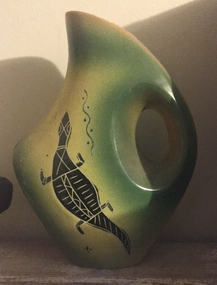
Ceramic - Photograph - Colour, Ceramics Decorated by Bill Onus, c1955
... William (Bill) ONUS (15 November 1906-1968) Born Cummeragunja Aboriginal Reserve, Murray River, New South Wales Clan: Wiradjuri William Townsend (Bill) Onus was a shearer, actor and activist who revived the Australian Aboriginese League in Melbourne in 1946. ...William (Bill) ONUS (15 November 1906-1968) Born Cummeragunja Aboriginal Reserve, Murray River, New South Wales Clan: Wiradjuri William Townsend (Bill) Onus was a shearer, actor and activist who revived the Australian Aboriginese League in Melbourne in 1946. ...William (Bill) ONUS (15 November 1906-1968) Born Cummeragunja Aboriginal Reserve, Murray River, New South Wales Clan: Wiradjuri William Townsend (Bill) Onus was a shearer, actor and activist who revived the Australian Aboriginese League in Melbourne in 1946. He retired from politics in to start the Aboriginal Enterprises workship in Belgrave with his brother Eric. They produced boomerangs, woomeras, fabrics and greeting cards imprinted with Aboriginal motifs. He ran the business from his small factory and shop at Belgrave in the Dandenong Ranges. To promote his wares Bill Onus toured widely in Victoria and beyond as a travelling showman, giving demonstrations of boomerang-throwing, which he advocated as a national sport. (ADB) Bill Onus adopted similar imagery to that which appeared in mass-produced indigenised design; however, he used such works to draw attention to his political work with the ‘Committee for Aboriginal Citizen Rights’ and the ‘Australian Aborigines League.’ William McLintock (Lin) Onus is the son of Bill Onus. Ceramic form decorated with Aboriginal design by Bill Onus.aboriginal, bill onus, aboriginal enterprise novelties, ceramics -
 Victorian Aboriginal Corporation for Languages
Book, Aboriginal Community Elders Service et al, Aboriginal elders' voices : stories of the "tide of history" : Victorian Indigenous elders' life stories &? oral histories, 2003
... ...Cummeragunja...Wiradjuri Victorian Indigenous elders oral histories Yorta Yorta Dja Dja Wurrung language maps Victorian missions and reserves Lake Condah Framlingham Coranderrk Ramahyuck Lake Tyers Wahgunyah Cummeragunja Moonahcullah Balranald Ebenezer Maloga Acheron maps, colour illustrations, b&w photographs This book is a collection of Victorian Indigenous Elders' life stories and oral histories. ...This book is a collection of Victorian Indigenous Elders' life stories and oral histories. The Elders share their stories in an attempt to ensure that both sides of Australia's history are finally heard. These stories tell of cultural resistance on missions, of defying assimilation laws, of forever moving around to save children from the welfare. They document the development of both fringe and urban communities and work in the Aboriginal rights movement. They clarify the ways in which these experiences have affected the individual authors along with the indigenous population in general. Also included in the book is a brief history and analysis of the legislation, policies, attitudes and strategies that have affected the lives of the authors and their families since colonisation. This aspect provides an historical perspective, encouraging a deeper understanding of the Elders' stories. Reconciliation can only eventuate with an understanding gained from hearing and including the voices of Indigenous Australians. Contents: The writing team Indigenous elders: keepers of knowledge; custodians of land and culture Aboriginal lands Missions and reserves Growing up running from the welfare /? Aunty Olive Jackson Respecting our Elders /? Aunty Lola James If your mother didn't tell you, then your grandmother did! /? Uncles Les Stewart Don't dwell on trouble /? Aunty Audrey Critch There are my people /? Aunty Gwen Nelson We were all cousins, more or less /? Aunty Iris Lovett-Gardiner Aboriginality is about culture, not colour /? Aunty Dianne Phillips Take up the opportunities we struggled to make /? Aunty Frances Gallagher Home /? Aunty Eileen Alberts We were supposed to forget our Aboriginality /? Aunty Gwen Garoni Not enough heart to say sorry? /? Uncle Brian Kennewell-Taylor Learning from indigenous elders: Keeping the traditions, keeping the culture strong; Since time immemorial; Invasion: the tide ran red; The flood of legislation; Stolen children; Cultural resistance: holding on to children traditions and land; Organised resistance: a movement is born; The 1950s: community resistance to race laws; The price of assimilation; The Aboriginal rights movement; After the flood: self-determination; Turning the tide Bibliography Appendix. Cultural custodianship: developing an indigenous methodology.maps, colour illustrations, b&w photographswiradjuri, victorian indigenous elders, oral histories, yorta yorta, dja dja wurrung, language maps, victorian missions and reserves, lake condah, framlingham, coranderrk, ramahyuck, lake tyers, wahgunyah, cummeragunja, moonahcullah, balranald, ebenezer, maloga, acheron -
 Federation University Art Collection
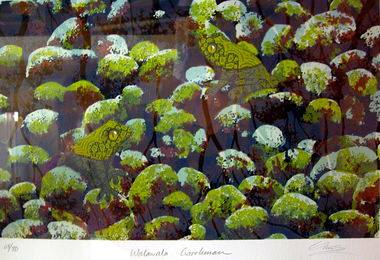
Work on paper - Printmaking - Silkscreen, Lin Onus, 'Walawala Garrkman' by Lin Onus, 2001
... His cultural education on the Aboriginal side was also provided by visits to Cummeragunja with his father, and stories told by his uncle Aaron Briggs, known as 'the old man of the forest' who gave him his Koori name - Burrinja, meaning 'star'. ...His cultural education on the Aboriginal side was also provided by visits to Cummeragunja with his father, and stories told by his uncle Aaron Briggs, known as 'the old man of the forest' who gave him his Koori name - Burrinja, meaning 'star'. ...Lin ONUS (1948-1996) Language: Wiradjuri / Yorta Yorta Lin Onus played a pivotal role in the recognition of Aboriginal art as an expression of a contemporary and dynamic living culture. Prior to his premature death at just 47 years of age he was a prominent, strident, yet non-confrontational agent in renegotiating the history of colonial and Aboriginal Australia. His father, Bill Onus, was the founder of the Aboriginal Advancement League in Victoria and a prominent maker of artefacts in Melbourne. As a young Koori growing up, Lin lived in a cultural environment that included exposure to visiting Aboriginal artists, including Albert Namatjira. He began his artistic life assisting his father in decorating artifacts, went on to develop skills working with metal and painting with air brush as a panel beater; and by 1974 he was painting watercolors and photo-realist landscapes. In the 1970's he completed a set of paintings on the first Aboriginal guerrilla fighter Mosquito, which holds pride of place on the walls of the Advancement League in Melbourne, to this day. Lin Onus was a largely self-taught artist. Particularly important in his development was his visits to Garmedi (Arnhem Land) starting in 1986. Jack Wunuwun, the Yolngu artist, introduced him into the Murrungun-Djinang clan and gave him permission to use some of traditional images in his paintings. His cultural education on the Aboriginal side was also provided by visits to Cummeragunja with his father, and stories told by his uncle Aaron Briggs, known as 'the old man of the forest' who gave him his Koori name - Burrinja, meaning 'star'. They would sit on the banks of the Murray River within view of the Barmah Forest, Lin's spiritual home, the subject of many of his later paintings and his final resting place. Lin's father had been of the Yorta Yorta people from the Barmah Forest country, and Lin also used images from this area in his paintings. The images in his works include haunting photorealist portrayals of the Barmah red gum forests of his father's ancestral country, and the use of rarrk cross-hatching-based based painting style that he learned (and was given permission to use when in Arnhemland). His painting Barmah Forest won Canberra's national Aboriginal Heritage Award in 1994. (http://www.cooeeart.com.au/aboriginal_artist/lin_onus/A, accessed 18 May 2015) This item is part of the Federation University Art Collection. The Art Collection features over 1000 works and was listed as a 'Ballarat Treasure' in 2007.Framed limited edition silkscreen.Signed 'Onus' lower right (posthumously by Tiriki Onus) Edition 68/80art, artwork, lin onus, onus, printmaking, screenprint, aboriginal, dreaming, frogs, available -
 Uniting Church Archives - Synod of Victoria
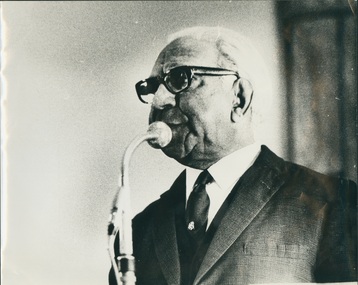
B&W photo of another photo or newspaper photograph of Pastor Sir Douglas Nicholls, Undated
... Doug grew up at Cummeragunja, on the Murray River near Barmah, in its golden years of Aboriginal autonomy. ...Doug grew up at Cummeragunja, on the Murray River near Barmah, in its golden years of Aboriginal autonomy. ...Sir Douglas Ralph Nicholls (1906-1988), footballer, pastor, activist and governor, was born on 9 December 1906 at Cummeragunja Aboriginal mission, New South Wales, fifth child of Herbert Nicholls, seasonal worker, and his wife Florence, née Atkinson. Doug grew up at Cummeragunja, on the Murray River near Barmah, in its golden years of Aboriginal autonomy. Thomas Shadrach James gave him and other Yorta Yorta children a sound primary education, reinforcing the pride and self-assurance gained from their parents. As Doug grew, so too did the powers of the State’s Aboriginal Protection Board. Doug’s elder sister Hilda was removed about 1915. When Doug reached 14, he was moved off under the Aborigines Protection Act (1909) to find work. He took a job with dredging teams constructing levees on the Murray. Like other youths in the region Nicholls played Australian rules football, emulating kinsmen who had won local premierships since the 1890s. Doug and his brother Herbert (‘Dowie’) played with Tongala in the mid-1920s. Melbourne football beckoned, Doug trying out unsuccessfully for Carlton in 1927. He signed with the Northcote Victorian Football Association team, despite his nervousness about his Aboriginality, and was given a job with Northcote City Council. ‘Dowie’ joined him for a season. Doug was short at 5 ft 2 ins (158 cm), but muscular and lightning fast. He competed regularly during a boom in professional running, winning many heat and place prizes. In 1929 he won the Nyah and Warracknabeal gifts, earning a sash and £100 in each, together with a case of cutlery in the latter. Using his speed on the wing for Northcote, he produced great spring and agility from his compact body. The Sporting Globe reported in 1929 that ‘he flashes through packs of big men, whisks around small men . . . and attempts marks at the back of any six-footer’. In front-on clashes he was flattened only to rise again. The sole Aborigine in the VFA, he was known affectionately as the ‘flying Abo’ but called worse by his opponents’ barrackers. He competed for five seasons, being named ‘best and fairest’ twice, appearing in three association grand finals and winning in 1929. Keen to earn more than a seasonal wage, in 1931 Nicholls accepted a three-year contract with Jimmy Sharman’s travelling boxing show. The bouts matched opposites, local against tent boxer, white against black, and sometimes men of different sizes. He faced stiff competition from those who wanted to best the noted Melbourne black footballer, the crowd adding racial abuse. A far better footballer than boxer, he copped some punishment. Fighting in the Melbourne Stadium in December 1931, he was described by Truth as ‘slow and awkward’, but packing a ‘good wallop’. In 1932 Sharman, who treated his boxers fairly, released Nicholls to join the Fitzroy Victorian Football League team, which agreed to employ him as its groundsman. He played fifty-four games for Fitzroy over six seasons until knee trouble forced him out in 1937. Winning cups in 1934 and 1935, he played alongside Haydn Bunton and Wilfred (‘Chicken’) Smallhorn. Grand finals eluded him but he represented Victoria twice. Following his mother’s death, Nicholls revisited the Church of Christ chapel in Northcote, where they had worshipped together. On 17 July 1932 he experienced a conversion. He was soon baptised and witnessed openly, leading his fellow footballers to occasional church parades. Nicholls exhibited leadership qualities. William Cooper, founder of the Australian Aborigines’ League and Nicholls’ Yorta Yorta kinsman and fellow Christian, encouraged the young footballer. In February 1935 Cooper, Nicholls and others lobbied Thomas Paterson, the Commonwealth minister for the interior, over the need for Federal control of Aboriginal affairs. Nicholls attended the Day of Mourning protest for Aborigines held in Sydney on 26 January 1938, declaring: ‘after 150 years our people are still influenced and bossed by white people. I know we can proudly hold our own with others if given the chance’. When Cooper retired in November 1940 Nicholls became secretary of the AAL. On 2 June 1941 Nicholls enlisted in the Citizen Military Forces. He trained at Seymour and Bonegilla before being posted to the 29th Battalion. As Major Frank Corr’s batman, he was popular with other soldiers who tolerated his preaching and Bible reading. His army service was brief, however, and he was discharged in Melbourne on compassionate grounds on 22 January 1942. His biographer claimed that the Fitzroy police requested his return to mediate in the racial tensions developing between servicemen and the mostly respectable Aboriginal families living in crowded and dilapidated Fitzroy housing; Aboriginal people maintain that they requested his release. Nicholls began welfare work and religious services from an Aboriginal home in Gertrude Street, Fitzroy. In April 1942, ‘Dowie’ died of road accident trauma, leaving his wife, Gladys, née Bux, and three children. On 26 December 1942 at Moama Methodist Church, New South Wales, Nicholls married her, a caring gesture which developed into a loving partnership. In January 1943 he initiated ‘Aboriginal Sunday’, featuring a gum leaf orchestra and choir. By 1955 this service had moved to July and later evolved into National Aborigines and Islanders Day Observance Committee (NAIDOC) week. Ordained a Churches of Christ pastor in 1945, Nicholls conducted a vigorous ministry from a chapel in Gore Street, Fitzroy. His work survived on donations, a small honorarium, and his employment as team coach (1947) and curator at the Northcote Football Ground. In the 1950s Gladys established grocery and opportunity shops to earn income and provide services. Their house soon overflowed with people in need or visitors to Melbourne. Nicholls also hosted inspiring African American visitors such as the pianist Winifred Attwell and the singer Harry Belafonte. His ministry extended to Aboriginal country communities. Gladys taught Sunday school, undertook endless fund-raising and welfare work beside her husband, and became his greatest supporter and financial manager. They formed an Aboriginal Girls’ Hostel in 1956, for which they acted as house parents, and bought holiday units for Aborigines at Queenscliff. Persistently advocating Aboriginal rights, Nicholls protested about the impact of the Woomera rocket range on the people of the Warburton Ranges, co-ordinated the production of a concert, Out of the Dark, scripted by Jean Campbell, to rectify the omission of Aborigines from Victoria’s Commonwealth jubilee celebrations, and criticised the Victorian Aboriginal Protection Board. In 1957 when the board was transformed into the Aborigines’ Welfare Board, he and Harold Blair were appointed as Aboriginal representatives. Maintaining the stance of a political moderate, he did not bear grudges and sought to build bridges between black and white. He co-operated with any group that aided the cause, including the Council of Aboriginal Rights, whose executive were members of the Communist Party of Australia. This association attracted the attention of the Australian Security Intelligence Organization, which in 1957 began to keep a file on Nicholls. In May 1957 Nicholls formed the Victorian Aborigines Advancement League with Doris Blackburn and Gordon Bryant, a Federal parliamentarian. As its paid field officer and spokesman, Nicholls contested assimilation policies and used film to raise awareness of issues. When the Welfare Board attempted to close Lake Tyers reserve, Gippsland, he resigned in disgust and led a protest march on parliament in May 1963. The AAL also petitioned the United Nations on land rights in June, perhaps the first indigenous body to do so. He argued for new premises at 58 Cunningham Street, Northcote, opened in 1966 as the ‘Doug Nicholls Centre’. In 1958 Nicholls was a foundation member of the Federal Council for Aboriginal Advancement (Federal Council for the Advancement of Aboriginal and Torres Strait Islanders after 1964), which he served as national field officer (1961) and Victorian secretary (1962-63). While an innovator in tactics, he was alarmed by the influence of confrontational ‘black power’ politics in the AAL and resigned as a director amid turmoil on this issue in 1969, claiming the concept was a ‘bitter word’, not needed in Australia. Similar tensions in FCAATSI led him to join with Kath Walker (Oodgeroo Noonuccal) in establishing the short-lived National Tribal Council as an alternative forum. As the AAL leadership moderated their stance, he returned as president (1969-74) of the new all-Aboriginal organisation. He was also a keen patron of the National Aboriginal Sports Foundation, founded in 1969. Many honours were conferred on Nicholls: he was appointed MBE (1957) and OBE (1968) and knighted (1972). In 1962 he was named Victorian ‘Father of the Year’ and the State’s second Aboriginal justice of the peace. Crowned Melbourne’s 1973 King of Moomba, he was declared Bapu Mamus (a Torres Strait term for ‘headman’) by the NTC. On 1 December 1976 Sir Douglas was appointed Governor of South Australia, but his health deteriorated within weeks, making it difficult for him to perform his official duties. In March 1977 he hosted Queen Elizabeth during her royal tour and was appointed KCVO. He relinquished his governorship on 30 April 1977 following a stroke. Ill health continued to dog him during retirement, but he played his Nelson Eddy records, enjoyed his expanding family, and when able, ministered to the Aboriginal Church at the League’s premises. Sir Douglas Nicholls died on 4 June 1988 at Mooroopna, predeceased (1981) by his wife and survived by his five children. He was given a state funeral and buried in tribal ground at Cummeragunja cemetery. Among the many tributes to him are an oval at Northcote, handed to the AAL in 1982, a Canberra suburb gazetted in 1991, and a fellowship for Indigenous leadership established in 2003, all in his name, and a statue of Sir Doug and Lady Nicholls by Louis Laumen, unveiled in 2007 in Parliament Gardens, Melbourne. Sir Douglas Nicholls is shown speaking at a microphone; head and shoulders; dressed in a suit.Pastor Douglas Nicholls
