
Showing 255 items matching "david woods"
-
 National Vietnam Veterans Museum (NVVM)
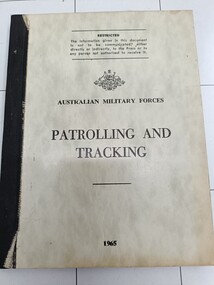
Book - Handbook, Army, Australian Military Forces Patrolling And Tracking
... ...David Woods...Standard issue item as used by Australian servicemen during the conflict in Vietnam ( 1962 - 1973).This item was donated by Pte David George Woods (2783285) who was a National Serviceman with the Royal Australian Infantry Corps. ...Australian Military Forces Patrolling and Tracking David Woods Vietnam Woods 7RAR Tracking Manual Handbook AUSTRALIAN MILITARY FORCES/PATROLLING AND TRACKING Cream cover with black binding: Restricted note at top. ...Standard issue item as used by Australian servicemen during the conflict in Vietnam ( 1962 - 1973).This item was donated by Pte David George Woods (2783285) who was a National Serviceman with the Royal Australian Infantry Corps. He served in Vietnam with the 7th Battalion, The Royal Australian Regiment from April 1967 to October 1967.Cream cover with black binding: Restricted note at top. Issued 1965: 104 pages, two chapters including instructions, diagrams and maps. AUSTRALIAN MILITARY FORCES/PATROLLING AND TRACKINGaustralian military forces, patrolling and tracking, david woods, vietnam, woods, 7rar, tracking, manual, handbook -
 National Vietnam Veterans Museum (NVVM)
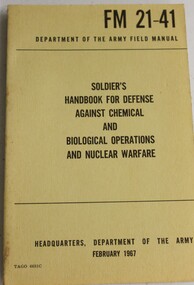
Booklet - Soldiers Nuclear Handbook, Soldiers Handbook for Defence against Chemical and Biological Operations and Nuclear Warfare
... Pte David George Woods...This item was donated by Pte David George Woods (2783285) who was a National Serviceman with the Royal Australian Infantry Corps. ...This item was donated by Pte David George Woods (2783285) who was a National Serviceman with the Royal Australian Infantry Corps. ...This item was donated by Pte David George Woods (2783285) who was a National Serviceman with the Royal Australian Infantry Corps. He served in Vietnam with the 7th Battalion, The Royal Australian Regiment from April 1967 to October 1967. US Handbook regarding defense for types of warfare.Yellow/cream cover FM 21-41 Dept of Army Field Manual. 177 Pages instructions for Chemical, Nuclear Warfare including photos of equipment to wear for survival, breathing etc. USA production. FM 21-41Headquarters/Dept of the Army/February 1967 Washington D.C. 6 Feb 1967.pte david george woods, 2783285, royal australian infantry corps, handbook, defense, defense instructions for survival, chemical, nuclear warfare, usa, 7rar -
 Bendigo Historical Society Inc.
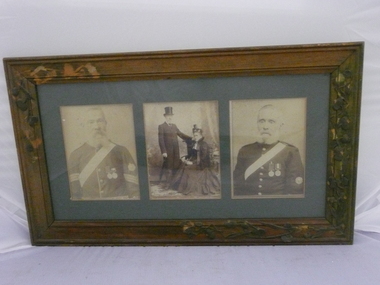
Photograph - COLGAN FAMILY, 1900
... Bartlett Bros Bendigo & David Wood Sth Melbourne...PERSON Family colgan family portrait Bartlett Bros Bendigo & David Wood Sth Melbourne 1.. Grandfather Colgan standing in Military uniform with 2 medals 2.. ...1.. Grandfather Colgan standing in Military uniform with 2 medals 2.. Mother and father Colgan ( of Miss Colgan ) mother in long black dress, lace robe, sitting holding umbrella. Father in black suit, white shirt, black tie, white handkerchief in pocket, top hat, standing holding umbrella. 3.. Brother of grandfather Colgan ( Miss Colgans great-uncle ) sitting in military uniform with 2 medals. Ornamentation on wooden frame with grey mount, under glass.Bartlett Bros Bendigo & David Wood Sth Melbourneperson, family, colgan family portrait -
 Bendigo Historical Society Inc.
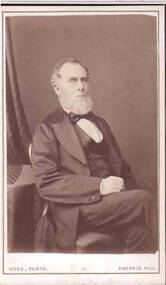
Photograph - PORTRAIT OF A MAN
... ... David Wood...David Wood, Corner of Bank & Clarendon Streets, Emerald Hill, Melbourne...PHOTOGRAPH Portrait male Portrait of a Man David Wood David Wood, Corner of Bank & Clarendon Streets, Emerald Hill, Melbourne Small portrait of a man seated on a chair. ...Small portrait of a man seated on a chair. He is wearing a three piece suit and a bow tie. He also has a beard.David Wood, Corner of Bank & Clarendon Streets, Emerald Hill, Melbournephotograph, portrait, male, portrait of a man, david wood -
 Eltham District Historical Society Inc
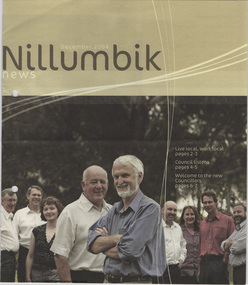
Journal - Newsletter, Nillumbik Shire Council, Nillumbik News, December 2004
... ...David Parsons...Anton Woods...Council Newsletters Nillumbik News Nillumbik Shire Council Warwick Leeson Peter Yates Bo Bendtsen Helen Coleman Bill Penrose Greg Johnson Howard Bulmer Bronnie Hattam Michael Young Living & Learning Nillumbik Sally Hansen Julie French Julie Graham Steven Wells Robert Hayley Greg Champion ev hales Marjorie Lapworth Jan Kelly Robina Summers Janet Mason Karen Coulton Elizabeth Gardner Matthew Dean Madison Caulfield Nicole Pless Mathew Munro Sten Nigol Christopher Armet Rachel Khaw Melinda Bpuer David Parsons Anton Woods Erin Lorenzini Zoe Carr Troy Sandley Marrissa Filipou Ben Cukier nillumbik reconciliation group Montsalvat Eltham Craft & Produce Market Eltham Festival Nillumbik Artists Open Studios Hurstbridge High School Family services Kangaroo Ground Preschool Alan Marshall Short Story Award Tom Dell'Anno Gayle Knight 24 x 21 cm, double stapled, 12 pages Nillumbik News Journal Newsletter Nillumbik Shire Council ...The newsletter reports on local council initiatives, community programs, environmental activities, and cultural events taking place across Nillumbik Shire in late 2004. It emphasizes community participation, environmental sustainability, infrastructure improvements, and local cultural life. Key Points Council Projects and Infrastructure: Updates on road maintenance, capital works, and improvements to local facilities across the shire, Continued development of community infrastructure such as recreational facilities, parks, and public spaces, Council planning initiatives aimed at supporting sustainable growth and maintaining rural character. Environment and Sustainability: Programs encourage residents to protect local waterways, conserve native vegetation, and control invasive weeds, Environmental initiatives involve Landcare groups, wildlife monitoring, and sustainability education, Residents are encouraged to participate in community environmental projects and conservation activities. Community Services and Programs: Promotion of community services, volunteer programs, and educational opportunities through local centres. Support for families, seniors, and young people through recreational and learning programs. Community engagement remains a priority for council planning and activities. Arts, Culture and Events: The newsletter highlights local arts initiatives, exhibitions, festivals, and performances. Programs support local artists and cultural organisations, reinforcing the area’s reputation as an artistic community. Tourism and Local Economy: Promotion of local tourism, wineries, markets, and cultural attractions in the region. Efforts to strengthen the local economy and regional identity through tourism and community events. Also includes interviews with Councillors, 2004 Nillumbik Sports Awards and calandar of events. council newsletters, nillumbik news, nillumbik shire council, warwick leeson, peter yates, bo bendtsen, helen coleman, bill penrose, greg johnson, howard bulmer, bronnie hattam, michael young, living & learning nillumbik, sally hansen, julie french, julie graham, steven wells, robert hayley, greg champion, ev hales, marjorie lapworth, jan kelly, robina summers, janet mason, karen coulton, elizabeth gardner, matthew dean, madison caulfield, nicole pless, mathew munro, sten nigol, christopher armet, rachel khaw, melinda bpuer, david parsons, anton woods, erin lorenzini, zoe carr, troy sandley, marrissa filipou, ben cukier, nillumbik reconciliation group, montsalvat, eltham craft & produce market, eltham festival, nillumbik artists open studios, hurstbridge high school, family services, kangaroo ground preschool, alan marshall short story award, tom dell'anno, gayle knight -
 Vision Australia
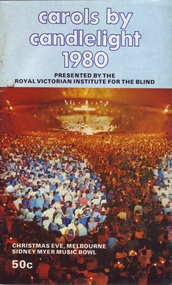
Programme - Text, Carols by Candlelight 1980, 1980
... ...Colin Woods...David...Royal Victorian Institute for the Blind Carols by Candlelight Brian Naylor Jim Watsford Colin Woods David Johnston Janet Perkins Blair Edgar Jill Perryman Neil Warren Smith Keren Minshull Jennifer Murphy Normie Rowe James Pegler Steven Tandy Harold Badger 1 volume with colour illustrations Carols by Candlelight 1980 Programme Text ...Program showing songs and performers of the 1980 Carols by Candlelight, televised by GTV 9. 1 volume with colour illustrationsroyal victorian institute for the blind, carols by candlelight, brian naylor, jim watsford, colin woods, david johnston, janet perkins, blair edgar, jill perryman, neil warren smith, keren minshull, jennifer murphy, normie rowe, james pegler, steven tandy, harold badger -
 Vision Australia
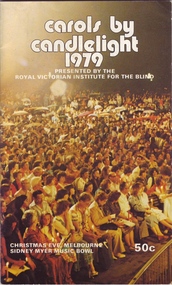
Programme - Text, Carols by Candlelight 1979, 1979
... ...Colin Woods...David...Royal Victorian Institute for the Blind Carols by Candlelight Brian Naylor Jim Watsford Colin Woods David Johnston Blair Edgar Harold Badger Leslie Miers Rolf Harris John Farnham Paul Meenie Linda George Thomas Edmonds Markeeta Little Wolf Margaret Nisbett Franciscus Henri Kirri Adams 1 volume with colour illustrations Carols by Candlelight 1979 Programme Text ...Program showing songs and performers of the 1979 Carols by Candlelight, televised by GTV 9. 1 volume with colour illustrationsroyal victorian institute for the blind, carols by candlelight, brian naylor, jim watsford, colin woods, david johnston, blair edgar, harold badger, leslie miers, rolf harris, john farnham, paul meenie, linda george, thomas edmonds, markeeta little wolf, margaret nisbett, franciscus henri, kirri adams -
 Lakes Entrance Historical Society
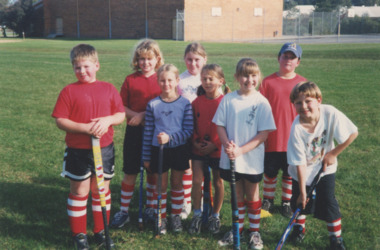
Photograph - Tambo Hockey Seven and thirteen teams 2001, Lakes Post Newspaper, 16/06/2001 12:00:00 AM
... Colour photograph of members of Tambo Hockey Seven and thirteen teams Huon Sheehan, Lily Anderson, Sian Trudinger, Katrina Thomas, David Wood, Mitchell Clague, Ashley Keed, Ward during their final game at Lakes Entrance Victoria...Schools Sports Recreation Colour photograph of members of Tambo Hockey Seven and thirteen teams Huon Sheehan, Lily Anderson, Sian Trudinger, Katrina Thomas, David Wood, Mitchell Clague, Ashley Keed, Ward during their final game at Lakes Entrance Victoria Photograph Tambo Hockey Seven and thirteen teams 2001 Lakes Post Newspaper ...Colour photograph of members of Tambo Hockey Seven and thirteen teams Huon Sheehan, Lily Anderson, Sian Trudinger, Katrina Thomas, David Wood, Mitchell Clague, Ashley Keed, Ward during their final game at Lakes Entrance Victoriaschools, sports, recreation -
 Tarnagulla History Archive
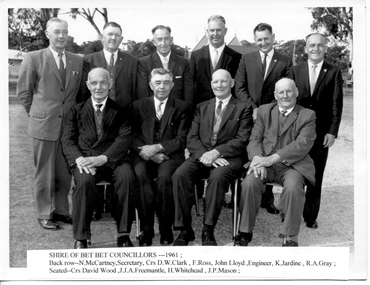
Photograph: Shire of Bet Bet Councillors, 1961, 1961
... Gray Seated: Crs David Wood, J.J.A. Freemantle, H. Whitehead, J.P. ...Gray Seated: Crs David Wood, J.J.A. Freemantle, H. Whitehead, J.P. ...Donald Clark Collection. A monochrome photograph of Shire of Bet Bet Councillors posed outdoors in 1961. Caption stuck on front lists the following names of subjects: L to R Standing at rear: N. McCartney (Secretary), Crs D.W. Clark, F. Ross, John Lloyd (Engineer), K. Jardine, R.A. Gray Seated: Crs David Wood, J.J.A. Freemantle, H. Whitehead, J.P. Mason. Original photograph. shire of bet bet, dunolly town hall, local government, governance -
 National Vietnam Veterans Museum (NVVM)
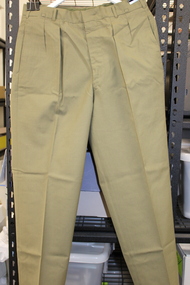
Uniform - Trousers, Army
... Standard item issued to National Serviceman Pte David G Woods, Service no:2783285, who served in 7RAR in 1967....Standard item issued to National Serviceman Pte David G Woods, Service no:2783285, who served in 7RAR in 1967. ...Standard item issued to National Serviceman Pte David G Woods, Service no:2783285, who served in 7RAR in 1967.Standard army issue khaki pant.woods, 7rar, woods dg, 1967, uniform, army uniform, 2783285 -
 National Vietnam Veterans Museum (NVVM)
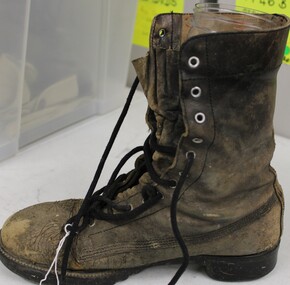
Uniform, Boots
... Standard item issued to National Serviceman Pte David G Woods, who served in the Royal Australian Infantry Corps, 7RAR, in Vietnam 1967. ...Standard item issued to National Serviceman Pte David G Woods, who served in the Royal Australian Infantry Corps, 7RAR, in Vietnam 1967. ...Standard item issued to National Serviceman Pte David G Woods, who served in the Royal Australian Infantry Corps, 7RAR, in Vietnam 1967. Well worn army issue leather boot with black lace up, size 6, metal insert in the cracked sole. D Woodd.g.woods, 7rar, 2783285, boots, woods, davis woods -
 National Vietnam Veterans Museum (NVVM)
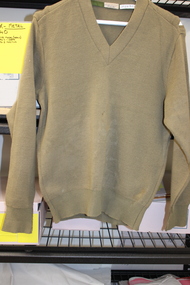
Uniform - V-neck pullover
... This item belonged to National Serviceman David G Woods, No:2783285, who served in 7RAR in 1967....This item belonged to National Serviceman David G Woods, No:2783285, who served in 7RAR in 1967. ...Standard woollen army jumper as issued to Australian servicemen during the conflict in Vietnam. This item belonged to National Serviceman David G Woods, No:2783285, who served in 7RAR in 1967.Khaki army V neck long sleeved woollen jumper, 1968 Size 38. Provision on both shoulders for badges with epaulette slots.On label: Jantzen NSW 1968/Size 38, 8405-66-024-7645 Machine washable woods, army, vietnam, sweater, pullover, jumper, 2783285 -
 Whitehorse Historical Society Inc.
Article, New Vicar, 25/09/1991 12:00:00 AM
... Article by Wendy Woods on David Greenwood, inducted as Vicar of St Luke's Anglican Church, Vermont....Greenwood David St Lukes Anglican Church Vermont Article by Wendy Woods on David Greenwood, inducted as Vicar of St Luke's Anglican Church, Vermont. ...Article by Wendy Woods on David Greenwood, inducted as Vicar of St Luke's Anglican Church, Vermont.Article by Wendy Woods on David Greenwood, inducted as Vicar of St Luke's Anglican Church, Vermont.Article by Wendy Woods on David Greenwood, inducted as Vicar of St Luke's Anglican Church, Vermont.greenwood, david, st lukes anglican church, vermont -
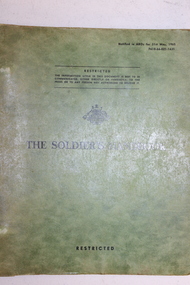 National Vietnam Veterans Museum (NVVM)
Booklet - Handbook, Army, The Soldiers Handbook
... This item was donated by Pte David George Woods (2783285) who was a National Serviceman with the Royal Australian Infantry Corps. ...This item was donated by Pte David George Woods (2783285) who was a National Serviceman with the Royal Australian Infantry Corps. ...Standard issue Army manual from the Vietnam era. This item was donated by Pte David George Woods (2783285) who was a National Serviceman with the Royal Australian Infantry Corps. He served in Vietnam with the 7th Battalion, The Royal Australian Regiment from April 1967 to October 1967.Green covered book with 147 pages of diagrams, graphs and information for soldiers. Cover is soft cardboard secured by 2 brass screws positioned on inside of cover. Bold black print on front cover.Restricted top and bottom of front and back The Soldiers Handbook " Notified in AROs for 31st May 1965. 7610-66-021-1631handbook, new recruits, vietnam, 7rar, army recruits, woods, dg woods, 2783285 -
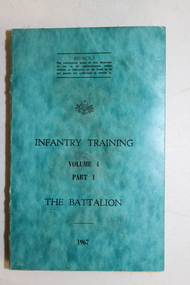 National Vietnam Veterans Museum (NVVM)
Booklet - Handbook, Infantry Training Vol. 4 Part 1: The Battalion, 1967
... This item was donated by Pte David George Woods (2783285) who was a National Serviceman with the Royal Australian Infantry Corps. ...This item was donated by Pte David George Woods (2783285) who was a National Serviceman with the Royal Australian Infantry Corps. ...Standard issue Army manual from the Vietnam era. This item was donated by Pte David George Woods (2783285) who was a National Serviceman with the Royal Australian Infantry Corps. He served in Vietnam with the 7th Battalion, The Royal Australian Regiment from April 1967 to October 1967. Aqua-green coloured hard cover with 313 pages of information in print , graphs and diagrams. Hole punched, the cover is secured by two brass screws on the inside. Infantry Training/ Vol.4/ Part1/ The Battalion/1967/ Restricted message at top of front cover. RESTRICTED at top and bottom of back cover.book, training, infantry, battalion, vietnam, 1967, 7rar, woods, dg woods, 2783285 -
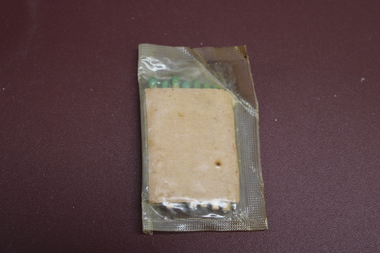 National Vietnam Veterans Museum (NVVM)
Functional object - Matches
... This item was issued to National Serviceman David G Woods No: 2783285 who served in 7RAR in 1967....This item was issued to National Serviceman David G Woods No: 2783285 who served in 7RAR in 1967. ...During the Vietnam War, waterproof matches were part of the essential equipment for Australian Army soldiers, often supplied as part of survival kits and, in later years, sealed packs were contained within combat ration packs. This item was issued to National Serviceman David G Woods No: 2783285 who served in 7RAR in 1967.A plastic sealed (presumably waterproof) clear wrapping with seven green tipped matches contained in brown cardboard cover with striking surface on one side. Phosphorus sesquisulfide at tip of the match.woods, 7rar, vietnam, matches, survival, 2783285 -
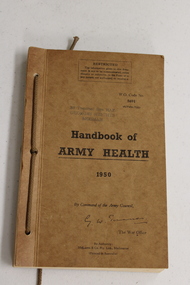 National Vietnam Veterans Museum (NVVM)
Booklet, Handbook of Army Health, 1950
... This item was donated by Pte David George Woods (2783285) who was a National Serviceman with the Royal Australian Infantry Corps. ...This item was donated by Pte David George Woods (2783285) who was a National Serviceman with the Royal Australian Infantry Corps. ...Handbook of Army Health. Detailing common health problems overseas and how to treat, avoid etc. these complaints. Book contains graphs and pictures of animals etc. that inflict some complaints. This item was donated by Pte David George Woods (2783285) who was a National Serviceman with the Royal Australian Infantry Corps. He served in Vietnam with the 7th Battalion, The Royal Australian Regiment from April 1967 to October 1967.Brown cover handbook of Army Health held together by brown string tied at back.138 pages of description & preventative control of disease. 88 terminal Sqn RAE GEORGES Height MOSMAN. Wo Code No 5691. By Command of the Army Councilarmy health, handbook, 1950, d.g.woods, woods, 7rar, medical, health, disease -
 Flagstaff Hill Maritime Museum and Village
Functional object - Glass Lens, 1886-1908
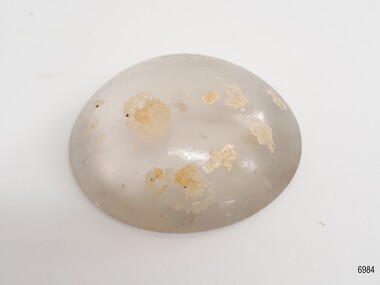
... The Court of Marine Inquiry in Melbourne ruled that the foundering of the ship was entirely due to Captain David Wood Thomson's navigational error, not too technical failure of the Clyde-built ship. ...The Court of Marine Inquiry in Melbourne ruled that the foundering of the ship was entirely due to Captain David Wood Thomson's navigational error, not too technical failure of the Clyde-built ship. ...This glass lens was recovered from the wreck of the Falls of Halladale. Its purpose is unknown but could have been a lamp or torch lens or even the lens from underwater equipment. The FALLS of HALLADALE 1886 - 1908- The sailing ship Falls of Halladale was an iron-hulled, four-masted barque, used as a bulk carrier of general cargo. She left New York in August 1908 bound for Melbourne and Sydney. In her hold was general cargo consisting of roof tiles, barbed wire, stoves, oil, benzene, and many other manufactured items. After three months at sea and close to her destination, a navigational error caused the Falls of Halladale to be wrecked on a reef off the Peterborough headland on the 15th of November, 1908. The captain and 29 crew members survived, but her cargo was largely lost, despite two salvage attempts in 1908-09 and 1910. The Court of Marine Inquiry in Melbourne ruled that the foundering of the ship was entirely due to Captain David Wood Thomson's navigational error, not too technical failure of the Clyde-built ship. The Falls of Halladale was built in1886 by Russell & Co., at Greenock shipyards on the River Clyde, Scotland for Wright, Breakenridge & Co of Glasgow. The ship had a sturdy construction built to carry maximum cargo and was able to maintain full sail in heavy gales, one of the last of the 'windjammers' that sailed the Trade Route. She and her sister ship, the Falls of Garry, were the first ships in the world to include fore and aft lifting bridges. The new raised catwalk-type decking allowed the crew to move above the deck in stormy conditions. This glass lens is significant for its association with the wreck of the sailing ship the Falls of Halladale. The Falls of Halladale shipwreck is listed on the Victorian Heritage (No. S255). She was one of the last ships to sail the Trade Routes from Europe and the Americas. Also of significance is that the vessel was one of the first ships to have fore and aft lifting bridges as a significant safety feature still in use on modern vessels today. The subject model is an example of an International Cargo Ship used during the 19th and early 20th centuries to transport goods around the world and represents aspects of Victoria’s shipping industry. Glass lens; transparent glass dome with flat base. Glass has bubbles and several concentric lines on the surface. There are light coloured encrustations on the surface. It was recovered from the wreck of the Falls of Halladale. flagstaff hill, warrnambool, flagstaff hill maritime museum and village, shipwreck coast, great ocean road, shipwreck artefact, falls of halladale, glass lens, glass cover, glass dome -
 Flagstaff Hill Maritime Museum and Village
Functional object - Glass Lens, 1886-1908
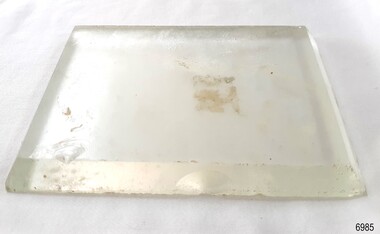
... The Court of Marine Inquiry in Melbourne ruled that the foundering of the ship was entirely due to Captain David Wood Thomson's navigational error, not too technical failure of the Clyde-built ship. ...The Court of Marine Inquiry in Melbourne ruled that the foundering of the ship was entirely due to Captain David Wood Thomson's navigational error, not too technical failure of the Clyde-built ship. ...This glass lens was recovered from the wreck of the Falls of Halladale. Its purpose is unknown but could have been a clock face cover, a lamp or torch lens or even the lens from underwater equipment. The FALLS of HALLADALE 1886 - 1908- The sailing ship Falls of Halladale was an iron-hulled, four-masted barque, used as a bulk carrier of general cargo. She left New York in August 1908 bound for Melbourne and Sydney. In her hold was general cargo consisting of roof tiles, barbed wire, stoves, oil, benzene, and many other manufactured items. After three months at sea and close to her destination, a navigational error caused the Falls of Halladale to be wrecked on a reef off the Peterborough headland on the 15th of November, 1908. The captain and 29 crew members survived, but her cargo was largely lost, despite two salvage attempts in 1908-09 and 1910. The Court of Marine Inquiry in Melbourne ruled that the foundering of the ship was entirely due to Captain David Wood Thomson's navigational error, not too technical failure of the Clyde-built ship. The Falls of Halladale was built in1886 by Russell & Co., at Greenock shipyards on the River Clyde, Scotland for Wright, Breakenridge & Co of Glasgow. The ship had a sturdy construction built to carry maximum cargo and was able to maintain full sail in heavy gales, one of the last of the 'windjammers' that sailed the Trade Route. She and her sister ship, the Falls of Garry, were the first ships in the world to include fore and aft lifting bridges. The new raised catwalk-type decking allowed the crew to move above the deck in stormy conditions. This glass lens is significant for its association with the wreck of the sailing ship the Falls of Halladale. The Falls of Halladale shipwreck is listed on the Victorian Heritage (No. S255). She was one of the last ships to sail the Trade Routes from Europe and the Americas. Also of significance is that the vessel was one of the first ships to have fore and aft lifting bridges as a significant safety feature still in use on modern vessels today. The subject model is an example of an International Cargo Ship used during the 19th and early 20th centuries to transport goods around the world and represents aspects of Victoria’s shipping industry. Glass lens; transparent glass rectangle with bevelled edges. It was recovered from the wreck of the Falls of Halladale. flagstaff hill, warrnambool, flagstaff hill maritime museum and village, shipwreck coast, great ocean road, shipwreck artefact, falls of halladale, glass lens, rectangular lens, glass cover -
 Flagstaff Hill Maritime Museum and Village
Equipment - Ship Rope Block, Russell & Co, Circa 1886
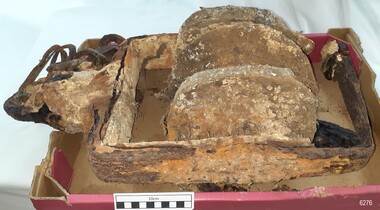
... ...Captain David Wood Thomson...The Court of Marine Inquiry in Melbourne ruled that the foundering of the ship was entirely due to Captain David Wood Thomson's navigational error, not too technical failure of the Clyde-built ship. ...The Court of Marine Inquiry in Melbourne ruled that the foundering of the ship was entirely due to Captain David Wood Thomson's navigational error, not too technical failure of the Clyde-built ship. ...This double-sheaved wooden ship’s block or pulley is a mechanical device used for lifting and moving heavy objects. It has two grooved wheels joined together, each with an axle between the cheeks or sides of the grooved wheel. Blocks and tackle are included in a ship’s rigging. These pulleys and ropes are used for the mechanical advantage they provide for lifting, moving and re-arranging the setting of the sails, which are very heavy work. Blocks are also used to load and unload the ship’s cargo. The FALLS of HALLADALE- The sailing ship Falls of Halladale was an iron-hulled, four-masted barque, used as a bulk carrier of general cargo. She left New York in August 1908 bound for Melbourne and Sydney. In her hold was general cargo consisting of roofing tiles, barbed wire, stoves, oil, and benzene as well as many other manufactured items. After three months at sea and close to her destination, a navigational error caused the Falls of Halladale to be wrecked on a reef off the Peterborough headland on the 15th of November, 1908. The captain and 29 crew members survived, but her cargo was largely lost, despite two salvage attempts in 1908-09 and 1910. The Court of Marine Inquiry in Melbourne ruled that the foundering of the ship was entirely due to Captain David Wood Thomson's navigational error, not too technical failure of the Clyde-built ship. The Falls of Halladale was built in1886 by Russell & Co., at Greenock shipyards on the River Clyde, Scotland for Wright, Breakenridge & Co of Glasgow. The ship had a sturdy construction built to carry maximum cargo and was able to maintain full sail in heavy gales, one of the last of the 'windjammers' that sailed the Trade Route. She and her sister ship, the Falls of Garry, were the first ships in the world to include fore and aft lifting bridges. The new, raised catwalk-type decking allowed the crew to move above the deck in stormy conditions.This artefact is important as it is an example of the materials and design of late-19th century ship’s rigging equipment. The object is also significant for its association with the historic sailing ship Falls of Halladale, wrecked in local waters in the early 20th century. The clipper ship Falls of Halladale shipwreck is of historical significance and is listed on the Victorian Heritage Register, No. S255. She was one of the last ships to sail the Trade Routes. She was one of the first vessels to have fore and aft lifting bridges. The vessel is an example of the remains of an international cargo ship and also represents aspects of Victoria’s shipping industry.Rope block, wooden double-sheave mechanical device with a short length of chain attached and remnants of the metal frame. It was recovered from the Falls of Halladale.Noneflagstaff hill, maritime museum, maritime village, warrnambool, great ocean road, shipwreck coast, falls of halladale, shipwreck, peterborough, 1908 shipwreck, peterborough shipwreck, russell & co., greenock, wright breakenridge & co. glasgow, clipper ship, block and rigging, ship’s block, iron ship, four-masted ship, sailing ship, windjammer, clyde, wright, breakenridge & co of glasgow, fore and aft lifting bridges, machine, mechanical advantage, block, wooden block, pulley, tackle, sheave, ship rigging, double-sheave, twin sheave, captain david wood thomson -
 Flagstaff Hill Maritime Museum and Village
Equipment - Ship Rope Block, Russell & Co, Circa 1886
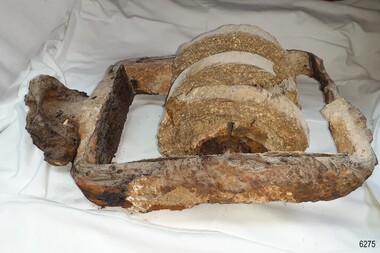
... ...Captain David Wood Thomson...The Court of Marine Inquiry in Melbourne ruled that the foundering of the ship was entirely due to Captain David Wood Thomson's navigational error, not too technical failure of the Clyde-built ship. ...The Court of Marine Inquiry in Melbourne ruled that the foundering of the ship was entirely due to Captain David Wood Thomson's navigational error, not too technical failure of the Clyde-built ship. ...This double-sheaved wooden ship’s block or pulley is a mechanical device used for lifting and moving heavy objects. It has two grooved wheels joined together, each with an axle between the cheeks or sides of the grooved wheel. Blocks and tackle are included in a ship’s rigging. These pulleys and ropes are used for the mechanical advantage they provide for lifting, moving and re-arranging the setting of the sails, which are very heavy work. Blocks are also used to load and unload the ship’s cargo. The FALLS of HALLADALE- The sailing ship Falls of Halladale was an iron-hulled, four-masted barque, used as a bulk carrier of general cargo. She left New York in August 1908 bound for Melbourne and Sydney. In her hold was general cargo consisting of roofing tiles, barbed wire, stoves, oil, and benzene as well as many other manufactured items. After three months at sea and close to her destination, a navigational error caused the Falls of Halladale to be wrecked on a reef off the Peterborough headland on the 15th of November, 1908. The captain and 29 crew members survived, but her cargo was largely lost, despite two salvage attempts in 1908-09 and 1910. The Court of Marine Inquiry in Melbourne ruled that the foundering of the ship was entirely due to Captain David Wood Thomson's navigational error, not too technical failure of the Clyde-built ship. The Falls of Halladale was built in1886 by Russell & Co., at Greenock shipyards on the River Clyde, Scotland for Wright, Breakenridge & Co of Glasgow. The ship had a sturdy construction built to carry maximum cargo and was able to maintain full sail in heavy gales, one of the last of the 'windjammers' that sailed the Trade Route. She and her sister ship, the Falls of Garry, were the first ships in the world to include fore and aft lifting bridges. The new, raised catwalk-type decking allowed the crew to move above the deck in stormy conditions.This artefact is important as it is an example of the materials and design of late-19th century ship’s rigging equipment. The object is also significant for its association with the historic sailing ship Falls of Halladale, wrecked in local waters in the early 20th century. The clipper ship Falls of Halladale shipwreck is of historical significance and is listed on the Victorian Heritage Register, No. S255. She was one of the last ships to sail the Trade Routes. She was one of the first vessels to have fore and aft lifting bridges. The vessel is an example of the remains of an international cargo ship and also represents aspects of Victoria’s shipping industry.Ship's block; a double-sheave wooden block with thick concretion on it. The rope block was recovered from the wreck of the sailing ship, Falls of Halladale.Noneflagstaff hill, maritime museum, maritime village, warrnambool, great ocean road, shipwreck coast, falls of halladale, shipwreck, peterborough, 1908 shipwreck, peterborough shipwreck, russell & co., greenock, wright breakenridge & co. glasgow, clipper ship, machine, mechanical advantage, block, wooden block, pulley, tackle, sheave, ship rigging, double-sheave, twin sheave, captain david wood thomson, iron ship, four-masted ship, sailing ship, windjammer, clyde, wright, breakenridge & co of glasgow, fore and aft lifting bridges -
 Flagstaff Hill Maritime Museum and Village
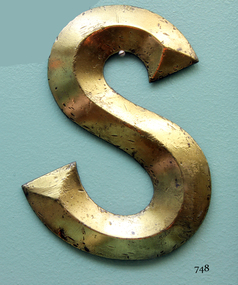
Plaque - Nameplate, Circa 1886
... The Court of Marine Inquiry in Melbourne ruled that the foundering of the ship was entirely due to Captain David Wood Thomson's navigational error, not too technical failure of the Clyde-built ship. ...The Court of Marine Inquiry in Melbourne ruled that the foundering of the ship was entirely due to Captain David Wood Thomson's navigational error, not too technical failure of the Clyde-built ship. ...The Falls of Halladale was an iron-hulled, four-masted barque, used as a bulk carrier of general cargo. She left New York in August 1908 bound for Melbourne and Sydney. In her hold was general cargo consisting of roofing tiles, barb wire, stoves, oil, and benzene as well as many other manufactured items. After three months at sea and close to her destination, a navigational error caused the Falls of Halladale to be wrecked on a reef off the Peterborough headland on the 15th of November, 1908. The captain and 29 crew members survived, but her cargo was largely lost, despite two salvage attempts in 1908-09 and 1910. The Court of Marine Inquiry in Melbourne ruled that the foundering of the ship was entirely due to Captain David Wood Thomson's navigational error, not too technical failure of the Clyde-built ship. The Falls of Halladale was built in1886 by Russell & Co., at Greenock shipyards on the River Clyde, Scotland for Wright, Breakenridge & Co of Glasgow. She was one of several designs of Falls Line of ships named after waterfalls in Scotland. The company had been founded between 1870- 1873 as a partnership between Joseph Russell, Anderson Rodger, and William Todd Lithgow. During the period 1882-92 Russell & Co. standardised designs, which sped up their building process so much that they were able to build 271 ships during that time. The Falls of Halladale had a sturdy construction built to carry maximum cargo and able to maintain full sail in heavy gales, one of the last of the 'windjammers' that sailed the Trade Route. She and her sister ship, the Falls of Garry, were the first ships in the world to include fore and aft lifting bridges. Previous to this, heavily loaded vessels could have heavy seas break along the full length of the deck, causing serious injury or even death to those on deck. The new raised catwalk-type decking allowed the crew to move above the deck in stormy conditions. The Falls of Halladale shipwreck is listed on the Victorian Heritage (No. S255). She was one of the last ships to sail the Trade Routes from Europe and the Americas. Also of significance is that the vessel was one of the first ships to have fore and aft lifting bridges as a significant safety feature still in use on modern vessels today. The subject model is an example of an International Cargo Ship used during the 19th and early 20th centuries to transport goods around the world and representing aspects of Victoria’s shipping industry. Nameplate, large brass letter “S” part of the nameplate, recovered from the starboard bow of the wreck of 'Falls of Halladale'. The letter is raised along central axis to form three dimensional effect, and restored to burnished bronze colour.warrnambool, shipwreck coast, flagstaff hill, flagstaff hill maritime village, flagstaff hill maritime museum, shipwreck artefact, great ocean road, brass lettering, falls of halladale, 1908 shipwreck, ship nameplate, letter s, letter, nameplate -
 Flagstaff Hill Maritime Museum and Village
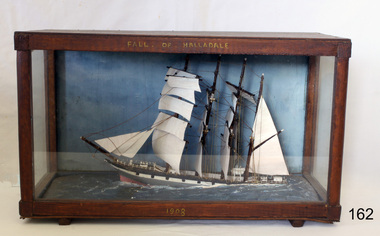
Craft - Ship Model, Falls of Halladale, 1886-1910
... The Court of Marine Inquiry in Melbourne ruled that the foundering of the ship was entirely due to Captain David Wood Thomson's navigational error, not too technical failure of the Clyde-built ship. ...The Court of Marine Inquiry in Melbourne ruled that the foundering of the ship was entirely due to Captain David Wood Thomson's navigational error, not too technical failure of the Clyde-built ship. ...The Falls of Halladale was an iron-hulled, four-masted barque, used as a bulk carrier of general cargo. She left New York in August 1908 bound for Melbourne and Sydney. In her hold was general cargo consisting of roofing tiles, barb wire, stoves, oil, and benzene as well as many other manufactured items. After three months at sea and close to her destination, a navigational error caused the Falls of Halladale to be wrecked on a reef off the Peterborough headland on the 15th of November, 1908. The captain and 29 crew members survived, but her cargo was largely lost, despite two salvage attempts in 1908-09 and 1910. The Court of Marine Inquiry in Melbourne ruled that the foundering of the ship was entirely due to Captain David Wood Thomson's navigational error, not too technical failure of the Clyde-built ship. The Falls of Halladale was built in1886 by Russell & Co., at Greenock shipyards on the River Clyde, Scotland for Wright, Breakenridge & Co of Glasgow. She was one of several designs of Falls Line of ships named after waterfalls in Scotland. The company had been founded between 1870- 1873 as a partnership between Joseph Russell, Anderson Rodger, and William Todd Lithgow. During the period 1882-92 Russell & Co. standardised designs, which sped up their building process so much that they were able to build 271 ships during that time. The Falls of Halladale had a sturdy construction built to carry maximum cargo and able to maintain full sail in heavy gales, one of the last of the 'windjammers' that sailed the Trade Route. She and her sister ship, the Falls of Garry, were the first ships in the world to include fore and aft lifting bridges. Previous to this, heavily loaded vessels could have heavy seas break along the full length of the deck, causing serious injury or even death to those on deck. The new, raised catwalk-type decking allowed the crew to move above the deck in stormy conditions. The Falls of Halladale shipwreck is listed on the Victorian Heritage (No. S255). She was one of the last ships to sail the Trade Routes from Europe and the Americas. Also of significance is that the vessel was one of the first ships to have fore and aft lifting bridges as a significant safety feature still in use on modern vessels today. The subject model is an example of an International Cargo Ship used during the 19th and early 20th centuries to transport goods around the world and representing aspects of Victoria’s shipping industry. Ship mode,l Falls of Halladale, four masted ship diorama. Glass case with wood frame. Paper on back of case with inscription "Frank Davey etc" Case frame has title "Falls of Halladale" and date on base of wood frame is" 1908". It was a four-masted iron-hulled barque.On top of case frame "FALLS OF HALLADALE" and on base of case frame "1908". Paper on back of case has inscription "Frank Davey " (See note section this document for details on Frank Davey)flagstaff hill, warrnambool, shipwrecked coast, flagstaff hill maritime museum, flagstaff hill maritime village, great ocean road, shipwreck peterborough vic, ship model, fall of halladale ship, trade winds, barque, trade vessel, wright, breakenridge & co, ricer clyde -
 Flagstaff Hill Maritime Museum and Village
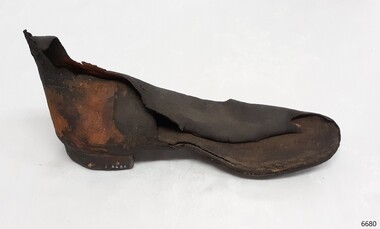
Footwear - Rubber Boot, 1900-1908
... The Court of Marine Inquiry in Melbourne ruled that the foundering of the ship was entirely due to Captain David Wood Thomson's navigational error, not too technical failure of the Clyde-built ship. ...The Court of Marine Inquiry in Melbourne ruled that the foundering of the ship was entirely due to Captain David Wood Thomson's navigational error, not too technical failure of the Clyde-built ship. ...The Falls of Halladale was an iron-hulled, four-masted barque, used as a bulk carrier of general cargo. She left New York in August 1908 bound for Melbourne and Sydney. In her hold was general cargo consisting of roof tiles, barbed wire, stoves, oil, and benzene as well as many other manufactured items. After three months at sea and close to her destination, a navigational error caused the Falls of Halladale to be wrecked on a reef off the Peterborough headland on the 15th of November, 1908. The captain and 29 crew members survived, but her cargo was largely lost, despite two salvage attempts in 1908-09 and 1910. The Court of Marine Inquiry in Melbourne ruled that the foundering of the ship was entirely due to Captain David Wood Thomson's navigational error, not too technical failure of the Clyde-built ship. The Falls of Halladale was built in1886 by Russell & Co., at Greenock shipyards on the River Clyde, Scotland for Wright, Breakenridge & Co of Glasgow. She was one of several designs of the Falls Line of ships named after waterfalls in Scotland. The company had been founded between 1870- 1873 as a partnership between Joseph Russell, Anderson Rodger, and William Todd Lithgow. During the period 1882-92 Russell & Co. standardised designs, which sped up their building process so much that they were able to build 271 ships during that time. The Falls of Halladale had a sturdy construction built to carry maximum cargo and was able to maintain full sail in heavy gales, one of the last of the 'windjammers' that sailed the Trade Route. She and her sister ship, the Falls of Garry, were the first ships in the world to include fore and aft lifting bridges. Previous to this, heavily loaded vessels could have heavy seas break along the full length of the deck, causing serious injury or even death to those on deck. The new raised catwalk-type decking allowed the crew to move above the deck in stormy conditions. This rubber boot is significant for being the only rubber boot in our collection. It is remarkable that it has survived almost seventy years underwater. The Falls of Halladale shipwreck is listed on the Victorian Heritage (No. S255). She was one of the last ships to sail the Trade Routes from Europe and the Americas. Also of significance is that the vessel was one of the first ships to have fore and aft lifting bridges as a significant safety feature still in use on modern vessels today. The subject model is an example of an International Cargo Ship used during the 19th and early 20th centuries to transport goods around the world and represents aspects of Victoria’s shipping industry. Rubber boot, left foot, Boot is ankle height and adult size. The heel appears to be solid rubber and the inner sole resembles leather. The rubber has come away from the outer boot in places, revealing a fabric base. Recovered from the Falls of Halladale. flagstaff hill, warrnambool, flagstaff hill maritime museum and village, shipwreck coast, great ocean road, russell & co., rubber boot, protective footwear, shipwreck artefact -
 Flagstaff Hill Maritime Museum and Village
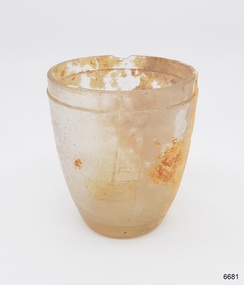
Domestic object - Glass, drinking, 1886-1908
... The Court of Marine Inquiry in Melbourne ruled that the foundering of the ship was entirely due to Captain David Wood Thomson's navigational error, not too technical failure of the Clyde-built ship. ...The Court of Marine Inquiry in Melbourne ruled that the foundering of the ship was entirely due to Captain David Wood Thomson's navigational error, not too technical failure of the Clyde-built ship. ...The Falls of Halladale was an iron-hulled, four-masted barque, used as a bulk carrier of general cargo. She left New York in August 1908 bound for Melbourne and Sydney. In her hold was general cargo consisting of roofing tiles, barb wire, stoves, oil, and benzene as well as many other manufactured items. After three months at sea and close to her destination, a navigational error caused the Falls of Halladale to be wrecked on a reef off the Peterborough headland on the 15th of November, 1908. The captain and 29 crew members survived, but her cargo was largely lost, despite two salvage attempts in 1908-09 and 1910. The Court of Marine Inquiry in Melbourne ruled that the foundering of the ship was entirely due to Captain David Wood Thomson's navigational error, not too technical failure of the Clyde-built ship. The Falls of Halladale was built in1886 by Russell & Co., at Greenock shipyards on the River Clyde, Scotland for Wright, Breckenridge & Co of Glasgow. She was one of several designs of Falls Line of ships named after waterfalls in Scotland. The company had been founded between 1870- 1873 as a partnership between Joseph Russell, Anderson Rodger, and William Todd Lithgow. During the period 1882-92 Russell & Co. standardised designs, which sped up their building process so much that they were able to build 271 ships during that time. The Falls of Halladale had a sturdy construction built to carry maximum cargo and able to maintain full sail in heavy gales, one of the last of the 'windjammers' that sailed the Trade Route. She and her sister ship, the Falls of Garry, were the first ships in the world to include fore and aft lifting bridges. Previous to this, heavily loaded vessels could have heavy seas break along the full length of the deck, causing serious injury or even death to those on deck. The new, raised catwalk-type decking allowed the crew to move above the deck in stormy conditions. The Falls of Halladale shipwreck is listed on the Victorian Heritage (No. S255). She was one of the last ships to sail the Trade Routes from Europe and the Americas. Also of significance is that the vessel was one of the first ships to have fore and aft lifting bridges as a significant safety feature still in use on modern vessels today. The subject model is an example of an International Cargo Ship used during the 19th and early 20th centuries to transport goods around the world and representing aspects of Victoria’s shipping industry. Small drinking glass, rebated around lip with encrustation and a small chip out of the lip. Inscriptions on attached sticker. The handmade glass has been blown into a mould.""F/15" "SS 3/2-74"flagstaff hill, warrnambool, flagstaff-hill, flagstaff-hill-maritime-museum, maritime-museum, shipwreck-coast, flagstaff-hill-maritime-village, falls of halladale, glass, russell & co., wreck, artifact, shot glass, handmade, blown glass, shipwreck artefact -
 Flagstaff Hill Maritime Museum and Village
Functional object - Ship's Wheel Hub, 1886-1908
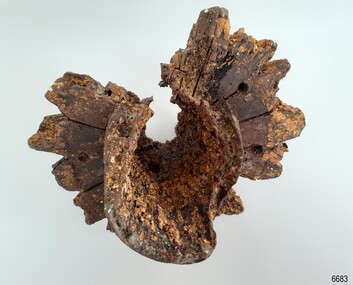
... The Court of Marine Inquiry in Melbourne ruled that the foundering of the ship was entirely due to Captain David Wood Thomson's navigational error, not too technical failure of the Clyde-built ship. ...The Court of Marine Inquiry in Melbourne ruled that the foundering of the ship was entirely due to Captain David Wood Thomson's navigational error, not too technical failure of the Clyde-built ship. ...The Falls of Halladale was an iron-hulled, four-masted barque, used as a bulk carrier of general cargo. She left New York in August 1908 bound for Melbourne and Sydney. In her hold was general cargo consisting of roofing tiles, barb wire, stoves, oil, and benzene as well as many other manufactured items. After three months at sea and close to her destination, a navigational error caused the Falls of Halladale to be wrecked on a reef off the Peterborough headland on the 15th of November, 1908. The captain and 29 crew members survived, but her cargo was largely lost, despite two salvage attempts in 1908-09 and 1910. The Court of Marine Inquiry in Melbourne ruled that the foundering of the ship was entirely due to Captain David Wood Thomson's navigational error, not too technical failure of the Clyde-built ship. The Falls of Halladale was built in1886 by Russell & Co., at Greenock shipyards on the River Clyde, Scotland for Wright, Breakenridge & Co of Glasgow. She was one of several designs of Falls Line of ships named after waterfalls in Scotland. The company had been founded between 1870- 1873 as a partnership between Joseph Russell, Anderson Rodger, and William Todd Lithgow. During the period 1882-92 Russell & Co. standardised designs, which sped up their building process so much that they were able to build 271 ships during that time. The Falls of Halladale had a sturdy construction built to carry maximum cargo and able to maintain full sail in heavy gales, one of the last of the 'windjammers' that sailed the Trade Route. She and her sister ship, the Falls of Garry, were the first ships in the world to include fore and aft lifting bridges. Previous to this, heavily loaded vessels could have heavy seas break along the full length of the deck, causing serious injury or even death to those on deck. The new, raised catwalk-type decking allowed the crew to move above the deck in stormy conditions. The Falls of Halladale shipwreck is listed on the Victorian Heritage (No. S255). She was one of the last ships to sail the Trade Routes from Europe and the Americas. Also of significance is that the vessel was one of the first ships to have fore and aft lifting bridges as a significant safety feature still in use on modern vessels today. The subject model is an example of an International Cargo Ship used during the 19th and early 20th centuries to transport goods around the world and representing aspects of Victoria’s shipping industry. Wagon wheel hub with spoke butts. Holes for hardware fittings are visible. Recovered from the wreck of the Falls of Halladale. Noneflagstaff hill, warrnambool, flagstaff-hill, flagstaff-hill-maritime-museum, shipwreck-coast, flagstaff-hill-maritime-village, wheel hub, falls of halladale, russell & co., wreck artifact, cart wheel, ship's wheel, navigation, ship's wheel hub -
 Flagstaff Hill Maritime Museum and Village
Functional object - Porthole Frame, Russell & Co, Ca. 1886
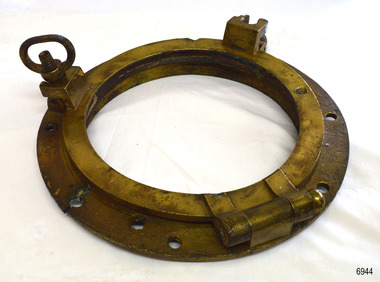
... The Court of Marine Inquiry in Melbourne ruled that the foundering of the ship was entirely due to Captain David Wood Thomson's navigational error, not too technical failure of the Clyde-built ship. ...The Court of Marine Inquiry in Melbourne ruled that the foundering of the ship was entirely due to Captain David Wood Thomson's navigational error, not too technical failure of the Clyde-built ship. ...This restored porthole frame was recovered from the wreck of the Falls of Halladale at Peterborough Victoria. The Falls of Halladale- The ship was an iron-hulled, four-masted barque, used as a bulk carrier of general cargo. She left New York in August 1908 bound for Melbourne and Sydney. In her hold was general cargo consisting of roofing tiles, barbed wire, stoves, oil, benzene, and many other manufactured items. After three months at sea and close to her destination, a navigational error caused the Falls of Halladale to be wrecked on a reef off the Peterborough headland on the 15th of November, 1908. The captain and 29 crew members survived, but her cargo was largely lost, despite two salvage attempts in 1908-09 and 1910. The Court of Marine Inquiry in Melbourne ruled that the foundering of the ship was entirely due to Captain David Wood Thomson's navigational error, not too technical failure of the Clyde-built ship. The Falls of Halladale was built in1886 by Russell & Co., at Greenock shipyards on the River Clyde, Scotland for Wright, Breakenridge & Co of Glasgow. She was one of several designs of the Falls Line of ships named after waterfalls in Scotland. The company was founded between 1870- 1873 as a partnership between Joseph Russell, Anderson Rodger, and William Todd Lithgow. During 1882-92 Russell & Co. standardised designs sped up their building process so much that they could build 271 ships during that time. The Falls of Halladale had a sturdy construction built to carry maximum cargo and was able to maintain full sail in heavy gales, one of the last of the 'windjammers' that sailed the Trade Route. She and her sister ship, the Falls of Garry, were the first ships in the world to include fore and aft lifting bridges. Previously, heavily loaded vessels could have heavy seas break along the full length of the deck, causing serious injury or even death to those on deck. The new, raised catwalk-type decking allowed the crew to move above the deck in stormy conditions. This artefact is important as it is an example of the materials and design of late-19th century ship’s rigging equipment. The object is also significant for its association with the historic sailing ship Falls of Halladale, wrecked in local waters in the early 20th century. The clipper ship Falls of Halladale shipwreck is of historical significance and is listed on the Victorian Heritage Register, No. S255. She was one of the last ships to sail the Trade Routes. She was one of the first vessels to have fore and aft lifting bridges. The vessel is an example of an International Cargo Ship's remains and represents aspects of Victoria’s shipping industry. Porthole frame; cast brass circular frame with several fixing holes, and hinged frame for holding the glass window. The frame has two screw dogs and a solid hinge. The porthole frame has been recondition and the layer of concretion has been removed. The porthole frame was recovered from the wrecked FALLS OF HALLADALE.flagstaff hill, warrnambool, maritime village, maritime museum, shipwreck coast, great ocean road, falls of halladale, shippwreck, shipwreck artefact, porthole, pprthole frame, ship's window, ship construction, shipwreck, peterborough, 1908 shipwreck, peterborough shipwreck, russell & co., greenock, wright breakenridge & co. glasgow, clipper ship -
 Flagstaff Hill Maritime Museum and Village
Functional object - Porthole Frame, Russell & Co, ca. 1886
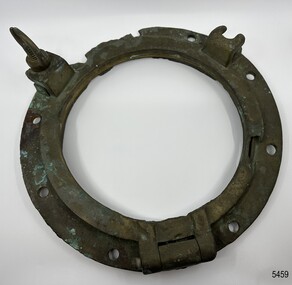
... The Court of Marine Inquiry in Melbourne ruled that the foundering of the ship was entirely due to Captain David Wood Thomson's navigational error, not too technical failure of the Clyde-built ship. ...The Court of Marine Inquiry in Melbourne ruled that the foundering of the ship was entirely due to Captain David Wood Thomson's navigational error, not too technical failure of the Clyde-built ship. ...This brass porthole frame was one of the ship's fittings recovered from the wreck of the sailing ship Falls of Halladale. "Falls of Halladale" (1886 to 1908) The Falls of Halladale was an iron-hulled, four-masted barque, used as a bulk carrier of general cargo. She left New York in August 1908 bound for Melbourne and Sydney. In her hold was general cargo consisting of roofing tiles, barbed wire, stoves, oil, benzene, and many other manufactured items. After three months at sea and close to her destination, a navigational error caused the Falls of Halladale to be wrecked on a reef off the Peterborough headland on the 15th of November, 1908. The captain and 29 crew members survived, but her cargo was largely lost, despite two salvage attempts in 1908-09 and 1910. The Court of Marine Inquiry in Melbourne ruled that the foundering of the ship was entirely due to Captain David Wood Thomson's navigational error, not too technical failure of the Clyde-built ship. The Falls of Halladale was built in1886 by Russell & Co., at Greenock shipyards on the River Clyde, Scotland for Wright, Breakenridge & Co of Glasgow. She was one of several designs of the Falls Line of ships named after waterfalls in Scotland. The company was founded between 1870- 1873 as a partnership between Joseph Russell, Anderson Rodger, and William Todd Lithgow. During 1882-92 Russell & Co. standardised designs sped up their building process so much that they could build 271 ships during that time. The Falls of Halladale had a sturdy construction built to carry maximum cargo and was able to maintain full sail in heavy gales, one of the last of the 'windjammers' that sailed the Trade Route. She and her sister ship, the Falls of Garry, were the first ships in the world to include fore and aft lifting bridges. Previously, heavily loaded vessels could have heavy seas break along the full length of the deck, causing serious injury or even death to those on deck. The new, raised catwalk-type decking allowed the crew to move above the deck in stormy conditions.This artefact is important as it is an example of the materials and design of late-19th century ship’s equipment. The object is also significant for its association with the historic sailing ship Falls of Halladale, wrecked in local waters in the early 20th century. The clipper ship Falls of Halladale shipwreck is of historical significance and is listed on the Victorian Heritage Register, No. S255. She was one of the last ships to sail the Trade Routes. She was one of the first vessels to have fore and aft lifting bridges. The wreck is protected as a Historic Shipwreck under the Commonwealth Historic Shipwrecks Act 1976. The vessel is an example of an International Cargo Ship's remains and represents aspects of Victoria’s shipping industry. Porthole frame and porthole, brass; the glass missing, recovered from the wreck of the Falls of Halladale. One screw dog intact. There are nine bolt holes in the frame. The frame has been restored.flagstaff hill, maritime museum, maritime village, warrnambool, great ocean road, shipwreck coast, falls of halladale, shipwreck, peterborough, 1908 shipwreck, russell & co., greenock, wright breakenridge & co. glasgow, clipper ship, porthole, porthole frame, ship’s fitting, brass porthole, reconditioned porthole -
 Flagstaff Hill Maritime Museum and Village
Functional object - Deadeye, Russell & Co, Circa 1886
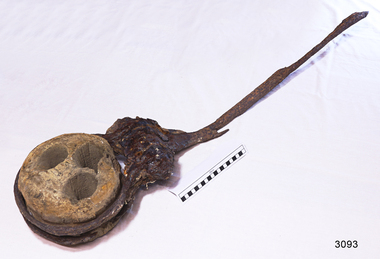
... The Court of Marine Inquiry in Melbourne ruled that the foundering of the ship was entirely due to Captain David Wood Thomson's navigational error, not too technical failure of the Clyde-built ship. ...The Court of Marine Inquiry in Melbourne ruled that the foundering of the ship was entirely due to Captain David Wood Thomson's navigational error, not too technical failure of the Clyde-built ship. ...This deadeye was amongst artefacts recovered from the wreck of the Falls of Halladale. It would have been used on the ship to attach, hold and run ropes for the ship’s rigging. The Falls of Halladale was an iron-hulled, four-masted barque, used as a bulk carrier of general cargo. She left New York in August 1908 bound for Melbourne and Sydney. In her hold was general cargo consisting of roofing tiles, barb wire, stoves, oil, and benzene as well as many other manufactured items. After three months at sea and close to her destination, a navigational error caused the Falls of Halladale to be wrecked on a reef off the Peterborough headland on the 15th of November, 1908. The captain and 29 crew members survived, but her cargo was largely lost, despite two salvage attempts in 1908-09 and 1910. The Court of Marine Inquiry in Melbourne ruled that the foundering of the ship was entirely due to Captain David Wood Thomson's navigational error, not too technical failure of the Clyde-built ship. The Falls of Halladale was built in1886 by Russell & Co., at Greenock shipyards on the River Clyde, Scotland for Wright, Breakenridge & Co of Glasgow. She was one of several designs of Falls Line of ships named after waterfalls in Scotland. The company had been founded between 1870- 1873 as a partnership between Joseph Russell, Anderson Rodger, and William Todd Lithgow. During the period 1882-92 Russell & Co. standardised designs, which sped up their building process so much that they were able to build 271 ships during that time. The Falls of Halladale had a sturdy construction built to carry maximum cargo and was able to maintain full sail in heavy gales, one of the last of the 'windjammers' that sailed the Trade Route. She and her sister ship, the Falls of Garry, were the first ships in the world to include fore and aft lifting bridges. Previous to this, heavily loaded vessels could have heavy seas break along the full length of the deck, causing serious injury or even death to those on deck. The new, raised catwalk-type decking allowed the crew to move above the deck in stormy conditions. The Falls of Halladale shipwreck is listed on the Victorian Heritage (No. S255). She was one of the last ships to sail the Trade Routes from Europe and the Americas. Also of significance is that the vessel was one of the first ships to have fore and aft lifting bridges as a significant safety feature still in use on modern vessels today. The subject item is an example of ships rigging objects used on sailing ships during the 19th and early 20th centuries to transport goods around the world the item is representing aspects of Victoria’s shipping industry and maritime history. Deadeye; wooden deadeye, three (3) holes, with metal surrounds and metal rigging cable attached. Recovered from the Falls of Halladale.Nonewarrnambool, flagstaff-hill, flagstaff-hill-maritime-museum, maritime-museum, shipwreck-coast, flagstaff-hill-maritime-village, shipwrecked-artefact, clipper ship, rigging equipment, sailing equipment, deadeye, falls of halladale wreck, breakenridge & co glasgow, russell & co ship builders, cargo vessel, 1908 wreck, rigging, ship rigging -
 Flagstaff Hill Maritime Museum and Village
Functional object - Cap Liner, ca 1908
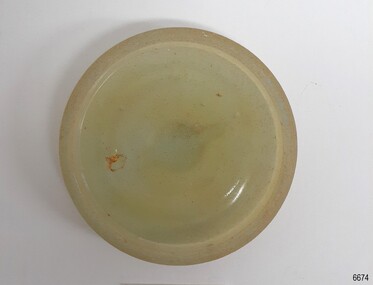
... The Court of Marine Inquiry in Melbourne ruled that the foundering of the ship was entirely due to Captain David Wood Thomson's navigational error, not too technical failure of the Clyde-built ship. ...The Court of Marine Inquiry in Melbourne ruled that the foundering of the ship was entirely due to Captain David Wood Thomson's navigational error, not too technical failure of the Clyde-built ship. ...A cap liner helps to seal the contents in a container to avoid spoiling and leakage. This cap liner was recovered from the Falls of Halladale shipwreck. The Falls of Halladale was an iron-hulled, four-masted barque, used as a bulk carrier of general cargo. She left New York in August 1908 bound for Melbourne and Sydney. In her hold was general cargo consisting of roofing tiles, barbed wire, stoves, oil, and benzene as well as many other manufactured items. After three months at sea and close to her destination, a navigational error caused the Falls of Halladale to be wrecked on a reef off the Peterborough headland on the 15th of November, 1908. The captain and 29 crew members survived, but her cargo was largely lost, despite two salvage attempts in 1908-09 and 1910. The Court of Marine Inquiry in Melbourne ruled that the foundering of the ship was entirely due to Captain David Wood Thomson's navigational error, not too technical failure of the Clyde-built ship. The Falls of Halladale was built in1886 by Russell & Co., at Greenock shipyards on the River Clyde, Scotland for Wright, Breakenridge & Co of Glasgow. She was one of several designs of the Falls Line of ships named after waterfalls in Scotland. The company had been founded between 1870- 1873 as a partnership between Joseph Russell, Anderson Rodger, and William Todd Lithgow. During the period 1882-92 Russell & Co. standardised designs, which sped up their building process so much that they were able to build 271 ships during that time. The Falls of Halladale had a sturdy construction built to carry maximum cargo and was able to maintain full sail in heavy gales, one of the last of the 'windjammers' that sailed the Trade Route. She and her sister ship, the Falls of Garry, were the first ships in the world to include fore and aft lifting bridges. Previous to this, heavily loaded vessels could have heavy seas break along the full length of the deck, causing serious injury or even death to those on deck. The new raised catwalk-type decking allowed the crew to move above the deck in stormy conditions. The Falls of Halladale shipwreck is listed on the Victorian Heritage (No. S255). She was one of the last ships to sail the Trade Routes from Europe and the Americas. Also of significance is that the vessel was one of the first ships to have fore and aft lifting bridges as a significant safety feature still in use on modern vessels today. The subject model is an example of an International Cargo Ship used during the 19th and early 20th centuries to transport goods around the world and representing aspects of Victoria’s shipping industry. Glass cap liner, moulded disc with indented ring on the underside and a grip on top. Encrustation on surface. Glass has imperfection's and surface has a small amount of encrustations. Recovered from Falls of Halladale wreck. flagstaff hill, warrnambool, flagstaff-hill, flagstaff-hill-maritime-museum, maritime-museum, shipwreck-coast, flagstaff-hill-maritime-village, cap liner, russell & co., falls of halladale, ship wreck, glass liner, glass seal
