
Showing 4 items matching "desperate days"
-
 Moorabbin Air Museum
Book - Curtis P40 Kittyhawk, P-40 Hawks at War
... ...The desperate days :Pearl Harbour/Phillipines/Aleutians...Curtis P-40 Kittyhawk Hawk family tree The desperate days :Pearl Harbour/Phillipines/Aleutians The desperate days : battle of France/early desert war Operation Torch & Italy The China-Burma-India theatre Aussies/Kiwis & Kittyhawks US P-40s in the Pacific Overview of Curtis P40 Kittyhawk at war, circa1970 Possible duplicate item P-40 Hawks at War Book Curtis P40 Kittyhawk ...Overview of Curtis P40 Kittyhawk at war, circa1970Possible duplicate itemnon-fictionOverview of Curtis P40 Kittyhawk at war, circa1970hawk family tree, the desperate days :pearl harbour/phillipines/aleutians, the desperate days : battle of france/early desert war, operation torch & italy, the china-burma-india theatre, aussies/kiwis & kittyhawks, us p-40s in the pacific -
Moorabbin Air Museum
Book - Curtis P40 Kittyhawk, THE P-40 Kittyhawk in Service
... ...Desperate days...Curtis P-40 Kittyhawk P-40S in the desert Second best fighter Desperate days Fighter-bomber Colour plates Historical overview of Curtis P-40 Kittyhawk in service, circa 1974 Possible duplicate item THE P-40 Kittyhawk in Service Book Curtis P40 Kittyhawk ...Historical overview of Curtis P-40 Kittyhawk in service, circa 1974Possible duplicate itemnon-fictionHistorical overview of Curtis P-40 Kittyhawk in service, circa 1974p-40s in the desert, second best fighter, desperate days, fighter-bomber, colour plates -
 Returned Nurses RSL Sub-branch
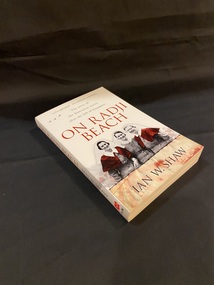
Book - Paperback book, Ian W. Shaw, On Radji Beach: the story of the Australian nurses after the fall of Singapore, 2012
... On 12 February 1942, Singapore was just days away from its fall to the Japanese. As the city burned, hundreds of desperate people scrambled to the docks to flee. ...When Singapore fell dramatically to the Japanese on 15 February 1942, hundreds of people scrambled to leave. Amongst the evacuees were 65 Australian nurses. They boarded a coastal freighter named the Vyner Brooke, which was sunk by the Japanese. Miraculously, there was one survivor, Vivian Bullwinkel who, in spite of a bullet wound, endured 13 days in the jungle before surrendering to another Japanese patrol. On 12 February 1942, Singapore was just days away from its fall to the Japanese. As the city burned, hundreds of desperate people scrambled to the docks to flee. Amongst them were 65 Australian Army nurses, who boarded a coastal freighter, the Vyner Brooke. But theirs was a doomed voyage. Japanese bombers attacked and sank the vessel off Sumatra. Those who survived drifted for up to three days before making landfall on one of the many beaches on Banka Island. A group of survivors, including 22 nurses, gathered at Radji Beach. They voted to surrender, but the Japanese patrol that found them divided them into three groups and the executions began. In the last group were the Australian nurses, who died in a hail of bullets as they walked, abreast, into the sea. Miraculously, there was one survivor, Vivian Bullwinkel, who in spite of a bullet wound endured 13 days in the jungle before surrendering to another Japanese patrol. She was reunited with the other surviving Vyner Brooke nurses in a makeshift camp on the island. Three-and-a-half years later, only 24 made it home. Meticulously researched from the diaries and papers of some of the nurses who survived, this is a moving account of the fate of every nurse who boarded the Vyner Brooke that day. [From Trove]Paperback book with a white cover and the title printed in red. The cover shows three Australian nurses standing together.non-fictionWhen Singapore fell dramatically to the Japanese on 15 February 1942, hundreds of people scrambled to leave. Amongst the evacuees were 65 Australian nurses. They boarded a coastal freighter named the Vyner Brooke, which was sunk by the Japanese. Miraculously, there was one survivor, Vivian Bullwinkel who, in spite of a bullet wound, endured 13 days in the jungle before surrendering to another Japanese patrol. On 12 February 1942, Singapore was just days away from its fall to the Japanese. As the city burned, hundreds of desperate people scrambled to the docks to flee. Amongst them were 65 Australian Army nurses, who boarded a coastal freighter, the Vyner Brooke. But theirs was a doomed voyage. Japanese bombers attacked and sank the vessel off Sumatra. Those who survived drifted for up to three days before making landfall on one of the many beaches on Banka Island. A group of survivors, including 22 nurses, gathered at Radji Beach. They voted to surrender, but the Japanese patrol that found them divided them into three groups and the executions began. In the last group were the Australian nurses, who died in a hail of bullets as they walked, abreast, into the sea. Miraculously, there was one survivor, Vivian Bullwinkel, who in spite of a bullet wound endured 13 days in the jungle before surrendering to another Japanese patrol. She was reunited with the other surviving Vyner Brooke nurses in a makeshift camp on the island. Three-and-a-half years later, only 24 made it home. Meticulously researched from the diaries and papers of some of the nurses who survived, this is a moving account of the fate of every nurse who boarded the Vyner Brooke that day. [From Trove]australian nurses, singapore, prisoners of war, world war two, wwii, world war 2, vivian bullwinkel -
 Returned Nurses RSL Sub-branch
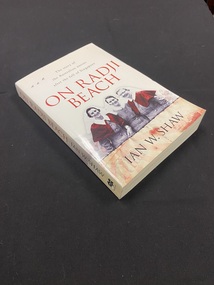
Book - Paperback book, Ian W. Shaw, On Radji Beach: the story of the Australian nurses after the fall of Singapore, 2012
... On 12 February 1942, Singapore was just days away from its fall to the Japanese. As the city burned, hundreds of desperate people scrambled to the docks to flee. ...When Singapore fell dramatically to the Japanese on 15 February 1942, hundreds of people scrambled to leave. Amongst the evacuees were 65 Australian nurses. They boarded a coastal freighter named the Vyner Brooke, which was sunk by the Japanese. Miraculously, there was one survivor, Vivian Bullwinkel who, in spite of a bullet wound, endured 13 days in the jungle before surrendering to another Japanese patrol. On 12 February 1942, Singapore was just days away from its fall to the Japanese. As the city burned, hundreds of desperate people scrambled to the docks to flee. Amongst them were 65 Australian Army nurses, who boarded a coastal freighter, the Vyner Brooke. But theirs was a doomed voyage. Japanese bombers attacked and sank the vessel off Sumatra. Those who survived drifted for up to three days before making landfall on one of the many beaches on Banka Island. A group of survivors, including 22 nurses, gathered at Radji Beach. They voted to surrender, but the Japanese patrol that found them divided them into three groups and the executions began. In the last group were the Australian nurses, who died in a hail of bullets as they walked, abreast, into the sea. Miraculously, there was one survivor, Vivian Bullwinkel, who in spite of a bullet wound endured 13 days in the jungle before surrendering to another Japanese patrol. She was reunited with the other surviving Vyner Brooke nurses in a makeshift camp on the island. Three-and-a-half years later, only 24 made it home. Meticulously researched from the diaries and papers of some of the nurses who survived, this is a moving account of the fate of every nurse who boarded the Vyner Brooke that day. [From Trove]Paperback book with a white cover and the title printed in red. The cover shows three Australian nurses standing together.non-fictionWhen Singapore fell dramatically to the Japanese on 15 February 1942, hundreds of people scrambled to leave. Amongst the evacuees were 65 Australian nurses. They boarded a coastal freighter named the Vyner Brooke, which was sunk by the Japanese. Miraculously, there was one survivor, Vivian Bullwinkel who, in spite of a bullet wound, endured 13 days in the jungle before surrendering to another Japanese patrol. On 12 February 1942, Singapore was just days away from its fall to the Japanese. As the city burned, hundreds of desperate people scrambled to the docks to flee. Amongst them were 65 Australian Army nurses, who boarded a coastal freighter, the Vyner Brooke. But theirs was a doomed voyage. Japanese bombers attacked and sank the vessel off Sumatra. Those who survived drifted for up to three days before making landfall on one of the many beaches on Banka Island. A group of survivors, including 22 nurses, gathered at Radji Beach. They voted to surrender, but the Japanese patrol that found them divided them into three groups and the executions began. In the last group were the Australian nurses, who died in a hail of bullets as they walked, abreast, into the sea. Miraculously, there was one survivor, Vivian Bullwinkel, who in spite of a bullet wound endured 13 days in the jungle before surrendering to another Japanese patrol. She was reunited with the other surviving Vyner Brooke nurses in a makeshift camp on the island. Three-and-a-half years later, only 24 made it home. Meticulously researched from the diaries and papers of some of the nurses who survived, this is a moving account of the fate of every nurse who boarded the Vyner Brooke that day. [From Trove]australian nurses, singapore, prisoners of war, world war two, wwii, world war 2, vivian bullwinkel
