
Showing 15 items matching "devine family"
-
 Numurkah & District Historical Society
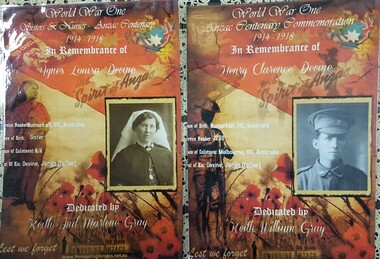
Devine family booklet & photos
... Devine family booklet & photos...Devine Family, WW1, photos, booklet, war history...Devine Family, WW1, photos, booklet, war history 1 x framed photo Agnes Devine 1 x framed photo Henry Devine 1 x booklet Agnes Devine 1 x booklet Henry Devine Devine family booklet & photos ...1 x framed photo Agnes Devine 1 x framed photo Henry Devine 1 x booklet Agnes Devine 1 x booklet Henry Devinedevine family, ww1, photos, booklet, war history -
 Mt Dandenong & District Historical Society Inc.
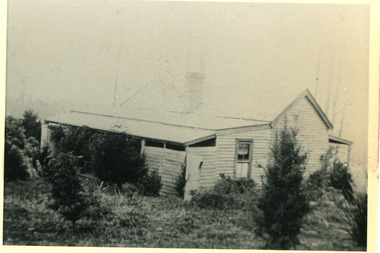
Photograph, c1911
... ...Devine Family...The home of the Devine Family. c1911 The descriptive text on the reverse of this photograph was hand written by John Lundy-Clarke....The home of the Devine family. The early settlement road passed to the left of the camera. ...Hillcrest Devine Devine Family Mernda road “Hillcrest” Mernda Road Olinda 1911. ..."Hillcrest" on Mernda Road, Olinda. The home of the Devine Family. c1911 The descriptive text on the reverse of this photograph was hand written by John Lundy-Clarke.“Hillcrest” Mernda Road Olinda 1911. The home of the Devine family. The early settlement road passed to the left of the camera. House faced down over the valley of the Sassafras + Perrin Creek towards Kallista. The deviation to regrade the road passed to the right of the house. It was in front of the house on the left hand side of the picture that Vera Devine and her school mates practiced the maypole dance under her tuition. hillcrest, devine, devine family, mernda road -
 Mt Dandenong & District Historical Society Inc.
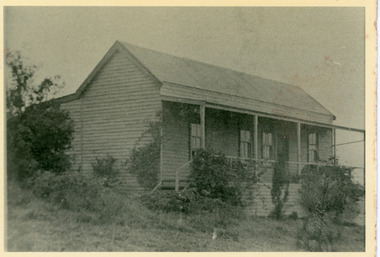
Photograph, 'Hillcrest' on Mernda Road, Olinda 1911, 1911
... ...Devine Family...Front view of 'Hillcrest' the Devine family home on Mernda Road, Olinda taken in 1911. ...“Hillcrest” the home of the Devine family 1911 in Mernda Road now Coonara Road. ...hillcrest mernda road olinda vera devine Devine Family “Hillcrest” the home of the Devine family 1911 in Mernda Road now Coonara Road. ...Front view of 'Hillcrest' the Devine family home on Mernda Road, Olinda taken in 1911. The road deviation passed to the right of where the photographer was standing. The descriptive text on the reverse of this photograph was hand written by John Lundy-Clarke.“Hillcrest” the home of the Devine family 1911 in Mernda Road now Coonara Road. The road was deviated here to regrade it and the deviation past to the right of the camera. The house fronted down over the valley of the Sassafras Creek towards Kallista. It was close to the spot where the camera stood that the girls practiced the maypole dance in 1911. Vera Devine trained 11 of her mates in the dance here.hillcrest, mernda road, olinda, vera devine, devine family -
 Mt Dandenong & District Historical Society Inc.
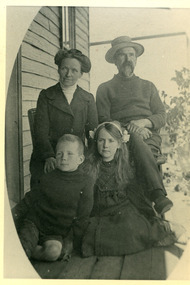
Photograph, Devine family, Olinda, 1911
... Devine family, Olinda...The descriptive text on the reverse of this photograph was hand written by John Lundy-Clarke. Devine family, Olinda Photograph ...Mr Devine, Mrs Devine (nee Stewart) with children Vera and Stewart at their home 'Hillcrest' on Mernda Road (now Coonara road), Olinda 1911. The descriptive text on the reverse of this photograph was hand written by John Lundy-Clarke.Devine, Mrs Devine (nee Stewart) Vera Stewart 1911 on verandah of “Hillcrest” Mernda Road now Coonara Road. Mrs Dodd’s collection. Copied by J.L.C. 1974. vera devine, stewart devine, hillcrest, mernda road, coonara road, olinda, devine -
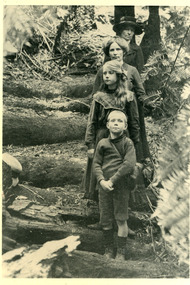 Mt Dandenong & District Historical Society Inc.
Photograph, Miss Stewart With Sister Mrs Devine and Family, 1911
... Miss Stewart With Sister Mrs Devine and Family...Photograph taken in LyreBird Gully of Miss Stewart (top) and her sister Mrs Devine with the Devine children Vera and Stewart. 1911 Miss Stewart With Sister Mrs Devine and Family Photograph ...Photograph taken in LyreBird Gully of Miss Stewart (top) and her sister Mrs Devine with the Devine children Vera and Stewart. 19111911 From top Miss Stewart and her sister Mrs Devine Vera (Mrs Alan Dodd) Stewart. In Lyrebird Gully Mrs Dodd’s collection. Copied by J.L.C. 1974. miss stewart, mrs devine, vera devine, stewart devine, olinda, lyrebird gully -
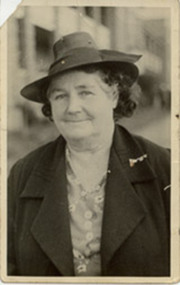 Port Melbourne Historical & Preservation Society
Photograph - Mary Devine
... DEVINE Family...They had two children John Bruce aka 'Tilly' (b 1902) and Margaret Philomena aka 'Mag' (b 1899). DEVINE Family Mary Ellen DEVINE nee LARKIN Digital copy of a B&W photograph of Mary Ellen DEVINE. ...William DEVINE married Mary Ellen LARKIN in West Hartlepool, Co. Durham, England. They had two children John Bruce aka 'Tilly' (b 1902) and Margaret Philomena aka 'Mag' (b 1899).Digital copy of a B&W photograph of Mary Ellen DEVINE.devine family, mary ellen devine nee larkin -
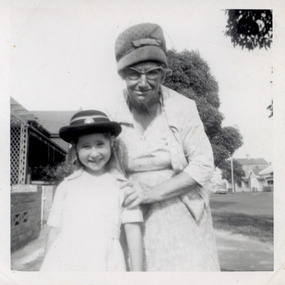 Port Melbourne Historical & Preservation Society
Photograph - Liana Thompson with Auntie Mag, 1970s
... ...DEVINE Family...Margaret Philomena DEVINE Liana THOMPSON DEVINE Family Digital copy of a B&W photograph of Liana THOMPSON (then known as Liana BATES) with Auntie Mag, Margaret Philomena DEVINE. ...Fay DEVINE married Victor Patrick SHAW, 30 Mar 1963. They had a daughter, Liana. Victor died tragically in 1967. Fay married Arthur George BATES on 1 Nov 1968. Liana married David THOMPSON on 9 Apr 1989. Auntie Mag, Margaret Philomena DEVINE was actually Fay's aunt, John Bruce DEVINE's sister.Digital copy of a B&W photograph of Liana THOMPSON (then known as Liana BATES) with Auntie Mag, Margaret Philomena DEVINE.margaret philomena devine, liana thompson, devine family -
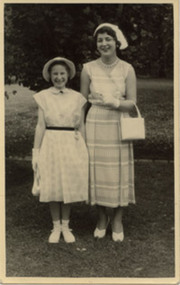 Port Melbourne Historical & Preservation Society
Photograph - Fay and Maureen Devine, 1950s
... ...DEVINE Family...Fay BATES nee DEVINE Maureen DEVINE DEVINE Family Digital copy of a colour photograph of Fay and Maureen DEVINE. ...Fay DEVINE married Victor Patrick SHAW, 30 Mar 1963. They had a daughter, Liana. Victor died tragically in 1967. Fay married Arthur George BATES on 1 Nov 1968.Digital copy of a colour photograph of Fay and Maureen DEVINE.fay bates nee devine, maureen devine, devine family -
 Port Melbourne Historical & Preservation Society
Photograph - Liana Thompson with Fay Bates
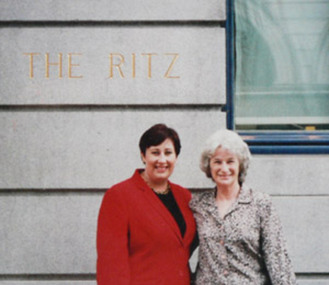
... ...DEVINE Family...Liana THOMPSON Fay BATES nee DEVINE DEVINE Family Digital copy of a colour photograph of Liana THOMPSON with her mother Fay BATES outside The Ritz in London. ...Fay DEVINE married Victor Patrick SHAW, 30 Mar 1963. They had a daughter, Liana. Victor died tragically in 1967. Fay married Arthur George BATES on 1 Nov 1968. Liana married David THOMPSON on 9 Apr 1989.Digital copy of a colour photograph of Liana THOMPSON with her mother Fay BATES outside The Ritz in London.liana thompson, fay bates nee devine, devine family -
 Port Melbourne Historical & Preservation Society
Photograph - Tilly and Ivy Devine, 1938
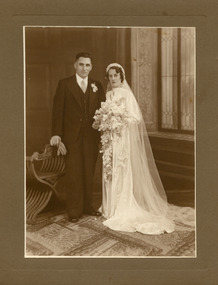
... DEVINE Family...John Bruce 'Tilly' DEVINE married Ivy Mabel HUXFORD at St Joseph's Catholic Church in 1938. DEVINE Family John Bruce 'Tilly' DEVINE Ivy Mabel DEVINE nee HUXFORD Religion - Roman Catholic Church (St Josephs) Digital copy of a B&W photograph of John Bruce 'Tilly' and Ivy DEVINE. ...John Bruce 'Tilly' DEVINE married Ivy Mabel HUXFORD at St Joseph's Catholic Church in 1938.Digital copy of a B&W photograph of John Bruce 'Tilly' and Ivy DEVINE.devine family, john bruce 'tilly' devine, ivy mabel devine nee huxford, religion - roman catholic church (st josephs) -
 Port Melbourne Historical & Preservation Society
Photograph - William Devine at Wharfies' Picnic
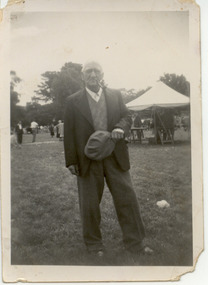
... DEVINE Family...They had two children John Bruce aka 'Tilly' (b 1902) and Margaret Philomena aka 'Mag' (b 1899). DEVINE Family William DEVINE Piers and Wharves - Waterside Workers Digital copy of a B&W photograph of William DEVINE at the Wharfies' picnic c1950s. ...William DEVINE married Mary Ellen LARKIN in West Hartlepool, Co. Durham, England. They had two children John Bruce aka 'Tilly' (b 1902) and Margaret Philomena aka 'Mag' (b 1899).Digital copy of a B&W photograph of William DEVINE at the Wharfies' picnic c1950s.devine family, william devine, piers and wharves - waterside workers -
 Port Melbourne Historical & Preservation Society
Photograph - William Devine with baby Margaret
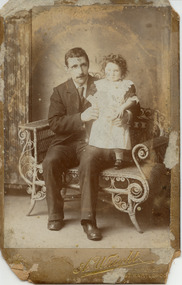
... DEVINE Family...They had two children John Bruce aka 'Tilly' (b 1902) and Margaret Philomena aka 'Mag' (b 1899). DEVINE Family William DEVINE Margaret Philomena DEVINE Digital copy of a B&W photograph of William DEVINE with baby Margaret. ...William DEVINE married Mary Ellen LARKIN in West Hartlepool, Co. Durham, England. They had two children John Bruce aka 'Tilly' (b 1902) and Margaret Philomena aka 'Mag' (b 1899).Digital copy of a B&W photograph of William DEVINE with baby Margaret.devine family, william devine, margaret philomena devine -
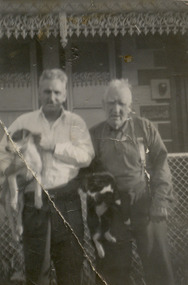 Port Melbourne Historical & Preservation Society
Photograph - Tilly and William Devine
... DEVINE Family...DEVINE Family John Bruce 'Tilly' DEVINE William DEVINE Digital copy of a B&W photograph of John Bruce 'Tilly' and his father William DEVINE probably outside 488 Williamstown Road. ...Digital copy of a B&W photograph of John Bruce 'Tilly' and his father William DEVINE probably outside 488 Williamstown Road.devine family, john bruce 'tilly' devine, william devine -
 Flagstaff Hill Maritime Museum and Village
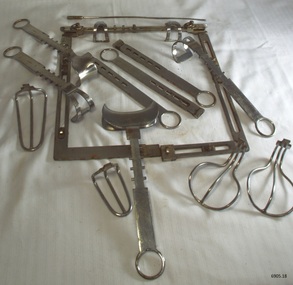
Surgical Kit, c. 1920's
... Devine writes instructions for inserting the Operating Frame in his book “The Surgery of the Alimentary Tract”. He says “ … the author’s operating frame is inserted into the wound … for exposure of the stomach … and exploration of the abdomen” and adds a note that the frame is “obtainable from J. Ludbrooke & Son, Melbourne, Victoria, Australia”. He accompanies his text with a diagram of the frame set into the wound. This surgical kit was donated to Flagstaff Hill Maritime Village by the family...Devine writes instructions for inserting the Operating Frame in his book “The Surgery of the Alimentary Tract”. He says “ … the author’s operating frame is inserted into the wound … for exposure of the stomach … and exploration of the abdomen” and adds a note that the frame is “obtainable from J. Ludbrooke & Son, Melbourne, Victoria, Australia”. He accompanies his text with a diagram of the frame set into the wound. This surgical kit was donated to Flagstaff Hill Maritime Village by the family ...This H.B Devin’s operating frame and abdominal retractor kit is named after its designer, Sir Hugh Berchmans Devine, 1878-1959, son of a Werribee district grazier in Victoria, Australia, surgeon at the Royal Melbourne Hospital. A text book diagram of H.B. Devine’s Abdominal Retractor shows the frame and retractors set up for a pelvic operation. The accompanying text reads “Devine’s retractor is so designed that there are no screws, yet the retractors and “mechanical hands” by a jamming action remain firmly on the frame in whatever position they are placed. This is accomplished by a system of inclined planes incorporated in the frame and in the single and double hooks, retractor blades and handles of the “mechanical hands”. Set comprises 3 “mechanical hands” 5 retractor blades. (Pg 72, The 1948 Catalogue of Surgical Instruments, published by Felton, Grimwade & Duerdins Pty Ltd of Melbourne). Devine became a general surgeon who later gained an international reputation for his for his contribution in the advancement of abdominal surgery. Devine was educated in Ballarat and later became an Honourable Fellow of the Royal College of Surgeons. During his career he became Senior Surgeon and Dean of the Medical School at St Vincent’s Hospital in Melbourne. He served in the Australian Army Medical Corps in WWI and developed techniques in gastro-intestinal surgery. He was instrumental in the foundation of the Australasian College of Surgeons in 1927, retiring from the council in 1948. A survey on needs for operating room equipment notes that “In the past some surgeons associated themselves with particular instrument makers… The Melbourne surgeon [Hugh Devine] had his special abdominal retractor made by a small firm in South Yarra…” Hugh Devine writes instructions for inserting the Operating Frame in his book “The Surgery of the Alimentary Tract”. He says “ … the author’s operating frame is inserted into the wound … for exposure of the stomach … and exploration of the abdomen” and adds a note that the frame is “obtainable from J. Ludbrooke & Son, Melbourne, Victoria, Australia”. He accompanies his text with a diagram of the frame set into the wound. This surgical kit was donated to Flagstaff Hill Maritime Village by the family of Doctor William Roy Angus, Surgeon and Oculist. It is part of the “W.R. Angus Collection” that includes historical medical equipment, surgical instruments and material once belonging to Dr Edward Ryan and Dr Thomas Francis Ryan, (both of Nhill, Victoria) as well as Dr Angus’ own belongings. The Collection’s history spans the medical practices of the two Doctors Ryan, from 1885-1926 plus that of Dr Angus, up until 1969. ABOUT THE “W.R.ANGUS COLLECTION” Doctor William Roy Angus M.B., B.S., Adel., 1923, F.R.C.S. Edin.,1928 (also known as Dr Roy Angus) was born in Murrumbeena, Victoria in 1901 and lived until 1970. He qualified as a doctor in 1923 at University of Adelaide, was Resident Medical Officer at the Royal Adelaide Hospital in 1924 and for a period was house surgeon to Sir (then Mr.) Henry Simpson Newland. Dr Angus was briefly an Assistant to Dr Riddell of Kapunda, then commenced private practice at Curramulka, Yorke Peninsula, SA, where he was physician, surgeon and chemist. In 1926, he was appointed as new Medical Assistant to Dr Thomas Francis Ryan (T.F. Ryan, or Tom), in Nhill, Victoria, where his experiences included radiology and pharmacy. In 1927 he was Acting House Surgeon in Dr Tom Ryan’s absence. Dr Angus had become engaged to Gladys Forsyth and they decided he further his studies overseas in the UK in 1927. He studied at London University College Hospital and at Edinburgh Royal Infirmary and in 1928, was awarded FRCS (Fellow from the Royal College of Surgeons), Edinburgh. He worked his passage back to Australia as a Ship’s Surgeon on the on the Australian Commonwealth Line’s T.S.S. Largs Bay. Dr Angus married Gladys in 1929, in Ballarat. (They went on to have one son (Graham 1932, born in SA) and two daughters (Helen (died 12/07/1996) and Berenice (Berry), both born at Mira, Nhill ) According to Berry, her mother Gladys made a lot of their clothes. She was very talented and did some lovely embroidery including lingerie for her trousseau and beautifully handmade baby clothes. Dr Angus was a ‘flying doctor’ for the A.I.M. (Australian Inland Ministry) Aerial Medical Service in 1928 . Its first station was in the remote town of Oodnadatta, where Dr Angus was stationed. He was locum tenens there on North-South Railway at 21 Mile Camp. He took up this ‘flying doctor’ position in response to a call from Dr John Flynn; the organisation was later known as the Flying Doctor Service, then the Royal Flying Doctor Service. A lot of his work during this time involved dental surgery also. Between 1928-1932 he was surgeon at the Curramulka Hospital, Yorke Peninsula, South Australia. In 1933 Dr Angus returned to Nhill and purchased a share of the Nelson Street practice and Mira hospital (a 2 bed ward at the Nelson Street Practice) from Dr Les Middleton one of the Middleton Brothers, the current owners of what previously once Dr Tom Ryan’s practice. Dr Tom and his brother had worked as surgeons included eye surgery. Dr Tom Ryan performed many of his operations in the Mira private hospital on his premises. He had been House Surgeon at the Nhill Hospital 1902-1926. Dr Tom Ryan had one of the only two pieces of radiology equipment in Victoria during his practicing years – The Royal Melbourne Hospital had the other one. Over the years Dr Tom Ryan had gradually set up what was effectively a training school for country general-practitioner-surgeons. Each patient was carefully examined, including using the X-ray machine, and any surgery was discussed and planned with Dr Ryan’s assistants several days in advance. Dr Angus gained experience in using the X-ray machine there during his time as assistant to Dr Ryan. When Dr Angus bought into the Nelson Street premises in Nhill he was also appointed as the Nhill Hospital’s Honorary House Surgeon 1933-1938. His practitioner’s plate from his Nhill surgery is now mounted on the doorway to the Port Medical Office at Flagstaff Hill Maritime Village, Warrnambool. When Dr Angus took up practice in the Dr Edward and Dr Tom Ryan’s old premises he obtained their extensive collection of historical medical equipment and materials spanning 1884-1926. A large part of this collection is now on display at the Port Medical Office at Flagstaff Hill Maritime Village in Warrnambool. In 1939 Dr Angus and his family moved to Warrnambool where he purchased “Birchwood,” the 1852 home and medical practice of Dr John Hunter Henderson, at 214 Koroit Street. (This property was sold in1965 to the State Government and is now the site of the Warrnambool Police Station. and an ALDI sore is on the land that was once their tennis court). The Angus family was able to afford gardeners, cooks and maids; their home was a popular place for visiting dignitaries to stay whilst visiting Warrnambool. Dr Angus had his own silk worm farm at home in a Mulberry tree. His young daughter used his centrifuge for spinning the silk. Dr Angus was appointed on a part-time basis as Port Medical Officer (Health Officer) in Warrnambool and held this position until the 1940’s when the government no longer required the service of a Port Medical Officer in Warrnambool; he was thus Warrnambool’s last serving Port Medical Officer. (Masters of immigrant ships arriving in port reported incidents of diseases, illness and death and the Port Medical Officer made a decision on whether the ship required Quarantine and for how long, in this way preventing contagious illness from spreading from new immigrants to the residents already in the colony.) Dr Angus was a member of the Australian Medical Association, for 35 years and surgeon at the Warrnambool Base Hospital 1939-1942, He served with the Australian Department of Defence as a Surgeon Captain during WWII 1942-45, in Ballarat, Victoria, and in Bonegilla, N.S.W., completing his service just before the end of the war due to suffering from a heart attack. During his convalescence he carved an intricate and ‘most artistic’ chess set from the material that dentures were made from. He then studied ophthalmology at the Royal Melbourne Eye and Ear Hospital and created cosmetically superior artificial eyes by pioneering using the intrascleral cartilage. Angus received accolades from the Ophthalmological Society of Australasia for this work. He returned to Warrnambool to commence practice as an ophthalmologist, pioneering in artificial eye improvements. He was Honorary Consultant Ophthalmologist to Warrnambool Base Hospital for 31 years. He made monthly visits to Portland as a visiting surgeon, to perform eye surgery. He represented the Victorian South-West subdivision of the Australian Medical Association as its secretary between 1949 and 1956 and as chairman from 1956 to 1958. In 1968 Dr Angus was elected member of Spain’s Barraquer Institute of Barcelona after his research work in Intrasclearal cartilage grafting, becoming one of the few Australian ophthalmologists to receive this honour, and in the following year presented his final paper on Living Intrasclearal Cartilage Implants at the Inaugural Meeting of the Australian College of Ophthalmologists in Melbourne In his personal life Dr Angus was a Presbyterian and treated Sunday as a Sabbath, a day of rest. He would visit 3 or 4 country patients on a Sunday, taking his children along ‘for the ride’ and to visit with him. Sunday evenings he would play the pianola and sing Scottish songs to his family. One of Dr Angus’ patients was Margaret MacKenzie, author of a book on local shipwrecks that she’d seen as an eye witness from the late 1880’s in Peterborough, Victoria. In the early 1950’s Dr Angus, painted a picture of a shipwreck for the cover jacket of Margaret’s book, Shipwrecks and More Shipwrecks. She was blind in later life and her daughter wrote the actual book for her. Dr Angus and his wife Gladys were very involved in Warrnambool’s society with a strong interest in civic affairs. He had an interest in people and the community They were both involved in the creation of Flagstaff Hill, including the layout of the gardens. After his death (28th March 1970) his family requested his practitioner’s plate, medical instruments and some personal belongings be displayed in the Port Medical Office surgery at Flagstaff Hill Maritime Village, and be called the “W. R. Angus Collection”. [References: The 1948 Catalogue of Surgical Instruments; hospital supplies and guide to instruments for operatons, published by Felton, Grimwade & Duerdins Pty Ltd, 21 Alfred Place, Melbourne; Sir Hugh Berchmans Devine, Royal College of Surgeons, http://livesonline.rcseng.ac.uk/biogs/E004999b.htm; Equipment, What Surgeons Want in Operating Rooms, https://mpatkin.org/op_room_planning/what_surgeons_want.htm ]The W.R. Angus Collection is significant for still being located at the site it is connected with, Doctor Angus being the last Port Medical Officer in Warrnambool. The collection of medical instruments and other equipment is culturally significant, being an historical example of medicine, administration, household equipment and clothing from late 19th to mid-20th century. Dr Angus assisted Dr Tom Ryan, a pioneer in the use of X-rays and in ocular surgery. Surgical Kit containing operating frame and abdominal retractors, part of the W.R. Angus Collection. Kit cover is brown kid leather lined with navy cotton, 6 leather pockets inside and cotton flaps to close. Contains Sir Hugh Devine operating frame and abdominal retractors, stainless steel, made by J. Ludbrooke and Sons, Melbourne. Note with instruments "Sir Hugh Devine, surgeon at Royal Melbourne Hospital” c. 1920’sImpressed into instruments “J. LUDBROOKE AND SONS”, “PATENT 12990/28”, “83”, flagstaff hill, warrnambool, shipwrecked coast, flagstaff hill maritime museum, maritime museum, shipwreck coast, flagstaff hill maritime village, great ocean road, dr w r angus, dr ryan, surgical instrument, t.s.s. largs bay, warrnambool base hospital, nhill base hospital, mira hospital, flying doctor, medical treatment, medical history, surgical kit, j. ludbrooke and sons, operating frame, abdominal retractor set, abdominal surgery, alimentary surgery -
 City of Ballarat
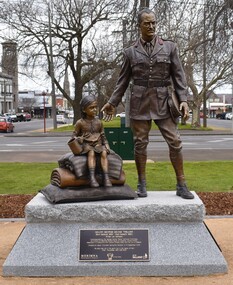
Artwork, other - Public Artwork, George Treloar Memorial by Lis Johnson, 2019
... Devine Treloar the son of Jane and Thomas Treloar, grew up in Ballarat attending St Patrick’s College. Treloar began his military career by joining the British Army during WWI and transferred to the elite Coldstream Guards where his bravery earnt him the Distinguished Service Order and Military Cross. Treloar was appointed as the League of Nations Commissioner for Refugees in Greece in 1922 where he worked tirelessly – with his wife and family...Devine Treloar the son of Jane and Thomas Treloar, grew up in Ballarat attending St Patrick’s College. Treloar began his military career by joining the British Army during WWI and transferred to the elite Coldstream Guards where his bravery earnt him the Distinguished Service Order and Military Cross. Treloar was appointed as the League of Nations Commissioner for Refugees in Greece in 1922 where he worked tirelessly – with his wife and family ...This depiction of Major George Devine Treloar (1884-1980) by artist Lis Johnson was commissioned by the George Devine Treloar Memorial Committee an initiative of Merimna Kynon of Oceania, Central Portian Pontion Association of Melbourne and Victoria Pontiaki Estiaâ and the City of Ballarat. Treloar was appointed as the League of Nations Commissioner for Refugees in Greece in 1922 where he worked to provide food, aid and comfort to what would eventually total over 100,000 refugees from the collapsing Ottoman Empire. This memorial grew from the desire of the descendants of refugees to honour his memory and his humanitarian work. Bronze statue of George Treloar and a child on granite plinthFront: Major George Devine Treloar (Born Ballarat 1884 - Died Dalkeith 1980) Artist: Lis Johnson Commissioned by the George Devine Treloar Memorial Committee an initiative of Merimna Kynon of Oceania, Central Portian Pontion Association of Melbourne and Victoria ‘Pontiaki Estia’ and the City of Ballarat. Unveiled by Ballarat Mayor Councillor Samantha McIntosh on 8 September 2019 His glory lies not in the earth, but in the hearts of men (After Thucydides, 460-395 BCE) Back: Ballarat’s George Devine Treloar – Soldier and Refugee Helper Born in 1884, George Devine Treloar the son of Jane and Thomas Treloar, grew up in Ballarat attending St Patrick’s College. Treloar began his military career by joining the British Army during WWI and transferred to the elite Coldstream Guards where his bravery earnt him the Distinguished Service Order and Military Cross. Treloar was appointed as the League of Nations Commissioner for Refugees in Greece in 1922 where he worked tirelessly – with his wife and family – to provide food, aid and comfort to what would eventually total over 100,000 refugees from the collapsing Ottoman Empire. Based in the town of Komotini and then Thessaloniki, he created new villages to accommodate refugees. For his efforts Treloar would earn the praises of those he had helped. One of the new towns he had helped create was named in his honor – Thrylorion. He was awarded the Greek Gold Cross of the Order of the Redeemer in 1923. This memorial grew from the desire of the descendants of refugees assisted by Major George Devine Treloar in Greece to honor his memory. Without his help their ancestors would not have survived, making their way from across the former Ottoman Empire, from Pontus and Asia Minor to Australia. Here in the town of his birth stands his memorial, dedicated to his memory and good works, created by the people of Ballarat and the descendants of the refugees he saved.treloar, george devine, refugee, asia minor
