
Showing 725 items matching "district views"
-
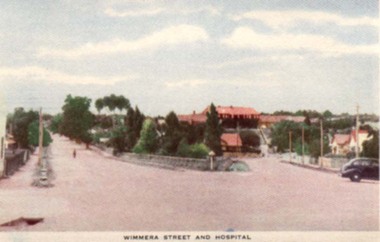 Stawell Historical Society Inc
Postcard, Inside Cover of 12 Stawell and District Views as Souvenir Booklet & the Stawell Hospital -- 2 Photos -- Postcards -- Coloured
... Inside Cover of 12 Stawell and District Views as Souvenir Booklet & the Stawell Hospital -- 2 Photos -- Postcards -- Coloured...Colour photo Stawell Hospital Stawell Inside Cover of 12 Stawell and District Views as Souvenir Booklet & the Stawell Hospital -- 2 Photos -- Postcards -- Coloured Postcard ...Colour photo Stawell Hospitalstawell -
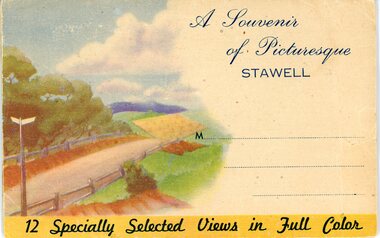 Stawell Historical Society Inc
Postcard, Front Cover of 12 Stawell and District Views as Souvenir Booklet & the Sister Rocks -- 2 Photos -- Postcards-- Coloured
... Front Cover of 12 Stawell and District Views as Souvenir Booklet & the Sister Rocks -- 2 Photos -- Postcards-- Coloured...Sister Rocks 1950's Stawell Front Cover of 12 Stawell and District Views as Souvenir Booklet & the Sister Rocks -- 2 Photos -- Postcards-- Coloured Postcard ...Sister Rocks 1950'sstawell -
 Stawell Historical Society Inc
Postcard, Front Cover of 12 Stawell and District Views as Souvenir Booklet -- Postcard -- Coloured
... Front Cover of 12 Stawell and District Views as Souvenir Booklet -- Postcard -- Coloured...Twelve Stawell and District Souvenir Booklets Stawell Front Cover of 12 Stawell and District Views as Souvenir Booklet -- Postcard -- Coloured Postcard ...Twelve Stawell and District Souvenir Bookletsstawell -
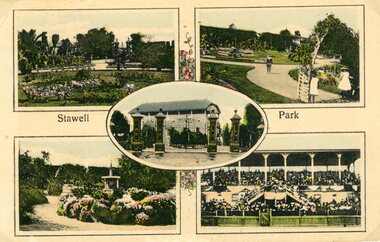 Stawell Historical Society Inc
Photograph, Stawell District Views --3 Photos -- Postcards -- Colourised
... Stawell District Views --3 Photos -- Postcards -- Colourised...Stawell District (3 Coloured Postcards) Stawell Stawell District Views --3 Photos -- Postcards -- Colourised Photograph ...Stawell District (3 Coloured Postcards)stawell -
 Stawell Historical Society Inc
Photograph - Postcard, Stawell District Views 1908
... Stawell District Views 1908...Tourism Empire Post Card Stawell Post Mark May 26 1908 Notes to Minnie from Will Five coloured views of Stawell 1908 Stawell District Views 1908 Photograph Postcard ...Five coloured views of Stawell 1908Empire Post Card Stawell Post Mark May 26 1908 Notes to Minnie from Willtourism -
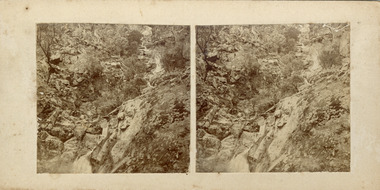 The Beechworth Burke Museum
Photograph - Stereoscopic Photograph, c1900
... ...District Views...Waterfall Indigo Falls Ovens District Natural History stereoscopic District Views Reverse: 97.2197/ Indigo Falls/ Beechworth/ 84-116-1./ A03084/ Indigo Falls are near the start of the Indigo Valley - a short distance from the Indigo Valley Rd. turnoff is Ewarts Rd., on the right of the Beechworth Wodonga Rd., Two sepia-toned square photographs featuring a rocky waterfall and vegetation, mounted. ...This photograph depicts Indigo Falls, situated 20 km northeast of Beechworth, and highlights the picturesque scenery and surrounding vegetation. Known for its scenic beauty, Indigo Falls has drawn visitors from Albury and Wodonga and was a popular spot for the Beechworth Tourist Club in the early 1900s.This photograph is historically significant for showcasing the natural beauty of Indigo Falls and surrounding vegetation.Two sepia-toned square photographs featuring a rocky waterfall and vegetation, mounted.Reverse: 97.2197/ Indigo Falls/ Beechworth/ 84-116-1./ A03084/ Indigo Falls are near the start of the Indigo Valley - a short distance from the Indigo Valley Rd. turnoff is Ewarts Rd., on the right of the Beechworth Wodonga Rd., waterfall, indigo falls, ovens district, natural history, stereoscopic, district views -
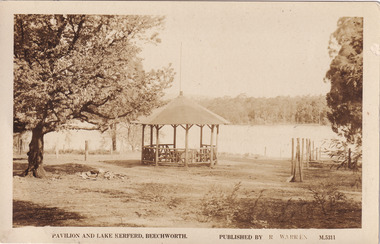 The Beechworth Burke Museum
Photograph - Postcard, R Warren, 1920
... ...district views...Lake Kerferd Beechworth picnic outing park trees lake picnic grounds victoria district views pavilion Warren photograph 1920 2960.1- Obverse: Pavilion and Lake Kerferd, Beechworth / Published by R Warren / M.5311/ 2960.1- Reverse: POST CARD / Correspondence / Address Only / 2960.2-Obverse: Picnic Grounds, Lake Kerferd, Beechworth / Real Photo Series / M.5949/ 2960.2-Reverse: Published by the Valentine Publishing Co Pty (indecipherable) Queen St (indecipherable) / Valentines / Real Photo Series/ Sepia rectangular postcard printed on paper Photograph Postcard R Warren Valentine Publishing Co. ...These photographs are of Lake Kerferd and the Pavilion. There are no people in the first image but in the second image there are a man and women sitting on the railing of the pavilion. The Pavilion sits in a picnic ground and there are a few trees around it. Lake Kerferd is significant to Beechworth and the surrounding area because it was the main source of water for the community. In addition, it is also significant because this photograph indicates that it was a popular picnic spot during the beginning of the twentieth century. Sepia rectangular postcard printed on paper 2960.1- Obverse: Pavilion and Lake Kerferd, Beechworth / Published by R Warren / M.5311/ 2960.1- Reverse: POST CARD / Correspondence / Address Only / 2960.2-Obverse: Picnic Grounds, Lake Kerferd, Beechworth / Real Photo Series / M.5949/ 2960.2-Reverse: Published by the Valentine Publishing Co Pty (indecipherable) Queen St (indecipherable) / Valentines / Real Photo Series/ lake kerferd, beechworth, picnic, outing, park, trees, lake, picnic grounds, victoria, district views, pavilion, warren, photograph, 1920 -
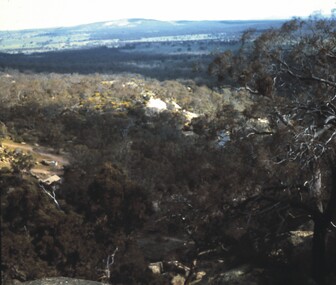 Bendigo Historical Society Inc.
Slide - BENDIGO & DISTRICT P.O.I
... Bendigo & District P.O.I. View from Melville Caves, near Inglewood....Bendigo & District P.O.I. View from Melville Caves, near Inglewood. ...Slide. Bendigo & District P.O.I. View from Melville Caves, near Inglewood.slide, bendigo, bendigo & district p.o.i., bendigo & district p.o.i. -
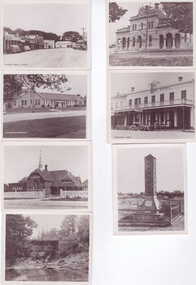 Clunes Museum
Photograph - PHOTOGRAPHS, THE VALENTINE PUBLISHING CO. PTY. LTD
... 2 VIEWS OF CLUNES TOWN HALL 1 VIEWS OF DISTRICT HOSPITAL, CLUNES 2 VIEWS OF FRASER STREET, CLUNES 2 VIEWS OF CLUB HOTEL, CLUNES 1 VIEW OF GOLD MONUMENT 1 VIEW OF TULLAROOP RIVER, CLUNES 1 VIEW OF INTERNET HOSIERY CO. ...2 VIEWS OF CLUNES TOWN HALL 1 VIEWS OF DISTRICT HOSPITAL, CLUNES 2 VIEWS OF FRASER STREET, CLUNES 2 VIEWS OF CLUB HOTEL, CLUNES 1 VIEW OF GOLD MONUMENT 1 VIEW OF TULLAROOP RIVER, CLUNES 1 VIEW OF INTERNET HOSIERY CO. ...2 VIEWS OF CLUNES TOWN HALL 1 VIEWS OF DISTRICT HOSPITAL, CLUNES 2 VIEWS OF FRASER STREET, CLUNES 2 VIEWS OF CLUB HOTEL, CLUNES 1 VIEW OF GOLD MONUMENT 1 VIEW OF TULLAROOP RIVER, CLUNES 1 VIEW OF INTERNET HOSIERY CO. CLUNES. (FORMERLY SOUTH CLUNES SCHOOL)SMALL MANILLA ENVELOPE CONTAINING TEN PHOTOGRAPHS - TOWN HALL CLUNES, DISTRICT HOSPITAL CLUNES, FRASER STREET CLUNES, CLUB HOTEL CLUNES, INTERKNIT HOSIERY COY. LTD. CLUNES, MONUMENT AT CLUNES, TALLAROOP RIVER CLUNESPrinted on envelope in blue ink; Valentine's Snapshots, Eight Real Photographs, Clunes. Published by The Valentine Publishing Co. Pty. Ltd. Melbourne, Sydney and Adelaidelocal history, photography, photographs -
 Buninyong & District Historical Society
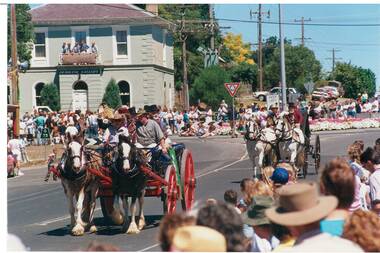
Photograph - Colour photograph, Buninyong and District Historical Society leads the 1991 Gold King Festival, 1991
... Colour photograph of the 1991 Gold King Festival with Bill Griggs of Wallace and his Clydesdales in the lead representing Buninyong and District Historical Society. View of the parade and spectators from Warrenheip Street, Old National Bank and roundabout in the background....Colour photograph of the 1991 Gold King Festival with Bill Griggs of Wallace and his Clydesdales in the lead representing Buninyong and District Historical Society. View of the parade and spectators from Warrenheip Street, Old National Bank and roundabout in the background. ...The Gold King Festival was an important community event for Buninyong incorporating historical, sporting, social and commercial activities for a number of years between 1991 and the early 2000sThe Gold King Festival was a popular community event celebrating Buninyong's gold mining history.Colour photograph of the 1991 Gold King Festival with Bill Griggs of Wallace and his Clydesdales in the lead representing Buninyong and District Historical Society. View of the parade and spectators from Warrenheip Street, Old National Bank and roundabout in the background.Buninyong and District Historical Society leads the 1991 Festival. Bill Grigg of Wallace with his Clydesdales.buninyong and district historical society, gold king festival, procession, events, celebrations -
Bendigo Historical Society Inc.
Photograph - PHOTOGRAPH SANDHURST AND NORTHERN DISTRICT TRUSTEES
... Sandhurst & Northern District Trustees & Agency, View Street Bendigo, circa 1900. ...Sandhurst & Northern District Trustees & Agency, View Street Bendigo, circa 1900. ...Copy of black and white photograph of Sandhurst trustees building with a horse and carriage parked at the front. Under the photo: publisher Crown Castleton, Bendigo. Sandhurst & Northern District Trustees & Agency, View Street Bendigo, circa 1900. Plate no 20 of a limited edition of 100 in a series of 25. Print no.42 Printer D. G. Walker, Pty Ltd, Bendigo.photograph, building, sandhurst trustees -
 Ballarat Tramway Museum
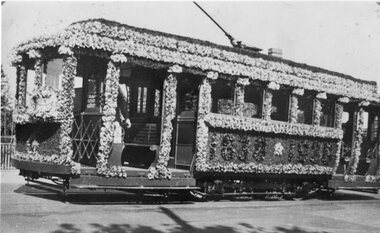
Photograph - Black & White Photograph/s, 1938
... (2nd) decorated with waxed flowers for the 1938 Centenary of the settlement in the Ballarat district. Has destination of "VIEW POINT". Tram is in unmodified form. ...(2nd) decorated with waxed flowers for the 1938 Centenary of the settlement in the Ballarat district. Has destination of "VIEW POINT". Tram is in unmodified form. ...Black and white photo of SEC No. 23?(2nd) decorated with waxed flowers for the 1938 Centenary of the settlement in the Ballarat district. Has destination of "VIEW POINT". Tram is in unmodified form. Is a copy photograph, as in corners, photo holders are visible. Note original type of destination box, not built into roof of tram.trams, tramways, ballarat, centenary, decorated trams -
 Eltham District Historical Society Inc
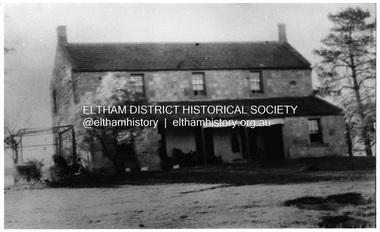
Photograph, "Pretty Hill", Kangaroo Ground. James Johnston's homestead
... Pretty Hill is one of the highest spots in the district with splendid views of the surrounding country....Pretty Hill is one of the highest spots in the district with splendid views of the surrounding country. ...Kangaroo Ground pioneers James Johnston (died 1895) with his wife Elizabeth commenced building this stone house on his Pretty Hill property, Kangaroo Ground in 1842. It was one of the oldest homes in the district till 1938 when new owner Mr Percy Cope, a master builder demolished the old building and a new brick building was erected in its place. Pretty Hill is one of the highest spots in the district with splendid views of the surrounding country.This photo forms part of a collection of photographs gathered by the Shire of Eltham for their centenary project book,"Pioneers and Painters: 100 years of the Shire of Eltham" by Alan Marshall (1971). The collection of over 500 images is held in partnership between Eltham District Historical Society and Yarra Plenty Regional Library (Eltham Library) and is now formally known as 'The Shire of Eltham Pioneers Photograph Collection'. It is significant in being the first community sourced collection representing the places and people of the Shire's first one hundred years.Digital imagesepp, shire of eltham pioneers photograph collection, kangaroo ground, pretty hill, stonen house, homestead, johnston family, james johnston -
 Bendigo Historical Society Inc.
Newspaper - HARRY BIGGS COLLECTION: ARTICLES FROM THE SANDHURST BEE, Oct & Dec 1860
... Sheet 1 - The Treatment of the Insane; & other Police & Community news. 2 - an article referring to prison labour. 3 - District Court happenings. 4 - A Nice Little Job - refers to the amount of money spent at the rear of the District Court at View Place. 'Why are they laying out this money upon a Court House which has hitherto quite large enough for all the business which has been transacted within its walls?'...Sheet 1 - The Treatment of the Insane; & other Police & Community news. 2 - an article referring to prison labour. 3 - District Court happenings. 4 - A Nice Little Job - refers to the amount of money spent at the rear of the District Court at View Place. 'Why are they laying out this money upon a Court House which has hitherto quite large enough for all the business which has been transacted within its walls?' ...Newspaper. Harry Biggs Collection. Sheet 1 - The Treatment of the Insane; & other Police & Community news. 2 - an article referring to prison labour. 3 - District Court happenings. 4 - A Nice Little Job - refers to the amount of money spent at the rear of the District Court at View Place. 'Why are they laying out this money upon a Court House which has hitherto quite large enough for all the business which has been transacted within its walls?'Sandhurst Beenewspaper, community, harry biggs collection, sandhurst bee, court happenings, police & community news -
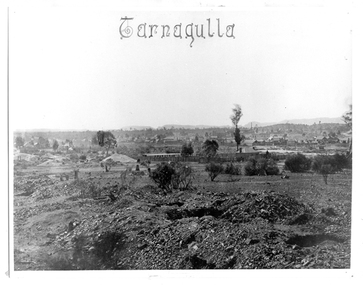 Tarnagulla History Archive
Photograph: View of Tarnagulla, June 1866
... From his base in Portland he toured surrounding districts, offering portrait and view services. Little else is known about his life. ...From his base in Portland he toured surrounding districts, offering portrait and view services. Little else is known about his life. ...Murray Comrie Collection. In June 1866, Aimé Marchand (1846-1910) made a series of fourteen photographs which were submitted to the 1866-67 Melbourne Intercolonial Exhibition, where they earned a 1st Class Honorable Mention. This is one of those fourteen images. Of French or Belgian origin and possibly formerly an assayer in California, Marchand appears to have begun his practice of photography in Tarnagulla around 1865 as an assistant to A.B. Clay. By the following year he had settled in Portland, where he opened the Royal Photographic Studio in Gawler Street. From his base in Portland he toured surrounding districts, offering portrait and view services. Little else is known about his life. He appears to have left Australia in 1878. A misprint of his name in a local directory as Annie Marchand created the misconception that he was one of only a few named women photographers in the colonies. Monochrome photograph depicting a view across Tarnagulla in June 1866.tarnagulla, views, mining, aimé marchand, photographers -
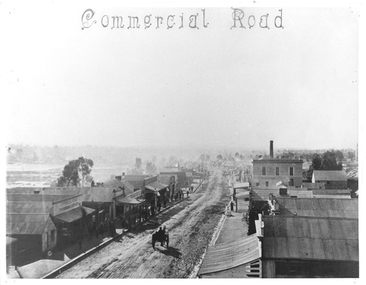 Tarnagulla History Archive
Photograph of Commercial Road, Tarnagulla, June 1866
... From his base in Portland he toured surrounding districts, offering portrait and view services. Little else is known about his life. ...From his base in Portland he toured surrounding districts, offering portrait and view services. Little else is known about his life. ...Murray Comrie Collection. Copy of an 1866 photograph by Aimé Marchand. In June 1866, Aimé Marchand (1846-1910) made a series of fourteen photographs which were submitted to the 1866-67 Melbourne Intercolonial Exhibition, where they earned a 1st Class Honorable Mention. This is one of those fourteen images. Of French or Belgian origin and possibly formerly an assayer in California, Marchand appears to have begun his practice of photography in Tarnagulla around 1865 as an assistant to A.B. Clay. By the following year he had settled in Portland, where he opened the Royal Photographic Studio in Gawler Street. From his base in Portland he toured surrounding districts, offering portrait and view services. Little else is known about his life. He appears to have left Australia in 1878. A misprint of his name in a local directory as Annie Marchand created the misconception that he was one of only a few named women photographers in the colonies. Monochrome photograph looking north down Commercial Road, Tarnagulla from the roof of the Council Chambers. tarnagulla, views, burstall hall, council chambers, local government, commercial road, local people, residents, aimé marchand, photographers -
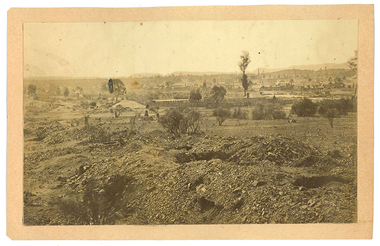 Tarnagulla History Archive
Photograph: Alluvial workings between Gladstone St and Commercial Road, Tarnagulla, June 1866
... From his base in Portland he toured surrounding districts, offering portrait and view services. Little else is known about his life. ...From his base in Portland he toured surrounding districts, offering portrait and view services. Little else is known about his life. ...David Gordon Collection. This image was created by Aime Marchand in June 1866. Marchand (1846-1910) made a series of fourteen photographs which were submitted to the 1866-67 Melbourne Intercolonial Exhibition, where they earned a 1st Class Honourable Mention. This is one of those fourteen images. Of French or Belgian origin and possibly formerly an assayer in California, Marchand appears to have begun his practice of photography in Tarnagulla around 1865 as an assistant to A.B. Clay. By the following year he had settled in Portland, where he opened the Royal Photographic Studio in Gawler Street. From his base in Portland he toured surrounding districts, offering portrait and view services. Little else is known about his life. He appears to have left Australia in 1878. A misprint of his name in a local directory as Annie Marchand created the misconception that he was one of only a few named women photographers in the colonies. -
Tarnagulla History Archive
Negative: Copy of Marchand image of Tarnagulla Courthouse, Court House, June 1866 (original image)
... From his base in Portland he toured surrounding districts, offering portrait and view services. Little else is known about his life. ...From his base in Portland he toured surrounding districts, offering portrait and view services. Little else is known about his life. ...Murray Comrie Collection. This photograph is a reasonable copy created from an older original. In June 1866, Aimé Marchand (1846-1910) made a series of fourteen photographs which were submitted to the 1866-67 Melbourne Intercolonial Exhibition, where they earned a 1st Class Honorable Mention. This is one of those fourteen images. Of French or Belgian origin and possibly formerly an assayer in California, Marchand appears to have begun his practice of photography in Tarnagulla around 1865 as an assistant to A.B. Clay. By the following year he had settled in Portland, where he opened the Royal Photographic Studio in Gawler Street. From his base in Portland he toured surrounding districts, offering portrait and view services. Little else is known about his life. He appears to have left Australia in 1878. A misprint of his name in a local directory as Annie Marchand created the misconception that he was one of only a few named women photographers in the colonies.A black and white negative image depicting the Court House in Tarnagulla. Copy of the photogrpah made by Aime Marchand.tarnagulla, courthouse, justice, policing, law, buildings, views, victoria street -
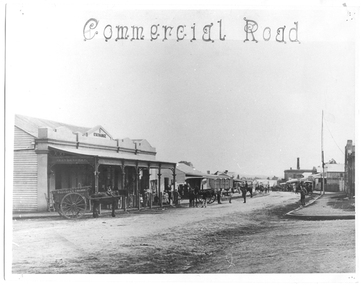 Tarnagulla History Archive
Photograph of Commercial Road, Tarnagulla, June 1866
... From his base in Portland he toured surrounding districts, offering portrait and view services. Little else is known about his life. ...From his base in Portland he toured surrounding districts, offering portrait and view services. Little else is known about his life. ...Murray Comrie Collection. Copy of an 1866 photograph by Aimé Marchand. Thomas Comrie's Exchange Store was at south end of Commercial Road, it has since been destroyed. In June 1866, Aimé Marchand (1846-1910) made a series of fourteen photographs which were submitted to the 1866-67 Melbourne Intercolonial Exhibition, where they earned a 1st Class Honorable Mention. This is one of those fourteen images. Of French or Belgian origin and possibly formerly an assayer in California, Marchand appears to have begun his practice of photography in Tarnagulla around 1865 as an assistant to A.B. Clay. By the following year he had settled in Portland, where he opened the Royal Photographic Studio in Gawler Street. From his base in Portland he toured surrounding districts, offering portrait and view services. Little else is known about his life. He appears to have left Australia in 1878. A misprint of his name in a local directory as Annie Marchand created the misconception that he was one of only a few named women photographers in the colonies. Monochrome photograph looking north down Commercial Road, Tarnagulla from the Wayman Street corner, opposite Thomson and Comrie's Exchange Store (at south end of Commercial Road).tarnagulla, views, thomas comrie, comrie exchange store, commercial road, local people, residents, aimé marchand, photographers -
 Tarnagulla History Archive
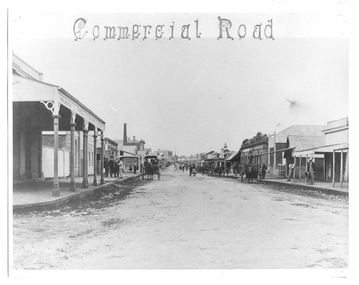
Photograph of Commercial Road, Tarnagulla, June 1866
... From his base in Portland he toured surrounding districts, offering portrait and view services. Little else is known about his life. ...From his base in Portland he toured surrounding districts, offering portrait and view services. Little else is known about his life. ...Murray Comrie Collection. Copy of an 1866 photograph by Aimé Marchand. Victoria Hotel and Theatre is the stone building at centre right. On the immediate left is Pierce's Southern Cross Store, later to be incorporated into the flour mill complex. The gentleman in the white hat in the group on the left is George Thomson. In June 1866, Aimé Marchand (1846-1910) made a series of fourteen photographs which were submitted to the 1866-67 Melbourne Intercolonial Exhibition, where they earned a 1st Class Honorable Mention. This is one of those fourteen images. Of French or Belgian origin and possibly formerly an assayer in California, Marchand appears to have begun his practice of photography in Tarnagulla around 1865 as an assistant to A.B. Clay. By the following year he had settled in Portland, where he opened the Royal Photographic Studio in Gawler Street. From his base in Portland he toured surrounding districts, offering portrait and view services. Little else is known about his life. He appears to have left Australia in 1878. A misprint of his name in a local directory as Annie Marchand created the misconception that he was one of only a few named women photographers in the colonies. Monochrome photograph looking south down Commercial Road, Tarnagulla from near the Victoria Hotel and Theatre, at northern end of Commercial Road.tarnagulla, views, victoria hotel and theatre, commercial road, local people, residents, aimé marchand, photographers -
 Tarnagulla History Archive
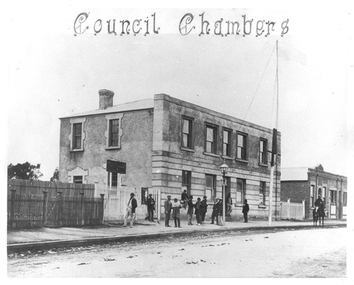
Photograph of Tarnagulla Council Chambers, June 1866
... From his base in Portland he toured surrounding districts, offering portrait and view services. Little else is known about his life. ...From his base in Portland he toured surrounding districts, offering portrait and view services. Little else is known about his life. ...Murray Comrie Collection. Copy of an 1866 photograph by Aimé Marchand. The building was originally Company's Hotel, then used as temporary premises by the Colonial Bank during construction of the bank's own premises, then Borough of Tarnagulla Council Chambers and Mechanics Institute. Also known locally as Burstall Hall from c1960 following a donation of maintenance funding from the Estate of the late RH Burstall. In June 1866, Aimé Marchand (1846-1910) made a series of fourteen photographs which were submitted to the 1866-67 Melbourne Intercolonial Exhibition, where they earned a 1st Class Honorable Mention. This is one of those fourteen images. Of French or Belgian origin and possibly formerly an assayer in California, Marchand appears to have begun his practice of photography in Tarnagulla around 1865 as an assistant to A.B. Clay. By the following year he had settled in Portland, where he opened the Royal Photographic Studio in Gawler Street. From his base in Portland he toured surrounding districts, offering portrait and view services. Little else is known about his life. He appears to have left Australia in 1878. A misprint of his name in a local directory as Annie Marchand created the misconception that he was one of only a few named women photographers in the colonies. Monochrome photograph the Tarnagulla Council Chambers in June 1866. tarnagulla, views, burstall hall, council chambers, local government, commercial road, local people, residents, aimé marchand, photographers -
 Tarnagulla History Archive
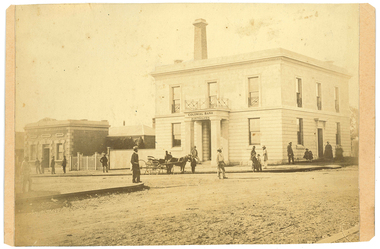
Photograph: Colonial Bank of Australasia (later Union Bank) in Tarnagulla, June 1866
... From his base in Portland he toured surrounding districts, offering portrait and view services. Little else is known about his life. ...From his base in Portland he toured surrounding districts, offering portrait and view services. Little else is known about his life. ...David Gordon Collection. There were four banks in Tarnagulla at one stage, but two - the National Bank and the Bank of Australasia - were open for a short period only. The single-storey brick building at far left was built in 1859 and used by the Union Bank until 1888, and was later renamed 'Lochcarron' and used as premises by doctors and dentists. The two-storey building (right) was built in 1866 by the Colonial Bank of Australasia. Before this, the site had been occupied by Foo's shop. Whilst it was being built, the Colonial Bank operated from Company's Hotel (later known as Burstall Hall and the Council Chambers). The double-storey building in this image was used by the Colonial Bank from 1866 until 21st February, 1888. The premises were sold to the Union Bank for £2500. The Union Bank moved in and commenced operations on 6th June 1888, continuing until 1942. The building was later used as a general store until the 1990s. Both buildings are now private residences. This image was created by Aime Marchand in June 1866. Marchand (1846-1910) made a series of fourteen photographs which were submitted to the 1866-67 Melbourne Intercolonial Exhibition, where they earned a 1st Class Honourable Mention. This is one of those fourteen images. Of French or Belgian origin and possibly formerly an assayer in California, Marchand appears to have begun his practice of photography in Tarnagulla around 1865 as an assistant to A.B. Clay. By the following year he had settled in Portland, where he opened the Royal Photographic Studio in Gawler Street. From his base in Portland he toured surrounding districts, offering portrait and view services. Little else is known about his life. He appears to have left Australia in 1878. A misprint of his name in a local directory as Annie Marchand created the misconception that he was one of only a few named women photographers in the colonies. -
 Flagstaff Hill Maritime Museum and Village
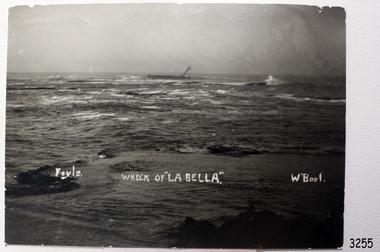
Photograph, Foyle Photographic Studio, Wreck of La Bella, about 11/11/1905
... view in the Warrnambool Library. Foyles Photography was the studio of James Charles Foyle. He owned “Foyle’s Photo Card Studios” in Liebig St , Warrnambool, which operated between 1889 – 1919 . A letter to the editor (by Mr Edward Vidler) in the Melbourne Argus, 3rd August, 1907, mentions that in that year Warrnambool would celebrate its 60th anniversary of its proclamation as a town, and that talented local artist Miss Lily Foyle would paint 200 portraits in watercolour of the pioneers who settled in the district prior to 1860. ...view in the Warrnambool Library. Foyles Photography was the studio of James Charles Foyle. He owned “Foyle’s Photo Card Studios” in Liebig St , Warrnambool, which operated between 1889 – 1919 . A letter to the editor (by Mr Edward Vidler) in the Melbourne Argus, 3rd August, 1907, mentions that in that year Warrnambool would celebrate its 60th anniversary of its proclamation as a town, and that talented local artist Miss Lily Foyle would paint 200 portraits in watercolour of the pioneers who settled in the district prior to 1860. ...The photograph shows the wreck of La Bella in Lady Bay, Warrnambool, Australia. It was probably taken on 11th November 1905, the morning after she was wrecked. “Foyle” written on the photograph is the name of Foyle’s Photographic studio. At the time of the photograph the studio was owned by both Charles and Lilian Foyle (sometimes known as Lillian or Lily), either of whom could have taken this photograph. They also worked together at a later date on the photographs, sketches and paintings of the famous and historical Pioneers’ Honour Board, which is currently on view in the Warrnambool Library. Foyles Photography was the studio of James Charles Foyle. He owned “Foyle’s Photo Card Studios” in Liebig St , Warrnambool, which operated between 1889 – 1919 . A letter to the editor (by Mr Edward Vidler) in the Melbourne Argus, 3rd August, 1907, mentions that in that year Warrnambool would celebrate its 60th anniversary of its proclamation as a town, and that talented local artist Miss Lily Foyle would paint 200 portraits in watercolour of the pioneers who settled in the district prior to 1860. The Pioneer Honour Board can still be seen on display in the Warrnambool Library. In the Warrnambool Standard, Dec. 1917, “Mr Foyle’s studio was awarded contract to decorate rail cars on newly opened Trans-Continental railway, assisted by his sister, Miss Findlay.” The subject of the painting, La Bella, has its own tragic story. Read on for further details … On November 10th, 1905, the Norwegian-built barquentine La Bella approached Warrnambool at the end of her 37 day voyage. She was carrying a cargo of timber from Lyttleton, New Zealand, in heavy seas and evening mist. (On its only other visit to Warrnambool a year earlier the master had gone to shore to find a tow. He returned to the ship to find the crew drunk and unwilling to take up their posts, even though the ship was dragging its anchors and in a dangerous position.) As Captain Mylius steered La Bella to Lady Bay Channel the ship was tossed onto its side by heavy breakers and ran aground on what is now known as La Bella Reef. The sea was so rough that it wrenched a one-and-a- half ton anchor from the vessel. Several attempts were made by parties of volunteers in lifeboats to rescue the stricken sailors, but the rough conditions made this difficult for the boats to get close enough to the ship and the parties had to return to shore. The La Bella’s crew became exhausted and sailors were being washed overboard, one by one. By sunrise only five of the twelve crew still clung to the wreck. A local fisherman, 25 year old William Ferrier, rowed his small dingy through the heavy seas and managed to rescue the captain, whilst the volunteer lifeboat crew rescued a further three sailors, returning to shore. Ferrier made a final attempt at rescue and was able to reach its stern as the conditions eased slightly, saving the last remaining, terrified sailor just before the ship broke up and sank. William Ferrier became a national hero as news of the daring rescue spread. He was awarded the Silver Medal for bravery by the Royal Humane Society and was honoured by the Prime Minister and the Governor. He was presented with several other awards for his daring rescue. Ferrier’s rescue efforts are one of the most heroic in Victoria’s shipwreck history. The wreck now lies in 13m of water and is home to an abundance of marine life. Flagstaff Hill’s La Bella Collection includes a rail holder from La Bella, a photograph of William Ferrier with four of the five men rescued, a rail holder from the ship and the letter from the Prime Minister and other Members of Parliament that was sent to William Ferrier to commend him for his bravery. La Bella has been protected under the Commonwealth Historic Shipwrecks Act (1976) as a Historic Shipwreck since 23 April 1982 (VHR S401). It is archaeologically significant as the remains of an international and inter-colonial passenger and cargo ship. Flagstaff Hill’s collection of artefacts from the La Bella is of historical and archaeological significance because of its association with the La Bella, which is on the Victorian Heritage Register, and because of the relationship between the objects. The collection represents aspects of Victorian history, and the letter to William Ferrier demonstrates how important his rescue efforts were to Victoria and Australia. Black and white photograph of the wreck of the sailing ship La Bella in the bay at Warrnambool. The photograph shows the ship lying on its side in rough sea, with mast and rope rigging hanging loosely. Several large rocks are also visible. The photograph is a rectangle shape, mounted on heavy card, with slightly ragged edges. The photographer’s name, a title for the photograph and the location are hand written in white along the bottom third of the photograph. The back of the photograph is blank. Printed in white hand writing “Foyle”, “WRECK OF “LA BELLA”, “W’Bool”foyle, la bella, william ferrier, lady bay, lifeboats, lilian foyle, lillian foyle, charles foyle, james foyle, royal humane society medal, flagstaff hill, warrnambool, shipwrecked coast, flagstaff hill, flagstaff hill maritime museum, maritime museum, shipwreck coast, flagstaff hill maritime village -
 Federation University Historical Collection
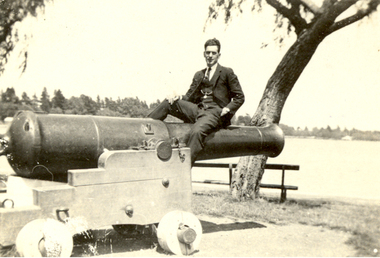
Photograph, Vernon Holt, Frank Wright on the Canon at View Point, Lake Wendouree, 3/2/1922
... district. He was made Professor of Brass and Military Band Scoring and conducted at the Guildhall of Music and Drama. Frank was often invited to adjudicate Brass Band Championships around Europe, in Australia, including South Street and in New Zealand. The Frank Wright Medal at the Royal South Street competition is awarded to an individual recognized as making an outstanding contribution to brass music in Australia. frank wright vernon holt lake wendouree ballarat canon Written in pen on back - Frank Wright - on canon at "View Point", Lake Wendouree, Ballarat. ...Frank Wright was a renown resident of Smeaton, where he was born. He lived at Laura Villa, and attended Smeaton State School. His father William was a gold miner and his mother's name was Sarah. Their family won many singing and instrumental awards. Frank was tutored by Percy Code and was awarded a gold medal for the highest marks in the ALCM examinations in the British Colonies at the age of seventeen years. He became the Australian Open Cornet Champion by the age of eighteen. A year later, Frank conducted the City of Ballarat Band, and later the Ballarat Soldiers’ Memorial Band. He formed the Frank Wright Frisco Band and Frank Wright and his Coliseum Orchestra. These bands won many South Street awards, and Frank as conductor won many awards in the Australian Band Championship contest. In 1933 Frank Wright sailed to England to conduct the famous St Hilda’s Band and was later appointed Musical Director of the London County Council, where he organized many amazing concerts in parks, in and around the London district. He was made Professor of Brass and Military Band Scoring and conducted at the Guildhall of Music and Drama. Frank was often invited to adjudicate Brass Band Championships around Europe, in Australia, including South Street and in New Zealand. The Frank Wright Medal at the Royal South Street competition is awarded to an individual recognized as making an outstanding contribution to brass music in Australia.Black and white photograph of a man dressed in a three piece suit sitting on a canon which is located in a park overlooking a lake. Trees and houses can be seen on the other side of the lake. The man is Frank Wright and the place is "View Point", Lake Wendouree, Ballarat.Written in pen on back - Frank Wright - on canon at "View Point", Lake Wendouree, Ballarat. Photo by Vernon Holt 3/2/22frank wright, vernon holt, lake wendouree, ballarat, canon -
 Federation University Historical Collection
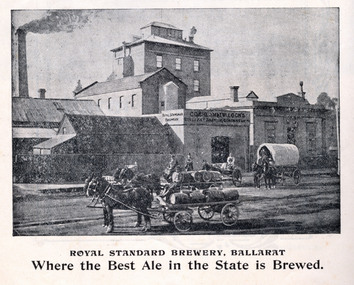
Book, Powell & Co, Guide to Ballarat the Beautiful, 1906, 1906
... Themes of the book include: Ballarat and district, Lake Wendouree, Ballarat Botanical Gardens, Statues, gold and mining, Ballarat gold nuggets, Eureka Stockade, Ballarat School of Mines, Hepburn Lagoon, Emu River, race courses, Art gallery of Ballarat Advertisements include: Dr Lem Chinese Practictioner, Eureka Aerated Waters & Brewing Co., Sunshine Harvester, Gordon Bros., Long's biscuits, South Street, Grand National Eisteddfod of Australia, Lake View Hotel, Carlyon's Hotel, Clarendon Ladies' College, J.E. ...Themes of the book include: Ballarat and district, Lake Wendouree, Ballarat Botanical Gardens, Statues, gold and mining, Ballarat gold nuggets, Eureka Stockade, Ballarat School of Mines, Hepburn Lagoon, Emu River, race courses, Art gallery of Ballarat Advertisements include: Dr Lem Chinese Practictioner, Eureka Aerated Waters & Brewing Co., Sunshine Harvester, Gordon Bros., Long's biscuits, South Street, Grand National Eisteddfod of Australia, Lake View Hotel, Carlyon's Hotel, Clarendon Ladies' College, J.E. ...A book highlighting Ballarat and surrounds for visiting tourists. Green, black and red soft covered book of 50 pages. The book includes many illustrations and advertisements. Themes of the book include: Ballarat and district, Lake Wendouree, Ballarat Botanical Gardens, Statues, gold and mining, Ballarat gold nuggets, Eureka Stockade, Ballarat School of Mines, Hepburn Lagoon, Emu River, race courses, Art gallery of Ballarat Advertisements include: Dr Lem Chinese Practictioner, Eureka Aerated Waters & Brewing Co., Sunshine Harvester, Gordon Bros., Long's biscuits, South Street, Grand National Eisteddfod of Australia, Lake View Hotel, Carlyon's Hotel, Clarendon Ladies' College, J.E. Sang Chinese Doctor and Herbalist, Reid's Ballarat Coffee Palace, Robert Sim & Co Timber Merchants, Cobb & C0 livery and stables Ballarat, Eagle Foundry, Fred A. Reed Tobacconist, Heinz bros butchers, J.J. Goller & Co. Illustrations include: Craig's Royal Hotel, McBride's Boots, John Lavis Cordial Manufacturer, R. Graham & Sons tanners, Lester's hotel, Sun Foundry, Central business College, Edwards Pyrites & Ore Reduction Co., George Farmer, Sturt Street (colour), Lake Wendouree, Ballarat East Town Hall, Lake Burrumbeet, Queen Victoria Statue, Fairy Land, Ballarat Botanical Gardens, Lal Lal Falls, Moorabool Falls, Kirks Dam, Lake Wendouree and paddle boat, Lydiard Street, Bopeep Creek, Star of the East Mine, Peter Lalor Statue, great Equatorial Telescopu at Oddie Observatory (Ballarat Observatory), Boer War monument, Entrance to Art Gallery of Ballarat, interior of Art Gallery of Ballarat, Old Curiosity Shop, Angus Rialto cafe, Ballarat Brewing Co, Royal Standard brwery, Phoenix Brewery Warrenheip, John MacLeod and Companyballarat, ballarat school of mines, buninyong, burrumbeet, cobb and co, eureka brewery, ballarat brewing co, sturt street, m1604, chinese, chinese medicine, d. lem, j.e. sang, brewery, tanners -
 Federation University Historical Collection
Photograph - Photograph - Colour, Churchill Service Memorial, 2015, 2015
... (http://www.latrobevalleyexpress.com.au/story/2816903/churchills-new-memorial/, accessed 01 may 2015) Sculptor Paul Jesse discussed the work in Churchill and District Community news, 18 December 2014: Some time ago CDCA commissioned a sculpture to be used as a Service Memorial to commemorate the fallen that have died in service of our community and country. Traditional memorials usually commemorate Armed Services personnel, but CDCA was of the opinion that a more inclusive view which included Emergency Services personnel, such as CFA, SES and Police, could be incorporated into the Churchill Memorial. ...(http://www.latrobevalleyexpress.com.au/story/2816903/churchills-new-memorial/, accessed 01 may 2015) Sculptor Paul Jesse discussed the work in Churchill and District Community news, 18 December 2014: Some time ago CDCA commissioned a sculpture to be used as a Service Memorial to commemorate the fallen that have died in service of our community and country. Traditional memorials usually commemorate Armed Services personnel, but CDCA was of the opinion that a more inclusive view which included Emergency Services personnel, such as CFA, SES and Police, could be incorporated into the Churchill Memorial. ...In recognition of its fallen soldiers and Churchill's 50th birthday a service memorial was erected on a concrete plinth at the Churchill town plaza and used for the first time to mark the ANZAC centenary on Anzac Day 2015. Churchill never had a war memorial and received a grant from the Department of Veterans' Affairs six years ago to commission a sculpture with Latrobe City Council's support. It was decided the sculpture needed to recognise more than just the war effort, but service and volunteerism, considering Churchill was only founded in 1965. (http://www.latrobevalleyexpress.com.au/story/2816903/churchills-new-memorial/, accessed 01 may 2015) Sculptor Paul Jesse discussed the work in Churchill and District Community news, 18 December 2014: Some time ago CDCA commissioned a sculpture to be used as a Service Memorial to commemorate the fallen that have died in service of our community and country. Traditional memorials usually commemorate Armed Services personnel, but CDCA was of the opinion that a more inclusive view which included Emergency Services personnel, such as CFA, SES and Police, could be incorporated into the Churchill Memorial. Boolarra artist, Paul Jesse, who is accomplished in Ferro-Cement sculpture techniques, was commissioned to create a memorial that would cause people to reflect on the meaning of ‘service’ and ‘sacrifice’. The following is a description of the Churchill Service Memorial Sculpture written by the sculptor, Paul Jesse. “My sculpture is different from most War Memorial sculptures because it uses as its basis the reasons why people go into service or to war. One side of the sculpture is colourful and optimistic; its theme is home, family, community and the future. These themes are crafted by flow lines which are connected to the other side of the sculpture through the round hole and the Crosspiece. These lines can be seen as a multi-layered connection between the sides. On the “dark” side of the sculpture, the lines begin with a spiral of coloured mosaics. This spiral is representative of our service people. Its beginning can be seen on one level as their soul. The spiralling mosaics of them flow to the other side of the sculpture where they create the landscape and figures. These lines can also be seen as a range of connectors between the two sides, representing a flow of thoughts, love, fear, concern and dreams. They also represent physical communication such as letters and phone calls.” This ‘Service Memorial’ is located in the Churchill Plaza (adjacent to the Town Hall), along with four flagpoles, seating and garden beds. The Churchill Service Memorial has deliberately been designed as a thought-provoking public art work. It will complement the Art and Culture Pathway which links Switchback Gallery at the Federation University Campus to the Town Centre. We hope Churchill citizens will pause to view the Memorial, ponder its meaning, reflect on the service of others and commemorate the fallen. Colour photograph on an abstract Australia-shaped sculpture by Boolarra artist Paul Jesse. The abstract Australia-shaped sculpture is in stark contrast to the bronze-cast "fallen mate" or concrete cenotaph seen in many country towns. The photograph includes wreaths from the ANZAC centenary service on ANZAC Day 2015. churchill, churchill war memorial, paul jessie, anzac centenary, federation university, gippsland, art and culture pathway, world war -
 Federation University Historical Collection
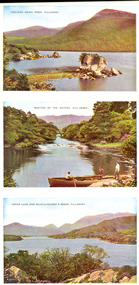
Letter Card, Six View Letter card of Killarney, Ireland
... District Chatham-Holmes family archive Killarney Ireland Six coloured images from Killarney, Ireland. * Colleen Gawn Rock * Meeting of the Waters * Upper Lake and MacGillycuddy's Reeks, Killarney * The Islands, Upper Lake * Kate Kearney's Cottage * Lower Lake and Ross Castle Six View Letter card of Killarney, Ireland Letter Card ...Probably acquired because of its connection to rural life and the Irish immigrants settled in the Ballarat DistrictSix coloured images from Killarney, Ireland. * Colleen Gawn Rock * Meeting of the Waters * Upper Lake and MacGillycuddy's Reeks, Killarney * The Islands, Upper Lake * Kate Kearney's Cottage * Lower Lake and Ross Castlechatham-holmes family archive, killarney, ireland -
 Federation University Historical Collection
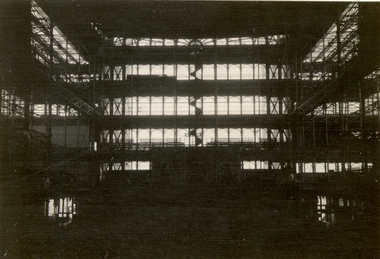
Photograph - black and white, View From the Stage of the Crystal Palace, 1933, Oct 1933
... district. He was made Professor of Brass and Military Band Scoring and conducted at the Guildhall of Music and Drama. Frank was often invited to adjudicate Brass Band Championships around Europe, in Australia, including South Street and in New Zealand. The Frank Wright Medal at the Royal South Street competition is awarded to an individual recognized as making an outstanding contribution to brass music in Australia. He died in England in 1970 at the age of 69. frank wright crystal palace conductor Written in pencil on the back - View ...Frank Wright was a renown resident of Smeaton, where he was born on 2 August 1901. He lived at Laura Villa, and attended Smeaton State School. His father William was a gold miner and his mother's name was Sarah. Their family won many singing and instrumental awards. Frank was tutored by Percy Code and was awarded a gold medal for the highest marks in the ALCM examinations in the British Colonies at the age of seventeen years. He became the Australian Open Cornet Champion by the age of eighteen. A year later, Frank conducted the City of Ballarat Band, and later the Ballarat Soldiers’ Memorial Band. He formed the Frank Wright Frisco Band and Frank Wright and his Coliseum Orchestra. These bands won many South Street awards, and Frank as conductor won many awards in the Australian Band Championship contest. In 1933 Frank Wright sailed to England to conduct the famous St Hilda’s Band and was later appointed Musical Director of the London County Council, where he organized many amazing concerts in parks, in and around the London district. He was made Professor of Brass and Military Band Scoring and conducted at the Guildhall of Music and Drama. Frank was often invited to adjudicate Brass Band Championships around Europe, in Australia, including South Street and in New Zealand. The Frank Wright Medal at the Royal South Street competition is awarded to an individual recognized as making an outstanding contribution to brass music in Australia. He died in England in 1970 at the age of 69.Black and white photograph of the interior of a building. The building is the Crystal Palace and the view shows shows the galleries at the sides and the rows of windows at the back with a spiral staircase in the centre extending from the bottom to the top.Written in pencil on the back - View from stage of Crystal Palace, showing galleries, F.W. Oct 1933frank wright, crystal palace, conductor -
 Flagstaff Hill Maritime Museum and Village
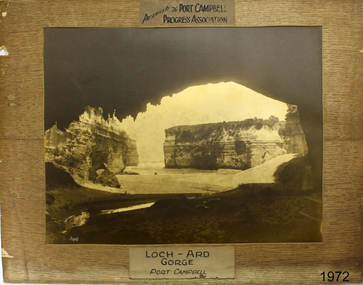
Photograph - Coastal Scene, Foyle Photographic Studio, Loch Ard Gorge Port Campbell, 1889-1919
... view in the Warrnambool Library. Foyles Photography was the studio of James Charles Foyle. He owned “Foyle’s Photo Card Studios” in Liebig St, Warrnambool, which operated between 1889 – 1919. A letter to the editor (by Mr Edward Vidler) in the Melbourne Argus, 3rd August 1907, mentions that in that year Warrnambool would celebrate the 60th anniversary of its proclamation as a town, and that talented local artist Miss Lily Foyle would paint 200 portraits in watercolour of the pioneers who settled in the district prior to 1860. ...view in the Warrnambool Library. Foyles Photography was the studio of James Charles Foyle. He owned “Foyle’s Photo Card Studios” in Liebig St, Warrnambool, which operated between 1889 – 1919. A letter to the editor (by Mr Edward Vidler) in the Melbourne Argus, 3rd August 1907, mentions that in that year Warrnambool would celebrate the 60th anniversary of its proclamation as a town, and that talented local artist Miss Lily Foyle would paint 200 portraits in watercolour of the pioneers who settled in the district prior to 1860. ...The photograph shows the popular tourist attraction, Loch Ard Gorge, which is located along the Great Ocean Road in Victoria, near Port Campbell. The gorge is named after the famous sailing ship, the LOCH ARD, that was wrecked there in 1878. Only two of the 54 passengers and crew survived. FOYLE “Foyle” written on the photograph is the name of Foyle’s Photographic studio. At the time of the photograph, the studio was owned by both Charles and Lilian Foyle (sometimes known as Lillian or Lily), either of whom could have taken this photograph. They also worked together at a later date on the photographs, sketches and paintings of the famous and historical Pioneers’ Honour Board, which is currently on view in the Warrnambool Library. Foyles Photography was the studio of James Charles Foyle. He owned “Foyle’s Photo Card Studios” in Liebig St, Warrnambool, which operated between 1889 – 1919. A letter to the editor (by Mr Edward Vidler) in the Melbourne Argus, 3rd August 1907, mentions that in that year Warrnambool would celebrate the 60th anniversary of its proclamation as a town, and that talented local artist Miss Lily Foyle would paint 200 portraits in watercolour of the pioneers who settled in the district prior to 1860. The Pioneer Honour Board can still be seen on display in the Warrnambool Library. In the Warrnambool Standard, Dec. 1917, “Mr Foyle’s studio was awarded the contract to decorate rail cars on newly opened Trans-Continental railway, assisted by his sister, Miss Findlay.” HISTORY OF THE LOCH ARD The LOCH ARD belonged to the famous Loch Line which sailed many ships from England to Australia. Built-in Glasgow by Barclay, Curdle and Co. in 1873, the LOCH ARD was a three-masted square-rigged iron sailing ship. The ship measured 262ft 7" (79.87m) in length, 38ft (11.58m) in width, 23ft (7m) in depth and had a gross tonnage of 1693 tons. The LOCH ARD's main mast measured a massive 150ft (45.7m) in height. LOCH ARD made three trips to Australia and one trip to Calcutta before its final voyage. LOCH ARD left England on March 2, 1878, under the command of Captain Gibbs, a newly married, 29-year-old. She was bound for Melbourne with a crew of 37, plus 17 passengers and a load of cargo. The general cargo reflected the affluence of Melbourne at the time. Onboard were straw hats, umbrella, perfumes, clay pipes, pianos, clocks, confectionary, linen and candles, as well as a heavier load of railway irons, cement, lead and copper. There were items included that intended for display in the Melbourne International Exhibition in 1880. The voyage to Port Phillip was long but uneventful. At 3 am on June 1, 1878, Captain Gibbs was expecting to see land and the passengers were becoming excited as they prepared to view their new homeland in the early morning. But LOCH ARD was running into a fog which greatly reduced visibility. Captain Gibbs was becoming anxious as there was no sign of land or the Cape Otway lighthouse. At 4 am the fog lifted. A man aloft announced that he could see breakers. The sheer cliffs of Victoria's west coast came into view, and Captain Gibbs realised that the ship was much closer to them than expected. He ordered as much sail to be set as time would permit and then attempted to steer the vessel out to sea. On coming head-on into the wind, the ship lost momentum, the sails fell limp and LOCH ARD's bow swung back. Gibbs then ordered the anchors to be released in an attempt to hold its position. The anchors sank some 50 fathoms - but did not hold. By this time LOCH ARD was among the breakers and the tall cliffs of Mutton Bird Island rose behind the ship. Just half a mile from the coast, the ship's bow was suddenly pulled around by the anchor. The captain tried to tack out to sea, but the ship struck a reef at the base of Mutton Bird Island, near Port Campbell. Waves broke over the ship and the top deck was loosened from the hull. The masts and rigging came crashing down knocking passengers and crew overboard. When a lifeboat was finally launched, it crashed into the side of LOCH ARD and capsized. Tom Pearce, who had launched the boat, managed to cling to its overturned hull and shelter beneath it. He drifted out to sea and then on the flood tide came into what is now known as LOCH ARD Gorge. He swam to shore, bruised and dazed, and found a cave in which to shelter. Some of the crew stayed below deck to shelter from the falling rigging but drowned when the ship slipped off the reef into deeper water. Eva Carmichael had raced onto the deck to find out what was happening only to be confronted by towering cliffs looming above the stricken ship. In all the chaos, Captain Gibbs grabbed Eva and said, "If you are saved Eva, let my dear wife know that I died like a sailor". That was the last Eva Carmichael saw of the captain. She was swept off the ship by a huge wave. Eva saw Tom Pearce on a small rocky beach and yelled to attract his attention. He dived in and swam to the exhausted woman and dragged her to shore. He took her to the cave and broke and opened the case of brandy, which had washed up on the beach. He opened a bottle to revive the unconscious woman. A few hours later Tom scaled a cliff in search of help. He followed hoof prints and came by chance upon two men from nearby Glenample Station three and a half miles away. In a state of exhaustion, he told the men of the tragedy. Tom returned to the gorge while the two men rode back to the station to get help. By the time they reached LOCH ARD Gorge, it was cold and dark. The two shipwreck survivors were taken to Glenample Station to recover. Eva stayed at the station for six weeks before returning to Ireland, this time by steamship. In Melbourne, Tom Pearce received a hero's welcome. He was presented with the first gold medal of the Royal Humane Society of Victoria and a £1000 cheque from the Victorian Government. Concerts were performed to honour the young man's bravery and to raise money for those who lost family in the LOCH ARD disaster. Of the 54 crew members and passengers on board, only two survived: the apprentice, Tom Pearce and the young woman passenger, Eva Carmichael, who lost all of her family in the tragedy. Ten days after the LOCH ARD tragedy, salvage rights to the wreck were sold at auction for £2,120. Cargo valued at £3,000 was salvaged and placed on the beach, but most washed back into the sea when another storm developed. The wreck of LOCH ARD still lies at the base of Mutton Bird Island. Much of the cargo has now been salvaged, and some of it was washed up into what is now known as LOCH ARD Gorge. Cargo and artefacts have also been illegally salvaged over many years before protective legislation was introduced. One of the most unlikely pieces of cargo to have survived the shipwreck was a Minton porcelain peacock - one of only nine in the world. The peacock was destined for the Melbourne International Exhibition in 1880. It had been well packed, which gave it adequate protection during the violent storm. Today, the Minton peacock can be seen at the Flagstaff Hill Maritime Museum in Warrnambool. From Australia's most dramatic shipwreck it has now become Australia's most valuable shipwreck artefact and is one of very few 'objects' on the Victorian State Heritage Register.Flagstaff Hill’s collection of artefacts from LOCH ARD is significant for being one of the largest collections of artefacts from this shipwreck in Victoria. It is significant for its association with the shipwreck, which is on the Victorian Heritage Register (VHR S417). The collection is significant because of the relationship between the objects, as together they have a high potential to interpret the story of the LOCH ARD. The LOCH ARD collection is archaeologically significant as the remains of a large international passenger and cargo ship. The LOCH ARD collection is historically significant for representing aspects of Victoria’s shipping history and its potential to interpret sub-theme 1.5 of Victoria’s Framework of Historical Themes (living with natural processes). The collection is also historically significant for its association with the LOCH ARD, which was one of the worst and best-known shipwrecks in Victoria’s history. Foyle's photographs date from the late 19th century to the early 20th century, representing a time of growth in the Warrnambool district and a time when the still relatively new technology of photography was more available to the community.Photograph of Loch Ard Gorge. This sepia coloured rectangular photograph is mounted on a brown cardboard backing that has a wood grain pattern. The photograph has an inscription above it, below it, and in the bottom left corner. It was made for the purpose of a presentation by the Port Campbell Progress Association. Printed above the photograph "PRESENTED BY THE PORT CAMPBELL / PROGRESS ASSOCIATION". Printed below the photograph "LOCH ARD GORGE / PORT CAMPBELL". Hand written on bottom left corner "Foyle". flagstaff hill, warrnambool, shipwrecked coast, flagstaff hill maritime museum, maritime museum, shipwreck coast, flagstaff hill maritime village, great ocean road, loch line, loch ard, captain gibbs, eva carmichael, tom pearce, glenample station, mutton bird island, loch ard gorge, photograph, port campbell, port campbell progress association, foyle photograph, foyle photographic studio warrnambool, warrnambool photo studio -
 Flagstaff Hill Maritime Museum and Village
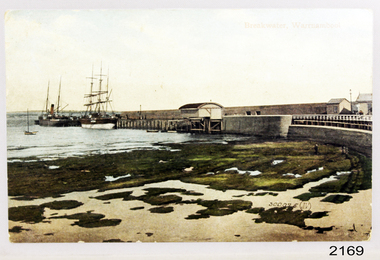
Postcard - Coastal Scene, Joseph Jordan Photographic Studio, Breakwater, Warrnambool, circa 1907
... He became very well known in the Western District for family photographs, official photographs of local councillors and groups as well as views of local scenery. ...He became very well known in the Western District for family photographs, official photographs of local councillors and groups as well as views of local scenery. ...The Port of Warrnambool - In the early years the Port of Warrnambool was a busy port. Steamships and sailing ships were frequent visitors to the port. Steam navigation companies were plentiful, carrying passengers and freighting cargo such as coal, timber, food, livestock, furniture, hardware and haberdashery between Melbourne and the ports along the southwest coast of Victoria, including Warrnambool. The carts would take their loads into the township for distribution. The Breakwater was built (using 32 ton blocks of concrete) between 1874 and 1890 to provide ships with greater protection from the Southern Ocean. The Lifeboat and Rocket House - The coastline of South West Victoria has had over 600 shipwrecks and many lost lives; even in Warrnambool’s Lady Bay there were around 16 known shipwrecks between 1850 and 1905, with eight lives lost. In 1859 the first Government-built lifeboat arrived at Warrnambool Harbour and a shed was soon built to house it, followed in 1864 by a rocket house to safely store the Rocket Rescue equipment. In 1878 the buildings were moved to the Breakwater area, and in 1910 the new Lifeboat Warrnambool arrived with its ‘self-righting’ design. For almost one hundred years the lifeboat and rocket crews, mostly local volunteers, trained regularly to maintain and improve their skills, summoned when needed by alarms, gunshots, ringing bells and foghorns. Some became local heroes but all served an important role. By the end of the 1950s the lifeboat and rescue equipment had become obsolete. Joseph Jordan - Joseph Jordan was born in 1841 in Leicester England. When he was 16 he joined the 7th Queen's Own Hussars and was sent to India at the outbreak of the mutiny. He took part in the relief of Lucknow and remained in India for eleven years. It was during this time, he became interested in photography. He was posted to New Zealand and later came to Victoria, becoming a sergeant major of the Mounted Rifles. In the mid 1880s he came to the Western district where he was responsible for establishing units of the Mounted Rifles in various country towns such as Dunkeld, Mortlake, Panmure, Bushfield, Koroit etc. He resigned from the army in 1889 and set up a professional photography studio in Liebig Street, Warrnambool. He became very well known in the Western District for family photographs, official photographs of local councillors and groups as well as views of local scenery. In 1891 he photographed the wrecked barque "Fiji" at "Wrecks Beach" near Princetown. His business was taken over by his son Arthur around 1917. Joseph was a keen rifle shot and in 1924 he donated the "Jordan Shield" as a prize to the Victorian Rifle Association. He was made a "Life Honorary Member" of the Warrnambool Returned Soldiers League and in 1933 he was recognised as being the oldest living soldier in Victoria. Joseph died in 1935 aged 95. Valentine Publishing Company Pty. Ltd. Valentine and Sons was a printing and photography business based in Dundee, Scotland and Canada. In the early 1900's, at the height of the postcard craze, they published large numbers of postcards in the U.K., Canada, U.S., Australia and South Africa. Valentine postcards have a 6 digit serial number on the view side with the initials "J. V." in a circle adjacent to the number. The 300,000's related to views of Australia. From around 1900 (or earlier) the firm bought many images for their postcards from local and national photographers who sold publishing rights to Valentines.This postcard is significant for its association with the Port of Warrnambool and the Warrnambool Breakwater as it shows a point in time when shipping activities were an important part of Warrnambool's commerce and social development. It is also a record of the Warrnambool Lifeboat and Rocket house which was important in aiding ordinary citizens, harbour employees and the volunteer boat and rescue crew in saving the lives of sailors and passengers due to the high number of shipwrecks that occurred along the coastline. Joseph Jordan is a significant figure in Warrnambool history as he helped to establish early units of the Mounted Rifles (G Company) in local towns during the late 1880's and later, photographed local scenes, groups and citizens of early Warrnambool. It is also a culturally significant example of the type of postcards that were very popular in the early part of the 20th century.Photograph of breakwater from beachFront of card - Breakwater, Warrnambool / 300,025 J.V [in a circle] Back of card - POSTCARD / VALENTINE'S SERIES / - This space may be used for communication / The address only to be written here - Miss Alice Griffen / Howard St / Warrnambool - How are you enjoying your holiday we are grand. / from / Dodo, Dodo, Dodo with love - Leura? / Marjory Craig? / BL006 / R99A / REG NO 2169flagstaff hill, warrnambool, shipwrecked-coast, flagstaff-hill, flagstaff-hill-maritime-museum, maritime-museum, photograph, warrnambool breakwater, breakwater, shipwreck-coast, flagstaff-hill-maritime-village, warrnambool harbour, postcard, joseph jordan, valentine and sons, valentine publishing company, lady bay, life boat house, rocket house, steam ship, barque, jordan photography
