
Showing 55 items matching "door lights"
-
 Moorabbin Air Museum
Manual - Ansett Boeing 727 operating manuals, Boeing 727 Operating Manual Section 4 Emergency & Abnormal Procedures April 1988
... ...Door lights...Ansett Boeing 727 operations manual Engine failure & fires Fuel Electrical Hydraulics Flight controls Landing Gear Pneumatics Air conditioning & pressurization Fuselage fires Cockpit window failure Door lights Abnormal or forced landings Passenger evacuation Ditching Emergency descent & landing Emergency equipment Overview of emergency & abnormal flight procedures in Boeing 727, circa 1988 Spiral bound book type manual Boeing 727 Operating Manual Section 4 Emergency & Abnormal Procedures April 1988 Manual Ansett Boeing 727 operating manuals ...Overview of emergency & abnormal flight procedures in Boeing 727, circa 1988Spiral bound book type manual non-fictionOverview of emergency & abnormal flight procedures in Boeing 727, circa 1988engine failure & fires, fuel, electrical, hydraulics, flight controls, landing gear, pneumatics, air conditioning & pressurization, fuselage fires, cockpit window failure, door lights, abnormal or forced landings, passenger evacuation, ditching, emergency descent & landing, emergency equipment -
 Melbourne Tram Museum
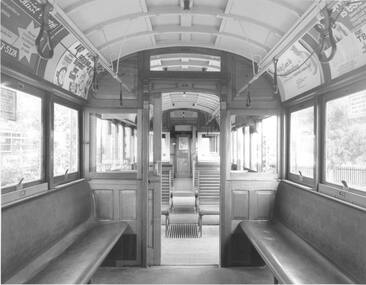
Photograph - Black & White Photograph/s, Melbourne & Metropolitan Tramways Board (MMTB), c1975
... Black and White Photograph of the interior of W2 340 showing the detail of the interior woodwork, hand rails, doors, lights etc....Trams tramways W2 class Interiors MMTB tram 646 Has in pencil on the top of the photograph "646-interior-MMTB" Black and White Photograph of the interior of W2 340 showing the detail of the interior woodwork, hand rails, doors, lights etc. Photograph Black & White Photograph/s Melbourne & Metropolitan Tramways Board (MMTB) ...Black and White Photograph of the interior of W2 340 showing the detail of the interior woodwork, hand rails, doors, lights etc.Has in pencil on the top of the photograph "646-interior-MMTB"trams, tramways, w2 class, interiors, mmtb, tram 646 -
 Melbourne Tram Museum
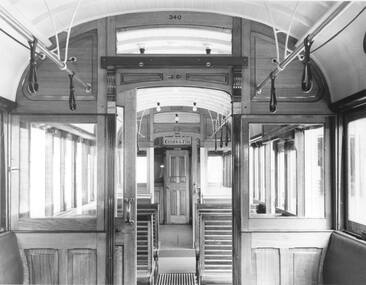
Photograph - Tram W2 340 Interior, Melbourne & Metropolitan Tramways Board (MMTB), mid 1970's?
... Photo of the interior of W2 340 showing the detail of the interior woodwork, hand rails, doors, lights etc. Photo c1960, 1970's reproduction the original print? ...Photo of the interior of W2 340 showing the detail of the interior woodwork, hand rails, doors, lights etc. Photo c1960, 1970's reproduction the original print? ...Photo of the interior of W2 340 showing the detail of the interior woodwork, hand rails, doors, lights etc. Photo c1960, 1970's reproduction the original print? Yields information about the interior of a W2 class tram.Black and White Photograph with MMTB stamp on rear.Has the MMTB stamp on the rear. On rear of 2nd copy in pencil "340-interior-MMTB"trams, tramways, w2 class, interiors, mmtb, tram 340 -
 Melbourne Tram Museum
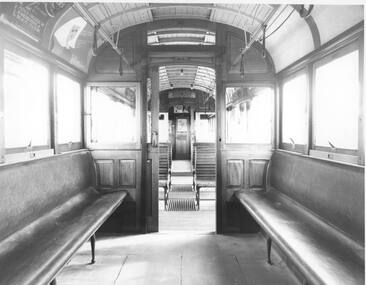
Photograph - Black & White Photograph/s, Melbourne & Metropolitan Tramways Board (MMTB), mid 1970's
... Black and White Photograph of the interior of W2 537 showing the detail of the interior woodwork, hand rails, seating, doors, lights etc. Photo c1960, 1970's reproduction the original print? ...Black and White Photograph of the interior of W2 537 showing the detail of the interior woodwork, hand rails, seating, doors, lights etc. Photo c1960, 1970's reproduction the original print? ...Black and White Photograph of the interior of W2 537 showing the detail of the interior woodwork, hand rails, seating, doors, lights etc. Photo c1960, 1970's reproduction the original print? Printed on Kodak Paper. 2nd copy added from donation of Geoff Warburton 7/10/17.Very faintly in pencil in top right hand corner "1975 Pre sale" 2nd copy = "587-interior-MTMB" in pencil on rear.trams, tramways, w2 class, interiors, mmtb, tram 537 -
 Ballarat Tramway Museum
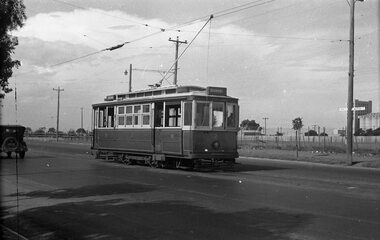
Negative - SECV Geelong 2 at North terminus, Wal Jack, early 1950's
... The metal gates have been replaced with doors, tail lights have been fitted, but no mirrors - c1950/51...The metal gates have been replaced with doors, tail lights have been fitted, but no mirrors - c1950/51 Yields information about Geelong 2 and the North terminus early 1950s. ...Negative and Digital images from the Wal Jack Geelong Negative file of Geelong 2 at the North terminus. The metal gates have been replaced with doors, tail lights have been fitted, but no mirrors - c1950/51Yields information about Geelong 2 and the North terminus early 1950s.Negativetrams, tramways, geelong, north, tram 2 -
 Lakes Entrance Historical Society
Photograph - Historic House, 30 Church Street. Lakes Entrance 1999
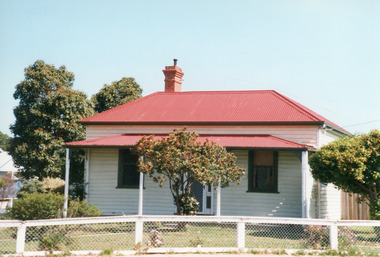
... Colour photograph of a timber residence with hipped roof situated at 30 Church Street. Front door has window lights beside and above door. Sash windows. ...Houses Heritage Study Colour photograph of a timber residence with hipped roof situated at 30 Church Street. Front door has window lights beside and above door. Sash windows. ...Some early residents : Pa & Ma Powell, Race Mitchelson. Still occupied 2012.|Also One other colour photograph similar.Colour photograph of a timber residence with hipped roof situated at 30 Church Street. Front door has window lights beside and above door. Sash windows. Lakes Entrance Victoriahouses, heritage study -
Lakes Entrance Historical Society
Photograph - Maranui House, Lakes Entrance c1920, Valentine Series
... Black and white photograph of Broomes Maranui House, showing a double storied timber building with balcony, sash windows, doors with fan lights and side lights. Hedge and picket fence at front. ...Lakes Entrance Prince Regent Theatre was built on block at right of Maranui in 1926 Guesthouses Architecture Township Fences Maranui House Lakes Entrance Black and white photograph of Broomes Maranui House, showing a double storied timber building with balcony, sash windows, doors with fan lights and side lights. Hedge and picket fence at front. ...Maranui History as told by Rod Hooper SC Charley and Stella Hooper were married in Melbourne in 1944 and honeymooned at Broomes. Then in 1946 they purchased it from Broome’s. A large recreation room was added at the rear in 1957. A big renovation was undertaken in 1961-62 with the front completely remodelled. When the restaurant was built at the rear they were granted a liquor license in 1966 after objections by Crea’s at Glenara and the Central Hotel. Charley, who did most of the cooking for guests, added Lakes Entrance flathead tails to the menu which was an immediate hit. Today they are a staple menu option for most Lakes Entrance eating establishments. Around 1968 Hoopers purchased the police station and land at the rear where they relocated a old house that was used for staff accommodation. Charley’s intention was to build a motel and connect it to Maranui but ill health saw his plans fail to come to fruition. He died in 1970. Stella, along with children Bev, Glen and Rod continued to run Maranui till they sold to the Savage family in 1976. Lakes Entrance Prince Regent Theatre was built on block at right of Maranui in 1926Black and white photograph of Broomes Maranui House, showing a double storied timber building with balcony, sash windows, doors with fan lights and side lights. Hedge and picket fence at front. Part of Police Station visible at left, vacant block at right with picket fence. Lakes Entrance VictoriaMaranui House Lakes Entranceguesthouses, architecture, township, fences -
Lakes Entrance Historical Society
Photograph - Maranui Guest House Lakes Entrance Victoria c1946
... A timber double storied building with upstairs balcony and down stairs veranda across front, sash windows, doors with side lights and fan lights, hedge at front enclosed by picket fence. ...A timber double storied building with upstairs balcony and down stairs veranda across front, sash windows, doors with side lights and fan lights, hedge at front enclosed by picket fence. ...Maranui History as told by Rod Hooper SC Charley and Stella Hooper were married in Melbourne in 1944 and honeymooned at Broomes. Then in 1946 they purchased it from Broome’s. A large recreation room was added at the rear in 1957. A big renovation was undertaken in 1961-62 with the front completely remodelled. When the restaurant was built at the rear they were granted a liquor license in 1966 after objections by Crea’s at Glenara and the Central Hotel. Charley, who did most of the cooking for guests, added Lakes Entrance flathead tails to the menu which was an immediate hit. Today they are a staple menu option for most Lakes Entrance eating establishments. Around 1968 Hoopers purchased the police station and land at the rear where they relocated a old house that was used for staff accommodation. Charley’s intention was to build a motel and connect it to Maranui but ill health saw his plans fail to come to fruition. He died in 1970. Stella, along with children Bev, Glen and Rod continued to run Maranui till they sold to the Savage family in 1976. Black and white photograph of Hoopers Maranui Guest House. A timber double storied building with upstairs balcony and down stairs veranda across front, sash windows, doors with side lights and fan lights, hedge at front enclosed by picket fence. On right of photo, fibro cement Prince Regent Theatre, built 1926. Lakes Entrance VictoriaMaranui Lakes Entranceguesthouses, architecture, entertainment -
 Bendigo Historical Society Inc.
Plan - MARKS COLLECTION: DRAWING OF ENTRANCE HALL FORTUNA VILLA
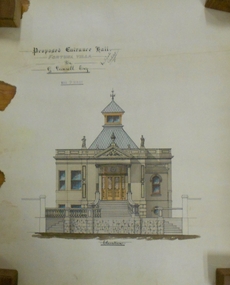
... Drawing is hand coloured and depicts stone building, entrance steps leading to double glass doors with side lights beside and above doors. Turret on top of building. ...Drawing is hand coloured and depicts stone building, entrance steps leading to double glass doors with side lights beside and above doors. Turret on top of building. ...Laminated drawing of entrance hall to Fortuna Villa. Drawing is hand coloured and depicts stone building, entrance steps leading to double glass doors with side lights beside and above doors. Turret on top of building. On bottom of drawing is written 'Elevation' on top of plan Proposed Entrance Hall Fortuna Villa for G. Lansell Esq. Signed by W. Beebe, Architect.bendigo, buildings, fortuna villa -
 Melbourne Tram Museum
Document - Instruction, Metropolitan Transit Authority (MTA), "Operation of Z class Trams", mid 1980's
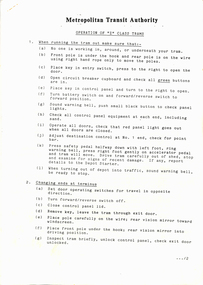
... Duplicated A4p 9 page document titled "Operation of Z class Trams", providing instructions for the operation of Z class trams, fault finding, running out, changing ends, brake issues, defective doors, track brake, lights, automatic points, loud speaker, Public Address, safety, hot weather, tram No. 5, Z3 tramcars, slip indication, changing destinations, overspeed and defects....Trams tramways MMTB Z class Training Operations Instructions Faults Duplicated A4p 9 page document titled "Operation of Z class Trams", providing instructions for the operation of Z class trams, fault finding, running out, changing ends, brake issues, defective doors, track brake, lights, automatic points, loud speaker, Public Address, safety, hot weather, tram No. 5, Z3 tramcars, slip indication, changing destinations, overspeed and defects. ...Duplicated A4p 9 page document titled "Operation of Z class Trams", providing instructions for the operation of Z class trams, fault finding, running out, changing ends, brake issues, defective doors, track brake, lights, automatic points, loud speaker, Public Address, safety, hot weather, tram No. 5, Z3 tramcars, slip indication, changing destinations, overspeed and defects.trams, tramways, mmtb, z class, training, operations, instructions, faults -
Marysville & District Historical Society
THE TRIANGLE NEWS-VOL 5 NO 6-MARCH 14 1980
... lights operating...bowling club...red cross door...marysville victoria australia new anglican church rector & family chariots at ballerat begonia festival eildon explorer night steavensons falls lights operating bowling club red cross door knock rodeo report betty's competition community care centre tupperware party think it over red cross street stall success marysville cricket club presentation night kindergarten roster vestry meeting christ church building fund marysville primary school sports fire brigade footy club annual meeting moomba art show bingo notice to all supporters anglican church news stuart smith honours at maryborough THE TRIANGLE NEWS-VOL 5 NO 6-MARCH 14 1980 ...marysville, victoria, australia, new anglican church rector & family, chariots at ballerat begonia festival, eildon explorer night, steavensons falls lights operating, bowling club, red cross door knock, rodeo report, betty's competition, community care centre, tupperware party, think it over, red cross street stall success, marysville cricket club presentation night, kindergarten roster, vestry meeting, christ church building fund, marysville primary school sports, fire brigade, footy club, annual meeting, moomba art show, bingo, notice to all supporters, anglican church news, stuart smith honours at maryborough -
 City of Moorabbin Historical Society (Operating the Box Cottage Museum)
Musical Equipment, Gramaphone Edison c1900, late 19C / early 20C
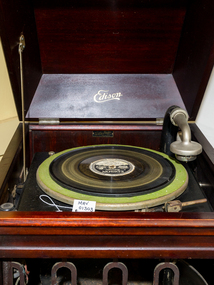
... The phonograph was invented in 1877 by Thomas Edison. in USA and Alexander Graham Bell's Volta Laboratory made several improvements in the 1880s and introduced the graphophone, This Edison was donated to CMHs by the family of John Box 1841-1913 This gramophone belonged to John Box 1841-1913 an early settler in the area of Henry Dendy's Special Survey Brighton 1841 manufactured objects, music, musical records, long playing records, gramophone, phonogram, wireless, edison thomas, edison pty ltd, electric lights; EDISON A wooden cabinet with a lift up lid enclosing a turntable , record , trumpet and handle . This cabinet stands on another storage cabinet with shelf and door Musical Equipment, Gramaphone Edison c1900 Thomas Edison ...A Gramophone / Phonogram is a device for the mechanical recording and reproduction of sound. The phonograph was invented in 1877 by Thomas Edison. in USA and Alexander Graham Bell's Volta Laboratory made several improvements in the 1880s and introduced the graphophone, This Edison was donated to CMHs by the family of John Box 1841-1913This gramophone belonged to John Box 1841-1913 an early settler in the area of Henry Dendy's Special Survey Brighton 1841A wooden cabinet with a lift up lid enclosing a turntable , record , trumpet and handle . This cabinet stands on another storage cabinet with shelf and doorEDISONmanufactured objects, music, musical records, long playing records, gramophone, phonogram, wireless, edison thomas, edison pty ltd, electric lights; -
 City of Moorabbin Historical Society (Operating the Box Cottage Museum)
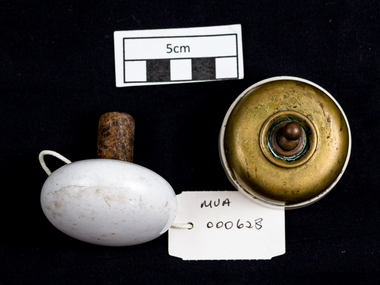
Lights, porcelain, wall, electric light switch; Door Knob Porcelain, early 20th C
... Lights, porcelain, wall, electric light switch; Door Knob Porcelain ...lights...porcelain...electricity...early settlers...moorabbin...cheltenham...bentleigh...box william...box elizabeth...rietman august...rietman frieda...market gardeners...flower gardens...seedling nurseries...world war 1 1914-18...war memorials...sculpture...pottery...pressed concrete...door...An Ivory Porcelain Base Single Light Switch with antique Brass top b) A porcelain door knob Both items used in Box Cottage early 20th C Lights, porcelain, wall, electric light switch; Door Knob Porcelain British Made ...Both the Light switch and Door knob were used in Box Cottage during the late 19thC and early 20thC by the Box and Rietman families. William and Elizabeth Box purchased the two ten acre Lots of land with the Cottage in 1868 where they raised their family of 12 children and developed a flower garden producing seedlings. August and Frieda Rietman rented the Cottage 1917 with 1 acre of land and purchased it in 1935 where they raised 2 children while August established Rietman's Landscaping Pty Ltd making pressed concrete garden furniture. Porcelain is a ceramic material made by heating materials, generally including kaolin, in a kiln to temperatures between 1,200 and 1,400 °C The toughness, strength and translucence of porcelain, relative to other types of pottery, arises mainly from vitrification and the formation of the mineral mullite within the body at these high temperatures. Porcelain and other ceramic materials have many applications in engineering, especially ceramic engineering. Porcelain is an excellent insulator for use at high voltage, especially in outdoor applications, see Insulator (electricity)#Material. Examples include: terminals for high voltage cables, bushings of power transformers, insulation of high frequency antennas and many other components. Both the Light switch and Door knob were used in Box Cottage during the late 19thC and early 20thC by the Box and Rietman families. William and Elizabeth Box purchased the land with Cottage in 1868 and raised their familya) An electric light switch that would be attached to a wall. An Ivory Porcelain Base Single Light Switch with antique Brass top b) A porcelain door knob Both items used in Box Cottage early 20th Ca) On base BRITISH MADE / ENGLAND / 4 / 6959 lights, porcelain, electricity, early settlers, moorabbin, cheltenham, bentleigh, box william, box elizabeth, rietman august, rietman frieda, market gardeners, flower gardens, seedling nurseries, world war 1 1914-18, war memorials, sculpture, pottery, pressed concrete, door handles, door knobs -
Glen Eira Historical Society
Document - Shoobra Road, 22, Elsternwick
... Gives detailed description of the late Edwardian home, interior features, carved timber archway, leadlighted doors, wall panelling and mouldings; includes room descriptions and family living area. 2/Handwritten notes on occupier of 22 Shoobra Road from 1910, 1913, 1923, 1942, 1948 and 1960 taken from Sands and McDougall by Claire Barton Elsternwick Shoobra Rd Real estate agents Edwardian style Rowan Street Arches Architectural features Lead lights Hocking Stuart Parsons Rea Mdm Music teacher Bricks Flats Cooper Montague The Bungalow Document Shoobra Road, 22, Elsternwick ...Two articles on 22 Shoobra Road Elsternwick: 1/Newspaper article from Residential Property Weekly dated 26/05/2000; includes photo. Gives detailed description of the late Edwardian home, interior features, carved timber archway, leadlighted doors, wall panelling and mouldings; includes room descriptions and family living area. 2/Handwritten notes on occupier of 22 Shoobra Road from 1910, 1913, 1923, 1942, 1948 and 1960 taken from Sands and McDougall by Claire Bartonelsternwick, shoobra rd, real estate agents, edwardian style, rowan street, arches, architectural features, lead lights, hocking stuart, parsons rea mdm, music teacher, bricks, flats, cooper montague, the bungalow -
 Queenscliffe Maritime Museum
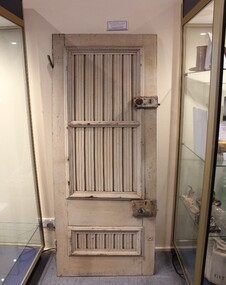
Functional object - Door, cabin
... lights to attract attention, but met with no response. Sighting the Cape Shank lighthouse he sailed towards it, then wore the Victoria Tower onto a port tack in a westerly direction. No soundings nor observations were taken, as Captain Kerr was confident he was on a safe course and knew his position tolerably well. door cabin victoria tower shipwrecks Patent disk on top lock, W2 SR on either side of coat of arms. ...The Victoria Tower made landfall after a voyage of 85 days from Liverpool, and headed towards the Port Phillip Heads pilot boarding ground. It had been an uneventful voyage despite some contrary headwinds (causing the long voyage) and problems with the compasses, that could not be relied upon. The weather was hazy, with gale force winds and heavy rain squalls. Reaching the pilot ground Captain Kerr fired rockets and burned blue lights to attract attention, but met with no response. Sighting the Cape Shank lighthouse he sailed towards it, then wore the Victoria Tower onto a port tack in a westerly direction. No soundings nor observations were taken, as Captain Kerr was confident he was on a safe course and knew his position tolerably well. Slatted wooden cabin door with 2 locksPatent disk on top lock, W2 SR on either side of coat of arms. Number 60 in the middle and 1A carpenter patentee underneathdoor, cabin, victoria tower, shipwrecks -
 Victoria Police Museum
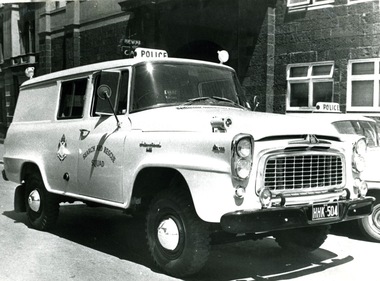
Photograph (police car)
... door. There is a police light on the roof and spot lights at diagonals on the roof with a siren on right hand front light casing. ...door. There is a police light on the roof and spot lights at diagonals on the roof with a siren on right hand front light casing. ...International Search and Rescue Squad car, registration number HHK-504, with police insignia below side window, behind front door. There is a police light on the roof and spot lights at diagonals on the roof with a siren on right hand front light casing. Circa 1960police vehicles; motor transport branch; motor transport section; search and rescue squad -
 Glen Eira Historical Society
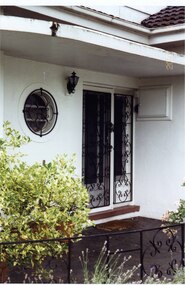
Photograph, Beauville Avenue, 9, Murrumbeena, 2001
... The estate is distinguished by its aesthetic values, as is the earlier and comparable Hillcrest Estate, which are formed by a combination of restrained diversity in house styles, with the exception of no. 30 in the emerging International style, and by a landscaped garden environment. murrumbeena houses beauville avenue architectural styles 1930's inter war style a.v. jennings av jennings jennings brick houses beauville estate porches sir albert victor jennings a v jennings construction co beauville estate heritage area glen eira city council architectural features jennings group limited land subdivision gardens beauville historic area porthole windows double doors cast iron work lights glass doors Colour photograph of the front entrance to a white rendered house featuring a porthole style window with a decorative cast iron work grid, a wall light, double cast iron work doors in front of the double glass doors and a meter box. ...Originally labelled "Beauville Estate, Established 1936, Still Thriving 65 years on, 10th March 2001", the Beauville Estate Album contains colour photographs of houses in the Estate. They were taken around the time of the Beauville Estate’s 65th Heritage Celebration held on 10/03/2001 and donated to the Caulfield Historical Society shortly afterwards. Photographer Bev Baxter. See also 2104A-11 and 2104A-12.City of Glen Eira’s Heritage Management Plan Vol 2 p79 (this is p84 of the pdf version) – HO12 Beauville Estate and environs, Murrumbeena: The Beauville Historic Area is important at the State level as the first large housing estate undertaken by the AV Jennings Construction Co, later Jennings Group Limited, Victoria’s largest home builder. It is important also as a very early estate development incorporating a range of features other than houses and including made roads, shops and recreation facilities. In this respect it was the forerunner of the comprehensively planned housing estate of the post war era. The estate is distinguished by its aesthetic values, as is the earlier and comparable Hillcrest Estate, which are formed by a combination of restrained diversity in house styles, with the exception of no. 30 in the emerging International style, and by a landscaped garden environment. Colour photograph of the front entrance to a white rendered house featuring a porthole style window with a decorative cast iron work grid, a wall light, double cast iron work doors in front of the double glass doors and a meter box. Wrought iron balustrading can also be seen edging the porch in the foreground. murrumbeena, houses, beauville avenue, architectural styles, 1930's, inter war style, a.v. jennings, av jennings, jennings, brick houses, beauville estate, porches, sir albert victor jennings, a v jennings construction co, beauville estate heritage area, glen eira city council, architectural features, jennings group limited, land subdivision, gardens, beauville historic area, porthole windows, double doors, cast iron work, lights, glass doors -
 Bendigo Historical Society Inc.
Photograph - T C WATTS & SON COLLECTION: 41 DROUGHT STREET, BENDIGO, 1936
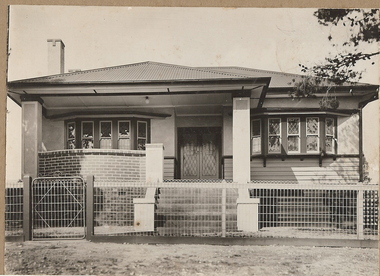
... House, weather board below windowsills, rough cast above, two bow windows of 10 lights all leadlighted, twin leadlighted doors, roughcast columns support verandah, front gable, balustraded steps and curved brick wall to verandah. ...House, weather board below windowsills, rough cast above, two bow windows of 10 lights all leadlighted, twin leadlighted doors, roughcast columns support verandah, front gable, balustraded steps and curved brick wall to verandah. ...BHS CollectionBlack and white photograph mounted on rectangular brown board. House, weather board below windowsills, rough cast above, two bow windows of 10 lights all leadlighted, twin leadlighted doors, roughcast columns support verandah, front gable, balustraded steps and curved brick wall to verandah. Corrugated iron hipped roof, rough cast chimney with cap of exposed brick. Timber framed fence with woven wire covering and woven wire to gate frame. On back of photo 'Mr. Irwin, Drought Street, sewered £700 for house and land on which it stands 80 x 66 or £875 for house all land through to Stout Street 16.9.36' 2012 photo of house attached to record.Frank H. Jeffree, Photo, Bendigobendigo, business, t c watts and son -
 Ballarat Tramway Museum
Photograph - SECV Geelong tram 24 in Ryrie St, c1949
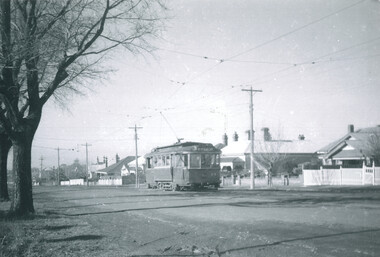
... Tram has been "modernised" with wooden doors or gates replacing the folding metal ones, but route indicator lights remain. ...Tram has been "modernised" with wooden doors or gates replacing the folding metal ones, but route indicator lights remain. ...Photograph shows Geelong tram 24, showing City, inbound in Ryrie St opposite Eastern Park, on the Eastern Park - City shuttle, late 1940s. Tram has been "modernised" with wooden doors or gates replacing the folding metal ones, but route indicator lights remain. Photographer unknown, c1949. Photo may be the same photographer and date as that of item 10300.Yields information about Geelong tram 24 and Black and white photograph printed on Kodak Royal paper.geelong, tramways, tram 24, eastern park, ryrie st -
 Ballarat Tramway Museum
Slide - 35mm slide/s, Travis Jeffrey, c1961
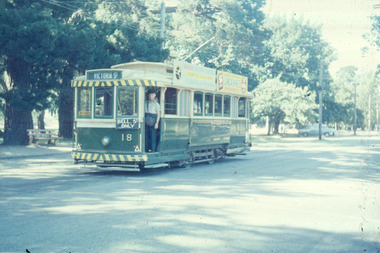
... door opened on wrong side. Posed photograph. Tram is in the process of being fitted with dash canopy lights and tiger strips. ...door opened on wrong side. Posed photograph. Tram is in the process of being fitted with dash canopy lights and tiger strips. ...Agfa plastic mount (blue base, white cover) with a photo of No. 18 at Gardens Loop, showing Victoria St., note Bell St. auxiliary board, not correct and door opened on wrong side. Posed photograph. Tram is in the process of being fitted with dash canopy lights and tiger strips. Roof advertisements - Whites Florist shop of 2 Sturt St. and Lancashires. Slide rescanned at 3200 dpi 24-10-2020, jpg replaced, tiff file retained. This file was scanned in 2003 and may show colour changes."BAS 9" in penciltramways, trams, gardens loop, wendouree parade, tram 18 -
 Ballarat Tramway Museum
Slide - 35mm slide/s, Travis Jeffrey, 1961
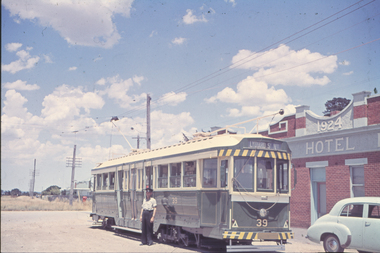
... lights and tiger strips. Has the Royal Hotel Sebastopol in the background. Note differences between tram in depot which has been fitted with step and access door at this end. ...lights and tiger strips. Has the Royal Hotel Sebastopol in the background. Note differences between tram in depot which has been fitted with step and access door at this end. ...Agfa plastic mount (blue base, white cover) with a photo of No. 39 at Sebastopol terminus, with No. 1 end facing. Photo taken early 1961. Tram is in the process of being fitted with dash canopy lights and tiger strips. Has the Royal Hotel Sebastopol in the background. Note differences between tram in depot which has been fitted with step and access door at this end. Slide rescanned at 3200 dpi 24-10-2020, jpg replaced, tiff file retained. This file was scanned in 2003 and may show colour changes."BAS 14" in penciltramways, trams, sebastopol, royal hotel, tram 39 -
 Ballarat Tramway Museum
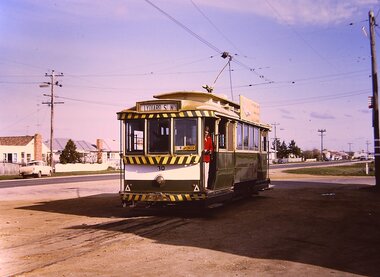
Photograph - Digital image Set of 6, W. J. Llewelyn, c1970
... door. Has a Pay as you enter sign. Shows the houses behind the tram in Albert St. .2 - No. 30 leaving the terminus with the hotel and house in the background. .3 - view from inside the tram, looking back along the track towards the terminus. Shows the nature of the Albert St at the time. .4 - No. 30 with Chris Phillips boarding the tram. .5 and .6 - single trucker at dusk with all the lights...door. Has a Pay as you enter sign. Shows the houses behind the tram in Albert St. .2 - No. 30 leaving the terminus with the hotel and house in the background. .3 - view from inside the tram, looking back along the track towards the terminus. Shows the nature of the Albert St at the time. .4 - No. 30 with Chris Phillips boarding the tram. .5 and .6 - single trucker at dusk with all the lights ...Set of six Digital images of All by Chris Phillips. c1970 .1 - No. 30 at Sebastopol terminus showing Lydiard St Nth destination with a lady standing in the front door. Has a Pay as you enter sign. Shows the houses behind the tram in Albert St. .2 - No. 30 leaving the terminus with the hotel and house in the background. .3 - view from inside the tram, looking back along the track towards the terminus. Shows the nature of the Albert St at the time. .4 - No. 30 with Chris Phillips boarding the tram. .5 and .6 - single trucker at dusk with all the lights on.trams, tramways, sebastopol, albert st, night photo, tram 30 -
 Ballarat Tramway Museum
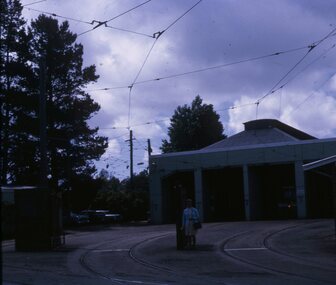
Slide - 27 mm sq slide/s - set of 7, Lilian Butler, tramcars at the depot at or just after the time of closure, Sep. 1971
... Set of seven Colour 27 x 27 mm slides in Kodachrome white cardboard mounts of activities and tramcars at the depot at or just after the time of closure. .1 - view of the depot, under exposed or a lady, possibly Lil Butler standing in front of the gates of the depot with some tramcars in the shed. .2 - view with 1 road doors closed of the scrubber tram on "0" road, derailment marks, and the tennis court lighting. .3 - partial view of a tram (bogie) just clear of one the depot doors. .4 - internal view of the depot - no lights - very underexposed - but shows the gloom! ...Ballarat Tramways trams SEC Depot Depot Wendouree Parade Closure Tramcars Lifeguard Loading Trams Scrubber tram 37 Set of seven Colour 27 x 27 mm slides in Kodachrome white cardboard mounts of activities and tramcars at the depot at or just after the time of closure. .1 - view of the depot, under exposed or a lady, possibly Lil Butler standing in front of the gates of the depot with some tramcars in the shed. .2 - view with 1 road doors closed of the scrubber tram on "0" road, derailment marks, and the tennis court lighting. .3 - partial view of a tram (bogie) just clear of one the depot doors. .4 - internal view of the depot - no lights - very underexposed - but shows the gloom! ...Yields information about the SEC Wendouree Parade depot and the activities at the depot after closure.Set of seven Colour 27 x 27 mm slides in Kodachrome white cardboard mounts of activities and tramcars at the depot at or just after the time of closure. .1 - view of the depot, under exposed or a lady, possibly Lil Butler standing in front of the gates of the depot with some tramcars in the shed. .2 - view with 1 road doors closed of the scrubber tram on "0" road, derailment marks, and the tennis court lighting. .3 - partial view of a tram (bogie) just clear of one the depot doors. .4 - internal view of the depot - no lights - very underexposed - but shows the gloom! .5 - photo showing door step of a bogie tram. .6 - ditto with the lifeguard reset rod lifted - shows damage to the front panel of the tram. .7 - tram being readied for lifting or loading with E. Davis alongside - see Reg Item 6453 for a colour print as well. Negative of this filed with 6453. Slide mounts dated September 1971 Photo from the collection of Lilian Butler.ballarat, tramways, trams, sec depot, depot, wendouree parade, closure, tramcars, lifeguard, loading trams, scrubber, tram 37 -
 Ballarat Tramway Museum
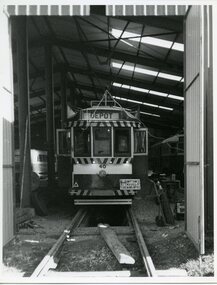
Photograph - Black & White Photograph/s, 8 or 9/1981
... Track has been laid outside the door, but no overhead in position as yet. The tram has its lights on and a wandering lead connected. ...Track has been laid outside the door, but no overhead in position as yet. The tram has its lights on and a wandering lead connected. ...Black and White photograph of BTM No. 40 on the front of No. 5 road at the depot, August or September 1981 to be ready for use during the 10th anniversary of the closure of the tramway. Track has been laid outside the door, but no overhead in position as yet. The tram has its lights on and a wandering lead connected. In the background can be seen Geoff Cargeeg's stored bus and W5 671. Photo printed on Kodak paper. See July 1981 Fares Please! for background. see July 1981 Fares Please and Annual Reportstramways, trams, btm, depot, trackwork, tram 40 -
 Ballarat Tramway Museum
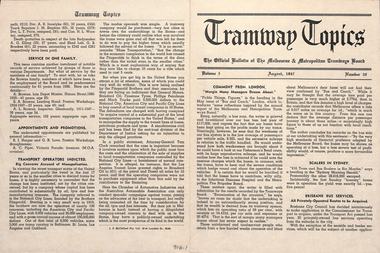
Magazine, Melbourne and Metropolitan Tramways Board (MMTB), "Tramway Topics" - M&MTB, 1947 and 1948
... No profit - no sharing (Kansas City), Just why - prices and fares in the US, MMTB staff needs from 5 day week, Section fares in the US, trams at L5,500 each (Sheffield), The unfinished dance (Perth and Hay St.), Thanks from Bristol, Interest in Melbourne trams (letters to the Board), Adelaide's Deficit, Fares up in Sydney and Adelaide, Moscow transport, No trolleybuses thankyou in Belgium, thanks to the Traffic staff, the Late Inspector Boardman, 24,000 irregularities (passengers), Sth London trams, Melbourne's trams amazing, Winnipeg's transport Growth and Standing passengers - London. 918.9 - 59 - July 1948 - 4 pages - The Red Light - RACV and red lights on trams, A request from Argentina,, where our SW6's are, the last 5c fare (New York), Work in the Fog, Traffic headaches in the US, Brisbane's Streamlined tram, Safety glass, Now for La Trobe St. The Tramways Band (South St.), Transport Losses in Sydney. 918.10 - 60 - August 1948 - 4 pages - from Pretoria (Comments on Melbourne), Buses with sliding Doors (OPS1), PCC trams, trams of the future (Glasgow), new trams in Rome, Clearing up the Parking Problem (Sacramento), Fantastic figures - world tram car figures - anti tram, Trainer Drivers, the railway trams and disaster to Liverpool trams, Monte Video trams purchased. 918.11 - 61 - September 1948 - 4 pages - The Year's Work (Melbourne), How Absurd (transport management), items from Britain, Tramway Band News, Food from Melbourne (to Scotland floods), London's Extraordinary traffic, New trams for The Hague, who are the road hogs, the La Trobe St. extension, out clothing factory, Preston Workshops, Toil on the tracks, how the money comes in (fares distribution). 918.12 - 62 - October 1948 - 4 pages - Melbourne's tram fares, Bourke St., Sydney's Street Transport, Scientist or Baker (London), Trolleybuses out of favour, London's poor bus fleet, tram and bus fares, The band at Wattle Park, Madras tramway deal, 121 decide for 6000 (Sydney Sunday trams), Preston workshops, A Engineer's tribute, Was the Street Quiz on trams faked? ...No profit - no sharing (Kansas City), Just why - prices and fares in the US, MMTB staff needs from 5 day week, Section fares in the US, trams at L5,500 each (Sheffield), The unfinished dance (Perth and Hay St.), Thanks from Bristol, Interest in Melbourne trams (letters to the Board), Adelaide's Deficit, Fares up in Sydney and Adelaide, Moscow transport, No trolleybuses thankyou in Belgium, thanks to the Traffic staff, the Late Inspector Boardman, 24,000 irregularities (passengers), Sth London trams, Melbourne's trams amazing, Winnipeg's transport Growth and Standing passengers - London. 918.9 - 59 - July 1948 - 4 pages - The Red Light - RACV and red lights on trams, A request from Argentina,, where our SW6's are, the last 5c fare (New York), Work in the Fog, Traffic headaches in the US, Brisbane's Streamlined tram, Safety glass, Now for La Trobe St. The Tramways Band (South St.), Transport Losses in Sydney. 918.10 - 60 - August 1948 - 4 pages - from Pretoria (Comments on Melbourne), Buses with sliding Doors (OPS1), PCC trams, trams of the future (Glasgow), new trams in Rome, Clearing up the Parking Problem (Sacramento), Fantastic figures - world tram car figures - anti tram, Trainer Drivers, the railway trams and disaster to Liverpool trams, Monte Video trams purchased. 918.11 - 61 - September 1948 - 4 pages - The Year's Work (Melbourne), How Absurd (transport management), items from Britain, Tramway Band News, Food from Melbourne (to Scotland floods), London's Extraordinary traffic, New trams for The Hague, who are the road hogs, the La Trobe St. extension, out clothing factory, Preston Workshops, Toil on the tracks, how the money comes in (fares distribution). 918.12 - 62 - October 1948 - 4 pages - Melbourne's tram fares, Bourke St., Sydney's Street Transport, Scientist or Baker (London), Trolleybuses out of favour, London's poor bus fleet, tram and bus fares, The band at Wattle Park, Madras tramway deal, 121 decide for 6000 (Sydney Sunday trams), Preston workshops, A Engineer's tribute, Was the Street Quiz on trams faked? ...16 issues of the, "Tramway Topics" - "The Official Bulletin of The Melbourne & Metropolitan Tramways Board", issues 50, 51, 53 to 61, issued between August 1947 and October 1948. All printed on cream coloured paper. Headings of significance are listed below. Common items were; Retiring and Death Gratuities, Appointments and Promotions, long service records. 918.1 - 50 - August 1947 - 4 pages - Comment from London, Scalers in Sydney, Brisbane Services, PAYE to go, Newcastle wants to own the trams, Diesels in favour, Fares in London and Melbourne, Something like a deficit, a remarkable record (substations), Work of Testing Department, Accidents are Expensive, and Transport Operations Indicted (National City Lines - USA) 918.2 - 51 - Sept. 1947 - 4 pages - Our SW6 tram, Transport in the US, Conductresses again, How bus costs have risen, Footscray Extensions, Of Course you are good (drivers and driving), How Fares Go, 40-Hour week. 918.3 - 53 - November 1947 - 4 pages - No increase in fares, an unusually interesting tram (Glasgow), alcohol and driving do not mix, pedestrian crossing case, how wages have increased, Russia prefers trams, Sydney's "Honesty" joke, Higher Fares wanted, Tramcars as hearses, an editor on Trolley buses, buses lead - but at a cost (Leicester), the Non paying passenger (Sydney) 918.4 - 54 - December 1947 - 4 pages - Christmas 1947 (Chairman's notes on the future), New Stockholm tram, according to use and wont - Birmingham, Trams in the USA, Board re-appointed, Buses few, so coaches are hired (London), transport from Footscray, "Philadelphians must have the best" - so they are given trams!, The Merri Creek Bridge and appreciations. 918.5 - 55 - March 1948 - 4 pages - That 4/- doubts arising over the 5-day week, Buses carried pick-a-back, Sydney to lose L500,000 this year, Trolleybuses, Rapid transit with PCC trams, another compliment (rosters in Perth), the bill for it all (Melbourne tram strike), an Extraordinary award (Washington DC), Prison tram's last load (Sydney), Douglas horse trams, Lord Ashfield, Glasgow's all night buses. 918.6 -56 - April 1948 - 4 pages - The Board's ambassadors (MMTB Conductors), Brisbane's bus routes, Another deficit in sight (Liverpool UK), Poor Paris, The resilient wheel, the 5-day week rosters, a subway and its costs (Detroit), PCC's in Belgium, South London Trams. 918.7 -57 -May 1948 - 4 pages - Spread of Hours Payment - 5 day week, weak breaks, Buses multiply - losses expand (Manchester UK), Static Electricity, L750,000 deficit in Sydney, praise for conductresses, no purchase by Newcastle, a loss at Adelaide, Transport in Switzerland, Denmark's giant bus, new trams for Glasgow, Grants for sports, single deckers out of favour (UK buses), Transport by Water (London). 918.8 - 58 - June 1948 - 8 pages - Stirring up strife (Melb.) No profit - no sharing (Kansas City), Just why - prices and fares in the US, MMTB staff needs from 5 day week, Section fares in the US, trams at L5,500 each (Sheffield), The unfinished dance (Perth and Hay St.), Thanks from Bristol, Interest in Melbourne trams (letters to the Board), Adelaide's Deficit, Fares up in Sydney and Adelaide, Moscow transport, No trolleybuses thankyou in Belgium, thanks to the Traffic staff, the Late Inspector Boardman, 24,000 irregularities (passengers), Sth London trams, Melbourne's trams amazing, Winnipeg's transport Growth and Standing passengers - London. 918.9 - 59 - July 1948 - 4 pages - The Red Light - RACV and red lights on trams, A request from Argentina,, where our SW6's are, the last 5c fare (New York), Work in the Fog, Traffic headaches in the US, Brisbane's Streamlined tram, Safety glass, Now for La Trobe St. The Tramways Band (South St.), Transport Losses in Sydney. 918.10 - 60 - August 1948 - 4 pages - from Pretoria (Comments on Melbourne), Buses with sliding Doors (OPS1), PCC trams, trams of the future (Glasgow), new trams in Rome, Clearing up the Parking Problem (Sacramento), Fantastic figures - world tram car figures - anti tram, Trainer Drivers, the railway trams and disaster to Liverpool trams, Monte Video trams purchased. 918.11 - 61 - September 1948 - 4 pages - The Year's Work (Melbourne), How Absurd (transport management), items from Britain, Tramway Band News, Food from Melbourne (to Scotland floods), London's Extraordinary traffic, New trams for The Hague, who are the road hogs, the La Trobe St. extension, out clothing factory, Preston Workshops, Toil on the tracks, how the money comes in (fares distribution). 918.12 - 62 - October 1948 - 4 pages - Melbourne's tram fares, Bourke St., Sydney's Street Transport, Scientist or Baker (London), Trolleybuses out of favour, London's poor bus fleet, tram and bus fares, The band at Wattle Park, Madras tramway deal, 121 decide for 6000 (Sydney Sunday trams), Preston workshops, A Engineer's tribute, Was the Street Quiz on trams faked? (The Sun). 918.3 - No. 31 - September 1945 - Year in review - trams more reliable than buses, loss on buses to munitions and Fisherman's bend, ticket checking, Hawthorn clothing factory SW6 trams construction, news from cities in Europe, sub-stations. 918.14 - 64 - September 1949 - higher operating expenses and revenue, school children behaviour, headway recording system - communication issues, golf at Wattle Park, Mr Bell lives in Riversdale Rd. 918.15 - 67 - December 1949 - Record Payment to Consolidated Revenue, payment to MFB etc, flat fares, Latrobe St extension - delayed, fare concessions - who pays, 918.16 - 68 - January 1950 - Bourke St conversion - Risson looking for an early start, fitting of radios to MMTB vehicles, Resilient wheels 918.4 - on top edge in pencil is "Mr Russell", and 918.10 ditto.trams, tramways, mmtb, melbourne, tramways -
 Lakes Entrance Historical Society
Photograph - Nowa Nowa Community Hall 1999
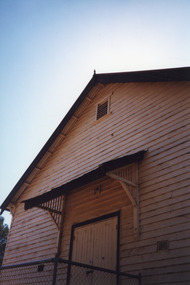
... lights', then a generator, until electricity connected in 1964. Halls Colour photograph of the entry to the Nowa Nowa Community Hall, shows a timber dwelling with gable roof, weather shield over main door. ...Hall built July 1926, funded mainly by public donation, lighting was originally by kerosene lamps, later 'gloria lights', then a generator, until electricity connected in 1964.Colour photograph of the entry to the Nowa Nowa Community Hall, shows a timber dwelling with gable roof, weather shield over main door. Nowa Nowa Victoria.halls -
 Lakes Entrance Historical Society
Photograph - Historic House 10 Hunter Street. Lakes Entrance Victoria 1998, Holding M
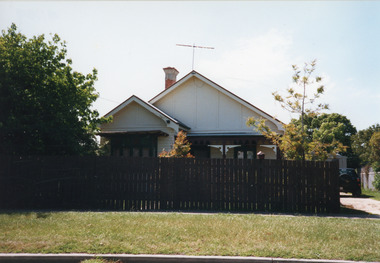
... Photograph shows attractive gable roofed dwelling, bay window across front room window, lights beside front door. Lakes Entrance Victoria...Photograph shows attractive gable roofed dwelling, bay window across front room window, lights beside front door. Lakes Entrance Victoria Photograph Historic House 10 Hunter Street. ...Original house built by Leo Mitchelson 1918c who built many houses around this era. Occupied by Joe Burke and family and Sister Burke, nurse and midwife. Later the Misses Falk. Also One other photograph showing replacement modern home painted grey.Colour photograph of a private residence at 10 Hunter Street. Photograph shows attractive gable roofed dwelling, bay window across front room window, lights beside front door. Lakes Entrance Victoriahouses, heritage study -
Moorabbin Air Museum
Manual (Item) - Ansett Boeing 737 Pneumatics, pressurisation, A/C, Ice & Rain, Lights, Doors & Windows
... Ansett Boeing 737 Pneumatics, pressurisation, A/C, Ice & Rain, Lights, Doors & Windows Manual Ansett Boeing 737 Pneumatics, pressurisation, A/C, Ice & Rain, Lights, Doors & Windows ... -
Moorabbin Air Museum
Manual - Ansett Douglas DC9 technical manuals, DC - 9 Airframe Course Notes
... Ansett Douglas DC9 technical manuals Maintenance checks Dimensions & areas Lifting Levelling Towing & taxiing Parking Standard airplane practices Air conditioning AFCS/Auto throttle Electrical power Equipment/furnishings Fire protection Flight controls Fuel Hydraulics Ice & rain protection Instrument & circuit breaker panels Landing gear Lights Navigation instruments Oxygen Pneumatics Water & waste systems APU General structures Doors & airstairs Technical course notes for Douglas DC-9, circa 1966 2 clip binder DC - 9 Airframe Course Notes Manual Ansett Douglas DC9 technical manuals ...Technical course notes for Douglas DC-9, circa 19662 clip bindernon-fictionTechnical course notes for Douglas DC-9, circa 1966maintenance checks, dimensions & areas, lifting, levelling, towing & taxiing, parking, standard airplane practices, air conditioning, afcs/auto throttle, electrical power, equipment/furnishings, fire protection, flight controls, fuel, hydraulics, ice & rain protection, instrument & circuit breaker panels, landing gear, lights, navigation instruments, oxygen, pneumatics, water & waste systems, apu, general structures, doors & airstairs -
 Melbourne Tram Museum
Photograph - Crew assists uncounscious pregnant woman, mid 1970s
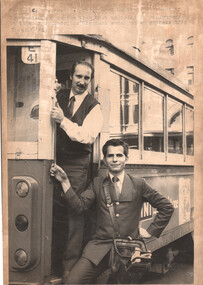
... door. The photo caption is "?? Driver ? Hadara and conductor Harry Nikolaou on the tram that unloaded 90 passengers to take an unconscious pregnant woman on an express trip to hospital." Photo is mid 1970's based on the conductor's uniform and the tram being fitted with markers lights...door. The photo caption is "?? Driver ? Hadara and conductor Harry Nikolaou on the tram that unloaded 90 passengers to take an unconscious pregnant woman on an express trip to hospital." Photo is mid 1970's based on the conductor's uniform and the tram being fitted with markers lights ...Photograph is of two Essendon Depot crew members standing by a tram driver's door. The photo caption is "?? Driver ? Hadara and conductor Harry Nikolaou on the tram that unloaded 90 passengers to take an unconscious pregnant woman on an express trip to hospital." Photo is mid 1970's based on the conductor's uniform and the tram being fitted with markers lights taken at Flinders and Elizabeth St with Fliinders St station in the background. Source unknown.Yields information about a mid 1970s event where a tram was used for emergency transport.Black and white photograph print including a typed caption at the top.Has in red ink on rear "Misc Trams Victoria" and a source stamp which is unreadable.tramcars, tramways, mmtb, uniforms, medical, emergencies, essendon depot
