
Showing 8 items matching "door-to-door sales"
-
 Flagstaff Hill Maritime Museum and Village
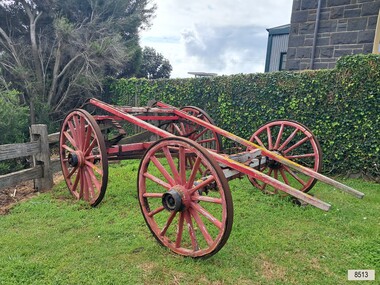
Vehicle - Wagon, Circa 1909
... ...door-to-door sales...Flagstaff Hill Warrnambool Maritime Village Maritime Museum Flagstaff Hill Maritime Museum and Village Shipwreck coast Great Ocean Road southwest Victoria northwest Victoria western district Colac Colac Hospital Colac Licensing Court Thowgla Corryong Garvoc Cooramook Road Warrnambool Petty Sessions Court Warrnambool Hospital Russells Creek Road Ganges Warrnambool Cemetery Uppal Bhopa Jalandhar Hawker’s Licence covered wagon wagon hawker's wagon horse-drawn cart hawker's cart light delivery vehicle hawker travelling salesman travelling hawker door-to-door sales rural salesman rural commerce Prince Duke Clydesdale horse 1997 Pooran Singh Indian immigrant Pat John James Moore Vera Moore John and Vera Moore John Moore Guyatt’s Funerals Kapil Dev Harmel Uppal Avis Quarrell Wagon: a light delivery vehicle once used as a hawker's wagon. ...This wagon was used in towns across south-west Victoria during the first half of the twentieth century by Pooran Singh, an Indian-born immigrant. Singh arrived in Australia alone in 1899 at the age of 30. The following year, at the Colac Licensing Court in western Victoria, he was one of 78 hawkers granted a Hawker’s Licence. According to the Colac Herald, all but two of the applicants appeared to be Asian. While some hawkers registered horse-drawn carts, Singh was one of nineteen licensed to trade on foot, selling door to door. Applicants were encouraged to contribute to a collection for the Colac Hospital. Over time, Pooran Singh came to own his own wagon—a top-of-the-range light delivery vehicle—and a horse named Prince. His work often took him along rough country roads, and for a period, he worked in the Corryong district of north-eastern Victoria, an area popular with hawkers. In September 1909, near Thowgla, he was thrown from his wagon while attempting to navigate a deep rut and was run over by one of its wheels. Although he suffered bruising to his chest, his injuries were not serious. The following year, he was granted a Hawker’s Licence in Corryong. By 1916, Singh was living and working at Garvoc in western Victoria, where that year, he lost his paper licence on Cooramook Road, and he placed a notice in The Standard. In 1918, at the Warrnambool Petty Sessions Court, he was one of four applicants granted renewal of their hawkers’ licences, and each donated ten shillings to Warrnambool Hospital. Throughout these years, Singh became well known to farmers and their families as he travelled across Victoria’s Western District, living and working from his covered wagon. In his later years, Pooran Singh formed a close friendship with John Jandes Moore and his wife, Vera, of Russells Creek, Warrnambool. They offered him the use of their property as a base for his travels and cared for him during his final illness. John Moore was later appointed one of the two executors of Singh’s will. Pooran Singh died in Warrnambool on 8 June 1947, aged 77. His final wish was to be cremated and for his ashes to be returned to India for immersion in the Ganges. The cremation was arranged by Guyett’s Funerals in Warrnambool. Having never married, Singh left his estate to his four nephews, enabling them to buy land and build homes; one later installed a memorial plaque in his honour. In the late 1980s, Guyett’s Funerals placed his ashes in the niche wall at Warrnambool Cemetery as a memorial, while continuing to hope that family instructions might eventually arrive. Nearly 63 years after his death, renewed enquiries brought public attention to the long and respectful care given to his ashes. As a result, the renowned Indian cricketer Kapil Dev travelled to Warrnambool to collect them and escort them to India, helping to fulfil Singh’s final wish. He was joined by one of Singh’s grand-nephews, Harmel Uppal, who had travelled from England. At a formal ceremony on 25 July 2010 commemorating Singh’s life, the ashes were handed to Dev and Uppal, and local resident Avis Quarrell, who had known Singh as a child, read a poem she had written in his memory. She still owned a shell necklace that Singh had made for her mother. Some Warrnambool locals who had been closely involved also travelled to India, where they joined Uppal’s family from the village of Uppal Bhopa, near Jalandhar. On 31 July 2010, Pooran Singh’s ashes were immersed in the Ganges, fulfilling the wish he had expressed more than six decades earlier. After Pooran Singh’s death, his horse and wagon remained on John Moore’s property. When Prince died, he was buried on the beach at Warrnambool. The wagon remained with the Moore family and was occasionally used as a cubby house. In about 1997, John Moore, the son of John Jandes Moore, donated it to Flagstaff Hill. After restoration, the wagon became an attraction in the village, where volunteer Pat and his Clydesdale horse, Duke, offered visitors rides around Flagstaff Hill’s lake. This wagon is significant for its association with an Indian emigrant who used it to earn an income in Australia. It also reflects the vital role of hawkers, who travelled through rural and regional communities in the late nineteenth and early twentieth centuries, supplying food, goods and news. The wagon is also historically significant as a former Flagstaff Hill attraction, offering visitors the experience of horse-drawn rides around the lake.Wagon: a light delivery vehicle once used as a hawker's wagon. It is a four-wheel, horse-drawn vehicle with iron tyres, brakes, spoked wheels painted red with decorative yellow strips on the hubs, a timber shaft, and springs on the undercarriage. It was once a covered wagon, fitted with green, wooden sideboards, a front seat with leather-padded backrest and mounting steps. The late-19th to early-20th-century wagon was once owned by Pooran Singh, a local Indian hawker. flagstaff hill, warrnambool, maritime village, maritime museum, flagstaff hill maritime museum and village, shipwreck coast, great ocean road, southwest victoria, northwest victoria, western district, colac, colac hospital, colac licensing court, thowgla, corryong, garvoc, cooramook road, warrnambool petty sessions court, warrnambool hospital, russells creek road, ganges, warrnambool cemetery, uppal bhopa, jalandhar, hawker’s licence, covered wagon, wagon, hawker's wagon, horse-drawn cart, hawker's cart, light delivery vehicle, hawker, travelling salesman, travelling hawker, door-to-door sales, rural salesman, rural commerce, prince, duke, clydesdale horse, 1997, pooran singh, indian immigrant, pat, john james moore, vera moore, john and vera moore, john moore, guyatt’s funerals, kapil dev, harmel uppal, avis quarrell -
 Mont De Lancey
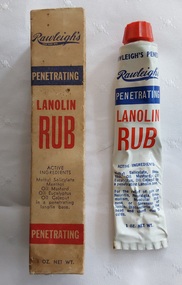
Domestic object, The W.T. Rawleigh Co. Ltd, Rawleigh's Lanolin Rub, mid 1900's
... Rawleigh's medicated products, including lanolin rubs, salves, and ointments, have a long history rooted in door-to-door sales, dating back to the founding of the W.T. ...Rawleigh's medicated products, including lanolin rubs, salves, and ointments, have a long history rooted in door-to-door sales, dating back to the founding of the W.T. ...Rawleigh's medicated products, including lanolin rubs, salves, and ointments, have a long history rooted in door-to-door sales, dating back to the founding of the W.T. Rawleigh Company in 1889. While most famously known for their blue tins of medicated ointment/salve, Rawleigh's produced various topical products in metal tubes and tins during the early-to-mid 20th century, often utilized for minor skin injuries, burns, and chapped skin due to their moisturizing lanolin content. A white, red and blue printed 1oz. net weight tube of Rawleigh's penetrating Lanolin Rub for the relief of pain of Neuritis, Neuralgia, Rheumatism, Muscular Stiffness or soreness of joints. It could be used for discomfort of colds, and an inhalant. The description on the aluminium tube and box give full details of the active ingredients of the product, with directions for use. There is lanolin in the tube.The full branding 'The W. T. Rawleigh Co.Ltd.' and directions for use as above is printed on the the tube and box.inhalents, medications, topical medications -
 Flagstaff Hill Maritime Museum and Village
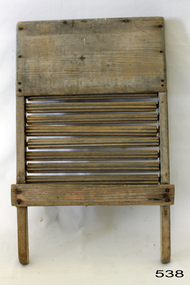
Domestic object - Washboard, 1900-1920s
... door-to-door, featured threaded maple rollers that rolled in opposite directions. It required only a light touch from the launderer, as the rollers did the work. It was awarded the Good Housekeeping Seal of Approval. The first roller washboard was made by the Hubbard brothers in Dover, Illinois, where they were born. As sales...door-to-door, featured threaded maple rollers that rolled in opposite directions. It required only a light touch from the launderer, as the rollers did the work. It was awarded the Good Housekeeping Seal of Approval. The first roller washboard was made by the Hubbard brothers in Dover, Illinois, where they were born. As sales ...This washboard with horizontal fulted rollers appears to be a variation on the patented Hubbard Roller Washboard system, which had rollers with vertical flutes. The rollers appear to be maple wood, which indicates an American manufacturer. The Mother Hubbard Roller Washboard was very popular in America in the early 1900s. The patented design, sold door-to-door, featured threaded maple rollers that rolled in opposite directions. It required only a light touch from the launderer, as the rollers did the work. It was awarded the Good Housekeeping Seal of Approval. The first roller washboard was made by the Hubbard brothers in Dover, Illinois, where they were born. As sales increased, they moved their large sawmill to Lamoille in 1904 for better shipping facilities. In 1916, they moved their sawmill to Mendota, Illinois. In addition to the washboards, the plant specialised in sawing walnut logs and forming them into roughs for gun stocks. Throughout the 1920s, the Mother Hubbard Washboard factory was busy, but production ceased after 1935, once the electric washing machine became popular. An unusual washboard with horizontal fluted rollers, different to the patented Hubbard Brothers washboards with vertical fluted rollers. It makes the item rare and possibly made in Australia in the early 1900s. The washboard gives insight into how various companies tried to improve or get around other manufacturers' patented designs. The washboard is also significant in the evolution of household laundry equipment designed to reduce labour. Washboard: a rectangular wooden frame with two legs enclosing horizontal, rotating rollers with flutes. flagstaff hill, flagstaff hill maritime museum and village, warrnambool, maritime museum, maritime village, great ocean road, shipwreck coast, washboard, laundry, clothes washing, clothes cleaning, washing, household item, washing equipment, laundering equipment, laundering, roller washboard, hubbard brothers, domestic laundry, mother hubbard washboard, rollers with horizontal flutes -
 City of Moorabbin Historical Society (Operating the Box Cottage Museum)
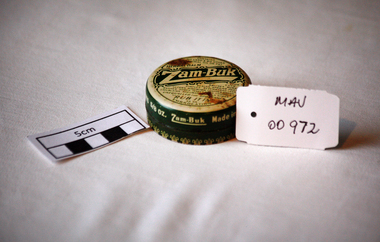
Containers, tin ‘Zam-Buk’ ointment, c1980
... Phenomenal sales were achieved through door-to-door leafleting, free gifts, and blanket advertising in the popular press, featuring emotive personal stories of miraculous, life-changing cures, presented as news items. ...Phenomenal sales were achieved through door-to-door leafleting, free gifts, and blanket advertising in the popular press, featuring emotive personal stories of miraculous, life-changing cures, presented as news items. ...Charles Edward Fulford, Ltd Leeds, England. The company founded in Australia in 1897 produced patent medicines, manufacturing products including Bile Beans and Zam-Buk ointment. Charles concocted ‘Bile Beans for Biliousness’, supposedly from a secret native recipe discovered by an eminent scientist – all a myth! Phenomenal sales were achieved through door-to-door leafleting, free gifts, and blanket advertising in the popular press, featuring emotive personal stories of miraculous, life-changing cures, presented as news items. The Company was first established in the UK in 1899 after achieving success in Australia. Charles’ brother Frank Harris Fulford, and entrepreneur, came from Canada to Leeds in 1902 to manage the British division of Charles's manufacturing business, C. E. Fulford Limited The company had to face damaging adverse publicity in 1905 when the judge in a case over the Bile Beans name declared that the business was founded on ‘fraud, impudence and advertisement’. But it survived, indeed flourished, expanding internationally. His other ‘secret’ remedy, Zambuk ointment was claimed to soothe and heal every kind of skin condition, an essential standby for all good mothers and wives. Both products lasted into the 1980s, after various company take-overs; interestingly, Zambuk has recently been revived. 1906 Charles Fulford, only 36, died at his home in Australia, apparently from exhaustion. He left a fortune, including a huge bequest to Dr Barnardo’s charity for homeless boys in London. A small round tin with a lift off lid containing 'Zam-Buk' antiseptic ointmentLid : CONTAINS / NO LARD & NO OTHER / ANIMAL OIL OR FAT / Zam-Buk' / FOR / Cuts/ Bruises, Burns / ..........UNEQUALLED FOR SPORTSMEN / "RUB IT IN "/ AS AN / EMBROCATION. Base :DIRECTIONS ................/ HEALING, SOOTHING, ANTISEPTIC. Around Lid : Zam-Buk Made in Australia by C.E.FULFORD (Australasia) Ltd SYDNEY / Incorporated in England / CONTENTS 5/8 OZ.pharmacy, medicines, early settlers, market gardeners, moorabbin, bentleigh, cheltenham, c.e.fulford pty ltd, ointments, zam-buk ointment, sydney, melbourne, fulford frank harris, antiseptic, leeds england, -
 Stawell Historical Society Inc
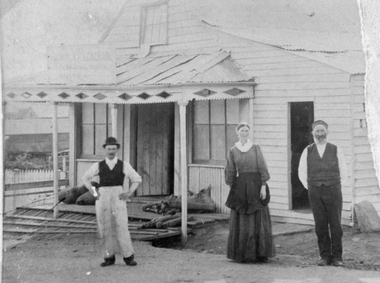
Photograph, Mr Nicholas Scallan’s Store in Stawell East c 1865 -1870
... sales, shares, commodities, auctions. Meetings were also held there, evidently a meeting place for miners. The lady and gentle man on the right of the photograph are Kate Scallan and Nicholas Scallan. stawell Photograph of a small weather board building with veranda with wooden floor. The veranda has a diamond pattern around the roof edge. The windows at the front are at either side of the wooden door. The lean-to on one side has another door ...Nicholas Scallan’s Store Stawell East c 1865-1870. In the worksheet notes: On the back of the original photograph are the inscriptions "The Scallan Grain Store and Skin Store in the early days. Stawell East. This may be mentioned in Maynard Ord's Book (Stawell Past & Present) From records many sales took place there as furniture, land sales, shares, commodities, auctions. Meetings were also held there, evidently a meeting place for miners. The lady and gentle man on the right of the photograph are Kate Scallan and Nicholas Scallan.Photograph of a small weather board building with veranda with wooden floor. The veranda has a diamond pattern around the roof edge. The windows at the front are at either side of the wooden door. The lean-to on one side has another door at the front. One female and two males are standing out the front. stawell -
 Rutherglen Historical Society
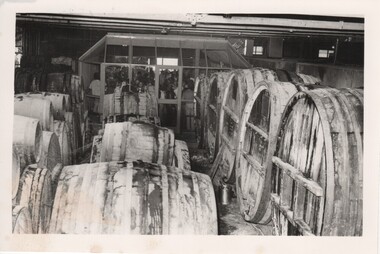
Photograph - Image, 1970s
... Offering views of the century old storage casks and famous dirt floors, the Cellar Door offers an up close experience to the making of our world famous wines. wineries north east victoria wine industry morris winery robyn boyd rutherglen australia winery cellar door On back of photo: "S/S [upper case H in a circle] Morris" Black and white photograph of the interior of a wine cellar with stacks of wine casks of various sizes. A substantial number of people are in a glassed-in area at the back of the room. Glassed-in area ( cellar door sales ...Located within the heart of the winery, the atrium style Cellar Door was designed by legendary Australian architect; Robyn Boyd and constructed in 1972. Offering views of the century old storage casks and famous dirt floors, the Cellar Door offers an up close experience to the making of our world famous wines.Black and white photograph of the interior of a wine cellar with stacks of wine casks of various sizes. A substantial number of people are in a glassed-in area at the back of the room. Glassed-in area ( cellar door sales area) designed by Robyn Boyd. 1972On back of photo: "S/S [upper case H in a circle] Morris"wineries, north east victoria, wine industry, morris winery, robyn boyd, rutherglen australia, winery, cellar door -
 Wodonga & District Historical Society Inc
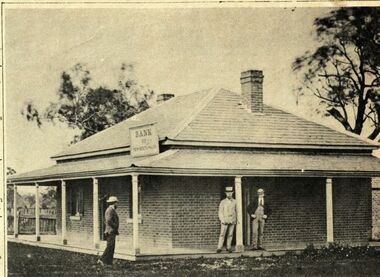
Photograph - Bank of New South Wales, Wodonga
... Photo 1: On sign above verandah "BANK of NEW SOUTH WALES" Photo 2: On sides of building and above door: "BANK OF NEW SOUTH WALES" Photo 3: Above door: "HIRE/ VIDEO MADNESS/ SALES" Photo 4: Above door: "WODONGA TRAVEL"...Wodonga businesses Banking Wodonga Bank NSW Wodonga Businesses High Street Wodonga Photo 1: On sign above verandah "BANK of NEW SOUTH WALES" Photo 2: On sides of building and above door: "BANK OF NEW SOUTH WALES" Photo 3: Above door: "HIRE/ VIDEO MADNESS/ SALES" Photo 4: Above door: "WODONGA TRAVEL" A series of photos both black and white and coloured which document changes in the former Bank of New South Wales building in Wodonga over time. ...The first Bank of New South Wales building in Wodonga was located in a small cottage. The branch opened on 7 May 1872. At first it was conducted as an agency of the Beechworth branch. In October 1872 premises in Sydney road were purchased from Mr P. L. M. S. Chauncy for £650. When the bank commenced in the cottage the first account was opened in the name of Hillerman & Co, storekeepers, Wodonga. Another early account was in the name of William Huon, squatter of de Kerilleau, Wodonga. On 9 July 1873, the agency was converted into full branch under the management of Mr. Joseph Belcher. Other early accounts included Cronin & Callaghan, storekeepers; John Bassett Jnr, shoemaker; John Jennings, contractor; Ah Soon, tobacco grower, Kergunyah; John de Corney Ireland, collector of customs; Andrew Kyle, fellmonger; Rowan Lockhead, accountant; Alexander McKay, publican; George Pollard, farmer; Thomas Street, farmer; and Edmund Uren, gentleman, Buninyong. Organisations banking at the branch included Wodonga Building Society, 1873; Wodonga Mechanics Institute 1875; Wodonga Band Fund 1882; Talgarno Athenaeum, 1888; Talgarno Butter & Cheese Factory 1892; Wodonga Federation League 1893; Wodonga Brass Band 1895; Wodonga Benevolent Society 1895; Wodonga Fire Brigade 1897; Wodonga Rifle Club and Wodonga Racing Club in 1899 and Kiewa Polo Club in 1900. There were also numerous lodge and church accounts. The cottage was later renovated with a porch added in 1889 and an extension to the residence in 1898. The original house was eventually demolished to make way for a new bank and manager’s residence in Sydney Road in 1906. That building was again remodelled in 1969. It became a branch of the WESTPAC bank when the Bank of NSW and CBA Bank joined to become the Westpac Banking Corporation in 1982. After the building ceased operation as a bank, it has been the home to several businesses including a video store, a travel agency and a clothing store.These images have local significance as they record changes to a building which filled an important role in the commercial life of Wodonga.A series of photos both black and white and coloured which document changes in the former Bank of New South Wales building in Wodonga over time.Photo 1: On sign above verandah "BANK of NEW SOUTH WALES" Photo 2: On sides of building and above door: "BANK OF NEW SOUTH WALES" Photo 3: Above door: "HIRE/ VIDEO MADNESS/ SALES" Photo 4: Above door: "WODONGA TRAVEL"wodonga businesses, banking wodonga, bank nsw wodonga, businesses high street wodonga -
 Wodonga & District Historical Society Inc
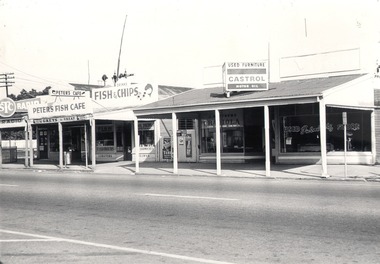
Photograph - Mann Collection Album - High Street West - Vee Jay Radio, Peter’s Fish Café, Jim Matthews Store, C.1970s
... door to door. He then set up his store in 105 High Street. This site had previously been a barber’s shop. The business involved electrical repairs and appliance sales. ...door to door. He then set up his store in 105 High Street. This site had previously been a barber’s shop. The business involved electrical repairs and appliance sales. ...Elaine Mann was married to David Mann, a successful Wodonga businessman and community leader who passed away in Wodonga in June 2012. David was a member of the Mann family who began their business in Wodonga in 1920. Elaine was a teacher in Wodonga for many years and an active member of the community.This photo collection is of significance as it documents how the businesses and buildings in Wodonga have evolved and contributed to community throughout the late 20th century.These businesses were located just north of the railway crossing between Melbourne Road and Bond Street. The railway signals can be seen in the background above Peter’s Fish Café. These buildings have all been demolished and the area is now part of Junction place. Jim Matthews was selling Radiola car radios. He also sold used furniture and had a bike repair business at this location, before later expanding his bike business on the south of the railway crossing, Peters Cafe was at 103 High Street. It was operated by the Bouteris family in the early 1970s. It later became the Chao Thai Restaurant. Vee Jay Radio was operated by Mr. Albert Eddie Branwhite. He moved to Wodonga in 1946 and started selling radio repairs door to door. He then set up his store in 105 High Street. This site had previously been a barber’s shop. The business involved electrical repairs and appliance sales. In the late 1950s Mr. Branwhite established the Wodonga Express. He set the type and printed from the back of this shop until relocating to the Lincoln Causeway. He was actively involved in the community, including many years on the Wodonga Hospital Board of Management which was recognised with a life governorship. Mr. Branwhite passed away in 2001, wodonga businesses, high st wodonga, vee jay radio, jim matthews, peter’s fish café, mr. albert eddie branwhite
