
Showing 9 items matching "drug dispensing"
-
 Emerald Museum & Nobelius Heritage Park
Functional object - Apothecary weights, H.B. Selby, 1900s
... ...drug dispensing...These weights were used with a scale to dispense correct quantities of drugs or ingredients; the tweezers may have been used to combine substances on the glass slide ready for use. ...Treganowan Harry Norris Forest Lodge Silver Birches medical practice drug dispensing pharmacy equipment H.B. Selby & Co emerald country club and golf course Obverse: D W H BOTTOMLEY / H.B SELBY & CO. ...These Victorian-era apothecary scales are from the collection of equipment used by Dr William Bottomley. Dr Bottomley was born in Fitzroy in 1881 and obtained a Bachelor of Surgery from the University of Melbourne in 1906. He lived in South Yarra with a weekend log cabin called Forest Lodge in Emerald and practiced in Collins Street in Melbourne. These weights were used with a scale to dispense correct quantities of drugs or ingredients; the tweezers may have been used to combine substances on the glass slide ready for use. In the 1920s Dr Bottomley and business partner W.H. Treganowan initiated the Emerald Country Club syndicate to purchase land from Carl Axel Nobelius' Gembrook Nurseries estate, which led to the formation of the golf course and Country Club facilities. Bottomley Drive in Emerald is named after Dr Bottomley; the street is located near Silver Birches, the house commissioned by the doctor from modernist architect Harry Norris. These weights were used with a scale to dispense correct quantities of drugs or ingredients; the tweezers may have been used to combine substances on the glass slide ready for use. The apothecary system of weights was tailored to measuring medicinal ingredients; it and the Troy system (which was used for measuring precious metals such as silver and gold) both have twelve ounces to the pound, in comparison to the Avoirdupois method which was used for heavier items and had sixteen ounces to the pound. These measurement systems were used extensively throughout the world until the 1960s when the widespread adoption of the metric system standardised processes.These items are significant as they provide insights into medical practice in the early Twentieth-Century in Melbourne and surrounds. They are also significant because they were used by Dr William Bottomley, who owned property in Emerald and whose business dealings significantly shaped the development of the town.Wooden box with a metal latch, maker's label and owner's name. Inside the box there is a black cloth lining to encase eight brass and five tin weights, a glass slide and tweezers. There is space for an additional brass weight and eight tin weights, but these spaces are empty.Obverse: D W H BOTTOMLEY / H.B SELBY & CO. LTD. / SCIENTIFIC APPARATUS / MELBOURNE & SYDNEY /emerald, victoria, australia, gold weights, apothecary weights, bottomley, fischer, dr. w f bottomley, w.h. treganowan, harry norris, forest lodge, silver birches, medical practice, drug dispensing, pharmacy equipment, h.b. selby & co, emerald country club and golf course -
Clunes Museum
Administrative record - LEDGER, Prescription ledger
... 1917 and 1918 pharmacy ledgers showing names, drugs dispensed....1917 and 1918 pharmacy ledgers showing names, drugs dispensed. pharmacy dispensing records 71463 to 73643 73644 to 73644 1. ...1917 and 1918 pharmacy ledgers showing names, drugs dispensed.1. Book 27 contains index and no.'s 71463 to 13643 2. Book 28 contains index and no.'s 73644 to 7723371463 to 73643 73644 to 73644pharmacy, dispensing records -
 Warrnambool and District Historical Society Inc.
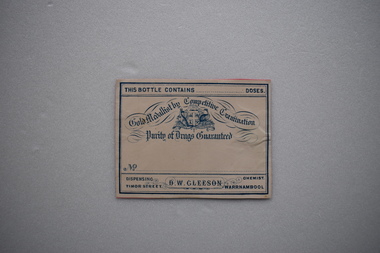
Label, Late 19th century, D.W.Gleeson Chemist
... This bottle contains…. doses Gold Medallist by Competitive Examination Purity of Drugs Guaranteed Dispensing Chemist D.W.Gleeson Timor Street Warrnambool ...Gleeson D.W.Gleeson Chemist History of Warrnambool This bottle contains…. doses Gold Medallist by Competitive Examination Purity of Drugs Guaranteed Dispensing Chemist D.W.Gleeson Timor Street Warrnambool This is a piece of cream-coloured paper with blue edging, an Australian logo and blue printing. ...This label comes from the pharmacy of D.W.Gleeson. He had a chemist shop in Timor Street, Warrnambool in the late 19th century. This label is of interest as a memento of a late 19th century chemist in Warrnambool – D.W. GleesonThis is a piece of cream-coloured paper with blue edging, an Australian logo and blue printing. The paper has been pasted on to a piece of pink card. This bottle contains…. doses Gold Medallist by Competitive Examination Purity of Drugs Guaranteed Dispensing Chemist D.W.Gleeson Timor Street Warrnambool d.w.gleeson, chemist, history of warrnambool -
 Flagstaff Hill Maritime Museum and Village
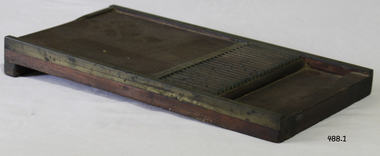
Equipment - Pill Maker Board
... Before factory production became commonplace in medicine, dispensing was considered an art and pill machines such as these were a vital component of any chemist’s collection. This machine dates back to the days when your local chemist or apothecary bought, sold, and manufactured all his own drugs and medicines to everybody who lived within the local community. ...Before factory production became commonplace in medicine, dispensing was considered an art and pill machines such as these were a vital component of any chemist’s collection. This machine dates back to the days when your local chemist or apothecary bought, sold, and manufactured all his own drugs and medicines to everybody who lived within the local community. ...Before factory production became commonplace in medicine, dispensing was considered an art and pill machines such as these were a vital component of any chemist’s collection. This machine dates back to the days when your local chemist or apothecary bought, sold, and manufactured all his own drugs and medicines to everybody who lived within the local community. In Victorian times, there was no such thing as off-the-shelf medicine. Every tablet, pill, suppository, ointment, potion, lotion, tincture and syrup to treat anything from a sore throat to fever, headaches or constipation, was made laboriously by hand, by the chemist. Pill machines such as these first appeared in the mid-1700s and quickly became a staple of the Victorian chemist’s shop. A ‘pill mass’ of medicinal powders mixed with a binding agent would be hand-rolled into a pipe on the tile at the back of the machine. This would then be placed across the grooved brass plate and cut into equal-sized pills using the corresponding side of the roller. Once all the necessary ingredients for the pills had been measured and ground with a pestle and mortar a final ingredient was poured in, syrup – this acted as a binding-agent. You could then roll it into a sausage shape. The largest part of the machine is the board. This is set at an angle and is comprised of the rolling surface, the cutting grooves, and the collection-tray. The large flat surface is for rolling out the pill-paste into the sausage shape. This is then rolled towards the brass cutting-grooves. The paddle (the second piece) is flipped over so that the grooves there line up with the grooves on the board. Rollers on the ends of the paddle roll against the brass edges of the board, and they guide the paddle straight across the grooves, taking the pill-mass with it. The grooves on the paddle and the board slice up the pill-mass and, after rolling the thing back and forth a couple of times like a rolling-pin, the circular pills roll off the grooves and into the tray at the bottom. https://galwaycitymuseum.ie/blog/collections-spotlight-victorian-pill-making-machine/?locale=en The collection of medical instruments and other equipment in the Port Medical Office is culturally significant, being an historical example of medicine from late 19th to mid-20th century. Pill making device including a grooved base board and grooved sliding board with two pill moulds.None.flagstaff hill, warrnambool, shipwrecked-coast, flagstaff-hill, flagstaff-hill-maritime-museum, maritime-museum, shipwreck-coast, flagstaff-hill-maritime-village, pills, pill maker, medicine, health -
 Flagstaff Hill Maritime Museum and Village
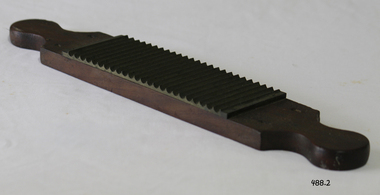
Equipment - Pill Rolling Pin
... Used as tBefore factory production became commonplace in medicine, dispensing was considered an art and pill machines such as these were a vital component of any chemist’s collection. This machine dates back to the days when your local chemist or apothecary bought, sold, and manufactured all his own drugs and medicines to everybody who lived within the local community. ...Used as tBefore factory production became commonplace in medicine, dispensing was considered an art and pill machines such as these were a vital component of any chemist’s collection. This machine dates back to the days when your local chemist or apothecary bought, sold, and manufactured all his own drugs and medicines to everybody who lived within the local community. ...Used as tBefore factory production became commonplace in medicine, dispensing was considered an art and pill machines such as these were a vital component of any chemist’s collection. This machine dates back to the days when your local chemist or apothecary bought, sold, and manufactured all his own drugs and medicines to everybody who lived within the local community. In Victorian times, there was no such thing as off-the-shelf medicine. Every tablet, pill, suppository, ointment, potion, lotion, tincture and syrup to treat anything from a sore throat to fever, headaches or constipation, was made laboriously by hand, by the chemist. Pill machines such as these first appeared in the mid-1700s and quickly became a staple of the Victorian chemist’s shop. A ‘pill mass’ of medicinal powders mixed with a binding agent would be hand-rolled into a pipe on the tile at the back of the machine. This would then be placed across the grooved brass plate and cut into equal-sized pills using the corresponding side of the roller. Once all the necessary ingredients for the pills had been measured and ground with a pestle and mortar a final ingredient was poured in, syrup – this acted as a binding-agent. You could then roll it into a sausage shape. The largest part of the machine is the board. This is set at an angle and is comprised of the rolling surface, the cutting grooves, and the collection-tray. The large flat surface is for rolling out the pill-paste into the sausage shape. This is then rolled towards the brass cutting-grooves. The paddle (the second piece) is flipped over so that the grooves there line up with the grooves on the board. Rollers on the ends of the paddle roll against the brass edges of the board, and they guide the paddle straight across the grooves, taking the pill-mass with it. The grooves on the paddle and the board slice up the pill-mass and, after rolling the thing back and forth a couple of times like a rolling-pin, the circular pills roll off the grooves and into the tray at the bottom. https://galwaycitymuseum.ie/blog/collections-spotlight-victorian-pill-making-machine/?locale=enhe companion item to pill-maker base, item 488.2The collection of medical instruments and other equipment in the Port Medical Office is culturally significant, being an historical example of medicine from late 19th to mid-20th century.Pill making device including a grooved base board and grooved sliding board with two pill mouldsNone.flagstaff hill, warrnambool, shipwrecked-coast, flagstaff-hill, flagstaff-hill-maritime-museum, maritime-museum, shipwreck-coast, flagstaff-hill-maritime-village, pill making, pill mould, medicine, health -
 Flagstaff Hill Maritime Museum and Village
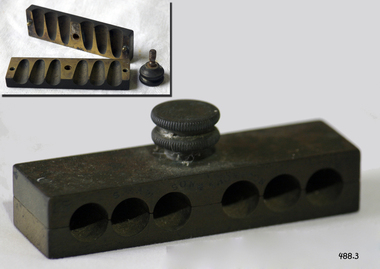
Equipment - Suppository Mould
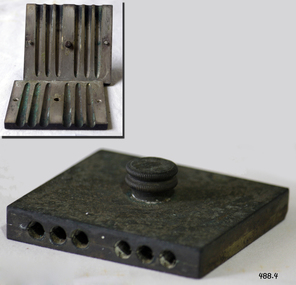
... Before factory production became commonplace in medicine, dispensing was considered an art and pill and suppository machines such as these were a vital component of any chemist’s collection. This mould dates back to the days when the local chemist or apothecary bought, sold, and manufactured all his own drugs and medicines to everybody who lived within the local community. ...Before factory production became commonplace in medicine, dispensing was considered an art and pill and suppository machines such as these were a vital component of any chemist’s collection. This mould dates back to the days when the local chemist or apothecary bought, sold, and manufactured all his own drugs and medicines to everybody who lived within the local community. ...Before factory production became commonplace in medicine, dispensing was considered an art and pill and suppository machines such as these were a vital component of any chemist’s collection. This mould dates back to the days when the local chemist or apothecary bought, sold, and manufactured all his own drugs and medicines to everybody who lived within the local community. In Victorian times, there was no such thing as off-the-shelf medicine. Every tablet, pill, suppository, ointment, potion, lotion, tincture and syrup to treat anything from a sore throat to fever, headaches or constipation, was made laboriously by hand, by the chemist. Some medicines are formulated to be used in the body cavities: the suppository (for the rectum), the pessary (for the vagina) and the bougie (for the urethra or nose). History Suppositories, pessaries and bougies have been prescribed for the last 2000 years but their popularity as a medicinal form increased from around 1840 - suppositories for constipation, haemorrhoids and later as an alternative method of drug administration, pessaries for vaginal infections and bougies for infections of the urethra, prostate, bladder or nose. Manufacture The basic method of manufacture was the same for each preparation, the shape differed. Suppositories were "bullet" or "torpedo" shaped, pessaries "bullet" shaped but larger and bougieslong and thin, tapering slightly. A base was required that would melt at body temperature. Various oils and fats have been utilised but, until the advent of modern manufactured waxes, the substances of choice were theobroma oil (cocoa butter) and a glycerin-gelatin mixture. The base was heated in a spouted pan over a water-bath until just melted. The medicament was rubbed into a little of the base (usually on a tile using a spatula) and then stirred into the rest. The melted mass was then poured into the relevant mould. Moulds were normally in two parts, made from stainless steel or brass (silver or electroplated to give a smooth surface). To facilitate removal the moulds were treated with a lubricant such as oil or soap solution. To overcome the difficulty of pouring into the long, thin bougie mould, it was usual to make a larger quantity of base, to partially unscrew the mould, fill with base and then screw the two halves of the mould together thus forcing out the excess. When cool, any excess base was scraped from the top of the mould, the mould opened and the preparations removed, packed and labelled with the doctor's instructions. https://www.rpharms.com/Portals/0/MuseumLearningResources/05%20Suppositories%20Pessaries%20and%20Bougies.pdf?ver=2020-02-06-154131-397The collection of medical instruments and other equipment in the Port Medical Office is culturally significant, being an historical example of medicine from late 19th to mid-20th century.Proctological mould for making suppositories.None.flagstaff hill, warrnambool, shipwrecked-coast, flagstaff-hill, flagstaff-hill-maritime-museum, maritime-museum, shipwreck-coast, flagstaff-hill-maritime-village, suppositories, medicine, health -
 Flagstaff Hill Maritime Museum and Village
Equipment - Suppository Mould
... Before factory production became commonplace in medicine, dispensing was considered an art and pill and suppository machines such as these were a vital component of any chemist’s collection. This mould dates back to the days when the local chemist or apothecary bought, sold, and manufactured all his own drugs and medicines to everybody who lived within the local community. ...Before factory production became commonplace in medicine, dispensing was considered an art and pill and suppository machines such as these were a vital component of any chemist’s collection. This mould dates back to the days when the local chemist or apothecary bought, sold, and manufactured all his own drugs and medicines to everybody who lived within the local community. ...Before factory production became commonplace in medicine, dispensing was considered an art and pill and suppository machines such as these were a vital component of any chemist’s collection. This mould dates back to the days when the local chemist or apothecary bought, sold, and manufactured all his own drugs and medicines to everybody who lived within the local community. In Victorian times, there was no such thing as off-the-shelf medicine. Every tablet, pill, suppository, ointment, potion, lotion, tincture and syrup to treat anything from a sore throat to fever, headaches or constipation, was made laboriously by hand, by the chemist. Some medicines are formulated to be used in the body cavities: the suppository (for the rectum), the pessary (for the vagina) and the bougie (for the urethra or nose). History Suppositories, pessaries and bougies have been prescribed for the last 2000 years but their popularity as a medicinal form increased from around 1840 - suppositories for constipation, haemorrhoids and later as an alternative method of drug administration, pessaries for vaginal infections and bougies for infections of the urethra, prostate, bladder or nose. Manufacture The basic method of manufacture was the same for each preparation, the shape differed. Suppositories were "bullet" or "torpedo" shaped, pessaries "bullet" shaped but larger and bougieslong and thin, tapering slightly. A base was required that would melt at body temperature. Various oils and fats have been utilised but, until the advent of modern manufactured waxes, the substances of choice were theobroma oil (cocoa butter) and a glycerin-gelatin mixture. The base was heated in a spouted pan over a water-bath until just melted. The medicament was rubbed into a little of the base (usually on a tile using a spatula) and then stirred into the rest. The melted mass was then poured into the relevant mould. Moulds were normally in two parts, made from stainless steel or brass (silver or electroplated to give a smooth surface). To facilitate removal the moulds were treated with a lubricant such as oil or soap solution. To overcome the difficulty of pouring into the long, thin bougie mould, it was usual to make a larger quantity of base, to partially unscrew the mould, fill with base and then screw the two halves of the mould together thus forcing out the excess. When cool, any excess base was scraped from the top of the mould, the mould opened and the preparations removed, packed and labelled with the doctor's instructions. https://www.rpharms.com/Portals/0/MuseumLearningResources/05%20Suppositories%20Pessaries%20and%20Bougies.pdf?ver=2020-02-06-154131-397The collection of medical instruments and other equipment in the Port Medical Office is culturally significant, being an historical example of medicine from late 19th to mid-20th century.Proctological mould for making suppositories.None.flagstaff hill, warrnambool, shipwrecked-coast, flagstaff-hill, flagstaff-hill-maritime-museum, maritime-museum, shipwreck-coast, flagstaff-hill-maritime-village, suppositories, medicine, health -
 Coal Creek Community Park & Museum
Bottle, glass, post 1856
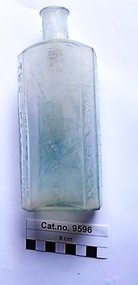
... F R A N C I S & CO (Late FRANCIS & SWIFT) DISPENSING AND FAMILY CHEMISTS, M , 31 BOURKE ST. EAST, Melbourne. IMPORTERS OF Drugs, Chemicals, Patent Medicines, Surgical Instruments, And Surgical and Medical Appliances generally, H, FRANCIS & Co. solicit attention to their large and complete stock of WATER AND AIR-PROOF GOODS, Beds, Cushions, Mattresses. ...F R A N C I S & CO (Late FRANCIS & SWIFT) DISPENSING AND FAMILY CHEMISTS, M , 31 BOURKE ST. EAST, Melbourne. IMPORTERS OF Drugs, Chemicals, Patent Medicines, Surgical Instruments, And Surgical and Medical Appliances generally, H, FRANCIS & Co. solicit attention to their large and complete stock of WATER AND AIR-PROOF GOODS, Beds, Cushions, Mattresses. ...Henry Francis was previously in business at the goldfields at Ballarat, before coming to Melbourne in 1856. TROVE : Advocate (Melbourne, Vic. : 1868 - 1954), Saturday 19 July 1879, page 11. H. F R A N C I S & CO (Late FRANCIS & SWIFT) DISPENSING AND FAMILY CHEMISTS, M , 31 BOURKE ST. EAST, Melbourne. IMPORTERS OF Drugs, Chemicals, Patent Medicines, Surgical Instruments, And Surgical and Medical Appliances generally, H, FRANCIS & Co. solicit attention to their large and complete stock of WATER AND AIR-PROOF GOODS, Beds, Cushions, Mattresses. Pillows, Hot Water Bottles, Bed Sheeting, Portable Baths, Elastic Stockings, Ladies' Abdominal Belts, Shoulder Braces, Trusses, &c., Which, owing to their buying Direct from the Manufacturer, through their London agents, they are now able to supply at much' more reasonable rates than have hitherto obtained. THE GERMAN & FRENCH MINERAL WATERS Hunyadi Janos, Friedrichshall, Carlebad, Vichy, Pullna, Vale, &c., &c., Continually in stock, and supplied in quantities to suit purchasers. DISPENSARY AND RETAIL ESTABLISHMENT: 31 Bourke Street East; Melbourne. Wholesale Laboratory—Dawson Place, Swanston St, MEDICINE CHESTS SUPPLIED & REFITTED. TROVE : Argus (Melbourne, Vic. : 1848 - 1957), Thursday 17 January 1957, page 9 'ANTINOIS EAR PLUGS Ensure mental rest; soothe the nerves in factories, plane, or train travel 3 pairs, 2/6, post free H. Francis & Co., Box 5Ó2H, Melb.' Aqua tinted clear glass rectangular with angled corners in section bottle for stopper seal, with graduations on two sides for dosage quantities. Embossed text on front , angled sides and base.Embossed on base 'K' over '4616'. On one angled side graduation marks for one tablespoon doses, on other side graduation marks for two tablespoon doses, on front 'H. FRANCIS & Co'. -
 Hymettus Cottage & Garden Ballarat
Administrative record - Dispensary Register, Palmer's register
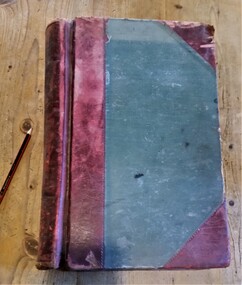
... This register records items dispensed from the chemist from 1943 until 1947 together with names and prices. pharmacy chemist prescriptions drugs Ballarat Palmer handwritten throughout. ...This register records items dispensed from the chemist from 1943 until 1947 together with names and prices.Larger ledger printed and bound by Berry Anderson & Co bookbinders and stationers Ballarat. Ledger contains 78 pages double rulled down centre of each page with a further 26 unpaginated indexed pages following.handwritten throughout.pharmacy, chemist, prescriptions, drugs, ballarat, palmer
