
Showing 49 items matching "dyed yarn"
-
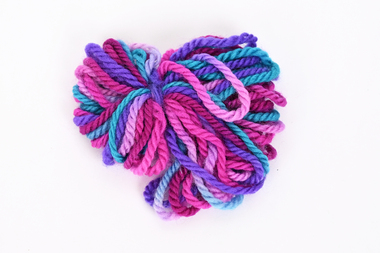 National Wool Museum
Textile - Dyed Wool Sample, Robin Walker, 1999
... ...Hand Dyed...Yarn...This sample is one of five donated by Mrs Walker who dyed her own yarns to knit into hats which she felted herself (in a washing machine) to sell at craft shops. ...Small hank of home dyed woollen yarn. In dark shades of pink, mauve, blue and green....Handicrafts Robin Walker Craft Wool Hand Dyed Yarn Felting Small hank of home dyed woollen yarn. ...This sample is one of five donated by Mrs Walker who dyed her own yarns to knit into hats which she felted herself (in a washing machine) to sell at craft shops. She ran workshops and also taught home dyeing. She used a Landscape and Earth Palette and also used food colouring, jelly and cake decorating colours.Small hank of home dyed woollen yarn. In dark shades of pink, mauve, blue and green.handicrafts, robin walker, craft, wool, hand dyed, yarn, felting -
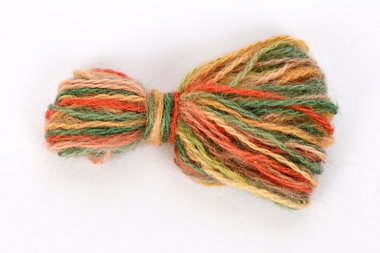 National Wool Museum
Textile - Dyed Wool Sample, Robin Walker, 1999
... Dyed...Wool...Yarn...This sample is one of five donated by Mrs Walker who dyed her own yarns to knit into hats which she felted herself (in a washing machine) to sell at craft shops. ...Small hank of home dyed woollen yarn. In shades of yellow, orange, green and brown....Handicrafts Robin Walker Hand Dyed Wool Yarn Felting Craft Colour Small hank of home dyed woollen yarn. ...This sample is one of five donated by Mrs Walker who dyed her own yarns to knit into hats which she felted herself (in a washing machine) to sell at craft shops. She ran workshops and also taught home dyeing. She used a Landscape and Earth Palette and also used food colouring, jelly and cake decorating colours.Small hank of home dyed woollen yarn. In shades of yellow, orange, green and brown.handicrafts, robin walker, hand dyed, wool, yarn, felting, craft, colour -
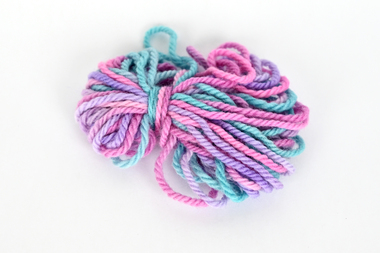 National Wool Museum
Textile - Dyed Wool Sample, Robin Walker, 1999
... Dyed...Wool...Yarn...This sample is one of five donated by Mrs Walker who dyed her own yarns to knit into hats which she felted herself (in a washing machine) to sell at craft shops. ...Small hank of home dyed thick woollen yarn. In light shades of pink, mauve, blue and green....Handicrafts Robin Walker Craft Felting Hand Dyed Wool Yarn Small hank of home dyed thick woollen yarn. ...This sample is one of five donated by Mrs Walker who dyed her own yarns to knit into hats which she felted herself (in a washing machine) to sell at craft shops. She ran workshops and also taught home dyeing. She used a Landscape and Earth Palette and also used food colouring, jelly and cake decorating colours.Small hank of home dyed thick woollen yarn. In light shades of pink, mauve, blue and green.handicrafts, robin walker, craft, felting, hand dyed, wool, yarn -
 Flagstaff Hill Maritime Museum and Village
Textile - Tapestry, Mary O'Brien, Gerda Shanley, Judith Stewart, Beryl Conlan (crafts people), 1988
... ...dyed yarn...Flagstaff Hill Flagstaff Hill Maritime Museum and Village Warrnambool Maritime Museum Maritime Village Great Ocean Road Shipwreck Coast tapestry Warrnambool history Warrnambool textiles wall hanging weave South West Victoria history South West Victoria timeline indigenous people early settlement whaling James Grant Nicholas Baudin cotton wool dyed yarn handmade hand-dyed yarn A plaque accompanies the Tapestry "Flagstaff Hill Maritime Tapestry / 1989 / Tapestry: Woven Cotton and Wool / Mary O'Brien Gerda Shanley / Judith Stewart Beryl Conlan" Tapestry of the early history of the Warrnambool area, rectangular in shape. ...This creative tapestry, woven in 1988, documents a thousand years of Warrnambool history. It hangs in the Great Circle Gallery at Flagstaff Hill and complements the theme of the display. Three local women, with the help of Museum staff, researched and designed the tapestry, which was woven in 1988 from wool and cotton. It is ten meters long and seventy centimetres high. The beautiful creation took seven months to create. The tapestry introduces the seafaring theme of Flagstaff Hill Maritime Museum and Village, and illustrates a timeline of events dating back to the arrival of Europeans in the Warrnambool area. It begins with the settlement of the area by Europeans and travels back in time as you walk further into the gallery, depicting shipwrecks along the coast, whaling in the area, early exploration by Europeans James Grant and Nicholas Baudin, back to the indigenous settlement of the area, represented by middens and indigenous symbols. Interestingly, before being hung in the gallery, the tapestry was originally hung with the intention of being framed from right to left. All materials in the cotton and wool tapestry, including dyed wool, were prepared for a cost of $33,000. The project was supported by local philanthropic groups.The tapestry is a hand worked creation by local women. It shows a visual display of a thousand years of Warrnambool's history, connecting the land and sea to people and events.Tapestry of the early history of the Warrnambool area, rectangular in shape. Materials include cotton and wool, some of the wool being hand-dyed. Handmade in 1988 by local women.A plaque accompanies the Tapestry "Flagstaff Hill Maritime Tapestry / 1989 / Tapestry: Woven Cotton and Wool / Mary O'Brien Gerda Shanley / Judith Stewart Beryl Conlan"flagstaff hill, flagstaff hill maritime museum and village, warrnambool, maritime museum, maritime village, great ocean road, shipwreck coast, tapestry, warrnambool history, warrnambool textiles, wall hanging, weave, south west victoria history, south west victoria timeline, indigenous people, early settlement, whaling, james grant, nicholas baudin, cotton, wool, dyed yarn, handmade, hand-dyed yarn -
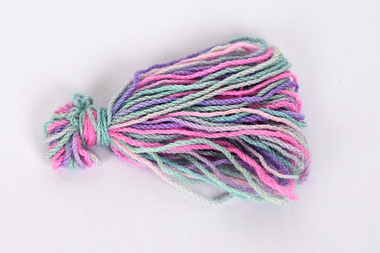 National Wool Museum
Textile - Dyed Wool Sample, Robin Walker, 1999
... Yarn...Home Dyed...This sample is one of five donated by Mrs Walker who dyed her own yarns to knit into hats which she felted herself (in a washing machine) to sell at craft shops. ...Small hank of home dyed woollen yarn. In light shades of pink, mauve, blue and green....Handicrafts Robin Walker Textiles Felting Wool Yarn Home Dyed Craft Small hank of home dyed woollen yarn. ...This sample is one of five donated by Mrs Walker who dyed her own yarns to knit into hats which she felted herself (in a washing machine) to sell at craft shops. She ran workshops and also taught home dyeing. She used a Landscape and Earth Palette and also used food colouring, jelly and cake decorating colours.Small hank of home dyed woollen yarn. In light shades of pink, mauve, blue and green.handicrafts, robin walker, textiles, felting, wool, yarn, home dyed, craft -
 National Wool Museum
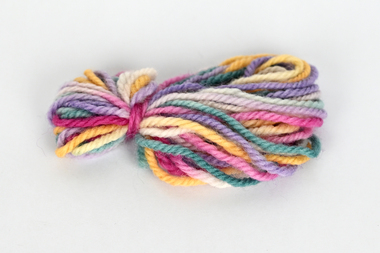
Textile - Dyed Wool Sample, Robin Walker, 1999
... This sample is one of five donated by Mrs Walker who dyed her own yarns to knit into hats which she felted herself (in a washing machine) to sell at craft shops. ...Small hank of home dyed woollen yarn. In light shades of pink, mauve, yellow, blue and green....This sample is one of five donated by Mrs Walker who dyed her own yarns to knit into hats which she felted herself (in a washing machine) to sell at craft shops. ...This sample is one of five donated by Mrs Walker who dyed her own yarns to knit into hats which she felted herself (in a washing machine) to sell at craft shops. She ran workshops and also taught home dyeing. She used a Landscape and Earth Palette and also used food colouring, jelly and cake decorating colours.Small hank of home dyed woollen yarn. In light shades of pink, mauve, yellow, blue and green.handicrafts, walker, mrs robin, dying, hand dyed, wool, craft, felting -
 National Wool Museum
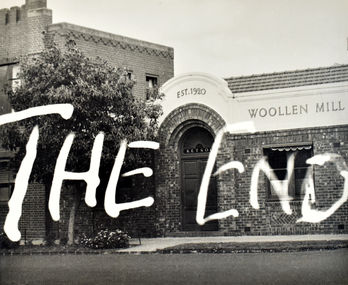
Photograph - Returned Sailors and Soldiers Mill, Norm Holroyd, 1960's - 1970's
... The facility functioned as a complete raw-to-finished assembly line where raw fleece was brought on-site to be scoured, carded, dyed, spun into yarn and woven. It specialised in heavy worsted cloths, high-quality tweed, and its signature "Retsol" and "Monarch" pure-wool travelling rugs, later adapting its machinery to blend natural wool with artificial fibres as mid-century market demands shifted....The facility functioned as a complete raw-to-finished assembly line where raw fleece was brought on-site to be scoured, carded, dyed, spun into yarn and woven. It specialised in heavy worsted cloths, high-quality tweed, and its signature "Retsol" and "Monarch" pure-wool travelling rugs, later adapting its machinery to blend natural wool with artificial fibres as mid-century market demands shifted. ...One of thirty eight photographs from a photo album featuring images of the Returned Sailors and Soldiers Woollen Mill in Newtown, Geelong. The images were taken between the 1960's-1970's by Norm Holroyd who worked at the mills. They were developed in his own private dark room and kept at his home for private viewing. The Returned Sailors and Soldiers Woollen Mill operated as a self-sufficient co-operative, funded and run by World War I veterans using their War Gratuity Bonds. The facility functioned as a complete raw-to-finished assembly line where raw fleece was brought on-site to be scoured, carded, dyed, spun into yarn and woven. It specialised in heavy worsted cloths, high-quality tweed, and its signature "Retsol" and "Monarch" pure-wool travelling rugs, later adapting its machinery to blend natural wool with artificial fibres as mid-century market demands shifted.Black and white photograph attached to cardboard backing with sticky tape. Image shows a building exterior with text. Backing card has four holes in left side.back: [handwritten] 45r. s. & s mill, returned sailors and soldiers mill, newtown, geelong, world war i, soldiers, veterans, co-operative, textile industry, woollen mills, wool, worsted cloth, tweed, retsol, monarch, travel rugs, machinery, factory, working life, norm holroyd, photo album, photography, design, fabric -
 National Wool Museum
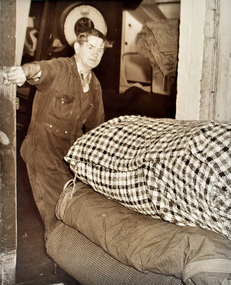
Photograph - Returned Sailors and Soldiers Mill, Norm Holroyd, 1960's - 1970's
... The facility functioned as a complete raw-to-finished assembly line where raw fleece was brought on-site to be scoured, carded, dyed, spun into yarn and woven. It specialised in heavy worsted cloths, high-quality tweed, and its signature "Retsol" and "Monarch" pure-wool travelling rugs, later adapting its machinery to blend natural wool with artificial fibres as mid-century market demands shifted....The facility functioned as a complete raw-to-finished assembly line where raw fleece was brought on-site to be scoured, carded, dyed, spun into yarn and woven. It specialised in heavy worsted cloths, high-quality tweed, and its signature "Retsol" and "Monarch" pure-wool travelling rugs, later adapting its machinery to blend natural wool with artificial fibres as mid-century market demands shifted. ...One of thirty eight photographs from a photo album featuring images of the Returned Sailors and Soldiers Woollen Mill in Newtown, Geelong. The images were taken between the 1960's-1970's by Norm Holroyd who worked at the mills. They were developed in his own private dark room and kept at his home for private viewing. The Returned Sailors and Soldiers Woollen Mill operated as a self-sufficient co-operative, funded and run by World War I veterans using their War Gratuity Bonds. The facility functioned as a complete raw-to-finished assembly line where raw fleece was brought on-site to be scoured, carded, dyed, spun into yarn and woven. It specialised in heavy worsted cloths, high-quality tweed, and its signature "Retsol" and "Monarch" pure-wool travelling rugs, later adapting its machinery to blend natural wool with artificial fibres as mid-century market demands shifted.Black and white photograph attached to cardboard backing with sticky tape. Image shows a man moving woollen fabrics on a trolley through a doorway. Backing card has four holes in left side.back: [handwritten] 34r. s. & s mill, returned sailors and soldiers mill, newtown, geelong, world war i, soldiers, veterans, co-operative, textile industry, woollen mills, wool, worsted cloth, tweed, retsol, monarch, travel rugs, machinery, factory, working life, norm holroyd, photo album, photography, design, fabric -
 National Wool Museum
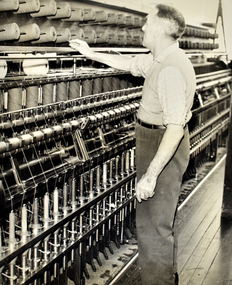
Photograph - Loom, Returned Sailors and Soldiers Mill, Norm Holroyd, 1960's - 1970's
... The facility functioned as a complete raw-to-finished assembly line where raw fleece was brought on-site to be scoured, carded, dyed, spun into yarn and woven. It specialised in heavy worsted cloths, high-quality tweed, and its signature "Retsol" and "Monarch" pure-wool travelling rugs, later adapting its machinery to blend natural wool with artificial fibres as mid-century market demands shifted....The facility functioned as a complete raw-to-finished assembly line where raw fleece was brought on-site to be scoured, carded, dyed, spun into yarn and woven. It specialised in heavy worsted cloths, high-quality tweed, and its signature "Retsol" and "Monarch" pure-wool travelling rugs, later adapting its machinery to blend natural wool with artificial fibres as mid-century market demands shifted. ...One of thirty eight photographs from a photo album featuring images of the Returned Sailors and Soldiers Woollen Mill in Newtown, Geelong. The images were taken between the 1960's-1970's by Norm Holroyd who worked at the mills. They were developed in his own private dark room and kept at his home for private viewing. The Returned Sailors and Soldiers Woollen Mill operated as a self-sufficient co-operative, funded and run by World War I veterans using their War Gratuity Bonds. The facility functioned as a complete raw-to-finished assembly line where raw fleece was brought on-site to be scoured, carded, dyed, spun into yarn and woven. It specialised in heavy worsted cloths, high-quality tweed, and its signature "Retsol" and "Monarch" pure-wool travelling rugs, later adapting its machinery to blend natural wool with artificial fibres as mid-century market demands shifted.Black and white photograph attached to cardboard backing with sticky tape. Image shows a man standing at a loom. Backing card has four holes in left side.back: [handwritten] 19r. s. & s mill, returned sailors and soldiers mill, newtown, geelong, world war i, soldiers, veterans, co-operative, textile industry, woollen mills, wool, worsted cloth, tweed, retsol, monarch, travel rugs, machinery, factory, working life, norm holroyd, photo album, photography, design, fabric -
 National Wool Museum
Photograph - Returned Sailors and Soldiers Mill, Norm Holroyd, 1960's - 1970's
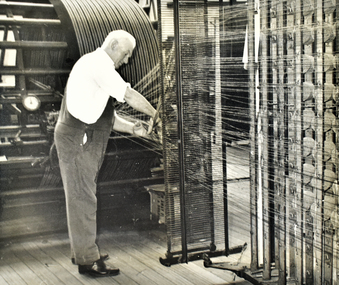
... The facility functioned as a complete raw-to-finished assembly line where raw fleece was brought on-site to be scoured, carded, dyed, spun into yarn and woven. It specialised in heavy worsted cloths, high-quality tweed, and its signature "Retsol" and "Monarch" pure-wool travelling rugs, later adapting its machinery to blend natural wool with artificial fibres as mid-century market demands shifted....The facility functioned as a complete raw-to-finished assembly line where raw fleece was brought on-site to be scoured, carded, dyed, spun into yarn and woven. It specialised in heavy worsted cloths, high-quality tweed, and its signature "Retsol" and "Monarch" pure-wool travelling rugs, later adapting its machinery to blend natural wool with artificial fibres as mid-century market demands shifted. ...One of thirty eight photographs from a photo album featuring images of the Returned Sailors and Soldiers Woollen Mill in Newtown, Geelong. The images were taken between the 1960's-1970's by Norm Holroyd who worked at the mills. They were developed in his own private dark room and kept at his home for private viewing. The Returned Sailors and Soldiers Woollen Mill operated as a self-sufficient co-operative, funded and run by World War I veterans using their War Gratuity Bonds. The facility functioned as a complete raw-to-finished assembly line where raw fleece was brought on-site to be scoured, carded, dyed, spun into yarn and woven. It specialised in heavy worsted cloths, high-quality tweed, and its signature "Retsol" and "Monarch" pure-wool travelling rugs, later adapting its machinery to blend natural wool with artificial fibres as mid-century market demands shifted.Black and white photograph attached to cardboard backing with sticky tape. Image shows a man operating wool processing machinery. Backing card has four holes in left side.back: [handwritten] 21r. s. & s mill, returned sailors and soldiers mill, newtown, geelong, world war i, soldiers, veterans, co-operative, textile industry, woollen mills, wool, worsted cloth, tweed, retsol, monarch, travel rugs, machinery, factory, working life, norm holroyd, photo album, photography, design, fabric -
 National Wool Museum
Photograph - Returned Sailors and Soldiers Mill, Norm Holroyd, 1960's - 1970's
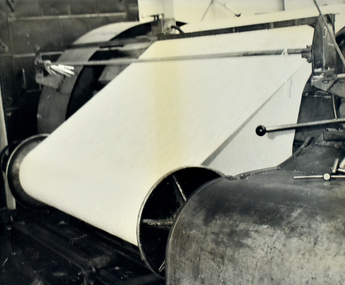
... The facility functioned as a complete raw-to-finished assembly line where raw fleece was brought on-site to be scoured, carded, dyed, spun into yarn and woven. It specialised in heavy worsted cloths, high-quality tweed, and its signature "Retsol" and "Monarch" pure-wool travelling rugs, later adapting its machinery to blend natural wool with artificial fibres as mid-century market demands shifted....The facility functioned as a complete raw-to-finished assembly line where raw fleece was brought on-site to be scoured, carded, dyed, spun into yarn and woven. It specialised in heavy worsted cloths, high-quality tweed, and its signature "Retsol" and "Monarch" pure-wool travelling rugs, later adapting its machinery to blend natural wool with artificial fibres as mid-century market demands shifted. ...One of thirty eight photographs from a photo album featuring images of the Returned Sailors and Soldiers Woollen Mill in Newtown, Geelong. The images were taken between the 1960's-1970's by Norm Holroyd who worked at the mills. They were developed in his own private dark room and kept at his home for private viewing. The Returned Sailors and Soldiers Woollen Mill operated as a self-sufficient co-operative, funded and run by World War I veterans using their War Gratuity Bonds. The facility functioned as a complete raw-to-finished assembly line where raw fleece was brought on-site to be scoured, carded, dyed, spun into yarn and woven. It specialised in heavy worsted cloths, high-quality tweed, and its signature "Retsol" and "Monarch" pure-wool travelling rugs, later adapting its machinery to blend natural wool with artificial fibres as mid-century market demands shifted.Black and white photograph attached to cardboard backing with sticky tape. Image shows wool processing machinery. Backing card has four holes in left side.back: [handwritten] 22r. s. & s mill, returned sailors and soldiers mill, newtown, geelong, world war i, soldiers, veterans, co-operative, textile industry, woollen mills, wool, worsted cloth, tweed, retsol, monarch, travel rugs, machinery, factory, working life, norm holroyd, photo album, photography, design, fabric -
 National Wool Museum
Photograph - Loom, Returned Sailors and Soldiers Mill, Norm Holroyd, 1960's - 1970's
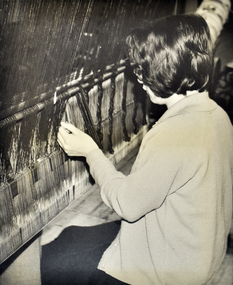
... The facility functioned as a complete raw-to-finished assembly line where raw fleece was brought on-site to be scoured, carded, dyed, spun into yarn and woven. It specialised in heavy worsted cloths, high-quality tweed, and its signature "Retsol" and "Monarch" pure-wool travelling rugs, later adapting its machinery to blend natural wool with artificial fibres as mid-century market demands shifted....The facility functioned as a complete raw-to-finished assembly line where raw fleece was brought on-site to be scoured, carded, dyed, spun into yarn and woven. It specialised in heavy worsted cloths, high-quality tweed, and its signature "Retsol" and "Monarch" pure-wool travelling rugs, later adapting its machinery to blend natural wool with artificial fibres as mid-century market demands shifted. ...One of thirty eight photographs from a photo album featuring images of the Returned Sailors and Soldiers Woollen Mill in Newtown, Geelong. The images were taken between the 1960's-1970's by Norm Holroyd who worked at the mills. They were developed in his own private dark room and kept at his home for private viewing. The Returned Sailors and Soldiers Woollen Mill operated as a self-sufficient co-operative, funded and run by World War I veterans using their War Gratuity Bonds. The facility functioned as a complete raw-to-finished assembly line where raw fleece was brought on-site to be scoured, carded, dyed, spun into yarn and woven. It specialised in heavy worsted cloths, high-quality tweed, and its signature "Retsol" and "Monarch" pure-wool travelling rugs, later adapting its machinery to blend natural wool with artificial fibres as mid-century market demands shifted.Black and white photograph attached to cardboard backing with sticky tape. Image shows a woman working at a loom. Backing card has four holes in left side.back: [handwritten] 25r. s. & s mill, returned sailors and soldiers mill, newtown, geelong, world war i, soldiers, veterans, co-operative, textile industry, woollen mills, wool, worsted cloth, tweed, retsol, monarch, travel rugs, machinery, factory, working life, norm holroyd, photo album, photography, design, fabric -
 National Wool Museum
Photograph - Returned Sailors and Soldiers Mill, Norm Holroyd, 1960's - 1970's
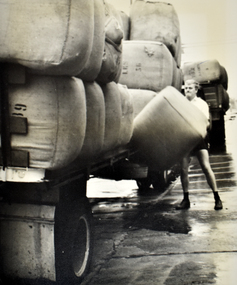
... The facility functioned as a complete raw-to-finished assembly line where raw fleece was brought on-site to be scoured, carded, dyed, spun into yarn and woven. It specialised in heavy worsted cloths, high-quality tweed, and its signature "Retsol" and "Monarch" pure-wool travelling rugs, later adapting its machinery to blend natural wool with artificial fibres as mid-century market demands shifted....The facility functioned as a complete raw-to-finished assembly line where raw fleece was brought on-site to be scoured, carded, dyed, spun into yarn and woven. It specialised in heavy worsted cloths, high-quality tweed, and its signature "Retsol" and "Monarch" pure-wool travelling rugs, later adapting its machinery to blend natural wool with artificial fibres as mid-century market demands shifted. ...One of thirty eight photographs from a photo album featuring images of the Returned Sailors and Soldiers Woollen Mill in Newtown, Geelong. The images were taken between the 1960's-1970's by Norm Holroyd who worked at the mills. They were developed in his own private dark room and kept at his home for private viewing. The Returned Sailors and Soldiers Woollen Mill operated as a self-sufficient co-operative, funded and run by World War I veterans using their War Gratuity Bonds. The facility functioned as a complete raw-to-finished assembly line where raw fleece was brought on-site to be scoured, carded, dyed, spun into yarn and woven. It specialised in heavy worsted cloths, high-quality tweed, and its signature "Retsol" and "Monarch" pure-wool travelling rugs, later adapting its machinery to blend natural wool with artificial fibres as mid-century market demands shifted.Black and white photograph attached to cardboard backing with sticky tape. Image shows a man loading a wool bale onto a trailer for transport. Backing card has four holes in left side.back: [handwritten] 1r. s. & s mill, returned sailors and soldiers mill, newtown, geelong, world war i, soldiers, veterans, co-operative, textile industry, woollen mills, wool, worsted cloth, tweed, retsol, monarch, travel rugs, machinery, factory, working life, norm holroyd, photo album, photography, design, fabric -
 National Wool Museum
Photograph - Returned Sailors and Soldiers Mill, Norm Holroyd, 1960's - 1970's
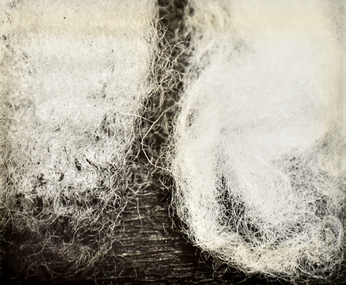
... The facility functioned as a complete raw-to-finished assembly line where raw fleece was brought on-site to be scoured, carded, dyed, spun into yarn and woven. It specialised in heavy worsted cloths, high-quality tweed, and its signature "Retsol" and "Monarch" pure-wool travelling rugs, later adapting its machinery to blend natural wool with artificial fibres as mid-century market demands shifted....The facility functioned as a complete raw-to-finished assembly line where raw fleece was brought on-site to be scoured, carded, dyed, spun into yarn and woven. It specialised in heavy worsted cloths, high-quality tweed, and its signature "Retsol" and "Monarch" pure-wool travelling rugs, later adapting its machinery to blend natural wool with artificial fibres as mid-century market demands shifted. ...One of thirty eight photographs from a photo album featuring images of the Returned Sailors and Soldiers Woollen Mill in Newtown, Geelong. The images were taken between the 1960's-1970's by Norm Holroyd who worked at the mills. They were developed in his own private dark room and kept at his home for private viewing. The Returned Sailors and Soldiers Woollen Mill operated as a self-sufficient co-operative, funded and run by World War I veterans using their War Gratuity Bonds. The facility functioned as a complete raw-to-finished assembly line where raw fleece was brought on-site to be scoured, carded, dyed, spun into yarn and woven. It specialised in heavy worsted cloths, high-quality tweed, and its signature "Retsol" and "Monarch" pure-wool travelling rugs, later adapting its machinery to blend natural wool with artificial fibres as mid-century market demands shifted.Black and white photograph showing wool fibres in detail.r. s. & s mill, returned sailors and soldiers mill, newtown, geelong, world war i, soldiers, veterans, co-operative, textile industry, woollen mills, wool, worsted cloth, tweed, retsol, monarch, travel rugs, machinery, factory, working life, norm holroyd, photo album, photography, design, fabric -
 National Wool Museum
Photograph - Returned Sailors and Soldiers Mill, Norm Holroyd, 1960's - 1970's
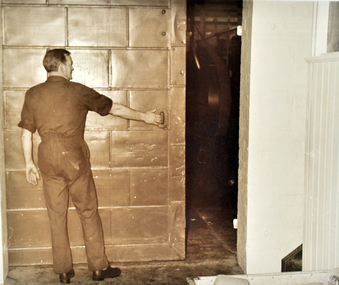
... The facility functioned as a complete raw-to-finished assembly line where raw fleece was brought on-site to be scoured, carded, dyed, spun into yarn and woven. It specialised in heavy worsted cloths, high-quality tweed, and its signature "Retsol" and "Monarch" pure-wool travelling rugs, later adapting its machinery to blend natural wool with artificial fibres as mid-century market demands shifted....The facility functioned as a complete raw-to-finished assembly line where raw fleece was brought on-site to be scoured, carded, dyed, spun into yarn and woven. It specialised in heavy worsted cloths, high-quality tweed, and its signature "Retsol" and "Monarch" pure-wool travelling rugs, later adapting its machinery to blend natural wool with artificial fibres as mid-century market demands shifted. ...One of thirty eight photographs from a photo album featuring images of the Returned Sailors and Soldiers Woollen Mill in Newtown, Geelong. The images were taken between the 1960's-1970's by Norm Holroyd who worked at the mills. They were developed in his own private dark room and kept at his home for private viewing. The Returned Sailors and Soldiers Woollen Mill operated as a self-sufficient co-operative, funded and run by World War I veterans using their War Gratuity Bonds. The facility functioned as a complete raw-to-finished assembly line where raw fleece was brought on-site to be scoured, carded, dyed, spun into yarn and woven. It specialised in heavy worsted cloths, high-quality tweed, and its signature "Retsol" and "Monarch" pure-wool travelling rugs, later adapting its machinery to blend natural wool with artificial fibres as mid-century market demands shifted.Black and white photograph attached to cardboard backing with sticky tape. Image shows a man opening a sliding door inside a factory. Backing card has four holes in left side.r. s. & s mill, returned sailors and soldiers mill, newtown, geelong, world war i, soldiers, veterans, co-operative, textile industry, woollen mills, wool, worsted cloth, tweed, retsol, monarch, travel rugs, machinery, factory, working life, norm holroyd, photo album, photography, design, fabric -
 National Wool Museum
Photograph - Wool Processing, Returned Sailors and Soldiers Mill, Norm Holroyd, 1960's - 1970's
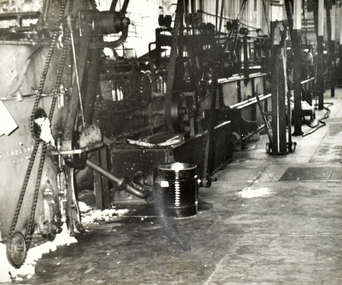
... The facility functioned as a complete raw-to-finished assembly line where raw fleece was brought on-site to be scoured, carded, dyed, spun into yarn and woven. It specialised in heavy worsted cloths, high-quality tweed, and its signature "Retsol" and "Monarch" pure-wool travelling rugs, later adapting its machinery to blend natural wool with artificial fibres as mid-century market demands shifted....The facility functioned as a complete raw-to-finished assembly line where raw fleece was brought on-site to be scoured, carded, dyed, spun into yarn and woven. It specialised in heavy worsted cloths, high-quality tweed, and its signature "Retsol" and "Monarch" pure-wool travelling rugs, later adapting its machinery to blend natural wool with artificial fibres as mid-century market demands shifted. ...One of thirty eight photographs from a photo album featuring images of the Returned Sailors and Soldiers Woollen Mill in Newtown, Geelong. The images were taken between the 1960's-1970's by Norm Holroyd who worked at the mills. They were developed in his own private dark room and kept at his home for private viewing. The Returned Sailors and Soldiers Woollen Mill operated as a self-sufficient co-operative, funded and run by World War I veterans using their War Gratuity Bonds. The facility functioned as a complete raw-to-finished assembly line where raw fleece was brought on-site to be scoured, carded, dyed, spun into yarn and woven. It specialised in heavy worsted cloths, high-quality tweed, and its signature "Retsol" and "Monarch" pure-wool travelling rugs, later adapting its machinery to blend natural wool with artificial fibres as mid-century market demands shifted.Black and white photograph attached to cardboard backing with sticky tape. Image shows wool processing machinery. Backing card has four holes in left side.back: [handwritten] 4r. s. & s mill, returned sailors and soldiers mill, newtown, geelong, world war i, soldiers, veterans, co-operative, textile industry, woollen mills, wool, worsted cloth, tweed, retsol, monarch, travel rugs, machinery, factory, working life, norm holroyd, photo album, photography, design, fabric -
 National Wool Museum
Photograph - Returned Sailors and Soldiers Mill, Norm Holroyd, 1960's - 1970's
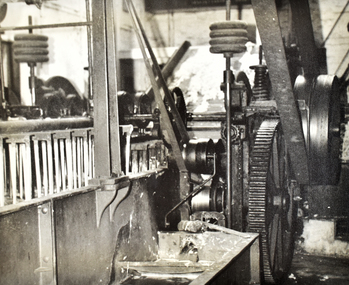
... The facility functioned as a complete raw-to-finished assembly line where raw fleece was brought on-site to be scoured, carded, dyed, spun into yarn and woven. It specialised in heavy worsted cloths, high-quality tweed, and its signature "Retsol" and "Monarch" pure-wool travelling rugs, later adapting its machinery to blend natural wool with artificial fibres as mid-century market demands shifted....The facility functioned as a complete raw-to-finished assembly line where raw fleece was brought on-site to be scoured, carded, dyed, spun into yarn and woven. It specialised in heavy worsted cloths, high-quality tweed, and its signature "Retsol" and "Monarch" pure-wool travelling rugs, later adapting its machinery to blend natural wool with artificial fibres as mid-century market demands shifted. ...One of thirty eight photographs from a photo album featuring images of the Returned Sailors and Soldiers Woollen Mill in Newtown, Geelong. The images were taken between the 1960's-1970's by Norm Holroyd who worked at the mills. They were developed in his own private dark room and kept at his home for private viewing. The Returned Sailors and Soldiers Woollen Mill operated as a self-sufficient co-operative, funded and run by World War I veterans using their War Gratuity Bonds. The facility functioned as a complete raw-to-finished assembly line where raw fleece was brought on-site to be scoured, carded, dyed, spun into yarn and woven. It specialised in heavy worsted cloths, high-quality tweed, and its signature "Retsol" and "Monarch" pure-wool travelling rugs, later adapting its machinery to blend natural wool with artificial fibres as mid-century market demands shifted.Black and white photograph showing machinery processing wool.r. s. & s mill, returned sailors and soldiers mill, newtown, geelong, world war i, soldiers, veterans, co-operative, textile industry, woollen mills, wool, worsted cloth, tweed, retsol, monarch, travel rugs, machinery, factory, working life, norm holroyd, photo album, photography, design, fabric -
 National Wool Museum
Photograph - Wool Processing, Returned Sailors and Soldiers Mill, Norm Holroyd, 1960's - 1970's
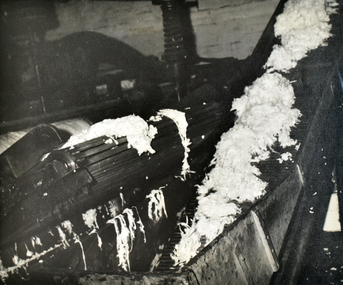
... The facility functioned as a complete raw-to-finished assembly line where raw fleece was brought on-site to be scoured, carded, dyed, spun into yarn and woven. It specialised in heavy worsted cloths, high-quality tweed, and its signature "Retsol" and "Monarch" pure-wool travelling rugs, later adapting its machinery to blend natural wool with artificial fibres as mid-century market demands shifted....The facility functioned as a complete raw-to-finished assembly line where raw fleece was brought on-site to be scoured, carded, dyed, spun into yarn and woven. It specialised in heavy worsted cloths, high-quality tweed, and its signature "Retsol" and "Monarch" pure-wool travelling rugs, later adapting its machinery to blend natural wool with artificial fibres as mid-century market demands shifted. ...One of thirty eight photographs from a photo album featuring images of the Returned Sailors and Soldiers Woollen Mill in Newtown, Geelong. The images were taken between the 1960's-1970's by Norm Holroyd who worked at the mills. They were developed in his own private dark room and kept at his home for private viewing. The Returned Sailors and Soldiers Woollen Mill operated as a self-sufficient co-operative, funded and run by World War I veterans using their War Gratuity Bonds. The facility functioned as a complete raw-to-finished assembly line where raw fleece was brought on-site to be scoured, carded, dyed, spun into yarn and woven. It specialised in heavy worsted cloths, high-quality tweed, and its signature "Retsol" and "Monarch" pure-wool travelling rugs, later adapting its machinery to blend natural wool with artificial fibres as mid-century market demands shifted.Black and white photograph attached to cardboard backing with sticky tape. Image shows a close up of wool processing machinery. Backing card has four holes in left side.back: [handwritten] 6r. s. & s mill, returned sailors and soldiers mill, newtown, geelong, world war i, soldiers, veterans, co-operative, textile industry, woollen mills, wool, worsted cloth, tweed, retsol, monarch, travel rugs, machinery, factory, working life, norm holroyd, photo album, photography, design, fabric -
 National Wool Museum
Photograph - Returned Sailors and Soldiers Mill, Norm Holroyd, 1960's - 1970's
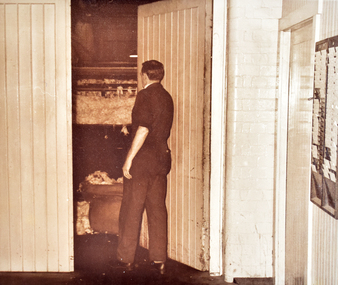
... The facility functioned as a complete raw-to-finished assembly line where raw fleece was brought on-site to be scoured, carded, dyed, spun into yarn and woven. It specialised in heavy worsted cloths, high-quality tweed, and its signature "Retsol" and "Monarch" pure-wool travelling rugs, later adapting its machinery to blend natural wool with artificial fibres as mid-century market demands shifted....The facility functioned as a complete raw-to-finished assembly line where raw fleece was brought on-site to be scoured, carded, dyed, spun into yarn and woven. It specialised in heavy worsted cloths, high-quality tweed, and its signature "Retsol" and "Monarch" pure-wool travelling rugs, later adapting its machinery to blend natural wool with artificial fibres as mid-century market demands shifted. ...One of thirty eight photographs from a photo album featuring images of the Returned Sailors and Soldiers Woollen Mill in Newtown, Geelong. The images were taken between the 1960's-1970's by Norm Holroyd who worked at the mills. They were developed in his own private dark room and kept at his home for private viewing. The Returned Sailors and Soldiers Woollen Mill operated as a self-sufficient co-operative, funded and run by World War I veterans using their War Gratuity Bonds. The facility functioned as a complete raw-to-finished assembly line where raw fleece was brought on-site to be scoured, carded, dyed, spun into yarn and woven. It specialised in heavy worsted cloths, high-quality tweed, and its signature "Retsol" and "Monarch" pure-wool travelling rugs, later adapting its machinery to blend natural wool with artificial fibres as mid-century market demands shifted.Black and white photograph attached to cardboard backing with sticky tape. Image shows a man walking through a doorway inside a factory with time card racks to the right, and wool processing machinery in the background. Backing card has four holes in left side.back: [handwritten] 7r. s. & s mill, returned sailors and soldiers mill, newtown, geelong, world war i, soldiers, veterans, co-operative, textile industry, woollen mills, wool, worsted cloth, tweed, retsol, monarch, travel rugs, machinery, factory, working life, norm holroyd, photo album, photography, design, fabric -
 National Wool Museum
Photograph - Machinery, Returned Sailors and Soldiers Mill, Norm Holroyd, 1960's - 1970's
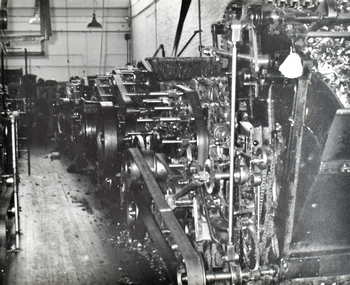
... The facility functioned as a complete raw-to-finished assembly line where raw fleece was brought on-site to be scoured, carded, dyed, spun into yarn and woven. It specialised in heavy worsted cloths, high-quality tweed, and its signature "Retsol" and "Monarch" pure-wool travelling rugs, later adapting its machinery to blend natural wool with artificial fibres as mid-century market demands shifted....The facility functioned as a complete raw-to-finished assembly line where raw fleece was brought on-site to be scoured, carded, dyed, spun into yarn and woven. It specialised in heavy worsted cloths, high-quality tweed, and its signature "Retsol" and "Monarch" pure-wool travelling rugs, later adapting its machinery to blend natural wool with artificial fibres as mid-century market demands shifted. ...One of thirty eight photographs from a photo album featuring images of the Returned Sailors and Soldiers Woollen Mill in Newtown, Geelong. The images were taken between the 1960's-1970's by Norm Holroyd who worked at the mills. They were developed in his own private dark room and kept at his home for private viewing. The Returned Sailors and Soldiers Woollen Mill operated as a self-sufficient co-operative, funded and run by World War I veterans using their War Gratuity Bonds. The facility functioned as a complete raw-to-finished assembly line where raw fleece was brought on-site to be scoured, carded, dyed, spun into yarn and woven. It specialised in heavy worsted cloths, high-quality tweed, and its signature "Retsol" and "Monarch" pure-wool travelling rugs, later adapting its machinery to blend natural wool with artificial fibres as mid-century market demands shifted.Black and white photograph attached to cardboard backing with sticky tape. Image shows wool processing machinery inside a factory. Backing card has four holes in left side.back: [handwritten] 8r. s. & s mill, returned sailors and soldiers mill, newtown, geelong, world war i, soldiers, veterans, co-operative, textile industry, woollen mills, wool, worsted cloth, tweed, retsol, monarch, travel rugs, machinery, factory, working life, norm holroyd, photo album, photography, design, fabric -
 National Wool Museum
Photograph - Returned Sailors and Soldiers Mill, Norm Holroyd, 1960's - 1970's
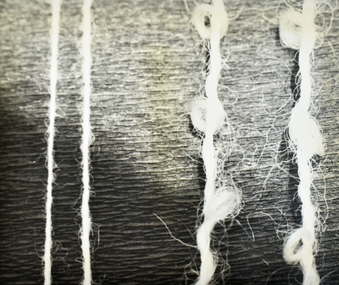
... The facility functioned as a complete raw-to-finished assembly line where raw fleece was brought on-site to be scoured, carded, dyed, spun into yarn and woven. It specialised in heavy worsted cloths, high-quality tweed, and its signature "Retsol" and "Monarch" pure-wool travelling rugs, later adapting its machinery to blend natural wool with artificial fibres as mid-century market demands shifted....The facility functioned as a complete raw-to-finished assembly line where raw fleece was brought on-site to be scoured, carded, dyed, spun into yarn and woven. It specialised in heavy worsted cloths, high-quality tweed, and its signature "Retsol" and "Monarch" pure-wool travelling rugs, later adapting its machinery to blend natural wool with artificial fibres as mid-century market demands shifted. ...One of thirty eight photographs from a photo album featuring images of the Returned Sailors and Soldiers Woollen Mill in Newtown, Geelong. The images were taken between the 1960's-1970's by Norm Holroyd who worked at the mills. They were developed in his own private dark room and kept at his home for private viewing. The Returned Sailors and Soldiers Woollen Mill operated as a self-sufficient co-operative, funded and run by World War I veterans using their War Gratuity Bonds. The facility functioned as a complete raw-to-finished assembly line where raw fleece was brought on-site to be scoured, carded, dyed, spun into yarn and woven. It specialised in heavy worsted cloths, high-quality tweed, and its signature "Retsol" and "Monarch" pure-wool travelling rugs, later adapting its machinery to blend natural wool with artificial fibres as mid-century market demands shifted.Black and white photograph attached to cardboard backing with sticky tape. Image shows detail of woollen thread. Backing card has four holes in left side.back: [handwritten] 17r. s. & s mill, returned sailors and soldiers mill, newtown, geelong, world war i, soldiers, veterans, co-operative, textile industry, woollen mills, wool, worsted cloth, tweed, retsol, monarch, travel rugs, machinery, factory, working life, norm holroyd, photo album, photography, design, fabric -
 National Wool Museum
Photograph - Returned Sailors and Soldiers Mill, Norm Holroyd, 1960's - 1970's
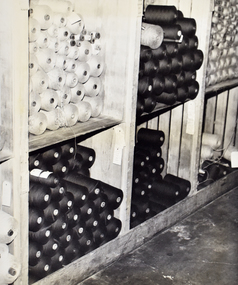
... The facility functioned as a complete raw-to-finished assembly line where raw fleece was brought on-site to be scoured, carded, dyed, spun into yarn and woven. It specialised in heavy worsted cloths, high-quality tweed, and its signature "Retsol" and "Monarch" pure-wool travelling rugs, later adapting its machinery to blend natural wool with artificial fibres as mid-century market demands shifted....The facility functioned as a complete raw-to-finished assembly line where raw fleece was brought on-site to be scoured, carded, dyed, spun into yarn and woven. It specialised in heavy worsted cloths, high-quality tweed, and its signature "Retsol" and "Monarch" pure-wool travelling rugs, later adapting its machinery to blend natural wool with artificial fibres as mid-century market demands shifted. ...One of thirty eight photographs from a photo album featuring images of the Returned Sailors and Soldiers Woollen Mill in Newtown, Geelong. The images were taken between the 1960's-1970's by Norm Holroyd who worked at the mills. They were developed in his own private dark room and kept at his home for private viewing. The Returned Sailors and Soldiers Woollen Mill operated as a self-sufficient co-operative, funded and run by World War I veterans using their War Gratuity Bonds. The facility functioned as a complete raw-to-finished assembly line where raw fleece was brought on-site to be scoured, carded, dyed, spun into yarn and woven. It specialised in heavy worsted cloths, high-quality tweed, and its signature "Retsol" and "Monarch" pure-wool travelling rugs, later adapting its machinery to blend natural wool with artificial fibres as mid-century market demands shifted.Black and white photograph attached to cardboard backing with sticky tape. Image shows wool on spools in storage compartments. Backing card has four holes in left side.back: [handwritten] 16r. s. & s mill, returned sailors and soldiers mill, newtown, geelong, world war i, soldiers, veterans, co-operative, textile industry, woollen mills, wool, worsted cloth, tweed, retsol, monarch, travel rugs, machinery, factory, working life, norm holroyd, photo album, photography, design, fabric -
 National Wool Museum
Photograph - Returned Sailors and Soldiers Mill, Norm Holroyd, 1960's - 1970's
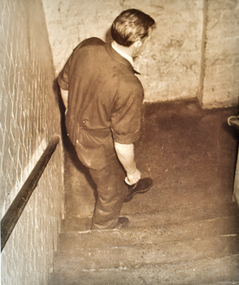
... The facility functioned as a complete raw-to-finished assembly line where raw fleece was brought on-site to be scoured, carded, dyed, spun into yarn and woven. It specialised in heavy worsted cloths, high-quality tweed, and its signature "Retsol" and "Monarch" pure-wool travelling rugs, later adapting its machinery to blend natural wool with artificial fibres as mid-century market demands shifted....The facility functioned as a complete raw-to-finished assembly line where raw fleece was brought on-site to be scoured, carded, dyed, spun into yarn and woven. It specialised in heavy worsted cloths, high-quality tweed, and its signature "Retsol" and "Monarch" pure-wool travelling rugs, later adapting its machinery to blend natural wool with artificial fibres as mid-century market demands shifted. ...One of thirty eight photographs from a photo album featuring images of the Returned Sailors and Soldiers Woollen Mill in Newtown, Geelong. The images were taken between the 1960's-1970's by Norm Holroyd who worked at the mills. They were developed in his own private dark room and kept at his home for private viewing. The Returned Sailors and Soldiers Woollen Mill operated as a self-sufficient co-operative, funded and run by World War I veterans using their War Gratuity Bonds. The facility functioned as a complete raw-to-finished assembly line where raw fleece was brought on-site to be scoured, carded, dyed, spun into yarn and woven. It specialised in heavy worsted cloths, high-quality tweed, and its signature "Retsol" and "Monarch" pure-wool travelling rugs, later adapting its machinery to blend natural wool with artificial fibres as mid-century market demands shifted.Black and white photograph attached to cardboard backing with sticky tape. Image shows a man walking down a stairwell. Backing card has four holes in left side.back: [handwritten] 15r. s. & s mill, returned sailors and soldiers mill, newtown, geelong, world war i, soldiers, veterans, co-operative, textile industry, woollen mills, wool, worsted cloth, tweed, retsol, monarch, travel rugs, machinery, factory, working life, norm holroyd, photo album, photography, design, fabric -
 National Wool Museum
Photograph - Loom, Returned Sailors and Soldiers Mill, Norm Holroyd, 1960's - 1970's
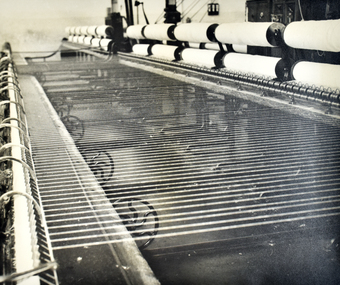
... The facility functioned as a complete raw-to-finished assembly line where raw fleece was brought on-site to be scoured, carded, dyed, spun into yarn and woven. It specialised in heavy worsted cloths, high-quality tweed, and its signature "Retsol" and "Monarch" pure-wool travelling rugs, later adapting its machinery to blend natural wool with artificial fibres as mid-century market demands shifted....The facility functioned as a complete raw-to-finished assembly line where raw fleece was brought on-site to be scoured, carded, dyed, spun into yarn and woven. It specialised in heavy worsted cloths, high-quality tweed, and its signature "Retsol" and "Monarch" pure-wool travelling rugs, later adapting its machinery to blend natural wool with artificial fibres as mid-century market demands shifted. ...One of thirty eight photographs from a photo album featuring images of the Returned Sailors and Soldiers Woollen Mill in Newtown, Geelong. The images were taken between the 1960's-1970's by Norm Holroyd who worked at the mills. They were developed in his own private dark room and kept at his home for private viewing. The Returned Sailors and Soldiers Woollen Mill operated as a self-sufficient co-operative, funded and run by World War I veterans using their War Gratuity Bonds. The facility functioned as a complete raw-to-finished assembly line where raw fleece was brought on-site to be scoured, carded, dyed, spun into yarn and woven. It specialised in heavy worsted cloths, high-quality tweed, and its signature "Retsol" and "Monarch" pure-wool travelling rugs, later adapting its machinery to blend natural wool with artificial fibres as mid-century market demands shifted.Black and white photograph attached to cardboard backing with sticky tape. Image shows detail of a loom. Backing card has four holes in left side.back: [handwritten] 13r. s. & s mill, returned sailors and soldiers mill, newtown, geelong, world war i, soldiers, veterans, co-operative, textile industry, woollen mills, wool, worsted cloth, tweed, retsol, monarch, travel rugs, machinery, factory, working life, norm holroyd, photo album, photography, design, fabric -
 National Wool Museum
Photograph - Wool Processing, Returned Sailors and Soldiers Mill, Norm Holroyd, 1960's - 1970's
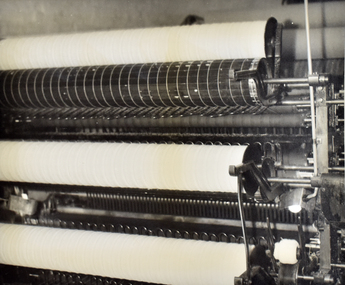
... The facility functioned as a complete raw-to-finished assembly line where raw fleece was brought on-site to be scoured, carded, dyed, spun into yarn and woven. It specialised in heavy worsted cloths, high-quality tweed, and its signature "Retsol" and "Monarch" pure-wool travelling rugs, later adapting its machinery to blend natural wool with artificial fibres as mid-century market demands shifted....The facility functioned as a complete raw-to-finished assembly line where raw fleece was brought on-site to be scoured, carded, dyed, spun into yarn and woven. It specialised in heavy worsted cloths, high-quality tweed, and its signature "Retsol" and "Monarch" pure-wool travelling rugs, later adapting its machinery to blend natural wool with artificial fibres as mid-century market demands shifted. ...One of thirty eight photographs from a photo album featuring images of the Returned Sailors and Soldiers Woollen Mill in Newtown, Geelong. The images were taken between the 1960's-1970's by Norm Holroyd who worked at the mills. They were developed in his own private dark room and kept at his home for private viewing. The Returned Sailors and Soldiers Woollen Mill operated as a self-sufficient co-operative, funded and run by World War I veterans using their War Gratuity Bonds. The facility functioned as a complete raw-to-finished assembly line where raw fleece was brought on-site to be scoured, carded, dyed, spun into yarn and woven. It specialised in heavy worsted cloths, high-quality tweed, and its signature "Retsol" and "Monarch" pure-wool travelling rugs, later adapting its machinery to blend natural wool with artificial fibres as mid-century market demands shifted.Black and white photograph attached to cardboard backing with sticky tape. Image shows detail of wool processing machinery. Backing card has four holes in left side.back: [handwritten] 12r. s. & s mill, returned sailors and soldiers mill, newtown, geelong, world war i, soldiers, veterans, co-operative, textile industry, woollen mills, wool, worsted cloth, tweed, retsol, monarch, travel rugs, machinery, factory, working life, norm holroyd, photo album, photography, design, fabric -
 National Wool Museum
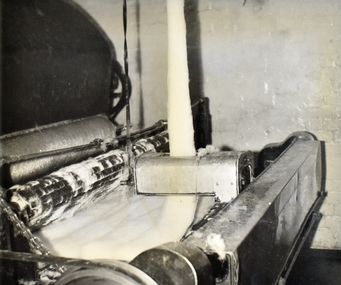
Photograph - Wool Processing, Returned Sailors and Soldiers Mill, Norm Holroyd, 1960's - 1970's
... The facility functioned as a complete raw-to-finished assembly line where raw fleece was brought on-site to be scoured, carded, dyed, spun into yarn and woven. It specialised in heavy worsted cloths, high-quality tweed, and its signature "Retsol" and "Monarch" pure-wool travelling rugs, later adapting its machinery to blend natural wool with artificial fibres as mid-century market demands shifted....The facility functioned as a complete raw-to-finished assembly line where raw fleece was brought on-site to be scoured, carded, dyed, spun into yarn and woven. It specialised in heavy worsted cloths, high-quality tweed, and its signature "Retsol" and "Monarch" pure-wool travelling rugs, later adapting its machinery to blend natural wool with artificial fibres as mid-century market demands shifted. ...One of thirty eight photographs from a photo album featuring images of the Returned Sailors and Soldiers Woollen Mill in Newtown, Geelong. The images were taken between the 1960's-1970's by Norm Holroyd who worked at the mills. They were developed in his own private dark room and kept at his home for private viewing. The Returned Sailors and Soldiers Woollen Mill operated as a self-sufficient co-operative, funded and run by World War I veterans using their War Gratuity Bonds. The facility functioned as a complete raw-to-finished assembly line where raw fleece was brought on-site to be scoured, carded, dyed, spun into yarn and woven. It specialised in heavy worsted cloths, high-quality tweed, and its signature "Retsol" and "Monarch" pure-wool travelling rugs, later adapting its machinery to blend natural wool with artificial fibres as mid-century market demands shifted.Black and white photograph attached to cardboard backing with sticky tape. Image shows detail of wool processing machinery. Backing card has four holes in left side.back: [handwritten] 11r. s. & s mill, returned sailors and soldiers mill, newtown, geelong, world war i, soldiers, veterans, co-operative, textile industry, woollen mills, wool, worsted cloth, tweed, retsol, monarch, travel rugs, machinery, factory, working life, norm holroyd, photo album, photography, design, fabric -
 National Wool Museum
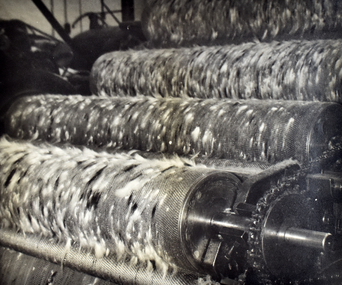
Photograph - Wool Processing, Returned Sailors and Soldiers Mill, Norm Holroyd, 1960's - 1970's
... The facility functioned as a complete raw-to-finished assembly line where raw fleece was brought on-site to be scoured, carded, dyed, spun into yarn and woven. It specialised in heavy worsted cloths, high-quality tweed, and its signature "Retsol" and "Monarch" pure-wool travelling rugs, later adapting its machinery to blend natural wool with artificial fibres as mid-century market demands shifted....The facility functioned as a complete raw-to-finished assembly line where raw fleece was brought on-site to be scoured, carded, dyed, spun into yarn and woven. It specialised in heavy worsted cloths, high-quality tweed, and its signature "Retsol" and "Monarch" pure-wool travelling rugs, later adapting its machinery to blend natural wool with artificial fibres as mid-century market demands shifted. ...One of thirty eight photographs from a photo album featuring images of the Returned Sailors and Soldiers Woollen Mill in Newtown, Geelong. The images were taken between the 1960's-1970's by Norm Holroyd who worked at the mills. They were developed in his own private dark room and kept at his home for private viewing. The Returned Sailors and Soldiers Woollen Mill operated as a self-sufficient co-operative, funded and run by World War I veterans using their War Gratuity Bonds. The facility functioned as a complete raw-to-finished assembly line where raw fleece was brought on-site to be scoured, carded, dyed, spun into yarn and woven. It specialised in heavy worsted cloths, high-quality tweed, and its signature "Retsol" and "Monarch" pure-wool travelling rugs, later adapting its machinery to blend natural wool with artificial fibres as mid-century market demands shifted.Black and white photograph attached to cardboard backing with sticky tape. Image shows detail of wool processing machinery. Backing card has four holes in left side.back: [handwritten] 10r. s. & s mill, returned sailors and soldiers mill, newtown, geelong, world war i, soldiers, veterans, co-operative, textile industry, woollen mills, wool, worsted cloth, tweed, retsol, monarch, travel rugs, machinery, factory, working life, norm holroyd, photo album, photography, design, fabric -
 National Wool Museum
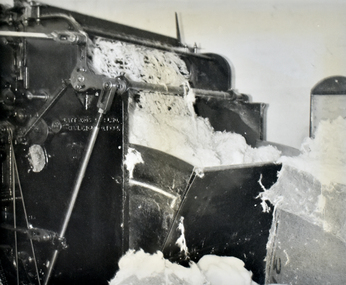
Photograph - Returned Sailors and Soldiers Mill, Norm Holroyd, 1960's - 1970's
... The facility functioned as a complete raw-to-finished assembly line where raw fleece was brought on-site to be scoured, carded, dyed, spun into yarn and woven. It specialised in heavy worsted cloths, high-quality tweed, and its signature "Retsol" and "Monarch" pure-wool travelling rugs, later adapting its machinery to blend natural wool with artificial fibres as mid-century market demands shifted....The facility functioned as a complete raw-to-finished assembly line where raw fleece was brought on-site to be scoured, carded, dyed, spun into yarn and woven. It specialised in heavy worsted cloths, high-quality tweed, and its signature "Retsol" and "Monarch" pure-wool travelling rugs, later adapting its machinery to blend natural wool with artificial fibres as mid-century market demands shifted. ...One of thirty eight photographs from a photo album featuring images of the Returned Sailors and Soldiers Woollen Mill in Newtown, Geelong. The images were taken between the 1960's-1970's by Norm Holroyd who worked at the mills. They were developed in his own private dark room and kept at his home for private viewing. The Returned Sailors and Soldiers Woollen Mill operated as a self-sufficient co-operative, funded and run by World War I veterans using their War Gratuity Bonds. The facility functioned as a complete raw-to-finished assembly line where raw fleece was brought on-site to be scoured, carded, dyed, spun into yarn and woven. It specialised in heavy worsted cloths, high-quality tweed, and its signature "Retsol" and "Monarch" pure-wool travelling rugs, later adapting its machinery to blend natural wool with artificial fibres as mid-century market demands shifted.Black and white photograph showing machinery processing wool.r. s. & s mill, returned sailors and soldiers mill, newtown, geelong, world war i, soldiers, veterans, co-operative, textile industry, woollen mills, wool, worsted cloth, tweed, retsol, monarch, travel rugs, machinery, factory, working life, norm holroyd, photo album, photography, design, fabric -
 National Wool Museum
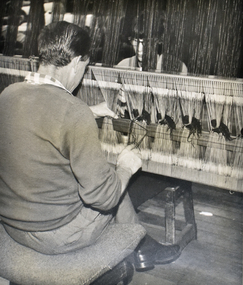
Photograph - Loom, Returned Sailors and Soldiers Mill, Norm Holroyd, 1960's - 1970's
... The facility functioned as a complete raw-to-finished assembly line where raw fleece was brought on-site to be scoured, carded, dyed, spun into yarn and woven. It specialised in heavy worsted cloths, high-quality tweed, and its signature "Retsol" and "Monarch" pure-wool travelling rugs, later adapting its machinery to blend natural wool with artificial fibres as mid-century market demands shifted....The facility functioned as a complete raw-to-finished assembly line where raw fleece was brought on-site to be scoured, carded, dyed, spun into yarn and woven. It specialised in heavy worsted cloths, high-quality tweed, and its signature "Retsol" and "Monarch" pure-wool travelling rugs, later adapting its machinery to blend natural wool with artificial fibres as mid-century market demands shifted. ...One of thirty eight photographs from a photo album featuring images of the Returned Sailors and Soldiers Woollen Mill in Newtown, Geelong. The images were taken between the 1960's-1970's by Norm Holroyd who worked at the mills. They were developed in his own private dark room and kept at his home for private viewing. The Returned Sailors and Soldiers Woollen Mill operated as a self-sufficient co-operative, funded and run by World War I veterans using their War Gratuity Bonds. The facility functioned as a complete raw-to-finished assembly line where raw fleece was brought on-site to be scoured, carded, dyed, spun into yarn and woven. It specialised in heavy worsted cloths, high-quality tweed, and its signature "Retsol" and "Monarch" pure-wool travelling rugs, later adapting its machinery to blend natural wool with artificial fibres as mid-century market demands shifted.Black and white photograph attached to cardboard backing with sticky tape. Image shows a man working at a loom. Backing card has four holes in left side.back: [handwritten] 23r. s. & s mill, returned sailors and soldiers mill, newtown, geelong, world war i, soldiers, veterans, co-operative, textile industry, woollen mills, wool, worsted cloth, tweed, retsol, monarch, travel rugs, machinery, factory, working life, norm holroyd, photo album, photography, design, fabric -
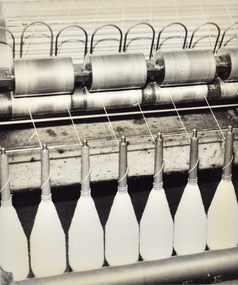 National Wool Museum
Photograph - Returned Sailors and Soldiers Mill, Norm Holroyd, 1960's - 1970's
... The facility functioned as a complete raw-to-finished assembly line where raw fleece was brought on-site to be scoured, carded, dyed, spun into yarn and woven. It specialised in heavy worsted cloths, high-quality tweed, and its signature "Retsol" and "Monarch" pure-wool travelling rugs, later adapting its machinery to blend natural wool with artificial fibres as mid-century market demands shifted....The facility functioned as a complete raw-to-finished assembly line where raw fleece was brought on-site to be scoured, carded, dyed, spun into yarn and woven. It specialised in heavy worsted cloths, high-quality tweed, and its signature "Retsol" and "Monarch" pure-wool travelling rugs, later adapting its machinery to blend natural wool with artificial fibres as mid-century market demands shifted. ...One of thirty eight photographs from a photo album featuring images of the Returned Sailors and Soldiers Woollen Mill in Newtown, Geelong. The images were taken between the 1960's-1970's by Norm Holroyd who worked at the mills. They were developed in his own private dark room and kept at his home for private viewing. The Returned Sailors and Soldiers Woollen Mill operated as a self-sufficient co-operative, funded and run by World War I veterans using their War Gratuity Bonds. The facility functioned as a complete raw-to-finished assembly line where raw fleece was brought on-site to be scoured, carded, dyed, spun into yarn and woven. It specialised in heavy worsted cloths, high-quality tweed, and its signature "Retsol" and "Monarch" pure-wool travelling rugs, later adapting its machinery to blend natural wool with artificial fibres as mid-century market demands shifted.Black and white photograph attached to cardboard backing with sticky tape. Image shows a close up of threaded spools on machinery. Backing card has four holes in left side.back: [handwritten] 14r. s. & s mill, returned sailors and soldiers mill, newtown, geelong, world war i, soldiers, veterans, co-operative, textile industry, woollen mills, wool, worsted cloth, tweed, retsol, monarch, travel rugs, machinery, factory, working life, norm holroyd, photo album, photography, design, fabric
