
Showing 1179 items matching "early 1900s"
-
 Wodonga & District Historical Society Inc
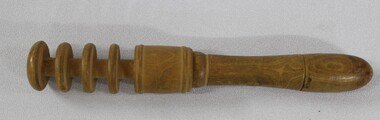
Functional object - Haeusler Collection Honey Dipper early 1900s
... Haeusler Collection Honey Dipper early 1900s...Haeusler Collection Honey Dipper early 1900s...Wooden honey dipper c. early 1900s...It contributes to our understanding of domestic and family life in early twentieth century Wodonga, as well as providing interpretative capacity for themes including local history, social history, and women’s history. honey bees food kitchen wodonga haeusler collection domestic family household tableware Wooden honey dipper c. early 1900s Haeusler Collection Honey Dipper early 1900s Functional object Haeusler Collection Honey Dipper early 1900s ...The Wodonga Historical Society Haeusler Collection provides invaluable insight into life in late nineteenth and early twentieth century north east Victoria. The collection comprises manuscripts, personal artefacts used by the Haeusler family on their farm in Wodonga, and a set of glass negatives which offer a unique visual snapshot of the domestic and social lives of the Haeusler family and local Wodonga community. The Haeusler family migrated from Prussia (Germany) to South Australia in the 1840s and 1850s, before purchasing 100 acres of Crown Land made available under the Victorian Lands Act 1862 (also known as ‘Duffy’s Land Act’) in 1866 in what is now Wodonga West. The Haeusler family were one of several German families to migrate from South Australia to Wodonga in the 1860s. This honey dipper is one of the many objects in the Haeusler Collection that represent home life in early twentieth century Wodonga.This item has well documented provenance and a known owner. It forms part of a significant and representative historical collection which reflects the local history of Wodonga. It contributes to our understanding of domestic and family life in early twentieth century Wodonga, as well as providing interpretative capacity for themes including local history, social history, and women’s history. Wooden honey dipper c. early 1900shoney, bees, food, kitchen, wodonga, haeusler collection, domestic, family, household, tableware -
 Wodonga & District Historical Society Inc
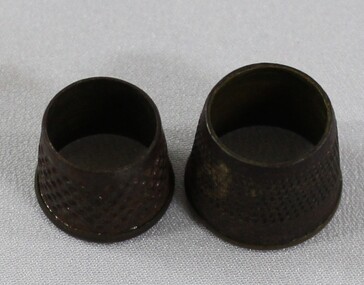
Functional object - Haeusler Collection Tailors Thimbles early 1900s
... Haeusler Collection Tailors Thimbles early 1900s...Haeusler Collection Tailors Thimbles early 1900s...Two alloy tailors thimbles dating from the early 1900s...It contributes to our understanding of domestic and family life in early twentieth century Wodonga, as well as providing interpretative capacity for themes including local history, social history, and women’s history. sewing thimble thimbles sew haeusler haeusler collection wodonga Two alloy tailors thimbles dating from the early 1900s Haeusler Collection Tailors Thimbles early 1900s Functional object Haeusler Collection Tailors Thimbles early 1900s ...The Wodonga Historical Society Haeusler Collection provides invaluable insight into life in late nineteenth and early twentieth century north east Victoria. The collection comprises manuscripts, personal artefacts used by the Haeusler family on their farm in Wodonga, and a set of glass negatives which offer a unique visual snapshot of the domestic and social lives of the Haeusler family and local Wodonga community. The Haeusler family migrated from Prussia (Germany) to South Australia in the 1840s and 1850s, before purchasing 100 acres of Crown Land made available under the Victorian Lands Act 1862 (also known as ‘Duffy’s Land Act’) in 1866 in what is now Wodonga West. The Haeusler family were one of several German families to migrate from South Australia to Wodonga in the 1860s. These thimbles belonged to Ilma Margaret Ernestine Haeusler (née Tasker), born in 1900 in Tallangatta. They were used in the family home between 1919 and 1928 during her marriage to Louis Alfred Haeusler (b.1878). Ilma died in childbirth in 1928, leaving one surviving son, John Alfred Lyell (b.1922). In the nineteenth and early twentieth century prior to the mass production of clothing and textiles, needlework, alongside motherhood, was the defining work of women. Hand sewing and embroidery was central in the everyday lives and domestic roles of women. This item has well documented provenance and a known owner. It forms part of a significant and representative historical collection which reflects the local history of Wodonga. It contributes to our understanding of domestic and family life in early twentieth century Wodonga, as well as providing interpretative capacity for themes including local history, social history, and women’s history. Two alloy tailors thimbles dating from the early 1900ssewing, thimble, thimbles, sew, haeusler, haeusler collection, wodonga -
 Buninyong & District Historical Society
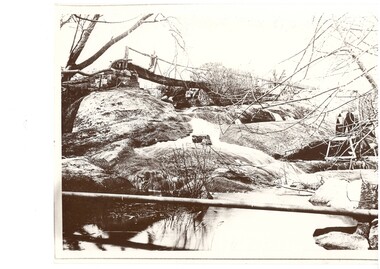
Photograph - Black and white photograph of Archibald Fisken on a bridge on Lal Lal Estate early 1900s, Archibald Fisken on "New Bridge" Lal Lal Estate early 1900s
... Black and white photograph of Archibald Fisken on a bridge on Lal Lal Estate early 1900s...Archibald Fisken on "New Bridge" Lal Lal Estate early 1900s...Archibald Fisken on the New Bridge Early 1900s, an early bridge over the spillway Lal Lal Park...One of a series of photographs featuring the Fisken Family on the Lal Lal Estate The image shows a water system on an early Estate near Buninyong Fisken Family Lal Lal Estate Rural life Water ways Archibald Fisken on the New Bridge Early 1900s, an early bridge over the spillway Lal Lal Park A black and white photograph showing a creek and Arthur Fisken standing on a wooden bridge to the rear over the spillway Archibald Fisken on "New Bridge" Lal Lal Estate early 1900s Photograph Black and white photograph of Archibald Fisken on a bridge on Lal Lal Estate early 1900s ...One of a series of photographs featuring the Fisken Family on the Lal Lal EstateThe image shows a water system on an early Estate near BuninyongA black and white photograph showing a creek and Arthur Fisken standing on a wooden bridge to the rear over the spillwayArchibald Fisken on the New Bridge Early 1900s, an early bridge over the spillway Lal Lal Parkfisken family, lal lal estate, rural life, water ways -
 Wodonga & District Historical Society Inc
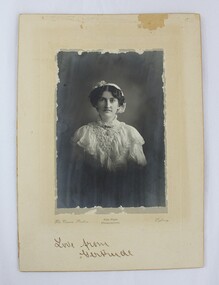
Photograph - Hamilton-Smith Collection Photograph of Gertrude Foord early 1900s, The Crown Studios: Vice-Regal Photographers
... Hamilton-Smith Collection Photograph of Gertrude Foord early 1900s...Hamilton-Smith Collection Photograph of Gertrude Foord early 1900s...Black and white studio portrait photograph of a woman dressed in early 1900s dress, mounted on card....Black and white studio portrait photograph of a woman dressed in early 1900s dress, mounted on card. Hamilton-Smith Collection Photograph of Gertrude Foord early 1900s Photograph Hamilton-Smith Collection Photograph of Gertrude Foord early 1900s The Crown Studios: Vice-Regal Photographers ...The Hamilton-Smith collection was donated by the children of Grace Mary Hamilton-Smith nee Ellwood (1911-2004) and John Hamilton-Smith (1909-1984) who settled in Wodonga in the 1940s. The Ellwood family had lived in north-east Victoria since the late 1800s. Grace’s mother, Rosina Ellwood nee Smale, was the first teacher at Baranduda in 1888, and a foundation member of the C.W.A. Rosina and her husband Mark retired to Wodonga in 1934. Grace and John married at St. David’s Church, Albury in 1941. John was a grazier, and actively involved in Agricultural Societies. The collection contains significant items which reflect the local history of Wodonga, including handmade needlework, books, photographs, a wedding dress, maps, and material relating to the world wars. This photograph is of Gertrude Foord (1885-1968), an aunt on the Hamilton-Smith family tree. Much of the needlework and textiles in the Hamilton-Smith collection belonged to Gertrude. This item has well documented provenance and a known owner. It forms part of a significant and representative historical collection which reflects the local history of Wodonga. It contributes to our understanding of social and family life in early twentieth century Wodonga, as well as providing interpretative capacity for themes including local history and social history.Black and white studio portrait photograph of a woman dressed in early 1900s dress, mounted on card.Handwritten inscription in bottom centre: "Love from/Gertrude". photograph, family photographs, photo, 1900s, edwardian, studio portrait, portrait -
 Buninyong & District Historical Society
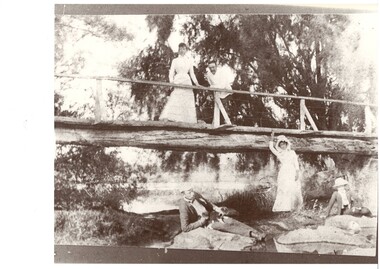
Photograph - Photograph of Fisken family, on bridge by lake at Lal Lal House, early 1900s, Fisken family, on bridge by lake at Lal Lal House, early 1900s
... Photograph of Fisken family, on bridge by lake at Lal Lal House, early 1900s....Fisken family, on bridge by lake at Lal Lal House, early 1900s....photo of photograph, Fisken family, on bridge by lake at Lal Lal House, early 1900s. Wooden bridge near small lake, lady and man on bridge, man and woman reclining on rocks below the bridge with another lady in between. ...Fisken family, on bridge by lake at Lal Lal House, early 1900s. Photograph Photograph of Fisken family, on bridge by lake at Lal Lal House, early 1900s. ...Peoplephoto of photograph, Fisken family, on bridge by lake at Lal Lal House, early 1900s. Wooden bridge near small lake, lady and man on bridge, man and woman reclining on rocks below the bridge with another lady in between. All are in Edwardian summer clothes.fisken family, lal lal house -
 Emerald Museum & Nobelius Heritage Park
Photograph - Township of Gembrook, early 1900s
... Township of Gembrook, early 1900s...B&W Photograph of earlier photo depicting township of Gembrook in early 1900s...Township of Gembrook (early 1900s), David Moyle Collection – ex Emerald policeman, per Kevin Teasdale...gembrook township David Moyle Collection Township of Gembrook (early 1900s), David Moyle Collection – ex Emerald policeman, per Kevin Teasdale B&W Photograph of earlier photo depicting township of Gembrook in early 1900s Photograph Township of Gembrook, early 1900s ...B&W Photograph of earlier photo depicting township of Gembrook in early 1900sTownship of Gembrook (early 1900s), David Moyle Collection – ex Emerald policeman, per Kevin Teasdalegembrook, township, david moyle collection -
 Bendigo Historical Society Inc.
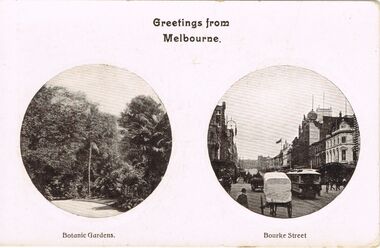
Postcard - POSTCARD: BLACK AND WHITE PHOTOGRAPH OF BOURKE STREET AND BOTANIC GARDENS MELBOURNE EARLY 1900S
... POSTCARD: BLACK AND WHITE PHOTOGRAPH OF BOURKE STREET AND BOTANIC GARDENS MELBOURNE EARLY 1900S...Postcard -Black and white photograph of Bourke Street and Botanic Gardens Melbourne early 1900s...Postcard -Black and white photograph of Bourke Street and Botanic Gardens Melbourne early 1900s....POSTCARD Photograph melbourne Postcard -Black and white photograph of Bourke Street and Botanic Gardens Melbourne early 1900s Postcard -Black and white photograph of Bourke Street and Botanic Gardens Melbourne early 1900s. ...Postcard -Black and white photograph of Bourke Street and Botanic Gardens Melbourne early 1900s.postcard, photograph, melbourne, postcard -black and white photograph of bourke street and botanic gardens melbourne early 1900s -
 Wodonga & District Historical Society Inc
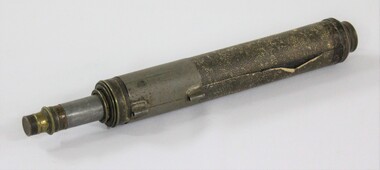
Functional object - Haeusler Collection Australian Made Telescope with Booklet c. late 1800s to early 1900s, The Union Mfg, & Agency Co
... Haeusler Collection Australian Made Telescope with Booklet c. late 1800s to early 1900s...Haeusler Collection Australian Made Telescope with Booklet c. late 1800s to early 1900s...Haeusler Collection Australian Made Telescope with Booklet c. late 1800s to early 1900s Functional object Haeusler Collection Australian Made Telescope with Booklet c. late 1800s to early 1900s The Union Mfg, & Agency Co. ...The Wodonga Historical Society Haeusler Collection provides invaluable insight into life in late nineteenth and early twentieth century north east Victoria. The collection comprises manuscripts, personal artefacts used by the Haeusler family on their farm in Wodonga, and a set of glass negatives which offer a unique visual snapshot of the domestic and social lives of the Haeusler family and local Wodonga community. The Haeusler family migrated from Prussia (Germany) to South Australia in the 1840s and 1850s, before purchasing 100 acres of Crown Land made available under the Victorian Lands Act 1862 (also known as ‘Duffy’s Land Act’) in 1866 in what is now Wodonga West. The Haeusler family were one of several German families to migrate from South Australia to Wodonga in the 1860s. This telescope belonged to Louis Haeusler (b.1878) and is one of the many objects in the Haeusler Collection that represent home and social life in early twentieth century Wodonga. It was manufactured by The Union Mfg [manufacturing], & Agency Co. in Melbourne. This item has well documented provenance and a known owner. It forms part of a significant and representative historical collection which reflects the local history of Wodonga. It contributes to our understanding of domestic and family life in early twentieth century Wodonga, as well as providing interpretative capacity for themes including local history and social history.Australian made telescope covered with a faux shagreen paper. Extends to three and a half feet long, with a five to ten mile sight range. On front of paper booklet: "TELESCOPE TALK/SOMETHING TO LOOK THROUGH/The Union Mfg, & Agency Co./299 ELIZABETH STREET,/MELBOURNE"telescope, recreation, family, haeusler collection, haeusler, wodonga -
 Wodonga & District Historical Society Inc
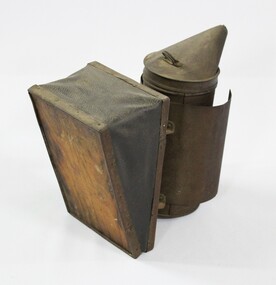
Functional object - Beehive Smoker c. early 1900s
... Beehive Smoker c. early 1900s...Beehive Smoker c. early 1900s...Beehive Smoker c. early 1900s Functional object Beehive Smoker c. early 1900s ...Beehive smokers douse bees with smoke to calm them and make them less likely to sting while honey is extracted from beehives. They were invented in the mid nineteenth century, prior to which bees were killed in order to extract their honey. The invention of the bee smoker was an important innovation in the history of apiary. The Wodonga Historical Society beehive smoker appears to be of the same design as the patented Woodman’s Bingham Bee Smoker, produced from 1878 by T. F. Binghan of Albronia, Michigan. The Wodonga Historical Society beehive smoker is an important artefact connected to local history, and the history of apiary in Wodonga. Beekeeping was a popular pastime in the late nineteenth and early twentieth century, and apiaries were subject to regulation by the Wodonga Shire Council. At a 1914 meeting of the council, for instance, a by-law governing beekeeping in Wodonga was enacted after Mrs Smyth complained that Mr Bassett’s bees were swarming the watering holes in her paddocks and preventing livestock from drinking. There were areas within the Wodonga township where apiaries were prohibited, and Mr Bassett’s bees had fallen foul of the law. A canvas, wood and metal beesmoker from the early twentieth century. apiary, bees, beekeeping, honey, apiarists, wodonga, council, wodonga council, wodonga shire council, rural, livestock -
 Wodonga & District Historical Society Inc
Functional object - Haeusler Collection Photographic Dark Room Equipment c. early 1900s
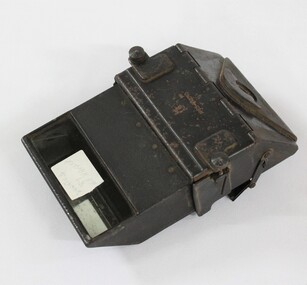
... Haeusler Collection Photographic Dark Room Equipment c. early 1900s...Haeusler Collection Photographic Dark Room Equipment c. early 1900s...Haeusler Collection Photographic Dark Room Equipment c. early 1900s Functional object Haeusler Collection Photographic Dark Room Equipment c. early 1900s ...The Wodonga Historical Society Haeusler Collection provides invaluable insight into life in late nineteenth and early twentieth century north east Victoria. The collection comprises manuscripts, personal artefacts used by the Haeusler family on their farm in Wodonga, and a set of glass negatives which offer a unique visual snapshot of the domestic and social lives of the Haeusler family and local Wodonga community. The Haeusler family migrated from Prussia (Germany) to South Australia in the 1840s and 1850s, before purchasing 100 acres of Crown Land made available under the Victorian Lands Act 1862 (also known as ‘Duffy’s Land Act’) in 1866 in what is now Wodonga West. The Haeusler family were one of several German families to migrate from South Australia to Wodonga in the 1860s. This dark room equipment belonged to Louis Haeusler (b.1878) and is one of the many objects in the Haeusler Collection that represent home and social life in early twentieth century Wodonga. This item has well documented provenance and a known owner. It forms part of a significant and representative historical collection which reflects the local history of Wodonga. It contributes to our understanding of domestic and family life in early twentieth century Wodonga, as well as providing interpretative capacity for themes including local history and social history.Metal box shaped object with mirrors inserted at either end, used in the production of dark room photography. On top of object "N°E5-4/12710"/On underside "TB 13259" and "TD 19014ABI"photograph, photographs, photography, dark room, images, family photos, family photographs -
 Wodonga & District Historical Society Inc
Functional object - Haeusler Collection Photographic Dark Room Light Globe c. early 1900s
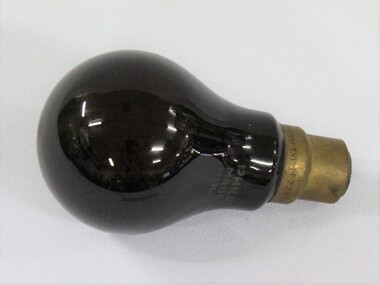
... Haeusler Collection Photographic Dark Room Light Globe c. early 1900s...Haeusler Collection Photographic Dark Room Light Globe c. early 1900s...Haeusler Collection Photographic Dark Room Light Globe c. early 1900s Functional object Haeusler Collection Photographic Dark Room Light Globe c. early 1900s ...The Wodonga Historical Society Haeusler Collection provides invaluable insight into life in late nineteenth and early twentieth century north east Victoria. The collection comprises manuscripts, personal artefacts used by the Haeusler family on their farm in Wodonga, and a set of glass negatives which offer a unique visual snapshot of the domestic and social lives of the Haeusler family and local Wodonga community. The Haeusler family migrated from Prussia (Germany) to South Australia in the 1840s and 1850s, before purchasing 100 acres of Crown Land made available under the Victorian Lands Act 1862 (also known as ‘Duffy’s Land Act’) in 1866 in what is now Wodonga West. The Haeusler family were one of several German families to migrate from South Australia to Wodonga in the 1860s. This dark room equipment belonged to Louis Haeusler (b.1878) and is one of the many objects in the Haeusler Collection that represent home and social life in early twentieth century Wodonga.This item has well documented provenance and a known owner. It forms part of a significant and representative historical collection which reflects the local history of Wodonga. It contributes to our understanding of domestic and family life in early twentieth century Wodonga, as well as providing interpretative capacity for themes including local history and social history.A black dark room light globe used to produce home photography in the early to mid twentieth century.On light globe socket "240 V TYP. PF 723B / 66GL"/ On glass globe "PHILLIPS MADE IN HOLLANIS"photography, photos, photographic, photographs, family photos, family photography, darkroom photography, dark room photography, haeusler, haeusler collection, wodonga -
 Wodonga & District Historical Society Inc
Functional object - Haeusler Collection Camera early 1900s
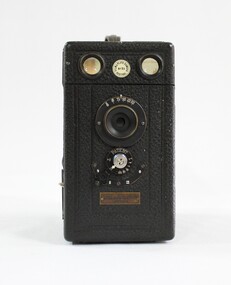
... Haeusler Collection Camera early 1900s...Haeusler Collection Camera early 1900s...It contributes to our understanding of domestic and family life in early twentieth century Wodonga, as well as providing interpretative capacity for themes including local history and social history. photography photos photographic photographs family photos family photography darkroom photography dark room photography wodonga haeusler collection haeusler On front of camera "FILM & PLATE CAMERA AUSTRALIA"/On adjustable settings "5 8 11 16 22 32"/BAKER & ROUSE PTY.LTD AUSTRALIA" Black box shaped camera with carry handle from the early twentieth century Haeusler Collection Camera early 1900s Functional object Haeusler Collection Camera early 1900s ...The Wodonga Historical Society Haeusler Collection provides invaluable insight into life in late nineteenth and early twentieth century north east Victoria. The collection comprises manuscripts, personal artefacts used by the Haeusler family on their farm in Wodonga, and a set of glass negatives which offer a unique visual snapshot of the domestic and social lives of the Haeusler family and local Wodonga community. The Haeusler family migrated from Prussia (Germany) to South Australia in the 1840s and 1850s, before purchasing 100 acres of Crown Land made available under the Victorian Lands Act 1862 (also known as ‘Duffy’s Land Act’) in 1866 in what is now Wodonga West. The Haeusler family were one of several German families to migrate from South Australia to Wodonga in the 1860s. This photographic equipment belonged to Louis Haeusler (b.1878) and is one of the many objects in the Haeusler Collection that represent home and social life in early twentieth century Wodonga.This item has well documented provenance and a known owner. It forms part of a significant and representative historical collection which reflects the local history of Wodonga. It contributes to our understanding of domestic and family life in early twentieth century Wodonga, as well as providing interpretative capacity for themes including local history and social history. Black box shaped camera with carry handle from the early twentieth centuryOn front of camera "FILM & PLATE CAMERA AUSTRALIA"/On adjustable settings "5 8 11 16 22 32"/BAKER & ROUSE PTY.LTD AUSTRALIA"photography, photos, photographic, photographs, family photos, family photography, darkroom photography, dark room photography, wodonga, haeusler collection, haeusler -
 Wodonga & District Historical Society Inc
Functional object - Haeusler Collection Photographic Equipment c. early 1900s
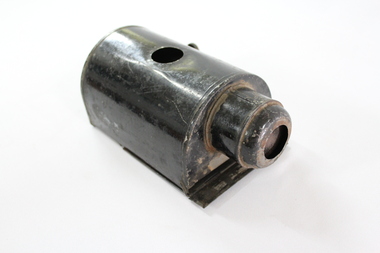
... Haeusler Collection Photographic Equipment c. early 1900s...Haeusler Collection Photographic Equipment c. early 1900s...It contributes to our understanding of domestic and family life in early twentieth century Wodonga, as well as providing interpretative capacity for themes including local history and social history. photography photos photographic photographs family photos family photography darkroom photography dark room photography wodonga haeusler haeusler collection Film equipment made from alloy coated with black paint Haeusler Collection Photographic Equipment c. early 1900s Functional object Haeusler Collection Photographic Equipment c. early 1900s ...The Wodonga Historical Society Haeusler Collection provides invaluable insight into life in late nineteenth and early twentieth century north east Victoria. The collection comprises manuscripts, personal artefacts used by the Haeusler family on their farm in Wodonga, and a set of glass negatives which offer a unique visual snapshot of the domestic and social lives of the Haeusler family and local Wodonga community. The Haeusler family migrated from Prussia (Germany) to South Australia in the 1840s and 1850s, before purchasing 100 acres of Crown Land made available under the Victorian Lands Act 1862 (also known as ‘Duffy’s Land Act’) in 1866 in what is now Wodonga West. The Haeusler family were one of several German families to migrate from South Australia to Wodonga in the 1860s. This photographic equipment belonged to Louis Haeusler (b.1878) and is one of the many objects in the Haeusler Collection that represent home and social life in early twentieth century Wodonga.This item has well documented provenance and a known owner. It forms part of a significant and representative historical collection which reflects the local history of Wodonga. It contributes to our understanding of domestic and family life in early twentieth century Wodonga, as well as providing interpretative capacity for themes including local history and social history. Film equipment made from alloy coated with black paintphotography, photos, photographic, photographs, family photos, family photography, darkroom photography, dark room photography, wodonga, haeusler, haeusler collection -
 Wodonga & District Historical Society Inc
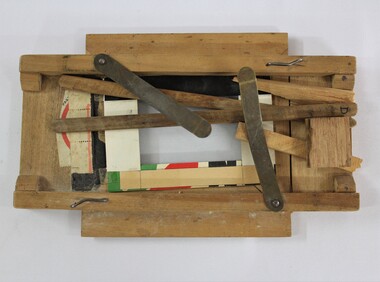
Functional object - Haeusler Collection Hand Made Photograph Printing Frame early 1900s
... Haeusler Collection Hand Made Photograph Printing Frame early 1900s...Haeusler Collection Hand Made Photograph Printing Frame early 1900s...Haeusler Collection Hand Made Photograph Printing Frame early 1900s Functional object Haeusler Collection Hand Made Photograph Printing Frame early 1900s ...The Wodonga Historical Society Haeusler Collection provides invaluable insight into life in late nineteenth and early twentieth century north east Victoria. The collection comprises manuscripts, personal artefacts used by the Haeusler family on their farm in Wodonga, and a set of glass negatives which offer a unique visual snapshot of the domestic and social lives of the Haeusler family and local Wodonga community. The Haeusler family migrated from Prussia (Germany) to South Australia in the 1840s and 1850s, before purchasing 100 acres of Crown Land made available under the Victorian Lands Act 1862 (also known as ‘Duffy’s Land Act’) in 1866 in what is now Wodonga West. The Haeusler family were one of several German families to migrate from South Australia to Wodonga in the 1860s. This homemade photographic printing frame was built by Louis Haeusler (b.1878) and demonstrates his engineering capabilities. Rather than purchase the required materials for his home dark room processing, Louis would make any tools he needed from found materials around the Haeusler family home. Louis’ photographic equipment is among the many objects in the Haeusler Collection that represent home and social life in early twentieth century Wodonga. The item is handmade and unique, with well documented provenance. It forms part of a significant and representative historical collection which reflects the local history of Wodonga. It contributes to our understanding of domestic and family life in early twentieth century Wodonga, as well as providing interpretative capacity for themes including local history and social history. A handmade photographic printing frame, constructed from timber, paper, nails, glass and sticky tape. photography, photos, photographic, photographs, family photos, family photography, darkroom photography, dark room photography, printing, printing frame, wodonga, haeusler, haeusler collection -
 Wodonga & District Historical Society Inc
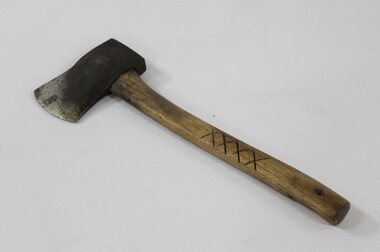
Functional object - Haeusler Collection Steel Axe early 1900s
... Haeusler Collection Steel Axe early 1900s...Haeusler Collection Steel Axe early 1900s...Haeusler Collection Steel Axe early 1900s Functional object Haeusler Collection Steel Axe early 1900s ...The Wodonga Historical Society Haeusler Collection provides invaluable insight into life in late nineteenth and early twentieth century north east Victoria. The collection comprises manuscripts, personal artefacts used by the Haeusler family on their farm in Wodonga, and a set of glass negatives which offer a unique visual snapshot of the domestic and social lives of the Haeusler family and local Wodonga community. The Haeusler family migrated from Prussia (Germany) to South Australia in the 1840s and 1850s, before purchasing 100 acres of Crown Land made available under the Victorian Lands Act 1862 (also known as ‘Duffy’s Land Act’) in 1866 in what is now Wodonga West. The Haeusler family were one of several German families to migrate from South Australia to Wodonga in the 1860s."" This axe belonged to Louis Haeusler (b.1878) and is one of the many objects in the Haeusler Collection that represent home and farm life in early twentieth century Wodonga. This item has well documented provenance and a known owner. It forms part of a significant and representative historical collection which reflects the local history of Wodonga. It contributes to our understanding of domestic and family life in early twentieth century Wodonga, as well as providing interpretative capacity for themes including local history, agricultural history and social history. A steel axe with wooden handle. The handle is engraved with crosses. The axe bears scuff and scratch marks from use. Crosses engraved on wooden handle axe, farm, wood, wood chopping, haeusler, haeusler collection -
 Wodonga & District Historical Society Inc
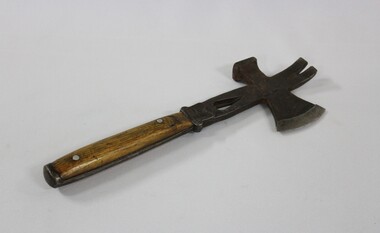
Functional object - Haeusler Collection Steel Axe early 1900s
... Haeusler Collection Steel Axe early 1900s...Haeusler Collection Steel Axe early 1900s...It contributes to our understanding of domestic and family life in early twentieth century Wodonga, as well as providing interpretative capacity for themes including local history, agricultural history and social history. axe farm wood wood chopping haeusler haeusler collection wodonga Steel axe with wooden handle from the Haeusler Collection Haeusler Collection Steel Axe early 1900s Functional object Haeusler Collection Steel Axe early 1900s ...The Wodonga Historical Society Haeusler Collection provides invaluable insight into life in late nineteenth and early twentieth century north east Victoria. The collection comprises manuscripts, personal artefacts used by the Haeusler family on their farm in Wodonga, and a set of glass negatives which offer a unique visual snapshot of the domestic and social lives of the Haeusler family and local Wodonga community. The Haeusler family migrated from Prussia (Germany) to South Australia in the 1840s and 1850s, before purchasing 100 acres of Crown Land made available under the Victorian Lands Act 1862 (also known as ‘Duffy’s Land Act’) in 1866 in what is now Wodonga West. The Haeusler family were one of several German families to migrate from South Australia to Wodonga in the 1860s."" This axe belonged to Louis Haeusler (b.1878) and is one of the many objects in the Haeusler Collection that represent home and farm life in early twentieth century Wodonga.This item has well documented provenance and a known owner. It forms part of a significant and representative historical collection which reflects the local history of Wodonga. It contributes to our understanding of domestic and family life in early twentieth century Wodonga, as well as providing interpretative capacity for themes including local history, agricultural history and social history.Steel axe with wooden handle from the Haeusler Collectionaxe, farm, wood, wood chopping, haeusler, haeusler collection, wodonga -
 Wodonga & District Historical Society Inc
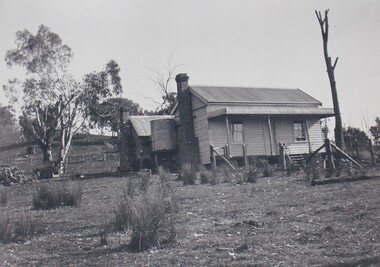
Photograph - Photograph of Haeusler Family Farm early 1900s
... Photograph of Haeusler Family Farm early 1900s...Photograph of Haeusler Family Farm early 1900s...Photograph of Haeusler Family Farm early 1900s Photograph Photograph of Haeusler Family Farm early 1900s ...The Wodonga Historical Society Haeusler Collection provides invaluable insight into life in late nineteenth and early twentieth century north east Victoria. The collection comprises manuscripts, personal artefacts used by the Haeusler family on their farm in Wodonga, and a set of glass negatives which offer a unique visual snapshot of the domestic and social lives of the Haeusler family and local Wodonga community. The Haeusler family migrated from Prussia (Germany) to South Australia in the 1840s and 1850s, before purchasing 100 acres of Crown Land made available under the Victorian Lands Act 1862 (also known as ‘Duffy’s Land Act’) in 1866 in what is now Wodonga West. The Haeusler family were one of several German families to migrate from South Australia to Wodonga in the 1860s. This item is unique and has well documented provenance and a known owner. It forms part of a significant and representative historical collection which reflects the local history of Wodonga. It contributes to our understanding of domestic and family life in early twentieth century Wodonga, as well as providing interpretative capacity for themes including local history and social history.A black and white photograph taken by Louis Haeusler (b.1878) of the Haeulser family farm in Wodonga West. photograph, photography, farm, agriculture, house, home, farm house, wodonga, haeusler collection -
 Wodonga & District Historical Society Inc
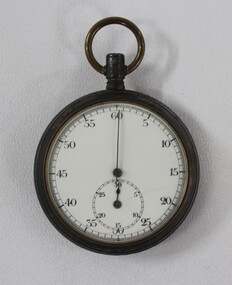
Functional object - Haeusler Collection Stop Watch late 1800s - early 1900s
... Haeusler Collection Stop Watch late 1800s - early 1900s...Haeusler Collection Stop Watch late 1800s - early 1900s...It contributes to our understanding of domestic and family life in early twentieth century Wodonga, as well as providing interpretative capacity for themes including local history, social history, and women’s history. jewellery watch clock timepiece wodonga haeusler collection social history stop watch An antique, alloy stop watch with white face Haeusler Collection Stop Watch late 1800s - early 1900s Functional object Haeusler Collection Stop Watch late 1800s - early 1900s ...The Wodonga Historical Society Haeusler Collection provides invaluable insight into life in late nineteenth and early twentieth century north east Victoria. The collection comprises manuscripts, personal artefacts used by the Haeusler family on their farm in Wodonga, and a set of glass negatives which offer a unique visual snapshot of the domestic and social lives of the Haeusler family and local Wodonga community. The Haeusler family migrated from Prussia (Germany) to South Australia in the 1840s and 1850s, before purchasing 100 acres of Crown Land made available under the Victorian Lands Act 1862 (also known as ‘Duffy’s Land Act’) in 1866 in what is now Wodonga West. The Haeusler family were one of several German families to imigrate from South Australia to Wodonga in the 1860s.This item has well documented provenance and a known owner. It forms part of a significant and representative historical collection which reflects the local history of Wodonga. It contributes to our understanding of domestic and family life in early twentieth century Wodonga, as well as providing interpretative capacity for themes including local history, social history, and women’s history. An antique, alloy stop watch with white face jewellery, watch, clock, timepiece, wodonga, haeusler collection, social history, stop watch -
 Wodonga & District Historical Society Inc
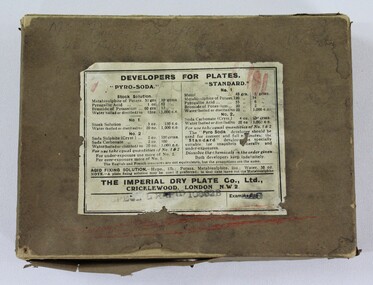
Functional object - Collection Glass Photographic Dry Plates Developer late 1800s - early 1900s, The Imperial Dry Plate Co., Ltd
... Collection Glass Photographic Dry Plates Developer late 1800s - early 1900s...Collection Glass Photographic Dry Plates Developer late 1800s - early 1900s...Collection Glass Photographic Dry Plates Developer late 1800s - early 1900s Functional object Collection Glass Photographic Dry Plates Developer late 1800s - early 1900s The Imperial Dry Plate Co., Ltd. ...Dry plate photography was a photographic technology invented by R.L. Maddox in 1871. Images were captured on a glass plate covered in a gelatin emulsion, which acted as a photographic negative. A negative could then be stored to develop at a later time in a dark room. The introduction of this technology allowed for greater flexibility in photographic practice outside of indoor studios, as earlier wet plate photographic technology required immediate exposure and development. Dry plate photography was superseded by the invention of celluloid film in the early twentieth century. This object forms part of a significant and representative historical collection which reflects the local history of Wodonga. It contributes to our understanding of social life in early twentieth century Wodonga, as well as providing interpretative capacity for themes including local history, social history, and the history of photography.Box of dry glass negative plates for developing photographs. In pencil on face of box "MR PHIL GEEPER/46 THOMAS MITCHELL DRIVE WOD"photography, wet plate photography, dry plate photography, photos, haeusler collection, history of photography, historical photographs, technology, wodonga -
 Wodonga & District Historical Society Inc
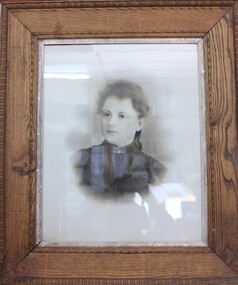
Photograph - Photographic Portrait of Ilma Haeusler early 1900s
... Photographic Portrait of Ilma Haeusler early 1900s ...Photographic Portrait of Ilma Haeusler early 1900s ...It contributes to our understanding of domestic and family life in early twentieth century Wodonga, as well as providing interpretative capacity for themes including local history, social history, and women’s history. photography photos photographic photographs family photos family photography haeusler collection A black and white photographic portrait of a Ilma Margaret Ernestine Haeusler (née Tasker, b.1900 in Tallangatta) displayed in a thick wooden frame Photographic Portrait of Ilma Haeusler early 1900s Photograph Photographic Portrait of Ilma Haeusler early 1900s ...The Wodonga Historical Society Haeusler Collection provides invaluable insight into life in late nineteenth and early twentieth century north east Victoria. The collection comprises manuscripts, personal artefacts used by the Haeusler family on their farm in Wodonga, and a set of glass negatives which offer a unique visual snapshot of the domestic and social lives of the Haeusler family and local Wodonga community. The Haeusler family migrated from Prussia (Germany) to South Australia in the 1840s and 1850s, before purchasing 100 acres of Crown Land made available under the Victorian Lands Act 1862 (also known as ‘Duffy’s Land Act’) in 1866 in what is now Wodonga West. The Haeusler family were one of several German families to migrate from South Australia to Wodonga in the 1860s. This photograph is of Ilma Margaret Ernestine Haeusler (née Tasker, b.1900 in Tallangatta), mother of Alf Haeusler who was born in 1922. This item has well documented provenance and a known owner. It forms part of a significant and representative historical collection which reflects the local history of Wodonga. It contributes to our understanding of domestic and family life in early twentieth century Wodonga, as well as providing interpretative capacity for themes including local history, social history, and women’s history. A black and white photographic portrait of a Ilma Margaret Ernestine Haeusler (née Tasker, b.1900 in Tallangatta) displayed in a thick wooden framephotography, photos, photographic, photographs, family photos, family photography, haeusler collection -
 Wodonga & District Historical Society Inc
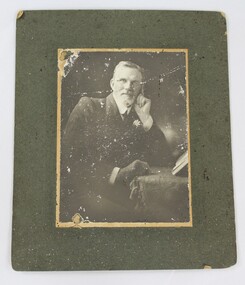
Photograph - Haeusler Collection Mounted Black and White Photographic Portrait late 1800s - early 1900s
... Haeusler Collection Mounted Black and White Photographic Portrait late 1800s - early 1900s...Haeusler Collection Mounted Black and White Photographic Portrait late 1800s - early 1900s...Haeusler Collection Mounted Black and White Photographic Portrait late 1800s - early 1900s Photograph Haeusler Collection Mounted Black and White Photographic Portrait late 1800s - early 1900s ...The Wodonga Historical Society Haeusler Collection provides invaluable insight into life in late nineteenth and early twentieth century north east Victoria. The collection comprises manuscripts, personal artefacts used by the Haeusler family on their farm in Wodonga, and a set of glass negatives which offer a unique visual snapshot of the domestic and social lives of the Haeusler family and local Wodonga community. The Haeusler family migrated from Prussia (Germany) to South Australia in the 1840s and 1850s, before purchasing 100 acres of Crown Land made available under the Victorian Lands Act 1862 (also known as ‘Duffy’s Land Act’) in 1866 in what is now Wodonga West. The Haeusler family were one of several German families to migrate from South Australia to Wodonga in the 1860s. This item has well documented provenance and a known owner. It forms part of a significant and representative historical collection which reflects the local history of Wodonga. A mounted black and white portrait photograph of a middle aged man with a white beard wearing a suit. photograph, photography, portrait, photographic portrait, haeusler, haeusler collection -
 Wodonga & District Historical Society Inc
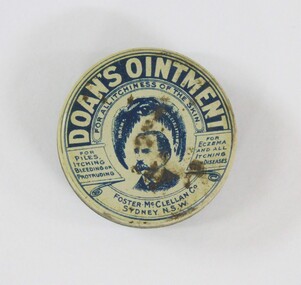
Functional object - Haeusler Collection Doan's Ointment early 1900s
... Haeusler Collection Doan's Ointment early 1900s...Haeusler Collection Doan's Ointment early 1900s...It forms part of a significant and representative historical collection which reflects the local history of Wodonga. medical medicine medical history haeusler haeusler collection wodonga A round tin with branding and manufacturer's information in blue print, and illustration of man with a moustache Haeusler Collection Doan's Ointment early 1900s Functional object Haeusler Collection Doan's Ointment early 1900s ...The Wodonga Historical Society Haeusler Collection provides invaluable insight into life in late nineteenth and early twentieth century north east Victoria. The collection comprises manuscripts, personal artefacts used by the Haeusler family on their farm in Wodonga, and a set of glass negatives which offer a unique visual snapshot of the domestic and social lives of the Haeusler family and local Wodonga community. The Haeusler family migrated from Prussia (Germany) to South Australia in the 1840s and 1850s, before purchasing 100 acres of Crown Land made available under the Victorian Lands Act 1862 (also known as ‘Duffy’s Land Act’) in 1866 in what is now Wodonga West. The Haeusler family were one of several German families to migrate from South Australia to Wodonga in the 1860s. This item has well documented provenance and a known owner. It forms part of a significant and representative historical collection which reflects the local history of Wodonga. A round tin with branding and manufacturer's information in blue print, and illustration of man with a moustache medical, medicine, medical history, haeusler, haeusler collection, wodonga -
 Wodonga & District Historical Society Inc
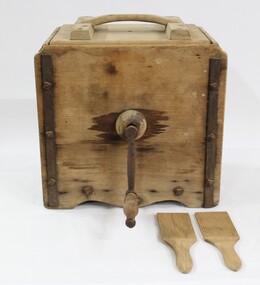
Functional object - Butter Churn - late 1800s - early 1900s, E. Cherry & Sons
... Butter Churn - late 1800s - early 1900s...Butter Churn - late 1800s - early 1900s...Butter Churn - late 1800s - early 1900s Functional object Butter Churn - late 1800s - early 1900s E. ...North east Victoria was a major dairy producing region in the late nineteenth century. The first iteration of the Wodonga Butter Factory Ltd was established in 1892. Dairy was sent from farmers across the district for processing at the factory in Wodonga in the 1890s. Victorian creameries regularly exported frozen butter to London, stock was transported by rail for sale in Melbourne, and of course sold and consumed locally. E.W. Mann, of the prominent local Wodonga family, was a shareholder and was closely involved in the establishment of the Wodonga Butter Company. Many families living on farms also owned their own cow, and had equipment to process their own dairy products at home. This item has strong links to the history of Wodonga and north east Victoria. It has interpretative potential in the areas of local agricultural history, and the social history of food and farming.A wooden butter churn with metal turning handle, and two butter paddles and removal lid.butter, butter churn, dairy, cream, milk, cow, agriculture, farms, farmers, farm, food, social history, food history -
 Wodonga & District Historical Society Inc
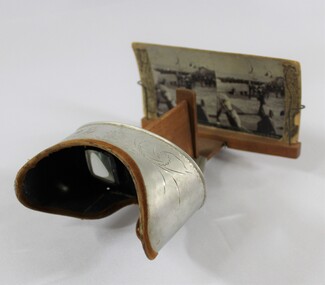
Leisure object - Stereoscope - late 1800s - early 1900s
... Stereoscope - late 1800s - early 1900s...Stereoscope - late 1800s - early 1900s...Stereoscope - late 1800s - early 1900s Leisure object Stereoscope - late 1800s - early 1900s ...In the 1800s, the stereoscope was the only way to view with world in 3-D. A viewer would look through the lenses of the stereoscope's eyepiece to a card called a stereograph. On the stereograph, two of the same image were printed side by side, which when viewed through the stereograph transformed the one dimensional images into relatively life-like representations. A popular form of entertainment among the middle classes in Europe and America, people could use a stereoscope to view images of real faraway places, or fantastical magic scenes. The first patented stereo viewer was invented by Sir Charles Wheatstone in 1838, and remained a favoured leisure activity until the advent of cinema in the 1930s. This object contributes to our understanding of social life, leisure and entertainment in early twentieth century Wodonga, as well as providing interpretative capacity for themes including local history and social history. A wooden stereoscope with a cardboard 'view' of a streetscape.stereoscope, stereographs, entertainment, fun, leisure -
 Wodonga & District Historical Society Inc
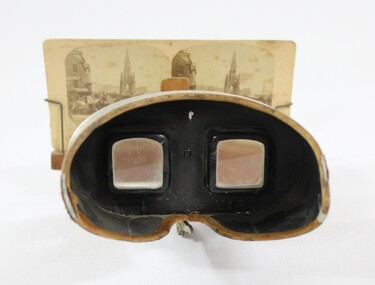
Leisure object - Stereoscope - late 1800s - early 1900s
... Stereoscope - late 1800s - early 1900s...Stereoscope - late 1800s - early 1900s...Stereoscope - late 1800s - early 1900s Leisure object Stereoscope - late 1800s - early 1900s ...In the 1800s, the stereoscope was the only way to view with world in 3-D. A viewer would look through the lenses of the stereoscope's eyepiece to a card called a stereograph. On the stereograph, two of the same image were printed side by side, which when viewed through the stereograph transformed the one dimensional images into relatively life-like representations. A popular form of entertainment among the middle classes in Europe and America, people could use a stereoscope to view images of real faraway places, or fantastical magic scenes. The first patented stereo viewer was invented by Sir Charles Wheatstone in 1838, and remained a favoured leisure activity until the advent of cinema in the 1930s. This object contributes to our understanding of social life, leisure and entertainment in early twentieth century Wodonga, as well as providing interpretative capacity for themes including local history and social history.A wooden stereoscope with a cardboard 'view' of a streetscape.stereoscope, stereographs, entertainment, fun, leisure -
 Wodonga & District Historical Society Inc
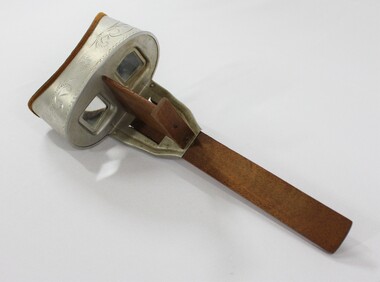
Leisure object - Stereoscope - late 1800s - early 1900s
... Stereoscope - late 1800s - early 1900s...Stereoscope - late 1800s - early 1900s...Stereoscope - late 1800s - early 1900s Leisure object Stereoscope - late 1800s - early 1900s ...In the 1800s, the stereoscope was the only way to view with world in 3-D. A viewer would look through the lenses of the stereoscope's eyepiece to a card called a stereograph. On the stereograph, two of the same image were printed side by side, which when viewed through the stereograph transformed the one dimensional images into relatively life-like representations. A popular form of entertainment among the middle classes in Europe and America, people could use a stereoscope to view images of real faraway places, or fantastical magic scenes. The first patented stereo viewer was invented by Sir Charles Wheatstone in 1838, and remained a favoured leisure activity until the advent of cinema in the 1930s. This object contributes to our understanding of social life, leisure and entertainment in early twentieth century Wodonga, as well as providing interpretative capacity for themes including local history and social history.A wooden stereoscope with a cardboard 'view' of a streetscape.stereoscope, stereographs, entertainment, fun, leisure -
 Wodonga & District Historical Society Inc
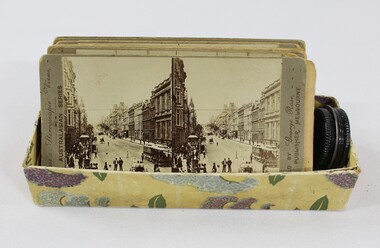
Card - Stereoscope Cards - late 1800s - early 1900s
... Stereoscope Cards - late 1800s - early 1900s...Stereoscope Cards - late 1800s - early 1900s...Stereoscope Cards - late 1800s - early 1900s Card Stereoscope Cards - late 1800s - early 1900s ...In the 1800s, the stereoscope was the only way to view with world in 3-D. A viewer would look through the lenses of the stereoscope's eyepiece to a card called a stereograph. On the stereograph, two of the same image were printed side by side, which when viewed through the stereograph transformed the one dimensional images into relatively life-like representations. A popular form of entertainment among the middle classes in Europe and America, people could use a stereoscope to view images of real faraway places, or fantastical magic scenes. The first patented stereo viewer was invented by Sir Charles Wheatstone in 1838, and remained a favoured leisure activity until the advent of cinema in the 1930s. This object contributes to our understanding of social life, leisure and entertainment in early twentieth century Wodonga, as well as providing interpretative capacity for themes including local history and social history. A cardboard box full of stereoscope cards showing street views and landscape scenery. stereoscope, stereographs, entertainment, fun, leisure -
 Wodonga & District Historical Society Inc
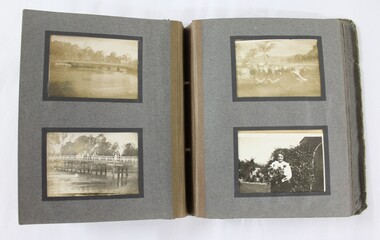
Album - Hamilton-Smith Family Photograph Album - early 1900s
... Hamilton-Smith Family Photograph Album - early 1900s...Hamilton-Smith Family Photograph Album - early 1900s...Hamilton-Smith Family Photograph Album - early 1900s Album Hamilton-Smith Family Photograph Album - early 1900s ...The Hamilton-Smith collection was donated by the children of Grace Mary Hamilton-Smith nee Ellwood (1911-2004) and John Hamilton-Smith (1909-1984) who settled in Wodonga in the 1940s. The Ellwood family had lived in north-east Victoria since the late 1800s. Grace’s mother, Rosina Ellwood nee Smale, was the first teacher at Baranduda in 1888, and a foundation member of the C.W.A. Rosina and her husband Mark retired to Wodonga in 1934. Grace and John married at St. David’s Church, Albury in 1941. John was a grazier, and actively involved in Agricultural Societies. The collection contains significant items which reflect the local history of Wodonga, including handmade needlework, books, photographs, a wedding dress, maps, and material relating to the world wars. This item has well documented provenance and a known owner. It forms part of a significant and representative historical collection which reflects the local history of Wodonga. It contributes to our understanding of social and family life in early twentieth century Wodonga, as well as providing interpretative capacity for themes including local history and social history.Grey paper photograph album, front covered embossed with a floral motif. photo, photograph, family photograph, albumm, photograph album, hamilton-smith, wodonga, ellwood -
 Wodonga & District Historical Society Inc
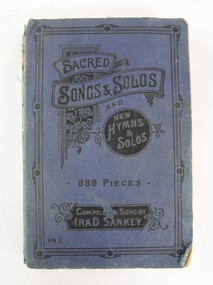
Book - Hamilton-Smith Collection Hymn Book Sacred Songs & Solos c. early 1900s
... Hamilton-Smith Collection Hymn Book Sacred Songs & Solos c. early 1900s...Hamilton-Smith Collection Hymn Book Sacred Songs & Solos c. early 1900s...Hamilton-Smith Collection Hymn Book Sacred Songs & Solos c. early 1900s Book Hamilton-Smith Collection Hymn Book Sacred Songs & Solos c. early 1900s ...The Hamilton-Smith collection was donated by the children of Grace Mary Hamilton-Smith nee Ellwood (1911-2004) and John Hamilton-Smith (1909-1984) who settled in Wodonga in the 1940s. The Ellwood family had lived in north-east Victoria since the late 1800s. Grace’s mother, Rosina Ellwood nee Smale, was the first teacher at Baranduda in 1888, and a foundation member of the C.W.A. Rosina and her husband Mark retired to Wodonga in 1934. Grace and John married at St. David’s Church, Albury in 1941. John was a grazier, and actively involved in Agricultural Societies. The collection contains significant items which reflect the local history of Wodonga, including handmade needlework, books, photographs, a wedding dress, maps, and material relating to the world wars. This item has well documented provenance and a known owner. It forms part of a significant and representative historical collection which reflects the local history of Wodonga. It contributes to our understanding of social and family life in early twentieth century Wodonga, as well as providing interpretative capacity for themes including local history and social history.A blue cloth covered hymn book with black text printed on front cover. hymn, singing, book, song, songs, hamilton-smith collection, hamilton-smith, ellwood, wodonga -
 Wodonga & District Historical Society Inc
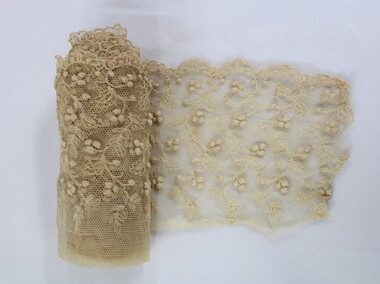
Textile - Hamilton-Smith Collection Floral Lace - late 1800s - early 1900s
... Hamilton-Smith Collection Floral Lace - late 1800s - early 1900s...Hamilton-Smith Collection Floral Lace - late 1800s - early 1900s...Hamilton-Smith Collection Floral Lace - late 1800s - early 1900s Textile Hamilton-Smith Collection Floral Lace - late 1800s - early 1900s ...The Hamilton-Smith collection was donated by the children of Grace Mary Hamilton-Smith nee Ellwood (1911-2004) and John Hamilton-Smith (1909-1984) who settled in Wodonga in the 1940s. The Ellwood family had lived in north-east Victoria since the late 1800s. Grace’s mother, Rosina Ellwood nee Smale, was the first teacher at Baranduda in 1888, and a foundation member of the C.W.A. Rosina and her husband Mark retired to Wodonga in 1934. Grace and John married at St. David’s Church, Albury in 1941. John was a grazier, and actively involved in Agricultural Societies. The collection contains significant items which reflect the local history of Wodonga, including handmade needlework, books, photographs, a wedding dress, maps, and material relating to the world wars. This item has well documented provenance and a known owner. It forms part of a significant and representative historical collection which reflects the local history of Wodonga. It contributes to our understanding of social and family life in early twentieth century Wodonga, as well as providing interpretative capacity for themes including local history and social history. A rolled bundle of cream coloured lace with a floral design.lace, needlework, embroidery, hamilton-smith, hamilton-smith collection, ellwood, wodonga
