
Showing 14 items matching "early churches in tatura"
-
 Tatura Irrigation & Wartime Camps Museum
Book - Family History, Our Pickering Heritage, 2003
... early churches in tatura...early England. Reference to Tatura as Reverent C Pickering was Baptist minister in 1884. early churches in tatura Reverent C Pickering Baptist Ministers Pickering family tree Pickering history Black and white cover showing Reverent Charles Pickering 1851 Ely, Cambridge, England. ...Written to trace family history from early England. Reference to Tatura as Reverent C Pickering was Baptist minister in 1884.Black and white cover showing Reverent Charles Pickering 1851 Ely, Cambridge, England. Clear plastic on front. 1925 Hamilton, NSW Australia.early churches in tatura, reverent c pickering, baptist ministers, pickering family tree, pickering history -
Tatura Irrigation & Wartime Camps Museum
Photographs, Alexander Stewart who lived at Gowrie Park
... Tatura and selected near the town, being one of the early selectors. The place was called Gowrie Park, still known by that name, and still in use as a dairy farm.|Before the Presbyterian Church...Tatura and selected near the town, being one of the early selectors. The place was called Gowrie Park, still known by that name, and still in use as a dairy farm.|Before the Presbyterian Church ...GOWRIE PARK- Gowrie Park Road, Tatura.|Alexander and Georgina Stewart sailed in 1859 from Mochrum, Scotland, arriving in Corio Bay. In 1872-73 they came to Tatura and selected near the town, being one of the early selectors. The place was called Gowrie Park, still known by that name, and still in use as a dairy farm.|Before the Presbyterian Church was built in Tatura, all the services were held at Gowrie Park. The old dairy for keeping milk, cream and butter is still there today. Only two families have owned the property since the 1870®s, and the house has been beautifully renovated and extended.Photo 1: 15 x 11 cms. Photo 2: 10 x 6 cms. -
 Tatura Irrigation & Wartime Camps Museum
Book, Stewart (Bill)Morvell et al, Heart of the Valley, Toolamba 1840-1983, 1983
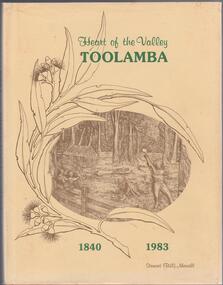
... early days of Hume and Hovell, agriculture, schools, churches, sport and recreation. Names on Roll of Teachers and Pupils. toolamba Brown hard cover. Title in gold writing. Cream dust jacket, green writing. Sketch of gum leaves surrounding a scene of bush log hut. Family with man cutting trees. From a wood carving by Nicholas Bartels. 2nd copy. L3458. Heart of the Valley, Toolamba 1840-1983 Book Book Stewart (Bill)Morvell Rodney Printers, Tatura ...Written to accurately record the history of Toolamba. From early days of Hume and Hovell, agriculture, schools, churches, sport and recreation. Names on Roll of Teachers and Pupils.Brown hard cover. Title in gold writing. Cream dust jacket, green writing. Sketch of gum leaves surrounding a scene of bush log hut. Family with man cutting trees. From a wood carving by Nicholas Bartels. 2nd copy. L3458.toolamba -
Tatura Irrigation & Wartime Camps Museum
Photograph - copy, F. A. & G. E. Williams, 1900
... early house in Tatura. This photograph was reproduced from a glass negative found in the ceiling of the Williams old shop (store) corner Thompson and Hogan St. Frank Ernest Williams Grace Elizabeth Williams Williams family house glass negative Frank Ernest and Grace Elizabeth Williams at "Gracedale" Hogan Street Tatura. About 1900's near presbyterian church ...Copy of original photograph of the Williams family, early house in Tatura. This photograph was reproduced from a glass negative found in the ceiling of the Williams old shop (store) corner Thompson and Hogan St.Copy of original. Black and white photograph of couple in front of house in Tatura, early 1900's. Double front weatherboard house with verandah on two sides.Frank Ernest and Grace Elizabeth Williams at "Gracedale" Hogan Street Tatura. About 1900's near presbyterian church.frank ernest williams, grace elizabeth williams, williams family house, glass negative -
Tatura Irrigation & Wartime Camps Museum
Booklet, Solving the Mystery, 1978
... Story of Catholic Church in Tatura. Education and early history of Tatura 1870's. ...Story of Catholic Church in Tatura. Education and early history of Tatura 1870's. ...Story of Catholic Church in Tatura. Education and early history of Tatura 1870's. First Catholic Church was built at Baldwinville/Byrneside 1878. Present Church built in 1912.Gold cover, green writing. Survey map on back, Certificate of Title details on front.solving the mystery, burton-clay fr r, catholicism in tatura, tatura, sacred heart church, books, history, local, religion -
Tatura Irrigation & Wartime Camps Museum
Booklet, Solving the Mystery, 1978
... Story of Catholic Church in Tatura. Education and early history of Tatura 1870's. ...Story of Catholic Church in Tatura. Education and early history of Tatura 1870's. ...Story of Catholic Church in Tatura. Education and early history of Tatura 1870's. Present Church built in 1912. First Catholic Church was built at Baldwinville-Byrneside. 1878Gold cover.Green writing. Survey map on back, Certificate of Title details on front.sacred heart church, tatura, books, history, local, religion -
Tatura Irrigation & Wartime Camps Museum
Book, Solving the Mystery, 1978
... Written to record history of the Catholic Church's early days in Byrneside and Tatura and start of Catholic Education...Written to record history of the Catholic Church's early days in Byrneside and Tatura and start of Catholic Education books history local Yellow cover, green writing. ...Written to record history of the Catholic Church's early days in Byrneside and Tatura and start of Catholic EducationYellow cover, green writing. Allotments map on back cover.books, history, local -
Tatura Irrigation & Wartime Camps Museum
Booklet, Solving The Mystery, 1978
... Story of Tatura Catholic Church and Education. Early history of Tatura 1870's. ...Story of Tatura Catholic Church and Education. Early history of Tatura 1870's. ...Story of Tatura Catholic Church and Education. Early history of Tatura 1870's. Present church built in 1912Gold cover, green writing. Survey map on back. Written to explain the first Catholic Church was built at Baldwinsville-Byrneside in 1878.solving the mystery, catholicism in tatura, burton-clay father r, tatura, sacred heart church, books, history, local, religion -
Tatura Irrigation & Wartime Camps Museum
Booklet, Solving The Mystery, 1978
... Story of Tatura Catholic Church and Education. Early history of Tatura 1870's. ...Story of Tatura Catholic Church and Education. Early history of Tatura 1870's. ...Story of Tatura Catholic Church and Education. Early history of Tatura 1870's. Present church built in 1912Written to explain the first church was built at Baldwinsville - Byrneside, 1878solving the mystery, burtonclay r, catholicism in tatura, glover i, tatura, sacred heart church, books, history, local -
 Tatura Irrigation & Wartime Camps Museum
Photograph, Methodist Church Harvest Festival
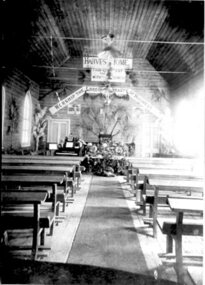
... tatura buildings historic religion christian Early Methodist Church Harvest Thanksgiving, Kerferd Street; adjoining rear of Anglican Church c1900 Methodist Church Harvest Festival Photograph Photograph ...Early Methodist Church Harvest Thanksgiving, Kerferd Street; adjoining rear of Anglican Church c1900tatura, buildings, historic, religion, christian -
Tatura Irrigation & Wartime Camps Museum
Photograph, Tennis Club 1905
... |The Tatura Tennis Club was first formed in 1889, but early records are scarce; the first President on record being A.B. O'Connor for the season 1899-1900, when the matches were played on "lawn" courts.|Asphalt courts were put down in 1923, and Church...|The Tatura Tennis Club was first formed in 1889, but early records are scarce; the first President on record being A.B. O'Connor for the season 1899-1900, when the matches were played on "lawn" courts.|Asphalt courts were put down in 1923, and Church ...Tatura Tennis Club 1905.|The Tatura Tennis Club was first formed in 1889, but early records are scarce; the first President on record being A.B. O'Connor for the season 1899-1900, when the matches were played on "lawn" courts.|Asphalt courts were put down in 1923, and Church Club proliferated in the 1920s and 1930s: Methodist (1921), Sacred Heart (1923), Anglican (1933) and Presbyterian (1938).|The Lawn Tennis Club was officially opened in Albert Street in November 1948.tatura, recreations, sports, games, costume, female, male -
 Friends of Westgarthtown
Clothing - Top hat, c. 1930s
... Church in East Melbourne and the Thomastown congregation from 1935 to 1964. Over nearly three decades, he guided his community through socially and politically turbulent times, including the years surrounding the Second World War. In April 1942, he was suddenly interned by the Australian Government and held at Tatura Internment Camp for 930 days before his release in 1944. Despite this profound disruption, he returned to his pastoral duties, continuing to support, stabilise, and preserve the cultural and spiritual life of his congregation. The black top hat reflects formal clerical dress of the early ...Worn by Pastor Steiniger. These three items, a black top hat, white leather gloves, and a white pastor’s collar, form a significant ensemble representing the life, service, and cultural legacy of Pastor Ewald Herman Otto Steiniger. Donated by his son, Dieter Steiniger, the objects provide rare, tangible insight into the clerical traditions and community leadership of the German Lutheran congregation at Westgarthtown. Pastor Steiniger served both Trinity German Lutheran Church in East Melbourne and the Thomastown congregation from 1935 to 1964. Over nearly three decades, he guided his community through socially and politically turbulent times, including the years surrounding the Second World War. In April 1942, he was suddenly interned by the Australian Government and held at Tatura Internment Camp for 930 days before his release in 1944. Despite this profound disruption, he returned to his pastoral duties, continuing to support, stabilise, and preserve the cultural and spiritual life of his congregation. The black top hat reflects formal clerical dress of the early–mid twentieth century. Within German Lutheran tradition, such hats were worn to important services and solemn occasions, particularly funerals, symbolising respect and reverence. The accompanying white gloves and pastor’s collar complete the ceremonial ensemble, offering a fuller understanding of pastoral attire and the visual language of Lutheran liturgical practice of the time. Together, these objects hold strong historical, cultural, and interpretive value. They honour the enduring contribution of Pastor Steiniger and deepen the connection between the Westgarthtown site and the community it served. Pastor Steiniger and his wife, Annemarie (née Kraemer), are buried in the historic Westgarthtown Lutheran Cemetery, further strengthening the significance of this ensemble as part of the precinct’s heritage story. Collapsible black top hat, leather band inside, lined.gold symbol of man walking on globe in top hat on inside top of hat.costume, male headwear, pastor, top hat, lutheran, steiniger -
 Friends of Westgarthtown
Clothing - Collar, c. 1930s
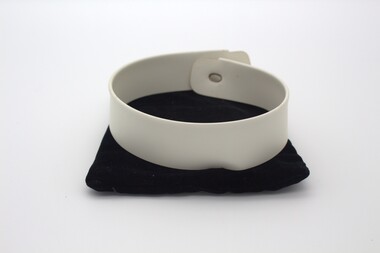
... Church in East Melbourne and the Thomastown congregation from 1935 to 1964. Over nearly three decades, he guided his community through socially and politically turbulent times, including the years surrounding the Second World War. In April 1942, he was suddenly interned by the Australian Government and held at Tatura Internment Camp for 930 days before his release in 1944. Despite this profound disruption, he returned to his pastoral duties, continuing to support, stabilise, and preserve the cultural and spiritual life of his congregation. The black top hat reflects formal clerical dress of the early ...Worn by Pastor Steinicker (?)These three items, a black top hat, white leather gloves, and a white pastor’s collar, form a significant ensemble representing the life, service, and cultural legacy of Pastor Ewald Herman Otto Steiniger. Donated by his son, Dieter Steiniger, the objects provide rare, tangible insight into the clerical traditions and community leadership of the German Lutheran congregation at Westgarthtown. Pastor Steiniger served both Trinity German Lutheran Church in East Melbourne and the Thomastown congregation from 1935 to 1964. Over nearly three decades, he guided his community through socially and politically turbulent times, including the years surrounding the Second World War. In April 1942, he was suddenly interned by the Australian Government and held at Tatura Internment Camp for 930 days before his release in 1944. Despite this profound disruption, he returned to his pastoral duties, continuing to support, stabilise, and preserve the cultural and spiritual life of his congregation. The black top hat reflects formal clerical dress of the early–mid twentieth century. Within German Lutheran tradition, such hats were worn to important services and solemn occasions, particularly funerals, symbolising respect and reverence. The accompanying white gloves and pastor’s collar complete the ceremonial ensemble, offering a fuller understanding of pastoral attire and the visual language of Lutheran liturgical practice of the time. Together, these objects hold strong historical, cultural, and interpretive value. They honour the enduring contribution of Pastor Steiniger and deepen the connection between the Westgarthtown site and the community it served. Pastor Steiniger and his wife, Annemarie (née Kraemer), are buried in the historic Westgarthtown Lutheran Cemetery, further strengthening the significance of this ensemble as part of the precinct’s heritage story. White pastor's collar with two reinforced holes at front.Reliance Trademark' with umbrella stamped inside at back, 'chaplain made in in England', size '1 1/4" 15 1/2'costume, male ceremonial, pastor, collar, lutheran, steinicker -
 Friends of Westgarthtown
Clothing - Gloves, men's, c. 1930s
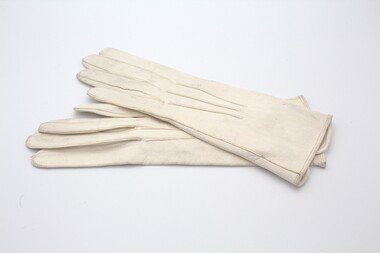
... Church in East Melbourne and the Thomastown congregation from 1935 to 1964. Over nearly three decades, he guided his community through socially and politically turbulent times, including the years surrounding the Second World War. In April 1942, he was suddenly interned by the Australian Government and held at Tatura Internment Camp for 930 days before his release in 1944. Despite this profound disruption, he returned to his pastoral duties, continuing to support, stabilise, and preserve the cultural and spiritual life of his congregation. The black top hat reflects formal clerical dress of the early ...Worn by Pastor Steinicker (?)These three items, a black top hat, white leather gloves, and a white pastor’s collar, form a significant ensemble representing the life, service, and cultural legacy of Pastor Ewald Herman Otto Steiniger. Donated by his son, Dieter Steiniger, the objects provide rare, tangible insight into the clerical traditions and community leadership of the German Lutheran congregation at Westgarthtown. Pastor Steiniger served both Trinity German Lutheran Church in East Melbourne and the Thomastown congregation from 1935 to 1964. Over nearly three decades, he guided his community through socially and politically turbulent times, including the years surrounding the Second World War. In April 1942, he was suddenly interned by the Australian Government and held at Tatura Internment Camp for 930 days before his release in 1944. Despite this profound disruption, he returned to his pastoral duties, continuing to support, stabilise, and preserve the cultural and spiritual life of his congregation. The black top hat reflects formal clerical dress of the early–mid twentieth century. Within German Lutheran tradition, such hats were worn to important services and solemn occasions, particularly funerals, symbolising respect and reverence. The accompanying white gloves and pastor’s collar complete the ceremonial ensemble, offering a fuller understanding of pastoral attire and the visual language of Lutheran liturgical practice of the time. Together, these objects hold strong historical, cultural, and interpretive value. They honour the enduring contribution of Pastor Steiniger and deepen the connection between the Westgarthtown site and the community it served. Pastor Steiniger and his wife, Annemarie (née Kraemer), are buried in the historic Westgarthtown Lutheran Cemetery, further strengthening the significance of this ensemble as part of the precinct’s heritage story. White leather gloves with press stud fastenings at wrist, three reinforced lines stitched on back of hand.RH '7 3/4' inside wrist, LH '301118' inside wrist, evidence of a tag removed LH inside wristcostume, male, gloves, leather, steinicker, lutheran
