
Showing 9 items matching "early days of port fairy"
-
 Koorie Heritage Trust
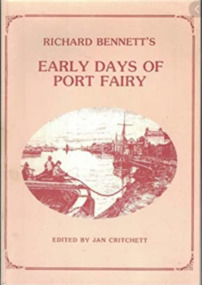
Book, Bennett, Richard, Richard Bennetts early days of Port Fairy, 1984
... Richard Bennetts early days of Port Fairy....Port Fairy-History Aborigines of Port Fairy District. im Cain; Contents: Richard Bennett's Early Days of Port Fairy - ...; Three Articles by 'Bruni' - The Yangery Estate; Tower-hill Park; Koorongah. viii, 92 p. : ill. ; plates; maps; 25 cm. ...Contents: Richard Bennett's Early Days of Port Fairy - ...; Three Articles by 'Bruni' - The Yangery Estate; Tower-hill Park; Koorongah.viii, 92 p. : ill. ; plates; maps; 25 cm.Contents: Richard Bennett's Early Days of Port Fairy - ...; Three Articles by 'Bruni' - The Yangery Estate; Tower-hill Park; Koorongah.port fairy-history, aborigines of port fairy district. im cain; -
 Port Fairy Historical Society Museum and Archives
Book, Warrnambool Institute Press, Richard Bennett's Early days of Port Fairy, 1984
... Richard Bennett's Early days of Port Fairy ...port fairy (vic.) -- history settlement and contacts - colonisation - 1851- race relations - violent - massacres settlement and contacts - colonisation - 1788-1850. port fairy region (vic.) -- history. mount rouse (w vic sj54-07) warrnambool (w vic sj54-11) port fairy (w vic sj54-11) kooloor / mount rouse (w vic sj54-07) Book Articles written for the Warrnambool Standard in 1880s describing Port Fairy district in 1840s; mentions violence at Mount Rouse Aboriginal station; attitudes to publication of Brough Smyth and Currs works; photographs of local Aborigines viii, 92p. : ill., ports. ; 25cm. Richard Bennett's Early days ...Articles written for the Warrnambool Standard in 1880s describing Port Fairy district in 1840s; mentions violence at Mount Rouse Aboriginal station; attitudes to publication of Brough Smyth and Currs works; photographs of local Aboriginesviii, 92p. : ill., ports. ; 25cm.non-fictionArticles written for the Warrnambool Standard in 1880s describing Port Fairy district in 1840s; mentions violence at Mount Rouse Aboriginal station; attitudes to publication of Brough Smyth and Currs works; photographs of local Aboriginesport fairy (vic.) -- history, settlement and contacts - colonisation - 1851-, race relations - violent - massacres, settlement and contacts - colonisation - 1788-1850., port fairy region (vic.) -- history., mount rouse (w vic sj54-07), warrnambool (w vic sj54-11), port fairy (w vic sj54-11), kooloor / mount rouse (w vic sj54-07), book -
 Port Fairy Historical Society Museum and Archives
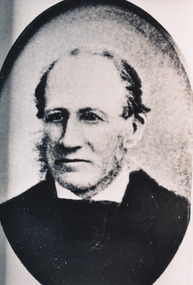
Photograph, Bennett, Richard
... ...early days of port fairy... of Port Fairy" A book named "Richard Bennett's Early Days of Port Fairy" was edited by Jan Crichett using his letters ... of Port Fairy" A book named "Richard Bennett's Early Days of Port Fairy" was edited by Jan Crichett using his letters Early settler noted for his letters regarding the Early Days of Port Fairy pionner bennett, richard dennington. early days of port fairy river shaw wool scouring Black and white portrait of gentleman with a squared collar Bennett, Richard Photograph Photograph ...Richard Bennett was the first born child of Richard Bennett and Ann Isabella Kirk in February 1828 in London England. His father was a silk weaver. His family came to Sydney in 1833 but then returned to England in 1837. Richard came out himself in 1843 when he undertook a training course on the care of sheep. He first visited Belfast in January 1846 and described it as being" The centre of a large squatting district". In 1853 he married Elizabeth Nicholson Watson at St Johns Church of England Belfast Victoria. They had 11 children, 6 registered in Victoria and the other 5 born in New South Wales. Richard's aunt (or sister some sources say) Isabella married into "Belfast Royalty" by marrying Lloyd Rutledge in 1852 and they built 'Cooinda' in 1855 and lived there. However, Lloyd apparently fell down the steps drunk one night in 1858 and broke his neck. Richard's brother Ryder Bennett was Rutledge's accountant. (William or Lloyd?) Richard's sister Matilda married James Mylne knight. Richard Bennett worked on a number of properties in the district as well as heading to New South Wales in 1858 -1870 then he returned to the Port Fairy Area. He established the River Shaw Wool Scouring establishment at Yambuk in 1876 but by 1879 he had moved his business to the banks of the Merri River Dennington. He retired in 1887 and lived the rest of his life in Warrnambool. He died on 11th September 1904. Richard Bennett wrote many letters to the local newspapers regarding the early history of the district in 1984 these letters were published under the title "Richard Bennett's Early Days of Port Fairy" A book named "Richard Bennett's Early Days of Port Fairy" was edited by Jan Crichett using his letters Early settler noted for his letters regarding the Early Days of Port FairyBlack and white portrait of gentleman with a squared collarpionner, bennett, richard, dennington., early days of port fairy, river shaw wool scouring -
 Flagstaff Hill Maritime Museum and Village
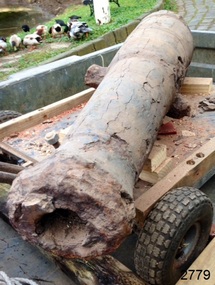
Weapon - Cannon, circa 1825
... Port Fairy. They arrived at Portland eleven days after the wreck. The wrecking of the Children is one of colonial Victoria’s earliest and most significant maritime disasters. Little is left to mark the tragedy, apart from some house bricks intended for the Henty family’s Portland Bay settlement. Artefacts recovered in the 1960s to early...Port Fairy. They arrived at Portland eleven days after the wreck. The wrecking of the Children is one of colonial Victoria’s earliest and most significant maritime disasters. Little is left to mark the tragedy, apart from some house bricks intended for the Henty family’s Portland Bay settlement. Artefacts recovered in the 1960s to early ...In an article dated 26 March 1963, the Warrnambool Standard reported: “A cannon which has lain on the ocean floor since the barque, Children, was wrecked at Childer’s Cove on January 15, 1839, was raised by three Warrnambool skindivers at the weekend … The cannon, weighing about 750 lb. and 4-ft. 6-in. in length … is in excellent order considering the length of time it has remained underwater”. No conservation measures were taken at that time, other than chipping off the marine growth with hammers and cold chisels. The minutes for the 4 February 1974 meeting of the Flagstaff Hill Planning Board recorded that “a cannon recovered some time ago was lying in the garden of [one of the three original divers] and that it could be picked up at any time”. Peter Ronald, past Manager and Diver for Flagstaff Hill, notes that the CHILDREN cannon would have been recovered by the other divers around 1964. When the cannon came into care of Flagstaff Hill, it was given basic conservation relevant to the time. (At the same meeting, the Board was advised of the recovery of an anchor from the wreck of the CHILDREN by Flagstaff Hill divers (Peter Ronald, Colin Goodall and Gary Hayden, and Hank Howey and Andrew Coffee), and its interim relocation in the sea at the end of the Warrnambool Breakwater while awaiting conservation). About the ship CHILDREN 1825-1839: The sailing ship Children was a wooden, three-masted barque constructed of pitch pine in 1825 at Liverpool. It was felt sheathed and was coppered during an upgrade in 1837. The ship was only 29 metres long and 254 tons in weight; it had two decks and a square stern. The James Henty & Co., a pioneering family from Portland, Victoria, purchased the Children in 1837 for use as a coastal trader. The Children, under the command of Captain H. Browne, was on a voyage from Launceston to Adelaide when it foundered in rough conditions at Childers Cove, west of Peterborough, on 14 January 1839. On board were 14 crew members and 24 passengers, including 9 children. The ship’s cargo was awkwardly balanced: it carried 1500 sheep, 8 bullocks, 7 horses, 5000 London house bricks, 6 whaling boats with associated gear, and general trade goods including beef, pork, tobacco, tipe, butter, lime juice, horse hair, curtains, lead shot, beer and spirits. The hurricane-force winds drove the Children into the limestone stack at the entrance to the cove. The seas smashed it into pieces within twenty minutes. The bodies of sixteen of those who had lost their lives were spread across the shore, along with wreckage from the ship and the cargo of animals. Those who survived suffered injuries; they were rescued and taken by horse and cart to Campbell’s farm, near the whaling station at Port Fairy. They arrived at Portland eleven days after the wreck. The wrecking of the Children is one of colonial Victoria’s earliest and most significant maritime disasters. Little is left to mark the tragedy, apart from some house bricks intended for the Henty family’s Portland Bay settlement. Artefacts recovered in the 1960s to early 1970s include this signal cannon, an anchor, the bottom half of her ship’s bell, and two portions of a ship’s fitting, at one time thought to be a brass porthole frame, London housing bricks and timber flooring. Despite its poor condition, the CHILDREN’s signal cannon remains an important and interpretable record of its demise. From 2015, the CHILDREN cannon has been undergoing the first stages of further conservation.The signal cannon recovered from the Children's wreck is significant as part of the original fittings of the early 19th-century barque. It is an example of maritime defence in the early to mid-19th century. The 1839 wreck and recovered artefacts are examples of the construction methods and materials used in that era and can be used to study the evolution of shipbuilding methods and principles. The wreck of the Children is of state significance as one of colonial Victoria’s earliest and most significant maritime disasters, and one of the first vessels lost in the Western District. This is recognised by its inclusion on the Victorian Heritage Register, VHR No. S116. Little is left on the seabed to mark the tragedy, apart from some of the house bricks intended for the Henty settlement. Signal cannon: a 1.3 metre iron 6pdr cannon recovered from the wreck of the CHILDREN. The shape of the cannon tapers from a thick round breech to a flared muzzle, with an 8-centimetre bore, and two side trunnions for pivoting on a wooden gun carriage. It was recovered from the shipwreck site of the CHILDREN by local divers in 1963. This small muzzle-loading signal cannon is in poor and unrestored condition. The cannon’s upper profile of smooth grey metal casing has corroded off, leaving an extensively oxidised rough red surface of crumbling iron. The bottom half of the cannon remains intact, although the outer smooth casing also appears to be separating from the iron core of the barrel. The original grey casting is also missing from the breech and muzzle ends of the cannon. Corrosion and spalling of the upper surface layer of the cannon have removed the maker’s marks and specificationsflagstaff hill, flagstaff hill maritime museum and village, warrnambool, maritime museum, maritime village, great ocean road, shipwreck coast, shipwreck artefact, children, barque, three-masted, liverpool, childer’s cove, port campbell, 1839 shipwreck, 1939 wreck, james henty and co, henty brothers, captain h. browne, first mate t. gay, second mate w. wentworth, portland, portland bay, 1939, ship’s cannon, signal cannon, conservation of marine artefacts, 6pdr small bore cannon, defence -
 Flagstaff Hill Maritime Museum and Village
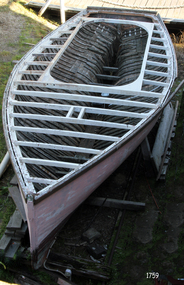
Vehicle - Vessel, Couta boat, Viator, 1890-1920
... early days by renowned boat builder J.R. Jones, and sailed by fishermen for many years, both local and on the coastal waters of Victoria, and was possibly used for the mail service. It is significant for being used for the fishing trade, for government service, perhaps as a mail boat, and for recreation by local families. flagstaff hill warrnambool shipwrecked coast flagstaff hill maritime museum maritime museum shipwreck coast flagstaff hill maritime village great ocean road arhv hv000561 arthur rogers bass strait ‘couta boat “brusher” richards of warrnambool and port fairy clinker hull boat ‘couta crafted boat c 1890-1905 ‘couta fishing boat erik mikkelsen shipwright g.j. richards of port fairy jens “peter” petersen john lindsay old mail boat pivoting centerboard boat peter watson single-masted ketch terry prodmore and wayne moorefield vessel viator viator a historical vessel victorian ‘couta boat victorian barracoota boat warrnambool ‘couta boat western victoria fishing boat western victoria mail boat HV000561 Australian Register of Historical Vessels Erik Mikkelsen J B Jones J B Jones boat builder Footscray Sturrock Coot Sturrock J R Jones J R Jones boat builder Williamstown Eva Myrl Marked "Viator" Photograph 1759.2: "E. ...The historic Victorian ‘couta boat “Viator” was built by renowned boat builder J.R. Jones of Williamstown in Melbourne, between 1890 and 1920. He was one of the early builders of this design. The features of Viator - carvel planked, open cockpit, vertical stem and straight keel, single mast and a pivoting centreboard - are all characteristics of an early Bass Strait ‘couta boat. This has been confirmed by experienced Victorian ‘couta boat restorer Tim Phillips. Viator served as a ‘couta fishing boat in the Warrnambool area until the mid-1930s, then some say she served as a mail ferry across to Portland. Later it was used as a fishing and recreation boat for local families. For years Viator sat in a paddock in East Warrnambool until purchased in 1975 and donated to Flagstaff Hill. ‘COUTA BOATS - The ‘couta design for vessels is believed to have originated at Port Phillip, Victoria, for the purpose of the Barracouta (‘couta) fishing industry, being both fast and seaworthy. , The 'couta fish was an important food fish in Australian waters, supplying Melbourne with plenty of inexpensive fish. VIATORY’S OWNERS - Some of Viator’s history is known: - 1940, registered Port Fairy and owned by G.J. Richards. - 1941-1945, registered in Port Fairy and owned by Jens “Peter” Petersen. - 1950’s “Brusher” Richards of Warrnambool and Port Fairy used it for fishing. - Peter Watson and his son also went fishing in Viator. - Frank Ferrier, boat builder, was an owner (son of ‘La Bella’ hero, William Ferrier) - Arthur Rogers owned Viator too, then sold it to Terry Pridmore and Wayne Moorefield - The Viator was stored in a paddock, unused, in Fairmont Avenue, Warrnambool, where it was gradually deteriorating. - 1975 Viator was purchase at a very reasonable price from Pridmore, then donated to Flagstaff Hill Maritime Village. RESTORATION - Shipwright Erik Mikkelsen soon started restoration on the Viator after it arrived at Flagstaff Hill in 1975. In 2006 the Maritime Museums of Australia awarded a grant to Flagstaff Hill Maritime Village to assist with the restoration and renovation of the Viator. Its restoration continues today in the care of Flagstaff Hill’s boat builder. J R. JONES - boat builder The photograph of the EVA MYRL shows the builder J R Jones with his team of workers. The other photograph shows a vessel built by J R Jones' son, J B Jones of Footscray, and his team of boat boulders. The photograph of the EVA MYRL was taken by E. A. Dond---. The other photograph is of the Sturrock Coot, taken a Albert Park Lake in St Kilda.The Viator is the most significant boat in the Flagstaff Hill's fleet, being the last remaining local 'couta boat and one of few existing examples of this craft. Viator received Heritage status with the Australian Maritime Museums Council and is listed on the Australian Register of Historical Vessels in 2006 (ARHV Number: HV000561). Viator was built in Victoria in the early days by renowned boat builder J.R. Jones, and sailed by fishermen for many years, both local and on the coastal waters of Victoria, and was possibly used for the mail service. It is significant for being used for the fishing trade, for government service, perhaps as a mail boat, and for recreation by local families.Vessel, the ‘Viator’, an historic Victorian ‘couta boat, handmade by renowned boat builder This J.R. Jones 'couta boat, the Viator, was built in Williamstown, c.1890-1920. The single mast vessel has a Caravel hull built from New Zealand Kauri, blackwood, with a red gum keel and a jarrah stem and stern. It has a pivoting centreboard. Two photographs are included; one of the builder with his team, the other is of his son J B Jones, with his team. Marked "Viator" Photograph 1759.2: "E. A. Dond---" (indecipherable". Handwritten on back "Grandfather / J R Jones / Built" Photograph 1759.3; sign within photograph "J B JONES / BUILDER / FOOTSCRAY", stamped in the card, bottom right " ----- / MELBOURNE" and handwritten on the back "I think this is Mr Abel Sturrock Coot Albert Park Lake"flagstaff hill, warrnambool, shipwrecked coast, flagstaff hill maritime museum, maritime museum, shipwreck coast, flagstaff hill maritime village, great ocean road, arhv hv000561, arthur rogers, bass strait ‘couta boat, “brusher” richards of warrnambool and port fairy, clinker hull boat, ‘couta crafted boat c 1890-1905, ‘couta fishing boat, erik mikkelsen shipwright, g.j. richards of port fairy, jens “peter” petersen, john lindsay, old mail boat, pivoting centerboard boat, peter watson, single-masted ketch, terry prodmore and wayne moorefield, vessel viator, viator a historical vessel, victorian ‘couta boat, victorian barracoota boat, warrnambool ‘couta boat, western victoria fishing boat, western victoria mail boat, hv000561, australian register of historical vessels, erik mikkelsen, j b jones, j b jones boat builder, footscray, sturrock coot, sturrock, j r jones, j r jones boat builder, williamstown, eva myrl -
 Flagstaff Hill Maritime Museum and Village
Currency - Banknote Belfast, Bank of Victoria, 1853
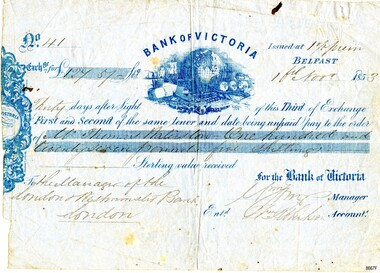
... early colonial system of banking and reflects the economic growth and entrepreneurship of the South West Region of Victoria. Flagstaff Hill Warrnambool Maritime Village Maritime Museum Flagstaff Hill Maritime Museum and Village Shipwreck coast Great Ocean Road Promissory notes Bank Notes Bank of Victoria Smith & Watts Smith & Watts Architects 1853 William Highett William F. Splatt Alex Wilson W.H. Tuckett Henry Miller Money Miller Belfast (now Port Fairy) banknote The front of the banknote reads: "No.41/ Exch.ge for £127.57- Bank of Victoria/Issued at 1% prem/Thirty days ...The promissory note issued at Belfast, now Port Fairy, Victoria by the “Bank of Victoria” is an early example of currency issued by a private bank. This note was issued in 1853 the same year that the bank commenced business in Belfast. Details of the first production of a banknote backed by the Australian Government occurred on 1 May 1913 following the "Australian Notes Act of 1910" (Australian National Museum). The first building the Bank of Victoria purchased in Belfast was of timber and later sold. Smith & Watts Architects advertised for tenders in the Melbourne Argus on Thursday 29/4/1869 for the erection of a substantial building that is now occupied by Moyne Shire Council in Cox Street. A meeting of the Directors of the Bank of Victoria elected on 1 October 1852. A ballot took place for four directors resulting in Wm. Highett Esq. Wm F. Splatt, Esq. M.L.C., Alex. Wilson, Esq. and W.H. Tuckett” elected as Directors. It was reported from a later meeting in “The Argus” Melbourne on 3 August 1853 that a branch had opened in Swanston Street, Melbourne on 3rd January 1852 with Henry Miller as Chairman of the Board and J. Matheson as the Manager; followed by Geelong on 12 August 1852. Then at the request of “influential inhabitants”, the Belfast branch commenced on 11 May 1853, which had “already met with very general support and encouragement”. This was a colonial bank at the time of vast pastoral runs and gold speculation – how "Mr Thomas [....ton?]" came by his fortune of One Hundred and Twenty-Seven Pound and five shillings can only be wondered at until further research reveals the story. This promissory note records the early colonial system of banking and reflects the economic growth and entrepreneurship of the South West Region of Victoria.Banknote of fine paper. There is a fold multi-crease down the centre top to bottom, lighter creasing across the top and angular creasing to the bottom left and right-hand corners. Yellow spotting is visible across the object breaking through the grey blue colour of the paper. A dark ink blot appears near the top right-hand corner. The left-hand side of the banknote is uneven. The back of the document has darker spotting, a used dirty look patina and some insect spotting. Horizontal crease markings can be seen creating quarter marks. The front of the banknote reads: "No.41/ Exch.ge for £127.57- Bank of Victoria/Issued at 1% prem/Thirty days after Sight of this Third of Exchange/First and Second of the same tenor and date being unpaid pay to the order of/Mr. Thomas [Raliston?]/One hundred and twenty seven pounds five shillings Sterling silver received/To the Manager of the London Westminister Bank London/for the Bank of Victoria [signed?] Manager/Ent.d [?] Robertson Account.t. The blue printed Bank of Victoria logo features a world globe, sailing ships, wool bails, sheep, colonial building and mining tools. flagstaff hill, warrnambool, maritime village, maritime museum, flagstaff hill maritime museum and village, shipwreck coast, great ocean road, promissory notes, bank notes, bank of victoria, smith & watts, smith & watts architects, 1853, william highett, william f. splatt, alex wilson, w.h. tuckett, henry miller, money miller, belfast (now port fairy), banknote -
 Warrnambool and District Historical Society Inc.
Book, Vanda Savill (1913-2005), Tha' she blows, 1980
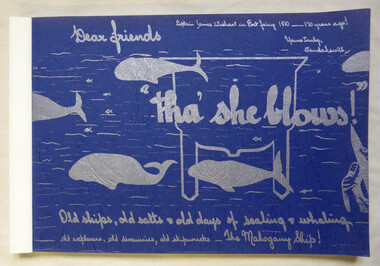
... early history of the areas of Port Fairy and Portland and includes the story of the Mahogany Ship which is a topic of interest to many today. The handwritten material is also of interest as an example of Vanda Savill’s work in compiling local Western District history. whaling port fairy portland shipwrecks Scrapbook style book history of early Port Fairy and Portland Front cover: Captain James Wishart in Port Fairy – 170 years ago! Yours Truly, Vanda Savill, Dear friends, ‘Tha’ She Blows’, Old ships, old salts and old days ...Scrapbook style book history of early Port Fairy and PortlandThis is a paper back book of 176 pages. The pages are bound together. The cover is blue card with silver-coloured wording and illustrations of whales. There are 829 photographs and illustrations. The historical material contained in the pages is handwritten and photocopied. non-fictionScrapbook style book history of early Port Fairy and Portlandwhaling, port fairy, portland, shipwrecks -
 Port Fairy Historical Society Museum and Archives
Photograph, Webb, William
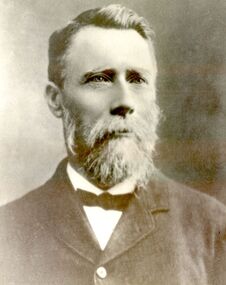
... William Webb Councillor Port Fairy Municipal Council served 1869-1882-1883-892-1901-1903-1905 William Webb served as a Councillor in the early days of Port Fairy effectively having a hand in the shaping of the town william webb councillor port fairy municipal council Black & white photograph - Portrait of William has a neat pointed beard and moustache and hair parted on the right he is wearing a ribbon bow tie Webb, William Photograph Photograph ...William Webb Councillor Port Fairy Municipal Council served 1869-1882-1883-892-1901-1903-1905William Webb served as a Councillor in the early days of Port Fairy effectively having a hand in the shaping of the townBlack & white photograph - Portrait of William has a neat pointed beard and moustache and hair parted on the right he is wearing a ribbon bow tiewilliam webb, councillor, port fairy, municipal council -
 Port Fairy Historical Society Museum and Archives
Education kit - Projector, 1930
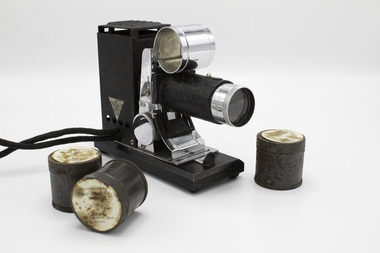
... Patent Nos 1277568- 14342/9 Mr Wilfred Murphy became headmaster of the Port Fairy Consolidated School in the 1950's and retired in the 70's. The projector was used by Mr Wilfred Murphy during the early days of his teaching career. photography projectors wilf murphy education Each tin has a label='The garden that Mary made'/'Our Earth'/ two (2) Copies of 'the Story of the Seed'/ 'Spiders-their Kin'/ 'Camouflage in Nature'/ 'the Story of a Tree' small portable projector in leatherette case with leads to attach to 6 volt battery. seven (7) tins of film - 'The garden that Mary made'/'Our Earth'/ two (2) Copies of 'the Story of the Seed'/ 'Spiders-their Kin'/ 'Camouflage in Nature'/ 'the Story of a Tree' Education kit Projector Society for Visual Education Inc. ...Film strips put out by the Visual Centre of the victorian Education Department during the 1940's and 50's as an aid to the teaching of subjects such as Social Studies, English, History. Picturol Projector Model K/ U.S. Patent Nos 1277568- 14342/9 Mr Wilfred Murphy became headmaster of the Port Fairy Consolidated School in the 1950's and retired in the 70's. The projector was used by Mr Wilfred Murphy during the early days of his teaching career. small portable projector in leatherette case with leads to attach to 6 volt battery. seven (7) tins of film - 'The garden that Mary made'/'Our Earth'/ two (2) Copies of 'the Story of the Seed'/ 'Spiders-their Kin'/ 'Camouflage in Nature'/ 'the Story of a Tree'Each tin has a label='The garden that Mary made'/'Our Earth'/ two (2) Copies of 'the Story of the Seed'/ 'Spiders-their Kin'/ 'Camouflage in Nature'/ 'the Story of a Tree'photography, projectors, wilf murphy, education
