
Showing 18 items matching "embodiment"
-
 Flagstaff Hill Maritime Museum and Village
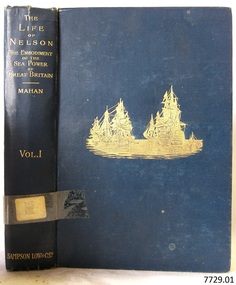
Book, The Life of Nelson Vol 1
... The Life of Nelson Vol 1 The Embodiment of the Sea Power of Great Britain Author: Captain A T Mahan Publisher: Sampson Low, Marston & Company Date: 1898...Warrnambool Shipwrecked-coast Flagstaff-Hill Flagstaff-Hill-Maritime-Museum Maritime-Museum Shipwreck-coast Flagstaff-Hill-Maritime-Village Shipwrecked-artefact Book Pattison Collection Warrnambool Library Warrnambool Mechanics’ Institute Ralph Eric Pattison Corangamite Regional Library Service Warrnambool City Librarian Mechanics’ Institute Library Victorian Library Board Warrnambool books and records Warrnambool Children’s Library Great Ocean Road The Life of Nelson Vol 1 The Life of Nelson Captain A T Mahan Label on spine cover with typed text PAT 920 NEL Pastedown front endpaper has sticker from Warrnambool Mechanics Institute and Free Library Front loose endpaper has a sticker from Corangamite Regional Library Service Front loose endpaper has a stamp from Corangamite Regional Library Service The Life of Nelson Vol 1 The Embodiment of the Sea Power of Great Britain Author: Captain A T Mahan Publisher: Sampson Low, Marston & Company Date: 1898 The Life of Nelson Vol 1 Book ...This item is from the ‘Pattison Collection’, a collection of books and records that was originally owned by the Warrnambool Mechanics’ Institute, which was founded in Warrnambool in 1853. By 1886 the Warrnambool Mechanics’ Institute (WMI) had grown to have a Library, Museum and Fine Arts Gallery, with a collection of “… choice productions of art, and valuable specimens in almost every branch and many wonderful national curiosities are now to be seen there, including historic relics of the town and district.” It later included a School of Design. Although it was very well patronised, the lack of financial support led the WMI in 1911 to ask the City Council to take it over. In 1935 Ralph Pattison was appointed as City Librarian to establish and organise the Warrnambool Library as it was then called. When the WMI building was pulled down in 1963 a new civic building was erected on the site and the new Warrnambool Library, on behalf of the City Council, took over all the holdings of the WMI. At this time some of the items were separated and identified as the ‘Pattison Collection’, named after Ralph Pattison. Eventually the components of the WMI were distributed from the Warrnambool Library to various places, including the Art Gallery, Historical Society and Flagstaff Hill. Later some were even distributed to other regional branches of Corangamite Regional Library and passed to and fro. It is difficult now to trace just where all of the items have ended up. The books at Flagstaff Hill Maritime Village generally display stamps and markings from Pattison as well as a variety of other institutions including the Mechanics’ Institute itself. RALPH ERIC PATTISON Ralph Eric Pattison was born in Rockhampton, Queensland, in 1891. He married Maude Swan from Warrnambool in 1920 and they set up home in Warrnambool. In 1935 Pattison accepted a position as City Librarian for the Warrnambool City Council. His huge challenge was to make a functional library within two rooms of the Mechanics’ Institute. He tirelessly cleaned, cleared and sorted a disarrayed collection of old books, jars of preserved specimens and other items reserved for exhibition in the city’s museum. He developed and updated the library with a wide variety of books for all tastes, including reference books for students; a difficult task to fulfil during the years following the Depression. He converted all of the lower area of the building into a library, reference room and reading room for members and the public. The books were sorted and stored using a cataloguing and card index system that he had developed himself. He also prepared the upper floor of the building and established the Art Gallery and later the Museum, a place to exhibit the many old relics that had been stored for years for this purpose. One of the treasures he found was a beautiful ancient clock, which he repaired, restored and enjoyed using in his office during the years of his service there. Ralph Pattison was described as “a meticulous gentleman whose punctuality, floorless courtesy and distinctive neat dress were hallmarks of his character, and ‘his’ clock controlled his daily routine, and his opening and closing of the library’s large heavy doors to the minute.” Pattison took leave during 1942 to 1945 to serve in the Royal Australian Navy, Volunteer Reserve as Lieutenant. A few years later he converted one of the Museum’s rooms into a Children’s Library, stocking it with suitable books for the younger generation. This was an instant success. In the 1950’s he had the honour of being appointed to the Victorian Library Board and received more inspiration from the monthly conferences in Melbourne. He was sadly retired in 1959 after over 23 years of service, due to the fact that he had gone over the working age of council officers. However he continued to take a very keen interest in the continual development of the Library until his death in 1969. The Pattison Collection, along with other items at Flagstaff Hill Maritime Village, was originally part of the Warrnambool Mechanics' Institute’s collection. The Warrnambool Mechanics’ Institute Collection is primarily significant in its totality, rather than for the individual objects it contains. Its contents are highly representative of the development of Mechanics' Institute libraries across Australia, particularly Victoria. A diversity of publications and themes has been amassed, and these provide clues to our understanding of the nature of and changes in the reading habits of Victorians from the 1850s to the middle of the 20th century. The collection also highlights the Warrnambool community’s commitment to the Mechanics’ Institute, reading, literacy and learning in the regions, and proves that access to knowledge was not impeded by distance. These items help to provide a more complete picture of our community’s ideals and aspirations. The Warrnambool Mechanics Institute book collection has historical and social significance for its strong association with the Mechanics Institute movement and the important role it played in the intellectual, cultural and social development of people throughout the latter part of the nineteenth century and the early twentieth century. The collection of books is a rare example of an early lending library and its significance is enhanced by the survival of an original collection of many volumes. The Warrnambool Mechanics' Institute’s publication collection is of both local and state significance. The Life of Nelson Vol 1 The Embodiment of the Sea Power of Great Britain Author: Captain A T Mahan Publisher: Sampson Low, Marston & Company Date: 1898Label on spine cover with typed text PAT 920 NEL Pastedown front endpaper has sticker from Warrnambool Mechanics Institute and Free Library Front loose endpaper has a sticker from Corangamite Regional Library Service Front loose endpaper has a stamp from Corangamite Regional Library Service warrnambool, shipwrecked-coast, flagstaff-hill, flagstaff-hill-maritime-museum, maritime-museum, shipwreck-coast, flagstaff-hill-maritime-village, shipwrecked-artefact, book, pattison collection, warrnambool library, warrnambool mechanics’ institute, ralph eric pattison, corangamite regional library service, warrnambool city librarian, mechanics’ institute library, victorian library board, warrnambool books and records, warrnambool children’s library, great ocean road, the life of nelson vol 1, the life of nelson, captain a t mahan -
 Flagstaff Hill Maritime Museum and Village
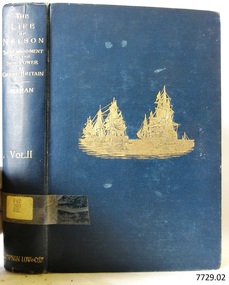
Book, The Life of Nelson Vol 2
... The Life of Nelson Vol 2 The Embodiment of the Sea Power of Great Britain Author: Captain A T Mahan Publisher: Sampson Low, Marston & Company Date: 1898...Warrnambool Shipwrecked-coast Flagstaff-Hill Flagstaff-Hill-Maritime-Museum Maritime-Museum Shipwreck-coast Flagstaff-Hill-Maritime-Village Shipwrecked-artefact Book Pattison Collection Warrnambool Library Warrnambool Mechanics’ Institute Ralph Eric Pattison Corangamite Regional Library Service Warrnambool City Librarian Mechanics’ Institute Library Victorian Library Board Warrnambool books and records Warrnambool Children’s Library Great Ocean Road The Life of Nelson Vol 2 The Life of Nelson Captain A T Mahan Label on spine cover with typed text PAT 920 NEL Pastedown front endpaper has sticker from Warrnambool Mechanics Institute and Free Library Front loose endpaper has a sticker from Corangamite Regional Library Service Front loose endpaper has a stamp from Corangamite Regional Library Service The Life of Nelson Vol 2 The Embodiment of the Sea Power of Great Britain Author: Captain A T Mahan Publisher: Sampson Low, Marston & Company Date: 1898 The Life of Nelson Vol 2 Book ...This item is from the ‘Pattison Collection’, a collection of books and records that was originally owned by the Warrnambool Mechanics’ Institute, which was founded in Warrnambool in 1853. By 1886 the Warrnambool Mechanics’ Institute (WMI) had grown to have a Library, Museum and Fine Arts Gallery, with a collection of “… choice productions of art, and valuable specimens in almost every branch and many wonderful national curiosities are now to be seen there, including historic relics of the town and district.” It later included a School of Design. Although it was very well patronised, the lack of financial support led the WMI in 1911 to ask the City Council to take it over. In 1935 Ralph Pattison was appointed as City Librarian to establish and organise the Warrnambool Library as it was then called. When the WMI building was pulled down in 1963 a new civic building was erected on the site and the new Warrnambool Library, on behalf of the City Council, took over all the holdings of the WMI. At this time some of the items were separated and identified as the ‘Pattison Collection’, named after Ralph Pattison. Eventually the components of the WMI were distributed from the Warrnambool Library to various places, including the Art Gallery, Historical Society and Flagstaff Hill. Later some were even distributed to other regional branches of Corangamite Regional Library and passed to and fro. It is difficult now to trace just where all of the items have ended up. The books at Flagstaff Hill Maritime Village generally display stamps and markings from Pattison as well as a variety of other institutions including the Mechanics’ Institute itself. RALPH ERIC PATTISON Ralph Eric Pattison was born in Rockhampton, Queensland, in 1891. He married Maude Swan from Warrnambool in 1920 and they set up home in Warrnambool. In 1935 Pattison accepted a position as City Librarian for the Warrnambool City Council. His huge challenge was to make a functional library within two rooms of the Mechanics’ Institute. He tirelessly cleaned, cleared and sorted a disarrayed collection of old books, jars of preserved specimens and other items reserved for exhibition in the city’s museum. He developed and updated the library with a wide variety of books for all tastes, including reference books for students; a difficult task to fulfil during the years following the Depression. He converted all of the lower area of the building into a library, reference room and reading room for members and the public. The books were sorted and stored using a cataloguing and card index system that he had developed himself. He also prepared the upper floor of the building and established the Art Gallery and later the Museum, a place to exhibit the many old relics that had been stored for years for this purpose. One of the treasures he found was a beautiful ancient clock, which he repaired, restored and enjoyed using in his office during the years of his service there. Ralph Pattison was described as “a meticulous gentleman whose punctuality, floorless courtesy and distinctive neat dress were hallmarks of his character, and ‘his’ clock controlled his daily routine, and his opening and closing of the library’s large heavy doors to the minute.” Pattison took leave during 1942 to 1945 to serve in the Royal Australian Navy, Volunteer Reserve as Lieutenant. A few years later he converted one of the Museum’s rooms into a Children’s Library, stocking it with suitable books for the younger generation. This was an instant success. In the 1950’s he had the honour of being appointed to the Victorian Library Board and received more inspiration from the monthly conferences in Melbourne. He was sadly retired in 1959 after over 23 years of service, due to the fact that he had gone over the working age of council officers. However he continued to take a very keen interest in the continual development of the Library until his death in 1969. The Pattison Collection, along with other items at Flagstaff Hill Maritime Village, was originally part of the Warrnambool Mechanics' Institute’s collection. The Warrnambool Mechanics’ Institute Collection is primarily significant in its totality, rather than for the individual objects it contains. Its contents are highly representative of the development of Mechanics' Institute libraries across Australia, particularly Victoria. A diversity of publications and themes has been amassed, and these provide clues to our understanding of the nature of and changes in the reading habits of Victorians from the 1850s to the middle of the 20th century. The collection also highlights the Warrnambool community’s commitment to the Mechanics’ Institute, reading, literacy and learning in the regions, and proves that access to knowledge was not impeded by distance. These items help to provide a more complete picture of our community’s ideals and aspirations. The Warrnambool Mechanics Institute book collection has historical and social significance for its strong association with the Mechanics Institute movement and the important role it played in the intellectual, cultural and social development of people throughout the latter part of the nineteenth century and the early twentieth century. The collection of books is a rare example of an early lending library and its significance is enhanced by the survival of an original collection of many volumes. The Warrnambool Mechanics' Institute’s publication collection is of both local and state significance. The Life of Nelson Vol 2 The Embodiment of the Sea Power of Great Britain Author: Captain A T Mahan Publisher: Sampson Low, Marston & Company Date: 1898Label on spine cover with typed text PAT 920 NEL Pastedown front endpaper has sticker from Warrnambool Mechanics Institute and Free Library Front loose endpaper has a sticker from Corangamite Regional Library Service Front loose endpaper has a stamp from Corangamite Regional Library Service warrnambool, shipwrecked-coast, flagstaff-hill, flagstaff-hill-maritime-museum, maritime-museum, shipwreck-coast, flagstaff-hill-maritime-village, shipwrecked-artefact, book, pattison collection, warrnambool library, warrnambool mechanics’ institute, ralph eric pattison, corangamite regional library service, warrnambool city librarian, mechanics’ institute library, victorian library board, warrnambool books and records, warrnambool children’s library, great ocean road, the life of nelson vol 2, the life of nelson, captain a t mahan -
 Ringwood and District Historical Society
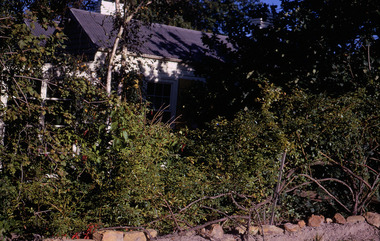
Photograph, Mackinlay's house, "Chipping", 16 Wonga Road, North Ringwood, circa 1960s
... It is historically significant to Maroondah as a representative embodiment of simple life in Ringwood a hundred years ago....It is historically significant to Maroondah as a representative embodiment of simple life in Ringwood a hundred years ago. ...The building has Heritage Overlay HO84. An early symmetrical timber cottage built about 1910, with major alterations and additions, but with some old garden remnants and mature trees. It is historically significant to Maroondah as a representative embodiment of simple life in Ringwood a hundred years ago. -
 Ringwood and District Historical Society
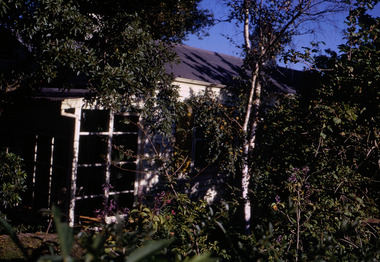
Photograph, Mackinlay's house, "Chipping", 16 Wonga Road, North Ringwood, circa 1960s
... It is historically significant to Maroondah as a representative embodiment of simple life in Ringwood a hundred years ago....It is historically significant to Maroondah as a representative embodiment of simple life in Ringwood a hundred years ago. ...The building has Heritage Overlay HO84. An early symmetrical timber cottage built about 1910, with major alterations and additions, but with some old garden remnants and mature trees. It is historically significant to Maroondah as a representative embodiment of simple life in Ringwood a hundred years ago. -
 Bendigo Historical Society Inc.
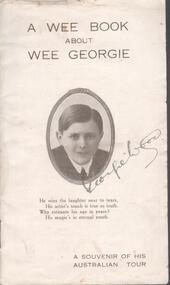
Document - A WEE BOOK ABOUT WEE GEORGIE
... A Wee Book about Wee Georgie, a Souvenir of his Australian Tour. The embodiment of Peter Pan. J. L. Anderson and Sons Pty Ltd Print, 63 City Road, Melbourne. ...A Wee Book about Wee Georgie, a Souvenir of his Australian Tour. The embodiment of Peter Pan. J. L. Anderson and Sons Pty Ltd Print, 63 City Road, Melbourne. ...A Wee Book about Wee Georgie, a Souvenir of his Australian Tour. The embodiment of Peter Pan. J. L. Anderson and Sons Pty Ltd Print, 63 City Road, Melbourne. The program is autographed by George Wood. Tour took place between c1905 and 1920.J. L. Anderson and Sons Pty Ltd Print, 63 City Road, Melb.program, theatre, a wee book about wee georgie -
 Wyndham Art Gallery (Wyndham City Council)
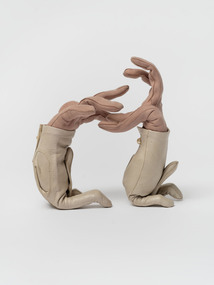
Sculpture - #59 (trust fall duo), Hannah Gartside, 2015
... ...Embodiment...Textile art Fabric sculpture Soft sculpture Installation art Contemporary sculpture Feminism Women's histories Embodiment The body Sculpture #59 (trust fall duo) Sculpture #59 (trust fall duo) Hannah Gartside ...In this nest of bunnies fashioned from gloves, it’s as if Hannah Gartside has bundled the world’s most tender feelings and given them aesthetic form through droopy ears, leather pot bellies, sweetly curved behinds, comically suggestive poses. Through Bunnies in Love, Lust and Longing, Gartside has taken second-hand leather gloves from the 1950s and 60s, some as early as the 1910s, and curved these once-worn textiles over steel armature, bending animal pelt into warm, playful, living beings. Tiarney Miekus, 2025 textile art, fabric sculpture, soft sculpture, installation art, contemporary sculpture, feminism, women's histories, embodiment, the body, sculpture -
 4th/19th Prince of Wales's Light Horse Regiment Unit History Room
Medal, J Williams, Visit of Prince of Wales 1920, 1920
... The Prince was seen as the embodiment of the White Australia, symbolic of the spirit of his race. ...The Prince was seen as the embodiment of the White Australia, symbolic of the spirit of his race. ...In 1920 the Prince of Wales visited Australia to extend official thanks for its support during World War I and to strengthen links to the Empire. The Prince toured extensively, and his tour was one of the most popular royal visits ever. Wherever he went public holidays were declared, foundation stones laid, memorials unveiled and receptions and balls. The Prince made a point of meeting ex-servicemen and women. He spent nine days in Victoria, eleven days in New South Wales, four days in Tasmania, eleven days in Western Australia, six days in South Australia and eight days in Queensland. The Prince was seen as the embodiment of the White Australia, symbolic of the spirit of his race. His presence strengthened the identity of the young Australian nation as a member of the Empire, resisting the influence of other powers and other races.Dimensions: 27 mm (Diameter) Weight: 9.11 g Dimension Comment: 32 mm height to top of loop Obverse Description: 3/4 bust of Prince in uniform wearing cap; around in two lines, H.R.H. PRINCE OF WALES / WELCOME TO AUSTRALIA Reverse Description: Wreath of eucalypt and oak with Prince of Wales' plume at top; within, TO COMMEMORATE / THE VISIT OF / . H.R.H.. / PRINCE OF WALES / TO AUSTRALIA / . / 1920 Edge Description: Plain Inscriptions: H.R.H. PRINCE OF WALES WELCOME TO AUSTRALIA TO COMMEMORATE THE VISIT OF H.R.H. PRINCE OF WALES TO AUSTRALIA 1920 Shape: Round with loop Material: Gilt medal, prince of wales -
 Bacchus Marsh & District Historical Society
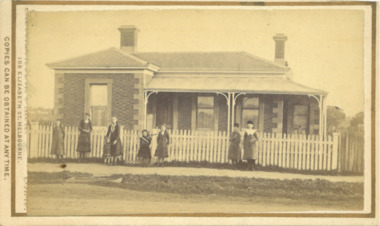
Photograph, Home and surgery of Doctor Rae, 227-229 Main Street Bacchus Marsh 1883
... The house is of significance as the embodiment of the importance to the community of its influential figures, such as Dr. ...The house is of significance as the embodiment of the importance to the community of its influential figures, such as Dr. ...This image is one of a series of photographs taken by Melbourne based photographers Stevenson and McNicoll who visited Bacchus Marsh and its nearby districts between September and November 1883. The photo is of a brick residence, built in 1865-66 as a house and surgery for Dr. Rae, a medical practitioner in Bacchus Marsh 1863-1874. Dr. Rae was influential in community affairs as a Justice of the Peace, a member of the Board of Advice of Bacchus Marsh Common School and a President of the Mechanics’ Institute. After ill health forced him to resign his practice, he built the Bungalow in 1880, where he lived until his death. The house was later purchased by William Anderson (c.1880) who named it “Dunglass”. The people in this photograph are probably members of the Anderson family. The house is now used as an Adult Education Centre. The house is of significance as the embodiment of the importance to the community of its influential figures, such as Dr. Rae, in the late nineteenth and early twentieth centuries. Small sepia 'carte de viste' style unframed photograph on card with gold border framing photograph. Housed in the Jeremeas Family Album which contains photographs of Bacchus Marsh and District in 1883 by the photographers Stevenson and McNicoll. The photo is of a double-fronted brick Classical nineteenth century house with a high hip roof. Two brick chimneys are visible. The left hand bay is set forward, with the central section of the house being set back. A concave return verandah supported by decorative columns runs along the front and side of the house, leading to a separate entry door off the side verandah. On the window set in this door, the word ‘SURGERY’ can be discerned, indicating that this is the entrance to be used by patients. The building features buff-coloured stone quoins and architraves. A white picket fence runs along the front. Ranged along the footpath in front of the fence stands a group of eight young women and girls. A flat stone acts as a bridge over a deep drainage culvert running parallel to the street.Printed On the front: Stevenson & McNicoll. Photo. 108 Elizabeth St. Melbourne. COPIES CAN BE OBTAINED AT ANY TIME. On the back: LIGHT & TRUTH inscribed on a banner surmounted by a representation of the rising sun. Copies of this Portrait can be had at any time by sending the Name and Post Office Money Order or Stamps for the amount of order to STEVENSON & McNICOLL LATE BENSON & STEVENSON, Photographers. 108 Elizabeth Street, MELBOURNE. stevenson and mcnicoll 1883 photographs of bacchus marsh and district, doctors, houses bacchus marsh -
 Ararat Gallery TAMA
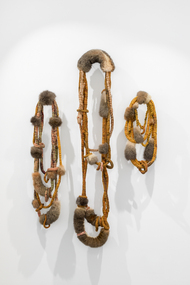
Juanita McLauchlan, guuma-li / Gathering, 2023
... These body adornments/necklaces are the embodiment of the history that I carry on my shoulders, of who I am and finding the comfort of where I fit into this forever changing life. ...These body adornments/necklaces are the embodiment of the history that I carry on my shoulders, of who I am and finding the comfort of where I fit into this forever changing life. ...Juanita McLauchlan draws upon her Gamilaraay identity, history, and language to explore family connections, personal belongings, and body adornment. McLauchlan employs both printmaking and fibre-based practices to reflect her spiritual connection to Country and her cultural identity as an Aboriginal woman with English lineage. Her work considers how gathering and sharing ancestral knowledge preserves intergenerational ties, bridging past, present, and future. McLauchlan creates contact prints on blankets, capturing impressions of Wiradjuri Country in Wagga Wagga, NSW, where she currently lives and works. McLauchlan was born on her Grandmother’s Country, Gamilaraay Country, and has lived in many places across Australia before spending the last 20 years with her family in Wagga Wagga. McLauchlan says of this artwork: By compulsion to make and move my hands I combine my mixed crossed cultural heritage, using woollen blankets and possum skin to create necklaces that are soft and beautiful, begging to be worn and handled as a way to recognise and pay homage to those who have come before me. These body adornments/necklaces are the embodiment of the history that I carry on my shoulders, of who I am and finding the comfort of where I fit into this forever changing life. They are like a generational hug of confidence and warmth once they are placed over your head. Stories of my childhood come to mind when making each necklace. Guuma-li / gathering, is a time when my sister and I were staying with my grandmother, and she was called to deal with a snake next door. Even though the snake was longer than she was tall, it was no match for our grandmother. The snake is in the main necklace as an ode to our grandmother and the strengths she has passed to us. The woollen blankets have been contact printed with bush dyes and bound in red thread creating links that form an ethereal shape wrapped and held together with the possum skin.” -
 Ringwood and District Historical Society
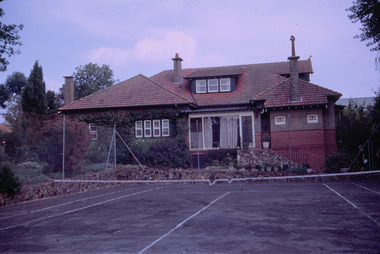
Photograph, Dr Hewitt's house and surgery, Warrandyte Road, Ringwood, circa 1960s
... It is historically significant to Maroondah as a representative embodiment of rural town family life in Ringwood immediately after the Great War. ...It is historically significant to Maroondah as a representative embodiment of rural town family life in Ringwood immediately after the Great War. ...Dr Hewitt's house at 10-12 Warrandyte Road, Ringwood. Showing residence and tennis court. The surgery is on the right-hand side, facing Warrandyte Road. The surgery closed and is now used for offices. The building has Heritage Overlay, Number HO72, Maroondah City Council.Victorian Heritage Database Report Report generated 10/11/25 House 10-12 Warrandyte Rd Warranyte Rd 10-12(2).jpg Location 10-12 Warrandyte Road RINGWOOD, MAROONDAH CITY Municipality MAROONDAH CITY Level of significance Included in Heritage Overlay Heritage Overlay Numbers HO72 Heritage Listing Maroondah City Statement of Significance Last updated on - A substantial elevated brick house of the period transitional from Edwardian to early California Bungalow, built about 1915(?). It is historically significant to Maroondah as a representative embodiment of rural town family life in Ringwood immediately after the Great War. It may have been used as a medical surgery for over 80 years. It is architecturally significant as a rare representation of this transitional style locally. Heritage Study/Consultant Maroondah - Maroondah Heritage Identification Study, Richard Peterson with Peter Barrett, 1998; Hermes Number 146979 Property Number Physical Description 1 A three-bay brick house with a complex hipped roof and an attic, transitional from late Edwardian to early Californian Bungalow. Walls over dado height are roughcast. The roof is Marseilles terra-cotta tiles unglazed. Chimneys are pylons, with tall terra-cotta pots, with plate tops and corbels. There are three bays in line to Warrandyte Road, with a central gablet attic. Its upper gable is shingles, with a latticed vent and terra-cotta finial, over a triple window. Rafters are exposed. At left is a canted bay window. The entrance faces the south side, recessed at centre, between two hips. The right hip extends forward as a skillion with a chimney. At left is a small symmetrical quadruple window. Several mature evergreen trees remain. Intactness The north central bay has been replaced, an intrusive ramp installed and the entrance altered. Another intrusive addition is at the south. This place/object may be included in the Victorian Heritage Register pursuant to the Heritage Act 2017. Check the Victorian Heritage Database, selecting 'Heritage Victoria' as the place source. For further details about Heritage Overlay places, contact the relevant local council or go to Planning Schemes Online http://planningschemes.dpcd.vic.gov.au/ -
 Ringwood and District Historical Society
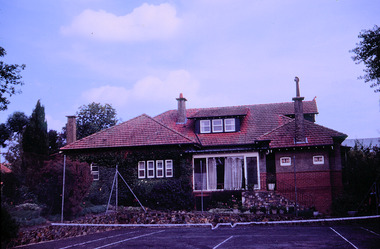
Photograph, Dr Hewitt's house and tennis court, Warrandyte Road, Ringwood, circa 1960s
... It is historically significant to Maroondah as a representative embodiment of rural town family life in Ringwood immediately after the Great War. ...It is historically significant to Maroondah as a representative embodiment of rural town family life in Ringwood immediately after the Great War. ...Dr Hewitt's house at 10-12 Warrandyte Road, Ringwood. Showing residence and tennis court. The surgery is on the right-hand side, facing Warrandyte Road. The surgery closed and is now used for offices. The building has Heritage Overlay, Number HO72, Maroondah City Council. The garden was designed by Edna Walling.Victorian Heritage Database Report Report generated 10/11/25 House 10-12 Warrandyte Rd Warranyte Rd 10-12(2).jpg Location 10-12 Warrandyte Road RINGWOOD, MAROONDAH CITY Municipality MAROONDAH CITY Level of significance Included in Heritage Overlay Heritage Overlay Numbers HO72 Heritage Listing Maroondah City Statement of Significance Last updated on - A substantial elevated brick house of the period transitional from Edwardian to early California Bungalow, built about 1915(?). It is historically significant to Maroondah as a representative embodiment of rural town family life in Ringwood immediately after the Great War. It may have been used as a medical surgery for over 80 years. It is architecturally significant as a rare representation of this transitional style locally. Heritage Study/Consultant Maroondah - Maroondah Heritage Identification Study, Richard Peterson with Peter Barrett, 1998; Hermes Number 146979 Property Number Physical Description 1 A three-bay brick house with a complex hipped roof and an attic, transitional from late Edwardian to early Californian Bungalow. Walls over dado height are roughcast. The roof is Marseilles terra-cotta tiles unglazed. Chimneys are pylons, with tall terra-cotta pots, with plate tops and corbels. There are three bays in line to Warrandyte Road, with a central gablet attic. Its upper gable is shingles, with a latticed vent and terra-cotta finial, over a triple window. Rafters are exposed. At left is a canted bay window. The entrance faces the south side, recessed at centre, between two hips. The right hip extends forward as a skillion with a chimney. At left is a small symmetrical quadruple window. Several mature evergreen trees remain. Intactness The north central bay has been replaced, an intrusive ramp installed and the entrance altered. Another intrusive addition is at the south. This place/object may be included in the Victorian Heritage Register pursuant to the Heritage Act 2017. Check the Victorian Heritage Database, selecting 'Heritage Victoria' as the place source. For further details about Heritage Overlay places, contact the relevant local council or go to Planning Schemes Online http://planningschemes.dpcd.vic.gov.au/ -
 Ringwood and District Historical Society
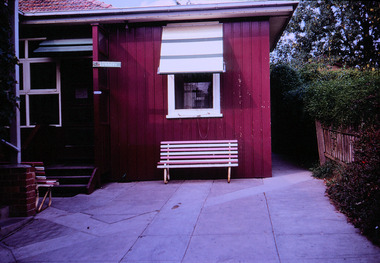
Photograph, Entrance to Dr Hewitt's Surgery, Warrandyte Road, Ringwood, circa 1960s
... It is historically significant to Maroondah as a representative embodiment of rural town family life in Ringwood immediately after the Great War. ...It is historically significant to Maroondah as a representative embodiment of rural town family life in Ringwood immediately after the Great War. ...Dr Hewitt's house at 10-12 Warrandyte Road, Ringwood. Showing residence and tennis court. The surgery is on the right-hand side, facing Warrandyte Road. The surgery closed and is now used for offices. The building has Heritage Overlay, Number HO72, Maroondah City Council. The garden was designed by Edna Walling.Victorian Heritage Database Report Report generated 10/11/25 House 10-12 Warrandyte Rd Warranyte Rd 10-12(2).jpg Location 10-12 Warrandyte Road RINGWOOD, MAROONDAH CITY Municipality MAROONDAH CITY Level of significance Included in Heritage Overlay Heritage Overlay Numbers HO72 Heritage Listing Maroondah City Statement of Significance Last updated on - A substantial elevated brick house of the period transitional from Edwardian to early California Bungalow, built about 1915(?). It is historically significant to Maroondah as a representative embodiment of rural town family life in Ringwood immediately after the Great War. It may have been used as a medical surgery for over 80 years. It is architecturally significant as a rare representation of this transitional style locally. Heritage Study/Consultant Maroondah - Maroondah Heritage Identification Study, Richard Peterson with Peter Barrett, 1998; Hermes Number 146979 Property Number Physical Description 1 A three-bay brick house with a complex hipped roof and an attic, transitional from late Edwardian to early Californian Bungalow. Walls over dado height are roughcast. The roof is Marseilles terra-cotta tiles unglazed. Chimneys are pylons, with tall terra-cotta pots, with plate tops and corbels. There are three bays in line to Warrandyte Road, with a central gablet attic. Its upper gable is shingles, with a latticed vent and terra-cotta finial, over a triple window. Rafters are exposed. At left is a canted bay window. The entrance faces the south side, recessed at centre, between two hips. The right hip extends forward as a skillion with a chimney. At left is a small symmetrical quadruple window. Several mature evergreen trees remain. Intactness The north central bay has been replaced, an intrusive ramp installed and the entrance altered. Another intrusive addition is at the south. This place/object may be included in the Victorian Heritage Register pursuant to the Heritage Act 2017. Check the Victorian Heritage Database, selecting 'Heritage Victoria' as the place source. For further details about Heritage Overlay places, contact the relevant local council or go to Planning Schemes Online http://planningschemes.dpcd.vic.gov.au/ -
 Melbourne Legacy
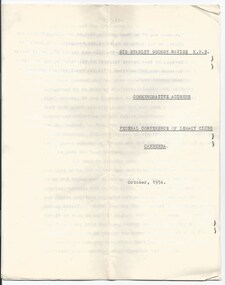
Document - Speech, Commemorative Address - Sir Stanley Savige K.B.E. Federal Conference of Legacy Clubs, Canberra, 10/1954
... Savige was the embodiment of this new expression of comradeship, as he was the central figure and driving force of the little group that sponsored it. ...Savige was the embodiment of this new expression of comradeship, as he was the central figure and driving force of the little group that sponsored it. ...After the death of Stan Savige this address was given at the Canberra Conference in October 1954. It is tribute to his life. Sir Stanley Savige KBE : Commemorative Address Federal Conference of Legacy Clubs, Canberra : October 1954. On the 15th of May this year Legacy learned to its enduring sorrow of the death of its Founder, Lieut. General Stanley George Savige KBE, CB, CBE, DSO, MC, ED, for more than 30 years affectionately known to us all as Legatee Stan Savige. He was the embodiment of all those things for which Legacy stands, and each one of us who knew him and worked with him feels a great and abiding sense of personal loss. It is proper, therefore, that those of us at this Conference, the first after his passing, representative of Legacy throughout the Commonwealth, and comprising so many who were his friends, so many who knew the depth of his love for Legacy, should acknowledge our debt to our Founder and ensure, so far as we may, that the inspiration of his life and work in this Cause shall not be lost to those who follow after. It was not ordained that Stanley George Savige - should enjoy a long life, but it was to prove a life of outstanding service. Born at Morwell in Victoria some 63 years ago, he received with his brothers and sisters such education as was then available to a lad in a mining district. He had no particular opportunities of advancement, but from his early days he cherished a strong ambition to make a success of his life, and with this in view he lost no opportunity of adding to his knowledge. Always a lover of the open country, a good bushman and a fine shot, he became as a young man, a Scoutmaster with a keen following of boys. Even in those early days he attracted youth and showed undoubted promise of the quality of leadership which later was to make him famous. Opportunity came with the first World War, and he took his place as a private soldier in the original 24th Battalion AIF. Followed Gallipoli and Anzac where his marksmanship and bush craft stood him in good stead. Conscious that his early training was not sufficient to secure the promotion he desired, he set himself to enlarge it. Only a man of fine fibre and rare determination could apply himself to study on that war torn Peninsula, where our men, hitherto untested, suffered every known hardship and no man knew, from hour to hour, whether he would survive. But Savige achieved it. Himself then a Corporal he found another Corporal who was a former Schoolmaster and learned from him all that he had to teach. Savige was on his way. He was commissioned on the Field and allotted the heroic task of leading the last party off that desperate coast during the famous evacuation. In France he became the Adjutant of his Battalion and one of the best known officers in the 6th Brigade. He won the Military Cross and was mentioned in despatches. Early in 1918 he received a signal distinction, He was included in a small but distinguished band of Officers and Non-Commissioned Officers from the British and Dominion Forces most carefully selected for individual courage and proved qualities of leadership, and was sent to Persia, under the command of Major-General Dunsterville, Kipling’s famous Stalky, to assist and mobilise the friendly tribes with a view to protecting the road to India, left wide open by the withdrawal of Russia. The story of the Dunsterforce, its suffering and achievements in the face of incredible hardships and difficulties, was later to be told by Savige in his book “Stalky’s Forlorn Hope”. He emerged, finally, unscathed, despite his active participation in several of the bloodiest battles of all time, with the rank of Captain and a DSO and MC to his credit, to say nothing of three mentions in despatches. In later years, further decorations were to be conferred upon him, but I believe he valued none of these so highly as his awards for outstanding personal bravery won in the Field when he was an Officer of comparatively junior rank. Such was the man who in August 1923, at the instance of his former Commander, Major-General Sir John Gellibrand, gathered around him a handful of men who had fought and laughed with him over four well remembered years. This small band adopted the name of “Legacy”, but its purpose then was, in the main, to assist in safeguarding the interests of ex-servicemen in this country. Worthy although the case undoubtedly was, the conception and ideal which was to distinguish Legacy from all kindred post-war movements did not emerge until two years later. The torch had not been lit. Legacy had not yet found its soul. What has been achieved since then is known to you all. The Legacy ideal, unique in its conception, with no known counterpart elsewhere, is now accepted, welcomed and honoured throughout the Commonwealth and abroad. But in those early days the achievements of our Founder in the face of all manner of difficulties and frustrations are worthy of our lasting memory and thankfulness. As the source of every river lies in the hills, so must the inspiration from which stems a great conceptions of service to one’s fellow men be lofty and above reproach. Savige was the embodiment of this new expression of comradeship, as he was the central figure and driving force of the little group that sponsored it. But for his zeal, his faith and determination, it is likely that the flame, newly kindled, might have flickered and died. The idea of men returned from active service pledging for the sake of their former comradeship, their personal assistance to the widows, and above all, to the children of those who had fought beside them and paid the full price of War, was so completely new and unexpected that it was by no means readily accepted. There were no funds, no precedents to guide the new adventurers, only the clear bright flame of an ideal just envisaged, and the conviction that the Cause was unassailable. Nor were there lacking many who said that the community held no place for Legacy, that it was born of sentiment only, and would quickly pass. The scoffers are gone and one since forgotten, but the torch remains and burns brighter than ever. Down the years of Legacy there are many names deserving of honour, men from all States and all stations of life, but no name stands out in such clear and bold relief as does the name of our Founder. By his works you shall know him. He was, in truth, the Soul of Legacy. He sought no office and preferred to work as one of the team. Six years went by before he accepted the Presidency of Melbourne Club, and then only because his fellows would book no further delay. “The Spirit of Legacy is Service” - so runs the Charter, and that was Savige’s Creed. By virtue of his attainments he was called upon to take a leading part in the administration of Legacy, first within his own club and later, as Chairman of the Co-ordinating Council of Legacy in Australia. But always it was the essentially human character of the work which enthralled and upheld him, and the tasks which gave him most joy were those which brought him into close personal contact with the youngsters and their home life. Like their elders they recognised his goodwill and his leadership and responded to it. It was Savige who made possible the first camps held for the boys and girls by Melbourne Club. These were erected on his own seaside property, and were originally conducted under his personal direction and largely with the aid of funds he had collected. There was hardly an important post in his own Club that Savige did not at some time occupy and adorn. He was happiest in the company of those men with whom he had served in the field, and cherished always the comradeship born of active service which is of the essence of Legacy. He was a man of strong convictions but attentive always to another’s point of view. As a Legatee he played a leading part in bringing hope and encouragement to many a mother on whom the whole responsibility of a young family had been suddenly and tragically laid; in the attainment of the ambitions of many an orphan child, which not so long since had seemed to him or her to be mere dreams, impossible of realisation. Comfort for the bereaved, new hope for the children’s physical and educational welfare, assistance with the home, aid for the sick, money for the needy and a new courage to face a future that hitherto had held no promise, all these facets of Legacy endeavour combine to present a living and enduring memorial to the man we honour as our Founder today. Between the two World Wars in addition to establishing himself successfully in civilian life and answering the constant calls of Legacy on his energy and time, Savige maintained an active association with the Army. He was convinced that a Second AIF would one day be urgently called upon, and as a Battalion Commander he spared no effort to train the Officers under his charge during the uneasy years of peace for the trial that he felt must come. These men have all subsequently had distinguished military careers, their names are well known and many of the serve in Legacy today. When the second crisis came, Savige himself was one of the first to offer, and although his youth was spent, he proudly carried the number VX13 throughout the terrible years that followed. This time he was to command, first the 17th Australian Infantry Brigade in the first action of the Second AIF against the enemy at Barida, and subsequently at Tobruk and Derna - all famous names now. It was his patrols which gave the warning - unheeded at the time - that Rommel’s reinforcements were reaching North Africa far earlier than was expected. Then followed the grim days of Greece and Crete when the fine qualities of his leadership were put to the utmost test. I have been told by those who were closest to him it was typical of Savige that when his convoys were on the move back and were being blasted from the air by the unopposed Luftwaffe, he should sit by the side of the open road, wearing his red banded cap, to steady the morale of men who had then no chance of hitting back at the enemy. Unorthodox no doubt, but here was a man indeed. Throughout the whole campaign and later when he commended the 3rd division in New Guinea and later still when with the rank of Lieutenant-General he became a Corps Commander in New Guinea and Bouganville, it was at all times characteristic of him that he should see for himself the situation in the forward areas. He dealt personally with his subordinate commanders whenever it was possible to do so. No one says his G.S.O. 1. understood better than he did the importance of front line troops seeing their G.O.C. frequently, and knowing that he was aware of and prepared to share their hardships and dangers. He took many risks that he should not have taken, exhausted himself physically and mentally times without number, and considered himself not at all in order to secure the success of his operations. Finally, in Bouganville, he brought his campaign to a victorious conclusion and accepted the personal surrender of the Japanese Commander. Savige is known as one of Australia’s most human military leaders, but let no one believe that he did not ask and receive the utmost of his men. He trained them in a hard school but he was ever conscious of their needs and observant and thoughtful of their welfare. Fearless and untiring under conditions which brought younger men down, he asked nothing that he was not himself prepared to give and do. The close of the Second World War left him with the same brave heart; but a vitality greatly impaired. He was called up again and again to perform important national tasks, notably that of Co-ordinator of Demobilisation and Dispersal. But his interest in Legacy never flagged it was in fact more personal than ever, for under his command many junior legatees, sons of former comrades had proved themselves worthy of their Fathers in war and in peace. In the bearing and achievements of the young men of the Second A.I.F. he took a particular and justifiable pride. He applied himself to the Extension of Legacy to areas where it had not previously been practicable to operate. His record of service and close personal contact with the men of both wars made him a most welcome pioneer and many new Clubs and Groups resulted from his efforts. He founded, and I doubt whether any one else could have done so, the Club in the great Capital of our Empire. His reputation and obvious sincerity surmounted obstacles that might well have daunted lesser man. Legacy’s debt to him visibly increased. But he was ever a simple man, with a great love and understanding of his fellow men and a true Legatee at heart. Much that he did will never be known or recognised, save by those who benefitted. His service in Legacy ranged from the humble kitchen of cottage and farm to our representation in Westminster Abbey itself. A knighthood set the seal upon an outstanding career. None the less when upon the death of Field Marshall Sir Thomas Blamey, Lieut. General Sir Stanley Savige became the Patron of the Melbourne Club, he retained at his own express desire, the title of Legatee Savige, and when on that final day we bade him farewell, when the Flags he had served so well were lowered and the guns which had formed a grim final salute, it was apparent to all who had eyes to see that this great and simple man had won such a place in the hearts and affection of his fellow country men as is given to few men indeed. From the packed Cathedral, escorted by his fellow Generals, followed by men of his own Units, by Legatees and a great company of others who had cause to honour and esteem him, he made his last journey. But that is not the end. His voice and presence are lost to us but his memory and inspiration must ever remain. As he has bequeathed to the National War Memorial yonder his diaries, records and battle plans, so he has bequeathed to us his fellow Legatees his greatest achievement and his trust, Legacy itself. Never was the Torch passed by worthier hands. Now it is ours to hold it high. Whatever material memorial the future many hold for him, Legacy owes its Founder a livelier recompense. It is within our power to implement what I believe to be his greatest wish, that Legacy and its ideal of comradeship and service shall flourish and endure. Let each one of us then resolve that we shall, within our Clubs, in all tasks to which we are assigned, both great and small, keep in our minds the life and spirit of Stanley George Savige, so that we may be proud at all times to say of Legacy to those who follow after - “If you would see his memorial - Look around you”.The tribute to Stanley Savige shows how greatly he was regarded by the Legatees.Off white quarto paper with black type, address given about Stan Savige to the Canberra Conference, x 12 pages.savige, speech, obituary -
 Great Stupa of Universal Compassion
Artwork, other - Medicine Buddha thangka
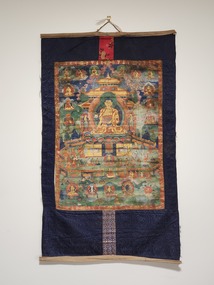
... The Medicine Buddha (also known as Bhaisajyaguru or Sangyé Menla) is revered as the embodiment of healing and associated with practices helping with mental and physical ailments, as well as purifying negative karma. ...Thangkas are cloth scrolls unique to Tibetan Buddhism, depicting deities, venerated spiritual figures, or common religious symbols. Intended for personal meditation or instruction of monastic students, they are invested with the spirit of a deity to whom they are consecrated. A thangka is a composite art form consisting of a picture panel which is painted or embroidered; a brocade mounting; and one or more of the following: a silk cover, leather corners, wooden dowels at the top and bottom and metal or wooden decorative knobs on the bottom dowel. This allows a thangka to be rolled up for portability, reflecting its origins in the nomadic lifestyle of Tibetan monks.The Medicine Buddha (also known as Bhaisajyaguru or Sangyé Menla) is revered as the embodiment of healing and associated with practices helping with mental and physical ailments, as well as purifying negative karma. His iconic imagery, including the medicine bowl and healing plant, represents the union of wisdom and compassion as forces of healing. His teachings, rooted in the "Four Medicine Tantras," emphasize that the root of all diseases lies in negative emotions of greed, hatred, and ignorance.The central figure in this old thangka is Medicine Buddha, seated on a lotus throne and surrounded by other deities and figures. He has a bowl in his left hand, and a flower in his right hand. An interesting feature is that his body is not painted blue, as is customary for the image Medicine Buddha. The paint colours were derived from natural ingredients – grinded coral, turquoise and other gemstones. The 'Om Ah Hum' mantra is printed in Tibetan in red ink on the verso of the thangka.buddhist art, tibetan buddhism, holy objects -
 Nillumbik Shire Council
Print: (archival inkjet): Jessie IMAM, Jessie Imam, Ground Cover, 2017
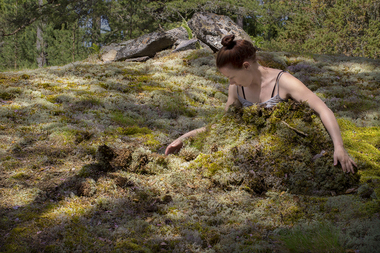
... Imam works within photography, the moving image and installation to create works centred on themes of embodiment and the female perspective. In this work she participates in a dialogue between her body and the Finnish Archipelagos in order to develop a relationship with the islands as both a place and an organic body [of land] where flux and change occurs. finnish archipelago inkjet print photographic body island moss N/A Photograph of the artist immersed from the waist down in green moss (landscape). ...Imam is represented in the Nillumbik Shire Art Collection and was the winner of the 2015 Nillumbik Prize for her work "Diagram of sentiment #1" (judged by Linden New Art Director Melinda Martin). She was also a finalist in the Nillumbik Prize 2016, 2015, 2013 and 2010. Imam completed a residency at Laughing Waters in 2011. Imam works within photography, the moving image and installation to create works centred on themes of embodiment and the female perspective. In this work she participates in a dialogue between her body and the Finnish Archipelagos in order to develop a relationship with the islands as both a place and an organic body [of land] where flux and change occurs. Photograph of the artist immersed from the waist down in green moss (landscape).N/Afinnish, archipelago, inkjet, print, photographic, body, island, moss -
 Broadmeadows Historical Society & Museum
Booklet - School Yearbook, Salesian College, Rupertswood, "Certantes in Vita" 1978, 1978
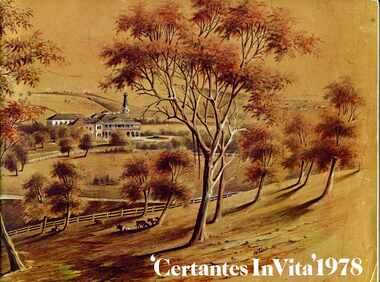
... This volume documents the contributions and experiences of the 1978 student body, highlighting their participation in a wide array of school activities and their embodiment of the college’s core values. It offers a rich portrayal of the camaraderie, creativity, and commitment that defined the Rupertswood experience during this time. ...School yearbook, presenting details of the events and students of Salesian College, Rupertswood, Sunbury.A stapled, card-covered, forty-eight-page book. Shows age with damaged corners of front cover.non-fictionSchool yearbook, presenting details of the events and students of Salesian College, Rupertswood, Sunbury.salesian college, rupertswood, sunbury, yearbook, "certantes in vita", 1978 -
 Bacchus Marsh & District Historical Society
Photograph, Border Inn, Main Street Bacchus Marsh 1883
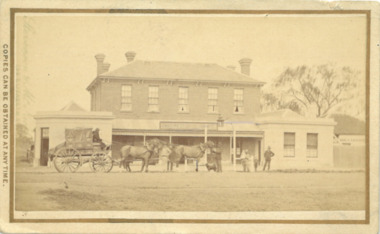
... It is the representative-embodiment of several historical periods and their way of life. ...The Border Inn located on the corner of Main Street and Graham Street Bacchus Marsh opened in 1851 making it a very early hotel in Victoria. It was built and owned by John Pilmer. The first licensee was James Watt. The building has been added to and changed many times. It was originally a single storey building. A second storey was added in 1863 by John Pilmer. In 1866 the hotel was purchased by Edward Jones. The Jones family owned and operated the hotel until 1939. Additional second storey sections were added in 1883, 1904 and 1936. For a number of years the Border Inn was a stopping post for coaching services between Melbourne and Ballarat. The first licensee of the hotel James Watt was among the first in Victoria to offer a regular coaching service and his hotel was used for overnight accommodation by coach travellers. At the time this picture was taken coach services were still operating between Bacchus Marsh and other locations. The coach in this picture is possibly one of those coaches.This building has been documented as of state significance by Richard Peterson and Daniel Catrice in their 1995 heritage study for the then Shire of Bacchus Marsh. Their assessment of the heritage significance of the building was: "The Border Inn is of state historical significance as a pioneering pre-gold rush building, on the route to the Ballarat goldfields. It is the representative-embodiment of several historical periods and their way of life. It demonstrates a complex changing sequence of patterns of occupancy and architectural styles. Its development at this location, demonstrates the effect of a social movement, the gold rush, as a transport stopover.It is also historically significant for its association with the first rural public transport in Victoria. Locally, the hotel is significance for its association with the first meeting of municipal government, and also for its social significance as a traditional community, visitor focus and meeting place".Small sepia unframed photograph on card with gold border framing photograph. Housed in the album, 'Photographs of Bacchus Marsh and District in 1883 by Stevenson and McNicoll'. The image shows the Border Inn Hotel at an angle depicting the front of the building facing directly to the camera. It is a two storey brick building, with one-story additions at either end. Five chimneys can be seen extending from the building. The bottom storey has a verandah extending onto the footpath. A covered wagon, probably a coach, with four horses in harness is in front of the building. There are several people in the image. Two people are sitting on the driver’s seat of the wagon. Another man is standing holding the reins of the horses. At his feet is a dog. Behind them are two male adults. One is holding a small child. A young boy stands beside him.On the front: Stevenson & McNicoll. Photo. 108 Elizabeth St. Melbourne. COPIES CAN BE OBTAINED AT ANY TIME. On the back: LIGHT & TRUTH inscribed on a banner surmounted by a representation of the rising sun. Copies of this Portrait can be had at any time by sending the Name and Post Office Money Order or Stamps for the amount of order to STEVENSON & McNICOLL LATE BENSON & STEVENSON, Photographers. 108 Elizabeth Street, MELBOURNE. stevenson and mcnicoll 1883 photographs of bacchus marsh and district, hotels bacchus marsh, border inn hotel bacchus marsh, carriages and coaches, stagecoaches, james watt bacchus marsh, john pilmer bacchus marsh, edward jones family bacchus marsh -
 Mrs Aeneas Gunn Memorial Library
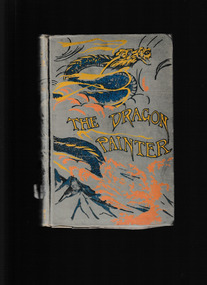
Book, Little, Brown, and Company, The dragon painter, 1906
... When Tatsu meets the beautiful Ume Ko (Tsuru Aoki), he thinks that she is the living embodiment of the princess he has spent years imagining. ...Tatsu (Sessue Hayakawa) is a reclusive, tortured artist who continually paints brilliant pictures of a dragon that has the soul of a princess. When Tatsu meets the beautiful Ume Ko (Tsuru Aoki), he thinks that she is the living embodiment of the princess he has spent years imagining. He immediately falls for Ume Ko; initially overjoyed, Tatsu soon becomes despondent when he realizes he has lost his inspiration to paint. He must now somehow learn to balance love with artistic fervor.Ill, p.262.fictionTatsu (Sessue Hayakawa) is a reclusive, tortured artist who continually paints brilliant pictures of a dragon that has the soul of a princess. When Tatsu meets the beautiful Ume Ko (Tsuru Aoki), he thinks that she is the living embodiment of the princess he has spent years imagining. He immediately falls for Ume Ko; initially overjoyed, Tatsu soon becomes despondent when he realizes he has lost his inspiration to paint. He must now somehow learn to balance love with artistic fervor.painting - japan, novels - japan
