
Showing 32 items matching "emergency measures"
-
 Moorabbin Air Museum
Book - Aircraft Camouflage And Markings, RAAF Camouflage 1939 to 45 Vols 1 & 2
... ...Emergency measures...Aircraft camouflage & markings Camouflage & concealment Emergency measures Camouflage ruses & experiments Colour schemes RAAF unit codes & abbreviations Colour schemes in transition Fighters & bombers in the Pacific Attack/ photographic / reconnaissance & patrol aircraft Eyes for the Army Trainers Seaplanes & flying boats Transport/communications & ambulance aircraft Description & illustrations of RAAF camouflage & markings in WW2, circa 1980 ( Vol 1 ) & 1989 ( Vo 2 ) 2 volumes RAAF Camouflage 1939 to 45 Vols 1 & 2 Book Aircraft Camouflage And Markings ...Description & illustrations of RAAF camouflage & markings in WW2, circa 1980 ( Vol 1 ) & 1989 ( Vo 2 )2 volumesnon-fictionDescription & illustrations of RAAF camouflage & markings in WW2, circa 1980 ( Vol 1 ) & 1989 ( Vo 2 )camouflage & concealment, emergency measures, camouflage ruses & experiments, colour schemes, raaf unit codes & abbreviations, colour schemes in transition, fighters & bombers in the pacific, , attack/ photographic / reconnaissance & patrol aircraft, eyes for the army, trainers, seaplanes & flying boats, transport/communications & ambulance aircraft -
Federation University Historical Collection
Document - Documents, Australian Government Covid-19 Vaccination Booster Dose information, 19/08/2020
... emergency for Victoria for at least four weeks. On 19 March, the Reserve Bank again cut interest rates by a further 0.25% to 0.25%, the lowest in Australian history. On 22 March, the government announced a second stimulus package of A$66bn, increasing the amount of total financial package offered to A$89bn. This included several new measures...emergency for Victoria for at least four weeks. On 19 March, the Reserve Bank again cut interest rates by a further 0.25% to 0.25%, the lowest in Australian history. On 22 March, the government announced a second stimulus package of A$66bn, increasing the amount of total financial package offered to A$89bn. This included several new measures ...On 12 January, the World Health Organization (WHO) confirmed that a novel coronavirus was the cause of a respiratory illness in a cluster of people in Wuhan City, Hubei Province, China, who had initially come to the attention of the WHO on 31 December 2019. On 3 March, the Reserve Bank of Australia became the first central bank to cut interest rates in response to the outbreak. Official interest rates were cut by 0.25% (25 base points) to a record low of 0.5%. On 12 March, the Federal Government announced a A$17.6 billion stimulus package, the first since the 2008 GFC. he package consists of multiple parts, a one-off A$750 payment to around 6.5 million welfare recipients as early as 31 March 2020, small business assistance with 700,000 grants up to $25,000 and a 50% wage subsidy for 120,000 apprenticies or trainees for up to 9 months, 1 billion to support economically impacted sectors, regions and communities, and $700 million to increase tax write off and $3.2 billion to support short-term small and medium-sized business investment. On 16 March, Premier Dan Andrews and Minister for Health Jenny Mikakos declared a state of emergency for Victoria for at least four weeks. On 19 March, the Reserve Bank again cut interest rates by a further 0.25% to 0.25%, the lowest in Australian history. On 22 March, the government announced a second stimulus package of A$66bn, increasing the amount of total financial package offered to A$89bn. This included several new measures like doubling income support for individuals on Jobseeker's allowance, granting A$100,000 to small and medium-sized businesses and A$715 million to Australian airports and airlines. It also allowed individuals affected by the outbreak to access up to A$10,000 of their superannuation during 2019–2020 and also being able to take an additional same amount for the next year. on the same day Victorian Premier Daniel Andrews announced on 22 March that the state will bring the school holiday forwards to 24 March from 27 March. On 30 March, the Australian Federal Government announced a $130 billion "JobKeeper" wage subsidy program offering to pay employers up to $1500 a fortnight per full-time, part-time or casual employee that has worked for that business for over a year. For a business to be eligible, they must have lost 30% of turnover after 1 March of annual revenue up to and including $1 billion. For businesses with a revenue of over $1 billion, turnover must have decreased by 50%. Businesses are then required by law to pay the subsidy to their staff, in lieu of their usual wages. This response came after the enormous job losses seen just a week prior when an estimated 1 million Australians lost their jobs. This massive loss in jobs caused the myGov website to crash and lines out of Centrelink offices to run hundreds of metres long.The program was backdated to 1 March, to aim at reemploying the many people who had just lost their jobs in the weeks before. Businesses would receive the JobKeeper subsidy for six months. On 2 April, the number of cases in Victoria exceeded 1,000, including over 100 healthcare workers. On 5 April, New South Wales Police launched a criminal investigation into whether the operator of Ruby Princess, Carnival Australia, broke the Biosecurity Act 2015 (Cwth) and New South Wales state laws, by deliberately concealing COVID-19 cases. On 6 April, the Department of Health revealed that 2,432 people recovered from the infection as the federal government started reporting recovery statistics. This is more than a third from the official number reported so far, Deputy Chief Medical Officer Professor Paul Kelly stating, "I think it is important. Firstly it really reinforces that message, which is a true one, that most people who get this disease do recover”. The day before, at 3pm, it was announced that 2,315 of the 5,687 confirmed coronavirus cases had recovered. May 2020 - An outbreak in Victoria at a meatworks that was later revealed to be Cedar Meats was announced on 02 May with eight cases. By 8 May, the cluster of cases linked to Cedar Meats in Victoria was 71, consisting of at least 57 workers and 13 close contacts, including a nurse, aged care worker and high school student. The number had increased to 75 by 9 May, 88 by 13 May, and 90 by 14 May. On 9 May, two Victorian cases were announced to be related to McDonald's Fawkner. By 18 May, this had increased to 12 cases, and on that day it was revealed that a delivery driver had tested positive, prompting the closing for cleaning of 12 more McDonald's locations: Melton East, Laverton North, Yallambie, Taylors Lakes, Campbellfield, Sunbury, Hoppers Crossing, Riverdale Village, Sandown, Calder Highway Northbound/Outbound, Calder Highway Southbound/Inbound, and BP Rockbank Service Centre Outbound. On 15 May, South Australia became the second jurisdiction, after the ACT, to be free of any active cases, however on 26 May, a woman returning from overseas who was granted exemption into South Australia from her hotel quarantine in Victoria tested positive for COVID-19. This was the first new case in 19 days for the state.[101] On 4 June, it was announced that the woman had recovered and the state was free of any active cases once again.[102] On 17 May, Victoria announced two further business sites had been shut down due to a suspected case at each. Domino's Pizza in Fairfield has been shut for two weeks, and mattress manufacturer The Comfort Group in Deer Park was closed from Friday 15 May to at least Wednesday 20 May. On 6 June, both New South Wales and Victoria reported no new cases for the previous 24 hours, with only Queensland and Western Australia reporting one new case each, the lowest national total since February. Western Australia also announced two old cases. However, the new case in Queensland was linked to the Rydges on Swanston cluster in Melbourne when a man who travelled from Melbourne to Brisbane on Virgin flight VA313 on 1 June tested positive.An A4 printed document persented to those who received a Covid19 Vaccination boostercovid-19, corona virus, pandemic, social distancing, lock down, vaccine, vaccine booster -
 Federation University Historical Collection
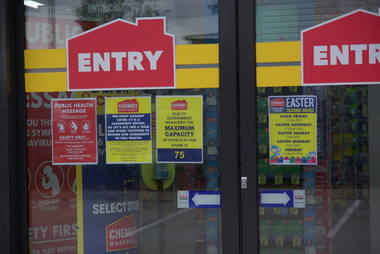
Photograph - Photograph - Colour, Social Distancing Signs during the Covid-19 Pandemic, 2020, 06/04/2020
... emergency for Victoria for at least four weeks. On 19 March, the Reserve Bank again cut interest rates by a further 0.25% to 0.25%, the lowest in Australian history. On 22 March, the government announced a second stimulus package of A$66bn, increasing the amount of total financial package offered to A$89bn. This included several new measures...emergency for Victoria for at least four weeks. On 19 March, the Reserve Bank again cut interest rates by a further 0.25% to 0.25%, the lowest in Australian history. On 22 March, the government announced a second stimulus package of A$66bn, increasing the amount of total financial package offered to A$89bn. This included several new measures ...On 12 January, the World Health Organization (WHO) confirmed that a novel coronavirus was the cause of a respiratory illness in a cluster of people in Wuhan City, Hubei Province, China, who had initially come to the attention of the WHO on 31 December 2019. On 3 March, the Reserve Bank of Australia became the first central bank to cut interest rates in response to the outbreak. Official interest rates were cut by 0.25% (25 base points) to a record low of 0.5%. On 12 March, the Federal Government announced a A$17.6 billion stimulus package, the first since the 2008 GFC. he package consists of multiple parts, a one-off A$750 payment to around 6.5 million welfare recipients as early as 31 March 2020, small business assistance with 700,000 grants up to $25,000 and a 50% wage subsidy for 120,000 apprenticies or trainees for up to 9 months, 1 billion to support economically impacted sectors, regions and communities, and $700 million to increase tax write off and $3.2 billion to support short-term small and medium-sized business investment. On 16 March, Premier Dan Andrews and Minister for Health Jenny Mikakos declared a state of emergency for Victoria for at least four weeks. On 19 March, the Reserve Bank again cut interest rates by a further 0.25% to 0.25%, the lowest in Australian history. On 22 March, the government announced a second stimulus package of A$66bn, increasing the amount of total financial package offered to A$89bn. This included several new measures like doubling income support for individuals on Jobseeker's allowance, granting A$100,000 to small and medium-sized businesses and A$715 million to Australian airports and airlines. It also allowed individuals affected by the outbreak to access up to A$10,000 of their superannuation during 2019–2020 and also being able to take an additional same amount for the next year. on the same day Victorian Premier Daniel Andrews announced on 22 March that the state will bring the school holiday forwards to 24 March from 27 March. On 30 March, the Australian Federal Government announced a $130 billion "JobKeeper" wage subsidy program offering to pay employers up to $1500 a fortnight per full-time, part-time or casual employee that has worked for that business for over a year. For a business to be eligible, they must have lost 30% of turnover after 1 March of annual revenue up to and including $1 billion. For businesses with a revenue of over $1 billion, turnover must have decreased by 50%. Businesses are then required by law to pay the subsidy to their staff, in lieu of their usual wages. This response came after the enormous job losses seen just a week prior when an estimated 1 million Australians lost their jobs. This massive loss in jobs caused the myGov website to crash and lines out of Centrelink offices to run hundreds of metres long.The program was backdated to 1 March, to aim at reemploying the many people who had just lost their jobs in the weeks before. Businesses would receive the JobKeeper subsidy for six months. Victoria's "Second Wave" from Ballarat Courier, 05 August 2020 Wednesday, August 5: 725 cases, 15 deaths. A record figure reached yet again. Tuesday, August 4: 439 cases, 11 deaths. New fines introduced for COVID-infected people who aren't home. Monday, August 3: 429 cases, 13 deaths. Premier details mass industry shutdowns in Melbourne. Sunday, August 2: 671 cases, seven deaths as harsh new statewide lockdowns are announced Saturday, August 1: 397 new cases, three deaths Friday, July 31: 627 new cases, eight deaths. Premier says one in four Covid cases not home when checked. Thursday July 30: 723 cases, 13 deaths. Just when it was looking promising, alarming new record set. Wednesday July 29: 295 new cases, nine deaths as new cases drop below 300 for first time in nine days Tuesday July 28: 380 new cases, six deaths as aged care outbreaks continue to climb Monday July 27: 532 new cases as daily cases hits 500 for first time, six deaths Sunday July 26: 459 new cases as double-digit death toll is recorded for first time with 10 deaths Saturday July 25: 357 new cases, five new deaths Friday July 24: 300 cases, six deaths, ADF role expanded to help with contact tracing. Thursday July 23 - 403 cases, five deaths, worst day for fatalities in any state, masks now mandatory Wednesday July 22 - 484 cases, two deaths Tuesday July 21 - 374 cases, three deaths Monday July 20 - 275 cases, one death Sunday July 19 - 363 cases, three deaths, notice that masks will become mandatory in lockdown areas Saturday July 18 - 217 cases, three deaths, final Melbourne public housing tower released from hard lockdown Friday July 17 - 428 cases, three deaths Thursday July 16 - 317 cases, two deaths Wednesday July 15 - 238 cases, one death Tuesday July 14 - 270 cases, two deaths Monday July 13 - 177 cases Sunday July 12 - 273 cases, one death Saturday July 11 - 216 cases, one death Friday July 10 - 288 cases, a national daily record at the time Thursday July 9 - 165 cases, eight of nine Melbourne public housing towers released from hard lockdown Wednesday July 8 - 134 cases, new stage-three restrictions announced for metropolitan Melbourne and Mitchell Shire Tuesday July 7 - 191 cases Monday July 6 - 127 cases, two deaths, NSW border closed Sunday July 5 - 74 cases Saturday July 4 - 108 cases, immediate hard lockdown of nine Melbourne public housing towers Friday July 3 - 66 cases Thursday July 2 - 77 cases Wednesday July 1 - 73 casesColour photographs of social distancing signs during the Covid-19 Pandemic, on Chemist Warehouse in Sebastopol. On 06 April 2020 a maximum of 75 people were allowed in the chemist at one time, and those with syptoms of Covid-19 (fever, cough, shortness of breath) were asked to not enter without phone contact. Upon entering customers were directed to use hand sanitizer, and 1.5 metre markings were placed on the floor to enable legal social distancing.covid-19, corona virus, pandemic, chemist's warehouse, sebastopol, social distancing -
 Federation University Historical Collection
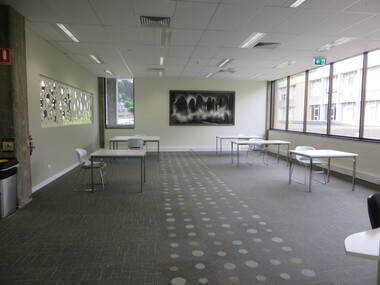
Photograph - Photograph - Colour, E.J. Barker Library Social Distancing During the Covid19 Pandemic, 2020, 06/04/2020
... emergency for Victoria for at least four weeks. On 19 March, the Reserve Bank again cut interest rates by a further 0.25% to 0.25%, the lowest in Australian history. On 22 March, the government announced a second stimulus package of A$66bn, increasing the amount of total financial package offered to A$89bn. This included several new measures...emergency for Victoria for at least four weeks. On 19 March, the Reserve Bank again cut interest rates by a further 0.25% to 0.25%, the lowest in Australian history. On 22 March, the government announced a second stimulus package of A$66bn, increasing the amount of total financial package offered to A$89bn. This included several new measures ...On 12 January, the World Health Organization (WHO) confirmed that a novel coronavirus was the cause of a respiratory illness in a cluster of people in Wuhan City, Hubei Province, China, who had initially come to the attention of the WHO on 31 December 2019. On 3 March, the Reserve Bank of Australia became the first central bank to cut interest rates in response to the outbreak. Official interest rates were cut by 0.25% (25 base points) to a record low of 0.5%. On 12 March, the Federal Government announced a A$17.6 billion stimulus package, the first since the 2008 GFC. he package consists of multiple parts, a one-off A$750 payment to around 6.5 million welfare recipients as early as 31 March 2020, small business assistance with 700,000 grants up to $25,000 and a 50% wage subsidy for 120,000 apprenticies or trainees for up to 9 months, 1 billion to support economically impacted sectors, regions and communities, and $700 million to increase tax write off and $3.2 billion to support short-term small and medium-sized business investment. On 16 March, Premier Dan Andrews and Minister for Health Jenny Mikakos declared a state of emergency for Victoria for at least four weeks. On 19 March, the Reserve Bank again cut interest rates by a further 0.25% to 0.25%, the lowest in Australian history. On 22 March, the government announced a second stimulus package of A$66bn, increasing the amount of total financial package offered to A$89bn. This included several new measures like doubling income support for individuals on Jobseeker's allowance, granting A$100,000 to small and medium-sized businesses and A$715 million to Australian airports and airlines. It also allowed individuals affected by the outbreak to access up to A$10,000 of their superannuation during 2019–2020 and also being able to take an additional same amount for the next year. on the same day Victorian Premier Daniel Andrews announced on 22 March that the state will bring the school holiday forwards to 24 March from 27 March. On 30 March, the Australian Federal Government announced a $130 billion "JobKeeper" wage subsidy program offering to pay employers up to $1500 a fortnight per full-time, part-time or casual employee that has worked for that business for over a year. For a business to be eligible, they must have lost 30% of turnover after 1 March of annual revenue up to and including $1 billion. For businesses with a revenue of over $1 billion, turnover must have decreased by 50%. Businesses are then required by law to pay the subsidy to their staff, in lieu of their usual wages. This response came after the enormous job losses seen just a week prior when an estimated 1 million Australians lost their jobs. This massive loss in jobs caused the myGov website to crash and lines out of Centrelink offices to run hundreds of metres long.The program was backdated to 1 March, to aim at reemploying the many people who had just lost their jobs in the weeks before. Businesses would receive the JobKeeper subsidy for six months.Colour photographs of furniture placed for social distancing in the Federation University E.J Barker Library during the Covid-19 Pandemic. The next day the library was closed all except staff.covid-19, corona virus, pandemic, library, e.j. barker library, mt helen library -
 Federation University Historical Collection
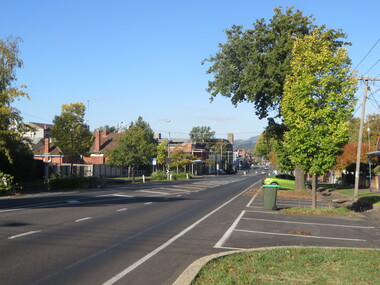
Photograph, Dana Street, Ballarat During Covid-19 State of Emergency, 13/04/2020
... emergency for Victoria for at least four weeks. On 19 March, the Reserve Bank again cut interest rates by a further 0.25% to 0.25%, the lowest in Australian history. On 22 March, the government announced a second stimulus package of A$66bn, increasing the amount of total financial package offered to A$89bn. This included several new measures...emergency for Victoria for at least four weeks. On 19 March, the Reserve Bank again cut interest rates by a further 0.25% to 0.25%, the lowest in Australian history. On 22 March, the government announced a second stimulus package of A$66bn, increasing the amount of total financial package offered to A$89bn. This included several new measures ...On 12 January, the World Health Organization (WHO) confirmed that a novel coronavirus was the cause of a respiratory illness in a cluster of people in Wuhan City, Hubei Province, China, who had initially come to the attention of the WHO on 31 December 2019. On 3 March, the Reserve Bank of Australia became the first central bank to cut interest rates in response to the outbreak. Official interest rates were cut by 0.25% (25 base points) to a record low of 0.5%. On 12 March, the Federal Government announced a A$17.6 billion stimulus package, the first since the 2008 GFC. he package consists of multiple parts, a one-off A$750 payment to around 6.5 million welfare recipients as early as 31 March 2020, small business assistance with 700,000 grants up to $25,000 and a 50% wage subsidy for 120,000 apprenticies or trainees for up to 9 months, 1 billion to support economically impacted sectors, regions and communities, and $700 million to increase tax write off and $3.2 billion to support short-term small and medium-sized business investment. On 16 March, Premier Dan Andrews and Minister for Health Jenny Mikakos declared a state of emergency for Victoria for at least four weeks. On 19 March, the Reserve Bank again cut interest rates by a further 0.25% to 0.25%, the lowest in Australian history. On 22 March, the government announced a second stimulus package of A$66bn, increasing the amount of total financial package offered to A$89bn. This included several new measures like doubling income support for individuals on Jobseeker's allowance, granting A$100,000 to small and medium-sized businesses and A$715 million to Australian airports and airlines. It also allowed individuals affected by the outbreak to access up to A$10,000 of their superannuation during 2019–2020 and also being able to take an additional same amount for the next year. on the same day Victorian Premier Daniel Andrews announced on 22 March that the state will bring the school holiday forwards to 24 March from 27 March. On 30 March, the Australian Federal Government announced a $130 billion "JobKeeper" wage subsidy program offering to pay employers up to $1500 a fortnight per full-time, part-time or casual employee that has worked for that business for over a year. For a business to be eligible, they must have lost 30% of turnover after 1 March of annual revenue up to and including $1 billion. For businesses with a revenue of over $1 billion, turnover must have decreased by 50%. Businesses are then required by law to pay the subsidy to their staff, in lieu of their usual wages. This response came after the enormous job losses seen just a week prior when an estimated 1 million Australians lost their jobs. This massive loss in jobs caused the myGov website to crash and lines out of Centrelink offices to run hundreds of metres long.The program was backdated to 1 March, to aim at reemploying the many people who had just lost their jobs in the weeks before. Businesses would receive the JobKeeper subsidy for six months. * On 12 April 2020 Victorian Premier Daniel Andrews Extended the State of Emergency until midnight on May 11. On this day the world has 1,604,900 cases of coronavirus, with 95,738 deaths. America has 468,887 cases of covid19, with 1,900 Americans dying in the last 24 hours. The UK has 65,077 cases. 881 people died in the last 24 hours. Australia has 6,292 cases. 58 people have died to date.Colour photographs of Ballarat's usually very busy Dana Street during Covid-19 Social Isoliation. The photographs were taken at 4.00pm. dana street, ballarat, covid19, corona virus, pandemic, state of emergency -
 Federation University Historical Collection
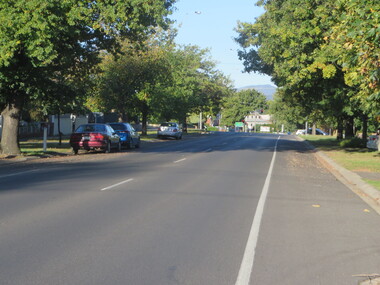
Photograph - Photograph - Colour, Eyre Street, Ballarat During Covid-19 State of Emergency, 13/04/2020
... emergency for Victoria for at least four weeks. On 19 March, the Reserve Bank again cut interest rates by a further 0.25% to 0.25%, the lowest in Australian history. On 22 March, the government announced a second stimulus package of A$66bn, increasing the amount of total financial package offered to A$89bn. This included several new measures...emergency for Victoria for at least four weeks. On 19 March, the Reserve Bank again cut interest rates by a further 0.25% to 0.25%, the lowest in Australian history. On 22 March, the government announced a second stimulus package of A$66bn, increasing the amount of total financial package offered to A$89bn. This included several new measures ...On 12 January, the World Health Organization (WHO) confirmed that a novel coronavirus was the cause of a respiratory illness in a cluster of people in Wuhan City, Hubei Province, China, who had initially come to the attention of the WHO on 31 December 2019. On 3 March, the Reserve Bank of Australia became the first central bank to cut interest rates in response to the outbreak. Official interest rates were cut by 0.25% (25 base points) to a record low of 0.5%. On 12 March, the Federal Government announced a A$17.6 billion stimulus package, the first since the 2008 GFC. he package consists of multiple parts, a one-off A$750 payment to around 6.5 million welfare recipients as early as 31 March 2020, small business assistance with 700,000 grants up to $25,000 and a 50% wage subsidy for 120,000 apprenticies or trainees for up to 9 months, 1 billion to support economically impacted sectors, regions and communities, and $700 million to increase tax write off and $3.2 billion to support short-term small and medium-sized business investment. On 16 March, Premier Dan Andrews and Minister for Health Jenny Mikakos declared a state of emergency for Victoria for at least four weeks. On 19 March, the Reserve Bank again cut interest rates by a further 0.25% to 0.25%, the lowest in Australian history. On 22 March, the government announced a second stimulus package of A$66bn, increasing the amount of total financial package offered to A$89bn. This included several new measures like doubling income support for individuals on Jobseeker's allowance, granting A$100,000 to small and medium-sized businesses and A$715 million to Australian airports and airlines. It also allowed individuals affected by the outbreak to access up to A$10,000 of their superannuation during 2019–2020 and also being able to take an additional same amount for the next year. on the same day Victorian Premier Daniel Andrews announced on 22 March that the state will bring the school holiday forwards to 24 March from 27 March. On 30 March, the Australian Federal Government announced a $130 billion "JobKeeper" wage subsidy program offering to pay employers up to $1500 a fortnight per full-time, part-time or casual employee that has worked for that business for over a year. For a business to be eligible, they must have lost 30% of turnover after 1 March of annual revenue up to and including $1 billion. For businesses with a revenue of over $1 billion, turnover must have decreased by 50%. Businesses are then required by law to pay the subsidy to their staff, in lieu of their usual wages. This response came after the enormous job losses seen just a week prior when an estimated 1 million Australians lost their jobs. This massive loss in jobs caused the myGov website to crash and lines out of Centrelink offices to run hundreds of metres long.The program was backdated to 1 March, to aim at reemploying the many people who had just lost their jobs in the weeks before. Businesses would receive the JobKeeper subsidy for six months. * On 12 April 2020 Victorian Premier Daniel Andrews Extended the State of Emergency until midnight on May 11. On this day the world has 1,604,900 cases of coronavirus, with 95,738 deaths. America has 468,887 cases of covid19, with 1,900 Americans dying in the last 24 hours. The UK has 65,077 cases. 881 people died in the last 24 hours. Australia has 6,292 cases. 58 people have died to date.Colour photographs of Ballarat's usually very busy Eyre Street during Covid-19 Social Isoliation. The photographs were taken at 4.00pm. ballarat, covid19, corona virus, pandemic, state of emergency, eyre street -
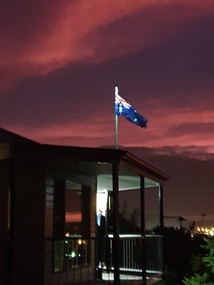 Federation University Historical Collection
Photograph - Colour, ANZAC Dawn Remembrance During the Covid-19 Pandemic, 2020, 25/04/2020
... emergency for Victoria for at least four weeks. On 19 March, the Reserve Bank again cut interest rates by a further 0.25% to 0.25%, the lowest in Australian history. On 22 March, the government announced a second stimulus package of A$66bn, increasing the amount of total financial package offered to A$89bn. This included several new measures...emergency for Victoria for at least four weeks. On 19 March, the Reserve Bank again cut interest rates by a further 0.25% to 0.25%, the lowest in Australian history. On 22 March, the government announced a second stimulus package of A$66bn, increasing the amount of total financial package offered to A$89bn. This included several new measures ...On 12 January, the World Health Organization (WHO) confirmed that a novel coronavirus was the cause of a respiratory illness in a cluster of people in Wuhan City, Hubei Province, China, who had initially come to the attention of the WHO on 31 December 2019. On 3 March, the Reserve Bank of Australia became the first central bank to cut interest rates in response to the outbreak. Official interest rates were cut by 0.25% (25 base points) to a record low of 0.5%. On 12 March, the Federal Government announced a A$17.6 billion stimulus package, the first since the 2008 GFC. he package consists of multiple parts, a one-off A$750 payment to around 6.5 million welfare recipients as early as 31 March 2020, small business assistance with 700,000 grants up to $25,000 and a 50% wage subsidy for 120,000 apprenticies or trainees for up to 9 months, 1 billion to support economically impacted sectors, regions and communities, and $700 million to increase tax write off and $3.2 billion to support short-term small and medium-sized business investment. On 16 March, Premier Dan Andrews and Minister for Health Jenny Mikakos declared a state of emergency for Victoria for at least four weeks. On 19 March, the Reserve Bank again cut interest rates by a further 0.25% to 0.25%, the lowest in Australian history. On 22 March, the government announced a second stimulus package of A$66bn, increasing the amount of total financial package offered to A$89bn. This included several new measures like doubling income support for individuals on Jobseeker's allowance, granting A$100,000 to small and medium-sized businesses and A$715 million to Australian airports and airlines. It also allowed individuals affected by the outbreak to access up to A$10,000 of their superannuation during 2019–2020 and also being able to take an additional same amount for the next year. on the same day Victorian Premier Daniel Andrews announced on 22 March that the state will bring the school holiday forwards to 24 March from 27 March. On 30 March, the Australian Federal Government announced a $130 billion "JobKeeper" wage subsidy program offering to pay employers up to $1500 a fortnight per full-time, part-time or casual employee that has worked for that business for over a year. For a business to be eligible, they must have lost 30% of turnover after 1 March of annual revenue up to and including $1 billion. For businesses with a revenue of over $1 billion, turnover must have decreased by 50%. Businesses are then required by law to pay the subsidy to their staff, in lieu of their usual wages. This response came after the enormous job losses seen just a week prior when an estimated 1 million Australians lost their jobs. This massive loss in jobs caused the myGov website to crash and lines out of Centrelink offices to run hundreds of metres long.The program was backdated to 1 March, to aim at reemploying the many people who had just lost their jobs in the weeks before. Businesses would receive the JobKeeper subsidy for six months. On 2 April, the number of cases in Victoria exceeded 1,000, including over 100 healthcare workers. On 5 April, New South Wales Police launched a criminal investigation into whether the operator of Ruby Princess, Carnival Australia, broke the Biosecurity Act 2015 (Cwth) and New South Wales state laws, by deliberately concealing COVID-19 cases. On 6 April, the Department of Health revealed that 2,432 people recovered from the infection as the federal government started reporting recovery statistics. This is more than a third from the official number reported so far, Deputy Chief Medical Officer Professor Paul Kelly stating, "I think it is important. Firstly it really reinforces that message, which is a true one, that most people who get this disease do recover”. The day before, at 3pm, it was announced that 2,315 of the 5,687 confirmed coronavirus cases had recovered. May 2020 - An outbreak in Victoria at a meatworks that was later revealed to be Cedar Meats was announced on 02 May with eight cases. By 8 May, the cluster of cases linked to Cedar Meats in Victoria was 71, consisting of at least 57 workers and 13 close contacts, including a nurse, aged care worker and high school student. The number had increased to 75 by 9 May, 88 by 13 May, and 90 by 14 May. On 9 May, two Victorian cases were announced to be related to McDonald's Fawkner. By 18 May, this had increased to 12 cases, and on that day it was revealed that a delivery driver had tested positive, prompting the closing for cleaning of 12 more McDonald's locations: Melton East, Laverton North, Yallambie, Taylors Lakes, Campbellfield, Sunbury, Hoppers Crossing, Riverdale Village, Sandown, Calder Highway Northbound/Outbound, Calder Highway Southbound/Inbound, and BP Rockbank Service Centre Outbound. On 15 May, South Australia became the second jurisdiction, after the ACT, to be free of any active cases, however on 26 May, a woman returning from overseas who was granted exemption into South Australia from her hotel quarantine in Victoria tested positive for COVID-19. This was the first new case in 19 days for the state.[101] On 4 June, it was announced that the woman had recovered and the state was free of any active cases once again.[102] On 17 May, Victoria announced two further business sites had been shut down due to a suspected case at each. Domino's Pizza in Fairfield has been shut for two weeks, and mattress manufacturer The Comfort Group in Deer Park was closed from Friday 15 May to at least Wednesday 20 May. On 6 June, both New South Wales and Victoria reported no new cases for the previous 24 hours, with only Queensland and Western Australia reporting one new case each, the lowest national total since February. Western Australia also announced two old cases. However, the new case in Queensland was linked to the Rydges on Swanston cluster in Melbourne when a man who travelled from Melbourne to Brisbane on Virgin flight VA313 on 1 June tested positive.Colour photographs of an ANZAC dawn remembrance from Armstrong Street South, Ballarat looking East towards Mount Warrenheip. Due to the Covid-19 Pandemic and associated social distancing requirements regular ANZAC Day services and marches could not be held. People were encouraged to remember from their driveways at dawn on 25 April 2020. covid-19, corona virus, pandemic, social distancing, anzac day driveway remembrance, dawn, australian flag, mount warrenheip -
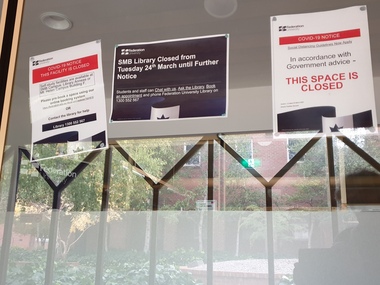 Federation University Historical Collection
Photograph - Colour, Federation University SMB Campus library Covid 19 Lockdown Notices, 2020, 23/04/2020
... emergency for Victoria for at least four weeks. On 19 March, the Reserve Bank again cut interest rates by a further 0.25% to 0.25%, the lowest in Australian history. On 22 March, the government announced a second stimulus package of A$66bn, increasing the amount of total financial package offered to A$89bn. This included several new measures...emergency for Victoria for at least four weeks. On 19 March, the Reserve Bank again cut interest rates by a further 0.25% to 0.25%, the lowest in Australian history. On 22 March, the government announced a second stimulus package of A$66bn, increasing the amount of total financial package offered to A$89bn. This included several new measures ...On 12 January, the World Health Organization (WHO) confirmed that a novel coronavirus was the cause of a respiratory illness in a cluster of people in Wuhan City, Hubei Province, China, who had initially come to the attention of the WHO on 31 December 2019. On 3 March, the Reserve Bank of Australia became the first central bank to cut interest rates in response to the outbreak. Official interest rates were cut by 0.25% (25 base points) to a record low of 0.5%. On 12 March, the Federal Government announced a A$17.6 billion stimulus package, the first since the 2008 GFC. he package consists of multiple parts, a one-off A$750 payment to around 6.5 million welfare recipients as early as 31 March 2020, small business assistance with 700,000 grants up to $25,000 and a 50% wage subsidy for 120,000 apprenticies or trainees for up to 9 months, 1 billion to support economically impacted sectors, regions and communities, and $700 million to increase tax write off and $3.2 billion to support short-term small and medium-sized business investment. On 16 March, Premier Dan Andrews and Minister for Health Jenny Mikakos declared a state of emergency for Victoria for at least four weeks. On 19 March, the Reserve Bank again cut interest rates by a further 0.25% to 0.25%, the lowest in Australian history. On 22 March, the government announced a second stimulus package of A$66bn, increasing the amount of total financial package offered to A$89bn. This included several new measures like doubling income support for individuals on Jobseeker's allowance, granting A$100,000 to small and medium-sized businesses and A$715 million to Australian airports and airlines. It also allowed individuals affected by the outbreak to access up to A$10,000 of their superannuation during 2019–2020 and also being able to take an additional same amount for the next year. on the same day Victorian Premier Daniel Andrews announced on 22 March that the state will bring the school holiday forwards to 24 March from 27 March. On 30 March, the Australian Federal Government announced a $130 billion "JobKeeper" wage subsidy program offering to pay employers up to $1500 a fortnight per full-time, part-time or casual employee that has worked for that business for over a year. For a business to be eligible, they must have lost 30% of turnover after 1 March of annual revenue up to and including $1 billion. For businesses with a revenue of over $1 billion, turnover must have decreased by 50%. Businesses are then required by law to pay the subsidy to their staff, in lieu of their usual wages. This response came after the enormous job losses seen just a week prior when an estimated 1 million Australians lost their jobs. This massive loss in jobs caused the myGov website to crash and lines out of Centrelink offices to run hundreds of metres long.The program was backdated to 1 March, to aim at reemploying the many people who had just lost their jobs in the weeks before. Businesses would receive the JobKeeper subsidy for six months. On 2 April, the number of cases in Victoria exceeded 1,000, including over 100 healthcare workers. On 5 April, New South Wales Police launched a criminal investigation into whether the operator of Ruby Princess, Carnival Australia, broke the Biosecurity Act 2015 (Cwth) and New South Wales state laws, by deliberately concealing COVID-19 cases. On 6 April, the Department of Health revealed that 2,432 people recovered from the infection as the federal government started reporting recovery statistics. This is more than a third from the official number reported so far, Deputy Chief Medical Officer Professor Paul Kelly stating, "I think it is important. Firstly it really reinforces that message, which is a true one, that most people who get this disease do recover”. The day before, at 3pm, it was announced that 2,315 of the 5,687 confirmed coronavirus cases had recovered. May 2020 - An outbreak in Victoria at a meatworks that was later revealed to be Cedar Meats was announced on 02 May with eight cases. By 8 May, the cluster of cases linked to Cedar Meats in Victoria was 71, consisting of at least 57 workers and 13 close contacts, including a nurse, aged care worker and high school student. The number had increased to 75 by 9 May, 88 by 13 May, and 90 by 14 May. On 9 May, two Victorian cases were announced to be related to McDonald's Fawkner. By 18 May, this had increased to 12 cases, and on that day it was revealed that a delivery driver had tested positive, prompting the closing for cleaning of 12 more McDonald's locations: Melton East, Laverton North, Yallambie, Taylors Lakes, Campbellfield, Sunbury, Hoppers Crossing, Riverdale Village, Sandown, Calder Highway Northbound/Outbound, Calder Highway Southbound/Inbound, and BP Rockbank Service Centre Outbound. On 15 May, South Australia became the second jurisdiction, after the ACT, to be free of any active cases, however on 26 May, a woman returning from overseas who was granted exemption into South Australia from her hotel quarantine in Victoria tested positive for COVID-19. This was the first new case in 19 days for the state.[101] On 4 June, it was announced that the woman had recovered and the state was free of any active cases once again.[102] On 17 May, Victoria announced two further business sites had been shut down due to a suspected case at each. Domino's Pizza in Fairfield has been shut for two weeks, and mattress manufacturer The Comfort Group in Deer Park was closed from Friday 15 May to at least Wednesday 20 May. On 6 June, both New South Wales and Victoria reported no new cases for the previous 24 hours, with only Queensland and Western Australia reporting one new case each, the lowest national total since February. Western Australia also announced two old cases. However, the new case in Queensland was linked to the Rydges on Swanston cluster in Melbourne when a man who travelled from Melbourne to Brisbane on Virgin flight VA313 on 1 June tested positive.Colour photographs of closure signs on the E.J Tippett Library due to the Covid-19 Pandemic and associated lock down and social distancing requirements.covid-19, corona virus, pandemic, social distancing, ballarat school of mines, e.j. tippett library, lock down -
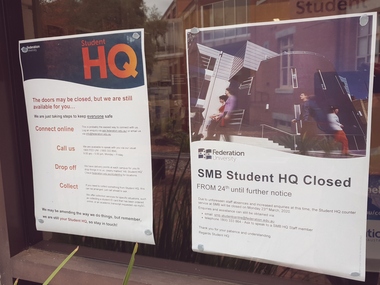 Federation University Historical Collection
Photograph - Colour, Federation University SMB Campus Student HQ Covid 19 Closure Notices, 2020, 23/04/2020
... emergency for Victoria for at least four weeks. On 19 March, the Reserve Bank again cut interest rates by a further 0.25% to 0.25%, the lowest in Australian history. On 22 March, the government announced a second stimulus package of A$66bn, increasing the amount of total financial package offered to A$89bn. This included several new measures...emergency for Victoria for at least four weeks. On 19 March, the Reserve Bank again cut interest rates by a further 0.25% to 0.25%, the lowest in Australian history. On 22 March, the government announced a second stimulus package of A$66bn, increasing the amount of total financial package offered to A$89bn. This included several new measures ...On 12 January, the World Health Organization (WHO) confirmed that a novel coronavirus was the cause of a respiratory illness in a cluster of people in Wuhan City, Hubei Province, China, who had initially come to the attention of the WHO on 31 December 2019. On 3 March, the Reserve Bank of Australia became the first central bank to cut interest rates in response to the outbreak. Official interest rates were cut by 0.25% (25 base points) to a record low of 0.5%. On 12 March, the Federal Government announced a A$17.6 billion stimulus package, the first since the 2008 GFC. he package consists of multiple parts, a one-off A$750 payment to around 6.5 million welfare recipients as early as 31 March 2020, small business assistance with 700,000 grants up to $25,000 and a 50% wage subsidy for 120,000 apprenticies or trainees for up to 9 months, 1 billion to support economically impacted sectors, regions and communities, and $700 million to increase tax write off and $3.2 billion to support short-term small and medium-sized business investment. On 16 March, Premier Dan Andrews and Minister for Health Jenny Mikakos declared a state of emergency for Victoria for at least four weeks. On 19 March, the Reserve Bank again cut interest rates by a further 0.25% to 0.25%, the lowest in Australian history. On 22 March, the government announced a second stimulus package of A$66bn, increasing the amount of total financial package offered to A$89bn. This included several new measures like doubling income support for individuals on Jobseeker's allowance, granting A$100,000 to small and medium-sized businesses and A$715 million to Australian airports and airlines. It also allowed individuals affected by the outbreak to access up to A$10,000 of their superannuation during 2019–2020 and also being able to take an additional same amount for the next year. on the same day Victorian Premier Daniel Andrews announced on 22 March that the state will bring the school holiday forwards to 24 March from 27 March. On 30 March, the Australian Federal Government announced a $130 billion "JobKeeper" wage subsidy program offering to pay employers up to $1500 a fortnight per full-time, part-time or casual employee that has worked for that business for over a year. For a business to be eligible, they must have lost 30% of turnover after 1 March of annual revenue up to and including $1 billion. For businesses with a revenue of over $1 billion, turnover must have decreased by 50%. Businesses are then required by law to pay the subsidy to their staff, in lieu of their usual wages. This response came after the enormous job losses seen just a week prior when an estimated 1 million Australians lost their jobs. This massive loss in jobs caused the myGov website to crash and lines out of Centrelink offices to run hundreds of metres long.The program was backdated to 1 March, to aim at reemploying the many people who had just lost their jobs in the weeks before. Businesses would receive the JobKeeper subsidy for six months. On 2 April, the number of cases in Victoria exceeded 1,000, including over 100 healthcare workers. On 5 April, New South Wales Police launched a criminal investigation into whether the operator of Ruby Princess, Carnival Australia, broke the Biosecurity Act 2015 (Cwth) and New South Wales state laws, by deliberately concealing COVID-19 cases. On 6 April, the Department of Health revealed that 2,432 people recovered from the infection as the federal government started reporting recovery statistics. This is more than a third from the official number reported so far, Deputy Chief Medical Officer Professor Paul Kelly stating, "I think it is important. Firstly it really reinforces that message, which is a true one, that most people who get this disease do recover”. The day before, at 3pm, it was announced that 2,315 of the 5,687 confirmed coronavirus cases had recovered. May 2020 - An outbreak in Victoria at a meatworks that was later revealed to be Cedar Meats was announced on 02 May with eight cases. By 8 May, the cluster of cases linked to Cedar Meats in Victoria was 71, consisting of at least 57 workers and 13 close contacts, including a nurse, aged care worker and high school student. The number had increased to 75 by 9 May, 88 by 13 May, and 90 by 14 May. On 9 May, two Victorian cases were announced to be related to McDonald's Fawkner. By 18 May, this had increased to 12 cases, and on that day it was revealed that a delivery driver had tested positive, prompting the closing for cleaning of 12 more McDonald's locations: Melton East, Laverton North, Yallambie, Taylors Lakes, Campbellfield, Sunbury, Hoppers Crossing, Riverdale Village, Sandown, Calder Highway Northbound/Outbound, Calder Highway Southbound/Inbound, and BP Rockbank Service Centre Outbound. On 15 May, South Australia became the second jurisdiction, after the ACT, to be free of any active cases, however on 26 May, a woman returning from overseas who was granted exemption into South Australia from her hotel quarantine in Victoria tested positive for COVID-19. This was the first new case in 19 days for the state.[101] On 4 June, it was announced that the woman had recovered and the state was free of any active cases once again.[102] On 17 May, Victoria announced two further business sites had been shut down due to a suspected case at each. Domino's Pizza in Fairfield has been shut for two weeks, and mattress manufacturer The Comfort Group in Deer Park was closed from Friday 15 May to at least Wednesday 20 May. On 6 June, both New South Wales and Victoria reported no new cases for the previous 24 hours, with only Queensland and Western Australia reporting one new case each, the lowest national total since February. Western Australia also announced two old cases. However, the new case in Queensland was linked to the Rydges on Swanston cluster in Melbourne when a man who travelled from Melbourne to Brisbane on Virgin flight VA313 on 1 June tested positive.Colour photographs of closure signs on the E.J Tippett Library due to the Covid-19 Pandemic and associated lock down and social distancing requirements.covid-19, corona virus, pandemic, social distancing, ballarat school of mines, e.j. tippett library, lock down -
Federation University Historical Collection
Document - Documents, Federation University Notifications Referring to Covid-19, 2020, 06/04/2020
... emergency for Victoria for at least four weeks. On 19 March, the Reserve Bank again cut interest rates by a further 0.25% to 0.25%, the lowest in Australian history. On 22 March, the government announced a second stimulus package of A$66bn, increasing the amount of total financial package offered to A$89bn. This included several new measures...emergency for Victoria for at least four weeks. On 19 March, the Reserve Bank again cut interest rates by a further 0.25% to 0.25%, the lowest in Australian history. On 22 March, the government announced a second stimulus package of A$66bn, increasing the amount of total financial package offered to A$89bn. This included several new measures ...On 12 January, the World Health Organization (WHO) confirmed that a novel coronavirus was the cause of a respiratory illness in a cluster of people in Wuhan City, Hubei Province, China, who had initially come to the attention of the WHO on 31 December 2019. On 3 March, the Reserve Bank of Australia became the first central bank to cut interest rates in response to the outbreak. Official interest rates were cut by 0.25% (25 base points) to a record low of 0.5%. On 12 March, the Federal Government announced a A$17.6 billion stimulus package, the first since the 2008 GFC. he package consists of multiple parts, a one-off A$750 payment to around 6.5 million welfare recipients as early as 31 March 2020, small business assistance with 700,000 grants up to $25,000 and a 50% wage subsidy for 120,000 apprenticies or trainees for up to 9 months, 1 billion to support economically impacted sectors, regions and communities, and $700 million to increase tax write off and $3.2 billion to support short-term small and medium-sized business investment. On 16 March, Premier Dan Andrews and Minister for Health Jenny Mikakos declared a state of emergency for Victoria for at least four weeks. On 19 March, the Reserve Bank again cut interest rates by a further 0.25% to 0.25%, the lowest in Australian history. On 22 March, the government announced a second stimulus package of A$66bn, increasing the amount of total financial package offered to A$89bn. This included several new measures like doubling income support for individuals on Jobseeker's allowance, granting A$100,000 to small and medium-sized businesses and A$715 million to Australian airports and airlines. It also allowed individuals affected by the outbreak to access up to A$10,000 of their superannuation during 2019–2020 and also being able to take an additional same amount for the next year. on the same day Victorian Premier Daniel Andrews announced on 22 March that the state will bring the school holiday forwards to 24 March from 27 March. On 30 March, the Australian Federal Government announced a $130 billion "JobKeeper" wage subsidy program offering to pay employers up to $1500 a fortnight per full-time, part-time or casual employee that has worked for that business for over a year. For a business to be eligible, they must have lost 30% of turnover after 1 March of annual revenue up to and including $1 billion. For businesses with a revenue of over $1 billion, turnover must have decreased by 50%. Businesses are then required by law to pay the subsidy to their staff, in lieu of their usual wages. This response came after the enormous job losses seen just a week prior when an estimated 1 million Australians lost their jobs. This massive loss in jobs caused the myGov website to crash and lines out of Centrelink offices to run hundreds of metres long.The program was backdated to 1 March, to aim at reemploying the many people who had just lost their jobs in the weeks before. Businesses would receive the JobKeeper subsidy for six months. On 2 April, the number of cases in Victoria exceeded 1,000, including over 100 healthcare workers. On 5 April, New South Wales Police launched a criminal investigation into whether the operator of Ruby Princess, Carnival Australia, broke the Biosecurity Act 2015 (Cwth) and New South Wales state laws, by deliberately concealing COVID-19 cases. On 6 April, the Department of Health revealed that 2,432 people recovered from the infection as the federal government started reporting recovery statistics. This is more than a third from the official number reported so far, Deputy Chief Medical Officer Professor Paul Kelly stating, "I think it is important. Firstly it really reinforces that message, which is a true one, that most people who get this disease do recover”. The day before, at 3pm, it was announced that 2,315 of the 5,687 confirmed coronavirus cases had recovered. May 2020 - An outbreak in Victoria at a meatworks that was later revealed to be Cedar Meats was announced on 02 May with eight cases. By 8 May, the cluster of cases linked to Cedar Meats in Victoria was 71, consisting of at least 57 workers and 13 close contacts, including a nurse, aged care worker and high school student. The number had increased to 75 by 9 May, 88 by 13 May, and 90 by 14 May. On 9 May, two Victorian cases were announced to be related to McDonald's Fawkner. By 18 May, this had increased to 12 cases, and on that day it was revealed that a delivery driver had tested positive, prompting the closing for cleaning of 12 more McDonald's locations: Melton East, Laverton North, Yallambie, Taylors Lakes, Campbellfield, Sunbury, Hoppers Crossing, Riverdale Village, Sandown, Calder Highway Northbound/Outbound, Calder Highway Southbound/Inbound, and BP Rockbank Service Centre Outbound. On 15 May, South Australia became the second jurisdiction, after the ACT, to be free of any active cases, however on 26 May, a woman returning from overseas who was granted exemption into South Australia from her hotel quarantine in Victoria tested positive for COVID-19. This was the first new case in 19 days for the state.[101] On 4 June, it was announced that the woman had recovered and the state was free of any active cases once again.[102] On 17 May, Victoria announced two further business sites had been shut down due to a suspected case at each. Domino's Pizza in Fairfield has been shut for two weeks, and mattress manufacturer The Comfort Group in Deer Park was closed from Friday 15 May to at least Wednesday 20 May. On 6 June, both New South Wales and Victoria reported no new cases for the previous 24 hours, with only Queensland and Western Australia reporting one new case each, the lowest national total since February. Western Australia also announced two old cases. However, the new case in Queensland was linked to the Rydges on Swanston cluster in Melbourne when a man who travelled from Melbourne to Brisbane on Virgin flight VA313 on 1 June tested positive.Notifications to staff and students relating to the worldwide Covid-19 Pandemic. * Federation University COVIDSafe Plan prepared by the Transition to Campus Control Group, Version 1.4, 21 July 2020 * Federation University Notifications Referring to Covid-19, 18 August 2020covid-19, corona virus, pandemic, social distancing, lock down, federation university australia, covidsafe plan -
Federation University Historical Collection
Document, Federation University Coronavirus - Advice for staff and students, 17/05/2021
... emergency for Victoria for at least four weeks. On 19 March, the Reserve Bank again cut interest rates by a further 0.25% to 0.25%, the lowest in Australian history. On 22 March, the government announced a second stimulus package of A$66bn, increasing the amount of total financial package offered to A$89bn. This included several new measures...emergency for Victoria for at least four weeks. On 19 March, the Reserve Bank again cut interest rates by a further 0.25% to 0.25%, the lowest in Australian history. On 22 March, the government announced a second stimulus package of A$66bn, increasing the amount of total financial package offered to A$89bn. This included several new measures ...On 12 January, the World Health Organization (WHO) confirmed that a novel coronavirus was the cause of a respiratory illness in a cluster of people in Wuhan City, Hubei Province, China, who had initially come to the attention of the WHO on 31 December 2019. On 3 March, the Reserve Bank of Australia became the first central bank to cut interest rates in response to the outbreak. Official interest rates were cut by 0.25% (25 base points) to a record low of 0.5%. On 12 March, the Federal Government announced a A$17.6 billion stimulus package, the first since the 2008 GFC. he package consists of multiple parts, a one-off A$750 payment to around 6.5 million welfare recipients as early as 31 March 2020, small business assistance with 700,000 grants up to $25,000 and a 50% wage subsidy for 120,000 apprenticies or trainees for up to 9 months, 1 billion to support economically impacted sectors, regions and communities, and $700 million to increase tax write off and $3.2 billion to support short-term small and medium-sized business investment. On 16 March, Premier Dan Andrews and Minister for Health Jenny Mikakos declared a state of emergency for Victoria for at least four weeks. On 19 March, the Reserve Bank again cut interest rates by a further 0.25% to 0.25%, the lowest in Australian history. On 22 March, the government announced a second stimulus package of A$66bn, increasing the amount of total financial package offered to A$89bn. This included several new measures like doubling income support for individuals on Jobseeker's allowance, granting A$100,000 to small and medium-sized businesses and A$715 million to Australian airports and airlines. It also allowed individuals affected by the outbreak to access up to A$10,000 of their superannuation during 2019–2020 and also being able to take an additional same amount for the next year. on the same day Victorian Premier Daniel Andrews announced on 22 March that the state will bring the school holiday forwards to 24 March from 27 March. On 30 March, the Australian Federal Government announced a $130 billion "JobKeeper" wage subsidy program offering to pay employers up to $1500 a fortnight per full-time, part-time or casual employee that has worked for that business for over a year. For a business to be eligible, they must have lost 30% of turnover after 1 March of annual revenue up to and including $1 billion. For businesses with a revenue of over $1 billion, turnover must have decreased by 50%. Businesses are then required by law to pay the subsidy to their staff, in lieu of their usual wages. This response came after the enormous job losses seen just a week prior when an estimated 1 million Australians lost their jobs. This massive loss in jobs caused the myGov website to crash and lines out of Centrelink offices to run hundreds of metres long.The program was backdated to 1 March, to aim at reemploying the many people who had just lost their jobs in the weeks before. Businesses would receive the JobKeeper subsidy for six months. On 2 April, the number of cases in Victoria exceeded 1,000, including over 100 healthcare workers. On 5 April, New South Wales Police launched a criminal investigation into whether the operator of Ruby Princess, Carnival Australia, broke the Biosecurity Act 2015 (Cwth) and New South Wales state laws, by deliberately concealing COVID-19 cases. On 6 April, the Department of Health revealed that 2,432 people recovered from the infection as the federal government started reporting recovery statistics. This is more than a third from the official number reported so far, Deputy Chief Medical Officer Professor Paul Kelly stating, "I think it is important. Firstly it really reinforces that message, which is a true one, that most people who get this disease do recover”. The day before, at 3pm, it was announced that 2,315 of the 5,687 confirmed coronavirus cases had recovered. May 2020 - An outbreak in Victoria at a meatworks that was later revealed to be Cedar Meats was announced on 02 May with eight cases. By 8 May, the cluster of cases linked to Cedar Meats in Victoria was 71, consisting of at least 57 workers and 13 close contacts, including a nurse, aged care worker and high school student. The number had increased to 75 by 9 May, 88 by 13 May, and 90 by 14 May. On 9 May, two Victorian cases were announced to be related to McDonald's Fawkner. By 18 May, this had increased to 12 cases, and on that day it was revealed that a delivery driver had tested positive, prompting the closing for cleaning of 12 more McDonald's locations: Melton East, Laverton North, Yallambie, Taylors Lakes, Campbellfield, Sunbury, Hoppers Crossing, Riverdale Village, Sandown, Calder Highway Northbound/Outbound, Calder Highway Southbound/Inbound, and BP Rockbank Service Centre Outbound. On 15 May, South Australia became the second jurisdiction, after the ACT, to be free of any active cases, however on 26 May, a woman returning from overseas who was granted exemption into South Australia from her hotel quarantine in Victoria tested positive for COVID-19. This was the first new case in 19 days for the state.[101] On 4 June, it was announced that the woman had recovered and the state was free of any active cases once again.[102] On 17 May, Victoria announced two further business sites had been shut down due to a suspected case at each. Domino's Pizza in Fairfield has been shut for two weeks, and mattress manufacturer The Comfort Group in Deer Park was closed from Friday 15 May to at least Wednesday 20 May. On 6 June, both New South Wales and Victoria reported no new cases for the previous 24 hours, with only Queensland and Western Australia reporting one new case each, the lowest national total since February. Western Australia also announced two old cases. However, the new case in Queensland was linked to the Rydges on Swanston cluster in Melbourne when a man who travelled from Melbourne to Brisbane on Virgin flight VA313 on 1 June tested positive.Printout of a webspage designed to guide staff and students through the COVID-19 pandemic. covid-19, corona virus, pandemic, federation university australia, covidsafe plan, response -
Federation University Historical Collection
Document, Federation University CovidSafe Plan, 17/05/2021
... emergency for Victoria for at least four weeks. On 19 March, the Reserve Bank again cut interest rates by a further 0.25% to 0.25%, the lowest in Australian history. On 22 March, the government announced a second stimulus package of A$66bn, increasing the amount of total financial package offered to A$89bn. This included several new measures...emergency for Victoria for at least four weeks. On 19 March, the Reserve Bank again cut interest rates by a further 0.25% to 0.25%, the lowest in Australian history. On 22 March, the government announced a second stimulus package of A$66bn, increasing the amount of total financial package offered to A$89bn. This included several new measures ...On 12 January, the World Health Organization (WHO) confirmed that a novel coronavirus was the cause of a respiratory illness in a cluster of people in Wuhan City, Hubei Province, China, who had initially come to the attention of the WHO on 31 December 2019. On 3 March, the Reserve Bank of Australia became the first central bank to cut interest rates in response to the outbreak. Official interest rates were cut by 0.25% (25 base points) to a record low of 0.5%. On 12 March, the Federal Government announced a A$17.6 billion stimulus package, the first since the 2008 GFC. he package consists of multiple parts, a one-off A$750 payment to around 6.5 million welfare recipients as early as 31 March 2020, small business assistance with 700,000 grants up to $25,000 and a 50% wage subsidy for 120,000 apprenticies or trainees for up to 9 months, 1 billion to support economically impacted sectors, regions and communities, and $700 million to increase tax write off and $3.2 billion to support short-term small and medium-sized business investment. On 16 March, Premier Dan Andrews and Minister for Health Jenny Mikakos declared a state of emergency for Victoria for at least four weeks. On 19 March, the Reserve Bank again cut interest rates by a further 0.25% to 0.25%, the lowest in Australian history. On 22 March, the government announced a second stimulus package of A$66bn, increasing the amount of total financial package offered to A$89bn. This included several new measures like doubling income support for individuals on Jobseeker's allowance, granting A$100,000 to small and medium-sized businesses and A$715 million to Australian airports and airlines. It also allowed individuals affected by the outbreak to access up to A$10,000 of their superannuation during 2019–2020 and also being able to take an additional same amount for the next year. on the same day Victorian Premier Daniel Andrews announced on 22 March that the state will bring the school holiday forwards to 24 March from 27 March. On 30 March, the Australian Federal Government announced a $130 billion "JobKeeper" wage subsidy program offering to pay employers up to $1500 a fortnight per full-time, part-time or casual employee that has worked for that business for over a year. For a business to be eligible, they must have lost 30% of turnover after 1 March of annual revenue up to and including $1 billion. For businesses with a revenue of over $1 billion, turnover must have decreased by 50%. Businesses are then required by law to pay the subsidy to their staff, in lieu of their usual wages. This response came after the enormous job losses seen just a week prior when an estimated 1 million Australians lost their jobs. This massive loss in jobs caused the myGov website to crash and lines out of Centrelink offices to run hundreds of metres long.The program was backdated to 1 March, to aim at reemploying the many people who had just lost their jobs in the weeks before. Businesses would receive the JobKeeper subsidy for six months. On 2 April, the number of cases in Victoria exceeded 1,000, including over 100 healthcare workers. On 5 April, New South Wales Police launched a criminal investigation into whether the operator of Ruby Princess, Carnival Australia, broke the Biosecurity Act 2015 (Cwth) and New South Wales state laws, by deliberately concealing COVID-19 cases. On 6 April, the Department of Health revealed that 2,432 people recovered from the infection as the federal government started reporting recovery statistics. This is more than a third from the official number reported so far, Deputy Chief Medical Officer Professor Paul Kelly stating, "I think it is important. Firstly it really reinforces that message, which is a true one, that most people who get this disease do recover”. The day before, at 3pm, it was announced that 2,315 of the 5,687 confirmed coronavirus cases had recovered. May 2020 - An outbreak in Victoria at a meatworks that was later revealed to be Cedar Meats was announced on 02 May with eight cases. By 8 May, the cluster of cases linked to Cedar Meats in Victoria was 71, consisting of at least 57 workers and 13 close contacts, including a nurse, aged care worker and high school student. The number had increased to 75 by 9 May, 88 by 13 May, and 90 by 14 May. On 9 May, two Victorian cases were announced to be related to McDonald's Fawkner. By 18 May, this had increased to 12 cases, and on that day it was revealed that a delivery driver had tested positive, prompting the closing for cleaning of 12 more McDonald's locations: Melton East, Laverton North, Yallambie, Taylors Lakes, Campbellfield, Sunbury, Hoppers Crossing, Riverdale Village, Sandown, Calder Highway Northbound/Outbound, Calder Highway Southbound/Inbound, and BP Rockbank Service Centre Outbound. On 15 May, South Australia became the second jurisdiction, after the ACT, to be free of any active cases, however on 26 May, a woman returning from overseas who was granted exemption into South Australia from her hotel quarantine in Victoria tested positive for COVID-19. This was the first new case in 19 days for the state.[101] On 4 June, it was announced that the woman had recovered and the state was free of any active cases once again.[102] On 17 May, Victoria announced two further business sites had been shut down due to a suspected case at each. Domino's Pizza in Fairfield has been shut for two weeks, and mattress manufacturer The Comfort Group in Deer Park was closed from Friday 15 May to at least Wednesday 20 May. On 6 June, both New South Wales and Victoria reported no new cases for the previous 24 hours, with only Queensland and Western Australia reporting one new case each, the lowest national total since February. Western Australia also announced two old cases. However, the new case in Queensland was linked to the Rydges on Swanston cluster in Melbourne when a man who travelled from Melbourne to Brisbane on Virgin flight VA313 on 1 June tested positive.Printout of a webpage designed to guide staff and students through the COVID-19 pandemic. covid-19, corona virus, pandemic, federation university australia, covidsafe plan, response -
Federation University Historical Collection
Document, Federation University Coronavirus Updates, 2020-2021, 17/05/2021
... emergency for Victoria for at least four weeks. On 19 March, the Reserve Bank again cut interest rates by a further 0.25% to 0.25%, the lowest in Australian history. On 22 March, the government announced a second stimulus package of A$66bn, increasing the amount of total financial package offered to A$89bn. This included several new measures...emergency for Victoria for at least four weeks. On 19 March, the Reserve Bank again cut interest rates by a further 0.25% to 0.25%, the lowest in Australian history. On 22 March, the government announced a second stimulus package of A$66bn, increasing the amount of total financial package offered to A$89bn. This included several new measures ...On 12 January, the World Health Organization (WHO) confirmed that a novel coronavirus was the cause of a respiratory illness in a cluster of people in Wuhan City, Hubei Province, China, who had initially come to the attention of the WHO on 31 December 2019. On 3 March, the Reserve Bank of Australia became the first central bank to cut interest rates in response to the outbreak. Official interest rates were cut by 0.25% (25 base points) to a record low of 0.5%. On 12 March, the Federal Government announced a A$17.6 billion stimulus package, the first since the 2008 GFC. he package consists of multiple parts, a one-off A$750 payment to around 6.5 million welfare recipients as early as 31 March 2020, small business assistance with 700,000 grants up to $25,000 and a 50% wage subsidy for 120,000 apprenticies or trainees for up to 9 months, 1 billion to support economically impacted sectors, regions and communities, and $700 million to increase tax write off and $3.2 billion to support short-term small and medium-sized business investment. On 16 March, Premier Dan Andrews and Minister for Health Jenny Mikakos declared a state of emergency for Victoria for at least four weeks. On 19 March, the Reserve Bank again cut interest rates by a further 0.25% to 0.25%, the lowest in Australian history. On 22 March, the government announced a second stimulus package of A$66bn, increasing the amount of total financial package offered to A$89bn. This included several new measures like doubling income support for individuals on Jobseeker's allowance, granting A$100,000 to small and medium-sized businesses and A$715 million to Australian airports and airlines. It also allowed individuals affected by the outbreak to access up to A$10,000 of their superannuation during 2019–2020 and also being able to take an additional same amount for the next year. on the same day Victorian Premier Daniel Andrews announced on 22 March that the state will bring the school holiday forwards to 24 March from 27 March. On 30 March, the Australian Federal Government announced a $130 billion "JobKeeper" wage subsidy program offering to pay employers up to $1500 a fortnight per full-time, part-time or casual employee that has worked for that business for over a year. For a business to be eligible, they must have lost 30% of turnover after 1 March of annual revenue up to and including $1 billion. For businesses with a revenue of over $1 billion, turnover must have decreased by 50%. Businesses are then required by law to pay the subsidy to their staff, in lieu of their usual wages. This response came after the enormous job losses seen just a week prior when an estimated 1 million Australians lost their jobs. This massive loss in jobs caused the myGov website to crash and lines out of Centrelink offices to run hundreds of metres long.The program was backdated to 1 March, to aim at reemploying the many people who had just lost their jobs in the weeks before. Businesses would receive the JobKeeper subsidy for six months. On 2 April, the number of cases in Victoria exceeded 1,000, including over 100 healthcare workers. On 5 April, New South Wales Police launched a criminal investigation into whether the operator of Ruby Princess, Carnival Australia, broke the Biosecurity Act 2015 (Cwth) and New South Wales state laws, by deliberately concealing COVID-19 cases. On 6 April, the Department of Health revealed that 2,432 people recovered from the infection as the federal government started reporting recovery statistics. This is more than a third from the official number reported so far, Deputy Chief Medical Officer Professor Paul Kelly stating, "I think it is important. Firstly it really reinforces that message, which is a true one, that most people who get this disease do recover”. The day before, at 3pm, it was announced that 2,315 of the 5,687 confirmed coronavirus cases had recovered. May 2020 - An outbreak in Victoria at a meatworks that was later revealed to be Cedar Meats was announced on 02 May with eight cases. By 8 May, the cluster of cases linked to Cedar Meats in Victoria was 71, consisting of at least 57 workers and 13 close contacts, including a nurse, aged care worker and high school student. The number had increased to 75 by 9 May, 88 by 13 May, and 90 by 14 May. On 9 May, two Victorian cases were announced to be related to McDonald's Fawkner. By 18 May, this had increased to 12 cases, and on that day it was revealed that a delivery driver had tested positive, prompting the closing for cleaning of 12 more McDonald's locations: Melton East, Laverton North, Yallambie, Taylors Lakes, Campbellfield, Sunbury, Hoppers Crossing, Riverdale Village, Sandown, Calder Highway Northbound/Outbound, Calder Highway Southbound/Inbound, and BP Rockbank Service Centre Outbound. On 15 May, South Australia became the second jurisdiction, after the ACT, to be free of any active cases, however on 26 May, a woman returning from overseas who was granted exemption into South Australia from her hotel quarantine in Victoria tested positive for COVID-19. This was the first new case in 19 days for the state.[101] On 4 June, it was announced that the woman had recovered and the state was free of any active cases once again.[102] On 17 May, Victoria announced two further business sites had been shut down due to a suspected case at each. Domino's Pizza in Fairfield has been shut for two weeks, and mattress manufacturer The Comfort Group in Deer Park was closed from Friday 15 May to at least Wednesday 20 May. On 6 June, both New South Wales and Victoria reported no new cases for the previous 24 hours, with only Queensland and Western Australia reporting one new case each, the lowest national total since February. Western Australia also announced two old cases. However, the new case in Queensland was linked to the Rydges on Swanston cluster in Melbourne when a man who travelled from Melbourne to Brisbane on Virgin flight VA313 on 1 June tested positive.Printout of a number of regular Coronavirus updates that were distributed during the Covid-19 Pandemic. covid-19, corona virus, pandemic, federation university australia, covidsafe plan, response, face masks, blended workfore, lock down, office capacity, gatherings, physical distancing, social distancing, cotact tracing, exams, safe start on campus, transition to campus, employee assistance program -
Federation University Historical Collection
Poster, Victorian Department of Health and Human Services, A number of Covid-19 Posters Produced by the Victorian Departent of Health and Human Services, 2021, 11/06/2021
... emergency for Victoria for at least four weeks. On 19 March, the Reserve Bank again cut interest rates by a further 0.25% to 0.25%, the lowest in Australian history. On 22 March, the government announced a second stimulus package of A$66bn, increasing the amount of total financial package offered to A$89bn. This included several new measures...emergency for Victoria for at least four weeks. On 19 March, the Reserve Bank again cut interest rates by a further 0.25% to 0.25%, the lowest in Australian history. On 22 March, the government announced a second stimulus package of A$66bn, increasing the amount of total financial package offered to A$89bn. This included several new measures ...On 12 January, the World Health Organization (WHO) confirmed that a novel coronavirus was the cause of a respiratory illness in a cluster of people in Wuhan City, Hubei Province, China, who had initially come to the attention of the WHO on 31 December 2019. On 3 March, the Reserve Bank of Australia became the first central bank to cut interest rates in response to the outbreak. Official interest rates were cut by 0.25% (25 base points) to a record low of 0.5%. On 12 March, the Federal Government announced a A$17.6 billion stimulus package, the first since the 2008 GFC. he package consists of multiple parts, a one-off A$750 payment to around 6.5 million welfare recipients as early as 31 March 2020, small business assistance with 700,000 grants up to $25,000 and a 50% wage subsidy for 120,000 apprenticies or trainees for up to 9 months, 1 billion to support economically impacted sectors, regions and communities, and $700 million to increase tax write off and $3.2 billion to support short-term small and medium-sized business investment. On 16 March, Premier Dan Andrews and Minister for Health Jenny Mikakos declared a state of emergency for Victoria for at least four weeks. On 19 March, the Reserve Bank again cut interest rates by a further 0.25% to 0.25%, the lowest in Australian history. On 22 March, the government announced a second stimulus package of A$66bn, increasing the amount of total financial package offered to A$89bn. This included several new measures like doubling income support for individuals on Jobseeker's allowance, granting A$100,000 to small and medium-sized businesses and A$715 million to Australian airports and airlines. It also allowed individuals affected by the outbreak to access up to A$10,000 of their superannuation during 2019–2020 and also being able to take an additional same amount for the next year. on the same day Victorian Premier Daniel Andrews announced on 22 March that the state will bring the school holiday forwards to 24 March from 27 March. On 30 March, the Australian Federal Government announced a $130 billion "JobKeeper" wage subsidy program offering to pay employers up to $1500 a fortnight per full-time, part-time or casual employee that has worked for that business for over a year. For a business to be eligible, they must have lost 30% of turnover after 1 March of annual revenue up to and including $1 billion. For businesses with a revenue of over $1 billion, turnover must have decreased by 50%. Businesses are then required by law to pay the subsidy to their staff, in lieu of their usual wages. This response came after the enormous job losses seen just a week prior when an estimated 1 million Australians lost their jobs. This massive loss in jobs caused the myGov website to crash and lines out of Centrelink offices to run hundreds of metres long.The program was backdated to 1 March, to aim at reemploying the many people who had just lost their jobs in the weeks before. Businesses would receive the JobKeeper subsidy for six months. Victoria's "Second Wave" from Ballarat Courier, 05 August 2020 Wednesday, August 5: 725 cases, 15 deaths. A record figure reached yet again. Tuesday, August 4: 439 cases, 11 deaths. New fines introduced for COVID-infected people who aren't home. Monday, August 3: 429 cases, 13 deaths. Premier details mass industry shutdowns in Melbourne. Sunday, August 2: 671 cases, seven deaths as harsh new statewide lockdowns are announced Saturday, August 1: 397 new cases, three deaths Friday, July 31: 627 new cases, eight deaths. Premier says one in four Covid cases not home when checked. Thursday July 30: 723 cases, 13 deaths. Just when it was looking promising, alarming new record set. Wednesday July 29: 295 new cases, nine deaths as new cases drop below 300 for first time in nine days Tuesday July 28: 380 new cases, six deaths as aged care outbreaks continue to climb Monday July 27: 532 new cases as daily cases hits 500 for first time, six deaths Sunday July 26: 459 new cases as double-digit death toll is recorded for first time with 10 deaths Saturday July 25: 357 new cases, five new deaths Friday July 24: 300 cases, six deaths, ADF role expanded to help with contact tracing. Thursday July 23 - 403 cases, five deaths, worst day for fatalities in any state, masks now mandatory Wednesday July 22 - 484 cases, two deaths Tuesday July 21 - 374 cases, three deaths Monday July 20 - 275 cases, one death Sunday July 19 - 363 cases, three deaths, notice that masks will become mandatory in lockdown areas Saturday July 18 - 217 cases, three deaths, final Melbourne public housing tower released from hard lockdown Friday July 17 - 428 cases, three deaths Thursday July 16 - 317 cases, two deaths Wednesday July 15 - 238 cases, one death Tuesday July 14 - 270 cases, two deaths Monday July 13 - 177 cases Sunday July 12 - 273 cases, one death Saturday July 11 - 216 cases, one death Friday July 10 - 288 cases, a national daily record at the time Thursday July 9 - 165 cases, eight of nine Melbourne public housing towers released from hard lockdown Wednesday July 8 - 134 cases, new stage-three restrictions announced for metropolitan Melbourne and Mitchell Shire Tuesday July 7 - 191 cases Monday July 6 - 127 cases, two deaths, NSW border closed Sunday July 5 - 74 cases Saturday July 4 - 108 cases, immediate hard lockdown of nine Melbourne public housing towers Friday July 3 - 66 cases Thursday July 2 - 77 cases Wednesday July 1 - 73 casesColour posters advising on safety measures for Victorian during the 2020-2021 Covid-19 Pandemic. The posters were made available by the Department of Health and Human Services and have been saved as PDFs, and printed off onot A4 paper.covid-19, corona virus, pandemic, posters, department of health and human services -
Moorabbin Air Museum
Equipment (item) - Graviscope for Lincoln (Australian) RAAF Ident No G6C/3972, Graviscope for Lincoln
... measuring the centre of gravity in an aircraft. This would vary depending on crew, bomb load, fuel and stores carried. It was used in the British designed but Australian manufactured, Government Aircraft Factory (GAF) Lincoln heavy bomber, which was operated by the Royal Australian Air Force (RAAF) in the years following the Second World War. This aircraft was originally a derivative of the famous Avro Lancaster bomber. The Lincoln was used by both the RAAF and the Royal Air Force in operations against Malayan Communist terrorists during the Malayan Emergency...measuring the centre of gravity in an aircraft. This would vary depending on crew, bomb load, fuel and stores carried. It was used in the British designed but Australian manufactured, Government Aircraft Factory (GAF) Lincoln heavy bomber, which was operated by the Royal Australian Air Force (RAAF) in the years following the Second World War. This aircraft was originally a derivative of the famous Avro Lancaster bomber. The Lincoln was used by both the RAAF and the Royal Air Force in operations against Malayan Communist terrorists during the Malayan Emergency ...Description White plastic doubled sided Graviscope stored in protective leather carry case. Case is fitted with pair of press studs, pocket in front for holding instructions and is stamped "Graviscope / for / Lincoln / (Australian) / Manufactured by / Melb > W & G < Aust / R.A.A.F / Ident. No G6C/3972". Plastic graviscope consists of a 277mm white disc, printed on both sides, overlaid on one side by a 224mm disc and the other side by a 175mm disc. All discs located by central screw, to which is attached a 160mm long x 25mm wide clear celluloid strip. History / Summary The graviscope is a computing device, which in aircraft was used for measuring the centre of gravity in an aircraft. This would vary depending on crew, bomb load, fuel and stores carried. It was used in the British designed but Australian manufactured, Government Aircraft Factory (GAF) Lincoln heavy bomber, which was operated by the Royal Australian Air Force (RAAF) in the years following the Second World War. This aircraft was originally a derivative of the famous Avro Lancaster bomber. The Lincoln was used by both the RAAF and the Royal Air Force in operations against Malayan Communist terrorists during the Malayan Emergency, 1948-1960. This graviscope is of the type designed for and used by RAAF and RAF aircrew who operated this aircraft.Many by W and G Australia -
 Sunshine and District Historical Society Incorporated
Administrative record - City of Sunshine - Commissioner Mr Alexander Alex George Gillon Collection 1976 - 1982 - Minutes of the ordinary meeting of council held on 24th August 1977, City of Sunshine, 24th August 1977
... Minutes of the Ordinary Meeting of Council held on 24th August 1977 Report of the Town Clerk's Department Report of the Town Clerk Superannuation Municipal Officer's Association Central Methodist Mission Home for the Frail / Aged Lease of land Darnley Street Land Adjacent to More Park in Ballarat Road Deer Park Hall Committee of Management Sunshine Swimming and Life Saving Club Infant Welfare Centres Pavilion Albion Tennis Club Tennis Courts Sunshine North Tennis Club Hulett Street Private Street Scheme Use of Council Land Survey Committee of Officers Land Transfer 43 Furlong Road Limits of Overdrafts Proposed Purchase of New Sunshine Tip Site Supplementary Valuations Report of the Co-Ordinator Welfare Services Committee of Management 43 Furlong Road Child Care Centre Emergency Accommodation Midway Hostel Report of the Chief Health Inspector Weights & Measures Report for the Two Months Ending 31st July 1977 Report of the Inspector Weights & Measures Sanitary Contract Licences Discharge to Council Controlled Drains Fees for Analyses Health Act 1958 Amusement Machines in Shops in Close Proximity to Schools Report of the City Librarian Library Statistics Seminar At Monash University The Economic Approach To Public Library Development Report of the City Engineer Land Use Permit Quinn Estate for the Purpose of Erecting Detached Houses Council Policy Land Use Permit Industrial Estate Lots 32 to 36 Fourth Avenue Land Use Permit Application Storing of Motor Vehicles Lot 18 Green Street for Nick's Boby Works Pty Ltd at Judge Street Enforcement of Melbourne Metropolitan Planning Scheme Use of Lot 271 Beela Court as a Transport Depot Land Use Permit Application Sale and Distribution of Floor Coverings, Builders Hardware, Electrical Domestic Appliances and Furniture Land Bounded by Halstead Street and Ashley Street Land Use Permit Application Milk Bar Addition to Existing House 53 King Edward Avenue Land Use Permit Application Advertising Hoarding Lot 26 & 27 Anderson Road Land Use Permit Sunshine Golf Club Pavilion Ralph Street Land Use Permit Application Detached House Lot 121 Lewin Street Land Use Permit Application Advertising Hoarding Lot 1 Ballarat Road South West Corner Summerhill Road Land Use Permit Application Access to Main Road for Lot 15 Geelong Road Land Use Permit Application Four Floodlights 186 - 190 Mitchell Street North East Corner Ashley Street Land Use Permit Application Storage and Wrecking of Old Cars for Scrap and Sale Lots 14. 15 & 16 Bunnett Street Land Use Permit Application Service Premises and Caretaker's Dwelling 461 Ballarat Road Land Use Permit Application 3 Display Homes Aycliffe Drive and Land Use Permit Application Car Parking to Serve Display Home Centre North East Corner Aycliffe Drive and Reston Court Deer Park Land Use Permit Application Italo - Australian Social Club (Italo - Australian Co-Operative Social Club Ltd) Place of Assembly Furlong Road Land Use Permit Application Reprocessing of Scrap Metals Lot 3 Geelong Road Land Use Permit Application Extension to Existing Work Shop For Mentally Retarded Children Day Training Centre Council Reserve Bounded by Churchill Avenue, Darnley Street & Ravenhall Street Land Use Permit Application Service Premises Addition to Existing Bakery 119 McIntyre Road Land Use Permit Application Home Occupation 43 Bloomfield Avenue Plan of Subdivision Stage 3 Furlong Road Estate Strata Subdivision 437 Ballarat Road Westerngate Estate Stage 2 Plan of Subdivision Neale Road and Station Road Plan of Consolidation Rothray Avenues and Arvona Avenue Width of Robinsons Road Westerngate Robinsons Road Parking Area Tallintyre road Housing Commission of Victoria Contract Supply & Maintenance of Vehicles Concrete Reinstatements Quotations Garfield Street Scheme Construction Proposed Traffic Signals Main Road West, Main Road East, St. ...Albans Road East Esplanade Western Highway Hampton Avenue Moria Street Wright Street Thyra Street Percy Street Ensign Street Delacey Street Northumberland Road Sunshine Library McCracken Street The Hub Sun Crescent Hampshire Road Brooklyn Pre-School Centre Cypress Avenue Ainsworth Reserve Vernon Street Hall Street Minutes of the Ordinary Meeting of Council held on 24th August 1977 Report of the Town Clerk's Department Report of the Town Clerk Superannuation Municipal Officer's Association Central Methodist Mission Home for the Frail / Aged Lease of land Darnley Street Land Adjacent to More Park in Ballarat Road Deer Park Hall Committee of Management Sunshine Swimming and Life Saving Club Infant Welfare Centres Pavilion Albion Tennis Club Tennis Courts Sunshine North Tennis Club Hulett Street Private Street Scheme Use of Council Land Survey Committee of Officers Land Transfer 43 Furlong Road Limits of Overdrafts Proposed Purchase of New Sunshine Tip Site Supplementary Valuations Report of the Co-Ordinator Welfare Services Committee of Management 43 Furlong Road Child Care Centre Emergency Accommodation Midway Hostel Report of the Chief Health Inspector Weights & Measures Report for the Two Months Ending 31st July 1977 Report of the Inspector Weights & Measures Sanitary Contract Licences Discharge to Council Controlled Drains Fees for Analyses Health Act 1958 Amusement Machines in Shops in Close Proximity to Schools Report of the City Librarian Library Statistics Seminar At Monash University The Economic Approach To Public Library Development Report of the City Engineer Land Use Permit Quinn Estate for the Purpose of Erecting Detached Houses Council Policy Land Use Permit Industrial Estate Lots 32 to 36 Fourth Avenue Land Use Permit Application Storing of Motor Vehicles Lot 18 Green Street for Nick's Boby Works Pty Ltd at Judge Street Enforcement of Melbourne Metropolitan Planning Scheme Use of Lot 271 Beela Court as a Transport Depot Land Use Permit Application Sale and Distribution of Floor Coverings, Builders Hardware, Electrical Domestic Appliances and Furniture Land Bounded by Halstead Street and Ashley Street Land Use Permit Application Milk Bar Addition to Existing House 53 King Edward Avenue Land Use Permit Application Advertising Hoarding Lot 26 & 27 Anderson Road Land Use Permit Sunshine Golf Club Pavilion Ralph Street Land Use Permit Application Detached House Lot 121 Lewin Street Land Use Permit Application Advertising Hoarding Lot 1 Ballarat Road South West Corner Summerhill Road Land Use Permit Application Access to Main Road for Lot 15 Geelong Road Land Use Permit Application Four Floodlights 186 - 190 Mitchell Street North East Corner Ashley Street Land Use Permit Application Storage and Wrecking of Old Cars for Scrap and Sale Lots 14. 15 & 16 Bunnett Street Land Use Permit Application Service Premises and Caretaker's Dwelling 461 Ballarat Road Land Use Permit Application 3 Display Homes Aycliffe Drive and Land Use Permit Application Car Parking to Serve Display Home Centre North East Corner Aycliffe Drive and Reston Court Deer Park Land Use Permit Application Italo - Australian Social Club (Italo - Australian Co-Operative Social Club Ltd) Place of Assembly Furlong Road Land Use Permit Application Reprocessing of Scrap Metals Lot 3 Geelong Road Land Use Permit Application Extension to Existing Work Shop For Mentally Retarded Children Day Training Centre Council Reserve Bounded by Churchill Avenue, Darnley Street & Ravenhall Street Land Use Permit Application Service Premises Addition to Existing Bakery 119 McIntyre Road Land Use Permit Application Home Occupation 43 Bloomfield Avenue Plan of Subdivision Stage 3 Furlong Road Estate Strata Subdivision 437 Ballarat Road Westerngate Estate Stage 2 Plan of Subdivision Neale Road and Station Road Plan of Consolidation Rothray Avenues and Arvona Avenue Width of Robinsons Road Westerngate Robinsons Road Parking Area Tallintyre road Housing Commission of Victoria Contract Supply & Maintenance of Vehicles Concrete Reinstatements Quotations Garfield Street Scheme Construction Proposed Traffic Signals Main Road West, Main Road East, St. ...Minutes of the Ordinary Meeting of Council held on 24th August 1977 Report of the Town Clerk's Department Report of the Town Clerk Superannuation Municipal Officer's Association Central Methodist Mission Home for the Frail / Aged Lease of land Darnley Street Land Adjacent to More Park in Ballarat Road Deer Park Hall Committee of Management Sunshine Swimming and Life Saving Club Infant Welfare Centres Pavilion Albion Tennis Club Tennis Courts Sunshine North Tennis Club Hulett Street Private Street Scheme Use of Council Land Survey Committee of Officers Land Transfer 43 Furlong Road Limits of Overdrafts Proposed Purchase of New Sunshine Tip Site Supplementary Valuations Report of the Co-Ordinator Welfare Services Committee of Management 43 Furlong Road Child Care Centre Emergency Accommodation Midway Hostel Report of the Chief Health Inspector Weights & Measures Report for the Two Months Ending 31st July 1977 Report of the Inspector Weights & Measures Sanitary Contract Licences Discharge to Council Controlled Drains Fees for Analyses Health Act 1958 Amusement Machines in Shops in Close Proximity to Schools Report of the City Librarian Library Statistics Seminar At Monash University The Economic Approach To Public Library Development Report of the City Engineer Land Use Permit Quinn Estate for the Purpose of Erecting Detached Houses Council Policy Land Use Permit Industrial Estate Lots 32 to 36 Fourth Avenue Land Use Permit Application Storing of Motor Vehicles Lot 18 Green Street for Nick's Boby Works Pty Ltd at Judge Street Enforcement of Melbourne Metropolitan Planning Scheme Use of Lot 271 Beela Court as a Transport Depot Land Use Permit Application Sale and Distribution of Floor Coverings, Builders Hardware, Electrical Domestic Appliances and Furniture Land Bounded by Halstead Street and Ashley Street Land Use Permit Application Milk Bar Addition to Existing House 53 King Edward Avenue Land Use Permit Application Advertising Hoarding Lot 26 & 27 Anderson Road Land Use Permit Sunshine Golf Club Pavilion Ralph Street Land Use Permit Application Detached House Lot 121 Lewin Street Land Use Permit Application Advertising Hoarding Lot 1 Ballarat Road South West Corner Summerhill Road Land Use Permit Application Access to Main Road for Lot 15 Geelong Road Land Use Permit Application Four Floodlights 186 - 190 Mitchell Street North East Corner Ashley Street Land Use Permit Application Storage and Wrecking of Old Cars for Scrap and Sale Lots 14. 15 & 16 Bunnett Street Land Use Permit Application Service Premises and Caretaker's Dwelling 461 Ballarat Road Land Use Permit Application 3 Display Homes Aycliffe Drive and Land Use Permit Application Car Parking to Serve Display Home Centre North East Corner Aycliffe Drive and Reston Court Deer Park Land Use Permit Application Italo - Australian Social Club (Italo - Australian Co-Operative Social Club Ltd) Place of Assembly Furlong Road Land Use Permit Application Reprocessing of Scrap Metals Lot 3 Geelong Road Land Use Permit Application Extension to Existing Work Shop For Mentally Retarded Children Day Training Centre Council Reserve Bounded by Churchill Avenue, Darnley Street & Ravenhall Street Land Use Permit Application Service Premises Addition to Existing Bakery 119 McIntyre Road Land Use Permit Application Home Occupation 43 Bloomfield Avenue Plan of Subdivision Stage 3 Furlong Road Estate Strata Subdivision 437 Ballarat Road Westerngate Estate Stage 2 Plan of Subdivision Neale Road and Station Road Plan of Consolidation Rothray Avenues and Arvona Avenue Width of Robinsons Road Westerngate Robinsons Road Parking Area Tallintyre road Housing Commission of Victoria Contract Supply & Maintenance of Vehicles Concrete Reinstatements Quotations Garfield Street Scheme Construction Proposed Traffic Signals Main Road West, Main Road East, St. Albans Road & East Esplanade Speed Reduction Sign Western Highway Deer Park Tender for Surplus Equipment Maribyrnong River Speed Limit M.M.B.W. Easement Drainage Lot 4 Mitchell Street Maidstone Certificate of Completion Hampton Avenue Group Private Street Scheme Proposed Open Space Land in Moria Street, Wright Street & Thyra Street Sunshine Bus Shelter Subsidy from Transport Funds of the Transport Regulation Board Report of the Building Surveyor Building & Development Approval Committee Report Extension of Permit 10 Percy Street St. Albans Extension of House 4 Ensign Street Maribyrnong Undersize Allotment Lot 2 Delacey Street Maidstone Location of Open Garage 81 Northumberland Road Sunshine North Renovation Central Library McCracken Street Alterations The Hub W.C. block Hampshire Road Brooklyn Pre-School Centre Child Care Centre / Pavilion Ainsworth Reserve Sunshine Indoor Swimming Pool Orders of the Day Westerngate Estate Robinsons Road Fencing 83 Hall Street Sunshine West city of sunshine, alexander "alex" george gillon, central methodist mission, darnley street, braybrook, more park, ardeer, deer park hall committee of management, albion tennis club, sunshine north tennis club, hulett street, albion, sunshine swimming and life saving club, furlong road, st. albans, sunshine north, sunshine tip, furlong road child care centre, midway hostel, williamson road, maribyrnong, fourth avenue, green street, judge street, halstead street, ashley street, maidstone, king edward avenue, anderson road, sunshine golf club, ralph street, sunshine west, lewin street, deer park, ballarat road, summerhill road, geelong road, brooklyn, mitchell street, bunnett street, aycliffe drive, reston court, italo - australian social club, italo - australian co-operative social club ltd, churchill avenue, ravenhall street, bloomfield avenue, neale road, station road, rothray avenues, arvona avenue, robinsons road, main road west, main road east, st. albans road, east esplanade, western highway, hampton avenue, moria street, wright street, thyra street, percy street, ensign street, delacey street, northumberland road, sunshine library, mccracken street, the hub, sun crescent, hampshire road, brooklyn pre-school centre, cypress avenue, ainsworth reserve, vernon street, hall street -
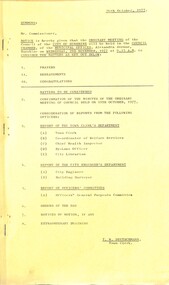 Sunshine and District Historical Society Incorporated
Administrative record - City of Sunshine - Commissioner Mr Alexander Alex George Gillon Collection 1976 - 1982 - Notice of ordinary meeting of the council of the City of Sunshine to be held on 2nd November 1977, City of Sunshine, 26th October 1977
... Notice of Ordinary Meeting of the Council of the City of Sunshine to be held on 2nd November 1977 Report of the Town Clerk's Department Report of the Town Clerk Purchase of Goods Preference to Local Manufacturer Loan Authority Railway Land Corner Devonshire Road and Alexandra Avenue Closure of Warrs Road to Through Traffic Appointment of Auditor Regionalisation of Refuge Disposal Proposed Legislation Land Acquisition Agreement Proposed Open Space Lot 23 Disraeli Street Approved of General Valuation Proposed Purchase of Sunshine Tip Approval of Overdraft Sanitary and Interest Abandonments for 1976/1977 Community Arts Officers' Discussion Day Outreach 77 Refund of Payments to Rosamond Bowling Club & Maribyrnong RSL Report of the Co-Ordinator of Welfare Services Emergency Relief Report of the Chief Health Inspector Application for Install of Gas Fired Dry Septic Tank Units Prosecution Proceedings Sunshine Magistrate Court Report of Weights & Measures Inspector Prosecution Proceedings Sunshine Magistrates Court Registration of Premises Petrol Station Complaint Municipal Refuse Composting Symposium 9th November 1977 Melbourne & Metropolitan Board of Works Pollution Report of the By-Laws Officer Fire Hazard Removal Tenders Season Snake Eradication Authorisations for Council Officers Report of the City Engineer Land Use Permit Application Flats 52B Forrest Street Land Use Permit Application Flats Lot 1 Monash Street North West Corner Cornwall Road Land Use Permit Application Stan Cash Sale and Distribution of Floor Coverings, Building's Hardware and Electrical Domestic Appliances and Furniture Corner Halstead Street and Ashley Street Land Use Permit Sky Sign Somerville Road Land Use Permit Application Subdivision and Detached Houses Albanvale Estate Land Use Permit Application Car Sales Yard Lots 8, 9, 10, 11, 12 & 13 Rosamond Road Land Use Permit Application Office and Warehouse Complex Fairbairn Road and Land Use Permit Application Subdivision Fairbairn Road Land Use Permit Application Addition to Existing Shopping Plaza Lot 4 St. ...Albans Road Princess Street Furlong Road Duke Street Sunshine North Mitchell Street Hampstead Road Andrew Street Sunshine Road Dempster Street Tottenham Bon Thomas Reserve Quinn Street Deer Park Neale Road Northumberland Road Willey Street Rufford Street Fourth Aveneue Skinner Reserve Churchill Avenue Braybrook Ainsworth Reserve Child Care Centre Deer Park Pre-School Centre Hendry Street Sunshine Tip Notice of Ordinary Meeting of the Council of the City of Sunshine to be held on 2nd November 1977 Report of the Town Clerk's Department Report of the Town Clerk Purchase of Goods Preference to Local Manufacturer Loan Authority Railway Land Corner Devonshire Road and Alexandra Avenue Closure of Warrs Road to Through Traffic Appointment of Auditor Regionalisation of Refuge Disposal Proposed Legislation Land Acquisition Agreement Proposed Open Space Lot 23 Disraeli Street Approved of General Valuation Proposed Purchase of Sunshine Tip Approval of Overdraft Sanitary and Interest Abandonments for 1976/1977 Community Arts Officers' Discussion Day Outreach 77 Refund of Payments to Rosamond Bowling Club & Maribyrnong RSL Report of the Co-Ordinator of Welfare Services Emergency Relief Report of the Chief Health Inspector Application for Install of Gas Fired Dry Septic Tank Units Prosecution Proceedings Sunshine Magistrate Court Report of Weights & Measures Inspector Prosecution Proceedings Sunshine Magistrates Court Registration of Premises Petrol Station Complaint Municipal Refuse Composting Symposium 9th November 1977 Melbourne & Metropolitan Board of Works Pollution Report of the By-Laws Officer Fire Hazard Removal Tenders Season Snake Eradication Authorisations for Council Officers Report of the City Engineer Land Use Permit Application Flats 52B Forrest Street Land Use Permit Application Flats Lot 1 Monash Street North West Corner Cornwall Road Land Use Permit Application Stan Cash Sale and Distribution of Floor Coverings, Building's Hardware and Electrical Domestic Appliances and Furniture Corner Halstead Street and Ashley Street Land Use Permit Sky Sign Somerville Road Land Use Permit Application Subdivision and Detached Houses Albanvale Estate Land Use Permit Application Car Sales Yard Lots 8, 9, 10, 11, 12 & 13 Rosamond Road Land Use Permit Application Office and Warehouse Complex Fairbairn Road and Land Use Permit Application Subdivision Fairbairn Road Land Use Permit Application Addition to Existing Shopping Plaza Lot 4 St. ...Notice of Ordinary Meeting of the Council of the City of Sunshine to be held on 2nd November 1977 Report of the Town Clerk's Department Report of the Town Clerk Purchase of Goods Preference to Local Manufacturer Loan Authority Railway Land Corner Devonshire Road and Alexandra Avenue Closure of Warrs Road to Through Traffic Appointment of Auditor Regionalisation of Refuge Disposal Proposed Legislation Land Acquisition Agreement Proposed Open Space Lot 23 Disraeli Street Approved of General Valuation Proposed Purchase of Sunshine Tip Approval of Overdraft Sanitary and Interest Abandonments for 1976/1977 Community Arts Officers' Discussion Day Outreach 77 Refund of Payments to Rosamond Bowling Club & Maribyrnong RSL Report of the Co-Ordinator of Welfare Services Emergency Relief Report of the Chief Health Inspector Application for Install of Gas Fired Dry Septic Tank Units Prosecution Proceedings Sunshine Magistrate Court Report of Weights & Measures Inspector Prosecution Proceedings Sunshine Magistrates Court Registration of Premises Petrol Station Complaint Municipal Refuse Composting Symposium 9th November 1977 Melbourne & Metropolitan Board of Works Pollution Report of the By-Laws Officer Fire Hazard Removal Tenders Season Snake Eradication Authorisations for Council Officers Report of the City Engineer Land Use Permit Application Flats 52B Forrest Street Land Use Permit Application Flats Lot 1 Monash Street North West Corner Cornwall Road Land Use Permit Application Stan Cash Sale and Distribution of Floor Coverings, Building's Hardware and Electrical Domestic Appliances and Furniture Corner Halstead Street and Ashley Street Land Use Permit Sky Sign Somerville Road Land Use Permit Application Subdivision and Detached Houses Albanvale Estate Land Use Permit Application Car Sales Yard Lots 8, 9, 10, 11, 12 & 13 Rosamond Road Land Use Permit Application Office and Warehouse Complex Fairbairn Road and Land Use Permit Application Subdivision Fairbairn Road Land Use Permit Application Addition to Existing Shopping Plaza Lot 4 St. Albans Road Adjacent to Existing Shopping Plaza Lot 3 Princess Street Land Use Permit Application Subdivision and Detached Houses Furlong Road Land Use Permit Application Addition of Sun Blind 323 Main Road West Land Use Permit Application Stan Cash Furniture and Carpet Sales and Buildings Hardware Corner Halstead Street and Ashley Street Land Use Permit Application Sky Sign Lot 1 Duke Street Land Use Permit Application Extension to Existing Office and Amenities Block Serving Fuel Oil Depot Lot 1 Duke Street Car Parking Hampstead Road near Mitchell Street Damage to Kerb & Channel and Road Payment Andrew Street Financial Assistance Restoration Works Easter Flooding Treasury of Victoria Joint Works Robinsons Road Reconstruction and Maintenance Country Roads Board Funded Project Outdoor Employees Christmas Holidays Break-up 1977 Sixteenth Municipal Superintendents' of Works Conference Statcon Signal Program Intersection of Ashley Street, Sunshine Road & Dempster Street Royal Victorian Institute of the Blind Work Experience Programs Bon Thomas Reserve Development National Safety Council of Australia Senior Management Local Government Authority National Safety Council of Australia Accident Control Course Royal Australian Insitiute Parks and Recreation Vicitorian Division Seminar Turf Wickets Half Cost Footpath and Kerb and Channel Neale Road Half Cost Footpath and Kerb and Channel Northumberland Road Neale Road Construction Tenders Car Parking Willey Street and Rufford Street Part Olny Private Street Scheme (Drainage) Steer Street Group Objection Variations to Contract Fourth Aveneue Furlong Road Estate Stages 1 & 2 Report of the Building Surveyor Uniform Building Regulations Draft Amendment Fency Lot 343 Anley Place Alteration to Grandstand Skinner Reserve Churchill Avenue Braybrook Dempster Park Cricket Pavilion Ainsworth Reserve Child Care Centre / Pavilion Glengala Road Sunshine West Deer Park Pre-School Centre Cash in Lieu Flats Lot 472 Hendry Street Sunshine West Orders of the Day Accounts Submitted for Payment 15th October 1977 & 16th October 1977 Confirmation of Loan with State Insurance city of sunshine, alexander "alex" george gillon, devonshire road, sunshine, warrs road, maribyrnong, disraeli street, st. albans, alexandra avenue, rosamond bowling club, rosamond road, maribyrnong rsl, raleigh road, forrest street, albion, monash street, cornwall road, stan cash, halstead street, ashley street, maidstone, somerville road, brooklyn, albanvale, fairbairn road, sunshine west, st. albans road, princess street, furlong road, duke street, sunshine north, mitchell street, hampstead road, andrew street, sunshine road, dempster street, tottenham, bon thomas reserve, quinn street, deer park, neale road, northumberland road, willey street, rufford street, fourth aveneue, skinner reserve, churchill avenue, braybrook, ainsworth reserve child care centre, deer park pre-school centre, hendry street, sunshine tip -
 Sunshine and District Historical Society Incorporated
Administrative record - City of Sunshine - Commissioner Mr Alexander Alex George Gillon Collection 1976 - 1982 - Minutes of the ordinary meeting of council held on 2nd November 1977, City of Sunshine, 2nd November 1977
... Minutes of the Ordinary Meeting of Council held on 2nd November 1977 Report of the Town Clerk's Department Report of the Town Clerk Purchase of Goods Preference to Local Manufacturer Loan Authority Railway Land Corner Devonshire Road and Alexandra Avenue Closure of Warrs Road to Through Traffic Appointment of Auditor Regionalisation of Refuge Disposal Proposed Legislation Land Acquisition Agreement Proposed Open Space Lot 23 Disraeli Street Approved of General Valuation Proposed Purchase of Sunshine Tip Approval of Overdraft Sanitary and Interest Abandonments for 1976/1977 Community Arts Officers' Discussion Day Outreach 77 Refund of Payments to Rosamond Bowling Club & Maribyrnong RSL Report of the Co-Ordinator of Welfare Services Emergency Relief Report of the Chief Health Inspector Application for Install of Gas Fired Dry Septic Tank Units Prosecution Proceedings Sunshine Magistrate Court Report of Weights & Measures Inspector Prosecution Proceedings Sunshine Magistrates Court Registration of Premises Petrol Station Complaint Municipal Refuse Composting Symposium 9th November 1977 Melbourne & Metropolitan Board of Works Pollution Report of the By-Laws Officer Fire Hazard Removal Tenders Season Snake Eradication Authorisations for Council Officers Report of the City Engineer Land Use Permit Application Flats 52B Forrest Street Land Use Permit Application Flats Lot 1 Monash Street North West Corner Cornwall Road Land Use Permit Application Stan Cash Sale and Distribution of Floor Coverings, Building's Hardware and Electrical Domestic Appliances and Furniture Corner Halstead Street and Ashley Street Land Use Permit Sky Sign Somerville Road Land Use Permit Application Subdivision and Detached Houses Albanvale Estate Land Use Permit Application Car Sales Yard Lots 8, 9, 10, 11, 12 & 13 Rosamond Road Land Use Permit Application Office and Warehouse Complex Fairbairn Road and Land Use Permit Application Subdivision Fairbairn Road Land Use Permit Application Addition to Existing Shopping Plaza Lot 4 St. ...Albans Road Princess Street Main Road West Duke Street Sunshine North Hampstead Road Mitchell Street Andrew Street Sunshine Road Dempster Street Tottenham Bon Thomas Reserve Quinn Street Deer Park Neale Road Northumberland Road Willey Street Rufford Street Fourth Aveneue Anley Place Skinner Reserve Churchill Avenue Braybrook Dempster Park Phoenix Street Ainsworth Reserve Child Care Centre Deer Park Pre-School Centre Hendry Street Minutes of the Ordinary Meeting of Council held on 2nd November 1977 Report of the Town Clerk's Department Report of the Town Clerk Purchase of Goods Preference to Local Manufacturer Loan Authority Railway Land Corner Devonshire Road and Alexandra Avenue Closure of Warrs Road to Through Traffic Appointment of Auditor Regionalisation of Refuge Disposal Proposed Legislation Land Acquisition Agreement Proposed Open Space Lot 23 Disraeli Street Approved of General Valuation Proposed Purchase of Sunshine Tip Approval of Overdraft Sanitary and Interest Abandonments for 1976/1977 Community Arts Officers' Discussion Day Outreach 77 Refund of Payments to Rosamond Bowling Club & Maribyrnong RSL Report of the Co-Ordinator of Welfare Services Emergency Relief Report of the Chief Health Inspector Application for Install of Gas Fired Dry Septic Tank Units Prosecution Proceedings Sunshine Magistrate Court Report of Weights & Measures Inspector Prosecution Proceedings Sunshine Magistrates Court Registration of Premises Petrol Station Complaint Municipal Refuse Composting Symposium 9th November 1977 Melbourne & Metropolitan Board of Works Pollution Report of the By-Laws Officer Fire Hazard Removal Tenders Season Snake Eradication Authorisations for Council Officers Report of the City Engineer Land Use Permit Application Flats 52B Forrest Street Land Use Permit Application Flats Lot 1 Monash Street North West Corner Cornwall Road Land Use Permit Application Stan Cash Sale and Distribution of Floor Coverings, Building's Hardware and Electrical Domestic Appliances and Furniture Corner Halstead Street and Ashley Street Land Use Permit Sky Sign Somerville Road Land Use Permit Application Subdivision and Detached Houses Albanvale Estate Land Use Permit Application Car Sales Yard Lots 8, 9, 10, 11, 12 & 13 Rosamond Road Land Use Permit Application Office and Warehouse Complex Fairbairn Road and Land Use Permit Application Subdivision Fairbairn Road Land Use Permit Application Addition to Existing Shopping Plaza Lot 4 St. ...Minutes of the Ordinary Meeting of Council held on 2nd November 1977 Report of the Town Clerk's Department Report of the Town Clerk Purchase of Goods Preference to Local Manufacturer Loan Authority Railway Land Corner Devonshire Road and Alexandra Avenue Closure of Warrs Road to Through Traffic Appointment of Auditor Regionalisation of Refuge Disposal Proposed Legislation Land Acquisition Agreement Proposed Open Space Lot 23 Disraeli Street Approved of General Valuation Proposed Purchase of Sunshine Tip Approval of Overdraft Sanitary and Interest Abandonments for 1976/1977 Community Arts Officers' Discussion Day Outreach 77 Refund of Payments to Rosamond Bowling Club & Maribyrnong RSL Report of the Co-Ordinator of Welfare Services Emergency Relief Report of the Chief Health Inspector Application for Install of Gas Fired Dry Septic Tank Units Prosecution Proceedings Sunshine Magistrate Court Report of Weights & Measures Inspector Prosecution Proceedings Sunshine Magistrates Court Registration of Premises Petrol Station Complaint Municipal Refuse Composting Symposium 9th November 1977 Melbourne & Metropolitan Board of Works Pollution Report of the By-Laws Officer Fire Hazard Removal Tenders Season Snake Eradication Authorisations for Council Officers Report of the City Engineer Land Use Permit Application Flats 52B Forrest Street Land Use Permit Application Flats Lot 1 Monash Street North West Corner Cornwall Road Land Use Permit Application Stan Cash Sale and Distribution of Floor Coverings, Building's Hardware and Electrical Domestic Appliances and Furniture Corner Halstead Street and Ashley Street Land Use Permit Sky Sign Somerville Road Land Use Permit Application Subdivision and Detached Houses Albanvale Estate Land Use Permit Application Car Sales Yard Lots 8, 9, 10, 11, 12 & 13 Rosamond Road Land Use Permit Application Office and Warehouse Complex Fairbairn Road and Land Use Permit Application Subdivision Fairbairn Road Land Use Permit Application Addition to Existing Shopping Plaza Lot 4 St. Albans Road Adjacent to Existing Shopping Plaza Lot 3 Princess Street Land Use Permit Application Subdivision and Detached Houses Furlong Road Land Use Permit Application Addition of Sun Blind 323 Main Road West Land Use Permit Application Stan Cash Furniture and Carpet Sales and Buildings Hardware Corner Halstead Street and Ashley Street Land Use Permit Application Sky Sign Lot 1 Duke Street Land Use Permit Application Extension to Existing Office and Amenities Block Serving Fuel Oil Depot Lot 1 Duke Street Car Parking Hampstead Road near Mitchell Street Damage to Kerb & Channel and Road Payment Andrew Street Financial Assistance Restoration Works Easter Flooding Treasury of Victoria Joint Works Robinsons Road Reconstruction and Maintenance Country Roads Board Funded Project Outdoor Employees Christmas Holidays Break-up 1977 Sixteenth Municipal Superintendents' of Works Conference Statcon Signal Program Intersection of Ashley Street, Sunshine Road & Dempster Street Royal Victorian Institute of the Blind Work Experience Programs Bon Thomas Reserve Development National Safety Council of Australia Senior Management Local Government Authority National Safety Council of Australia Accident Control Course Royal Australian Insitiute Parks and Recreation Vicitorian Division Seminar Turf Wickets Half Cost Footpath and Kerb and Channel Neale Road Half Cost Footpath and Kerb and Channel Northumberland Road Neale Road Construction Tenders Car Parking Willey Street and Rufford Street Part Olny Private Street Scheme (Drainage) Steer Street Group Objection Variations to Contract Fourth Aveneue Furlong Road Estate Stages 1 & 2 Report of the Building Surveyor Uniform Building Regulations Draft Amendment Fency Lot 343 Anley Place Alteration to Grandstand Skinner Reserve Churchill Avenue Braybrook Dempster Park Cricket Pavilion Ainsworth Reserve Child Care Centre / Pavilion Glengala Road Sunshine West Deer Park Pre-School Centre Cash in Lieu Flats Lot 472 Hendry Street Sunshine West Orders of the Day Accounts Submitted for Payment 15th October 1977 & 16th October 1977 Confirmation of Loan with State Insurance Extraordinary Business Financial Assistance for Persons Affected by the Recent S.E.C. Strike city of sunshine, alexander "alex" george gillon, devonshire road, alexandra avenue, sunshine, warrs road, maribyrnong, disraeli street, st. albans, maribyrnong rsl, rosamond road, raleigh road, forrest street, albion, monash street, cornwall road, stan cash, sunshine tip, halstead street, ashley street, maidstone, somerville road, brooklyn, albanvale, fairbairn road, sunshine west, st. albans road, princess street, main road west, duke street, sunshine north, hampstead road, mitchell street, andrew street, sunshine road, dempster street, tottenham, bon thomas reserve, quinn street, deer park, neale road, northumberland road, willey street, rufford street, fourth aveneue, anley place, skinner reserve, churchill avenue, braybrook, dempster park, phoenix street, ainsworth reserve child care centre, deer park pre-school centre, hendry street -
Moorabbin Air Museum
Manual - Lockheed Hercules technical training, Customer Training Electronics
... Lockheed Hercules technical training Equipment installation Gables intercommunication system Voice recorders Flight recorders Emergency transmitter HF/VHF Distance measuring equipment Beacon Transponder Altimeter Weather radar system Flight director system Magnetic compass Autopilot Doppler radar Technical overview of Hercules electronics systems, circa 1976 Customer Training Electronics Manual Lockheed Hercules technical training ...Technical overview of Hercules electronics systems, circa 1976non-fictionTechnical overview of Hercules electronics systems, circa 1976equipment installation, gables intercommunication system, voice recorders, flight recorders, emergency transmitter, hf/vhf, distance measuring equipment, beacon, transponder, altimeter, weather radar system, flight director system, magnetic compass, autopilot, doppler radar -
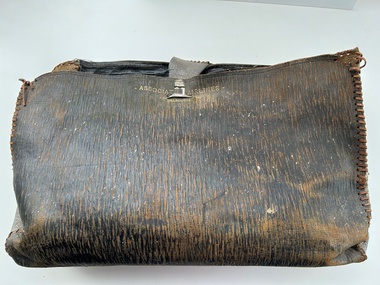 Moorabbin Air Museum
Accessory (Item) - Leather Satchel Marked With Associated Airlines - Melbourne
... Containing the following items, 1 Pr Sunglasses Ray-Ban Anti-Glare USA Style in case. 1 x Flight Plan for Associated Airlines dated 12.04.1960. 1 x Flight Plan TAA for VH-ASC, dated 11.05.57 1 x Flight Plan Associated Airlines dated 14.04.1960. 1 x Letter to airline and senior commercial pilots relating to routine ECG at medical examination from DCA dated 08.09.1959. 1 x Copy of Air Navigation Orders parts 20-95 as at 22.06.1959. 1 x copy of flight plan information for VH-ABH 1 x copy of notes on the radio beacon. 1 x copy of DCA Air Navigation Orders Part 20 Amendment List No.27 dated 07.07.1959. 1 x copy of DCA Emergency Procedure And Failure Of Radio Apparatus dated 29.09.59. 1 x copy of DCA New Route Structure - Sydney Area (Pilots Copy) Dated 16.12.1957. 1 x Measuring tape marked 26 o Lat to 38 o Lat....Containing the following items, 1 Pr Sunglasses Ray-Ban Anti-Glare USA Style in case. 1 x Flight Plan for Associated Airlines dated 12.04.1960. 1 x Flight Plan TAA for VH-ASC, dated 11.05.57 1 x Flight Plan Associated Airlines dated 14.04.1960. 1 x Letter to airline and senior commercial pilots relating to routine ECG at medical examination from DCA dated 08.09.1959. 1 x Copy of Air Navigation Orders parts 20-95 as at 22.06.1959. 1 x copy of flight plan information for VH-ABH 1 x copy of notes on the radio beacon. 1 x copy of DCA Air Navigation Orders Part 20 Amendment List No.27 dated 07.07.1959. 1 x copy of DCA Emergency Procedure And Failure Of Radio Apparatus dated 29.09.59. 1 x copy of DCA New Route Structure - Sydney Area (Pilots Copy) Dated 16.12.1957. 1 x Measuring tape marked 26 o Lat to 38 o Lat. ... -
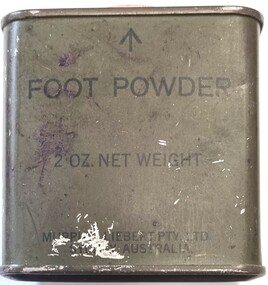 Wodonga & District Historical Society Inc
Container - Foot Powder Tin
... The company was highly regarded for producing a wide array of personal care, medical, and household products, many of which were supplied to the Australian Defence Forces This tin of foot powder was standard issue to Australian soldiers serving in the Malayan Emergency and the Vietnam War where tropical conditions caused precautions were necessary to prevent bacterial infections. This item is significant because it represents one of the measures needed to protect Australian soldiers and the wider community from foot health issues. ...Foot powder was used to absorb potential build up of moisture and protect against possible bacterial infection. Murphy, Liebert Pty Ltd was a notable Sydney-based manufacturing chemist company that operated during the 20th century. The company was highly regarded for producing a wide array of personal care, medical, and household products, many of which were supplied to the Australian Defence Forces This tin of foot powder was standard issue to Australian soldiers serving in the Malayan Emergency and the Vietnam War where tropical conditions caused precautions were necessary to prevent bacterial infections.This item is significant because it represents one of the measures needed to protect Australian soldiers and the wider community from foot health issues.A small tin with perforated lid containing foot powderOn front FOOT POWDER 2 OZ. NET WEIGHT MURPY LIEBERT PTY LTD SYDNEY AUSTRALIA On reverse FORMULA SALICYLIC ACID 3% STARCH 10% TALC 87% personal toiletry items, australian soldiers' personal supplies -
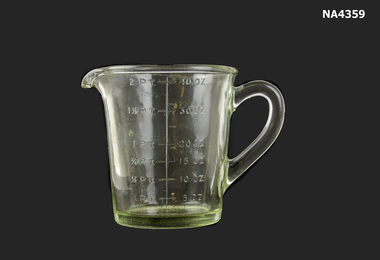 Whitehorse Historical Society Inc.
Domestic object - Jug, 1930 - 1940
... Collected from Eastern Emergency Network DOMESTIC ITEMS Cooking GLASS TECHNOLOGY Bottles 1/4 PT - 2 PT; 5 OZ - 40 OZ Heavy glass measuring jug with imperial measures from two pints to 40 ounces. ...Collected from Eastern Emergency NetworkHeavy glass measuring jug with imperial measures from two pints to 40 ounces.1/4 PT - 2 PT; 5 OZ - 40 OZdomestic items, cooking, glass technology, bottles -
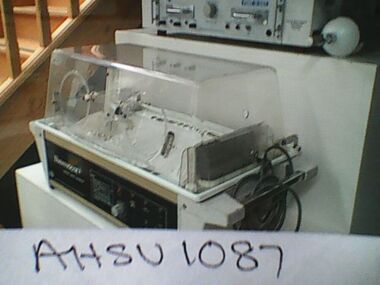 Ambulance Victoria Museum
Humidicrib, CIG, Thermocot, The Commonwealth Industrial Gases Limited, Circa 1970s
... emergency transits than do today The Thermocot Developed from the Port-O-Cot, CIG later produced the Thermocot. The new humidicrib had a number of advantages over the Port-O-Cot. Most importantly it had an over-temperature alarm and cut out. It was also calibrated in degrees Celsius as by then the metric measuring...emergency transits than do today The Thermocot Developed from the Port-O-Cot, CIG later produced the Thermocot. The new humidicrib had a number of advantages over the Port-O-Cot. Most importantly it had an over-temperature alarm and cut out. It was also calibrated in degrees Celsius as by then the metric measuring ...Humidicribs are used to transport sick babies from small hospitals to major hospitals for specialist care. They work by maintaining normal body temperature and provide oxygen if needed during ambulance transit. Known by a variety of commercial names, earlier humidicribs were ones heated with water bottles. Not part of an ambulances standard equipment, humidicribs are kept in ambulance stations and carried if babies needed to be transported. In the early days before humidicribs came into use and when air ambulances did not exist, many more babies died during emergency transits than do today The Thermocot Developed from the Port-O-Cot, CIG later produced the Thermocot. The new humidicrib had a number of advantages over the Port-O-Cot. Most importantly it had an over-temperature alarm and cut out. It was also calibrated in degrees Celsius as by then the metric measuring system had been introduced to Australia. It also had a front opening canopy which was easier for nursing staff to use. Metal box with Perspex opening top section. Carry handles at each end.Thermocot portable infant incubator CIGinfant -
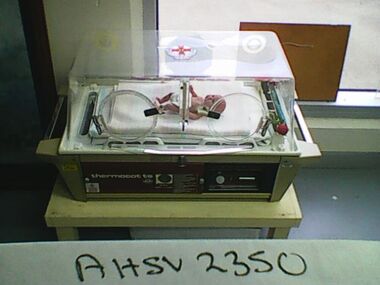 Ambulance Victoria Museum
Humidicrib, CIG, Thermocot, The Commonwealth Industrial Gases Limited, Circa 1970s
... emergency transits than do today The Thermocot Developed from the Port-O-Cot, CIG later produced the Thermocot. The new humidicrib had a number of advantages over the Port-O-Cot. Most importantly it had an over-temperature alarm and cut out. It was also calibrated in degrees Celsius as by then the metric measuring...emergency transits than do today The Thermocot Developed from the Port-O-Cot, CIG later produced the Thermocot. The new humidicrib had a number of advantages over the Port-O-Cot. Most importantly it had an over-temperature alarm and cut out. It was also calibrated in degrees Celsius as by then the metric measuring ...Humidicribs are used to transport sick babies from small hospitals to major hospitals for specialist care. They work by maintaining normal body temperature and provide oxygen if needed during ambulance transit. Known by a variety of commercial names, earlier humidicribs were ones heated with water bottles. Not part of an ambulances standard equipment, humidicribs are kept in ambulance stations and carried if babies needed to be transported. In the early days before humidicribs came into use and when air ambulances did not exist, many more babies died during emergency transits than do today The Thermocot Developed from the Port-O-Cot, CIG later produced the Thermocot. The new humidicrib had a number of advantages over the Port-O-Cot. Most importantly it had an over-temperature alarm and cut out. It was also calibrated in degrees Celsius as by then the metric measuring system had been introduced to Australia. It also had a front opening canopy which was easier for nursing staff to use. Metal box with Perspex opening top section. Carry handles at each end.Thermocot portable infant incubator CIG -
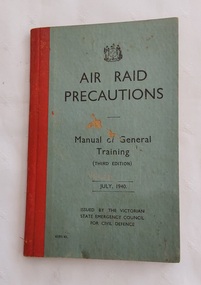 Mont De Lancey
Book, Victorian State Emergency Council for Civil Defence, Air Raid Precautions - Manual of General Training, July 1940
... WW11 Air raids War The "Air Raid Precautions: Manual Of General Training (1940)" by the Victorian State Emergency Council for Civil Defence is a historical document outlining measures for civilian defense during World War II, specifically addressing air raid precautions. ...The "Air Raid Precautions: Manual Of General Training (1940)" by the Victorian State Emergency Council for Civil Defence is a historical document outlining measures for civilian defense during World War II, specifically addressing air raid precautions. The manual, published in April 1941, guided the public on how to respond to potential air raids before Japan entered the war and before any attacks on Australia.A small vintage blue covered book - Air Raid Precautions Manual of General Training with a small Emblem of Victoria at the top, the title, (Third Edition) July 1940 and publisher at the bottom. A code number, 4196/41 is printed on the bottom left corner. Red tape holds the cover together. Inside the title page has all the details as well as the Printer. There is a Contents Page, Introduction and nine chapters. Pp. 66non-fictionThe "Air Raid Precautions: Manual Of General Training (1940)" by the Victorian State Emergency Council for Civil Defence is a historical document outlining measures for civilian defense during World War II, specifically addressing air raid precautions. The manual, published in April 1941, guided the public on how to respond to potential air raids before Japan entered the war and before any attacks on Australia. ww11, air raids, war -
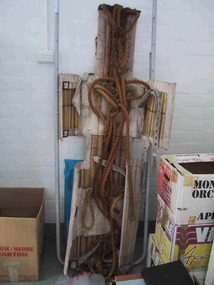 Parks Victoria - Wilsons Promontory Lightstation
Stretcher
... Measures taken to reduce injuries and deaths have included safer industrial equipment, safer work practices, staff training, and the ready availability of accident and emergency equipment.It was also used throughout WWI and WWII. ...Measures taken to reduce injuries and deaths have included safer industrial equipment, safer work practices, staff training, and the ready availability of accident and emergency equipment.It was also used throughout WWI and WWII. ...Made of canvas and bamboo slats with hemp ropes, adjustable canvas straps and metal buckles and rings, the rescue stretcher was used for carrying an injured person. According to the Powerhouse Museum, the stretcher and was ‘designed to support and carry an injured person in circumstances where the person has to be lifted vertically’. Known as the ‘Neil Robertson stretcher’, it was developed in the early 1900s by John Neil Robertson as a lightweight rescue device and was modelled on Japanese bamboo litters. An identical stretcher is held in Sydney’s Powerhouse Museum and is thought to date between c.1967 and 1999. The museum’s statement of significance for the unique stretcher elaborates on its cultural values: The canvas is wrapped around the patient and secured with strong canvas straps. A lifting rope is attached to a ring above the patient's head, while a guideline is tied near the ankles and used to stop the stretcher swaying as it is hoisted up. This style of stretcher was specifically designed for use on ships, where casualties might have to be lifted from engine-room spaces, holds and other compartments with access hatches too small for ordinary stretchers. The original name of the Neil Robertson stretcher was 'Hammock for hoisting wounded men from stokeholds and for use in ships whose ash hoists are 2 ft. 6 in. diameter'. Since those times the Neil Robertson stretcher has also been used in factories and mines and for other emergency rescue situations. It is still possible to buy this type of stretcher although the slats are now more likely to be made of wood. The example in the Powerhouse collection was amongst several items of obsolete first aid and rescue equipment donated by the electricity generation company Delta Electricity. It would have been used - or at least been on stand-by - at the company's Munmorah Power Station or the associated coal mine on the Central Coast of New South Wales. Industrial sites and mines are extremely dangerous work places. Throughout the 20th century to the present there has been a drive, especially in developed countries like Australia, to improve workplace safety. Measures taken to reduce injuries and deaths have included safer industrial equipment, safer work practices, staff training, and the ready availability of accident and emergency equipment.It was also used throughout WWI and WWII. There are two other examples of the stretcher are known in Parks Victoria heritage collections. Canvas and bamboo stretcher with straps and buckles. Hemp ropes are attached to the stretcher. -
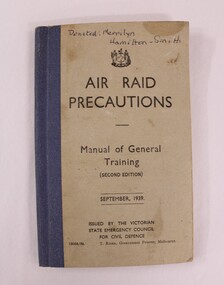 Wodonga & District Historical Society Inc
Booklet - Hamilton-Smith Collection Air Raid Precautions Booklet, T. Rider - Government Printer, September 1939
... They provided instructions on what to do during an air raid and were based on emergency response protocols established in Britain. Other measures adopted by State Governments during this period included the installation of air raid sirens and bomb shelters, and the training of volunteers in firefighting and first aid. ...They provided instructions on what to do during an air raid and were based on emergency response protocols established in Britain. Other measures adopted by State Governments during this period included the installation of air raid sirens and bomb shelters, and the training of volunteers in firefighting and first aid. ...The Hamilton-Smith collection was donated by the children of Grace Mary Hamilton-Smith nee Ellwood (1911-2004) and John Hamilton-Smith (1909-1984) who settled in Wodonga in the 1940s. The Ellwood family had lived in north-east Victoria since the late 1800s. Grace’s mother, Rosina Ellwood nee Smale, was the first teacher at Baranduda in 1888, and a foundation member of the C.W.A. Rosina and her husband Mark retired to Wodonga in 1934. Grace and John married at St. David’s Church, Albury in 1941. John was a grazier, and actively involved in Agricultural Societies. The collection contains significant items which reflect the local history of Wodonga, including handmade needlework, books, photographs, a wedding dress, maps, and material relating to the world wars. This Air Raid Precautions booklet was one of thousands distributed to households across Australia during WW2. They provided instructions on what to do during an air raid and were based on emergency response protocols established in Britain. Other measures adopted by State Governments during this period included the installation of air raid sirens and bomb shelters, and the training of volunteers in firefighting and first aid. This item has well documented provenance and a known owner. It forms part of a significant and representative historical collection which reflects the local history of Wodonga. It contributes to our understanding of life in Australia during WW2. A small booklet containing illustrations and text instructing people what to do during an air raid. Front cover in pen: "Donated: Merrilyn/Hamilton-Smith"ww2, world war two, world war, war, 1940s, air raid, defence, bomb -
 Sunshine and District Historical Society Incorporated
Administrative record - City of Sunshine - Commissioner Mr Alexander Alex George Gillon Collection 1976 - 1982 - Minutes of the ordinary meeting of council held on 9th December 1980, City of Sunshine, 9th December 1980
... Johns College Report of Rainbow Workshop Supplementary Valuations Land Transfer 88 Station Road Deer Park Sunshine Swimming Pool Learners Pool Heating Golf Course South Side of Maribyrnong River Proposed Link with the Essendon Golf Course Sealing of General Rate Year Ending 30th September 1980 Date of Ordinary Meetings of Council Report of the Co-Ordinator of Welfare Services Purchase of Land Randall Street Maribyrnong Funding for Teenage Holiday Programmes Emergency Foster Care Family Day Care Local Youth Affairs Council's Forum International Year of the Disable Federal Government Funding of Child Care Programmes Victorian Transport Study Lonie Report Sunshine CYSS Report of the Chief Health Surveyor Authorisation of Officers Under Summary Offences Act 1966 Issuing of Septic Tank Approval Notices Application for Septic Tank Systems Subsidies for Infant Welfare Sisters Weights and Measures Practical Experience Health Act Registrations Prosecution Proceedings Sunshine Magistrates Court Health Act Registrations for 1981 Health Act Registration Late Fee Application for Transfer of Proprietorship of Premises Under the Health Act Smorgan Consolidated Industries (Paper Plant) "Black Liquor" Process Refuse By-Law Enforcement Report of the Superintendent Traffic & By-Laws Jumble Sale Albion Rovers Soccer Club Sunshine Commonwealth Offices Devonshire Road Sunshine Dog Act Court Proceedings Parking and Traffic Infringements Dog Act Authority Under Sections 695 (10) of the Local Government Act 1958 Disposal of Derelict Vehicles Proposed Procession St. ...Johns College Report of Rainbow Workshop Supplementary Valuations Land Transfer 88 Station Road Deer Park Sunshine Swimming Pool Learners Pool Heating Golf Course South Side of Maribyrnong River Proposed Link with the Essendon Golf Course Sealing of General Rate Year Ending 30th September 1980 Date of Ordinary Meetings of Council Report of the Co-Ordinator of Welfare Services Purchase of Land Randall Street Maribyrnong Funding for Teenage Holiday Programmes Emergency Foster Care Family Day Care Local Youth Affairs Council's Forum International Year of the Disable Federal Government Funding of Child Care Programmes Victorian Transport Study Lonie Report Sunshine CYSS Report of the Chief Health Surveyor Authorisation of Officers Under Summary Offences Act 1966 Issuing of Septic Tank Approval Notices Application for Septic Tank Systems Subsidies for Infant Welfare Sisters Weights and Measures Practical Experience Health Act Registrations Prosecution Proceedings Sunshine Magistrates Court Health Act Registrations for 1981 Health Act Registration Late Fee Application for Transfer of Proprietorship of Premises Under the Health Act Smorgan Consolidated Industries (Paper Plant) "Black Liquor" Process Refuse By-Law Enforcement Report of the Superintendent Traffic & By-Laws Jumble Sale Albion Rovers Soccer Club Sunshine Commonwealth Offices Devonshire Road Sunshine Dog Act Court Proceedings Parking and Traffic Infringements Dog Act Authority Under Sections 695 (10) of the Local Government Act 1958 Disposal of Derelict Vehicles Proposed Procession St. ...Minutes of the Ordinary Meeting of Council held on 9th December 1980 Report of the Town Clerk's Department Report of the Town Clerk Kiosk Sunshine Swimming Pool Professional Indemnity Insurance Proposed Technical School for Keilor Rate Recovery Sale Lot 88 Balfour Avenue Sunshine North Deed of Release Advertising Contracts Increase in Ceiling Municipal Association Committees Nomination of Representative Proposed Closure Dobson Crescent Braybrook St. Johns College Report of Rainbow Workshop Supplementary Valuations Land Transfer 88 Station Road Deer Park Sunshine Swimming Pool Learners Pool Heating Golf Course South Side of Maribyrnong River Proposed Link with the Essendon Golf Course Sealing of General Rate Year Ending 30th September 1980 Date of Ordinary Meetings of Council Report of the Co-Ordinator of Welfare Services Purchase of Land Randall Street Maribyrnong Funding for Teenage Holiday Programmes Emergency Foster Care Family Day Care Local Youth Affairs Council's Forum International Year of the Disable Federal Government Funding of Child Care Programmes Victorian Transport Study Lonie Report Sunshine CYSS Report of the Chief Health Surveyor Authorisation of Officers Under Summary Offences Act 1966 Issuing of Septic Tank Approval Notices Application for Septic Tank Systems Subsidies for Infant Welfare Sisters Weights and Measures Practical Experience Health Act Registrations Prosecution Proceedings Sunshine Magistrates Court Health Act Registrations for 1981 Health Act Registration Late Fee Application for Transfer of Proprietorship of Premises Under the Health Act Smorgan Consolidated Industries (Paper Plant) "Black Liquor" Process Refuse By-Law Enforcement Report of the Superintendent Traffic & By-Laws Jumble Sale Albion Rovers Soccer Club Sunshine Commonwealth Offices Devonshire Road Sunshine Dog Act Court Proceedings Parking and Traffic Infringements Dog Act Authority Under Sections 695 (10) of the Local Government Act 1958 Disposal of Derelict Vehicles Proposed Procession St. Pauls Parish Report of the City Librarian Report of the Melton Branch Librarian Corio Street Branch Library National Conference on Multiculturalism and Libraries 8th to 11th November 1980 Report Report of the City Engineer & Planner Industrial Development Code for the City of Sunshine Planning Permit Application Sonley Street Kindergarten Maidstone Planning Permit Ground and First Floor Offices 237 & 239 - 24 Hampshire Road Sunshine Planning Permit Application Service Premises 250 McIntyre Road Sunshine North Planning Permit Application Illuminated Sky Sign Corner Glengala Road and Evelyn Crescent Sunshine West Planning Permit Application Alterations to Existing Shops Highpoint West Shopping Centre Lots 8, 9, 10, 11, 13 and Part 12 Rosamond Road Maribyrnong Planning Permit Application Four Flats 225 Main Road West St. Albans Planning Permit Bank Corner Hampshire Road and Devonshire Road Sunshine Planning Permit Application Transport Depot and Grain Store Francis Street Brooklyn Strata Subdivision 46 Monash Street Sunshine Strata Subdivision 53 Hertford Road Sunshine Plan of Subdivision Denton Avenue, Cavell Close and Maroondah Court St. Albans Prestressed Beam Lawrence Street Ardeer Footbridge Tenders Transfer of Reserves Westerngate Estate Installation of Fire Hydrants Transport Regulation Board Sunshine Bus Lines Pty Ltd Application to Change Route No 450 Sunshine to Ardeer St. Albans Road Footpath (East Side) Albion Station to B.T.M. Tubemakers Request by St. Albans South Progress Association Traffic Engineering Measures Accident Analysis Programme South Road Street Proposed Lighting Scheme by City of Footscray Electricity Supply Department Rochester Street to Darnley Street Braybrook Tariffs Public Lighting Sale of Surplus Equipment Appleby Avenue (Appleby Court) Private Street Scheme Boundary Road reconstruction East of Fitzgerald Road Laverton North St. Albans Heights Primary School Request for Regular Maintenance Proposed Roundabouts Northumberland Road / Suffolk Road and Northumberland Road / Warwick Road Sunshine North Air Conditioning Municipal Offices Proposed Public Toilet Block Ballarat Road Deer Park Report of the Building Surveyor Underground Tanks 199 Ballarat Road Maidstone Location of Building 63 Westmoreland Road Sunshine North Location of Building 8 Tullaroop Court St. Albans Building Over Easement 11 Jeffrey Close St. Albans Schedule for Authorising of Affixing the Common Seal of the Municipality to Documents Orders of the Day Accounts Submitted for Payment as at 30th November 1980 Extraordinary Business Report of the Chief Health Surveyor Catherine Yeung Community Nurse Report of the City Engineer & Planner Planning Permit Application 74 Lot Residential Subdivision Opie Road St. Albans Planning Permit Application 3 Flats Lots 23 & 25 Madden Street Maidstone Planning Permit Application Extensions to School Classrooms Land bounded by Churchill Avenue, Dobson Crescent and Darnley Street Planning Permit Application Restaurant, Service Premises and Associated Signs Red Rooster 204 - 210 Ballarat Road Maidstone Planning Permit Application Enforcement Factory and Petrol Filling Station Lots 13, 14, 15 & 16 North West Corner Ballarat Road and Glencairn Avenue Deer Park Planning Permit Application Two Lot Subdivision Ballarat Road Albion Planning Permit Application Junk Yard Scrap Metal Maida Avenue Sunshine North Planning Permit Application Warehouse Lots 30 & 31 Cromer Avenue Sunshine Planning Permit Application Display Home Centre Furlong Road St. Albans Planning Permit Application Factory Warehouse 4 Arvona Avenue Sunshine North Planning Permit Application Factory Renovation South West Corner Somerville Road and Tottenham Parade Planning Permit Application Bus Depot Lot 1 Emu Road Maidstone Planning Permit Application 4 Flats Lot 31 Bardsley Street Sunshine West Planning Permit Application Grain Storage Depot Stage 2 Francis Street Brooklyn Planning Permit Application Factory Warehouse North West Corner Ballarat Road and Lacy Street Braybrook Planning Permit Application Ground and Forst Floor Offices 239 - 241 Hampshire Road Sunshine Planning Permit Application Factory Lot 30 Frederick Street Brooklyn Planning Permit Application Service Premises Alterations Lot 2 Rosamond Road Maidstone Planning Permit Application 2 Flats 185A Main Road West St. Albans Planning Permit Application Clothing Manufacturer 67 Dumfries Street Deer Park Planning Permit Application Factory Display and Sales Lot 39 Reid Street Ardeer Planning Permit Application Extensions to Secondary School Marian College Glengala Road Sunshine West Planning Permit Application Promotion Panel Sign Lots 1, 6 and 7 Berkshire Road Sunshine North Planning Permit Application Shop Bank and Offices 288 Hampshire Road Sunshine Planning Permit Application Brick Store 75 Wright Street Sunshine Planning Permit Application Erection of New Multiple Sclerosis Residential and Day Attendance Centre Furlong Road St. Albans Planning Permit Application Warehouse Alterations 22 St. Albans Road St. Albans Planning Permit Application Junk Yard Lot 5 McIntyre Road Sunshine North Planning Permit Application Water Purification Plant Press Filter Platform Smorgon Consolidated Industries Meat and Paper Pty Ltd Planning Permit Application Bread and Cake Stall Level 2 Highpoint West Shopping Centre Rosamond Road Maribyrnong Planning Permit Application Hot Bread Kitchen Glengala Road Sunshine West Planning Permit Application Alterations to Service Station Lot 1 Ballarat Road Braybrook Planning Permit Application Market Extensions Level 1 Highpoint West Shopping Centre Rosamond Road Maribyrnong Planning Permit Application Laboratory and Offices Ballarat Road Sunshine Planning Permit Application Petrol Filling Station and Hotel Neale Road Deer Park Report of the Building Surveyor Building Over Easement 3 Droitwich Crescent Deer Park Building Over Easement 20 Hook Street St. Albans Building Over Easement 191 Wright Street Sunshine Building Over Easement 288 Station Road St. Albans Building Over Easement and Location of Building 11 Thwaites Street Sunshine Location of Building Lot 132 Hargreaves Crescent Braybrook Location of Building Lot 1 Station Road Deer Parkbalfour avenue, sunshine north, dobson crescent, sunshine, station road, deer park, sunshine swimming pool, kennedy street, st. johns college, churchill avenue, braybrook, maribyrnong river, essendon golf course, randall street, maribyrnong, smorgan consolidated industries, somerville road, tottenham, albion rovers soccer club, devonshire road, corio street branch library, corio street, sonley street kindergarten, sonley street, maidstone, mcintyre road, glengala road, evelyn crescent, sunshine west, highpoint west shopping centre, rosamond road, main road west, st. albans, francis street, brooklyn, monash street, hertford road, denton avenue, cavell close, maroondah court, lawrence street, lawrence street bridge, ardeer, sunshine bus lines, st. albans road, st. albans south progress association, b.t.m. tubemakers, south road, rochester street, darnley street, appleby avenue, appleby court, boundary road, fitzgerald road, laverton north, st. albans heights primary school, norwich street, northumberland road, suffolk road, warwick road, ballarat road, tullaroop court, jeffrey close, opie road, albanvale, madden street, red rooster, glencairn avenue, maida avenue, cromer avenue, furlong road, arvona avenue, tottenham parade, emu road, bardsley street, lacy street, frederick street, dumfries street, reid street, marian college, berkshire road, wright street, neale road, droitwich crescent, hook street, thwaites street, hargreaves crescent -
 Sunshine and District Historical Society Incorporated
Administrative record - City of Sunshine - Commissioner Mr Alexander Alex George Gillon Collection 1976 - 1982 - Notice of ordinary meeting of the council 9th December 1980, City of Sunshine, 3rd December 1980
... Johns College Report of Rainbow Workshop Supplementary Valuations Land Transfer 88 Station Road Deer Park Sunshine Swimming Pool Learners Pool Heating Golf Course South Side of Maribyrnong River Proposed Link with the Essendon Golf Course Sealing of General Rate Year Ending 30th September 1980 Date of Ordinary Meetings of Council Report of the Co-Ordinator of Welfare Services Purchase of Land Randall Street Maribyrnong Funding for Teenage Holiday Programmes Emergency Foster Care Family Day Care Local Youth Affairs Council's Forum International Year of the Disable Federal Government Funding of Child Care Programmes Victorian Transport Study Lonie Report Sunshine CYSS Report of the Chief Health Surveyor Authorisation of Officers Under Summary Offences Act 1966 Issuing of Septic Tank Approval Notices Application for Septic Tank Systems Subsidies for Infant Welfare Sisters Weights and Measures Practical Experience Health Act Registrations Prosecution Proceedings Sunshine Magistrates Court Health Act Registrations for 1981 Health Act Registration Late Fee Application for Transfer of Proprietorship of Premises Under the Health Act Smorgan Consolidated Industries (Paper Plant) "Black Liquor" Process Refuse By-Law Enforcement Report of the Superintendent Traffic & By-Laws Jumble Sale Albion Rovers Soccer Club Sunshine Commonwealth Offices Devonshire Road Sunshine Dog Act Court Proceedings Parking and Traffic Infringements Dog Act Authority Under Sections 695 (10) of the Local Government Act 1958 Disposal of Derelict Vehicles Proposed Procession St. ...Johns College Report of Rainbow Workshop Supplementary Valuations Land Transfer 88 Station Road Deer Park Sunshine Swimming Pool Learners Pool Heating Golf Course South Side of Maribyrnong River Proposed Link with the Essendon Golf Course Sealing of General Rate Year Ending 30th September 1980 Date of Ordinary Meetings of Council Report of the Co-Ordinator of Welfare Services Purchase of Land Randall Street Maribyrnong Funding for Teenage Holiday Programmes Emergency Foster Care Family Day Care Local Youth Affairs Council's Forum International Year of the Disable Federal Government Funding of Child Care Programmes Victorian Transport Study Lonie Report Sunshine CYSS Report of the Chief Health Surveyor Authorisation of Officers Under Summary Offences Act 1966 Issuing of Septic Tank Approval Notices Application for Septic Tank Systems Subsidies for Infant Welfare Sisters Weights and Measures Practical Experience Health Act Registrations Prosecution Proceedings Sunshine Magistrates Court Health Act Registrations for 1981 Health Act Registration Late Fee Application for Transfer of Proprietorship of Premises Under the Health Act Smorgan Consolidated Industries (Paper Plant) "Black Liquor" Process Refuse By-Law Enforcement Report of the Superintendent Traffic & By-Laws Jumble Sale Albion Rovers Soccer Club Sunshine Commonwealth Offices Devonshire Road Sunshine Dog Act Court Proceedings Parking and Traffic Infringements Dog Act Authority Under Sections 695 (10) of the Local Government Act 1958 Disposal of Derelict Vehicles Proposed Procession St. ...Notice of Ordinary Meeting of the Council 9th December 1980 Report of the Town Clerk's Department Report of the Town Clerk Kiosk Sunshine Swimming Pool Professional Indemnity Insurance Proposed Technical School for Keilor Rate Recovery Sale Lot 88 Balfour Avenue Sunshine North Deed of Release Advertising Contracts Increase in Ceiling Municipal Association Committees Nomination of Representative Proposed Closure Dobson Crescent Braybrook St. Johns College Report of Rainbow Workshop Supplementary Valuations Land Transfer 88 Station Road Deer Park Sunshine Swimming Pool Learners Pool Heating Golf Course South Side of Maribyrnong River Proposed Link with the Essendon Golf Course Sealing of General Rate Year Ending 30th September 1980 Date of Ordinary Meetings of Council Report of the Co-Ordinator of Welfare Services Purchase of Land Randall Street Maribyrnong Funding for Teenage Holiday Programmes Emergency Foster Care Family Day Care Local Youth Affairs Council's Forum International Year of the Disable Federal Government Funding of Child Care Programmes Victorian Transport Study Lonie Report Sunshine CYSS Report of the Chief Health Surveyor Authorisation of Officers Under Summary Offences Act 1966 Issuing of Septic Tank Approval Notices Application for Septic Tank Systems Subsidies for Infant Welfare Sisters Weights and Measures Practical Experience Health Act Registrations Prosecution Proceedings Sunshine Magistrates Court Health Act Registrations for 1981 Health Act Registration Late Fee Application for Transfer of Proprietorship of Premises Under the Health Act Smorgan Consolidated Industries (Paper Plant) "Black Liquor" Process Refuse By-Law Enforcement Report of the Superintendent Traffic & By-Laws Jumble Sale Albion Rovers Soccer Club Sunshine Commonwealth Offices Devonshire Road Sunshine Dog Act Court Proceedings Parking and Traffic Infringements Dog Act Authority Under Sections 695 (10) of the Local Government Act 1958 Disposal of Derelict Vehicles Proposed Procession St. Pauls Parish Report of the City Librarian Report of the Melton Branch Librarian Corio Street Branch Library National Conference on Multiculturalism and Libraries 8th to 11th November 1980 Report Report of the City Engineer & Planner Industrial Development Code for the City of Sunshine Planning Permit Application Sonley Street Kindergarten Maidstone Planning Permit Ground and First Floor Offices 237 & 239 - 24 Hampshire Road Sunshine Planning Permit Application Service Premises 250 McIntyre Road Sunshine North Planning Permit Application Illuminated Sky Sign Corner Glengala Road and Evelyn Crescent Sunshine West Planning Permit Application Alterations to Existing Shops Highpoint West Shopping Centre Lots 8, 9, 10, 11, 13 and Part 12 Rosamond Road Maribyrnong Planning Permit Application Four Flats 225 Main Road West St. Albans Planning Permit Bank Corner Hampshire Road and Devonshire Road Sunshine Planning Permit Application Transport Depot and Grain Store Francis Street Brooklyn Strata Subdivision 46 Monash Street Sunshine Strata Subdivision 53 Hertford Road Sunshine Plan of Subdivision Denton Avenue, Cavell Close and Maroondah Court St. Albans Prestressed Beam Lawrence Street Ardeer Footbridge Tenders Transfer of Reserves Westerngate Estate Installation of Fire Hydrants Transport Regulation Board Sunshine Bus Lines Pty Ltd Application to Change Route No 450 Sunshine to Ardeer St. Albans Road Footpath (East Side) Albion Station to B.T.M. Tubemakers Request by St. Albans South Progress Association Traffic Engineering Measures Accident Analysis Programme South Road Street Proposed Lighting Scheme by City of Footscray Electricity Supply Department Rochester Street to Darnley Street Braybrook Tariffs Public Lighting Sale of Surplus Equipment Appleby Avenue (Appleby Court) Private Street Scheme Boundary Road reconstruction East of Fitzgerald Road Laverton North St. Albans Heights Primary School Request for Regular Maintenance Proposed Roundabouts Northumberland Road / Suffolk Road and Northumberland Road / Warwick Road Sunshine North Air Conditioning Municipal Offices Proposed Public Toilet Block Ballarat Road Deer Park Report of the Building Surveyor Underground Tanks 199 Ballarat Road Maidstone Location of Building 63 Westmoreland Road Sunshine North Location of Building 8 Tullaroop Court St. Albans Building Over Easement 11 Jeffrey Close St. Albans Schedule for Authorising of Affixing the Common Seal of the Municipality to Documents Orders of the Day Accounts Submitted for Payment as at 30th November 1980balfour avenue, sunshine north, dobson crescent, sunshine, station road, deer park, sunshine swimming pool, kennedy street, st. johns college, essendon golf course, randall street, maribyrnong, smorgan consolidated industries, somerville road, tottenham, albion rovers soccer club, devonshire road, hampshire road, mcintyre road, glengala road, evelyn crescent, sunshine west, highpoint west shopping, rosamond road, main road west, st. albans, francis street, brooklyn, monash street, hertford road, denton avenue, cavell close, maroondah court, lawrence street, lawrence street bridge, ardeer, sunshine bus lines, st. albans road, b.t.m. tubemakers, south road, rochester street, darnley street, appleby avenue, appleby court, fitzgerald road, boundary road, st. albans heights primary school, norwich street, northumberland road, suffolk road, warwick road, ballarat road, maidstone, westmoreland road, tullaroop court, jeffrey close -
 Sunshine and District Historical Society Incorporated
Administrative record - City of Sunshine - Commissioner Mr Alexander Alex George Gillon Collection 1976 - 1982 - Notice of ordinary council meeting 24th August 1977, City of Sunshine, 17th August 1977
... Notice of Ordinary Council Meeting 24th August 1977 Report of the Town Clerk's Department Report of the Town Clerk Superannuation Municipal Officer's Association Central Methodist Mission Home for the Frail / Aged Lease of land Darnley Street Land Adjacent to More Park in Ballarat Road Deer Park Hall Committee of Management Sunshine Swimming and Life Saving Club Infant Welfare Centres Pavilion Albion Tennis Club Tennis Courts Sunshine North Tennis Club Hulett Street Private Street Scheme Use of Council Land Survey Committee of Officers Land Transfer 43 Furlong Road Limits of Overdrafts Proposed Purchase of New Sunshine Tip Site Supplementary Valuations Report of the Co-Ordinator Welfare Services Committee of Management 43 Furlong Road Child Care Centre Emergency Accommodation Midway Hostel Report of the Chief Health Inspector Weights & Measures Report for the Two Months Ending 31st July 1977 Report of the Inspector Weights & Measures Sanitary Contract Licences Discharge to Council Controlled Drains Fees for Analyses Health Act 1958 Amusement Machines in Shops in Close Proximity to Schools Report of the City Librarian Library Statistics Seminar At Monash University The Economic Approach To Public Library Development Report of the City Engineer Land Use Permit Quinn Estate for the Purpose of Erecting Detached Houses Council Policy Land Use Permit Industrial Estate Lots 32 to 36 Fourth Avenue Land Use Permit Application Storing of Motor Vehicles Lot 18 Green Street for Nick's Boby Works Pty Ltd at Judge Street Enforcement of Melbourne Metropolitan Planning Scheme Use of Lot 271 Beela Court as a Transport Depot Land Use Permit Application Sale and Distribution of Floor Coverings, Builders Hardware, Electrical Domestic Appliances and Furniture Land Bounded by Halstead Street and Ashley Street Land Use Permit Application Milk Bar Addition to Existing House 53 King Edward Avenue Land Use Permit Application Advertising Hoarding Lot 26 & 27 Anderson Road Land Use Permit Sunshine Golf Club Pavilion Ralph Street Land Use Permit Application Detached House Lot 121 Lewin Street Land Use Permit Application Advertising Hoarding Lot 1 Ballarat Road South West Corner Summerhill Road Land Use Permit Application Access to Main Road for Lot 15 Geelong Road Land Use Permit Application Four Floodlights 186 - 190 Mitchell Street North East Corner Ashley Street Land Use Permit Application Storage and Wrecking of Old Cars for Scrap and Sale Lots 14. 15 & 16 Bunnett Street Land Use Permit Application Service Premises and Caretaker's Dwelling 461 Ballarat Road Land Use Permit Application 3 Display Homes Aycliffe Drive and Land Use Permit Application Car Parking to Serve Display Home Centre North East Corner Aycliffe Drive and Reston Court Deer Park Land Use Permit Application Italo - Australian Social Club (Italo - Australian Co-Operative Social Club Ltd) Place of Assembly Furlong Road Land Use Permit Application Reprocessing of Scrap Metals Lot 3 Geelong Road Land Use Permit Application Extension to Existing Work Shop For Mentally Retarded Children Day Training Centre Council Reserve Bounded by Churchill Avenue, Darnley Street & Ravenhall Street Land Use Permit Application Service Premises Addition to Existing Bakery 119 McIntyre Road Land Use Permit Application Home Occupation 43 Bloomfield Avenue Plan of Subdivision Stage 3 Furlong Road Estate Strata Subdivision 437 Ballarat Road Westerngate Estate Stage 2 Plan of Subdivision Neale Road and Station Road Plan of Consolidation Rothray Avenues and Arvona Avenue Width of Robinsons Road Westerngate Robinsons Road Parking Area Tallintyre road Housing Commission of Victoria Contract Supply & Maintenance of Vehicles Concrete Reinstatements Quotations Garfield Street Scheme Construction Proposed Traffic Signals Main Road West, Main Road East, St. ...Albans Maribyrnong River Mitchell Street Hampton Avenue Moria Street Wright Street Thyra Street Percy Street Ensign Street Delacey Street Northumberland Road Sunshine Library McCracken Street The Hub Sun Crescent Hampshire Road Brooklyn Pre-School Centr Cypress Avenue Ainsworth Reserve Vernon Street Sunshine Indoor Swimming Pool Hall Street Notice of Ordinary Council Meeting 24th August 1977 Report of the Town Clerk's Department Report of the Town Clerk Superannuation Municipal Officer's Association Central Methodist Mission Home for the Frail / Aged Lease of land Darnley Street Land Adjacent to More Park in Ballarat Road Deer Park Hall Committee of Management Sunshine Swimming and Life Saving Club Infant Welfare Centres Pavilion Albion Tennis Club Tennis Courts Sunshine North Tennis Club Hulett Street Private Street Scheme Use of Council Land Survey Committee of Officers Land Transfer 43 Furlong Road Limits of Overdrafts Proposed Purchase of New Sunshine Tip Site Supplementary Valuations Report of the Co-Ordinator Welfare Services Committee of Management 43 Furlong Road Child Care Centre Emergency Accommodation Midway Hostel Report of the Chief Health Inspector Weights & Measures Report for the Two Months Ending 31st July 1977 Report of the Inspector Weights & Measures Sanitary Contract Licences Discharge to Council Controlled Drains Fees for Analyses Health Act 1958 Amusement Machines in Shops in Close Proximity to Schools Report of the City Librarian Library Statistics Seminar At Monash University The Economic Approach To Public Library Development Report of the City Engineer Land Use Permit Quinn Estate for the Purpose of Erecting Detached Houses Council Policy Land Use Permit Industrial Estate Lots 32 to 36 Fourth Avenue Land Use Permit Application Storing of Motor Vehicles Lot 18 Green Street for Nick's Boby Works Pty Ltd at Judge Street Enforcement of Melbourne Metropolitan Planning Scheme Use of Lot 271 Beela Court as a Transport Depot Land Use Permit Application Sale and Distribution of Floor Coverings, Builders Hardware, Electrical Domestic Appliances and Furniture Land Bounded by Halstead Street and Ashley Street Land Use Permit Application Milk Bar Addition to Existing House 53 King Edward Avenue Land Use Permit Application Advertising Hoarding Lot 26 & 27 Anderson Road Land Use Permit Sunshine Golf Club Pavilion Ralph Street Land Use Permit Application Detached House Lot 121 Lewin Street Land Use Permit Application Advertising Hoarding Lot 1 Ballarat Road South West Corner Summerhill Road Land Use Permit Application Access to Main Road for Lot 15 Geelong Road Land Use Permit Application Four Floodlights 186 - 190 Mitchell Street North East Corner Ashley Street Land Use Permit Application Storage and Wrecking of Old Cars for Scrap and Sale Lots 14. 15 & 16 Bunnett Street Land Use Permit Application Service Premises and Caretaker's Dwelling 461 Ballarat Road Land Use Permit Application 3 Display Homes Aycliffe Drive and Land Use Permit Application Car Parking to Serve Display Home Centre North East Corner Aycliffe Drive and Reston Court Deer Park Land Use Permit Application Italo - Australian Social Club (Italo - Australian Co-Operative Social Club Ltd) Place of Assembly Furlong Road Land Use Permit Application Reprocessing of Scrap Metals Lot 3 Geelong Road Land Use Permit Application Extension to Existing Work Shop For Mentally Retarded Children Day Training Centre Council Reserve Bounded by Churchill Avenue, Darnley Street & Ravenhall Street Land Use Permit Application Service Premises Addition to Existing Bakery 119 McIntyre Road Land Use Permit Application Home Occupation 43 Bloomfield Avenue Plan of Subdivision Stage 3 Furlong Road Estate Strata Subdivision 437 Ballarat Road Westerngate Estate Stage 2 Plan of Subdivision Neale Road and Station Road Plan of Consolidation Rothray Avenues and Arvona Avenue Width of Robinsons Road Westerngate Robinsons Road Parking Area Tallintyre road Housing Commission of Victoria Contract Supply & Maintenance of Vehicles Concrete Reinstatements Quotations Garfield Street Scheme Construction Proposed Traffic Signals Main Road West, Main Road East, St. ...Notice of Ordinary Council Meeting 24th August 1977 Report of the Town Clerk's Department Report of the Town Clerk Superannuation Municipal Officer's Association Central Methodist Mission Home for the Frail / Aged Lease of land Darnley Street Land Adjacent to More Park in Ballarat Road Deer Park Hall Committee of Management Sunshine Swimming and Life Saving Club Infant Welfare Centres Pavilion Albion Tennis Club Tennis Courts Sunshine North Tennis Club Hulett Street Private Street Scheme Use of Council Land Survey Committee of Officers Land Transfer 43 Furlong Road Limits of Overdrafts Proposed Purchase of New Sunshine Tip Site Supplementary Valuations Report of the Co-Ordinator Welfare Services Committee of Management 43 Furlong Road Child Care Centre Emergency Accommodation Midway Hostel Report of the Chief Health Inspector Weights & Measures Report for the Two Months Ending 31st July 1977 Report of the Inspector Weights & Measures Sanitary Contract Licences Discharge to Council Controlled Drains Fees for Analyses Health Act 1958 Amusement Machines in Shops in Close Proximity to Schools Report of the City Librarian Library Statistics Seminar At Monash University The Economic Approach To Public Library Development Report of the City Engineer Land Use Permit Quinn Estate for the Purpose of Erecting Detached Houses Council Policy Land Use Permit Industrial Estate Lots 32 to 36 Fourth Avenue Land Use Permit Application Storing of Motor Vehicles Lot 18 Green Street for Nick's Boby Works Pty Ltd at Judge Street Enforcement of Melbourne Metropolitan Planning Scheme Use of Lot 271 Beela Court as a Transport Depot Land Use Permit Application Sale and Distribution of Floor Coverings, Builders Hardware, Electrical Domestic Appliances and Furniture Land Bounded by Halstead Street and Ashley Street Land Use Permit Application Milk Bar Addition to Existing House 53 King Edward Avenue Land Use Permit Application Advertising Hoarding Lot 26 & 27 Anderson Road Land Use Permit Sunshine Golf Club Pavilion Ralph Street Land Use Permit Application Detached House Lot 121 Lewin Street Land Use Permit Application Advertising Hoarding Lot 1 Ballarat Road South West Corner Summerhill Road Land Use Permit Application Access to Main Road for Lot 15 Geelong Road Land Use Permit Application Four Floodlights 186 - 190 Mitchell Street North East Corner Ashley Street Land Use Permit Application Storage and Wrecking of Old Cars for Scrap and Sale Lots 14. 15 & 16 Bunnett Street Land Use Permit Application Service Premises and Caretaker's Dwelling 461 Ballarat Road Land Use Permit Application 3 Display Homes Aycliffe Drive and Land Use Permit Application Car Parking to Serve Display Home Centre North East Corner Aycliffe Drive and Reston Court Deer Park Land Use Permit Application Italo - Australian Social Club (Italo - Australian Co-Operative Social Club Ltd) Place of Assembly Furlong Road Land Use Permit Application Reprocessing of Scrap Metals Lot 3 Geelong Road Land Use Permit Application Extension to Existing Work Shop For Mentally Retarded Children Day Training Centre Council Reserve Bounded by Churchill Avenue, Darnley Street & Ravenhall Street Land Use Permit Application Service Premises Addition to Existing Bakery 119 McIntyre Road Land Use Permit Application Home Occupation 43 Bloomfield Avenue Plan of Subdivision Stage 3 Furlong Road Estate Strata Subdivision 437 Ballarat Road Westerngate Estate Stage 2 Plan of Subdivision Neale Road and Station Road Plan of Consolidation Rothray Avenues and Arvona Avenue Width of Robinsons Road Westerngate Robinsons Road Parking Area Tallintyre road Housing Commission of Victoria Contract Supply & Maintenance of Vehicles Concrete Reinstatements Quotations Garfield Street Scheme Construction Proposed Traffic Signals Main Road West, Main Road East, St. Albans Road & East Esplanade Speed Reduction Sign Western Highway Deer Park Tender for Surplus Equipment Maribyrnong River Speed Limit M.M.B.W. Easement Drainage Lot 4 Mitchell Street Maidstone Certificate of Completion Hampton Avenue Group Private Street Scheme Proposed Open Space Land in Moria Street, Wright Street & Thyra Street Sunshine Bus Shelter Subsidy from Transport Funds of the Transport Regulation Board Report of the Building Surveyor Building & Development Approval Committee Report Extension of Permit 10 Percy Street St. Albans Extension of House 4 Ensign Street Maribyrnong Undersize Allotment Lot 2 Delacey Street Maidstone Location of Open Garage 81 Northumberland Road Sunshine North Renovation Central Library McCracken Street Alterations The Hub W.C. block Hampshire Road Brooklyn Pre-School Centre Child Care Centre / Pavilion Ainsworth Reserve Sunshine Indoor Swimming Pool Orders of the Day Westerngate Estate Robinsons Road Fencing 83 Hall Street Sunshine West city of sunshine, alexander "alex" george gillon, central methodist mission, darnley street, braybrook, more park, ardeer, deer park hall committee of management, albion tennis club, sunshine north tennis club, esmond street, station road, deer park, sunshine swimming and life saving club, furlong road, sunshine tip, furlong road child care centre, midway hostel, williamson road, maribyrnong, fourth avenue, sunshine, green street, judge street, beela court, sunshine west, halstead street, ashley street, maidstone, king edward avenue, albion, sunshine golf club, ralph street, lewin street, summerhill road, geelong road, brooklyn, bunnett street, sunshine north, ballarat road, aycliffe drive, reston court, italo - australian social club, italo - australian co-operative social club ltd, churchill avenue, ravenhall street, mcintyre road, bloomfield avenue, neale road, rothray avenue, arvona avenue, robinsons road, garfield street, st. albans, maribyrnong river, mitchell street, hampton avenue, moria street, wright street, thyra street, percy street, ensign street, delacey street, northumberland road, sunshine library, mccracken street, the hub, sun crescent, hampshire road, brooklyn pre-school centr, cypress avenue, ainsworth reserve, vernon street, sunshine indoor swimming pool, hall street
