
Showing 116 items matching "engine assembly"
-
 Moorabbin Air Museum
Document (Item) - CAC - F/A18 Program - A.I.P Technical Training , Overseas Visit By C.W.Gooding , 12th October To 29th October 1982 , Management Overview - G.E. A.I.P Engine Assembly Program
... CAC - F/A18 Program - A.I.P Technical Training , Overseas Visit By C.W.Gooding , 12th October To 29th October 1982 , Management Overview - G.E. A.I.P Engine Assembly Program...CAC - F/A18 Program - A.I.P Technical Training , Overseas Visit By C.W.Gooding , 12th October To 29th October 1982 , Management Overview - G.E. A.I.P Engine Assembly Program...A.I.P Engine Assembly Program ...Report No.NTF16-GT-2 -
Moorabbin Air Museum
Drawing (item) - C.A.C Engine Assembly R-1830-90C 16:9 Decoupled 56608
... C.A.C Engine Assembly R-1830-90C 16:9 Decoupled 56608...C.A.C Engine Assembly R-1830-90C 16:9 Decoupled 56608...C.A.C Engine Assembly R-1830-90C 16:9 Decoupled 56608 Drawing C.A.C Engine Assembly R-1830-90C 16:9 Decoupled 56608 ... -
Moorabbin Air Museum
Manual (Item) - Mercury VI.S Aero Engine dismantling, assembly, overhaul & replacements
... Mercury VI.S Aero Engine dismantling, assembly, overhaul & replacements...Mercury VI.S Aero Engine dismantling, assembly, overhaul & replacements...Mercury VI.S Aero Engine dismantling, assembly, overhaul & replacements Manual Mercury VI.S Aero Engine dismantling, assembly, overhaul & replacements ... -
Moorabbin Air Museum
Drawing (Item) - Allison Division Installation Assembly of Engine 250 Series Turbo Propellor 6853210 Sht 1 of 2
... Allison Division Installation Assembly of Engine 250 Series Turbo Propellor 6853210 Sht 1 of 2...Allison Division Installation Assembly of Engine 250 Series Turbo Propellor 6853210 Sht 1 of 2...Allison Division Installation Assembly of Engine 250 Series Turbo Propellor 6853210 Sht 1 of 2 Drawing Allison Division Installation Assembly of Engine 250 Series Turbo Propellor 6853210 Sht 1 of 2 ... -
Moorabbin Air Museum
Drawing (Item) - Allison Division Installation Assembly of Engine 250 Series Turbo Propellor 6853210 Sht 1 of 2
... Allison Division Installation Assembly of Engine 250 Series Turbo Propellor 6853210 Sht 1 of 2...Allison Division Installation Assembly of Engine 250 Series Turbo Propellor 6853210 Sht 1 of 2...Allison Division Installation Assembly of Engine 250 Series Turbo Propellor 6853210 Sht 1 of 2 Drawing Allison Division Installation Assembly of Engine 250 Series Turbo Propellor 6853210 Sht 1 of 2 ... -
Moorabbin Air Museum
Manual (Item) - Rolls-Royce Nene Engine Assembly and Test Notes, 'Nene' Asembly and Test Notes: Notes on Dynamic Balancing
... Rolls-Royce Nene Engine Assembly and Test Notes...Kimberley Faded blue-grey soft-cover manual bound with metal clasps 'Nene' Asembly and Test Notes: Notes on Dynamic Balancing Manual Rolls-Royce Nene Engine Assembly and Test Notes ...Written by F. C. Kimberley -
Moorabbin Air Museum
Manual (Item) - Rolls-Royce Nene Engine Assembly, Overhaul and Testing Manual, Nene. II. VH
... Rolls-Royce Nene Engine Assembly, Overhaul and Testing Manual...Manual Rolls-Royce Nene Engine Assembly, Overhaul and Testing Manual ...Written by F. C. Kimberley -
Moorabbin Air Museum
Manual (Item) - F/A18 Program - AIP Technical Training Report No NTF16-GT12 Overseas Visit by L Prusa - 12 September - 5 November 1983 - Engine Assembly and Test, Report No NTF 16 - GT12 Visit by L Prusa
... F/A18 Program - AIP Technical Training Report No NTF16-GT12 Overseas Visit by L Prusa - 12 September - 5 November 1983 - Engine Assembly and Test...Report No NTF 16 - GT12 Visit by L Prusa Manual F/A18 Program - AIP Technical Training Report No NTF16-GT12 Overseas Visit by L Prusa - 12 September - 5 November 1983 - Engine Assembly and Test ... -
 B-24 Liberator Memorial Restoration Australia Inc
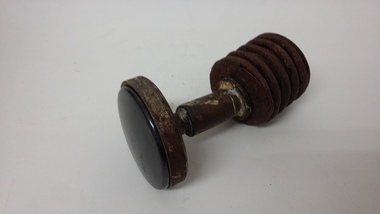
Aero Engine Valve Assembly, Aircraft Radial Engine Valve, C1940
... Aero Engine Valve Assembly...Aircraft Radial Engine Valve Aero Engine Valve Assembly ...Item was found at a Japanese aircraft crash site on Nauru Island 1975Indicate Japanese manufacturing level during WW11. The porcelain head on the valve is unusual and difficult to match to steel.Valve fitted with spring and porcelain valve head.Slight bend in valve stem due to impact damage.None -
Moorabbin Air Museum
Manual - Allison engines, Allison Gas Turbines PIL ( Part Information Letters )
... Basic engine assembly...Allison engines Basic engine assembly Compressor assembly Power & accessory gearbox assembly Gas producer & power turbine assesmbly Reduction gearbox assembly Electrical system assembly Control system assembly Engine shipping parts assembly Collection of part information letters for Allison gas turbine engines, circa 1998 - 2005 3 ring folder Allison Gas Turbines PIL ( Part Information Letters ) Manual Allison engines ...Collection of part information letters for Allison gas turbine engines, circa 1998 - 20053 ring foldernon-fictionCollection of part information letters for Allison gas turbine engines, circa 1998 - 2005basic engine assembly, compressor assembly, power & accessory gearbox assembly, gas producer & power turbine assesmbly, reduction gearbox assembly, electrical system assembly, control system assembly, engine shipping parts assembly -
Moorabbin Air Museum
Booklet - CAC Commonwealth Aircraft Corporation gas turbine division
... ...Engine assembly/test/repair & overhaul...CAC Commonwealth Aircraft gas turbine division General outline Physical & surface treatment processing Vacuum brazing & heat treatment Component manufacturing Engine assembly/test/repair & overhaul Foundries Overview of CAC gas turbine division 2 copies CAC Commonwealth Aircraft Corporation Gas Turbine Division Booklet CAC Commonwealth Aircraft Corporation gas turbine division ...Overview of CAC gas turbine division2 copiesOverview of CAC gas turbine divisiongeneral outline, physical & surface treatment processing, vacuum brazing & heat treatment, component manufacturing, engine assembly/test/repair & overhaul, foundries -
Moorabbin Air Museum
Manual - CAC engineering
... ...Engine assembly & balancing...CAC Engineering Design engineering Engine assembly & balancing Machine shop Foundry metal casting group Hydraulics Heat treatment Plastics Laboratories Test rigs engine accessories & fuel Overview of CAC engineering facilities, including technical descriptions of equipment, etc. ...Overview of CAC engineering facilities, including technical descriptions of equipment, etc. Circa 1982Spiral bound manualnon-fictionOverview of CAC engineering facilities, including technical descriptions of equipment, etc. Circa 1982design engineering, engine assembly & balancing, machine shop, foundry metal casting group, hydraulics, heat treatment, plastics, laboratories, test rigs engine accessories & fuel -
Moorabbin Air Museum
Manual - CAC engineering, CAC Skills Experience 1970, 1971 & 1972
... ...Engine assembly...CAC engineering Products Aircraft assembly Engine assembly Engine test cells Machine shop Sheetmetal Tool & gauge rooms Hydraulics Electrical department Instrument department Radio radar Laboratories Heat treatment Processing Plastics Foundry Technical overview of CAC engineering facilities, circa 1970,1971 & 1972. ...Technical overview of CAC engineering facilities, circa 1970,1971 & 1972.Spiral bound manuals 1970, 1971 & 1972non-fictionTechnical overview of CAC engineering facilities, circa 1970,1971 & 1972.products, aircraft assembly, engine assembly, engine test cells, machine shop, sheetmetal, tool & gauge rooms, hydraulics, electrical department, instrument department, radio radar, laboratories, heat treatment, processing, plastics, foundry -
Moorabbin Air Museum
Photograph (item) - Armstrong-Siddeley Cheetah Engine Front Cover Assembly, Group B. Section 4 Cheetah IX Front Cover Assembly
... Armstrong-Siddeley Cheetah Engine Front Cover Assembly...Section 4 Cheetah IX Front Cover Assembly Photograph Armstrong-Siddeley Cheetah Engine Front Cover Assembly ... -
Moorabbin Air Museum
Manual (Item) - Atar Engine Overhaul Manual Assembly - Plates (French)
... Atar Engine Overhaul Manual Assembly - Plates (French)...Manual Atar Engine Overhaul Manual Assembly - Plates (French) ...Description: 260 pages. Published by SNECMA. Published with materials from 1965-1968. *DIRECT FRENCH MANUAL - NO ENGLISH TRANSLATION* Level of Importance: World. -
Moorabbin Air Museum
Manual (Item) - Atar Engine Overhaul Manual Assembly - Text (French)
... Atar Engine Overhaul Manual Assembly - Text (French)...Manual Atar Engine Overhaul Manual Assembly - Text (French) ...Description: 360 pages. Published by SNECMA. Published with materials from 1967-1969. *DIRECT FRENCH MANUAL - NO ENGLISH TRANSLATION* Level of Importance: World. -
Moorabbin Air Museum
Drawing (Item) - Allison Installation Assembly Engine 250 Series Turbo Propeller 6853210
... Allison Installation Assembly Engine 250 Series Turbo Propeller 6853210...Drawing Allison Installation Assembly Engine 250 Series Turbo Propeller 6853210 ... -
Moorabbin Air Museum
Drawing (Item) - Allison Installation Assembly Engine 250 Series Turbo Propeller 6853210
... Allison Installation Assembly Engine 250 Series Turbo Propeller 6853210...Drawing Allison Installation Assembly Engine 250 Series Turbo Propeller 6853210 ... -
Moorabbin Air Museum
Manual - Sikorsky S76 helicopters, Engine Oil Cooler Blower Assembly
... Engine Oil Cooler Blower Assembly ...Sikorsky S76 helicopters Description & operation Testing and trouble shooting Disassembly Cleaning Check Repair Assembly Illustrated parts list Maintenance guidelines for engine oil blower assembly with illustrated parts list, circa 1980 Stapled together, unbound pages Engine Oil Cooler Blower Assembly Manual Sikorsky S76 helicopters ...Maintenance guidelines for engine oil blower assembly with illustrated parts list, circa 1980Stapled together, unbound pagesnon-fictionMaintenance guidelines for engine oil blower assembly with illustrated parts list, circa 1980description & operation, testing and trouble shooting, disassembly, cleaning, check, repair, assembly, illustrated parts list -
Moorabbin Air Museum
Book (item) - CAC Collection - Technical Data Bell Helicopter Company
... Acceptance Test Specification For The 206-040-100 Driveshaft Assembly Engine To Transmission...Acceptance Test Specification For The 206-040-100 Driveshaft Assembly Engine To Transmission CAC Collection - Technical Data Bell Helicopter Company Book CAC Collection - Technical Data Bell Helicopter Company ...Acceptance Test Specification For The 206-040-100 Driveshaft Assembly Engine To Transmission -
4th/19th Prince of Wales's Light Horse Regiment Unit History Room
Transmission Assembly, Ferret Scout Car, Daimler, c 1950
... Ferret Scout Car - B60 No 1 Mk 6A transmission assembly incorporating engine, fluid coupling, gear box and transfer box....Ferret Scout Car Transmission Engine Number 12993 List Number 35418 Modification plate marked to Mod 3. Ferret Scout Car - B60 No 1 Mk 6A transmission assembly incorporating engine, fluid coupling, gear box and transfer box. ...The Ferret Scout Car , was developed by the British Army in the late 1940s and came into production in the 1950s. The Ferret first saw service in the British Army in 1952, and a little later in Australia. There were many series and Marks of the Ferret. In Australia two were primarily used. The Mark1, which had no turret and a crew of three, and the Mark2, with a turret and a crew of two. The Australian Army used the Ferrets as scout cars until the 1960s, they were disposed of by public auction in the early 1970s. The Ferret is a light armoured car, intended for light reconnaissance work, they are very mobile and were well suited to their role. The vehicle was designed by Daimler, as a further development on the successful Daimler Dingo of WW2. The Ferret is fully armoured and the standard model of the Ferret Mk2 was further strengthened shortly after its design and became the Mk2/3 (this is the usual model referred as the Mk2). The motor was Roll Royce B60 motor, giving the vehicle a power to weight ratio of 29.35 break horse power per tonne, the vehicle weighs 3.6 tonnes, although a combat weight would be 4.3 tonnes. It is four wheel drive, constant, and has a top speed of 93 k.p.h. (approx 50 m.p.h.). Fuel consumption is only about 34 litres per kilometer. The Ferret is 3.8 metres long by 1.9 metres wide and is 1.9 metres high, not including radio aerials. The ground clearance is .33 of a metre and the track width is 1.5 metres.Ferret Scout Car - B60 No 1 Mk 6A transmission assembly incorporating engine, fluid coupling, gear box and transfer box.Engine Number 12993 List Number 35418 Modification plate marked to Mod 3. ferret scout car, transmission -
Moorabbin Air Museum
Album (item) - CAC Folder containing a range of documents and photos, refer Description for details
... CAC Photo F404 Engine Assembly. CAC Photo - Visit By Chief OF The Air Staff Thursday 7 Nov.1985. ...CAC Photo F404 Engine Assembly. CAC Photo - Visit By Chief OF The Air Staff Thursday 7 Nov.1985. ...CAC Green Folder containing documents and photos as listed below, CAC Photo Technologist Apprentice Brad Cronk receiving CAC Perpetual Trophy. Photo Staff Officer Repair and Overhaul (M.H. Reymond SQN LDR ROIC (EXT 4564) RAAF Victoria Barracks Melbourne 3004 Photo Fuel Farm And Start Air Storages. CAC Photo Checking Computer Displays Prior To Engine Test. CAC Photo F404 Engine Assembly. CAC Photo - Visit By Chief OF The Air Staff Thursday 7 Nov.1985. Hawker de Havilland GAZETTE assorted issues. Hawker de Havilland CONTACT assorted issues. Hawker de Havilland HAWKTALK assorted issues. CAC General Correspondence. Hawker de Havilland GAZETTE , canning Electron Microscope. CAC Assorted Sales and Marketing plans CAC Photo Jet Engine Test Facility (Computer Control & Data Aquisition ) CAC Photo of Macchi A7-075 CAC Photo of coating baths. CAC Photos of Macchi A7-064. -
Moorabbin Air Museum
Manual (item) - Duplicates - see Description
... Booklet No date CAC Engine Assembly and Balancing Folder 1/1/1963 RAAF - Sabre Mk.30,31,32. ...Booklet No date CAC Engine Assembly and Balancing Folder 1/1/1963 RAAF - Sabre Mk.30,31,32. ... -
Moorabbin Air Museum
Document (item) - Roland Jahne Collection - See Description for details
... Folder No date Merlin 100 series engines. Assembly Instructions. Manilla folder Autumn 2011 Curtiss - Wings magazine. ...Folder No date Merlin 100 series engines. Assembly Instructions. Manilla folder Autumn 2011 Curtiss - Wings magazine. ... -
 Flagstaff Hill Maritime Museum and Village
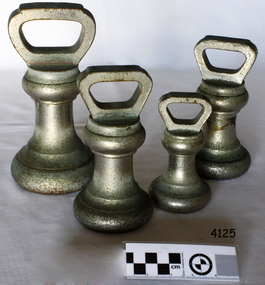
Functional object - Standard avoirdupois weights, Avery Ltd, 1950s
... engine business was gradually converted to pure manufacture of weighing machines. The turn of the century was marked by managing director William Hipkins who was determined to broadening the renown of the Avery brand and transforming the business into specialist manufacture of weighing machines. By 1914 the company occupied an area of 32,000m² and had some 3000 employees. In the inter-war period, the growth continued with the addition of specialized shops for cast parts, enamel paints and weighbridge assembly...engine business was gradually converted to pure manufacture of weighing machines. The turn of the century was marked by managing director William Hipkins who was determined to broadening the renown of the Avery brand and transforming the business into specialist manufacture of weighing machines. By 1914 the company occupied an area of 32,000m² and had some 3000 employees. In the inter-war period, the growth continued with the addition of specialized shops for cast parts, enamel paints and weighbridge assembly ...A weight made in England by W&T Avery a British manufacturer of weights and weighing machines. The company was founded in the early 18th century and took the name W & T Avery in 1818. The undocumented origin of the company goes back to 1730 when James Ford established the business in the town of Digbeth. On Joseph Balden, the then company’s owner’s death in 1813 William and Thomas Avery took over his scale making business and in 1818 renamed it W & T Avery. The business rapidly expanded and in 1885 they owned three factories: the Atlas Works in West Bromwich, the Mill Lane Works in Birmingham and the Moat Lane Works in Digbeth. In 1891 the business became a limited company with a board of directors and in 1894 the shares were quoted on the London Stock Exchange. In 1895 the company bought the legendary Soho Foundry in Smethwick, a former steam engine factory owned by James Watt & Co. In 1897 the move was complete and the steam engine business was gradually converted to pure manufacture of weighing machines. The turn of the century was marked by managing director William Hipkins who was determined to broadening the renown of the Avery brand and transforming the business into specialist manufacture of weighing machines. By 1914 the company occupied an area of 32,000m² and had some 3000 employees. In the inter-war period, the growth continued with the addition of specialized shops for cast parts, enamel paints and weighbridge assembly and the product range diversified into counting machines, testing machines, automatic packing machines and petrol pumps. During the second world war, the company also produced various types of heavy guns. At that time the site underwent severe damage from parachute mines and incendiary bombs. Then from 1931 to 1973, the company occupied the 18th-century Middlesex Sessions House in Clerkenwell as its headquarters. Changes in weighing machine technology after World War II led to the closure of the foundry, the introduction of electronic weighing with the simultaneous gradual disappearance of purely mechanical devices. The continued expansion was partly achieved through a series of acquisitions of other companies. After almost a century of national and international expansion, the company was taken over by GEC in 1979. Keith Hodgkinson, managing director at the time, completed the turn-around from mechanical to electronic weighing with a complete overhaul of the product range of retail sales of industrial platform scales. In 1993 GEC took over the Dutch-based company Berkel and the Avery-Berkel name was introduced. In 2000 the business was in turn acquired by the US-American company Weigh-Tronix, who already owned Salter, and is today operating as Avery Weigh-Tronix. An item used used by grocers and merchants to weigh store bought goods around the 1950s. This item gives an insight into social history of the time.Weights, metal, silver electroplated, 1 x 2lb, 2 x 4lb, 1 x 7lb. (4) all government stamped, made by Avery Ltd.Noneflagstaff hill, warrnambool, shipwrecked-coast, flagstaff-hill, flagstaff-hill-maritime-museum, maritime-museum, shipwreck-coast, flagstaff-hill-maritime-village, weight, imperial weight, imperial standard weights and measures, imperial standard weight -
 Flagstaff Hill Maritime Museum and Village
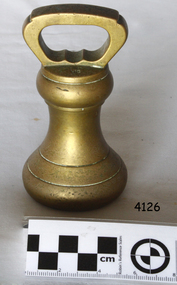
Functional object - Weight Avoirdupois, Avery Ltd, 1940-1950s
... engine business was gradually converted to pure manufacture of weighing machines. The turn of the century was marked by managing director William Hipkins who was determined to broadening the renown of the Avery brand and transforming the business into specialist manufacture of weighing machines. By 1914 the company occupied an area of 32,000m² and had some 3000 employees. In the inter-war period, the growth continued with the addition of specialized shops for cast parts, enamel paints and weighbridge assembly...engine business was gradually converted to pure manufacture of weighing machines. The turn of the century was marked by managing director William Hipkins who was determined to broadening the renown of the Avery brand and transforming the business into specialist manufacture of weighing machines. By 1914 the company occupied an area of 32,000m² and had some 3000 employees. In the inter-war period, the growth continued with the addition of specialized shops for cast parts, enamel paints and weighbridge assembly ...A weight made in England by W&T Avery a British manufacturer of weights and weighing machines. The company was founded in the early 18th century and took the name W & T Avery in 1818. The undocumented origin of the company goes back to 1730 when James Ford established the business in the town of Digbeth. On Joseph Balden, the then company’s owner’s death in 1813 William and Thomas Avery took over his scale making business and in 1818 renamed it W & T Avery. The business rapidly expanded and in 1885 they owned three factories: the Atlas Works in West Bromwich, the Mill Lane Works in Birmingham and the Moat Lane Works in Digbeth. In 1891 the business became a limited company with a board of directors and in 1894 the shares were quoted on the London Stock Exchange. In 1895 the company bought the legendary Soho Foundry in Smethwick, a former steam engine factory owned by James Watt & Co. In 1897 the move was complete and the steam engine business was gradually converted to pure manufacture of weighing machines. The turn of the century was marked by managing director William Hipkins who was determined to broadening the renown of the Avery brand and transforming the business into specialist manufacture of weighing machines. By 1914 the company occupied an area of 32,000m² and had some 3000 employees. In the inter-war period, the growth continued with the addition of specialized shops for cast parts, enamel paints and weighbridge assembly and the product range diversified into counting machines, testing machines, automatic packing machines and petrol pumps. During the second world war, the company also produced various types of heavy guns. At that time the site underwent severe damage from parachute mines and incendiary bombs. Then from 1931 to 1973, the company occupied the 18th-century Middlesex Sessions House in Clerkenwell as its headquarters. Changes in weighing machine technology after World War II led to the closure of the foundry, the introduction of electronic weighing with the simultaneous gradual disappearance of purely mechanical devices. The continued expansion was partly achieved through a series of acquisitions of other companies. After almost a century of national and international expansion, the company was taken over by GEC in 1979. Keith Hodgkinson, managing director at the time, completed the turn-around from mechanical to electronic weighing with a complete overhaul of the product range of retail sales of industrial platform scales. In 1993 GEC took over the Dutch-based company Berkel and the Avery-Berkel name was introduced. In 2000 the business was in turn acquired by the US-American company Weigh-Tronix, who already owned Salter, and is today operating as Avery Weigh-Tronix. An item used used by grocers and merchants to weigh store bought goods around the 1950s. This item gives an insight into social history of the time.Weight, brass, Stamped F27, 2lb.flagstaff hill, warrnambool, shipwrecked-coast, flagstaff-hill, flagstaff-hill-maritime-museum, maritime-museum, shipwreck-coast, flagstaff-hill-maritime-village, weight, brass weight -
 Flagstaff Hill Maritime Museum and Village
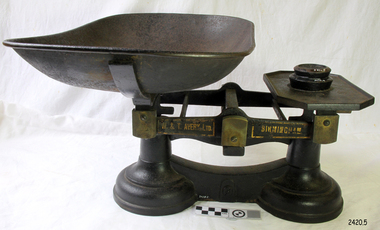
Equipment - Scale and weights, 1860-1900
... engine business was gradually converted to pure manufacture of weighing machines. The turn of the century was marked by managing director William Hipkins who was determined to broaden the renown of the Avery brand and transform the business into specialist manufacture of weighing machines. By 1914 the company occupied an area of 32,000m² and had some 3000 employees. In the inter-war period, the growth continued with the addition of specialized shops for cast parts, enamel paints and weighbridge assembly...engine business was gradually converted to pure manufacture of weighing machines. The turn of the century was marked by managing director William Hipkins who was determined to broaden the renown of the Avery brand and transform the business into specialist manufacture of weighing machines. By 1914 the company occupied an area of 32,000m² and had some 3000 employees. In the inter-war period, the growth continued with the addition of specialized shops for cast parts, enamel paints and weighbridge assembly ...The subject item was made in England by W&T Avery a British manufacturer of weights and weighing machines. The company was founded in the early 18th century and took the name W & T Avery in 1818. The undocumented origin of the company goes back to 1730 when James Ford established the business in the town of Digbeth. On Joseph Balden, the then company’s owner’s death in 1813 William and Thomas Avery took over his scale making business and in 1818 renamed it W & T Avery. The business rapidly expanded and in 1885 they owned three factories: the Atlas Works in West Bromwich, the Mill Lane Works in Birmingham and the Moat Lane Works in Digbeth. In 1891 the business became a limited company with a board of directors and in 1894 the shares were quoted on the London Stock Exchange. In 1895 the company bought the legendary Soho Foundry in Smethwick, a former steam engine factory owned by James Watt & Co. In 1897 the move was complete and the steam engine business was gradually converted to pure manufacture of weighing machines. The turn of the century was marked by managing director William Hipkins who was determined to broaden the renown of the Avery brand and transform the business into specialist manufacture of weighing machines. By 1914 the company occupied an area of 32,000m² and had some 3000 employees. In the inter-war period, the growth continued with the addition of specialized shops for cast parts, enamel paints and weighbridge assembly and the product range diversified into counting machines, testing machines, automatic packing machines and petrol pumps. During the second world war, the company also produced various types of heavy guns. At that time the site underwent severe damage from parachute mines and incendiary bombs. Then from 1931 to 1973, the company occupied the 18th-century Middlesex Sessions House in Clerkenwell as its headquarters. Changes in weighing machine technology after World War II led to the closure of the foundry, the introduction of electronic weighing with the simultaneous gradual disappearance of purely mechanical devices. The continued expansion was partly achieved through a series of acquisitions of other companies. After almost a century of national and international expansion, the company was taken over by GEC in 1979. Keith Hodgkinson, managing director at the time, completed the turn-around from mechanical to electronic weighing with a complete overhaul of the product range of retail sales of industrial platform scales. In 1993 GEC took over the Dutch-based company Berkel and the Avery-Berkel name was introduced. In 2000 the business was in turn acquired by the US-American company Weigh-Tronix, who already owned Salter, and is today operating as Avery Weigh-Tronix.An item used by grocers and merchants throughout the then British colonies of England to weigh store-bought goods around the mid to late 19th century. This item gives an insight into the daily lives of early colonial settlers and is a significant part of the era’s social history of the time.Balance scale and weights with removable dish, two round weights glued to tray 4oz and 8oz. Scales 'to weigh up to 28lb. Printed in gold on black labels each side "W & T AVERY LTD", "BIRMINGHAM" warrnambool, flagstaff-hill, flagstaff-hill-maritime-museum, maritime-museum, shipwreck-coast, flagstaff-hill-maritime-village, scale and weights, food preparation equipment, w t avery ltd, balance scale, grocers scales, james ford, william & thomas avery, birmingham uk -
 Flagstaff Hill Maritime Museum and Village
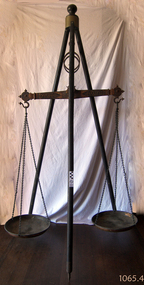
Equipment - Balance Scale, 1850s
... engine business was gradually converted to pure manufacture of weighing machines. The turn of the century was marked by managing director William Hipkins who was determined to broadening the renown of the Avery brand and transforming the business into a specialist manufacture of weighing machines. By 1914 the company occupied an area of 32,000m² and had some 3000 employees. In the inter-war period the growth continued with the addition of specialized shops for cast parts, enamel paints and weighbridge assembly...engine business was gradually converted to pure manufacture of weighing machines. The turn of the century was marked by managing director William Hipkins who was determined to broadening the renown of the Avery brand and transforming the business into a specialist manufacture of weighing machines. By 1914 the company occupied an area of 32,000m² and had some 3000 employees. In the inter-war period the growth continued with the addition of specialized shops for cast parts, enamel paints and weighbridge assembly ...A Large Rare mid 19th Century Balance Scale (also called a Beam Scale) Made in England by W&T Avery a British manufacturer of weighing machines. The company was founded in the early 18th century and took the name W & T Avery in 1818. The undocumented origin of the company goes back to 1730 when James Ford established the business in the town of Digbeth. On Joseph Balden the then company’s owner’s death in 1813 William and Thomas Avery took over his scale making business and in 1818 renamed it W & T Avery. The business rapidly expanded and in 1885 they owned three factories: the Atlas Works in West Bromwich, the Mill Lane Works in Birmingham and the Moat Lane Works in Digbeth. In 1891 the business became a limited company with a board of directors and in 1894 the shares were quoted on the London Stock Exchange. In 1895 the company bought the legendary Soho Foundry in Smethwick, a former steam engine factory owned by James Watt & Co. In 1897 the move was complete and the steam engine business was gradually converted to pure manufacture of weighing machines. The turn of the century was marked by managing director William Hipkins who was determined to broadening the renown of the Avery brand and transforming the business into a specialist manufacture of weighing machines. By 1914 the company occupied an area of 32,000m² and had some 3000 employees. In the inter-war period the growth continued with the addition of specialized shops for cast parts, enamel paints and weighbridge assembly and the product range diversified into counting machines, testing machines, automatic packing machines and petrol pumps. During the second world war the company also produced various types of heavy guns. At that time the site underwent severe damage from parachute mines and incendiary bombs.Then from 1931 to 1973 the company occupied the 18th-century Middlesex Sessions House in Clerkenwell as its headquarters. Changes in weighing machine technology after World War II led to the closure of the foundry, the introduction of electronic weighing with the simultaneous gradual disappearance of purely mechanical devices. The continued expansion was partly achieved through a series of acquisitions of other companies. After almost a century of national and international expansion the company was taken over by GEC in 1979. Keith Hodgkinson, managing director at the time, completed the turn-around from mechanical to electronic weighing with a complete overhaul of the product range of retail scales and industrial platform scales. In 1993 GEC took over the Dutch-based company Berkel and the Avery-Berkel name was introduced. In 2000 the business was in turn acquired by the US-American company Weigh-Tronix, who already owned Salter, and is today operating as Avery Weigh-Tronix. Item made and used possibly around the 1850s by Victorian colonial government to check weights of goods being sold by early shop keepers on the gold fields item is very rare.James McEwan & Co were the retailers of W & T Avery scales in Victoria from 1852. A very rare item used probably to check weights used by merchants during colonial times by government inspectors in Victoria. A similar example exist in a NSW museum, the item is believed to have been made before W & T Avery expansion to the Soho foundry in Birmingham in 1885 and after 1818.Beam balance scale suspended from a wooden tripod, with metal trays suspended by three chain lengths. embossed on the balance beam W T Avery, Birmingham,flagstaff hill, warrnambool, shipwrecked coast, flagstaff hill maritime museum, maritime museum, shipwreck coast, flagstaff hill maritime village, great ocean road, scale, avery -
 B-24 Liberator Memorial Restoration Australia Inc
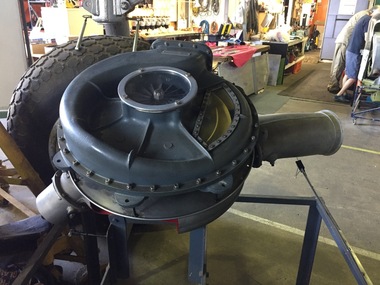
Turbocharger, General ElectricModel B-22, Circa 1940s
... engine for the supply of air at an increased pressure to the carburetor intake. This enabled the B-24 Liberator to maintain a maximum 1300HP at takeoff from sea level to 30,000 ft. ceiling and at high altitude. General Electric turbo super charger. GE Ser. No. 872144 FW, A Setting 6, Assembly ...General Electric turbocharger model B-22 was fitted externally to a Pratt & Whitney R1930 14 cylinder twin wasp radial air-cooled engine for the supply of air at an increased pressure to the carburetor intake. This enabled the B-24 Liberator to maintain a maximum 1300HP at takeoff from sea level to 30,000 ft. ceiling and at high altitude.Round metal supercharger with inlet and outlet.General Electric turbo super charger. GE Ser. No. 872144 FW, A Setting 6, Assembly OD WW 8456556, Model 75-B22-A6 AF Contract or Purchase Order W33-038AC-1699, Spec. H-285022-22 Schenectady Made in US -
Moorabbin Air Museum
Manual - CFM turbofan engines, CF,M Turbofan Engine Basic Engine Training Manual
... Engine maintenance...Fan & booster assembly...CFM turbofan engines CFM 56-3 particulars Engine maintenance Fan & booster assembly Bearing support assembly High pressure compressor Miscellaneous technical matters Technical overview of CFM56 turbofan for basic training, circa 1984 3 ring folder CF,M Turbofan Engine Basic Engine Training Manual Manual CFM turbofan engines ...Technical overview of CFM56 turbofan for basic training, circa 19843 ring foldernon-fictionTechnical overview of CFM56 turbofan for basic training, circa 1984cfm 56-3 particulars, engine maintenance, fan & booster assembly, bearing support assembly, high pressure compressor, miscellaneous technical matters
