
Showing 6 items matching "england -- worcestershire"
-
 Narre Warren and District Family History Group
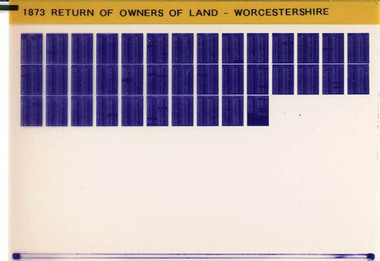
Film, West Surrey Family History Society, Return of Owners of Land Worcestershire, England 1873, 1990s
... Return of Owners of Land Worcestershire, England 1873...England -- Worcestershire...England -- Worcestershire Worcestershire Worcestershire -- land owners The Return of Owners of Land, 1873 for Worcestershire provides a fascinating glimpse into land ownership during the Victorian era. ...The Return of Owners of Land, 1873 for Worcestershire provides a fascinating glimpse into land ownership during the Victorian era. It lists landowners with holdings of one acre or more, detailing the size and estimated rental value of their properties. This survey was part of a broader effort to address concerns about land monopolies and to provide transparency about land distribution. For Worcestershire, the records highlight the disparities in land ownership, with a small number of individuals owning vast estates while many others held smaller plots. The survey also includes information about common lands and waste lands in the county.Set of 1 microfiche non-fictionThe Return of Owners of Land, 1873 for Worcestershire provides a fascinating glimpse into land ownership during the Victorian era. It lists landowners with holdings of one acre or more, detailing the size and estimated rental value of their properties. This survey was part of a broader effort to address concerns about land monopolies and to provide transparency about land distribution. For Worcestershire, the records highlight the disparities in land ownership, with a small number of individuals owning vast estates while many others held smaller plots. The survey also includes information about common lands and waste lands in the county. england -- worcestershire, worcestershire, worcestershire -- land owners -
 Wodonga & District Historical Society Inc
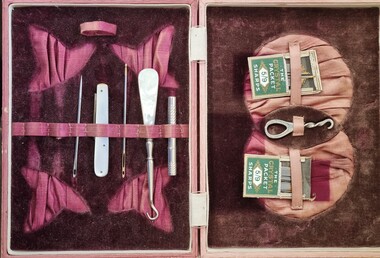
Functional object - Sewing Kit, c1900
... The sewing needles in this kit were manufactured by John James Redditch, Worcestershire, England. The business was formed in 1840 and first appeared in the region’s business directory in 1860. ...The sewing needles in this kit were manufactured by John James Redditch, Worcestershire, England. The business was formed in 1840 and first appeared in the region’s business directory in 1860. ...Sewing kit, often referred to as a sewing necessaire, contained items which were seen as necessary to complete basic needlework tasks. They were portable so could easily be carried by a lady when she was travelling away from home. Fitted in a velvet and silk lined box, it included a selection of needles ranging from darning needles to smaller sharps, as well as a button hook, a small pocket knife. The sewing needles in this kit were manufactured by John James Redditch, Worcestershire, England. The business was formed in 1840 and first appeared in the region’s business directory in 1860. John James initially specialised in industrial needles and tools and in particular in sail making needles before branching out into embroidery and domestic use. The brand continues to be manufactured in 2026 by the English Needle and Fishing Tackle Company – ENTACO. This item is significant because it is an example of domestic items used by women in the late 19th and early 20th century throughout the Wodonga district and beyond.A velvet lined wood box containing a range of basic sewing items.domestic items, sewin implements -
 Flagstaff Hill Maritime Museum and Village
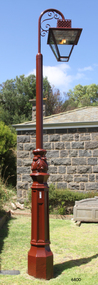
Functional object - Lamp Light, late 19th - early-20th century
... He arrived in Warrnambool from Worcestershire, England, in 1852 and was very active in the local council and community. ...He arrived in Warrnambool from Worcestershire, England, in 1852 and was very active in the local council and community. ...This gas lamp light and stand came from the original manufacturer in Melbourne. Gas street lights such as this one were used in Melbourne from the mid-19th century. The lights enabled safer after-dark travel for pedestrians and vehicles and were a deterrent to crime. A lamp lighter was employed to keep the lamps lit, sometimes with little success due to weather conditions and the pranks of youths. WARRNAMBOOL Gasworks In Warrnambool prior to 1874 there were about twenty rare, individually lit street lights in Warrnambool, each with its own supply of kerosene. These lamps were in the central business area of Timor, Koroit and Liebig Streets. The Warrnambool Gas Company Ltd. was registered as an incorporated company in 1873. It was a private, locally owned business. It was located at 209-215 Merri Street, Warrnambool, on the land, which is just west of the later-built railway station. The first managers of the Gas Company lived in a substantial stone house on site, but later the managers lived in a residence in Henna Street between Merri and Timor Streets. The original home, which still stands, became a residence for the Railway Station Master from about 1890. In August 1874 the construction of the gasworks was complete and at the end of that month gas was supplied to all of the existing lamps in Warrnambool for the first time. The Warrnambool Gas Company wound up in 1880-1881 and was purchased by the Warrnambool Borough Council with money raised by a loan – the Borough’s first ‘loan transaction’. The Council established a piped network to supply gas to other street connections. The gasworks were privatised and upgraded in 1952. In 1972 the town supply was converted to liquid petroleum gas and by the early 1980s the gasworks were closed down. In 1986 Warrnambool was supplied with natural gas from a site near Port Campbell. The Warrnambool gasworks supplied all street and shop lighting and most domestic lighting until 1923 when electricity was available for lighting. Bromfield Street in Warrnambool was named after the director of the gasworks, James Astley Bromfield (1823-1903). He arrived in Warrnambool from Worcestershire, England, in 1852 and was very active in the local council and community. Cockman Street was named after the first secretary of the gasworks in 1874, Walter Cockman (c.1821-1892). He was a Mayor and businessman. The second Manager, Luther Rodgers, worked for the gas company for about twenty years and both Rodger Place and Rodgers Road in Warrnambool have been named after him. LAMP LIGHTS IN MELBOURNE In the 1820s Melbourne's innkeepers were legally required to have a lamp light outside their premises from sunset to sunrise. This was the first instance of street lamps being used in Melbourne. In 1847 the first oil lamp was used in the city. In 1849 a gas lamp was installed on the Swanston Street Bridge and much of the city had oil lamps installed by then. In August 1857 the installation of street gas lamps began in Melbourne. They were welcomed for the much brighter illumination they gave. By 1860 there were 414 lamp pillars. The phrase was quoted often - "A light was as good as a policeman". The first gas burners used for street lighting were called 'fishtail' gas burners. These were replaced in the early 1900s by gas mantles. The City of Melbourne Gas Coke Company was formed in 1850 but due to the Gold Rush the manufacture and distribution of the gas supply was delayed until January 1856. By the 1890s the gas supplying the lights was supplied by three companies in Melbourne. In 1879 a football match was played at the MCG under electric lighting and gradually electric arc lights were installed inside and outside buildings in the city. Lamp lights such as the one in Flagstaff Hill’s collection were no longer needed. (References: John Lindsay re Lamp Light history 2019-01-29, Former Warrnambool Gas Company Limited, Victorian Heritage Database Report, Heritage Number 149746 https://vhd.heritagecouncil.vic.gov.au/places/149746/download-report ) The lamp light is representative of the lamps used in Melbourne from the mid-nineteenth century to light the streets at night and make Melbourne a safer city. The lamp is also representative of the gas street lighting in Warrnambool from the mid-1870s-1920s.Lamp light or gas light. Street light, one of the last gas street lights removed from Melbourne. (Reconditioned by Friends of Flagstaff Hill, 2013)flagstaff hill, warrnambool, shipwrecked coast, flagstaff hill maritime museum, maritime museum, shipwreck coast, flagstaff hill maritime village, great ocean road, lamp light, gas light, gas lamp, street lamp, street light, gas street light, melbourne street lighting, warrnambool street lighting, melbourne gas street light, warrnambool gas company, warrnambool gasworks, james bromfield, walter cockman, luther rodgers, city of melbourne gas coke company -
 Uniting Church Archives - Synod of Victoria
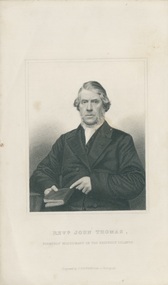
Engraving from photograph, Undated
... John Thomas was born at Worcester, England in 1796 and he became a blacksmith at Hagley, Worcestershire before becoming a Methodist and he soon started to preach. ...John Thomas was born at Worcester, England in 1796 and he became a blacksmith at Hagley, Worcestershire before becoming a Methodist and he soon started to preach. ...John Thomas was born at Worcester, England in 1796 and he became a blacksmith at Hagley, Worcestershire before becoming a Methodist and he soon started to preach. He married Sarah Hartshorn who predeceased him in 1867. He was accepted by the Wesleyan Methodist Missionary Society (WMMS) in 1824 and he became a pioneering missionary to Tonga (the Friendly Isles) in the South Pacific. He sailed first to Australia, and eventually arrived in Tonga in 1826, together with his wife and fellow missionary John Hutchinson.Initially he preached in Hihifo, Tongatapu from 1826 to 1828 and then moved to the island of Ha’apai in 1829. He baptised the chief Taufa’ahua Tupou in 1831 and enthroned him with English rites as the first King of all Tonga in 1845. Although the WMMS withdrew from Samoa in 1839, Thomas advocated its re-entry and he supported the King’s policy of sending Tongan Wesleyan missionaries to Fiji and Samoa. John Thomas also persuaded the Australasian Wesleyan Conference ( which took over the Pacific region from the British in 1855) to reverse the London Missionary Society’s decision regarding Samoa. John Thomas had 2 periods in Tonga from 1826 to 1850 and 1855 to 1859. Following a visit to England his influence with King Tupou waned in the 1850's and he retired to England and became a supernumerary minister at Stourbridge, Worcestershire, where he died in 1881. His wife Sarah had been a partner in his missionary work until she died 14 years earlier than he did. John Thomas’ name is honoured by having one of the 12 dormitory houses of Toupou College in the capitol of Tonga named after him. John Thomas House is House #1, and it is customary for the Head Prefect to reside in this dormitory. B & W engraving from a photograph of the Rev. John Thomas, formerly missionary in the Friendly IslandsRevd. John Thomas, Formerly Missionary in the Friendly Islands, Engraved by J. Cochran from a Photograph.rev. john thomas, methodist, tonga, friendly islands, wesleyan, missionary, wesleyan methodist missionary society -
 Flagstaff Hill Maritime Museum and Village
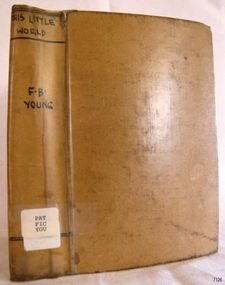
Book - Fictional Story, Francis Brett Young, This Little World, 1934
... Worcestershire, UK, and was a novelist, poet, playwright, composer, doctor and soldier. He died in Cape Town in 1954. He studied medicine at Birmingham, practised at Brixham, Devon, from 1907 and married the singer Jessie Hankinson. He served in the Royal Army Medical Corps (RAMC) in East Africa during the First World War, lived on Capri after the war, and returned to England...Worcestershire, UK, and was a novelist, poet, playwright, composer, doctor and soldier. He died in Cape Town in 1954. He studied medicine at Birmingham, practised at Brixham, Devon, from 1907 and married the singer Jessie Hankinson. He served in the Royal Army Medical Corps (RAMC) in East Africa during the First World War, lived on Capri after the war, and returned to England ...This Little World is set in a Worcestershire village in the early 1920s, where the aftermath of the First World War is starting to bring social change. It resembles Young’s later Portrait of a Village (1937). A publisher’s blurb adds that it follows a varied cast of villagers through romances, rivalries, tragedies and triumphs, with lyrical descriptions of the countryside.Hard cover book. This Little World Author: Francis Brett Young Publisher: William Heinemann Limited Date: 1934 Further Information: Brown Cloth hardcover with lettering and patterning to spine in black. The spine has a Library label with an inscription.fictionThis Little World is set in a Worcestershire village in the early 1920s, where the aftermath of the First World War is starting to bring social change. It resembles Young’s later Portrait of a Village (1937). A publisher’s blurb adds that it follows a varied cast of villagers through romances, rivalries, tragedies and triumphs, with lyrical descriptions of the countryside.book, this little world, francis brett young, shipwrecked-coast, flagstaff-hill, flagstaff-hill-maritime-museum, warrnambool, maritime-museum, shipwreck-coast, flagstaff-hill-maritime-village, shipwrecked-artefact, pattison collection, warrnambool library, warrnambool mechanics’ institute, ralph eric pattison, corangamite regional library service, warrnambool city librarian, mechanics’ institute library, victorian library board, warrnambool books and records, warrnambool children’s library, great ocean road -
 Flagstaff Hill Maritime Museum and Village
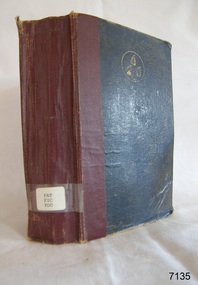
Book - A Fictional Story, Francis Brett Young, White Ladies, 1935
... Worcestershire, UK, and was a novelist, poet, playwright, composer, doctor and soldier. He died in Cape Town in 1954. He studied medicine at Birmingham, practised at Brixham, Devon, from 1907 and married the singer Jessie Hankinson. He served in the Royal Army Medical Corps (RAMC) in East Africa during the First World War, lived on Capri after the war, and returned to England...Worcestershire, UK, and was a novelist, poet, playwright, composer, doctor and soldier. He died in Cape Town in 1954. He studied medicine at Birmingham, practised at Brixham, Devon, from 1907 and married the singer Jessie Hankinson. He served in the Royal Army Medical Corps (RAMC) in East Africa during the First World War, lived on Capri after the war, and returned to England ...White Ladies is a 1935 novel in which the granddaughter of a wealthy tycoon and his well-bred wife becomes obsessed with recovering the family estate, an Elizabethan manor house named White Ladies. Like many of the author’s Mercian novels, much of it is set in Worcestershire. The heroine is Arabella Tinsley III, her mother, Arabella II, ran away with a young man from her father’s drawing office. Arabella III was due to inherit the fortune and business her grandfather built. The reviewer calls it a story of passion and obsession around the house.Hard cover book. White Ladies Author: Francis Brett Young Publisher: William Heinemann Limited Date: 1935 Further Information: Blue Cloth hardcover, red spine with no lettering visible and a gilt patterning to front cover. The spine has a Library label with an inscription.fictionWhite Ladies is a 1935 novel in which the granddaughter of a wealthy tycoon and his well-bred wife becomes obsessed with recovering the family estate, an Elizabethan manor house named White Ladies. Like many of the author’s Mercian novels, much of it is set in Worcestershire. The heroine is Arabella Tinsley III, her mother, Arabella II, ran away with a young man from her father’s drawing office. Arabella III was due to inherit the fortune and business her grandfather built. The reviewer calls it a story of passion and obsession around the house. book, white ladies, francis brett young, shipwrecked-coast, flagstaff-hill, flagstaff-hill-maritime-museum, warrnambool, maritime-museum, shipwreck-coast, flagstaff-hill-maritime-village, shipwrecked-artefact, pattison collection, warrnambool library, warrnambool mechanics’ institute, ralph eric pattison, corangamite regional library service, warrnambool city librarian, mechanics’ institute library, victorian library board, warrnambool books and records, warrnambool children’s library, great ocean road
