
Showing 8 items matching "ethics - political"
-
 Unions Ballarat
All honourable men: Corruption and compromise in American life (Don Woodward Collection), Goodman, Walter, 1964
... ...ethics - political...Social, political and business ethics - United States. btlc ballarat trades hall ballarat trades and labour council politics and government - usa ethics - business ethics - political media - usa social customs - usa Bendigo Library Regulations pasted inside the book. ...Contents Introduction: scandals without scoundrels -- Business: away of life -- Government: quis custodiet inches per secondos custodes? -- Mass media: the generation of the lie -- Conclusion: a gentle consensus.Social, political and business ethics - United States.Book; 342 pages. Dustjacket: plastic cover; black background; red and white lettering; red graphic of people; author's name and title. Cover: black background; gold lettering; author's name and title.Bendigo Library Regulations pasted inside the book. Stamp: "Bendigo Regional Library Service". Stamp: "47201". Due date page is glued to back pages. Library card envelope is glued inside the back cover and stamped "KYNETON". btlc, ballarat trades hall, ballarat trades and labour council, politics and government - usa, ethics - business, ethics - political, media - usa, social customs - usa -
 Federation University Historical Collection
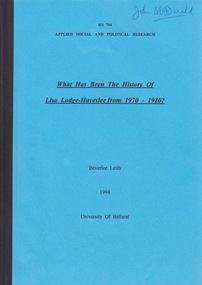
Document - Document - Research Paper, University of Ballarat: Applied Social and Political Research; "What has been the History of Lisa Lodge-Haveslee from 1970 - 1980?" Beverlee Leith, 1994
... Dr John McDonald, School of Humanities and Social Sciences was supervisor. honorary probation officers ballarat adolescent girls hayeslee house minutes of meetings correspondence berry street interviews beverlee leith human research ethics committee school of humanities & social sciences dr john mcdonald lisa lodge girls' hostel residential care Name John McDonald written in biro - top right corner of front cover. Date of item is 1994 Booklet of 51 pages. Blue paper cover front and back. Pages are glued together and have black binding. University of Ballarat: Applied Social and Political ...Lisa Lodge Girls' Hostel, Ballarat, was established in 1970 and was run by a committee of women. All the women were Honorary Probation Officers. It provided residential care for eight adolescent girls at a time. Lisa Lodge was located in a number of different properties around Ballarat. The Hostel closed in 1994. Some time after this, Hayeslee House (another home in Ballarat, run by the same committee) became known as Lisa Lodge. This Committee managed a number of institutions in the Ballarat region. Another institution to start in 1994 was Berry Street Incorporated that amalgamated with Sutherland Child, Youth and Family Services. In 2009 Berry Street was the largest independent child and family welfare organisation in Victoria. In 2012 Lisa Lodge merged with Berry Street to strengthen Berry Street's services provided in the Grampians Region of Victoria. This research paper explores the first ten years of Lisa Lodge. Of note is Lisa Lodge was set up by a group of women for a group of women. It depended on donations to continue operating. Data was collected through interviews and analysing minutes of meetings. Correspondence and newspaper clipping were also used. This is a historical report so there are no recommendations. Before proceeding with this project, Beverlee Leith had to seek approval from the Human Research Ethics Committee, University of Ballarat. This was granted at their meeting on Thursday, 11 August 1994. Dr John McDonald, School of Humanities and Social Sciences was supervisor.Booklet of 51 pages. Blue paper cover front and back. Pages are glued together and have black binding. Name John McDonald written in biro - top right corner of front cover. Date of item is 1994honorary probation officers, ballarat, adolescent girls, hayeslee house, minutes of meetings, correspondence, berry street, interviews, beverlee leith, human research ethics committee, school of humanities & social sciences, dr john mcdonald, lisa lodge girls' hostel, residential care -
 Victorian Aboriginal Corporation for Languages
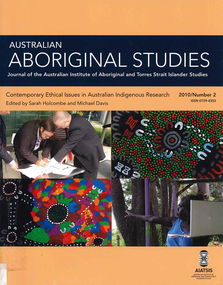
Periodical, Australian Institute of Aboriginal and Torres Strait Islander Studies, Australian Aboriginal studies : journal of the Australian Institute of Aboriginal and Torres Strait Islander Studies, 2010
... Ethics or social justice? Heritage and the politics of recognition Laurajane Smith (ANU) Nancy Fraser?...Ethics or social justice? Heritage and the politics of recognition Laurajane Smith (ANU) Nancy Fraser? ...'Whose Ethics?':Codifying and enacting ethics in research settings Bringing ethics up to date? A review of the AIATSIS ethical guidelines Michael Davis (Independent Academic) A revision of the AIATSIS Guidelines for Ethical Research in Indigenous Studies was carried out during 2009-10. The purpose of the revision was to bring the Guidelines up to date in light of a range of critical developments that have occurred in Indigenous rights, research and knowledge management since the previous version of the Guidelines was released in 2000. In this paper I present an outline of these developments, and briefly discuss the review process. I argue that the review, and the developments that it responded to, have highlighted that ethical research needs to be thought about more as a type of behaviour and practice between engaged participants, and less as an institutionalised, document-focused and prescriptive approach. The arrogance of ethnography: Managing anthropological research knowledge Sarah Holcombe (ANU) The ethnographic method is a core feature of anthropological practice. This locally intensive research enables insight into local praxis and culturally relative practices that would otherwise not be possible. Indeed, empathetic engagement is only possible in this close and intimate encounter. However, this paper argues that this method can also provide the practitioner with a false sense of his or her own knowing and expertise and, indeed, with arrogance. And the boundaries between the anthropologist as knowledge sink - cultural translator and interpreter - and the knowledge of the local knowledge owners can become opaque. Globalisation and the knowledge ?commons?, exemplified by Google, also highlight the increasing complexities in this area of the governance and ownership of knowledge. Our stronghold of working in remote areas and/or with marginalised groups places us at the forefront of negotiating the multiple new technological knowledge spaces that are opening up in the form of Indigenous websites and knowledge centres in these areas. Anthropology is not immune from the increasing awareness of the limitations and risks of the intellectual property regime for protecting or managing Indigenous knowledge. The relevance of the Declaration on the Rights of Indigenous Peoples in opening up a ?rights-based? discourse, especially in the area of knowledge ownership, brings these issues to the fore. For anthropology to remain relevant, we have to engage locally with these global discourses. This paper begins to traverse some of this ground. Protocols: Devices for translating moralities, controlling knowledge and defining actors in Indigenous research, and critical ethical reflection Margaret Raven (Institute for Sustainability and Technology Policy (ISTP), Murdoch University) Protocols are devices that act to assist with ethical research behaviour in Indigenous research contexts. Protocols also attempt to play a mediating role in the power and control inherent in research. While the development of bureaucratically derived protocols is on the increase, critiques and review of protocols have been undertaken in an ad hoc manner and in the absence of an overarching ethical framework or standard. Additionally, actors implicated in research networks are seldom theorised. This paper sketches out a typology of research characters and the different moral positioning that each of them plays in the research game. It argues that by understanding the ways actors enact research protocols we are better able to understand what protocols are, and how they seek to build ethical research practices. Ethics and research: Dilemmas raised in managing research collections of Aboriginal and Torres Strait Islander materials Grace Koch (AIATSIS) This paper examines some of the ethical dilemmas for the proper management of research collections of Indigenous cultural materials, concentrating upon the use of such material for Native Title purposes. It refers directly to a number of points in the draft of the revised AIATSIS Guidelines for Ethical Research in Indigenous Studies and draws upon both actual and hypothetical examples of issues that may arise when requests are made for Indigenous material. Specific concerns about ethical practices in collecting data and the subsequent control of access to both the data itself and to published works based upon it are raised within the context of several types of collections, including those held by AIATSIS and by Native Title Representative Bodies. Ethics or social justice? Heritage and the politics of recognition Laurajane Smith (ANU) Nancy Fraser?s model of the politics of recognition is used to examine how ethical practices are interconnected with wider struggles for recognition and social justice. This paper focuses on the concept of 'heritage' and the way it is often uncritically linked to 'identity' to illustrate how expert knowledge can become implicated in struggles for recognition. The consequences of this for ethical practice and for rethinking the role of expertise, professional discourses and disciplinary identity are discussed. The ethics of teaching from country Michael Christie (CDU), with the assistance of Yi?iya Guyula, Kathy Gotha and Dh�?gal Gurruwiwi The 'Teaching from Country' program provided the opportunity and the funding for Yol?u (north-east Arnhem Land Aboriginal) knowledge authorities to participate actively in the academic teaching of their languages and cultures from their remote homeland centres using new digital technologies. As two knowledge systems and their practices came to work together, so too did two divergent epistemologies and metaphysics, and challenges to our understandings of our ethical behaviour. This paper uses an examination of the philosophical and pedagogical work of the Yol?u Elders and their students to reflect upon ethical teaching and research in postcolonial knowledge practices. Closing the gaps in and through Indigenous health research: Guidelines, processes and practices Pat Dudgeon (UWA), Kerrie Kelly (Australian Indigenous Psychologists Association) and Roz Walker (UWA) Research in Aboriginal contexts remains a vexed issue given the ongoing inequities and injustices in Indigenous health. It is widely accepted that good research providing a sound evidence base is critical to closing the gap in Aboriginal health and wellbeing outcomes. However, key contemporary research issues still remain regarding how that research is prioritised, carried out, disseminated and translated so that Aboriginal people are the main beneficiaries of the research in every sense. It is widely acknowledged that, historically, research on Indigenous groups by non-Indigenous researchers has benefited the careers and reputations of researchers, often with little benefit and considerably more harm for Indigenous peoples in Australia and internationally. This paper argues that genuine collaborative and equal partnerships in Indigenous health research are critical to enable Aboriginal and Torres Islander people to determine the solutions to close the gap on many contemporary health issues. It suggests that greater recognition of research methodologies, such as community participatory action research, is necessary to ensure that Aboriginal people have control of, or significant input into, determining the Indigenous health research agenda at all levels. This can occur at a national level, such as through the National Health and Medical Research Council (NHMRC) Road Map on Indigenous research priorities (RAWG 2002), and at a local level through the development of structural mechanisms and processes, including research ethics committees? research protocols to hold researchers accountable to the NHMRC ethical guidelines and values which recognise Indigenous culture in all aspects of research. Researching on Ngarrindjeri Ruwe/Ruwar: Methodologies for positive transformation Steve Hemming (Flinders University) , Daryle Rigney (Flinders University) and Shaun Berg (Berg Lawyers) Ngarrindjeri engagement with cultural and natural resource management over the past decade provides a useful case study for examining the relationship between research, colonialism and improved Indigenous wellbeing. The Ngarrindjeri nation is located in south-eastern Australia, a ?white? space framed by Aboriginalist myths of cultural extinction recycled through burgeoning heritage, Native Title, natural resource management ?industries?. Research is a central element of this network of intrusive interests and colonising practices. Government management regimes such as natural resource management draw upon the research and business sectors to form complex alliances to access funds to support their research, monitoring, policy development, management and on-ground works programs. We argue that understanding the political and ethical location of research in this contemporary management landscape is crucial to any assessment of the potential positive contribution of research to 'Bridging the Gap' or improving Indigenous wellbeing. Recognition that research conducted on Ngarrindjeri Ruwe/Ruwar (country/body/spirit) has impacts on Ngarrindjeri and that Ngarrindjeri have a right and responsibility to care for their lands and waters are important platforms for any just or ethical research. Ngarrindjeri have linked these rights and responsibilities to long-term community development focused on Ngarrindjeri capacity building and shifts in Ngarrindjeri power in programs designed to research and manage Ngarrindjeri Ruwe/Ruwar. Research agreements that protect Ngarrindjeri interests, including cultural knowledge and intellectual property, are crucial elements in these shifts in power. A preliminary review of ethics resources, with particular focus on those available online from Indigenous organisations in WA, NT and Qld Sarah Holcombe (ANU) and Natalia Gould (La Trobe University) In light of a growing interest in Indigenous knowledge, this preliminary review maps the forms and contents of some existing resources and processes currently available and under development in the Northern Territory, Queensland and Western Australia, along with those enacted through several cross-jurisdictional initiatives. A significant majority of ethics resources have been developed in response to a growing interest in the application of Indigenous knowledge in land and natural resource management. The aim of these resources is to ?manage? (i.e. protect and maintain) Indigenous knowledge by ensuring ethical engagement with the knowledge holders. Case studies are drawn on from each jurisdiction to illustrate both the diversity and commonality in the approach to managing this intercultural engagement. Such resources include protocols, guidelines, memorandums of understanding, research agreements and strategic plans. In conducting this review we encourage greater awareness of the range of approaches in practice and under development today, while emphasising that systematic, localised processes for establishing these mechanisms is of fundamental importance to ensuring equitable collaboration. Likewise, making available a range of ethics tools and resources also enables the sharing of the local and regional initiatives in this very dynamic area of Indigenous knowledge rights.b&w photographs, colour photographsngarrindjeri, ethics, ethnography, indigenous research, social justice, indigenous health -
 Robin Boyd Foundation
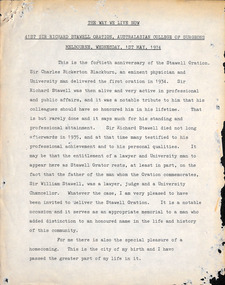
Document - Manuscript, Zelman Cowen, The Way We Live Now, 1974
... ethics... politics...This is a speech – 41st Sir Richard Stawell Oration, Australian College of Surgeons, Melbourne 01.05.1974 Sociological jurisprudence law ethics politics Social history Authority Justice Richard Stawell Zelman Cowen Typewritten, quarto, 34 pages The Way We Live Now Document Manuscript Zelman Cowen ...The is a speech given by Zelman Cowen in Melbourne, on Wednesday 1st May 1974 for the 41st Sir Richard Stawell Oration, Australian College of Surgeons. This may have been sent to Patricia Boyd since the Zelman Cowen was a long time friend of the family.This is a speech – 41st Sir Richard Stawell Oration, Australian College of Surgeons, Melbourne 01.05.1974Typewritten, quarto, 34 pagessociological jurisprudence, law, ethics, politics, social history, authority, justice, richard stawell, zelman cowen -
Unions Ballarat
Handbook of moral philosophy (Don Woodward Collection), Calderwood, Rev Henry, 1872
... ethics...religion...pantheism...atheism...free will...politics...The book explores: The psychology of ethics Man's moral nature as cognitive Impulses and restraints belonging to the nature of man The will Moral sentiments Disorder of our moral nature Metaphysic of ethics Applied ethics Broad societal relevance. btlc ballarat trades and labour council ballarat trades hall morality psychology ethics religion pantheism atheism free will politics Ballarat East Public Library slip is glued to the inside cover and stamped in red "CANCELLED". ...The book explores: The psychology of ethics Man's moral nature as cognitive Impulses and restraints belonging to the nature of man The will Moral sentiments Disorder of our moral nature Metaphysic of ethics Applied ethics Broad societal relevance.Book; 277 pages. Cover: brown background; gold lettering on spine; 55 pages scientific catalogue.Ballarat East Public Library slip is glued to the inside cover and stamped in red "CANCELLED". "Bay 01S5 is written on the slip in blue pencil. Book number is written in as number 46. This number also appears on the book spine.btlc, ballarat trades and labour council, ballarat trades hall, morality, psychology, ethics, religion, pantheism, atheism, free will, politics -
Unions Ballarat
Lead, Kindly Light (Don Woodward Collection), Sheean, Vincent, 1949
... politics and government...nathuram vinayak godse...activism...ethics...Autobiographical and of interest to personal ethics and belief systems. btlc ballarat trades hall ballarat trades and labour council ghandi, mahatma history - india biography politics and government nathuram vinayak godse activism ethics/belief systems Black ink: name (illegible). ...Written from a Western viewpoint. Disillusioned with western thinking, the author visited India to find out whether Ghandi's philosophies provided a realistic alternative. This book documents the author's experience. Ghandi was an activist in both South Africa and India. He was the leader of the independence movement to end British rule in India. Gandhi was assassinated in 1948 by Nathuram Vinayak Godse.Autobiographical and of interest to personal ethics and belief systems.Book; 382 pages. Dustjacket: red background; white lettering; author's name and title. Cover: brown background; gold lettering; author's name and title. Black ink: name (illegible).btlc, ballarat trades hall, ballarat trades and labour council, ghandi, mahatma, history - india, biography, politics and government, nathuram vinayak godse, activism, ethics/belief systems -
Unions Ballarat
Ill fares the land : a treatise on our present discontents, Judt, Tony, 2011
... ethics and society. Relevant to modern history and common needs. btlc ballarat trades hall ballarat trades and labour council history - modern social commentary political culture social change civilisation Front cover: Quote from Oliver Goldsmith, author name and title. ...Social commentary - post-war Europe. Explores materialism, greed, ethics and society.Relevant to modern history and common needs.Paper; book. Grey, black and white cover.Front cover: Quote from Oliver Goldsmith, author name and title.btlc, ballarat trades hall, ballarat trades and labour council, history - modern, social commentary, political culture, social change, civilisation -
 Flagstaff Hill Maritime Museum and Village
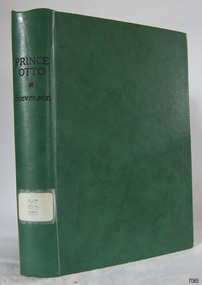
Book - A Fictional Story, Robert Louis Stevenson, Prince Otto, 1895
... The Encyclopaedia Britannica goes on to comment that the work has, however, drawn serious critical attention as a transitional, self-reflexive tale of politics and ethics that shows Stevenson's genius for adventure and romance turned toward something more introspective. ...Prince Otto is a romance set in the fictional Ruritania-style German statelet of Grünewald. Prince Otto slips away from his escort near the border while out hunting and wanders into the neighbouring country of Gerolstein. Otto is regarded by his own people as an incompetent fool, incapable of ruling. He hears rumours that his wife, Princess Amalia Seraphina, is having an affair with the ambitious minister Baron Gondremark, with whom she effectively runs the country, and the plot spirals through a plotted coup, an order to arrest Otto, and a growing political crisis. Unlike Stevenson's boys'-adventure books, this one is a romance in which the marriage of the hero and heroine is not the happy ending but the central problem that the plot must resolve. The theme explores the moral compromises required by marriage. Stevenson considered this work unusually difficult to write, working on it over a five-month period; he called it 'my hardest effort'. One chapter was rewritten eight times by Stevenson, and once by his wife.Hard cover book. Prince Otto Author: Robert Louis Stevenson Publisher: Chatto and Windus Date: 1895 Further Information: Green cloth, gilt-blocked spine with lettering and patterning to spine in black. The spine has a Library label with an inscription.fictionPrince Otto is a romance set in the fictional Ruritania-style German statelet of Grünewald. Prince Otto slips away from his escort near the border while out hunting and wanders into the neighbouring country of Gerolstein. Otto is regarded by his own people as an incompetent fool, incapable of ruling. He hears rumours that his wife, Princess Amalia Seraphina, is having an affair with the ambitious minister Baron Gondremark, with whom she effectively runs the country, and the plot spirals through a plotted coup, an order to arrest Otto, and a growing political crisis. Unlike Stevenson's boys'-adventure books, this one is a romance in which the marriage of the hero and heroine is not the happy ending but the central problem that the plot must resolve. The theme explores the moral compromises required by marriage. Stevenson considered this work unusually difficult to write, working on it over a five-month period; he called it 'my hardest effort'. One chapter was rewritten eight times by Stevenson, and once by his wife.warrnambool, shipwrecked-coast, flagstaff-hill, flagstaff-hill-maritime-museum, maritime-museum, shipwreck-coast, flagstaff-hill-maritime-village, shipwrecked-artefact, book, prince otto, robert louis stevenson
