
Showing 60 items matching "eustace"
-
 Surrey Hills Historical Society Collection
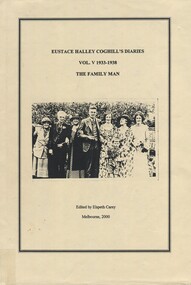
Book, Eustace Halley Coghill's Diaries Vol. V 1933-1938 The Family Man, 2000
... Eustace Halley Coghill's Diaries Vol. V 1933-1938 The Family Man...Eustace Halley Coghill lived in Surrey Hills on the corner of Wandsworth Road and Chertsey Street. ...In Volume five Eustace Coghill marries and life becomes busier. ......Eustace Halley Coghill...Eustace Halley Coghill lived in Surrey Hills on the corner of Wandsworth Road and Chertsey Street. ...Eustace Halley Coghill lived in Surrey Hills on the corner of Wandsworth Road and Chertsey Street. His home was moved to Phillip Island (photo in the collection). Elspeth Carey came to speak to Surrey Hills Historical Society. Elspeth Carey is his daughter. In Volume five Eustace Coghill marries and life becomes busier. He takes up a position as Supreme Court librarian and continues lecturing at the Law School, Melbourne University.In Volume five Eustace Coghill marries and life becomes busier. He takes up a position as Supreme Court librarian and continues lecturing at the Law School, Melbourne University.(ms) e h coghill (eustace halley), 1897 diaries, world war, 1914-1918, 1939-1945, social life and customs, (ms) elspeth carey -
 Surrey Hills Historical Society Collection
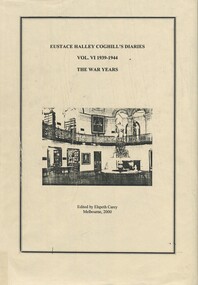
Book, Eustace Halley Coghill's Diaries Vol. VI 1939-1944 The War Years, 2000
... Eustace Halley Coghill's Diaries Vol. VI 1939-1944 The War Years...Eustace Halley Coghill lived in Surrey Hills on the corner of Wandsworth Road and Chertsey Street. ...It continues with Eustace Coghill working at the Supreme Court Library and lecturing at Melbourne University. ......Eustace Halley Coghill...Eustace Halley Coghill lived in Surrey Hills on the corner of Wandsworth Road and Chertsey Street. ...Eustace Halley Coghill lived in Surrey Hills on the corner of Wandsworth Road and Chertsey Street. His home was moved to Phillip Island (photo in the collection). This is the sixth volume of his diaries transcribed and published by his daughter Elspeth Carey, who spoke to Surrey Hills Historical Society regarding her father's life. This volume covers Eustace Coghill working at the Supreme Court Library and lecturing at Melbourne University; his consideration regarding army enlistment and travels to country centres to check the court libraries.This is the sixth volume of the diaries. It continues with Eustace Coghill working at the Supreme Court Library and lecturing at Melbourne University. Also considering early entry to army in second World War. Travels also to country centres to check the court libraries.world war, 1914-1918, 1939-1945, social life and customs, eustace halley coghill (mr), elspeth coghill (miss), elspeth carey (mrs), diaries -
 Whitehorse Historical Society Inc.
Pamphlet, 10 Eustace Street, Blackburn, c1988
... 10 Eustace Street, Blackburn...Advertisement for auction of 10 Eustace Street, Blackburn by Noel Allen....Eustace Street, Blackburn, No 10....Eustace Street Blackburn Auctions Advertisement for auction of 10 Eustace Street, Blackburn by Noel Allen. 10 Eustace Street, Blackburn Pamphlet Pamphlet ...Advertisement for auction of 10 Eustace Street, Blackburn by Noel Allen.eustace street, blackburn, auctions -
 Chiltern Athenaeum Trust
Photograph - Gum Leaf, Alfred Eustace
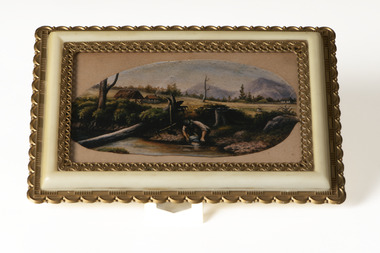
... This is a colour photograph of a gum leaf painting that is one of many done by the well-known self-taught Australian artist Alfred William Eustace (1820-1907). A.W. Eustace, an Australian artist, was born in Berkshire, England, where he was an assistant gamekeeper to the Earl of Craven at Ashdown Park. ...Colour photograph of an oil painting on gum leaf by A.W. Eustace. A man is panning for gold in a stream with a house and hills in the background. ...Hand writing on tape at back of frame: COPY OIL ON GUM LEAF 10" x 5" A W EUSTACE owned by Betty & Alf Brownlie 2260...Alfred Eustace ...This is a colour photograph of a gum leaf painting that is one of many done by the well-known self-taught Australian artist Alfred William Eustace (1820-1907). A.W. Eustace, an Australian artist, was born in Berkshire, England, where he was an assistant gamekeeper to the Earl of Craven at Ashdown Park. ...This is a colour photograph of a gum leaf painting that is one of many done by the well-known self-taught Australian artist Alfred William Eustace (1820-1907). A.W. Eustace, an Australian artist, was born in Berkshire, England, where he was an assistant gamekeeper to the Earl of Craven at Ashdown Park. He migrated to Australia with his wife and children in 1851 and worked on the Ullina and Eldorado Runs on the Black Dog Creek at Chiltern, which was in excess of 50,000 acres of grazing land. A.W. Eustace was employed as a shepherd by Jason Withers and while tending his flocks in the solitude of the bush, Eustace turned his attention to painting and music to while away the long and weary hours. He endeavoured to capture the spirit of the bush painting on board, canvas or tin plate, but as these materials were not always readily available he then started painting on large round eucalyptus leaves from the White and Red Box trees that grew around about him. About 1856 he painted a small picture of the famous Woolshed goldrush and during the next few years became well known in North-East Victoria. John Sadlier, a police officer stationed at Beechworth said that Eustace painted "some really exquisite scenes. He was of an easy-going dreamy temperament, a student of nature only, despising the works of men. Unfortunately his drawings were on eucalyptus leaves, the largest and roundest he could find and not on canvas, and no doubt have all perished long ago." How wrong he was. In 1876 the Melbourne Age newspaper reported, 'Eustace’s celebrated paintings on gum leaves are again attracting attention,…Mr Eustace is an elegant artist…he seems without effort to catch the colour and spirit of Australian scenery…' In 1864 A.W. Eustace held an Art Union in Albury, and again in 1884 in Ballarat. He exhibited at the Victorian Academy of Arts in 1877 and also held an exhibition of gum leaf paintings at Stevens Gallery, Melbourne in 1893. By 1896 he was receiving orders from heads of states in Europe, with his works acknowledged by Queen Victoria, Emperor Frederick of Germany and the Czar of Russia, as well as the Governors of New South Wales and Victoria. His paintings reflected his ability to paint the sky in his realistic style which is still noted by art critics of the day. A.W. Eustace was also a skilful taxidermist. The collection of birds and animals that can be seen at the Beechworth Museum are examples of his taxidermy skill. When not doing his work, painting or taxidermy, he regularly contributed letters and verse to the Chiltern newspaper, The Federal Standard. A book of verse in his hand writing was presented to The Athenaeum Trust by the Boadle family. In the 1870’s he became interested in spiritualism often being involved in lively debate at lectures and séances. Alfred William Eustace died in 1907 and is buried in the Chiltern New Cemetery with his wife Sarah and one of his daughters, Elizabeth.Colour photograph of an oil painting on gum leaf by A.W. Eustace. A man is panning for gold in a stream with a house and hills in the background. Under glass in a decorative gilt and cream coloured plastic frame.Hand writing on tape at back of frame: COPY OIL ON GUM LEAF 10" x 5" A W EUSTACE owned by Betty & Alf Brownlie 2260alfred eustace, gum leaf painting, chiltern, gold panning, gold -
Surrey Hills Historical Society Collection
Research notes, Research notes re Eustace Coghill
... Research notes re Eustace Coghill...Notes provided in part by Elspeth Carey, Eustace Coghill's daughter....Research notes regarding Eustace Halley Coghill including his AIF details & highlights of his legal career....Notes provided in part by Elspeth Carey, Eustace Coghill's daughter. aberyswyth wandsworth road eustace halley coghill elspeth carey (mrs) elspeth coghill (miss) Research notes regarding Eustace Halley Coghill including his AIF details & highlights of his legal career. ...Notes provided in part by Elspeth Carey, Eustace Coghill's daughter.Research notes regarding Eustace Halley Coghill including his AIF details & highlights of his legal career.aberyswyth, wandsworth road, eustace halley coghill, elspeth carey (mrs), elspeth coghill (miss) -
 Chiltern Athenaeum Trust
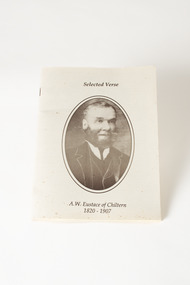
Booklet - Booklet of Selected Verse by A.W. Eustace published 1992, Selected Verse/ A.W. Eustace of Chiltern/1820-1907
... Selected Verse/ A.W. Eustace of Chiltern/1820-1907...Alfred William Eustace was a well-known self-taught Australian artist who spent his spare time painting the local landscapes in the Chiltern area. ...22 page booklet of Selected Verse/ A.W. Eustace of Chiltern/ 1820-1907. Printed on thick cream paper with a copy of an oval photograph of the author....Eustace published 1992 ...Alfred William Eustace was a well-known self-taught Australian artist who spent his spare time painting the local landscapes in the Chiltern area. When not doing his work or painting, Eustace regularly contributed letters and verse to the Chiltern newspaper "The Federal Standard". A collection of A. W Eustace's verse and other writings, written between 1845 and 1899, was presented to The Chiltern Athenaeum Trust by Cam Boadle, a grandson of A.W. Eustace, and his wife Connie. The Chiltern Athenaeum Trust created a booklet of some of his poetry which was published in 1992. Copyright for the booklet is held by Chiltern Athenaeum Museum 1992. In the 1870’s he became interested in spiritualism often being involved in lively debate at lectures and séances. A.W.Eustace was born in Berkshire, England, where he was an assistant gamekeeper to the Earl of Craven at Ashdown Park. He migrated to Australia with his wife and children in 1851 and worked on the Ullina and Eldorado Runs on the Black Dog Creek at Chiltern, which was in excess of 50,000 acres of grazing land. A.W. Eustace was employed as a shepherd by Jason Withers and while tending his flocks in the solitude of the bush, Eustace turned his attention to painting and music to while away the long and weary hours. He endeavoured to capture the spirit of the bush painting on board, canvas or tin plate, but as these materials were not always readily available he then started painting on large round eucalyptus leaves from the White and Red Box trees that grew around about him. About 1856 he painted a small picture of the famous Woolshed goldrush and during the next few years became well known in North-East Victoria. John Sadlier, a police officer stationed at Beechworth said that Eustace painted "some really exquisite scenes. He was of an easy-going dreamy temperament, a student of nature only, despising the works of men. Unfortunately his drawings were on eucalyptus leaves, the largest and roundest he could find and not on canvas, and no doubt have all perished long ago." How wrong he was. In 1876 the Melbourne Age newspaper reported, 'Eustace’s celebrated paintings on gum leaves are again attracting attention,…Mr Eustace is an elegant artist…he seems without effort to catch the colour and spirit of Australian scenery…' In 1864 A.W. Eustace held an Art Union in Albury, and again in 1884 in Ballarat. He exhibited at the Victorian Academy of Arts in 1877 and also held an exhibition of gum leaf paintings at Stevens Gallery, Melbourne in 1893. By 1896 he was receiving orders from heads of states in Europe, with his works acknowledged by Queen Victoria, Emperor Frederich of Germany and the Czar of Russia, as well as the Governors of New South Wales and Victoria. His paintings reflected his ability to paint the sky in his realistic style which is still noted by art critics of the day. A.W. Eustace was also a skilful taxidermist. The collection of birds and animals that can be seen at the Beechworth Museum are examples of his taxidermy skill. Alfred William Eustace died in 1907 and is buried in the Chiltern New Cemetery with his wife Sarah and one of his daughters, Elizabeth. Alfred William Eustace made a valuable contribution to the culture of 19th century Chiltern and his booklet of Selected Verse gives us an insight into life during that time.22 page booklet of Selected Verse/ A.W. Eustace of Chiltern/ 1820-1907. Printed on thick cream paper with a copy of an oval photograph of the author.a. w. eustace, selected verse, chiltern -
 Chiltern Athenaeum Trust
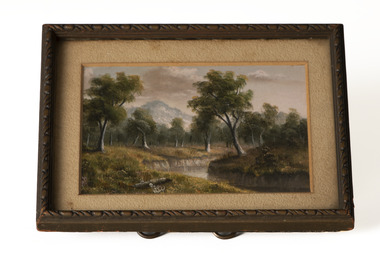
Painting - Oil Painting, Alfred Eustace
... This is one of a set of 3 miniature oil paintings by the self-taught artist Alfred William Eustace (1820-1907). A.W. Eustace, an Australian artist, was born in Berkshire, England, where he was an assistant gamekeeper to the Earl of Craven at Ashdown Park. ...Miniature oil painting of a landscape, with creek in foreground and bush and hill behind, by A.W. Eustace, under glass, in original timber frame with beige matte and a twist wire stand. ...Alfred Eustace ...This is one of a set of 3 miniature oil paintings by the self-taught artist Alfred William Eustace (1820-1907). A.W. Eustace, an Australian artist, was born in Berkshire, England, where he was an assistant gamekeeper to the Earl of Craven at Ashdown Park. ...This is one of a set of 3 miniature oil paintings by the self-taught artist Alfred William Eustace (1820-1907). A.W. Eustace, an Australian artist, was born in Berkshire, England, where he was an assistant gamekeeper to the Earl of Craven at Ashdown Park. He migrated to Australia with his wife and children in 1851 and worked on the Ullina and Eldorado Runs on the Black Dog Creek at Chiltern, which was in excess of 50,000 acres of grazing land. A.W. Eustace was employed as a shepherd by Jason Withers and while tending his flocks in the solitude of the bush, Eustace turned his attention to painting and music to while away the long and weary hours. He endeavoured to capture the spirit of the bush and painted on board, canvas or tin plate, but as these materials were not always readily available he then started painting on large round eucalyptus leaves from the White and Red Box trees that grew around about him. He became known as the "Bush Artist." About 1856 he painted a small picture of the famous Woolshed goldrush and during the next few years became well known in North-East Victoria. John Sadlier, a police officer stationed at Beechworth said that Eustace painted "some really exquisite scenes. He was of an easy-going dreamy temperament, a student of nature only, despising the works of men. Unfortunately his drawings were on eucalyptus leaves, the largest and roundest he could find and not on canvas, and no doubt have all perished long ago." How wrong he was. In 1876 the Melbourne Age newspaper reported, 'Eustace’s celebrated paintings on gum leaves are again attracting attention,…Mr Eustace is an elegant artist…he seems without effort to catch the colour and spirit of Australian scenery…' In 1864 A.W. Eustace held an Art Union in Albury, and again in 1884 in Ballarat. He exhibited at the Victorian Academy of Arts in 1877 and also held an exhibition of gum leaf paintings at Stevens Gallery, Melbourne in 1893. By 1896 he was receiving orders from heads of states in Europe, with his works acknowledged by Queen Victoria, Emperor Frederick of Germany and the Czar of Russia, as well as the Governors of New South Wales and Victoria. His paintings reflected his ability to paint the sky in his realistic style which is still noted by art critics of the day. A.W. Eustace was also a skilful taxidermist. The collection of birds and animals that can be seen at the Beechworth Museum are examples of his taxidermy skill. When not doing his work, painting or taxidermy, he regularly contributed letters and verse to the Chiltern newspaper, The Federal Standard. A book of verse in his hand writing was presented to The Athenaeum Trust by the Boadle family. In the 1870’s he became interested in spiritualism often being involved in lively debate at lectures and séances. Alfred William Eustace died in 1907 and is buried in the Chiltern New Cemetery with his wife Sarah and one of his daughters, Elizabeth. Miniature oil painting of a landscape, with creek in foreground and bush and hill behind, by A.W. Eustace, under glass, in original timber frame with beige matte and a twist wire stand. One of 3 miniatures. No signature visiblealfred eustace, chiltern, oil painting, landscape -
 Chiltern Athenaeum Trust
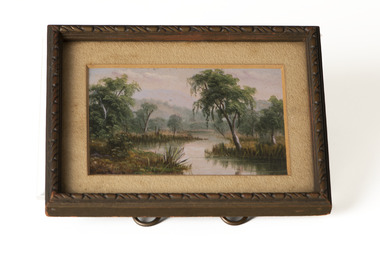
Painting - Oil Painting, Alfred Eustace
... This is one of a set of 3 miniature oil paintings by the self-taught artist Alfred William Eustace (1820-1907). A.W. Eustace, an Australian artist, was born in Berkshire, England, where he was an assistant gamekeeper to the Earl of Craven at Ashdown Park. ...Miniature oil painting of a landscape with creek and surrounding trees by A.W. Eustace, under glass, in original dark brown timber frame with beige matte and a twist wire stand. ...Alfred Eustace ...This is one of a set of 3 miniature oil paintings by the self-taught artist Alfred William Eustace (1820-1907). A.W. Eustace, an Australian artist, was born in Berkshire, England, where he was an assistant gamekeeper to the Earl of Craven at Ashdown Park. ...This is one of a set of 3 miniature oil paintings by the self-taught artist Alfred William Eustace (1820-1907). A.W. Eustace, an Australian artist, was born in Berkshire, England, where he was an assistant gamekeeper to the Earl of Craven at Ashdown Park. He migrated to Australia with his wife and children in 1851 and worked on the Ullina and Eldorado Runs on the Black Dog Creek at Chiltern, which was in excess of 50,000 acres of grazing land. A.W. Eustace was employed as a shepherd by Jason Withers and while tending his flocks in the solitude of the bush, Eustace turned his attention to painting and music to while away the long and weary hours. He endeavoured to capture the spirit of the bush painting on board, canvas or tin plate, but as these materials were not always readily available he then started painting on large round eucalyptus leaves from the White and Red Box trees that grew around about him. About 1856 he painted a small picture of the famous Woolshed goldrush and during the next few years became well known in North-East Victoria. John Sadlier, a police officer stationed at Beechworth said that Eustace painted "some really exquisite scenes. He was of an easy-going dreamy temperament, a student of nature only, despising the works of men. Unfortunately his drawings were on eucalyptus leaves, the largest and roundest he could find and not on canvas, and no doubt have all perished long ago." How wrong he was. In 1876 the Melbourne Age newspaper reported, 'Eustace’s celebrated paintings on gum leaves are again attracting attention,…Mr Eustace is an elegant artist…he seems without effort to catch the colour and spirit of Australian scenery…' In 1864 A.W. Eustace held an Art Union in Albury, and again in 1884 in Ballarat. He exhibited at the Victorian Academy of Arts in 1877 and also held an exhibition of gum leaf paintings at Stevens Gallery, Melbourne in 1893. By 1896 he was receiving orders from heads of states in Europe, with his works acknowledged by Queen Victoria, Emperor Frederick of Germany and the Czar of Russia, as well as the Governors of New South Wales and Victoria. His paintings reflected his ability to paint the sky in his realistic style which is still noted by art critics of the day. A.W. Eustace was also a skilful taxidermist. The collection of birds and animals that can be seen at the Beechworth Museum are examples of his taxidermy skill. When not doing his work, painting or taxidermy, he regularly contributed letters and verse to the Chiltern newspaper, The Federal Standard. A book of verse in his hand writing was presented to The Athenaeum Trust by the Boadle family. In the 1870’s he became interested in spiritualism often being involved in lively debate at lectures and séances. Alfred William Eustace died in 1907 and is buried in the Chiltern New Cemetery with his wife Sarah and one of his daughters, Elizabeth.Miniature oil painting of a landscape with creek and surrounding trees by A.W. Eustace, under glass, in original dark brown timber frame with beige matte and a twist wire stand. One of 3 miniatures. Sticker on back: 188 (original Registration number)alfred eustace, chiltern, oil, landscape -
 Chiltern Athenaeum Trust
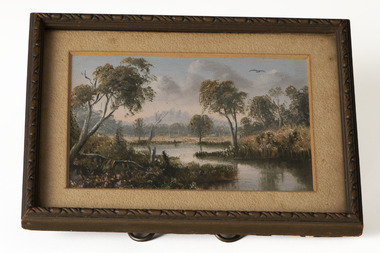
Painting - Oil painting, Alfred Eustace
... This is one of a set of 3 miniature oil paintings by the self-taught artist Alfred William Eustace (1820-1907). A.W. Eustace, an Australian artist and taxidermist, was born in Berkshire, England, where he was an assistant gamekeeper to the Earl of Craven at Ashdown Park. ...Miniature oil painting of a landscape, with creek and grassland in foreground surrounded by bushland and hill in distance, by A.W. Eustace, under glass in original timber frame with beige matte and a twist wire stand. ...Alfred Eustace ...This is one of a set of 3 miniature oil paintings by the self-taught artist Alfred William Eustace (1820-1907). A.W. Eustace, an Australian artist and taxidermist, was born in Berkshire, England, where he was an assistant gamekeeper to the Earl of Craven at Ashdown Park. ...This is one of a set of 3 miniature oil paintings by the self-taught artist Alfred William Eustace (1820-1907). A.W. Eustace, an Australian artist and taxidermist, was born in Berkshire, England, where he was an assistant gamekeeper to the Earl of Craven at Ashdown Park. He migrated to Australia with his wife and children in 1851 and worked on the Ullina and Eldorado Runs on the Black Dog Creek at Chiltern, which was in excess of 50,000 acres of grazing land. A.W. Eustace was employed as a shepherd by Jason Withers and while tending his flocks in the solitude of the bush, Eustace turned his attention to painting and music to while away the long and weary hours. He endeavoured to capture the spirit of the bush painting on board, canvas or tin plate, but as these materials were not always readily available he then started painting on large round eucalyptus leaves from the White and Red Box trees that grew around about him. About 1856 he painted a small picture of the famous Woolshed goldrush and during the next few years became well known in North-East Victoria. John Sadlier, a police officer stationed at Beechworth said that Eustace painted "some really exquisite scenes. He was of an easy-going dreamy temperament, a student of nature only, despising the works of men. Unfortunately his drawings were on eucalyptus leaves, the largest and roundest he could find and not on canvas, and no doubt have all perished long ago." How wrong he was. In 1876 the Melbourne Age newspaper reported, 'Eustace’s celebrated paintings on gum leaves are again attracting attention,…Mr Eustace is an elegant artist…he seems without effort to catch the colour and spirit of Australian scenery…' In 1864 A.W. Eustace held an Art Union in Albury, and again in 1884 in Ballarat. He exhibited at the Victorian Academy of Arts in 1877 and also held an exhibition of gum leaf paintings at Stevens Gallery, Melbourne in 1893. By 1896 he was receiving orders from heads of states in Europe, with his works acknowledged by Queen Victoria, Emperor Frederick of Germany and the Czar of Russia, as well as the Governors of New South Wales and Victoria. His paintings reflected his ability to paint the sky in his realistic style which is still noted by art critics of the day. A.W. Eustace was also a skilful taxidermist. The collection of birds and animals that can be seen at the Beechworth Museum are examples of his taxidermy skill. When not doing his work, painting or taxidermy, he regularly contributed letters and verse to the Chiltern newspaper, The Federal Standard. A book of verse in his hand writing was presented to The Athenaeum Trust by the Boadle family. In the 1870’s he became interested in spiritualism often being involved in lively debate at lectures and séances. Alfred William Eustace died in 1907 and is buried in the Chiltern New Cemetery with his wife Sarah and one of his daughters, Elizabeth.Miniature oil painting of a landscape, with creek and grassland in foreground surrounded by bushland and hill in distance, by A.W. Eustace, under glass in original timber frame with beige matte and a twist wire stand. One of 3 miniatures. No signature visiblealfred eustace, oil painting, landscape, chiltern -
 Chiltern Athenaeum Trust
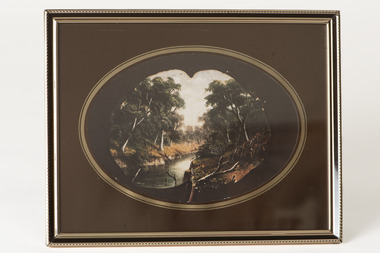
Photograph - Gum Leaf, Alfred Eustace
... This colour photograph of a gum leaf painting shows one of the many landscapes done by the well-known self-taught Australian artist Alfred William Eustace (1820-1907). A.W. Eustace, an Australian artist and taxidermist, was born in Berkshire, England, where he was an assistant gamekeeper to the Earl of Craven at Ashdown Park. ...Colour photograph of an oil painting on gum leaf by Alfred Eustace. Landscape featuring a deep creek surrounded by thick bushland displayed against dark brown backing paper which has a gilt oval surround to highlight the painting. ...Alfred Eustace ...This colour photograph of a gum leaf painting shows one of the many landscapes done by the well-known self-taught Australian artist Alfred William Eustace (1820-1907). A.W. Eustace, an Australian artist and taxidermist, was born in Berkshire, England, where he was an assistant gamekeeper to the Earl of Craven at Ashdown Park. ...This colour photograph of a gum leaf painting shows one of the many landscapes done by the well-known self-taught Australian artist Alfred William Eustace (1820-1907). A.W. Eustace, an Australian artist and taxidermist, was born in Berkshire, England, where he was an assistant gamekeeper to the Earl of Craven at Ashdown Park. He migrated to Australia with his wife and children in 1851 and worked on the Ullina and Eldorado Runs on the Black Dog Creek at Chiltern, which was in excess of 50,000 acres of grazing land. A.W. Eustace was employed as a shepherd by Jason Withers and while tending his flocks in the solitude of the bush, Eustace turned his attention to painting and music to while away the long and weary hours. He endeavoured to capture the spirit of the bush painting on board, canvas or tin plate, but as these materials were not always readily available he then started painting on large round eucalyptus leaves from the White and Red Box trees that grew around about him. About 1856 he painted a small picture of the famous Woolshed goldrush and during the next few years became well known in North-East Victoria. John Sadlier, a police officer stationed at Beechworth said that Eustace painted "some really exquisite scenes. He was of an easy-going dreamy temperament, a student of nature only, despising the works of men. Unfortunately his drawings were on eucalyptus leaves, the largest and roundest he could find and not on canvas, and no doubt have all perished long ago." How wrong he was. In 1876 the Melbourne Age newspaper reported, 'Eustace’s celebrated paintings on gum leaves are again attracting attention,…Mr Eustace is an elegant artist…he seems without effort to catch the colour and spirit of Australian scenery…' In 1864 A.W. Eustace held an Art Union in Albury, and again in 1884 in Ballarat. He exhibited at the Victorian Academy of Arts in 1877 and also held an exhibition of gum leaf paintings at Stevens Gallery, Melbourne in 1893. By 1896 he was receiving orders from heads of states in Europe, with his works acknowledged by Queen Victoria, Emperor Frederick of Germany and the Czar of Russia, as well as the Governors of New South Wales and Victoria. His paintings reflected his ability to paint the sky in his realistic style which is still noted by art critics of the day. A.W. Eustace was also a skilful taxidermist. The collection of birds and animals that can be seen at the Beechworth Museum are examples of his taxidermy skill. When not doing his work, painting or taxidermy, he regularly contributed letters and verse to the Chiltern newspaper, The Federal Standard. A book of verse in his hand writing was presented to The Athenaeum Trust by the Boadle family. In the 1870’s he became interested in spiritualism often being involved in lively debate at lectures and séances. Alfred William Eustace died in 1907 and is buried in the Chiltern New Cemetery with his wife Sarah and one of his daughters, Elizabeth.Colour photograph of an oil painting on gum leaf by Alfred Eustace. Landscape featuring a deep creek surrounded by thick bushland displayed against dark brown backing paper which has a gilt oval surround to highlight the painting. Under glass, in a gold and dark brown metal frame.Sticker on back: 189. (the original registration number)alfred eustace, gum leaf painting, landscape -
 Chiltern Athenaeum Trust
Painting - Oil painting on gumleaf by Alfred William Eustace, circa 1851 to 1907
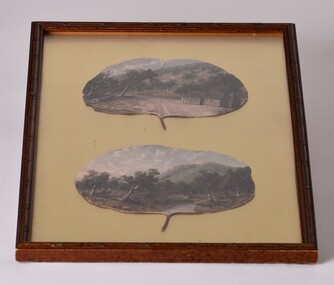
... ...Eustace...It is typical of many paintings by the self-taught Australian artist Alfred William Eustace (1820-1907). A.W. Eustace, a well-known Australian artist, was born in Berkshire, England, where he was an assistant gamekeeper to the Earl of Craven at Ashdown Park. ...Oil painting on gum leaf by Alfred William Eustace. A scene of a log cabin on Black Dog Creek Road, Chiltern, with Skeleton Hill in the background. ...Labels on back: Rehoused by The Centre for Cultural Materials/ Conservation, University of Melbourne "Oil on Gum Leaf"/ by Alfred William Eustace/ Donor:- Cam & Connie Boadle/ Wales U.K. ...It is typical of many paintings by the self-taught Australian artist Alfred William Eustace (1820-1907). A.W. Eustace, a well-known Australian artist, was born in Berkshire, England, where he was an assistant gamekeeper to the Earl of Craven at Ashdown Park. ...This gum leaf painting is one of a pair displayed on foil in the same frame. It is typical of many paintings by the self-taught Australian artist Alfred William Eustace (1820-1907). A.W. Eustace, a well-known Australian artist, was born in Berkshire, England, where he was an assistant gamekeeper to the Earl of Craven at Ashdown Park. He migrated to Australia with his wife and children in 1851 and camped on the Ullina and Eldorado Runs on the Black Dog Creek at Chiltern, which was in excess of 50,000 acres of grazing land. A.W. Eustace was employed as a shepherd by Jason Withers and while tending his flocks in the solitude of the bush, Eustace turned his attention to painting and music to while away the long and weary hours. He endeavoured to capture the spirit of the bush painting on board, canvas or tin plate, but as these materials were not always readily available he then started painting on large round eucalyptus leaves from the White and Red Box trees that grew around about him. About 1856 he painted a small picture of the famous Woolshed goldrush and during the next few years became well known in North-East Victoria. John Sadlier, a police officer stationed at Beechworth said that Eustace painted "some really exquisite scenes. He was of an easy-going dreamy temperament, a student of nature only, despising the works of men. Unfortunately his drawings were on eucalyptus leaves, the largest and roundest he could find and not on canvas, and no doubt have all perished long ago." How wrong he was. In 1876 the Melbourne Age newspaper reported, 'Eustace’s celebrated paintings on gum leaves are again attracting attention,…Mr Eustace is an elegant artist…he seems without effort to catch the colour and spirit of Australian scenery…' In 1864 A.W. Eustace held an Art Union in Albury, and again in 1884 in Ballarat. He exhibited at the Victorian Academy of Arts in 1877 and also held an exhibition of gum leaf paintings at Stevens Gallery, Melbourne in 1893. By 1896 he was receiving orders from heads of states in Europe, with his works acknowledged by Queen Victoria, Emperor Frederick of Germany and the Czar of Russia, as well as the Governors of New South Wales and Victoria. His paintings reflected his ability to paint the sky in his realistic style which is still noted by art critics of the day. A.W. Eustace was also a skillful taxidermist. The collection of birds and animals that can be seen at the Beechworth Museum are examples of his taxidermy skill. When not doing his work, painting or taxidermy, he regularly contributed letters and verse to the Chiltern newspaper, The Federal Standard. A book of verse in his hand writing was presented to The Athenaeum Trust by the Boadle family. In the 1870’s he became interested in spiritualism often being involved in lively debate at lectures and séances. Alfred William Eustace died in 1907 and is buried in the Chiltern New Cemetery with his wife Sarah and one of his daughters, Elizabeth.An oil painting on gum leaf by the well-known Australian artist Alfred William Eustace. He was a self-taught artist during the 19th and early 20th century and a prominent resident of Chiltern. Oil painting on gum leaf by Alfred William Eustace. A scene of a log cabin on Black Dog Creek Road, Chiltern, with Skeleton Hill in the background. The canvas is a juvenile Red Box (Eucalyptus polyanthemos) leaf. It is one of a pair of Eustace gum leaf paintings mounted on gold foil, under glass in a brown frame. Inscription on back. Labels on back: Rehoused by The Centre for Cultural Materials/ Conservation, University of Melbourne "Oil on Gum Leaf"/ by Alfred William Eustace/ Donor:- Cam & Connie Boadle/ Wales U.K. Crescent/ MUSEUM/ GRADE/ 24 OCT 1998/ CONSERVATION BOARD ALBURY/ PICTURE FRAMERS/ Shop 15 & 16/ AMP Lane,/ Albury, 2640/ Ph: 02 6021 7088black dog creek, chiltern, alfred eustace, skeleton hill, gum leaf, painting, eustace -
Canterbury History Group
Book, Elspeth Carey, Eustace Halley Coghill's diaries: Vol. 1 1916-1918 - The First World War, May 1996
... Eustace Halley Coghill's diaries: Vol. 1 1916-1918 - The First World War...Eustace Halley Coghill lived in Surrey Hills on the corner of Wandsworth Road and Chertsey Street. ...Eustace Halley Coghill lived in Surrey Hills on the corner of Wandsworth Road and Chertsey Street. ...This is the first volume of the diaries of Eustace Halley Coghill transcribed and published by his daughter Elspeth Carey. This volume covers his experiences of World War I during the years 1916-1918.Spiral bound; 104 pages. Includes black and white photos, glossary and index of namesnon-fictionThis is the first volume of the diaries of Eustace Halley Coghill transcribed and published by his daughter Elspeth Carey. This volume covers his experiences of World War I during the years 1916-1918.eustace halley coghill, diaries, personal accounts, world war 1914-1918 -
 Bayside Gallery - Bayside City Council Art & Heritage Collection
Photograph - gelatin silver photograph, Lafayette, Councillor Eustace M. Flannagan, Mayor of Brighton 1926-27, c. 1927
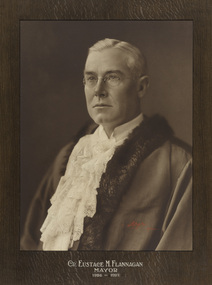
... Councillor Eustace M. Flannagan, Mayor of Brighton 1926-27...Eustace Menotti Flannagan (1868-1950) was a solicitor and a representative in the South Ward in Brighton Council for 16 years, retiring in 1932. ...He was elected Mayor of Brighton 1926-27. portrait Councillor Mayor Brighton municipality South Ward Cr. E.M. Flannagan Eustace Menotti Flannagan mayoral robes gelatin silver photograph Councillor Eustace M. ...Eustace Menotti Flannagan (1868-1950) was a solicitor and a representative in the South Ward in Brighton Council for 16 years, retiring in 1932. He was elected Mayor of Brighton 1926-27. portrait, councillor, mayor, brighton, municipality, south ward, cr. e.m. flannagan, eustace menotti flannagan, mayoral robes -
Canterbury History Group
Book, Elspeth Carey, Eustace Halley Coghill's diaries: Vol. II 1919-1923 - Student Days, 1997
... Eustace Halley Coghill's diaries: Vol. II 1919-1923 - Student Days...Eustace Halley Coghill was born in Canterbury, Victoria on 18 October 1897. ...Eustace Halley Coghill was born in Canterbury, Victoria on 18 October 1897. ...This is the second volume of the diaries of Eustace Halley Coghill transcribed and published by his daughter Elspeth Carey. This volume covers "his adjustment to civilian life as a student of law at Melbourne University and describes the early 1920s" in Melbourne. Various family trees have also been includedSpiral bound; 104 pages. Includes black and white photos, glossary and index of namesnon-fictionThis is the second volume of the diaries of Eustace Halley Coghill transcribed and published by his daughter Elspeth Carey. This volume covers "his adjustment to civilian life as a student of law at Melbourne University and describes the early 1920s" in Melbourne. Various family trees have also been includedeustace halley coghill, diaries, personal accounts, genealogy -
Surrey Hills Historical Society Collection
Work on paper - Vertical File, Eustace Halley Coghill
... Eustace Halley Coghill...1. Notes regarding Eustace Halley Coghill, including A.I.F. record and handwritten notes by Sue Barnett from discussions with his daughter Elspeth Carey (1 page). 2. ...Eustace Halley Coghill Elspeth Carey Jodie Menzies 1. ...1. Notes regarding Eustace Halley Coghill, including A.I.F. record and handwritten notes by Sue Barnett from discussions with his daughter Elspeth Carey (1 page). 2. A letter from Elspeth Carey dated 27.4.2001 with 11 pages of photos, house plans and order form for her books based on her father’s diaries (12 pages). 3. ‘A daughter’s voyage of discovery’, by Jodie Menzies, Progress Press, 1.4.1997 (1 page). eustace halley coghill, elspeth carey, jodie menzies -
Surrey Hills Historical Society Collection
Work on paper - Vertical file, Coghill, Eustace Halley
... Coghill, Eustace Halley...A vertical file containing the following information: 1. Notes regarding Eustace Halley Coghill including A.I.F. record and handwritten notes by Sue Barnett from discussions with his daughter Elspeth Carey (1 page). 2. ...‘A daughter’s voyage of discovery’, by Jodie Menzies, Progress Press, 1.4.1997 (1 page). Coghill, Eustace Halley Work on paper Vertical file ...A vertical file containing the following information: 1. Notes regarding Eustace Halley Coghill including A.I.F. record and handwritten notes by Sue Barnett from discussions with his daughter Elspeth Carey (1 page). 2. A letter from Elspeth Carey dated 27.4.2001 with 11 pages of photos, house plans and order form for her books based on her father’s diaries (12 pages). 3. ‘A daughter’s voyage of discovery’, by Jodie Menzies, Progress Press, 1.4.1997 (1 page). -
 Chiltern Athenaeum Trust
Photograph
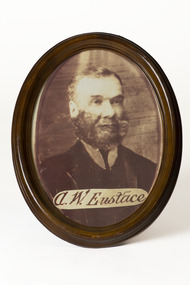
... Alfred William Eustace (1820-1907), an Australian artist, was born in Berkshire, England, where he was an assistant gamekeeper to the Earl of Craven at Ashdown Park. ...Copy of sepia photograph of A.W. Eustace in a brown wooden oval frame with a copy of A.W. ...Alfred William Eustace (1820-1907), an Australian artist, was born in Berkshire, England, where he was an assistant gamekeeper to the Earl of Craven at Ashdown Park. ...Alfred William Eustace (1820-1907), an Australian artist, was born in Berkshire, England, where he was an assistant gamekeeper to the Earl of Craven at Ashdown Park. He migrated to Australia with his wife and children in 1851 and camped beside the Ullina and Eldorado Runs on the Black Dog Creek at Chiltern, which was in excess of 50,000 acres of grazing land. A.W. Eustace was employed as a shepherd by Jason Withers and while tending his flocks in the solitude of the bush, Eustace turned his attention to painting and music to while away the long and weary hours. He endeavoured to capture the spirit of the bush and painted on board, canvas or tin plate, but as these materials were not always readily available he then started painting on large round eucalyptus leaves from the White and Red Box trees that grew around about him. He became known as the "Bush Artist." About 1856 he painted a small picture of the famous Woolshed goldrush and during the next few years became well known in North-East Victoria. John Sadlier, a police officer stationed at Beechworth said that Eustace painted "some really exquisite scenes. He was of an easy-going dreamy temperament, a student of nature only, despising the works of men. Unfortunately his drawings were on eucalyptus leaves, the largest and roundest he could find and not on canvas, and no doubt have all perished long ago." How wrong he was. In 1876 the Melbourne Age newspaper reported, 'Eustace’s celebrated paintings on gum leaves are again attracting attention,…Mr Eustace is an elegant artist…he seems without effort to catch the colour and spirit of Australian scenery…' In 1864 A.W. Eustace held an Art Union in Albury, and again in 1884 in Ballarat. He exhibited at the Victorian Academy of Arts in 1877 and also held an exhibition of gum leaf paintings at Stevens Gallery, Melbourne in 1893. By 1896 he was receiving orders from heads of states in Europe, with his works acknowledged by Queen Victoria, Emperor Frederick of Germany and the Czar of Russia, as well as the Governors of New South Wales and Victoria. His paintings reflected his ability to paint the sky in his realistic style which is still noted by art critics of the day. A.W. Eustace was also a skilful taxidermist. The collection of birds and animals that can be seen at the Beechworth Museum are examples of his taxidermy skill. When not doing his work, painting or taxidermy, he regularly contributed letters and verse to the Chiltern newspaper, The Federal Standard. A book of verse in his hand writing was presented to The Athenaeum Trust by the Boadle family. In the 1870’s he became interested in spiritualism often being involved in lively debate at lectures and séances. Alfred William Eustace died in 1907 and is buried in the Chiltern New Cemetery with his wife Sarah and one of his daughters, Elizabeth. A.W. Eustace was a significant member of the Chiltern community during the 19th century and his artwork was displayed widely, even in European royal homes.Copy of sepia photograph of A.W. Eustace in a brown wooden oval frame with a copy of A.W. Eustace's signature across the bottom of the photograph.Sticker on back: 194 Sticker on back: MADE IN/ CHINA/ FABRIQUE 'AU/CHINEa.w.eustace, photograph, chiltern -
Linton Mechanics Institute and Free Library Collection
Book - Novel, Trollope, Anthony, The Eustace diamonds : in three volumes : Vol. III, 1873
... The Eustace diamonds : in three volumes : Vol. III...Follows the adventures of Lizzie Greystock, a fortune hunter who ensnares a rich husband, Sir Florian Eustace, and is soon left a wealthy widow. The plot centres around a diamond necklace, part of the Eustace estate, which Lizzie cannot bear to part with although her rights to ownership are contested. ...The third book in the 'Palliser' series. Follows the adventures of Lizzie Greystock, a fortune hunter who ensnares a rich husband, Sir Florian Eustace, and is soon left a wealthy widow. The plot centres around a diamond necklace, part of the Eustace estate, which Lizzie cannot bear to part with although her rights to ownership are contested.354 p. : plain brown cloth-covered cardboard cover with leather spine and trim. Title and volume number embossed in gold on spine.fictionThe third book in the 'Palliser' series. Follows the adventures of Lizzie Greystock, a fortune hunter who ensnares a rich husband, Sir Florian Eustace, and is soon left a wealthy widow. The plot centres around a diamond necklace, part of the Eustace estate, which Lizzie cannot bear to part with although her rights to ownership are contested.anthony trollope, fiction, english literature -
Linton Mechanics Institute and Free Library Collection
Book - Novel, Trollope, Anthony, The Eustace diamonds : in three volumes : Vol. II, 1873
... The Eustace diamonds : in three volumes : Vol. II...Follows the adventures of Lizzie Greystock, a fortune hunter who ensnares a rich husband, Sir Florian Eustace, and is soon left a wealthy widow. The plot centres around a diamond necklace, part of the Eustace estate, which Lizzie cannot bear to part with although her rights to ownership are contested. ...The third book in the 'Palliser' series. Follows the adventures of Lizzie Greystock, a fortune hunter who ensnares a rich husband, Sir Florian Eustace, and is soon left a wealthy widow. The plot centres around a diamond necklace, part of the Eustace estate, which Lizzie cannot bear to part with although her rights to ownership are contested.363 p. : plain brown cloth-covered cardboard cover with leather spine and trim. Title and volume number embossed in gold on spine.fictionThe third book in the 'Palliser' series. Follows the adventures of Lizzie Greystock, a fortune hunter who ensnares a rich husband, Sir Florian Eustace, and is soon left a wealthy widow. The plot centres around a diamond necklace, part of the Eustace estate, which Lizzie cannot bear to part with although her rights to ownership are contested.anthony trollope, fiction, english literature -
 Chiltern Athenaeum Trust
Photograph
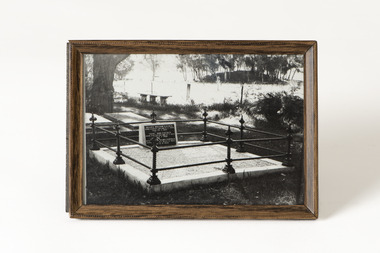
... Alfred William Eustace, an Australian artist, was born in the small village of Ashbury, Berkshire, England, the son of John Eustace, Head Game-keeper to the Earl of Craven at the beautiful Ashdown Park. ...Black and white photograph of the grave of A.W. Eustace, under glass, in a metal frame....Alfred William Eustace, an Australian artist, was born in the small village of Ashbury, Berkshire, England, the son of John Eustace, Head Game-keeper to the Earl of Craven at the beautiful Ashdown Park. ...This black and white photograph of the grave of A.W. Eustace is believed to have been taken in September 1987 at the Chiltern New Cemetery. Alfred William Eustace, an Australian artist, was born in the small village of Ashbury, Berkshire, England, the son of John Eustace, Head Game-keeper to the Earl of Craven at the beautiful Ashdown Park. He migrated to Australia with his wife and children in 1851 and camped next to the Ullina and Eldorado Runs on the Black Dog Creek at Chiltern, which was owned by the Withers family and was in excess of 55,000 acres of grazing land. A.W. Eustace was employed as a shepherd by Jason Withers and while tending his flocks in the solitude of the bush, Eustace turned his attention to painting and music to while away the long and weary hours. He endeavoured to capture the spirit of the bush painting on board, canvas or tin plate, but as these materials were not always readily available he then started painting on large round eucalyptus leaves from the White and Red Box trees that grew around about him. About 1856 he painted a small picture of the famous Woolshed goldrush and during the next few years became well known in North-East Victoria. John Sadlier, a police officer stationed at Beechworth said that Eustace painted "some really exquisite scenes. He was of an easy-going dreamy temperament, a student of nature only, despising the works of men. Unfortunately his drawings were on eucalyptus leaves, the largest and roundest he could find and not on canvas, and no doubt have all perished long ago." How wrong he was. In 1876 the Melbourne Age newspaper reported, 'Eustace’s celebrated paintings on gum leaves are again attracting attention,…Mr Eustace is an elegant artist…he seems without effort to catch the colour and spirit of Australian scenery…' In 1864 A.W. Eustace held an Art Union in Albury, and again in 1884 in Ballarat. He exhibited at the Victorian Academy of Arts in 1877 and also held an exhibition of gum leaf paintings at Stevens Gallery, Melbourne in 1893. By 1896 he was receiving orders from heads of states in Europe, with his works acknowledged by Queen Victoria, Emperor Frederick of Germany and the Czar of Russia, as well as the Governors of New South Wales and Victoria. His paintings reflected his ability to paint the sky in his realistic style which is still noted by art critics of the day. A.W. Eustace was also a skillful taxidermist. The collection of birds and animals that are in the Beechworth Museum collection are examples of his taxidermy skill. When not doing his work, painting or taxidermy, he regularly contributed letters and verse to the Chiltern newspaper, The Federal Standard. A book of verse in his hand writing was presented to The Athenaeum Trust by his relatives from the Boadle family. In the 1870’s he became interested in spiritualism often being involved in lively debate at lectures and séances. Alfred William Eustace died in 1907 and is buried in the Chiltern New Cemetery with his wife Sarah and one of his daughters, Elizabeth.A. W. Eustace, as well as being a well-known Australian artist, was a significant member of the Chiltern community.Black and white photograph of the grave of A.W. Eustace, under glass, in a metal frame.Sticker on back: 184 (original Registration number)a. w. eustace, grave, chiltern new cemetery -
Federation University Historical Collection
Photograph, John Wall, Definitions of Terms Used in Astronomy, 1884
... 'Eustace H. Coltman Ballarat'...Astronomy Eustace H. Coltman 'Eustace H. Coltman Ballarat' Telescope Definitions of Terms Used in Astronomy Photograph John Wall ...Telescope'Eustace H. Coltman Ballarat'astronomy, eustace h. coltman -
 St Patrick's Old Collegians Association (SPOCA)
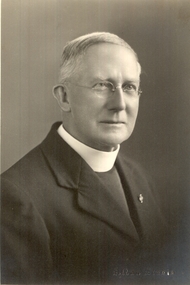
Photograph - Teachers, Jesuits
... Eustace Boylan SJ - SPJC Staff 1919-49...Eustace Boylan SJ - SPJC Staff 1919-49 Photograph Teachers, Jesuits ... -
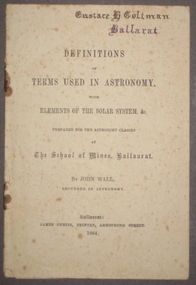 Federation University Historical Collection
Booklet, John Wall, Definitions of Terms used in Astronomy with Elements of the Solar System, 1884, 1884
... Front cover "Eustace H. Coltman Ballarat'...Ballarat School of Mines lecturer, John Wall, prepared this book for the Astronomy class of the Ballarat School of Mines ballarat school of mines astronomy john wall eustace coltman solar system Front cover "Eustace H. ...Ballarat School of Mines lecturer, John Wall, prepared this book for the Astronomy class of the Ballarat School of Mines12 page printed booklet with additional charts. Front cover "Eustace H. Coltman Ballarat'ballarat school of mines, astronomy, john wall, eustace coltman, solar system -
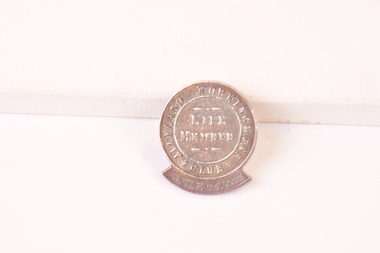 Chiltern Athenaeum Trust
Life Member Badge Auckland Workingmen's Club : S. W. Eustace, Circa 1900-1920
... Inscribed "Auckland Workingmen's Club" S.W. Eustace. ...Eustace. Round silver badge, missing back hinge and pin. ...late 1800's and early 1900s clubs designed to bring working men from all walks of life together in a relaxed, friendly and companionable manner. A majority of these types of clubs catered to ex-servicemen which assisted with their integration back into social circles after their challenging war experiences. Early 1900's, belongs to S.W. Eustace, former Chiltern Resident who was involved int he Boer War and WW1 Campaigns. Round silver badge, missing back hinge and pin. Inscribed "Auckland Workingmen's Club" S.W. Eustace. auckland working mans club, s.w. eustace life member badge, cica 1900-1920, s. w. eustace boer war and ww1 -
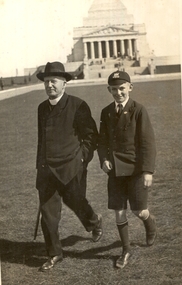 St Patrick's Old Collegians Association (SPOCA)
Photograph - Teachers, Jesuits
... Eustace Boylan SJ (SPJC Rector 1919-21) and student at Shrine of Remembrance ...Eustace Boylan SJ (SPJC Rector 1919-21) and student at Shrine of Remembrance Photograph Teachers, Jesuits ... -
 Ballarat RSL Sub-Branch Inc.
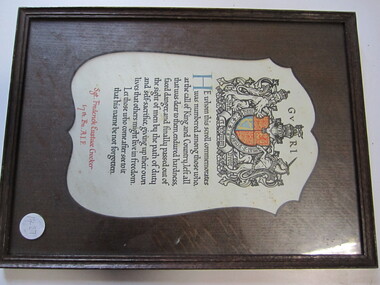
Commemorative Scroll - Framed
... Signed - "Sgt Frederick Eustace Crocker 17th Bn AIF"...Photo/Pictures Ballarat RSL Ballarat Signed - "Sgt Frederick Eustace Crocker 17th Bn AIF" Commemorative Scroll - Framed ...Signed - "Sgt Frederick Eustace Crocker 17th Bn AIF"photo/pictures, ballarat rsl, ballarat -
 Lakes Entrance Historical Society
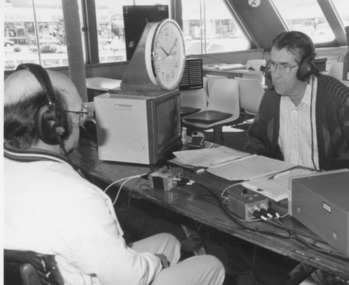
Photograph - R.E.G. broadcast from the Thunderbird 1992, Lake Post Newspaper, 1992
... Black and white photograph Tony Spink composer and Peter Eustace interviewer on the Thunderbird broadcasting with Radio East Gippsland also known as REG. ...Communications People Performing Arts Black and white photograph Tony Spink composer and Peter Eustace interviewer on the Thunderbird broadcasting with Radio East Gippsland also known as REG. ...Black and white photograph Tony Spink composer and Peter Eustace interviewer on the Thunderbird broadcasting with Radio East Gippsland also known as REG. Lakes Entrance Victoriacommunications, people, performing arts -
Whitehorse Historical Society Inc.
Document, Canterbury Road estate, Unknown
... Main Street, Norvel Street, Lalwa Street, Ronley Street, Eustace Street, Arna Street, Kalka Street....Main Street, Norvel Street, Lalwa Street, Ronley Street, Eustace Street, Arna Street, Kalka Street. Canterbury Road estate Document Document ...Plan of subdivision of land for sale in Canterbury Road estate, Blackburn. Main Street, Norvel Street, Lalwa Street, Ronley Street, Eustace Street, Arna Street, Kalka Street.land subdivision, canterbury road estate, blackburn, main street, norvel street, kalka street, arna street, lalwa street, ronley street, eustace street -
 Kiewa Valley Historical Society
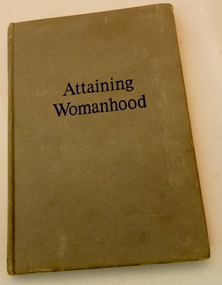
Book - Reference, Attaining Womanhood, First Published in 1953
... Corner, M.D. and an introduction by Dr. Eustace Chesser...Corner, M.D. and an introduction by Dr. Eustace Chesser A grey, hard covered text book with the title "Attaining Womanhood" in blue print on the front cover and "Attaining Womanhood George Corner" on the spine of the book Written by George W. ...Published by George Allen & Unwin, Ltd., Ruskin House, Museum Street, London. There is no clue as to the owner of this bookThis book provides a factual scientific account of sex and human reproduction as taught in the 1950's. It is particularly interesting to compare the expected conduct of young women in this era with the standards of today.A grey, hard covered text book with the title "Attaining Womanhood" in blue print on the front cover and "Attaining Womanhood George Corner" on the spine of the book Written by George W. Corner M.D., Director, Dept. of Embryology, Carnegie institute of WashingtonOn the first page is the title "Attaining Womanhood" and below this "A Doctor Talks to Girls About Sex". Written by George W. Corner, M.D. and an introduction by Dr. Eustace Chessersex education, book, school, reproduction -
 Chiltern Athenaeum Trust
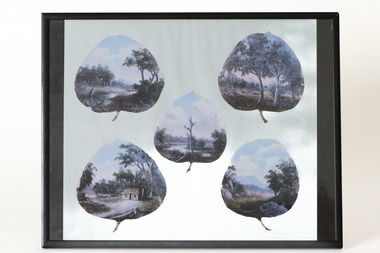
Photograph - Reproduction
... These copies of five oil on gum leaf paintings by Alfred William Eustace (1820-1907) display the subjects and detail of his small gum leaf paintings. ...These copies of five oil on gum leaf paintings by Alfred William Eustace (1820-1907) display the subjects and detail of his small gum leaf paintings. ...These copies of five oil on gum leaf paintings by Alfred William Eustace (1820-1907) display the subjects and detail of his small gum leaf paintings. A.W. Eustace, a well-known Australian artist, was born in Berkshire, England, where he was an assistant gamekeeper to the Earl of Craven at Ashdown Park. He migrated to Australia with his wife and children in 1851 and worked on the Ullina and Eldorado Runs on the Black Dog Creek at Chiltern, which was in excess of 50,000 acres of grazing land. A.W. Eustace was employed as a shepherd by Jason Withers and while tending his flocks in the solitude of the bush, Eustace turned his attention to painting and music to while away the long and weary hours. He endeavoured to capture the spirit of the bush and painted on board, canvas or tin plate, but as these materials were not always readily available he then started painting on large round eucalyptus leaves from the White and Red Box trees that grew around about him. He became known as the "Bush Artist." About 1856 he painted a small picture of the famous Woolshed goldrush and during the next few years became well known in North-East Victoria. John Sadlier, a police officer stationed at Beechworth said that Eustace painted "some really exquisite scenes. He was of an easy-going dreamy temperament, a student of nature only, despising the works of men. Unfortunately his drawings were on eucalyptus leaves, the largest and roundest he could find and not on canvas, and no doubt have all perished long ago." How wrong he was. In 1876 the Melbourne Age newspaper reported, 'Eustace’s celebrated paintings on gum leaves are again attracting attention,…Mr Eustace is an elegant artist…he seems without effort to catch the colour and spirit of Australian scenery…' In 1864 A.W. Eustace held an Art Union in Albury, and again in 1884 in Ballarat. He exhibited at the Victorian Academy of Arts in 1877 and also held an exhibition of gum leaf paintings at Stevens Gallery, Melbourne in 1893. By 1896 he was receiving orders from heads of states in Europe, with his works acknowledged by Queen Victoria, Emperor Frederick of Germany and the Czar of Russia, as well as the Governors of New South Wales and Victoria. His paintings reflected his ability to paint the sky in his realistic style which is still noted by art critics of the day. A.W. Eustace was also a skillful taxidermist. The collection of birds and animals that can be seen at the Beechworth Museum are examples of his taxidermy skill. When not doing his work, painting or taxidermy, he regularly contributed letters and verse to the Chiltern newspaper, The Federal Standard. A book of verse in his hand writing was presented to The Athenaeum Trust by the Boadle family. In the 1870’s he became interested in spiritualism often being involved in lively debate at lectures and séances. Alfred William Eustace died in 1907 and is buried in the Chiltern New Cemetery with his wife Sarah and one of his daughters, Elizabeth.Alfred William Eustace was a well-known self-taught Australian artist who was known worldwide for her unique oil on gum leaf paintings. He was also a prominent Chiltern citizen.Copies of five A.W.Eustace oil paintings on gum leaf, under glass, displayed on blue paper in a black metal frame.alfred eustace, gum leaf painting, chiltern
