
Showing 17 items matching "exercise guide"
-
 Bendigo Military Museum
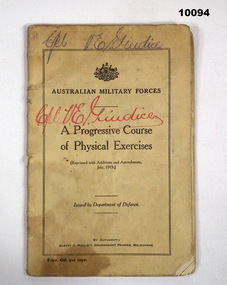
Booklet - PHYSICAL EXERCISE GUIDE, Government Printer, A PROGRESSIVE COURSE OF PHYSICAL EXERCISE, July 1915
... PHYSICAL EXERCISE GUIDE......Exercise Guide...Booklet PHYSICAL EXERCISE GUIDE Government Printer ...Booklet used as a guide on keeping fit. Part of the collection of "V E Giudice" No. 53730, Cat No. 10031P. Overall part of collection of William (Bill) Thomason, Cat No. 4136P.Cream coloured 58 page booklet. Commonwealth emblem on front and Australian Military Forces and date of print. Inside was pictures and descriptions of types of exercises, on marching, running etc with room for notes on blank pages at back.Written on front twice "CPL V.E. Giudice". Inside back page is written some notes on types of exercises.collection of william (bill) thomason, v e giudice, exercise guide, ww1 -
 Bendigo Military Museum
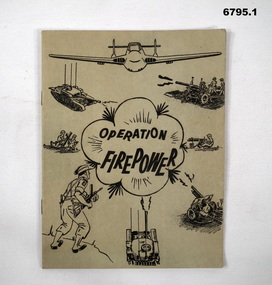
Manual - TRAINING MANUALS VARIOUS, 1937, 1959
... exercise to practice Battle activity at a Brigade level. 2. An instruction manual outlining the proper way to read a map and the logic of it's structure. 3. Illustrative guide...exercise to practice Battle activity at a Brigade level. 2. An instruction manual outlining the proper way to read a map and the logic of it's structure. 3. Illustrative guide ...1. An instruction manual outlining the structure of a military exercise to practice Battle activity at a Brigade level. 2. An instruction manual outlining the proper way to read a map and the logic of it's structure. 3. Illustrative guide on what leaders should expect in relation to their soldiers. Items in the collection re Col J Swatton, refer Cat No 6719.2P for his service details.1. Green cover, 16 page booklet titled " Operation Firepower" . Dated March 1959, which planned an army exercise at Brigade Level. Outlined aim, Tactical setting, maps and plans. 2. Loose stapled 28 page manual on reading maps. Yellow paper with three folder holes punched in left size. Contains instructions and pictures and examples. 3. Brown covered manual, yellow faded pages, 60 pages inside with pictorial content displaying the do's and don't's of the behaviour of a good soldier.1. Maps have some notations, images of vehicles/weapons on front. 2. Titled " Map Reading - Supplement A.T.M. (AUST) No 12". Written on top " Colonel J.W. Swatton". 3. Titled "Right or Wrong": Element of Training and Leadership illustrated 1937". Stamp on back saying "on loan" but now donated.passchendaele barracks trust, training manuals -
 Bendigo Historical Society Inc.
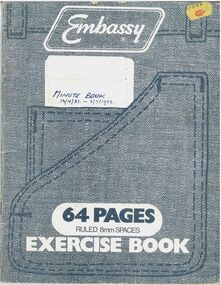
Administrative record - Merle Bush Trefoil Guild: Minute Book
... Merle Bush Minutes Trefoil Guild Girl Guides Guiding Minute Book dated 12/04/1981 to 06/07/1982. Grey covered Embassy 64 page exercise book ruled 8mm spaces. ...The Merle Bush Trefoil Guild was registered in Bendigo on 18/06/1981.The decision to disband the Merle Bush Trefoil Guild was made at a General Meeting on 17/02/2016. The group agreed to continue as the Merle Bush Friendship Group. The Australian Trefoil Guilds connect women who are either actively involved in Girl Guiding or have a history with Girl Guiding. The purpose of a Trefoil Guild is to keep alive the spirit of the Promise and Law, carry this spirit into the community and to give support Guiding.Minute Book dated 12/04/1981 to 06/07/1982. Grey covered Embassy 64 page exercise book ruled 8mm spaces. Small yellow Coles price sticker in top RH corner. Includes hand written Minutes for the Merle Bush Trefoil Guild. One loose sheet with Statement and Income Expenditure for year ended 30/04/82 stapled in to booklet.merle bush, minutes, trefoil guild, girl guides, guiding -
 Bendigo Historical Society Inc.
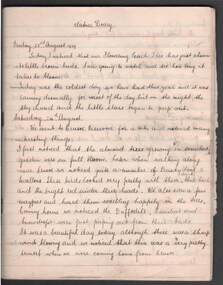
Book - SCHOOL EXERCISE BOOK, 23/08/1929
... Exercise Book minus covers. Entries hand written in ink on various topics 1. Nature diary 23 Aug 1929 - 23 Nov; 2. Essays on St George, St Patrick St Andrew; 3. Nature history with flower pressings; 4. the Guide...Exercise Book minus covers. Entries hand written in ink on various topics 1. Nature diary 23 Aug 1929 - 23 Nov; 2. Essays on St George, St Patrick St Andrew; 3. Nature history with flower pressings; 4. the Guide ...School Exercise Book minus covers. Entries hand written in ink on various topics 1. Nature diary 23 Aug 1929 - 23 Nov; 2. Essays on St George, St Patrick St Andrew; 3. Nature history with flower pressings; 4. the Guide Laws; 5. Health Rules. Teachers name written on some pages s M Hoffmeyer. Note (R Upson, catalog note 2009: ''Would guess that the student was female. Reference made to Crusoe Reservoir on first page is the only link to Bendigo'').bendigo, education, m hoffmeyer. crusoe reservoir -
 Uniting Church Archives - Synod of Victoria
Photograph, Before 1919
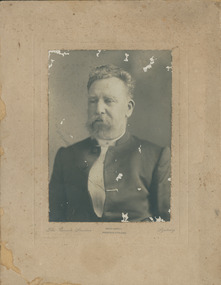
... He was a guide, philosopher, and friend to the younger ministers and exercised a great influence for good in Conference. ...He was a guide, philosopher, and friend to the younger ministers and exercised a great influence for good in Conference. ...B. 1835 England, D. 1919 Christchurch NZ. Methodist minister. Chronicle 17 May 1919, p.43: Deep regret will be felt in South Aus-tralia at the passing away of the Rev. Samuel Knight, one of the best-known and most loved of the earlier ministers of the Wesleyan Methodist Church in Australia. The announcement of the death of Mr. Knight, who was in his 85th year, was received by cable on May 11 from Christ-church, New Zealand, where he had re-sided during the last few years with his only son, the Rev. Percy N. Knight, B.A. The veteran preacher spent over twenty years of his busy and useful life in this State. His last visit to Adelaide was in July, 1915, and it was through his agency and influence that £1,150 was raised for the reduction of the debt on the Archer-street Methodist Church. At that time, except for his head being crowned with snow-white hair, there was little in Mr. Knight's appearance to indicate his great age. He was obviously perfectly happy, and was still the tender shepherd who was so well beloved by his flock when he labored in South Australia. The older members of the Methodist Church remember well the splendid work he did more than half a century ago. He won similarly widespread respect in Vic-toria when he was transferred to the Con-ference there. He had charge of the prin-cipal circuits in both States, and he was equally successful as an eloquent preacher, a sympathetic and an assiduous pastor, and a wise and prudent administrator. His presence in the pulpit was always greeted by a large congregation, and the earnest-ness and spiritually of his discourses never failed to impress them. He was imbued with the true spirit of Methodism, and he had a firm and confident belief in the doctrines which he inculcated with such emotional fervor. Mr. Knight was a broad-minded, genial man with a keen sense of humor, and he shone on the platform. A true Christian, he was also a man of the world, and he could, when appealed to, give valuable counsel. He was a friend to be trusted, and he was ever ready to help those in need of his practical sympathy or his well-considered advice. He lived in an era of great Australian Methodists, and he was one of the greatest among them. Mr. Knight was an indefatigable worker, and under his control all the institutions of the circuits in which he worked nourished abundantly. He was a guide, philosopher, and friend to the younger ministers and exercised a great influence for good in Conference. Mr. Knight was born in Liverpool in 1834 and came to Australia in 1854. After spending several years in Victoria he arrived in Adelaide in 1867 to take charge of the Pirie-street Church. He received three ap-pointments as pastor at Pirie-street, two at Kent Town, and two at North Ade-laide (Archer-street), and he was also at Burra, Gawler, and Moonta. He was president of the Wesleyan Methodist Con-ference in 1877. In 1889 he returned to Victoria, and among the circuits of which he had charge at different times were Brunswick-st (Melbourne), St. Kilda, Ballarat, and Geelong. His activities by no means ceased after he went on the supernumerary list. For some years he was connected with Queen's College (Uni-versity of Melbourne), for which he col-lected a large sum for the liquidation of certain liabilities. The Samuel Knight scholarship was founded last year at Queen's College in his honor. Mr. Knight had taken up in recent years the work of establishing ministers in new circuits and of helping struggling churches. He undertook an energetic campaign of attack upon the debts on various churches that, recognising what his personality could do for them, had appealed to him for assistance, and achieved remarkable success in placing the finances on a sounder footing. A considerable portion of his own income in recent years was devoted to the assistance of young ministers, and to aug-menting the stipends that could be offered by newly established circuits in various parts of Victoria. Mr. Knight had been a widower for many years. His only daughter, Dr. Adela Knight, who appeared to have a brilliant career before her in medicine, died in Vienna about 25 years ago. The Rev. Samuel Knight was for many years a close personal friend of the late Sir Samuel Way, with whom he always stayed when visiting Adelaide. His death was a subject of reference at a number of Methodist churches in and around Ade-laide.B & W head & shoulders studio portrait of Rev. Samuel Knight, mounted on buff card.Rev. S. Knightknight, samuel, rev. -
 Uniting Church Archives - Synod of Victoria
Photograph, Undated c.1915 - 1918
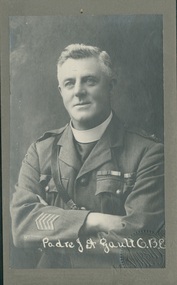
... exercised his ministry at Mt Lyell Launceston, Penguin and Hobart. Returning to Victoria, Mr. Gault was stationed at St. Kilda, and when the war broke out he was associated with the Colllngwood Mission. He left on active service as a chaplain with the first troops, and was ' present ' throughout the Galllpoli campaign. Later he was with the forces In France, and remained on active service until the last of the troops were demobilised to 1920. He was affectionately known as "padre"after the war to the thousands of soldiers who had learned to regard him as guide...exercised his ministry at Mt Lyell Launceston, Penguin and Hobart. Returning to Victoria, Mr. Gault was stationed at St. Kilda, and when the war broke out he was associated with the Colllngwood Mission. He left on active service as a chaplain with the first troops, and was ' present ' throughout the Galllpoli campaign. Later he was with the forces In France, and remained on active service until the last of the troops were demobilised to 1920. He was affectionately known as "padre"after the war to the thousands of soldiers who had learned to regard him as guide ...Born 26 June 1865 at Manchester, England Husband of Mrs. Edith Ann Maria GAULT Of 'The Inglenook', Sea Parade, Cheltenham, Vic. Aged 50 years Enlisted 01 July 1915 for Continuous Service Embarked 16 July 1915 per 'HMAT Demosthenes' from Melbourne, Vic Pay rate of 19s 0d after embarkation Embarked 29 March 1916 per 'RMS Orontes' from Melbourne, Vic. Served in Egypt and on the Western Front Returned to Australia 01 November 1919 Awarded OBE Death of Rev. J. A. Gault The Rev. J. A. Gault, a Methodist minister, who was widely known to Australian soldiers as Padre Gault, died yesterday after a long illness. One of the best-loved padres in the AIF, Mr. Gault served for four years with the Australians, at first in Egypt and later in France and England. After the war, he continued to show great interest in returned soldiers and work in training camps. When he retired in February, 1934, Mr. Gault had been in the ministry for 40 years. Bom at Manchester. England on June 10, 1865 he came to Australia when aged three years in the sailing-ship Antiope. He was educated at Gold street State school and later at Wesley College. After his appointment as a minister, he served the church in many circuits in Tasmania and Victoria. Before the war he was superintendent of the Methodist Mission at Collingwood,and after his return from overseas he occupied important positions, including those of superintendent minister in the Brunswick, Port Melbourne, and Yarra street, Geelong, circuits. His last charge was at Camberwell. After ill-health caused him to retire, he lived at Mentone. He has left a widow, a son, and two daughters. Dr. Edward Gault. of Collins street, is a brother, and there are two sisters in New Zealand. The funeral will leave Mr. Gault's home In Sea parade, Mentone, tomorrow, at 2p.m., for the Methodist Church, Mentone. It will then proceed to the Springvale Crematorium. W. D. Rose and Son. Cheltenham, are making the arrangemnts. R.S.L. Tribute "Returned soldiers will learn of the death of Padre Gault with deep regret," said the president of the Returned Soldiers' League (Mr. G. W. Holland) lastnight. "He was revered by the AIF. for his unfailing sympathy, understanding, and comradeship." - from the Melbourne Argus 02 Feb 1938 "REV. J. A. GAULT. BELOVED A.I.F."PADRE." Death After A Long Illness. After a long Illness, the death occurred at his home at Mentone yesterday afternoon, of Rev. James Archibald ("Padre") Gault, one of the best known and beloved Methodist chaplains to the A.I.F. at Galllpoli and in France. Sorrow at the "padre's" demise, at the age of 72 years, will be shared not only by the thousands to whom he rendered, both spiritual and temporal comfort during the war, but, also by a host of friends won during a long and. fruitful, ministry at many centres in the State, and as chaplain at military camps after the war. He retired from the ministry three years ago, and had suffered Ill-health from that time. Deceased entered the Methodist ministry in 1894, and was ordained four years later. After a successful year as conference evangelist. he was stationed at Mansfield, then at Richmond. Following a ministry at Richmond he was transferred to Tasmania, where for twelve years he exercised his ministry at Mt Lyell Launceston, Penguin and Hobart. Returning to Victoria, Mr. Gault was stationed at St. Kilda, and when the war broke out he was associated with the Colllngwood Mission. He left on active service as a chaplain with the first troops, and was ' present ' throughout the Galllpoli campaign. Later he was with the forces In France, and remained on active service until the last of the troops were demobilised to 1920. He was affectionately known as "padre"after the war to the thousands of soldiers who had learned to regard him as guide, philosopher and friend In the trenches. He was noted always for the good cheer he invariably brought to the troops, and his famous "stunts" among the men were subsequently recorded by him in his publication, "The Stunt Book." For services rendered he was made a member of the Order of the British Empire. On his return to Australia In 1920 he was stationed at Brunswick for three years, and then followed ministries at Port Melbourne, Spring-road, Malvern and finally at Camberwell. A deeply spiritual man, he brought a rare devotion to his ministry, and was beloved by his congregations and ministerial brethren alike. He shunned the limelight, and was one of the most retiring men in conference affairs. The deceased is survived by a widow, two daughters and, one, son. Dr. Edward L. Gaul is a brother." - from the Melbourne Age 02 Feb 1938 B & W waist length studio portrait of the Rev. James Archibald Gault dressed in uniform as Chaplain to the A.I.F. Mounted on grey card.Padre J.A. Gault OBE -
 National Wool Museum
Archive - Notebook, Kathryn Knitwear, 1947-1953
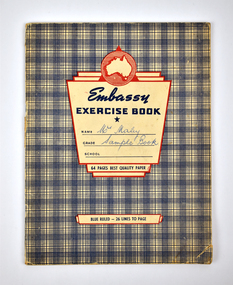
... exercise book cover is printed with a blue checked pattern on a background that was originally likely white, but appears cream due to discolouration. The centre of the front cover has a trapezoidal label that provides space for handwritten labels, and features a map of Australia inside a red circle, as well as the manufacturers branding. The 64 internal pages are printed with blue lines as a writing guide...exercise book cover is printed with a blue checked pattern on a background that was originally likely white, but appears cream due to discolouration. The centre of the front cover has a trapezoidal label that provides space for handwritten labels, and features a map of Australia inside a red circle, as well as the manufacturers branding. The 64 internal pages are printed with blue lines as a writing guide ...Kathryn Knitwear, founded by Robert Blake, manufactured high quality children’s knitwear in Melbourne from the 1940s – 1980s. Robert Blake began manufacturing children’s knitwear in his bedroom in Strathmore using a hand powered machine in the late 1940s. The operation moved to Ascot Vale and Essendon, before eventually establishing a factory in Moonee Ponds in the early 1950s. The business continued to expand, necessitating a move to a new factory in Broadmeadows. By 1962, the Broadmeadows factory was producing an average of 20,000 garments per month, which increased to 24,000 by 1964. Robert Blake’s Son, Brendan recalls that “The Kathryn brand was famous around Australia, anywhere children needed to keep warm and dress smartly. It also won a number of wool fashion awards”, including the 1969 Wool Awards, which was held by the Australian Wool Bureau and published in Women’s Weekly. The Kathryn range was designed for durability, comfort and care, without sacrificing style. They used patterning techniques that increase stretchiness, comfort and fit, as well as integrating decorative elements into the fabric to prevent them from being bulky, uncomfortable or tight. Making longevity of style a priority, Brendan Blake remembers that “there was one particular garment that was in the range for at least thirty years”. He also recalls “In the past, when women have found out that I was associated with Kathryn Knitwear, they would often relate to me the story of a garment they had purchased or received as a gift and, when their child had grown out of it, they would hand it on to another child. Several ladies have told me of purchasing garments for their daughters’ glory box, or saving a particular garment after their daughter had grown out of it. Brendan Blake: “At the peak of their operation they employed approximately two hundred people, mainly women and girls. A family would often seek to send their daughter to work in this company because they knew they would be looked after and safe. One lady wrote to me telling me that working at the Moonee Ponds Factory prior to getting married was the happiest time of her life.” In 1963, workers at the Kathryn factory earned £13 per week, which was 8 shillings and 8 pence higher than the minimum weekly wage for female workers in the textile manufacturing industry (£12 11s 4d). By 1970, the Kathryn Knitwear brand expanded from children’s knitwear into womenswear under the brand name ‘Lady Kathryn’, and for boys and men under ‘Robert Blake’. Continuing to diversify their distribution, they also began exporting ‘Kathryn’ garments to New Zealand, the Pacific Islands, and Japan. ‘Kathryn Knitwear’ was well-known for their early adoption of modern materials and techniques that had broad appeal to their customer base. This is shown in their early use of the acrylic fibre ‘Orlon’ in the 50s and 60s and ‘Superwash’ wool in the 1970s. Many of Kathryn Knitwear’s styles, particularly those that were long running staples of the brand, were available in both wool and Orlon to suit the consumer’s preference. Far from the humble origins of one man in his bedroom with a hand-cranked machine; at its closure in 1980, the Broadmeadows factory of ‘Kathryn’ housed more than 100 machines, including 53 sewing machines and 45 knitting machines. Robert Blake was “a passionate advocate for wool and Australian Made” throughout his whole life. A strong thread that ties through the lifespan of Robert Blake and Kathryn Knitwear is a balance between adopting new innovations without sacrificing the core values of durability, comfort, care and style that had made the brand so well known. Their legacy forms an integral part of both Australian social and manufacturing history. The ‘Embassy’ brand was a house brand of Coles stores from 1929-1994, and manufactured a wide variety of household goods. The manufacture of this specific style of notebook can be dated to between 1947 and 1953.Notebook with handwritten instructions, formulas and sketches detailing patterns for samples. ‘Embassy’ exercise book cover is printed with a blue checked pattern on a background that was originally likely white, but appears cream due to discolouration. The centre of the front cover has a trapezoidal label that provides space for handwritten labels, and features a map of Australia inside a red circle, as well as the manufacturers branding. The 64 internal pages are printed with blue lines as a writing guide.[Obverse] Embassy EXERCISE BOOK NAME [handwritten] Mrs Maley GRADE [handwritten] Sample Book SCHOOL 64 PAGES BEST QUALITY PAPER BLUE RULED – 26 LINES TO PAGE [sample of internal pages] [left page] Notes: 34” = 3 garments out of 40” Length 32” = 3 “ “ “ 38 “ “ 30” = 28” = Cut together (26” = 4 garments “ “ 33” “ (24 = 4 garments “ “ 33” length Blue 36” Red 36 ½“ Green 36” Royal 35 ½” [right page] Design Esquire (Width 35 ½ - 36) Size 34” Width Yardage Size 32” Width Yardage Sample cotton 90 ribs for 28” Size 28” (sample size) Width cut to 20 ½ (double) Yardage 34 ½“ for 2 garm. Size 26” Width Yardage Size 24” Width Yardagebusiness, business history, manufacturing, knitting machine, fashion textile production, business archives, manufacturing documents, embassy brand, coles -
 National Wool Museum
Archive - Notebook, Kathryn Knitwear, c.1962
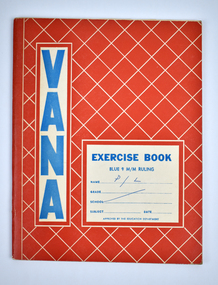
... exercise book cover is printed with a white square check on the diagonal, on a red background. Large blue block letters spelling VANA appear in a white rectangle down the lefthand side. A White rectangle blue lettering provides space for handwritten labels, handwritten inside it is P/L on the top line.The internal pages are printed with blue lines as a writing guide, and contain handwritten notes and tables in red and blue ink....exercise book cover is printed with a white square check on the diagonal, on a red background. Large blue block letters spelling VANA appear in a white rectangle down the lefthand side. A White rectangle blue lettering provides space for handwritten labels, handwritten inside it is P/L on the top line.The internal pages are printed with blue lines as a writing guide, and contain handwritten notes and tables in red and blue ink. ...Kathryn Knitwear, founded by Robert Blake, manufactured high quality children’s knitwear in Melbourne from the 1940s – 1980s. Robert Blake began manufacturing children’s knitwear in his bedroom in Strathmore using a hand powered machine in the late 1940s. The operation moved to Ascot Vale and Essendon, before eventually establishing a factory in Moonee Ponds in the early 1950s. The business continued to expand, necessitating a move to a new factory in Broadmeadows. By 1962, the Broadmeadows factory was producing an average of 20,000 garments per month, which increased to 24,000 by 1964. Robert Blake’s Son, Brendan recalls that “The Kathryn brand was famous around Australia, anywhere children needed to keep warm and dress smartly. It also won a number of wool fashion awards”, including the 1969 Wool Awards, which was held by the Australian Wool Bureau and published in Women’s Weekly. The Kathryn range was designed for durability, comfort and care, without sacrificing style. They used patterning techniques that increase stretchiness, comfort and fit, as well as integrating decorative elements into the fabric to prevent them from being bulky, uncomfortable or tight. Making longevity of style a priority, Brendan Blake remembers that “there was one particular garment that was in the range for at least thirty years”. He also recalls “In the past, when women have found out that I was associated with Kathryn Knitwear, they would often relate to me the story of a garment they had purchased or received as a gift and, when their child had grown out of it, they would hand it on to another child. Several ladies have told me of purchasing garments for their daughters’ glory box, or saving a particular garment after their daughter had grown out of it. Brendan Blake: “At the peak of their operation they employed approximately two hundred people, mainly women and girls. A family would often seek to send their daughter to work in this company because they knew they would be looked after and safe. One lady wrote to me telling me that working at the Moonee Ponds Factory prior to getting married was the happiest time of her life.” In 1963, workers at the Kathryn factory earned £13 per week, which was 8 shillings and 8 pence higher than the minimum weekly wage for female workers in the textile manufacturing industry (£12 11s 4d). By 1970, the Kathryn Knitwear brand expanded from children’s knitwear into womenswear under the brand name ‘Lady Kathryn’, and for boys and men under ‘Robert Blake’. Continuing to diversify their distribution, they also began exporting ‘Kathryn’ garments to New Zealand, the Pacific Islands, and Japan. ‘Kathryn Knitwear’ was well-known for their early adoption of modern materials and techniques that had broad appeal to their customer base. This is shown in their early use of the acrylic fibre ‘Orlon’ in the 50s and 60s and ‘Superwash’ wool in the 1970s. Many of Kathryn Knitwear’s styles, particularly those that were long running staples of the brand, were available in both wool and Orlon to suit the consumer’s preference. Far from the humble origins of one man in his bedroom with a hand-cranked machine; at its closure in 1980, the Broadmeadows factory of ‘Kathryn’ housed more than 100 machines, including 53 sewing machines and 45 knitting machines. Robert Blake was “a passionate advocate for wool and Australian Made” throughout his whole life. A strong thread that ties through the lifespan of Robert Blake and Kathryn Knitwear is a balance between adopting new innovations without sacrificing the core values of durability, comfort, care and style that had made the brand so well known. Their legacy forms an integral part of both Australian social and manufacturing history.Notebook with handwritten tables and figures recording data about production and sales of Kathryn Knitwear from 1962-1963. ‘VANA’ exercise book cover is printed with a white square check on the diagonal, on a red background. Large blue block letters spelling VANA appear in a white rectangle down the lefthand side. A White rectangle blue lettering provides space for handwritten labels, handwritten inside it is P/L on the top line.The internal pages are printed with blue lines as a writing guide, and contain handwritten notes and tables in red and blue ink.[Obverse] VANA EXERCISE BOOK BLUE 9M/M RULING NAME [handwritten] P/L GRADE SCHOOL SUBJECT DATE APPROVED BY THE EDUCATION DEPARTMENTbusiness, business history, manufacturing, knitting machine, fashion textile production, business archives, manufacturing documents, vana -
 Clunes Museum
Document (item) - EXERCISE BOOK, Akoona Trefoil Guild, TREASURER'S REPORT, 1981
... Hard cover exercise book, brown cover containing treasurer's reports and receipts for the years 1981-1991 of the Akoona Trefoil Guild (Girl Guides)...treasurer's reports and receipts for the years 1981-1991 of the Akoona Trefoil Guild (Girl Guides) Girl Guides Akoona Trefoil Guild Treasurer's Report Clunes Trefoil Guild 1981 Copy Treasurer's Balance Sheet Hard cover exercise book, brown cover containing treasurer's reports and receipts for the years 1981-1991 of the Akoona Trefoil Guild (Girl Guides) TREASURER'S REPORT Document EXERCISE BOOK Akoona Trefoil Guild ...treasurer's reports and receipts for the years 1981-1991 of the Akoona Trefoil Guild (Girl Guides)Clunes Trefoil Guild 1981 Copy Treasurer's Balance Sheetgirl guides, akoona trefoil guild, treasurer's report -
Clunes Museum
Document (item) - EXERCISE BOOKS, Clunes Brownie Pack, UNTITLED
... Exercise books of the 1st Clunes Brownie Pack .1 Record Book 1927-1939 .2 Brownie pack log books 1928-1937 .3 Program Book 1938-1941 .4 Guides/Brownie Record book 1986-1935...1ST CLUNES BROWNIE PACK RECORD AND LOG BOOKS 1st clunes brownie pack Record books Log books Exercise books of the 1st Clunes Brownie Pack .1 Record Book 1927-1939 .2 Brownie pack log books 1928-1937 .3 Program Book 1938-1941 .4 Guides/Brownie Record book 1986-1935 UNTITLED Document EXERCISE BOOKS Clunes Brownie Pack ...1ST CLUNES BROWNIE PACK RECORD AND LOG BOOKS1st clunes brownie pack, record books, log books -
 Lakes Entrance Historical Society
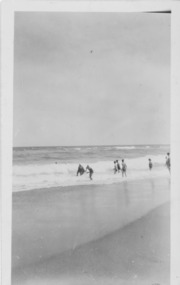
Photograph - Surf Lifesaving, 1938
... Black and white photograph Surf Life Saving members guiding the rope line through the surf during a rescue exercise. Lakes Entrance Victoria...Surf Lifesaving Volunteering Black and white photograph Surf Life Saving members guiding the rope line through the surf during a rescue exercise. Lakes Entrance Victoria Photograph Surf Lifesaving ...Black and white photograph Surf Life Saving members guiding the rope line through the surf during a rescue exercise. Lakes Entrance Victoriasurf lifesaving, volunteering -
 Melbourne Legacy
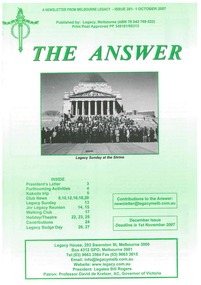
Newsletter, The Answer October 2007, 2007
... exercise classes, stamp group, craft, walking group, Monday Concerts, plus the annual fete and Christmas concert. The first edition of the newsletter was in 1960, previously there had been a quarterly magazine but the distribution was limited, they changed to a 4 page newsletter format to reach more of the widows. The September 1992 edition of the Melbourne Legacy newsletter was the first to be called 'The Answer'. The name comes from the verses that guides...exercise classes, stamp group, craft, walking group, Monday Concerts, plus the annual fete and Christmas concert. The first edition of the newsletter was in 1960, previously there had been a quarterly magazine but the distribution was limited, they changed to a 4 page newsletter format to reach more of the widows. The September 1992 edition of the Melbourne Legacy newsletter was the first to be called 'The Answer'. The name comes from the verses that guides ...A newsletter covering the activities of Melbourne Legacy Widows' Club. The October edition covers a 2007 reunion of former Junior Legatees. Generally The Answer includes photos of events, a notice from the Chairman of the Widows' Committee, dates of meetings, possible day trips and theatre outings, and cruises. The ladies were welcome to attend many activities including, swimming exercise classes, stamp group, craft, walking group, Monday Concerts, plus the annual fete and Christmas concert. The first edition of the newsletter was in 1960, previously there had been a quarterly magazine but the distribution was limited, they changed to a 4 page newsletter format to reach more of the widows. The September 1992 edition of the Melbourne Legacy newsletter was the first to be called 'The Answer'. The name comes from the verses that guides the work of Legacy - 'In Flanders Field' and 'The Answer'. Editions were published January, March, May, July, September and November, they have approximately 24 pages.Brings to life the activities provided for the widows and the work of Melbourne Legacy.Printed A4 x 28 page edition of The Answer with black and white photos and text with a green cover showing Legacy Sunday at the Shrine.newsletter, answer, activities -
 Melton City Libraries
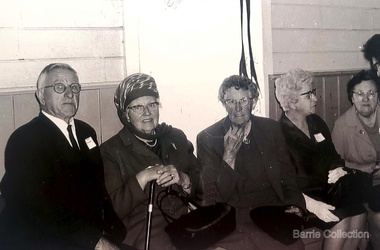
Photograph, Mrs Knox and Beryl Gillespie at the First Hundred Years Celebration of Melton State School 430, 1970
... Guides, Mothers Clubs, CWA, Church Op shop (8 years). Melton Amateurs players produced and tutored by Mabel Rogers exerts from Pyjama Game, South Pacific, Carousel - later years a group of ladies did gentle water exercise at Essendon and Station Road swimming pool. ...Guides, Mothers Clubs, CWA, Church Op shop (8 years). Melton Amateurs players produced and tutored by Mabel Rogers exerts from Pyjama Game, South Pacific, Carousel - later years a group of ladies did gentle water exercise at Essendon and Station Road swimming pool. ...Beryl Knox speaking about early life in Melton. Page 1 1949 – 64 years ago. We began our married life at Melton Sth. The house on the corner of the Exford Rd and Staughton St-- dusty gravel roads, box thorns and noxious weeds everywhere and a sprinkling of houses and vacant land. It was a friendly community consisting of old family names. McDonalds, Blacks, Dodemaide, Cahill, Coopers, Minns, Tinklers, Nesbitts, Cochranes, Wickhams, Exells. Mavis Butler. The home owned by Mr. Robinson and Miss Robinson had been shifted in two parts transported from Diggers Rest and it is still standing 2013. Bruce’s father purchased the house and two adjoining blocks, the Conways built on one and the Rawlinson family on the other block. Eileen still resides there, she was only a baby in a pram and the family had not long arrived from England. The railway line was close to the house and the contents would rattle when heavy steams trains went through, and on a clear frosty night the 1am paper train would echo roar through very loudly when labouring towards the Exford Bridge. Then the two carriage motor train was introduced, this was great for the workers and schoolies who travelled to Melbourne. The train pulled up at the crossing or riding to pick up or drop off. Melva Gillespie (nee Hirt) Bill Cahill delivered the milk by the billy and then in bottles. Len Kennedy (Paul Kennedy’s father, Norma Murrays son) delivered Jongebloeds bread, he always had a sweep going for the Melbourne Cup and raffles for the footy club. Mr. Woodgate owned an old bus and pick up point was the Post Office when there was a Saturday film on a Melton. There were no doctors or dentists in the district. If we need a Doctor we had to travel to Bacchus Marsh or discuss problems over the phone. In later years a Bacchus Marsh Doctor rented the Bluestone building in McKenzie St a couple of days a week. If we needed the Dentist we had to travel to West Footscray or Footscray. We did our banking at “State Savings” then the Miss Minns had the agency and then Bardsleys Store. We travelled to Bacchus Marsh to the National and Commercial banks. Station Rd to Western Highway, now (High Street) was a narrow stretch of bitumen and gravel farmland either side and a couple of farm houses and large gum trees on the properties. Page 2 North of the Railway line Mrs Bessie Jones, mother of Chas and Betty Jones managed the Post Office, next door to her Chas and Betty had the Shell Centre, and later moved the business to Melton. Hughie Nesbitt and mother owned the grocery and hardware store, and I bought my first set of saucepans there. On the opposite side of Station road Mr Coombe owned the fruit shop, and also provided soft drinks and lollies for children. The Chaff Mill was on the corner of Station Rd and Brooklyn Rd. Mr Lumsden was manager and later years Bernie Trethowan and Jack Butler were partners. It finally burnt down and is a Service Station now. Along Brooklyn Rd there were a few houses and Victoria Hall, not a very big hall, but catered for lots of functions, Balls, Fancy Dress, Bazaars, Square Dancing and meetings. The Bacchus Marsh Baptists held Sunday School in the hall. A group of shops were built south of the railway line Molly and Len Skinner managed the Post Office and handled a few essential groceries. Tom McDonald and Ron Lunsberg were the butchers. Mary and Syd Cooper lived next door to us and often in turn would run out of something when we had a baking spree we would borrow or exchange, sugar flour etc over the fence. Mavis and Jack Butler lived there before the Coopers. Bernie and Iris Trethowan lived two doors up. Neighbours were invited into their home to view the first black and white television in Melton Sth. Bill Exell was one of the first Melton Sth farmers to sell his land to developers, the land was idle for years before housing developed. I joined the Melton Valley Golf Club in 1960. The Gun Club as our Club House, an old tin shed consisting a water tank, trestle table and forms and dirt floor. It was a 9 hole course with sand scraps and landscape putting before greens. The Common or parkland was part of the Golf Course. It was open for every ones recreation. Roy Norton an old identity trained his trotters on the Common and wouldn’t clear the track for the golfers. The golfers had to avoid him to continue to play. We had to keep clear when the young youths came in their paddock cars and motorbikes. Over the years the Toolern Creek flooded its banks, water and debri covered the course on one year our first Club house was flooded out. It took several working bees to clean it up. We lived at Melton Sth for 15 years and moved to Melton on the farm “Croxton Park.” The Nixon family farm “Mowbray” adjoined the farm. Bruce worked the land cropping the farm when Mrs Nixon died. Page 3 (page 4 on the handwritten script) Bruce had the first offer to buy, in those days it wasn’t easy to get good bank loans. Part of the land is the Golf Course now and Mr O’Shea purchased the bulk. Moving to Melton was totally different – I became involved with Committees, Scouts, Guides, Mothers Clubs, CWA, Church Op shop (8 years). Melton Amateurs players produced and tutored by Mabel Rogers exerts from Pyjama Game, South Pacific, Carousel - later years a group of ladies did gentle water exercise at Essendon and Station Road swimming pool. I was 20 or so years in Probus. The local followed the football, there was always a Gymkhana on the long weekend in June. The tennis always created a lot of interest during the finals. It didn’t matter which team played the supporters were treated to a cup of tea and leftovers from their afternoon tea. In 1978 were the first residents to move into the Jennings Estate Kurunjang and lived there 31 years and retired 4 years ago into Unit. The amazing changes I have experienced. Merrimu supplied our water, after depending on tanks. The landscape changed completely when developers came in, no more dusty plains \ typed web Sept 2013 McFarlane, Mrs Knox and Beryl Gillespie at the First Hundred Years Celebration of Melton State School 430. The event was held at Mechanics Hall, Melton.local identities, local significant events, education -
 Ringwood RSL Sub-Branch
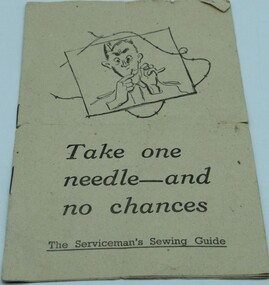
Photograph - Document Training Manual and National Registration identity card, C WW2
... 00155.1 Royal Marines Physical Exercise Table 1943 72 printed pages. 00155.2 Great Britain National Registration Identity Card to Francis M. Thomsom Edinburgh 1947 00155.3 The Serviceman's Sewing Guide. ...00155.1 Royal Marines Physical Exercise Table 1943 72 printed pages. 00155.2 Great Britain National Registration Identity Card to Francis M. Thomsom Edinburgh 1947 00155.3 The Serviceman's Sewing Guide. ...00155.1 Royal Marines Physical Exercise Table 1943 72 printed pages. 00155.2 Great Britain National Registration Identity Card to Francis M. Thomsom Edinburgh 1947 00155.3 The Serviceman's Sewing Guide. Printed and illustrated. * pages on paper. -
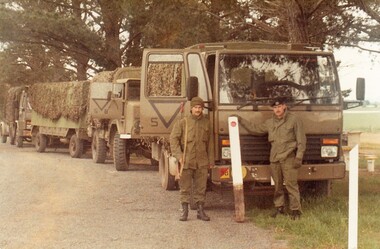 8th/13th Victorian Mounted Rifles Regimental Collection
Photograph
... guide post. Line of trucks behind them. probably a driver training exercise. Corporal M. ...guide post. Line of trucks behind them. probably a driver training exercise. Corporal M. ...While many recruits could already drive when they joined 8/13 Victorian Mounted Rifles it took many hours of instruction and training before they were licenced to drive heavier, more complex army vehicles both on and off road and under combat conditions.Two colour photographs of two soldiers of ' A ' Squadron 8/13 Victorian Mounted Rifles, one holding a dislodged guide post. Line of trucks behind them. probably a driver training exercise. Corporal M. Roberts is wearing beret. -
 Linton and District Historical Society Inc
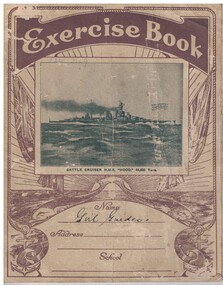
Girl Guide record book, Girl Guide leader's notebook, Linton, 1930s
... School exercise book used c. 1931 by girl guide leader (possibly Gwen Petterson) to record names of guides, ideas for activities, 'health rules' for guides, and badges attained by individual guides. ...Petterson [Acting Captain Linton Girl Guides] School exercise book used c. 1931 by girl guide leader (possibly Gwen Petterson) to record names of guides, ideas for activities, 'health rules' for guides, and badges attained by individual guides. ...School exercise book used c. 1931 by girl guide leader (possibly Gwen Petterson) to record names of guides, ideas for activities, 'health rules' for guides, and badges attained by individual guides. Also includes Annual Report dated 27/10/31, signed "Gwen A. Petterson, Acting Captain".girl guides, gwen a. petterson [acting captain linton girl guides] -
![COL photo of one panel from a large, freestanding, multi-panel display board. Under the heading, "EAT APPROPRIATELY" are is a group of captioned photos under the sub-heading "A food guide for good health". Immediately below that are the headings, "GOOD NUTRITION IS NECESSARY FOR GOOD HEALTH." and "AVOID OVEREATING EXTRA WEIGHT ADDS STRESS ['Adds stress' is underlined] TO THE JOINTS." At the bottom of the panel is the heading "CO-ORDINATE MEALS WITH MEDICATION" beside a photo of a plate of food with fruit, drinks, cutlery and medications on a table.](/media/collectors/6406aa055b62820f1ee406c8/items/68884b64aa506c2d1b98a16f/item-media/68884c2daa506c2d1b98a630/item-fit-380x285.jpg?cb=6) Musculoskeletal Health Australia (now held by the Glen Eira Historical Society)
Musculoskeletal Health Australia (now held by the Glen Eira Historical Society)Photograph - Object, 1987
... The Foundation utilised freestanding display boards such as this to provide information about its programs and services at events. arthritis foundation of victoria afv display board information resources education self help pain management pain relief stress management joint health healthy food healthy diet exercise recreation rest arthritis help book 1987 [On a white label, handwritten in blue ink] Self-help Display '87 LEFT UPPER COL photo of one panel from a large, freestanding, multi-panel display board. Under the heading, "EAT APPROPRIATELY" are is a group of captioned photos under the sub-heading "A food guide ...This photo depicts one panel of an Arthritis Foundation of Victoria multi-panel display board from 1987. The Foundation utilised freestanding display boards such as this to provide information about its programs and services at events.COL photo of one panel from a large, freestanding, multi-panel display board. Under the heading, "EAT APPROPRIATELY" are is a group of captioned photos under the sub-heading "A food guide for good health". Immediately below that are the headings, "GOOD NUTRITION IS NECESSARY FOR GOOD HEALTH." and "AVOID OVEREATING EXTRA WEIGHT ADDS STRESS ['Adds stress' is underlined] TO THE JOINTS." At the bottom of the panel is the heading "CO-ORDINATE MEALS WITH MEDICATION" beside a photo of a plate of food with fruit, drinks, cutlery and medications on a table.[On a white label, handwritten in blue ink] Self-help Display '87 LEFT UPPERarthritis foundation of victoria, afv, display board, information, resources, education, self help, pain management, pain relief, stress management, joint health, healthy food, healthy diet, exercise, recreation, rest, arthritis help book, 1987
