
Showing 98 items matching "farm skills"
-
 University of Melbourne, Burnley Campus Archives
Document, P. Esdale et al, Farm Skills Training Guide, 1987
... Farm Skills Training Guide......farm skills...Correspondence between Pewter Esdale, Lecturer, Burnley and Garth Polkinghorne, Training Development Executive re the Australian National Farm Skills Trianing Guide 26.05.1987. Produced by the South Australian Rural Industry Training Committee Inc. 2. ...farming farm skills training guide south australian rural industry training committee 1. ...farming, farm skills, training, guide, south australian rural industry training committee -
 Flagstaff Hill Maritime Museum and Village
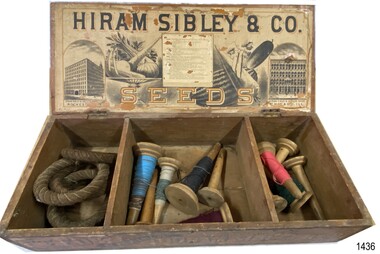
Container - Box for seeds, ca. 1880s
... skills to engineer seeds that were stronger and develop plants that produced more seeds. The production of seeds became his main business. He bought land cheaply and improved to soil so that he could produce seed and grain, and graze herds of cattle. He became the owner of 14 large farms...skills to engineer seeds that were stronger and develop plants that produced more seeds. The production of seeds became his main business. He bought land cheaply and improved to soil so that he could produce seed and grain, and graze herds of cattle. He became the owner of 14 large farms ...This seed box was made for Hiram Sibley for his seed house business. He sold seeds priced by the weight or the space they took up e.g. bushel. This box allowed for seeds to be divided by type, size or even date. The box was strong and easy to cart and store. It was also a handy item to 'recycle' as a storage container for other items. The Sibley seed box is a desirable collectors' item. A large variety of sizes and shapes are still available today in various stages of condition. Hiram Sibley developed seeds that were strong and the plants that grew from these seeds produced many seeds. Varieties of Sibley seeds and plants are still advertised for sale in modern times. HIRAM SIBLEY (1807-1888) - Hiram Sibley was born in America. He had a natural mechanical ability and became skilled in many trades. He and his partner Don Watson opened a sawmill then a machine shop and foundry. He became involved with Alfred Vale and Samuel Morse and their work on the telegraph. Eventually he became the first president of the Western Union Telegraph Company. Later, after leaving Western Union in the early 1860s, Sibley bought and sold railroads, manufactured sold, ran timber mills, and became involved in farming and seed supply. In this area he used his skills to engineer seeds that were stronger and develop plants that produced more seeds. The production of seeds became his main business. He bought land cheaply and improved to soil so that he could produce seed and grain, and graze herds of cattle. He became the owner of 14 large farms. Hiram Sibley earned the reputation "as the most extensive farmer and seedsman in this country". The business of Hiram Sibley & Co. was conducted his warehouse in Rochester and his seed house in Chicago. One department of the business sold farming equipment, another department imported ornamental plants from overseas countries Sibley went on to invest a large amount of money in a bank, and to be financially involved in the community by making large donations to public services such as a library and a school of music. At one point he was the richest man in Monroe county.This box is significant for its historic connection with Hiram Sibley, who is famous for many reasons, among which is his very profitable business of seed engineering to improve the production of crops. This box also represents the value of containers used for selling products in the 1880s, being re-used for other useful purposes. The box is an example of goods imported for use in Australia. The text and images of the box are an example of 1880s advertisingBox, wooden, with two brass hinges joining lid to base. Base has two wooden partitions, divided into three unequal sized compartments. Lid's underside has label with drawings of buildings and produce, text with maker's name and description of vegetables. Front edge of box has stencilled text and diagrams. Outside lid, and the other three sides, have no inscriptions. Made by Hiram Sibley & Co., USA. (Box is currently used to store quoits 1436.2 and cones of cotton thread 1436.3.)Marked "HIRAM SIBLEY & CO / SEEDS", "WAREHOUSE - "ROCHESTER N.Y. ", "SEED HOUSE - CHICARGO, ILL.", "SEEDS BY WEIGHT & MEASURE", "PUT UP BY / HIRAM SIBLEY & CO. / ROCHESTER, N.Y. AND CHICARGO, ILL."flagstaff hill, warrnambool, maritime village, maritime museum, flagstaff hill maritime museum & village, hiram sibley & co, rochester n.y., seeds, wooden seed box, seed box, seedsmen, arable farming, chicargo illinois, seed house, seed engineering, seed distribution, seeds by weight and measure -
Federation University Historical Collection
Book - Book - Scrapbook, Ballarat College of Advanced Education: Scrapbook of newspaper cutting, Book 6; August 1979 to January 1980
... The cuttings cover the period from 10 August 1979 to 30 January 1980. . employment advertisements application for enrolment outline of courses bcae open day on sunday energy hysteria by lobby groups farmer and his fuel supply prof helen lyman outreach subjuects adult literacy migrant education a bush walk moorabool river energy and the farm miners have learned from past mistakes working holiday in america more mining activity ahead secondary students 'copping out' for 'soft options' national parks satisfy a need dr myron sutton dr ann sutton bcae guidance for secondary students peter blizzard sculptor $1200 award helping novice orienteers bishop hazlewood apologises to bcae 'verbal vandalism' says jack barker soil conservation - in designs stephen roberts judy ellis ballarat books on campus education - buildings luxury image what's in a name sergeant family recital reading skills depend on parental support computer link a success paddle your stone canoe projects in tune with needs voice training for the deaf turned into a game career centre at work rail link forum bcar librarianship courses accredited health and human relations education concrete canoe club wins trophy laa looking out for librarians future plans for bcae new policy on college entrance final year arts students forestry course health education course german safety expert visit expert in safety engineering physical education impotant in schools lack of reading and numeracy skills remedial neglect: who's to blame teachers not doing job? ...Newspaper cuttings relating to Ballarat College of Advanced Education. These are from various newspapers and include The Age, Ballarat Courier, The Australian, The Herald. The cuttings cover the period from 10 August 1979 to 30 January 1980. . Book with grey cover, front. Spiral bound.employment advertisements, application for enrolment, outline of courses, bcae open day on sunday, energy hysteria by lobby groups, farmer and his fuel supply, prof helen lyman, outreach subjuects, adult literacy, migrant education, a bush walk, moorabool river, energy and the farm, miners have learned from past mistakes, working holiday in america, more mining activity ahead, secondary students 'copping out' for 'soft options', national parks satisfy a need, dr myron sutton, dr ann sutton, bcae guidance for secondary students, peter blizzard sculptor, $1200 award, helping novice orienteers, bishop hazlewood apologises to bcae, 'verbal vandalism' says jack barker, soil conservation - in designs, stephen roberts, judy ellis, ballarat books on campus, education - buildings luxury image, what's in a name, sergeant family recital, reading skills depend on parental support, computer link a success, paddle your stone canoe, projects in tune with needs, voice training for the deaf turned into a game, career centre at work, rail link forum, bcar librarianship courses accredited, health and human relations education, concrete canoe club wins trophy, laa looking out for librarians, future plans for bcae, new policy on college entrance, final year arts students, forestry course, health education course, german safety expert visit, expert in safety engineering, physical education impotant in schools, lack of reading and numeracy skills, remedial neglect: who's to blame, teachers not doing job? not true, zig plavina retires, discussion on students reports, keith mcelroy asu's first coaching co-ordinator, great hall near completion -
Federation University Historical Collection
Book - Book - Scrapbook, University of Ballarat: Scrapbook of Newspaper cutting; Book 1, January 1998 to April 1998
... . ` employment advertisements application for enrolment outline of courses university of ballarat smb campus ub new university opens secretaries conference h h smith artist's legacy amalie colquhom anne beggs sunter director of tafe peter morey work skills olympics peter bailey gold medallist meat industry workers joint venture tafe prepares to deliver courses jobs pathway program professor geoffrey blainey professor david caro chancellor michael aldermann centrelink first call for jobless colour and great music marion's pots marion popplewell doug sarah - community service identity michael adermann neville french - potter exhibition in new york farm field day ballarat demonstration farm vocational training critical powerful drama at the courthouse $1.5m ararat campus opened combined talents forge forest course apprenticeship program begins Book with yellow cover, front. ...Newspaper cuttings relating to the University of Ballarat, SMB Campus. These are from various newspapers and include The Age, Ballarat Courier, The Australian, The Herald. The cuttings cover the period from 1 January 1998 to 4 April 1998. . `Book with yellow cover, front. Spiral bound.employment advertisements, application for enrolment, outline of courses, university of ballarat, smb campus, ub, new university opens, secretaries conference, h h smith, artist's legacy, amalie colquhom, anne beggs sunter, director of tafe, peter morey, work skills olympics, peter bailey gold medallist, meat industry workers, joint venture, tafe prepares to deliver courses, jobs pathway program, professor geoffrey blainey, professor david caro, chancellor, michael aldermann, centrelink first call for jobless, colour and great music, marion's pots, marion popplewell, doug sarah - community service identity, michael adermann, neville french - potter, exhibition in new york, farm field day, ballarat demonstration farm, vocational training critical, powerful drama at the courthouse, $1.5m ararat campus opened, combined talents forge forest course, apprenticeship program begins -
Federation University Historical Collection
Book - Book - Scrapbook, Ballarat School of MInes: Scrapbook of Newspaper Cuttings, Book 6, July 1979 - December 1979
... The papers concerned are The Courier, Ballarat, The Australian, The Age over the period of 03/07/1979 to 03/12/1979 staffing advertisements remedial teachers at smb courses at smb smb community resource centre open smb music centre smb farm course report comdemns training country kids get a raw deal smb raft race apprentice week work and pleasure trip to snow for smb students apprentice safety seminar at ballarat val d'angri and "inkle weaving" the best of both worlds smb weaving demonstration many apprentices lack reading and number skills teachers upset at mystery cut centenary ceremony for smb gardens gardens and art linked indonesian visitors at smb a.l.p.moves on new technology problems of remedial teaching Book with deep red and white cover back and front, spiral bound. ...Collection of newspaper articles related to Ballarat School Of Mines.They cover activities and advertisements for staff. The papers concerned are The Courier, Ballarat, The Australian, The Age over the period of 03/07/1979 to 03/12/1979Book with deep red and white cover back and front, spiral bound. staffing advertisements, remedial teachers at smb, courses at smb, smb community resource centre open, smb music centre, smb farm course, report comdemns training, country kids get a raw deal, smb raft race, apprentice week, work and pleasure trip to snow for smb students, apprentice safety seminar at ballarat, val d'angri and "inkle weaving", the best of both worlds, smb weaving demonstration, many apprentices lack reading and number skills, teachers upset at mystery cut, centenary ceremony for smb gardens, gardens and art linked, indonesian visitors at smb, a.l.p.moves on new technology, problems of remedial teaching -
Federation University Historical Collection
Book - Book - Scrapbook, Ballarat School of MInes: Scrapbook of Newspaper Cuttings, February 1979 - 1980
... Items have appeared in other books, mainly Item 31009 staffing advertisements remedial teachers at smb courses at smb smb community resource centre open smb music centre smb farm course report comdemns training country kids get a raw deal smb raft race apprentice week work and pleasure trip to snow for smb students apprentice safety seminar at ballarat val d'angri and "inkle weaving" the best of both worlds smb weaving demonstration many apprentices lack reading and number skills teachers upset at mystery cut centenary ceremony for smb gardens gardens and art linked indonesian visitors at smb a.l.p.moves on new technology problems of remedial teaching Book with deep red and white cover back and front, spiral bound. ...Collection of newspaper articles related to Ballarat School Of Mines.They cover activities and advertisements for staff. The papers concerned are The Courier, Ballarat, The Australian, The Age over the period of February 1979 to 1980. Items have appeared in other books, mainly Item 31009Book with deep red and white cover back and front, spiral bound. staffing advertisements, remedial teachers at smb, courses at smb, smb community resource centre open, smb music centre, smb farm course, report comdemns training, country kids get a raw deal, smb raft race, apprentice week, work and pleasure trip to snow for smb students, apprentice safety seminar at ballarat, val d'angri and "inkle weaving", the best of both worlds, smb weaving demonstration, many apprentices lack reading and number skills, teachers upset at mystery cut, centenary ceremony for smb gardens, gardens and art linked, indonesian visitors at smb, a.l.p.moves on new technology, problems of remedial teaching -
Federation University Historical Collection
Book - Book - Scrapbook, Ballarat School of MInes: Scrapbook of Newspaper Cuttings, Book 18, June 1983 to October 1983
... skill olympics...relay raises funds for fitness...smb has trained 350+ in computer method...hints for buyers...rex hoolioake - shire engineer...patrick mcardle of smb ensemble...health and fitness week...dick richards - antarctic hero...smb design banner for air show in texas...resi award winners...smb farm...The papers concerned are The Courier, Ballarat, The Australian, The Age over the period of 12 February 1983 to 4 June 1983. courses available teaching positions advertised tracie marks top secretarial student ray pond new cooking instructor bronze bust of mica smith royal melbourne institute of technology presentation of bust of dick richards greenhaigh sculptor ballarat craftsmen elite group smb win inter-school chess competition bcae host seminar gmh donates car for apprentices three faces of liz gurrie growing education industry new programs at smb training the best tutors needed to help with literacy courses bella guerin gaol governor's daughter bcae open day philip tjerstra leaves for austria skill olympics relay raises funds for fitness smb has trained 350+ in computer method hints for buyers rex hoolioake - shire engineer patrick mcardle of smb ensemble health and fitness week dick richards - antarctic hero smb design banner for air show in texas resi award winners smb farm courses Book with white cover, front, spiral bound. ...Collection of newspaper articles related to Ballarat School Of Mines.They cover activities and advertisements for staff. The papers concerned are The Courier, Ballarat, The Australian, The Age over the period of 12 February 1983 to 4 June 1983.Book with white cover, front, spiral bound. courses available, teaching positions advertised, tracie marks top secretarial student, ray pond new cooking instructor, bronze bust of mica smith, royal melbourne institute of technology, presentation of bust of dick richards, greenhaigh sculptor, ballarat craftsmen elite group, smb win inter-school chess competition, bcae host seminar, gmh donates car for apprentices, three faces of liz gurrie, growing education industry, new programs at smb, training the best, tutors needed to help with literacy courses, bella guerin, gaol governor's daughter, bcae open day, philip tjerstra leaves for austria, skill olympics, relay raises funds for fitness, smb has trained 350+ in computer method, hints for buyers, rex hoolioake - shire engineer, patrick mcardle of smb ensemble, health and fitness week, dick richards - antarctic hero, smb design banner for air show in texas, resi award winners, smb farm courses -
Federation University Historical Collection
Book - Book - Scrapbook, Ballarat School of MInes: Scrapbook of Newspaper Cuttings, Book 19, October 1983 to February 1984
... The papers concerned are The Courier, Ballarat, The Australian, The Age over the period of 20 October 1983 to 25 February 1984. courses available teaching positions advertised nick morris wins photo competition ross armstrong's photo douglas miller to play in melbourne concert ballarat teachers join strike smb to cut programs adult literacy course at smb visitors from indonesia selkirk brick pty ltd farm apprenticeships smb art instructor neville bunning smb vocational skills centre exhibition sums up lives of colquhouns amalie colquhourn neville bunning still painting at 81 lauren pointon smb wins organ scholarship former smb students honored philip tjerkstra edward sperber peter manzel traditional end for classes karina martin - modern greek classes $670000 grant for school first woman completes building construction course at smb - nerida smith more continue studies in hope of jobs twelve learn first skills - fitting and machining art prize has local links hugh williamson- art benefactor woolclassing courses at smb cut louise kellett wins photographic prize Book with yellow cover, front, spiral bound. ...Collection of newspaper articles related to Ballarat School Of Mines.They cover activities and advertisements for staff. The papers concerned are The Courier, Ballarat, The Australian, The Age over the period of 20 October 1983 to 25 February 1984.Book with yellow cover, front, spiral bound. courses available, teaching positions advertised, nick morris wins photo competition, ross armstrong's photo, douglas miller to play in melbourne concert, ballarat teachers join strike, smb to cut programs, adult literacy course at smb, visitors from indonesia, selkirk brick pty ltd, farm apprenticeships, smb art instructor neville bunning, smb vocational skills centre, exhibition sums up lives of colquhouns, amalie colquhourn, neville bunning still painting at 81, lauren pointon smb wins organ scholarship, former smb students honored, philip tjerkstra, edward sperber, peter manzel, traditional end for classes, karina martin - modern greek classes, $670000 grant for school, first woman completes building construction course at smb - nerida smith, more continue studies in hope of jobs, twelve learn first skills - fitting and machining, art prize has local links, hugh williamson- art benefactor, woolclassing courses at smb cut, louise kellett wins photographic prize -
Federation University Historical Collection
Book - Book - Scrapbook, Ballarat School of MInes: Scrapbook of Newspaper Cuttings, Book 24, April 1985 to October 1985
... skill finals...peter brown - carpentry...ricky hains - engineering drawing...craig haintz - fitting and turning...lynn wheeler - hairdressing...brendan mceldrew - fitter...daryl edwards - electrical wiring...phillip smith - construction steelworker...dr murray gillan...former smb student now dean - faculty of engineering - swinburne institute of technology...tom walsh top farm...The papers concerned are The Courier, Ballarat, The Australian, The Age over the period of 8 April 1985 to 10 October 1985. teaching positions advertised pre-employment courses courses available industrial electrical engineers society trevor henderson wins award geoffrey blainey launches history of the school of mines wendouree tech high wins football six-day tree seminar at old ballarat east gardens ian duggan wins welding award smb facing big changes challenges writing workshops give pleasure ania walwicz - writer artist smb's famous head - r w richards antarctic hero dies - 92 jim bell head of engineering lee wallis head of plumbing and sheet metal ballarat council to replace statue of malcolm fraser staff farewelled captain moonlight slept here carpentary at smb will be moved dick richard's obituary hairdressing seminar flagstaff college of tafe smb kim odgers first woman - certificate of technology in surveying apprentices compete in work skill finals peter brown - carpentry ricky hains - engineering drawing craig haintz - fitting and turning lynn wheeler - hairdressing brendan mceldrew - fitter daryl edwards - electrical wiring phillip smith - construction steelworker dr murray gillan former smb student now dean - faculty of engineering - swinburne institute of technology tom walsh top farm apprentice for 1984 andrew gibbs top sheetmetal apprentice ballarat unique educational centre steven smith top motor mechanic for 1984 ricky hains selected fo skill olympics in japan lynne wheeler wins silver medal in hairdressing lynne kirkpatrick - most outstanding apprentice of 1985 lynne kirkpatrick - certificate of woolclassing david brown motor mechanic apprentice vacc award smb level one apprentice central highlands/wimmera regional tafe awards lynne kirkpatrick wool classer leigh gillbert building trade darrenhumphris automotive trades ian duggan metal trades peter flett electrical trades e j tippett resigns from smb council courses for young job-seekers $7 million project takes shape ballarat municipal observatory being restored breaking down more barriers disabled employment support smb grant for job training in modern office skills ricky hains receives smb's centenary medallion when centres for disabled will be redundant nursing aide girls' award jenny westin bronwyn fleming sharon rook leanne adams tracey foley tammy lench maxine cloks ministry for arts visit lydiard street closed between grant and dana streets dangers that lurk at work ministry of employment and training forgotten hero is resurrected baldwin spencer barry hill blackburn report on post-compulsory schooling schools - what changes are needed gifts for ballarat gardens michael taffe presenting rose to smb heritage roses in australia courier 10/9/85 meri gracin smbfood services department chokkie vegetable learning the skills of hospitality courier gardening seminar at smb kevin heinze smb redevelopment on target eating their way to health trevor mckenzie helen schaper steven marsden farmer lynne kirkpatrick outstanding silvana faulkner equal opportunities officer women try non-traditional jobs Book with beige cover, front, spiral bound. ...Collection of newspaper articles related to Ballarat School Of Mines.They cover activities and advertisements for staff. The papers concerned are The Courier, Ballarat, The Australian, The Age over the period of 8 April 1985 to 10 October 1985.Book with beige cover, front, spiral bound. teaching positions advertised, pre-employment courses, courses available, industrial electrical engineers society, trevor henderson wins award, geoffrey blainey launches history of the school of mines, wendouree tech high wins football, six-day tree seminar at old ballarat east gardens, ian duggan wins welding award, smb facing big changes, challenges, writing workshops give pleasure, ania walwicz - writer artist, smb's famous head - r w richards, antarctic hero dies - 92, jim bell head of engineering, lee wallis head of plumbing and sheet metal, ballarat council to replace statue of malcolm fraser, staff farewelled, captain moonlight slept here, carpentary at smb will be moved, dick richard's obituary, hairdressing seminar, flagstaff college of tafe, smb, kim odgers first woman - certificate of technology in surveying, apprentices compete in work skill finals, peter brown - carpentry, ricky hains - engineering drawing, craig haintz - fitting and turning, lynn wheeler - hairdressing, brendan mceldrew - fitter, daryl edwards - electrical wiring, phillip smith - construction steelworker, dr murray gillan, former smb student now dean - faculty of engineering - swinburne institute of technology, tom walsh top farm apprentice for 1984, andrew gibbs top sheetmetal apprentice, ballarat unique educational centre, steven smith top motor mechanic for 1984, ricky hains selected fo skill olympics in japan, lynne wheeler wins silver medal in hairdressing, lynne kirkpatrick - most outstanding apprentice of 1985, lynne kirkpatrick - certificate of woolclassing, david brown motor mechanic apprentice, vacc award smb level one apprentice, central highlands/wimmera regional tafe awards, lynne kirkpatrick, wool classer, leigh gillbert building trade, darrenhumphris automotive trades, ian duggan metal trades, peter flett electrical trades, e j tippett resigns from smb council, courses for young job-seekers, $7 million project takes shape, ballarat municipal observatory being restored, breaking down more barriers, disabled employment support, smb grant for job training in modern office skills, ricky hains receives smb's centenary medallion, when centres for disabled will be redundant, nursing aide girls' award, jenny westin, bronwyn fleming, sharon rook, leanne adams, tracey foley, tammy lench, maxine cloks, ministry for arts visit, lydiard street closed between grant and dana streets, dangers that lurk at work, ministry of employment and training, forgotten hero is resurrected, baldwin spencer, barry hill, blackburn report on post-compulsory schooling, schools - what changes are needed, gifts for ballarat gardens, michael taffe presenting rose to smb, heritage roses in australia, courier 10/9/85, meri gracin smbfood services department, chokkie vegetable, learning the skills of hospitality, courier gardening seminar at smb, kevin heinze, smb redevelopment on target, eating their way to health, trevor mckenzie, helen schaper, steven marsden, farmer lynne kirkpatrick outstanding, silvana faulkner equal opportunities officer, women try non-traditional jobs -
Federation University Historical Collection
Book - Book - Scrapbook, Ballarat School of MInes: Scrapbook of Newspaper Cuttings, Book 26, February 1986 to June 1986
... smb farm apprentices with john taylor...skill...The papers concerned are The Courier, Ballarat, The Australian, The Age over the period of 22 February 1986 to 7 June 1986. teaching positions advertised pre-employment courses courses available simulators to teach drivers new computer installed at smb kevin howell george couyant kevin jarvis begonia festival features pilot recreation scheme for older adults senior citizens' week at smb computer managed learning system at smb smb extensions ready by september off-campus students david brown wins 3 awards award of merit for geologist phil day smb farm apprentices with john taylor skill olympics entry award for rodney smart electrical trades apprentice bruce miller award for plumbing peter lange top electrical apprentice ballarat astronomical society smb new carpentry centre opens smb on line with building technology search for skill olympians big chance for young apprentices smb hosting new business course rodney mayne top plumbing apprentice women to learn trades jason o'brien john patton andrew glisson apprentice boilermakers grant gilbert best motor mechanic apprentices seek gold at skill olympics ballarat innovation centre's plan observatory display at gold museum nikon school photographic contest melissa bone david noonan john paton Book with beige cover, front, spiral bound. ...Collection of newspaper articles related to Ballarat School Of Mines.They cover activities and advertisements for staff. The papers concerned are The Courier, Ballarat, The Australian, The Age over the period of 22 February 1986 to 7 June 1986.Book with beige cover, front, spiral bound. teaching positions advertised, pre-employment courses, courses available, simulators to teach drivers, new computer installed at smb, kevin howell, george couyant, kevin jarvis, begonia festival features, pilot recreation scheme for older adults, senior citizens' week at smb, computer managed learning system at smb, smb extensions ready by september, off-campus students, david brown wins 3 awards, award of merit for geologist phil day, smb farm apprentices with john taylor, skill olympics entry, award for rodney smart electrical trades, apprentice bruce miller award for plumbing, peter lange top electrical apprentice, ballarat astronomical society, smb new carpentry centre opens, smb on line with building technology, search for skill olympians, big chance for young apprentices, smb hosting new business course, rodney mayne top plumbing apprentice, women to learn trades, jason o'brien, john patton, andrew glisson, apprentice boilermakers, grant gilbert best motor mechanic, apprentices seek gold at skill olympics, ballarat innovation centre's plan, observatory display at gold museum, nikon school photographic contest, melissa bone, david noonan, john paton -
Federation University Historical Collection
Book - Book - Scrapbook, Ballarat School of MInes: Scrapbook of Newspaper Cuttings, Book 39, April 1989 to July 1989
... The papers concerned are The Courier, Ballarat, The Australian, The Age over the period of 1 April 1989 to 1 July 1989. teaching positions advertised pre-employment courses courses available enrolment for smb courses work skill competition michael pierce finalist scott cook apprentice $500000 to buils smb hostel certificates for small business course new dance technique auction of webster street student houses back to back theatre group fiona watson regional vocational information service ann mccaffrey smb equal opportunity officer sole parents get job boost retail traineeship at smb judge david boyle. smb hospitality department smb's work at clay cave smb service on careers tradesmen put their skills to the test marketing is the way to succeed winning hairdressing apprentices kathryn reichelt lois rowan janine sprattling maria ashton ballarat regional board course in conservation liz eddy top woolclasser student jennifer mulholland suzanne addison cook for bosses $393000grant for agricultural training centre whole farm planning course greg carlson simon lidgett youth achiever awards return to workforce reading and writing for adults program new students' home ready soon Book with yellow cover, front, spiral bound. ...Collection of newspaper articles related to Ballarat School Of Mines.They cover activities and advertisements for staff. The papers concerned are The Courier, Ballarat, The Australian, The Age over the period of 1 April 1989 to 1 July 1989.Book with yellow cover, front, spiral bound. teaching positions advertised, pre-employment courses, courses available, enrolment for smb courses, work skill competition, michael pierce finalist, scott cook apprentice, $500000 to buils smb hostel, certificates for small business course, new dance technique, auction of webster street student houses, back to back theatre group, fiona watson, regional vocational information service, ann mccaffrey smb equal opportunity officer, sole parents get job boost, retail traineeship at smb, judge david boyle. smb hospitality department, smb's work at clay cave, smb service on careers, tradesmen put their skills to the test, marketing is the way to succeed, winning hairdressing apprentices, kathryn reichelt, lois rowan, janine sprattling, maria ashton, ballarat regional board, course in conservation, liz eddy top woolclasser student, jennifer mulholland, suzanne addison, cook for bosses, $393000grant for agricultural training centre, whole farm planning course, greg carlson, simon lidgett, youth achiever awards, return to workforce, reading and writing for adults program, new students' home ready soon -
 Flagstaff Hill Maritime Museum and Village
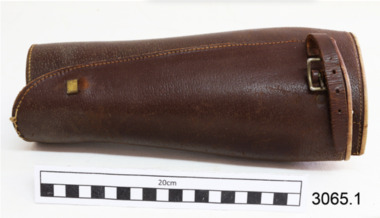
Clothing - Leather Leggings, 1899 to 1920
... farms and in country towns. The army did not officially accept First Australians into the AIF until May 1917 when enlistment standards were relaxed to include 'half-castes' with a parent of European origin. Indigenous soldiers served as valuable members of the Light Horse and many possessed excellent horse handling skills...farms and in country towns. The army did not officially accept First Australians into the AIF until May 1917 when enlistment standards were relaxed to include 'half-castes' with a parent of European origin. Indigenous soldiers served as valuable members of the Light Horse and many possessed excellent horse handling skills ...The subject leather leggings are associated with mounted troops known as the Australian Light Horse that served in the South African War from 1899 to 1902. After the war, Britain wanted to use fewer mounted troops and restructured its force around a style of combat that needed more infantry. But the defence of Australia still relied upon mounted military units as these were more mobile than infantry and could travel faster over long distances. Light Horse brigades in the Australian Imperial Force (AIF) mostly contained recruits who served in the Light Horse regiments of the Citizen Forces. Many young men from rural areas of Australia volunteered for the Light Horse regiments. They had to pass a riding test to join, this test was easier for men from the bush because horses were still the main method of transport on farms and in country towns. The army did not officially accept First Australians into the AIF until May 1917 when enlistment standards were relaxed to include 'half-castes' with a parent of European origin. Indigenous soldiers served as valuable members of the Light Horse and many possessed excellent horse handling skills and specialist tracking knowledge.The subject items are part of the uniform for the Light Horse Units that served in the Australian army from 1899 until 1918. These leggings were worn by soldiers on horseback and are significant as they represent a noteworthy time in Australia's early military history. It was a time when many young men gave their lives during the South African and First World Wars in the defence of the then British Empire as part of the Imperial Forces that were gathered from many British-controlled Colonial countries.A pair of two Leather Leggings used by Mounted Australian soldiers during the first world war. The leggings are dark tan in colour with stitching to attach buckles and fastener straps. The strap buckles are made of brass and the leather legging straps are of same leather as leggings. Noneflagstaff hill, warrnambool, flagstaff hill maritime museum, shipwreck coast, flagstaff hill maritime village, great ocean road, leggings, leather leggings, protective leggings, protective clothing, australian mounted light horse units, military equipment -
 City of Moorabbin Historical Society (Operating the Box Cottage Museum)
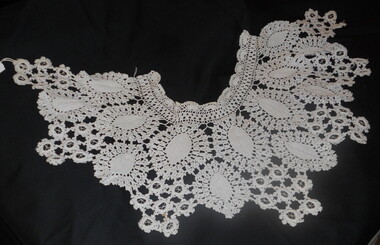
Clothing - Clothing, lace collar, c1880
... This heavy, detachable lace collar is an example of the dressmaking and needle work skills of the women of the families of the pioneer settlers and market gardeners of the Moorabbin Shire c 1880 The Maggs family settled in the Brighton district in the late 1800,s. After the Dendy's Special Survey of the Brighton area in 1841 land allotments were rented or sold to pioneers who established market gardens, dairy farms, fruit gardens and vineyards. ...This heavy, detachable lace collar is an example of the dressmaking and needle work skills of the women of the families of the pioneer settlers and market gardeners of the Moorabbin Shire c 1880 The Maggs family settled in the Brighton district in the late 1800,s. After the Dendy's Special Survey of the Brighton area in 1841 land allotments were rented or sold to pioneers who established market gardens, dairy farms, fruit gardens and vineyards. The pioneer settlers and market gardeners of Moorabbin Shire had to be self reliant and made their own clothing and utensils. This is one of many items that exhibit the skill and craftsmanship of the women in these familiesThis heavy, lace collar is detachable and consists of hand crochet work.clothing, crochetwork, pioneers, early settlers, dendy henry, maggs geoff, brighton, bentleigh, moorabbin, market gardeners, craft working, dressmakers -
 City of Moorabbin Historical Society (Operating the Box Cottage Museum)
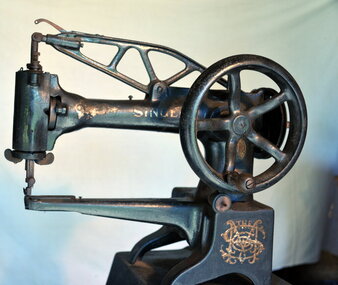
Functional object - Sewing machine, 'Singer' boot-making, c1914
... Early settlers and market gardeners in Moorabbin Shire had to be self reliant, producing their food making and maintaining their own equipment, clothing and utensils This Singer boot-makers sewing machine is an example of the skills and craftsmanship of the pioneer settlers in Moorabbin Shire. brighton moorabbin pioneers bentleigh market gardeners early settlers farm equipment sewing machine singer manufacturing company boot-makers leatherwork ' SINGER ' on body of machine / 'SINGER 29K2' on plate/ emblem plate on right shaft shows 'S entwined with a shuttle/ bobbin over a reel of cotton' ./ ‘Singer Manef.c Co’ on iron support frame A black, Singer 29K2, treadle, boot-maker's sewing machine c1914 Functional object Sewing machine, 'Singer' boot-making SINGER Manufacturing Company ...Early settlers and market gardeners in Moorabbin Shire had to be self reliant, producing their food making and maintaining their own equipment, clothing and utensils This Singer boot-makers sewing machine is an example of the skills and craftsmanship of the pioneer settlers in Moorabbin Shire.A black, Singer 29K2, treadle, boot-maker's sewing machine c1914' SINGER ' on body of machine / 'SINGER 29K2' on plate/ emblem plate on right shaft shows 'S entwined with a shuttle/ bobbin over a reel of cotton' ./ ‘Singer Manef.c Co’ on iron support framebrighton, moorabbin, pioneers, bentleigh, market gardeners, early settlers, farm equipment, sewing machine, singer manufacturing company, boot-makers, leatherwork -
 City of Moorabbin Historical Society (Operating the Box Cottage Museum)
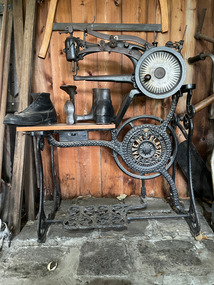
Machine - Sewing Machine, Bootmaking, c1900
... This treadle Bootmaking machine was used by early settlers and market gardeners in Moorabbin Shire, who had to be self reliant, producing their food and making and maintaining their own equipment, clothing and utensils This Claes 'Patent Elastic' boot-making machine is an example of the skills and craftsmanship of the pioneer settlers in Moorabbin Shire c1900 brighton moorabbin pioneers bentleigh market gardeners early settlers farm equipment sewing machine boot-makers leatherwork patent elastic manufacturing company 'PATENT ELASTIC' on iron frame A black, 'Patent Elastic' treadle, boot-maker's, sewing machine. ...This treadle Bootmaking machine was used by early settlers and market gardeners in Moorabbin Shire, who had to be self reliant, producing their food and making and maintaining their own equipment, clothing and utensils This Claes 'Patent Elastic' boot-making machine is an example of the skills and craftsmanship of the pioneer settlers in Moorabbin Shire c1900 A black, 'Patent Elastic' treadle, boot-maker's, sewing machine.'PATENT ELASTIC' on iron framebrighton, moorabbin, pioneers, bentleigh, market gardeners, early settlers, farm equipment, sewing machine, boot-makers, leatherwork, patent elastic manufacturing company -
 City of Moorabbin Historical Society (Operating the Box Cottage Museum)
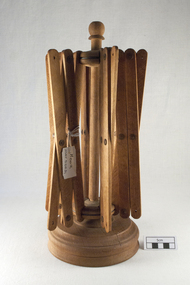
Craft - Craft equipment, wool winder, c1860
... farms. A wooden wool winder, with extending arms for winding hanks of wool into balls prior to knitting. For ease of use the winder also rotates. Circa 1860s this winder was made in Ireland. The pioneer settlers and market gardeners of Moorabbin Shire had to be self reliant and made their own clothing and utensils. This is one of many items used to exhibit the skill ...Pioneers migrating to Moorabbin Shire brought items they thought would assist them in the new Country. They had to be self reliant and made their own clothing and utensils while establishing their market gardens and farms. A wooden wool winder, with extending arms for winding hanks of wool into balls prior to knitting. For ease of use the winder also rotates. Circa 1860s this winder was made in Ireland.The pioneer settlers and market gardeners of Moorabbin Shire had to be self reliant and made their own clothing and utensils. This is one of many items used to exhibit the skill and craftsmanship of the women in these families. Phillip Jones migrated from Ireland c1852 and his son, James Jones 1857 – 1940 was born in East Brighton , married Mary Ann Moore and raised his family in Bentleigh, as the area became known. A wooden wool winder, with extending arms for winding hanks of wool into balls prior to knitting. For ease of use the winder also rotates. Circa 1860s this winder was made in Ireland.brighton, moorabbin, pioneers, bentleigh, market gardeners, wool, craft work, early settlers, knitting, craft equipment, jones mary ann, jones james, jones phillip, herron john -
 City of Moorabbin Historical Society (Operating the Box Cottage Museum)
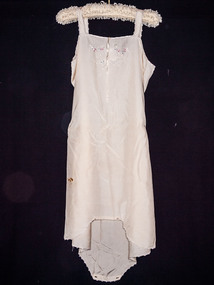
Clothing - Clothing, lady's underwear combination 'teddy', c1900
... Early settlers and market gardeners established their families in Moorabbin Shire and this item shows the skill and craftsmanship of the women of these families clothing crochet brighton moorabbin pioneers dressmaking market gardeners early settlers craftwork lacework moorabbin shire bentleigh mckinnon hunt ailsa dairy farms fruit orchards A lady's white cotton combination underwear with a buttoned crotch and hand worked decoration on bodice Clothing Clothing, lady's underwear combination 'teddy' ...This lady’s white cotton combination petticoat , commonly called a 'teddy', is an example of the dressmaking skills of the women of the early settlers families in Moorabbin Shire in the early 20th C . Early settlers and market gardeners established their families in Moorabbin Shire and this item shows the skill and craftsmanship of the women of these families A lady's white cotton combination underwear with a buttoned crotch and hand worked decoration on bodice clothing, crochet, brighton, moorabbin, pioneers, dressmaking, market gardeners, early settlers, craftwork, lacework, moorabbin shire, bentleigh, mckinnon, hunt ailsa, dairy farms, fruit orchards -
 City of Moorabbin Historical Society (Operating the Box Cottage Museum)
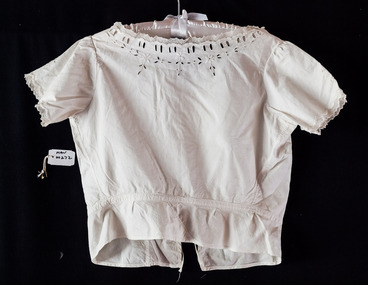
Clothing - Clothing, lady's chemise white cotton cut work c1900, c1910
... This chemise is an example of the dressmaking and needlework skills of the women of the early settlers families in Moorabbin Shire in the early 20th C Early settlers and market gardeners established their families in Moorabbin Shire c1900 and this item shows the skill and craftsmanship of the women of these families clothing crochet brighton moorabbin pioneers dressmaking market gardeners early settlers craftwork lacework moorabbin shire bentleigh mckinnon hunt ailsa dairy farms fruit orchards This lady’s white cotton chemise has short sleeves, and drawstring waist . ...This chemise is an example of the dressmaking and needlework skills of the women of the early settlers families in Moorabbin Shire in the early 20th C Early settlers and market gardeners established their families in Moorabbin Shire c1900 and this item shows the skill and craftsmanship of the women of these families This lady’s white cotton chemise has short sleeves, and drawstring waist . The neckline has cut work and needlework flowers and the cuffs have lace edging. is an example of the dressmaking skills of the women of the early settlers families in Moorabbin Shire in the early 20th C clothing, crochet, brighton, moorabbin, pioneers, dressmaking, market gardeners, early settlers, craftwork, lacework, moorabbin shire, bentleigh, mckinnon, hunt ailsa, dairy farms, fruit orchards -
 City of Moorabbin Historical Society (Operating the Box Cottage Museum)
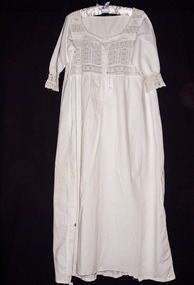
Clothing - Clothing, lady's long cotton nightgown c1900, c1900
... This lady’s cotton nightgown is an example of the dressmaking and lacework skills of the women of the early settlers families in Moorabbin Shire in the early 20th C Early settlers and market gardeners established their families in Moorabbin Shire c1900 and this item shows the skill and craftsmanship of the women of these families clothing crochet brighton moorabbin pioneers dressmaking market gardeners early settlers craftwork lacework moorabbin shire bentleigh mckinnon hunt ailsa dairy farms fruit orchards A lady's long white cotton nightdress with long sleeves , heart shaped neckline,and lace bodice.fastened with mother of pearl button. ...This lady’s cotton nightgown is an example of the dressmaking and lacework skills of the women of the early settlers families in Moorabbin Shire in the early 20th C Early settlers and market gardeners established their families in Moorabbin Shire c1900 and this item shows the skill and craftsmanship of the women of these families A lady's long white cotton nightdress with long sleeves , heart shaped neckline,and lace bodice.fastened with mother of pearl button. The cuffs have wide lace edging and ribbon insert lace midriff.clothing, crochet, brighton, moorabbin, pioneers, dressmaking, market gardeners, early settlers, craftwork, lacework, moorabbin shire, bentleigh, mckinnon, hunt ailsa, dairy farms, fruit orchards -
 City of Moorabbin Historical Society (Operating the Box Cottage Museum)
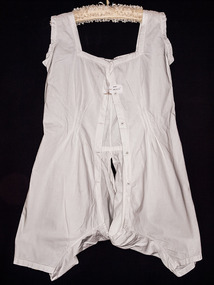
Clothing - Clothing, lady's combination drawers, c1900
... This lady’s cotton combination drawers is an example of the dressmaking skills of the women of the early settlers families in Moorabbin Shire in the early 20th C Early settlers and market gardeners established their families in Moorabbin Shire c1900 and this item shows the skill and craftsmanship of the women of these families clothing underwear combination haberdashery crochet doilies brighton moorabbin pioneers dressmaking market gardeners early settlers craftwork bentleigh lacework moorabbin shire dairy farms fruit orchards Lady's white cotton combination drawers with buttoned crotch Clothing Clothing, lady's combination drawers ...This lady’s cotton combination drawers is an example of the dressmaking skills of the women of the early settlers families in Moorabbin Shire in the early 20th C Early settlers and market gardeners established their families in Moorabbin Shire c1900 and this item shows the skill and craftsmanship of the women of these families Lady's white cotton combination drawers with buttoned crotchclothing, underwear combination, haberdashery, crochet, doilies, brighton, moorabbin, pioneers, dressmaking, market gardeners, early settlers, craftwork, bentleigh, lacework, moorabbin shire, dairy farms, fruit orchards -
 City of Moorabbin Historical Society (Operating the Box Cottage Museum)
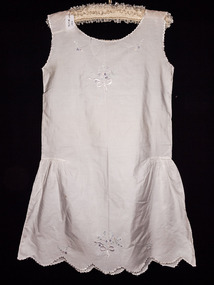
Clothing - Clothing, lady's lawn slip c1920, c1920
... This lady’s cotton full length petticoat is an example of the dressmaking and needlework skills of the women of the early settlers families in Moorabbin Shire in the early 20th C Early settlers and market gardeners established their families in Moorabbin Shire c1900 and this item shows the skill and craftsmanship of the women of these families clothing underwear combination haberdashery crochet doilies brighton moorabbin pioneers dressmaking market gardeners early settlers craftwork bentleigh lacework moorabbin shire dairy farms fruit orchards Lady's fine lawn Full Length slip with hand embroidered floral design at centre front bodice and hem and on shoulder straps. ...This lady’s cotton full length petticoat is an example of the dressmaking and needlework skills of the women of the early settlers families in Moorabbin Shire in the early 20th C Early settlers and market gardeners established their families in Moorabbin Shire c1900 and this item shows the skill and craftsmanship of the women of these families Lady's fine lawn Full Length slip with hand embroidered floral design at centre front bodice and hem and on shoulder straps. The hem has a hand sewn scalloped edge .clothing, underwear combination, haberdashery, crochet, doilies, brighton, moorabbin, pioneers, dressmaking, market gardeners, early settlers, craftwork, bentleigh, lacework, moorabbin shire, dairy farms, fruit orchards -
 City of Moorabbin Historical Society (Operating the Box Cottage Museum)
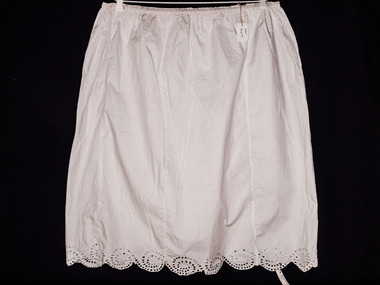
Clothing - Clothing, lady's 1/2 slip cotton cutwork, c1900
... This lady’s hand sewn cotton 1/2 petticoat with cut work is an example of the dressmaking and needlework skills of the women of the early settlers families in Moorabbin Shire in the early 20th C Early settlers and market gardeners established their families in Moorabbin Shire c1900 and this item shows the skill and craftsmanship of the women of these families clothing haberdashery crochet doilies brighton moorabbin pioneers dressmaking market gardeners early settlers craftwork bentleigh lacework moorabbin shire marshall d dairy farms fruit orchards Lady's white cotton 1/2 slip with cutwork front, hand sewn scalloped hem. ...This lady’s hand sewn cotton 1/2 petticoat with cut work is an example of the dressmaking and needlework skills of the women of the early settlers families in Moorabbin Shire in the early 20th C Early settlers and market gardeners established their families in Moorabbin Shire c1900 and this item shows the skill and craftsmanship of the women of these families Lady's white cotton 1/2 slip with cutwork front, hand sewn scalloped hem.clothing, haberdashery, crochet, doilies, brighton, moorabbin, pioneers, dressmaking, market gardeners, early settlers, craftwork, bentleigh, lacework, moorabbin shire, marshall d, dairy farms, fruit orchards -
 City of Moorabbin Historical Society (Operating the Box Cottage Museum)
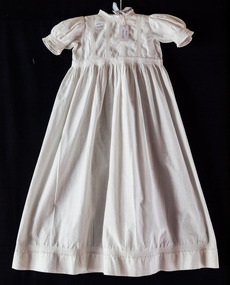
Clothing - Clothing, baby's cotton christening gown, pintucks, c1900
... This baby's white cotton Christening gown is an example of the dressmaking skills of the women of the early settlers families in Moorabbin Shire in the early 20th C Early settlers and market gardeners established their families in Moorabbin Shire c1900 and this item shows the skill and craftsmanship of the women of these families clothing needlework haberdashery crochet doilies brighton moorabbin pioneers dressmaking market gardeners early settlers craftwork bentleigh lacework moorabbin shire milne meryl dairy farms fruit orchards Baby's long sleeved white cotton christening gown with 2cm bands of pintucks on yoke and long ties. ...This baby's white cotton Christening gown is an example of the dressmaking skills of the women of the early settlers families in Moorabbin Shire in the early 20th C Early settlers and market gardeners established their families in Moorabbin Shire c1900 and this item shows the skill and craftsmanship of the women of these families Baby's long sleeved white cotton christening gown with 2cm bands of pintucks on yoke and long ties. Bone button fastens at napeclothing, needlework, haberdashery, crochet, doilies, brighton, moorabbin, pioneers, dressmaking, market gardeners, early settlers, craftwork, bentleigh, lacework, moorabbin shire, milne meryl, dairy farms, fruit orchards -
 City of Moorabbin Historical Society (Operating the Box Cottage Museum)
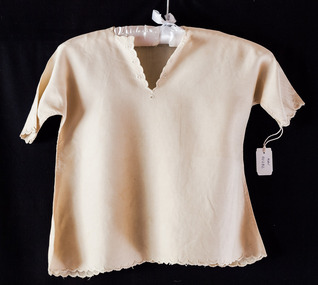
Clothing - Clothing, baby's cream silk top, c1900
... Baby's cream silk short sleeved top with V neck and hand sewn scalloped neckline, cuffs and hem is an example of the dressmaking skills of the women of the early settlers families in Moorabbin Shire in the early 20th C Early settlers and market gardeners established their families in Moorabbin Shirec1900 and this item shows the skill and craftsmanship of the women of these families clothing,needlework, haberdashery, crochet, doilies, brighton, moorabbin, pioneers, dressmaking, market gardeners, early settlers, craftwork , bentleigh, lacework, moorabbin shire, dairy farms, fruit orchards Baby's cream silk short sleeved top with V neck and hand sewn scalloped neckline, cuffs and hem Clothing Clothing, baby's cream silk top Early settler ...Baby's cream silk short sleeved top with V neck and hand sewn scalloped neckline, cuffs and hem is an example of the dressmaking skills of the women of the early settlers families in Moorabbin Shire in the early 20th C Early settlers and market gardeners established their families in Moorabbin Shirec1900 and this item shows the skill and craftsmanship of the women of these families Baby's cream silk short sleeved top with V neck and hand sewn scalloped neckline, cuffs and hemclothing,needlework, haberdashery, crochet, doilies, brighton, moorabbin, pioneers, dressmaking, market gardeners, early settlers, craftwork , bentleigh, lacework, moorabbin shire, dairy farms, fruit orchards -
 City of Moorabbin Historical Society (Operating the Box Cottage Museum)
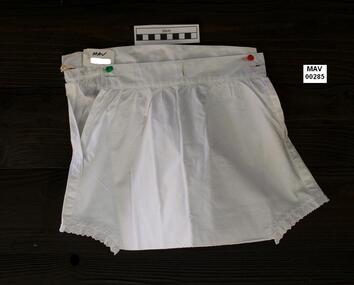
Clothing - Clothing, child's cotton pants c1900, c1900
... Child's white cotton pants with side buttons and lace edging at leg were made by women of the early settler families in Moorabbin Shire c1900 and show their dressmaking and needlework skills Early settlers and market gardeners established their families in Moorabbin Shire c1900 and this item shows the dressmaking skill and craftsmanship of the women of these families clothing brighton moorabbin pioneers dressmaking market gardeners early settlers craftwork lacework moorabbin shire bentleigh mckinnon dairy farms fruit orchards Child's cotton pants with lace edging on legs and 2 side bone buttons Clothing Clothing, child's cotton pants c1900 Unrecorded Dressmaker ...Child's white cotton pants with side buttons and lace edging at leg were made by women of the early settler families in Moorabbin Shire c1900 and show their dressmaking and needlework skills Early settlers and market gardeners established their families in Moorabbin Shire c1900 and this item shows the dressmaking skill and craftsmanship of the women of these families Child's cotton pants with lace edging on legs and 2 side bone buttonsclothing, brighton, moorabbin, pioneers, dressmaking, market gardeners, early settlers, craftwork, lacework, moorabbin shire, bentleigh, mckinnon, dairy farms, fruit orchards -
 City of Moorabbin Historical Society (Operating the Box Cottage Museum)
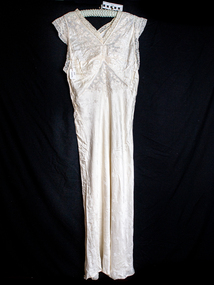
Clothing - Clothing, lady's full length cream silk nightgown c1900, c1900
... This lady’s hand-sewn silk sleeveless nightgown is an example of the dressmaking and lacework skills of the women of the early settlers families in Moorabbin Shire in the early 20th C Early settlers and market gardeners established their families in Moorabbin Shire and this item shows the skill and craftsmanship of the women of these families clothing crochet brighton moorabbin pioneers dressmaking market gardeners early settlers craftwork bentleigh lacework moorabbin shire fruit orchard mrs l risstrom dairy farms Clothing, lady's hand sewn full length cream silk sleeveless nightgown with lacework insert Clothing Clothing, lady's full length cream silk nightgown c1900 ...This lady’s hand-sewn silk sleeveless nightgown is an example of the dressmaking and lacework skills of the women of the early settlers families in Moorabbin Shire in the early 20th C Early settlers and market gardeners established their families in Moorabbin Shire and this item shows the skill and craftsmanship of the women of these families Clothing, lady's hand sewn full length cream silk sleeveless nightgown with lacework insert clothing, crochet, brighton, moorabbin, pioneers, dressmaking, market gardeners, early settlers, craftwork, bentleigh, lacework, moorabbin shire, fruit orchard, mrs l risstrom, dairy farms -
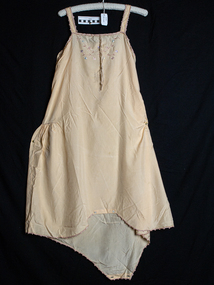 City of Moorabbin Historical Society (Operating the Box Cottage Museum)
Clothing - Clothing, lady's cream cotton 1/2 petticoat 'teddy', button crotch, c1900
... This lady’s cream fine cotton combination 'teddy' is an example of the dressmaking , lacework and needlework skills of the women of the early settlers families in Moorabbin Shire in the early 20th C Early settlers and market gardeners established their families in Moorabbin Shire c1900 and this item shows the skill and craftsmanship of the women of these families clothing haberdashery crochet doilies brighton moorabbin pioneers dressmaking market gardeners early settlers craftwork bentleigh lacework moorabbin shire hunt ailsa dairy farms fruit orchards Lady's hand sewn fine cream cotton , 'teddy', a combination petticoat with a crotch that fastens with 2 mother of pearl buttons Shoulder straps and neckline are edged with crochet and the yoke has coloured needlework. ...This lady’s cream fine cotton combination 'teddy' is an example of the dressmaking , lacework and needlework skills of the women of the early settlers families in Moorabbin Shire in the early 20th C Early settlers and market gardeners established their families in Moorabbin Shire c1900 and this item shows the skill and craftsmanship of the women of these families Lady's hand sewn fine cream cotton , 'teddy', a combination petticoat with a crotch that fastens with 2 mother of pearl buttons Shoulder straps and neckline are edged with crochet and the yoke has coloured needlework. Hand sewn gathering at hip line of side seams clothing, haberdashery, crochet, doilies, brighton, moorabbin, pioneers, dressmaking, market gardeners, early settlers, craftwork, bentleigh, lacework, moorabbin shire, hunt ailsa, dairy farms, fruit orchards -
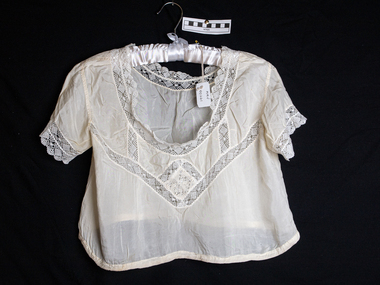 City of Moorabbin Historical Society (Operating the Box Cottage Museum)
Clothing - Clothing, lady's cream silk camisole c1900, c1900
... This lady’s fine cream cotton camisole is an example of the dressmaking and lacework skills of the women of the early settlers families in Moorabbin Shire in the early 20th C Early settlers and market gardeners established their families in Moorabbin Shire and this item shows the skill and craftsmanship of the women of these families clothing haberdashery crochet doilies brighton moorabbin pioneers dressmaking market gardeners early settlers craftwork bentleigh lacework moorabbin shire hunt ailsa dairy farms fruit orchardscancel Lady's hand sewn cream silk camisole with lacework yoke, neckline and cuffs of short sleeves, and a drawstring waist Clothing Clothing, lady's cream silk camisole c1900 ...This lady’s fine cream cotton camisole is an example of the dressmaking and lacework skills of the women of the early settlers families in Moorabbin Shire in the early 20th C Early settlers and market gardeners established their families in Moorabbin Shire and this item shows the skill and craftsmanship of the women of these families Lady's hand sewn cream silk camisole with lacework yoke, neckline and cuffs of short sleeves, and a drawstring waist clothing, haberdashery, crochet, doilies, brighton, moorabbin, pioneers, dressmaking, market gardeners, early settlers, craftwork, bentleigh, lacework, moorabbin shire, hunt ailsa, dairy farms, fruit orchardscancel -
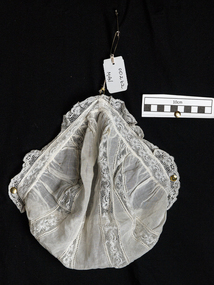 City of Moorabbin Historical Society (Operating the Box Cottage Museum)
Clothing - Clothing, lady's cream fine cotton night mop cap, c1900
... This lady’s fine cotton night cap is an example of the dressmaking skills of the women of the early settlers families in Moorabbin Shire in the early 20th C Early settlers and market gardeners established their families in Moorabbin Shire c1900 and this item shows the skill and craftsmanship of the women of these families clothing crochet mop caps brighton moorabbin pioneers dressmaking market gardeners early settlers craftwork bentleigh lacework moorabbin shire hunt ailsa dairy farms fruit orchards Lady's cream voile night mop cap with 4 lacework panels and edging Clothing Clothing, lady's cream fine cotton night mop cap ...This lady’s fine cotton night cap is an example of the dressmaking skills of the women of the early settlers families in Moorabbin Shire in the early 20th C Early settlers and market gardeners established their families in Moorabbin Shire c1900 and this item shows the skill and craftsmanship of the women of these families Lady's cream voile night mop cap with 4 lacework panels and edging clothing, crochet, mop caps, brighton, moorabbin, pioneers, dressmaking, market gardeners, early settlers, craftwork, bentleigh, lacework, moorabbin shire, hunt ailsa, dairy farms, fruit orchards -
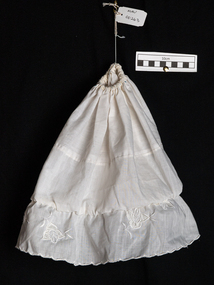 City of Moorabbin Historical Society (Operating the Box Cottage Museum)
Clothing - Clothing, lady's white cotton mop cap, c1900
... This lady’s cotton mop cap was worn to protect the hair when cleaning, washing clothes and other household chores and is an example of the dressmaking skills of the women of the early settlers families in Moorabbin Shire in the early 20th C Early settlers and market gardeners established their families in Moorabbin Shire c1900 and this item shows the skill and craftsmanship of the women of these families clothing crochet mop caps brighton moorabbin pioneers dressmaking market gardeners early settlers craftwork bentleigh lacework moorabbin shire dairy farms fruit orchards Clothing, lady's white cotton mop cap Clothing Clothing, lady's white cotton mop cap ...This lady’s cotton mop cap was worn to protect the hair when cleaning, washing clothes and other household chores and is an example of the dressmaking skills of the women of the early settlers families in Moorabbin Shire in the early 20th C Early settlers and market gardeners established their families in Moorabbin Shire c1900 and this item shows the skill and craftsmanship of the women of these families Clothing, lady's white cotton mop cap clothing, crochet, mop caps, brighton, moorabbin, pioneers, dressmaking, market gardeners, early settlers, craftwork, bentleigh, lacework, moorabbin shire, dairy farms, fruit orchards
