
Showing 82 items matching "farming tools"
-
 Kiewa Valley Historical Society
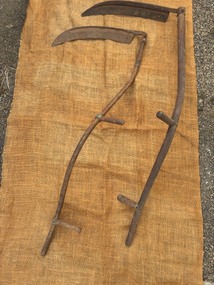
Farming Tools - 2 Scythes, 2 Fern Hooks, 2 Long Handled Sickles, Mattock, Pitch Fork, Pick Axe
... Farming Tools - 2 Scythes, 2 Fern Hooks, 2 Long Handled Sickles, Mattock, Pitch Fork, Pick Axe...The metal has a pointed end on one side of its head and a broad flat blade on the other side. Farming Tools - 2 Scythes, 2 Fern Hooks, 2 Long Handled Sickles, Mattock, Pitch Fork, Pick Axe ...1. Scythe - Agricultural hand-tool for mowing grass or harvesting crops.Horse drawn machinery and tractors replaced the scythe. The scythe with the metal rod may have been fitted later, replacing a wooden rod. 2. Fern Hook - Used for slashing or reaping plants 3. Long handled sickle - A traditional single handed agricultural tool with a curved metal blade and handle. Used for harvesting. 4. Mattock - Heavy duty hand tool featuring a long handle and a stout dual-headed metal blade used in many ways eg. digging 5. Pitch Fork - An agricultural tool used to pitch loose material such as hay or leaves. 6. Pick Axe - A tool used to break and pry at the pointed end and the axe end for hoeing, skimming and chopping through roots.Douglas used these tools 70-80 years ago (1950s) mainly on his family's farm at Dandongadale near Buffalo River for harvesting as well as clearing land. Some may have been used on a family property at Whorouly as well and at the Dederang family properties from 1964. At Dederang the family had a tobacco farm and a dairy farm - (now 4 properties). Douglas Petzke had a soldier settlement farm in Dederang. Property was 'Woodside' about 1 km south east of the Dederang store. Douglad had 100 acres on each of the top and bottom sides. The bottom side was the dairy farm and the top side was beside House Creek. The farm totalled more than 200 acres. Douglas left Dederang c 2000 and now (2026) lives at Baranduda.1. Scythes x2 - Long wooden and one is metal curved rod with offset handles and a curved 600 mm long steel blade projecting from one end 2. Fern Hooks x2 - Wooden handle with curved steel blade attached at one end 3. Long-handled Sickles x2 - Both have wooden handles one of which is made from a branch of a 'tree' hence the curve. The blade is curved metal 4. Mattock - A long wooden handle with a dual-headed metal blade 5. Pitch Fork - A long wooden handle with three curved metal prongs attached at one end 6. Pick Axe - A wooden handle with a T-shaped metal attachment fixed perpendicularly to one end. The metal has a pointed end on one side of its head and a broad flat blade on the other side. Fern Hook - "116-319 1250 forge steel" Mattock - "783 4 1/2 (half) lbs" "oomatty". On the other side "LTD" and "AM"farm tools, deans family, douglas petzke, dederang -
 Tatura Irrigation & Wartime Camps Museum
Journal, Italian Historical Society Journal vol xx1, 2013
... green with a picture/illustration of farming tools on its front cover. Article on Angelo Catalano....This book arrived with two papers in plastic sheets as well as some pamphlets containing relevant information paper clipped to the front. vivian achia green with a picture/illustration of farming tools on its front cover. Article on Angelo Catalano. ...This book arrived with two papers in plastic sheets as well as some pamphlets containing relevant information paper clipped to the front.green with a picture/illustration of farming tools on its front cover. Article on Angelo Catalano.vivian achia -
 Mont De Lancey
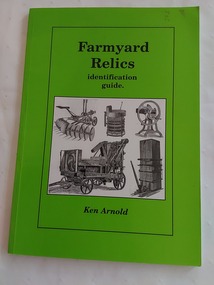
Book, Ken Arnold, Farmyard Relics - Identification Guide &/or Valuation Guide, 2004 reprint
... Farming tools...The 80-page Farmyard Relics: Identification & / or Valuation Guide (reprinted 2005) is designed for collectors to identify, date, and value rusty farm remnants. Farming tools Farming equipment Farms Farms history This book is a premier reference series for identifying and valuing Australian agricultural machinery, tools, and, in particular, implements from 1840 to 1940. ...This book is a premier reference series for identifying and valuing Australian agricultural machinery, tools, and, in particular, implements from 1840 to 1940. It features extensive photos, illustrations, and historical data, including old advertisements, covering iron, steel, and wooden equipment.A green covered book with the title and author printed in black print with a large black and white illustration of old machinery used on farms in the past. There is a list of other titles in the series on the following page with publisher details. There is a Foreword, Bibliography, Conversions, advertising, explanations of use of an extensive amount of machines, photographs and illustrations. The back cover has a full page advertisement listing the variety of items to buy at Federation Cash store 359 High Street Bendigo, 3550. Pp. 80.non-fictionThis book is a premier reference series for identifying and valuing Australian agricultural machinery, tools, and, in particular, implements from 1840 to 1940. It features extensive photos, illustrations, and historical data, including old advertisements, covering iron, steel, and wooden equipment. farming tools, farming equipment, farms, farms history -
 Emerald Museum & Nobelius Heritage Park
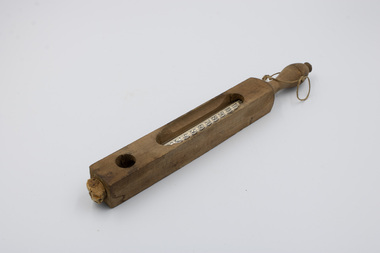
Tool - Floating Dairy Thermometer, Circa 1930
... ...Farming...Tools...This was a specialised tool used historically in the local dairy farming industry. A’Vard Family Farming Tools 20th Century A’Vard Dairy Farm Dairy Front side of glass vial, middle: "Made / in Germany" Front side of glass vial, upper: "FLOATING DAIRY THERMOMETER" Rear side of glass vial, 85 degrees: "85 Cheese" Rear side of glass vial, 62 degrees: "62 Churning" Rear side of glass vial, 32 degrees: "32 Freezing" A glass vial thermometer housed in a wooden case. ...This Floating Dairy Thermometer was used on the A’Vard farm between 1930 and 1964. It is designed to enable the easy measuring of the temperature of liquids. In particular it facilitates checking whether dairy is at the right temperature for cheesemaking, churning and freezing. It was made to remain at the surface of the liquid, allowing workers to accurately take temperature readings with relative ease. Similar models of floating thermometers were used to measure the temperature of bath water in hospitals; these functioned identically but had different markers for their different use case.This was a specialised tool used historically in the local dairy farming industry.A glass vial thermometer housed in a wooden case. The glass thermometer has temperature markings visible from 20 to 120 degrees Fahrenheit. There are long gaps with rounded ends on the front and rear of the wooden casing, allowing a user to see the temperature markings and labels. There is also a round hole in the front and rear of the wooden casing near the bottom, exposing the tip of the thermometer. At the top of the wooden casing is a handle, with string passed through a small hole allowing for the suspension of the thermometer from the string.Front side of glass vial, middle: "Made / in Germany" Front side of glass vial, upper: "FLOATING DAIRY THERMOMETER" Rear side of glass vial, 85 degrees: "85 Cheese" Rear side of glass vial, 62 degrees: "62 Churning" Rear side of glass vial, 32 degrees: "32 Freezing"a’vard family, farming, tools, 20th century, a’vard dairy farm, dairy -
 National Wool Museum
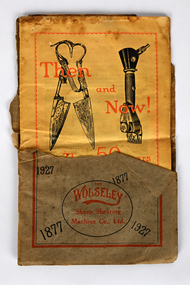
Manual - 50 Year Commemorative Manual, The Wolseley Sheep Shearing Machine Company, 1927
... ...farming...tools...Ltd publication manual machinery farming tools products Front: [printed] 1927 / 1877 / 1877 / 1927 / THE / WOLSELEY / Sheep Shearing / Machine Co., Ltd. ...Commemorative booklet celebrating the progress of machinery made by the Wolseley Sheep Shearing Machine Company, from 1877 to 1927. The booklet includes the history of company, comparisons in tools and machinery, and various products. The manual was delivered to the donor's grandfather, Mr T. J. Gorman, along with four stands, installed in October 1925 at the property 'Plentyana', near Corowa, New South Wales. The manual remained at the wool shed until the property was sold in 2005. It has been soaked in linseed oil.Twenty page booklet with black and red printed text and graphics, three staples at binding. Front: [printed] 1927 / 1877 / 1877 / 1927 / THE / WOLSELEY / Sheep Shearing / Machine Co., Ltd.shearing, manufacturing, wolseley sheep shearing machine co. ltd, publication, manual, machinery, farming, tools, products -
 Yarrawonga and Mulwala Pioneer Museum
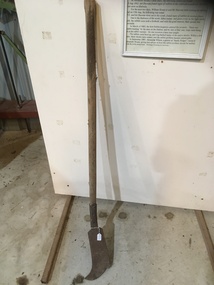
Weed Scythe, Sheffield
... ...Farming...Tools...Garden Farming Tools Sythe Weeding Hoe made by Sheffield impressed on metal blade. ...Round wooden handle with metal blade bolted to one end.Hoe made by Sheffield impressed on metal blade.garden, farming, tools, sythe, weeding -
 Mont De Lancey
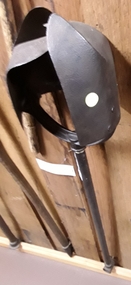
Tool - Post Hole Digger, Unknown
... tools...Farming equipment...Used in the 19th or early 20th century Tools Agricultural tools Farming equipment Garden tools 'S' is stamped on the top of the handle. ...Used in the 19th or early 20th centuryA long handled steel vintage post hole digger with two large curved split blades. Each blade is attached to the top of the handle by three screws. It has a rotating action with the digger boring into the earth as the handle is turned. There is an attachment at the end of the steel handle for a missing turning handle.'S' is stamped on the top of the handle.tools, agricultural tools, farming equipment, garden tools -
 Mont De Lancey
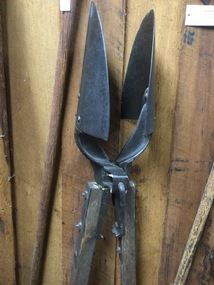
Tool - Post Hole Digger, F.E. Kohler & Co, Unknown
... tools...Farming equipment...Kohler & Co, Canton, Ohio Tools Agricultural tools Farming equipment Garden tools 'Kohler Little Giant' patented. ...Manufactured by F.E. Kohler & Co, Canton, OhioA vintage post hole digger with two long wooden handles and two metal scooped blades. It is operated with a lever action, with the two handles pulled apart to take a 'bite' of earth. The handles are attached by a nut and bolt. There is a crowbar on the end of one handle and a rammer on the end of the other. The brand is F.E. Kohler & Co, Canton, Ohio.'Kohler Little Giant' patented.tools, agricultural tools, farming equipment, garden tools -
 Trafalgar Holden Museum
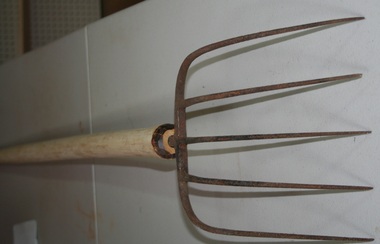
Tool - five pronged Pitch fork
... Farming tool used for moving fodder on farms...Farming tool used for moving fodder on farms Object holds farming significance as retailed by Holden and Frost farming fork Five pronged steel pitch fork with wooden handle Tool five pronged Pitch fork ...Farming tool used for moving fodder on farmsObject holds farming significance as retailed by Holden and FrostFive pronged steel pitch fork with wooden handlefarming, fork -
 Trafalgar Holden Museum
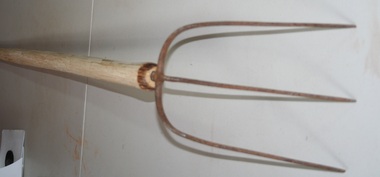
Tool - Wooden handled three prong pitch fork, Circa 1900
... Farming tool for moving hay in sheds, paddocks and stables...Farming tool for moving hay in sheds, paddocks and stables Object holds farming significance sold by Holden and Frost fork farming Wooden handled three steel pronged pitch fork primarily for agricultural work Tool Wooden handled three prong pitch fork ...Farming tool for moving hay in sheds, paddocks and stablesObject holds farming significance sold by Holden and FrostWooden handled three steel pronged pitch fork primarily for agricultural workfork, farming -
 Trafalgar Holden Museum
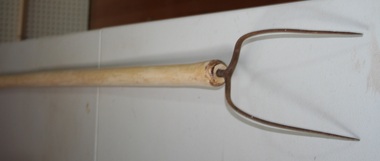
Tool - Two prong pitch fork
... Farming tool used to move fodder in fields, sheds and stables...Farming tool used to move fodder in fields, sheds and stables Object holds strong farming significance circa 1900 Farming fork Two pronged steel pitch fork with wooden handle Tool Two prong pitch fork ...Farming tool used to move fodder in fields, sheds and stablesObject holds strong farming significance circa 1900Two pronged steel pitch fork with wooden handlefarming, fork -
 Trafalgar Holden Museum
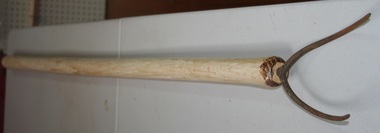
Tool - two pronged metal pitch fork with wooden handle
... Farming tool used for feeding out fodder in stables and sheds+...Farming tool used for feeding out fodder in stables and sheds+ as sold by Holden and Frost farming fork wooden handled steel head pitch fork Tool two pronged metal pitch fork with wooden handle ...Farming tool used for feeding out fodder in stables and sheds+as sold by Holden and Frostwooden handled steel head pitch forkfarming, fork -
Trafalgar Holden Museum
Tool - five pronged agricultural fork
... Farming tool used in agriculture during the late 1800's...Farming tool used in agriculture during the late 1800's as provided by Holden and Frost circa 1900 fork agricultural Wooden handled steel five pronged head agricultural fork Tool five pronged agricultural fork ...Farming tool used in agriculture during the late 1800'sas provided by Holden and Frost circa 1900Wooden handled steel five pronged head agricultural forkfork, agricultural -
 The Beechworth Burke Museum
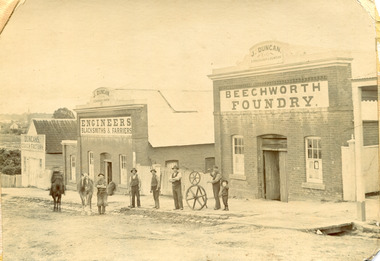
Photograph, c1900
... ...Farming and agriculture...Tools...The foundry was reopened by W H Phillips in 1905 and taken over by H Delora in 1906 This image is significant as it shows some of the many buildings of the Beechworth Foundry, which was a fundamental business to the running of the town and surrounding district, and supplied many of the tools and machines required for the mining and agricultural industries, as well as other aspects of life between the 1850s and early 1900s Duncan John Duncan J Duncan M Straughair Straughair Foundry Beechworth Foundry industry factory Newtown New Ford Street Foundry A Roger Roger W H Phillips Phillips W Phillips H Delora Delora Metalwork Farming and agriculture Tools Mining workmen Reverse 97.2321 / BMM A03115 Sepia rectangular photograph printed on paper. ...The Beechworth Foundry was vital to the industry of the town and surrounding district in the early years of the town’s development. Originally opened as the New Ford Street Foundry by A. Roger in 1858, J Duncan and M Straughair amalgamated and established the Beechworth Foundry in 1867. The business was extensive and operated out of many buildings, each with their own specialisation. All of the buildings pictured in this image are part of the larger Beechworth Foundry. In the late 1860s it employed 16 men. The foundry was fundamental to the running of the town and surrounding district, as it manufactured all manner of items, including tools and machinery for the mining and agricultural industries. The foundry business collapsed in 1896 after the death of it’s founder, John Duncan, the same year (Straughair had died in 1882). The foundry was reopened by W H Phillips in 1905 and taken over by H Delora in 1906 This image is significant as it shows some of the many buildings of the Beechworth Foundry, which was a fundamental business to the running of the town and surrounding district, and supplied many of the tools and machines required for the mining and agricultural industries, as well as other aspects of life between the 1850s and early 1900sSepia rectangular photograph printed on paper. It has rough, torn-looking edgesReverse 97.2321 / BMM A03115duncan, john duncan, j duncan, m straughair, straughair, foundry, beechworth foundry, industry, factory, newtown, new ford street foundry, a roger, roger, w h phillips, phillips, w phillips, h delora, delora, metalwork, farming and agriculture, tools, mining, workmen -
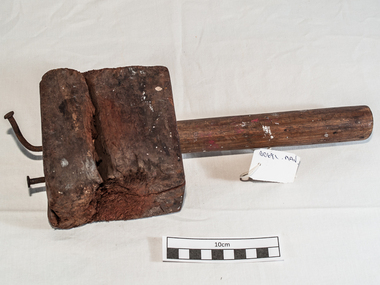 City of Moorabbin Historical Society (Operating the Box Cottage Museum)
Tools, mallet wooden square, c1880
... tools...farming...An example of the tools used by pioneer settlers in Moorabbin Shire c1880 pioneers early settlers market gardeners moorabbin brighton cheltenham tools farming c1880 A well used, hand made, square, wooden mallet with wooden handle Tools, mallet wooden square Unrecorded pioneer ...Early settlers in Moorabbin Shire had to be self reliant and made their own clothes and tools as they established homes and farms for their families. An example of the tools used by pioneer settlers in Moorabbin Shire c1880c1880 A well used, hand made, square, wooden mallet with wooden handlepioneers, early settlers, market gardeners, moorabbin, brighton, cheltenham, tools, farming -
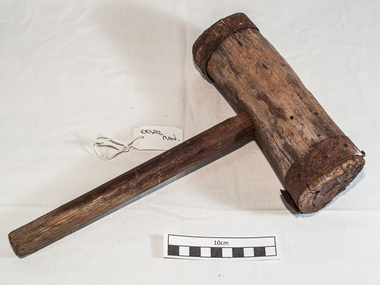 City of Moorabbin Historical Society (Operating the Box Cottage Museum)
Tools, mallet, wooden cylindrical, c1880
... tools...farming...Early settlers in Moorabbin Shire had to be self reliant and made their own clothes and tools as they established homes and farms for their families An example of the tools used by pioneer settlers in Moorabbin Shire c1880 pioneers early settlers market gardeners moorabbin brighton cheltenham tools farming c1880 Hand made, wooden mallet with cylindrical head, reinforced at ends with tin bands, and a wooden handle Tools, mallet, wooden cylindrical Unrecorded pioneer ...Early settlers in Moorabbin Shire had to be self reliant and made their own clothes and tools as they established homes and farms for their familiesAn example of the tools used by pioneer settlers in Moorabbin Shire c1880c1880 Hand made, wooden mallet with cylindrical head, reinforced at ends with tin bands, and a wooden handlepioneers, early settlers, market gardeners, moorabbin, brighton, cheltenham, tools, farming -
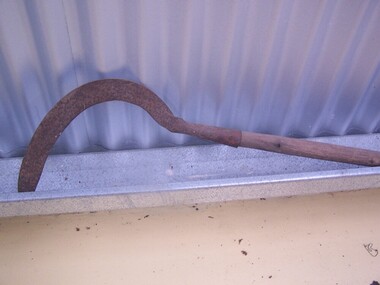 Puffing Billy Railway
Garden Scythe
... Historic - Farming - Track tool - Garden Scythe...Historic - Farming - Track tool - Garden Scythe Historic - Farming - Track tool - Garden Scythe puffing billy garden scythe Garden Scythe made of wrought Iron with wooden handle Garden Scythe ...Historic - Farming - Track tool - Garden ScytheHistoric - Farming - Track tool - Garden ScytheGarden Scythe made of wrought Iron with wooden handle puffing billy, garden scythe -
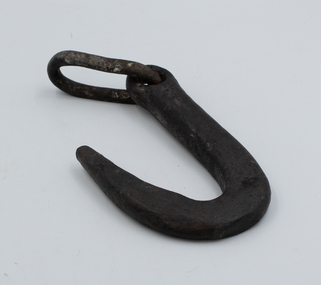 Emerald Museum & Nobelius Heritage Park
Tool - Farm Implement – Large Hook, c. 1940s
... This hook was used by George and Noel A'Vard on their farm from the 1940s to hitch animal trailers or other dragged farming tools. The loop, which passes through the eye of the hook, would have once been attached to a sturdy chain and used to attach various implements for towing, dragging, or lifting heavy farming equipment or items. ...This hook was used by George and Noel A'Vard on their farm from the 1940s to hitch animal trailers or other dragged farming tools. The loop, which passes through the eye of the hook, would have once been attached to a sturdy chain and used to attach various implements for towing, dragging, or lifting heavy farming equipment or items. ...This hook was used by George and Noel A'Vard on their farm from the 1940s to hitch animal trailers or other dragged farming tools. The loop, which passes through the eye of the hook, would have once been attached to a sturdy chain and used to attach various implements for towing, dragging, or lifting heavy farming equipment or items. It may have assisted on the A'Vard fields, or in any number of tasks that were unable to be completed with only human labour.This hook is a prime example of the many tools farmers in Emerald and its surrounding agricultural areas used around their properties to ease the strain of manual labour. Prior to the mass mechanisation of farms, difficult tasks were done by hand, and any tool that could assist in their completion would have been greatly valued.A large, rusted iron hook with a blunt point on one end. An iron loop is threaded through the eye of the hook.emerald, a'vard family, 20th century, 1940s, farming -
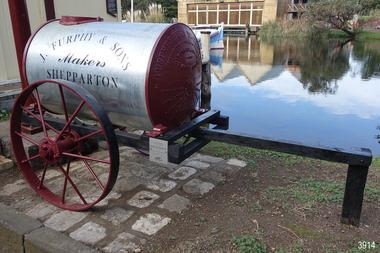 Flagstaff Hill Maritime Museum and Village
Vehicle - Furphy Water Cart, J. Furphy & Sons, c. 1942
... Furphy invented many farming tools and machines including a patented grain-stripper, and won awards at the 1888-89 Melbourne International Exhibition. ...Furphy invented many farming tools and machines including a patented grain-stripper, and won awards at the 1888-89 Melbourne International Exhibition. ...This horse-drawn, two-wheeled cart with a tank, is known as a Furphy Farm Water Cart that was made in Shepparton, northern Victoria, c. 1942. John Furphy (1842-1920) was born in Moonee Ponds, in 1842 to Irish immigrant parents and subsequently raised in the Yarra Valley before the family moved to Kyneton in central Victoria, where he completed an apprenticeship with the firm Hutcheson and Walker. Murphy began operations of his own at a site on Piper Street in Kyneton in 1864. He relocated for a business opportunity and founded the first blacksmiths and wheelwrights shop in the newly surveyed town of Shepparton in 1873. Furphy invented many farming tools and machines including a patented grain-stripper, and won awards at the 1888-89 Melbourne International Exhibition. His most famous invention is the Furphy Farm Water Cart, designed in the 1880s, at a time when water for most households and farms was carted on wagons in wooden barrels. The Furphy’s water cart is a single item that combines a water metal tank and a cart. The design of the cart was simple yet effective, and became popular very quickly and established itself as a vital piece of farming equipment. The water cart has had a number of words cast into its ends over many years. References to the foundry’s location in Shepparton, as well as advertising of other products also manufactured by J. Furphy & Sons were present on the ends. However, the most significant set of words to feature on the tank, was a poem encouraging continual improvement: ‘Good Better Best, Never Let it Rest, Until your Good is Better, And your Better Best’. During The Great War (1914-1918), the water cart was used by the Australian militarily at a large AIF (Australian Imperial Force) camp in Broadmeadows (Melbourne) where thousands of men were camped for months, before being transported aboard. Furphy Water Carts provided water to the troops, and were usually placed near the camp latrines, which was one of the few places the troops could share gossip and tall tales away from the prying eyes and ears of their officers. The water cart drivers were also notorious sources of information, despite most of their news being hearsay, or totally unreliable. By the time the men of the AIF were in engaged in combat on the Gallipoli Peninsula and the Western Front, the carts used for water supply had no markings and became simply referred to as Furphys. This owed as much to the coining of the term ‘Furphy’, Australian slang for suspect information or rumour. After a number of decades as principally a soldier’s word, 'Furphy' entered the broader Australian vernacular and was used mainly by the political class until recently when the term was taken up by a Australian brewer as a beer brand. This Furphy Water Cart was purchased by Friends of Flagstaff Hill in 2014. The support of local individuals, organisations and businesses enabled its restoration and later its installation alongside the existing late-19th century water pipe stand and 1940s hand pump The Furphy Farm Water Cart is of historical significance as it represents a famous Australian time-saving and energy-saving invention of the 1880s, replacing the labour intensive activity of collecting and dispensing water from barrels and casks on the back of carts. The water cart’s connection with manufacturing companies J. Furphy & Sons and Furphy Foundry are significant for being early Australian businesses that are still in operation today. Furphy carts are of military significance for the role they played during The Great War (1914-1918) in Australian army camps, and theatres of war in Europe and the Middle East, to supply the AIF troops with fresh water. A wooden framed, two-wheeled, horse-drawn cart, fitted with a horizontally mounted, cylindrical metal tank. The tank is made of rolled, sheet steel with a riveted seam, and cast iron ends with cast iron ends. The spoked metal wheels have fitted flat iron tyres and metal hubs. A metal pipe is joined to the outlet. The tank is silver coloured, the ends, wheels and trims are crimson, and the script lettering on tank sides is black. There are inscriptions on the tank, ends, and hubs. The water tank was made in 1942 in Shepparton, Australia, by J. Furphy & Sons and has a capacity of 180 gallons (848 litres). Hub perimeter, embossed “J. FURPHY & SONS” “KEEP THE / BOLTS TIGHT” Hub centre embossed [indecipherable] Tank, each side, painted “J. FURPHY & SONS / Makers / SHEPPARTON” Tank ends, embossed – “FURPHY’S FARM WATER CART” “BORN ABOUT 1880 – STILL ‘GOING STRONG’ 1942” “j. FURPHY & SONS / MAKERS / SHEPPARTON - VIC “ “S - - - - - L MANUFACTURERS” [SPECIAL] “SPIKE ROLLERS” “SINGLE TREES” “PLOUGH WHEELS” “IRON CASTINGS” “LAND GRADERS” “STEEL DELVERS” “CAST IRON PIG” “CHAIN YOKES” “GOOD – BETTER – BEST / NEVER LET IT REST / TILL YOUR GOOD IS BETTER / AND YOUR BETTER – BEST” Image [Stork carrying a baby] above shorthand, transcribed "Produce and populate or perish" Image [Furphy Pig Feeder] beside ‘Cast Iron Pig’ Shorthand, transcribed “"Water is the gift of God but beer and whiskey are concoctions of the Devil, come and have a drink of water"warrnambool, flagstaff hill maritime museum, water cart, furphy cart, furphy tank, furphy farm water cart, furphy, john furphy, john furphy & sons, furphy foundry, kyneton, shepparton, mobile water tank, jinker, hutchinson & walker, blacksmith, farm equipment, implement maker, tool maker, horse drawn, stork and baby, good, better, best, barrel, tank, first world war, wwi, eastern front, gallipoli, j furphy & sons -
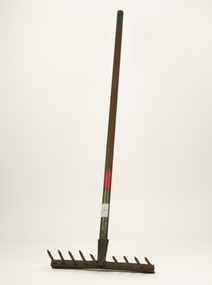 Department of Energy, Environment and Climate Action
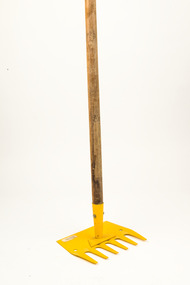
Rakut - Fire rake, Unknown FCV District, c 1952
... tools were whatever happened to be close at hand. They were simple and primitive and included shovels, slashers, axes, hoes, beaters and rakes. A cut branch to beat the flames was often the only thing available. Farming...tools were whatever happened to be close at hand. They were simple and primitive and included shovels, slashers, axes, hoes, beaters and rakes. A cut branch to beat the flames was often the only thing available. Farming ...Bushfire perimeter rather than bushfire area is the main control problem for firefighters on the ground. A conundrum rapidly compounded by spot fires. A small 5 ha fire can be nearly 1 km around the perimeter. That's a long way to build a control line by hand in rough bush. Dry firefighting techniques by hand were mostly confined to “knocking down” or “beating out” the flames, as well as "digging out". Digging or raking a “mineral earth” trail down to bare dirt proved most effective in forest fuels which, unlike grass, tend to retain heat and smoulder. Early tools were whatever happened to be close at hand. They were simple and primitive and included shovels, slashers, axes, hoes, beaters and rakes. A cut branch to beat the flames was often the only thing available. Farming and logging tools, developed over centuries of manual labour, and readily available at local hardware stores came into use, but little thought was given to size, weight, and balance. For years foresters experimented with combination tools. In about 1952 fire beaters and other implements were being replaced with Rakuts.Fire tool used before the introduction of RakehoesRakut - Fire Rake and cutting toolGreen and red coloured handle and 020 marking indicated which FCV District the tool belonged tobushfire -
 Department of Energy, Environment and Climate Action
Fire Beater - Leather, c 1940s
... tools were whatever happened to be close at hand. They were simple and primitive and included shovels, slashers, axes, hoes, beaters and rakes. A cut branch to beat the flames was often the only thing available. Farming...tools were whatever happened to be close at hand. They were simple and primitive and included shovels, slashers, axes, hoes, beaters and rakes. A cut branch to beat the flames was often the only thing available. Farming ...Bushfire perimeter rather than bushfire area is the main control problem for firefighters on the ground. A conundrum rapidly compounded by spot fires. A small 5 ha fire can be nearly 1 km around the perimeter. That's a long way to build a control line by hand in rough bush. Dry firefighting techniques by hand were mostly confined to “knocking down” or “beating out” the flames, as well as "digging out". Digging or raking a “mineral earth” trail down to bare dirt proved most effective in forest fuels which, unlike grass, tend to retain heat and smoulder. Early tools were whatever happened to be close at hand. They were simple and primitive and included shovels, slashers, axes, hoes, beaters and rakes. A cut branch to beat the flames was often the only thing available. Farming and logging tools, developed over centuries of manual labour, and readily available at local hardware stores came into use, but little thought was given to size, weight, and balance. This leather beater was based on a century-old stockman's design which used green cow hide leather lashed to a broom handle. It's recommend that users lift no more than above knee height to conserve energy and let the beater to the work. For years foresters experimented with combination tools. In about 1952 fire beaters and other implements were being replaced with Rakuts and later RakehoesEarly firefighting toolBushfire beater - Leather with wooden handlebushfire, forests commission victoria (fcv) -
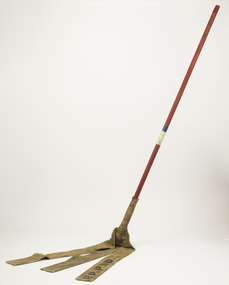 Department of Energy, Environment and Climate Action
Fire Beater - Canvas, c 1930s
... tools were whatever happened to be close at hand. They were simple and primitive and included shovels, slashers, axes, hoes, beaters and rakes. A cut branch to beat the flames was often the only thing available. Farming...tools were whatever happened to be close at hand. They were simple and primitive and included shovels, slashers, axes, hoes, beaters and rakes. A cut branch to beat the flames was often the only thing available. Farming ...Bushfire perimeter rather than bushfire area is the main control problem for firefighters on the ground. A conundrum rapidly compounded by spot fires. A small 5 ha fire can be nearly 1 km around the perimeter. That's a long way to build a control line by hand in rough bush. Dry firefighting techniques by hand were mostly confined to “knocking down” or “beating out” the flames, as well as "digging out". Digging or raking a “mineral earth” trail down to bare dirt proved most effective in forest fuels which, unlike grass, tend to retain heat and smoulder. Early tools were whatever happened to be close at hand. They were simple and primitive and included shovels, slashers, axes, hoes, beaters and rakes. A cut branch to beat the flames was often the only thing available. Farming and logging tools, developed over centuries of manual labour, and readily available at local hardware stores came into use, but little thought was given to size, weight, and balance. This canvas hose beater was based on a century-old design which used lengths of canvas fire hose rivetted together and lashed with wire to a broom handle. The hose was be soaked in water to improve its effectiveness. If the flames were more than a metre or so the user was generally not able to get close enough to extinguish the fire It's recommend that users lift no more than above knee height to conserve energy and let the beater to the work. For years foresters experimented with combination tools. In about 1952 fire beaters and other implements were being replaced with Rakuts and later RakehoesEarly firefighting toolBushfire beater - Canvas with wooden handleR P PWD (Public Works Department) The handle has painted markings which indicate which FCV District it belonged to.bushfire, forests commission victoria (fcv) -
 Department of Energy, Environment and Climate Action
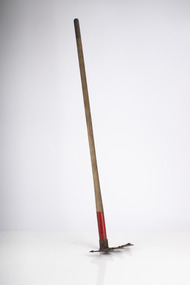
Rakehoe, McLeod Tool (American)
... tools were whatever happened to be close at hand. They were simple and primitive and included shovels, slashers, axes, hoes, beaters and rakes. A cut branch to beat the flames was often the only thing available. Farming...tools were whatever happened to be close at hand. They were simple and primitive and included shovels, slashers, axes, hoes, beaters and rakes. A cut branch to beat the flames was often the only thing available. Farming ...Bushfire perimeter rather than bushfire area is the main control problem for firefighters on the ground. A conundrum rapidly compounded by spot fires. A small 5 ha fire can be nearly 1 km around the perimeter. That's a long way to build a control line by hand in rough bush. Dry firefighting techniques by hand were mostly confined to “knocking down” or “beating out” the flames, as well as "digging out". Digging or raking a “mineral earth” trail down to bare dirt proved most effective in forest fuels which, unlike grass, tend to retain heat and smoulder. Early tools were whatever happened to be close at hand. They were simple and primitive and included shovels, slashers, axes, hoes, beaters and rakes. A cut branch to beat the flames was often the only thing available. Farming and logging tools, developed over centuries of manual labour, and readily available at local hardware stores came into use, but little thought was given to size, weight, and balance. For years foresters experimented with combination tools. In about 1952 fire beaters and other implements were being replaced with Rakuts. However, its believed the now common Rakehoe is an Australian variation of the American McLeod Tool which was developed in 1905 by forest ranger Malcolm McLeod of the Sierra National Forest. The late Athol Hodgson advised that predecessors, Reg Torbet who had been the Chief Fire Officer for the Forests Commission from 1948-1956, along with his QLD counterpart Clive Price, went in late 1951 as Australian delegates on a 10 week fire study tour of Nth America organised by the United Nations. They came back with a couple of McLeod tools from Canada. Cam MacLeod (different spelling) had been the Head of Fire Research for the Canadian Forest Service at the time and had supplied them. The tools were ideal for deciduous forests in the eastern provinces and Clive arranged to have them manufactured in QLD. The Rakho, as it was then spelled, was first issued to FCV crews 65 years ago in 1955-56. The American Pulaski had been trialled, but never found favour with Australian firefighters.First used in 1955Rakehoe Combination of a heavy-duty six-toothed (each 9cm long) rake with a large, sturdy (25cm) hoe.bushfire, forests commission victoria (fcv) -
 Department of Energy, Environment and Climate Action
Rakehoe (McLeod Tool)
... tools were whatever happened to be close at hand. They were simple and primitive and included shovels, slashers, axes, hoes, beaters and rakes. A cut branch to beat the flames was often the only thing available. Farming...tools were whatever happened to be close at hand. They were simple and primitive and included shovels, slashers, axes, hoes, beaters and rakes. A cut branch to beat the flames was often the only thing available. Farming ...Bushfire perimeter rather than bushfire area is the main control problem for firefighters on the ground. A conundrum rapidly compounded by spot fires. A small 5 ha fire can be nearly 1 km around the perimeter. That's a long way to build a control line by hand in rough bush. Dry firefighting techniques by hand were mostly confined to “knocking down” or “beating out” the flames, as well as "digging out". Digging or raking a “mineral earth” trail down to bare dirt proved most effective in forest fuels which, unlike grass, tend to retain heat and smoulder. Early tools were whatever happened to be close at hand. They were simple and primitive and included shovels, slashers, axes, hoes, beaters and rakes. A cut branch to beat the flames was often the only thing available. Farming and logging tools, developed over centuries of manual labour, and readily available at local hardware stores came into use, but little thought was given to size, weight, and balance. For years foresters experimented with combination tools. In about 1952 fire beaters and other implements were being replaced with Rakuts. However, its believed the now common Rakehoe is an Australian variation of the American McLeod Tool which was developed in 1905 by forest ranger Malcolm McLeod of the Sierra National Forest. The late Athol Hodgson advised that predecessors, Reg Torbet who had been the Chief Fire Officer for the Forests Commission from 1948-1956, along with his QLD counterpart Clive Price, went in late 1951 as Australian delegates on a 10 week fire study tour of Nth America organised by the United Nations. They came back with a couple of McLeod tools from Canada. Cam MacLeod (different spelling) had been the Head of Fire Research for the Canadian Forest Service at the time and had supplied them. The tools were ideal for deciduous forests in the eastern provinces and Clive arranged to have them manufactured in QLD. The Rakho, as it was then spelled, was first issued to FCV crews 65 years ago in 1955-56. The American Pulaski had been trialled, but never found favour with Australian firefighters.Rakhoeforests commission victoria (fcv), hand tools, forest harvesting, bushfire -
 Department of Energy, Environment and Climate Action
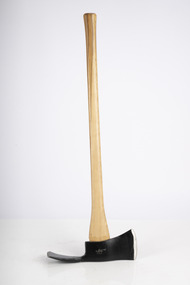
Pulaski
... tools were whatever happened to be close at hand. They were simple and primitive and included shovels, slashers, axes, hoes, beaters and rakes. A cut branch to beat the flames was often the only thing available. Farming...tools were whatever happened to be close at hand. They were simple and primitive and included shovels, slashers, axes, hoes, beaters and rakes. A cut branch to beat the flames was often the only thing available. Farming ...Bushfire perimeter rather than bushfire area is the main control problem for firefighters on the ground. A conundrum rapidly compounded by spot fires. A small 5 ha fire can be nearly 1 km around the perimeter. That's a long way to build a control line by hand in rough bush. Dry firefighting techniques by hand were mostly confined to “knocking down” or “beating out” the flames, as well as "digging out". Digging or raking a “mineral earth” trail down to bare dirt proved most effective in forest fuels which, unlike grass, tend to retain heat and smoulder. Early tools were whatever happened to be close at hand. They were simple and primitive and included shovels, slashers, axes, hoes, beaters and rakes. A cut branch to beat the flames was often the only thing available. Farming and logging tools, developed over centuries of manual labour, and readily available at local hardware stores came into use, but little thought was given to size, weight, and balance. For years foresters experimented with combination tools. In about 1952 fire beaters and other implements were being replaced with Rakuts. However, its believed the now common Rakehoe is an Australian variation of the American McLeod Tool which was developed in 1905 by forest ranger Malcolm McLeod of the Sierra National Forest. The late Athol Hodgson advised that predecessors, Reg Torbet who had been the Chief Fire Officer for the Forests Commission from 1948-1956, along with his QLD counterpart Clive Price, went in late 1951 as Australian delegates on a 10 week fire study tour of Nth America organised by the United Nations. They came back with a couple of McLeod tools from Canada. Cam MacLeod (different spelling) had been the Head of Fire Research for the Canadian Forest Service at the time and had supplied them. The tools were ideal for deciduous forests in the eastern provinces and Clive arranged to have them manufactured in QLD. The Rakho, as it was then spelled, was first issued to FCV crews 65 years ago in 1955-56. The American Pulaski had been trialled, but never found favour with Australian firefighters.Pulaski Fire Tool Combines an axe and a grubbing hoe. Digging end and cutting end with short wooden handleforests commission victoria (fcv), hand tools, forest harvesting, bushfire -
 Department of Energy, Environment and Climate Action
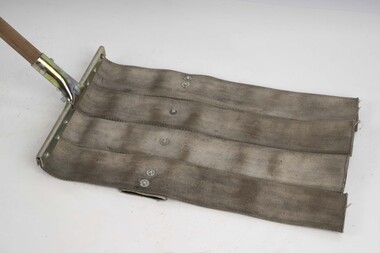
Fire beater (canvas)
... tools were whatever happened to be close at hand. They were simple and primitive and included shovels, slashers, axes, hoes, beaters and rakes. A cut branch to beat the flames was often the only thing available. Farming...tools were whatever happened to be close at hand. They were simple and primitive and included shovels, slashers, axes, hoes, beaters and rakes. A cut branch to beat the flames was often the only thing available. Farming ...Bushfire perimeter rather than bushfire area is the main control problem for firefighters on the ground. A conundrum rapidly compounded by spot fires. A small 5 ha fire can be nearly 1 km around the perimeter. That's a long way to build a control line by hand in rough bush. Dry firefighting techniques by hand were mostly confined to “knocking down” or “beating out” the flames, as well as "digging out". Digging or raking a “mineral earth” trail down to bare dirt proved most effective in forest fuels which, unlike grass, tend to retain heat and smoulder. Early tools were whatever happened to be close at hand. They were simple and primitive and included shovels, slashers, axes, hoes, beaters and rakes. A cut branch to beat the flames was often the only thing available. Farming and logging tools, developed over centuries of manual labour, and readily available at local hardware stores came into use, but little thought was given to size, weight, and balance. For years foresters experimented with combination tools. In about 1952 fire beaters and other implements were being replaced with Rakuts. However, its believed the now common Rakehoe is an Australian variation of the American McLeod Tool which was developed in 1905 by forest ranger Malcolm McLeod of the Sierra National Forest. The late Athol Hodgson advised that predecessors, Reg Torbet who had been the Chief Fire Officer for the Forests Commission from 1948-1956, along with his QLD counterpart Clive Price, went in late 1951 as Australian delegates on a 10 week fire study tour of Nth America organised by the United Nations. They came back with a couple of McLeod tools from Canada. Cam MacLeod (different spelling) had been the Head of Fire Research for the Canadian Forest Service at the time and had supplied them. The tools were ideal for deciduous forests in the eastern provinces and Clive arranged to have them manufactured in QLD. The Rakho, as it was then spelled, was first issued to FCV crews 65 years ago in 1955-56. The American Pulaski had been trialled, but never found favour with Australian firefighters.Fire Beater (canvas) 1930s designforests commission victoria (fcv), hand tools, forest harvesting, bushfire -
 Flagstaff Hill Maritime Museum and Village
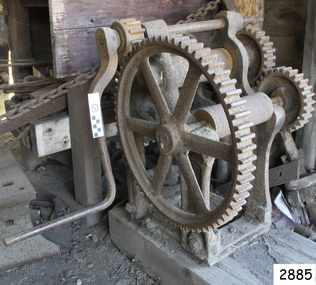
Tyre Bender, 1884
... The machine is a part of our social history as it demonstrates part of the process of making wagon wheels, which played an important part in aiding the continuation of daily transport needs that people had at the time, such as farming, personal transport and commercial activities. The machine or tool is locally significant as it was used by a local company in Terang and Mortlake in their blacksmith, wheelwright and garage business. flagstaff hill warrnambool shipwrecked coast flagstaff hill maritime museum maritime museum shipwreck coast flagstaff hill maritime village great ocean road machinery wagon wheel wheelwrights blacksmith steel rim wheels tyre bender tire bender the giant tyre bender henry goodall (1870-1936) terang wheelwright tool blacksmith trade blacksmithing equipment and supplies wagon tyre bender day bros. philadelphia pennsylvania h. goodall & sons of terang terang blacksmith h. goodall & sons pty ltd, mortlake ernie entwistle blacksmith alfred hodgetts radio expert charles goodall john goodall mrs. chas. newton nee goodall “DAY BROS. ...A tyre bender is used to bend and shape metal rims for wooden wagon wheels. This tyre bender’s model first appeared in the Day Bros catalogue in 1884 as the “Giant” model. The catalogue of 1883 only showed a lighter duty model called the “Lion”. It can be assumed that this later “Giant” model was a heavy duty improvement over the 1883 "Lion" and other smaller models which were still being advertised for sale in 1884. The Day Bros foundry, makers of this tyre bender, was operating as the manufacture of wheel right and blacksmith tools and general machinery in the 19th century in the USA and successfully exported their goods all over the world. Wagon tyre benders would have been very common circa 1850-1920, so there were probably many makers over the years. Early on, it would have become clear to the blacksmiths about which designs worked best so, eventually, the various makers would have made similar products to each other. This tyre bender was once used by Harry Goodall of H. Goodall & Sons Pty. Ltd. corner of McKinnon and High Streets, Terang. Victoria. Henry Goodall & Sons Henry Goodall (1870-1936) was proprietor of garages as H. Goodall & Sons Pty. Ltd., at both Terang (McKinnon and High Streets) and Mortlake (Dunlop Street). His business was in operation in at least in 1916 and perhaps well before, considering the date of the tyre bender and its use for wagons with wooden wheels. It was still in operation in 1953, chasing up debtors in Mount Gambier Court. Amongst the employees of H. Goodall & Sons Pty. Ltd. was Ernie Entwistle, a blacksmith (a soldier who died in 1916 ) and Alfred Hodgetts, radio expert (killed in a fatal accident in 1943, when he was in his early 30s ). Henry Goodall was involved in the community as a Justice of Peace, a deputy coroner, President of the Mortlake Hospital, trustee of the Soldiers’ Memorial Hall, and as a prominent Freemason. He and his wife had two sons (Charles and John) and one daughter (Mrs. Chas. Newton, of Skipton). The tyre bender is significant as it demonstrates how blacksmiths or wheelwrights could make new metal rims for wagon wheels for carts, wagons, stage coaches and carriages over a 135 years ago. The machine is a part of our social history as it demonstrates part of the process of making wagon wheels, which played an important part in aiding the continuation of daily transport needs that people had at the time, such as farming, personal transport and commercial activities. The machine or tool is locally significant as it was used by a local company in Terang and Mortlake in their blacksmith, wheelwright and garage business. Steel tyre bender mounted on timber base, used for wagon wheel steel rims. Made from cast iron and steel, double geared with four cogs to unite the upper and lower steel rollers. There are adjustable guide collars to keep the iron in line while it is being bent. It can also be used with two cranks for heavy duty work utilising the use to two operators. It is the Giant model, made in 1884 by Day Bros. of Philadelphia. This tyre bender once belonged to Harry Goodall & Sons, blacksmith's of Terang. Victoria. “DAY BROS. PHILAP. PA” cast into the side of machineflagstaff hill, warrnambool, shipwrecked coast, flagstaff hill maritime museum, maritime museum, shipwreck coast, flagstaff hill maritime village, great ocean road, machinery, wagon wheel, wheelwrights, blacksmith, steel rim wheels, tyre bender, tire bender, the giant tyre bender, henry goodall (1870-1936), terang, wheelwright tool, blacksmith trade, blacksmithing equipment and supplies, wagon tyre bender, day bros. philadelphia pennsylvania, h. goodall & sons of terang, terang blacksmith, h. goodall & sons pty ltd, mortlake, ernie entwistle blacksmith, alfred hodgetts radio expert, charles goodall, john goodall, mrs. chas. newton nee goodall -
 Flagstaff Hill Maritime Museum and Village
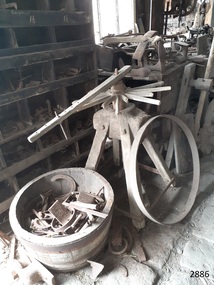
Vice, 1800s
... The machine is a part of our social history as it demonstrates part of the process of making wagon wheels, which played an important part in aiding the continuation of daily transport needs that people had at the time, such as farming, personal transport and commercial activities. The tool is locally significant as it was used by a local company in Terang and Mortlake in their blacksmith, wheelwright and garage business. flagstaff hill warrnambool shipwrecked-coast flagstaff-hill flagstaff-hill-maritime-museum maritime-museum shipwreck-coast flagstaff-hill-maritime-village machinery wagon wheel steel rim wheels henry goodall (1870-1936) terang wheelwright tool blacksmith trade blacksmithing equipment and supplies h. goodall & sons of terang terang blacksmith h. goodall & sons pty ltd, mortlake ernie entwistle blacksmith alfred hodgetts radio expert charles goodall john goodall wheel hub wheel spoke wheel felloe wheel tyre wheel tire Vice; wheelwright’s wheel spoke vice. ...A wheelwright’s spoke vice was used to hold the wheel hub firmly while the spokes were hammered into the wheel hub, then the spokes would be joined to the wooden wheel felloe before finally the metal flat tyre, or later the rubber tyre, would be attached to the felloe. A wheelwright’s spoke vice would have been very necessary for blacksmiths circa 1800s-1920s as it would have been used in the manufacture and repair of carts, wagons, coaches and other horse-drawn vehicles. This wheelwright’s spoke vice was once used by Harry Goodall of H. Goodall & Sons Pty. Ltd. corner of McKinnon and High Streets, Terang. Victoria. Henry Goodall & Sons Henry Goodall (1870-1936) was proprietor of garages as H. Goodall & Sons Pty. Ltd., at both Terang (McKinnon and High Streets) and Mortlake (Dunlop Street). His business was in operation in at least in 1916 and perhaps well before, considering the date of the tyre bender and its use for wagons with wooden wheels. It was still in operation in 1953, chasing up debtors in Mount Gambier Court. Amongst the employees of H. Goodall & Sons Pty. Ltd. was Ernie Entwistle, a blacksmith (a soldier who died in 1916) and Alfred Hodgetts, radio expert (killed in a fatal accident in 1943, when he was in his early 30s). Henry Goodall was involved in the community as a Justice of Peace, a deputy coroner, President of the Mortlake Hospital, trustee of the Soldiers’ Memorial Hall, and as a prominent Freemason. He and his wife had two sons (Charles and John) and one daughter (Mrs. Chas. Newton, of Skipton). The wheelwright’s spoke vice is significant as it demonstrates how blacksmiths or wheelwrights could make new metal rims for wagon wheels for carts, wagons, stage coaches and carriages over a 135 years ago. The machine is a part of our social history as it demonstrates part of the process of making wagon wheels, which played an important part in aiding the continuation of daily transport needs that people had at the time, such as farming, personal transport and commercial activities. The tool is locally significant as it was used by a local company in Terang and Mortlake in their blacksmith, wheelwright and garage business. Vice; wheelwright’s wheel spoke vice. Manufactured in 1800s. This was once belonged to Harry Goodall & Sons, blacksmith's of Terang. Victoria.flagstaff hill, warrnambool, shipwrecked-coast, flagstaff-hill, flagstaff-hill-maritime-museum, maritime-museum, shipwreck-coast, flagstaff-hill-maritime-village, machinery, wagon wheel, steel rim wheels, henry goodall (1870-1936), terang, wheelwright tool, blacksmith trade, blacksmithing equipment and supplies, h. goodall & sons of terang, terang blacksmith, h. goodall & sons pty ltd, mortlake, ernie entwistle blacksmith, alfred hodgetts radio expert, charles goodall, john goodall, wheel hub, wheel spoke, wheel felloe, wheel tyre, wheel tire -
 Flagstaff Hill Maritime Museum and Village
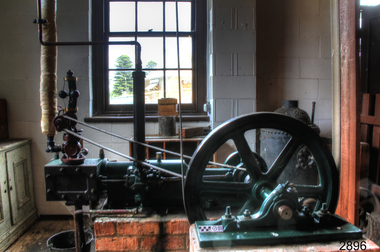
Machine - Steam Engine, Tangyes engineering, Mid-1880s
... Flagstaff Hill Warrnambool Maritime Village Maritime Museum Flagstaff Hill Maritime Museum and Village Shipwreck coast Great Ocean Road machine invention engine steam steam engine horizontal steam engine Tangyes horizontal steam engine stationary steam engine single cylinder steam engine manufacturing farming pumps lifting equipment engines machine tools hydraulic rams hydraulic pumps steam pumps differential pulleys Mill type steam engine 4 inch cylinder Weston’s differential pulley Thomas Aldridge Weston 1862 International Exhibition in London Brunel SS Great Eastern Cleopatra’s Needle Forth Road Bridge Cornwall House Collins Street Melbourne agricultural machinery industrial machinery Allspeeds dairy pump Richard Tangye & Brothers James Tangye and Brothers Tangye Brothers and Price Tangye Brothers Tangye Brothers & Holman Tangyes Ltd. ...This Tangye B-size, single-cylinder, horizontal steam engine was likely manufactured in England around the mid-1880s. It was distributed by Melbourne machinery merchants Cameron & Sutherland, which also operated in Bendigo and Ballarat. A local cheese maker once used the engine to drive factory equipment. It was later donated to the Warrnambool Technical School, which then donated it to Flagstaff Hill to add to its historical steam engine collection. Between its manufacture and its donation to Flagstaff Hill, the governor had been replaced by the current Pickering governor. This engine design was very popular in the late 19th and early 20th centuries. When connected and powered up, the engine could drive an overhead line shaft via a flat belt off its flywheel. The line shaft would then drive the machinery via flat belts. It could drive virtually any type of machinery, such as water and sewerage pumps, mine elevators, winches, cranes, metal forges, air blowers, and marine machinery. This engine features a mechanical governor, which controls the speed of the engine regardless of whether it is under load. It also has a water pump built into the valve rod, which is used to supply the boiler with water. Steam enters the cylinder via a slide valve and applies pressure to the piston; it is like a modern internal combustion engine, but in the case of the steam engine, the pressure is exerted in turn on either side of the piston. In other words, the connecting rod is pushed by steam via the piston and piston rod and then pulled back again by steam pushing on the opposite side of the piston. Thus, power is exerted almost continuously, except at the end of each piston stroke, when it reverses direction. In the 1880s, many local butter and cheese manufacturers installed Tangye steam engines to power their machinery. A comprehensive article in the Gippsland Mercury in September 1889 extolled the magnificence of the Farnham Butter Factory in Dennington, Warrnambool, and described how one Tangye engine was used to drive several machines in the cheese- and butter-making processes. A report in the Warragul Guardian in December 1890 notes that the newly opened Warrnambool Butter Factory used a Tangye steam engine to pump water from a 60-foot well. Tangye: Richard Tangye (1833–1906) and four of his brothers—James, Joseph, Edward, and George—were the sons of Joseph Tangye, a Quaker Cornish miner. In 1857, they founded the engineering firm Richard Tangye & Brothers in Birmingham, UK. In 1860, the firm became Tangye Brothers and moved to Cornwall Works in Birmingham. The business encouraged inventors to join the company and develop their patents there, as happened with Weston’s differential pulley block, invented by the Englishman Thomas Aldridge Weston in 1854. Tangye bought the patent in 1858, giving the firm the sole right to manufacture it. The design received a medal for “original application, practical utility and success” at the 1862 International Exhibition in London. Also in 1858, the Tangye firm was commissioned by Brunel’s shipping company to manufacture hydraulic lifting jacks, or rams, to launch the steamship SS Great Eastern. The success of this project brought favourable attention to the firm, and it became involved in other notable projects, including the erection of Cleopatra’s Needle in London in 1878 and work on the Forth Road Bridge in Scotland. The firm underwent several name changes over the years, including James Tangye and Brothers (1857), Tangye Brothers and Price (1859), Tangye Brothers (1860), Tangye Brothers & Holman (1876), Tangye Brothers (by 1878), Tangye Ltd. (1881), and then simply Tangye. Its machinery and equipment were exported worldwide. In 1884, a branch with showrooms, offices, and a warehouse was opened in Melbourne at Cornwall House, Collins Street West. The firm was well known for producing high-quality machinery for agriculture and industry. Even today, new Tangye machinery is available for a subsidiary of Allspeeds. An extensive account of the firm’s history, names, inventions, and further references is available in Grace’s Guide, which also includes references to and diagrams of the Tangye horizontal steam engine. The horizontal steam engine was made by the well-known engineering firm Tangye, known for its high quality of manufacture. It was an important development in machinery because it helped improve productivity. Engines of this type are still used in some parts of the world today. This engine is a good example of a late 19th-century steam engine used in industry and agriculture and adapted for many different purposes. It is also important locally because it was connected to a local cheese making business and part of the thriving western district dairy industry. It may have been one of the Tangyes engines used at the Farnham butter factory or the Warrnambool Butter Factory, which was reported to be one of the most important in the Colony. It is also connected to the Warrnambool Technical School, established in 1968. Steam engine: stationary Tangye Size B, single-cylinder, horizontal Mill type steam engine. It has a 4-inch diameter cylinder with an 8-inch stroke. The body is painted green, and the Pickering governor is red. It was manufactured in Birmingham, England, in accordance with Tangye's Patent 238930, and distributed by Cameron and Sunderland, Melbourne, in the mid-1880s. TANGEYS PATENT BIRMINGHAM B SIZE 238930 CAMERON & SUTHERLAND MELBOURNE THE PICKERING PORTLAND . GOVERNOR . CONN. U.S.A.flagstaff hill, warrnambool, maritime village, maritime museum, flagstaff hill maritime museum and village, shipwreck coast, great ocean road, machine, invention, engine, steam, steam engine, horizontal steam engine, tangyes horizontal steam engine, stationary steam engine, single cylinder steam engine, manufacturing, farming, pumps, lifting equipment, engines, machine tools, hydraulic rams, hydraulic pumps, steam pumps, differential pulleys, mill type steam engine, 4 inch cylinder, weston’s differential pulley, thomas aldridge weston, 1862 international exhibition in london, brunel, ss great eastern, cleopatra’s needle, forth road bridge, cornwall house, collins street melbourne, agricultural machinery, industrial machinery, allspeeds, dairy, pump, richard tangye & brothers, james tangye and brothers, tangye brothers and price, tangye brothers, tangye brothers & holman, tangyes ltd., tangye, richard tangye, james tangye, joseph tangye, edward tangye, george tangye, cornwall works, birmingham, pickering governor, pickering portland connecticut usa, 19th century, dairy plant, steam power, tangye's patent 238930, tangye b size engine, cameron & sutherland, machine merchants, 1880s, mid-1880s, cheese manufacturer, butter manufacturer, diary industry, warrnambool technical school, belt driven machinery, agriculture, mechanical governor, farnham butter factory, warrnambool butter factory -
 Flagstaff Hill Maritime Museum and Village
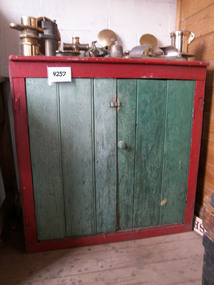
Furniture - Cupboard, 1912-1972
... tools, machinery and a cupboard. These patterns illustrate the historic trades of foundering and metalwork, both of which have been essential in supporting marine industries such as shipwrights and boatbuilders. Furthermore, local industries like farming...tools, machinery and a cupboard. These patterns illustrate the historic trades of foundering and metalwork, both of which have been essential in supporting marine industries such as shipwrights and boatbuilders. Furthermore, local industries like farming ...At Briggs’ Brass Foundry, traditional sand-casting techniques have been practised for generations. Sand casting, a craft that spans over two thousand years, involves creating intricate moulds into which molten metal is poured. This handcrafted process produces durable brass and copper alloy goods, which are particularly suited to marine environments. Items such as bells, boat hooks, cowls, propellers, handles, lids, rowlocks, hooks, letters, bolts, rail holders, brackets, deck plates, flanges, rudder guides, portholes and covers have all been made using this technique. The bronze mixture used by Briggs is a copper-based alloy, carefully formulated from locally sourced ingots of copper, tin, zinc and lead in precise quantities. This results in a non-ferrous finished product, renowned for its longevity and resilience, often lasting indefinitely even in harsh conditions. Donation to Flagstaff Hill: In Flagstaff Hill's formative years, 1972-1975, the Briggs family generously donated a range of related items, including casting patterns, brassware, tools, machinery and a cupboard. These patterns illustrate the historic trades of foundering and metalwork, both of which have been essential in supporting marine industries such as shipwrights and boatbuilders. Furthermore, local industries like farming and manufacturing have relied on foundries for the casting of essential equipment. It is believed that Briggs Marine’s family members gave personal assistance in setting up the displays in the original village shops, particularly the ‘Brass Foundry’ building. Exhibition and Legacy: The donated items were displayed in a simulated Brass Foundry within the Village. This exhibit was part of a broader showcase of working crafts, trades and services typical of a Maritime town. The display was available to the public from the completion of the building in 1986 until 1994, when the space was repurposed. A notable feature of the Village Brass Foundry was the historic Cornish chimney, presented as a working model. This chimney visually demonstrated the process of smelting metal in furnaces and pouring it into sand moulds. Constructed from specially curved bricks, the chimney now stands at about two-thirds of its original height, having been relocated from the Grassmere Cheese factory.The small cupboard holds particular significance due to its association with brass foundries operating across Victoria. Marine industries, including ship and boat building, depend heavily on high-quality castings for their machinery, equipment and fittings. Briggs Brass Foundry developed a specialised brass alloy using non-ferrous metals, ensuring the durability and longevity of its products in demanding marine environments. The cupboard is linked to Briggs Maine, a longstanding business dedicated to producing cast goods tailored for the marine sector. The foundry was equipped to meet requirements for both custom and mass-produced items. Briggs Foundry’s products were commonly installed on sailing and steam vessels operating along Victoria’s coastline, including in Warrnambool. In addition to general marine fittings, Briggs Marine was recognised for its expertise in bell-founding. The foundry is notably associated with the Schomberg Bell at Flagstaff Hill, having restored this small, historic bell to its original condition. The Schomberg Bell is a fine example from a luxury migrant vessel dating back to the mid-19th century, reflecting the craftsmanship and heritage preserved by Briggs Brass Foundry.Cupboard; wooden, painted red with two green doors, round wood door knobs a wood catch. Doors are made from tongue-and-groove wood. Inside are two shelves. Stored on the shelves are an assortment of brass hinges, pipes, handles, ventilators, collars, and so on from the Briggs Foundry, Melbourne.flagstaff hill, flagstaff hill maritime museum and village, warrnambool, maritime museum, maritime village, great ocean road, shipwreck coast, briggs, briggs marine, briggs foundry, cupboard, storage, brass objects, briggs family, marine products, village display, briggs brass foundry, briggs marine foundry, briggs marine products, herbert harrison briggs, george edward briggs, cyril falkiner mckinnon briggs, collingwood, moorabbin, frank lee, les lee, eva lee, briggs marine warrnambool, non-ferrous founders, bell specialists, ship bell specialists, sand cast, marine equipment, marine fittings, foundry, brass foundry, founders
