
Showing 27 items matching "ferres family"
-
 Emerald Museum & Nobelius Heritage Park
Photograph - The Stuart Family, 1920s - 1945
... ...Ferres Family...Emerald Victoria Australia pioneers genealogy Stuart Family Davey Family Alfred Stuart Durban Stuart Florence Stuart Alice Davey Bert Davey 1910-1984 George Davey Bert Jones Family Ferres Family a. Floss & Frank's wedding - Alf & Florrie Stuart 1941. . ...7 assorted small black and white photographs, unmounted.a. Floss & Frank's wedding - Alf & Florrie Stuart 1941. .|b. Geo & Alice Davey, Emerald 1920s at 'Copplestone'.|c. Durban & Olive Stuart 1930|d. Grandma & Grandpa Davey, 'Copplestone'.|e. Dorothy (Dora) Davey, Heidelberg Hospital? Later Mrs Young. 'Copplestone'.| f. Grandpa Stuart's brother. To Dear Alf and Jessie, With Best Wishes from Brother James. Xmas 1915. (Builder of Rotunda on Menzies Creek.).|g. Alfred James Stuart. First boy baby born on Emerald Gold fields 1861. Durban from Father. J. Stuart.| h. Alf Stuart Jnr. family 1945: Jean, Keith & Mae, Frank Mum, Dad & Ron.emerald, victoria, australia, pioneers, genealogy, stuart family, davey family, alfred stuart, durban stuart, florence stuart, alice davey, bert davey 1910-1984, george davey, bert jones family, ferres family -
Emerald Museum & Nobelius Heritage Park
Photograph - Mr and Mrs R Ferres outside Emerald P.O, 1916, Unknown photographer, 1910s
... ...Ferres Family...There is also strong research potential due to the presumed time period the photograph was taken and the people in the photograph. transport horses buildings Australian history Post Offices Ferres Family Black and white rectangular photograph printed on matte photographic paper. ...This record holds historic significance as it captures the history of transportation in the past. From the Post Office in the background we have some insight into the development of infrastructure Emerald. There is also strong research potential due to the presumed time period the photograph was taken and the people in the photograph.Black and white rectangular photograph printed on matte photographic paper. This black and white photograph consists of Mr. and Mrs. R. Ferres sitting in what is possibly a horse drawn cart outside of Emerald Post Office. In the image, we can see Mr. and Mrs. R. Ferres sitting under the cover or bonnet of the cart with Mrs. R Ferres with a blanket over their legs. In the background, we see more tack from the cart and a timber building. Circa 1916.transport, horses, buildings, australian history, post offices, ferres family -
Emerald Museum & Nobelius Heritage Park
Book - Fiction, Bernard Cronin, The Sow's Ear, 1933
... ...Ferres Family...Children went to Emerald State School Bernard Cronin Lemeah Guest House Ferres Family unclear name in hanwriting John A Incoll(?) ...Bernard Charles Cronin (1884–1968), novelist, was born in England and came to Australia in 1890. After winning a scholarship to Dookie Agricultural College, he worked as a jackeroo in Victoria before moving to a cattle farm in north-western Tasmania. This experience and setting furnished several novels including The Sow's Ear (1933), the tale of a bitter forced marriage in a rural setting.Bernard Cronin was related tot he Ferris family and lived for a time with them at the Lemeah Guest House on Molbulk Rd. Children went to Emerald State SchoolCrimson coloured with black writing on the front cover and spine. No dust jacket. "The Sow's Ear" by Bernard Cronin. Published by Endeavour Press, first published 1933. Bernard Cronin lived for some time at the Lemeah Guest House on Monbulk Rd and his Children went to Emerald State School. Donated by Chris Brittonunclear name in hanwriting John A Incoll(?)bernard cronin, lemeah guest house, ferres family -
 Flagstaff Hill Maritime Museum and Village
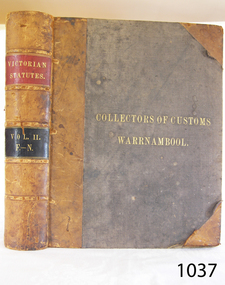
Book - Reference/Legal Acts, John Ferres, Government Printer, The Victorian Statutes Vol 2 Collectors of Customs, 1866
... Ferres was born on 1 October 1818 in Bath, England. He came from a printing family; his father, Robert, was a printer. ...Ferres was born on 1 October 1818 in Bath, England. He came from a printing family; his father, Robert, was a printer. ...Because the subject item is a book of law, it would not traditionally have a singular author, but rather a corporate author, specifically the Colony of Victoria and, more precisely, the Parliament of Victoria. The Victorian Statutes of 1866 is an official compilation of the statute law of the Colony of Victoria, Australia, 'Published by Authority', and printed by John Ferres, who was the Victorian Government Printer at the time. Ferres was the printer/publisher, not an author or editor in the usual sense, as this is a government publication rather than an individually authored work.Hard cover book, The Victorian Statutes Vol 2 Author: Corporate Author “The Colony of Victoria” Publisher: John Ferres Government Printer Melbourne. Date: 1866 Three quarter leather, Olive Front Cover, Brown Spine with Gold embossed Title on spine & front cover "Collector of Customs Warrnambool"non-fictionBecause the subject item is a book of law, it would not traditionally have a singular author, but rather a corporate author, specifically the Colony of Victoria and, more precisely, the Parliament of Victoria. The Victorian Statutes of 1866 is an official compilation of the statute law of the Colony of Victoria, Australia, 'Published by Authority', and printed by John Ferres, who was the Victorian Government Printer at the time. Ferres was the printer/publisher, not an author or editor in the usual sense, as this is a government publication rather than an individually authored work.flagstaff hill, warrnambool, shipwrecked-coast, flagstaff-hill, flagstaff-hill-maritime-museum, maritime-museum, shipwreck-coast, flagstaff-hill-maritime-village, the victorian statutes vol 2 collectors of customs, book -
 Flagstaff Hill Maritime Museum and Village
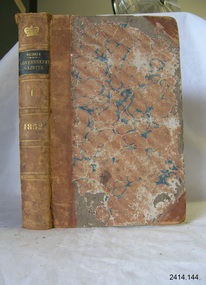
Book - Reference/Legal Statutes, John Ferres, Government Printer, The Victorian Government Gazette Vol 1 (January 1st to 30th June), 1852
... Ferres was born on 1 October 1818 in Bath, England. He came from a printing family; his father, Robert, was a printer. ...Ferres was born on 1 October 1818 in Bath, England. He came from a printing family; his father, Robert, was a printer. ...This volume is a primary historical document recording the foundational legal acts, official proclamations, and government notices that established the administration of the newly independent Colony of Victoria. Volume 1, one of the earliest Victorian Statutes, contains the initial Acts passed by the newly formed Legislative Council of Victoria following its formal separation from New South Wales on 1 July 1851. The inclusion of Charles Joseph La Trobe, Victoria's first Lieutenant-Governor, appointed in July 1851, signifies that this volume records official proclamations establishing colonial courts, administrative divisions, civil service appointments, and public order measures.Hard cover book,The Victorian Statutes Vol 1. Author: Corporate Author Charles Joseph L A Trobe “The Colony of Victoria” Publisher: John Ferres Government Printer Melbourne. Date: 1852 Three quarter leather, patterned covers. Top section of leather on spine frayed, lettering in gilt. No Library labels. Pencil text to flyleaf unreadable.non-fictionThis volume is a primary historical document recording the foundational legal acts, official proclamations, and government notices that established the administration of the newly independent Colony of Victoria. Volume 1, one of the earliest Victorian Statutes, contains the initial Acts passed by the newly formed Legislative Council of Victoria following its formal separation from New South Wales on 1 July 1851. The inclusion of Charles Joseph La Trobe, Victoria's first Lieutenant-Governor, appointed in July 1851, signifies that this volume records official proclamations establishing colonial courts, administrative divisions, civil service appointments, and public order measures.flagstaff hill, warrnambool, shipwrecked coast, flagstaff hill maritime museum, maritime museum, shipwreck coast, flagstaff hill maritime village, great ocean road, book, pattison collection, warrnambool library, warrnambool mechanics’ institute, ralph eric pattison, corangamite regional library service, warrnambool city librarian, mechanics’ institute library, victorian library board, warrnambool books and records, warrnambool children’s library -
 Flagstaff Hill Maritime Museum and Village
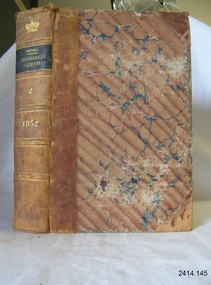
Book - Reference/Legal Statutes, John Ferres, Government Printer, The Victorian Government Gazette Vol 2 (July 1st to 31st December), 1852
... Ferres was born on 1 October 1818 in Bath, England. He came from a printing family; his father, Robert, was a printer. ...Ferres was born on 1 October 1818 in Bath, England. He came from a printing family; his father, Robert, was a printer. ...This volume is a primary historical document recording the foundational legal acts, official proclamations, and government notices that established the administration of the newly independent Colony of Victoria. Volume 1, one of the earliest Victorian Statutes, contains the initial Acts passed by the newly formed Legislative Council of Victoria following its formal separation from New South Wales on 1 July 1851. The inclusion of Charles Joseph La Trobe, Victoria's first Lieutenant-Governor, appointed in July 1851, signifies that this volume records official proclamations establishing colonial courts, administrative divisions, civil service appointments, and public order measures.Hard cover book,The Victorian Statutes Vol 2. Author: Corporate Author Charles Joseph L A Trobe “The Colony of Victoria” Publisher: John Ferres Government Printer Melbourne. Date: 1852 Further information: Three quarter leather, patterned covers. Top section of leather on spine frayed at top, lettering in gilt. No Library labels.non-fictionThis volume is a primary historical document recording the foundational legal acts, official proclamations, and government notices that established the administration of the newly independent Colony of Victoria. Volume 1, one of the earliest Victorian Statutes, contains the initial Acts passed by the newly formed Legislative Council of Victoria following its formal separation from New South Wales on 1 July 1851. The inclusion of Charles Joseph La Trobe, Victoria's first Lieutenant-Governor, appointed in July 1851, signifies that this volume records official proclamations establishing colonial courts, administrative divisions, civil service appointments, and public order measures.flagstaff hill, warrnambool, shipwrecked coast, flagstaff hill maritime museum, maritime museum, shipwreck coast, flagstaff hill maritime village, great ocean road, book, pattison collection, warrnambool library, warrnambool mechanics’ institute, ralph eric pattison, corangamite regional library service, warrnambool city librarian, mechanics’ institute library, victorian library board, warrnambool books and records, warrnambool children’s library -
 Flagstaff Hill Maritime Museum and Village
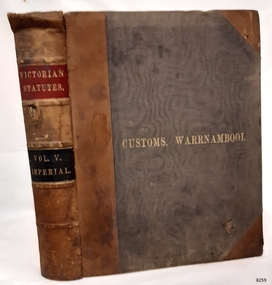
Book - Reference/Legal Statutes, John Ferres, Government Printer, The Victorian Imperial Statutes Vol 5 Customs Warrnambool, 1868
... Ferres was born on October 1, 1818, in Bath, England. He came from a printing family; his father, Robert, was a printer. ...Ferres was born on October 1, 1818, in Bath, England. He came from a printing family; his father, Robert, was a printer. ...This volume is part of the first comprehensive consolidation of laws for the Colony of Victoria after it separated from New South Wales and established its own parliament. Specifically, Volume 5 (published in 1868) is dedicated to "A selection of the imperial statutes apparently in force in Victoria". Because Victoria was still a British colony, laws passed by the British (Imperial) Parliament in Westminster still applied locally if they hadn't been superseded by local Victorian colonial acts. Volume 5 was the legal handbook used by lawyers, judges, and government officials to determine exactly which British laws still governed colonial matters, ranging from shipping and trade to criminal law and merchant customs.The Victorian Statutes Vol 5 Customs Warrnambool Publisher: John Ferres Government Printer Melbourne Date: 1868 Further Information: Three quarter leather. Junction between front board and spine slightly exposed. Top section of leather on spine damaged. non-fictionThis volume is part of the first comprehensive consolidation of laws for the Colony of Victoria after it separated from New South Wales and established its own parliament. Specifically, Volume 5 (published in 1868) is dedicated to "A selection of the imperial statutes apparently in force in Victoria". Because Victoria was still a British colony, laws passed by the British (Imperial) Parliament in Westminster still applied locally if they hadn't been superseded by local Victorian colonial acts. Volume 5 was the legal handbook used by lawyers, judges, and government officials to determine exactly which British laws still governed colonial matters, ranging from shipping and trade to criminal law and merchant customs.flagstaff hill, warrnambool, shipwrecked coast, flagstaff hill maritime museum, maritime museum, shipwreck coast, flagstaff hill maritime village, great ocean road, book, pattison collection, warrnambool library, warrnambool mechanics’ institute, ralph eric pattison, corangamite regional library service, warrnambool city librarian, mechanics’ institute library, victorian library board, warrnambool books and records, warrnambool children’s library -
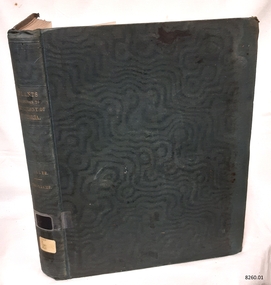 Flagstaff Hill Maritime Museum and Village
Book - Reference Book Victorian Flora, Ferdinand Mueller, The Plants Indigenous To The Colony of Victoria Vol 2, 1864-1865
... families like Ranunculaceae, Dilleniaceae, and Cruciferae). Mueller catalogued, named, and provided comprehensive Latin and English descriptions of these native Victorian plants. While the text volume of Volume 1 was completed earlier (around 1860–1862), the publication date of the subject volumes (1864–1865) specifically refers to the companion volume of "Lithograms" (highly detailed botanical illustration plates) printed by John Ferres to accompany and visually document the Thalamiflorae text. ...families like Ranunculaceae, Dilleniaceae, and Cruciferae). Mueller catalogued, named, and provided comprehensive Latin and English descriptions of these native Victorian plants. While the text volume of Volume 1 was completed earlier (around 1860–1862), the publication date of the subject volumes (1864–1865) specifically refers to the companion volume of "Lithograms" (highly detailed botanical illustration plates) printed by John Ferres to accompany and visually document the Thalamiflorae text. ...The Plants Indigenous to the Colony of Victoria is a landmark botanical work by Australia’s prominent colonial botanist, Baron Ferdinand von Mueller. However, there is a common point of confusion in Australian botanical bibliography regarding the "volumes" of this specific work. To understand what Volume 1 and the other three volumes are about, and how they differ from each other in the four-book set, it helps to look at exactly how Mueller’s project was published. Volume 1 represents Mueller's highly detailed, beautifully illustrated standalone success covering the Thalamiflorae. It differs from the subsequent "volumes" because Volume 2 was abandoned as a rare, 40-page unfinished fragment, and Volumes 3 and 4 were never written, as Mueller pivoted to assist with the broader Flora Australiensis.The Plants Indigenous To The Colony of Victoria Vol 2 Author: Ferdinand Mueller Publisher: John Ferres Government Printer Melbourne Date: 1864-1865 Further Information: Blue patterned front cover and spine with gilt lettering to spine and Library labels non-fictionThe Plants Indigenous to the Colony of Victoria is a landmark botanical work by Australia’s prominent colonial botanist, Baron Ferdinand von Mueller. However, there is a common point of confusion in Australian botanical bibliography regarding the "volumes" of this specific work. To understand what Volume 1 and the other three volumes are about, and how they differ from each other in the four-book set, it helps to look at exactly how Mueller’s project was published. Volume 1 represents Mueller's highly detailed, beautifully illustrated standalone success covering the Thalamiflorae. It differs from the subsequent "volumes" because Volume 2 was abandoned as a rare, 40-page unfinished fragment, and Volumes 3 and 4 were never written, as Mueller pivoted to assist with the broader Flora Australiensis.flagstaff hill, warrnambool, shipwrecked coast, flagstaff hill maritime museum, maritime museum, shipwreck coast, flagstaff hill maritime village, great ocean road, book, pattison collection, warrnambool library, warrnambool mechanics’ institute, ralph eric pattison, corangamite regional library service, warrnambool city librarian, mechanics’ institute library, victorian library board, warrnambool books and records, warrnambool children’s library -
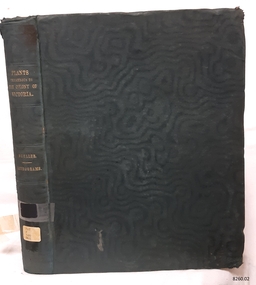 Flagstaff Hill Maritime Museum and Village
Book - Reference Book Victorian Flora, Ferdinand Mueller, The Plants Indigenous To The Colony of Victoria Vol 1, 1864-1865
... families like Ranunculaceae, Dilleniaceae, and Cruciferae). Mueller catalogued, named, and provided comprehensive Latin and English descriptions of these native Victorian plants. While the text volume of Volume 1 was completed earlier (around 1860–1862), the publication date of the subject volumes (1864–1865) specifically refers to the companion volume of "Lithograms" (highly detailed botanical illustration plates) printed by John Ferres to accompany and visually document the Thalamiflorae text. ...families like Ranunculaceae, Dilleniaceae, and Cruciferae). Mueller catalogued, named, and provided comprehensive Latin and English descriptions of these native Victorian plants. While the text volume of Volume 1 was completed earlier (around 1860–1862), the publication date of the subject volumes (1864–1865) specifically refers to the companion volume of "Lithograms" (highly detailed botanical illustration plates) printed by John Ferres to accompany and visually document the Thalamiflorae text. ...The Plants Indigenous to the Colony of Victoria is a landmark botanical work by Australia’s prominent colonial botanist, Baron Ferdinand von Mueller. However, there is a common point of confusion in Australian botanical bibliography regarding the "volumes" of this specific work. To understand what Volume 1 and the other three volumes are about, and how they differ from each other in the four-book set, it helps to look at exactly how Mueller’s project was published. Volume 1 represents Mueller's highly detailed, beautifully illustrated standalone success covering the Thalamiflorae. It differs from the subsequent "volumes" because Volume 2 was abandoned as a rare, 40-page unfinished fragment, and Volumes 3 and 4 were never written, as Mueller pivoted to assist with the broader Flora Australiensis.The Plants Indigenous To The Colony of Victoria Vol 1 Author: Ferdinand Mueller Publisher: John Ferres Government Printer Melbourne Date: 1864-1865 Further Information: Blue patterned front cover and spine with gilt lettering to spine and Library labels non-fictionThe Plants Indigenous to the Colony of Victoria is a landmark botanical work by Australia’s prominent colonial botanist, Baron Ferdinand von Mueller. However, there is a common point of confusion in Australian botanical bibliography regarding the "volumes" of this specific work. To understand what Volume 1 and the other three volumes are about, and how they differ from each other in the four-book set, it helps to look at exactly how Mueller’s project was published. Volume 1 represents Mueller's highly detailed, beautifully illustrated standalone success covering the Thalamiflorae. It differs from the subsequent "volumes" because Volume 2 was abandoned as a rare, 40-page unfinished fragment, and Volumes 3 and 4 were never written, as Mueller pivoted to assist with the broader Flora Australiensis.flagstaff hill, warrnambool, shipwrecked coast, flagstaff hill maritime museum, maritime museum, shipwreck coast, flagstaff hill maritime village, great ocean road, book, pattison collection, warrnambool library, warrnambool mechanics’ institute, ralph eric pattison, corangamite regional library service, warrnambool city librarian, mechanics’ institute library, victorian library board, warrnambool books and records, warrnambool children’s library -
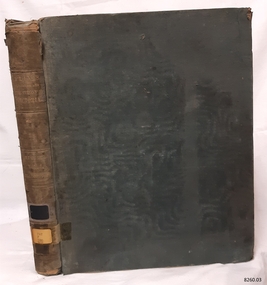 Flagstaff Hill Maritime Museum and Village
Book - Reference Book Victorian Flora, Ferdinand Mueller, The Plants Indigenous To The Colony of Victoria Vol 3, 1864-1865
... families like Ranunculaceae, Dilleniaceae, and Cruciferae). Mueller catalogued, named, and provided comprehensive Latin and English descriptions of these native Victorian plants. While the text volume of Volume 1 was completed earlier (around 1860–1862), the publication date of the subject volumes (1864–1865) specifically refers to the companion volume of "Lithograms" (highly detailed botanical illustration plates) printed by John Ferres to accompany and visually document the Thalamiflorae text. ...families like Ranunculaceae, Dilleniaceae, and Cruciferae). Mueller catalogued, named, and provided comprehensive Latin and English descriptions of these native Victorian plants. While the text volume of Volume 1 was completed earlier (around 1860–1862), the publication date of the subject volumes (1864–1865) specifically refers to the companion volume of "Lithograms" (highly detailed botanical illustration plates) printed by John Ferres to accompany and visually document the Thalamiflorae text. ...The Plants Indigenous to the Colony of Victoria is a landmark botanical work by Australia’s prominent colonial botanist, Baron Ferdinand von Mueller. However, there is a common point of confusion in Australian botanical bibliography regarding the "volumes" of this specific work. To understand what Volume 1 and the other three volumes are about, and how they differ from each other in the four-book set, it helps to look at exactly how Mueller’s project was published. Volume 1 represents Mueller's highly detailed, beautifully illustrated standalone success covering the Thalamiflorae. It differs from the subsequent "volumes" because Volume 2 was abandoned as a rare, 40-page unfinished fragment, and Volumes 3 and 4 were never written, as Mueller pivoted to assist with the broader Flora Australiensis.The Plants Indigenous To The Colony of Victoria Vol 1 Author: Ferdinand Mueller Publisher: John Ferres Government Printer Melbourne Date: 1864-1865 Further Information: Blue patterned front cover and spine with gilt lettering to spine and Library labels non-fictionThe Plants Indigenous to the Colony of Victoria is a landmark botanical work by Australia’s prominent colonial botanist, Baron Ferdinand von Mueller. However, there is a common point of confusion in Australian botanical bibliography regarding the "volumes" of this specific work. To understand what Volume 1 and the other three volumes are about, and how they differ from each other in the four-book set, it helps to look at exactly how Mueller’s project was published. Volume 1 represents Mueller's highly detailed, beautifully illustrated standalone success covering the Thalamiflorae. It differs from the subsequent "volumes" because Volume 2 was abandoned as a rare, 40-page unfinished fragment, and Volumes 3 and 4 were never written, as Mueller pivoted to assist with the broader Flora Australiensis.flagstaff hill, warrnambool, shipwrecked coast, flagstaff hill maritime museum, maritime museum, shipwreck coast, flagstaff hill maritime village, great ocean road, book, pattison collection, warrnambool library, warrnambool mechanics’ institute, ralph eric pattison, corangamite regional library service, warrnambool city librarian, mechanics’ institute library, victorian library board, warrnambool books and records, warrnambool children’s library -
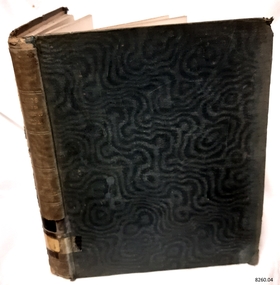 Flagstaff Hill Maritime Museum and Village
Book - Reference Book Victorian Flora, Ferdinand Mueller, The Plants Indigenous To The Colony of Victoria Vol 4, 1864-1865
... families like Ranunculaceae, Dilleniaceae, and Cruciferae). Mueller catalogued, named, and provided comprehensive Latin and English descriptions of these native Victorian plants. While the text volume of Volume 1 was completed earlier (around 1860–1862), the publication date of the subject volumes (1864–1865) specifically refers to the companion volume of "Lithograms" (highly detailed botanical illustration plates) printed by John Ferres to accompany and visually document the Thalamiflorae text. ...families like Ranunculaceae, Dilleniaceae, and Cruciferae). Mueller catalogued, named, and provided comprehensive Latin and English descriptions of these native Victorian plants. While the text volume of Volume 1 was completed earlier (around 1860–1862), the publication date of the subject volumes (1864–1865) specifically refers to the companion volume of "Lithograms" (highly detailed botanical illustration plates) printed by John Ferres to accompany and visually document the Thalamiflorae text. ...The Plants Indigenous to the Colony of Victoria is a landmark botanical work by Australia’s prominent colonial botanist, Baron Ferdinand von Mueller. However, there is a common point of confusion in Australian botanical bibliography regarding the "volumes" of this specific work. To understand what Volume 1 and the other three volumes are about, and how they differ from each other in the four-book set, it helps to look at exactly how Mueller’s project was published. Volume 1 represents Mueller's highly detailed, beautifully illustrated standalone success covering the Thalamiflorae. It differs from the subsequent "volumes" because Volume 2 was abandoned as a rare, 40-page unfinished fragment, and Volumes 3 and 4 were never written, as Mueller pivoted to assist with the broader Flora Australiensis.The Plants Indigenous To The Colony of Victoria Vol 1 Author: Ferdinand Mueller Publisher: John Ferres Government Printer Melbourne Date: 1864-1865 Further Information: Blue patterned front cover and spine with gilt lettering to spine and Library labels non-fictionThe Plants Indigenous to the Colony of Victoria is a landmark botanical work by Australia’s prominent colonial botanist, Baron Ferdinand von Mueller. However, there is a common point of confusion in Australian botanical bibliography regarding the "volumes" of this specific work. To understand what Volume 1 and the other three volumes are about, and how they differ from each other in the four-book set, it helps to look at exactly how Mueller’s project was published. Volume 1 represents Mueller's highly detailed, beautifully illustrated standalone success covering the Thalamiflorae. It differs from the subsequent "volumes" because Volume 2 was abandoned as a rare, 40-page unfinished fragment, and Volumes 3 and 4 were never written, as Mueller pivoted to assist with the broader Flora Australiensis.flagstaff hill, warrnambool, shipwrecked coast, flagstaff hill maritime museum, maritime museum, shipwreck coast, flagstaff hill maritime village, great ocean road, book, pattison collection, warrnambool library, warrnambool mechanics’ institute, ralph eric pattison, corangamite regional library service, warrnambool city librarian, mechanics’ institute library, victorian library board, warrnambool books and records, warrnambool children’s library -
 Flagstaff Hill Maritime Museum and Village
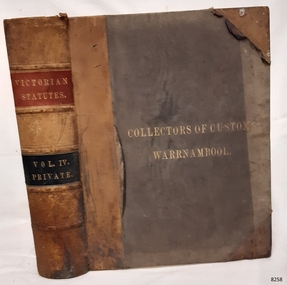
Book - Reference/Legal Statutes, John Ferres, Government Printer, The Victorian Statutes Vol 4 Various Legal Statues /Warrnambool, 1866
... Ferres was born on October 1, 1818, in Bath, England. He came from a printing family; his father, Robert, was a printer. ...Ferres was born on October 1, 1818, in Bath, England. He came from a printing family; his father, Robert, was a printer. ...This volume is part of the first comprehensive consolidation of laws for the Colony of Victoria after it separated from New South Wales and established its own parliament. Specifically, Volume 4 (published in 1866) contains Local Colonial Acts. These were laws debated, passed, and enacted right here in Melbourne by the newly formed Parliament of the Colony of Victoria. They dealt with purely domestic, local matters, such as Victorian land selection, goldfields regulations, local municipal boundaries, and colonial courts. Volume 4 was the handbook for everyday domestic Victorian life, governing how a local town council operated, how gold claims were filed, or how local debts were settled in a Victorian county court.The Victorian Statutes Vol 4 Various Legal Statues /Warrnambool Publisher: John Ferres Government Printer Melbourne Date: 1866 Further Information: Three quarter leather. Junction between front board and spine slightly exposed. non-fictionThis volume is part of the first comprehensive consolidation of laws for the Colony of Victoria after it separated from New South Wales and established its own parliament. Specifically, Volume 4 (published in 1866) contains Local Colonial Acts. These were laws debated, passed, and enacted right here in Melbourne by the newly formed Parliament of the Colony of Victoria. They dealt with purely domestic, local matters, such as Victorian land selection, goldfields regulations, local municipal boundaries, and colonial courts. Volume 4 was the handbook for everyday domestic Victorian life, governing how a local town council operated, how gold claims were filed, or how local debts were settled in a Victorian county court.flagstaff hill, warrnambool, shipwrecked coast, flagstaff hill maritime museum, maritime museum, shipwreck coast, flagstaff hill maritime village, great ocean road, book, pattison collection, warrnambool library, warrnambool mechanics’ institute, ralph eric pattison, corangamite regional library service, warrnambool city librarian, mechanics’ institute library, victorian library board, warrnambool books and records, warrnambool children’s library -
 Flagstaff Hill Maritime Museum and Village
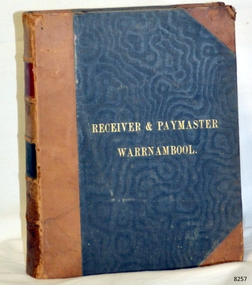
Book - Reference/Legal Statutes, John Ferres, Government Printer, The Victorian Legal Statutes Vol 3, Receiver Paymaster/Warrnambool, 1866
... Ferres was born on October 1, 1818, in Bath, England. He came from a printing family; his father, Robert, was a printer. ...Ferres was born on October 1, 1818, in Bath, England. He came from a printing family; his father, Robert, was a printer. ...This volume is part of the first comprehensive consolidation of laws for the Colony of Victoria after it separated from New South Wales and established its own parliament. Specifically, Volume 3 is the final part of the core "Public and General" Victorian colonial laws. The first three volumes of the 1866 consolidation were organised alphabetically by legal topic. Volume 3 specifically contains all the major public acts running from P to W. Because it covers the tail end of the alphabet, it holds some of the most critical laws that built day-to-day society in 19th-century Victoria. These include: · Police Offences and Public Order: The legal frameworks for policing the goldfield boomtowns, managing public behaviour, and running early colonial prisons. · Public Works and Infrastructure: The acts authorising the construction of roads, bridges, and early municipal water supplies across the fast-growing colony. · Railways: The specific general legislation governing the expansion of Victoria's heavily subsidised, state-expanding railway networks. · Property and Land Transfer: Crucial laws managing land ownership, inheritance, and the foundational transfers of property as the colony shifted away from old squatter runs to permanent towns. · Wines, Beer, and Spirits: The colonial acts regulating the licensing of hotels and public houses, and managing the highly lucrative, tightly controlled alcohol trade.The Victorian Statutes Vol 3 Various Legal Statues /Warrnambool Publisher: John Ferres Government Printer Melbourne Date: 1866 Further Information: Three quarter leather. Corners worn lettering in gilt. non-fictionThis volume is part of the first comprehensive consolidation of laws for the Colony of Victoria after it separated from New South Wales and established its own parliament. Specifically, Volume 3 is the final part of the core "Public and General" Victorian colonial laws. The first three volumes of the 1866 consolidation were organised alphabetically by legal topic. Volume 3 specifically contains all the major public acts running from P to W. Because it covers the tail end of the alphabet, it holds some of the most critical laws that built day-to-day society in 19th-century Victoria. These include: · Police Offences and Public Order: The legal frameworks for policing the goldfield boomtowns, managing public behaviour, and running early colonial prisons. · Public Works and Infrastructure: The acts authorising the construction of roads, bridges, and early municipal water supplies across the fast-growing colony. · Railways: The specific general legislation governing the expansion of Victoria's heavily subsidised, state-expanding railway networks. · Property and Land Transfer: Crucial laws managing land ownership, inheritance, and the foundational transfers of property as the colony shifted away from old squatter runs to permanent towns. · Wines, Beer, and Spirits: The colonial acts regulating the licensing of hotels and public houses, and managing the highly lucrative, tightly controlled alcohol trade.flagstaff hill, warrnambool, shipwrecked coast, flagstaff hill maritime museum, maritime museum, shipwreck coast, flagstaff hill maritime village, great ocean road, book, pattison collection, warrnambool library, warrnambool mechanics’ institute, ralph eric pattison, corangamite regional library service, warrnambool city librarian, mechanics’ institute library, victorian library board, warrnambool books and records, warrnambool children’s library -
 Flagstaff Hill Maritime Museum and Village
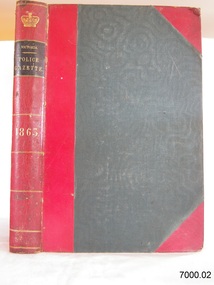
Administrative record - Reference Sociology/History, John Ferres, Government Printer, Victoria Police Gazettes for 1863, 1863
... Ferres was born on 1 October 1818 in Bath, England. He came from a printing family; his father, Robert, was a printer. ...Ferres was born on 1 October 1818 in Bath, England. He came from a printing family; his father, Robert, was a printer. ...The Victoria Police Gazette was a confidential, internal publication of the Victoria Police, issued to inform police officers, court and justice officials, and government departments about matters relevant to policing across the colony. It commenced in December 1853 and was initially published weekly by the Victoria Police. It was distributed each week to city and rural police stations and to government offices and newspaper publishers. Inclusions in this weekly publication were people wanted for questioning in relation to various crimes, prisoners discharged from city or country gaols, extracts from Police Gazettes in New South Wales, South Australia, Queensland, Tasmania, New Zealand, and occasionally overseas countries, as well as extracts from the Hobart Town Gazette listing escaped convicts and the person to whom they were assigned. There was also a "Missing Friends" section, where most people listed were not criminals but were sought by police so relatives, old friends, or government officials could renew contact with them. In addition, there was a record of deserted wives and children, listing the offender's name, birthplace, age, occupation, last known area of residence, likely future movements and known relatives. There was also a section on court lists, warrants issued, appointments and staffing changes within the police service, arrest and discharge records with physical descriptions, and lists of pastoralists with descriptions of their livestock brands.Hard Bound Volume. Victorian Police Gazettes for 1863 Author: Institutional Government Publication Publisher: John Ferres, Melbourne Date: 1863 Further Information: Compilation of Weekly Victorian Police Gazettes for 1863 in a hard bound volume with red spine and red corner reinforcing. Front panel grey coloured lettering in gilt with gilt banding to spine. Inside is twelve issues of the Police Gazettes for 1863.non-fictionThe Victoria Police Gazette was a confidential, internal publication of the Victoria Police, issued to inform police officers, court and justice officials, and government departments about matters relevant to policing across the colony. It commenced in December 1853 and was initially published weekly by the Victoria Police. It was distributed each week to city and rural police stations and to government offices and newspaper publishers. Inclusions in this weekly publication were people wanted for questioning in relation to various crimes, prisoners discharged from city or country gaols, extracts from Police Gazettes in New South Wales, South Australia, Queensland, Tasmania, New Zealand, and occasionally overseas countries, as well as extracts from the Hobart Town Gazette listing escaped convicts and the person to whom they were assigned. There was also a "Missing Friends" section, where most people listed were not criminals but were sought by police so relatives, old friends, or government officials could renew contact with them. In addition, there was a record of deserted wives and children, listing the offender's name, birthplace, age, occupation, last known area of residence, likely future movements and known relatives. There was also a section on court lists, warrants issued, appointments and staffing changes within the police service, arrest and discharge records with physical descriptions, and lists of pastoralists with descriptions of their livestock brands.warrnambool, shipwrecked-coast, flagstaff-hill, flagstaff-hill-maritime-museum, maritime-museum, shipwreck-coast, flagstaff-hill-maritime-village, shipwrecked-artefact, book, victoria police gazette 1862, victoria police gazette, warrnambool books and records, great ocean road -
 Flagstaff Hill Maritime Museum and Village
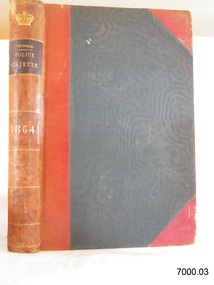
Administrative record - Reference Sociology/History, John Ferres, Government Printer, Victoria Police Gazettes for 1864, 1864
... Ferres was born on 1 October 1818 in Bath, England. He came from a printing family; his father, Robert, was a printer. ...Ferres was born on 1 October 1818 in Bath, England. He came from a printing family; his father, Robert, was a printer. ...The Victoria Police Gazette was a confidential, internal publication of the Victoria Police, issued to inform police officers, court and justice officials, and government departments about matters relevant to policing across the colony. It commenced in December 1853 and was initially published weekly by the Victoria Police. It was distributed each week to city and rural police stations and to government offices and newspaper publishers. Inclusions in this weekly publication were people wanted for questioning in relation to various crimes, prisoners discharged from city or country gaols, extracts from Police Gazettes in New South Wales, South Australia, Queensland, Tasmania, New Zealand, and occasionally overseas countries, as well as extracts from the Hobart Town Gazette listing escaped convicts and the person to whom they were assigned. There was also a "Missing Friends" section, where most people listed were not criminals but were sought by police so relatives, old friends, or government officials could renew contact with them. In addition, there was a record of deserted wives and children, listing the offender's name, birthplace, age, occupation, last known area of residence, likely future movements and known relatives. There was also a section on court lists, warrants issued, appointments and staffing changes within the police service, arrest and discharge records with physical descriptions, and lists of pastoralists with descriptions of their livestock brands.Hard Bound Volume. Victorian Police Gazettes for 1864 Author: Institutional Government Publication Publisher: John Ferres, Melbourne Date: 1864 Further Information: Compilation of Weekly Victorian Police Gazettes for 1864 in a hard bound volume with red spine and red corner reinforcing. Front panel grey coloured lettering in gilt with gilt banding to spine. Inside is twelve issues of the Police Gazettes for 1864.non-fictionThe Victoria Police Gazette was a confidential, internal publication of the Victoria Police, issued to inform police officers, court and justice officials, and government departments about matters relevant to policing across the colony. It commenced in December 1853 and was initially published weekly by the Victoria Police. It was distributed each week to city and rural police stations and to government offices and newspaper publishers. Inclusions in this weekly publication were people wanted for questioning in relation to various crimes, prisoners discharged from city or country gaols, extracts from Police Gazettes in New South Wales, South Australia, Queensland, Tasmania, New Zealand, and occasionally overseas countries, as well as extracts from the Hobart Town Gazette listing escaped convicts and the person to whom they were assigned. There was also a "Missing Friends" section, where most people listed were not criminals but were sought by police so relatives, old friends, or government officials could renew contact with them. In addition, there was a record of deserted wives and children, listing the offender's name, birthplace, age, occupation, last known area of residence, likely future movements and known relatives. There was also a section on court lists, warrants issued, appointments and staffing changes within the police service, arrest and discharge records with physical descriptions, and lists of pastoralists with descriptions of their livestock brands.warrnambool, shipwrecked-coast, flagstaff-hill, flagstaff-hill-maritime-museum, maritime-museum, shipwreck-coast, flagstaff-hill-maritime-village, shipwrecked-artefact, book, victoria police gazette 1862, victoria police gazette, warrnambool books and records, great ocean road -
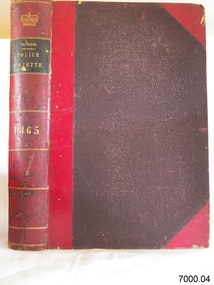 Flagstaff Hill Maritime Museum and Village
Administrative record - Reference Sociology/History, John Ferres, Government Printer, Victoria Police Gazettes for 1865, 1865
... Ferres was born on 1 October 1818 in Bath, England. He came from a printing family; his father, Robert, was a printer. ...Ferres was born on 1 October 1818 in Bath, England. He came from a printing family; his father, Robert, was a printer. ...The Victoria Police Gazette was a confidential, internal publication of the Victoria Police, issued to inform police officers, court and justice officials, and government departments about matters relevant to policing across the colony. It commenced in December 1853 and was initially published weekly by the Victoria Police. It was distributed each week to city and rural police stations and to government offices and newspaper publishers. Inclusions in this weekly publication were people wanted for questioning in relation to various crimes, prisoners discharged from city or country gaols, extracts from Police Gazettes in New South Wales, South Australia, Queensland, Tasmania, New Zealand, and occasionally overseas countries, as well as extracts from the Hobart Town Gazette listing escaped convicts and the person to whom they were assigned. There was also a "Missing Friends" section, where most people listed were not criminals but were sought by police so relatives, old friends, or government officials could renew contact with them. In addition, there was a record of deserted wives and children, listing the offender's name, birthplace, age, occupation, last known area of residence, likely future movements and known relatives. There was also a section on court lists, warrants issued, appointments and staffing changes within the police service, arrest and discharge records with physical descriptions, and lists of pastoralists with descriptions of their livestock brands.Hard Bound Volume. Victorian Police Gazettes for 1865 Author: Institutional Government Publication Publisher: John Ferres, Melbourne Date: 1865 Further Information: Compilation of Weekly Victorian Police Gazettes for 1865 in a hard bound volume with red spine and red corner reinforcing. Front panel grey coloured lettering in gilt with gilt banding to spine. Inside is twelve issues of the Police Gazettes for 1865.non-fictionThe Victoria Police Gazette was a confidential, internal publication of the Victoria Police, issued to inform police officers, court and justice officials, and government departments about matters relevant to policing across the colony. It commenced in December 1853 and was initially published weekly by the Victoria Police. It was distributed each week to city and rural police stations and to government offices and newspaper publishers. Inclusions in this weekly publication were people wanted for questioning in relation to various crimes, prisoners discharged from city or country gaols, extracts from Police Gazettes in New South Wales, South Australia, Queensland, Tasmania, New Zealand, and occasionally overseas countries, as well as extracts from the Hobart Town Gazette listing escaped convicts and the person to whom they were assigned. There was also a "Missing Friends" section, where most people listed were not criminals but were sought by police so relatives, old friends, or government officials could renew contact with them. In addition, there was a record of deserted wives and children, listing the offender's name, birthplace, age, occupation, last known area of residence, likely future movements and known relatives. There was also a section on court lists, warrants issued, appointments and staffing changes within the police service, arrest and discharge records with physical descriptions, and lists of pastoralists with descriptions of their livestock brands.warrnambool, shipwrecked-coast, flagstaff-hill, flagstaff-hill-maritime-museum, maritime-museum, shipwreck-coast, flagstaff-hill-maritime-village, shipwrecked-artefact, book, victoria police gazette 1862, victoria police gazette, warrnambool books and records, great ocean road -
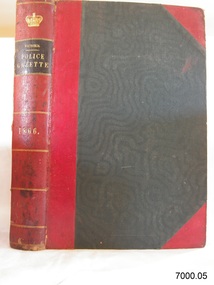 Flagstaff Hill Maritime Museum and Village
Administrative record - Reference Sociology/History, John Ferres, Government Printer, Victoria Police Gazettes for 1866, 1866
... Ferres was born on 1 October 1818 in Bath, England. He came from a printing family; his father, Robert, was a printer. ...Ferres was born on 1 October 1818 in Bath, England. He came from a printing family; his father, Robert, was a printer. ...The Victoria Police Gazette was a confidential, internal publication of the Victoria Police, issued to inform police officers, court and justice officials, and government departments about matters relevant to policing across the colony. It commenced in December 1853 and was initially published weekly by the Victoria Police. It was distributed each week to city and rural police stations and to government offices and newspaper publishers. Inclusions in this weekly publication were people wanted for questioning in relation to various crimes, prisoners discharged from city or country gaols, extracts from Police Gazettes in New South Wales, South Australia, Queensland, Tasmania, New Zealand, and occasionally overseas countries, as well as extracts from the Hobart Town Gazette listing escaped convicts and the person to whom they were assigned. There was also a "Missing Friends" section, where most people listed were not criminals but were sought by police so relatives, old friends, or government officials could renew contact with them. In addition, there was a record of deserted wives and children, listing the offender's name, birthplace, age, occupation, last known area of residence, likely future movements and known relatives. There was also a section on court lists, warrants issued, appointments and staffing changes within the police service, arrest and discharge records with physical descriptions, and lists of pastoralists with descriptions of their livestock brands.Hard Bound Volume. Victorian Police Gazettes for 1866 Author: Institutional Government Publication Publisher: John Ferres, Melbourne Date: 1866 Further Information: Compilation of Weekly Victorian Police Gazettes for 1866 in a hard bound volume with red spine and red corner reinforcing. Front panel grey coloured lettering in gilt with gilt banding to spine. Inside is twelve issues of the Police Gazettes for 1866.non-fictionThe Victoria Police Gazette was a confidential, internal publication of the Victoria Police, issued to inform police officers, court and justice officials, and government departments about matters relevant to policing across the colony. It commenced in December 1853 and was initially published weekly by the Victoria Police. It was distributed each week to city and rural police stations and to government offices and newspaper publishers. Inclusions in this weekly publication were people wanted for questioning in relation to various crimes, prisoners discharged from city or country gaols, extracts from Police Gazettes in New South Wales, South Australia, Queensland, Tasmania, New Zealand, and occasionally overseas countries, as well as extracts from the Hobart Town Gazette listing escaped convicts and the person to whom they were assigned. There was also a "Missing Friends" section, where most people listed were not criminals but were sought by police so relatives, old friends, or government officials could renew contact with them. In addition, there was a record of deserted wives and children, listing the offender's name, birthplace, age, occupation, last known area of residence, likely future movements and known relatives. There was also a section on court lists, warrants issued, appointments and staffing changes within the police service, arrest and discharge records with physical descriptions, and lists of pastoralists with descriptions of their livestock brands.warrnambool, shipwrecked-coast, flagstaff-hill, flagstaff-hill-maritime-museum, maritime-museum, shipwreck-coast, flagstaff-hill-maritime-village, shipwrecked-artefact, book, victoria police gazette 1862, victoria police gazette, warrnambool books and records, great ocean road -
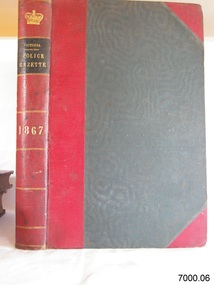 Flagstaff Hill Maritime Museum and Village
Administrative record - Reference Sociology/History, John Ferres, Government Printer, Victoria Police Gazettes for 1867, 1867
... Ferres was born on 1 October 1818 in Bath, England. He came from a printing family; his father, Robert, was a printer. ...Ferres was born on 1 October 1818 in Bath, England. He came from a printing family; his father, Robert, was a printer. ...The Victoria Police Gazette was a confidential, internal publication of the Victoria Police, issued to inform police officers, court and justice officials, and government departments about matters relevant to policing across the colony. It commenced in December 1853 and was initially published weekly by the Victoria Police. It was distributed each week to city and rural police stations and to government offices and newspaper publishers. Inclusions in this weekly publication were people wanted for questioning in relation to various crimes, prisoners discharged from city or country gaols, extracts from Police Gazettes in New South Wales, South Australia, Queensland, Tasmania, New Zealand, and occasionally overseas countries, as well as extracts from the Hobart Town Gazette listing escaped convicts and the person to whom they were assigned. There was also a "Missing Friends" section, where most people listed were not criminals but were sought by police so relatives, old friends, or government officials could renew contact with them. In addition, there was a record of deserted wives and children, listing the offender's name, birthplace, age, occupation, last known area of residence, likely future movements and known relatives. There was also a section on court lists, warrants issued, appointments and staffing changes within the police service, arrest and discharge records with physical descriptions, and lists of pastoralists with descriptions of their livestock brands.Hard Bound Volume. Victorian Police Gazettes for 1867 Author: Institutional Government Publication Publisher: John Ferres, Melbourne Date: 1867 Further Information: Compilation of Weekly Victorian Police Gazettes for 1867 in a hard bound volume with red spine and red corner reinforcing. Front panel grey coloured lettering in gilt with gilt banding to spine. Inside is twelve issues of the Police Gazettes for 1867.non-fictionThe Victoria Police Gazette was a confidential, internal publication of the Victoria Police, issued to inform police officers, court and justice officials, and government departments about matters relevant to policing across the colony. It commenced in December 1853 and was initially published weekly by the Victoria Police. It was distributed each week to city and rural police stations and to government offices and newspaper publishers. Inclusions in this weekly publication were people wanted for questioning in relation to various crimes, prisoners discharged from city or country gaols, extracts from Police Gazettes in New South Wales, South Australia, Queensland, Tasmania, New Zealand, and occasionally overseas countries, as well as extracts from the Hobart Town Gazette listing escaped convicts and the person to whom they were assigned. There was also a "Missing Friends" section, where most people listed were not criminals but were sought by police so relatives, old friends, or government officials could renew contact with them. In addition, there was a record of deserted wives and children, listing the offender's name, birthplace, age, occupation, last known area of residence, likely future movements and known relatives. There was also a section on court lists, warrants issued, appointments and staffing changes within the police service, arrest and discharge records with physical descriptions, and lists of pastoralists with descriptions of their livestock brands.warrnambool, shipwrecked-coast, flagstaff-hill, flagstaff-hill-maritime-museum, maritime-museum, shipwreck-coast, flagstaff-hill-maritime-village, shipwrecked-artefact, book, victoria police gazette 1862, victoria police gazette, warrnambool books and records, great ocean road -
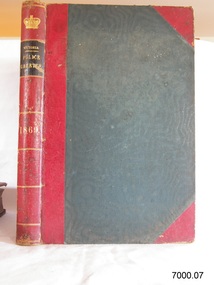 Flagstaff Hill Maritime Museum and Village
Administrative record - Reference Sociology/History, John Ferres, Government Printer, Victoria Police Gazettes for 1869, 1869
... Ferres was born on 1 October 1818 in Bath, England. He came from a printing family; his father, Robert, was a printer. ...Ferres was born on 1 October 1818 in Bath, England. He came from a printing family; his father, Robert, was a printer. ...The Victoria Police Gazette was a confidential, internal publication of the Victoria Police, issued to inform police officers, court and justice officials, and government departments about matters relevant to policing across the colony. It commenced in December 1853 and was initially published weekly by the Victoria Police. It was distributed each week to city and rural police stations and to government offices and newspaper publishers. Inclusions in this weekly publication were people wanted for questioning in relation to various crimes, prisoners discharged from city or country gaols, extracts from Police Gazettes in New South Wales, South Australia, Queensland, Tasmania, New Zealand, and occasionally overseas countries, as well as extracts from the Hobart Town Gazette listing escaped convicts and the person to whom they were assigned. There was also a "Missing Friends" section, where most people listed were not criminals but were sought by police so relatives, old friends, or government officials could renew contact with them. In addition, there was a record of deserted wives and children, listing the offender's name, birthplace, age, occupation, last known area of residence, likely future movements and known relatives. There was also a section on court lists, warrants issued, appointments and staffing changes within the police service, arrest and discharge records with physical descriptions, and lists of pastoralists with descriptions of their livestock brands.Hard Bound Volume. Victorian Police Gazettes for 1869 Author: Institutional Government Publication Publisher: John Ferres, Melbourne Date: 1869 Further Information: Compilation of Weekly Victorian Police Gazettes for 1869 in a hard bound volume with red spine and red corner reinforcing. Front panel grey coloured lettering in gilt with gilt banding to spine. Inside is twelve issues of the Police Gazettes for 1869.non-fictionThe Victoria Police Gazette was a confidential, internal publication of the Victoria Police, issued to inform police officers, court and justice officials, and government departments about matters relevant to policing across the colony. It commenced in December 1853 and was initially published weekly by the Victoria Police. It was distributed each week to city and rural police stations and to government offices and newspaper publishers. Inclusions in this weekly publication were people wanted for questioning in relation to various crimes, prisoners discharged from city or country gaols, extracts from Police Gazettes in New South Wales, South Australia, Queensland, Tasmania, New Zealand, and occasionally overseas countries, as well as extracts from the Hobart Town Gazette listing escaped convicts and the person to whom they were assigned. There was also a "Missing Friends" section, where most people listed were not criminals but were sought by police so relatives, old friends, or government officials could renew contact with them. In addition, there was a record of deserted wives and children, listing the offender's name, birthplace, age, occupation, last known area of residence, likely future movements and known relatives. There was also a section on court lists, warrants issued, appointments and staffing changes within the police service, arrest and discharge records with physical descriptions, and lists of pastoralists with descriptions of their livestock brands.warrnambool, shipwrecked-coast, flagstaff-hill, flagstaff-hill-maritime-museum, maritime-museum, shipwreck-coast, flagstaff-hill-maritime-village, shipwrecked-artefact, book, victoria police gazette 1862, victoria police gazette, warrnambool books and records, great ocean road -
Glenelg Shire Council Cultural Collection
Document - Military Submission, John Ferres, Government Printer, Defences of the Colony, 1864
... In August Ferres followed his mother, his sisters Hannah Wilton and Eliza Cooper, their husbands and two nephews to Victoria, arriving in Melbourne in December. He spent some time near Alberton, Gippsland, where his family...In August Ferres followed his mother, his sisters Hannah Wilton and Eliza Cooper, their husbands and two nephews to Victoria, arriving in Melbourne in December. He spent some time near Alberton, Gippsland, where his family ...1864 group of 4 submissions bound in to one document. Heavy paper sewn together with twine, black print on white.portland battery, military, major scratchley, commodore wiseman, governor, john ferres -
 Flagstaff Hill Maritime Museum and Village
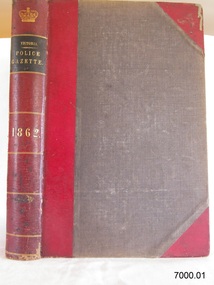
Administrative record - Reference Sociology/History, John Ferres, Government Printer, Victoria Police Gazettes for 1862, 1862
... Ferres was born on 1 October 1818 in Bath, England. He came from a printing family; his father, Robert, was a printer. ...Ferres was born on 1 October 1818 in Bath, England. He came from a printing family; his father, Robert, was a printer. ...The Victoria Police Gazette was a confidential, internal publication of the Victoria Police, issued to inform police officers, court and justice officials, and government departments about matters relevant to policing across the colony. It commenced in December 1853 and was initially published weekly by the Victoria Police. It was distributed each week to city and rural police stations and to government offices and newspaper publishers. Inclusions in this weekly publication were people wanted for questioning in relation to various crimes, prisoners discharged from city or country gaols, extracts from Police Gazettes in New South Wales, South Australia, Queensland, Tasmania, New Zealand, and occasionally overseas countries, as well as extracts from the Hobart Town Gazette listing escaped convicts and the person to whom they were assigned. There was also a "Missing Friends" section, where most people listed were not criminals but were sought by police so relatives, old friends, or government officials could renew contact with them. In addition, there was a record of deserted wives and children, listing the offender's name, birthplace, age, occupation, last known area of residence, likely future movements and known relatives. There was also a section on court lists, warrants issued, appointments and staffing changes within the police service, arrest and discharge records with physical descriptions, and lists of pastoralists with descriptions of their livestock brands.Hard Bound Volume. Victorian Police Gazettes for 1862 Author: Institutional Government Publication Publisher: John Ferres, Melbourne Date: 1862 Further Information: Compilation of Weekly Victorian Police Gazettes for 1862 in a hard bound volume with red spine and red corner reinforcing. Front panel grey coloured lettering in gilt with gilt banding to spine. Inside is twelve issues of the Police Gazettes for 1862.non-fictionThe Victoria Police Gazette was a confidential, internal publication of the Victoria Police, issued to inform police officers, court and justice officials, and government departments about matters relevant to policing across the colony. It commenced in December 1853 and was initially published weekly by the Victoria Police. It was distributed each week to city and rural police stations and to government offices and newspaper publishers. Inclusions in this weekly publication were people wanted for questioning in relation to various crimes, prisoners discharged from city or country gaols, extracts from Police Gazettes in New South Wales, South Australia, Queensland, Tasmania, New Zealand, and occasionally overseas countries, as well as extracts from the Hobart Town Gazette listing escaped convicts and the person to whom they were assigned. There was also a "Missing Friends" section, where most people listed were not criminals but were sought by police so relatives, old friends, or government officials could renew contact with them. In addition, there was a record of deserted wives and children, listing the offender's name, birthplace, age, occupation, last known area of residence, likely future movements and known relatives. There was also a section on court lists, warrants issued, appointments and staffing changes within the police service, arrest and discharge records with physical descriptions, and lists of pastoralists with descriptions of their livestock brands.warrnambool, shipwrecked-coast, flagstaff-hill, flagstaff-hill-maritime-museum, maritime-museum, shipwreck-coast, flagstaff-hill-maritime-village, shipwrecked-artefact, book, victoria police gazette 1862, victoria police gazette, warrnambool books and records, great ocean road -
 Flagstaff Hill Maritime Museum and Village
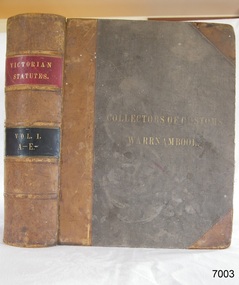
Book - Reference Colonial Legal Statutes, John Ferres, Government Printer, The Victorian Statutes Vol 1 Collectors of Customs A-E, 1866
... Ferres was born on October 1, 1818, in Bath, England. He came from a printing family; his father, Robert, was a printer. ...Ferres was born on October 1, 1818, in Bath, England. He came from a printing family; his father, Robert, was a printer. ...This volume is part of the first comprehensive consolidation of laws for the Colony of Victoria after it separated from New South Wales and established its own parliament. Specifically, Volume 1 (published in 1866) contains Local Colonial Acts. These were laws debated, passed, and enacted right here in Melbourne by the newly formed Parliament of the Colony of Victoria. They dealt with purely domestic, local matters, such as Victorian land selection, goldfields regulations, local municipal boundaries, and colonial courts. Volume 1 was the handbook for everyday domestic Victorian life, governing how a local town council operated, how gold claims were filed, or how local debts were settled in a Victorian county court or how customs should operate.Hard cover book,The Victorian Statutes Vol 1. Collectors of Customs A-E Author: Corporate Author “The Colony of Victoria” Publisher: John Ferres Government Printer Melbourne. Date: 1866 The Victorian Statutes Vol 1, front cover has title Collectors of Customs Warrnambool. Brown leather binding and corners, black canvas cover, red and black bands on spine. non-fictionThis volume is part of the first comprehensive consolidation of laws for the Colony of Victoria after it separated from New South Wales and established its own parliament. Specifically, Volume 1 (published in 1866) contains Local Colonial Acts. These were laws debated, passed, and enacted right here in Melbourne by the newly formed Parliament of the Colony of Victoria. They dealt with purely domestic, local matters, such as Victorian land selection, goldfields regulations, local municipal boundaries, and colonial courts. Volume 1 was the handbook for everyday domestic Victorian life, governing how a local town council operated, how gold claims were filed, or how local debts were settled in a Victorian county court or how customs should operate.warrnambool, shipwrecked-coast, flagstaff-hill, flagstaff-hill-maritime-museum, maritime-museum, shipwreck-coast, flagstaff-hill-maritime-village, shipwrecked-artefact, book, government statutes for victoria 1866, warrnambool's copy of government statutes 1866 -
 Flagstaff Hill Maritime Museum and Village
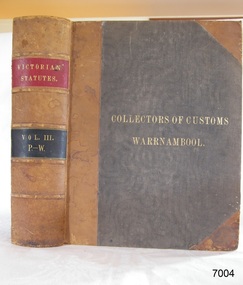
Book - Reference Colonial Legal Statutes, John Ferres, Government Printer, The Victorian Statutes Vol 3 Collectors of Customs P-W, 1866
... Ferres was born on October 1, 1818, in Bath, England. He came from a printing family; his father, Robert, was a printer. ...Ferres was born on October 1, 1818, in Bath, England. He came from a printing family; his father, Robert, was a printer. ...This volume is part of the first comprehensive consolidation of laws for the Colony of Victoria after it separated from New South Wales and established its own parliament. Specifically, Volume 3 (published in 1866) contains Local Colonial Acts. These were laws debated, passed, and enacted right here in Melbourne by the newly formed Parliament of the Colony of Victoria. They dealt with purely domestic, local matters, such as Victorian land selection, goldfields regulations, local municipal boundaries, and colonial courts. Volume 3 was the handbook for everyday domestic Victorian life, governing how a local town council operated, how gold claims were filed, or how local debts were settled in a Victorian county court or how customs should operate.Hard cover book,The Victorian Statutes Vol 3. Collectors of Customs P-W Author: Corporate Author “The Colony of Victoria” Publisher: John Ferres Government Printer Melbourne. Date: 1866 The Victorian Statutes Vol 3, front cover has title Collectors of Customs Warrnambool. Brown leather binding and corners, black canvas cover, red and black bands on spine. non-fictionThis volume is part of the first comprehensive consolidation of laws for the Colony of Victoria after it separated from New South Wales and established its own parliament. Specifically, Volume 3 (published in 1866) contains Local Colonial Acts. These were laws debated, passed, and enacted right here in Melbourne by the newly formed Parliament of the Colony of Victoria. They dealt with purely domestic, local matters, such as Victorian land selection, goldfields regulations, local municipal boundaries, and colonial courts. Volume 3 was the handbook for everyday domestic Victorian life, governing how a local town council operated, how gold claims were filed, or how local debts were settled in a Victorian county court or how customs should operate.warrnambool, shipwrecked-coast, flagstaff-hill, flagstaff-hill-maritime-museum, maritime-museum, shipwreck-coast, flagstaff-hill-maritime-village, shipwrecked-artefact, book, government statutes for victoria 1866, warrnambool's copy of government statutes 1866 -
 Narre Warren and District Family History Group
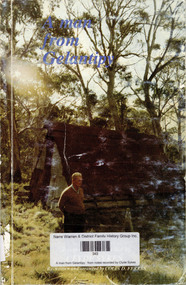
Book, Clyde Sykes et al, A man from Gelantipy : from notes recorded by Clyde Sykes, 1982
... East Gippsland A graphic account of a family in the remore East Gippsland hill country. A man from Gelantipy : from notes recorded by Clyde Sykes Book Clyde Sykes Colin D Ferres ...A graphic account of a family in the remore East Gippsland hill country.non-fictionA graphic account of a family in the remore East Gippsland hill country.cattlemen, clyde sykes, beef industry, evelyn sykes, gelantipy (vic.), east gippsland -
Lakes Entrance Historical Society
Book - Lives of Clyde and Evelyn Sykes, Colin D Ferres, A Man from Galantipy, 1984
... Written and arranged from notes recorded by Clyde Sykes Settlers Hunting An account of the lives of Clyde and Evelyn Sykes and family in the mountainous region of Gelantipy East Gippsland Victoria A Man from Galantipy Book Lives of Clyde and Evelyn Sykes Colin D Ferres ...Written and arranged from notes recorded by Clyde SykesAn account of the lives of Clyde and Evelyn Sykes and family in the mountainous region of Gelantipy East Gippsland Victoriasettlers, hunting -
 Linton and District Historical Society Inc
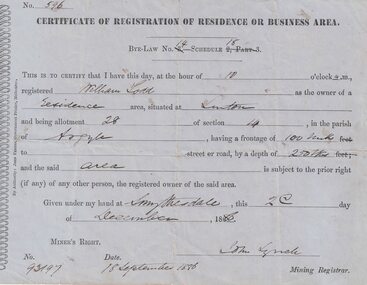
Certificate, John Ferres, Government Printer, Melbourne, Certificate of Registration of Residence or Business, William Todd, Linton, 1886, 1886
... family's first home is believed to have been at this site in Grantley Street. See photograph - Registration no. 465. William Todd Small blue-grey sheet of paper, black printed, handwritten detail. Certificate of Registration of Residence or Business, William Todd, Linton, 1886 Certificate John Ferres ...This certificate was issued to register William Todd as the owner of a residence area at Allotment 28, Section 4, Linton. This land was held under Miner's Right No. 93197. The certificate was issued at Smythesdale on December 2nd by John Lynch, Mining Registrar. Miner's Right No. 93917, 18 September 1886. The Todd family's first home is believed to have been at this site in Grantley Street. See photograph - Registration no. 465.Small blue-grey sheet of paper, black printed, handwritten detail.william todd -
Emerald Museum & Nobelius Heritage Park
Equipment - Saddle, Unknown maker
... Harold Ferres was born in 1885 in Ararat. In 1894, his family moved to Gippsland where they took up farming. ...Harold Ferres was born in 1885 in Ararat. In 1894, his family moved to Gippsland where they took up farming. ...Harold Ferres was born in 1885 in Ararat. In 1894, his family moved to Gippsland where they took up farming. In 1915, Ferres enlisted in the Australian Imperial Force. After training in Egypt he arrived in France in June where he fought in the battle of Fromelles. He was soon promoted to captain and posted to the 58th Battalion. During the course of the war he was mentioned in dispatches numerous times and was awarded the Military Cross after leading a successful raid against enemy trenches and won a Bar to his medal after organising defences and preventing the Germans from reaching the Somme Canal after they broke through the front line. He was awarded the Distinguished Service Order when, after getting severely wounded by shell fire, he directed an assault on the eastern side of Peronne and took the strongly defended town with 'far less casualties than would have been necessarily incurred'. His time with the AIF ended in December 1919, with the rank of Major. He retired as one of the AIF's most decorated soldiers. After the war he resumed farming on his property in Emerald. He died in 1978, aged 92 (Smith, 1996).This item is historically significant as it belonged to one of the most decorated Australian soldiers of the First World War. This saddle was used by Harold Ferres whilst he served in the AIF 58th Battalion in France. The First World War is one of the most significant events in Australia's history.Brown horse saddle, made predominantly of leather. There is a brown leather saddle bag attached on the left side with a belt and buckle. Also depicted are two stirrups - one on each side - attached with a leather belt.saddle, first world war, wwi, horses, australian imperial force, aif, horse tack
