
Showing 71 items matching "fifth form"
-
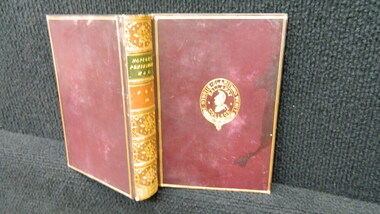 Ballarat Clarendon College
Book, W F P Napier, History of the war in the penisular and in the South of France: from the Year 1807 to the Year 1814. Volume II, 1882
... First prize for Latin in the Upper Fifth form. ...Book plate: Ballarat College crest and motto / Latin / Upper fifth form / First prize / Awarded to / John Tanner / Christmas 1885...First prize for Latin in the Upper Fifth form. john-tanner 1887 1885 ballarat-college book-prize Book plate: Ballarat College crest and motto / Latin / Upper fifth form / First prize / Awarded to / John Tanner / Christmas 1885 Maroon calf-bound book with gold plate work on spine and borders of cover. ...Book prize given to John Tanner (1887), Christmas 1885. First prize for Latin in the Upper Fifth form. Maroon calf-bound book with gold plate work on spine and borders of cover. Ballarat College school crest and motto inscribed on front cover. Six compartments on spine decorated with gold patterns; title inscribed in second compartment. Volume number inscribed in third compartment Marbled leaf edges and end papers. Book plate: Ballarat College crest and motto / Latin / Upper fifth form / First prize / Awarded to / John Tanner / Christmas 1885john-tanner, 1887, 1885, ballarat-college, book-prize, -
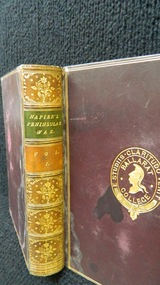 Ballarat Clarendon College
Book, George Routledge and Sons, History of the war in the penisular and in the South of France from the Year1807 to the Year 1814. Volume I, 1882
... First prize for French in the Upper Fifth form....Book plate: Ballarat College crest and motto / French / Upper fifth form / First prize / Awarded to / J Tanner / Christmas 1885...First prize for French in the Upper Fifth form. john-tanner 1887 1885 ballarat-college book-prize Book plate: Ballarat College crest and motto / French / Upper fifth form / First prize / Awarded to / J Tanner / Christmas 1885 Maroon calf-bound book with gold plate work on spine and borders of cover. ...Book prize given to John Tanner (1887), Christmas 1885. First prize for French in the Upper Fifth form.Maroon calf-bound book with gold plate work on spine and borders of cover. Ballarat College school crest and motto inscribed on front cover. Six compartments on spine decorated with gold patterns; title inscribed in second compartment. Volume number inscribed in third compartment Marbled leaf edges and end papersBook plate: Ballarat College crest and motto / French / Upper fifth form / First prize / Awarded to / J Tanner / Christmas 1885john-tanner, 1887, 1885, ballarat-college, book-prize, -
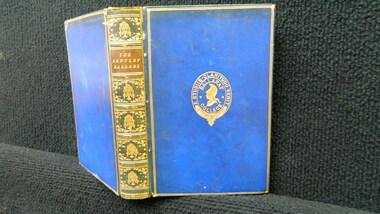 Ballarat Clarendon College
Book, John Sheehan, The Bentley ballads: comprising the Tipperary Hall ballads, 1876
... First prize for History in the Fifth form. ...Book plate inside front cover: Ballarat College crest and motto / History / Fifth form / First Prize / Awarded to / J Tanner / Christmas 1885...First prize for History in the Fifth form. john-tanner book-prize 1887 1885 ballarat-college Book plate inside front cover: Ballarat College crest and motto / History / Fifth form / First Prize / Awarded to / J Tanner / Christmas 1885 Blue calf-bound book with gold plate work on spine and borders of cover. ...Book prize given to John Tanner (1887), Christmas 1885. First prize for History in the Fifth form. Blue calf-bound book with gold plate work on spine and borders of cover. Ballarat College school crest and motto inscribed on front cover. Six compartments on spine decorated with gold patterns; title inscribed in second compartment. Marbled leaf edges and end papers. . Book plate inside front cover: Ballarat College crest and motto / History / Fifth form / First Prize / Awarded to / J Tanner / Christmas 1885john-tanner, book-prize, 1887, 1885, ballarat-college, -
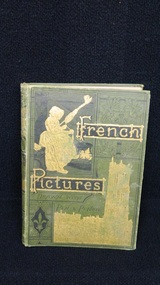 Ballarat Clarendon College
Book, French pictures, Prior to the book prize presented on Christmas, 1878
... This book was awarded to John Thomas Good for first prize in English in the fifth form. John enrolled at Ballarat College in April of 1878 at the age of 12. ...Book plate inside front cover: college crest/ English/ Fifth form/ First prize/ Awarded to/ J.T.Good/ CHRISTMAS, 1878....This book was awarded to John Thomas Good for first prize in English in the fifth form. John enrolled at Ballarat College in April of 1878 at the age of 12. ...This book was awarded to John Thomas Good for first prize in English in the fifth form. John enrolled at Ballarat College in April of 1878 at the age of 12. Parent/Guardian listed in the register is Mrs. H.J.Murch.Presbyterian educators placed great value on a classical education matched with diligence in study. Book prizes were highly regarded and academic success admired. In the school’s early years prizes were ordered direct from London and had the school crest embossed in gold on the front or back cover. Many of the prizes given in early years were returned to the school to equip the Weatherly Library when it opened in 1936.Green cloth cover with ornate gilt decorations and black pictorials on cover and spine; gilt edges; binding breaking but overall fair condition; black and white illustrations throughout; college crest on back cover, 212 p.Book plate inside front cover: college crest/ English/ Fifth form/ First prize/ Awarded to/ J.T.Good/ CHRISTMAS, 1878.john-thomas-good, ballarat-college, 1878, mrs-h-j-murch. -
 Ballarat Clarendon College
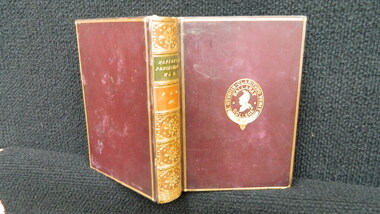
Book, George Routledge and Sons, History of the war in the penisular and the south of Francers from the Year 1807 - the Year 1814, n.d
... First prize for Mathematics in the Upper Fifth form. ...Book plate inside front cover: Ballarat College crest and motto / Mathematics / Upper fifth Form / First prize / Awarded to / John Tanner / Christmas 1885...First prize for Mathematics in the Upper Fifth form. john-tanner 1887 1885 ballarat-college book-prize Book plate inside front cover: Ballarat College crest and motto / Mathematics / Upper fifth Form / First prize / Awarded to / John Tanner / Christmas 1885 Maroon calf-bound book with gold plate work on spine and borders of cover. ...Book prize given to John Tanner (1887), Christmas 1885. First prize for Mathematics in the Upper Fifth form. Maroon calf-bound book with gold plate work on spine and borders of cover. Ballarat College school crest and motto inscribed on front cover. Six compartments on spine decorated with gold patterns; title inscribed in second compartment. Volume number inscribed in third compartment Marbled leaf edges and end papers Book plate inside front cover: Ballarat College crest and motto / Mathematics / Upper fifth Form / First prize / Awarded to / John Tanner / Christmas 1885john-tanner, 1887, 1885, ballarat-college, book-prize, -
 Ballarat Clarendon College
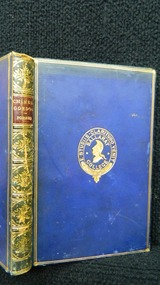
Book, George Routledge and Sons, Chinese Gordon: a succinct record of his life. 11th ed, 1885
... First prize for English in the Upper Fifth form. ...Book plate inside front cover: Ballarat College crest and motto / English / Upper Fifth Form / First prize / Awarded to / J Tanner / Christmas 1885...First prize for English in the Upper Fifth form. john-tanner 1887 1885 ballarat-college book-prize Book plate inside front cover: Ballarat College crest and motto / English / Upper Fifth Form / First prize / Awarded to / J Tanner / Christmas 1885 Blue calf-bound book with gold plate work on spine and borders of cover. ...Book prize given to John Tanner (1887), Christmas 1885. First prize for English in the Upper Fifth form. Blue calf-bound book with gold plate work on spine and borders of cover. Ballarat College school crest and motto inscribed on front cover. Six compartments on spine decorated with gold patterns; title inscribed in second compartment. Marbled leaf edges and end papers Book plate inside front cover: Ballarat College crest and motto / English / Upper Fifth Form / First prize / Awarded to / J Tanner / Christmas 1885john-tanner, 1887, 1885, ballarat-college, book-prize, -
 Ballarat Clarendon College
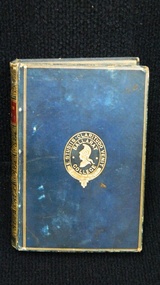
Book, The miscellaneous works of Oliver Goldsmith, 1881
... This book was awarded to Amy Evelyn Bailey for first prize in Physics in the fifth form. Amy entered Ballarat College in January of 1885 at the age of 12. ...Book plate inside front cover: college crest, Physics/ Fifth Form/ First prize/ Awarded to/ Amy E. Bailey./ 1887...This book was awarded to Amy Evelyn Bailey for first prize in Physics in the fifth form. Amy entered Ballarat College in January of 1885 at the age of 12. ...This book was awarded to Amy Evelyn Bailey for first prize in Physics in the fifth form. Amy entered Ballarat College in January of 1885 at the age of 12. Parent/Guardian named in Registry as Ed Bailey residing in [Mt. Rowan?]. It is also noted in the Register that Amy came from Miss. [Keeps?] Ladies' School.During 1877 - 1891 Ballarat College accepted enrolments from female students. The school holds the original register of this period and notes that Amy Bailey entered the College at the age of 12. Presbyterian educators placed great value on a classical education matched with diligence in study. Book prizes were highly regarded and academic success admired. In the school’s early years prizes were ordered direct from London and had the school crest embossed in gold on the front or back cover. Many of the prizes given in early years were returned to the school to equip the Weatherly Library when it opened in 1936.Bound in blue calf with marble edging, gilt lettering and decoration on spine. Six raised bands on spine with gold decoration; gold writing on second compartment with red calf; College crest embossed on front cover; black and white frontise piece, end papers marbled, slight foxing on pages, 695 p. Book plate inside front cover: college crest, Physics/ Fifth Form/ First prize/ Awarded to/ Amy E. Bailey./ 1887amy-evelyn-bailey, ballarat-college, ed-bailey, miss.-[keeps?]-ladies'-college -
 Ballarat Clarendon College
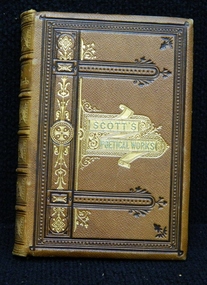
Book, Gall & Inglis, The poetical works of Sir Walter Scott, Prior to the book prize given at Christmas, 1887
... This book prize was awarded to Theophilus Heugist Serjeant in the fifth form for first prize for arithmetic. Theo enrolled at Ballarat College in 1884 at the age of 12. ...Book plate inside front cover: college crest/ Arithmetic/ Fifth Form,/ First Prize./ Awarded to/ Theo. H. ...This book prize was awarded to Theophilus Heugist Serjeant in the fifth form for first prize for arithmetic. Theo enrolled at Ballarat College in 1884 at the age of 12. ...This book prize was awarded to Theophilus Heugist Serjeant in the fifth form for first prize for arithmetic. Theo enrolled at Ballarat College in 1884 at the age of 12. Theo's brother, Alfred George Serjeant, also enrolled at the same time at the age of 17. In the original register parent/guardian is listed as R.M Serjeant and their residence as Yarrowee Hall.Presbyterian educators placed great value on a classical education matched with diligence in study. Book prizes were highly regarded and academic success admired. In the school’s early years prizes were ordered direct from London and had the school crest embossed in gold on the front or back cover. Many of the prizes given in early years were returned to the school to equip the Weatherly Library when it opened in 1936.Bound in brown calf with black and gilt decorations on front cover and black decoration with college crest embossed on back cover. Six raised bands on spine with gilt lettering on second compartment and the remaining compartments with gilt decoration. Slight detachment of spine with foxing on pages. Gilt edged pages, black and white illustrations throughout. 624 pages.Book plate inside front cover: college crest/ Arithmetic/ Fifth Form,/ First Prize./ Awarded to/ Theo. H. Serjeant/ Christmas, 1887.theophilus-heugist-serjeant, book-prize, ballarat-college, 1884, alfred-george-serjeant, r-m-serjeant, yarrowee-hall. -
 Ballarat Clarendon College
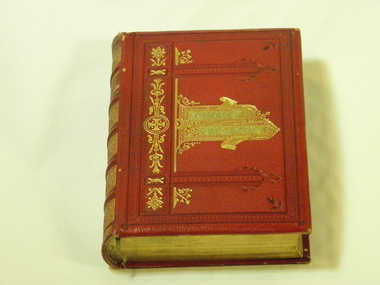
Book, The poetical works of Mrs. F. Hemans, Prior to the book prize presented on Christmas, 1884
... Thomas as second prize for Geography in the Fifth form. Anne entered Ballarat College girls' school in 1883 at the age of 14. ...Book plate inside front cover: school crest / Geography/Second prize/ Fifth Form/ Awarded to/ A. Thomas/ Christmas, 1884. ...Thomas as second prize for Geography in the Fifth form. Anne entered Ballarat College girls' school in 1883 at the age of 14. ...This book was awarded to Anne E. Thomas as second prize for Geography in the Fifth form. Anne entered Ballarat College girls' school in 1883 at the age of 14. Graeme McDonald (BC1946py) donated the book from his father's personal collection in August 2003.Historic significance for its connection with one of the few female students of Ballarat College prior to 1900 and its expression of the value of classical education of its time.Bound in half calf with gilt edging, gilt lettering and decoration on the front and spine. Six raised bands on spine with gold lettering on second compartment; College crest embossed on back cover; black and white illustrated, 584 p.Book plate inside front cover: school crest / Geography/Second prize/ Fifth Form/ Awarded to/ A. Thomas/ Christmas, 1884. "CHAS. McDONALD" stamped on second page. anne-e-thomas, ballarat-college, 1884, girls'-school. -
 Ballarat Clarendon College
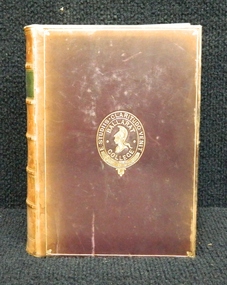
Book, Sir Walter Scott, The poetical works of Sir Walter Scott, 1894
... This book was awarded to William Kerr Paterson for English Subjects as first prize in the fifth form in 1894. William enrolled in Ballarat College in 1891 (D.O.B. 5/11/1876). ...Book plate inside front cover: College crest/ English Subjects/ Fifth Form./ First Prize./ Awarded to/ William Paterson/ Christmas, 1894...This book was awarded to William Kerr Paterson for English Subjects as first prize in the fifth form in 1894. William enrolled in Ballarat College in 1891 (D.O.B. 5/11/1876). ...This book was awarded to William Kerr Paterson for English Subjects as first prize in the fifth form in 1894. William enrolled in Ballarat College in 1891 (D.O.B. 5/11/1876). In the original register it lists parent/guardian as John Paterson, contractor, residing at 12 Errard Street South. It also states that previous school was SS.33, [subsequently known as Dana Street P.S]. William's brother David McMurtrie enrolled in the college in 1886 at the age of 14.Presbyterian educators placed great value on a classical education matched with diligence in study. Book prizes were highly regarded and academic success admired. In the school’s early years prizes were ordered direct from London and had the school crest embossed in gold on the front or back cover. Many of the prizes given in early years were returned to the school to equip the Weatherly Library when it opened in 1936.Bound in brown calf with college crest embossed on front cover. Six raised bands on spine with gilt lettering on all but second compartment. Second compartment contains green calf with gilt lettering. Marble end papers, red/gilt edges, slight foxing on pages, slight detached spine, 758 p.Book plate inside front cover: College crest/ English Subjects/ Fifth Form./ First Prize./ Awarded to/ William Paterson/ Christmas, 1894william-kerr-paterson, book-prize, 1894, john-paterson, 12-errard-street-south, ss.33, david-mcmurtrie-paterson. -
 Federation University Historical Collection
Document - SMB Documents E.J. Barker, Various School of Mines Ballarat Papers collected by E.J. Barker
... ...Fifth Form...John New South Wales Institute of Technology Phone Messages Peter O'Loughlin Annual Report Signing of Agreement Position Description Certificates Fifth Form Letters, Reports Plans, Ephemera and Clipboard associated with E.J. ...E.J. Barker is a past principal of the School of Mines Ballarat and the Library at the Mt Helen Campus is named after him. School of Mines is a predecessor of Federation UniversityLetters, Reports Plans, Ephemera and Clipboard associated with E.J. Barker and the School of Mines Ballaratplanning requirements, individual rooms, dr ron wild, school of mines and industries ballarat, institute profile, location map, university of ballarat, campus plan, great hall/arts complex, notes, 1970-72 building program, operations and decisions, report to council, visit by principal, priorities, electrical engineering, mt helen, minutes of special council meeting, university of melbourne, engineering, mt helen development report, administration building, technical art school, former ballarat gaol, the court house, smb community centre, trust news, articles, discovery day, k.j. flecknoe, retirement, membership of sub committee, n.a crouch, e.j. barker, k.l. cross, w.j. gribble, l.f.j. hillman, r.c lovett, d. nicholson, g. robertson, p.r. shiells, b. tanner, r. feary, i. harris, b.c. mclennan, m. stevens, t.a. wiseman, d.r. bolster, p.h. dixon, r. dunlop, r. furness, e.j. lumsdon, a. mccaffrey, p.r. davies, d. farnsworth, j. harrison, k. mcfarlane, j. mills, s.a. mendelson, i. robinson, d.j. fraser, j. van dreven, k. alsop, b. bridges, m. palmer, r. sutton, l. snibson, h. van hammond, t. runnalls, p. sculley, g. shearer, t. slater, michael ronaldson, robert lovett, edward john barker, e.j. barker building, council membership, clipboard, n.g curry, state college of victoria, articles of association, memorandum, australian conference of principles of colleges of advanced education, commonwealth ministerial working party, victorian post secondary education commission, australian institute of physics symposium, royal australian institute of public administration, premier of victoria, r.j. hamer, m.b. john, new south wales institute of technology, phone messages, peter o'loughlin, annual report, signing of agreement, position description, certificates, fifth form -
 Ballarat Clarendon College
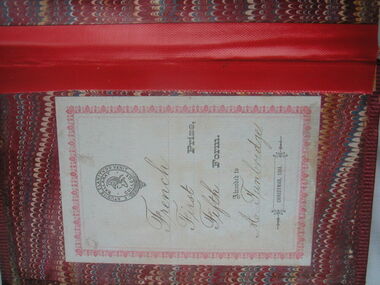
Book, William P.Nimmo, The poetical works of Alexander Pope, 1878 (exact)
... Tunbridge in 1884 for his prowess in French studies during the fifth form. At some stage the book has been donated to Mentone Girls High School and added to their library collection before being donted to Ballarat Clarendon College. ...Printed book plate inside the front cover 'BC crest / French / First prize / Fifth form / Awarded to / A. Tunbridge / Christas, 1884. ...Printed book plate inside the front cover 'BC crest / French / First prize / Fifth form / Awarded to / A. Tunbridge / Christas, 1884. ...This beautifully bound book was awarded to A. Tunbridge in 1884 for his prowess in French studies during the fifth form. At some stage the book has been donated to Mentone Girls High School and added to their library collection before being donted to Ballarat Clarendon College. A leather bound book with Ballarat College crest and borders embossed in gold on front cover. Page edges have gold-leaf. There is a bookplate fixed to inside front cover. Binding has been re-inforced with tape inside front and back covers.Circular Ballarat College crest on front cover with 'E studiis - Claritudo venit around outer edge; Minerva Head in centre with 'Ballarat College' printed around it. Printed book plate inside the front cover 'BC crest / French / First prize / Fifth form / Awarded to / A. Tunbridge / Christas, 1884. Title page has been stamped 'Mentone Girls High School Library 2922' Handwritten on second page 'Donated by E. Payne'book, a tunbridge, prize, 1884, alexander pope, christmas 1884 -
 Ballarat Clarendon College
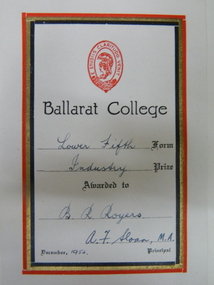
Book prize, Drums of Mer
... Book plate on flyleaf verso: Crest / Ballarat College / Lower fifth Form / Industry Prize / Awarded to / B R Rogers / A F Sloan M A / December 1952 Principal...Prize awarded to Bruce Rogers for Industry in 1952; Bruce boarded at the school 1946 - 1953. bruce rogers 1953 Book prize A F Sloan Book plate on flyleaf verso: Crest / Ballarat College / Lower fifth Form / Industry Prize / Awarded to / B R Rogers / A F Sloan M A / December 1952 Principal Light blue/green cloth covered book with gold Ballarat College school crest stamped on front cover and silver lettering on spine Drums of Mer Book prize ...Prize awarded to Bruce Rogers for Industry in 1952; Bruce boarded at the school 1946 - 1953. Light blue/green cloth covered book with gold Ballarat College school crest stamped on front cover and silver lettering on spine Book plate on flyleaf verso: Crest / Ballarat College / Lower fifth Form / Industry Prize / Awarded to / B R Rogers / A F Sloan M A / December 1952 Principalbruce rogers, 1953, book prize, a f sloan -
Robin Boyd Foundation
Letter, Department of Education and Science, 1970
... Boyd for her (fifth) Leaving form in 1970....Boyd for her (fifth) Leaving form in 1970. Letter Department of Education and Science ...Letter offering Commonwealth Secondary Scholarship to Suzy A. Boyd for her (fifth) Leaving form in 1970. -
Robin Boyd Foundation
Letter, Office of Education, 14.12.1964
... Letter offering Commonwealth Secondary Scholarship at Melbourne Church of England Grammar School, South Yarra to Penleigh Robin Boyd for his (fifth) Leaving form in 1965....Letter offering Commonwealth Secondary Scholarship at Melbourne Church of England Grammar School, South Yarra to Penleigh Robin Boyd for his (fifth) Leaving form in 1965. Letter Office of Education ...Letter offering Commonwealth Secondary Scholarship at Melbourne Church of England Grammar School, South Yarra to Penleigh Robin Boyd for his (fifth) Leaving form in 1965. -
Ballarat Clarendon College
Book, George Bell and Sons, Noble deeds of women: or Examples of female courage and virtue, 1877
... This book was given to her as a First Prize for French at the end of her fifth form year. It is possible that Adela attended BC from 1884 - 1886. ...This book was given to her as a First Prize for French at the end of her fifth form year. It is possible that Adela attended BC from 1884 - 1886. ...This beautiful leather bound book was awarded to Ballarat College student Adela Hannah Tunbridge. According to our records Adela was born 30 December 1870 and attended BC from 29 January 1884. This book was given to her as a First Prize for French at the end of her fifth form year. It is possible that Adela attended BC from 1884 - 1886. At some stage the book has been donated to Mentone Girls High School library by 'E. Payne' and given an accession number 2923. The book has been stamped and its spine strengthened for library service. Beautiful leather bound, hardback book featuring embossed gold leaf decoration on cover and spine; 486 pages; spine strengthened with library tape; 9th edition.Front cover embossed with school crest Book plate inside front cover: 'Ballarat College crest / Arithmetic / Third form / First prize / Awarded to / A.H.Tunbridge / Christmas 1885'1877, adela-hannah-tunbridge, ballarat-college, book-prize, elizabeth-starling -
![Book, Sampson Low, Marston Co., & Ltd, The splendid book of locomotives, [undated]](/media/collectors/4f729f6897f83e0308601719/items/4f72af6697f83e0308603f29/item-media/4f72af6697f83e0308603f2b/item-fit-380x285.jpg?cb=6) Ballarat Clarendon College
Ballarat Clarendon CollegeBook, Sampson Low, Marston Co., & Ltd, The splendid book of locomotives, [undated]
... Front cover embossed in gold with school insignia and motto Book plate on first page reads: 'College insignia / Ballarat College / Fifth A Form / Progress Prize / Awarded to / J. ...This prize was awarded to John David Clark (1948py) by Ballarat College. 1944 ballarat college prize john david clark book prize progress prize r e thwaites Front cover embossed in gold with school insignia and motto Book plate on first page reads: 'College insignia / Ballarat College / Fifth A Form / Progress Prize / Awarded to / J. ...This prize was awarded to John David Clark (1948py) by Ballarat College.School book prize awarded to J.D.Clark (1948py), accompanied by the Speech Day program for 14 December 1944 which details the presentation of this prize. Front cover embossed in gold with school insignia and motto Book plate on first page reads: 'College insignia / Ballarat College / Fifth A Form / Progress Prize / Awarded to / J. D. Clark / R E Thwaites / December 1944 Principal'1944, ballarat college, prize, john david clark, book prize, progress prize, r e thwaites -
 Ballarat Clarendon College
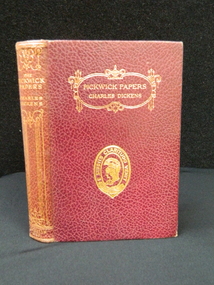
Book, Pickwick papers
... Book plate: school crest / Ballarat College / Fifth A (Upper) Form / Dux Prize / Awarded to / R P J Oxlade / R E Thwaites / December 1934 / Principal...Raymond's grand-daughter Jessica Oxlade entered the school in 2007, achieving Dux of the school in 2010. raymond-percival-thomas-oxlade ballarat-college 1934 dux r-e-thwaites jessica-oxlade Book plate: school crest / Ballarat College / Fifth A (Upper) Form / Dux Prize / Awarded to / R P J Oxlade / R E Thwaites / December 1934 / Principal Maroon calf binding with decorative gold embossing on cover and spine; gilt title and publisher statements on spine and school crest on front cover; book plate on front cover verso; marbled endpapers; pages gilt-edged and slight foxing; black and white frontispiece; Pickwick papers Book ...Prize awarded to Raymond Percival Thomas Oxlade, Dux of Fifth A (Upper) 1934. Raymond entered Ballarat College 1932. Raymond was born 24 June 1917 at Ballarat, the son of Percy Alfred and Ruby Evelyn (Davies) Oxlade. He enlisted in the Australian Armed Forces in 1940. He transferred to the RAAF in 1942 and was discharged 1946. Raymond's grand-daughter Jessica Oxlade entered the school in 2007, achieving Dux of the school in 2010. Maroon calf binding with decorative gold embossing on cover and spine; gilt title and publisher statements on spine and school crest on front cover; book plate on front cover verso; marbled endpapers; pages gilt-edged and slight foxing; black and white frontispiece;Book plate: school crest / Ballarat College / Fifth A (Upper) Form / Dux Prize / Awarded to / R P J Oxlade / R E Thwaites / December 1934 / Principalraymond-percival-thomas-oxlade, ballarat-college, 1934, dux, r-e-thwaites, jessica-oxlade -
 Warrnambool and District Historical Society Inc.
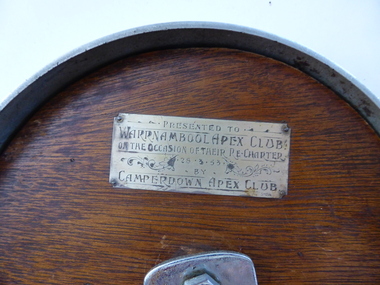
Gong and Gavel, 1950s
... This gong and gavel was presented to the Warrnambool Apex Club in 1953 when the club was re-formed following the disbanding of the club during World War Two. The Warrnambool Apex Club was the fifth club formed in the early 1930s and was a strong and important service club in Warrnambool for many years. ...This gong and gavel was presented to the Warrnambool Apex Club in 1953 when the club was re-formed following the disbanding of the club during World War Two. The Warrnambool Apex Club was the fifth club formed in the early 1930s and was a strong and important service club in Warrnambool for many years. ...This gong and gavel was presented to the Warrnambool Apex Club in 1953 when the club was re-formed following the disbanding of the club during World War Two. The Warrnambool Apex Club was the fifth club formed in the early 1930s and was a strong and important service club in Warrnambool for many years. It supported the Warrnambool-based Western Region Drug and Alcohol Rehabilitation Centre and Beyond Blue, an organization concentrating on men’s mental health. The Warrnambool Apex Club was disbanded in 2011. The Apex gong and gavel are of historical interest as they are a memento of the now-defunct Warrnambool Apex Club. For many years it was an important service club in Warrnambool. These are a gong on a stand and a gavel, used by the Apex Club of Warrnambool to call a meeting to order. The gong is circular and made of silver-coloured metal. It has a metal triangular-shaped emblem of Apex, featuring a rising sun in red and gold colouring and the word ‘Apex’ in gold lettering on a blue background. The gong is hollow at the back and has a wooden insert with a metal plaque attached with four metal screws. The gong is mounted on a rectangular wooden platform, in four layers, pyramidal-shaped. The platform has been lightly polished. The gavel is made of wood and has a round handle and a rectangular knob inserted into the handle. The knob has rounded edges. ‘Presented to Warrnambool Apex Club on the occasion of their re-charter 28.3.53 by the Camperdown Apex Club’. warrnambool apex club, history of warrnambool -
 Warrnambool and District Historical Society Inc.
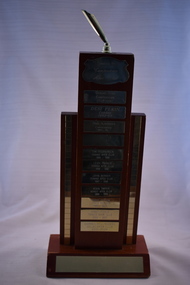
Artefact, Apex trophy South West District, C 1990
... The first Apex Club was formed in Geelong in 1931 and Warrnambool Apex Club was the fifth club formed in 1931. ...The first Apex Club was formed in Geelong in 1931 and Warrnambool Apex Club was the fifth club formed in 1931. ...This trophy, donated by Camperdown Apex Club, was awarded to members of the South Western District for Dinner Notice Excellence. The winners listed on the trophy are Gerard Ryan, Camperdown, Desi Pekin, Cobden, Dale Alexander, Camperdown, Tim Fitzpatrick, Terang, Leigh Parker, Terang, John Berger, Terang, Kevin Dwyer, Koroit, Maree Fenton, Terang, Grant Picone, Terang and Darren Williamson, Colac. The dates range from 1991 to 2002. Apex Clubs are service clubs that provide people with the opportunity to volunteer within their community. Members are aged between 18 and 45. The first Apex Club was formed in Geelong in 1931 and Warrnambool Apex Club was the fifth club formed in 1931. It went into recess in 1941 and was re-established in 1952. The club closed in 2011. This trophy is retained as it comes from the Apex Clubs of the South West District and Warrnambool Apex Club, now closed, was a member of this group. This is a wooden trophy consisting of a wooden base with a wooden plinth with two wooden columns on either side. The columns have a gold-coloured strip running along the entire length of the columns. On top of the plinth is a gold-coloured holder for a pennant or flag. The base and the plinth have gold-coloured metal name plates. All of these contain inscribed names except one. Donated by Camperdown Apex Club South Western District Dinner Notice Excellence warrnambool apex club, history of warrnambool -
 Ballarat Clarendon College
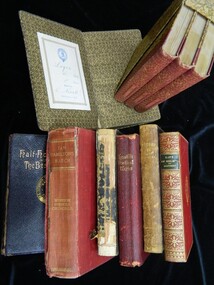
Book set
... Book plate inside 1/8 front cover: Ballarat College crest / Logic / VI Form / 1st prize / Awarded to / O Nevett / Christmas 1901 Book plate inside 2/8 front cover: Ballarat College crest / History / V Form / 1st prize / Awarded to / O Nevett / Christmas 1900 Book plate inside 3/8 front cover: Ballarat College crest / English Subjects / Third Form / 1st prize / Awarded to / O Nevett / Christmas 1896 Book plate inside 4/8 front cover: Ballarat College crest / Mathematics / IV Form / 1st prize / Awarded to / O Nevett / Christmas 1898 Book plate inside 5/8 front cover: Ballarat College crest / French / V Form / 1st prize / Awarded to / O Nevett / Christmas 1900 Book plate inside 6/8 front cover: Ballarat College crest / English / Fifth Form / 1st prize / Awarded to / O Nevett / Christmas 1899 Book plate inside 7/8 front cover: Ballarat College crest / Languages / Upper II Form / 2nd prize / Awarded to / O Nevett / Christmas 1896 Book plate inside 8/8 front cover of first book in set: Ballarat College crest / Latin / V Form / 1st prize / Awarded to / O Nevett / Christmas 1900...Harold's brothers Arthur Hereword, Horace William and Ralph Dowling all attended Ballarat College also. harold-oscar-nevett book-prize ballarat-college arthur-hereword-nevett horace-william-nevett ralph-dowling-nevett Book plate inside 1/8 front cover: Ballarat College crest / Logic / VI Form / 1st prize / Awarded to / O Nevett / Christmas 1901 Book plate inside 2/8 front cover: Ballarat College crest / History / V Form / 1st prize / Awarded to / O Nevett / Christmas 1900 Book plate inside 3/8 front cover: Ballarat College crest / English Subjects / Third Form / 1st prize / Awarded to / O Nevett / Christmas 1896 Book plate inside 4/8 front cover: Ballarat College crest / Mathematics / IV Form / 1st prize / Awarded to / O Nevett / Christmas 1898 Book plate inside 5/8 front cover: Ballarat College crest / French / V Form / 1st prize / Awarded to / O Nevett / Christmas 1900 Book plate inside 6/8 front cover: Ballarat College crest / English / Fifth Form / 1st prize / Awarded to / O Nevett / Christmas 1899 Book plate inside 7/8 front cover: Ballarat College crest / Languages / Upper II Form / 2nd prize / Awarded to / O Nevett / Christmas 1896 Book plate inside 8/8 front cover of first book in set: Ballarat College crest / Latin / V Form / 1st prize / Awarded to / O Nevett / Christmas 1900 Set of 7 books with Ballarat College crest embossed in gold on front cover as well as a boxed set of three titles with ballarat Crest embossed in gold on box cover. ...School book prizes awarded to Harold Oscar Nevett (1902). Harold Oscar was born in Ballarat 3rd January 1885, the son of Oscar Horatio Arthur and Elizabeth (Dowling) Nevett. He entered Ballarat College 1894 after attending Ellerslie College III Class. Harold Oscar was Dux of the College in 1900. He went on the study Law at the University of Melbourne. He enlisted in England on 14th December 1915 and was awarded the Military Cross at Messines Ridge on 7 June 1917. After demobilisation in May 1919 he married Evelyn Kitson on 25 October in England. Harold Oscar died on 11 June 1940. Harold's brothers Arthur Hereword, Horace William and Ralph Dowling all attended Ballarat College also. Set of 7 books with Ballarat College crest embossed in gold on front cover as well as a boxed set of three titles with ballarat Crest embossed in gold on box cover. Book plate inside 1/8 front cover: Ballarat College crest / Logic / VI Form / 1st prize / Awarded to / O Nevett / Christmas 1901 Book plate inside 2/8 front cover: Ballarat College crest / History / V Form / 1st prize / Awarded to / O Nevett / Christmas 1900 Book plate inside 3/8 front cover: Ballarat College crest / English Subjects / Third Form / 1st prize / Awarded to / O Nevett / Christmas 1896 Book plate inside 4/8 front cover: Ballarat College crest / Mathematics / IV Form / 1st prize / Awarded to / O Nevett / Christmas 1898 Book plate inside 5/8 front cover: Ballarat College crest / French / V Form / 1st prize / Awarded to / O Nevett / Christmas 1900 Book plate inside 6/8 front cover: Ballarat College crest / English / Fifth Form / 1st prize / Awarded to / O Nevett / Christmas 1899 Book plate inside 7/8 front cover: Ballarat College crest / Languages / Upper II Form / 2nd prize / Awarded to / O Nevett / Christmas 1896 Book plate inside 8/8 front cover of first book in set: Ballarat College crest / Latin / V Form / 1st prize / Awarded to / O Nevett / Christmas 1900harold-oscar-nevett, book-prize, ballarat-college, arthur-hereword-nevett, horace-william-nevett, ralph-dowling-nevett -
 Melton City Libraries
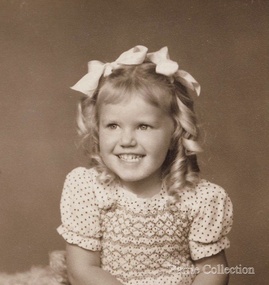
Photograph, Wendy Barrie, Unknown
... The students from Melton, Melton South and Toolern Vale State Schools went by bus to Bacchus Marsh High School as far a fifth form. My parents drove me to the pick up point and during the five years of travel to High School. ...The students from Melton, Melton South and Toolern Vale State Schools went by bus to Bacchus Marsh High School as far a fifth form. My parents drove me to the pick up point and during the five years of travel to High School. ...Eldest daughter of Edna and Bon Barrie, born on 03 November 1943 in Melbourne, Victoria, Memoirs of Wendy Barrie, recalling the early formative years of life in Melton: In 1949 I started school at Melton State School no 430 and was driven the 2½ miles to there by my parents at first. Later we walked home in the afternoons or were picked up by car as we made our way home along the Western Highway. In 1956 I went to Bacchus Marsh High School. There were 4 students in grade 6 and 3 of us went to the High School. The students from Melton, Melton South and Toolern Vale State Schools went by bus to Bacchus Marsh High School as far a fifth form. My parents drove me to the pick up point and during the five years of travel to High School. The bus travelled via Toolern Vale and later went through Exford and through Parwan. On the return journey in the afternoon the bus went in the reverse direction. The bridge at Exford was an old narrow wooden one, and the students had to get off the bus and walk across, with the driver crossing in the empty bus for safety reasons. There was a travelling allowance paid to parents and it was estimated from the distance the crow flies, a straight line. We lived a Ferris Lane, just where the Harness Racing entrance is now situated about 2 ½ miles by road to school too close to qualify for the subsidy. While at State School Melton we would walk home in a group with the Nixon and Gillespie children, along the main road over the bridge near the Shire Offices and down a hill. I was being dinked on Joyce Gillespie’s bike while holding onto the seat, toppled off the bike striking my chin and teeth on the bitumen and cracking my jaw. I was about 9 years old and stayed a couple of days in the Quamby Hospital in Bacchus Marsh, it seemed like and eternity at the time and quite traumatic being separated from my family. I can remember contemplating how I could get out of the window and run away but realised it was too far to walk home. Often we would cut across the Common on our way home from school picking up stray golf balls and collecting them from the creek when it dried out. We were warned about not accepting lifts from strangers passing along the Melbourne/ Ballarat Road. The only danger we faced was being swooped by the magpies particularly on the open ground on the Common. We were also fairly cautious when the Gypsies camped on the Common in the area just about opposite the small reservoir. “Mum” grandma Myers loved to have us call in on our way home, and usually would cut a slice of Jongebloed’s bread and spread it with home made butter. Sometimes we waited there until we were collected by car, usually driven by our mother. Margaret Nixon and Joyce Gillespie were a few grades ahead of me and Barbara Nixon was born just two months earlier than me. Our mothers were great friends for over 6o years, born in the same month three years apart. They lived within a few days of the same age as each other at the time their deaths. Dad and George Nixon attended Melton school at the same time. Sarah nee Hornbuckle Nixon and my grandfather Frederick Myers Snr were at school together at the same in the 1880s. The Nixon family lived in Keilor Road just past the Toolern Creek near the turnoff. Tom and Ann Collins lived on the southern side of the Western highway and Keilor road intersection. Jim and Ruby Gillespie’s house was further long Keilor road on the right. They backed onto the Myers who lived on the north side of Western Highway east of Myers Gully (Ryans Creek). The Bridge over the Toolern Creek as very narrow and as truck traffic increased there were accidents. One truck took out the side railing and plunged upside down into the bank and into the shallow water. Another fatal accident happened between a car and a truck right in front of the Myers house. Grandfather Fred had been a bike rider all his life, as far as the Riverina in his younger years, wryly made the comment about the drivers the speeding along the Ballarat Road were setting out to kill themselves. The road was busy particularly after the Races at Ballarat when the crowds were hurrying home to Melbourne. Train travel had changed very little from the time my mothers generation to mine. The timetable meant the usual rush to Melton South by bike in her case and if she was running late the train pulled up on the crossing. I was driven to the Station from home past Keith and Mary Gillespie’s house near the Ferris Road rail crossing to Bridge road to Melton South for the 7.32 train. While attending Sunshine High School in 1961 I would meet up with three other students, two of whom I knew from Bacchus Marsh High School days. We usually got into the same compartment on the train, it was a typical country train with a corridor along the side and compartments with a door, roof racks and sometimes heated metal containers for the feet in the winter. Some of the trains came through from Horsham and Ballarat, and the Overland from Adelaide passed through in the evening, we could hear it in the distance from the Ferris Lane home. The carriages had 1st and economy class compartments showing photographs of county scenes and holiday destinations. The engine was the large A class diesel. They are still running to Bacchus Marsh 50 years later, due to the need for the greatly increased number of commuters travelling to work in the city. Sometimes the carriages were pull by a Steam engine, these were a problem in the summer time because the sparks caused fires along the train lines and then quickly spread into the dry grass, crops and stubble. The Motor Train left Spencer Street at 4.23 pm and was the best train for me to catch. Ferris Road was a designated stop and train pulled up on the road crossing. It had steps at the door and rungs to hold while alighting to the ground. The ballast along the tracks was rough and uneven and awkward to land on. The train was painted blue and yellow with the letters VR pained on the front. This saved may parents the afternoon trip to collect me from the Station. On the walk home on the gravel road I would pass Uncle Tom and Aunty May’s house before reaching home. Melva Gillespie was studying at Sunshine Technical School and we sometimes both got off the train at the same time. On other occasions the Motor Train was replaced with a diesel engine with carriages, it was also required to stop and the driver had to be notified in advance. This meant getting into the guards van a Rockbank. It was more difficult alighting from the carriage as the gap was greater and more precarious to swing out and land on the ground. A few times in my last year of study at Melbourne Teachers College in Grattan Street Carlton. I managed to catch the 2.30 pm train to Serviceton, it was express to Melton and was very quick trip. The last train, was the 5.25 pm diesel to Ballarat and I usually caught this train to Melton South Station. On one occasion after being held up on the tram in Bourke street I had to make a mad dash to the platform chasing the train as it was just moving off and yelling to the guard, fortunately I was noticed and the train ground to halt. I scrambled into the end door and took most of the journey home to recover. After the last year at High School I continued to travel on the train, 2 years to Prahran Technical School changing at North Melbourne. There were a lot school children travelling to private schools and some at the primary level and mainly from Bacchus Marsh. Rockbank children also travelled by train from the beginning of their high school years, quite a few went to Sunshine High School. During my third year of teacher training I travelled to Flinders Street to RMIT for ceramics classes and Grattan St Teachers College located in the grounds of Melbourne University. There were many teachers being trained at the Secondary Teachers College due to the baby bulge creating a great shortage of teachers. Sunshine High School was very well represented amongst the different courses in Primary, Secondary and Art and Crafts. I attended Melbourne University lectures, studying a Fine Art subject. Bernard Smith was the most notable of the lecturers. he replaced Professor Joseph Bourke who had taken leave for the years. In 1962 he published the art book “Australian Painting”. The secondary art and craft student teachers from the College were in the majority, taking this subject and were well regarded due to their practical art and craft methods and their teaching round experience. In December 1964 I graduated as a Trained Secondary Teacher – Art and Crafts. The graduating ceremony was held at Wilson Hall. I received my appointment to work at Maryborough High School. Uncle Max and Aunty Rosemary Myers arranged my accommodation. Uncle Max was a teacher at the Maryborough Technical School fat the time. The appointment was suddenly changed when just before the school year was about to start when I received notification that I was now required to move to Warracknabeal High School. I was subject to a bond for the three years of training and three years of teaching and was under an obligation to comply with the directive of the Education Department. My father stood as guarantor when I was accepted as student at the Melbourne Teachers’ College, thus enabling me to receive my teacher training, and a 5 pounds a week allowance for expenses. After teaching for two years at Warracknabeal High School I was fortunate enough the gain a transfer to Sunshine West High School, returning to live at home in Melton and travelling by car to work with a fellow colleague, Jock Smith who lived at Station road Melton. I completed bond obligation and resigned at the end of the year. The employment regulations at that time did not allow the option of leave of absence for, indefinite overseas travel. I returned to Australia in October 1969. Visiting Arthur Hart the Principal of Sunshine High School he arranged with the Education Department for my re-employment at Sunshine High School until the end of the year. In 1970 I was transferred, and returned to Sunshine West High School where I worked for the next three years. In January 1968 I sailed on the “Oriana” to South Hampton with two teaching friends from Warracknabeal High School on a travelling and working holiday. Doreen Kiely, a former Bacchus Marsh High student and fellow train traveller from Bacchus Marsh, was already working in London, had arranged our accommodation at the London Travellers Club Hotel, Braham Gardens, Earls Court SW5. We based our stay at this address in London and travelled around Scotland, Ireland and England. In the summer we took a four month trip around the Continent and the Mediterranean. I registered with The Royal Borough Of Kingston Upon Thames as a Supply teacher, and worked at Chessington School form autumn to spring the following year and living with Mrs Rose Gillies at Kinross Avenue, Worcester Park, Surrey. In the spring of 1969 visiting Norway, Sweden and Finland joining an organised camping group to the Artic Circle, entered Russia at Leningrad (St Petersburg) Moscow, Minsk, to Poland and Czechoslovakia. In August returning to Worcester Park for the flight to Montreal to stay with cousin Lynette and husband Jurgen. A side trip was taken to Toronto, Niagara Falls and New York. The flight home from Montreal to Melbourne took 52 hours. A ½ day break in Vancouver before boarding the Qantas boeing 707 via San Francisco, Honolulu, Fiji, Sydney to Melbourne. Around the world in 21 months. Photographs of Wendy local identities -
 Ballarat Clarendon College
Book, Westward Ho!, 1926
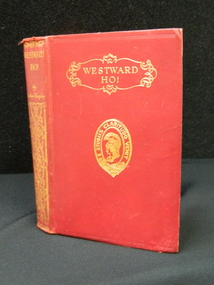
... Fifth A (Upper) 1934. Raymond entered Ballarat College 1932. Raymond was born 24 June 1917 at Ballarat, the son of Percy Alfred and Ruby Evelyn (Davies) Oxlade. He enlisted in the Australian Armed Forces in 1940. He transferred to the RAAF in 1942 and was discharged 1946. Raymond's grand-daughter Jessica Oxlade entered the school in 2007, achieving Dux of the school in 2010. raymond-percival-thomas-oxlade ballarat-college dux 1934 jessica-oxlade Book plate: school crest / Ballarat College / Remove (Upper) Form / Dux Prize / Awarded to / R P J Oxlade / R E Thwaites / December 1932 / Principal Red calf binding with decorative gold embossing on cover and spine; gilt title and publisher statements on spine and school crest on front cover; book plate on front cover verso; marbled endpapers; pages gilt-edged and sight foxing; black and white frontispiece; Westward Ho! ...Prize awarded to Raymond Percival Thomas Oxlade, Dux of Fifth A (Upper) 1934. Raymond entered Ballarat College 1932. Raymond was born 24 June 1917 at Ballarat, the son of Percy Alfred and Ruby Evelyn (Davies) Oxlade. He enlisted in the Australian Armed Forces in 1940. He transferred to the RAAF in 1942 and was discharged 1946. Raymond's grand-daughter Jessica Oxlade entered the school in 2007, achieving Dux of the school in 2010. Red calf binding with decorative gold embossing on cover and spine; gilt title and publisher statements on spine and school crest on front cover; book plate on front cover verso; marbled endpapers; pages gilt-edged and sight foxing; black and white frontispiece;Book plate: school crest / Ballarat College / Remove (Upper) Form / Dux Prize / Awarded to / R P J Oxlade / R E Thwaites / December 1932 / Principalraymond-percival-thomas-oxlade, ballarat-college, dux, 1934, jessica-oxlade -
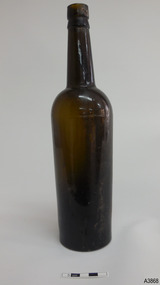
 Flagstaff Hill Maritime Museum and Village
Container - Bottle, 1840s to 1910
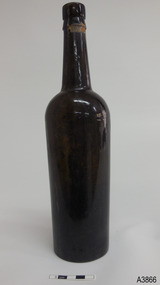
... fifth of an American gallon, equal to 757 ml.) Contemporary home brewers can purchase new ‘6 to gallon’ bottles that hold 750 ml. and are sold in cases of 36 bottles, which is equal to 6 gallons of wine. Glass was made thousands of years ago by heating together quartz-sand (Silica), lime and potash. Potash was obtained from burnt wood, but these days potash is mined. The natural sand had imperfections such as different forms...fifth of an American gallon, equal to 757 ml.) Contemporary home brewers can purchase new ‘6 to gallon’ bottles that hold 750 ml. and are sold in cases of 36 bottles, which is equal to 6 gallons of wine. Glass was made thousands of years ago by heating together quartz-sand (Silica), lime and potash. Potash was obtained from burnt wood, but these days potash is mined. The natural sand had imperfections such as different forms ...This handmade ‘gallon’ style of bottle was generally used for storing and transporting wine and ale. Many bottles similar to this one have their bases embossed with “6 TO THE GALLON”. It is one of many artefacts recovered from unidentified shipwrecks along Victoria’s coast between the late 1960s and the early 1970s. It is now part of the John Chance Collection. The capacity of this is one-sixth of a gallon (imperial measure), which is equal to 758 ml. (American bottles were often inscribed “5 TO THE GALLON”, which is one-fifth of an American gallon, equal to 757 ml.) Contemporary home brewers can purchase new ‘6 to gallon’ bottles that hold 750 ml. and are sold in cases of 36 bottles, which is equal to 6 gallons of wine. Glass was made thousands of years ago by heating together quartz-sand (Silica), lime and potash. Potash was obtained from burnt wood, but these days potash is mined. The natural sand had imperfections such as different forms of iron, resulting in ‘black’ glass, which was really dark green or dark amber colour. The ‘black’ glass was enhanced by residual carbon in the potash. Black glass is rarely used nowadays but most beer, wine, and liquors are still sold in dark coloured glass. Glass vessels were core-formed from around 1500 BC. An inner core with the vessel’s shape was formed around a rod using a porous material such as clay or dung. Molten glass was then modelled around the core and decorated. When the glass had cooled the vessel was immersed in water and the inner core became liquid and was washed out. Much more recently, bottlers were crafted by a glassblower using molten glass and a blow pipe together with other hand tools. Another method was using simple moulds, called dip moulds, that allowed the glass to be blown into the mould to form the base, then the glassblower would continue blowing free-form to shape the shoulders and neck. The bottle was then finished by applying a lip. These moulded bottles were more uniform in shape compared to the free-form bottles originally produced. English glassblowers in the mid-1800s were making some bottles with 2-piece and 3-piece moulds, some with a push-up style base, sometimes with embossing in the base as well. Improvements allowed the moulds to also have embossed and patterned sides, and straight sided shapes such as hexagons. Bottles made in full moulds usually displayed seam seams or lines. These process took skill and time, making the bottles valuable, so they were often recycled. By the early 20th century bottles were increasingly machine made, which greatly reduced the production time and cost. This bottle is historically significant as an example of a handmade, blown inscribed glass bottle manufactured in the mid-to-late 1800s for specific use as a liquor bottle with a set measurement of one-sixth of gallon. It is also historically significant as an example of liquor bottles imported into Colonial Victoria in the mid-to-late 1800s, giving a snapshot into history and social life that occurred during the early days of Victoria’s development, and the sea trade that visited the ports in those days. The bottle is also significant as one of a group of bottles recovered by John Chance, a diver in Victoria’s coastal waters in the late 1960s to early 1970s. Items that come from several wrecks have since been donated to the Flagstaff Hill Maritime Village’s museum collection of shipwreck artefacts by his family, illustrating this item’s level of historical value. Bottle, brown glass, handmade. Tall slim Gallon style liquor bottle. Applied, double collar lip; square upper with flared lower. Neck has seams and shoulder seam from 3-piece mould. Body with horizontal ripples tapers inwards to base. Push-up base with pontil mark and embossed inscription. Tape over wire around mouth. Cork remnants inside mouth. Embossed on base "6 TO THE GALLON"flagstaff hill, warrnambool, flagstaff hill maritime museum, maritime museum, shipwreck coast, flagstaff hill maritime village, great ocean road, shipwreck artefact, john chance, glass bottle, antique bottle, gallon bottle, 6 to the gallon bottle, handmade, dip mould, mouth blown, pontil mark, blown bottle, liquor bottle, ale bottle, double collar, 19th century bottle, collectable -
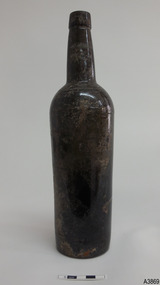
 Flagstaff Hill Maritime Museum and Village
Container - Bottle, 1840s to 1910
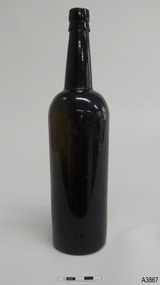
... fifth of an American gallon, equal to 757 ml.) Contemporary home brewers can purchase new ‘6 to gallon’ bottles that hold 750 ml. and are sold in cases of 36 bottles, which is equal to 6 gallons of wine. Glass was made thousands of years ago by heating together quartz-sand (Silica), lime and potash. Potash was obtained from burnt wood, but these days potash is mined. The natural sand had imperfections such as different forms...fifth of an American gallon, equal to 757 ml.) Contemporary home brewers can purchase new ‘6 to gallon’ bottles that hold 750 ml. and are sold in cases of 36 bottles, which is equal to 6 gallons of wine. Glass was made thousands of years ago by heating together quartz-sand (Silica), lime and potash. Potash was obtained from burnt wood, but these days potash is mined. The natural sand had imperfections such as different forms ...This handmade ‘gallon’ style of bottle was generally used for storing and transporting wine and ale. Many bottles similar to this one have their bases embossed with “6 TO THE GALLON”. It is one of many artefacts recovered from unidentified shipwrecks along Victoria’s coast between the late 1960s and the early 1970s. It is now part of the John Chance Collection. The capacity of this is one-sixth of a gallon (imperial measure), which is equal to 758 ml. (American bottles were often inscribed “5 TO THE GALLON”, which is one-fifth of an American gallon, equal to 757 ml.) Contemporary home brewers can purchase new ‘6 to gallon’ bottles that hold 750 ml. and are sold in cases of 36 bottles, which is equal to 6 gallons of wine. Glass was made thousands of years ago by heating together quartz-sand (Silica), lime and potash. Potash was obtained from burnt wood, but these days potash is mined. The natural sand had imperfections such as different forms of iron, resulting in ‘black’ glass, which was really dark green or dark amber colour. The ‘black’ glass was enhanced by residual carbon in the potash. Black glass is rarely used nowadays but most beer, wine, and liquors are still sold in dark coloured glass. Glass vessels were core-formed from around 1500 BC. An inner core with the vessel’s shape was formed around a rod using a porous material such as clay or dung. Molten glass was then modelled around the core and decorated. When the glass had cooled the vessel was immersed in water and the inner core became liquid and was washed out. Much more recently, bottlers were crafted by a glassblower using molten glass and a blow pipe together with other hand tools. Another method was using simple moulds, called dip moulds, that allowed the glass to be blown into the mould to form the base, then the glassblower would continue blowing free-form to shape the shoulders and neck. The bottle was then finished by applying a lip. These moulded bottles were more uniform in shape compared to the free-form bottles originally produced. English glassblowers in the mid-1800s were making some bottles with 2-piece and 3-piece moulds, some with a push-up style base, sometimes with embossing in the base as well. Improvements allowed the moulds to also have embossed and patterned sides, and straight sided shapes such as hexagons. Bottles made in full moulds usually displayed seam seams or lines. These process took skill and time, making the bottles valuable, so they were often recycled. By the early 20th century bottles were increasingly machine made, which greatly reduced the production time and cost. This bottle is historically significant as an example of a handmade, blown inscribed glass bottle manufactured in the mid-to-late 1800s for specific use as a liquor bottle with a set measurement of one-sixth of gallon. It is also historically significant as an example of liquor bottles imported into Colonial Victoria in the mid-to-late 1800s, giving a snapshot into history and social life that occurred during the early days of Victoria’s development, and the sea trade that visited the ports in those days. The bottle is also significant as one of a group of bottles recovered by John Chance, a diver in Victoria’s coastal waters in the late 1960s to early 1970s. Items that come from several wrecks have since been donated to the Flagstaff Hill Maritime Village’s museum collection of shipwreck artefacts by his family, illustrating this item’s level of historical value. Bottle, brown glass, handmade. Tall slim Gallon style liquor bottle. Applied double collar lip; square upper with flared lower. Push-up base with pontil mark and embossed inscription. Base is uneven, glass composition has imperfections.Embossed on base "6 TO THE GALLON"flagstaff hill, warrnambool, flagstaff hill maritime museum, maritime museum, shipwreck coast, flagstaff hill maritime village, great ocean road, shipwreck artefact, john chance, glass bottle, antique bottle, gallon bottle, 6 to the gallon bottle, handmade, dip mould, mouth blown, pontil mark, blown bottle, liquor bottle, ale bottle, double collar, 19th century bottle, collectable -
 Flagstaff Hill Maritime Museum and Village
Container - Bottle, 1840s to 1910
... fifth of an American gallon, equal to 757 ml.) Contemporary home brewers can purchase new ‘6 to gallon’ bottles that hold 750 ml. and are sold in cases of 36 bottles, which is equal to 6 gallons of wine. Glass was made thousands of years ago by heating together quartz-sand (Silica), lime and potash. Potash was obtained from burnt wood, but these days potash is mined. The natural sand had imperfections such as different forms...fifth of an American gallon, equal to 757 ml.) Contemporary home brewers can purchase new ‘6 to gallon’ bottles that hold 750 ml. and are sold in cases of 36 bottles, which is equal to 6 gallons of wine. Glass was made thousands of years ago by heating together quartz-sand (Silica), lime and potash. Potash was obtained from burnt wood, but these days potash is mined. The natural sand had imperfections such as different forms ...This handmade ‘gallon’ style of bottle was generally used for storing and transporting wine and ale. Many bottles similar to this one have their bases embossed with “6 TO THE GALLON”. It is one of many artefacts recovered from unidentified shipwrecks along Victoria’s coast between the late 1960s and the early 1970s. It is now part of the John Chance Collection. The capacity of this is one-sixth of a gallon (imperial measure), which is equal to 758 ml. (American bottles were often inscribed “5 TO THE GALLON”, which is one-fifth of an American gallon, equal to 757 ml.) Contemporary home brewers can purchase new ‘6 to gallon’ bottles that hold 750 ml. and are sold in cases of 36 bottles, which is equal to 6 gallons of wine. Glass was made thousands of years ago by heating together quartz-sand (Silica), lime and potash. Potash was obtained from burnt wood, but these days potash is mined. The natural sand had imperfections such as different forms of iron, resulting in ‘black’ glass, which was really dark green or dark amber colour. The ‘black’ glass was enhanced by residual carbon in the potash. Black glass is rarely used nowadays but most beer, wine, and liquors are still sold in dark coloured glass. Glass vessels were core-formed from around 1500 BC. An inner core with the vessel’s shape was formed around a rod using a porous material such as clay or dung. Molten glass was then modelled around the core and decorated. When the glass had cooled the vessel was immersed in water and the inner core became liquid and was washed out. Much more recently, bottlers were crafted by a glassblower using molten glass and a blow pipe together with other hand tools. Another method was using simple moulds, called dip moulds, that allowed the glass to be blown into the mould to form the base, then the glassblower would continue blowing free-form to shape the shoulders and neck. The bottle was then finished by applying a lip. These moulded bottles were more uniform in shape compared to the free-form bottles originally produced. English glassblowers in the mid-1800s were making some bottles with 2-piece and 3-piece moulds, some with a push-up style base, sometimes with embossing in the base as well. Improvements allowed the moulds to also have embossed and patterned sides, and straight sided shapes such as hexagons. Bottles made in full moulds usually displayed seam seams or lines. These process took skill and time, making the bottles valuable, so they were often recycled. By the early 20th century bottles were increasingly machine made, which greatly reduced the production time and cost. This bottle is historically significant as an example of a handmade, blown inscribed glass bottle manufactured in the mid-to-late 1800s for specific use as a liquor bottle with a set measurement of one-sixth of gallon. It is also historically significant as an example of liquor bottles imported into Colonial Victoria in the mid-to-late 1800s, giving a snapshot into history and social life that occurred during the early days of Victoria’s development, and the sea trade that visited the ports in those days. The bottle is also significant as one of a group of bottles recovered by John Chance, a diver in Victoria’s coastal waters in the late 1960s to early 1970s. Items that come from several wrecks have since been donated to the Flagstaff Hill Maritime Village’s museum collection of shipwreck artefacts by his family, illustrating this item’s level of historical value. Bottle, brown glass, handmade. Tall slim Gallon style liquor bottle. Applied double collar lip; square upper and flared lower. Neck has seams and shoulder seam from 3-piece mould. Body tapers towards base. Push-up base with pontil mark and embossed inscription. Base is uneven. Mouth has remnants of the seal in it and tape remnants around its outside. Embossed on base "6 TO THE GALLON"flagstaff hill, warrnambool, flagstaff hill maritime museum, maritime museum, shipwreck coast, flagstaff hill maritime village, great ocean road, shipwreck artefact, john chance, glass bottle, antique bottle, gallon bottle, 6 to the gallon bottle, handmade, dip mould, mouth blown, pontil mark, blown bottle, liquor bottle, ale bottle, double collar, 19th century bottle, collectable -
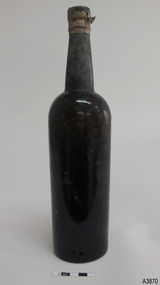
 Flagstaff Hill Maritime Museum and Village
Container - Bottle, 1840s to 1910
... fifth of an American gallon, equal to 757 ml.) Contemporary home brewers can purchase new ‘6 to gallon’ bottles that hold 750 ml. and are sold in cases of 36 bottles, which is equal to 6 gallons of wine. Glass was made thousands of years ago by heating together quartz-sand (Silica), lime and potash. Potash was obtained from burnt wood, but these days potash is mined. The natural sand had imperfections such as different forms...fifth of an American gallon, equal to 757 ml.) Contemporary home brewers can purchase new ‘6 to gallon’ bottles that hold 750 ml. and are sold in cases of 36 bottles, which is equal to 6 gallons of wine. Glass was made thousands of years ago by heating together quartz-sand (Silica), lime and potash. Potash was obtained from burnt wood, but these days potash is mined. The natural sand had imperfections such as different forms ...This handmade ‘gallon’ style of bottle was generally used for storing and transporting wine and ale. Many bottles similar to this one have their bases embossed with “6 TO THE GALLON”. It is one of many artefacts recovered from unidentified shipwrecks along Victoria’s coast between the late 1960s and the early 1970s. It is now part of the John Chance Collection. The capacity of this is one-sixth of a gallon (imperial measure), which is equal to 758 ml. (American bottles were often inscribed “5 TO THE GALLON”, which is one-fifth of an American gallon, equal to 757 ml.) Contemporary home brewers can purchase new ‘6 to gallon’ bottles that hold 750 ml. and are sold in cases of 36 bottles, which is equal to 6 gallons of wine. Glass was made thousands of years ago by heating together quartz-sand (Silica), lime and potash. Potash was obtained from burnt wood, but these days potash is mined. The natural sand had imperfections such as different forms of iron, resulting in ‘black’ glass, which was really dark green or dark amber colour. The ‘black’ glass was enhanced by residual carbon in the potash. Black glass is rarely used nowadays but most beer, wine, and liquors are still sold in dark coloured glass. Glass vessels were core-formed from around 1500 BC. An inner core with the vessel’s shape was formed around a rod using a porous material such as clay or dung. Molten glass was then modelled around the core and decorated. When the glass had cooled the vessel was immersed in water and the inner core became liquid and was washed out. Much more recently, bottlers were crafted by a glassblower using molten glass and a blow pipe together with other hand tools. Another method was using simple moulds, called dip moulds, that allowed the glass to be blown into the mould to form the base, then the glassblower would continue blowing free-form to shape the shoulders and neck. The bottle was then finished by applying a lip. These moulded bottles were more uniform in shape compared to the free-form bottles originally produced. English glassblowers in the mid-1800s were making some bottles with 2-piece and 3-piece moulds, some with a push-up style base, sometimes with embossing in the base as well. Improvements allowed the moulds to also have embossed and patterned sides, and straight sided shapes such as hexagons. Bottles made in full moulds usually displayed seam seams or lines. These process took skill and time, making the bottles valuable, so they were often recycled. By the early 20th century bottles were increasingly machine made, which greatly reduced the production time and cost. This bottle is historically significant as an example of a handmade, blown inscribed glass bottle manufactured in the mid-to-late 1800s for specific use as a liquor bottle. It is also historically significant as an example of liquor bottles imported into Colonial Victoria in the mid-to-late 1800s, giving a snapshot into history and social life that occurred during the early days of Victoria’s development, and the sea trade that visited the ports in those days. The bottle is also significant as one of a group of bottles recovered by John Chance, a diver in Victoria’s coastal waters in the late 1960s to early 1970s. Items that come from several wrecks have since been donated to the Flagstaff Hill Maritime Village’s museum collection of shipwreck artefacts by his family, illustrating this item’s level of historical value. Bottle, olive green glass, handmade. Tall slim, Gallon style liquor bottle. Applied double collar lip; square upper with flared lower. Neck is slightly bulged and there is a mould seam where shoulder joins base. Body tapers inward to base. Uneven base with deep push-up centre with small pontil mark. Scratches and imperfections in glass. Also encrustations on surface. flagstaff hill, warrnambool, flagstaff hill maritime museum, maritime museum, shipwreck coast, flagstaff hill maritime village, great ocean road, shipwreck artefact, john chance, glass bottle, antique bottle, gallon bottle, handmade, dip mould, mouth blown, pontil mark, blown bottle, liquor bottle, ale bottle, double collar, 19th century bottle, collectable -
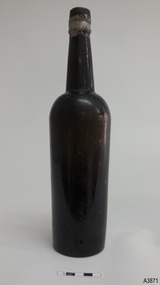
 Flagstaff Hill Maritime Museum and Village
Container - Bottle, 1840s to 1910
... fifth of an American gallon, equal to 757 ml.) Contemporary home brewers can purchase new ‘6 to gallon’ bottles that hold 750 ml. and are sold in cases of 36 bottles, which is equal to 6 gallons of wine. Glass was made thousands of years ago by heating together quartz-sand (Silica), lime and potash. Potash was obtained from burnt wood, but these days potash is mined. The natural sand had imperfections such as different forms...fifth of an American gallon, equal to 757 ml.) Contemporary home brewers can purchase new ‘6 to gallon’ bottles that hold 750 ml. and are sold in cases of 36 bottles, which is equal to 6 gallons of wine. Glass was made thousands of years ago by heating together quartz-sand (Silica), lime and potash. Potash was obtained from burnt wood, but these days potash is mined. The natural sand had imperfections such as different forms ...This handmade ‘gallon’ style of bottle was generally used for storing and transporting wine and ale. Many bottles similar to this one have their bases embossed with “6 TO THE GALLON”. It is one of many artefacts recovered from unidentified shipwrecks along Victoria’s coast between the late 1960s and the early 1970s. It is now part of the John Chance Collection. The capacity of this is one-sixth of a gallon (imperial measure), which is equal to 758 ml. (American bottles were often inscribed “5 TO THE GALLON”, which is one-fifth of an American gallon, equal to 757 ml.) Contemporary home brewers can purchase new ‘6 to gallon’ bottles that hold 750 ml. and are sold in cases of 36 bottles, which is equal to 6 gallons of wine. Glass was made thousands of years ago by heating together quartz-sand (Silica), lime and potash. Potash was obtained from burnt wood, but these days potash is mined. The natural sand had imperfections such as different forms of iron, resulting in ‘black’ glass, which was really dark green or dark amber colour. The ‘black’ glass was enhanced by residual carbon in the potash. Black glass is rarely used nowadays but most beer, wine, and liquors are still sold in dark coloured glass. Glass vessels were core-formed from around 1500 BC. An inner core with the vessel’s shape was formed around a rod using a porous material such as clay or dung. Molten glass was then modelled around the core and decorated. When the glass had cooled the vessel was immersed in water and the inner core became liquid and was washed out. Much more recently, bottlers were crafted by a glassblower using molten glass and a blow pipe together with other hand tools. Another method was using simple moulds, called dip moulds, that allowed the glass to be blown into the mould to form the base, then the glassblower would continue blowing free-form to shape the shoulders and neck. The bottle was then finished by applying a lip. These moulded bottles were more uniform in shape compared to the free-form bottles originally produced. English glassblowers in the mid-1800s were making some bottles with 2-piece and 3-piece moulds, some with a push-up style base, sometimes with embossing in the base as well. Improvements allowed the moulds to also have embossed and patterned sides, and straight sided shapes such as hexagons. Bottles made in full moulds usually displayed seam seams or lines. These process took skill and time, making the bottles valuable, so they were often recycled. By the early 20th century bottles were increasingly machine made, which greatly reduced the production time and cost. This bottle is historically significant as an example of a handmade, blown inscribed glass bottle manufactured in the mid-to-late 1800s for specific use as a liquor bottle with a set measurement of one-sixth of gallon. It is also historically significant as an example of liquor bottles imported into Colonial Victoria in the mid-to-late 1800s, giving a snapshot into history and social life that occurred during the early days of Victoria’s development, and the sea trade that visited the ports in those days. The bottle is also significant as one of a group of bottles recovered by John Chance, a diver in Victoria’s coastal waters in the late 1960s to early 1970s. Items that come from several wrecks have since been donated to the Flagstaff Hill Maritime Village’s museum collection of shipwreck artefacts by his family, illustrating this item’s level of historical value. Bottle, olive green glass, handmade. Tall slim Gallon style liquor bottle. Applied double collar lip; square upper and flared lower. Mouth has remnants of tape and wire seal. Mould seam around shoulder. Body tapers slightly inward to the base. Push-up base has pontil mark and is embossed in large letters. Base is uneven. Embossed on base "6 TO THE GALLON"flagstaff hill, warrnambool, flagstaff hill maritime museum, maritime museum, shipwreck coast, flagstaff hill maritime village, great ocean road, shipwreck artefact, john chance, glass bottle, antique bottle, gallon bottle, 6 to the gallon bottle, handmade, dip mould, mouth blown, pontil mark, blown bottle, liquor bottle, ale bottle, double collar, 19th century bottle, collectable -
 Flagstaff Hill Maritime Museum and Village
Container - Bottle, 1840s to 1910
... fifth of an American gallon, equal to 757 ml.) Contemporary home brewers can purchase new ‘6 to gallon’ bottles that hold 750 ml. and are sold in cases of 36 bottles, which is equal to 6 gallons of wine. Glass was made thousands of years ago by heating together quartz-sand (Silica), lime and potash. Potash was obtained from burnt wood, but these days potash is mined. The natural sand had imperfections such as different forms...fifth of an American gallon, equal to 757 ml.) Contemporary home brewers can purchase new ‘6 to gallon’ bottles that hold 750 ml. and are sold in cases of 36 bottles, which is equal to 6 gallons of wine. Glass was made thousands of years ago by heating together quartz-sand (Silica), lime and potash. Potash was obtained from burnt wood, but these days potash is mined. The natural sand had imperfections such as different forms ...This handmade ‘gallon’ style of bottle was generally used for storing and transporting wine and ale. Many bottles similar to this one have their bases embossed with “6 TO THE GALLON”. However, this bottle is rare, in that the base has been embossed then over-embossed with the same text, letters overlapping. It is one of many artefacts recovered from unidentified shipwrecks along Victoria’s coast between the late 1960s and the early 1970s. It is now part of the John Chance Collection. The capacity of this is one-sixth of a gallon (imperial measure), which is equal to 758 ml. (American bottles were often inscribed “5 TO THE GALLON”, which is one-fifth of an American gallon, equal to 757 ml.) Contemporary home brewers can purchase new ‘6 to gallon’ bottles that hold 750 ml. and are sold in cases of 36 bottles, which is equal to 6 gallons of wine. Glass was made thousands of years ago by heating together quartz-sand (Silica), lime and potash. Potash was obtained from burnt wood, but these days potash is mined. The natural sand had imperfections such as different forms of iron, resulting in ‘black’ glass, which was really dark green or dark amber colour. The ‘black’ glass was enhanced by residual carbon in the potash. Black glass is rarely used nowadays but most beer, wine, and liquors are still sold in dark coloured glass. Glass vessels were core-formed from around 1500 BC. An inner core with the vessel’s shape was formed around a rod using a porous material such as clay or dung. Molten glass was then modelled around the core and decorated. When the glass had cooled the vessel was immersed in water and the inner core became liquid and was washed out. Much more recently, bottlers were crafted by a glassblower using molten glass and a blow pipe together with other hand tools. Another method was using simple moulds, called dip moulds, that allowed the glass to be blown into the mould to form the base, then the glassblower would continue blowing free-form to shape the shoulders and neck. The bottle was then finished by applying a lip. These moulded bottles were more uniform in shape compared to the free-form bottles originally produced. English glassblowers in the mid-1800s were making some bottles with 2-piece and 3-piece moulds, some with a push-up style base, sometimes with embossing in the base as well. Improvements allowed the moulds to also have embossed and patterned sides, and straight sided shapes such as hexagons. Bottles made in full moulds usually displayed seam seams or lines. These process took skill and time, making the bottles valuable, so they were often recycled. By the early 20th century bottles were increasingly machine made, which greatly reduced the production time and cost. This bottle is a rare find, in that the base has been over-embossed with the same lettering, letters overlapping one another. This bottle is historically significant as an example of a handmade, blown inscribed glass bottle manufactured in the mid-to-late 1800s for specific use as a liquor bottle with a set measurement of one-sixth of gallon. It is also historically significant as an example of liquor bottles imported into Colonial Victoria in the mid-to-late 1800s, giving a snapshot into history and social life that occurred during the early days of Victoria’s development, and the sea trade that visited the ports in those days. The bottle is also significant as one of a group of bottles recovered by John Chance, a diver in Victoria’s coastal waters in the late 1960s to early 1970s. Items that come from several wrecks have since been donated to the Flagstaff Hill Maritime Village’s museum collection of shipwreck artefacts by his family, illustrating this item’s level of historical value. Bottle, over embossed, brown glass, handmade, rare. Tall slim Gallon style liquor bottle. Applied double collar lip; square upper and flared lower. Mouth has sealing tape remnants around top. Mould seam around shoulder. Body tapers inwards to push-up base. Top edge of lip has application faults. There is also a rectangular indent in the upper edge of lip. Base is embossed and over embossed, with the letters overlapping each other. Embossed on base "6 TO THE GALLON", then over-embossed with the same "6 TO THE GALLON"flagstaff hill, warrnambool, flagstaff hill maritime museum, maritime museum, shipwreck coast, flagstaff hill maritime village, great ocean road, shipwreck artefact, john chance, glass bottle, antique bottle, gallon bottle, 6 to the gallon bottle, handmade, dip mould, mouth blown, pontil mark, blown bottle, liquor bottle, ale bottle, double collar, 19th century bottle, collectable, over embossed, rare -
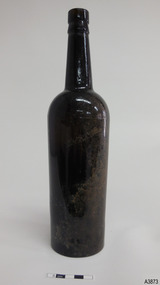 Flagstaff Hill Maritime Museum and Village
Container - Bottle, 1840s to 1910
... fifth of an American gallon, equal to 757 ml.) Contemporary home brewers can purchase new ‘6 to gallon’ bottles that hold 750 ml. and are sold in cases of 36 bottles, which is equal to 6 gallons of wine. Glass was made thousands of years ago by heating together quartz-sand (Silica), lime and potash. Potash was obtained from burnt wood, but these days potash is mined. The natural sand had imperfections such as different forms...fifth of an American gallon, equal to 757 ml.) Contemporary home brewers can purchase new ‘6 to gallon’ bottles that hold 750 ml. and are sold in cases of 36 bottles, which is equal to 6 gallons of wine. Glass was made thousands of years ago by heating together quartz-sand (Silica), lime and potash. Potash was obtained from burnt wood, but these days potash is mined. The natural sand had imperfections such as different forms ...This handmade ‘gallon’ style of bottle was generally used for storing and transporting wine and ale. Many bottles similar to this one have their bases embossed with “6 TO THE GALLON”. It is one of many artefacts recovered from an unidentified shipwrecks along Victoria’s coast between the late 1960s and the early 1970s. It is now part of the John Chance Collection. The capacity of this is one-sixth of a gallon (imperial measure), which is equal to 758 ml. (American bottles were often inscribed “5 TO THE GALLON”, which is one-fifth of an American gallon, equal to 757 ml.) Contemporary home brewers can purchase new ‘6 to gallon’ bottles that hold 750 ml. and are sold in cases of 36 bottles, which is equal to 6 gallons of wine. Glass was made thousands of years ago by heating together quartz-sand (Silica), lime and potash. Potash was obtained from burnt wood, but these days potash is mined. The natural sand had imperfections such as different forms of iron, resulting in ‘black’ glass, which was really dark green or dark amber colour. The ‘black’ glass was enhanced by residual carbon in the potash. Black glass is rarely used nowadays but most beer, wine, and liquors are still sold in dark coloured glass. Glass vessels were core-formed from around 1500 BC. An inner core with the vessel’s shape was formed around a rod using a porous material such as clay or dung. Molten glass was then modelled around the core and decorated. When the glass had cooled the vessel was immersed in water and the inner core became liquid and was washed out. Much more recently, bottlers were crafted by a glassblower using molten glass and a blow pipe together with other hand tools. Another method was using simple moulds, called dip moulds, that allowed the glass to be blown into the mould to form the base, then the glassblower would continue blowing free-form to shape the shoulders and neck. The bottle was then finished by applying a lip. These moulded bottles were more uniform in shape compared to the free-form bottles originally produced. English glassblowers in the mid-1800s were making some bottles with 2-piece and 3-piece moulds, some with a push-up style base, sometimes with embossing in the base as well. Improvements allowed the moulds to also have embossed and patterned sides, and straight sided shapes such as hexagons. Bottles made in full moulds usually displayed seam seams or lines. These process took skill and time, making the bottles valuable, so they were often recycled. By the early 20th century bottles were increasingly machine made, which greatly reduced the production time and cost. This bottle is historically significant as an example of a handmade, blown inscribed glass bottle manufactured in the mid-to-late 1800s for specific use as a liquor bottle with a set measurement of one-sixth of gallon. It is also historically significant as an example of liquor bottles imported into Colonial Victoria in the mid-to-late 1800s, giving a snapshot into history and social life that occurred during the early days of Victoria’s development, and the sea trade that visited the ports in those days. The bottle is also significant as one of a group of bottles recovered by John Chance, a diver in Victoria’s coastal waters in the late 1960s to early 1970s. Items that come from several wrecks have since been donated to the Flagstaff Hill Maritime Village’s museum collection of shipwreck artefacts by his family, illustrating this item’s level of historical value. Bottle, brown glass, Tall slim gallon style. Applied double collar lip; upper is straight, lower is flared. Lip has bumps around the top. Neck has slight taper towards shoulder, which has a shoulder seam from the mould. Body tapers inwards towards base. Push up base has a pontil mark. Base is embossed.Embossed on base "6 TO THE GALLON"flagstaff hill, warrnambool, flagstaff hill maritime museum, maritime museum, shipwreck coast, flagstaff hill maritime village, great ocean road, shipwreck artefact, john chance, glass bottle, antique bottle, gallon bottle, 6 to the gallon bottle, handmade, dip mould, mouth blown, pontil mark, blown bottle, liquor bottle, ale bottle, double collar, 19th century bottle, collectable
