
Showing 13 items matching "fire extinguisher equipment"
-
 Moorabbin Air Museum
Book - Aeroplane Maintenance & Operation Series, Aeroplane Maintenance And Operation Series , Volume 19, Aeroplane Auxiliary Equipment
... Fire extinguisher system...Fire extinguisher equipment...Aeroplane Maintenance & Operation Series Fire extinguisher system Fire extinguisher equipment Lead acid battery installation & maintenance Ignition screening harness Spark plug care & maintenance De-icing equipment Packing/inspection & maintenance of parachutes Overview of maintenance and care of aircraft auxiliary equipment, no publication date found Aeroplane Maintenance And Operation Series , Volume 19, Aeroplane Auxiliary Equipment Book Aeroplane Maintenance & Operation Series ...Overview of maintenance and care of aircraft auxiliary equipment, no publication date foundnon-fictionOverview of maintenance and care of aircraft auxiliary equipment, no publication date foundfire extinguisher system, fire extinguisher equipment, lead acid battery installation & maintenance, ignition screening harness, spark plug care & maintenance, de-icing equipment, packing/inspection & maintenance of parachutes -
 Flagstaff Hill Maritime Museum and Village
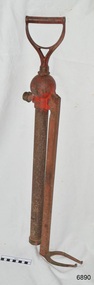
Fire Pump, 20th century
... ...fire extinguisher...safety equipment...equipment is culturally significant, being an historical example of medicine from late 19th to mid-20th century. Dr Angus assisted Dr Tom Ryan, a pioneer in the use of X-rays and in ocular surgery. flagstaff hill warrnambool shipwrecked coast flagstaff hill maritime museum maritime museum shipwreck coast flagstaff hill maritime village great ocean road dr w r angus dr ryan surgical instrument t.s.s. largs bay warrnambool base hospital nhill base hospital mira hospital flying doctor water pump fire pump fire extinguisher safety equipment Moulded into metal "STOKES" and “MELB”. ...This water pump was owned by Dr. W.R. Angus AND was donated to Flagstaff Hill Maritime Village by the family of Doctor William Roy Angus, Surgeon and Oculist. It is part of the “W.R. Angus Collection” includes historical medical equipment, surgical instruments and material once belonging to Dr Edward Ryan and Dr Thomas Francis Ryan, (both of Nhill, Victoria) as well as Dr Angus’ own belongings. The Collection’s history spans the medical practices of the two Doctors Ryan, from 1885-1926 plus that of Dr Angus, up until 1969. ABOUT THE “W.R.ANGUS COLLECTION” Doctor William Roy Angus M.B., B.S., Adel., 1923, F.R.C.S. Edin.,1928 (also known as Dr Roy Angus) was born in Murrumbeena, Victoria in 1901 and lived until 1970. He qualified as a doctor in 1923 at University of Adelaide, was Resident Medical Officer at the Royal Adelaide Hospital in 1924 and for a period was house surgeon to Sir (then Mr.) Henry Simpson Newland. Dr Angus was briefly an Assistant to Dr Riddell of Kapunda, then commenced private practice at Curramulka, Yorke Peninsula, SA, where he was physician, surgeon and chemist. In 1926, he was appointed as new Medical Assistant to Dr Thomas Francis Ryan (T.F. Ryan, or Tom), in Nhill, Victoria, where his experiences included radiology and pharmacy. In 1927 he was Acting House Surgeon in Dr Tom Ryan’s absence. Dr Angus had become engaged to Gladys Forsyth and they decided he further his studies overseas in the UK in 1927. He studied at London University College Hospital and at Edinburgh Royal Infirmary and in 1928, was awarded FRCS (Fellow from the Royal College of Surgeons), Edinburgh. He worked his passage back to Australia as a Ship’s Surgeon on the on the Australian Commonwealth Line’s T.S.S. Largs Bay. Dr Angus married Gladys in 1929, in Ballarat. (They went on to have one son (Graham 1932, born in SA) and two daughters (Helen (died 12/07/1996) and Berenice (Berry), both born at Mira, Nhill ) According to Berry, her mother Gladys made a lot of their clothes. She was very talented and did some lovely embroidery including lingerie for her trousseau and beautifully handmade baby clothes. Dr Angus was a ‘flying doctor’ for the A.I.M. (Australian Inland Ministry) Aerial Medical Service in 1928 . Its first station was in the remote town of Oodnadatta, where Dr Angus was stationed. He was locum tenens there on North-South Railway at 21 Mile Camp. He took up this ‘flying doctor’ position in response to a call from Dr John Flynn; the organisation was later known as the Flying Doctor Service, then the Royal Flying Doctor Service. A lot of his work during this time involved dental surgery also. Between 1928-1932 he was surgeon at the Curramulka Hospital, Yorke Peninsula, South Australia. In 1933 Dr Angus returned to Nhill and purchased a share of the Nelson Street practice and Mira hospital (a 2 bed ward at the Nelson Street Practice) from Dr Les Middleton one of the Middleton Brothers, the current owners of what previously once Dr Tom Ryan’s practice. Dr Tom and his brother had worked as surgeons included eye surgery. Dr Tom Ryan performed many of his operations in the Mira private hospital on his premises. He had been House Surgeon at the Nhill Hospital 1902-1926. Dr Tom Ryan had one of the only two pieces of radiology equipment in Victoria during his practicing years – The Royal Melbourne Hospital had the other one. Over the years Dr Tom Ryan had gradually set up what was effectively a training school for country general-practitioner-surgeons. Each patient was carefully examined, including using the X-ray machine, and any surgery was discussed and planned with Dr Ryan’s assistants several days in advance. Dr Angus gained experience in using the X-ray machine there during his time as assistant to Dr Ryan. When Dr Angus bought into the Nelson Street premises in Nhill he was also appointed as the Nhill Hospital’s Honorary House Surgeon 1933-1938. His practitioner’s plate from his Nhill surgery is now mounted on the doorway to the Port Medical Office at Flagstaff Hill Maritime Village, Warrnambool. When Dr Angus took up practice in the Dr Edward and Dr Tom Ryan’s old premises he obtained their extensive collection of historical medical equipment and materials spanning 1884-1926. A large part of this collection is now on display at the Port Medical Office at Flagstaff Hill Maritime Village in Warrnambool. In 1939 Dr Angus and his family moved to Warrnambool where he purchased “Birchwood,” the 1852 home and medical practice of Dr John Hunter Henderson, at 214 Koroit Street. (This property was sold in1965 to the State Government and is now the site of the Warrnambool Police Station. and an ALDI sore is on the land that was once their tennis court). The Angus family was able to afford gardeners, cooks and maids; their home was a popular place for visiting dignitaries to stay whilst visiting Warrnambool. Dr Angus had his own silk worm farm at home in a Mulberry tree. His young daughter used his centrifuge for spinning the silk. Dr Angus was appointed on a part-time basis as Port Medical Officer (Health Officer) in Warrnambool and held this position until the 1940’s when the government no longer required the service of a Port Medical Officer in Warrnambool; he was thus Warrnambool’s last serving Port Medical Officer. (Masters of immigrant ships arriving in port reported incidents of diseases, illness and death and the Port Medical Officer made a decision on whether the ship required Quarantine and for how long, in this way preventing contagious illness from spreading from new immigrants to the residents already in the colony.) Dr Angus was a member of the Australian Medical Association, for 35 years and surgeon at the Warrnambool Base Hospital 1939-1942, He served with the Australian Department of Defence as a Surgeon Captain during WWII 1942-45, in Ballarat, Victoria, and in Bonegilla, N.S.W., completing his service just before the end of the war due to suffering from a heart attack. During his convalescence he carved an intricate and ‘most artistic’ chess set from the material that dentures were made from. He then studied ophthalmology at the Royal Melbourne Eye and Ear Hospital and created cosmetically superior artificial eyes by pioneering using the intrascleral cartilage. Angus received accolades from the Ophthalmological Society of Australasia for this work. He returned to Warrnambool to commence practice as an ophthalmologist, pioneering in artificial eye improvements. He was Honorary Consultant Ophthalmologist to Warrnambool Base Hospital for 31 years. He made monthly visits to Portland as a visiting surgeon, to perform eye surgery. He represented the Victorian South-West subdivision of the Australian Medical Association as its secretary between 1949 and 1956 and as chairman from 1956 to 1958. In 1968 Dr Angus was elected member of Spain’s Barraquer Institute of Barcelona after his research work in Intrasclearal cartilage grafting, becoming one of the few Australian ophthalmologists to receive this honour, and in the following year presented his final paper on Living Intrasclearal Cartilage Implants at the Inaugural Meeting of the Australian College of Ophthalmologists in Melbourne In his personal life Dr Angus was a Presbyterian and treated Sunday as a Sabbath, a day of rest. He would visit 3 or 4 country patients on a Sunday, taking his children along ‘for the ride’ and to visit with him. Sunday evenings he would play the pianola and sing Scottish songs to his family. One of Dr Angus’ patients was Margaret MacKenzie, author of a book on local shipwrecks that she’d seen as an eye witness from the late 1880’s in Peterborough, Victoria. In the early 1950’s Dr Angus, painted a picture of a shipwreck for the cover jacket of Margaret’s book, Shipwrecks and More Shipwrecks. She was blind in later life and her daughter wrote the actual book for her. Dr Angus and his wife Gladys were very involved in Warrnambool’s society with a strong interest in civic affairs. He had an interest in people and the community They were both involved in the creation of Flagstaff Hill, including the layout of the gardens. After his death (28th March 1970) his family requested his practitioner’s plate, medical instruments and some personal belongings be displayed in the Port Medical Office surgery at Flagstaff Hill Maritime Village, and be called the “W. R. Angus Collection”. The W.R. Angus Collection is significant for still being located at the site it is connected with, Doctor Angus being the last Port Medical Officer in Warrnambool. The collection of medical instruments and other equipment is culturally significant, being an historical example of medicine from late 19th to mid-20th century. Dr Angus assisted Dr Tom Ryan, a pioneer in the use of X-rays and in ocular surgery. Fire pump, part of the W.R. Angus Collection. Red metal water pump. "D" shaped pump handle slides within pump cylinder, stand has 'U" shaped footrest. Pump has threaded fitting for pipe at top and wire filter at bottom. Made by Stokes, Melbourne. Remnants of red paint left on pump. Card label is attached. Moulded into metal "STOKES" and “MELB”. Label attached with string to handle (no text visible).flagstaff hill, warrnambool, shipwrecked coast, flagstaff hill maritime museum, maritime museum, shipwreck coast, flagstaff hill maritime village, great ocean road, dr w r angus, dr ryan, surgical instrument, t.s.s. largs bay, warrnambool base hospital, nhill base hospital, mira hospital, flying doctor, water pump, fire pump, fire extinguisher, safety equipment -
 Flagstaff Hill Maritime Museum and Village
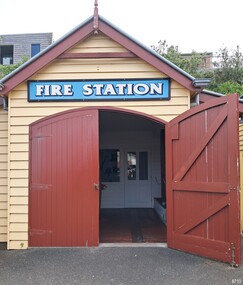
Memorabilia - Fire Brigade Collection, Warrnambool Fire Brigade, 1863-1950s
... Fire Brigade Collection: a variety of historic objects and equipment used by the firemen of the brigade since 1863. The items are kindly on loan from the Warrnambool Fire Brigade in a building originally erected in the Village by the Fire Brigade to house their historic collection. The items include: EQUIPMENT: 2 fire reels, 3 leather buckets, 1 wooden ladder, 2 old pumps, 2 fire extinguishers...Flagstaff Hill Maritime Museum and Village Great Ocean Road Shipwreck Coast Flagstaff Hill Warrnambool Maritime Village Maritime Museum CFA Fire Brigade Warrnambool Fire Brigade fire reel leather bucket wooden ladder pump fire extinguisher foam nozzle fireman’s hydrant breathing apparatus copper and brass extinguishers copper and brass branches canvas bucket Discipline Certificates Warrnambool Fire Brigade Football Club L C Marshall Officer’s jacket blazer turnout jacket harness belt leather helmet pair of boots brass helmet axe belt with axe and plug spanner clock mantle clock Warrnambool Fire Brigade Collection: a variety of historic objects and equipment used by the firemen of the brigade since 1863. ...The original replica Fire Station at Flagstaff Hill was constructed in 2006 by members of the CVA Warrnambool Fire Brigade. It was rebuilt in 2015, ironically due to damage from fire in the adjacent building, and now includes a locked display. The fire station faithfully replicates the designs of the late 1800s fire stations found across Victoria. Every detail, including the type of nails used, adheres to period-correct specifications. The objects on display are on loan from the CFA. They provide a glimpse into the history and evolution of firefighting in Victoria, preserving the heritage and legacy of the brave men and women who have served their communities. Fire Brigade Collection highlights: . Hose reels and equipment: essential firefighting equipment used during the late 19th and early 20th centuries. . Brass helmets: symbolic headgear worn by firefighters for protection and identification. . Photographs: historical images capturing the evolution of firefighting in the region. . Certificates: awards highlighting the skill and dedication of firefighters. A BRIEF HISTORY OF THE WARRNAMBOOL FIRE BRIGADE - [Ref: Quarrell, A, 2013, The Warrnambool Fire Brigade: 1863-2013, Amazon Printing, Warrnambool]: “Since the township of Warrnambool was established in the 1840s, there were several attempts at forming a Fire Brigade. However, many issues hindered progress. Firstly, minimal fires were recorded. Secondly, the town had no money to purchase expensive equipment, including a fire engine, and thirdly and most importantly, there was no infrastructure for accessible running water from pipes, as we know today. But after the expansion and growth of the township, it was time for action. The Warrnambool Fire Brigade was formed in 1863. The Brigade has served Warrnambool on a daily basis ever since. The volunteers of the Brigade were required to fill their water carts each evening from a spring on Cannon Hill and be on standby to deliver water to fire scenes. In 1889, the Warrnambool Council built a new Fire Station at 25 Liebig Street. Today, the Civic Centre is located on this site.” The objects on loan from the Warrnambool Fire Brigade are significant to local history since its establishment in 1863. They tell the story of the Brigade’s history, which is part of Warrnambool and the district’s history.Warrnambool Fire Brigade Collection: a variety of historic objects and equipment used by the firemen of the brigade since 1863. The items are kindly on loan from the Warrnambool Fire Brigade in a building originally erected in the Village by the Fire Brigade to house their historic collection. The items include: EQUIPMENT: 2 fire reels, 3 leather buckets, 1 wooden ladder, 2 old pumps, 2 fire extinguishers, 1 foam nozzle, 2 hydrants, 1 red chest with breathing apparatus, 1 large grey chest, 1 red metal thread gauges box, 2 copper and brass extinguishers, 3 copper and brass branches, 1 canvas bucket, assorted reels of hose, assorted couplings and branches, PHOTOGRAPHS/CERTIFICATES: 3 Discipline Certificates dated 1894, 1893, 1911, Mounted photo of members of the Warrnambool Fire Brigade Football Club, Mounted photos of members of the Warrnambool Fire Brigade in uniform, framed photo of LC Marshall UNIFORMS: 1 Officer’s jacket, 1 blazer, 1 turnout jacket, 1 harness belt, 1 leather helmet, 1 pair of boots, 1 brass helmet, 1 axe belt with axe and plug spanner TROPHIES: 1 clock flagstaff hill maritime museum and village, great ocean road, shipwreck coast, flagstaff hill, warrnambool, maritime village, maritime museum, cfa, fire brigade, warrnambool fire brigade, fire reel, leather bucket, wooden ladder, pump, fire extinguisher, foam nozzle, fireman’s hydrant, breathing apparatus, copper and brass extinguishers, copper and brass branches, canvas bucket, discipline certificates, warrnambool fire brigade football club, l c marshall, officer’s jacket, blazer, turnout jacket, harness belt, leather helmet, pair of boots, brass helmet, axe belt with axe and plug spanner, clock, mantle clock -
 Greensborough Historical Society
Photograph - Digital image, Old Fire Extinguishers, 26/10/2011
... Photograph of old fire fighting equipment. Digital copy of colour photograph Old Fire Extinguishers Photograph - Digital image ...Photograph of old fire fighting equipment.Digital copy of colour photograph -
 Warrnambool and District Historical Society Inc.
Fire Extinguisher, Pyrene Co Ltd, Mid 20th century
... fire extinguisher was used for commercial purposes in the Nullawarre Post office. The item was made in England by the Pyrene Co Ltd (1914-1971), one of the world’s leading manufacturers of fire fighting equipment in the early to mid 20th century. ...fire extinguisher was used for commercial purposes in the Nullawarre Post office. The item was made in England by the Pyrene Co Ltd (1914-1971), one of the world’s leading manufacturers of fire fighting equipment in the early to mid 20th century. ...This fire extinguisher was used for commercial purposes in the Nullawarre Post office. The item was made in England by the Pyrene Co Ltd (1914-1971), one of the world’s leading manufacturers of fire fighting equipment in the early to mid 20th century. The extinguisher had a pump action and probably contained carbon tetrachloride. Nullawarre is a small agricultural settlement 25 kilometres south east of Warrnambool. The Nullawarre area was settled in the late 1860s and 1870s and today has a store and Post Office and a school. Charles Williams was the Post Master at Nullawarre in the early to mid 20th century and also delivered the mail. His wife, Vida was the Post Mistress. This fire extinguisher is of interest firstly as an example of a common item used commercially in the past and secondly as an item that came from the Nullawarre Post Office, used in this commercial building in the early to mid 20th century. This is a metal fire extinguisher which has been painted but the paint is mostly worn away. It is cylindrical in shape with ridged areas at the base and top. It has a clip handle. The cylinder is empty.‘Pyrene’vintage fire extinguishers, nullawarre post office, warrnambool -
 Puffing Billy Railway
Fire Fighting Extingusher Tank
... Fire Fighting Extingusher Tank Old style firefighting extinguisher, for use on very small fires Historic - Railways Permanent Way and Works - track equipment - Fire Fighting Extingusher Tank puffing billy fire fighting extingusher tank Metal Fire Fighting Extingusher Tank with rubber hose Fire Fighting Extingusher Tank ...Fire Fighting Extingusher Tank Old style firefighting extinguisher, for use on very small firesHistoric - Railways Permanent Way and Works - track equipment - Fire Fighting Extingusher TankMetal Fire Fighting Extingusher Tank with rubber hosepuffing billy, fire fighting extingusher tank -
Moorabbin Air Museum
Manual - Sikorsky S61 helicopters, Coulson Aircraft Sikorsky 61 Training Manual
... fire detection & extinguisher systems...Pitot static system...Windshield...Cabin heat & ventilation...Cargo sling...Lighting...Emergency equipment...Sikorsky S61 helicopters Airframe Powertrain Transmission Fuel system Electrical system Flight controls Aircraft hydraulic systems Automatic flight control systems Retractable landing gear system Wheel brakes Engine fire detection & extinguisher systems Pitot static system Windshield Cabin heat & ventilation Cargo sling Lighting Emergency equipment Performance Weight & balance Specifications & Limitations Technical overview of Sikorsky S61 for training purposes, circa 2009 Plastic covered, spiral bound book type manual Coulson Aircraft Sikorsky 61 Training Manual Manual Sikorsky S61 helicopters ...Technical overview of Sikorsky S61 for training purposes, circa 2009Plastic covered, spiral bound book type manual non-fictionTechnical overview of Sikorsky S61 for training purposes, circa 2009airframe, powertrain, transmission, fuel system, electrical system, flight controls, aircraft hydraulic systems, automatic flight control systems, retractable landing gear system, wheel brakes, engine fire detection & extinguisher systems, pitot static system, windshield, cabin heat & ventilation, cargo sling, lighting, emergency equipment, performance, weight & balance, specifications & limitations -
 Melbourne Tram Museum
Photograph - Tramways Emergency Car, 1930s?
... fire extinguishers mounted on the body. 1930s? Yields information about the MMTB's Emergency breakdown vehicle or car and some of its equipment. tramways breakdowns emergencies motor vehicles mmtb Black and white photograph with a plain back. ...Black and white photograph shows the front of the MMTB Emergency Vehicle or breakdown truck complete with a recycled cable tram bell and two highly polished fire extinguishers mounted on the body. 1930s?Yields information about the MMTB's Emergency breakdown vehicle or car and some of its equipment.Black and white photograph with a plain back.tramways, breakdowns, emergencies, motor vehicles, mmtb -
 Melton City Libraries
Equipment, Country Fire Authority Tag, Unknown
... Emergency Services Tag from an fire extinguisher Country Fire Authority Tag Equipment Barrie Collection ..."From the earliest days of settlement in the shire, residents demonstrated their willingness to band together in times of crisis and need. Bushfires were always a terrifying prospect and since its establishment in 1935, the local fire brigade (later the Country Fire Authority) fought hard to protect the people, homes and animals of the shire. In 1966, the Mount Cottrell Fire BrigadesGroup was formed as a way of consolidating the smaller groups around Melton, Rockbank, ToolernVale, Sydenham, Truganina and Werribee. Its headquarters were established at the home of Ernest ‘Bon’ and Edna Barrie in Ferris Road, Melton".Tag from an fire extinguisher emergency services -
 Parks Victoria - Point Hicks Lightstation
Fire extinguisher
... The Minimax conical extinguisher has first level contributory significance as a historic item of early fire-fighting equipment from the lightstation that dates from the early twentieth century. " ...ANKS ... / QUENCH.../ FOR FIRE / DRIVE IN PLUNGER / AT BIG END / ...ON GROUND /..../..../..." ...The Minimax conical fire extinguishers were manufactured until 1960 and then removed from the company’s product range. The earliest model had been produced with a simple handle made of folded pressed metal that is similar if not the same as that on the Point Hicks extinguisher. Later handles were moulded and had more substance to the way they were cut and then folded to form a solid grip. The Point Hicks Minimax extinguisher is an early model that probably dates from the years when these devices were demonstrated across parts of Australia. While numerous examples of the extinguishers survive in public and private collections in northern hemisphere countries, few appear to exist in Australian museum collections. However, the auction house records confirm that some do survive in private collections. The Point Hicks extinguisher was found by lighthouse keepers in 1974 buried in the sand in a flattened but surprisingly intact condition. It was beaten back into its original shape but the body still retains various dents. In 2010, AMSA located the extinguisher at the National Trust’s Polly Woodside historic ship museum and it is now at the Point Hicks Lightstation. The Minimax conical extinguisher has first level contributory significance as a historic item of early fire-fighting equipment from the lightstation that dates from the early twentieth century.Conical shaped brass fire extinguisher painted red with small nozzle at one end and a pump section at the other end. There is a handle on one side with closely spaced rivets down one side. Brass plaque with instructions attached to the body. There ia a square hook to hang the object form a wall or similar." ...ANKS ... / QUENCH.../ FOR FIRE / DRIVE IN PLUNGER / AT BIG END / ...ON GROUND /..../..../..." -
Creswick Campus Historical Collection - University of Melbourne
Equipment, nd
... Fire extinguishers. Red metal cylindrical Fire fighting equipment Equipment ...Fire extinguishers. Red metal cylindricalFire fighting equipment -
 Department of Energy, Environment and Climate Action
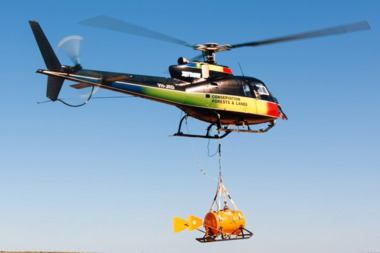
Aerial Drip Torch (ADT) or "Dragon"
... fire extinguisher system. It was first trialled in Victoria at Swifts Creek in 1991 and the Aerial Drip Torch (ADT) has now become standard practice. Forests Commission Victoria (FCV) Bushfire Bushfire Aviation Planned Burning Two Aerial Drip Torches (ADTs) were built in the 1990s by the Fire Equipment Development Centre at North Altona, They were developed in conjunction with the Department of Conservation and Land Management in Western Australia. ...The Aerial Drip Torch (ADT) was an idea conceived in Canada in the 1970s by John Muraro It was developed in 1982 by the New Zealand Forest Service to become the Ashley Aphid Helitorch. Forestry Tasmania acquired one of the machines and modified it in February 1987. Also known as a dragon helitorch it consisted of a large 135-litre tank containing jellied petrol, a displacement pump, propane ignition system, burner nozzle and fire extinguisher system. It was first trialled in Victoria at Swifts Creek in 1991 and the Aerial Drip Torch (ADT) has now become standard practice.Two Aerial Drip Torches (ADTs) were built in the 1990s by the Fire Equipment Development Centre at North Altona, They were developed in conjunction with the Department of Conservation and Land Management in Western Australia. The first was trialled during the 1991/92 autumn burning season. The machine proved to be successful and a second machine was introduced in 1998 to assist with burning operations across the State. The ADTs were commonly used for regeneration burning (controlled burning of logging slash). The first ADT introduced in 1992 had a dry weight of 160kg and a capacity of 130 litres, providing about an hour of operation. Following initial use, systematic modifications were adapted including improved ignition of gel at the drop tube, installation of an air bleed valve at the pump to assist pump priming and improved mounting brackets for the CO2 bottles and propane canister attached to the machine. The second, and lightweight ADT, introduced in 1998 had a dry weight of 68kg and a capacity of 200 litres due to a smaller lightweight frame and plastic (Polyfin) tank. In operation the ADT is suspended below a helicopter via four strops attached to the vessel and a cable to the helicopter cargo hook. Gelled fuel is dispensed via a drop tube which is attached to the pump outlet of the machine, and ignited via a gas torch. Safety features built into the first ADT were: a brass melting plug designed to be activated at 200 C bursting disc designed to burst at170 Kpa should the vessel over pressurise. a pressure relief valve set to 35 Kpa ( vessel operated between 16 &34 Kpa) a low pressure sensor designed to shut down the machine should the vessel pressure drop below 15Kpa. the vessel is filled with CO2 above the gelled fuel to eliminate ignition with in the vessel. CO2 is used to expel any residue of ignited gel from the drop tube to prevent ignition when flying outside the boundaries of the burning area. See FIRE EQUIPMENT NOTE - 46 [ https://drive.google.com/file/d/1CKtcH-3rUlrtbE9dkNP27PYT2-raVVhF/view ]forests commission victoria (fcv), bushfire, bushfire aviation, planned burning -
 Emerald Museum & Nobelius Heritage Park
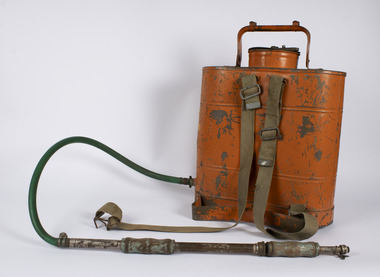
Tool - Fire Extinguisher, c. 1960s
... Fire Brigade which was established on 14 March 1941 as the Emerald Bush Brigade. Originally its equipment was stored at Madigan's butcher's shop near the corner of Monbulk Road. The Brigade's first fire station was built around 1945. In 1966, this station was recorded as containing the fire truck and a Land Rover pumper, three radio sets, 40 knapsacks, six lengths of hose, helmets, rake hoes and other hand tools. In 2010, the Brigade moved into a new purpose-built building in Monbulk Road. This Fire Fighting Backpack dates from around c.1960s. This Fire Fighting Backpack Extinguisher ...This Fire Fighting Backpack was donated by the Emerald Fire Brigade which was established on 14 March 1941 as the Emerald Bush Brigade. Originally its equipment was stored at Madigan's butcher's shop near the corner of Monbulk Road. The Brigade's first fire station was built around 1945. In 1966, this station was recorded as containing the fire truck and a Land Rover pumper, three radio sets, 40 knapsacks, six lengths of hose, helmets, rake hoes and other hand tools. In 2010, the Brigade moved into a new purpose-built building in Monbulk Road. This Fire Fighting Backpack dates from around c.1960s.This Fire Fighting Backpack Extinguisher was used for mopping-up and combating small fires by members of a crucial volunteer fire fighting service operating in the Emerald district since 1941.This galvanised metal Rega Fire Fighting Backpack Sprayer was used by Emerald CFA (formerly RFB) from 1960's. The main body of the spray tank is orange and has woven canvas shoulder straps with buckles for carrying on your back. On top of the oval tank is a lid with a chain which has "REGA SPRAYER" embossed onto it. It has a metal handle over the top of the lid, which is hinged and has two clips for docking the wooden handle of the sprayer hose when not in use. The wooden sprayer handle with a brass pump assembly is attached to the tank with a piece of hosing allowing for pressurized spraying. The backpack tank has the brand name "REGA" and "CFA" embossed on the front of the tank's well worn patina from many years of use. "Emerald RFB" on the side of the tank. "OK 1/97" on the top near the lidfire fighting, emerald fire brigade, cfa, rega firefighting brand
