
Showing 4 items matching "fire extinguisher system"
-
 Moorabbin Air Museum
Manual (item) - S61N Fire Extinguisher System - ANSETT ANA Training School
... S61N Fire Extinguisher System - ANSETT ANA Training School...S61N Fire Extinguisher System - ANSETT ANA Training School...S61N Fire Extinguisher System - ANSETT ANA Training School Manual S61N Fire Extinguisher System - ANSETT ANA Training School ... -
Moorabbin Air Museum
Manual - RAAF Hawker Siddeley HS748, Royal Australian Air Force HS748 Series II Engine Runners Course Notes
... ...Fire extinguisher system...RAAF Hawker Siddeley HS748 Dart limitations Fuel system Water/methanol system Fire extinguisher system Propeller system Operation & control Engine starting system Engine power runs Overview of HS748 Dart turbo prop engine for RAAF engine runners, circa 1988 Spiral bound manual Royal Australian Air Force HS748 Series II Engine Runners Course Notes Manual RAAF Hawker Siddeley HS748 ...Overview of HS748 Dart turbo prop engine for RAAF engine runners, circa 1988Spiral bound manualnon-fictionOverview of HS748 Dart turbo prop engine for RAAF engine runners, circa 1988dart limitations, fuel system, water/methanol system, fire extinguisher system, propeller system, operation & control, engine starting system, engine power runs -
 Department of Energy, Environment and Climate Action
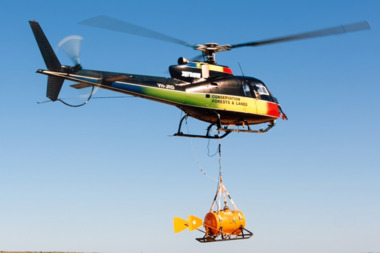
Aerial Drip Torch (ADT) or "Dragon"
... Also known as a dragon helitorch it consisted of a large 135-litre tank containing jellied petrol, a displacement pump, propane ignition system, burner nozzle and fire extinguisher system. It was first trialled in Victoria at Swifts Creek in 1991 and the Aerial Drip Torch (ADT) has now become standard practice....Also known as a dragon helitorch it consisted of a large 135-litre tank containing jellied petrol, a displacement pump, propane ignition system, burner nozzle and fire extinguisher system. It was first trialled in Victoria at Swifts Creek in 1991 and the Aerial Drip Torch (ADT) has now become standard practice. ...The Aerial Drip Torch (ADT) was an idea conceived in Canada in the 1970s by John Muraro It was developed in 1982 by the New Zealand Forest Service to become the Ashley Aphid Helitorch. Forestry Tasmania acquired one of the machines and modified it in February 1987. Also known as a dragon helitorch it consisted of a large 135-litre tank containing jellied petrol, a displacement pump, propane ignition system, burner nozzle and fire extinguisher system. It was first trialled in Victoria at Swifts Creek in 1991 and the Aerial Drip Torch (ADT) has now become standard practice.Two Aerial Drip Torches (ADTs) were built in the 1990s by the Fire Equipment Development Centre at North Altona, They were developed in conjunction with the Department of Conservation and Land Management in Western Australia. The first was trialled during the 1991/92 autumn burning season. The machine proved to be successful and a second machine was introduced in 1998 to assist with burning operations across the State. The ADTs were commonly used for regeneration burning (controlled burning of logging slash). The first ADT introduced in 1992 had a dry weight of 160kg and a capacity of 130 litres, providing about an hour of operation. Following initial use, systematic modifications were adapted including improved ignition of gel at the drop tube, installation of an air bleed valve at the pump to assist pump priming and improved mounting brackets for the CO2 bottles and propane canister attached to the machine. The second, and lightweight ADT, introduced in 1998 had a dry weight of 68kg and a capacity of 200 litres due to a smaller lightweight frame and plastic (Polyfin) tank. In operation the ADT is suspended below a helicopter via four strops attached to the vessel and a cable to the helicopter cargo hook. Gelled fuel is dispensed via a drop tube which is attached to the pump outlet of the machine, and ignited via a gas torch. Safety features built into the first ADT were: a brass melting plug designed to be activated at 200 C bursting disc designed to burst at170 Kpa should the vessel over pressurise. a pressure relief valve set to 35 Kpa ( vessel operated between 16 &34 Kpa) a low pressure sensor designed to shut down the machine should the vessel pressure drop below 15Kpa. the vessel is filled with CO2 above the gelled fuel to eliminate ignition with in the vessel. CO2 is used to expel any residue of ignited gel from the drop tube to prevent ignition when flying outside the boundaries of the burning area. See FIRE EQUIPMENT NOTE - 46 [ https://drive.google.com/file/d/1CKtcH-3rUlrtbE9dkNP27PYT2-raVVhF/view ]forests commission victoria (fcv), bushfire, bushfire aviation, planned burning -
Moorabbin Air Museum
Manual - Sikorsky S61 helicopters, Coulson Aircraft Sikorsky 61 Training Manual
... system...Wheel brakes...Engine fire detection & extinguisher systems...Sikorsky S61 helicopters Airframe Powertrain Transmission Fuel system Electrical system Flight controls Aircraft hydraulic systems Automatic flight control systems Retractable landing gear system Wheel brakes Engine fire detection & extinguisher systems Pitot static system Windshield Cabin heat & ventilation Cargo sling Lighting Emergency equipment Performance Weight & balance Specifications & Limitations Technical overview of Sikorsky S61 for training purposes, circa 2009 Plastic covered, spiral bound book type manual Coulson Aircraft Sikorsky 61 Training Manual Manual Sikorsky S61 helicopters ...Technical overview of Sikorsky S61 for training purposes, circa 2009Plastic covered, spiral bound book type manual non-fictionTechnical overview of Sikorsky S61 for training purposes, circa 2009airframe, powertrain, transmission, fuel system, electrical system, flight controls, aircraft hydraulic systems, automatic flight control systems, retractable landing gear system, wheel brakes, engine fire detection & extinguisher systems, pitot static system, windshield, cabin heat & ventilation, cargo sling, lighting, emergency equipment, performance, weight & balance, specifications & limitations
