
Showing 5 items matching "flying with automatic controls"
-
 Moorabbin Air Museum
Book - Aeronautics, Aeronautics Volume 1
... ...Flying with automatic controls...Aeronautics Civilian flying training Class A or private pilot's licence Commercial pilot's B licence Landing precautions at unfamiliar airfields Obtaining flying instructor's certificate The Link trainer Medical examination of flying personnel Principles of flight Special licences & certificates Meteorology Learning to teach Airship & balloon pilots licencesl Air legislation Gliding& the power pilot Second class navigator's licence Medical aspects of flying Free ballooning The effect of alcohol & tobacco Flying with automatic controls Parachutes Dirigibles Air defence of Great Britain Sailplanes The modern fighter Formation flying The internal combustion engine Overview of principles & practices of flight. ...Overview of principles & practices of flight. No publication date stated, but looks to be around late 1930s/early 1940snon-fictionOverview of principles & practices of flight. No publication date stated, but looks to be around late 1930s/early 1940scivilian flying training, class a or private pilot's licence, commercial pilot's b licence, landing precautions at unfamiliar airfields, obtaining flying instructor's certificate, the link trainer, medical examination of flying personnel, principles of flight, special licences & certificates, meteorology, learning to teach, airship & balloon pilots licencesl, air legislation, gliding& the power pilot, second class navigator's licence, medical aspects of flying, free ballooning, the effect of alcohol & tobacco, flying with automatic controls, parachutes, dirigibles, air defence of great britain, sailplanes, the modern fighter, formation flying, the internal combustion engine -
Moorabbin Air Museum
Book - Flight dynamics, Airplane Flight Dynamics and Automatic Flight Controls Part 1
... Flight dyamics Equations of motion & axis systems Review of aerodynamic fundamentals Aerodynamics & thrust forces Stability & control Flying qualities Pilot ratings Regulations & applications Advanced aircraft analyses program Overview of methods for analysis & synthesis of stability & control of aircraft, circa 1995 Airplane Flight Dynamics and Automatic Flight Controls Part 1 Book Flight dynamics ...Overview of methods for analysis & synthesis of stability & control of aircraft, circa 1995non-fictionOverview of methods for analysis & synthesis of stability & control of aircraft, circa 1995equations of motion & axis systems, review of aerodynamic fundamentals, aerodynamics & thrust forces, stability & control, flying qualities, pilot ratings, regulations & applications, advanced aircraft analyses program -
Moorabbin Air Museum
Book - Aircraft engineering, The Aircraft Engineer's Handbook No.1 , Airframe Structure And Controls Flying Instruments and Equipment
... Aircraft engineering Aircraft structure & controls General maintenance Hydrauilics Brakes wheels & tubes Instruments Compasses Automatic pilots Textbook for aircraft maintenance engineers circa 1953 Appears to be a duplicate item The Aircraft Engineer's Handbook No.1 , Airframe Structure And Controls Flying Instruments and Equipment. ...Textbook for aircraft maintenance engineers circa 1953Appears to be a duplicate item non-fictionTextbook for aircraft maintenance engineers circa 1953aircraft structure & controls, general maintenance, hydrauilics, brakes wheels & tubes, instruments, compasses, automatic pilots -
 Department of Energy, Environment and Climate Action
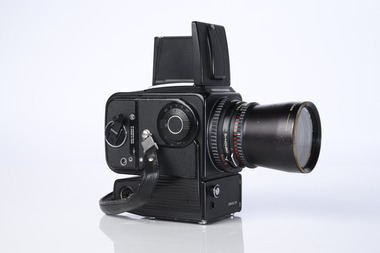
Hasselblad aerial camera
... flying heights. Several large film magazines, which were loaded in a darkroom, each with a capacity of 100 feet or approximately 500 frames. A remote control for the camera in single-shot mode or automatic firing at selected intervals of 2 to 50 seconds. ...flying heights. Several large film magazines, which were loaded in a darkroom, each with a capacity of 100 feet or approximately 500 frames. A remote control for the camera in single-shot mode or automatic firing at selected intervals of 2 to 50 seconds. ...Aerial photos were used to make maps of forest types, timber resources, to survey logging areas and regeneration, to mark boundaries of public land and new plantations, to identify new roads and tracks, as well as for fire suppression. Infrared film was sometimes used to monitor insect and disease attack. The images needed to sharp, with high contrast, and in a large format (most were printed in B&W on 9-inch by 9-inch glossy photographic paper) with at least a 60% overlap to enable stereoscopic viewing and with a 20-30% side lap to allow for aircraft drift. Preferably, the photo scale was close to the final map scale avoid to problems when enlarging and to reduce distortion. Something was needed to supplement the very expensive and infrequent large-area photography programs. From the mid-1960s Victorian foresters began experimenting with small format 70mm and 35mm cameras which proved simple, practical, cheap and flexible. It was found that any SLR camera could be used provided it had a good quality lens and fast shutter speed (preferably down to 1/1000 second). Motorised cameras with a large film capacity had obvious advantages and were essential when access to the camera was not possible during flight. It is also essential for the shutter to operate at low temperatures and those lubricated with silicones were recommended. Components of a typical FCV Divisional Office system included – A Hasselblad or Vinten 70 mm format aerial camera with a focal plane shutter which could be electrically operated. Interchangeable lenses to allow for different photo scales and flying heights. Several large film magazines, which were loaded in a darkroom, each with a capacity of 100 feet or approximately 500 frames. A remote control for the camera in single-shot mode or automatic firing at selected intervals of 2 to 50 seconds. It also needed a frame counter. A light aircraft was modified with an internal mounting for the camera to keep it level and steady. Often a hole was cut through the floor for the lens. The aircraft also needed an inbuilt 12 Volt DC battery to operate the motorised camera shutter. The front passenger seat was generally removed to improve access to the camera. An Aldis drift sight was also fitted. This might be likened to an inverted periscope and is used to determine drift, to facilitate accurate navigation along flight lines and to determine the exposure interval for stereoscopic overlap. This item is kept at Traralgon.Hasselblad 500 ELM camera with 70mm lens, film pack, motor drive and battery In 1964 Hasselblad started production of a motorized camera, the 500 EL The EL/M is a modified version of the EL, "M" means modified, "EL" electric. Perhaps the most famous use of the Hasselblad camera was during the Apollo program missions when man first landed on the Moon. Almost all of the still photographs taken during these missions used modified Hasselblad cameras. forests commission victoria (fcv), forest measurement, surveying, mapping -
 Department of Energy, Environment and Climate Action
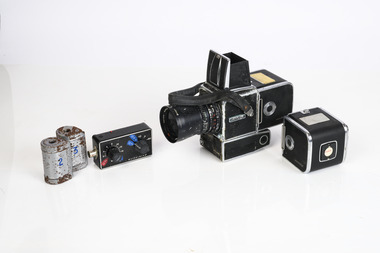
Hasselblad aerial camera with carry case, spare batteries, and film cases (overall poor condtion)
... flying heights. Several large film magazines, which were loaded in a darkroom, each with a capacity of 100 feet or approximately 500 frames. A remote control for the camera in single-shot mode or automatic firing at selected intervals of 2 to 50 seconds. ...flying heights. Several large film magazines, which were loaded in a darkroom, each with a capacity of 100 feet or approximately 500 frames. A remote control for the camera in single-shot mode or automatic firing at selected intervals of 2 to 50 seconds. ...Aerial photos were used to make maps of forest types, timber resources, to survey logging areas and regeneration, to mark boundaries of public land and new plantations, to identify new roads and tracks, as well as for fire suppression. Infrared film was sometimes used to monitor insect and disease attack. The images needed to sharp, with high contrast, and in a large format (most were printed in B&W on 9-inch by 9-inch glossy photographic paper) with at least a 60% overlap to enable stereoscopic viewing and with a 20-30% side lap to allow for aircraft drift. Preferably, the photo scale was close to the final map scale avoid to problems when enlarging and to reduce distortion. Something was needed to supplement the very expensive and infrequent large-area photography programs. From the mid-1960s Victorian foresters began experimenting with small format 70mm and 35mm cameras which proved simple, practical, cheap and flexible. It was found that any SLR camera could be used provided it had a good quality lens and fast shutter speed (preferably down to 1/1000 second). Motorised cameras with a large film capacity had obvious advantages and were essential when access to the camera was not possible during flight. It is also essential for the shutter to operate at low temperatures and those lubricated with silicones were recommended. Components of a typical FCV Divisional Office system included – A Hasselblad or Vinten 70 mm format aerial camera with a focal plane shutter which could be electrically operated. Interchangeable lenses to allow for different photo scales and flying heights. Several large film magazines, which were loaded in a darkroom, each with a capacity of 100 feet or approximately 500 frames. A remote control for the camera in single-shot mode or automatic firing at selected intervals of 2 to 50 seconds. It also needed a frame counter. A light aircraft was modified with an internal mounting for the camera to keep it level and steady. Often a hole was cut through the floor for the lens. The aircraft also needed an inbuilt 12 Volt DC battery to operate the motorised camera shutter. The front passenger seat was generally removed to improve access to the camera. An Aldis drift sight was also fitted. This might be likened to an inverted periscope and is used to determine drift, to facilitate accurate navigation along flight lines and to determine the exposure interval for stereoscopic overlap. This item was found in storage at the Beechworth museum and its in poor condtionHasselblad 500 ELM camera with 70mm lens, film pack, motor drive and battery In 1964 Hasselblad started production of a motorized camera, the 500 EL The EL/M is a modified version of the EL, "M" means modified, "EL" electric. Perhaps the most famous use of the Hasselblad camera was during the Apollo program missions when man first landed on the Moon. Almost all of the still photographs taken during these missions used modified Hasselblad cameras. forests commission victoria (fcv), forest measurement, surveying, mapping
