
Showing 21 items matching "foreman family"
-
 Mont De Lancey
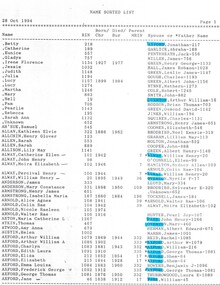
Document - Genealogy Index, 28.10.1994
... ...Foreman Family...Index of Wandin family history names including their birth, death and marriage information and their spouse/parents, spanning 1807-1983 - only includes pages A-C and M-O Family trees Family History Clegg Family Overton Family Axford Family Ah'Sue Family Allan Family Allchin Family Allen Family Allison Family Alway Family Anderson Family Armstrong Family Arnold Family Aston Family Atkin Family Atwood Family Austin Family Bailey Family Baker Family Balle Family Barker Family Barkway Family Barr Family Bartlett Family Bawdon Benson Family Berry Family Berryman Family Bews Family Binding Family Bird Family Bishop Family Blood Family Blanksby Family Bolding Family Bonola Family Bosser Family Bott Family Bourke Family Bowers Family Brailsford Family Brandt Family Bray Family Brockenshire Family Brodribb Family Brown Family Bryant Family Burgess Family Burrell Family Burrett Family Burton Family Burwill Family Butterworth Family Byers Family Callaghan Family Carlson Family Carter Family Case Family Chamberlain Family Cherry Family Clarke Family Cocks Family Cole Family Collins Family Conder Family Connor Family Cook Family Coomes Family Cooper Family Cornell Family Cottee Family McKenna Family Meacham Family Mill Family Miller Family Mitchell Family Mits Family Montgomery Family Moodie Family Murray Family Musgrave Family Nagle Family Nall Family Nash Family Neely Family Neville Family Newport Family Norman Family Norton Family Notley Family O'Connell Family O'Mara Family Odgers Family Oliver Family Oneyes Family Orams Family Owen Family Pain Family Papworth Family Garlick Family Penthreath Family Green Family Hall Family Gough Family Byrne Family Smith Family Hodson Family Jinks Family Squires Family Graham Family Holton Family Hamilton Family Lloyd Family Tocknell Family Hunter Family Parr Family Herman Family Marsh Family Read Family Thurrowgood Family Hughes Family Wilson Family Rains Family Hurley Family Farqhuar Family Robinson Family Dennis Family Turner Family Rule Family Vine Family Whittaker Family Stevens Family Heywood Family Jones Family Styles Family Rouget Family Sargeant Family Withers Family Larking Family Keen Family White Family Francis Family Teague Family Fisher Family Winbanks Family Knight Family Vernon Family Wood Family Kennedy Family Crossland Family Upton Family McFarline Family Denman Family Elliot Family Thomas Family Davis Family Parker Family Sies Family Dohrmann Family Heffernan Family Duncan Family Foreman Family Saunders Family Wilmont Family Furphey Family Rawson Family Evans Family Field Family Ellis Family Laing Family Ezart Family Hoare Family Heritage Family Quirk Family Griffin Family Lowry Family Johnstone Family Grundy Family Stock Family Patterson Family Ralph Family Pilbrick Family Ussnig Family Leighman Family Underwood Family Lawrence Family Dawson Family Crossdale Family Shoo Family Lomax Family Paten Family 1800s 1810s 1820s 1830s 1840s 1850s 1860s 1870s 1880s 1890s 1900s 1910s 1920s 1930s 1940s 1950s 1960s 1970s 1980s 8 one sided A4 pages typed in black ink with yellow highlighter Document Genealogy Index ...Index of Wandin family history names including their birth, death and marriage information and their spouse/parents, spanning 1807-1983 - only includes pages A-C and M-O8 one sided A4 pages typed in black ink with yellow highlighterfamily trees, family history, clegg family, overton family, axford family, ah'sue family, allan family, allchin family, allen family, allison family, alway family, anderson family, armstrong family, arnold family, aston family, atkin family, atwood family, austin family, bailey family, baker family, balle family, barker family, barkway family, barr family, bartlett family, bawdon, benson family, berry family, berryman family, bews family, binding family, bird family, bishop family, blood family, blanksby family, bolding family, bonola family, bosser family, bott family, bourke family, bowers family, brailsford family, brandt family, bray family, brockenshire family, brodribb family, brown family, bryant family, burgess family, burrell family, burrett family, burton family, burwill family, butterworth family, byers family, callaghan family, carlson family, carter family, case family, chamberlain family, cherry family, clarke family, cocks family, cole family, collins family, conder family, connor family, cook family, coomes family, cooper family, cornell family, cottee family, mckenna family, meacham family, mill family, miller family, mitchell family, mits family, montgomery family, moodie family, murray family, musgrave family, nagle family, nall family, nash family, neely family, neville family, newport family, norman family, norton family, notley family, o'connell family, o'mara family, odgers family, oliver family, oneyes family, orams family, owen family, pain family, papworth family, garlick family, penthreath family, green family, hall family, gough family, byrne family, smith family, hodson family, jinks family, squires family, graham family, holton family, hamilton family, lloyd family, tocknell family, hunter family, parr family, herman family, marsh family, read family, thurrowgood family, hughes family, wilson family, rains family, hurley family, farqhuar family, robinson family, dennis family, turner family, rule family, vine family, whittaker family, stevens family, heywood family, jones family, styles family, rouget family, sargeant family, withers family, larking family, keen family, white family, francis family, teague family, fisher family, winbanks family, knight family, vernon family, wood family, kennedy family, crossland family, upton family, mcfarline family, denman family, elliot family, thomas family, davis family, parker family, sies family, dohrmann family, heffernan family, duncan family, foreman family, saunders family, wilmont family, furphey family, rawson family, evans family, field family, ellis family, laing family, ezart family, hoare family, heritage family, quirk family, griffin family, lowry family, johnstone family, grundy family, stock family, patterson family, ralph family, pilbrick family, ussnig family, leighman family, underwood family, lawrence family, dawson family, crossdale family, shoo family, lomax family, paten family, 1800s, 1810s, 1820s, 1830s, 1840s, 1850s, 1860s, 1870s, 1880s, 1890s, 1900s, 1910s, 1920s, 1930s, 1940s, 1950s, 1960s, 1970s, 1980s -
 Eltham District Historical Society Inc
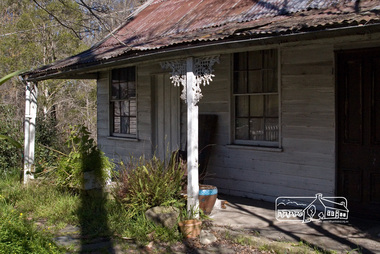
Photograph, Fred Mitchell, Jarrold Cottage, 5 September 2007
... The Jarrolds were a pioneer family of market gardeners and building tradesmen over six decades and from the early 1940s, with the Skippers and other prominent local figures involved in the construction and development of the Montsalvat Artists' Colony. Len Jarrold, a carpenter, worked at Montsalvat from the beginning and became foreman...The Jarrolds were a pioneer family of market gardeners and building tradesmen over six decades and from the early 1940s, with the Skippers and other prominent local figures involved in the construction and development of the Montsalvat Artists' Colony. Len Jarrold, a carpenter, worked at Montsalvat from the beginning and became foreman ...Three historically significant buildings are here at 701 Main Road, opposite Dalton Street, Eltham. Jarrold Cottage or White Cloud was built about 1863 and remains one of the oldest buildings in Eltham. It was once used temporarily as Eltham’s first police station. The Jarrolds were a pioneer family of market gardeners and building tradesmen over six decades and from the early 1940s, with the Skippers and other prominent local figures involved in the construction and development of the Montsalvat Artists' Colony. Len Jarrold, a carpenter, worked at Montsalvat from the beginning and became foreman of works for the splendid 1938 Great Hall. The Skipper family, also involved with Montsalvat, were associated with Jarrold Cottage from 1944 when it was purchased by Lena Skipper. Digital copy of colour photographfred mitchell collection, 2007, eltham, jarrold cottage, main road -
 Bendigo Historical Society Inc.
Photograph - GRAYDON COLLECTION: FAMILY PHOTOGRAPHS
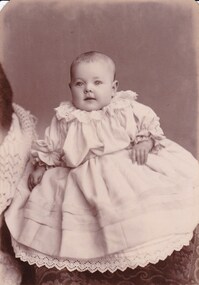
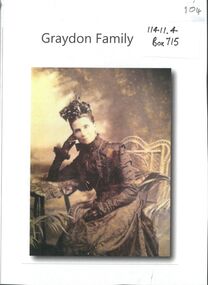
... foreman. His father-in-law, Robert Richardson was employed as a time-keeper on the Melbourne to Bendigo Railway works, and he and his family lived first in Prahran, then Kyneton, and then Taradale. ...foreman. His father-in-law, Robert Richardson was employed as a time-keeper on the Melbourne to Bendigo Railway works, and he and his family lived first in Prahran, then Kyneton, and then Taradale. ...Charles Wallace Gordon Graydon the First came out to Victoria on the S.S. Almora, the same ship on which Eliza Richardson and her family arrived on New Years Day 1875. Evidently C.W.G.G.1st. must have retained fond memories of a young fourteen-year-old girl named Elizabeth Richardson who travelled from Scotland with her mother and family (her father had arrived earlier) because three years later at Kyneton they were married. It was December 26th 1860, and Elizabeth was just seventeen. As the bridegroom’s age is written as 24 years on the wedding certificate, he certainly must have been more than eighteen when he sailed on the "Almora" in 1856. The newly married couple went to live at Taradale, Victoria, and they made a good life for themselves in that town which had then a thriving gold mine. They lived in a large two-storied house in Survey Paddock, and it was there that four daughters - Susan Emily (1861-1906), Elizabeth Constance (1863-1945), Amelia Amy (1865 -1952, Ada Mary Maude (1867-1901), and one son Newenham Edward Eustace (1869-1945) named after his Irish Grandfather, were born. On his wedding certificate C.W.G. Graydon, is described as a foreman. His father-in-law, Robert Richardson was employed as a time-keeper on the Melbourne to Bendigo Railway works, and he and his family lived first in Prahran, then Kyneton, and then Taradale. Perhaps Charles Graydon worked on the railway with him. In Taradale however, he worked for a gold mining company in a surveying capacity. C.W.G.G.1st was to become Shire President of the Shire of Metcalfe. That particular year the Graydon Family entertained the visiting English cricket Eleven at their home in Taradale. He was certainly regarded as an important man in the district when he was requested by a great number of the residents to nominate for the Legislative Assembly election. About 1876 the Graydons left Taradale, and went to live at Sandhurst, now Bendigo, at Barkly Place East. The Richardsons had also left Taradale to go into the grocery business in the same town. Charles Wallace Gordon Graydon the First became a legal manager of mines, and a well-known and popular resident. Sad to say he became ill with a lung infection, and on June 4th. 1885 he died, and was buried at Sandhurst, now Bendigo Cemetery, Back Creek Rd. Eliza Richardson's brother was Mr. James Richardson, the well-known grocer, of Pall Mall and Golden-square, who died at his residence, "Balgownie," Short street, on Thursday 22 Jan 1914. James Richardson was a native of Scotland. He was born at Glasgow in1849 and was only eight years of age when his parents sailed for Australia in the ship Balmoral. The family arrived in Melbourne in 1857 and went to Taradale, where Mr. Richardson, senr., acted as inspector of works during the construction of the Taradale Viaduct. James Richardson, who had commenced his educationin Glasgow, attended school at Taradale until the family removed to Bendigo at the time the railway was being built from Bendigo to Echuca. The contractors for this work engaged Mr Richardson, senr., as their timekeeper. When he left school James Richardson applied himself to learn the grocery business, and he gained a thorough knowledge of it with different employers at Bendigo, Taradale, and Daylesford. In 1872 he opened a grocery store on his own account in High-Street, Bendigo, but within a few months he had the great misfortune to be burnt out. The fire originated in an adjoining building early one morning and both places were burnt to the ground. In spite of his loss, Mr. Richardson was not discouraged, for he soon made another start. His trade improved and he extended his business, opening the Eclipse Cash Store at Golden Square. A little later another branch was opened at the Oddfellows' Hall, and subsequently this business was transferred to the Eureka Cash Store, in Pall Mall, which was the head depot. In addition to the retail trade, Mr. Richardson had, for many years carried on an extensive wholesale business with the Northern District, and had made a specialty of fodder seeds. James was a man of probity and sincerity in business, and as a citizen he was highly esteemed and respected. He was a prominent member of the Bendigo Caledonian Society in the earlier days of his citizenship. He was a staunch member of St Andrew's Presbyterian Church, and was a member of the board of management. In the Easter Fair procession, Mr Richardson's display was always a prominent and attractive one. Mr. Richardson was a member of the Masonic Order, and was a life member of the Bendigo Art Gallery and the old Mechanics Institute. He was married at Daylesford in 1871. Mr James Richardson was interred in the Presbyterian section of the Bendigo Cemetery.A selection of black and white Graydon and Richardson family photographs taken by Bendigo photographers. All photos unnamed. Mounted as Cabinet cards. Photographers - D. Mendelfson, Bartlett Bros., The Studio - Chuck, Eden Society Studios, Alan Spicer, R. Bloomfield Rees,graydon, richardson, cabinet card -
 Bendigo Historical Society Inc.
Photograph - GRAYDON COLLECTION: FAMILY PHOTOGRAPHS
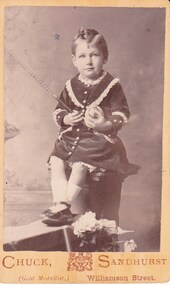
... foreman. His father-in-law, Robert Richardson was employed as a time-keeper on the Melbourne to Bendigo Railway works, and he and his family lived first in Prahran, then Kyneton, and then Taradale. ...foreman. His father-in-law, Robert Richardson was employed as a time-keeper on the Melbourne to Bendigo Railway works, and he and his family lived first in Prahran, then Kyneton, and then Taradale. ...Charles Wallace Gordon Graydon the First came out to Victoria on the S.S. Almora, the same ship on which Eliza Richardson and her family arrived on New Years Day 1875. Evidently C.W.G.G.1st. must have retained fond memories of a young fourteen-year-old girl named Elizabeth Richardson who travelled from Scotland with her mother and family (her father had arrived earlier) because three years later at Kyneton they were married. It was December 26th 1860, and Elizabeth was just seventeen. As the bridegroom’s age is written as 24 years on the wedding certificate, he certainly must have been more than eighteen when he sailed on the "Almora" in 1856. The newly married couple went to live at Taradale, Victoria, and they made a good life for themselves in that town which had then a thriving gold mine. They lived in a large two-storied house in Survey Paddock, and it was there that four daughters - Susan Emily (1861-1906), Elizabeth Constance (1863-1945), Amelia Amy (1865 -1952, Ada Mary Maude (1867-1901), and one son Newenham Edward Eustace (1869-1945) named after his Irish Grandfather, were born. On his wedding certificate C.W.G. Graydon, is described as a foreman. His father-in-law, Robert Richardson was employed as a time-keeper on the Melbourne to Bendigo Railway works, and he and his family lived first in Prahran, then Kyneton, and then Taradale. Perhaps Charles Graydon worked on the railway with him. In Taradale however, he worked for a gold mining company in a surveying capacity. C.W.G.G.1st was to become Shire President of the Shire of Metcalfe. That particular year the Graydon Family entertained the visiting English cricket Eleven at their home in Taradale. He was certainly regarded as an important man in the district when he was requested by a great number of the residents to nominate for the Legislative Assembly election. About 1876 the Graydons left Taradale, and went to live at Sandhurst, now Bendigo, at Barkly Place East. The Richardsons had also left Taradale to go into the grocery business in the same town. Charles Wallace Gordon Graydon the First became a legal manager of mines, and a well-known and popular resident. Sad to say he became ill with a lung infection, and on June 4th. 1885 he died, and was buried at Sandhurst, now Bendigo Cemetery, Back Creek Rd. Eliza Richardson's brother was Mr. James Richardson, the well-known grocer, of Pall Mall and Golden-square, who died at his residence, "Balgownie," Short street, on Thursday 22 Jan 1914. James Richardson was a native of Scotland. He was born at Glasgow in1849 and was only eight years of age when his parents sailed for Australia in the ship Balmoral. The family arrived in Melbourne in 1857 and went to Taradale, where Mr. Richardson, senr., acted as inspector of works during the construction of the Taradale Viaduct. James Richardson, who had commenced his educationin Glasgow, attended school at Taradale until the family removed to Bendigo at the time the railway was being built from Bendigo to Echuca. The contractors for this work engaged Mr Richardson, senr., as their timekeeper. When he left school James Richardson applied himself to learn the grocery business, and he gained a thorough knowledge of it with different employers at Bendigo, Taradale, and Daylesford. In 1872 he opened a grocery store on his own account in High-Street, Bendigo, but within a few months he had the great misfortune to be burnt out. The fire originated in an adjoining building early one morning and both places were burnt to the ground. In spite of his loss, Mr. Richardson was not discouraged, for he soon made another start. His trade improved and he extended his business, opening the Eclipse Cash Store at Golden Square. A little later another branch was opened at the Oddfellows' Hall, and subsequently this business was transferred to the Eureka Cash Store, in Pall Mall, which was the head depot. In addition to the retail trade, Mr. Richardson had, for many years carried on an extensive wholesale business with the Northern District, and had made a specialty of fodder seeds. James was a man of probity and sincerity in business, and as a citizen he was highly esteemed and respected. He was a prominent member of the Bendigo Caledonian Society in the earlier days of his citizenship. He was a staunch member of St Andrew's Presbyterian Church, and was a member of the board of management. In the Easter Fair procession, Mr Richardson's display was always a prominent and attractive one. Mr. Richardson was a member of the Masonic Order, and was a life member of the Bendigo Art Gallery and the old Mechanics Institute. He was married at Daylesford in 1871. Mr James Richardson was interred in the Presbyterian section of the Bendigo Cemetery.Seventeen black and white Graydon and Richardson family photographs taken by Bendigo photographers. All photos unnamed. Mounted as Cartes de Visite. Photographers - The Studio - Chuck, , M. Bent, F. de Kock and Co., N. White, Bartlett Bros., Chevalier.graydon, richardson, carte de visite -
 Bendigo Historical Society Inc.
Mixed media - GRAYDON COLLECTION: FAMILY PHOTOGRAPHS and NOTES (See ITEM 11411)
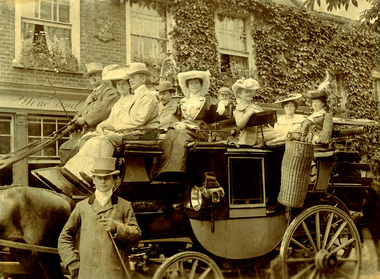
... foreman. His father-in-law, Robert Richardson was employed as a timekeeper on the Melbourne to Bendigo Railway works, and he and his family lived first in Prahran, then Kyneton, and then Taradale. ...foreman. His father-in-law, Robert Richardson was employed as a timekeeper on the Melbourne to Bendigo Railway works, and he and his family lived first in Prahran, then Kyneton, and then Taradale. ...Charles Wallace Gordon Graydon the First came out to Victoria on the S.S. Almora, the same ship on which Eliza Richardson and her family arrived on New Years Day 1875. Evidently C.W.G.G.1st. must have retained fond memories of a young fourteen-year-old girl named Elizabeth Richardson who travelled from Scotland with her mother and family (her father had arrived earlier) because three years later at Kyneton they were married. It was December 26th, 1860, and Elizabeth was just seventeen. As the bridegroom’s age is written as 24 years on the wedding certificate, he certainly must have been more than eighteen when he sailed on the "Almora" in 1856. The newly married couple went to live at Taradale, Victoria, and they made a good life for themselves in that town which had then a thriving gold mine. They lived in a large two-storied house in Survey Paddock, and it was there that four daughters - Susan Emily (1861-1906), Elizabeth Constance (1863-1945), Amelia Amy (1865 -1952, Ada Mary Maude (1867-1901), and one son Newenham Edward Eustace (1869-1945) named after his Irish Grandfather, were born. On his wedding certificate C.W.G. Graydon, is described as a foreman. His father-in-law, Robert Richardson was employed as a timekeeper on the Melbourne to Bendigo Railway works, and he and his family lived first in Prahran, then Kyneton, and then Taradale. Perhaps Charles Graydon worked on the railway with him. In Taradale however, he worked for a gold mining company in a surveying capacity. C.W.G.G.1st was to become Shire President of the Shire of Metcalfe. That particular year the Graydon Family entertained the visiting English cricket Eleven at their home in Taradale. He was certainly regarded as an important man in the district when he was requested by a great number of the residents to nominate for the Legislative Assembly election. About 1876 the Graydons left Taradale, and went to live at Sandhurst, now Bendigo, at Barkly Place East. The Richardsons had also left Taradale to go into the grocery business in the same town. Charles Wallace Gordon Graydon the First became a legal manager of mines, and a well-known and popular resident. Sad to say he became ill with a lung infection, and on June 4th. 1885 he died, and was buried at Sandhurst, now Bendigo Cemetery, Back Creek Rd. Eliza Richardson's brother was Mr. James Richardson, the well-known grocer, of Pall Mall and Golden-square, who died at his residence, "Balgownie," Short Street, on Thursday 22 Jan 1914. James Richardson was a native of Scotland. He was born at Glasgow in1849 and was only eight years of age when his parents sailed for Australia in the ship Balmoral. The family arrived in Melbourne in 1857 and went to Taradale, where Mr. Richardson, senior., acted as inspector of works during the construction of the Taradale Viaduct. James Richardson, who had commenced his education in Glasgow, attended school at Taradale until the family removed to Bendigo at the time the railway was being built from Bendigo to Echuca. The contractors for this work engaged Mr. Richardson, as their timekeeper. When he left school James Richardson applied himself to learn the grocery business, and he gained a thorough knowledge of it with different employers at Bendigo, Taradale, and Daylesford. In 1872 he opened a grocery store on his own account in High-Street, Bendigo, but within a few months he had the great misfortune to be burnt out. The fire originated in an adjoining building early one morning and both places were burnt to the ground. In spite of his loss, Mr. Richardson was not discouraged, for he soon made another start. His trade improved and he extended his business, opening the Eclipse Cash Store at Golden Square. A little later another branch was opened at the Oddfellows' Hall, and subsequently this business was transferred to the Eureka Cash Store, in Pall Mall, which was the head depot. In addition to the retail trade, Mr. Richardson had, for many years carried on an extensive wholesale business with the Northern District and had made a specialty of fodder seeds. James was a man of probity and sincerity in business, and as a citizen he was highly esteemed and respected. He was a prominent member of the Bendigo Caledonian Society in the earlier days of his citizenship. He was a staunch member of St Andrew's Presbyterian Church, and was a member of the board of management. In the Easter Fair procession, Mr. Richardson's display was always a prominent and attractive one. Mr. Richardson was a member of the Masonic Order and was a life member of the Bendigo Art Gallery and the old Mechanics Institute. He was married at Daylesford in 1871. Mr James Richardson was interred in the Presbyterian section of the Bendigo Cemetery.DVD A selection of Graydon and Richardson family photographs taken by Bendigo photographers, and family history notesphotograph, person, graydon and richardson families. -
 Bendigo Historical Society Inc.
Photograph - GRAYDON COLLECTION: FAMILY PHOTOGRAPHS
... foreman. His father-in-law, Robert Richardson was employed as a time-keeper on the Melbourne to Bendigo Railway works, and he and his family lived first in Prahran, then Kyneton, and then Taradale. ...foreman. His father-in-law, Robert Richardson was employed as a time-keeper on the Melbourne to Bendigo Railway works, and he and his family lived first in Prahran, then Kyneton, and then Taradale. ...Charles Wallace Gordon Graydon the First came out to Victoria on the S.S. Almora, the same ship on which Eliza Richardson and her family arrived on New Years Day 1875. Evidently C.W.G.G.1st. must have retained fond memories of a young fourteen-year-old girl named Elizabeth Richardson who travelled from Scotland with her mother and family (her father had arrived earlier) because three years later at Kyneton they were married. It was December 26th 1860, and Elizabeth was just seventeen. As the bridegroom’s age is written as 24 years on the wedding certificate, he certainly must have been more than eighteen when he sailed on the "Almora" in 1856. The newly married couple went to live at Taradale, Victoria, and they made a good life for themselves in that town which had then a thriving gold mine. They lived in a large two-storied house in Survey Paddock, and it was there that four daughters - Susan Emily (1861-1906), Elizabeth Constance (1863-1945), Amelia Amy (1865 -1952, Ada Mary Maude (1867-1901), and one son Newenham Edward Eustace (1869-1945) named after his Irish Grandfather, were born. On his wedding certificate C.W.G. Graydon, is described as a foreman. His father-in-law, Robert Richardson was employed as a time-keeper on the Melbourne to Bendigo Railway works, and he and his family lived first in Prahran, then Kyneton, and then Taradale. Perhaps Charles Graydon worked on the railway with him. In Taradale however, he worked for a gold mining company in a surveying capacity. C.W.G.G.1st was to become Shire President of the Shire of Metcalfe. That particular year the Graydon Family entertained the visiting English cricket Eleven at their home in Taradale. He was certainly regarded as an important man in the district when he was requested by a great number of the residents to nominate for the Legislative Assembly election. About 1876 the Graydons left Taradale, and went to live at Sandhurst, now Bendigo, at Barkly Place East. The Richardsons had also left Taradale to go into the grocery business in the same town. Charles Wallace Gordon Graydon the First became a legal manager of mines, and a well-known and popular resident. Sad to say he became ill with a lung infection, and on June 4th. 1885 he died, and was buried at Sandhurst, now Bendigo Cemetery, Back Creek Rd. Eliza Richardson's brother was Mr. James Richardson, the well-known grocer, of Pall Mall and Golden-square, who died at his residence, "Balgownie," Short street, on Thursday 22 Jan 1914. James Richardson was a native of Scotland. He was born at Glasgow in1849 and was only eight years of age when his parents sailed for Australia in the ship Balmoral. The family arrived in Melbourne in 1857 and went to Taradale, where Mr. Richardson, senr., acted as inspector of works during the construction of the Taradale Viaduct. James Richardson, who had commenced his educationin Glasgow, attended school at Taradale until the family removed to Bendigo at the time the railway was being built from Bendigo to Echuca. The contractors for this work engaged Mr Richardson, senr., as their timekeeper. When he left school James Richardson applied himself to learn the grocery business, and he gained a thorough knowledge of it with different employers at Bendigo, Taradale, and Daylesford. In 1872 he opened a grocery store on his own account in High-Street, Bendigo, but within a few months he had the great misfortune to be burnt out. The fire originated in an adjoining building early one morning and both places were burnt to the ground. In spite of his loss, Mr. Richardson was not discouraged, for he soon made another start. His trade improved and he extended his business, opening the Eclipse Cash Store at Golden Square. A little later another branch was opened at the Oddfellows' Hall, and subsequently this business was transferred to the Eureka Cash Store, in Pall Mall, which was the head depot. In addition to the retail trade, Mr. Richardson had, for many years carried on an extensive wholesale business with the Northern District, and had made a specialty of fodder seeds. James was a man of probity and sincerity in business, and as a citizen he was highly esteemed and respected. He was a prominent member of the Bendigo Caledonian Society in the earlier days of his citizenship. He was a staunch member of St Andrew's Presbyterian Church, and was a member of the board of management. In the Easter Fair procession, Mr Richardson's display was always a prominent and attractive one. Mr. Richardson was a member of the Masonic Order, and was a life member of the Bendigo Art Gallery and the old Mechanics Institute. He was married at Daylesford in 1871. Mr James Richardson was interred in the Presbyterian section of the Bendigo Cemetery.A selection of Graydon and Richardson family photographs taken by Bendigo photograpers. all photos unnamed.photograph, person, graydon and richardson families. -
 Bendigo Historical Society Inc.
Photograph - Graydon and Richardson Families in Bendigo
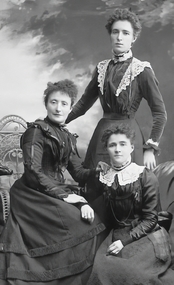
... foreman. His father-in-law, Robert Richardson was employed as a time-keeper on the Melbourne to Bendigo Railway works, and he and his family lived first in Prahran, then Kyneton, and then Taradale. ...foreman. His father-in-law, Robert Richardson was employed as a time-keeper on the Melbourne to Bendigo Railway works, and he and his family lived first in Prahran, then Kyneton, and then Taradale. ...Charles Wallace Gordon Graydon the First came out to Victoria on the S.S. Almora, the same ship on which Eliza Richardson and her family arrived on New Years Day 1875. Evidently C.W.G.G.1st. must have retained fond memories of a young fourteen-year-old girl named Elizabeth Richardson who travelled from Scotland with her mother and family (her father had arrived earlier) because three years later at Kyneton they were married. It was December 26th 1860, and Elizabeth was just seventeen. As the bridegroom’s age is written as 24 years on the wedding certificate, he certainly must have been more than eighteen when he sailed on the "Almora" in 1856. The newly married couple went to live at Taradale, Victoria, and they made a good life for themselves in that town which had then a thriving gold mine. They lived in a large two-storied house in Survey Paddock, and it was there that four daughters - Susan Emily (1861-1906), Elizabeth Constance (1863-1945), Amelia Amy (1865 -1952, Ada Mary Maude (1867-1901), and one son Newenham Edward Eustace (1869-1945) named after his Irish Grandfather, were born. On his wedding certificate C.W.G. Graydon, is described as a foreman. His father-in-law, Robert Richardson was employed as a time-keeper on the Melbourne to Bendigo Railway works, and he and his family lived first in Prahran, then Kyneton, and then Taradale. Perhaps Charles Graydon worked on the railway with him. In Taradale however, he worked for a gold mining company in a surveying capacity. C.W.G.G.1st was to become Shire President of the Shire of Metcalfe. That particular year the Graydon Family entertained the visiting English cricket Eleven at their home in Taradale. He was certainly regarded as an important man in the district when he was requested by a great number of the residents to nominate for the Legislative Assembly election. About 1876 the Graydons left Taradale, and went to live at Sandhurst, now Bendigo, at Barkly Place East. The Richardsons had also left Taradale to go into the grocery business in the same town. Charles Wallace Gordon Graydon the First became a legal manager of mines, and a well-known and popular resident. Sad to say he became ill with a lung infection, and on June 4th. 1885 he died, and was buried at Sandhurst, now Bendigo Cemetery, Back Creek Rd. Eliza Richardson's brother was Mr. James Richardson, the well-known grocer, of Pall Mall and Golden-square, who died at his residence, "Balgownie," Short street, on Thursday 22 Jan 1914. James Richardson was a native of Scotland. He was born at Glasgow in1849 and was only eight years of age when his parents sailed for Australia in the ship Balmoral. The family arrived in Melbourne in 1857 and went to Taradale, where Mr. Richardson, senr., acted as inspector of works during the construction of the Taradale Viaduct. James Richardson, who had commenced his educationin Glasgow, attended school at Taradale until the family removed to Bendigo at the time the railway was being built from Bendigo to Echuca. The contractors for this work engaged Mr Richardson, senr., as their timekeeper. When he left school James Richardson applied himself to learn the grocery business, and he gained a thorough knowledge of it with different employers at Bendigo, Taradale, and Daylesford. In 1872 he opened a grocery store on his own account in High-Street, Bendigo, but within a few months he had the great misfortune to be burnt out. The fire originated in an adjoining building early one morning and both places were burnt to the ground. In spite of his loss, Mr. Richardson was not discouraged, for he soon made another start. His trade improved and he extended his business, opening the Eclipse Cash Store at Golden Square. A little later another branch was opened at the Oddfellows' Hall, and subsequently this business was transferred to the Eureka Cash Store, in Pall Mall, which was the head depot. In addition to the retail trade, Mr. Richardson had, for many years carried on an extensive wholesale business with the Northern District, and had made a specialty of fodder seeds. James was a man of probity and sincerity in business, and as a citizen he was highly esteemed and respected. He was a prominent member of the Bendigo Caledonian Society in the earlier days of his citizenship. He was a staunch member of St Andrew's Presbyterian Church, and was a member of the board of management. In the Easter Fair procession, Mr Richardson's display was always a prominent and attractive one. Mr. Richardson was a member of the Masonic Order, and was a life member of the Bendigo Art Gallery and the old Mechanics Institute. He was married at Daylesford in 1871. Mr James Richardson was interred in the Presbyterian section of the Bendigo Cemetery.Digital Image. Copy of photograph of three of the four Graydon girls. Ada, Lizzie and Amelia Graydon. B&W photo of three women - two seated and one standing - Studio portrait.Lizzie (Elizabeth Constance 1863-1945) standing. Amelia (Amelia Amy 1865 - 1952) Seated on right. Ada (Ada Mary Maude 1867-1901) seated left.graydon girls., graydon collection, graydon richardson, james richardson grocer, bendigo history -
 Port Melbourne Historical & Preservation Society
Archive - Alan Mathews and family, 23 Jun 1938
... family. Documents relating to the purchase of residence on Howe Parade. The Commissioners of the State Savings Bank of Victoria with Mr J E Mathews Factory Foreman, 2 Eveline Street East Brunswick. ...family. Documents relating to the purchase of residence on Howe Parade. The Commissioners of the State Savings Bank of Victoria with Mr J E Mathews Factory Foreman, 2 Eveline Street East Brunswick. ...The Mathews family have been in continuous ownership of 395 Howe Parade (was 8 Howe Parade until 1964 when addresses re-assigned), Port Melbourne from 1938 to the present (Sept 2019)Six folders of assorted documents relating to the life of Alan Mathews and his family. Documents relating to the purchase of residence on Howe Parade. The Commissioners of the State Savings Bank of Victoria with Mr J E Mathews Factory Foreman, 2 Eveline Street East Brunswick. Contract of sale of a dwelling House and land 8 Howe Parade Garden City. Contract signed 7.11.1938built environment - domestic, banking, alan mathews -
 Eltham District Historical Society Inc
Photograph - Digital Photograph, Alan King, Busst House, cnr Silver Street and Kerrie Crescent, Eltham, 2 February 2008
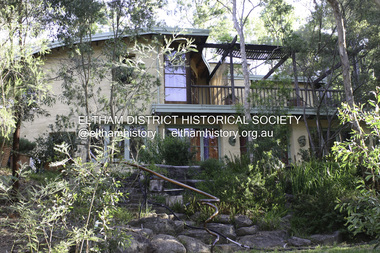
... foreman Horrie Judd and Gordon Ford (who was to become a famous landscape designer), built two large main rooms - a living room/ kitchen downstairs - and upstairs, a studio/bedroom. The studio/bedroom opens onto the balcony, which covers the living area. The bath made of solid concrete by stonemason Jack Fabro, is particularly deep. Sunshine pours through the three French windows of the north-east facing kitchen/living area, which is lined with timber. The large hearth can fit a family...foreman Horrie Judd and Gordon Ford (who was to become a famous landscape designer), built two large main rooms - a living room/ kitchen downstairs - and upstairs, a studio/bedroom. The studio/bedroom opens onto the balcony, which covers the living area. The bath made of solid concrete by stonemason Jack Fabro, is particularly deep. Sunshine pours through the three French windows of the north-east facing kitchen/living area, which is lined with timber. The large hearth can fit a family ...Considered the best of the early mud-brick houses built by Alistair Knox. Covered under Heritage Overlay, Nillumbik Planning Scheme. Published: Nillumbik Now and Then / Marguerite Marshall 2008; photographs Alan King with Marguerite Marshall.; p143 The Busst house hidden by trees at the corner of Silver Street and Kerrie Crescent is considered the best of the early mud-brick houses built by Eltham architect, Alistair Knox. Knox himself said, that the Busst house was the most mature mud-brick house designed at that period. ‘It related with true understanding to its steep site and expressed the flexibility of earth building ………to develop a new sense of flowing form and shape’. Built in 1948 for artist Phyl Busst, a former art student at Montsalvat, the house helped usher in Eltham Shire’s distinctive mud-brick residential character. Knox was the pivotal figure of the style developed from the 1950s to the 1970s. Scarcity of building materials after World War Two encouraged mud-brick building because earth was a cheap and plentiful building medium. But when Knox began building in mud-brick in 1947, no council in Victoria knew anything of this ancient art and he needed a permit. Fortunately the Commonwealth Experimental Building Station at Ryde in NSW, had been experimenting with earth construction to help overcome the shortages of that time. They published a pamphlet that became available in Melbourne on the same day the Eltham Council was to consider whether the earth building should be allowed. Knox caught one of the three morning trains to the city in those days and bought several copies of the pamphlet to give to each councillor. On his return he found the councillors standing on the steps of the shire offices after lunch at the local hotel. He heard that earth building had been discussed before lunch and that they were not in favor of it. Knox gave each councillor a pamphlet. They passed that plan and by doing so, opened the door for all future earth building in Victoria and by default, in Australia. Mud-brick houses attracted artists to Eltham, for their aesthetic appeal and because they were cheap. Those who built their own houses, included film maker Tim Burstall, artists Peter Glass, Clifton Pugh, Matcham Skipper, Sonia Skipper and husband Jo Hannan. For Knox, mud-brick building was more than just a cheap building medium. He saw it as harmonising with the surrounding bush and as a way of counteracting the growing materialism of the age. He wrote of its impact on ‘ 20th century man. It should counteract the confusion that the perpetual flow of high technology products have upon him ..’ Building the Busst house on a steep site was difficult because most earth-moving equipment was then in its infancy. For instance drilling for explosives was done by hand, which was a slow and painful process. Knox, assisted by his foreman Horrie Judd and Gordon Ford (who was to become a famous landscape designer), built two large main rooms - a living room/ kitchen downstairs - and upstairs, a studio/bedroom. The studio/bedroom opens onto the balcony, which covers the living area. The bath made of solid concrete by stonemason Jack Fabro, is particularly deep. Sunshine pours through the three French windows of the north-east facing kitchen/living area, which is lined with timber. The large hearth can fit a family around the fire while the timber floors and solomite (compressed straw) ceilings add to the cosy atmosphere. The garden is thick with trees, and in the late 1990s, Ford put in a pool near the original dry wall he had built as a young man.This collection of almost 130 photos about places and people within the Shire of Nillumbik, an urban and rural municipality in Melbourne's north, contributes to an understanding of the history of the Shire. Published in 2008 immediately prior to the Black Saturday bushfires of February 7, 2009, it documents sites that were impacted, and in some cases destroyed by the fires. It includes photographs taken especially for the publication, creating a unique time capsule representing the Shire in the early 21st century. It remains the most recent comprehenesive publication devoted to the Shire's history connecting local residents to the past. nillumbik now and then (marshall-king) collection, alistair knox, alistair knox design, busst house, kerrie crescent, mudbrick construction, mudbrick houses, silver street -
Kiewa Valley Historical Society
Folder - Alex McCullough's Autobiography, Kiewa Its History From A Human Point of View By Alex McCullough
... Alex McCullough (1916 - 2011) was a prolific writer, an historian, a family man and resident of Mt Beauty, an employee (foreman) of the SECV, served in the war and was on the committee of many clubs (27 at one stage) and associations including the Bright/Alpine Shire (1961-1981)....Alex McCullough (1916 - 2011) was a prolific writer, an historian, a family man and resident of Mt Beauty, an employee (foreman) of the SECV, served in the war and was on the committee of many clubs (27 at one stage) and associations including the Bright/Alpine Shire (1961-1981). ...Alex McCullough (1916 - 2011) was a prolific writer, an historian, a family man and resident of Mt Beauty, an employee (foreman) of the SECV, served in the war and was on the committee of many clubs (27 at one stage) and associations including the Bright/Alpine Shire (1961-1981).Alex McCullough gives an insight into the development of Mt Beauty township and its community. Due to his heavy involvement at committee level of so many clubs and associations he has been able to document the town's history during his life time enabling the reader to see the changes at all levels and to compare life during that time with that of today.Typed pages on A4 paper held by metal fastener. It includes the history of some Mt Beauty Clubs and Associations and the Autobiography of Alex McCullough and the groups he belonged to.alex mccullough's autobiography, mt beauty clubs and associations -
 Sunshine and District Historical Society Incorporated
Card - John S Willaton Good Luck Jack Farewell Card, August 1961
... His family moved from Ballarat to Sunshine in 1917 and when he was discharged in 1918. He joined the Sunshine Harvester Works as a Fitter and Turner. He was promoted to Sub Foreman...His family moved from Ballarat to Sunshine in 1917 and when he was discharged in 1918. He joined the Sunshine Harvester Works as a Fitter and Turner. He was promoted to Sub Foreman ...John Sherlock Willaton was born 1.8.1897 in Sebastopol near Ballarat. In 1916 aged 18 years 8 months he enlisted in the 1st AIF and embarked overseas with the blessing of his employer, even though he had not completed his apprenticeship. He was wounded in action with a bullet wound to the right foot. His family moved from Ballarat to Sunshine in 1917 and when he was discharged in 1918. He joined the Sunshine Harvester Works as a Fitter and Turner. He was promoted to Sub Foreman of the Bolt Shop toolroom where one of his main responsibilities was training apprentices and he remained in that position until his retirement on the 4.8.1961.Contains original signatures of 112 workmates at Massey-Ferguson (Australia) Ltd of John S. Willaton. It is an original document and the only copy in existence.Farewell signatures of 112 workmates on the retirement on 4-8-1961 of JOHN S. WILLATON from Massey-Ferguson (Australia) Ltd, after working more than 43 years. The document contains 3 pages of signatures bound in a fawn coloured cardboard folder. The 3 pages are bound to the folder with a black ribbon tape and the folder has a green coloured tape on the back edge.112 signatures of John S. Willaton's workmates.massey ferguson, h. v. mckay, john sherlock willaton, sunshine harvester works -
 Sunshine and District Historical Society Incorporated
Archive - The Bult Family and McKays
... 2806.01 - Typed Notes The Bult Family and McKays 4 Generations of names and years of service totalling 537 years|2806.02 - Typed Notes Names Changes of the Company from the beginning|2806.03 - Handwritten Notes Departments and the Foreman|2806.04 - Typed Notes The Power House of the HV McKay Factory by Glenn Bult May 2002|2806.05 - Typed Notes The HV McKay Clock Tower Queen Elizabeth II Coronation Display by Glenn bult...McKays Sunshine Harvester Factory 2806.01 - Typed Notes The Bult Family and McKays 4 Generations of names and years of service totalling 537 years|2806.02 - Typed Notes Names Changes of the Company from the beginning|2806.03 - Handwritten Notes Departments and the Foreman|2806.04 - Typed Notes The Power House of the HV McKay Factory by Glenn Bult May 2002|2806.05 - Typed Notes The HV McKay Clock Tower Queen Elizabeth II Coronation Display by Glenn bult Collection of articles about 4 generations of the Bult Family working for McKays Archive The Bult Family and McKays ...2806.01 - Typed Notes The Bult Family and McKays 4 Generations of names and years of service totalling 537 years|2806.02 - Typed Notes Names Changes of the Company from the beginning|2806.03 - Handwritten Notes Departments and the Foreman|2806.04 - Typed Notes The Power House of the HV McKay Factory by Glenn Bult May 2002|2806.05 - Typed Notes The HV McKay Clock Tower Queen Elizabeth II Coronation Display by Glenn bultgreg bult, h.v. mckays, sunshine harvester factory -
 Melton City Libraries
Certificate, Melton Bush Fire Brigade Certificate of Registration, 1942
... Family Service Record ERNEST W. BARRIE 1909 –1985 (Bon) Service Record 1939 Member 1942 – 1950 1st Lieutenant 1945 – 1953 Apparatus Officer 1951 - 1966 Captain 1945 - 1950 2nd Lieutenant 1967 - 1983 Group Communications Officer Mount Cotterill Fire Brigades Group 1963 COUNTRY FIRE AUTHORITY RURAL SERVICES AWARD Fireman E.W Barrie 20 years Long Service Badge 1979 QUEEN’S MEDAL AWARD CHARLES E. BARRIE 1913 – 1975 (Edgar) Service Record 1942 Member 1942 – 1966 Secretary and Treasurer 1945 - 1952 Foreman...Family Service Record ERNEST W. BARRIE 1909 –1985 (Bon) Service Record 1939 Member 1942 – 1950 1st Lieutenant 1945 – 1953 Apparatus Officer 1951 - 1966 Captain 1945 - 1950 2nd Lieutenant 1967 - 1983 Group Communications Officer Mount Cotterill Fire Brigades Group 1963 COUNTRY FIRE AUTHORITY RURAL SERVICES AWARD Fireman E.W Barrie 20 years Long Service Badge 1979 QUEEN’S MEDAL AWARD CHARLES E. BARRIE 1913 – 1975 (Edgar) Service Record 1942 Member 1942 – 1966 Secretary and Treasurer 1945 - 1952 Foreman ...MELTON BUSH FIRE BRIGADE Established 1935-1942 Registered class F Certificate No 425 MELTON RURAL FIRE BRIGADE 1944–Country Fire Authority Barrie Family Service Record ERNEST W. BARRIE 1909 –1985 (Bon) Service Record 1939 Member 1942 – 1950 1st Lieutenant 1945 – 1953 Apparatus Officer 1951 - 1966 Captain 1945 - 1950 2nd Lieutenant 1967 - 1983 Group Communications Officer Mount Cotterill Fire Brigades Group 1963 COUNTRY FIRE AUTHORITY RURAL SERVICES AWARD Fireman E.W Barrie 20 years Long Service Badge 1979 QUEEN’S MEDAL AWARD CHARLES E. BARRIE 1913 – 1975 (Edgar) Service Record 1942 Member 1942 – 1966 Secretary and Treasurer 1945 - 1952 Foreman\ 1959 - 1960 Apparatus Officer 1963 - 1964 Communications Officer 1967 - 1972 Captain 1971 - 1973 President 1963 COUNTRY FIRE AUTHORITY RURAL SERVICES AWARD Secretary C.E. Barrie 20 years Long Service Badge Melton Fire Brigade 2013 Memorial Wall Plaque for 33 years service. THOMAS L. BARRIE 1914 – 1990 Service Record 1941 Member 1942 2nd Lieutenant 1943 – 1944 4th Lieutenant 1963 COUNTRY FIRE AUTHORITY RURAL SERVICES AWARD Fireman T.L. Barrie 20 years Long Service Badge Fire Brigade had been registered with the Bush Fire Brigade Committee and a Certificate of Registration No 425 was issuedemergency services -
Canterbury History Group
Photograph - Souvenir ribbons belonging to James Butler
... Canterbury ANZAC Fire Brigades Commonwealth Day Butler> James Spiller> Family World War 1914-1918 ANZAC and Empire Day 1916 souvenir ribbons, also an insignia of foreman for the local Fire Brigade (believed to belong to James Butler) donated by his grand-daughter Marion Millett (nee Spiller) Photograph Souvenir ribbons belonging to James Butler ...ANZAC and Empire Day 1916 souvenir ribbons, also an insignia of foreman for the local Fire Brigade (believed to belong to James Butler) donated by his grand-daughter Marion Millett (nee Spiller)canterbury, anzac, fire brigades, commonwealth day, butler> james, spiller> family, world war 1914-1918 -
 Vision Australia
Photograph - Image, Cameron L'Estrange, 2007 Carols by Candlelight launch, 17/12/2007
... With music by John Foreman, the McClymont sisters, Anthony Callea, Australia Girls Choir and others, Santa and live crosses from Channel 9 weatherman Steve Jacobs, there was much for attendees and passers by to be entertained by. At the centrepiece was the Law Family...With music by John Foreman, the McClymont sisters, Anthony Callea, Australia Girls Choir and others, Santa and live crosses from Channel 9 weatherman Steve Jacobs, there was much for attendees and passers by to be entertained by. At the centrepiece was the Law Family ...On December 17,2007 the Carols by Candlelight launch was held in the City Square. With music by John Foreman, the McClymont sisters, Anthony Callea, Australia Girls Choir and others, Santa and live crosses from Channel 9 weatherman Steve Jacobs, there was much for attendees and passers by to be entertained by. At the centrepiece was the Law Family, who feature in this year's Carols by Candlelight program.166 images of attendees at the Carols launchcarols by candlelight, vision australia, gerard menses, chris chau, gavin strahan, rita townsend-booth, jayne law, kate law, nicholas law, jacob law, david law, steve jacobs, anthony callea, john foreman, mcclymonts, ryan betson, will betson, australian girls choir, marg harvey, rob mills -
Ballarat Heritage Services
Photograph - Black and White, Davies the Baker, Eureka Street, Ballarat
... family. They are standing together and are Frederick Tablot Davies, Mr Davies Senior, and Foreman Hector Godfrey's Smith....family. They are standing together and are Frederick Tablot Davies, Mr Davies Senior, and Foreman Hector Godfrey's Smith. ...The site of Davies the Baker became a playground west of the Eureka Street Primary School.A wide panoramic photograph showing numerous Davies Bread Bakery trukjs and drivers, and two members of the Davies family. They are standing together and are Frederick Tablot Davies, Mr Davies Senior, and Foreman Hector Godfrey's Smith.davies bakery, eureka street, frederick davies, hector godfrey smith -
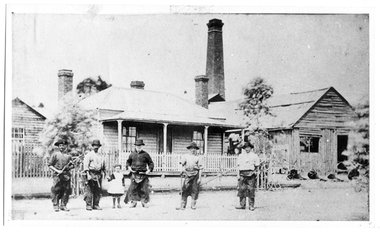 Tarnagulla History Archive
Photograph of Treloar's Foundry and employees, Tarnagulla, Treloar's Foundry and employees, Tarnagulla, between 1855 and 1894
... foreman smith to the Royal Santiago Copper Mining Co. Returning to England in 1851 he remained for two years just as the reports of rich Victorian goldfields began to be heard there. He brought his family...foreman smith to the Royal Santiago Copper Mining Co. Returning to England in 1851 he remained for two years just as the reports of rich Victorian goldfields began to be heard there. He brought his family ...Murray Comrie Collection. Information collated by Murray Comrie: This photograph shows the Treloar Foundry with its chimney, employees and the Treloar home in Commercial Road Tarnagulla H.W. (Henry) Treloar was a native of Redruth in Cornwall, where he was born in 1811. He worked as a blacksmith in his father's Cornwall foundry and then in 1840 went to work in Cuba as a foreman smith to the Royal Santiago Copper Mining Co. Returning to England in 1851 he remained for two years just as the reports of rich Victorian goldfields began to be heard there. He brought his family to Australia in September 1853, arriving in Geelong and then working in Heidelberg for eighteen months. He returned to Geelong to set up a business but after three months was drawn to the Maryborough goldfields, then Dunolly and then Sandy Creek (as Tarnagulla was then known), arriving in March 1855. He remained in Tarnagulla until his death. He established the Foundry in Tarnagulla in 1855 and was known as the best 'mining' smith in the district. After the decline of mining he turned to production of agricultural implements and the firm built a reputation in the field, through devices such as the 'NONPARIEL' tree and stump extractor, double furrow ploughs, seed harrows and scarifiers. On 26th October 1878 the firm won three first prizes for their implements at the North Western Agricultural Show at Ingelwood. The business of Treloar & Son was taken over by the James Bros in November 1894. This photograph is a reasonable copy created from an older original, owned by Miss Doris Nicholls. Copy probably made by Murray Comrie in the 1970s. Monochrome photograph of five men and a young girl standing in front of a house with white verandah posts and two brick chimneys. In the background a much taller brick chimney is visible.tarnagulla, commerce, industry, blacksmithing, smithing, foundry, businesses, treloar, james, buildings, commercial road, main street -
 Tarnagulla History Archive
Photograph of Treloar's Foundry employees demonstrating a stump extractor, Treloar's Foundry employees demonstrating a stump extractor, between 1855 and 1894
... foreman smith to the Royal Santiago Copper Mining Co. Returning to England in 1851 he remained for two years just as the reports of rich Victorian goldfields began to be heard there. He brought his family...foreman smith to the Royal Santiago Copper Mining Co. Returning to England in 1851 he remained for two years just as the reports of rich Victorian goldfields began to be heard there. He brought his family ...Murray Comrie Collection. This photograph shows the Treloar Foundry employees (possibly Henry Treloar with hand resting on the stump extractor) conducting a demonstration of their tree and stump extracting device on a farm in Inglewood while a large crowd watches. Information collated by Murray Comrie: H.W. (Henry) Treloar was a native of Redruth in Cornwall, where he was born in 1811. He worked as a blacksmith in his father's Cornwall foundry and then in 1840 went to work in Cuba as a foreman smith to the Royal Santiago Copper Mining Co. Returning to England in 1851 he remained for two years just as the reports of rich Victorian goldfields began to be heard there. He brought his family to Australia in September 1853, arriving in Geelong and then working in Heidelberg for eighteen months. He returned to Geelong to set up a business but after three months was drawn to the Maryborough goldfields, then Dunolly and then Sandy Creek (as Tarnagulla was then known), arriving in March 1855. He remained in Tarnagulla until his death. He established the Foundry in Tarnagulla in 1855 and was known as the best 'mining' smith in the district. After the decline of mining he turned to production of agricultural implements and the firm built a reputation in the field, through devices such as the 'NONPARIEL' tree and stump extractor, double furrow ploughs, seed harrows and scarifiers. On 26th October 1878 the firm won three first prizes for their implements at the North Western Agricultural Show at Inglewood. The business of Treloar & Son was taken over by the James Bros in November 1894. This photograph is a reasonable copy created from an older original, owned by Miss Doris Nicholls. Copy probably made by Murray Comrie in the 1970s. Monochrome photograph of a large crowd of people watching a stump-removal demonstration in a bush setting.tarnagulla, commerce, industry, blacksmithing, smithing, foundry, businesses, treloar, james, buildings, commercial road, main street -
 Camberwell Historical Society
Book, Tim Gatehouse, Samuel Lazarus: Foreman of the Jury at Ned Kelly's Trial - His Life and His Family, 2016
... Samuel Lazarus: Foreman of the Jury at Ned Kelly's Trial - His Life and His Family...Samuel Lazarus and his family lived in Alma Road, Camberwell, during the last few years of his life. Samuel Lazarus: Foreman of the Jury at Ned Kelly's Trial - His Life and His Family Book Book Tim Gatehouse ...Published in 2016, this is a biographical account of the Lazarus family heritage, particularly Samuel Lazarus and his involvement in Ned Kelly's trial. Samuel Lazarus and his family lived in Alma Road, Camberwell, during the last few years of his life.camberwell, fitzroy historical society, samuel lazarus -
 Bacchus Marsh & District Historical Society
Manuscript, As We Go to Press. [Recollections of the Bacchus Marsh Express Newspaper and Printing Company]
... foreman and eventually as a manager. The Express newspaper, founded in 1866, was printed in Bacchus Marsh for over 100 years. The Express also provided a general printing service for the community in addition to printing copies of the Express newspaper. This unpublished manuscript was written around 1990 and looks back on Arnup's long career as a printer and manager with the Bacchus Marsh Express newspaper and printing business. Allan Arnup 1913-1997 Bacchus Marsh Express Newspaper Printers Printing Industry Bacchus Marsh Express Printing Business Newspapers Bacchus Marsh Crisp Family ...Allan Arnup was born in Bacchus Marsh in 1913. In 1929 he began work at the Bacchus Marsh Express newspaper as an apprentice printer. Over several decades he worked there as a printer, foreman and eventually as a manager. The Express newspaper, founded in 1866, was printed in Bacchus Marsh for over 100 years. The Express also provided a general printing service for the community in addition to printing copies of the Express newspaper. This unpublished manuscript was written around 1990 and looks back on Arnup's long career as a printer and manager with the Bacchus Marsh Express newspaper and printing business.Manuscript. Typescript. Spiral bound. 29 pages. Photocopy of an original typescript. BMDHS Location: AR/SU5/Magazine Box 1allan arnup 1913-1997, bacchus marsh express newspaper, printers, printing industry, bacchus marsh express printing business, newspapers bacchus marsh, crisp family bacchus marsh -
Emerald Museum & Nobelius Heritage Park
Document - Personal effects, 1930s and 1940s
... family until he left to join the RAAF early in World War 2. From 1938 to 1940 he was an assistant propagator. The letters of reference are written by (1) Ronald Lloyd, Vicar of St Mark's, dated 16 November 1936; (2) and (3) F.G. Wood, foreman...family until he left to join the RAAF early in World War 2. From 1938 to 1940 he was an assistant propagator. The letters of reference are written by (1) Ronald Lloyd, Vicar of St Mark's, dated 16 November 1936; (2) and (3) F.G. Wood, foreman ...Prayer/hymn book owned by Ron Nicholls who was a member of St Mark's Church, Emerald, from the time he moved to Emerald with his family until he left to join the RAAF early in World War 2. From 1938 to 1940 he was an assistant propagator. The letters of reference are written by (1) Ronald Lloyd, Vicar of St Mark's, dated 16 November 1936; (2) and (3) F.G. Wood, foreman propagator, Nobelius Nursery, dated 19 August 1940 and 17 April 1941. The letter from Harcourt State School, dated 14 June 1943, is addressed to Emerald State School seeking information about Ron Nicholls, with whom he has been corresponding while Nicholls was in New Guinea with the RAAF. The foolscap sheet contains a list of names of Emerald residents included in correspondence from Ron Nicholls' mother during the war (see below under 'Other information'), and further details about Ron's life. The hand-written remnant was written by Ron Nicholls to his mother from Emerald when he was a child. The news clippings describe (1) a children's fancy dress night held at Emerald School; (2) a coming of age party held for Jack Hirst; and (3) injury received by Geoffrey Kennedy of Macclesfield, when gored by a bull. The photographs are of Ron Nicholls with his mother, playing tennis and on a horse, and a group photograph.1. Soft leather black cover, Common Prayer and Hymn Book2. Three etters of reference 3. A lletter from Harcourt State School|4. Hand-written foolscap sheet|5. Five black and white photographs, one mounted in a cardboard folder, of Ron Nicholls 6. one remnant?1. Ron Nicholls, Emerald 1/6/30emerald, victoria, australia, nurseries (plants), genealogy, religious structures and establishments, ron nicholls, ronald nicholls, nancy nicholls, f. g. wood, st mark's church, ronald lloyd, nobelius nursery, gembrook nurseries, emerald primary school
