
Showing 19 items matching "french grammar"
-
 Tatura Irrigation & Wartime Camps Museum
Foolscap Folder, Hans Luyken, French Grammar, 1942
... French Grammar......French Grammar...Manilla foolscap folder containing typed pages of French Grammar. The spine of the folder has been hand stitched. ...French Grammar made up by Hans Luyken in Tatura 1942...Hans Luyken Wilhelm Eckels French Grammar French Grammar made up by Hans Luyken in Tatura 1942 Manilla foolscap folder containing typed pages of French Grammar. ...This item was in the possession of Wilhelm Eckels an internee in Camp 1.Manilla foolscap folder containing typed pages of French Grammar. The spine of the folder has been hand stitched. The owner's notes have been hand written throughout.French Grammar made up by Hans Luyken in Tatura 1942hans luyken, wilhelm eckels, french grammar -
Tatura Irrigation & Wartime Camps Museum
Book, Exercise
... ...french grammar...Used by Helmut Ruff for French Grammar subject/exercies at internment Camp 3 School...Dark blue patterned cover and printing. 3rd to 6th Grade on front cover and white paper label, wording in bird " Helmut Ruff, French Grammar, (3) 1944 Int. Camp 3 School Arithmetical tables on back cover....Used by Helmut Ruff for French Grammar subject/exercies at internment Camp 3 School education french grammar ruff h camp 3 tatura ww2 camp 3 books school Helmut Ruff, Grammaire Francaise School exercise book "The Oric". ...Used by Helmut Ruff for French Grammar subject/exercies at internment Camp 3 SchoolSchool exercise book "The Oric". Dark blue patterned cover and printing. 3rd to 6th Grade on front cover and white paper label, wording in bird " Helmut Ruff, French Grammar, (3) 1944 Int. Camp 3 School Arithmetical tables on back cover.Helmut Ruff, Grammaire Francaiseeducation, french grammar, ruff h, camp 3, tatura, ww2 camp 3, books, school -
Tatura Irrigation & Wartime Camps Museum
Book, Exercise
... ...french grammar...Used by Internee Helmut Ruff at Camap 3 school for subject French Grammar (20...Printed in biro : Helmut Ruff, French Grammar, (2) 1942,1943, Int. Camp 3 School....Used by Internee Helmut Ruff at Camap 3 school for subject French Grammar (20 education french grammar stotts ruff h camp 3 tatura ww2 camp 3 books school Grammaire Francaise, Helmut Ruff. ...Used by Internee Helmut Ruff at Camap 3 school for subject French Grammar (20School exercise book with "dust cover" made of sheets of newspaper, white paper label on front. Lined paper entries handwritten in ink. Picture of Stott's Business College on front cover. Printed in biro : Helmut Ruff, French Grammar, (2) 1942,1943, Int. Camp 3 School.Grammaire Francaise, Helmut Ruff.education, french grammar, stotts, ruff h, camp 3, tatura, ww2 camp 3, books, school -
Tatura Irrigation & Wartime Camps Museum
Book - Exercise, 1940's
... ...french grammar...Helmut Ruff, French Grammar, (1) 1942 Int. Camp 3 school...Helmut Ruff, French Grammar, (1) 1942 Int. Camp 3 school Book - Exercise ...Used by Helmut Ruff at internment Camp 3 (Tatura) SchoolSchool exercise book with loose brown paper cover. Lined paper, hand entries in ink. Sticker on front cover with wording a biro. Helmut Ruff, French Grammar, (1) 1942 Int. Camp 3 schoolFranzosische Grammatik Helmut Ruff Taturaschool, exercise, french grammar, ruff h, tatura, ww2 camp 3, books, educational -
Tatura Irrigation & Wartime Camps Museum
Exercise Book, Wilhelm Eckels, W. Eckels
... Sovereign blue school exercise book belong to Wilhelm Eckels. Contains French Grammar lessons....Eckels Sovereign blue school exercise book belong to Wilhelm Eckels. Contains French Grammar lessons. W. Eckels Exercise Book Wilhelm Eckels ...Wilhelm Eckels was a wool buyer in Sydney when war broke out. He was interned in camp 1.Sovereign blue school exercise book belong to Wilhelm Eckels. Contains French Grammar lessons.W. Eckelswilhelm eckels, camp school work -
Federation University Historical Collection
Book, University of Melbourne Matriculation and Junior Commercial Examinations, 1905, 12/1905
... Examinations include Greek, Geometry, Algebra, English, History, French, Grammar, German, Arithmetic, Geography, Chemistry, Physics, Botany, Drawing, Commercial, Bookkeeping, Music, Latin, Physics....Examinations include Greek, Geometry, Algebra, English, History, French, Grammar, German, Arithmetic, Geography, Chemistry, Physics, Botany, Drawing, Commercial, Bookkeeping, Music, Latin, Physics. ...University of Melbourne Archives, ref No: 1979.0018, University of Melbourne, Public Examinations Branch, 137 Volumes, Matriculation Examination entries 1855-1903, results and returns 1856-1905, Historical Note describing Matriculation Principal Dates for 1905 from Melbourne University including matriculation.Brown buff paperback book, 106 pages, fold out typewriting exam on page 60. Examinations include Greek, Geometry, Algebra, English, History, French, Grammar, German, Arithmetic, Geography, Chemistry, Physics, Botany, Drawing, Commercial, Bookkeeping, Music, Latin, Physics.university of melbourne, matriculation, examination -
 Federation University Historical Collection
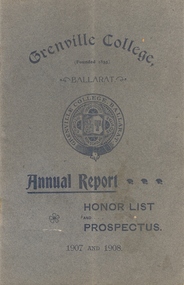
Booklet - Annual Report, Grenville College Annual Report, 1907-8, 1908
... Grammar School. Its name was changed to Grenville College in 1869. In 1908 Grenville College was situated in Mair Street, Ballarat, and the Principal was A.A. Buley. Pupils were educated for either commercial life or for the University. Those who intended to matriculate were advised to take the following subjects: - English, History, and Geography; Arithmetic, Algebra, Euclid, and Trigonometry; and either French and German, or Latin and Greek....Grammar School. Its name was changed to Grenville College in 1869. In 1908 Grenville College was situated in Mair Street, Ballarat, and the Principal was A.A. Buley. Pupils were educated for either commercial life or for the University. Those who intended to matriculate were advised to take the following subjects: - English, History, and Geography; Arithmetic, Algebra, Euclid, and Trigonometry; and either French and German, or Latin and Greek. grenville college cyril callister frank g. menzies william morcom sydney r. curnow william h. collyer revill tinworth c. brokenshire george p. merz alfred h. barrett anthony jenkin alexander sutherland wilford whittle owen peters john la gerche mary delahunty lily evans henry japp edith forster j. sutherland a.m. lilburne eustace coltman james g. leadbeater Fourteen page soft covered Annual Roport, Honor List and Prospectus Grenville College Annual Report, 1907-8 Booklet Annual Report ...Grenville College was founded in 1855 by W. Stellard as Ballarat Grammar School. The school was amalgamated by Mr Victor are Ballarat Grammar School in 1867 as the Ballarat Collegiate and Grammar School. Its name was changed to Grenville College in 1869. In 1908 Grenville College was situated in Mair Street, Ballarat, and the Principal was A.A. Buley. Pupils were educated for either commercial life or for the University. Those who intended to matriculate were advised to take the following subjects: - English, History, and Geography; Arithmetic, Algebra, Euclid, and Trigonometry; and either French and German, or Latin and Greek.Fourteen page soft covered Annual Roport, Honor List and Prospectusgrenville college, cyril callister, frank g. menzies, william morcom, sydney r. curnow, william h. collyer, revill tinworth, c. brokenshire, george p. merz, alfred h. barrett, anthony jenkin, alexander sutherland, wilford whittle, owen peters, john la gerche, mary delahunty, lily evans, henry japp, edith forster, j. sutherland, a.m. lilburne, eustace coltman, james g. leadbeater -
 Federation University Historical Collection
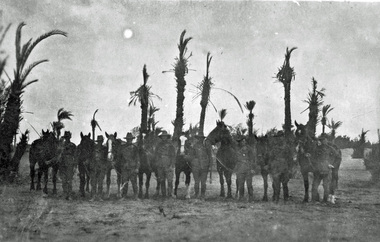
Postcard - photographic, The Ascot (Victoria) Soldiers
... Grammar School. Gordon purchased 'Mt Cavern' in 1912. It had 4 years of a 10 year lease to run. His mother and father took delivery of it on 1 April 1916. They lived there and farmed it until Gordon returned from active service in May 1919. He married Violet Holmes and both lived at "Mt Cavern" until their deaths. Gordon died in 1942 aged 51. Violet Holmes-Spittle died in 1949 aged 56. Chatham family Archive Chatham Holmes World War World War 1 world War I World war One France ...Gordon Spittle was the youngest of Three brothers. He grew up in Creswick and attended Creswick Grammar School. Gordon purchased 'Mt Cavern' in 1912. It had 4 years of a 10 year lease to run. His mother and father took delivery of it on 1 April 1916. They lived there and farmed it until Gordon returned from active service in May 1919. He married Violet Holmes and both lived at "Mt Cavern" until their deaths. Gordon died in 1942 aged 51. Violet Holmes-Spittle died in 1949 aged 56. Image of eight Australian soldiers during World War One. They stand in front of damaged palm trees alongside their horses. Each of the soldiers are from Ascot, Victoria. They are Harry [Holmes], Jack Nase, Harold Reid, Gordon Spittle, Les Walters, Archie May, Frank Thomas, Joe Fawcett.'Verso 'A group of the Ascot boy. Taken with our own horses. from left to right:- Harry [Holmes], Jack Nase, Harold Reid, Gordon Spittle, Les Walters, Archie May, Frank Thomas, Joe Fawcett.'chatham family archive, chatham, holmes, world war, world war 1, world war i, world war one, france, ascot, harry holmes, gordon spittle, les walters, archie may, frank thomas. mase, reif, spittle, walters, may, thomas, fawcett -
 Mission to Seafarers Victoria
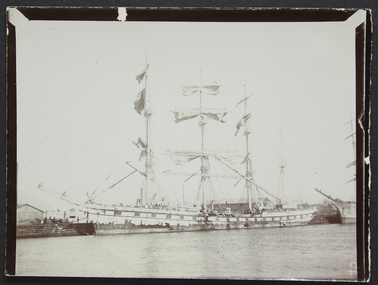
Photograph - Photograph, Sepia, Mr and Mrs Gurney Goldsmith, c. 1906-1907
... (Williamstown Advertiser, Saturday 2 September 1905, page 3) Monomeith has been housing the Westbourne Grammar School, Williamstown Campus, since it was leased from the Harbour Trust in 1956 then purchased by the school in 1972. ship melbourne. sailing ship 1900's french barque williamstown Disabled French Barque: Towing up the Yarra from Monomeith Gardens Newport Small monochrome photograph with a black border depicting a sailing ship berthed in docks. ...Possibly a photograph of a damaged vessel. The inscription at the back: Monomeith is a Victorian mansion, located on 67 the Strand in Williamstown. Monomeith, located 67 the Strand, in Newport was built in 1887, and was the house of Senator James Styles. Reverend Gurney Goldsmith lived in Monomeith from 17 Octoberr 1905 to at least November 1907 (See Victorian Government Gazette: 14 November 1907) until he and his wife could move in the new central Seamen Institute open in December 1907. "Senator Styles' house, “Monomeith," Strand, has been leased to the Rev. A. Gurney Goldsmith, who has been sent to Victoria from England to establish a Church of England mission to seamen. Tho new tenant will enter into possession on October 17th and proposes to make it a rendezvous for seamen, and to get about the bay and river on an oil motor launch. It is his intention to establish a mission church and home near Victoria dock. Senator Styles and family will reside at Hawthorn." (Williamstown Advertiser, Saturday 2 September 1905, page 3) Monomeith has been housing the Westbourne Grammar School, Williamstown Campus, since it was leased from the Harbour Trust in 1956 then purchased by the school in 1972. Small monochrome photograph with a black border depicting a sailing ship berthed in docks.Disabled French Barque: Towing up the Yarra from Monomeith Gardens Newportship, melbourne., sailing ship, 1900's, french, barque, williamstown -
 Mission to Seafarers Victoria
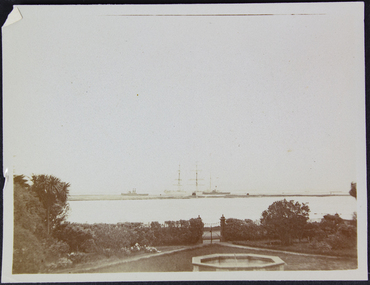
Photograph - Photograph, Sepia, Mr and Mrs Gurney Goldsmith, Disabled French Barque: Towing up the Yarra from Monomeith Gardens Newport, 1906
... (Williamstown Advertiser, Saturday 2 September 1905, page 3) Monomeith has been housing the Westbourne Grammar School, Williamstown Campus, since it was leased from the Harbour Trust in 1956 then purchased by the school in 1972. monomeith newport french barque towing yarra river Handwritten in pencil on verso: 83 (?) ...Monomeith, located 67 the Strand, in Newport was built in 1887, and was the house of Senator James Styles. Reverend Gurney Goldsmith lived in Monomeith from 17 Octoberr 1905 to at least November 1907 (See Victorian Government Gazette: 14 November 1907) until he and his wife could move in the new central Seamen Institute open in December 1907. "Senator Styles' house, “Monomeith," Strand, has been leased to the Rev. A. Gurney Goldsmith, who has been sent to Victoria from England to establish a Church of England mission to seamen. Tho new tenant will enter into possession on October 17th and proposes to make it a rendezvous for seamen, and to get about the bay and river on an oil motor launch. It is his intention to establish a mission church and home near Victoria dock. Senator Styles and family will reside at Hawthorn." (Williamstown Advertiser, Saturday 2 September 1905, page 3) Monomeith has been housing the Westbourne Grammar School, Williamstown Campus, since it was leased from the Harbour Trust in 1956 then purchased by the school in 1972. Small monochrome photograph, view of ships from a parkHandwritten in pencil on verso: 83 (?) and a 3 in bottom right cornermonomeith, newport, french, barque, towing, yarra river -
 Federation University Historical Collection
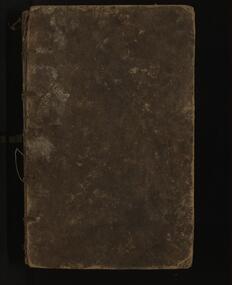
Book, Edward Lhuyd, Archaeologia Britannica, 1707, 1707
... France), and that the Goidelic languages originated in the Iberian Peninsula. Lhuyd concluded that as the languages had been of Celtic origin, the people who spoke those languages were Celts. From the 18th century, the peoples of Brittany, Cornwall, Ireland, Isle of Man, Scotland and Wales were known increasingly as Celts, and are regarded as the modern Celtic nations today. (Wikipedia) language gaelic irish scottish edward lhuyd welsh latin greek etymologicon celtic Oversize book. Includes the original languages of England and Ireland, Amoric Grammar ...Printed at the Theater for the author, MDCCVII . And sold by Mr . Bateman in Pater -Noster-Row, London: and Jeremiah Pepyat bookseller at Dublin. Lhuyd [Lhwyd; formerly Lloyd], Edward (1659/60?-1709), was a naturalist and philologist and the Keeper of the Ashmolean Museum. Lhuyd was a pioneering linguist. In the late 17th century, Lhuyd was contacted by a group of scholars, led by John Keigwin of Mousehole, who were trying to preserve and further the Cornish language and he accepted the invitation to travel to Cornwall to study the language. Early Modern Cornish was the subject of a study published by Lhuyd in 1702; it differs from the medieval language in having a considerably simpler structure and grammar. In 1707, having been assisted in his research by fellow Welsh scholar Moses Williams, he published the first volume of Archaeologia Britannica: an Account of the Languages, Histories and Customs of Great Britain, from Travels through Wales, Cornwall, Bas-Bretagne, Ireland and Scotland. This book is an important source for its linguistic description of Cornish, but even more so for its understanding of historical linguistics. Some of the ideas commonly attributed to linguists of the nineteenth century have their roots in this work by Lhuyd, who was "considerably more sophisticated in his methods and perceptions than [Sir William] Jones’’. Lhuyd noted the similarity between the two Celtic language families: Brythonic or P–Celtic (Breton, Cornish and Welsh); and Goidelic or Q–Celtic (Irish, Manx and Scottish Gaelic). He argued that the Brythonic languages originated in Gaul (France), and that the Goidelic languages originated in the Iberian Peninsula. Lhuyd concluded that as the languages had been of Celtic origin, the people who spoke those languages were Celts. From the 18th century, the peoples of Brittany, Cornwall, Ireland, Isle of Man, Scotland and Wales were known increasingly as Celts, and are regarded as the modern Celtic nations today. (Wikipedia)Oversize book. Includes the original languages of England and Ireland, Amoric Grammar, Amoric-English Vocabulary, Welsh words ommitted from Dr Davies' dictionary, Cornish Grammar, Ancient Scottish language, Irish-English Dictionary. Four page index which includes the errata, has the list of subscribers, mainly 3 columns per page. Includes a Cornish Grammar and dictionary of the Irish language, Archaeologia Britannica, Giving Some Account Additional to What Has Been Hitherto Published, of The Languages, Histories and Customs of the Original Inhabitants of Great Britain: From Collections and Observations in Travels Through Wales, Cornwal, Bas-Bretagne, Ireland and Scotland. Chapters on: The comparative Etymology, The comparative Vocabulary, The Armoric Grammar and Vocabulary, Dr Davies's Dictionary, Cornish Grammar, Catalogue of British Manuscripts in Welsh and Latin, Essay towards a British Etymologicon, The Introduction to the Irish, Irish Dictionary etc. language, gaelic, irish, scottish, edward lhuyd, welsh, latin, greek, etymologicon, celtic -
 Flagstaff Hill Maritime Museum and Village
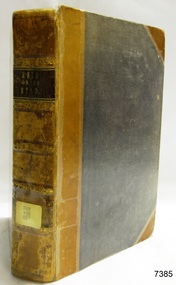
Book - Reference Book/Scholarly/Philosophy, Rev. George Newenham Wright et al, Essays on The Active Powers of the Human Mind (Annotated Version by REV. G N Wright), 1843
... France, Germany, and the United States, and he also made important contributions to epistemology, philosophy of mind, ethics, and free will. Rev. George Newenham Wright (1794–1877), who authored the subject book was an Irish Anglican clergyman, writer, and educator. Born in Dublin to physician John Thomas Wright, he earned his B.A. in 1814 and M.A. in 1817 from Trinity College Dublin. He held curacies in Ireland, later served in London at St Mary Woolnoth, taught classics in Windsor, boarded pupils in Frome, and became master of Tewkesbury Grammar...France, Germany, and the United States, and he also made important contributions to epistemology, philosophy of mind, ethics, and free will. Rev. George Newenham Wright (1794–1877), who authored the subject book was an Irish Anglican clergyman, writer, and educator. Born in Dublin to physician John Thomas Wright, he earned his B.A. in 1814 and M.A. in 1817 from Trinity College Dublin. He held curacies in Ireland, later served in London at St Mary Woolnoth, taught classics in Windsor, boarded pupils in Frome, and became master of Tewkesbury Grammar ...Essays on The Active Powers of the Human Mind (Annotated Version by REV. G N Wright) Author: Original 1788 work by Thomas Reid ( subject work by REV. G N Wright ) Publisher: Thomas Tegg London Date: Subject work 1843 Black cloth cardboard covers with leather embossed ribbed spine (This is a first edition) non-fictionpattison collection, flagstaff hill maritime museum, george newenham, thomas reid, philosophy, book, warrnambool mechanics institute -
 Bendigo Historical Society Inc.
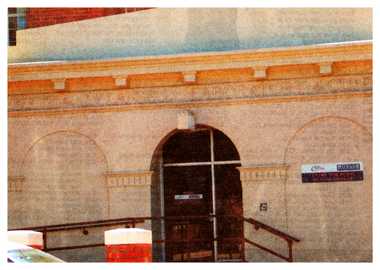
Newspaper - Fortuna Article - "Lansell's Impressive Legacy", Mar 06 2008
... Grammar. Married Edith, a skiing champion, in 1910; honeymooned overseas and visited Egypt. Named his Bendigo home 'Denderah' after an Egyptian archaeological site. The house featured art nouveau architecture and a Widow's Walk for astronomy. Commissioned in the 8th Australian Infantry Regiment in 1904; captain by 1909. He served in France...Grammar. Married Edith, a skiing champion, in 1910; honeymooned overseas and visited Egypt. Named his Bendigo home 'Denderah' after an Egyptian archaeological site. The house featured art nouveau architecture and a Widow's Walk for astronomy. Commissioned in the 8th Australian Infantry Regiment in 1904; captain by 1909. He served in France ...George Victor Lansell was Born in London in 1883, eldest son of George Lansell ('Quartz King') and Edith. Educated at St Andrew's College, Bendigo, and Melbourne Grammar. Married Edith, a skiing champion, in 1910; honeymooned overseas and visited Egypt. Named his Bendigo home 'Denderah' after an Egyptian archaeological site. The house featured art nouveau architecture and a Widow's Walk for astronomy. Commissioned in the 8th Australian Infantry Regiment in 1904; captain by 1909. He served in France during World War I with the 38th Battalion; wounded but returned to service. George organized the northwest Victorian Volunteer Defence Corps in WWII; retired as honorary colonel in 1942. Served as a Nationalist Party member for Bendigo in the Legislative Council, later joined the Country Party.President of the Bendigo branch of the Returned Sailors' and Soldiers' Imperial League of Australia for nearly 30 years. Led fundraising for the Soldiers' Memorial Hall and its brass honour rolls. Director of several local companies, including Sandhurst Trustees Co. and Bendigo Mutual Permanent Land and Building Society. Introduced Hanro Knitting Mills and the Australian Swiss Watch Co. to Bendigo.Acquired and merged the Bendigo Independent with The Bendigo Advertiser. Built a clinic at Bendigo Hospital with his mother; donated medical equipment and supported local institutions like the Benevolent Home, art gallery, School of Mines, and YMCA.Recognition and Legacy. Knighted in 1951.Remembered for personal generosity, especially to ex-servicemen and their families.Described as shy and retiring, but a major figure in Bendigo's history.His funeral in 1959 was one of the largest in Bendigo, reflecting his impact on the community.Fortuna Restoration Article - "Lansell's Impressive Legacy" - The Bendigo Miner Tuesday March 06 2008- Author Jim Evans This item contains the following: 11217.10a Colour Photo of The Edith and G. V. Lansell Laboratory Clinic at the Bendigo Hospital 11217.10b Part of page 23 - Lansell's Impressive Legacynon-fictionbendigo, fortuna, george lansell, the edith and g. v. lansell laboratory clinic -
 Bendigo Historical Society Inc.
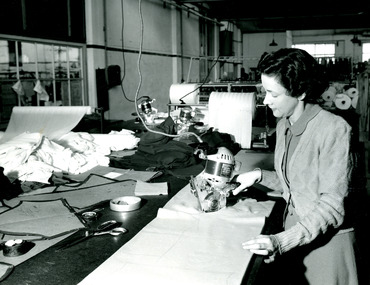
Photograph - HANRO COLLECTION: PROMOTIONAL PHOTOGRAPHS, 1940's
... Grammar School. On 20 January 1910 at All Saints Pro-Cathedral, Bendigo, he married a skiing champion, Edith Florence Gwendoline Frew; they had three daughters. As a young man Lansell excelled in revolver shooting, boxing and swimming but his militia interests endured longest. First commissioned in the 8th Australian Infantry Regiment in 1904, he was a captain in 1909. In May 1916 he was commissioned captain in Bendigo's 38th Battalion, Australian Imperial Force. Entering the front line in France...Grammar School. On 20 January 1910 at All Saints Pro-Cathedral, Bendigo, he married a skiing champion, Edith Florence Gwendoline Frew; they had three daughters. As a young man Lansell excelled in revolver shooting, boxing and swimming but his militia interests endured longest. First commissioned in the 8th Australian Infantry Regiment in 1904, he was a captain in 1909. In May 1916 he was commissioned captain in Bendigo's 38th Battalion, Australian Imperial Force. Entering the front line in France ...Sir George Victor Lansell (1883-1959), businessman, politician and philanthropist, was born on 3 October 1883 in London, elder son of George Lansell, the Bendigo 'Quartz King', and his second wife Harriet Edith, née Bassford. George was educated at St Andrew's College, Bendigo, and Melbourne Church of England Grammar School. On 20 January 1910 at All Saints Pro-Cathedral, Bendigo, he married a skiing champion, Edith Florence Gwendoline Frew; they had three daughters. As a young man Lansell excelled in revolver shooting, boxing and swimming but his militia interests endured longest. First commissioned in the 8th Australian Infantry Regiment in 1904, he was a captain in 1909. In May 1916 he was commissioned captain in Bendigo's 38th Battalion, Australian Imperial Force. Entering the front line in France on 1 December he was wounded two days later and invalided back to Australia next March for discharge in August. After the war he rose in 1923 to major commanding the 38th Battalion, Australian Military Forces. Lieutenant-Colonel in 1927, he retired as honorary colonel in 1942 after having organized the north-west Victorian group of the Volunteer Defence Corps early in World War II. Lansell's major contribution was his service to returned soldiers. He was president of the Bendigo sub-branch of the Returned Sailors' and Soldiers' Imperial League of Australia for nearly thirty years. His work extended beyond grand gesture and he is remembered affectionately for his personal generosity to ex-servicemen and their dependants. Lansell was director of the powerful Sandhurst Trustees' Co., the Bendigo Mutual Permanent Land & Building Society and many other local companies. In 1926 he brought to Bendigo the overseas-based Hanro Knitting Mills (Hanro comes from the Swiss firm Handschin and Ronus which made high quality underwear and knitwear at Liestal, Switzerland) and the Australian Swiss Watch Co. Early in his business career he acquired the Bendigo Independent and amalgamated it with the Bendigo Advertiser in 1918. He had interests in the Riverine Herald, the Rochester Irrigator, the Stock and Station Journal and Central Victorian Broadcasters Ltd, and was a delegate to Empire press conferences in Canada (1920), England (1923) and Australia (1925).Lever arch folder containing Hanro black and white promotional photographs. 53 studio photographs of women's knitwear and lingerie 20.5cm x 25.2cm. 1 studio photograph of men's knitwear 19cm x 23.5cm. 2 x photo's 19cm x 23.3cm Photographer Reg Brock. 27 black and white photo's 15cm x 21cm of men's knitwear, womenswear and lingerie, were donated by Ann Peters.Reg Brock Studios Bendigo. Labels or stamps on back of photographs.business, retail, hanro promotional photographs, george victor lansell, bendigo hanro, ralph birrell collections -
Eltham District Historical Society Inc
Document - Folder, Pugh, Clifton
... Clifton Pugh Hurstbridge Adriane Strampp Princess Michael of Kent Arthur Boyd John Brack Charles Blackman Fred Williams Shane Pugh Marlene Pugh Professor Jock Marshall Briar Hill Victoria Cottles Bridge Victoria Turner family of Briar Hill Yandell family of Briar Hill St Helena Church St Helena Road Briar Hill Primary School Eltham High School Dunmoochin Campbell Beardsell David Beardsell Ivanhoe Boys Grammar School National Gallery Art School Hurstbridge Grevillea Montsalvat George Dreyfus Kew City Band Justus Jorgensen Sir Edward "Weary" Dunlop Prue Acton John Howley Fay Dunmore Singers Derryn Hinch Jeff Kennett Tom Uren Dennis Gowing Matcham Skipper Kyra Skipper Gordon Ford Hilary Jackman Peter Graham Robert Marshall John Greaves Jenni Mitchell Rodney Roschollor Gough Whitlam Sir John Kerr Lionel Murphy Manning Clark Arts Policy Committee of Victorian Branch of the Australian Labor Party Latrobe's Art Museum Rudy Komon Gallery Leonard French Jon Molvig Rick Armor John Olsen LaTrobe University Donovan Pugh Trevor Welshman Australia Council Visual Arts Board Lesley Alway Dailan Pugh Paul Barnett Helen Nixon Helen Lunn A Year of Orchids book Campbell Bearsdell David Bearsdell Johnny Young Ian McKimmie Tiwi art Strathewen Hall Rhonda Noble LaTrobe University Art Museum Traudi Allen Clifton Pugh Patterns of a Lifetime book Trust for Nature Randall Robinson Newspaper clippings, A4 photocopies, etc Pugh, Clifton Document Folder ...The artist, Clifton Pugh, grew up in Briar Hill. He served in WWII and settled at Cottles Bridge, building his own house and forming Dunmoochin artist colony. He married three times and had two sons. He painted the portraits of many eminent people. Contents Newspaper article: "This is the house that Cliff built", The Age, 2 May 1964. Description of Clifton and Marlene Pugh's house.. Folder: Brief biography Clifton Pugh. Photocopy section of "Clifton Pugh: Patterns of a lifetime", Traudi Allen, Nelson, Melbourne 1981. Magazine article: "Clifton Pugh: His home is a work of art", Woman's Day, 16 January 1894. Describes Clifton Pugh's house at Hurstbridge. Newspaper article: "A guide to our orchids", Diamond Valley News, 14 February 1984. Clifton Pugh contributed to the book "A Year of Orchids". Newspaper article: "A family tradition is continued". Diamond Valley News, 28 February 1984. Clifton Pugh's childhood and career. Magazine article: "Clifton Pugh's bush paradise", Home Beautiful, May 1989. Clifton Pugh's house and studio. Clipping: "Clifton Pugh award winning artist". Clifton Pugh currently working on illustrations for a book, with Pam Blashki, on wood chipping ["A Kingdom Lost: A Story of the Devastation of Our Wilderness", published 1989]. Newspaper article: "Funeral drama shows the Pugh touch", The Age, 19 October 1990. Clifton Pugh's funeral at Montsalvat. Newspaper article: "Friends bid farewell to Pugh". Herald-Sun, 19 October 1990. Clifton Pugh's funeral at Montsalvat. Newspaper article: "Friends paint a lowing portrait". Herald-Sun, 19 October 1990. Funeral and obituary of Clifton Pugh. Newspaper article: "Montsalvat mourns passing of a great". Diamond Valley News, 23 October 1990. Clifton Pugh's funeral at Montsalvat. Newspaper article: "Loner who was a fair dinkum mate". Diamond Valley News, 23 October 1990. Obituary of Clifton Pugh. Newspaper article: "Pugh's last works", Tempo, The Age, 17 July 1991. Clifton Pugh was illustrating Helen Lunn's book 'The Digger's Mate' when he died. Newspaper article: "Dunmoochin's rich tradition to live on", Diamond Valley News, 29 October 1993. Dunmoochin Foundation Board to advertise lease of studios. Newspaper article: "Clean up for Cliff", Herald Sun, 8 December 1993. Preparation for exhibition of Clifton Pugh's work at LaTrobe University Art Museum. Flier: Exhibition "Clifton Pugh: A Retrospective", Montsalvat, 12 to 14 November 1999. Newsletter: "Dunmoochin: an edited version of the history prepared for the Heritage Study by David Bick", Eltham District Historical Society newsletter 140, September 2001 Newspaper article: "Hail rising of Phoenix", Diamond Valley Leader, 20 July 2005. Dunmoochin Foundation and official opening of buildings Phoenix I and Phoenix II after the 2001 bush fire. Newspaper article: "Legacy to the arts", Diamond Valley Leader, 10 August 2005. Dunmoochin Foundation and the rebuilding after the 2001 bush fire. Newspaper article: "Tiwi art to go on show", ?publication, ?2002. Shane Pugh, Johnny Young and Ian McKimmie organising exhibition of Tiwi art to mark 100th birthday of Strathewen hall. Flier: Exhibition "Clifton Pugh AO: Reflections of Dunmoochin". Briar Hill Primary School, 23 to 25 November 2007. Printout: "Dunmoochin", http://www.standrews.vic.edu.au/dunmoochin.html. 19 May 2004. Newspaper article: "Hail rising of Phoenix", Diamond Valley Leader, 20 July 2005. Rebuilding at Dunmoochin after bushfire. Newspaper article: "Legacy to the arts", Diamond Valley Leader, 10 August 2005. Rebuilding at Dunmoochin after bushfire. Newspaper article: "Artist's legacy on show". Dunmoochin one of four Cottles Bridge sites for a tour by Trust for Nature, 2 and 3 October no year. Newspaper clippings, A4 photocopies, etcclifton pugh, hurstbridge, adriane strampp, princess michael of kent, arthur boyd, john brack, charles blackman, fred williams, shane pugh, marlene pugh, professor jock marshall, briar hill victoria, cottles bridge victoria, turner family of briar hill, yandell family of briar hill, st helena church, st helena road, briar hill primary school, eltham high school, dunmoochin, campbell beardsell, david beardsell, ivanhoe boys grammar school, national gallery art school, hurstbridge grevillea, montsalvat, george dreyfus, kew city band, justus jorgensen, sir edward "weary" dunlop, prue acton, john howley, fay dunmore singers, derryn hinch, jeff kennett, tom uren, dennis gowing, matcham skipper, kyra skipper, gordon ford, hilary jackman, peter graham, robert marshall, john greaves, jenni mitchell, rodney roschollor, gough whitlam, sir john kerr, lionel murphy, manning clark, arts policy committee of victorian branch of the australian labor party, latrobe's art museum, rudy komon gallery, leonard french, jon molvig, rick armor, john olsen, latrobe university, donovan pugh, trevor welshman, australia council visual arts board, lesley alway, dailan pugh, paul barnett, helen nixon, helen lunn, a year of orchids book, campbell bearsdell, david bearsdell, johnny young, ian mckimmie, tiwi art, strathewen hall, rhonda noble, latrobe university art museum, traudi allen, clifton pugh patterns of a lifetime book, trust for nature, randall robinson -
Koorie Heritage Trust
Book, Blake, Barry J, Australian Aboriginal Languages : a general introduction, 1991
... . | Language - Linguistics - Phonology and phonetics | Language - Kriol | Language - Sociolinguistics - Secret and special languages | Language - Vocabulary - Human classification | Language - Vocabulary - Word lists Non-technical introduction covering phonology, grammar, vocabulary, sociolinguistics, language relationships pidgin and Aboriginal English, loan words in English, wordlists in Tiwi, Malak-Malak, Alyawarre, Walmajarri, Nyungar, Pitjantjatjara, Wemba-Wemba, Dharawal, Bidyara, Pitta-Pitta, Kalkatungu and Mayi-Yabi. In 1788 Australia had more than 200 such languages -- as different from each other as English is from French ...Non-technical introduction covering phonology, grammar, vocabulary, sociolinguistics, language relationships pidgin and Aboriginal English, loan words in English, wordlists in Tiwi, Malak-Malak, Alyawarre, Walmajarri, Nyungar, Pitjantjatjara, Wemba-Wemba, Dharawal, Bidyara, Pitta-Pitta, Kalkatungu and Mayi-Yabi. In 1788 Australia had more than 200 such languages -- as different from each other as English is from French. Today, more than 100 are extinct and many of the rest are under threat. Professor Blake describes the sounds, spelling and location of the different languages, and dispels many popular myths.viii, 138 p. : ill., map. ; 21 cm.Non-technical introduction covering phonology, grammar, vocabulary, sociolinguistics, language relationships pidgin and Aboriginal English, loan words in English, wordlists in Tiwi, Malak-Malak, Alyawarre, Walmajarri, Nyungar, Pitjantjatjara, Wemba-Wemba, Dharawal, Bidyara, Pitta-Pitta, Kalkatungu and Mayi-Yabi. In 1788 Australia had more than 200 such languages -- as different from each other as English is from French. Today, more than 100 are extinct and many of the rest are under threat. Professor Blake describes the sounds, spelling and location of the different languages, and dispels many popular myths.australian languages. | aboriginal australians -- languages. | language - linguistics - phonology and phonetics | language - kriol | language - sociolinguistics - secret and special languages | language - vocabulary - human classification | language - vocabulary - word lists -
 Melbourne Legacy
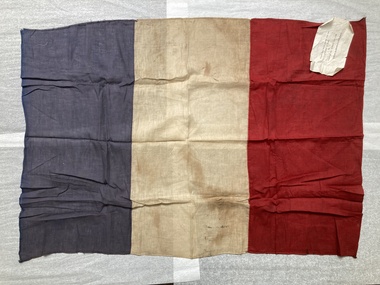
Flag, French Flag
... Grammar School. She never married and died in 1976. The founding Legatees all fought in World War One and momentos like this flag would have been appreciated by them. france world war one rouen nurse souvenir Note with the flag is typed and says ' French Flag which floated over the Town Hall in Rouen on Armistice Day November 11th 1918. ...A French flag that was flown in Rouen, France on Armistice Day in 1918. The note says it was donated to Legacy by Matron H. E. Tait RRC. There are no details how she came to have the flag or why she gave it to Melbourne Legacy. From the AWM Matron HE Tait is Helen Elizabeth Tait, from Maffra who had trained at the Alfred Hospital and joined the Australian Army Nursing Service. She was awarded the Royal Red Cross (2nd Class) for her service in World War One. Her full record is available from the National Archive of Australia. It shows she was serving at the 1st Australian General Hospital in Rouen in November of 1918 when the war ended. RRC is The Royal Red Cross (RRC) which is a military decoration awarded in the United Kingdom and Commonwealth for exceptional services in military nursing. After the war she returned to Melbourne and was Matron of Melbourne Grammar School. She never married and died in 1976.The founding Legatees all fought in World War One and momentos like this flag would have been appreciated by them.A French flag from World War One.Note with the flag is typed and says ' French Flag which floated over the Town Hall in Rouen on Armistice Day November 11th 1918. Donated by Matron H. E. Tait, R.R.C.'france, world war one, rouen, nurse, souvenir -
 City of Melbourne Libraries
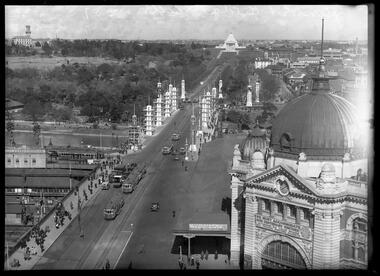
Photograph, Bull, Hugh Jones, 1897-1993, Princes Bridge Centenary pylons under construction
... French-Italian style of landscape complete with palms. The gardens at the end of Fitzroy Street, St Kilda, now bear his name. The historic boathouse visible across the Yarra is another glimpse into Melbourne’s past. “Boathouse Row” comprises 7 amateur rowing clubs, the first established in 1859 (Melbourne University Boat Club). Other Clubs were Richmond, Melbourne, Banks, Melbourne Grammar...French-Italian style of landscape complete with palms. The gardens at the end of Fitzroy Street, St Kilda, now bear his name. The historic boathouse visible across the Yarra is another glimpse into Melbourne’s past. “Boathouse Row” comprises 7 amateur rowing clubs, the first established in 1859 (Melbourne University Boat Club). Other Clubs were Richmond, Melbourne, Banks, Melbourne Grammar ...Princes Bridge Centenary pylons under construction Possibly taken from Young and Jacksons Hotel (formerly Princes Bridge Hotel) on the corner of Flinders and Swanston streets, Flinders Street Station’s clocks and main entrance dominate, along with its distinctive copper dome and decorative façade. The time on the main clock is 1.40pm, and the sign underneath, reflecting Melbourne’s upcoming Centenary reads, “We must accommodate our Centenary visitors! Citizens! Do your share by taking paying guests.” At left is the original Princes Bridge Station, today the site of Federation Square. The riverside tram terminus advertises a Café/Tobacconist/Refreshment Room selling cigars & cigarettes, fountain drinks & confectionery, and in smaller text: “Leave your boot repairs here”. Nearly everyone is dressed in dark suits, coats and hats. The footpaths are wide and there are no traffic lights. The roadway stretches towards the Shrine of Remembrance, not yet dedicated but very dominant on the skyline. Government House is clearly visible across the wide parkland that would come to be known as Kings Domain and that is an area of deep importance to the people of the Eastern Kulin. Originally, Birrarung was part of a network of swamps and lagoons linked to the course of the river. From 1896, Public Works Department engineer Carlo Catani, oversaw a new channel to straighten the river and the swamps and lagoons were filled with spoil from the channel works. From the same vantage point today, only the top of the tower of Government House would be visible. The photo captures the pylons along Princes Bridge, mid-construction and being installed to mark Melbourne’s Centenary. The pylons were not without controversy. Both The Argus and The Age bemoaned them for being “made almost entirely of imported softwood timber”, denying work to native hardwood timber workers and sawmillers, and leading visitors to think Australia did not have its own exceptional native hardwoods. The pylons were also variously described in their incomplete state, as unimaginative and resembling an oilfield. Published: The Age 5 September 1934 Featured in "Newsworthy: Melbourne in photographs 1933-1936" exhibition at East Melbourne Library, October to December 2023. Exhibition caption by project volunteer, Louise McKenzie Photographer notations on slide: "Pylons + St Kilda Rd C57" Published: Age (Melbourne, Vic. : 1854 - 1954), Wednesday 5 September 1934, page 11 Published title: DECORATIONS -- THEN AND NOW. Published caption: "Although not completed yet, some impression of the effect of the decorations on Princes-bridge may be obtained from the first picture which shows the majestic sweep of St Kilda road with the Shrine of Remembrance and Government House dominating the horizon. The area to the left of St. Kilda-road and in front of Government House is portion of the area which it is proposed to call the King's Domain, which extends to Domain-road and Anderson-street..." Description: East-facing, elevated view of Flinders Street Station and Princes Bridge, featuring partially completed pylons erected for Melbourne's Centenary celebrations. The Shrine of Remembrance and Government House can be seen in the distance. In the foreground are trams, cars and trucks, pedestrians, Batman Avenue tram terminus and refreshment rooms. Signage on Flinders Street Station encourages citizens to accommodate Centenary visitors. The Melbourne Centenary was held 1934-35 in celebration John Batman's proclamation that Melbourne "the place for a village". Centenary events included a visit by Prince Henry, Duke of Gloucester. A Centenary Cake measuring 50 feet in height and ten tons in weight was cut into 250,000 pieces and sold at 1 shilling per piece for charity. Spectacular floodlighting of city landmarks, the creation of the Pioneer Women's Memorial Garden, and the MacRobertson Air Race from London, were other notable activities. Research by project volunteer, Louise McKenzie: The photo in The Age collage of 5 September 1934 has a slightly cropped foreground. The original photo has been taken from an elevated vantage point, most probably the roof of the Nicholas Building on the corner of Flinders and Swanston streets. The right foreground is dominated by the main “clocks” entrance to Flinders Street Station, showing its distinctive copper dome and decorative façade. The time on the main clock is 1.40 pm. The main sign on the front of the Station reads, "We Must Accommodate our Centenary Visitors! Citizens! Do your share by taking paying guests. Write to The Official Centenary Accommodation Bureau, 436 Collins St. City. Tel M 4671”. Another sign at eye level at the main entrance says: “Cheap Trips on Sundays”. The sign on the end of the roof along the eastern side of the station reads, “The Babies Need Your Help! Support Broadmeadows Foundling Hospital Appeal. July and August”. Run by the Sisters of St Joseph of the Sacred Heart, St Joseph’s Foundling Hospital was a purpose built infants’ home for up to 300 babies, plus accommodation for expectant mothers, mainly single women. In the early 1930s, the department (Victorian Children’s Welfare Department) contracted St Joseph’s Foundling Hospital to care for an additional 60 infant state wards, and up to 175 non wards at any given time. In 1931 it also operated a mothercraft training school. The centre foreground shows the commencement of Princes Bridge. Beneath the left side of the bridge was the site of the original Princes Bridge Station, by this time incorporated into Flinders Street Station, and today the area is the site of Federation Square. It was linked to Flinders Street station by the railway tracks that ran underneath the northern approach to the bridge. This photo shows a tram terminus which has a Café/Tobacconist/Refreshment Room, selling cigars & cigarettes, fountain drinks & confectionary, and a sign: Leave your boot repairs here. In the foreground is a wide roadway running south/north, comprising two vehicle lanes each heading north/south, and a central section containing two sets of tram tracks. There are cars, buses and delivery vans on the roadway. The trams visible are Glen Iris (Route No. 6; tram no. 448), Toorak (Route No. 8, tram no. 333), ? (No. 7), ? (No. 1), and ? (No. 2A). The footpaths are extremely wide. There is a square newspaper/magazine stand on the eastern side footpath. And also a “Ferry” sign. There are no traffic lights, but a policeman is visible on the roadway. There are pedestrians – men, women, children, a porter with trolley, women with prams. Clothing comprises dark suits, coats and hats for nearly everyone. There are double headed “Collins Street” lights along the side of the roadway, and along the northern riverbank. The roadway in the foreground is an extension of Swanston Street, which becomes Princes Bridge, then St Kilda Road, stretching towards the Shrine of Remembrance, and diverting past it. The Shrine had not yet been officially dedicated, and looks very white and dominant on the skyline. On the LHS of St Kilda Road, Government House is clearly visible across the wide parkland to be known as Kings Domain. The Kings Domain area is important to the people of the Eastern Kulin nation, and also has historical importance for its association with the early settlement of Melbourne and the foundation of British colonial administration in Victoria. On the southern side of the Yarra River (Birrarung) an historic rowing boathouse is visible, located adjacent to the Alexandra Gardens. Originally Birrarung was part of a network of swamps and lagoons linked to the course of the river. From 1896, under the guidance of engineer Carlo Catani* a new channel to straighten the river was created and the swamps and lagoons were filled with spoil from the channel works. The gardens were then created and completed in time for a Royal visit by the Duke of York in May 1901. The gardens are named after Alexandra of Denmark, the wife of King Edward VII. Both these areas, plus the Royal Botanic Gardens Victoria, Shrine of Remembrance Reserve, Sidney Myer Music Bowl, Government House, and the Queen Victoria Gardens together form the Domain Parklands. The extent of the subsequent plantings is evident today, where from the same vantage point only the top of the tower of Government House would be visible. *Catani was born in Florence in 1852, but after arriving in Melbourne worked as a civil engineer for the Victorian Government. His last major project was the reclamation of the foreshore of St Kilda, envisaged in the style of a European resort, complete with a split level esplanade, bathing pavilions, dance halls, amusements and a French-Italian style of landscape complete with palms. The gardens at the end of Fitzroy Street, St Kilda, now bear his name. The historic boathouse visible across the Yarra is another glimpse into Melbourne’s past. “Boathouse Row” comprises 7 amateur rowing clubs, the first established in 1859 (Melbourne University Boat Club). Other Clubs were Richmond, Melbourne, Banks, Melbourne Grammar School, Yarra Yarra and Mercantile. South of the river and west of the bridge is an area today developed into the Melbourne arts precinct of Hamer Hall and the Arts Centre. But at this time it was the home of Wirths Olympia Circus, which comprised Wirths Pleasure Park (an amusement park), a 5,000 seat auditorium – Hippodrome, a roller skating rink, a glaciarium, a cinema, and the Green Mill Dance Hall. Dog shows were also held at Olympia. The Green Mill Dance Hall closed in 1950, and the remainder of the Wirth buildings on site were destroyed by fire in December 1953. The feature of the photo is the pylons erected along Princes Bridge to mark Melbourne’s Centenary in 1934. The sixteen plastered pylons were designed by Roy Prentice, the second person to qualify as an architect at The University of Melbourne’s Bachelor of Architecture degree, in 1933, aged 27. Simon Reeves in his article marking the 100th birthday of Roy Prentice on 20 June 2006 reports that the State Electricity Commission sponsored this work, and the Argus reported that “… the pylons were “illuminated from within to give the effect of soft radiance”. Australia Home Beautiful 1 Oct 1934 reports in a very detailed and comprehensive article: The 10 taller pylons, including flagpole, were 48 ft, with a base of 8 ft. Timber-framed and faced with fibrous plaster and galvanised sheet iron, each structure was securely bolted to a concrete foundation three feet in depth. Panels of glass let into the shaft of each pylon were indirectly lit by 40, 100 watt lamps, and the upper bank of internal lamps were dyed so as to flood the panels with a deep red light. The decorative painted shields and flagpoles/pennants were illuminated by three 200 watt projectors concealed in the roof of each pylon, and were part of an electric night light decoration scheme involving 28 miles of wire to supply more than 20,000 lights. An article in the Argus on 18 October 1934 provided minute detail of the lighting erected in Melbourne for the Centenary, converting it “… into a coloured fairyland by night.” The estimated cost of 10 pounds per hour the lights were on. The display included 800 standard light poles 30 feet high which were tiered with electric bulbs concealed in inverted cones, 138 specially designed “Venetian poles” draped in flags trophies and streamers. The streets included in the electric night light decoration scheme were Bourke Street from Spring to William, the entire length of Collins Street, Flinders Street from Elizabeth to Spring, Lonsdale Street from Elizabeth to Swanston, Swanston and Elizabeth Streets from Flinders to Lonsdale, and parts of Springs and Spencer Streets. Together with the Princes Bridge pylons, approximately 28 miles of wire was required to supply power to the more than 20,000 lights. And that is just in the city of Melbourne. It was estimated the same amount of lighting was duplicated among other local councils. The pylons were not without controversy. The Argus on 28 August 1934 in an article headed “Imported Timber in Pylons” reported that the Princes Bridge pylons are “made almost entirely of imported softwood timber”, and have therefore denied work to native hardwood timber workers and sawmillers. The same day the Melbourne Age ran a similar story, bemoaning the fact that foreign oregon had been used which may lead tourists to think Australia did not have its own exceptional native hardwoods. A Camberwell City Councillor described the pylons as unimaginative, and the Herald reported that skeletons of pylons for the Centenary decorations in their present form led the area to resemble an oilfield! The Yarra River and Princes Bridge have long been a focal point of Melbourne life. In the early days of European settlement in Melbourne a rope-hauled punt carried people across the Yarra River. A surge in population and increased shipping traffic created a need for a bridge. There was difficulty in agreeing on a suitable site for the bridge (options were crossing at Elizabeth, Swanston, Queen or Market Streets), but the NSW Government favoured Swanston Street and the Melbourne Town Council decided on a temporary bridge across the Yarra spanning from the foot of Swanston Street. This first bridge was a single span timber toll bridge designed by Scottish born bridge designer David Lennox, and completed in 1845. It was 120 feet long, had a roadway of 17 feet wide, and a footpath on one side of 4 feet. It was leased to the Melbourne Bridge Company in the name of Robert A Balbirnie. The tollhouse was on the north side of the river and the toll keeper, Patrick Doherty, was credited with saving nine lives during the four years he was in charge of the toll station. The second bridge was stone (completed 1850), and named Prince’s Bridge after the HRH Prince of Wales, later Edward VII. It was designed with an elliptical single arc and an exceedingly small rise in proportion to the span. However, this design created an obstacle for flood waters, and together with Melbourne’s increasing population it was quickly apparent that a new bridge was required. At its opening on 15 November 1850 coincided with the imminent declaration of Victoria as a separate colony, it provided a moment of great celebration for Melbournians and “The opening ceremony was described as the grandest processional display witnessed in the colony.” (ToMelbourne.com.au) Princes Bridge in its present form, as depicted in this photograph, was designed by Jenkins, D’Ebro and Grainger, and constructed in 1886-88 by David Munro. John Grainger (father of Australian composer Percy Grainger) did the majority of the design work for the bridge. The structure was to have three arches each 96 feet wide measured across the river, and the banks on both sides were raised to allow more space for floodwater to flow. St Kilda Road was originally many feet below the current level. The bridge is of architectural significance for its substantial size, giant half columns, extensive use of wrought and cast iron, decorative elements (cast-iron lamps) and the skilled stonemasonry in the construction of the abutments and piers. Its main design features are similar to those of Blackfriars Bridge in London (1870). The bluestones were quarried from Footscray, the Malmsbury stones were from quarries at Kyneton, and the granite from Harcourt. The cost was met by the State of Victoria, City of Melbourne, and six out of seven of its municipalities, and their coats of arms feature on the bridge. The building of the bridge reflected the boom period of Melbourne, including the Victorian gold rush 1851- late 1860s, and its contractor, David Munro, was also responsible for the construction of Queens Bridge and Sandridge Railway Bridge. The Centenary pylons are no longer in place, but today this intersection still plays a major part in Melbourne’s daily life: people still meet “under the clocks” at Flinders Street station, and the route in and out of the city along St Kilda Road is often a feature of parades such as Moomba, the Grand Final Parade, and of course the Anzac Day Parade which commences at the Princes Bridge intersection and finishes at the Shrine of Remembrance. There are many tram routes, which cross the Bridge, and it directs pedestrians towards the Arts Precinct, the various components of Domain Park, plus the Southbank restaurant and rowing precincts. Even though this is a street scene, it feels very intimate; the viewer is instantly immersed in the activity of a Melbourne afternoon, looking down St Kilda Road from a viewpoint near today’s Federation Square. References: DECORATIONS -- THEN AND NOW. (1934, September 5). The Age (Melbourne, Vic. : 1854 - 1954), p. 11. Retrieved September 21, 2023, from http://nla.gov.au/nla.news-article205880269 'Flinders Street railway station', Wikipedia, https://en.wikipedia.org/wiki/Flinders_Street_railway_station 'St Joseph’s Foundling Hospital (1901-75)', Finding Records, Department of Health and Human Services, State of Victoria, https://www.findingrecords.dhhs.vic.gov.au/collectionresultspage/St-JosephsFoundling-Hospital-Babies-Home#departmental-administration 'Alexandra Gardens', City of Melbourne, https://www.melbourne.vic.gov.au/community/parks-open-spaces/major-parks-gardens/Pages/alexandra-gardens.aspx 'Wirths Circus', Wikipedia, https://en.wikipedia.org/wiki/Wirth's_Circus 'Roy Prentice: Centenary Architect', Built Heritage Pty Ltd, Simon Reeves, https://www.builtheritage.com.au/downloads/prentice.pdf 'Princes Bridge', Heritage Council Victoria, https://vhd.heritagecouncil.vic.gov.au/places/817 PORT PHILLIP. (1846, April 1). The Sydney Morning Herald (NSW : 1842 - 1954), p. 3. Retrieved September 21, 2023, from http://nla.gov.au/nla.news-article12886251 'Edward VII', Wikipedia, https://en.wikipedia.org/wiki/Edward_VII 'Princes Bridge', ToMelbourne.com, https://tomelbourne.com.au/princes-bridge/ 'Princes Bridge', eMelbourne, https://www.emelbourne.net.au/biogs/EM01189b.htm 'Princes Bridge', Australia for everyone, http://australiaforeveryone.com.au/files/melbourne/princes-bridge.html 'Victorian gold rush', Wikipedia, https://en.wikipedia.org/wiki/Victorian_gold_rush IMPORTED TIMBER IN PYLONS (1934, August 28). The Argus (Melbourne, Vic. : 1848 - 1957), p. 9. Retrieved September 21, 2023, from http://nla.gov.au/nla.news-article10952507 Princes-Bridge Pylons. (1934, August 28). The Age (Melbourne, Vic. : 1854 - 1954), p. 7. Retrieved September 21, 2023, from http://nla.gov.au/nla.news-article205532235 Pylons Appear Near Princes Bridge (1934, August 18). The Herald (Melbourne, Vic. : 1861 - 1954), p. 1. Retrieved September 21, 2023, from http://nla.gov.au/nla.news-article243104375 PRINCES-BRIDGE PYLONS. (1934, September 20). The Age (Melbourne, Vic. : 1854 - 1954), p. 10. Retrieved September 21, 2023, from http://nla.gov.au/nla.news-article205873535 28 Miles of Wire (1934, October 18). The Argus (Melbourne, Vic. : 1848 - 1957), p. 1 (The Junior Argus). Retrieved September 21, 2023, from http://nla.gov.au/nla.news-article10977836 'Historical references for Boathouse Row, Melbourne', http://boathouserowmelbourne.com.au/history/ 'ITALIAN DELEGATION TO HONOUR CARLO CATANI, DESIGNER OF THE ST KILDA FORESHORE, St Kilda Historical Society, 2001, https://web.archive.org/web/20070928061938/http://www.skhs.org.au/~SKHSarticles/articles/Carlo_Catani.html# HISTORY IN LIGHTS (1934, July 12). The Herald (Melbourne, Vic. : 1861 - 1954), p. 16. Retrieved September 21, 2023, from http://nla.gov.au/nla.news-article243172436 'Dressing Melbourne for the Duke', The Australian home beautiful: a journal for the home builder. Vol 12 No. 10 (1 October 1934), page 21, 58. Retrieved September 14, 2023, from http://nla.gov.au/nla.obj-2950922209Photographer notations on slide: "Pylons + St Kilda Rd C57".centenaries, bridges, lighting, flinders street railway station -
 Flagstaff Hill Maritime Museum and Village
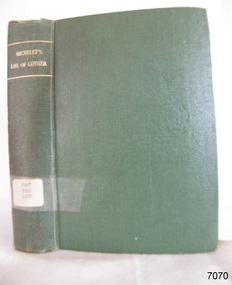
Book - Unconventional Biography, William Hazlitt Jr (Translator), The Life of Luther, 1872
... French works, including several other Michelet titles. The publisher George Bell (1814–1890) was born on 12 October 1814, the fifth of thirteen children of Matthew Bell, a bookseller, stationer and bookbinder in Richmond, Yorkshire, and his wife, Mary (née Fall). After attending the local grammar...French works, including several other Michelet titles. The publisher George Bell (1814–1890) was born on 12 October 1814, the fifth of thirteen children of Matthew Bell, a bookseller, stationer and bookbinder in Richmond, Yorkshire, and his wife, Mary (née Fall). After attending the local grammar ...The Life of Luther, written by himself, is not a conventional biography but a compilation of Martin Luther's own words letters, table-talk, and passages drawn from his polemical and dogmatic writings selected, translated into French, arranged in roughly chronological order, and lightly stitched together with narrative commentary by Jules Michelet. It is a biography composed of a series of translations; except for the earliest years, which Luther could not narrate himself, the translator rarely needed to speak in his own voice. The English subject edition is Michelet's French compilation that was first published in Paris in 1835 as Mémoires de Luther, écrits par lui-même and rendered into English by William Hazlitt (1811–1893). The work traces Luther from his peasant origins and monastic life through his ordination, his journey to Rome, his "temptations" and inner spiritual crises, his break with the papacy, his marriage to the escaped nun Katharina von Bora, and his role at the centre of the Reformation, largely in his own recorded voice, framed by Michelet. Michelet composed the work almost entirely in 1828–29, publishing it in 1835. As the translator of Vico's Scienza Nuova, he felt a need at that time to move from theory to application, to study the general in the individual, history in biography, humanity in one man and Luther was his chosen vehicle: a man complete in thought and action, whose entire life, down to its smallest words and deeds, had been recorded.Hard cover book. The Life of Luther Author: M Michelet Translator: William Hazlitt Jr Publisher: Bell & Daldy & Co Date: 1872 Further Information: Green Cloth hardcover with lettering to spine in gilt. The spine has a Library label with an inscription.non-fictionThe Life of Luther, written by himself, is not a conventional biography but a compilation of Martin Luther's own words letters, table-talk, and passages drawn from his polemical and dogmatic writings selected, translated into French, arranged in roughly chronological order, and lightly stitched together with narrative commentary by Jules Michelet. It is a biography composed of a series of translations; except for the earliest years, which Luther could not narrate himself, the translator rarely needed to speak in his own voice. The English subject edition is Michelet's French compilation that was first published in Paris in 1835 as Mémoires de Luther, écrits par lui-même and rendered into English by William Hazlitt (1811–1893). The work traces Luther from his peasant origins and monastic life through his ordination, his journey to Rome, his "temptations" and inner spiritual crises, his break with the papacy, his marriage to the escaped nun Katharina von Bora, and his role at the centre of the Reformation, largely in his own recorded voice, framed by Michelet. Michelet composed the work almost entirely in 1828–29, publishing it in 1835. As the translator of Vico's Scienza Nuova, he felt a need at that time to move from theory to application, to study the general in the individual, history in biography, humanity in one man and Luther was his chosen vehicle: a man complete in thought and action, whose entire life, down to its smallest words and deeds, had been recorded.warrnambool, shipwrecked-coast, flagstaff-hill, flagstaff-hill-maritime-museum, maritime-museum, shipwreck-coast, flagstaff-hill-maritime-village, shipwrecked-artefact, book, the life of luther, m michelet
