
Showing 121 items matching "from the outbreak of war"
-
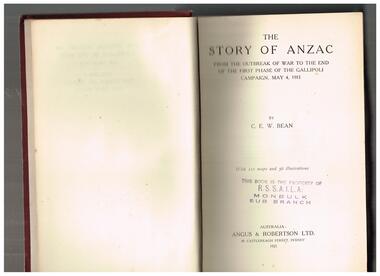 Mrs Aeneas Gunn Memorial Library
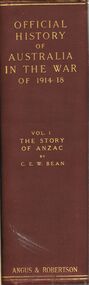
Book, C. E. W. Bean, The Official history of Australia in the War of 1914-1918: The story of ANZAC, from the outbreak of war to the end of the first phase of the Gallipoli campaign, May 4, 1915, 1921-1942
... The Official history of Australia in the War of 1914-1918: The story of ANZAC, from the outbreak of war to the end of the first phase of the Gallipoli campaign, May 4, 1915....The Official history of Australia in the War of 1914-1918: The story of ANZAC, from the outbreak of war to the end of the first phase of the Gallipoli campaign, May 4, 1915. ...Volume one of the official history of Australia in the war of 1914-1918Index, Ill, maps, p.607.non-fictionVolume one of the official history of Australia in the war of 1914-1918world war 1914-1918 - australia - history, australia - history - 20th century -
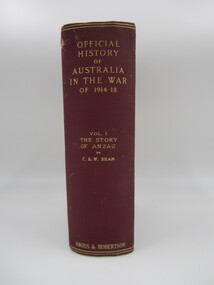 4th/19th Prince of Wales's Light Horse Regiment Unit History Room
Book, C E W Bean, The Official History of Australia in the War of 1914-1918 Vol 1 The Story of ANZAC The First Phase, 1937
... From the outbreak of War...From the outbreak of War to the end of the first phase of the Gallipoli Campaign May 4, 1915...From the outbreak of War to the end of the first phase of the Gallipoli Campaign May 4, 1915 From the outbreak of War end of the first phase of the Gallipoli Campaign May 4 1915 Seventh Edition 1937 Hard covered book of 662 pages The Official History of Australia in the War of 1914-1918 Vol 1 The Story of ANZAC The First Phase Book Book C E W Bean Angus & Robertson ...From the outbreak of War to the end of the first phase of the Gallipoli Campaign May 4, 1915Hard covered book of 662 pagesSeventh Edition 1937from the outbreak of war, end of the first phase of the gallipoli campaign may 4, 1915 -
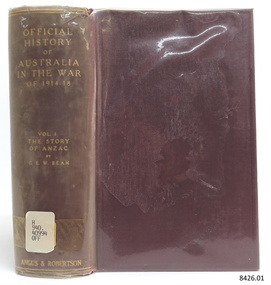 Flagstaff Hill Maritime Museum and Village
Book, Official History of Australia in the War of 1914-1918 Vol 1
... Bean Publisher: Angus & Robertson Ltd Date: 1941 Further Information: From the Outbreak of war to the end of the first phase of the Gallipoli campaign May 4 1915...War of 1914-1918 Vol 1 C.E.W. Bean The label on the spine cover with typed text H 940.40994 OFF Paste down front end paper has a sticker from Corangamite Regional Library Service. Official History of Australia in the War of 1914-1918 Vol 1 Author: C.E.W. Bean Publisher: Angus & Robertson Ltd Date: 1941 Further Information: From the Outbreak ...This book was part of a large group of books referred to as the Pattison Collection, which belonged to the Warrnambool Public Library, part of the Warrnambool Mechanics’ Institute. About RALPH ERIC PATTISON and the ‘PATTISON COLLECTION’ The ‘Pattison Collection’ is a collection of books and records that was originally owned by the Warrnambool Mechanics’ Institute, founded in Warrnambool in 1853. By 1886 the Warrnambool Mechanics’ Institute (WMI) had grown to have a Library, Museum and Fine Arts Gallery, with a collection of “… choice productions of art and valuable specimens in almost every branch and many wonderful national curiosities, are now to be seen there, including historic relics of the town and district.” It later included a School of Design. Although it was very well patronised, the WMI was led to ask the City Council to take it over in 1911 due to a lack of financial support. In 1935 Ralph Pattison was appointed as City Librarian to establish and organise the Warrnambool Public Library as it was then called. Ralph Eric Pattison was born in Rockhampton, Queensland, in 1891. He married Maude Swan from Warrnambool in 1920 and they set up a home in Warrnambool. In 1935 when Pattison accepted the position as City Librarian for the Warrnambool City Council his huge challenge was to make a functional library within two rooms of the Mechanics’ Institute. He tirelessly cleaned, cleared and sorted a disarrayed collection of old books, jars of preserved specimens and other items reserved for exhibition in the city’s museum. He developed and updated the library with a wide variety of books for all tastes, including reference books for students; a difficult task to fulfil during the years following the Depression. He converted all of the lower areas of the building into a library, reference room and reading room for members and the public. The books were sorted and stored using a cataloguing and card index system that he had developed himself. He also prepared the upper floor of the building and established the Art Gallery and later the Museum, a place to exhibit the many old relics that had been stored for years for this purpose. One of the treasures he found was a beautiful ancient clock, which he repaired, restored and enjoyed using in his office during the years of his service there. Ralph Pattison was described as “a meticulous gentleman whose punctuality, floorless courtesy and distinctive neat dress were hallmarks of his character, and ‘his’ clock controlled his daily routine and his opening and closing of the library’s large heavy doors to the minute.” Pattison took leave from 1942 to 1945 to serve in the Royal Australian Navy, Volunteer Reserve as Lieutenant. A few years later he converted one of the Museum’s rooms into a Children’s Library, stocking it with suitable books for the younger generation. This was an instant success. In the 1950’s he had the honour of being appointed to the Victorian Library Board and received more inspiration from the monthly conferences in Melbourne. He was sadly retired in 1959 after over 23 years of service, due to the fact that he had gone over the working age of council officers. However, he continued to take a very keen interest in the continual development of the Library until his death in 1969. THE NEW WARRNAMBOOL LIBRARY When the WMI building was pulled down in 1963 a new civic building was erected on the site and the new Warrnambool Library, on behalf of the City Council, took over all the holdings of the WMI. At this time some of the items were separated and identified as the ‘Pattison Collection’, named after Pattison. Eventually, the components of the WMI were distributed from the Warrnambool Library to various places, including the Art Gallery, Historical Society and Flagstaff Hill. Later some were even distributed to other regional branches of Corangamite Regional Library and passed to and fro. It is difficult now to trace just where all of the items have ended up. The books at Flagstaff Hill Maritime Village generally display stamps and markings from Pattison as well as a variety of other institutions including the Mechanics’ Institute itself. The Pattison Collection, along with other items at Flagstaff Hill Maritime Village, was originally part of the Warrnambool Mechanics' Institute’s collection. The Warrnambool Mechanics’ Institute Collection is primarily significant in its totality, rather than for the individual objects it contains. Its contents are highly representative of the development of Mechanics' Institute libraries across Australia, particularly Victoria. A diversity of publications and themes has been amassed, and these provide clues to our understanding of the nature of and changes in the reading habits of Victorians from the 1850s to the middle of the 20th century. The collection also highlights the Warrnambool community’s commitment to the Mechanics’ Institute, reading, literacy and learning in the regions, and proves that access to knowledge was not impeded by distance. These items help to provide a more complete picture of our community’s ideals and aspirations. The Warrnambool Mechanics Institute book collection has historical and social significance for its strong association with the Mechanics Institute movement and the important role it played in the intellectual, cultural and social development of people throughout the latter part of the nineteenth century and the early twentieth century. The collection of books is a rare example of an early lending library and its significance is enhanced by the survival of an original collection of many volumes. The Warrnambool Mechanics' Institute’s publication collection is of both local and state significance. Official History of Australia in the War of 1914-1918 Vol 1 Author: C.E.W. Bean Publisher: Angus & Robertson Ltd Date: 1941 Further Information: From the Outbreak of war to the end of the first phase of the Gallipoli campaign May 4 1915The label on the spine cover with typed text H 940.40994 OFF Paste down front end paper has a sticker from Corangamite Regional Library Service. flagstaff hil, warrnambool, flagstaff hill maritime museum, maritime museum, shipwreck coast, flagstaff hill maritime village, great ocean road, book, pattison collection, warrnambool library, warrnambool mechanics’ institute, ralph eric pattison, corangamite regional library service, warrnambool city librarian, mechanics’ institute library, victorian library board, warrnambool books and records, warrnambool children’s library, official history of australia in the war of 1914-1918 vol 1, c.e.w. bean -
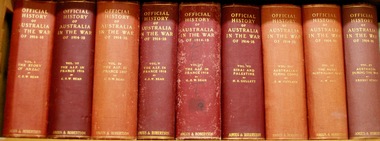 Lara RSL Sub Branch
Book, Official History of Australia in the War of 1914-18 - Volume I - The Story of Anzac Author C.E.W Bean, 1937
... Bean is the highly regarded and official expert, recorder of facts. From the outbreak of War to the end of the first phase of the Gallipoli Campaign May 4th 1915 Maps, Illustrations, Photographs...Bean is the highly regarded and official expert, recorder of facts. From the outbreak of War to the end of the first phase of the Gallipoli Campaign May 4th 1915 Maps, Illustrations, Photographs The Story of ANZAC anzac c.e.w bean gallipoli voyage of hms emden a.i.f dardanelles turks pine ridge mustafa kemal 400 plateau anzac beach Red hard cover with 602 pages worn covers deteriorated front page This is the 6th Edition 1937. ...Bean is the highly regarded and official expert, recorder of facts. From the outbreak of War to the end of the first phase of the Gallipoli Campaign May 4th 1915 Maps, Illustrations, PhotographsThe Story of ANZACRed hard cover with 602 pages worn covers deteriorated front page This is the 6th Edition 1937. First published 1921anzac, c.e.w bean, gallipoli, voyage of hms emden, a.i.f, dardanelles, turks, pine ridge, mustafa kemal, 400 plateau, anzac beach -
 Bendigo Historical Society Inc.
Book - OFFICIAL HISTORY OF AUSTRALIA IN THE WAR OF 1914 TO 1918
... Official History of Australia in the war of 1914-1918 Vol I The story of Anzac :The first phase , from the outbreak of war to the end of the first phase of the Gallipoli campaign , May 4, 1915 by C.E.W. ...Bean Official History of Australia in the war of 1914-1918 Vol I The story of Anzac :The first phase , from the outbreak of war to the end of the first phase of the Gallipoli campaign , May 4, 1915 by C.E.W. ...Official History of Australia in the war of 1914-1918 Vol I The story of Anzac :The first phase , from the outbreak of war to the end of the first phase of the Gallipoli campaign , May 4, 1915 by C.E.W. Bean , published by Angus & Robertson 89 Castlereagh St Sydney 1939 , 21.6x14x6.5cm maroon hard bound covered book with gold lettering , inside cover signed Wesley Harry 1973 , 111 maps 56 illustrations and , ninth edition ( first edition was 1921) the outbreak of war to the end of the first phase of the Gallipoli campaign , May 4, 1915 by C.E.W. Bean , published by Angus & Robertson 89 Castlereagh St Sydney 1939 , 21.6x14x6.5cm maroon hard bound covered book with gold lettering , inside cover signed Wesley Harry 1973 , 111 maps 56 illustrations and , ninth edition ( first edition was 1921)C.E.W. Beanbooks, military -
 Bendigo Military Museum
Award - MEDAL, GREEK CAMPAIGN, 1947 - 1983
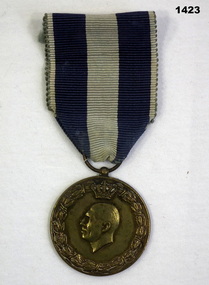
... It was awarded for service from the outbreak of war in Greece 1940 to the fall of Crete in 1941. ...It was awarded for service from the outbreak of war in Greece 1940 to the fall of Crete in 1941. ...The Greek Commemorative War Medal was instituted by Royal Decree on 19.8.1947. It was awarded for service from the outbreak of war in Greece 1940 to the fall of Crete in 1941. It was also awarded to allied foreign troops who saw service as per the areas covered on the reverse of the medal. This medal was awarded to Alan Kenneth NAISMITH DCM, VX4838, 2/7th Bn. Refer Cat No 1421 for his service details.The medal itself is gilded bronze. The front of the medal in the centre is a relief of King George II of Greece. Around the outside is a laurel wreath joined at the top by a crown. The ribbon is attached by a ring suspender.The ribbon has a centre light blue stripe with a dark blue stripe each side. on the edges of the ribbon is a thin light blue stripe. The rear of the ribbon has a pin clasp The rear of the medal has a thin raised edge on the outside of the medal. The inscription in the centre is raised. The wording is in Greek except for the date. The inscription reads. 1940 - 41, Epirus, Albania, Macedonia, Thrace, Crete.commemorative war medal greek, 1940 - 41, medals -
 Flagstaff Hill Maritime Museum and Village
Book - Reference Book/History, Henry Smith Williams, The Historians History of the World Vol 20 set 1 - Edited by Henry Smith Williams L.L.D. Published by “The Times” 1908, 1908
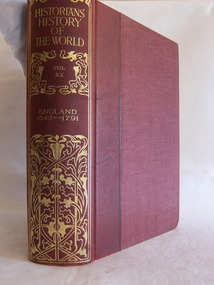
... Volume 20 focuses on the transformation period of England from the outbreak of the English Civil War to the late 18th century (1642–1791). ...Volume 20 focuses on the transformation period of England from the outbreak of the English Civil War to the late 18th century. ...Henry Smith Williams’ “The Historians' History of the World” is a chronological and geographical "tapestry" of human events, these twenty five volumes occupy a very specific and prestigious place in historical research. Volume 20 focuses on the transformation period of England from the outbreak of the English Civil War to the late 18th century.The Book is part of a 25 volume set with red cloth bindings and gold filigree design to rib.non-fictionHenry Smith Williams’ “The Historians' History of the World” is a chronological and geographical "tapestry" of human events, these twenty five volumes occupy a very specific and prestigious place in historical research. Volume 20 focuses on the transformation period of England from the outbreak of the English Civil War to the late 18th century. warrnambool, flagstaff-hill, flagstaff-hill-maritime-museum, maritime-museum, shipwreck-coast, flagstaff-hill-maritime-village, book, the historians history of the world vol 20 set 1, henry smith williams -
 4th/19th Prince of Wales's Light Horse Regiment Unit History Room
Uniform, Service Dress WW1, c 1914
... From 1909 until the outbreak of World War I he commanded a troop of light horse at Numurkah, attending annual camps and courses. ...From 1909 until the outbreak of World War I he commanded a troop of light horse at Numurkah, attending annual camps and courses. ...Sir Murray William James Bourchier (1881-1937), grazier, soldier and politician, was born on 4 April 1881 at Pootilla, Bungaree, Victoria, eldest son of Edward Bourchier, Geelong-born farmer, and his wife Francis (Fanny), née Cope. In 1878 Edward and his three brothers had taken up four adjoining selections on the Murray River near Tocumwal. Within a few years their properties had expanded considerably: Edward's, near Strathmerton, was called Woodland Park; the other three were known collectively as Boomagong. After a private education in Melbourne, Murray returned to Woodland Park. From 1909 until the outbreak of World War I he commanded a troop of light horse at Numurkah, attending annual camps and courses. Bourchier's military service was distinguished. He enlisted in the Australian Imperial Force in August 1914 and sailed as a lieutenant in the 4th Light Horse Regiment, serving seven months on Gallipoli. After the Sinai campaign in 1916-17, during which he was promoted lieutenant-colonel commanding his regiment, he made the crucial final assault on Beersheba. On 31 October 1917 he led his men, many of them from his own district, at full gallop over two miles into Turkish entrenchments and on for a further two miles (3.2 km) into Beersheba to capture vital wells before the Turks could destroy them. Lacking sabres, the regiment used bayonets held in their hands as shock weapons. For this exploit he was awarded the Distinguished Service Order and earned the sobriquet 'Bourchier of Beersheba'. Eleven months later, after fighting north through Palestine, he commanded a joint force of the 4th and 12th Light Horse regiments (Bourchier Force) in the final advance on Damascus; on entering the city the 4th captured 12,000 Turks and set about relieving their sufferings. Bourchier was three times mentioned in dispatches. He was appointed C.M.G. in June 1919 and his A.I.F. appointment ended in October. In 1921 he was promoted colonel, commanding the 5th Cavalry Brigade, and in 1931 brigadier, in charge of the 2nd Cavalry Division. He returned to Strathmerton but later farmed a property at Katandra, which he named Kuneitra. - Source: Australian Dictionary of BiographyService dress of General Sir Murray Bourchier, complete with jacket, trousers, shirt, tie, boots (high rise),Sam Browne belt, peaked cap, medal ribbons, badges of rank, medal ribbons -
4th/19th Prince of Wales's Light Horse Regiment Unit History Room
Uniform, Mess Kit, c 1914
... From 1909 until the outbreak of World War I he commanded a troop of light horse at Numurkah, attending annual camps and courses. ...From 1909 until the outbreak of World War I he commanded a troop of light horse at Numurkah, attending annual camps and courses. ...Sir Murray William James Bourchier (1881-1937), grazier, soldier and politician, was born on 4 April 1881 at Pootilla, Bungaree, Victoria, eldest son of Edward Bourchier, Geelong-born farmer, and his wife Francis (Fanny), née Cope. In 1878 Edward and his three brothers had taken up four adjoining selections on the Murray River near Tocumwal. Within a few years their properties had expanded considerably: Edward's, near Strathmerton, was called Woodland Park; the other three were known collectively as Boomagong. After a private education in Melbourne, Murray returned to Woodland Park. From 1909 until the outbreak of World War I he commanded a troop of light horse at Numurkah, attending annual camps and courses. Bourchier's military service was distinguished. He enlisted in the Australian Imperial Force in August 1914 and sailed as a lieutenant in the 4th Light Horse Regiment, serving seven months on Gallipoli. After the Sinai campaign in 1916-17, during which he was promoted lieutenant-colonel commanding his regiment, he made the crucial final assault on Beersheba. On 31 October 1917 he led his men, many of them from his own district, at full gallop over two miles into Turkish entrenchments and on for a further two miles (3.2 km) into Beersheba to capture vital wells before the Turks could destroy them. Lacking sabres, the regiment used bayonets held in their hands as shock weapons. For this exploit he was awarded the Distinguished Service Order and earned the sobriquet 'Bourchier of Beersheba'. Eleven months later, after fighting north through Palestine, he commanded a joint force of the 4th and 12th Light Horse regiments (Bourchier Force) in the final advance on Damascus; on entering the city the 4th captured 12,000 Turks and set about relieving their sufferings. Bourchier was three times mentioned in dispatches. He was appointed C.M.G. in June 1919 and his A.I.F. appointment ended in October. In 1921 he was promoted colonel, commanding the 5th Cavalry Brigade, and in 1931 brigadier, in charge of the 2nd Cavalry Division. He returned to Strathmerton but later farmed a property at Katandra, which he named Kuneitra. Source: Australian Dictionary of BiographyMess kit of General Sir Murray Bourchier complete with peaked cap, jacket, cummerbund, shirt, tie, waistcoat, trousers, shoes, AMF lapel badges & badges of rank -
 Flagstaff Hill Maritime Museum and Village
Book - Reference Book/History, Henry Smith Williams, The Historians History of the World Vol 3 set 1 - Edited by Henry Smith Williams L.L.D. Published by “The Times” 1908, 1908
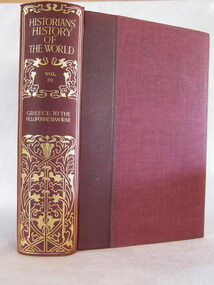
... from the "stagnant" (as viewed by 1904 scholars) empires of the East to the dynamic birth of Western civilisation. This volume covers the formative era of Ancient Greece, beginning with the legendary Mycenaean Age (ca. 1600–1000 B.C.) and concluding with the outbreak and early stages of the Peloponnesian War. ...from the "stagnant" (as viewed by 1904 scholars) empires of the East to the dynamic birth of Western civilisation. This volume covers the formative era of Ancient Greece, beginning with the legendary Mycenaean Age (ca. 1600–1000 B.C.) and concluding with the outbreak and early stages of the Peloponnesian War. ...The 1908 edition of The Historians' History of the World is a monumental work of Edwardian scholarship, representing a specific era of "universal history" where the goal was to synthesise all human knowledge into a single narrative. Volume 3 is a pivotal installment in the series, shifting the narrative from the "stagnant" (as viewed by 1904 scholars) empires of the East to the dynamic birth of Western civilisation.Book is part of a 25 volume set with red cloth bindings and gold filigree design to rib.non-fictionThe 1908 edition of The Historians' History of the World is a monumental work of Edwardian scholarship, representing a specific era of "universal history" where the goal was to synthesise all human knowledge into a single narrative. Volume 3 is a pivotal installment in the series, shifting the narrative from the "stagnant" (as viewed by 1904 scholars) empires of the East to the dynamic birth of Western civilisation.flagstaff hill, warrnambool, shipwrecked-coast, flagstaff-hill, flagstaff-hill-maritime-museum, maritime-museum, shipwreck-coast, flagstaff-hill-maritime-village, book, the historians history of the world vol 3 set 1 -
 Flagstaff Hill Maritime Museum and Village
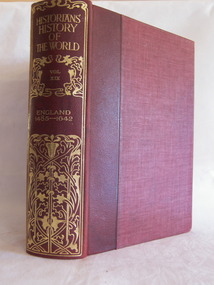
Book - Reference Book/History, Henry Smith Williams, The Historians History of the World Vol 19 set 1 - Edited by Henry Smith Williams L.L.D. Published by “The Times” 1908, 1908
... from the rise of the Tudor Dynasty to the eve of the English Civil War. The narrative begins with the aftermath of the Wars of the Roses and the coronation of Henry VII (1485). It details the radical religious and political shifts of the 16th century and concludes during the reign of Charles I, specifically leading up to the outbreak of the Civil War in 1642. ...from the rise of the Tudor Dynasty to the eve of the English Civil War. The narrative begins with the aftermath of the Wars of the Roses and the coronation of Henry VII (1485). It details the radical religious and political shifts of the 16th century and concludes during the reign of Charles I, specifically leading up to the outbreak of the Civil War in 1642. ...Henry Smith Williams’ “The Historians' History of the World” is a chronological and geographical "tapestry" of human events, these twenty five volumes occupy a very specific and prestigious place in historical research. Volume 19 is a pivotal component of the series, focusing specifically on a trans-formative era of British history from 1485 to 1642 covering the history of England from the rise of the Tudor Dynasty to the eve of the English Civil War.The Book is part of a 25 volume set with red cloth bindings and gold filigree design to rib.non-fictionHenry Smith Williams’ “The Historians' History of the World” is a chronological and geographical "tapestry" of human events, these twenty five volumes occupy a very specific and prestigious place in historical research. Volume 19 is a pivotal component of the series, focusing specifically on a trans-formative era of British history from 1485 to 1642 covering the history of England from the rise of the Tudor Dynasty to the eve of the English Civil War.flagstaff hill, warrnambool, shipwrecked-coast, flagstaff-hill-maritime-museum, maritime-museum, shipwreck-coast, flagstaff-hill-maritime-village, book, the historians history of the world vol 19 set 1, henry smith williams -
 Flagstaff Hill Maritime Museum and Village
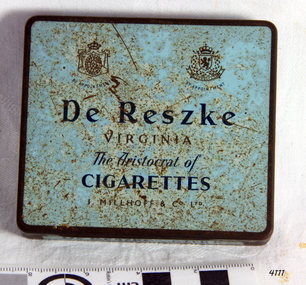
Tin, J Millhoff, 1925-1940
... In 1903, he retired from the stage after his once superlative voice developed technical difficulties and went into a swift decline. De Reszke taught singing for a while in London before returning to his estate in Poland, where he was adversely affected by the outbreak of World War I in 1914. ...In 1903, he retired from the stage after his once superlative voice developed technical difficulties and went into a swift decline. De Reszke taught singing for a while in London before returning to his estate in Poland, where he was adversely affected by the outbreak of World War I in 1914. ...Édouard de Reszke was born into a well-to-do and cultured Polish family in Warsaw, where he first learned to sing. He spent four years in Italy, studying singing first with Stella and Alba in Milan and later the retired baritone Filippo Coletti. He later went to Paris to study with Giovanni Sbriglia, who was also his brother's teacher. Initially, he did not want to become an operatic performer but at the urging of his younger sister, Josephine (Józefina), he accepted an engagement with the Paris Opera. He was chosen by the composer Giuseppe Verdi to make his debut in the first Paris performance of Aida on April the 22nd 1876, appearing under the composer's baton as the King of Egypt. De Reszke's older brother was the renowned lyric dramatic tenor Jean de Reszke (1850–1925), with whom he would sing often in Paris, London and New York City during the next two decades. In 1887, for example, the brothers performed together in the 500th performance of Gounod's Faust at the Paris Opera. Josephine, Eduardo and Jean's sister, also embarked on a career as an opera singer in Paris but she retired early from the stage after marrying an aristocrat while at the height of her powers. Between the start of 1880 and the end of 1900, Édouard de Reszke appeared on more than 300 occasions at the Royal Opera House, Covent Garden, performing a wide range of roles in French, German and Italian operas, including works by Wagner, Verdi, Rossini, Bellini, Donizetti, Ponchielli, Verdi, Rossini, Bellini, Donizetti and Mozart. He was a huge favourite, too, with audiences at New York's Metropolitan Opera during the same era. He also sang in Chicago in 1891 and, in 1879–1881, at La Scala, Milan. In 1903, he retired from the stage after his once superlative voice developed technical difficulties and went into a swift decline. De Reszke taught singing for a while in London before returning to his estate in Poland, where he was adversely affected by the outbreak of World War I in 1914. He was cut off from his brother by the fighting, and died on 25 May 1917 at a house in Garnek, near Częstochowa, Poland. Édouard de Reszke, was a Polish bass singer from Warsaw, born with an impressive natural voice and equipped with compelling histrionic skills, he became one of the most illustrious opera singers active in Europe and America during the late-Victorian era. De Reszke cigarettes are named after Édouard de Reszke and were advertised as ‘the Aristocrat of Cigarettes’. They were produced by J Millhoff, a Russian cigarette maker living in London. He created a special blend of tobacco that it was believed would not damage the famous singer's voice. In gratitude, Millhoff was allowed to sell the blend as 'De Reszke' cigarettes. Cigarette tin, small square, pale aqua color.Marked on lid with two coats of arms in gold, and text in dark blue underneath. 'De Reszke Virginia ‘The Aristocrat of Cigarettes'.flagstaff hill, warrnambool, shipwrecked-coast, flagstaff-hill, flagstaff-hill-maritime-museum, maritime-museum, shipwreck-coast, flagstaff-hill-maritime-village, aristocrat of cigarettes, j millhoff, opera singer -
 Flagstaff Hill Maritime Museum and Village
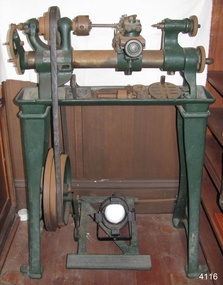
Machine - Treadle Lathe, 1920-1923
... By the outbreak of war in 1914, 5 inch, 6 inch and 7 inch screw cutting lathes, arranged for power drive, were on sale. Large orders were received from...By the outbreak of war in 1914, 5 inch, 6 inch and 7 inch screw cutting lathes, arranged for power drive, were on sale. Large orders were received from ...The lathe-making business incorporated in 1902 as Drummond Bros Ltd originated in the fertile mind of Mr Arthur Drummond, said to have been living at that time at Pinks Hill, on the southern edge of Broad Street Common, west of Guildford. Mr Drummond, whose accomplishments included several pictures hung in the Royal Academy, was unable to find a lathe suitable for use in model engineering. In 1896 he designed for himself a ‘small centre lathe … which had a compound slide rest with feed-screws and adjustable slides’. He also designed and built ‘lathes of 4.5 inch and 5 inch centre height, which had beds of a special form whereby the use of a gap piece was eliminated but the advantages of a gap-bed lathe were retained’. Assisted by his brother, Mr Frank Drummond, who had served an apprenticeship to an engineering firm at Tunbridge Wells, the first lathes were made in a workshop adjoining Arthur Drummond’s house. The demand that speedily built up led to the decision to form a company and manufacture the lathes for sale commercially. Land was acquired nearby, at Rydes Hill, and the first factory built. The enterprise was a success, and the company quickly established ‘a high reputation in this country and abroad for multi-tool and copying lathes, and gear-cutting machines’. Other lathes were added to the range, including the first of the ’round bed’ machines for which the firm became widely known. A Drummond 3.5 inch lathe was among the equipment of Captain Scott’s 1912 expedition to the South Pole, and large numbers of 3.5 inch and 4 inch designs were exported to Australia, Canada and India. By the outbreak of war in 1914, 5 inch, 6 inch and 7 inch screw cutting lathes, arranged for power drive, were on sale. Large orders were received from the government for 3.5 inch lathes, for use in destroyers and submarines, and 5 inch lathes for the mechanised section of the Army Service Corps. The latter were used in mobile workshops. The factory worked night and day to supply the forces’ needs, until production was disrupted by a fire which destroyed a large part of the works in May 1915. As soon as rebuilding was complete work restarted. At the end of the war the entire production was being taken by the Government departments, a special feature being a precision screw lathe, bought by the Ministry of Munitions in 1918. Between the wars Drummond Bros Ltd introduced new machines for the motor vehicle, and later the aircraft industry, and the works were extended on many occasions to fulfill the increasing orders. The Maxicut multi-tool lathe (1925), designed for high-production turning operations, was one of the first machines of this type to be built in England. It was followed (1928) by an hydraulic version for turning gear blanks, and similar work. Further developments provided machines which, during the Second World War, turned all the crankshafts and propeller shafts for Bristol engines. Others, ordered by the Ministry of Supply were employed in turning shells, and many other specific needs of vehicle and aircraft manufacture were catered for by new types of Drummond lathes. Production of the small centre lathes ceased during the war when the company needed to concentrate on building multi-tool lathes and gear shapers. After the war a completely new Maxicut range was introduced, replacing the older versions, and fully automatic. The types were continually developed, and new versions manufactured until the end of the company’s life in 1980. The disappearance from the scene of Mr Arthur Drummond in 1946, and the end of the company’s autonomous existence in 1953 when the company was acquired by William Asquith Ltd, which was in turn bought by Staveley in 1966, meant that the factory at Rydes Hill became one – albeit very effective – part of a large national engineering company. Achievements at the Guildford works during its last years included the development of automated Maxicut gear-shapers in what was ‘probably the most fully automated gear shop in the country’, while a machine from Guildford was sent to the Osaka Fair in 1962. In 1963 an agreement was signed with Hindustan Machine Tools for the manufacture of Maxicut gear-shapers in state owned factories in Bangalore and Chandigarh. During 1963 the two largest multi-tool lathes ever made in the UK were installed in Ambrose Shardlow’s works in Sheffield for handling cranks up to 14 foot long. In 1976 Drummond lathes were included in Staveley’s £14,000,000 installation in Moscow of an automated production line for Zil motor cars. Up to the end invention continued at Guildford: a new Drummond Multi-turn memory-controlled machine was shown at the International Machine Tool Exhibition in 1977. This could not save the works from the pressures of the late 1970s, and Staveley Industries closed its Guildford site in 1980.An early example of a lathe that was designed primarily for the hobbyist model maker. It is in good condition and sought today by collectors as many of it's attributes were innovative at the time and lead to further development and incorporation of some of its features into more industrial models of production machinery. Lathe, round bed, treadle powered lathe, Drummond Type A, Serial number and maker's inscription. 1920-1923, Made by Drummond Brothers in Guildford, Surrey, England. Lathe is complete with Chuck, Tool post and Tail Stock in situ (30 extra parts)"MADE BY DRUMMOND BROTHERS LIMITED - PATENT TEES - RYDE'S HILL n GUILDFORD SURREY", "Serial Number 01470," "L44" or "L45 " flagstaff hill, warrnambool, shipwrecked coast, flagstaff hill maritime museum, maritime museum, shipwreck coast, flagstaff hill maritime village, great ocean road, lathe 1920-1923, round bed lathe, treadle lathe, drummond type a, guildford surrey, drummond brothers guildford surrey england, tread'e -
 Flagstaff Hill Maritime Museum and Village
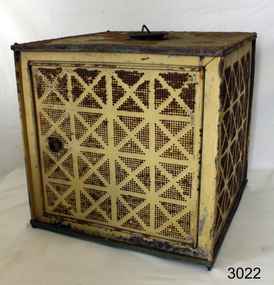
Domestic object - Food Safe, Willow Ware Pty Ltd, 1920-1950
... outbreak of the First World War saw their manufacturing change to making armaments and essential packaging for the war effort. In the early 1920’s, the Willow brand was established. Making tin plated canisters and baking pans with the well-known Willow pattern, imprinted on them. Some other items in production at this time include billies, boilers, basins and Coolgardie safes. In the late 1950’s, the company ventured into plastics production. Stepping away from...outbreak of the First World War saw their manufacturing change to making armaments and essential packaging for the war effort. In the early 1920’s, the Willow brand was established. Making tin plated canisters and baking pans with the well-known Willow pattern, imprinted on them. Some other items in production at this time include billies, boilers, basins and Coolgardie safes. In the late 1950’s, the company ventured into plastics production. Stepping away from ...Willow started business in 1887 as a metal working company based in Melbourne Australia, making tinned biscuit and tea canisters. The outbreak of the First World War saw their manufacturing change to making armaments and essential packaging for the war effort. In the early 1920’s, the Willow brand was established. Making tin plated canisters and baking pans with the well-known Willow pattern, imprinted on them. Some other items in production at this time include billies, boilers, basins and Coolgardie safes. In the late 1950’s, the company ventured into plastics production. Stepping away from its very successful tin plating industry of more than 50 years. In 1965, the company name changed to Willow Ware Pty Ltd, to be more closely linked to its Willow brand. Willow Ware is still in business today. A food safe known as a “Coolgardie” meat storage made by an emerging Australian company no longer in bushiness. This item gives a snapshot into early Australian manufacturing specifically aimed at the Australian market. Safe metal kitchen safe with two shelves, a hinged door and latch and a small swivel wire handle at the top. cream colour . "Made in Australia" "Willow" warrnambool, shipwrecked-coast, flagstaff-hill, flagstaff-hill-maritime-museum, shipwreck-coast, flagstaff-hill-maritime-village, willow ware, domestic item, coolgardie meat safe, meat safe, food safe, food preservation -
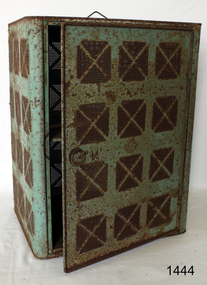 Flagstaff Hill Maritime Museum and Village
Domestic object - Food Safe, Willow Ware Pty Ltd, 1920s -1950
... outbreak of the First World War saw their manufacturing change to making armaments and essential packaging for the war effort. In the early 1920’s, the Willow brand was established. Making tin plated canisters and baking pans with the well-known Willow pattern, imprinted on them. Some other items in production at this time include billies, boilers, basins and Coolgardie safes. In the late 1950’s, the company ventured into plastics production. Stepping away from...outbreak of the First World War saw their manufacturing change to making armaments and essential packaging for the war effort. In the early 1920’s, the Willow brand was established. Making tin plated canisters and baking pans with the well-known Willow pattern, imprinted on them. Some other items in production at this time include billies, boilers, basins and Coolgardie safes. In the late 1950’s, the company ventured into plastics production. Stepping away from ...Willow started business in 1887 as a metal working company based in Melbourne Australia, making tinned biscuit and tea canisters. The outbreak of the First World War saw their manufacturing change to making armaments and essential packaging for the war effort. In the early 1920’s, the Willow brand was established. Making tin plated canisters and baking pans with the well-known Willow pattern, imprinted on them. Some other items in production at this time include billies, boilers, basins and Coolgardie safes. In the late 1950’s, the company ventured into plastics production. Stepping away from its very successful tin plating industry of more than 50 years. In 1965, the company name changed to Willow Ware Pty Ltd, to be more closely linked to its Willow brand. Willow Ware is still in business today. A food safe known as a “Coolgardie” meat storage made by an emerging Australian company no longer in bushiness. This item gives a snapshot into early Australian manufacturing specifically aimed at the Australian market.Safe metal kitchen food safe with 2 shelves, a hinged door and latch and a small swivel wire handle at the top. Painted light green, rusting.Willowwarrnambool, shipwrecked-coast, flagstaff-hill, flagstaff-hill-maritime-museum, maritime-museum, shipwreck-coast, flagstaff-hill-maritime-village, safe, food safe, meat safe, coolgardie safe, domestic object, kitchen object, willow ware, food preservation, kitchen safe -
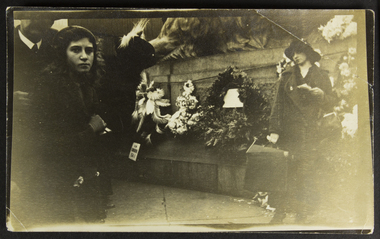 Mission to Seafarers Victoria
Photograph, London 1914 - Trafalgar Day, the wreaths of the Australian submarine AE1, 21 October 1914
... from the Royal Navy and the Royal Australian Navy. "Accompanied by her sister AE2, under the command of Lieutenant Commander Henry Stoker, RN, AE1 departed England in March 1914, transited the Suez Canal, and reached Sydney on 24 May 1914. Although the submarines remained surfaced for almost all of the delivery voyage it was at the time the longest transit distance ever traveled by a submarine. At the outbreak of World War...from the Royal Navy and the Royal Australian Navy. "Accompanied by her sister AE2, under the command of Lieutenant Commander Henry Stoker, RN, AE1 departed England in March 1914, transited the Suez Canal, and reached Sydney on 24 May 1914. Although the submarines remained surfaced for almost all of the delivery voyage it was at the time the longest transit distance ever traveled by a submarine. At the outbreak of World War ...The Australian Submarine AE1 was launched on 22 May 1913 at Barrow-in-Furness and was lost at sea on 14 September 1914 in the vicinity of Rabaul, Papua New Guinea, probably due a collision with a reef. She was the first of two E Class submarines built for the fledgling Royal Australian Navy and was manned by Royal Navy officers with a mixed crew of sailors drawn from the Royal Navy and the Royal Australian Navy. "Accompanied by her sister AE2, under the command of Lieutenant Commander Henry Stoker, RN, AE1 departed England in March 1914, transited the Suez Canal, and reached Sydney on 24 May 1914. Although the submarines remained surfaced for almost all of the delivery voyage it was at the time the longest transit distance ever traveled by a submarine. At the outbreak of World War I, AE1 joined the naval forces assigned to the capture of the German Pacific colonies. With AE2, she took part in the operations leading to the occupation of German New Guinea, including the surrender of Rabaul on 13 September 1914." (Australian Navy website)The second Australian submarine AE2 launched in February 1914 was also ill-fated as it was sunk by the Turkish army in 1915. In December 2017, a search located the wreck of AE1 in 300 metres of water off the Duke of York Island group.Sepia photograph depicting the public attending the ceremony of Trafalgar Day in London on the 21 October 1914 when wreathes were left at the bottom of Nelson's column. A sign in the centre of the photograph says: HM Submarine AE1.At the back: in pencil 20c/London 1914 In pen: Trafalgar Day, the wreaths of the Australian submarine EA1 (error was the submarine was called AE1)submarine, ae1, australian submarine -
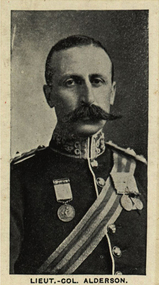 Federation University Historical Collection
Photograph (black & White), Lieutenant-Colonel Alderson - South Africa
... War. In 1900 shortly after the outbreak of the Second Boer War he returned to South Africa to command the Mounted Infantry against the Boer forces. Alderson also served in the 1882 Anglo-Egyptian War, Mounted Camel Regiment during the failed expedition to relieve Khartoum and rescue General Gordon. At the outbreak of the First World War, Alderson was in charge of the 1st Mounted Division. He retired from...War. In 1900 shortly after the outbreak of the Second Boer War he returned to South Africa to command the Mounted Infantry against the Boer forces. Alderson also served in the 1882 Anglo-Egyptian War, Mounted Camel Regiment during the failed expedition to relieve Khartoum and rescue General Gordon. At the outbreak of the First World War, Alderson was in charge of the 1st Mounted Division. He retired from ...Edwin Alderson was born in 1859 and served in several campaigns of the late nineteenth and early twentieth centuries. He saw service in the First Boer War in 1881 in the Transvaal. In 1896 he was sent to Mashonaland as a commander of a regiment of local troops during the Second Matabele War. In 1900 shortly after the outbreak of the Second Boer War he returned to South Africa to command the Mounted Infantry against the Boer forces. Alderson also served in the 1882 Anglo-Egyptian War, Mounted Camel Regiment during the failed expedition to relieve Khartoum and rescue General Gordon. At the outbreak of the First World War, Alderson was in charge of the 1st Mounted Division. He retired from active service in 1920 aged 61. In 1901, as a result of Alderson's contribution to many campaigns he was rewarded with confirmation as a Brigadier General, appointment as a Companion of the Order of Bath and to receive the ceremonial post of Aide-de-Camp to Queen Victoria, who died the same year. He also received the Queen's South Africa Medal. He died in 1927 aged 68. Individual image from photographed poster of tobacco and cigarette cards. alderson, campaigns, first boer war, transvaal, mashonaland, south africa, second boer war, first world war, anglo-egyptian war, mounted camel regiment, second matabele war, general gordon, brigadier-general, companion of the order of bath, aide-de-camp, queen victoria, queen's south africa medal -
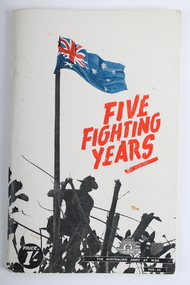 Lara RSL Sub Branch
Booklet, Victorian Railway Printing Works, Five Fighting Years
... outbreak of war on September 3, 1939 book.the australian army at war. lara, r.s.l. Five Fighting Years. The Australian Army at War,1939-44 Small white book,rectangular in shape with the Australian flag and red writing on the front.Made from cardboard and paper. ...The purpose of this publication is to provide a brief but comprehensive summary of the service that has been given by the Australian Military Forces in many countries since the outbreak of war on September 3, 1939Small white book,rectangular in shape with the Australian flag and red writing on the front.Made from cardboard and paper.Five Fighting Years. The Australian Army at War,1939-44book.the australian army at war. lara, r.s.l. -
 Federation University Historical Collection
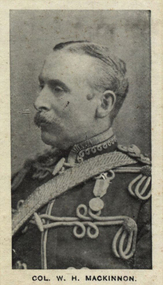
Photograph (black & White), Colonel William Henry MacKinnon - South Africa
... After the outbreak of the Second Boer War he was appointed Colonel commandant of the City of London Volunteers who proceeded to South Africa. This corps included infantry, mounted infantry and artillery. They were in South Africa from...After the outbreak of the Second Boer War he was appointed Colonel commandant of the City of London Volunteers who proceeded to South Africa. This corps included infantry, mounted infantry and artillery. They were in South Africa from ...After serving in Malta and India, he became Assistant Adjutant General at Home District in 1893. After the outbreak of the Second Boer War he was appointed Colonel commandant of the City of London Volunteers who proceeded to South Africa. This corps included infantry, mounted infantry and artillery. They were in South Africa from January 1900 until October 1900, returning to England. The corps was disbanded in December 1900. MacKinnon was awarded with the Knight Grand Cross of the Order of the Bath and Knight Commander of the Royal Victorian Order.Individual image from photographed poster of tobacco and cigarette cardsmalta, india, assistantadjutant general, second boer war, city of london volunteers, colonel, south africa -
 Federation University Historical Collection
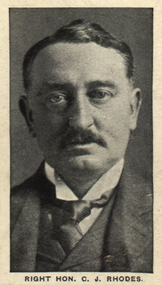
Photograph (black & White), Right Honorable Cecil John Rhodes - South Africa
... from 1890 to 1896. He believed in British Imperialism and he and his British South Africa Company formed the territory of Rhodesia in the early 1890s. He was forced to resign as Prime Minister in 1896 after the disastrous Jameson Raid, an unauthorised attack on Paul Kruger's South African Republic (Transvaal), which sent his brother to prison convicted of high treason and nearly sentenced to death. This event contributed to the outbreak of the Second Boer War...from 1890 to 1896. He believed in British Imperialism and he and his British South Africa Company formed the territory of Rhodesia in the early 1890s. He was forced to resign as Prime Minister in 1896 after the disastrous Jameson Raid, an unauthorised attack on Paul Kruger's South African Republic (Transvaal), which sent his brother to prison convicted of high treason and nearly sentenced to death. This event contributed to the outbreak of the Second Boer War ...Cecil Rhodes was a British businessman, mining magnate and politician in South Africa. He was Prime Minister of the Cape Colony from 1890 to 1896. He believed in British Imperialism and he and his British South Africa Company formed the territory of Rhodesia in the early 1890s. He was forced to resign as Prime Minister in 1896 after the disastrous Jameson Raid, an unauthorised attack on Paul Kruger's South African Republic (Transvaal), which sent his brother to prison convicted of high treason and nearly sentenced to death. This event contributed to the outbreak of the Second Boer War. Rhodes went to Kimberley in a political move. During the war the military felt he was more of a liability than an asset and found him intolerable. The officer commanding the garrison of Kimberley, Lieutenant Colonel Robert Kekewich, experienced serious personal difficulties with Rhodes because of the latter's inability to co-operate. However, he still remained a leading figure in the politics of southern Africa. Rhodes was dogged by ill health his whole life. He died in 1902, aged 48, at his seaside cottage in Muizenberg. He was cared for by Leander Starr Jameson during his illness, becoming a trustee of his estate and residuary beneficiary of his will, which allowed him to continue living in Rhode's mansion after his death. His final will left a large area of land on the slopes of Table Mountain. Part of the estate became the upper campus of the University of Cape Town, another part became the Kirstenbosch National Botanical Garden. The rest was spared development and is now an important conservation area. His will also provided for the establishment of the Rhodes Scholarship. Individual image from photographed poster of tobacco and cigarette cards.cecil rhodes, mining magnate south africa, politician south africa, prime minister cape colony, british south africa company, rhodesia, jameson raid, paul kruger, south africa republic, transvaal, second boer war, kimberley, robert kekewich, leander starr jameson, muizenberg, table mountain, university of cape town, kirstenbosch national garden -
 Federation University Historical Collection
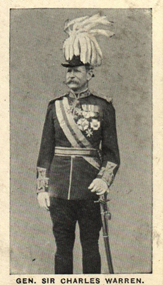
Photograph (black & White), General Sir Charles Warren - South Africa
... from the local Tswana tribes. This became known as the Warren Expedition and achieved its aims without bloodshed. Warren was recalled and in 1885 was made Knight Grand Cross ofthe Order of St Michael and St George. In 1885 Warren stood for election for Parliament but lost the vote. In 1886 he was appointed Commissioner of Police of the Metropolis following Sir Edmund Henderson's resignation. Criticised continually for his decisions and actions he resigned in November 1888. Prior to this time he was appointed Knight Commander of the Order of the Bath, January 1888. On the outbreak of the Boer War...from the local Tswana tribes. This became known as the Warren Expedition and achieved its aims without bloodshed. Warren was recalled and in 1885 was made Knight Grand Cross ofthe Order of St Michael and St George. In 1885 Warren stood for election for Parliament but lost the vote. In 1886 he was appointed Commissioner of Police of the Metropolis following Sir Edmund Henderson's resignation. Criticised continually for his decisions and actions he resigned in November 1888. Prior to this time he was appointed Knight Commander of the Order of the Bath, January 1888. On the outbreak of the Boer War ...General Sir Charles Warren was an officer in the British Royal Engineers. He was one of the earliest European archaeologists ofthe Holy Land. Much of his military service was spene in British South Africa. Previously he was police chief, the Head of the London Metropolitan Police during the Jack the Ripper murders. In 1876, the Colonial Office appointed him special commissioner to survey the boundary between Griqualand West and the Orange Free State. For this work he was made a Companion of the Order of St Michael and St George in 1877. He was appointed special commissioner to investigate "native questions" in Bechuanaland and commanded the Northern Border Expedition troops in quelling the rebellion there. In 1879 he became Administrator of Griqualand West. The town Warranton in the Northern Cape Province of South Africa is named after him. In 1882 the Admiralty sent him to Sinai to discover what had happened to Professor Edward Palmer's archaeological expedition. He discovered the members had been robbed and murdered, located their remains and brought their killers to justice. For this he was created a Knight Commander of the Order of St Michael and St George in 1883 , also Knight of Justice of the Order of St John of Jerusalem and in 1884 elected a Fellow of the Royal Society. In 1884 Warren was sent as HM Special Commissioner to command a military expedition to Bechuanaland, to assert British sovereignty in the face of encroachments from Germany and the Transvaal and to suppress the Boer freebooter states of Stellaland and Goshen, which were backed by the Transvaal and were stealing land and cattle from the local Tswana tribes. This became known as the Warren Expedition and achieved its aims without bloodshed. Warren was recalled and in 1885 was made Knight Grand Cross ofthe Order of St Michael and St George. In 1885 Warren stood for election for Parliament but lost the vote. In 1886 he was appointed Commissioner of Police of the Metropolis following Sir Edmund Henderson's resignation. Criticised continually for his decisions and actions he resigned in November 1888. Prior to this time he was appointed Knight Commander of the Order of the Bath, January 1888. On the outbreak of the Boer War in 1899 he returned to service and commanded the 5th Division of the South African Field Force. In January 1990, Warren bungled the second attempted relief of Ladysmith at Tugela River. At the Battle of Spion Kop, January 1990 he had operational command and his failure of judgement, delay and indecision despite his superior forces culminated in the disaster. It has been said that Warren was "perhaps the worst" of the British generals in the Boer War and certainly the most "preposterous". Redvers Buller in a letter to his wife described him as "a duffer", responsible for him losing him "a great chance". Warren was recalled to Britain in August 1900 and never again commanded troops in the field. Individual image from photographed poster of tobacco and cigarette cards.holy land, sir charles warren, british royal engineers, archaeologist, british south africa, london metropolitan police, jack the ripper, colonial office, commissioner, griqualand west, orange free state, companion of the order of st michael and st george, bechuanaland, northern border expedition, warrenton, sinai, professor edward palmer, knight commander of the order of st michael and st george, knight of justice of the order of st johnof jerusalem, fellow of the royal society, knight grand cross of the order of st michael and st george, boer war, redvers buller, knight commander of the order of the bath -
 Flagstaff Hill Maritime Museum and Village
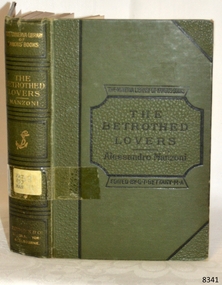
Book - A Fictional Love Story, Alessandro Manzoni, The Betrothed Lovers, 1889
... war, political corruption, famine, and a devastating outbreak of the Bubonic Plague in Milan. This work is renowned for its deep psychological realism, social critique, and profound exploration of religious faith and divine providence. The label on the spine cover with typed text PAT 853 MAN Pastedown front endpaper has a sticker from ...The subject novel is regarded as a Victorian literary artifact of a masterpiece of European literature. The Betrothed Lovers is the English translation of I Promessi Sposi (originally published in 1827), widely considered the most famous and influential Italian novel ever written. Set in northern Italy in 1628 during the oppressive era of Spanish rule, the story follows two young silk weavers, Renzo and Lucia, who are deeply in love and wish to marry. Their plans are cruelly shattered by a tyrannical local baron, Don Rodrigo, who wants Lucia for himself and forces the couple to flee. The epic narrative follows their separate, perilous journeys through a landscape torn apart by war, political corruption, famine, and a devastating outbreak of the Bubonic Plague in Milan. This work is renowned for its deep psychological realism, social critique, and profound exploration of religious faith and divine providence.The Betrothed Lovers Author: Alessandro Manzoni Publisher: Ward Lock & Co Date: 1889 Further Information: Edited by G.T.BettanyfictionThe subject novel is regarded as a Victorian literary artifact of a masterpiece of European literature. The Betrothed Lovers is the English translation of I Promessi Sposi (originally published in 1827), widely considered the most famous and influential Italian novel ever written. Set in northern Italy in 1628 during the oppressive era of Spanish rule, the story follows two young silk weavers, Renzo and Lucia, who are deeply in love and wish to marry. Their plans are cruelly shattered by a tyrannical local baron, Don Rodrigo, who wants Lucia for himself and forces the couple to flee. The epic narrative follows their separate, perilous journeys through a landscape torn apart by war, political corruption, famine, and a devastating outbreak of the Bubonic Plague in Milan. This work is renowned for its deep psychological realism, social critique, and profound exploration of religious faith and divine providence.flagstaff hill, warrnambool, shipwrecked coast, flagstaff hill maritime museum, maritime museum, shipwreck coast, flagstaff hill maritime village, great ocean road, book, pattison collection, warrnambool library, warrnambool mechanics’ institute, ralph eric pattison, corangamite regional library service, warrnambool city librarian, mechanics’ institute library, victorian library board, warrnambool books and records, warrnambool children’s library, the betrothed lovers, allessandro manzoni, g.t.bettany -
 Flagstaff Hill Maritime Museum and Village
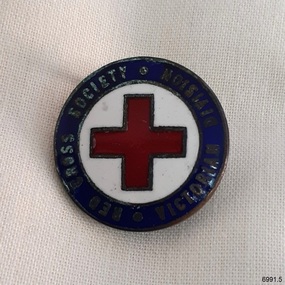
badge - Red Cross Society badge, Australian Red Cross Society, Victorian Division, 1914-1940s
... outbreak of the First World War. Stokes & Sons of Melbourne made the button. It was made by Stokes & Sons Pty. Ltd. in Melbourne. The maker, Thomas Stokes, migrated to Melbourne from Birmingham in 1854 and set up business in Mincer Lane as a die-sinker, producing medals, tokens, buttons and silverware, and offered an engraving service. ...outbreak of the First World War. Stokes & Sons of Melbourne made the button. It was made by Stokes & Sons Pty. Ltd. in Melbourne. The maker, Thomas Stokes, migrated to Melbourne from Birmingham in 1854 and set up business in Mincer Lane as a die-sinker, producing medals, tokens, buttons and silverware, and offered an engraving service. ...The badge represents the Victoria Division of the Australian Red Cross Society, which was formed on 21st August 1914 at the outbreak of the First World War. Stokes & Sons of Melbourne made the button. It was made by Stokes & Sons Pty. Ltd. in Melbourne. The maker, Thomas Stokes, migrated to Melbourne from Birmingham in 1854 and set up business in Mincer Lane as a die-sinker, producing medals, tokens, buttons and silverware, and offered an engraving service. He moved to Flinders Lane in 1856. After a time, in 1894, the business became Stokes & Sons Pty. Ltd, electroplates and badge makers at Post Office Place in Melbourne. The maker's mark 'Stokes & Sons' continued to be made on badges up until 1962. This badge is one of a set of badges collected by Dr W R Angus from the organisations in which he was involved. The set of badges is now part of Flagstaff Hill’s comprehensive W.R. Angus Collection, donated by the family of Dr W R Angus, surgeon and oculist. The W.R. Angus Collection: - The W.R. Angus Collection includes historical medical equipment, surgical instruments and material belonging to Dr Edward Ryan and Dr Thomas Francis Ryan, (both of Nhill, Victoria) and Dr Angus’ own belongings. The Collection’s history spans the medical practices of the two Doctors Ryan, from 1885-1926 plus that of Dr Angus, up until 1969. It includes historical medical and surgical equipment and instruments from the doctors Edward and Thomas Ryan of Nhill, Victoria. Dr Angus married Gladys in 1927 at Ballarat, the nearest big city to Nhill where he began as a Medical Assistant. He was also Acting House surgeon at the Nhill hospital where their two daughters were born. During World War II He served as a Military Doctor in the Australian Defence Forces. Dr Angus and his family moved to Warrnambool in 1939, where Dr Angus operated his own medical practice. He later added the part-time Port Medical Officer responsibility and was the last person appointed to that position. Both Dr Angus and his wife were very involved in the local community, including the planning stages of the new Flagstaff Hill and the layout of the gardens there. Dr Angus passed away in March 1970.This badge is significant for connecting Doctor Angus with organisations that he supported. The W.R. Angus Collection is significant for still being located at the site it is connected with, Doctor Angus being the last Port Medical Officer in Warrnambool. The Collection includes historical medical objects that date back to the late 1800s.Badge; a round metal and enamel badge with a blue band around the perimeter and a silver-edged red cross on a white background in the centre. The badge has a vertical pin on the back. It is the badge of the Victorian Division of the Red Cross Society. the maker was Stokes & Sons of Melbourne. This badge is part of a set of badges collected by Dr W R Angus. the set represents organisations that he was involved in, and is part of the W.R. Angus Collection.Printed within the blue band; “RED CROSS SOCIETY” “VICTORIAN DIVISION” Embossed on the reverse; “STOKES & SONS / MELB” flagstaff hill, warrnambool, maritime village, maritime museum, shipwreck coast, great ocean road, w.r. angus, badge, organisation badge, flagstaff hill maritime museum and village, australian red cross, victorian division, charity, volunteer organisation, w.r. angus collection -
 Flagstaff Hill Maritime Museum and Village
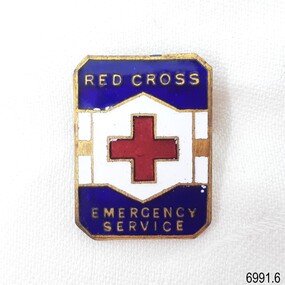
badge - Red Cross Society badge, K.G. Luke Pty. Ltd, Emergency Service, 1935-1945
... outbreak of the First World War. The badge was made by K.G. Luke Pty. Ltd. in Melbourne. Kenneth George Luke, began work as an apprentice in 1910 at Stokes & Sons Pty. Ltd. in Melbourne and stayed with the company for eleven years. He then became a partner in a metalworking business, wholly owning this successful Carlton business in 1925. From...outbreak of the First World War. The badge was made by K.G. Luke Pty. Ltd. in Melbourne. Kenneth George Luke, began work as an apprentice in 1910 at Stokes & Sons Pty. Ltd. in Melbourne and stayed with the company for eleven years. He then became a partner in a metalworking business, wholly owning this successful Carlton business in 1925. From ...The badge represents the Emergency Services section of the Red Cross Society. The Australian Red Cross was formed on 21st August 1914 at the outbreak of the First World War. The badge was made by K.G. Luke Pty. Ltd. in Melbourne. Kenneth George Luke, began work as an apprentice in 1910 at Stokes & Sons Pty. Ltd. in Melbourne and stayed with the company for eleven years. He then became a partner in a metalworking business, wholly owning this successful Carlton business in 1925. From 1935-1945 his products included silverware and supplies for military needs. The firm was K.G. Luke Pty. Ltd. by 1936, making buttons, badges, brooches, and heated food trolleys at his office and factory in North Fitzroy, and selling from his showroom in Elizabeth Street Melbourne. His customers included the Australian Red Cross, Victoria Police, TAA Airline, and the military forces of Australia and the United States. Seventeen years later the company was K.G. Luke (A/Asia) Ltd, then twenty-three years on it was Luke Ltd. until in 1983 it was taken over by National Consolidated Ltd. Sir Kenneth George Luke was also a V.F.L. football administrator. This badge is one of a set of badges collected by Dr W R Angus from the organisations in which he was involved. The set of badges is now part of Flagstaff Hill’s comprehensive W.R. Angus Collection, donated by the family of Dr W R Angus, surgeon and oculist. The W.R. Angus Collection: - The W.R. Angus Collection includes historical medical equipment, surgical instruments and material belonging to Dr Edward Ryan and Dr Thomas Francis Ryan, (both of Nhill, Victoria) and Dr Angus’ own belongings. The Collection’s history spans the medical practices of the two Doctors Ryan, from 1885-1926 plus that of Dr Angus, up until 1969. It includes historical medical and surgical equipment and instruments from the doctors Edward and Thomas Ryan of Nhill, Victoria. Dr Angus married Gladys in 1927 at Ballarat, the nearest big city to Nhill where he began as a Medical Assistant. He was also Acting House surgeon at the Nhill hospital where their two daughters were born. During World War II He served as a Military Doctor in the Australian Defence Forces. Dr Angus and his family moved to Warrnambool in 1939, where Dr Angus operated his own medical practice. He later added the part-time Port Medical Officer responsibility and was the last person appointed to that position. Both Dr Angus and his wife were very involved in the local community, including the planning stages of the new Flagstaff Hill and the layout of the gardens there. Dr Angus passed away in March 1970.This badge is significant for connecting Doctor Angus with organisations that he supported. The W.R. Angus Collection is significant for still being located at the site it is connected with, Doctor Angus being the last Port Medical Officer in Warrnambool. The Collection includes historical medical objects that date back to the late 1800s.Badge, rectangular metal and enamel badge, with a blue band across the top and bottom, and a white and gold band in the middle similar to a belt with the buckle of a red cross. The badge has a horizontal pin on the back. Inscriptions on top and bottom bands and on the reverse. It is the badge of the Red Cross Emergency Service, made by K.G. Luke of Melbourne.This badge is part of a set of badges collected by Dr W R Angus. the set represents organisations that he was involved in, and is part of the W.R. Angus Collection.Printed on front; “RED CROSS” above “EMERGENCY / SERVICE”. Embossed on back “8029” “K.G. LUKE / MELB” flagstaff hill, warrnambool, maritime village, maritime museum, shipwreck coast, great ocean road, w.r. angus, badge, organisation badge, flagstaff hill maritime museum and village, australian red cross, charity, volunteer organisation, red cross, k.g. luke pty. ltd., kenneth george luke, north fitzroy, stokes & sons, w.r. angus collection -
 Flagstaff Hill Maritime Museum and Village
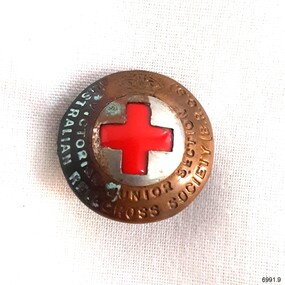
badge - Australia Red Cross Society (B.R.C.S.) badge, J R Gaunt and Son Limited, Victoria Junior Section, 1930
... outbreak of World War I as a branch of the British Red Cross Society (B.R.C.S.), hence the crown on top of the red cross. It wasn't until 1941 that he Australian Branch was Incorporated by Royal Charter. The badge was made in London by J.R. Gaunt & Son Ltd. James Richard Gaunt and his son Charles Frederick Gaunt established the Birmingham firm of J R Gaunt & Son in 1884. The business operated for over a hundred years and specialised in making buttons for uniforms. This badge is one of a set of badges collected by Dr W R Angus from...outbreak of World War I as a branch of the British Red Cross Society (B.R.C.S.), hence the crown on top of the red cross. It wasn't until 1941 that he Australian Branch was Incorporated by Royal Charter. The badge was made in London by J.R. Gaunt & Son Ltd. James Richard Gaunt and his son Charles Frederick Gaunt established the Birmingham firm of J R Gaunt & Son in 1884. The business operated for over a hundred years and specialised in making buttons for uniforms. This badge is one of a set of badges collected by Dr W R Angus from ...The badge represents the Victorian Junior Section of the Australian Red Cross Society, which was formed in 1914 at the outbreak of World War I as a branch of the British Red Cross Society (B.R.C.S.), hence the crown on top of the red cross. It wasn't until 1941 that he Australian Branch was Incorporated by Royal Charter. The badge was made in London by J.R. Gaunt & Son Ltd. James Richard Gaunt and his son Charles Frederick Gaunt established the Birmingham firm of J R Gaunt & Son in 1884. The business operated for over a hundred years and specialised in making buttons for uniforms. This badge is one of a set of badges collected by Dr W R Angus from the organisations in which he was involved. The set of badges is now part of Flagstaff Hill’s comprehensive W.R. Angus Collection, donated by the family of Dr W R Angus, surgeon and oculist. The W.R. Angus Collection: - The W.R. Angus Collection includes historical medical equipment, surgical instruments and material belonging to Dr Edward Ryan and Dr Thomas Francis Ryan, (both of Nhill, Victoria) and Dr Angus’ own belongings. The Collection’s history spans the medical practices of the two Doctors Ryan, from 1885-1926 plus that of Dr Angus, up until 1969. It includes historical medical and surgical equipment and instruments from the doctors Edward and Thomas Ryan of Nhill, Victoria. Dr Angus married Gladys in 1927 at Ballarat, the nearest big city to Nhill where he began as a Medical Assistant. He was also Acting House surgeon at the Nhill hospital where their two daughters were born. During World War II He served as a Military Doctor in the Australian Defence Forces. Dr Angus and his family moved to Warrnambool in 1939, where Dr Angus operated his own medical practice. He later added the part-time Port Medical Officer responsibility and was the last person appointed to that position. Both Dr Angus and his wife were very involved in the local community, including the planning stages of the new Flagstaff Hill and the layout of the gardens there. Dr Angus passed away in March 1970.This badge is significant for connecting Doctor Angus with organisations that he supported. The W.R. Angus Collection is significant for still being located at the site it is connected with, Doctor Angus being the last Port Medical Officer in Warrnambool. The Collection includes historical medical objects that date back to the late 1800s.Badge; a brass dome'shaped badge with two rows of text around the outer edge and a white enamel centre behind a red enamel cross. A crown symbol is embossed above the cross. Text is embossed around the edges with remnants of white within the some of the letters. The reverse has text around the emblem of a wreath and the remnants of a catch. Inscriptions include text and emblems on front and reverse. The badge is for the Australian Red Cross Society, Victorian Junior Section. It was made by J. R. Gaunt & son, London. This badge is part of a set of badges collected by Dr W R Angus. the set represents organisations that he was involved in, and is part of the W.R. Angus Collection.FRONT; Symbol [King;s Crown], Embossed “AUSTRALIAN RED CROSS SOCIETY (B.R.C.S.)“. Inner text “VICTORIA JUNIOR SECTION” REVERSE: Symbol p[wreath] “J R GAUNT LTD, LONDON"flagstaff hill, warrnambool, maritime village, maritime museum, shipwreck coast, great ocean road, w.r. angus, badge, organisation badge, flagstaff hill maritime museum and village, australian red cross, charity, volunteer organisation, red cross, j r gaunt & son, birmingham, badges, buttons, military buttons, uniform buttons, lapel badge, junior section, b.r.c.s., british red cross society, london manufacturer -
 City of Moorabbin Historical Society (Operating the Box Cottage Museum)
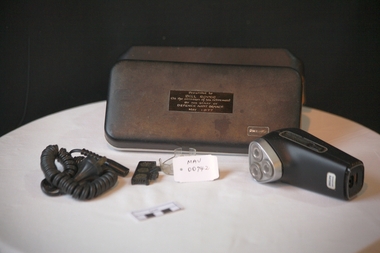
Personal Effects. 'Philips" electric Shaver, c1977
... from 1939 to 2006. The Philishave shaver was invented by Philips engineer Alexandre Horowitz, who used rotating cutters instead of the reciprocating cutters that had been used in previous electric shavers. The shaver was introduced in 1939, though initial production was limited due to the outbreak of World War...from 1939 to 2006. The Philishave shaver was invented by Philips engineer Alexandre Horowitz, who used rotating cutters instead of the reciprocating cutters that had been used in previous electric shavers. The shaver was introduced in 1939, though initial production was limited due to the outbreak of World War ...Established in 1891 in Eindhoven, the Netherlands, Philips & Co. was founded to meet the growing demand for light bulbs following the commercialization of electricity. Science and technology underwent tremendous development in the 1940s and 1950s, with Philips Research inventing the rotary heads that led to the development of the Philishave electric shaver, and laying down the basis for later ground-breaking work in transistors and integrated circuits.Philishave was the brand name for the electric shavers manufactured by the Philips Domestic Appliances and Personal Care unit of Philips They used the Philishave brand name for their shavers from 1939 to 2006. The Philishave shaver was invented by Philips engineer Alexandre Horowitz, who used rotating cutters instead of the reciprocating cutters that had been used in previous electric shavers. The shaver was introduced in 1939, though initial production was limited due to the outbreak of World War II. A more ergonomic egg-shaped single-head model was introduced in 1948 and was designed by US industrial designer Raymond Loewy. Global sales increased markedly after a double-head model was introduced in 1951. As a spin off from the light bulb and research is the dynamo-powered bicycle lamp. Its rotating power system inspires the Philishave triple head electric razor. A triple-head model was test marketed in Australia and New Zealand in 1956, but would not be introduced globally until 1966. The brand name Philishave was phased out in 2006 so shavers now bear only the Philips name. Mr Alfred William ( Bill ) Roper, 1913 - 1996 grew up in Ripponlea, ( East St Kilda ) Victoria. As a child he went with his father Arthur Leopold Roper to purchase vegetables from the Moorabbin Chinese market gardeners at the Hotham St. / Nepean Highway corner. c1920 . Bill served in WW2 in New Guinea and post war was Army Auditor, Victoria Barracks, St Kilda Road Melbourne. His staff presented this 'Philishave upon his retirement and he used it until his death1996. He lived in Carlton, Belgrave, Ascot Vale, South Yarra, East St Kilda and moved to Bentleigh in 1987.A ‘Philishave’ triple head electric razor , with cord, head protector and cleaning brush in a hinged plastic case The case has compartments, for Razor and cord, that are lined with a mustard coloured, soft, synthetic material .Case top PHILIPS ; inside EXCLUSIVE PHILISHAVE Razor Handle front PHILIPS / PHILISHAVE; back Type HP 1121/ 110-130V/ 220-240 V / PHILIPS Shield / ? Shield / BS 3456 / V 75255 / MADE IN HOLLAND Nameplate Presented to / BILL ROPER / On the occasion of his retirement / BY THE STAFF OF / DEFENCE AUDIT BRANCH / May 1977 philishave, royal philips electric company, razors, electric razors, bentleigh, moorabbin, market gardeners, st kilda markets, world war 2 1939-1945, department of defence melbourne, melbourne, roper alfred william, roper arthur leopold, ripponlea, chinese market gardeners -
 City of Moorabbin Historical Society (Operating the Box Cottage Museum)
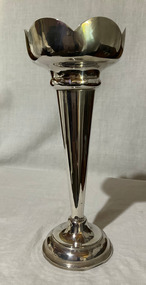
Domestic object - Silver Plated Vase, Paramount - K. G. Luke Pty Ltd
... At the outbreak of World War 2 production was again stepped up and Luke became an honorary adviser to the Department of Supply and Shipping. Luke went on to achieve many major public roles. In 1938-55 he was president of the Carlton Football Club. A delegate (from ...Manufactured by K. G. Luke Pty Ltd.In 1921 Kenneth Luke became a partner in a small metal-spinning and silverware business at Carlton. By 1925 he was its proprietor and an employer of seven. These employees were still with him thirty years later, with 650 others, making an ever-increasing range of products: silverware, stainless steel surgical equipment, plated goods and glass-washing machines. In 1929 he bought a larger factory in Queen's Parade, Fitzroy (since redeveloped), doubled his staff and introduced new lines. At the outbreak of World War 2 production was again stepped up and Luke became an honorary adviser to the Department of Supply and Shipping. Luke went on to achieve many major public roles. In 1938-55 he was president of the Carlton Football Club. A delegate (from 1935) to the Victorian Football League, he was its vice president (1946-55) and president (1956-71). With post-war growth generating record crowds, he consolidated central administration and professionalised the game for players.A Silver Plated Vase manufactured by K.G. Luke Pty Ltd.A1 - Paramount Plate - Best EPNS Quality Plate 4001-0paramount, k. g. luke pty ltd -
 Orbost & District Historical Society
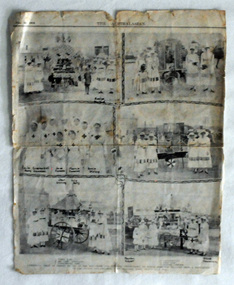
newspaper cutting, June 22 1918
... from Australia, New Zealand and abroad was presented. The Australian Red Cross Society (ARCS) was formed just after the outbreak of the First World War in August 1914, originally as a branch of the the British Red Cross. ...from Australia, New Zealand and abroad was presented. The Australian Red Cross Society (ARCS) was formed just after the outbreak of the First World War in August 1914, originally as a branch of the the British Red Cross. ...This article reports on a "gymkhana held at Orbost in aid of the Red Cross and kindred institutions by which £2000 was realised from a population of 22000 adults and children. The expenses were practically nil." The Australasian was published every Saturday in a tabloid newspaper format. It contained extensive pictorial coverage of the week's events. The Australasian gave an insight into the life and times of Australians from week to week. News from Australia, New Zealand and abroad was presented. The Australian Red Cross Society (ARCS) was formed just after the outbreak of the First World War in August 1914, originally as a branch of the the British Red Cross. This is a contemporary record of a significant event in Orbost. It reflects the involvement of Orbost, a small town, in the efforts of the Australian Red Cross Society to provide comforts to soldiers during World war 1.A single page cutting from the Australasian. It has black / white photographs of local red cross workers at an Orbost Gymkhana. There are photos of a jumble stall, flower sellers. a fruit cart and a display of soldiers' comforts. 738.2 is a photocopy of the original.In black - names - Evelyn Blacklock, Leila Perry, Grace & Nell Cameron, Jane Cameron, Florrie Cameron, Annie Stirling, Jean Stirling, Lily Perry, Marion Gilbert, Grace Cameronww1 australasian-newspaper red-cross-orbost -
 Flagstaff Hill Maritime Museum and Village
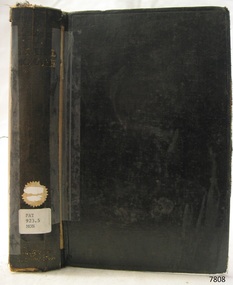
Book, War Letters of General Monash
... from Corangamite Regional Library Service On a type written page inside book is written General Monash: 1865 - 1931 …. Australian soldier of Jewish birth, was born in Melbourne, graduating at Melbourne University..Began practising as a civil engineer in 1884, and became President of the Victorian Engineering Institute .. In 1887 entered the Australian Army, in which he rapidly rose to the rank of Col. At outbreak of World War...from Corangamite Regional Library Service On a type written page inside book is written General Monash: 1865 - 1931 …. Australian soldier of Jewish birth, was born in Melbourne, graduating at Melbourne University..Began practising as a civil engineer in 1884, and became President of the Victorian Engineering Institute .. In 1887 entered the Australian Army, in which he rapidly rose to the rank of Col. At outbreak of World War ...This item is from the ‘Pattison Collection’, a collection of books and records that was originally owned by the Warrnambool Mechanics’ Institute, which was founded in Warrnambool in 1853. By 1886 the Warrnambool Mechanics’ Institute (WMI) had grown to have a Library, Museum and Fine Arts Gallery, with a collection of “… choice productions of art, and valuable specimens in almost every branch and many wonderful national curiosities are now to be seen there, including historic relics of the town and district.” It later included a School of Design. Although it was very well patronised, the lack of financial support led the WMI in 1911 to ask the City Council to take it over. In 1935 Ralph Pattison was appointed as City Librarian to establish and organise the Warrnambool Library as it was then called. When the WMI building was pulled down in 1963 a new civic building was erected on the site and the new Warrnambool Library, on behalf of the City Council, took over all the holdings of the WMI. At this time some of the items were separated and identified as the ‘Pattison Collection’, named after Ralph Pattison. Eventually the components of the WMI were distributed from the Warrnambool Library to various places, including the Art Gallery, Historical Society and Flagstaff Hill. Later some were even distributed to other regional branches of Corangamite Regional Library and passed to and fro. It is difficult now to trace just where all of the items have ended up. The books at Flagstaff Hill Maritime Village generally display stamps and markings from Pattison as well as a variety of other institutions including the Mechanics’ Institute itself. RALPH ERIC PATTISON Ralph Eric Pattison was born in Rockhampton, Queensland, in 1891. He married Maude Swan from Warrnambool in 1920 and they set up home in Warrnambool. In 1935 Pattison accepted a position as City Librarian for the Warrnambool City Council. His huge challenge was to make a functional library within two rooms of the Mechanics’ Institute. He tirelessly cleaned, cleared and sorted a disarrayed collection of old books, jars of preserved specimens and other items reserved for exhibition in the city’s museum. He developed and updated the library with a wide variety of books for all tastes, including reference books for students; a difficult task to fulfil during the years following the Depression. He converted all of the lower area of the building into a library, reference room and reading room for members and the public. The books were sorted and stored using a cataloguing and card index system that he had developed himself. He also prepared the upper floor of the building and established the Art Gallery and later the Museum, a place to exhibit the many old relics that had been stored for years for this purpose. One of the treasures he found was a beautiful ancient clock, which he repaired, restored and enjoyed using in his office during the years of his service there. Ralph Pattison was described as “a meticulous gentleman whose punctuality, floorless courtesy and distinctive neat dress were hallmarks of his character, and ‘his’ clock controlled his daily routine, and his opening and closing of the library’s large heavy doors to the minute.” Pattison took leave during 1942 to 1945 to serve in the Royal Australian Navy, Volunteer Reserve as Lieutenant. A few years later he converted one of the Museum’s rooms into a Children’s Library, stocking it with suitable books for the younger generation. This was an instant success. In the 1950’s he had the honour of being appointed to the Victorian Library Board and received more inspiration from the monthly conferences in Melbourne. He was sadly retired in 1959 after over 23 years of service, due to the fact that he had gone over the working age of council officers. However he continued to take a very keen interest in the continual development of the Library until his death in 1969. The Pattison Collection, along with other items at Flagstaff Hill Maritime Village, was originally part of the Warrnambool Mechanics' Institute’s collection. The Warrnambool Mechanics’ Institute Collection is primarily significant in its totality, rather than for the individual objects it contains. Its contents are highly representative of the development of Mechanics' Institute libraries across Australia, particularly Victoria. A diversity of publications and themes has been amassed, and these provide clues to our understanding of the nature of and changes in the reading habits of Victorians from the 1850s to the middle of the 20th century. The collection also highlights the Warrnambool community’s commitment to the Mechanics’ Institute, reading, literacy and learning in the regions, and proves that access to knowledge was not impeded by distance. These items help to provide a more complete picture of our community’s ideals and aspirations. The Warrnambool Mechanics Institute book collection has historical and social significance for its strong association with the Mechanics Institute movement and the important role it played in the intellectual, cultural and social development of people throughout the latter part of the nineteenth century and the early twentieth century. The collection of books is a rare example of an early lending library and its significance is enhanced by the survival of an original collection of many volumes. The Warrnambool Mechanics' Institute’s publication collection is of both local and state significance. War Letters of General Monash Edited by F M Cutlack Publisher: Angus & Robertson Date: 1934Label on spine cover with typed text PAT 923.5 MON Pastedown front endpaper has sticker from Warrnambool Mechanics Institute and Free Library Front loose endpaper has a sticker from Corangamite Regional Library Service On a type written page inside book is written General Monash: 1865 - 1931 …. Australian soldier of Jewish birth, was born in Melbourne, graduating at Melbourne University..Began practising as a civil engineer in 1884, and became President of the Victorian Engineering Institute .. In 1887 entered the Australian Army, in which he rapidly rose to the rank of Col. At outbreak of World War 1 , he became Chief Censor, and then was sent in command of 4th Brigade to Gallopoli... Later commonded 3rd Australian Division in France, and in June 1918 took command of the Australian Corps. After armistice, Director general of Demob. for Australia.. Knighted in 1918 and published Australian Victories in France two years later.warrnambool, shipwrecked-coast, flagstaff-hill, flagstaff-hill-maritime-museum, maritime-museum, shipwreck-coast, flagstaff-hill-maritime-village, shipwrecked-artefact, book, pattison collection, warrnambool library, warrnambool mechanics’ institute, ralph eric pattison, corangamite regional library service, warrnambool city librarian, mechanics’ institute library, victorian library board, warrnambool books and records, warrnambool children’s library, great ocean road, f m cutlack, war letters of general monash, general monash, victorian engineering institute, 4th brigade, gallopoli, 3rd australian division, australian corps -
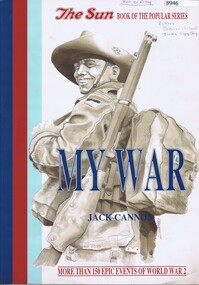 Greensborough Historical Society
Book, Jack Cannon, My War: more than 150 epic events of World War 2, 1990
... World War II newspapers - melbourne facsimiles A collection of newspaper headlines gathered to commemorate 50 years since the outbreak of World War II. On title page: an inscription from ...A collection of newspaper headlines gathered to commemorate 50 years since the outbreak of World War II.228 p., illus., newspaper facsimilesnon-fictionA collection of newspaper headlines gathered to commemorate 50 years since the outbreak of World War II.world war ii, newspapers - melbourne, facsimiles
