
Showing 2 items matching "george brown of illawarra district"
-
 Eltham District Historical Society Inc
Document - Folder, Sweeney
... ...George Brown of Illawarra District...Thomas Sweeney Mary Sweeney Patrick Sweeney Ship Isabella Mary Sweeney nee Meehan "Culla Hill" Eltham "Sweeneys" Eltham Sweeneys Lane Eltham Michael Connors Patrick Guyder George Brown of Illawarra District Margaret Sweeney nee Meehan Paddy Sweeney John Sweeney Kate Sweene Margaret Sweeney Ellen Sweeney Annie Sweeney] Johanna Sweeney Annie Sweeney Caroline Sweeney Mary Carrucan nee Sweeney Agatha Sweeney Agnes Sweeney Arthur Sweeney Cassie Sweeney Frank Sweeney Victor Burston Peter Cuffley Jim Murray Bridget Sweeney nee Coleman Graham Caulfield McCorlick Real Estate Eltham Mary Nelson Betty Erickson nee Carrucan Michael Carrucan Newspaper clippings, A4 photocopies, etc Sweeney Document Folder ...Thomas Sweeney (1802-1867) was transported in 1823 and granted a conditional pardon in 1838. He married and moved to the Port Phillip District, buying land at Eltham. His house, "Culla Hill" (renamed "Sweeneys") still stands. Contents Typed notes, no author, no date, biography of Thomas Sweeney with copy of parish plan showing Sweeney's original and later land purchases. Typed timeline Thomas Sweeney and typed transcriptions of letters to and from La Trobe archives to Thomas Sweeney. Handwritten notes: Biography of Thomas Sweeney and his descendants, also transcription of letter 10 April 1849 wanting a bridge over the Plenty River, and transcription of C J La Trobe's reply. Photocopy magazine article: "Sweeneys: A home with a hisitory", Australian Home Beautiful, 1 February 1940. Story of Thomas Sweeney and his house, with photographs. Newspaper article: "Capt. Sweeney, Eltham's first Irish settler", Associated Newspapers Eltham Cenenary Supplement, 30 March 1971. Notes on Thomas Sweeney and his house. Photocopy of p.30, "Diamond Valley Sketchbook", Brian McKinlay, 1973. "Sweeney's Cottage, Eltham. Notes and drawing of Sweeneys. Newspaper article: "A convict's cottage", Diamond Valley News, 6 October 1981. Notes on Thomas Sweeney and his house. Newspaper article: "Talented cartoonist depicts story of an Eltham pioneer", Diamond Valley News, 18 February 1986. Judith Russell had drawn cartoons of Thomas Sweeney's life called "Sweeney". Prospectus "Historic Sweeneys Culla Hill, Auction 27 Noveber 1993, 3.00 pm": Photographs and history of property, with map of lots and vegetation.. Newspaper article: "A pioneer's cottage, new-age apartments and a leafy city retreat", The Age Real Estate, 21 June 1997. Photograph and details of "Sweeneys" Newspaper article: "Legacy of convict's success", Diamond Valley News, 2 July 1997. Notes on Thomas Sweeney and his house (for sale), photograph of John Sweeney and family. Printout, National Trust register: Sweeney's. History and description of Sweeneys. Letter Mary Nelson to Eltham District Historical Society, 14 October 2004, enclosing photocopies of material on "Culla Hill" and Mary Sweeney and Michael Carrucan.Newspaper clippings, A4 photocopies, etcthomas sweeney, mary sweeney, patrick sweeney, ship isabella, mary sweeney nee meehan, "culla hill" eltham, "sweeneys" eltham, sweeneys lane eltham, michael connors, patrick guyder, george brown of illawarra district, margaret sweeney nee meehan, paddy sweeney, john sweeney, kate sweene, margaret sweeney, ellen sweeney, annie sweeney], johanna sweeney, annie sweeney, caroline sweeney, mary carrucan nee sweeney, agatha sweeney, agnes sweeney, arthur sweeney, cassie sweeney, frank sweeney, victor burston, peter cuffley, jim murray, bridget sweeney nee coleman, graham caulfield, mccorlick real estate eltham, mary nelson, betty erickson nee carrucan, michael carrucan -
 Eltham District Historical Society Inc
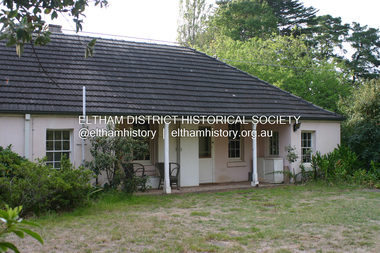
Photograph - Digital Photograph, Alan King, Sweeney's Cottage, Sweeneys Lane, Eltham, 30 January 2008
... George Brown of Lake Illawarra. In 1831, Sweeney was granted a ticket-of-leave and bought a boat to carry goods between Illawarra district and Sydney Town. ...George Brown of Lake Illawarra. In 1831, Sweeney was granted a ticket-of-leave and bought a boat to carry goods between Illawarra district and Sydney Town. ...Part of the original cottage named Culla Hill built by Thomas Sweeney (a former convict) remains as a small section of today’s house. Covered under Heritage Overlay, Nillumbik Planning Scheme National Estate National Trust of Australia (Victoria) Local Sifgnificance Published: Nillumbik Now and Then / Marguerite Marshall 2008; photographs Alan King with Marguerite Marshall.; p19 Thomas Sweeney, a former convict who became a respected citizen, once lived on a property at what is now the corner of Sweeneys Lane and Culla Hill, Eltham. As Sweeney was one of the district’s first settlers, the property is registered by the National Trust. Thomas Sweeney was born in 1802, son of impoverished tenant farmers in Tipperary County, Ireland. He became a ploughman, then at 21 he was sentenced to hang for setting on fire the house of Patrick Guyder at Gullshill. It is said the arson was due to a dispute over undelivered guns to a social justice guerilla group, the White Boys, of which Sweeney was a member. But the sentence was commuted to life transportation to Australia in 1823.1 Apparently in Sydney he became a servant to James Chandler at Botany. Soon James Chandler leased his farm and became a catechist on the Hawkesbury River, so Sweeney was reassigned to a former convict, John Brown, at Liverpool. Later Sweeney was assigned to George Brown of Lake Illawarra. In 1831, Sweeney was granted a ticket-of-leave and bought a boat to carry goods between Illawarra district and Sydney Town. He married his first wife who had come to Australia as a free woman. However she drowned after bearing him a daughter. In 1838, one month after he had received a conditional pardon, Sweeney married a blacksmith’s daughter, Margaret Meehan, newly arrived from Ireland. They then moved to Port Phillip and squatted on the south side of the Yarra River, about seven miles (11km) from Melbourne. Around 1842, Sweeney bought 110 acres (44.5ha) in the parish of Nillumbik for £110. He built a slab hut 12 x 10 feet (3.6m x 3m) and then his homestead, Culla Hill, a typical Tipperary style cottage, now known as Sweeney’s Cottage. It was here that many generations of Sweeneys lived for almost 100 years. Culla Hill became a social centre for the district and the Catholic community used it as a church. Sweeney was apparently on good terms with a tribe of Aborigines living on the river nearby, who helped him build his house.2 Sweeney proved himself a civic-minded leader. In 1844, he led a call for a bridge over the Plenty River. He was on the first school board and supplied the first grain for Eltham’s mill. Sweeney profited during the gold rush, not by gold digging, but by providing supplies for nearby fields and others as far away as Beechworth.3 Thomas Sweeney died in 1867 and was buried at the Eltham Cemetery, leaving two sons, five daughters, and 300 acres (121.4ha), as well as Culla Hill. Culla Hill – by then reduced to 75 acres (30ha) – was sold out of the family in 1939, then renamed Sweeneys. The present Sweeneys Lane, running diagonally through the original holding, was the track to the house. Part of the original cottage remains as a small section of today’s house. The dining-family room fronted by a veranda is original, and although there have been some changes, the cedar door and most of the small 12-paned wooden-framed windows are original. The walls are made of the original hand-made brick. After buying the property in 1952 Mr and Mrs Burston demolished a dilapidated slab hut, a three-roomed detached kitchen and cellar, as materials needed to restore them were very difficult to obtain so soon after the war.4 However the barn remains almost in its original condition. It is believed to have been built from stone quarried on the property. Now roofed with iron sheets it was probably originally thatched. The sandstone barn has a peaked roof supported by the original saplings and a doorway large enough to accommodate a fully loaded wagon.This collection of almost 130 photos about places and people within the Shire of Nillumbik, an urban and rural municipality in Melbourne's north, contributes to an understanding of the history of the Shire. Published in 2008 immediately prior to the Black Saturday bushfires of February 7, 2009, it documents sites that were impacted, and in some cases destroyed by the fires. It includes photographs taken especially for the publication, creating a unique time capsule representing the Shire in the early 21st century. It remains the most recent comprehenesive publication devoted to the Shire's history connecting local residents to the past. nillumbik now and then (marshall-king) collection, culla hill, eltham, sweeney's cottage, sweeneys lane, thomas sweeney
