
Showing 5 items matching "german occupation of belgium"
-
 Returned Nurses RSL Sub-branch
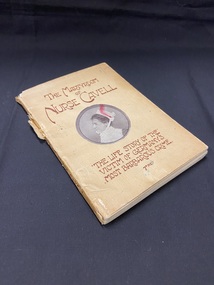
Book - Paperback book, William Thomson Hill, The Martyrdom of Nurse Cavell : the life story of the victim of Germany's most barbarous crime, 1915
... ...German occupation of Belgium...Edith Cavell Nurses biograohy World War 1914-1918 German atrocities German occupation of Belgium "The Martyrdom of Nurse Cavell: The Life Story of the Victim of Germany's Most Barbarous Crime" recounts the tragic and inspiring story of Edith Cavell, a British nurse whose unwavering dedication during World War I led to her execution. ..."The Martyrdom of Nurse Cavell: The Life Story of the Victim of Germany's Most Barbarous Crime" recounts the tragic and inspiring story of Edith Cavell, a British nurse whose unwavering dedication during World War I led to her execution. William Thomson Hill meticulously chronicles Cavell's life and service in Belgium, where she aided wounded soldiers from all sides of the conflict. This historical biography explores the circumstances surrounding Cavell's arrest and trial, painting a vivid picture of wartime Belgium and the moral complexities faced by those caught in the crossfire. More than just a biography, this book serves as a powerful testament to courage, compassion, and self-sacrifice in the face of unimaginable adversity. Cavell's story has resonated deeply for generations, solidifying her place as a martyr and a symbol of humanitarianism amidst the brutal realities of war. It is a timeless and important account of a life lived in service to others. - from BiblioSmall, worn paperback book with a faded and discoloured cream cover that is torn along the spine. There is a portrait of Nurse Cavell in a round template in the centre of the cover and the title and sub-title are rinted above and below the image in brown print.non-fiction"The Martyrdom of Nurse Cavell: The Life Story of the Victim of Germany's Most Barbarous Crime" recounts the tragic and inspiring story of Edith Cavell, a British nurse whose unwavering dedication during World War I led to her execution. William Thomson Hill meticulously chronicles Cavell's life and service in Belgium, where she aided wounded soldiers from all sides of the conflict. This historical biography explores the circumstances surrounding Cavell's arrest and trial, painting a vivid picture of wartime Belgium and the moral complexities faced by those caught in the crossfire. More than just a biography, this book serves as a powerful testament to courage, compassion, and self-sacrifice in the face of unimaginable adversity. Cavell's story has resonated deeply for generations, solidifying her place as a martyr and a symbol of humanitarianism amidst the brutal realities of war. It is a timeless and important account of a life lived in service to others. - from Biblio edith cavell, nurses biograohy, world war 1914-1918 german atrocities, german occupation of belgium -
 Alfred Hospital Nurses League - Nursing History Collection
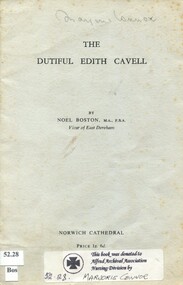
Booklet, Noel Boston 1910-1966, The dutiful Edith Cavell, 1955
... After the German occupation of Belgium, she became involved in an underground group formed to help British, French, and Belgian soldiers reach the Netherlands, a neutral country. ...Edith Cavell, birn 1865, trained at the London Hospital, in 1906 she asked to oversee a surgical and medical home in Brussles, Belgium. After the German occupation of Belgium, she became involved in an underground group formed to help British, French, and Belgian soldiers reach the Netherlands, a neutral country. The soldiers were sheltered at the Berkendael Institute, which had become a Red Cross hospital, and were provided with money and guides by Philippe Baucq, a Belgian. About 200 men had been aided when, in August 1915, Cavell and several others were arrested. The group was brought before a court-martial on October 7, 1915. On October 9, Cavell, after making a full confession, was sentenced to death. Three days later she and Baucq were shot, despite the efforts of the U.S. and Spanish ministers to secure a reprieve. The group was brought before a court-martial on October 7, 1915. On October 9, Cavell, after making a full confession, was sentenced to death. Three days later she and Baucq were shot, despite the efforts of the U.S. and Spanish ministers to secure a reprieve. Though legally justified, her execution on a charge that did not includeStapled booklet with grey cover and black print. Title, authors name, 'Norwich Cathedral' and price printed on front covernon-fictionEdith Cavell, birn 1865, trained at the London Hospital, in 1906 she asked to oversee a surgical and medical home in Brussles, Belgium. After the German occupation of Belgium, she became involved in an underground group formed to help British, French, and Belgian soldiers reach the Netherlands, a neutral country. The soldiers were sheltered at the Berkendael Institute, which had become a Red Cross hospital, and were provided with money and guides by Philippe Baucq, a Belgian. About 200 men had been aided when, in August 1915, Cavell and several others were arrested. The group was brought before a court-martial on October 7, 1915. On October 9, Cavell, after making a full confession, was sentenced to death. Three days later she and Baucq were shot, despite the efforts of the U.S. and Spanish ministers to secure a reprieve. The group was brought before a court-martial on October 7, 1915. On October 9, Cavell, after making a full confession, was sentenced to death. Three days later she and Baucq were shot, despite the efforts of the U.S. and Spanish ministers to secure a reprieve. Though legally justified, her execution on a charge that did not includeedith cavell, world war 1914-1918 -
 Whitehorse Historical Society Inc.
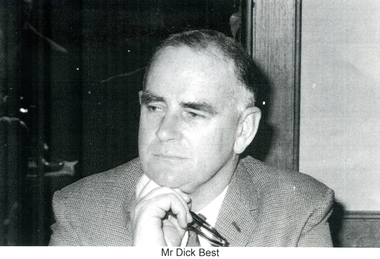
Photograph, Dick Best
... While travelling in Belgium he contacted the de Stoop family, textile manufacturers, whose business had been closed down by German occupation after the 2nd World War. ...While travelling in Belgium he contacted the de Stoop family, textile manufacturers, whose business had been closed down by German occupation after the 2nd World War. ...Richard Best was an Australian Textile industry agent and Businessman. While travelling in Belgium he contacted the de Stoop family, textile manufacturers, whose business had been closed down by German occupation after the 2nd World War. They took up Dick Best's offer to relocate and join with him to set up a textile factory in Australia. Land was purchased in Blackburn North and when the de Stoop and Best Aust P/L traded, Dick best was in charge of marketing their products.2 Black and white photograph of the head and shoulders of Richard Best. He has a pair of glasses in his right hand(on smaller photocopy) Mr Dick Bestbest, richard, weaving mills, de stoop and best aust, p/l -
 Whitehorse Historical Society Inc.
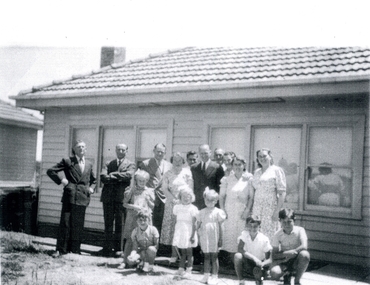
Photograph, Roger de Stoop and Belgian workers, C 1950
... Roger de Stoop came to Australia during the Second World War when the de Stoop spinning & weaving factory in Belgium was closed during the German occupation. He had previously met Dick Best, an Australian who wanted to establish a textile factory in Australia and in 1950 they built a factory at Blackburn North importing the weaving looms and many of their skilled workers from Belgium. ...Roger de Stoop came to Australia during the Second World War when the de Stoop spinning & weaving factory in Belgium was closed during the German occupation. He had previously met Dick Best, an Australian who wanted to establish a textile factory in Australia and in 1950 they built a factory at Blackburn North importing the weaving looms and many of their skilled workers from Belgium. ...Roger de Stoop came to Australia during the Second World War when the de Stoop spinning & weaving factory in Belgium was closed during the German occupation. He had previously met Dick Best, an Australian who wanted to establish a textile factory in Australia and in 1950 they built a factory at Blackburn North importing the weaving looms and many of their skilled workers from Belgium. Housing for the workers was built near the factory.Black and white photograph of Belgian family groups in front of one of the houses erected for the de Stoop workers. Roger de Stoop is in the centre of the photograph in a dark suit and tie.de stoop, roger. de stoop aust pty ltd. de stoop and best textile factory. weaving mills. belgians in australia -
 Whitehorse Historical Society Inc.
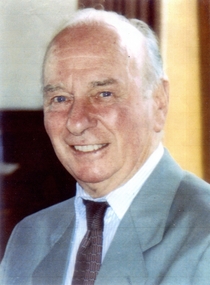
Photograph, Roger de Stoop
... Roger de Stoop was born in Flanders, Belgium in 1912 and died in Australia on 18th April 1999. The de Stoop textile factory was closed due to German occupation and when Roger de Stoop received an offer from Australian Dick Best to begin a a partnership in similar venture in Australia, he agreed, bringing looms and skilled workers with him. ...Roger de Stoop was born in Flanders, Belgium in 1912 and died in Australia on 18th April 1999. The de Stoop textile factory was closed due to German occupation and when Roger de Stoop received an offer from Australian Dick Best to begin a a partnership in similar venture in Australia, he agreed, bringing looms and skilled workers with him. ...Roger de Stoop was born in Flanders, Belgium in 1912 and died in Australia on 18th April 1999. The de Stoop textile factory was closed due to German occupation and when Roger de Stoop received an offer from Australian Dick Best to begin a a partnership in similar venture in Australia, he agreed, bringing looms and skilled workers with him. The company was the first to produce Belgian damask ticking in Australia. The firm was sold to the British firm, Smith and Nephew in 1960.One coloured and one black and white head shot of Roger de Stoop wearing a suit and tie.de stoop, roger. de stoop and best textile factory. belgians in australia
