
Showing 21 items matching "gibb family history"
-
 Tatura Irrigation & Wartime Camps Museum
Manuscript & Heritage citation report 2011, 117 Hogan Street Early History, 2014
... gibb...tatura history...Gibb Family...Handwritten notes on Gibbs Bakery (Tatura) and some Gibb Family History. Includes a photo of Gibbs house 117 Hogan Street. ...Significance levels "contributary " Joyce Crawford is the wife of the late Arch Crawford gibb tatura history Gibb Family History A4 1 1/2 pages. ...Heritage citation report 2911. Significance levels "contributary "Joyce Crawford is the wife of the late Arch CrawfordA4 1 1/2 pages. Handwritten notes on Gibbs Bakery (Tatura) and some Gibb Family History. Includes a photo of Gibbs house 117 Hogan Street. gibb, tatura history, gibb family history -
 Flagstaff Hill Maritime Museum and Village
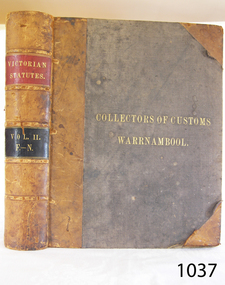
Book - Reference/Legal Acts, John Ferres, Government Printer, The Victorian Statutes Vol 2 Collectors of Customs, 1866
... history. He managed the Government Printing Office from 1851 to 1887, overseeing the publication of everything from the colony's first postage stamps to its goldfield regulations and parliamentary records. Ferres was born on 1 October 1818 in Bath, England. He came from a printing family; his father, Robert, was a printer. Ferres completed a thorough 16-year practical apprenticeship in Bath, working for a printer and stationer named S. Gibbs...history. He managed the Government Printing Office from 1851 to 1887, overseeing the publication of everything from the colony's first postage stamps to its goldfield regulations and parliamentary records. Ferres was born on 1 October 1818 in Bath, England. He came from a printing family; his father, Robert, was a printer. Ferres completed a thorough 16-year practical apprenticeship in Bath, working for a printer and stationer named S. Gibbs ...Because the subject item is a book of law, it would not traditionally have a singular author, but rather a corporate author, specifically the Colony of Victoria and, more precisely, the Parliament of Victoria. The Victorian Statutes of 1866 is an official compilation of the statute law of the Colony of Victoria, Australia, 'Published by Authority', and printed by John Ferres, who was the Victorian Government Printer at the time. Ferres was the printer/publisher, not an author or editor in the usual sense, as this is a government publication rather than an individually authored work.Hard cover book, The Victorian Statutes Vol 2 Author: Corporate Author “The Colony of Victoria” Publisher: John Ferres Government Printer Melbourne. Date: 1866 Three quarter leather, Olive Front Cover, Brown Spine with Gold embossed Title on spine & front cover "Collector of Customs Warrnambool"non-fictionBecause the subject item is a book of law, it would not traditionally have a singular author, but rather a corporate author, specifically the Colony of Victoria and, more precisely, the Parliament of Victoria. The Victorian Statutes of 1866 is an official compilation of the statute law of the Colony of Victoria, Australia, 'Published by Authority', and printed by John Ferres, who was the Victorian Government Printer at the time. Ferres was the printer/publisher, not an author or editor in the usual sense, as this is a government publication rather than an individually authored work.flagstaff hill, warrnambool, shipwrecked-coast, flagstaff-hill, flagstaff-hill-maritime-museum, maritime-museum, shipwreck-coast, flagstaff-hill-maritime-village, the victorian statutes vol 2 collectors of customs, book -
 Flagstaff Hill Maritime Museum and Village
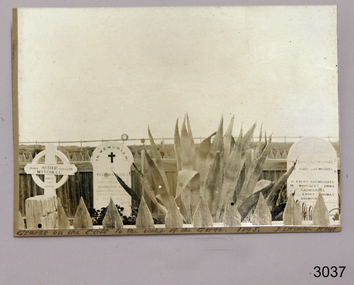
Photograph, March, 1895
... history. Flagstaff Hill Warrnambool Shipwrecked coast Flagstaff Hill Maritime Museum Maritime Museum Shipwreck coast Flagstaff Hill Maritime Village Great Ocean Road Loch Line LOCH ARD Captain Gibbs Eva Carmichael Tom Pearce Glenample Station Mutton Bird Island LOCH ARD Gorge loch ard shipwreck carmichael family arthur mitchell reginald jones loch ard gorge graves Reverse has hand writing “ … Loch Ard Gorge / Graves of / the Carmichael family / Mr. ...Loch Ard was bound for Melbourne in 1878 loaded with passengers and cargo when it ran into a rocky reef at the base of Mutton Bird Island, near Port Campbell. Of the 54 crew members and passengers on board, only two survived: an apprentice, Tom Pearce and a young woman passenger, Eva Carmichael, who lost all of her family in the tragedy. The wreck of Loch Ard still lies at the base of Mutton Bird Island and much of the cargo has been salvaged. Some was washed up into what is now known as Loch Ard Gorge following the shipwreck. Cargo and artefacts have also been illegally salvaged over many years before protective legislation was introduced. The photograph is significant for its association with the wreck of the Loch Ard. This wreck has been protected as a Historic Shipwreck since 11 March 1982, under the Commonwealth Historic Shipwrecks Act (1976) Flagstaff Hill’s collection of artefacts from Loch Ard is significant for being one of the largest collections of artefacts from this shipwreck in Victoria. It is significant for its association with the shipwreck, which is on the Victorian Heritage Register. The collection is significant because of the relationship between the objects, as together they have a high potential to interpret the story of the Loch Ard. The Loch Ard collection is archaeologically significant as the remains of a large international passenger and cargo ship. The Loch Ard collection is historically significant for representing aspects of Victoria’s shipping history and its potential to interpret sub-theme 1.5 of Victoria’s Framework of Historical Themes (living with natural processes). The collection is also historically significant for its association with the Loch Ard, which was one of the worst and best known shipwrecks in Victoria’s history. The Loch Ard collection meets the following criteria for assessment: Criterion A: Importance to the course, or pattern, of Victoria’s cultural history. Criterion B: Possession of uncommon, rare or endangered aspects of Victoria’s cultural history. Criterion C: Potential to yield information that will contribute to an understanding of Victoria’s cultural history. Photograph of Loch Ard Gorge graves on hillside, including the Carmichael family, Reginald Jones and Arthur Mitchell Reverse has hand writing in pen and ink, part of details are lost due to photo being trimmed. Also has four areas of torn surface, perhaps were photo had been mounted. Reverse has hand writing “ … Loch Ard Gorge / Graves of / the Carmichael family / Mr. Reginald Jones / Mr Arthur Mitchell “ and “Mr J Swinton / March 1895”flagstaff hill, warrnambool, shipwrecked coast, flagstaff hill maritime museum, maritime museum, shipwreck coast, flagstaff hill maritime village, great ocean road, loch line, loch ard, captain gibbs, eva carmichael, tom pearce, glenample station, mutton bird island, loch ard gorge, loch ard shipwreck, carmichael family, arthur mitchell, reginald jones, loch ard gorge graves -
 Flagstaff Hill Maritime Museum and Village
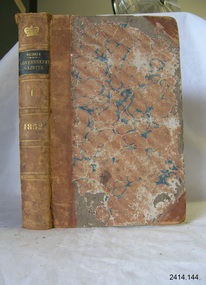
Book - Reference/Legal Statutes, John Ferres, Government Printer, The Victorian Government Gazette Vol 1 (January 1st to 30th June), 1852
... John Ferres was a major figure in early Australian printing history; he managed the Government Printing Office from 1851 to 1887, overseeing the publication of everything from the colony's first postage stamps to its goldfield regulations and parliamentary records. Ferres was born on 1 October 1818 in Bath, England. He came from a printing family; his father, Robert, was a printer. Ferres completed a thorough sixteen-year practical apprenticeship in Bath, working for a printer and stationer named S. Gibbs...John Ferres was a major figure in early Australian printing history; he managed the Government Printing Office from 1851 to 1887, overseeing the publication of everything from the colony's first postage stamps to its goldfield regulations and parliamentary records. Ferres was born on 1 October 1818 in Bath, England. He came from a printing family; his father, Robert, was a printer. Ferres completed a thorough sixteen-year practical apprenticeship in Bath, working for a printer and stationer named S. Gibbs ...This volume is a primary historical document recording the foundational legal acts, official proclamations, and government notices that established the administration of the newly independent Colony of Victoria. Volume 1, one of the earliest Victorian Statutes, contains the initial Acts passed by the newly formed Legislative Council of Victoria following its formal separation from New South Wales on 1 July 1851. The inclusion of Charles Joseph La Trobe, Victoria's first Lieutenant-Governor, appointed in July 1851, signifies that this volume records official proclamations establishing colonial courts, administrative divisions, civil service appointments, and public order measures.Hard cover book,The Victorian Statutes Vol 1. Author: Corporate Author Charles Joseph L A Trobe “The Colony of Victoria” Publisher: John Ferres Government Printer Melbourne. Date: 1852 Three quarter leather, patterned covers. Top section of leather on spine frayed, lettering in gilt. No Library labels. Pencil text to flyleaf unreadable.non-fictionThis volume is a primary historical document recording the foundational legal acts, official proclamations, and government notices that established the administration of the newly independent Colony of Victoria. Volume 1, one of the earliest Victorian Statutes, contains the initial Acts passed by the newly formed Legislative Council of Victoria following its formal separation from New South Wales on 1 July 1851. The inclusion of Charles Joseph La Trobe, Victoria's first Lieutenant-Governor, appointed in July 1851, signifies that this volume records official proclamations establishing colonial courts, administrative divisions, civil service appointments, and public order measures.flagstaff hill, warrnambool, shipwrecked coast, flagstaff hill maritime museum, maritime museum, shipwreck coast, flagstaff hill maritime village, great ocean road, book, pattison collection, warrnambool library, warrnambool mechanics’ institute, ralph eric pattison, corangamite regional library service, warrnambool city librarian, mechanics’ institute library, victorian library board, warrnambool books and records, warrnambool children’s library -
 Flagstaff Hill Maritime Museum and Village
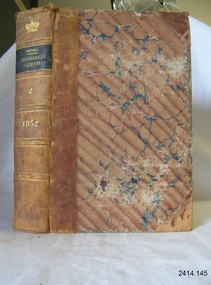
Book - Reference/Legal Statutes, John Ferres, Government Printer, The Victorian Government Gazette Vol 2 (July 1st to 31st December), 1852
... John Ferres was a major figure in early Australian printing history; he managed the Government Printing Office from 1851 to 1887, overseeing the publication of everything from the colony's first postage stamps to its goldfield regulations and parliamentary records. Ferres was born on 1 October 1818 in Bath, England. He came from a printing family; his father, Robert, was a printer. Ferres completed a thorough sixteen-year practical apprenticeship in Bath, working for a printer and stationer named S. Gibbs...John Ferres was a major figure in early Australian printing history; he managed the Government Printing Office from 1851 to 1887, overseeing the publication of everything from the colony's first postage stamps to its goldfield regulations and parliamentary records. Ferres was born on 1 October 1818 in Bath, England. He came from a printing family; his father, Robert, was a printer. Ferres completed a thorough sixteen-year practical apprenticeship in Bath, working for a printer and stationer named S. Gibbs ...This volume is a primary historical document recording the foundational legal acts, official proclamations, and government notices that established the administration of the newly independent Colony of Victoria. Volume 1, one of the earliest Victorian Statutes, contains the initial Acts passed by the newly formed Legislative Council of Victoria following its formal separation from New South Wales on 1 July 1851. The inclusion of Charles Joseph La Trobe, Victoria's first Lieutenant-Governor, appointed in July 1851, signifies that this volume records official proclamations establishing colonial courts, administrative divisions, civil service appointments, and public order measures.Hard cover book,The Victorian Statutes Vol 2. Author: Corporate Author Charles Joseph L A Trobe “The Colony of Victoria” Publisher: John Ferres Government Printer Melbourne. Date: 1852 Further information: Three quarter leather, patterned covers. Top section of leather on spine frayed at top, lettering in gilt. No Library labels.non-fictionThis volume is a primary historical document recording the foundational legal acts, official proclamations, and government notices that established the administration of the newly independent Colony of Victoria. Volume 1, one of the earliest Victorian Statutes, contains the initial Acts passed by the newly formed Legislative Council of Victoria following its formal separation from New South Wales on 1 July 1851. The inclusion of Charles Joseph La Trobe, Victoria's first Lieutenant-Governor, appointed in July 1851, signifies that this volume records official proclamations establishing colonial courts, administrative divisions, civil service appointments, and public order measures.flagstaff hill, warrnambool, shipwrecked coast, flagstaff hill maritime museum, maritime museum, shipwreck coast, flagstaff hill maritime village, great ocean road, book, pattison collection, warrnambool library, warrnambool mechanics’ institute, ralph eric pattison, corangamite regional library service, warrnambool city librarian, mechanics’ institute library, victorian library board, warrnambool books and records, warrnambool children’s library -
Federation University Historical Collection
Booklet, The Don Grant Family History Lectures 1997 - 2006, c2006
... Don Grant Family History Lecture Donald William Morrison Grant Ross Gibbs Frances Awcock Ken Shewan Sue McBeth Michael Gandy Susie Zada Ann-Marie Schwirtlich Shauna Hicks Tanja Luckins Helen Harris Victorian Associations of Family History Organisations Family history genealogy A4 spiral bound book with white cover and black writing The Don Grant Family History Lectures 1997 - 2006 Booklet ...A4 spiral bound book with white cover and black writing don grant family history lecture, donald william morrison grant, ross gibbs, frances awcock, ken shewan, sue mcbeth, michael gandy, susie zada, ann-marie schwirtlich, shauna hicks, tanja luckins, helen harris, victorian associations of family history organisations, family history, genealogy -
 Flagstaff Hill Maritime Museum and Village
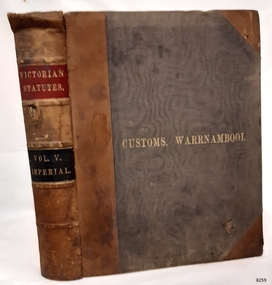
Book - Reference/Legal Statutes, John Ferres, Government Printer, The Victorian Imperial Statutes Vol 5 Customs Warrnambool, 1868
... John Ferres was a massive figure in early Australian printing history; he managed the Government Printing Office from 1851 to 1887, overseeing the publication of everything from the colony's first postage stamps to its goldfield regulations and parliamentary records. Ferres was born on October 1, 1818, in Bath, England. He came from a printing family; his father, Robert, was a printer. Ferres completed a thorough 16-year practical apprenticeship in Bath working for a printer and stationer named S. Gibbs...John Ferres was a massive figure in early Australian printing history; he managed the Government Printing Office from 1851 to 1887, overseeing the publication of everything from the colony's first postage stamps to its goldfield regulations and parliamentary records. Ferres was born on October 1, 1818, in Bath, England. He came from a printing family; his father, Robert, was a printer. Ferres completed a thorough 16-year practical apprenticeship in Bath working for a printer and stationer named S. Gibbs ...This volume is part of the first comprehensive consolidation of laws for the Colony of Victoria after it separated from New South Wales and established its own parliament. Specifically, Volume 5 (published in 1868) is dedicated to "A selection of the imperial statutes apparently in force in Victoria". Because Victoria was still a British colony, laws passed by the British (Imperial) Parliament in Westminster still applied locally if they hadn't been superseded by local Victorian colonial acts. Volume 5 was the legal handbook used by lawyers, judges, and government officials to determine exactly which British laws still governed colonial matters, ranging from shipping and trade to criminal law and merchant customs.The Victorian Statutes Vol 5 Customs Warrnambool Publisher: John Ferres Government Printer Melbourne Date: 1868 Further Information: Three quarter leather. Junction between front board and spine slightly exposed. Top section of leather on spine damaged. non-fictionThis volume is part of the first comprehensive consolidation of laws for the Colony of Victoria after it separated from New South Wales and established its own parliament. Specifically, Volume 5 (published in 1868) is dedicated to "A selection of the imperial statutes apparently in force in Victoria". Because Victoria was still a British colony, laws passed by the British (Imperial) Parliament in Westminster still applied locally if they hadn't been superseded by local Victorian colonial acts. Volume 5 was the legal handbook used by lawyers, judges, and government officials to determine exactly which British laws still governed colonial matters, ranging from shipping and trade to criminal law and merchant customs.flagstaff hill, warrnambool, shipwrecked coast, flagstaff hill maritime museum, maritime museum, shipwreck coast, flagstaff hill maritime village, great ocean road, book, pattison collection, warrnambool library, warrnambool mechanics’ institute, ralph eric pattison, corangamite regional library service, warrnambool city librarian, mechanics’ institute library, victorian library board, warrnambool books and records, warrnambool children’s library -
 Flagstaff Hill Maritime Museum and Village
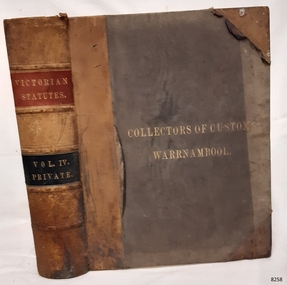
Book - Reference/Legal Statutes, John Ferres, Government Printer, The Victorian Statutes Vol 4 Various Legal Statues /Warrnambool, 1866
... John Ferres was a massive figure in early Australian printing history; he managed the Government Printing Office from 1851 to 1887, overseeing the publication of everything from the colony's first postage stamps to its goldfield regulations and parliamentary records. Ferres was born on October 1, 1818, in Bath, England. He came from a printing family; his father, Robert, was a printer. Ferres completed a thorough 16-year practical apprenticeship in Bath working for a printer and stationer named S. Gibbs...John Ferres was a massive figure in early Australian printing history; he managed the Government Printing Office from 1851 to 1887, overseeing the publication of everything from the colony's first postage stamps to its goldfield regulations and parliamentary records. Ferres was born on October 1, 1818, in Bath, England. He came from a printing family; his father, Robert, was a printer. Ferres completed a thorough 16-year practical apprenticeship in Bath working for a printer and stationer named S. Gibbs ...This volume is part of the first comprehensive consolidation of laws for the Colony of Victoria after it separated from New South Wales and established its own parliament. Specifically, Volume 4 (published in 1866) contains Local Colonial Acts. These were laws debated, passed, and enacted right here in Melbourne by the newly formed Parliament of the Colony of Victoria. They dealt with purely domestic, local matters, such as Victorian land selection, goldfields regulations, local municipal boundaries, and colonial courts. Volume 4 was the handbook for everyday domestic Victorian life, governing how a local town council operated, how gold claims were filed, or how local debts were settled in a Victorian county court.The Victorian Statutes Vol 4 Various Legal Statues /Warrnambool Publisher: John Ferres Government Printer Melbourne Date: 1866 Further Information: Three quarter leather. Junction between front board and spine slightly exposed. non-fictionThis volume is part of the first comprehensive consolidation of laws for the Colony of Victoria after it separated from New South Wales and established its own parliament. Specifically, Volume 4 (published in 1866) contains Local Colonial Acts. These were laws debated, passed, and enacted right here in Melbourne by the newly formed Parliament of the Colony of Victoria. They dealt with purely domestic, local matters, such as Victorian land selection, goldfields regulations, local municipal boundaries, and colonial courts. Volume 4 was the handbook for everyday domestic Victorian life, governing how a local town council operated, how gold claims were filed, or how local debts were settled in a Victorian county court.flagstaff hill, warrnambool, shipwrecked coast, flagstaff hill maritime museum, maritime museum, shipwreck coast, flagstaff hill maritime village, great ocean road, book, pattison collection, warrnambool library, warrnambool mechanics’ institute, ralph eric pattison, corangamite regional library service, warrnambool city librarian, mechanics’ institute library, victorian library board, warrnambool books and records, warrnambool children’s library -
 Flagstaff Hill Maritime Museum and Village
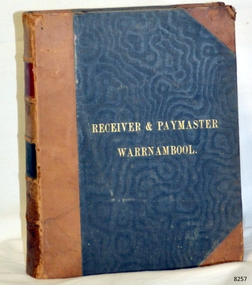
Book - Reference/Legal Statutes, John Ferres, Government Printer, The Victorian Legal Statutes Vol 3, Receiver Paymaster/Warrnambool, 1866
... John Ferres was a massive figure in early Australian printing history; he managed the Government Printing Office from 1851 to 1887, overseeing the publication of everything from the colony's first postage stamps to its goldfield regulations and parliamentary records. Ferres was born on October 1, 1818, in Bath, England. He came from a printing family; his father, Robert, was a printer. Ferres completed a thorough 16-year practical apprenticeship in Bath working for a printer and stationer named S. Gibbs...John Ferres was a massive figure in early Australian printing history; he managed the Government Printing Office from 1851 to 1887, overseeing the publication of everything from the colony's first postage stamps to its goldfield regulations and parliamentary records. Ferres was born on October 1, 1818, in Bath, England. He came from a printing family; his father, Robert, was a printer. Ferres completed a thorough 16-year practical apprenticeship in Bath working for a printer and stationer named S. Gibbs ...This volume is part of the first comprehensive consolidation of laws for the Colony of Victoria after it separated from New South Wales and established its own parliament. Specifically, Volume 3 is the final part of the core "Public and General" Victorian colonial laws. The first three volumes of the 1866 consolidation were organised alphabetically by legal topic. Volume 3 specifically contains all the major public acts running from P to W. Because it covers the tail end of the alphabet, it holds some of the most critical laws that built day-to-day society in 19th-century Victoria. These include: · Police Offences and Public Order: The legal frameworks for policing the goldfield boomtowns, managing public behaviour, and running early colonial prisons. · Public Works and Infrastructure: The acts authorising the construction of roads, bridges, and early municipal water supplies across the fast-growing colony. · Railways: The specific general legislation governing the expansion of Victoria's heavily subsidised, state-expanding railway networks. · Property and Land Transfer: Crucial laws managing land ownership, inheritance, and the foundational transfers of property as the colony shifted away from old squatter runs to permanent towns. · Wines, Beer, and Spirits: The colonial acts regulating the licensing of hotels and public houses, and managing the highly lucrative, tightly controlled alcohol trade.The Victorian Statutes Vol 3 Various Legal Statues /Warrnambool Publisher: John Ferres Government Printer Melbourne Date: 1866 Further Information: Three quarter leather. Corners worn lettering in gilt. non-fictionThis volume is part of the first comprehensive consolidation of laws for the Colony of Victoria after it separated from New South Wales and established its own parliament. Specifically, Volume 3 is the final part of the core "Public and General" Victorian colonial laws. The first three volumes of the 1866 consolidation were organised alphabetically by legal topic. Volume 3 specifically contains all the major public acts running from P to W. Because it covers the tail end of the alphabet, it holds some of the most critical laws that built day-to-day society in 19th-century Victoria. These include: · Police Offences and Public Order: The legal frameworks for policing the goldfield boomtowns, managing public behaviour, and running early colonial prisons. · Public Works and Infrastructure: The acts authorising the construction of roads, bridges, and early municipal water supplies across the fast-growing colony. · Railways: The specific general legislation governing the expansion of Victoria's heavily subsidised, state-expanding railway networks. · Property and Land Transfer: Crucial laws managing land ownership, inheritance, and the foundational transfers of property as the colony shifted away from old squatter runs to permanent towns. · Wines, Beer, and Spirits: The colonial acts regulating the licensing of hotels and public houses, and managing the highly lucrative, tightly controlled alcohol trade.flagstaff hill, warrnambool, shipwrecked coast, flagstaff hill maritime museum, maritime museum, shipwreck coast, flagstaff hill maritime village, great ocean road, book, pattison collection, warrnambool library, warrnambool mechanics’ institute, ralph eric pattison, corangamite regional library service, warrnambool city librarian, mechanics’ institute library, victorian library board, warrnambool books and records, warrnambool children’s library -
 Flagstaff Hill Maritime Museum and Village
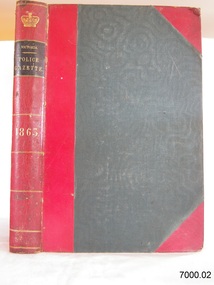
Administrative record - Reference Sociology/History, John Ferres, Government Printer, Victoria Police Gazettes for 1863, 1863
... history. He managed the Government Printing Office from 1851 to 1887, overseeing the publication of everything from the colony's first postage stamps to its goldfields regulations and parliamentary records. Ferres was born on 1 October 1818 in Bath, England. He came from a printing family; his father, Robert, was a printer. Ferres completed a thorough sixteen-year practical apprenticeship in Bath, working for a printer and stationer named S. Gibbs...history. He managed the Government Printing Office from 1851 to 1887, overseeing the publication of everything from the colony's first postage stamps to its goldfields regulations and parliamentary records. Ferres was born on 1 October 1818 in Bath, England. He came from a printing family; his father, Robert, was a printer. Ferres completed a thorough sixteen-year practical apprenticeship in Bath, working for a printer and stationer named S. Gibbs ...The Victoria Police Gazette was a confidential, internal publication of the Victoria Police, issued to inform police officers, court and justice officials, and government departments about matters relevant to policing across the colony. It commenced in December 1853 and was initially published weekly by the Victoria Police. It was distributed each week to city and rural police stations and to government offices and newspaper publishers. Inclusions in this weekly publication were people wanted for questioning in relation to various crimes, prisoners discharged from city or country gaols, extracts from Police Gazettes in New South Wales, South Australia, Queensland, Tasmania, New Zealand, and occasionally overseas countries, as well as extracts from the Hobart Town Gazette listing escaped convicts and the person to whom they were assigned. There was also a "Missing Friends" section, where most people listed were not criminals but were sought by police so relatives, old friends, or government officials could renew contact with them. In addition, there was a record of deserted wives and children, listing the offender's name, birthplace, age, occupation, last known area of residence, likely future movements and known relatives. There was also a section on court lists, warrants issued, appointments and staffing changes within the police service, arrest and discharge records with physical descriptions, and lists of pastoralists with descriptions of their livestock brands.Hard Bound Volume. Victorian Police Gazettes for 1863 Author: Institutional Government Publication Publisher: John Ferres, Melbourne Date: 1863 Further Information: Compilation of Weekly Victorian Police Gazettes for 1863 in a hard bound volume with red spine and red corner reinforcing. Front panel grey coloured lettering in gilt with gilt banding to spine. Inside is twelve issues of the Police Gazettes for 1863.non-fictionThe Victoria Police Gazette was a confidential, internal publication of the Victoria Police, issued to inform police officers, court and justice officials, and government departments about matters relevant to policing across the colony. It commenced in December 1853 and was initially published weekly by the Victoria Police. It was distributed each week to city and rural police stations and to government offices and newspaper publishers. Inclusions in this weekly publication were people wanted for questioning in relation to various crimes, prisoners discharged from city or country gaols, extracts from Police Gazettes in New South Wales, South Australia, Queensland, Tasmania, New Zealand, and occasionally overseas countries, as well as extracts from the Hobart Town Gazette listing escaped convicts and the person to whom they were assigned. There was also a "Missing Friends" section, where most people listed were not criminals but were sought by police so relatives, old friends, or government officials could renew contact with them. In addition, there was a record of deserted wives and children, listing the offender's name, birthplace, age, occupation, last known area of residence, likely future movements and known relatives. There was also a section on court lists, warrants issued, appointments and staffing changes within the police service, arrest and discharge records with physical descriptions, and lists of pastoralists with descriptions of their livestock brands.warrnambool, shipwrecked-coast, flagstaff-hill, flagstaff-hill-maritime-museum, maritime-museum, shipwreck-coast, flagstaff-hill-maritime-village, shipwrecked-artefact, book, victoria police gazette 1862, victoria police gazette, warrnambool books and records, great ocean road -
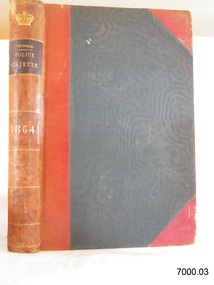 Flagstaff Hill Maritime Museum and Village
Administrative record - Reference Sociology/History, John Ferres, Government Printer, Victoria Police Gazettes for 1864, 1864
... history. He managed the Government Printing Office from 1851 to 1887, overseeing the publication of everything from the colony's first postage stamps to its goldfields regulations and parliamentary records. Ferres was born on 1 October 1818 in Bath, England. He came from a printing family; his father, Robert, was a printer. Ferres completed a thorough sixteen-year practical apprenticeship in Bath, working for a printer and stationer named S. Gibbs...history. He managed the Government Printing Office from 1851 to 1887, overseeing the publication of everything from the colony's first postage stamps to its goldfields regulations and parliamentary records. Ferres was born on 1 October 1818 in Bath, England. He came from a printing family; his father, Robert, was a printer. Ferres completed a thorough sixteen-year practical apprenticeship in Bath, working for a printer and stationer named S. Gibbs ...The Victoria Police Gazette was a confidential, internal publication of the Victoria Police, issued to inform police officers, court and justice officials, and government departments about matters relevant to policing across the colony. It commenced in December 1853 and was initially published weekly by the Victoria Police. It was distributed each week to city and rural police stations and to government offices and newspaper publishers. Inclusions in this weekly publication were people wanted for questioning in relation to various crimes, prisoners discharged from city or country gaols, extracts from Police Gazettes in New South Wales, South Australia, Queensland, Tasmania, New Zealand, and occasionally overseas countries, as well as extracts from the Hobart Town Gazette listing escaped convicts and the person to whom they were assigned. There was also a "Missing Friends" section, where most people listed were not criminals but were sought by police so relatives, old friends, or government officials could renew contact with them. In addition, there was a record of deserted wives and children, listing the offender's name, birthplace, age, occupation, last known area of residence, likely future movements and known relatives. There was also a section on court lists, warrants issued, appointments and staffing changes within the police service, arrest and discharge records with physical descriptions, and lists of pastoralists with descriptions of their livestock brands.Hard Bound Volume. Victorian Police Gazettes for 1864 Author: Institutional Government Publication Publisher: John Ferres, Melbourne Date: 1864 Further Information: Compilation of Weekly Victorian Police Gazettes for 1864 in a hard bound volume with red spine and red corner reinforcing. Front panel grey coloured lettering in gilt with gilt banding to spine. Inside is twelve issues of the Police Gazettes for 1864.non-fictionThe Victoria Police Gazette was a confidential, internal publication of the Victoria Police, issued to inform police officers, court and justice officials, and government departments about matters relevant to policing across the colony. It commenced in December 1853 and was initially published weekly by the Victoria Police. It was distributed each week to city and rural police stations and to government offices and newspaper publishers. Inclusions in this weekly publication were people wanted for questioning in relation to various crimes, prisoners discharged from city or country gaols, extracts from Police Gazettes in New South Wales, South Australia, Queensland, Tasmania, New Zealand, and occasionally overseas countries, as well as extracts from the Hobart Town Gazette listing escaped convicts and the person to whom they were assigned. There was also a "Missing Friends" section, where most people listed were not criminals but were sought by police so relatives, old friends, or government officials could renew contact with them. In addition, there was a record of deserted wives and children, listing the offender's name, birthplace, age, occupation, last known area of residence, likely future movements and known relatives. There was also a section on court lists, warrants issued, appointments and staffing changes within the police service, arrest and discharge records with physical descriptions, and lists of pastoralists with descriptions of their livestock brands.warrnambool, shipwrecked-coast, flagstaff-hill, flagstaff-hill-maritime-museum, maritime-museum, shipwreck-coast, flagstaff-hill-maritime-village, shipwrecked-artefact, book, victoria police gazette 1862, victoria police gazette, warrnambool books and records, great ocean road -
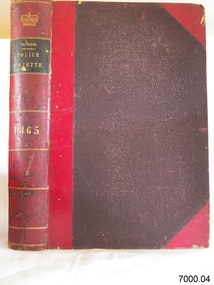 Flagstaff Hill Maritime Museum and Village
Administrative record - Reference Sociology/History, John Ferres, Government Printer, Victoria Police Gazettes for 1865, 1865
... history. He managed the Government Printing Office from 1851 to 1887, overseeing the publication of everything from the colony's first postage stamps to its goldfields regulations and parliamentary records. Ferres was born on 1 October 1818 in Bath, England. He came from a printing family; his father, Robert, was a printer. Ferres completed a thorough sixteen-year practical apprenticeship in Bath, working for a printer and stationer named S. Gibbs...history. He managed the Government Printing Office from 1851 to 1887, overseeing the publication of everything from the colony's first postage stamps to its goldfields regulations and parliamentary records. Ferres was born on 1 October 1818 in Bath, England. He came from a printing family; his father, Robert, was a printer. Ferres completed a thorough sixteen-year practical apprenticeship in Bath, working for a printer and stationer named S. Gibbs ...The Victoria Police Gazette was a confidential, internal publication of the Victoria Police, issued to inform police officers, court and justice officials, and government departments about matters relevant to policing across the colony. It commenced in December 1853 and was initially published weekly by the Victoria Police. It was distributed each week to city and rural police stations and to government offices and newspaper publishers. Inclusions in this weekly publication were people wanted for questioning in relation to various crimes, prisoners discharged from city or country gaols, extracts from Police Gazettes in New South Wales, South Australia, Queensland, Tasmania, New Zealand, and occasionally overseas countries, as well as extracts from the Hobart Town Gazette listing escaped convicts and the person to whom they were assigned. There was also a "Missing Friends" section, where most people listed were not criminals but were sought by police so relatives, old friends, or government officials could renew contact with them. In addition, there was a record of deserted wives and children, listing the offender's name, birthplace, age, occupation, last known area of residence, likely future movements and known relatives. There was also a section on court lists, warrants issued, appointments and staffing changes within the police service, arrest and discharge records with physical descriptions, and lists of pastoralists with descriptions of their livestock brands.Hard Bound Volume. Victorian Police Gazettes for 1865 Author: Institutional Government Publication Publisher: John Ferres, Melbourne Date: 1865 Further Information: Compilation of Weekly Victorian Police Gazettes for 1865 in a hard bound volume with red spine and red corner reinforcing. Front panel grey coloured lettering in gilt with gilt banding to spine. Inside is twelve issues of the Police Gazettes for 1865.non-fictionThe Victoria Police Gazette was a confidential, internal publication of the Victoria Police, issued to inform police officers, court and justice officials, and government departments about matters relevant to policing across the colony. It commenced in December 1853 and was initially published weekly by the Victoria Police. It was distributed each week to city and rural police stations and to government offices and newspaper publishers. Inclusions in this weekly publication were people wanted for questioning in relation to various crimes, prisoners discharged from city or country gaols, extracts from Police Gazettes in New South Wales, South Australia, Queensland, Tasmania, New Zealand, and occasionally overseas countries, as well as extracts from the Hobart Town Gazette listing escaped convicts and the person to whom they were assigned. There was also a "Missing Friends" section, where most people listed were not criminals but were sought by police so relatives, old friends, or government officials could renew contact with them. In addition, there was a record of deserted wives and children, listing the offender's name, birthplace, age, occupation, last known area of residence, likely future movements and known relatives. There was also a section on court lists, warrants issued, appointments and staffing changes within the police service, arrest and discharge records with physical descriptions, and lists of pastoralists with descriptions of their livestock brands.warrnambool, shipwrecked-coast, flagstaff-hill, flagstaff-hill-maritime-museum, maritime-museum, shipwreck-coast, flagstaff-hill-maritime-village, shipwrecked-artefact, book, victoria police gazette 1862, victoria police gazette, warrnambool books and records, great ocean road -
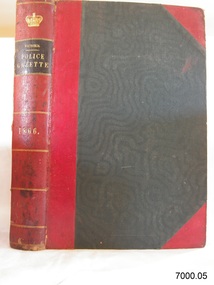 Flagstaff Hill Maritime Museum and Village
Administrative record - Reference Sociology/History, John Ferres, Government Printer, Victoria Police Gazettes for 1866, 1866
... history. He managed the Government Printing Office from 1851 to 1887, overseeing the publication of everything from the colony's first postage stamps to its goldfields regulations and parliamentary records. Ferres was born on 1 October 1818 in Bath, England. He came from a printing family; his father, Robert, was a printer. Ferres completed a thorough sixteen-year practical apprenticeship in Bath, working for a printer and stationer named S. Gibbs...history. He managed the Government Printing Office from 1851 to 1887, overseeing the publication of everything from the colony's first postage stamps to its goldfields regulations and parliamentary records. Ferres was born on 1 October 1818 in Bath, England. He came from a printing family; his father, Robert, was a printer. Ferres completed a thorough sixteen-year practical apprenticeship in Bath, working for a printer and stationer named S. Gibbs ...The Victoria Police Gazette was a confidential, internal publication of the Victoria Police, issued to inform police officers, court and justice officials, and government departments about matters relevant to policing across the colony. It commenced in December 1853 and was initially published weekly by the Victoria Police. It was distributed each week to city and rural police stations and to government offices and newspaper publishers. Inclusions in this weekly publication were people wanted for questioning in relation to various crimes, prisoners discharged from city or country gaols, extracts from Police Gazettes in New South Wales, South Australia, Queensland, Tasmania, New Zealand, and occasionally overseas countries, as well as extracts from the Hobart Town Gazette listing escaped convicts and the person to whom they were assigned. There was also a "Missing Friends" section, where most people listed were not criminals but were sought by police so relatives, old friends, or government officials could renew contact with them. In addition, there was a record of deserted wives and children, listing the offender's name, birthplace, age, occupation, last known area of residence, likely future movements and known relatives. There was also a section on court lists, warrants issued, appointments and staffing changes within the police service, arrest and discharge records with physical descriptions, and lists of pastoralists with descriptions of their livestock brands.Hard Bound Volume. Victorian Police Gazettes for 1866 Author: Institutional Government Publication Publisher: John Ferres, Melbourne Date: 1866 Further Information: Compilation of Weekly Victorian Police Gazettes for 1866 in a hard bound volume with red spine and red corner reinforcing. Front panel grey coloured lettering in gilt with gilt banding to spine. Inside is twelve issues of the Police Gazettes for 1866.non-fictionThe Victoria Police Gazette was a confidential, internal publication of the Victoria Police, issued to inform police officers, court and justice officials, and government departments about matters relevant to policing across the colony. It commenced in December 1853 and was initially published weekly by the Victoria Police. It was distributed each week to city and rural police stations and to government offices and newspaper publishers. Inclusions in this weekly publication were people wanted for questioning in relation to various crimes, prisoners discharged from city or country gaols, extracts from Police Gazettes in New South Wales, South Australia, Queensland, Tasmania, New Zealand, and occasionally overseas countries, as well as extracts from the Hobart Town Gazette listing escaped convicts and the person to whom they were assigned. There was also a "Missing Friends" section, where most people listed were not criminals but were sought by police so relatives, old friends, or government officials could renew contact with them. In addition, there was a record of deserted wives and children, listing the offender's name, birthplace, age, occupation, last known area of residence, likely future movements and known relatives. There was also a section on court lists, warrants issued, appointments and staffing changes within the police service, arrest and discharge records with physical descriptions, and lists of pastoralists with descriptions of their livestock brands.warrnambool, shipwrecked-coast, flagstaff-hill, flagstaff-hill-maritime-museum, maritime-museum, shipwreck-coast, flagstaff-hill-maritime-village, shipwrecked-artefact, book, victoria police gazette 1862, victoria police gazette, warrnambool books and records, great ocean road -
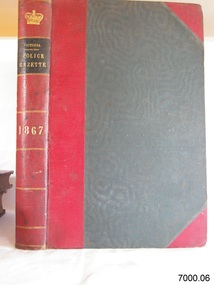 Flagstaff Hill Maritime Museum and Village
Administrative record - Reference Sociology/History, John Ferres, Government Printer, Victoria Police Gazettes for 1867, 1867
... history. He managed the Government Printing Office from 1851 to 1887, overseeing the publication of everything from the colony's first postage stamps to its goldfields regulations and parliamentary records. Ferres was born on 1 October 1818 in Bath, England. He came from a printing family; his father, Robert, was a printer. Ferres completed a thorough sixteen-year practical apprenticeship in Bath, working for a printer and stationer named S. Gibbs...history. He managed the Government Printing Office from 1851 to 1887, overseeing the publication of everything from the colony's first postage stamps to its goldfields regulations and parliamentary records. Ferres was born on 1 October 1818 in Bath, England. He came from a printing family; his father, Robert, was a printer. Ferres completed a thorough sixteen-year practical apprenticeship in Bath, working for a printer and stationer named S. Gibbs ...The Victoria Police Gazette was a confidential, internal publication of the Victoria Police, issued to inform police officers, court and justice officials, and government departments about matters relevant to policing across the colony. It commenced in December 1853 and was initially published weekly by the Victoria Police. It was distributed each week to city and rural police stations and to government offices and newspaper publishers. Inclusions in this weekly publication were people wanted for questioning in relation to various crimes, prisoners discharged from city or country gaols, extracts from Police Gazettes in New South Wales, South Australia, Queensland, Tasmania, New Zealand, and occasionally overseas countries, as well as extracts from the Hobart Town Gazette listing escaped convicts and the person to whom they were assigned. There was also a "Missing Friends" section, where most people listed were not criminals but were sought by police so relatives, old friends, or government officials could renew contact with them. In addition, there was a record of deserted wives and children, listing the offender's name, birthplace, age, occupation, last known area of residence, likely future movements and known relatives. There was also a section on court lists, warrants issued, appointments and staffing changes within the police service, arrest and discharge records with physical descriptions, and lists of pastoralists with descriptions of their livestock brands.Hard Bound Volume. Victorian Police Gazettes for 1867 Author: Institutional Government Publication Publisher: John Ferres, Melbourne Date: 1867 Further Information: Compilation of Weekly Victorian Police Gazettes for 1867 in a hard bound volume with red spine and red corner reinforcing. Front panel grey coloured lettering in gilt with gilt banding to spine. Inside is twelve issues of the Police Gazettes for 1867.non-fictionThe Victoria Police Gazette was a confidential, internal publication of the Victoria Police, issued to inform police officers, court and justice officials, and government departments about matters relevant to policing across the colony. It commenced in December 1853 and was initially published weekly by the Victoria Police. It was distributed each week to city and rural police stations and to government offices and newspaper publishers. Inclusions in this weekly publication were people wanted for questioning in relation to various crimes, prisoners discharged from city or country gaols, extracts from Police Gazettes in New South Wales, South Australia, Queensland, Tasmania, New Zealand, and occasionally overseas countries, as well as extracts from the Hobart Town Gazette listing escaped convicts and the person to whom they were assigned. There was also a "Missing Friends" section, where most people listed were not criminals but were sought by police so relatives, old friends, or government officials could renew contact with them. In addition, there was a record of deserted wives and children, listing the offender's name, birthplace, age, occupation, last known area of residence, likely future movements and known relatives. There was also a section on court lists, warrants issued, appointments and staffing changes within the police service, arrest and discharge records with physical descriptions, and lists of pastoralists with descriptions of their livestock brands.warrnambool, shipwrecked-coast, flagstaff-hill, flagstaff-hill-maritime-museum, maritime-museum, shipwreck-coast, flagstaff-hill-maritime-village, shipwrecked-artefact, book, victoria police gazette 1862, victoria police gazette, warrnambool books and records, great ocean road -
 Flagstaff Hill Maritime Museum and Village
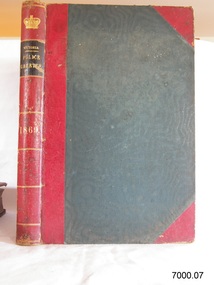
Administrative record - Reference Sociology/History, John Ferres, Government Printer, Victoria Police Gazettes for 1869, 1869
... history. He managed the Government Printing Office from 1851 to 1887, overseeing the publication of everything from the colony's first postage stamps to its goldfields regulations and parliamentary records. Ferres was born on 1 October 1818 in Bath, England. He came from a printing family; his father, Robert, was a printer. Ferres completed a thorough sixteen-year practical apprenticeship in Bath, working for a printer and stationer named S. Gibbs...history. He managed the Government Printing Office from 1851 to 1887, overseeing the publication of everything from the colony's first postage stamps to its goldfields regulations and parliamentary records. Ferres was born on 1 October 1818 in Bath, England. He came from a printing family; his father, Robert, was a printer. Ferres completed a thorough sixteen-year practical apprenticeship in Bath, working for a printer and stationer named S. Gibbs ...The Victoria Police Gazette was a confidential, internal publication of the Victoria Police, issued to inform police officers, court and justice officials, and government departments about matters relevant to policing across the colony. It commenced in December 1853 and was initially published weekly by the Victoria Police. It was distributed each week to city and rural police stations and to government offices and newspaper publishers. Inclusions in this weekly publication were people wanted for questioning in relation to various crimes, prisoners discharged from city or country gaols, extracts from Police Gazettes in New South Wales, South Australia, Queensland, Tasmania, New Zealand, and occasionally overseas countries, as well as extracts from the Hobart Town Gazette listing escaped convicts and the person to whom they were assigned. There was also a "Missing Friends" section, where most people listed were not criminals but were sought by police so relatives, old friends, or government officials could renew contact with them. In addition, there was a record of deserted wives and children, listing the offender's name, birthplace, age, occupation, last known area of residence, likely future movements and known relatives. There was also a section on court lists, warrants issued, appointments and staffing changes within the police service, arrest and discharge records with physical descriptions, and lists of pastoralists with descriptions of their livestock brands.Hard Bound Volume. Victorian Police Gazettes for 1869 Author: Institutional Government Publication Publisher: John Ferres, Melbourne Date: 1869 Further Information: Compilation of Weekly Victorian Police Gazettes for 1869 in a hard bound volume with red spine and red corner reinforcing. Front panel grey coloured lettering in gilt with gilt banding to spine. Inside is twelve issues of the Police Gazettes for 1869.non-fictionThe Victoria Police Gazette was a confidential, internal publication of the Victoria Police, issued to inform police officers, court and justice officials, and government departments about matters relevant to policing across the colony. It commenced in December 1853 and was initially published weekly by the Victoria Police. It was distributed each week to city and rural police stations and to government offices and newspaper publishers. Inclusions in this weekly publication were people wanted for questioning in relation to various crimes, prisoners discharged from city or country gaols, extracts from Police Gazettes in New South Wales, South Australia, Queensland, Tasmania, New Zealand, and occasionally overseas countries, as well as extracts from the Hobart Town Gazette listing escaped convicts and the person to whom they were assigned. There was also a "Missing Friends" section, where most people listed were not criminals but were sought by police so relatives, old friends, or government officials could renew contact with them. In addition, there was a record of deserted wives and children, listing the offender's name, birthplace, age, occupation, last known area of residence, likely future movements and known relatives. There was also a section on court lists, warrants issued, appointments and staffing changes within the police service, arrest and discharge records with physical descriptions, and lists of pastoralists with descriptions of their livestock brands.warrnambool, shipwrecked-coast, flagstaff-hill, flagstaff-hill-maritime-museum, maritime-museum, shipwreck-coast, flagstaff-hill-maritime-village, shipwrecked-artefact, book, victoria police gazette 1862, victoria police gazette, warrnambool books and records, great ocean road -
 Flagstaff Hill Maritime Museum and Village
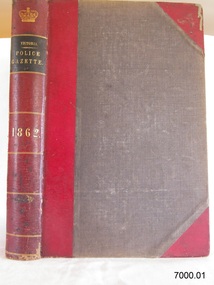
Administrative record - Reference Sociology/History, John Ferres, Government Printer, Victoria Police Gazettes for 1862, 1862
... history. He managed the Government Printing Office from 1851 to 1887, overseeing the publication of everything from the colony's first postage stamps to its goldfields regulations and parliamentary records. Ferres was born on 1 October 1818 in Bath, England. He came from a printing family; his father, Robert, was a printer. Ferres completed a thorough sixteen-year practical apprenticeship in Bath, working for a printer and stationer named S. Gibbs...history. He managed the Government Printing Office from 1851 to 1887, overseeing the publication of everything from the colony's first postage stamps to its goldfields regulations and parliamentary records. Ferres was born on 1 October 1818 in Bath, England. He came from a printing family; his father, Robert, was a printer. Ferres completed a thorough sixteen-year practical apprenticeship in Bath, working for a printer and stationer named S. Gibbs ...The Victoria Police Gazette was a confidential, internal publication of the Victoria Police, issued to inform police officers, court and justice officials, and government departments about matters relevant to policing across the colony. It commenced in December 1853 and was initially published weekly by the Victoria Police. It was distributed each week to city and rural police stations and to government offices and newspaper publishers. Inclusions in this weekly publication were people wanted for questioning in relation to various crimes, prisoners discharged from city or country gaols, extracts from Police Gazettes in New South Wales, South Australia, Queensland, Tasmania, New Zealand, and occasionally overseas countries, as well as extracts from the Hobart Town Gazette listing escaped convicts and the person to whom they were assigned. There was also a "Missing Friends" section, where most people listed were not criminals but were sought by police so relatives, old friends, or government officials could renew contact with them. In addition, there was a record of deserted wives and children, listing the offender's name, birthplace, age, occupation, last known area of residence, likely future movements and known relatives. There was also a section on court lists, warrants issued, appointments and staffing changes within the police service, arrest and discharge records with physical descriptions, and lists of pastoralists with descriptions of their livestock brands.Hard Bound Volume. Victorian Police Gazettes for 1862 Author: Institutional Government Publication Publisher: John Ferres, Melbourne Date: 1862 Further Information: Compilation of Weekly Victorian Police Gazettes for 1862 in a hard bound volume with red spine and red corner reinforcing. Front panel grey coloured lettering in gilt with gilt banding to spine. Inside is twelve issues of the Police Gazettes for 1862.non-fictionThe Victoria Police Gazette was a confidential, internal publication of the Victoria Police, issued to inform police officers, court and justice officials, and government departments about matters relevant to policing across the colony. It commenced in December 1853 and was initially published weekly by the Victoria Police. It was distributed each week to city and rural police stations and to government offices and newspaper publishers. Inclusions in this weekly publication were people wanted for questioning in relation to various crimes, prisoners discharged from city or country gaols, extracts from Police Gazettes in New South Wales, South Australia, Queensland, Tasmania, New Zealand, and occasionally overseas countries, as well as extracts from the Hobart Town Gazette listing escaped convicts and the person to whom they were assigned. There was also a "Missing Friends" section, where most people listed were not criminals but were sought by police so relatives, old friends, or government officials could renew contact with them. In addition, there was a record of deserted wives and children, listing the offender's name, birthplace, age, occupation, last known area of residence, likely future movements and known relatives. There was also a section on court lists, warrants issued, appointments and staffing changes within the police service, arrest and discharge records with physical descriptions, and lists of pastoralists with descriptions of their livestock brands.warrnambool, shipwrecked-coast, flagstaff-hill, flagstaff-hill-maritime-museum, maritime-museum, shipwreck-coast, flagstaff-hill-maritime-village, shipwrecked-artefact, book, victoria police gazette 1862, victoria police gazette, warrnambool books and records, great ocean road -
 Flagstaff Hill Maritime Museum and Village
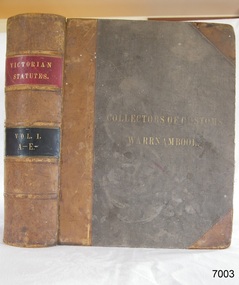
Book - Reference Colonial Legal Statutes, John Ferres, Government Printer, The Victorian Statutes Vol 1 Collectors of Customs A-E, 1866
... John Ferres was a massive figure in early Australian printing history; he managed the Government Printing Office from 1851 to 1887, overseeing the publication of everything from the colony's first postage stamps to its goldfield regulations and parliamentary records. Ferres was born on October 1, 1818, in Bath, England. He came from a printing family; his father, Robert, was a printer. Ferres completed a thorough 16-year practical apprenticeship in Bath working for a printer and stationer named S. Gibbs...John Ferres was a massive figure in early Australian printing history; he managed the Government Printing Office from 1851 to 1887, overseeing the publication of everything from the colony's first postage stamps to its goldfield regulations and parliamentary records. Ferres was born on October 1, 1818, in Bath, England. He came from a printing family; his father, Robert, was a printer. Ferres completed a thorough 16-year practical apprenticeship in Bath working for a printer and stationer named S. Gibbs ...This volume is part of the first comprehensive consolidation of laws for the Colony of Victoria after it separated from New South Wales and established its own parliament. Specifically, Volume 1 (published in 1866) contains Local Colonial Acts. These were laws debated, passed, and enacted right here in Melbourne by the newly formed Parliament of the Colony of Victoria. They dealt with purely domestic, local matters, such as Victorian land selection, goldfields regulations, local municipal boundaries, and colonial courts. Volume 1 was the handbook for everyday domestic Victorian life, governing how a local town council operated, how gold claims were filed, or how local debts were settled in a Victorian county court or how customs should operate.Hard cover book,The Victorian Statutes Vol 1. Collectors of Customs A-E Author: Corporate Author “The Colony of Victoria” Publisher: John Ferres Government Printer Melbourne. Date: 1866 The Victorian Statutes Vol 1, front cover has title Collectors of Customs Warrnambool. Brown leather binding and corners, black canvas cover, red and black bands on spine. non-fictionThis volume is part of the first comprehensive consolidation of laws for the Colony of Victoria after it separated from New South Wales and established its own parliament. Specifically, Volume 1 (published in 1866) contains Local Colonial Acts. These were laws debated, passed, and enacted right here in Melbourne by the newly formed Parliament of the Colony of Victoria. They dealt with purely domestic, local matters, such as Victorian land selection, goldfields regulations, local municipal boundaries, and colonial courts. Volume 1 was the handbook for everyday domestic Victorian life, governing how a local town council operated, how gold claims were filed, or how local debts were settled in a Victorian county court or how customs should operate.warrnambool, shipwrecked-coast, flagstaff-hill, flagstaff-hill-maritime-museum, maritime-museum, shipwreck-coast, flagstaff-hill-maritime-village, shipwrecked-artefact, book, government statutes for victoria 1866, warrnambool's copy of government statutes 1866 -
 Flagstaff Hill Maritime Museum and Village
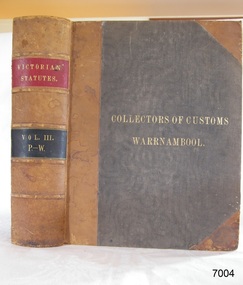
Book - Reference Colonial Legal Statutes, John Ferres, Government Printer, The Victorian Statutes Vol 3 Collectors of Customs P-W, 1866
... John Ferres was a massive figure in early Australian printing history; he managed the Government Printing Office from 1851 to 1887, overseeing the publication of everything from the colony's first postage stamps to its goldfield regulations and parliamentary records. Ferres was born on October 1, 1818, in Bath, England. He came from a printing family; his father, Robert, was a printer. Ferres completed a thorough 16-year practical apprenticeship in Bath working for a printer and stationer named S. Gibbs...John Ferres was a massive figure in early Australian printing history; he managed the Government Printing Office from 1851 to 1887, overseeing the publication of everything from the colony's first postage stamps to its goldfield regulations and parliamentary records. Ferres was born on October 1, 1818, in Bath, England. He came from a printing family; his father, Robert, was a printer. Ferres completed a thorough 16-year practical apprenticeship in Bath working for a printer and stationer named S. Gibbs ...This volume is part of the first comprehensive consolidation of laws for the Colony of Victoria after it separated from New South Wales and established its own parliament. Specifically, Volume 3 (published in 1866) contains Local Colonial Acts. These were laws debated, passed, and enacted right here in Melbourne by the newly formed Parliament of the Colony of Victoria. They dealt with purely domestic, local matters, such as Victorian land selection, goldfields regulations, local municipal boundaries, and colonial courts. Volume 3 was the handbook for everyday domestic Victorian life, governing how a local town council operated, how gold claims were filed, or how local debts were settled in a Victorian county court or how customs should operate.Hard cover book,The Victorian Statutes Vol 3. Collectors of Customs P-W Author: Corporate Author “The Colony of Victoria” Publisher: John Ferres Government Printer Melbourne. Date: 1866 The Victorian Statutes Vol 3, front cover has title Collectors of Customs Warrnambool. Brown leather binding and corners, black canvas cover, red and black bands on spine. non-fictionThis volume is part of the first comprehensive consolidation of laws for the Colony of Victoria after it separated from New South Wales and established its own parliament. Specifically, Volume 3 (published in 1866) contains Local Colonial Acts. These were laws debated, passed, and enacted right here in Melbourne by the newly formed Parliament of the Colony of Victoria. They dealt with purely domestic, local matters, such as Victorian land selection, goldfields regulations, local municipal boundaries, and colonial courts. Volume 3 was the handbook for everyday domestic Victorian life, governing how a local town council operated, how gold claims were filed, or how local debts were settled in a Victorian county court or how customs should operate.warrnambool, shipwrecked-coast, flagstaff-hill, flagstaff-hill-maritime-museum, maritime-museum, shipwreck-coast, flagstaff-hill-maritime-village, shipwrecked-artefact, book, government statutes for victoria 1866, warrnambool's copy of government statutes 1866 -
 Bendigo Historical Society Inc.
Document - COCKS FAMILY HISTORY
... Family History... David James Cocks... Robinson Cocks... John Hunter Patterson... Bendiog Library... Mary Ann Cocks (nee Reeves)... Gwendolyn Nellie Pegg (nee Cocks)... Herbert James Robinson Cocks (Jim)... Leslie Vincent Kennett Cocks (Les)... Victor Hugh Cocks (Hugh)... Herbert Victor thomas Cocks (Bert)... Nellie Cocks (nee Mills)... Leslie Robinson Cocks... Catherine Cnatrill (nee Cocks)... Herbert Arthur Cocks... Eve Ellen Cocks (nee Scott)... Leonard Gibb...PERSON Family cocks family Cocks Family History David James Cocks Robinson Cocks John Hunter Patterson Bendiog Library Mary Ann Cocks (nee Reeves) Gwendolyn Nellie Pegg (nee Cocks) Herbert James Robinson Cocks (Jim) Leslie Vincent Kennett Cocks (Les) Victor Hugh Cocks (Hugh) Herbert Victor thomas Cocks (Bert) Nellie Cocks (nee Mills) Leslie Robinson Cocks Catherine Cnatrill (nee Cocks) Herbert Arthur Cocks Eve Ellen Cocks (nee Scott) Leonard Gibb Cocks (Len) Raymond Cocks Ingrid Cocks (nee Petersen) Phyllis Hope Cocks (nee Phillips) 'Kimbolton' 'McIvor' John Ormond Randell Latrobe Library Melbourne University Archives Queensberry Hill Press Brown Prior Anderson P/Ltd John Cock Katherine Robinson John Cock Catherine Shepperson Forty four pages of the Cocks Family History including Acknowledgements and an introductory letter from David James Cocks. ...Forty four pages of the Cocks Family History including Acknowledgements and an introductory letter from David James Cocks. No page seven. The Cock Family came England and on arrival in Victoria the letter 's' was added to their surname. Robinson Cock came to Australia at the request of his brother-in-law, John Hunter Patterson, who owned Moorabbee Station, where he started to work. It also tells of the properties owned, horses they bred, dairy farms and later shops in Melbourne which various family members had.person, family, cocks family, cocks family history, david james cocks, robinson cocks, john hunter patterson, bendiog library, mary ann cocks (nee reeves), gwendolyn nellie pegg (nee cocks), herbert james robinson cocks (jim), leslie vincent kennett cocks (les), victor hugh cocks (hugh), herbert victor thomas cocks (bert), nellie cocks (nee mills), leslie robinson cocks, catherine cnatrill (nee cocks), herbert arthur cocks, eve ellen cocks (nee scott), leonard gibb cocks (len), raymond cocks, ingrid cocks (nee petersen), phyllis hope cocks (nee phillips), 'kimbolton', 'mcivor', john ormond randell, latrobe library, melbourne university archives, queensberry hill press, brown prior anderson p/ltd, john cock, katherine robinson, john cock, catherine shepperson -
Broadmeadows Historical Society & Museum
Furniture (collection) - Shire Chairs
... families in the region. The craftsmanship—evident in the quality timber, rich red leather, and brass fittings—reflects the period’s aesthetic and the importance placed on civic furnishings. The donation of these chairs by A.C. Gibb may have been intended to honour his father’s service and to contribute to the enduring heritage of the Broadmeadows Shire. Their preservation offers insight into the material culture of local government and the personal histories...families in the region. The craftsmanship—evident in the quality timber, rich red leather, and brass fittings—reflects the period’s aesthetic and the importance placed on civic furnishings. The donation of these chairs by A.C. Gibb may have been intended to honour his father’s service and to contribute to the enduring heritage of the Broadmeadows Shire. Their preservation offers insight into the material culture of local government and the personal histories ...Collection of chairs donated to Shire of BroadmeadowsNo order or sequence.Furniture from the Shire of Broadmeadowsshire council, broadmeadows, furniture, alexander coupar gibbshire council, broadmeadows, furniture, alexander coupar gibb -
 Canterbury History Group
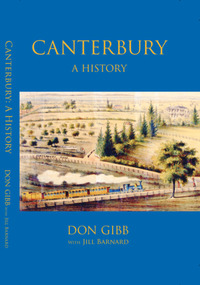
Book, Don Gibb et al, Canterbury: a history, 2022
... Canterbury Canterbury History Residential Development Maling Road Gibb> Don Canterbury: A History covers the history of the suburb of Canterbury, Victoria from its Aboriginal history as part of the country of the Wurundjeri people to its completed development as a middle-class suburb by the late 1950s. The book had been a labour of love by esteemed historian, Don Gibb, for many years. Don’s sudden death in late 2017 left the manuscript uncompleted. The Canterbury History Group and the Royal Historical Society of Victoria, together with Don’s family ...Canterbury: A History covers the history of the suburb of Canterbury, Victoria from its Aboriginal history as part of the country of the Wurundjeri people to its completed development as a middle-class suburb by the late 1950s. The book had been a labour of love by esteemed historian, Don Gibb, for many years. Don’s sudden death in late 2017 left the manuscript uncompleted. The Canterbury History Group and the Royal Historical Society of Victoria, together with Don’s family, were determined to see Don’s book completed and published. Jill Barnard contributed the final two chapters dealing with the inter war and post-World War II decades.187 pages : illustrations, maps, portraits, facsimilesnon-fictionCanterbury: A History covers the history of the suburb of Canterbury, Victoria from its Aboriginal history as part of the country of the Wurundjeri people to its completed development as a middle-class suburb by the late 1950s. The book had been a labour of love by esteemed historian, Don Gibb, for many years. Don’s sudden death in late 2017 left the manuscript uncompleted. The Canterbury History Group and the Royal Historical Society of Victoria, together with Don’s family, were determined to see Don’s book completed and published. Jill Barnard contributed the final two chapters dealing with the inter war and post-World War II decades.canterbury, canterbury history, residential development, maling road, gibb> don
