
Showing 26 items matching "glasgow university"
-
 Linton Mechanics Institute and Free Library Collection
Book - Novel, Castle, Agnes et al, The Bath Comedy, 1900
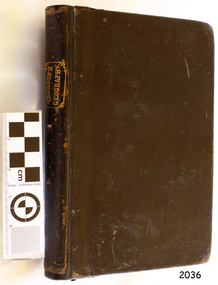
... ...Glasgow University Press...The Bath Comedy Book Novel Castle, Agnes Castle, Egerton Macmillan and Co. Glasgow University Press ...The narrative unfolds in the elegant and often scandalous society of Bath, focusing on characters embroiled in romantic entanglements and social intrigues during the Georgian era. The two main characters introduced are Lady Standish, who worries about her husband's diminishing affection, and Mistress Kitty Bellairs, a witty widow who offers her friend mischievous advice on how to rekindle love and friendship amid societal expectations.243p. : dark grey/black cover : title and author embossed in gold on spine and front cover. First part of Preface is missing.fictionThe narrative unfolds in the elegant and often scandalous society of Bath, focusing on characters embroiled in romantic entanglements and social intrigues during the Georgian era. The two main characters introduced are Lady Standish, who worries about her husband's diminishing affection, and Mistress Kitty Bellairs, a witty widow who offers her friend mischievous advice on how to rekindle love and friendship amid societal expectations.agnes castle, egerton castle, fiction, comedy, romance -
 Flagstaff Hill Maritime Museum and Village
Book - Textbook, Introduction to Modern Geography
... ...Glasgow University...He became Professor of Mathematics at the University of Glasgow. He wrote many school textbooks and reference books, one of which was Introduction to Modern Geography, first published in Belfast in 1827, and revised and published in over 20 more editions. ...BY JAMES THOMSON, LL.D., PROFESSOR OF MATHEMATICS IN THE UNIVERSITY OF GLASGOW." "Eighteenth Edition" "LONDON: SIMMS AND McINTYRE, ALDINE CHAMBERS, PATERSOSTER ROW; AND DONEGALL -STREET, BELFAST.""1845"...He became Professor of Mathematics at the University of Glasgow. He wrote many school textbooks and reference books, one of which was Introduction to Modern Geography, first published in Belfast in 1827, and revised and published in over 20 more editions. ...This mid-19th century scientific reference book, Introduction to Modern Geography, explains geography and astronomy using the globe of the world as a teaching aid. The inscription connects this book to the Bobinawarrah Public Library but research to date has found no further details about the library. The rural area was settled in 1859, but in 2016 its population was only 87. It is situated about 21 kilometres south of the City of Wangaratta, in Northeast Victoria. In 2024 the local community received a grant for preservation of its almost 100-year-old Bobinawarrah Memorial Hall which displays an honour board of the Pioneers of Bobinawarrah 1859-1959. The donor of the book lived in Warrnambool. ABOUT THE AUTHOR, James Thomson (1786-1849): - James Thomson was a British Irish mathematician. He became Professor of Mathematics at the University of Glasgow. He wrote many school textbooks and reference books, one of which was Introduction to Modern Geography, first published in Belfast in 1827, and revised and published in over 20 more editions. Thomson tutored two of his several children at home. His older son James Thomson (1822-1892) became an engineer and physicist. His younger son William Thomson (1824-1907) became Professor of Natural Philosophy from 1846-1899 at the University of Glasgow, and later the 1st Baron of Kelvin, famous for his designs of nautical instruments such as the navigational compass and sounding equipment used in the transatlantic installation of sea cable. William was part of the firm that became famous as Kelvin & Hughes Ltd., suppliers of radar and echo sounders to the Ministry of Transport and the Ministry of Defence. The name continued on as Kelvin & Hughes. James Thomson (1786-1849) was a renowned British Irish mathematician and Professor of Mathematics at the University of Glasgow. He was a respected author of many important school books and textbooks that were widely used to provide understanding of arithmetic and geography. Thomson encouraged practical education and held extra classes for young ladies to learn mathematics and geography, which were a novelty at that time. Many of his works were known and used worldwide. This work was published in many editions. It is now considered as culturally significant as a basis for knowledge about our civilisation and has been made publicly available in overseas countries, and republished and reproduced in a readable format, including its diagrams and maps. Book; scientific textbook. The book has a black leather cover. The front cover is blank, but the spine has an embossed gold vertical title within a rectangular border boasting fancy corners. The fly page has a detailed title. The author is James Thomson. It is the Eighteenth edition, published in Simms & McIntyre of London and Belfast in 1845. An inscription connects it to the Bobinawarrah Public Library in Victoria.Spine within a gold border: "THOMSON'S GEOGRAPHY" Fly Page: "AN INTRODUCTION TO MODERN GEOGRAPHY, WITH AN APPENDIX, CONTAINING AN OUTLINE OF ASTRONOMY, AND THE USE OF THE GLOBES. BY JAMES THOMSON, LL.D., PROFESSOR OF MATHEMATICS IN THE UNIVERSITY OF GLASGOW." "Eighteenth Edition" "LONDON: SIMMS AND McINTYRE, ALDINE CHAMBERS, PATERSOSTER ROW; AND DONEGALL -STREET, BELFAST.""1845"flagstaff hill, flagstaff hill maritime museum and village, warrnambool, maritime museum, maritime village, great ocean road, shipwreck coast, introduction to geography, james thomson, reference book, professor thomson's introduction to modern geography, bobinawarrah public library, james thomson mathematician, james thomson engineer, 19th century irish mathematician, irish presbyterian, william thomson 1st baron of kelvin, professor of mathematics, glasgow university, william thomson professor of natural philosophy, introduction to modern geography, outline of astronomy, use of the globes, james thomson ll.d., simms and mcintyre, 1843, scientific book, school book, lord kelvin, baron kelvin of langs, nautical instruments, marine instruments, transatlantic cable, kelvin & hughes, thomson’s geography, astronomy, geography, world globe, cartography, pioneers of bobinawarrah, textbook -
 Uniting Church Archives - Synod of Victoria
Photograph, Rev. Thomas Watt Leggatt
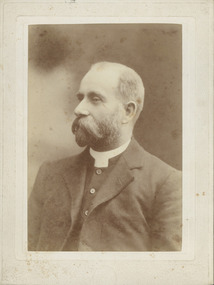
... B. 1859 Glasgow; Glasgow University; 1886 ordained in Scots Church Melbourne; to New Hebrides Mission, Aulua, Malekula; 1907 Dunolly; 1910 Sunbury; 1919 Convener of Board of Missions; editor "Record"; 1923 Abbotsford; 1929 Glen Iris; 1931 Moderator, Victoria; 1944 died 23 August. ...B. 1859 Glasgow; Glasgow University; 1886 ordained in Scots Church Melbourne; to New Hebrides Mission, Aulua, Malekula; 1907 Dunolly; 1910 Sunbury; 1919 Convener of Board of Missions; editor "Record"; 1923 Abbotsford; 1929 Glen Iris; 1931 Moderator, Victoria; 1944 died 23 August. ...B. 1859 Glasgow; Glasgow University; 1886 ordained in Scots Church Melbourne; to New Hebrides Mission, Aulua, Malekula; 1907 Dunolly; 1910 Sunbury; 1919 Convener of Board of Missions; editor "Record"; 1923 Abbotsford; 1929 Glen Iris; 1931 Moderator, Victoria; 1944 died 23 August. Son, William Watt Leggatt was a politician in the Bolte Government in Victoria.Sepia photo of Leggatt posed facing his right; dressed in 19th century clerical suit, collar and waistcoat."Thomas Watt Leggatt - Aulua, New Hebrides - minister Sunbury, Abbotsford. Father of Sir William (Bill) Watt Leggatt, Ormond Law Agent for (?) in London - Deaconess Dorothy Leggatt."leggatt, thomas watt, new hebrides -
 Federation University Historical Collection
Book, Report on the Ballarat East Gold-Field, 1894 and Ballarat East Gold-Field, 1907, 1894
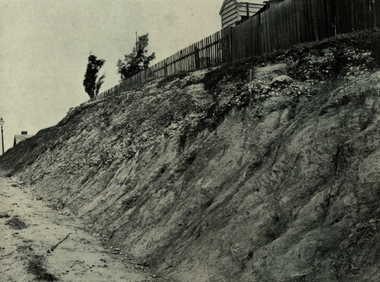
... Gregory Professor of Geology at Glasgow University, Late Director of the geological Survey of Victoria and Professor of Geology at Melbourne University. ...Gregory Professor of Geology at Glasgow University, Late Director of the geological Survey of Victoria and Professor of Geology at Melbourne University. ...The Ballarat Ironworkers' and Polytechnic Association was at the Ballarat School of Mines. In 1907 J.W. Gregory Professor of Geology at Glasgow University, Late Director of the geological Survey of Victoria and Professor of Geology at Melbourne University. W. Dickson was Secretary for Mines and Donald McLeod was the Minister of Mines. in 1894 Ernest Lidgey was the Assistant Geological Surveyor for the Victorian Department of Mines. A.W. Howitt was Secretary for Mines and Henry Foster was the Minister of Mines. Charcoal hard covered report on the Ballarat East Goldfield. The book combines two reports from the Victorian Department of Mines. The 1894 report is 52 pages and includes images and plans. The 1907 Report is number 4 in the Memoirs of the Geological Survey of Victoria. Photographs include Looking South from the Britannia Mullock Heap, View from Sovereign Hill, Golden Point gold discovery site.Stamped "Ballarat Ironworkers' Association School of Mines" Bookplate of the Ballarat Ironworkers' and Polytechnic Association. Written inside front cover: "S.J. Miller, 115 Ascot Street, Ballarat"ballarat ironworkers' and polytechnic association, ballarat school of mines, ironworkers, geology, mining, ballarat east, llanberris, victoria united mine, normanby, north woah hawp, bookplate, s.j. miller, library plate, golden point, gold discovery at golden point, new normanby mine, william baragwanath, new speedwell, britannia united, llanberris co, sulieman pasha, prince regent, dalzell-cum-prince regent, north prince extended, eastern star, f. gray, victoria united gold mine, sovereign hill mine, prince regent mine, britannia mine -
 Warrnambool and District Historical Society Inc.
Book, Album Parterre, 1947
... He studied at Glasgow University, became a Presbyterian Minister and came to Australia in 1837. ...He studied at Glasgow University, became a Presbyterian Minister and came to Australia in 1837. ...This book tells the story of the Rev. William Hamilton (1807-1879), a pioneer Presbyterian Minister in the Western District. He studied at Glasgow University, became a Presbyterian Minister and came to Australia in 1837. He spent some time in the Goulburn area in N.S.W and then moved to Kilnoorat in Victoria in 1846, building a manse and a church at Darlington and later two churches at Mortlake. He retired from active ministry in 1873. This book is significant in that it was written by a Presbyterian Minister in 1946 and gives details of the life and work of a local pioneer Presbyterian minister, the Rev. William Hamilton. It is a rare book.This is a small paper back book of eight pages with a mottled green cover with a blank back and a black and white photograph of Rev. William Hamilton on the front. The pages include printed material and three more black and white photographs. The pages have been stapled but the rusty staples have been removed. Front cover: ‘The Pioneer of Presbyterianism in the Western District, Rev. William Hamilton, by Rev. H. Clark, M.C, M.A., Terang, 1947’presbyterianism in the western district rev., william hamilton -
 Uniting Church Archives - Synod of Victoria
Photograph, Mendelssohn & Co, 1901
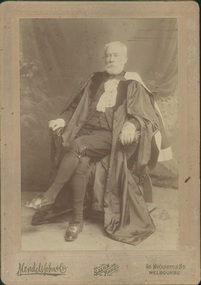
... He was educated at Glasgow University and U. P. Theological Hall and ordained at the Glasgow City Mission in 1872. ...He was educated at Glasgow University and U. P. Theological Hall and ordained at the Glasgow City Mission in 1872. ...John Meikeljohn was born in 1841 in Glasgow. He was educated at Glasgow University and U. P. Theological Hall and ordained at the Glasgow City Mission in 1872. His ministries included: 1874 Kirkmairhill U. O. Lankashire; 1888 south Melbourne Dorcas St.. In 1901 he became the first Moderator General for the Assembly of Australia and was the first Principal Emmnauel College Brisbane. The Rev Dr Meikelijohn died on 28/09/1915.Sepia toned studio portrait tipped on to textured beige coloured cardboard of Rev. Dr. John Meikeljohn who dressed in his formal attire of a moderator general. He is sitting in a chair with his legs crossed with his hands resting on the arms of the chair.Printed on the front: "Mendelssohn & Co" "SALON PANEL" "80 SWANSTON ST. MELBOURNE"emmanuel college brisbane, rev. dr. john meikeljohn, presbyterian moderator general -
 Uniting Church Archives - Synod of Victoria
Photograph, Rev. James Galloway and Rev. John Meiklejohn
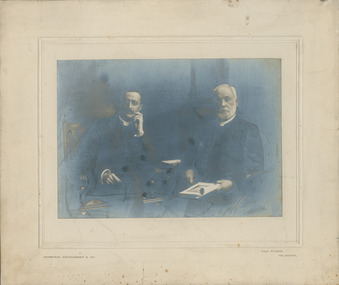
... John Meiklejohn MA BD b. 1841 Glasgow; University of Glasgow; Theological Hall of U.P. ...John Meiklejohn MA BD b. 1841 Glasgow; University of Glasgow; Theological Hall of U.P. ...James Bulloch Galloway - b. 1872 Govan, Scotland; 1889 ordained Townsville Qld; 1900 Charters Towers Qld; 1907 South Melbourne Dorcas Street (colleague with John Meiklejohn); 1913 Brisbane South (Park Church). John Meiklejohn MA BD b. 1841 Glasgow; University of Glasgow; Theological Hall of U.P. Church; 1872 ordained Glasgow City Mission; 1874 Kirkmairhill, UP. Lanarkshire; 1868 South Melbourne Dorcas Street Vic; 1901 First Moderator General Assembly of Australia; First Principal Emmanuel College, Brisbane; 1915 died 28 September.Galloway and Meiklejohn are seated adjacent to each other, facing the camera, dressed in clerical clothing. Meiklejohn is holding a sheaf of papers, and there is a small table at the rear between them."Rev. James Galloway and Rev. John Meiklejohn"meiklejohn, john, galloway, james -
 Flagstaff Hill Maritime Museum and Village
Book - Reference, William J Goudie, D. Sc., Professor (William john Goudie), Steam Turbines, 1922
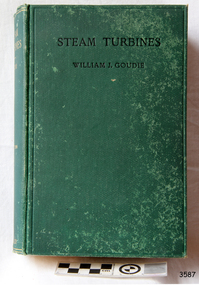
... He was a member of the Institution of Mechanical Engineers, a member of the Institution of Engineers and Shipbuilders in Scotland, an Associate Member of the Institution of Civil Engineers, James Watt Chair of Mechanical Engineering, University of Glasgow, and Professor of "The Theory and practice of Heat Engines" in the University of Glasgow. ...He was a member of the Institution of Mechanical Engineers, a member of the Institution of Engineers and Shipbuilders in Scotland, an Associate Member of the Institution of Civil Engineers, James Watt Chair of Mechanical Engineering, University of Glasgow, and Professor of "The Theory and practice of Heat Engines" in the University of Glasgow. ...This textbook was written for engineering students by Scottish Professor, William J Goudie, D. Sc., (1868-1945). He was a member of the Institution of Mechanical Engineers, a member of the Institution of Engineers and Shipbuilders in Scotland, an Associate Member of the Institution of Civil Engineers, James Watt Chair of Mechanical Engineering, University of Glasgow, and Professor of "The Theory and practice of Heat Engines" in the University of Glasgow. He wrote several papers and books on the topics of mechanical speed and power. The publisher firm, Longmans, Green & Co., was originally founded in 1724 in London by Thomas Longman under the name Longman. In August of that year, he bought the two shops and goods of William Taylor and set up his publishing house there at 39 Paternoster Row. The shops were called Black Swan and Ship, and it is said that the 'ship' sign was the inspiration for Longman's Logo. After many changes of name and management, the firm was incorporated in 1926 as Longmans, Green & Co. Pty Ltd. The firm was acquired by Pearson in 1968 and was known as Pearson Longman or Pearson PLC. The first practical steam turbine was built in 1884 by Charles Parsons and this became the beginning of generating electricity and powering large ships. The author of Steam Turbines, Professor William John Couldie D. Sc, was a mechanical engineer who had practical experience in a marine consulting engineering service and lectured in the theory and practice of mechanical engineering.This book is an example of the development of technology that contributed to the evolution of steam turbines. The book is also significant for its connection to the publisher Longmans, Green and Co., of London, a firm that has been established for over two centuries, renowned for publishing encyclopedias, dictionaries, books on English grammar, textbooks, poetry, reference books, novels, magazines and more.Steam Turbines, by William J. Goudie, D. Sc., Second edition, rewritten and enlarged. Published by Longmans, Green & Co. in 1922. The book has a textured green hardcover with a printed black title on the front cover and a gold embossed title on the spine. The fly page describes the contents. It states the author's credentials and the book's features - 329 illustrations and numerous examples.. The logo of Longmans, Green & Co. is on the fly page. It is a line drawing of a shield above a leafy wreath border surrounding a sailing ship at sea with a plaque below. Inscriptions are on the shield and plaque.On the shield: "L & Co" [Longman Green & Co.] On the plaque: "1724" [date business was established]flagstaff hill, flagstaff hill maritime museum and village, warrnambool, maritime museum, maritime village, great ocean road, shipwreck coast, steam turbines, longmans green and co, paternoster row london, ship logo, engineering studies, textbook, 1922, longmans green and co., l & co., 1724, institution of mechanical engineers, institution of engineers and shipbuilders scotland, institution of civil engineers, james watt professor of "the theory and practice of heat engines", thomas longman, paternoster row, william goudie, william j goudie, professor william j goudie d. sc., james watt chair of mechanical engineering, steam turbine, marine turbines, steam power -
 The Cyril Kett Optometry Museum
Book, A practical treatise on the diseases of the eye, 1854 (exact)
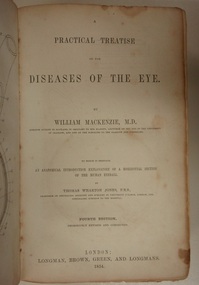
... William MacKenzie was surgeon oculist in Scotland to Her Majesty (Queen Victoria), lecturer in the University of Glasgow and a surgeon in the Glasgow Eye Infirmary. ...William MacKenzie was surgeon oculist in Scotland to Her Majesty (Queen Victoria), lecturer in the University of Glasgow and a surgeon in the Glasgow Eye Infirmary. ...This is the 1854 fourth edition of a book on diseases of the eye by William MacKenzie (1791-1868) first published in 1830. William MacKenzie was surgeon oculist in Scotland to Her Majesty (Queen Victoria), lecturer in the University of Glasgow and a surgeon in the Glasgow Eye Infirmary. This fourth edition appeared just after Helmholtz's invention of the ophthalmoscope, but Mackenzie did not at this stage have much understanding of the internal diseases of the eye. Nor did he properly understand refractive errors which were soon to be elucidated by the work of Donders. MacKenzie did however recognise the hardness of the eye as being an essential sign of glaucoma.This book is significant historically as it shows contemporary understanding of eye disease in the early nineteenth century. It is not rare as copies still turn up at book markets and also are held in other Australian institutions.This book, bound in full calf leather (probably later 19th Century) with 1107 pages including an index and is followed by a publisher's catalogue. It is the 1854 fourth edition of William MacKenzie's 'A practical treatise on the diseases of the eye' first published in 1830. It has a long (32 pages) introductory section on the anatomy of the eye by Thomas Wharton Jones, FRS. There are 27 chapters on eye disease. Chapter 24 is on refractive errors and presbyopia.eye, ocular anatomy, ocular disease -
 Warrnambool and District Historical Society Inc.
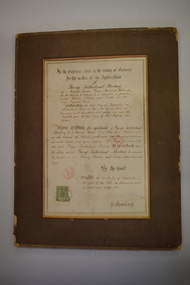
Certificate, George Mackay, 1886
... George Sutherland Mackay (1850-1926) was born in Scotland and educated at the University of Glasgow. He came to Australia in 1884. ...George Sutherland Mackay (1850-1926) was born in Scotland and educated at the University of Glasgow. He came to Australia in 1884. ...This is an 1886 certificate admitting George Mackay to practise as an attorney, solicitor and proctor in the courts of the colony of Victoria. George Sutherland Mackay (1850-1926) was born in Scotland and educated at the University of Glasgow. He came to Australia in 1884. In 1891 he came to Warrnambool and established a legal practice in Kepler Street. In 1893 he bought the practice of the late James Fletcher and the firm was then known as Fletcher and Mackay. It changed to Mackay and Taylor (later Mackay Taylor) when J.D. Taylor became his partner in the 1920s. In 1999 Tait Solicitors and Mackay Taylor amalgamated to form Tait Taylor and in 2010 the firm’s name became Tait Legal. This certificate is of considerable importance as a significant memento of George Mackay, a prominent lawyer in Warrnambool from the 1890s to 1926.This is a paper certificate pasted on board and set into a brown cardboard frame. The certificate has brown or gold handwriting with some calligraphy, three or four stamps (mostly obliterated), a green duty stamp and the remains of a signature. The frame is tattered at the edges and stained at the back.george sutherland mackay, warrnambool lawyer, j.d. taylor, tait solicitors and mackay taylor, history of warrnambool -
 Warrnambool and District Historical Society Inc.
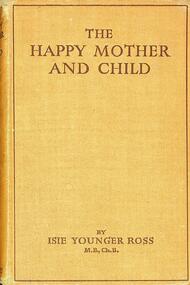
Book, Frederick Warne & Co, The happy mother & child by Issi Younger Ross, 1940
... Isabella (Isie)Younger was educated at Hohenlohe College, Warrnambool, studied medicine at Melbourne University and graduated from the University of Glasgow. She worked for some time in Britain, married John Ross in 1916 and returned to Melbourne in 1917. ...Isabella (Isie)Younger was educated at Hohenlohe College, Warrnambool, studied medicine at Melbourne University and graduated from the University of Glasgow. She worked for some time in Britain, married John Ross in 1916 and returned to Melbourne in 1917. ...A book on Infant welfare and child health.This is a hard cover book of 184 pages. The cover is light brown/orange with dark brown print on the front cover and on the spine. The book has an Introduction, eleven chapters of text and an Index. There are several black and white sketches scattered throughout the text. The signature of the author in pencil is on the first page. The cover is slightly scuffed.non-fictionA book on Infant welfare and child health.younger family, warrnambool, younger stores, warrnambool, infant health education in victoria, isabella younger ross, history of warrnambool -
 Flagstaff Hill Maritime Museum and Village
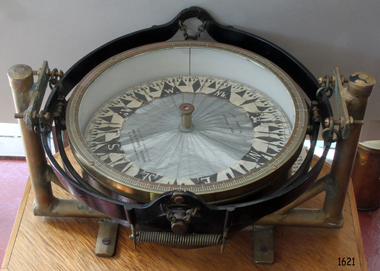
Compass, 1947-1950
... Kelvin Company History: The origins of the company lie in the highly successful, if strictly informal, the relationship between William Thomson (1824-1907), Professor of Natural Philosophy at Glasgow University from 1846-1899 and James White, a Glasgow optical maker. ...Kelvin Company History: The origins of the company lie in the highly successful, if strictly informal, the relationship between William Thomson (1824-1907), Professor of Natural Philosophy at Glasgow University from 1846-1899 and James White, a Glasgow optical maker. ...Kelvin Company History: The origins of the company lie in the highly successful, if strictly informal, the relationship between William Thomson (1824-1907), Professor of Natural Philosophy at Glasgow University from 1846-1899 and James White, a Glasgow optical maker. James White (1824-1884) founded the firm of James White, who was an optical instrument maker in Glasgow in 1850. He was involved in supplying and mending apparatus for Thomson's university laboratory and working with him on experimental constructions. White was actually declared bankrupt in August 1861 and released several months later. In 1870, White was largely responsible for equipping William Thomson's laboratory in the new University premises at Gilmore hill. From 1876, he was producing accurate compasses for metal ships to Thomson's design during this period and this became an important part of his business in the last years of his life. He was also involved in the production of sophisticated sounding machinery that Thomson had designed to address problems encountered laying cables at sea, helping to make possible the first transatlantic cable connection. At the same time, he continued to make a whole range of more conventional instruments such as telescopes, microscopes and surveying equipment. White's association with Thomson continued until he died. After his death, his business continued under the same name, being administered by Matthew Edwards (until 1891 when he left to set up his own company). Thomson, who became Sir William Thomson and then Baron Kelvin of Largs in 1892, continued to maintain his interest in the business after James White's death in 1884, raising most of the capital needed to construct and equip new workshops in Cambridge Street, Glasgow. At these premises, the company continued to make the compass Thomson had designed during the 1870s and to supply it in some quantity, especially to the Admiralty. At the same time, the firm became increasingly involved in the design, production and sale of electrical apparatus. In 1899, Lord Kelvin resigned from his University chair and became, in 1900, a director in the newly formed limited liability company Kelvin & James White Ltd which had acquired the business of James White. At the same time Kelvin's nephew, James Thomson Bottomley (1845-1926), joined the firm. In 1904, a London branch office was opened which by 1915 had become known as Kelvin, White & Hutton Ltd . Kelvin & James White Ltd underwent a further change of name in 1913, becoming Kelvin Bottomley & Baird Ltd . Hughes Company History: Henry Hughes & Sons was founded in 1838 in London as a maker of chronographic and scientific instruments. The firm was incorporated as Henry Hughes & Sons Ltd in 1903. In 1923, the company produced its first recording echo sounder and in 1935, a controlling interest in the company was acquired by S Smith & Son Ltd resulting in the development and production of marine and aircraft instruments. Following the London office's destruction in the Blitz of 1941, a collaboration was entered into with Kelvin, Bottomley & Baird Ltd resulting in the establishing Marine Instruments Ltd. Following the formal amalgamation of Kelvin, Bottomley & Baird Ltd and Henry Hughes & Sons Ltd in 1947 to form Kelvin & Hughes Ltd., Marine Instruments Ltd then acted as regional agents in the UK for Kelvin & Hughes Ltd who were essentially now a part of Smith's Industries Ltd founded in 1944 and the successors of S Smith & Son Ltd. Kelvin & Hughes Ltd went on to develop various marine radar and echo sounders supplying the Ministry of Transport, and later the Ministry of Defence. The firm was liquidated in 1966 but the name was continued as Kelvin Hughes, a division of the Smiths Group. In 2002, Kelvin Hughes continues to produce and develop marine instruments for commercial and military use. This model compass is a good example of the commercial type of instruments made by Kelvin & Hughes after the world war 2, it was made in numbers for use on various types of shipping after the second world war and is not particularly rare or significant for it's type. Also it was made no earlier than 1947 as the firms of Kelvin, Bottomley & Baird Ltd and Henry Hughes & Sons Ltd who took over from Smith & Sons were not amalgamated until 1947. Given that Smith and Sons is engraved on the compass with Kelvin & Hughes it can be assumed that this compass was made during the company's transitional period to Kelvin & Hughes.Compass, marine or ship's card compass, gimble mounted, with inscriptions. Type is Lord Kelvin 10 inch compass card. Made in Great Britain by Kelvin Hughes Division of S. Smith & Sons (England) Ltd. "LORD KELVIN 10.", "COMPASS GRID", "MANUFACTURED IN GREAT BRITAIN BY", "KELVIN HUGHES DIVISION", "S. Smith & Sons (England) Ltd".flagstaff hill, warrnambool, shipwrecked-coast, flagstaff-hill, flagstaff-hill-maritime-museum, maritime-museum, shipwreck-coast, flagstaff-hill-maritime-village, marine compass, gimble compass, ship's compass, lord kelvin compass, smith and sons england ltd, henry hughes & son ltd london england, kelvin bottomley & baird ltd glasgow scotland, kelvin & hughes ltd, navigation instrument, scientific instrument, william thomson, james white, baron kelvin of largs -
 Flagstaff Hill Maritime Museum and Village
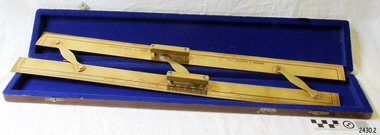
Parallel Rule, 1947-1950
... Kelvin Company History: The origins of the company lie in the highly successful and strictly informal relationship between William Thomson (1824-1907), Professor of Natural Philosophy at Glasgow University from 1846-1899 and James White, a Glasgow optical maker. ...Kelvin Company History: The origins of the company lie in the highly successful and strictly informal relationship between William Thomson (1824-1907), Professor of Natural Philosophy at Glasgow University from 1846-1899 and James White, a Glasgow optical maker. ...Navigators use parallel rule with maps and charts for plotting a specific course on a chart. One long edge is used with the compass rose on the chart, aligning the centre of the rose with the desired direction around the edge of the rose. The compass bars are then ‘walked’ in and out across the map to the desired location so that lines can be plotted to represent the direction to be travelled. Kelvin Company History: The origins of the company lie in the highly successful and strictly informal relationship between William Thomson (1824-1907), Professor of Natural Philosophy at Glasgow University from 1846-1899 and James White, a Glasgow optical maker. James White (1824-1884) founded the firm of James White, an optical instrument maker in Glasgow in 1850 and was involved in supplying and mending apparatus for Thomson university laboratory and working with him on experimental constructions. White was declared bankrupt in August 1861 and released several months later. In 1870, White was largely responsible for equipping William Thomson laboratory in the new University premises at Gilmore hill. From 1876, he was producing accurate compasses for metal ships to Thomson design during this period and this became an important part of his business in the last years of his life. He was also involved in the production of sophisticated sounding machinery that Thomson had designed to address problems encountered laying cables at sea, helping to make possible the first transatlantic cable connection. At the same time, he continued to make a whole range of more conventional instruments such as telescopes, microscopes and surveying equipment. White's association with Thomson continued until he died. After his death, his business continued under the same name, being administered by Matthew Edwards until 1891 when he left to set up his own company. Thomson who became Sir William Thomson and then Baron Kelvin of Largs in 1892, continued to maintain his interest in the business after James White's death in 1884, raising most of the capital needed to construct and equip new workshops in Cambridge Street, Glasgow. At these premises, the company continued to make the compass Thomson had designed during the 1870s and to supply it in some quantity, especially to the Admiralty. At the same time, the firm became increasingly involved in the design, production and sale of electrical apparatus. In 1899, Lord Kelvin resigned from his University chair and became, in 1900, a director in the newly formed limited liability company Kelvin & James White Ltd which had acquired the business of James White. At the same time Kelvin's nephew, James Thomson Bottomley (1845-1926), joined the firm. In 1904, a London branch office was opened which by 1915 had become known as Kelvin, White & Hutton Ltd. Kelvin & James White Ltd underwent a further change of name in 1913, becoming Kelvin Bottomley & Baird Ltd. Hughes Company History: Henry Hughes & Sons were founded in 1838 in London as a maker of chronographic and scientific instruments. The firm was incorporated as “Henry Hughes & Sons Ltd” in 1903. In 1923, the company produced its first recording echo sounder and in 1935 a controlling interest in the company was acquired by S Smith & Son Ltd resulting in the development and production of marine and aircraft instruments. Following the London office's destruction in the Blitz of 1941, a collaboration was entered into with Kelvin, Bottomley & Baird Ltd resulting in the establishing “Marine Instruments Ltd”. Following the formal amalgamation of Kelvin, Bottomley & Baird Ltd and Henry Hughes & Sons Ltd in 1947 to form Kelvin & Hughes Ltd. Marine Instruments Ltd then acted as regional agents in the UK for Kelvin & Hughes Ltd who were essentially now a part of Smith's Industries Ltd founded in 1944 and the successors of S Smith & Son Ltd. Kelvin & Hughes Ltd went on to develop various marine radar and echo sounders supplying the Ministry of Transport, and later the Ministry of Defence. The firm was liquidated in 1966 but the name was continued as Kelvin Hughes, a division of the Smiths Group. In 2002, Kelvin Hughes continues to produce and develop marine instruments for commercial and military. This model parallel map ruler is a good example of the commercial diversity of navigational instruments made by Kelvin & Hughes after World War II. It was made in numbers for use by shipping after the second world war and is not particularly rare or significant for it's type. Also it was made no earlier than 1947 as the firms of Kelvin, Bottomley & Baird Ltd and Henry Hughes & Sons Ltd who took over from Smith & Sons were not amalgamated until 1947. It can therefor be assumed that this ruler was made during the company's transitional period to Kelvin & Hughes from Smith Industries Ltd.Brass parallel rule in wooden box with blue felt lining.Rule inscribed on front "Kelvin & Hughes Ltd" " Made in Great Britain"flagstaff hill, warrnambool, shipwrecked-coast, flagstaff-hill, flagstaff-hill-maritime-museum, maritime-museum, shipwreck-coast, flagstaff-hill-maritime-village, parallel rule, kelvin & hughes ltd, map ruler, plot direction, navigation, maps, echo sounder, kelvin & james white, lord kelvin, baron kelvin of largs, scientific instrument -
 Flagstaff Hill Maritime Museum and Village
Instrument - Sextant, Late 20th Century
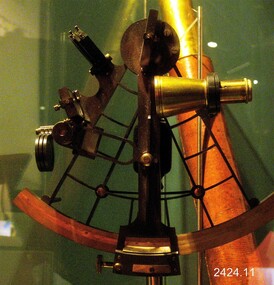
... Kelvin Company History: The origins of the company lie in the highly successful and strictly informal relationship between William Thomson (1824-1907), Professor of Natural Philosophy at Glasgow University from 1846-1899 and James White, a Glasgow optical maker. ...Kelvin Company History: The origins of the company lie in the highly successful and strictly informal relationship between William Thomson (1824-1907), Professor of Natural Philosophy at Glasgow University from 1846-1899 and James White, a Glasgow optical maker. ...In 1941, the scientific instrument manufacturing firms of Henry Hughes & Son Ltd, London, England, and Kelvin Bottomley & Baird Ltd, Glasgow, Scotland, came together to form Kelvin & Hughes Ltd. Kelvin Company History: The origins of the company lie in the highly successful and strictly informal relationship between William Thomson (1824-1907), Professor of Natural Philosophy at Glasgow University from 1846-1899 and James White, a Glasgow optical maker. James White (1824-1884) founded the firm of James White, an optical instrument maker in Glasgow in 1850 and was involved in supplying and mending apparatus for Thomson university laboratory and working with him on experimental constructions. White was declared bankrupt in August 1861 and released several months later. In 1870, White was largely responsible for equipping William Thomson laboratory in the new University premises at Gilmore hill. From 1876, he was producing accurate compasses for metal ships to Thomson design during this period and this became an important part of his business in the last years of his life. He was also involved in the production of sophisticated-sounding machinery that Thomson had designed to address problems encountered laying cables at sea, helping to make possible the first transatlantic cable connection. At the same time, he continued to make a whole range of more conventional instruments such as telescopes, microscopes and surveying equipment. White's association with Thomson continued until he died. After his death, his business continued under the same name, being administered by Matthew Edwards (until 1891 when he left to set up his own company. Thomson who became Sir William Thomson and then Baron Kelvin of Largs in 1892, continued to maintain his interest in the business after James White's death. In 1884 raising most of the capital needed to construct and equip new workshops in Cambridge Street, Glasgow. At these premises, the company continued to make the compass Thomson had designed during the 1870s and to supply it in some quantity, especially to the Admiralty. At the same time, the firm became increasingly involved in the design, production and sale of electrical apparatus. In 1899, Lord Kelvin resigned from his University chair and became, in 1900, a director in the newly formed limited liability company Kelvin & James White Ltd which had acquired the business of James White. At the same time Kelvin's nephew, James Thomson Bottomley (1845-1926), joined the firm. In 1904, a London branch office was opened which by 1915 had become known as Kelvin, White & Hutton Ltd. Kelvin & James White Ltd underwent a further change of name in 1913, becoming Kelvin Bottomley & Baird Ltd. Hughes Company History: Henry Hughes & Sons were founded in 1838 in London as a maker of chronographic and scientific instruments. The firm was incorporated as “Henry Hughes & Sons Ltd” in 1903. In 1923, the company produced its first recording echo sounder and in 1935 a controlling interest in the company was acquired by S Smith & Son Ltd resulting in the development and production of marine and aircraft instruments. Following the London office's destruction in the Blitz of 1941, a collaboration was entered into with Kelvin, Bottomley & Baird Ltd resulting in the establishing “Marine Instruments Ltd”. Following the formal amalgamation of Kelvin, Bottomley & Baird Ltd and Henry Hughes & Sons Ltd in 1947 to form Kelvin & Hughes Ltd. Marine Instruments Ltd then acted as regional agents in the UK for Kelvin & Hughes Ltd who were essentially now a part of Smith's Industries Ltd founded in 1944 and the successors of S. Smith & Son Ltd. Kelvin & Hughes Ltd went on to develop various marine radar and echo sounders supplying the Ministry of Transport, and later the Ministry of Defence. The firm was liquidated in 1966 but the name was continued as Kelvin Hughes, a division of the Smiths Group. In 2002, Kelvin Hughes continues to produce and develop marine instruments for commercial and military. G. Falconer Company History: G Falconer (Hong Kong Ltd) appear to have had a retail presence in Hong Kong since 1885, according to the company website, and currently have a shop in the Peninsula Hotel. G Falconer was the Hong Kong selling agent for several British companies. Ross Ltd of 111 New Bond St London was one and the other was Kelvins Nautical Instruments. Falconers were primarily watchmakers, jewellers and diamond merchants.They were also agents for Admiralty Charts, Ross binoculars and telescopes, and sold English Silverware and High Class English Jewellery. In 1928 the company was operating from the Union Building opposite the Hong Kong general post office. It is unclear if the item is an original Sextant made by Kelvin prior to his amalgamation with Henry Hughes & Sons in 1941 as Kelvin appears to have only made compasses up to this date. If the Sextant can be established that it was made by Kelvin then it is very significant and a rare item made for and distributed through their Hong Kong selling agents G Falconer Ltd. There are many Sextants advertised for sale stating "Kelvin & Hughes 1917 model sextant". These can be regarded as replicas as the company was not formed until 1941 and production of marine instruments was not fully under way until after the war in 1947. Further investigation needs to be undertaken to accurately determine the provenance of this item. As the writer currently has the impression that the subject object was possibly made by Kelvin and Hughes in the mid to late 20th century or is a replica made by an unknown maker in the late 1970s. Purchased as an exhibition of marine navigational instruments for the Flagstaff Hill museum. The Sextant is a brass apparatus with filters and telescope lens, and comes with a wooden felt lined storage box. It is a doubly reflecting navigation instrument that measures the angular distance between two visible objects. The primary use of a sextant is to measure the angle between an astronomical object and the horizon for the purposes of celestial navigation.G Falconer and Co. Hong Kong (retailers of nautical equipmentflagstaff hill, warrnambool, shipwrecked-coast, flagstaff-hill, flagstaff-hill-maritime-museum, maritime-museum, shipwreck-coast, flagstaff-hill-maritime-village, sextant, kelvin & hughes ltd, hong kong, navigational instrument, g falconer, mariner's quadrants -
 Uniting Church Archives - Synod of Victoria
Colour photo, 1986
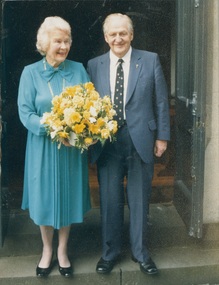
... He was awarded a scholarship to Trinity College, Glasgow University, in 1935, and for three months stayed with the great Scottish churchman George (later Lord) MacLeod. ...He was awarded a scholarship to Trinity College, Glasgow University, in 1935, and for three months stayed with the great Scottish churchman George (later Lord) MacLeod. ...1911–2005: Gordon George Powell, who has died at 94, was for many years the highly influential minister at St Stephen's Presbyterian Church in Sydney and a popular radio broadcaster and author. He began Wednesday services at St Stephen's in Macquarie Street soon after arriving in Sydney from Melbourne in 1952. They grew to become the biggest regular lunch-hour services in the world, with up to 1300 people crowding the church and the hall below. In 1953, with the help of Vernon Turner of the Christian Broadcasting Association, services were broadcast on radio. The broadcasts continued even when Gordon moved back to Melbourne, so for 30 years he maintained a successful weekly radio ministry. While at St Stephen's, he was also involved in the 1959 Billy Graham Crusade in Sydney, attended by 980,000 people over two weeks. Gordon was born in Warrnambool, Victoria, the son of a dentist, George Powell, and his wife, Louisa (nee Clarke). He went to school at Scotch College. He gave up plans to become an electrical engineer after hearing a call to the ministry and studied arts and then theology at the University of Melbourne, where he formed a close friendship with Edward (Weary) Dunlop. Gordon rowed in the Ormond crew, winning the university's inter-college trophy five times. He was a passionate sports lover all his life. He was awarded a scholarship to Trinity College, Glasgow University, in 1935, and for three months stayed with the great Scottish churchman George (later Lord) MacLeod. While on a cycling trip around Scotland, he stopped by the shores of Loch Ness and saw a long neck appear. The monster swam about 300 metres at great speed; Gordon counted three or four humps. Later, when he saw a skeleton of a plesiosaurus at the Victoria and Albert Museum, he recognised it as Nessie. For the rest of his life, he retained an avid interest in the Loch Ness Monster and its attendant scientific debate. While in Scotland, Gordon wrote a weekly article for The Messenger, the official journal of the Presbyterian Church of Victoria. This led to a life as an author of articles and books. He also wrote long letters home to his mother, a habit that later led to his weekly "Dad's Diaries", which were distributed to the wider family. Failing eyesight put an end to his reading and writing two years ago. On returning to Australia in late 1936, he became assistant minister at Toorak, the second-biggest Presbyterian church in Melbourne. There, at last, Gordon married Gwen Gilchrist, whom he had courted for nine years. They moved from the wealthiest church to one of the poorest, at Port Adelaide, which was still in the grip of the Depression. There, he was finally ordained, in May 1938, and the first two of their four children, Rosemary and David, were born. In 1941, Gordon became assistant minister to Scots Church in Melbourne and the following year, after the birth of his third child, Mardi, he reluctantly volunteered as an RAAF chaplain. He was a pacifist but felt bad at not being in uniform. For the following three years, he was stationed in New Guinea and Australia. His war reminiscences were published as Two Steps to Tokyo and sold 6000 copies in 1945 alone. At 34, by then the father of four children, he was invited to be minister of the Collins Street Independent Church in the heart of Melbourne, now St Michael's Uniting Church Before being inducted, he undertook a lecture tour of the US, speaking to Rotary clubs in 48 centres, from Michigan to Maryland. He met, and was impressed by, the liberal theologian Harry Emerson Fosdick, and the US religious leader and author Norman Vincent Peale, who became a close friend and mentor. Back in Australia, Gordon founded and fostered the first Alcoholics Anonymous group in Melbourne. In 1952, he took up what was to become his happiest ministry, at St Stephen's in Sydney. When Queen Elizabeth and Prince Philip toured two years later, Gordon and Gwen were not only invited to lunch with them, but sat beside them. This was a highlight for Gordon, an ardent monarchist. In 1960, Gordon and Gwen embarked on a world tour that included the US, where he was invited to give the opening prayer in the Senate, with vice-president Richard Nixon presiding. After another five years at St Stephen's, Gordon returned to Scots Church in Melbourne. It was a time of bitter debates over church union with the Methodists and Congregationalists. Gordon was in favour, but Scots ultimately voted to stay out and remain Presbyterian. By then in his mid-60s, he and Gwen moved to New York, where Peale was his neighbour. They had six happy years there before retiring to Melbourne. Gordon is survived by Gwen, and children David, Mardi and Jenny (daughter Rosemary died in 1992), 13 grandchildren and 10 great-grandchildren. [From the obituary in the Sydney Morning Herald, 2005, written by Jenny (Powell)] Gwen and Gordon Powell coming out of the Toorak Uniting Church 50 years after they were married there. Gwen and Gordon Powell coming out of the Toorak Uniting Church 50 years after they were married there.gordon powell; gwen powell; port adelaide; toorak presbyterian church; st stephen's presbyterian church sydney; presbyterian minister -
 Flagstaff Hill Maritime Museum and Village
Book - Reference guide, William Marshall Smart (W M Smart), Professor of Astronomy, A Handbook of Sea Navigation, 1943
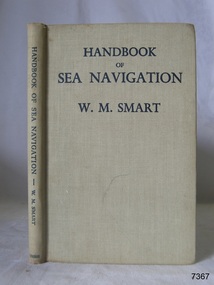
... (William Marshall Smart), (1889-1975) Regius Professor of Astronomy in the University of Glasgow, Instructor-Lieut. in the Royal Navy during World War I. and John Couch Adams Astronomer in the University of Cambridge. ...(William Marshall Smart), (1889-1975) Regius Professor of Astronomy in the University of Glasgow, Instructor-Lieut. in the Royal Navy during World War I. and John Couch Adams Astronomer in the University of Cambridge. ...Author W M Smart, M.A., D.SC., F.R.A.S. (William Marshall Smart), (1889-1975) Regius Professor of Astronomy in the University of Glasgow, Instructor-Lieut. in the Royal Navy during World War I. and John Couch Adams Astronomer in the University of Cambridge. In 1943 he was elected as a fellow of the Royal Society of Edinburg. From 1949-1951 he was President of the Royal Astronomical Society and a member of the Royal Institute of Navigation. In 1958 he was awarded the Lorimer Medal of the Astronomical Society of Edinburgh. The publisher firm, Longmans, Green & Co, was originally founded in 1724 in London by Thomas Longman under the name Longman. In August of that year, he bought the two shops and goods of William Taylor and set up his publishing house there at 39 Paternoster Row. The shops were called Black Swan and Ship, and it is said that the 'ship' sign was the inspiration for Longman's Logo. After many changes of name and management, the firm was incorporated in 1926 as Longmans, Green & Co. Pty Ltd. The firm was acquired by Pearson in 1968 and was known as Pearson Longman or Pearson PLC. The book was sold by Collins Book Depot which was founded by Frederick Henry (Harry) Slamen in 1922. In 1929 the form became a Proprietary Limited Company with an additional two stores, at 95 Elizabeth and 361 Swanston Streets, Melbourne. Collins Booksellers is still owned by the Stamen family. It is the largest Australian-owned bookselling chain.The book is significant due to its connection with navigation at sea. Its author W M Smart was a learned astronomer and an Instructor-Lieutenant for the Royal Navy during World War I. His achievements were recognised in 1958 when he was awarded the Lorimer Medal of the Astronomical Society of Edinburgh.A Handbook of Sea Navigation: The Theory & Practice of Astronomical Navigation at Sea, with diagrams and charts Author: W M Smart, M.A., D.SC., F.R.A.S. (William Marshall Smart) Publisher: Longmans, Green and Co Printer: Collins Book Depot Date: 1943 Textured green hardcover book. Inscriptions on the Fly page.Pencil: "12/6" [12 shillings 6 pence] Sticker: "G.F. Byrne / Faunce Crescent / O'Connor, A.C.T. / Australia 2001" Stamp: "COLLINS BOOK DEPOT PTY. LTD. / Technical Book Department / 361 Swanston St., Melb. G - - -"flagstaff hill, flagstaff hill maritime museum and village, warrnambool, maritime museum, maritime village, great ocean road, shipwreck coast, longmans green and co., thomas longman, paternoster row london, w m smart, william marshall smart, astronomer, navigator, professor of astronomy, 1943, g.f. byrne, collins book depot, technical book department, 361 swanston st., melbourne, frederick henry (harry) slamen, 361 swanston street melbourne, a handbook of sea navigation, maritime handbook, navigation instructiono, sea navigation -
 Flagstaff Hill Maritime Museum and Village
Book - Reference/Bible, Rev. John Eadie, The Holy Bible (with the Commentaries of Scott and Henry 1862), 1862
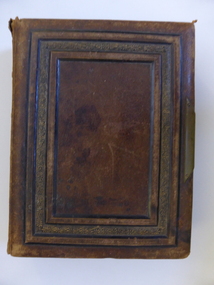
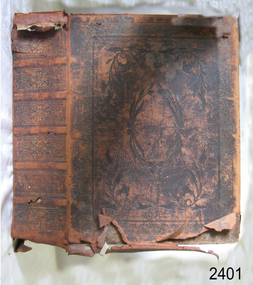
... Born in Stirlingshire, Scotland, he studied at the University of Glasgow and was ordained as a minister in the United Presbyterian Church in 1835. ...Born in Stirlingshire, Scotland, he studied at the University of Glasgow and was ordained as a minister in the United Presbyterian Church in 1835. ...This specific 1862 Bible is a fascinating artifact from the height of 19th-century British industrial printing, combining massive theological authority with an effort to make large-scale Family Bibles accessible to the general public.The Holy Bible with the Commentaries of Scott and Henry 1862 Edited by Rev John Eadie Publisher: W R McPhun Date: 1862non-fictionThis specific 1862 Bible is a fascinating artifact from the height of 19th-century British industrial printing, combining massive theological authority with an effort to make large-scale Family Bibles accessible to the general public.flagstaff hill, warrnambool, shipwrecked-coast, flagstaff-hill, flagstaff-hill-maritime-museum, maritime-museum, shipwreck-coast, flagstaff-hill-maritime-village, book, bible, the holy bible, scott and henry -
 Uniting Church Archives - Synod of Victoria
Photograph, C. 1870s
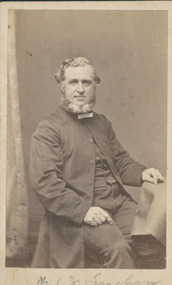
... Recommended by Sir William MacGregor, Langham was awarded a doctorate of divinity by the University of Glasgow. He died at Wilton Villa, Albion Grove, Hackney, on 21 June 1903 and was buried in Abney Park cemetery. ...Recommended by Sir William MacGregor, Langham was awarded a doctorate of divinity by the University of Glasgow. He died at Wilton Villa, Albion Grove, Hackney, on 21 June 1903 and was buried in Abney Park cemetery. ...ADB entry: http://adb.anu.edu.au/biography/langham-frederick-3987 Frederick Langham (1833-1903), Wesleyan missionary, was born on 24 April 1833 at Launceston, Van Diemen's Land, son of Samuel Langham, builder, and his wife Eliza, née Robinson. Nurtured in a Methodist home he attended the Paterson Street Sunday school and was 'converted' under the ministry of Rev. William Butters. In 1847 the family moved to Victoria where Langham joined the Fitzroy Church. After two years training as a teacher in Britain he returned to Melbourne and on 16 November 1854 at Richmond married Ann Elizabeth Knight. In January 1855 Langham became headmaster of the Wesleyan Denominational School at Barker Street, Castlemaine, where he was a contemporary of Shirley Baker at the other Wesleyan school. Influenced by Rev. Thomas Raston to consider missionary work, Langham was prepared for the ministry by Rev. John Harcourt and in 1858 was received into the Victorian Conference. He was appointed to Fiji where he arrived in June. Langham served at Lakemba in 1858-63, Bau in 1864-66 and Viwa in 1868-70. As one of the assertive 'colonial young men', he was resented at first by Rev. James Calvert and his colleagues, but Langham soon dominated the mission and was chairman of the Fiji district in 1869-94. From 1871 he lived at Bau where he won repute among Methodists as King Cakobau's adviser. Although his policies did not please all the missionaries, they accepted him as their spokesman. Believing himself the champion of the Fijians he encouraged annexation by Britain, but often nettled the colonial administrators by his paternalism and lack of imagination. To his colleagues he was 'Father' Langham and Sir Arthur Gordon referred to him as 'The Cardinal'. In 1874-75 and 1890 Langham and his wife visited Melbourne mainly for their health. They finally left Fiji in April 1895 and lived in Sydney where Langham worked on the revision of the Fijian Bible. Though always reluctant in Australia to travel on deputationary work, he identified himself with the Orange cause and was easily persuaded to give anti-Catholic missionary lectures, which involved him in public controversy with Cardinal Patrick Moran. In 1898 Langham went to England to see his New Testament through the press. The subsequent burning of some testaments at the Roman Catholic mission at Namosi received much publicity in Australia. Langham's wife had helped his revision and was author of many Fijian hymns. Their adopted (European) daughter Annie Langham Lindsay died on 21 December 1901, just before the revised Old Testament was completed. His wife did not recover from this shock and died on 5 January 1902. Langham became a supernumerary in 1901 and travelled on deputationary work in Britain, mainly for the British and Foreign Bible Society, of which he was a life governor. He also shared in the 'simultaneous mission' of the Evangelical churches. In addition to the Fijian Bible he had published other works in Fijian, some in conjunction with other authors. Recommended by Sir William MacGregor, Langham was awarded a doctorate of divinity by the University of Glasgow. He died at Wilton Villa, Albion Grove, Hackney, on 21 June 1903 and was buried in Abney Park cemetery. Although he bequeathed a 'cannibal fork with human bone attached' to a sister in Melbourne, the rest of his Fijian collection was sold. He instructed his trustees to destroy his journals and correspondence but many of his original letters are in other collections. Physically impressive with leonine hair and beard, Langham cut his missionary role in the cloth of the schoolmaster. As a disciplinarian his punishments were severe but tempered with justice; he once insisted on being caned by a wrongfully punished boy. His relentless energy and simple piety won him renown as a great missionary by his denomination and those of the religious public familiar with the romanticized version of his career. Sepia toned carte de visite studio portrait of the Rev. Frederick Langham"Langham c.1873-77"rev frederick langam, wesleyan methodist missionary, minister, fiji -
 Victorian Aboriginal Corporation for Languages
Periodical, Australian Institute of Aboriginal and Torres Strait Islander Studies, Australian Aboriginal studies : journal of the Australian Institute of Aboriginal and Torres Strait Islander Studies, 2008
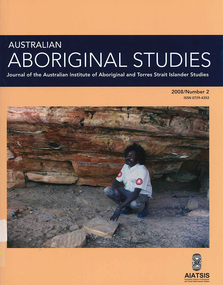
... Living in two camps: the strategies Goldfields Aboriginal people use to manage in the customary economy and the mainstream economy at the same time Howard Sercombe (Strathclyde University, Glasgow) The economic sustainability of Aboriginal households has been a matter of public concern across a range of contexts. ...Living in two camps: the strategies Goldfields Aboriginal people use to manage in the customary economy and the mainstream economy at the same time Howard Sercombe (Strathclyde University, Glasgow) The economic sustainability of Aboriginal households has been a matter of public concern across a range of contexts. ...Mawul Rom Project: Openness, obligation and reconciliation Morgan Brigg (Universtiy of Queensland) and Anke Tonnaer (University of Aarhus, Denmark) Aboriginal Australian initiatives to restore balanced relationships with White Australians have recently become part of reconciliation efforts. This paper provides a contextualised report on one such initiative, the Mawul Rom crosscultural mediation project. Viewing Mawul Rom as a diplomatic venture in the lineage of adjustment and earlier Rom rituals raises questions about receptiveness, individual responsibility and the role of Indigenous ceremony in reconciliation efforts. Yolngu ceremonial leaders successfully draw participants into relationship and personally commit them to the tasks of cross-cultural advocacy and reconciliation. But Mawul Rom must also negotiate a paradox because emphasis on the cultural difference of ceremony risks increasing the very social distance that the ritual attempts to confront. Managing this tension will be a key challenge if Mawul Rom is to become an effective diplomatic mechanism for cross-cultural conflict resolution and reconciliation. Living in two camps: the strategies Goldfields Aboriginal people use to manage in the customary economy and the mainstream economy at the same time Howard Sercombe (Strathclyde University, Glasgow) The economic sustainability of Aboriginal households has been a matter of public concern across a range of contexts. This research, conducted in the Eastern Goldfields of Western Australia, shows how economically successful Aboriginal persons manage ?dual economic engagement?, or involvement in the customary economy and the mainstream economy at the same time. The two economies sometimes reinforce each other but are more often in conflict, and management of conflicting obligations requires high degrees of skill and innovation. As well as creating financially sustainable households, the participants contributed significantly to the health of their extended families and communities. The research also shows that many Aboriginal people, no matter what their material and personal resources, are conscious of how fragile and unpredictable their economic lives can be, and that involvement in the customary economy is a kind of mutual insurance to guarantee survival if times get tough. Indigenous population data for evaluation and performance measurement: A cautionary note Gaminiratne Wijesekere (Dept. of Families, Housing, Community Services and Indigenous Affairs, Canberra) I outline the status of population census counts for Indigenous peoples, identifying information on Indigenous births and deaths, and internal migration estimates. I comment on the ?experimental? Indigenous population projections and question the rationale for having two sets of projections. Program managers and evaluators need to be mindful of limitations of the data when using these projections for monitoring, evaluating and measuring Indigenous programs. Reaching out to a younger generation using a 3D computer game for storytelling: Vincent Serico?s legacy Theodor G Wyeld (Flinders University, Adeliade) and Brett Leavy (CyberDreaming Australia) Sadly, Vincent Serico (1949?2008), artist, activist and humanist, recently passed away. Born in southern Queensland in Wakka Wakka/Kabi Kabi Country (Carnarvon Gorge region) in 1949, Vincent was a member of the Stolen Generations. He was separated from his family by White administration at four years of age. He grew up on the Cherbourg Aboriginal Reserve in the 1950s, when the policies of segregation and assimilation were at their peak. Only returning to his Country in his early forties, Vincent started painting his stories and the stories that had been passed on to him about the region. These paintings manifest Vincent?s sanctity for tradition, storytelling, language, spirit and beliefs. A team of researchers was honoured and fortunate to have worked closely with Vincent to develop a 3D simulation of his Country using a 3D computer game toolkit. Embedded in this simulation of his Country, in the locations that their stories speak to, are some of Vincent?s important contemporary art works. They are accompanied by a narration of Vincent?s oral history about the places, people and events depicted. Vincent was deeply concerned about members of the younger generation around him ?losing their way? in modern times. In a similar vein, Brett Leavy (Kooma) sees the 3D game engine as an opportunity to engage the younger generation in its own cultural heritage in an activity that capitalises on a common pastime. Vincent was an enthusiastic advocate of this approach. Working in consultation with Vincent and the research team, CyberDreaming developed a simulation of Vincent?s Country for young Aboriginal and non-Aboriginal persons from the Carnarvon Gorge region to explore Vincent?s life stories of the region. The use of Vincent?s contemporary paintings as storyboards provides a traditional medium for the local people to interactively re-engage with traditional values. Called Serico?s World, it represents a legacy to his life?s works, joys and regrets. Here we discuss the background to this project and Vincent?s contribution. A singular beeswax representation of Namarrkon, the Lightning Man, from western Arnhem Land RG Gunn (La Trobe University) and RL Whear (Jawoyn Association) Samples from a beeswax representation of Namarrkon, the Lightning Man, from western Arnhem Land were analysed for radiocarbon and dated to be about 150 years old. An underlying beeswax figure was found to be approximately 1100 years old. The Dreaming Being Namarrkon is well known throughout Arnhem Land, although his sphere of activity is concentrated around the northern half of the Arnhem Land plateau. Namarrkon is well represented in rock-paintings in this area and continues to be well represented in contemporary canvas-paintings by artists from the broader plateau region. We conclude that representations of Namarrkon in both painted and beeswax forms appear to be parallel manifestations of the late Holocene regionalisation of Arnhem Land. ?Missing the point? or ?what to believe ? the theory or the data?: Rationales for the production of Kimberley points Kim Akerman (Moonah) In a recent article, Rodney Harrison presented an interesting view on the role glass Kimberley points played in the lives of the Aborigines who made and used them. Harrison employed ethnographic and historical data to argue that glass Kimberley points were not part of the normal suite of post-contact artefacts used primarily for hunting and fighting or Indigenous exchange purposes, but primarily were created to service a non-Indigenous market for aesthetically pleasing artefacts. Harrison asserted that this market determined the form that these points took. A critical analysis of the data does not substantiate either of these claims. Here I do not deal with Harrison?s theoretical material or arguments; I focus on the ethnographic and historical material that he has either omitted or failed to appreciate in developing his thesis and which, in turn, renders it invalid. The intensity of raw material utilisation as an indication of occupational history in surface stone artefact assemblages from the Strathbogie Ranges, central Victoria Justin Ian Shiner (La Trobe University, Bundoora) Stone artefact assemblages are a major source of information on past human?landscape relationships throughout much of Australia. These relationships are not well understood in the Strathbogie Ranges of central Victoria, where few detailed analyses of stone artefact assemblages have been undertaken. The purpose of this paper is to redress this situation through the analysis of two surface stone artefact assemblages recorded in early 2000 during a wider investigation of the region?s potential for postgraduate archaeological fieldwork. Analysis of raw material utilisation is used to assess the characteristics of the occupational histories of two locations with similar landscape settings. The analysis indicates variability in the intensity of raw material use between the assemblages, which suggests subtle differences in the occupational history of each location. The results of this work provide a direction for future stone artefact studies within this poorly understood region.document reproductions, maps, b&w photographs, colour photographskimberley, mawul rom project, 3d computer game, storytelling, vincent serico, beeswax, namarrkon, artefact assemblages, strathbogie ranges, groote eylandt, budd billy ii -
Federation University Historical Collection
Book, Cloud Pool Fire Veil Shield, 1996 (exact)
... Glasgow School of Art, and worked in many tertiary institutions in Great Britain and Australia. Allan Mann arrived in Australia in 1987, lecturing at the Darling Downs Institute of Advanced Education, Queensland, then the Riverina-Murray Institute of Higher Education Wagga Wagga, NSW, in 1981. He returned to the Duncan of Jordanstone College of Art, Dundee, Scotland between 1984 and 1985. Allan Mann was appointed to the University...Glasgow School of Art, and worked in many tertiary institutions in Great Britain and Australia. Allan Mann arrived in Australia in 1987, lecturing at the Darling Downs Institute of Advanced Education, Queensland, then the Riverina-Murray Institute of Higher Education Wagga Wagga, NSW, in 1981. He returned to the Duncan of Jordanstone College of Art, Dundee, Scotland between 1984 and 1985. Allan Mann was appointed to the University ...Born in Scotland, Allan Mann studied at the Glasgow School of Art, and worked in many tertiary institutions in Great Britain and Australia. Allan Mann arrived in Australia in 1987, lecturing at the Darling Downs Institute of Advanced Education, Queensland, then the Riverina-Murray Institute of Higher Education Wagga Wagga, NSW, in 1981. He returned to the Duncan of Jordanstone College of Art, Dundee, Scotland between 1984 and 1985. Allan Mann was appointed to the University of Ballarat (then Ballarat College of Advanced Education) in 1987. He retired as an Associate Professor of the University of Ballarat Arts Academy in 2010.Black, hard-covered artist's book produced in a limited edition of 22 (of which this one is number number 6). The images contained in the book were first created in pastel then scanned and computer manipulated before being Laser copied and Intron transferred onto Indian Khadi Hot Press Natural Off-white 210 gsm paper, in an edition of 22.Signed an numbered by the artist on the ISBN page.allan mann, jeff zilles, artist's book, cpfvs -
 Marysville & District Historical Society
Book, Mavis Thorpe Clark, Home Again at Timber Creek, 1950
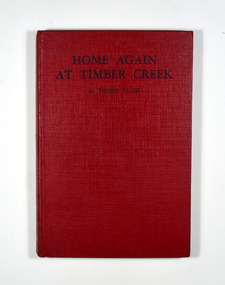
... THORPE CLARK Geoffrey Cumberlege/ OXFORD UNIVERSITY PRESS/ MELBOURNE WELLINGTON Oxford University Press, Amen House, London, E.C.4/ GLASGOW NEW YORK TORONTO MELBOURNE WELLINGTON/ BOMBAY CALCUTTA MADRAS CAPE TOWN/ Geoffrey Cumberlege, Publisher to the University First published 1950. ...THORPE CLARK Geoffrey Cumberlege/ OXFORD UNIVERSITY PRESS/ MELBOURNE WELLINGTON Oxford University Press, Amen House, London, E.C.4/ GLASGOW NEW YORK TORONTO MELBOURNE WELLINGTON/ BOMBAY CALCUTTA MADRAS CAPE TOWN/ Geoffrey Cumberlege, Publisher to the University First published 1950. ...A sequel to 'The Twins at Timber Creek'. Adventures in the Australia countryside for children 7 to 11.No dust cover. Book is red with the title and the author's name in black on the front cover and spine.fictionA sequel to 'The Twins at Timber Creek'. Adventures in the Australia countryside for children 7 to 11.australia, country life, fiction, mavis thorpe clark -
Glenelg Shire Council Cultural Collection
Book, Children of the Dawn, c. 1914
... ...GLASGOW: PRINTED AT THE UNIVERSITY PRESS BY ROBERT MACLEHOSE AND GO LTD...Sage paperback, dark green print and decoration Children of the Dawn Book Book ELSIE FINNIMORE BUCKLEY GLASGOW: PRINTED AT THE UNIVERSITY PRESS BY ROBERT MACLEHOSE AND GO LTD ...A selection of ancient Greek tales and myths in a format suitable for young children.Collection of old tales of Greece Part II. Sage paperback, dark green print and decorationA selection of ancient Greek tales and myths in a format suitable for young children. -
 Queenscliffe Maritime Museum
Instrument - Azimuth Mirror
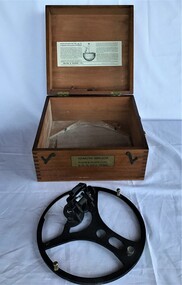
... university at the age of eleven. At twenty-two he was appointed Professor of Natural Philosophy in Glasgow where he set up the first physics laboratory in Great Britain and proved an inspiring teacher. ...university at the age of eleven. At twenty-two he was appointed Professor of Natural Philosophy in Glasgow where he set up the first physics laboratory in Great Britain and proved an inspiring teacher. ...William Thomson described a new "Marine Azimuth Mirror" at the 1877 meeting of the British Association for the Advancement of Science, and patented the design in Britain and the U.S. This instrument is an example of the improved design, with a reflecting prism in place of the original mirror. Thomson introduced this form in the early 1880s. The signature indicates that it was made during the period 1900-1913. A child prodigy, William Thomson went to university at the age of eleven. At twenty-two he was appointed Professor of Natural Philosophy in Glasgow where he set up the first physics laboratory in Great Britain and proved an inspiring teacher. He primarily researched thermodynamics and electricity. On the practical side he was involved in the laying of the Atlantic telegraph cable. He was also the partner of a Glasgow firm that made measuring instruments from his own patents.An instrument of significant importance which made marine navigation easier and more accurate in the early twentieth century.An Azimuth mirror with wooden box.Kelvin & Hughs Ltd Serial No - illegible Made in Great Britainazimuth mirror, william thompson, lord kelvin, naviagtion, marine instruments -
 Uniting Church Archives - Synod of Victoria
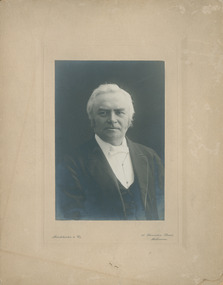
Photograph, Rev. Professor Murdoch MacDonald, 1883
... MacDonald, Murdoch, D.D., B: Western Ross; University of Edinburgh and Glasgow; 1863 ordained Nairn, Free Church of Scotland; 1876 Toorak Vic; 1883 1st professor of Systematic Theology, Ormond College, Professor Systematic Theology and Church History; 1889 Moderator Victorian Assembly; 1906 resigned and died....MacDonald, Murdoch, D.D., B: Western Ross; University of Edinburgh and Glasgow; 1863 ordained Nairn, Free Church of Scotland; 1876 Toorak Vic; 1883 1st professor of Systematic Theology, Ormond College, Professor Systematic Theology and Church History; 1889 Moderator Victorian Assembly; 1906 resigned and died. macdonald, murdoch ormond college moderator 1889 Presbyterian, Professor of Systematic Theology "Murdoch MacDonald 1883 first professor of systematic theology at Theological Hall Ormond College." ...MacDonald, Murdoch, D.D., B: Western Ross; University of Edinburgh and Glasgow; 1863 ordained Nairn, Free Church of Scotland; 1876 Toorak Vic; 1883 1st professor of Systematic Theology, Ormond College, Professor Systematic Theology and Church History; 1889 Moderator Victorian Assembly; 1906 resigned and died.B & W waist length studio portrait of Rev Professor Murdoch MacDonald."Murdoch MacDonald 1883 first professor of systematic theology at Theological Hall Ormond College."macdonald, murdoch, ormond college, moderator 1889, presbyterian, professor of systematic theology -
 Uniting Church Archives - Synod of Victoria
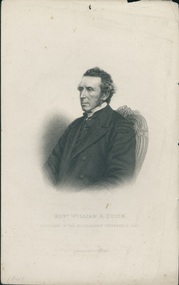
printed etching
... Glasgow. Arrived in Australia in 1856. Stationed in N.S.W. then at St. Kilda, Ballarat East, Richmond. President of the Australasian Conference 1866. President of Horton College at Ross, Tasmania. Founder and President of the Council of Queen's College, University...Glasgow. Arrived in Australia in 1856. Stationed in N.S.W. then at St. Kilda, Ballarat East, Richmond. President of the Australasian Conference 1866. President of Horton College at Ross, Tasmania. Founder and President of the Council of Queen's College, University ...William Abraham Quick (1820 - 1915). Born in the U.K. Methodist minister at Liskeard Cornwall, Tiverton Devon. In 1843 went to Sierra Leone. Upon returning to the UK was stationed at Bridport, South Shields, Glasgow. Arrived in Australia in 1856. Stationed in N.S.W. then at St. Kilda, Ballarat East, Richmond. President of the Australasian Conference 1866. President of Horton College at Ross, Tasmania. Founder and President of the Council of Queen's College, University of Melbourne. Died at Brighton 12 November 1915.B & W printed etching of the Rev. William Abrahm Quick in three quarter profile."Revd Willam A. Quick President of the Australasian Conference 1866"william abraham quick, wesleyan, methodist, minister, horton college, queen's college, liskeard, tiverton, sierra leone, bridgport, south shields, glasgow, st. kilda, ballarat east, richmond, brighton, president of conference -
 Federation University Art Collection
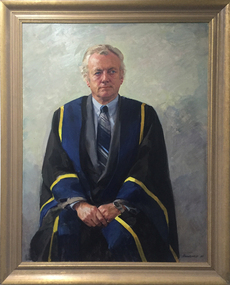
Painting - Artwork - watercolour by Robert Hannaford, Portrait of Dr Tom Kennedy by Robert Hannaford, 1990
... University Australia). Prior to moving to Gippsland, Professor Kennedy was the Deputy Director of the Chisholm Institute of Technology. He was an Associate Fellow of the Australian Institute of Management and a Fellow of the Royal Institute of Chemistry, Professor Kennedy held a degree in Science, a PhD in Chemistry (Glasgow) and a Diploma of Education. ...University Australia). Prior to moving to Gippsland, Professor Kennedy was the Deputy Director of the Chisholm Institute of Technology. He was an Associate Fellow of the Australian Institute of Management and a Fellow of the Royal Institute of Chemistry, Professor Kennedy held a degree in Science, a PhD in Chemistry (Glasgow) and a Diploma of Education. ...Robert HANNAFORD (9 November 1944- ) Born Gilbert Valley, Riverton, South Australia From In 1967 to 1968 Robert Hannaford studied in Ballarat. Primarily known as a portrait artist he is also known for his landscapes, still lifes, nudes, and sculptures. Robert Hannaford has commented: "Portraiture is an exploration of character that goes beyond photography. It is an ongoing thing over a long period of time. You get elements of various emotions that can be sensed in the painting." Framed academic portrait of Dr Tom Kennedy who was the Director of the Gippsland Institute of Advanced Education (GIAE) from 1984 to 1989, and the inaugural Chief Executive Officer and Pro Vice-Chancellor of Monash University College Gippsland (MUCG) from 1990 to 1992. (In 2014 the Churchill Campus became part of Federation University Australia). Prior to moving to Gippsland, Professor Kennedy was the Deputy Director of the Chisholm Institute of Technology. He was an Associate Fellow of the Australian Institute of Management and a Fellow of the Royal Institute of Chemistry, Professor Kennedy held a degree in Science, a PhD in Chemistry (Glasgow) and a Diploma of Education. Rom Kennedy died on 04 May 2011. Signed lower right "Hannaford 90"artwork, artist, tom kennedy, gippsland campus, hannaford, robert hannaford
