
Showing 25 items matching "goethe"
-
 Bendigo Historical Society Inc.
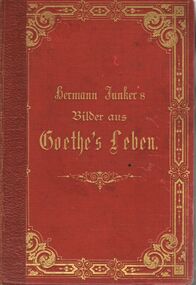
Photograph - GERMAN HERITAGE SOCIETY COLLECTION: HERMANN JUNKERS BILDER AUS GOETHES LEBEN
... Cards (12) Hermann Junkers - Bilder aus Goethes Leben. Red folder with gold printing and decoration. ...Hermann Junkers Bilder Aus Goethes Leben...Cards (12) Hermann Junkers - Bilder aus Goethes Leben. Red folder with gold printing and decoration. ...Item 20. Cards (12) Hermann Junkers - Bilder aus Goethes Leben. Red folder with gold printing and decoration. Name printed on the front cover in gold. Contains 12 cards, black on the back. The front is also black with gold edge and printing. Each card has a photo. They are: 1. Der Mahrchen-Sessel, 2. Der Konigslieutenant, 3. Erste Liebe und erste Dichtungen, 4. Sesenheim, 5. Heidelberg, 6. Geniales Treben in Weimar, 7. Malsesine, 8. Gefahrvolle Fahrt, 9. Der Dichter und der Konig, 10. Die Dioskuren, 11. Zwei Welteroberer, 12. Des Dichters Jubeltag. There is also a small booklet of explanation (in German) with a blue spine. Included is a small piece of paper with handwriting: Hermann Junkers Bilder aus Goethes Leben - 12 photos & Booklet of explanation.Hermann Junkers Bilder Aus Goethes Lebenbooks, collections, german famous people, german heritage society collection - hermann junkers bilder aus goethes leben, der mahrchen-sessel, der konigslieutenant, erste liebe und erste dichtungen, sesenheim, heidelberg, geniales treben in weimar, malsesine, gefahrvolle fahrt, der dichter und der konig, die dioskuren, zwei welteroberer, des dichters jubeltag -
 Phillip Island and District Historical Society Inc.
Book, GOETHE, Johann W. von, Faust, 1911
... GOETHE, Johann W. von...Bergin, San Remo. Faust Book GOETHE, Johann W. von Ward Lock ...Labelled: Cowes Free Public Library. Phillip Island Historical Society, Cleeland Bequest. Inscribed: Esther J. Bergin, San Remo. -
 Mrs Aeneas Gunn Memorial Library
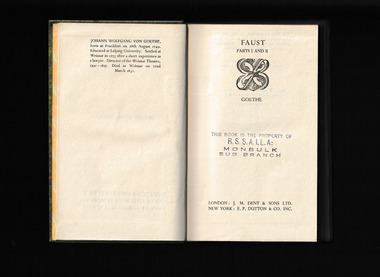
Book, JM Dent and sons, Goethe's Faust : Parts I and II, 1908
... Johann Wolfgang von Goethe...Goethe's Faust : Parts I and II Book JM Dent and sons Johann Wolfgang von Goethe ...Faust is the protagonist of a classic German legend. He is a scholar who is highly successful yet dissatisfied with his life, so he makes a pact with the Devil, exchanging his soul for unlimited knowledge and worldly pleasures. The Faust legend has been the basis for many literary, artistic, cinematic, and musical works that have reinterpreted it through the ages. Faust and the adjective Faustian imply a situation in which an ambitious person surrenders moral integrity in order to achieve power and success for a delimited term. The Faust of early books - as well as the ballads, dramas, movies, and puppet-plays which grew out of them - is irrevocably damned because he prefers human to divine knowledge; "he laid the Holy Scriptures behind the door and under the bench, refused to be called doctor of Theology, but preferred to be styled doctor of Medicine". Plays and comic puppet theatre loosely based on this legend were popular throughout Germany in the 16th century, often reducing Faust and Mephistopheles to figures of vulgar fun. The story was popularised in England by Christopher Marlowe, who gave it a classic treatment in his play, The Tragical History of Doctor Faustus. In Goethe's reworking of the story two hundred years later, Faust becomes a dissatisfied intellectual who yearns for "more than earthly meat and drink" in his lifep.424.non-fictionFaust is the protagonist of a classic German legend. He is a scholar who is highly successful yet dissatisfied with his life, so he makes a pact with the Devil, exchanging his soul for unlimited knowledge and worldly pleasures. The Faust legend has been the basis for many literary, artistic, cinematic, and musical works that have reinterpreted it through the ages. Faust and the adjective Faustian imply a situation in which an ambitious person surrenders moral integrity in order to achieve power and success for a delimited term. The Faust of early books - as well as the ballads, dramas, movies, and puppet-plays which grew out of them - is irrevocably damned because he prefers human to divine knowledge; "he laid the Holy Scriptures behind the door and under the bench, refused to be called doctor of Theology, but preferred to be styled doctor of Medicine". Plays and comic puppet theatre loosely based on this legend were popular throughout Germany in the 16th century, often reducing Faust and Mephistopheles to figures of vulgar fun. The story was popularised in England by Christopher Marlowe, who gave it a classic treatment in his play, The Tragical History of Doctor Faustus. In Goethe's reworking of the story two hundred years later, Faust becomes a dissatisfied intellectual who yearns for "more than earthly meat and drink" in his lifegerman literature, german drama -
 Wangaratta High School
WHS trophy, 2007
... 2007 Goethe-Institut-AGTV German School Film Festival ROMA SCHULTZ AWARD...2007 Goethe-Institut-AGTV German School Film Festival ROMA SCHULTZ AWARD Blue-stained wooden trophy with a silver plastic embellishment with a sticker of two cameras in the centre WHS trophy ...Blue-stained wooden trophy with a silver plastic embellishment with a sticker of two cameras in the centre2007 Goethe-Institut-AGTV German School Film Festival ROMA SCHULTZ AWARD -
 Wangaratta High School
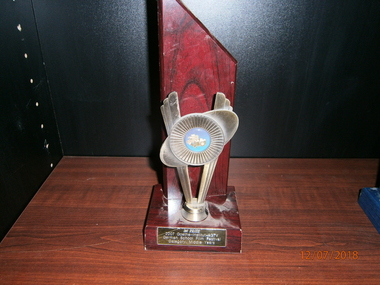
WHS trophy, 2007
... 1st PRIZE 2007 Goethe-Institut-AGTV German School Film Festival Category: Middle Years...1st PRIZE 2007 Goethe-Institut-AGTV German School Film Festival Category: Middle Years Red-stained wooden trophy with a silver plastic embellishment with a sticker of two cameras in the centre WHS trophy ...Red-stained wooden trophy with a silver plastic embellishment with a sticker of two cameras in the centre1st PRIZE 2007 Goethe-Institut-AGTV German School Film Festival Category: Middle Years -
Tatura Irrigation & Wartime Camps Museum
Folder, Recollections of events in the life of the Girschik and Griffin families
... Copy of speeches to Goethe Society, Canberra 2006 and Tatura Probus Club 2007. ...Copy of speeches to Goethe Society, Canberra 2006 and Tatura Probus Club 2007. ...Recollections of events in the life of the Girschik and Griffin families. Internment of the Girschik Family - Personal Diary by Rudolf Girschik. Letters (2) to Girschik Family and Annie Girschik in German and translated into English. New Homeland written by Helga Griffin. Copy of speeches to Goethe Society, Canberra 2006 and Tatura Probus Club 2007. Text in German and English. Birth Certificate Peter Girschik. Camp 3 TaturaWritten recollections of events in the life of the Girschik familyww2 camp 3, girschik, griffin, helga griffin, helga girschik, annie girschik, peter girschik, camp 3 tatura -
Federation University Historical Collection
Booklet, Ballarat School of Mines Student's Magazine, Second Term, 1904, 1904
... Table of contents: Editorial, Victorian School of Mines, Extraction of copper, The Diehl process, Analysis of materials used in assaying, Definitions of electrical terms, Mine managers - Practical and Unpractical, Geology at Lake Burrumbeet, Smelting argentiferous lead, Geology notes, Nature - Aphorisms by Goethe, Our illustrations, The estimation of a girl, The abolition of thunderstorms, Send-off to Messers L. ...Table of contents: Editorial, Victorian School of Mines, Extraction of copper, The Diehl process, Analysis of materials used in assaying, Definitions of electrical terms, Mine managers - Practical and Unpractical, Geology at Lake Burrumbeet, Smelting argentiferous lead, Geology notes, Nature - Aphorisms by Goethe, Our illustrations, The estimation of a girl, The abolition of thunderstorms, Send-off to Messers L. ...Table of contents: Editorial, Victorian School of Mines, Extraction of copper, The Diehl process, Analysis of materials used in assaying, Definitions of electrical terms, Mine managers - Practical and Unpractical, Geology at Lake Burrumbeet, Smelting argentiferous lead, Geology notes, Nature - Aphorisms by Goethe, Our illustrations, The estimation of a girl, The abolition of thunderstorms, Send-off to Messers L. Smith and S. Austin, Students' annual reunion, Correspondence, Past students, Diplomas and Certificates, Sports, News and notes, Editorial notes.Pale gray booklet of 18 pagesballarat school of mines, students' magazine, stephen hart, l. smith, s. austin, past students, f. a. marriott, l. j. lambert, h. krause, nettle, h. irwin,, a. atkins, l. seal, t. davis, r. robin, b. roy, d. elder, w. b. blyth, a. gillespie, j. huston, k. moore, obituary, alfred g. johnstone, cecil s. wakley., r. o. inglis, g. w. cornell, s. austin, s. g. turrell, l. seward, j. burrows, w. j. lakeland, douglas runting, godfrey s. hart, latham watson, samuel j. lindsay -
Federation University Historical Collection
Book, John Drinkwater, Outline of Literature, c1940
... ...Goethe...Ballarat School of Mines library literature homer Book of the dead first books Bible Sacred books of the East greek mythology roman renaissance William Shakespeare john milton marvill walton john bunyan pepys john dryden Samuel dryden pierre corneille charles Perrault Alexander pope daniel defoe samuel richardson henry fielding tobias smollett maria edgeworth samuel johnson edmund burke jean mielot Edward Gibbon Robert Burns james hogg French revolution Goethe schiller lessing wordsworth southey coleridge hood Thomas Moore William Blake Byron Shelley keats Walter scott Aleandre Dumas victor hugo charles lamb alfred Tennyson william morris edward fitzgerald charles dickens William Thackeray Anthony trollope edward lytton wilkie collins charles read charles Kinglsey Bronte george eliot charlott yonge mark rutherford ralph emerson nathaniel hawthorne edgar Allan Poe mark Twain George Sand balzac James Froude george borrow richard jeffereis winston churchill nietsche hans anderson lewis carroll may sinclair Inside front "Office No 71" Stamped The School of Miens Industries and Science Ballarat Red cloth covered book with red leather spline and marbled papers. ...Red cloth covered book with red leather spline and marbled papers.non-fictionballarat school of mines library, literature, homer, book of the dead, first books, bible, sacred books of the east, greek mythology, roman, renaissance, william shakespeare, john milton, marvill, walton, john bunyan, pepys, john dryden, samuel dryden, pierre corneille, charles perrault, alexander pope, daniel defoe, samuel richardson, henry fielding, tobias smollett, maria edgeworth, samuel johnson, edmund burke, jean mielot, edward gibbon, robert burns, james hogg, french revolution, goethe, schiller, lessing, wordsworth, southey, coleridge, hood, thomas moore, william blake, byron, shelley, keats, walter scott, aleandre dumas, victor hugo, charles lamb, alfred tennyson, william morris, edward fitzgerald, charles dickens, william thackeray, anthony trollope, edward lytton, wilkie collins, charles read, charles kinglsey, bronte, george eliot, charlott yonge, mark rutherford, ralph emerson, nathaniel hawthorne, edgar allan poe, mark twain, george sand, balzac, james froude, george borrow, richard jeffereis, winston churchill, nietsche, hans anderson, lewis carroll, may sinclair -
 Bendigo Historical Society Inc.
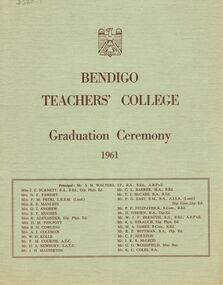
Document - LA TROBE UNIVERSITY BENDIGO COLLECTION: BENDIGO TEACHERS' COLLEGE GRADUATION CEREMONY 1961
... The following page contains a list of "Students of 1959-1961 Trained Infant Teacher's Certificate" - Bronwyn Mary Anthony, Helen Rose Argall, Betty Gay Ashby, Edna Rose Attewell, Barbara Christine Bailey, Barbara Isabelle Banfield, Cathleen Mary Banko, Kathleen Margaret Beard, Barbara Anne Beck, Mavis Lynette Brock, Cecily Joan Callister, Kathleen Mary Comer, Alison Jane Currie, Nola Curtis, Margaret Ellen Dowd, Jenifer Lorraine Every, Margaret Jane Ewing, Marie Therese Farrell, Linsey Jean Ferguson, Margaret Esther Fisher, Jean Margaret Fraser, Margaret Ruth Hallett, Elsie Frances Hamilton, Janice Ann Hutchinson, Judith Anne Knopp, Jennifer Mary Ruth Layton, Evelyn Jeanette McKean, Pamela Margaret McMahon, Astrid Norma Magnusson, Jennifer Ann Major, Elaine Joy Maple, Margaret Mary Morrow, Maureen Agnes O'Brien, Geraldine Anne O'Connor, Wendy Nanette O'Neill, Pamela Elsie Parker, Margaret Parslow, Lynette Margaret Pearce, Diane Olive Pell, Gladys Pope, Denise Helen Margaret Potter, Yvonne Joy Puckey, Georgina Mary Rodda, Margaret Agnes Schmidt, Barbara Marion Dorothy Stanton, Rosemary-ann Tipple, Penelope Ann Wallace and Nola Vivienne Williamson. A copy of "Goethe's Nine Essentials for Contented Living" followed this list of students. ...The following page contains a list of "Students of 1959-1961 Trained Infant Teacher's Certificate" - Bronwyn Mary Anthony, Helen Rose Argall, Betty Gay Ashby, Edna Rose Attewell, Barbara Christine Bailey, Barbara Isabelle Banfield, Cathleen Mary Banko, Kathleen Margaret Beard, Barbara Anne Beck, Mavis Lynette Brock, Cecily Joan Callister, Kathleen Mary Comer, Alison Jane Currie, Nola Curtis, Margaret Ellen Dowd, Jenifer Lorraine Every, Margaret Jane Ewing, Marie Therese Farrell, Linsey Jean Ferguson, Margaret Esther Fisher, Jean Margaret Fraser, Margaret Ruth Hallett, Elsie Frances Hamilton, Janice Ann Hutchinson, Judith Anne Knopp, Jennifer Mary Ruth Layton, Evelyn Jeanette McKean, Pamela Margaret McMahon, Astrid Norma Magnusson, Jennifer Ann Major, Elaine Joy Maple, Margaret Mary Morrow, Maureen Agnes O'Brien, Geraldine Anne O'Connor, Wendy Nanette O'Neill, Pamela Elsie Parker, Margaret Parslow, Lynette Margaret Pearce, Diane Olive Pell, Gladys Pope, Denise Helen Margaret Potter, Yvonne Joy Puckey, Georgina Mary Rodda, Margaret Agnes Schmidt, Barbara Marion Dorothy Stanton, Rosemary-ann Tipple, Penelope Ann Wallace and Nola Vivienne Williamson. A copy of "Goethe's Nine Essentials for Contented Living" followed this list of students. ...A light green document titled "Bendigo Teachers' College Graduation Ceremony 1961". The front page also contains a list of the staff working at the college. They are Mr. S. H. Walters (Principal), Miss J. C. Burnett, Mrs. N. F. Fawdry, Mrs. F. M. Petri, Miss R. E. Manlein, Mrs. D.J. Andrew, Mrs. B. F. Hughes, Miss K. Alexander, Mrs. D. M. Philpott, Miss B. H. Cowling, Mrs. A. J. Coleman, Mr. W. D. Kolle, Mr. F. M. Courtis, Mr. D. A. Newbury, Mr. J. H. Masterton, Mr. C. L. Barker, Mr. T. J. McCabe, Mr. F. G. East, Mr. P. F. Fitzpatrick, Mr. D. O'Brien, Mr. W. J. F. Bernoth, Mr. R. L. Strauch, Mr. M. A. James, Mr. R. E. Wittman, Mr. C. F. Houston, Mr. J. R. R. McLeod, Mr. G. G. Woodfield and Mr. K. C. Coles. The inside cover contains the "Significance of the Ceremony" and "Order of the Ceremony". Mr. F. M. Courtis welcomed the visitors and the Principal read the College Charge. The 'Graduation Book' was presented to Mr. A. L. Harris, Inspector of Schools, by Miss J. C. Burnett. Mr. C. L. Barker presented the 1960-1961 T.P.T.C. graduates to the Principal and Mrs. N. F. Fawdry presented the 1959-1961 T.I.T.C. graduates. Congratulations were offered by the Mayor of Bendigo Cr. F. W. Clayton, J.P. the President of Strathfieldsaye Shire, Cr. G.T. Gleeson and Mr. C. Campbell Head Teacher and Golden Square State School. The Occasional address was presented by Mr. E.C. Kreiger the Assistant Chief Inspector of Primary Schools. The following page contains a list of "Students of 1959-1961 Trained Infant Teacher's Certificate" - Bronwyn Mary Anthony, Helen Rose Argall, Betty Gay Ashby, Edna Rose Attewell, Barbara Christine Bailey, Barbara Isabelle Banfield, Cathleen Mary Banko, Kathleen Margaret Beard, Barbara Anne Beck, Mavis Lynette Brock, Cecily Joan Callister, Kathleen Mary Comer, Alison Jane Currie, Nola Curtis, Margaret Ellen Dowd, Jenifer Lorraine Every, Margaret Jane Ewing, Marie Therese Farrell, Linsey Jean Ferguson, Margaret Esther Fisher, Jean Margaret Fraser, Margaret Ruth Hallett, Elsie Frances Hamilton, Janice Ann Hutchinson, Judith Anne Knopp, Jennifer Mary Ruth Layton, Evelyn Jeanette McKean, Pamela Margaret McMahon, Astrid Norma Magnusson, Jennifer Ann Major, Elaine Joy Maple, Margaret Mary Morrow, Maureen Agnes O'Brien, Geraldine Anne O'Connor, Wendy Nanette O'Neill, Pamela Elsie Parker, Margaret Parslow, Lynette Margaret Pearce, Diane Olive Pell, Gladys Pope, Denise Helen Margaret Potter, Yvonne Joy Puckey, Georgina Mary Rodda, Margaret Agnes Schmidt, Barbara Marion Dorothy Stanton, Rosemary-ann Tipple, Penelope Ann Wallace and Nola Vivienne Williamson. A copy of "Goethe's Nine Essentials for Contented Living" followed this list of students. The back page has a list of the "Students of 1960-1961 Trained Primary Teacher's Certificate" - Ian Roy Aitken, Laurence James Aitken, Daryl Lewis Allemand, Raymond Thomas Arthur, Allan John Attwood, Peter Donald Bavinton, Graham John Bayles, Barry John Cameron, Margaret Suesan Chapman, Elizabeth Rae Clark, Kenneth Clarence Collins, Gavin Ernest Collinson, Terrance Richard Cook, Alan James Daniel, Peter Charles Derrick, Retford John Reuben Dettmann, John William Dicker, Judith Margaret Edwards, Donald Bertram Elshaug, David Forrester, Rodney Robert Foy, Clare Denise Frigerio, Colin David Gaylard, Barry Alexander Gemmell, Anne Isobel Godward, Peter Rodney Goode, John Jefferson Goold, John James Goonan, Ann Merilyn Hamilton, Thelma Grace Hartland, Jennifer Iris Hartvigsen, Bernice Joy Holland, Christopher John Hunt, Marjorie Catherine Iddles, Colin James Jenkins, Darryl Allan Jobling, Marcia Lillette Johnson, Albert Jordon, Janet Laurel Kennedy, John Joseph Kennedy, Malcolm James Kennedy, Frances Marjorie Leach, John Edward Lewis, Ivan James McCarrey, Kerry Francis McCartney, Graeme John McKean, Ian Hamilton McLean, David George Martin, John Russell Meers, Elizabeth Carolyn Miller, Ian Malcolm Morley, Campbell Frederick Muller, Noni Clare Murphy, Patricia Marie Murphy, Anne Mustey, Pauline Elizabeth Norman, Janice Anne North, Joan Margaret O'Callaghan, Margaret Mary O'Connor, William James Ovenden, Gordon Richard Patterson, Lawrence George Pattinson, Marcia Nancy Penrose, Judith Elaine Plant, Peter Alwyn Neville Aloysius Pritchard, Janice Yvonne Reid, David Barry Richards, William Clifford Richards, Geoffrey Roy Rodwell, Glenese Theresa Shanahan, Elizabeth Mary Shaw, Ian Russell Stapleton, Beverley Adeline Stevenson, Ronald John Stone, Nicholas Henry Sulinski, Daryl John Tatt, Brendan Joseph Tinkler, Roy Hamilton Trimble, Kenneth Graham Utber, Beverley June Vickers, Melva Elaine Vinnicombe, John Cornforth Waldron, Bruce Henry Walker, Frederick Robert Weight, Norman James West, Geoffrey Arthur Wigg, Lynette Patricia Wilkinson, Valiant Roy Wojtkiw, Janice Rae Woodcock, Peter Joseph Woods, Aleathea Nola Wootton and Susanne Katherine Yeamanbendigo, education, bendigo teachers' college graduatio, la trobe university bendigo collection, collection, bendigo teachers' college, bendigo, education, teaching, teachers, students, bendigo teachers' college students, bendigo teachers' college staff, tertiary education, history, graduates, graduands, book, teacher training, graduation ceremony -
 Flagstaff Hill Maritime Museum and Village
Book - Reference/Collection of Literary Works, Oliver Goldsmith, The Miscellaneous Works of Oliver Goldsmith, 1871
... Mentions of it appear across 19th-century culture, from being read by characters in Charles Dickens's novels to being praised by Goethe. Similarly, his play She Stoops to Conquer revolutionised English theatre by moving comedy away from overly sentimental plays toward witty, situational farces that are still performed today. ...This 1871 book is an edition of The Miscellaneous Works of Oliver Goldsmith, published by Macmillan and Co. as part of their famous "Globe Edition" series. It features a detailed biographical introduction by Professor David Masson. This volume is not a single novel, but rather a comprehensive anthology of the finest writings of Oliver Goldsmith. Because Goldsmith was a versatile writer who excelled in almost every literary format, this collection of his works contains his masterpiece novel, The Vicar of Wakefield renowned pastoral poems like The Deserted Village and The Traveller and several classic 18th-century comedies, most notably She Stoops to Conquer and The Good Natured Man. Essays and letters are also included from Letters from a Citizen of the World, which provides a satirical look at British society through the eyes of an imaginary Chinese philosopher, along with numerous shorter periodical essays.Hard cover book,The Miscellaneous Works of Oliver Goldsmith. Author: Oliver Goldsmith Publisher: Macmillan & Co London. W1. Date: 1871 Blue cloth hardcover with a brown spine and lettering in gold. The spine has a Library label with an inscription.fictionThis 1871 book is an edition of The Miscellaneous Works of Oliver Goldsmith, published by Macmillan and Co. as part of their famous "Globe Edition" series. It features a detailed biographical introduction by Professor David Masson. This volume is not a single novel, but rather a comprehensive anthology of the finest writings of Oliver Goldsmith. Because Goldsmith was a versatile writer who excelled in almost every literary format, this collection of his works contains his masterpiece novel, The Vicar of Wakefield renowned pastoral poems like The Deserted Village and The Traveller and several classic 18th-century comedies, most notably She Stoops to Conquer and The Good Natured Man. Essays and letters are also included from Letters from a Citizen of the World, which provides a satirical look at British society through the eyes of an imaginary Chinese philosopher, along with numerous shorter periodical essays.flagstaff hill, warrnambool, shipwrecked coast, flagstaff hill maritime museum, maritime museum, shipwreck coast, flagstaff hill maritime village, great ocean road, book, pattison collection, warrnambool library, warrnambool mechanics’ institute, ralph eric pattison, corangamite regional library service, warrnambool city librarian, mechanics’ institute library, victorian library board, warrnambool books and records, warrnambool children’s library, the miscellaneous works of oliver goldsmith, oliver goldsmith -
 Mission to Seafarers Victoria
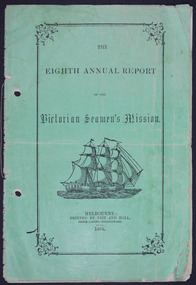
Administrative record (item) - Annual report, Tait and Hall, The Eighth Annual Report Victorian Seamen's Mission, 1865, 1865
... Through the succession of years the annual reports provide a clear overview of the Mission fulfilling its purpose and the people who helped to accomplish that purpose. 1865 annual report mission to seafarers seamen's mission mission to seamen reverend kerr johnston judge pohlman administrative document-annual report captain mccallum mrs lush mrs browning mrs embling mrs d. long mrs geothe mrs jas. webb mrs derret mrs poolman mrs jenner mrs d. ingles mrs dove mrs gowan mrs birrel mrs mcallister miss jackson capt. mathews capt. dalgarno capt. dove capt. perry capt. c. brown capt. mccallum mr poolman mr derret mr c.j. ham mr t.h. hadley mrs goethe reverend m. goethe German church captain svenson captain kheil Melbourne hospital Green coloured book containing the annual report of Victorian Seamen's Mission (Mission to Seafarers) for the year 1865. ...The organisation is obliged to complete an annual report. This book contained the report for the year 1865 , only eight years after commencement of services aboard the Bethel Floating Chapel. The report was presented on Thursday 26 April 1866 during a public meeting taking place at the schoolroom of the Congregational church, Collins Street East. His Honor Judge Pohlman was chair of the meeting.The report lists the members of the executive committee, chaplain, patron and other prominent members of the organisation. Further the report provides a summary of the workings of the organisation for the year as well as financial details. Through the succession of years the annual reports provide a clear overview of the Mission fulfilling its purpose and the people who helped to accomplish that purpose.1865, annual report, mission to seafarers, seamen's mission, mission to seamen, reverend kerr johnston, judge pohlman, administrative document-annual report, captain mccallum, mrs lush, mrs browning, mrs embling, mrs d. long, mrs geothe, mrs jas. webb, mrs derret, mrs poolman, mrs jenner, mrs d. ingles, mrs dove, mrs gowan, mrs birrel, mrs mcallister, miss jackson, capt. mathews, capt. dalgarno, capt. dove, capt. perry, capt. c. brown, capt. mccallum, mr poolman, mr derret, mr c.j. ham, mr t.h. hadley, mrs goethe, reverend m. goethe, german church, captain svenson, captain kheil, melbourne hospital -
 Flagstaff Hill Maritime Museum and Village
Book - Fictional stories, Sir Walter Scott, Waverley Novels Vol 5 The Antiquary-1, 1836
... Scott's enduring legacy is his vivid narratives on tradition versus change that still remain relevant, his stories and poetry impacted Victorian literature, architecture inspiring the public in a medieval revival at the time, and global views of Scotland. Goethe the German poet, playwright and novelist hailed Scott's Waverley novels as among the world's best literary works. ...The subject volume of Waverley Novels Vol 5 published by Fisher Son & Co (1836) is part of a collected 48 volume set of Sir Walter Scott's works, containing various stories. Vol 5 in the 1836 Fisher edition reprints later entries from the fourth series, as these stories originally appeared in Scott's Magnum Opus collected 48 volume editions, the first from 1816. With the influential “Magnum Opus” editions from 1829–1833 by Robert Cadell, serving as the basis for later reprinted published sets like Fisher's. The Antiquary is one of Sir Walter Scott’s best known Scottish novels of the set, first published in 1816, and it mixes social comedy, mystery, romance, and historical atmosphere. It centres on Jonathan Oldbuck, an obsessive collector of antiquities, and follows a tangled story involving old family secrets, financial trouble, buried treasure schemes, and questions of identity. The story is set in late 18th century Scotland, mainly around Fairport and nearby estates, and brings together several linked families.Scott uses the novel to explore the tension between the past and the present, showing how antiquarian obsession can be both comic and revealing. He also deals with inheritance, class, old guilt, false appearances, and the way history shapes personal lives.Waverley Novels Vol 5 The Antiquary-1, Light brown hardcover lettering in black text. Author: Sir Walter Scott Publisher: Fisher Son & Co Date: 1838fictionThe subject volume of Waverley Novels Vol 5 published by Fisher Son & Co (1836) is part of a collected 48 volume set of Sir Walter Scott's works, containing various stories. Vol 5 in the 1836 Fisher edition reprints later entries from the fourth series, as these stories originally appeared in Scott's Magnum Opus collected 48 volume editions, the first from 1816. With the influential “Magnum Opus” editions from 1829–1833 by Robert Cadell, serving as the basis for later reprinted published sets like Fisher's. The Antiquary is one of Sir Walter Scott’s best known Scottish novels of the set, first published in 1816, and it mixes social comedy, mystery, romance, and historical atmosphere. It centres on Jonathan Oldbuck, an obsessive collector of antiquities, and follows a tangled story involving old family secrets, financial trouble, buried treasure schemes, and questions of identity. The story is set in late 18th century Scotland, mainly around Fairport and nearby estates, and brings together several linked families.Scott uses the novel to explore the tension between the past and the present, showing how antiquarian obsession can be both comic and revealing. He also deals with inheritance, class, old guilt, false appearances, and the way history shapes personal lives.warrnambool, shipwrecked-coast, flagstaff-hill, flagstaff-hill-maritime-museum, maritime-museum, shipwreck-coast, flagstaff-hill-maritime-village, shipwrecked-artefact, book, waverley novels vol 46 tales of my landlord, sir walter scott, pattison collection, warrnambool library, warrnambool mechanics’ institute, ralph eric pattison, corangamite regional library service, warrnambool city librarian, mechanics’ institute library, victorian library board, warrnambool books and records, warrnambool children’s library -
 Flagstaff Hill Maritime Museum and Village
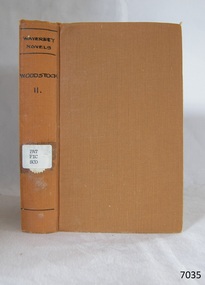
Book - Fictional stories, Sir Walter Scott, Waverley Novels Vol 39 Woodstock or The Cavalier, 1838
... Scott's enduring legacy is his vivid narratives on tradition versus change that still remain relevant, his stories and poetry impacted Victorian literature, architecture inspiring the public in a medieval revival at the time, and global views of Scotland. Goethe the German poet, playwright and novelist hailed Scott's Waverley novels as among the world's best literary works. ...The subject volume of Waverley Novels Vol 39 published by Fisher Son & Co (1838) is part of a collected 48 volume set of Sir Walter Scott's works, containing various stories. Vol 39 in the 1836 Fisher edition reprints later entries from the fourth series, as these stories originally appeared in Scott's Magnum Opus 48 volume editions, the first from 1816. With the influential “Magnum Opus” editions from 1829–1833 by Robert Cadell, serving as the basis for later reprinted published sets like Fisher's. Scott's "Woodstock," or “The Cavalier” is a historical novel originally published in 1826 as the 22nd in the Waverley series. Set in 1651 at Woodstock Manor during the English Commonwealth after the Battle of Worcester, it dramatises Charles II's daring escape from Cromwell's forces. The story is about a royalist Sir Henry Lee and his daughter Alice, they lose their Woodstock home to Colonel Markham Everard, a sympathetic round head relative, who seeks protection for them from Cromwell, who suspects the site as a hideout for fugitive Charles II (disguised as a royal page "Louis Kerneguy"). Charles as the page courts Alice, sparking jealousy with Everard, amid duels, haunting in secret passages, and Cromwell's siege. Charles escapes with help from allies like Wildrake and Albert Lee, who impersonates him. The key themes to this novel are that it contrasts Cavalier loyalty and Puritan zeal, loyalty across divides, romance amid politics, and supernatural folklore masking intrigue. In the Fisher Son & Co edition, it reprints this story from Scott's revised collected original work in 1826.Waverley Novels Vol 39 Woodstock or the Cavalier, Light brown hardcover lettering in black text. Author: Sir Walter Scott Publisher: Fisher Son & Co Date: 1838fictionThe subject volume of Waverley Novels Vol 39 published by Fisher Son & Co (1838) is part of a collected 48 volume set of Sir Walter Scott's works, containing various stories. Vol 39 in the 1836 Fisher edition reprints later entries from the fourth series, as these stories originally appeared in Scott's Magnum Opus 48 volume editions, the first from 1816. With the influential “Magnum Opus” editions from 1829–1833 by Robert Cadell, serving as the basis for later reprinted published sets like Fisher's. Scott's "Woodstock," or “The Cavalier” is a historical novel originally published in 1826 as the 22nd in the Waverley series. Set in 1651 at Woodstock Manor during the English Commonwealth after the Battle of Worcester, it dramatises Charles II's daring escape from Cromwell's forces. The story is about a royalist Sir Henry Lee and his daughter Alice, they lose their Woodstock home to Colonel Markham Everard, a sympathetic round head relative, who seeks protection for them from Cromwell, who suspects the site as a hideout for fugitive Charles II (disguised as a royal page "Louis Kerneguy"). Charles as the page courts Alice, sparking jealousy with Everard, amid duels, haunting in secret passages, and Cromwell's siege. Charles escapes with help from allies like Wildrake and Albert Lee, who impersonates him. The key themes to this novel are that it contrasts Cavalier loyalty and Puritan zeal, loyalty across divides, romance amid politics, and supernatural folklore masking intrigue. In the Fisher Son & Co edition, it reprints this story from Scott's revised collected original work in 1826. warrnambool, shipwrecked-coast, flagstaff-hill, flagstaff-hill-maritime-museum, maritime-museum, shipwreck-coast, flagstaff-hill-maritime-village, shipwrecked-artefact, book, waverley novels vol 46 tales of my landlord, sir walter scott, pattison collection, warrnambool library, warrnambool mechanics’ institute, ralph eric pattison, corangamite regional library service, warrnambool city librarian, mechanics’ institute library, victorian library board, warrnambool books and records, warrnambool children’s library -
 Flagstaff Hill Maritime Museum and Village
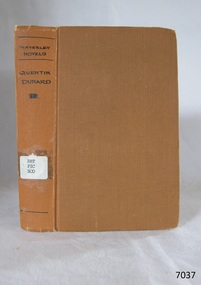
Book - Fictional stories, Sir Walter Scott, Waverley Novels Vol 40 Woodstock or the Cavalier-2, 1838
... Scott's enduring legacy is his vivid narratives on tradition versus change that still remain relevant, his stories and poetry impacted Victorian literature, architecture inspiring the public in a medieval revival at the time, and global views of Scotland. Goethe the German poet, playwright and novelist hailed Scott's Waverley novels as among the world's best literary works. ...The subject volume of Waverley Novels Vol 40 published by Fisher Son & Co (1838) is part of a collected 48 volume set of Sir Walter Scott's works, containing various stories. Vol 40 in the 1838 Fisher edition reprints later entries from the fourth series, as these stories originally appeared in Scott's Magnum Opus 48 volume editions, the first from 1816. With the influential “Magnum Opus” editions from 1829–1833 by Robert Cadell, serving as the basis for later reprinted published sets like Fisher's. Scott's "Woodstock," or “The Cavalier” is a historical novel originally published in 1826 as the 22nd in the Waverley series. Volume 40 continues Woodstock, or The Cavalier from Vol 39 in the Fisher Son & Co edition. It picks up the 1651 story line at Woodstock Manor, where disguised Charles II hides amid escalating tension with Cromwell's forces. The plot continues with Cromwell storming the lodge after suspecting Charles's presence disguised as "Louis Kerneguy", arresting Colonel Everard and searching secret passages haunted by "ghosts". Albert Lee impersonates the king to aid his escape, while Alice guides Charles away; dramatic confrontations ensue with duels, revelations, and Cromwell's rage continuing. As in volume 39 the tale resolves family divisions, loyalty, and supernatural folklore masking political intrigue during the Commonwealth era. This split-volume format is standard in collected 1830 s editions like Fisher's, reprinting of Scott's 1826 original with revisions.Waverley Novels Vol 40 Woodstock or the Cavalier-2, Light brown hardcover lettering in black text. Author: Sir Walter Scott Publisher: Fisher Son & Co Date: 1838fictionThe subject volume of Waverley Novels Vol 40 published by Fisher Son & Co (1838) is part of a collected 48 volume set of Sir Walter Scott's works, containing various stories. Vol 40 in the 1838 Fisher edition reprints later entries from the fourth series, as these stories originally appeared in Scott's Magnum Opus 48 volume editions, the first from 1816. With the influential “Magnum Opus” editions from 1829–1833 by Robert Cadell, serving as the basis for later reprinted published sets like Fisher's. Scott's "Woodstock," or “The Cavalier” is a historical novel originally published in 1826 as the 22nd in the Waverley series. Volume 40 continues Woodstock, or The Cavalier from Vol 39 in the Fisher Son & Co edition. It picks up the 1651 story line at Woodstock Manor, where disguised Charles II hides amid escalating tension with Cromwell's forces. The plot continues with Cromwell storming the lodge after suspecting Charles's presence disguised as "Louis Kerneguy", arresting Colonel Everard and searching secret passages haunted by "ghosts". Albert Lee impersonates the king to aid his escape, while Alice guides Charles away; dramatic confrontations ensue with duels, revelations, and Cromwell's rage continuing. As in volume 39 the tale resolves family divisions, loyalty, and supernatural folklore masking political intrigue during the Commonwealth era. This split-volume format is standard in collected 1830 s editions like Fisher's, reprinting of Scott's 1826 original with revisions.warrnambool, shipwrecked-coast, flagstaff-hill, flagstaff-hill-maritime-museum, maritime-museum, shipwreck-coast, flagstaff-hill-maritime-village, shipwrecked-artefact, book, waverley novels vol 46 tales of my landlord, sir walter scott, pattison collection, warrnambool library, warrnambool mechanics’ institute, ralph eric pattison, corangamite regional library service, warrnambool city librarian, mechanics’ institute library, victorian library board, warrnambool books and records, warrnambool children’s library -
 Flagstaff Hill Maritime Museum and Village
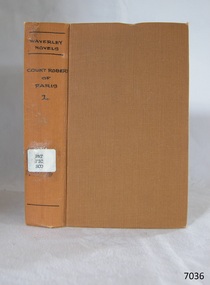
Book - Fictional stories, Sir Walter Scott, Waverley Novels Quentin Durward Vol 32, 1838
... Scott's enduring legacy is his vivid narratives on tradition versus change that still remain relevant, his stories and poetry impacted Victorian literature, architecture inspiring the public in a medieval revival at the time, and global views of Scotland. Goethe the German poet, playwright and novelist hailed Scott's Waverley novels as among the world's best literary works. ...The subject volume of Waverley Novels Vol 32 published by Fisher Son & Co (1838) is part of a collected 48 volume set of Sir Walter Scott's works, containing various stories. Vol 32 in the 1836 Fisher edition reprints later entries from the fourth series, as these stories originally appeared in Scott's Magnum Opus 48 volume editions, the first from 1816. With the influential “Magnum Opus” editions from 1829–1833 by Robert Cadell, serving as the basis for later reprinted published sets like Fisher's. Quentin Durward, often listed as volume 32 in some Waverley Novels editions, is a historical novel set in 15th century France and Burgundy. Its story follows a young Scottish archer who gets drawn into the power struggle between Louis XI and Charles the Bold, while also escorting the Burgundian heiress Isabelle de Croye and eventually winning her hand. The story centres around Quentin arriving in France seeking service, he joins Louis XI’s Scottish Guard, and is pulled into court intrigue, kidnapping plots, and the violent conflict around Liege. The novel’s main historical drama is Louis XI using covert politics to weaken Burgundy, while Quentin’s personal plot tracks loyalty, danger, and romance.Waverley Novels Vol 32 Quentin Durward, Light brown hardcover lettering in black text. Author: Sir Walter Scott Publisher: Fisher Son & Co Date: 1838fictionThe subject volume of Waverley Novels Vol 32 published by Fisher Son & Co (1838) is part of a collected 48 volume set of Sir Walter Scott's works, containing various stories. Vol 32 in the 1836 Fisher edition reprints later entries from the fourth series, as these stories originally appeared in Scott's Magnum Opus 48 volume editions, the first from 1816. With the influential “Magnum Opus” editions from 1829–1833 by Robert Cadell, serving as the basis for later reprinted published sets like Fisher's. Quentin Durward, often listed as volume 32 in some Waverley Novels editions, is a historical novel set in 15th century France and Burgundy. Its story follows a young Scottish archer who gets drawn into the power struggle between Louis XI and Charles the Bold, while also escorting the Burgundian heiress Isabelle de Croye and eventually winning her hand. The story centres around Quentin arriving in France seeking service, he joins Louis XI’s Scottish Guard, and is pulled into court intrigue, kidnapping plots, and the violent conflict around Liege. The novel’s main historical drama is Louis XI using covert politics to weaken Burgundy, while Quentin’s personal plot tracks loyalty, danger, and romance.warrnambool, shipwrecked-coast, flagstaff-hill, flagstaff-hill-maritime-museum, maritime-museum, shipwreck-coast, flagstaff-hill-maritime-village, shipwrecked-artefact, book, waverley novels vol 46 tales of my landlord, sir walter scott, pattison collection, warrnambool library, warrnambool mechanics’ institute, ralph eric pattison, corangamite regional library service, warrnambool city librarian, mechanics’ institute library, victorian library board, warrnambool books and records, warrnambool children’s library, quentin durward, quinten durward -
 Flagstaff Hill Maritime Museum and Village
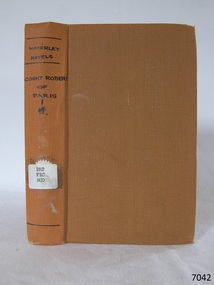
Book - Fictional stories, Sir Walter Scott, Waverley Novels Vol 47 Count Robert of Paris-2, 1838
... Scott's enduring legacy is his vivid narratives on tradition versus change that still remain relevant, his stories and poetry impacted Victorian literature, architecture inspiring the public in a medieval revival at the time, and global views of Scotland. Goethe the German poet, playwright and novelist hailed Scott's Waverley novels as among the world's best literary works. ...The subject volume of the Waverley Novels Vol 47 published by Fisher Son & Co (1838) is part of a collected 48 volume set of Sir Walter Scott's works, containing various stories. Vol 47 in the 1838 Fisher edition reprints later entries from the fourth series, as these stories originally appeared in Scott's Magnum Opus 48 volume editions, the first from 1816. With the influential “Magnum Opus” editions from 1829–1833 by Robert Cadell, serving as the basis for later reprinted published sets like Fisher's. Volume 47 "Count Robert of Paris-2" completes the novel in the Fisher Son & Co edition. It continues the 1097 Constantinople intrigue from Vol 47's first part (or prior volume), resolving crusader-Byzantine clashes. The plot concludes with Count Robert freed by Hereward, fights in Brenhilda's duel against Nicephorus. Hereward reunites with Bertha (Brenhilda's attendant), regains English lands via Robert's influence, and joins him in Palestine as a vassal; crusaders depart after Alexius out maneuvers various plots. Volume 47 often splits Count Robert of Paris Part two before starting Castle Dangerous part one, matching 1830 s collected formats like Fisher's revisions of Scott's 1832 original.Blending chivalry, conspiracy, and cultural satire.Waverley Novels Vol 47 Count Robert of Paris- 2, Light brown hardcover lettering in black text. Author: Sir Walter Scott Publisher: Fisher Son & Co Date: 1838fictionThe subject volume of the Waverley Novels Vol 47 published by Fisher Son & Co (1838) is part of a collected 48 volume set of Sir Walter Scott's works, containing various stories. Vol 47 in the 1838 Fisher edition reprints later entries from the fourth series, as these stories originally appeared in Scott's Magnum Opus 48 volume editions, the first from 1816. With the influential “Magnum Opus” editions from 1829–1833 by Robert Cadell, serving as the basis for later reprinted published sets like Fisher's. Volume 47 "Count Robert of Paris-2" completes the novel in the Fisher Son & Co edition. It continues the 1097 Constantinople intrigue from Vol 47's first part (or prior volume), resolving crusader-Byzantine clashes. The plot concludes with Count Robert freed by Hereward, fights in Brenhilda's duel against Nicephorus. Hereward reunites with Bertha (Brenhilda's attendant), regains English lands via Robert's influence, and joins him in Palestine as a vassal; crusaders depart after Alexius out maneuvers various plots. Volume 47 often splits Count Robert of Paris Part two before starting Castle Dangerous part one, matching 1830 s collected formats like Fisher's revisions of Scott's 1832 original.Blending chivalry, conspiracy, and cultural satire.warrnambool, shipwrecked-coast, flagstaff-hill, flagstaff-hill-maritime-museum, maritime-museum, shipwreck-coast, flagstaff-hill-maritime-village, shipwrecked-artefact, book, waverley novels vol 46 tales of my landlord, sir walter scott, pattison collection, warrnambool library, warrnambool mechanics’ institute, ralph eric pattison, corangamite regional library service, warrnambool city librarian, mechanics’ institute library, victorian library board, warrnambool books and records, warrnambool children’s library -
 Flagstaff Hill Maritime Museum and Village
Book - Fictional stories, Sir Walter Scott, Waverley Novels Vol 46-1 Tales of My Landlord, 1838
... Scott's enduring legacy is his vivid narratives on tradition versus change that still remain relevant, his stories and poetry impacted Victorian literature, architecture inspiring the public in a medieval revival at the time, and global views of Scotland. Goethe the German poet, playwright and novelist hailed Scott's Waverley novels as among the world's best literary works. ...The subject volume “Waverley Novels Vol 46” published by Fisher Son & Co (1838) is part of a collected edition of Sir Walter Scott's works, containing stories from the "Tales of My Landlord" series. "Tales of My Landlord" forms a key subset of Scott's Waverley Novels, presented as fictional tales gathered by characters like Peter Pattieson from the landlord of the Wallace “Inn at Gandercleugh”. The series spans multiple books across four sub-series, including “The Black Dwarf” (1707 setting), “Old Mortality” (1679–1689), “The Heart of Midlothian” (1736), “The Bride of Lammermoor” (1709–1711), “A Legend of Montrose” (1644–1645), “Count Robert of Paris” (1097), and “Castle Dangerous” (1307). Vol 46 in the 1838 Fisher edition reprints later entries like “Count Robert of Paris” or “Castle Dangerous” from the fourth series, as these stories originally appeared in Scott's Magnum Opus collected volume editions, the first from 1816. With the influential 48-volume “Magnum Opus” edition from 1829–1833 by Robert Cadell, serving as the basis for later collected published sets like Fisher's.Waverley Novels Vol 46 Tales of My Landlord, Light brown hardcover lettering in black text. Author: Sir Walter Scott Publisher: Fisher Son & Co Date: 1838fictionThe subject volume “Waverley Novels Vol 46” published by Fisher Son & Co (1838) is part of a collected edition of Sir Walter Scott's works, containing stories from the "Tales of My Landlord" series. "Tales of My Landlord" forms a key subset of Scott's Waverley Novels, presented as fictional tales gathered by characters like Peter Pattieson from the landlord of the Wallace “Inn at Gandercleugh”. The series spans multiple books across four sub-series, including “The Black Dwarf” (1707 setting), “Old Mortality” (1679–1689), “The Heart of Midlothian” (1736), “The Bride of Lammermoor” (1709–1711), “A Legend of Montrose” (1644–1645), “Count Robert of Paris” (1097), and “Castle Dangerous” (1307). Vol 46 in the 1838 Fisher edition reprints later entries like “Count Robert of Paris” or “Castle Dangerous” from the fourth series, as these stories originally appeared in Scott's Magnum Opus collected volume editions, the first from 1816. With the influential 48-volume “Magnum Opus” edition from 1829–1833 by Robert Cadell, serving as the basis for later collected published sets like Fisher's. warrnambool, shipwrecked-coast, flagstaff-hill, flagstaff-hill-maritime-museum, maritime-museum, shipwreck-coast, flagstaff-hill-maritime-village, shipwrecked-artefact, book, waverley novels vol 46 tales of my landlord, sir walter scott, pattison collection, warrnambool library, warrnambool mechanics’ institute, ralph eric pattison, corangamite regional library service, warrnambool city librarian, mechanics’ institute library, victorian library board, warrnambool books and records, warrnambool children’s library -
 Flagstaff Hill Maritime Museum and Village
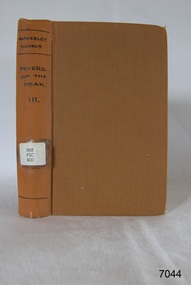
Book - Fictional stories, Sir Walter Scott, Waverley Novels Peveril of the Peak- 3 Vol 30, 1838
... Scott's enduring legacy is his vivid narratives on tradition versus change that still remain relevant, his stories and poetry impacted Victorian literature, architecture inspiring the public in a medieval revival at the time, and global views of Scotland. Goethe the German poet, playwright and novelist hailed Scott's Waverley novels as among the world's best literary works. ...The subject volume “Waverley Novels Vol 30” published by Fisher Son & Co (1838) is part of a collected edition of Sir Walter Scott's works, containing stories from the "Tales of My Landlord" series. "Tales of My Landlord" forms a key subset of Scott's Waverley Novels, presented as fictional tales gathered by characters like Peter Pattieson from the landlord of the Wallace “Inn at Gandercleugh”. The series spans multiple books across four sub-series, including “The Black Dwarf” (1707 setting), “Old Mortality” (1679–1689), “The Heart of Midlothian” (1736), “The Bride of Lammermoor” (1709–1711), “A Legend of Montrose” (1644–1645), “Count Robert of Paris” (1097), and “Castle Dangerous” (1307). Vol 46 in the 1838 Fisher edition reprints later entries like “Count Robert of Paris” or “Castle Dangerous” from the fourth series, as these stories originally appeared in Scott's Magnum Opus collected volume editions, the first from 1816. With the influential 48-volume “Magnum Opus” edition from 1829–1833 by Robert Cadell, serving as the basis for later collected published sets like Fisher's. Peveril of the Peak is Walter Scott's longest novel, published in 1823 and set during the late 17th century amid the Popish plot hysteria under Charles II. It follows young Cavalier Julian Peveril's forbidden romance with Alice Bridgenorth a Puritan's daughter. The story covers political intrigue, family feuds, and conspiracies drawing the characters into events spanning Derbyshire's Peak District, the Isle of Man, and London. The story continues on the Peveril family's royalist loyalties clashing with the Bridgenorths' Puritan resentment, fuelled by past Civil War grievances like the execution of William Christian. Julian and Alice's love is tested when Julian's parents face Popish Plot accusations with subplots involving a scheming dwarf, the Countess of Derby, and court figures like the Duke of Buckingham. It resolves with royal intervention, exposing intrigues and eventually uniting the lovers.Waverley Novels Peveril of the Peak- 3 Vol 30, Light brown hardcover lettering in black text. Author: Sir Walter Scott Publisher: Fisher Son & Co Date: 1838fictionThe subject volume “Waverley Novels Vol 30” published by Fisher Son & Co (1838) is part of a collected edition of Sir Walter Scott's works, containing stories from the "Tales of My Landlord" series. "Tales of My Landlord" forms a key subset of Scott's Waverley Novels, presented as fictional tales gathered by characters like Peter Pattieson from the landlord of the Wallace “Inn at Gandercleugh”. The series spans multiple books across four sub-series, including “The Black Dwarf” (1707 setting), “Old Mortality” (1679–1689), “The Heart of Midlothian” (1736), “The Bride of Lammermoor” (1709–1711), “A Legend of Montrose” (1644–1645), “Count Robert of Paris” (1097), and “Castle Dangerous” (1307). Vol 46 in the 1838 Fisher edition reprints later entries like “Count Robert of Paris” or “Castle Dangerous” from the fourth series, as these stories originally appeared in Scott's Magnum Opus collected volume editions, the first from 1816. With the influential 48-volume “Magnum Opus” edition from 1829–1833 by Robert Cadell, serving as the basis for later collected published sets like Fisher's. Peveril of the Peak is Walter Scott's longest novel, published in 1823 and set during the late 17th century amid the Popish plot hysteria under Charles II. It follows young Cavalier Julian Peveril's forbidden romance with Alice Bridgenorth a Puritan's daughter. The story covers political intrigue, family feuds, and conspiracies drawing the characters into events spanning Derbyshire's Peak District, the Isle of Man, and London. The story continues on the Peveril family's royalist loyalties clashing with the Bridgenorths' Puritan resentment, fuelled by past Civil War grievances like the execution of William Christian. Julian and Alice's love is tested when Julian's parents face Popish Plot accusations with subplots involving a scheming dwarf, the Countess of Derby, and court figures like the Duke of Buckingham. It resolves with royal intervention, exposing intrigues and eventually uniting the lovers. warrnambool, shipwrecked-coast, flagstaff-hill, flagstaff-hill-maritime-museum, maritime-museum, shipwreck-coast, flagstaff-hill-maritime-village, shipwrecked-artefact, book, waverley novels vol 46 tales of my landlord, sir walter scott, pattison collection, warrnambool library, warrnambool mechanics’ institute, ralph eric pattison, corangamite regional library service, warrnambool city librarian, mechanics’ institute library, victorian library board, warrnambool books and records, warrnambool children’s library -
 Flagstaff Hill Maritime Museum and Village
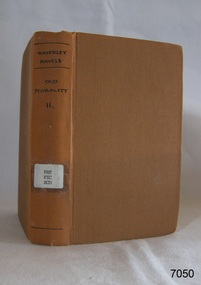
Book - Fictional stories, Sir Walter Scott, Waverley Novels Tales of My Landlord-5 Vol 13, 1836
... Scott's enduring legacy is his vivid narratives on tradition versus change that still remain relevant, his stories and poetry impacted Victorian literature, architecture inspiring the public in a medieval revival at the time, and global views of Scotland. Goethe the German poet, playwright and novelist hailed Scott's Waverley novels as among the world's best literary works. ...The subject volume “Waverley Novels Vol 13” published by Fisher Son & Co (1836) is part of a collected edition of Sir Walter Scott's works, containing stories from the "Tales of My Landlord" series. "Tales of My Landlord" forms a key subset of Scott's Waverley Novels, presented as fictional tales gathered by characters like Peter Pattieson from the landlord of the Wallace “Inn at Gandercleugh”. The series spans multiple books across four sub-series, including “The Black Dwarf” (1707 setting), “Old Mortality” (1679–1689), “The Heart of Midlothian” (1736), “The Bride of Lammermoor” (1709–1711), “A Legend of Montrose” (1644–1645), “Count Robert of Paris” (1097), and “Castle Dangerous” (1307). Vol 46 in the 1838 Fisher edition reprints later entries like “Count Robert of Paris” or “Castle Dangerous” from the fourth series, as these stories originally appeared in Scott's Magnum Opus collected volume editions, the first from 1816. With the influential 48-volume “Magnum Opus” edition from 1829–1833 by Robert Cadell, serving as the basis for later collected published sets like Fisher's. "Tales of My Landlord" set five of vol 13 is part of a series of historical novels by Sir Walter Scott, published in four series between 1816 and 1832 as part of his Waverley Novels. They are framed as stories collected by a fictional landlord at the Wallace Inn in Gandercleugh, edited by "Jedediah Cleishbotham." The series includes major works like The Black Dwarf and Old Mortality (1st series, 1816), The Heart of Midlothian (2nd series, 1818), The Bride of Lammermoor and A Legend of Montrose (3rd series, 1819), and Count Robert of Paris with Castle Dangerous (4th series, 1832). Themes of this volume cover Scottish Lowland life, justice, and Presbyterian fervour post 1736. Alternatively, in 3rd series tales like “The Bride of Lammermoor”, advances the Gothic romance of Edgar Ravenswood and Lucy Ashton. Slowly building towards tragedy over family feuds and inheritance.Waverley Novels Vol 46 Tales of My Landlord, Light brown hardcover lettering in black text. Author: Sir Walter Scott Publisher: Fisher Son & Co Date: 1836fictionThe subject volume “Waverley Novels Vol 13” published by Fisher Son & Co (1836) is part of a collected edition of Sir Walter Scott's works, containing stories from the "Tales of My Landlord" series. "Tales of My Landlord" forms a key subset of Scott's Waverley Novels, presented as fictional tales gathered by characters like Peter Pattieson from the landlord of the Wallace “Inn at Gandercleugh”. The series spans multiple books across four sub-series, including “The Black Dwarf” (1707 setting), “Old Mortality” (1679–1689), “The Heart of Midlothian” (1736), “The Bride of Lammermoor” (1709–1711), “A Legend of Montrose” (1644–1645), “Count Robert of Paris” (1097), and “Castle Dangerous” (1307). Vol 46 in the 1838 Fisher edition reprints later entries like “Count Robert of Paris” or “Castle Dangerous” from the fourth series, as these stories originally appeared in Scott's Magnum Opus collected volume editions, the first from 1816. With the influential 48-volume “Magnum Opus” edition from 1829–1833 by Robert Cadell, serving as the basis for later collected published sets like Fisher's. "Tales of My Landlord" set five of vol 13 is part of a series of historical novels by Sir Walter Scott, published in four series between 1816 and 1832 as part of his Waverley Novels. They are framed as stories collected by a fictional landlord at the Wallace Inn in Gandercleugh, edited by "Jedediah Cleishbotham." The series includes major works like The Black Dwarf and Old Mortality (1st series, 1816), The Heart of Midlothian (2nd series, 1818), The Bride of Lammermoor and A Legend of Montrose (3rd series, 1819), and Count Robert of Paris with Castle Dangerous (4th series, 1832). Themes of this volume cover Scottish Lowland life, justice, and Presbyterian fervour post 1736. Alternatively, in 3rd series tales like “The Bride of Lammermoor”, advances the Gothic romance of Edgar Ravenswood and Lucy Ashton. Slowly building towards tragedy over family feuds and inheritance.warrnambool, shipwrecked-coast, flagstaff-hill, flagstaff-hill-maritime-museum, maritime-museum, shipwreck-coast, flagstaff-hill-maritime-village, shipwrecked-artefact, book, waverley novels vol 46 tales of my landlord, sir walter scott, pattison collection, warrnambool library, warrnambool mechanics’ institute, ralph eric pattison, corangamite regional library service, warrnambool city librarian, mechanics’ institute library, victorian library board, warrnambool books and records, warrnambool children’s library -
 Flagstaff Hill Maritime Museum and Village
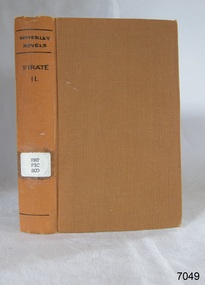
Book - Fictional stories, Sir Walter Scott, Waverley Novels The Pirate- 2 Vol 25, 1838
... Scott's enduring legacy is his vivid narratives on tradition versus change that still remain relevant, his stories and poetry impacted Victorian literature, architecture inspiring the public in a medieval revival at the time, and global views of Scotland. Goethe the German poet, playwright and novelist hailed Scott's Waverley novels as among the world's best literary works. ...The subject volume “Waverley Novels Vol 46” published by Fisher Son & Co (1838) is part of a collected edition of Sir Walter Scott's works, containing stories from the "Tales of My Landlord" series. "Tales of My Landlord" forms a key subset of Scott's Waverley Novels, presented as fictional tales gathered by characters like Peter Pattieson from the landlord of the Wallace “Inn at Gandercleugh”. The series spans multiple books across four sub-series, including “The Black Dwarf” (1707 setting), “Old Mortality” (1679–1689), “The Heart of Midlothian” (1736), “The Bride of Lammermoor” (1709–1711), “A Legend of Montrose” (1644–1645), “Count Robert of Paris” (1097), and “Castle Dangerous” (1307). Vol 25 in the 1838 Fisher edition reprints later entries like “Count Robert of Paris” or “Castle Dangerous” from the fourth series, as these stories originally appeared in Scott's Magnum Opus collected volume editions, the first from 1816. With the influential 48-volume “Magnum Opus” edition from 1829–1833 by Robert Cadell, serving as the basis for later collected published sets like Fisher's. The Pirate is Walter Scott’s historical novel set in 17th-century Shetland and Orkney, centred on a shipwreck, piracy, family conflict, and rival love interests. It’s typically presented as a three set novel. In this edition, volume 25 is the second part of “The Pirate”, and the work continues across the surrounding other two volumes in the set. The story follows the Troil family and a shipwrecked captain Cleveland along with Mordaunt, whose relationships with Minna and Brenda Troil drive much of the plot. As Cleveland’s pirate identity is revealed, the novel shifts into rescue, capture, and reconciliation, ending with the pirates subdued and the family ties resettled. The novel itself is commonly divided into three volumes or parts in standard editions, and the Waverley Novels collected edition spreads it across multiple numbered volumes.Waverley Novels The Pirate- 2 Vol 25, Light brown hardcover lettering in black text. Author: Sir Walter Scott Publisher: Fisher Son & Co Date: 1838fictionThe subject volume “Waverley Novels Vol 46” published by Fisher Son & Co (1838) is part of a collected edition of Sir Walter Scott's works, containing stories from the "Tales of My Landlord" series. "Tales of My Landlord" forms a key subset of Scott's Waverley Novels, presented as fictional tales gathered by characters like Peter Pattieson from the landlord of the Wallace “Inn at Gandercleugh”. The series spans multiple books across four sub-series, including “The Black Dwarf” (1707 setting), “Old Mortality” (1679–1689), “The Heart of Midlothian” (1736), “The Bride of Lammermoor” (1709–1711), “A Legend of Montrose” (1644–1645), “Count Robert of Paris” (1097), and “Castle Dangerous” (1307). Vol 25 in the 1838 Fisher edition reprints later entries like “Count Robert of Paris” or “Castle Dangerous” from the fourth series, as these stories originally appeared in Scott's Magnum Opus collected volume editions, the first from 1816. With the influential 48-volume “Magnum Opus” edition from 1829–1833 by Robert Cadell, serving as the basis for later collected published sets like Fisher's. The Pirate is Walter Scott’s historical novel set in 17th-century Shetland and Orkney, centred on a shipwreck, piracy, family conflict, and rival love interests. It’s typically presented as a three set novel. In this edition, volume 25 is the second part of “The Pirate”, and the work continues across the surrounding other two volumes in the set. The story follows the Troil family and a shipwrecked captain Cleveland along with Mordaunt, whose relationships with Minna and Brenda Troil drive much of the plot. As Cleveland’s pirate identity is revealed, the novel shifts into rescue, capture, and reconciliation, ending with the pirates subdued and the family ties resettled. The novel itself is commonly divided into three volumes or parts in standard editions, and the Waverley Novels collected edition spreads it across multiple numbered volumes.warrnambool, shipwrecked-coast, flagstaff-hill, flagstaff-hill-maritime-museum, maritime-museum, shipwreck-coast, flagstaff-hill-maritime-village, shipwrecked-artefact, book, waverley novels vol 46 tales of my landlord, sir walter scott, pattison collection, warrnambool library, warrnambool mechanics’ institute, ralph eric pattison, corangamite regional library service, warrnambool city librarian, mechanics’ institute library, victorian library board, warrnambool books and records, warrnambool children’s library -
 Flagstaff Hill Maritime Museum and Village
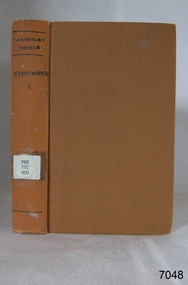
Book - Fictional stories, Sir Walter Scott, Waverley Novels Kenilworth- 1 Vol 22, 1837
... Scott's enduring legacy is his vivid narratives on tradition versus change that still remain relevant, his stories and poetry impacted Victorian literature, architecture inspiring the public in a medieval revival at the time, and global views of Scotland. Goethe the German poet, playwright and novelist hailed Scott's Waverley novels as among the world's best literary works. ...The subject volume “Waverley Novels Kenilworth-1 Vol 22” published by Fisher Son & Co (1837) is part of a collected edition of Sir Walter Scott's works, containing stories from the "Tales of My Landlord" series. "Tales of My Landlord" forms a key subset of Scott's Waverley Novels, presented as fictional tales gathered by characters like Peter Pattieson from the landlord of the Wallace “Inn at Gandercleugh”. The series spans multiple books across four sub-series, including “The Black Dwarf” (1707 setting), “Old Mortality” (1679–1689), “The Heart of Midlothian” (1736), “The Bride of Lammermoor” (1709–1711), “A Legend of Montrose” (1644–1645), “Count Robert of Paris” (1097), and “Castle Dangerous” (1307). Vol 25 in the 1837 Fisher edition reprints later entries like “Count Robert of Paris” or “Castle Dangerous” from the fourth series, as these stories originally appeared in Scott's Magnum Opus collected volume editions, the first from 1816. With the influential 48-volume “Magnum Opus” edition from 1829–1833 by Robert Cadell, serving as the basis for later collected published sets like Fisher's. Kenilworth is Sir Walter Scott’s 1821 historical novel about the secret marriage of Amy Robsart and Robert Dudley, Earl of Leicester, set against Queen Elizabeth I’s court and the 1575 festivities at Kenilworth Castle. It mixes political ambition, romance, deception, and tragedy, with the plot turning on Leicester’s desire for power and the fatal consequences of hiding his marriage. The novel follows Amy Robsart, of Leicester, and the scheming Richard Varney, while also bringing in Queen Elizabeth and other figures from Elizabethan England. Its tension comes from the clash between private love and public ambition, and it ends in tragedy rather than reconciliation.Waverley Novels Vol 22 Kenilworth- 1, Light brown hardcover lettering in black text. Author: Sir Walter Scott Publisher: Fisher Son & Co Date: 1837fictionThe subject volume “Waverley Novels Kenilworth-1 Vol 22” published by Fisher Son & Co (1837) is part of a collected edition of Sir Walter Scott's works, containing stories from the "Tales of My Landlord" series. "Tales of My Landlord" forms a key subset of Scott's Waverley Novels, presented as fictional tales gathered by characters like Peter Pattieson from the landlord of the Wallace “Inn at Gandercleugh”. The series spans multiple books across four sub-series, including “The Black Dwarf” (1707 setting), “Old Mortality” (1679–1689), “The Heart of Midlothian” (1736), “The Bride of Lammermoor” (1709–1711), “A Legend of Montrose” (1644–1645), “Count Robert of Paris” (1097), and “Castle Dangerous” (1307). Vol 25 in the 1837 Fisher edition reprints later entries like “Count Robert of Paris” or “Castle Dangerous” from the fourth series, as these stories originally appeared in Scott's Magnum Opus collected volume editions, the first from 1816. With the influential 48-volume “Magnum Opus” edition from 1829–1833 by Robert Cadell, serving as the basis for later collected published sets like Fisher's. Kenilworth is Sir Walter Scott’s 1821 historical novel about the secret marriage of Amy Robsart and Robert Dudley, Earl of Leicester, set against Queen Elizabeth I’s court and the 1575 festivities at Kenilworth Castle. It mixes political ambition, romance, deception, and tragedy, with the plot turning on Leicester’s desire for power and the fatal consequences of hiding his marriage. The novel follows Amy Robsart, of Leicester, and the scheming Richard Varney, while also bringing in Queen Elizabeth and other figures from Elizabethan England. Its tension comes from the clash between private love and public ambition, and it ends in tragedy rather than reconciliation.warrnambool, shipwrecked-coast, flagstaff-hill, flagstaff-hill-maritime-museum, maritime-museum, shipwreck-coast, flagstaff-hill-maritime-village, shipwrecked-artefact, book, waverley novels vol 46 tales of my landlord, sir walter scott, pattison collection, warrnambool library, warrnambool mechanics’ institute, ralph eric pattison, corangamite regional library service, warrnambool city librarian, mechanics’ institute library, victorian library board, warrnambool books and records, warrnambool children’s library -
 Flagstaff Hill Maritime Museum and Village
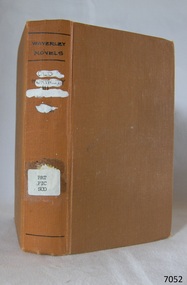
Book - Fictional stories, Sir Walter Scott, Waverley Novels Tales of my Landlord-2 Vol 10, 1836
... Scott's enduring legacy is his vivid narratives on tradition versus change that still remain relevant, his stories and poetry impacted Victorian literature, architecture inspiring the public in a medieval revival at the time, and global views of Scotland. Goethe the German poet, playwright and novelist hailed Scott's Waverley novels as among the world's best literary works. ...The subject volume “Waverley Novels Vol 10” published by Fisher Son & Co (1838) is part of a collected edition of Sir Walter Scott's works, containing stories from the "Tales of My Landlord" series. "Tales of My Landlord" forms a key subset of Scott's Waverley Novels, presented as fictional tales gathered by characters like Peter Pattieson from the landlord of the Wallace “Inn at Gandercleugh”. The series spans multiple books across four sub-series, including “The Black Dwarf” (1707 setting), “Old Mortality” (1679–1689), “The Heart of Midlothian” (1736), “The Bride of Lammermoor” (1709–1711), “A Legend of Montrose” (1644–1645), “Count Robert of Paris” (1097), and “Castle Dangerous” (1307). Vol 46 in the 1838 Fisher edition reprints later entries like “Count Robert of Paris” or “Castle Dangerous” from the fourth series, as these stories originally appeared in Scott's Magnum Opus collected volume editions, the first from 1816. With the influential 48-volume “Magnum Opus” edition from 1829–1833 by Robert Cadell, serving as the basis for later collected published sets like Fisher's. In the “Second Series” is the one that includes The Heart of MidLothian, a major Scott novel set around the 1736 Porteous riots in Edinburgh. The story was presented as a collection of stories gathered from a fictional landlord, edited by the imagined figures Peter Pattieson and Jedediah Cleishbotham. In the second series, the central novel, “The Heart of MidLothian, follows crime, justice, and moral conflict in 18th-century Scotland, especially the case of Effie Deans the fictional character in the novel. She is Jeanie Dean’s younger sister presented as pretty, impulsive, and more socially vulnerable than her sister Jeanie. In the novel, she is accused of killing her illegitimate child, though the truth is more complicated, and Jeanie travels to London to seek a pardon for her. Therefore her story centres on an out-of-wedlock pregnancy, a charge of child murder, and the efforts made to save her life, as well as the social consequences of her trial.Waverley Novels Tales of my Landlord Set-2 Vol 10, Light brown hardcover lettering in black text. Author: Sir Walter Scott Publisher: Fisher Son & Co Date: 1836fictionThe subject volume “Waverley Novels Vol 10” published by Fisher Son & Co (1838) is part of a collected edition of Sir Walter Scott's works, containing stories from the "Tales of My Landlord" series. "Tales of My Landlord" forms a key subset of Scott's Waverley Novels, presented as fictional tales gathered by characters like Peter Pattieson from the landlord of the Wallace “Inn at Gandercleugh”. The series spans multiple books across four sub-series, including “The Black Dwarf” (1707 setting), “Old Mortality” (1679–1689), “The Heart of Midlothian” (1736), “The Bride of Lammermoor” (1709–1711), “A Legend of Montrose” (1644–1645), “Count Robert of Paris” (1097), and “Castle Dangerous” (1307). Vol 46 in the 1838 Fisher edition reprints later entries like “Count Robert of Paris” or “Castle Dangerous” from the fourth series, as these stories originally appeared in Scott's Magnum Opus collected volume editions, the first from 1816. With the influential 48-volume “Magnum Opus” edition from 1829–1833 by Robert Cadell, serving as the basis for later collected published sets like Fisher's. In the “Second Series” is the one that includes The Heart of MidLothian, a major Scott novel set around the 1736 Porteous riots in Edinburgh. The story was presented as a collection of stories gathered from a fictional landlord, edited by the imagined figures Peter Pattieson and Jedediah Cleishbotham. In the second series, the central novel, “The Heart of MidLothian, follows crime, justice, and moral conflict in 18th-century Scotland, especially the case of Effie Deans the fictional character in the novel. She is Jeanie Dean’s younger sister presented as pretty, impulsive, and more socially vulnerable than her sister Jeanie. In the novel, she is accused of killing her illegitimate child, though the truth is more complicated, and Jeanie travels to London to seek a pardon for her. Therefore her story centres on an out-of-wedlock pregnancy, a charge of child murder, and the efforts made to save her life, as well as the social consequences of her trial. warrnambool, shipwrecked-coast, flagstaff-hill, flagstaff-hill-maritime-museum, maritime-museum, shipwreck-coast, flagstaff-hill-maritime-village, shipwrecked-artefact, book, waverley novels vol 46 tales of my landlord, sir walter scott, pattison collection, warrnambool library, warrnambool mechanics’ institute, ralph eric pattison, corangamite regional library service, warrnambool city librarian, mechanics’ institute library, victorian library board, warrnambool books and records, warrnambool children’s library, waverley novels -
 Flagstaff Hill Maritime Museum and Village
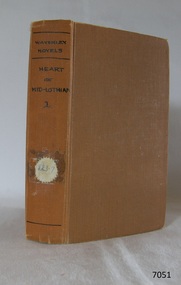
Book - Fictional stories, Sir Walter Scott, Waverley Novels Tales of my Landlord-3 Vol 11, 1836
... Scott's enduring legacy is his vivid narratives on tradition versus change that still remain relevant, his stories and poetry impacted Victorian literature, architecture inspiring the public in a medieval revival at the time, and global views of Scotland. Goethe the German poet, playwright and novelist hailed Scott's Waverley novels as among the world's best literary works. ...The subject volume “Waverley Novels Vol 11” published by Fisher Son & Co (1838) is part of a collected edition of Sir Walter Scott's works, containing stories from the "Tales of My Landlord" series. "Tales of My Landlord" forms a key subset of Scott's Waverley Novels, presented as fictional tales gathered by characters like Peter Pattieson from the landlord of the Wallace “Inn at Gandercleugh”. The series spans multiple books across four sub-series, including “The Black Dwarf” (1707 setting), “Old Mortality” (1679–1689), “The Heart of Midlothian” (1736), “The Bride of Lammermoor” (1709–1711), “A Legend of Montrose” (1644–1645), “Count Robert of Paris” (1097), and “Castle Dangerous” (1307). Vol 46 in the 1838 Fisher edition reprints later entries like “Count Robert of Paris” or “Castle Dangerous” from the fourth series, as these stories originally appeared in Scott's Magnum Opus collected volume editions, the first from 1816. With the influential 48-volume “Magnum Opus” edition from 1829–1833 by Robert Cadell, serving as the basis for later collected published sets like Fisher's. "Tales of My Landlord" is part of a series of historical novels by Sir Walter Scott, published pseudonymous as works edited by "Jedediah Cleishbotham." It forms part of his broader Waverley Novels, framed as stories gathered from a fictional innkeeper. The third series, published in 1819, spans four volumes total. Volumes 1–3 primarily cover The Bride of Lammermoor (a tragedy of feuding families in early 18th-century Scotland), while Volume 4 contains A Legend of Montrose (set during the 1640s Wars of the Three Kingdoms, focusing on Highland clans and battles like Inverlochy. The subject Fishers "Vol 11" refers to a misremembered or edition specific chapter in this series (e.g., a pivotal scene in The Bride of Lammermoor), not a standalone volume.Waverley Novels Vol 11 Tales of My Landlord, Light brown hardcover lettering in black text. Author: Sir Walter Scott Publisher: Fisher Son & Co Date: 1836fictionThe subject volume “Waverley Novels Vol 11” published by Fisher Son & Co (1838) is part of a collected edition of Sir Walter Scott's works, containing stories from the "Tales of My Landlord" series. "Tales of My Landlord" forms a key subset of Scott's Waverley Novels, presented as fictional tales gathered by characters like Peter Pattieson from the landlord of the Wallace “Inn at Gandercleugh”. The series spans multiple books across four sub-series, including “The Black Dwarf” (1707 setting), “Old Mortality” (1679–1689), “The Heart of Midlothian” (1736), “The Bride of Lammermoor” (1709–1711), “A Legend of Montrose” (1644–1645), “Count Robert of Paris” (1097), and “Castle Dangerous” (1307). Vol 46 in the 1838 Fisher edition reprints later entries like “Count Robert of Paris” or “Castle Dangerous” from the fourth series, as these stories originally appeared in Scott's Magnum Opus collected volume editions, the first from 1816. With the influential 48-volume “Magnum Opus” edition from 1829–1833 by Robert Cadell, serving as the basis for later collected published sets like Fisher's. "Tales of My Landlord" is part of a series of historical novels by Sir Walter Scott, published pseudonymous as works edited by "Jedediah Cleishbotham." It forms part of his broader Waverley Novels, framed as stories gathered from a fictional innkeeper. The third series, published in 1819, spans four volumes total. Volumes 1–3 primarily cover The Bride of Lammermoor (a tragedy of feuding families in early 18th-century Scotland), while Volume 4 contains A Legend of Montrose (set during the 1640s Wars of the Three Kingdoms, focusing on Highland clans and battles like Inverlochy. The subject Fishers "Vol 11" refers to a misremembered or edition specific chapter in this series (e.g., a pivotal scene in The Bride of Lammermoor), not a standalone volume. warrnambool, shipwrecked-coast, flagstaff-hill, flagstaff-hill-maritime-museum, maritime-museum, shipwreck-coast, flagstaff-hill-maritime-village, shipwrecked-artefact, book, waverley novels vol 46 tales of my landlord, sir walter scott, pattison collection, warrnambool library, warrnambool mechanics’ institute, ralph eric pattison, corangamite regional library service, warrnambool city librarian, mechanics’ institute library, victorian library board, warrnambool books and records, warrnambool children’s library -
 Flagstaff Hill Maritime Museum and Village
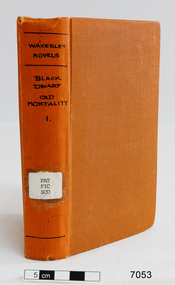
Book - Fictional stories, Sir Walter Scott, Waverley Novels Tales of my Landlord Vol 9, 1836
... Scott's enduring legacy is his vivid narratives on tradition versus change that still remain relevant, his stories and poetry impacted Victorian literature, architecture inspiring the public in a medieval revival at the time, and global views of Scotland. Goethe the German poet, playwright and novelist hailed Scott's Waverley novels as among the world's best literary works. ...The subject volume “Waverley Novels Vol 9” published by Fisher Son & Co (1836) is part of a collected edition of Sir Walter Scott's works, containing stories from the "Tales of My Landlord" series. This edition of set 1,of Vol. 9” is the beginning of the first series of “Tales of My Landlord” in which is included “The Black Dwarf” and “The Tale of Old Mortality”. In many multi volume collected edition runs, Vol. 9 will be the first volume of “The Tale of Old Mortality” a more substantial and famous novel in the series, with the other half of the story following in Vol 10. The opening volume of “The Tale of Old Mortality”, is about the Scottish Presbyterian movement that supported two agreements made by the National Covenant of 1638, or the Solemn League and Covenant of 1643. These agreements were intended to defend and extend through the Scottish Presbyterianism resistance that occurred between 1679–1689. The story is told through the journey of the young landowner Henry Morton and the Covenanters’ guerrilla struggle against royal and Episcopal authority of the time. The “Tales of My Landlord” is framed and introduced through the fictional narrator editor, the stories are supposedly gathered from the landlord of the Wallace Inn at Gandercleugh, compiled by “Peter Pattieson” and edited by the schoolmaster and parish clerk Jedediah Cleishbotham. This framework is laid out in the introductions and prefatory material to the first series, especially in the prefatory pages to “The Black Dwarf” and the opening of Old Mortality.Waverley Novels Tales of my Landlord Set-1 Vol 9, Light brown hardcover lettering in black text. Author: Sir Walter Scott Publisher: Fisher Son & Co. Date: 1836fictionThe subject volume “Waverley Novels Vol 9” published by Fisher Son & Co (1836) is part of a collected edition of Sir Walter Scott's works, containing stories from the "Tales of My Landlord" series. This edition of set 1,of Vol. 9” is the beginning of the first series of “Tales of My Landlord” in which is included “The Black Dwarf” and “The Tale of Old Mortality”. In many multi volume collected edition runs, Vol. 9 will be the first volume of “The Tale of Old Mortality” a more substantial and famous novel in the series, with the other half of the story following in Vol 10. The opening volume of “The Tale of Old Mortality”, is about the Scottish Presbyterian movement that supported two agreements made by the National Covenant of 1638, or the Solemn League and Covenant of 1643. These agreements were intended to defend and extend through the Scottish Presbyterianism resistance that occurred between 1679–1689. The story is told through the journey of the young landowner Henry Morton and the Covenanters’ guerrilla struggle against royal and Episcopal authority of the time. The “Tales of My Landlord” is framed and introduced through the fictional narrator editor, the stories are supposedly gathered from the landlord of the Wallace Inn at Gandercleugh, compiled by “Peter Pattieson” and edited by the schoolmaster and parish clerk Jedediah Cleishbotham. This framework is laid out in the introductions and prefatory material to the first series, especially in the prefatory pages to “The Black Dwarf” and the opening of Old Mortality. warrnambool, shipwrecked-coast, flagstaff-hill, flagstaff-hill-maritime-museum, maritime-museum, shipwreck-coast, flagstaff-hill-maritime-village, shipwrecked-artefact, book, waverley novels vol 46 tales of my landlord, sir walter scott, pattison collection, warrnambool library, warrnambool mechanics’ institute, ralph eric pattison, corangamite regional library service, warrnambool city librarian, mechanics’ institute library, victorian library board, warrnambool books and records, warrnambool children’s library, waverley novels -
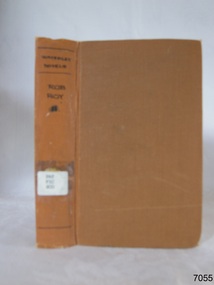 Flagstaff Hill Maritime Museum and Village
Book - Fictional stories, Sir Walter Scott, Waverley Novels Vol 8 Rob Roy, 1838
... Scott's enduring legacy is his vivid narratives on tradition versus change that still remain relevant, his stories and poetry impacted Victorian literature, architecture inspiring the public in a medieval revival at the time, and global views of Scotland. Goethe the German poet, playwright and novelist hailed Scott's Waverley novels as among the world's best literary works. ...The subject volume from the “Waverley Novels Rob Roy Vol 8” published by Fisher Son & Co (1838) is part of a collected edition of Sir Walter Scott's works, containing stories from the "Tales of My Landlord" series. "Tales of My Landlord" forms a key subset of Scott's Waverley Novels, presented as fictional tales gathered by characters like Peter Pattieson from the landlord of the Wallace “Inn at Gandercleugh”. The series spans multiple books across four sub-series, including “The Black Dwarf” (1707 setting), “Old Mortality” (1679–1689), “The Heart of Midlothian” (1736), “The Bride of Lammermoor” (1709–1711), “A Legend of Montrose” (1644–1645), “Count Robert of Paris” (1097), and “Castle Dangerous” (1307). Vol 46 in the 1838 Fisher edition reprints later entries like “Count Robert of Paris” or “Castle Dangerous” from the fourth series, as these stories originally appeared in Scott's Magnum Opus collected volume editions, the first from 1816. With the influential 48-volume “Magnum Opus” edition from 1829–1833 by Robert Cadell, serving as the basis for later collected published sets like Fisher's. First appearing as a three-volume set in December 1817, Rob Roy became one of Scott's most popular works, later standardised as Volume 8 in various Waverley Novels editions from the 1820's onward, such as the 1830 Magnum Opus issue. Early collected editions, like those from Adam & Charles Black (1878) or Fisher, Son & Co. (1836), often split it across two physical volumes labelled as "Vol. VIII," reflecting the series' format for lengthy novels.Waverley Novels Vol 8 Rob Roy, Light brown hardcover lettering in black text. Author: Sir Walter Scott Publisher: Fisher Son & Co Date: 1838fictionThe subject volume from the “Waverley Novels Rob Roy Vol 8” published by Fisher Son & Co (1838) is part of a collected edition of Sir Walter Scott's works, containing stories from the "Tales of My Landlord" series. "Tales of My Landlord" forms a key subset of Scott's Waverley Novels, presented as fictional tales gathered by characters like Peter Pattieson from the landlord of the Wallace “Inn at Gandercleugh”. The series spans multiple books across four sub-series, including “The Black Dwarf” (1707 setting), “Old Mortality” (1679–1689), “The Heart of Midlothian” (1736), “The Bride of Lammermoor” (1709–1711), “A Legend of Montrose” (1644–1645), “Count Robert of Paris” (1097), and “Castle Dangerous” (1307). Vol 46 in the 1838 Fisher edition reprints later entries like “Count Robert of Paris” or “Castle Dangerous” from the fourth series, as these stories originally appeared in Scott's Magnum Opus collected volume editions, the first from 1816. With the influential 48-volume “Magnum Opus” edition from 1829–1833 by Robert Cadell, serving as the basis for later collected published sets like Fisher's. First appearing as a three-volume set in December 1817, Rob Roy became one of Scott's most popular works, later standardised as Volume 8 in various Waverley Novels editions from the 1820's onward, such as the 1830 Magnum Opus issue. Early collected editions, like those from Adam & Charles Black (1878) or Fisher, Son & Co. (1836), often split it across two physical volumes labelled as "Vol. VIII," reflecting the series' format for lengthy novels.warrnambool, shipwrecked-coast, flagstaff-hill, flagstaff-hill-maritime-museum, maritime-museum, shipwreck-coast, flagstaff-hill-maritime-village, shipwrecked-artefact, book, waverley novels vol 46 tales of my landlord, sir walter scott, pattison collection, warrnambool library, warrnambool mechanics’ institute, ralph eric pattison, corangamite regional library service, warrnambool city librarian, mechanics’ institute library, victorian library board, warrnambool books and records, warrnambool children’s library
