
Showing 173 items matching "gold coin"
-
 Moorabbin Air Museum
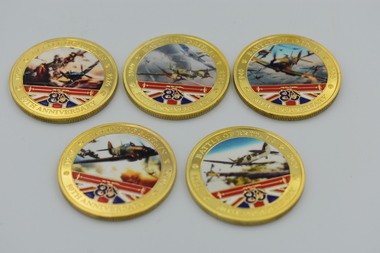
Coin (item) - Battle Of Britain 80th Anniversary Commemorative Gold Coin, Set Of 5
... Battle Of Britain 80th Anniversary Commemorative Gold Coin, Set Of 5....Battle Of Britain 80th Anniversary Commemorative Gold Coin, Set Of 5....Battle Of Britain 80th Anniversary Commemorative Gold Coin, Set Of 5. Features, Spitfire, Hurricane & Junkers JU88...Battle Of Britain 80th Anniversary Commemorative Gold Coin, Set Of 5. Features, Spitfire, Hurricane & Junkers JU88 Battle Of Britain 80th Anniversary Commemorative Gold Coin, Set Of 5. ... -
 St Patrick's College
Gold coin, 1991
... Gold coin...Gold commemorative coin made to celebrate the 100th anniversary of the Royal South Street Competitions....Commemorative gold coin with decorative laurels on the back and raised inscriptions on thr front. ...The coin sits in a blue velvet box. Gold coin ...Gold commemorative coin made to celebrate the 100th anniversary of the Royal South Street Competitions.Commemorative gold coin with decorative laurels on the back and raised inscriptions on thr front. The coin sits in a blue velvet box.Centenary Competitions First Prize Royal South Street Society 1891-1991.coin, royal south street. -
 Flagstaff Hill Maritime Museum and Village
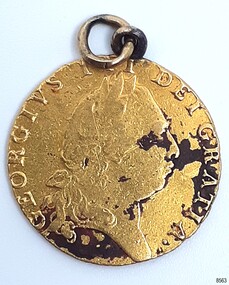
Currency - Guinea Coin, The Royal Mint, 1793 George III Spade Guinea, 1793
... ...gold coin...The red-brown-black discolouration is similar to that found on other gold coins, sometimes called the ‘corrosion phenomena’. ...Yellow gold coin with gold metal loop mount and a gold ring through the loop. ...Yellow gold coin with gold metal loop mount and a gold ring through the loop. ...The coin was discovered by Julie Wilkins, a Victorian scuba diver who had already experienced more than 500 dives in Australia and overseas. She was holidaying in Peterborough, Victoria, and looking forward to discovering more about the famous Loch Ard ship, wrecked in June 1878 at Mutton Bird Island. The fast Glasgow-built clipper ship was only five years old when the tragedy occurred. There were 54 people on board the vessel and only two survived Julie's holiday photograph of Boat Bay reminds her of her most memorable dive. Submerged in the calm, flat sea, she was carefully scanning around the remains of the old wreck when, to her amazement, a gold coin and a small gold cross suddenly came up towards her. She excitedly cupped them in her hands, then stowed the treasures safely in her wetsuit and continued her dive. She soon discovered a group of brass carriage clock parts and some bottles of champagne. It was a day full of surprises. The items were easily recognisable, without any build-up of encrustations or concretion. Julie secretly enjoyed her treasures for twenty-four years then packed them up for the early morning train trip to Warrnambool. After a short walk to Flagstaff Hill Maritime Museum and Village, her photograph was taken as she handed over her precious find. She told her story to a local newspaper reporter, lunched a café in town then took the late afternoon train home. Her generous donation is now part of a vast collection of Loch Ard shipwreck artefacts, including the gold watch and the Minton Majolica model peacock. The coin is a British 1793 George III Gold Spade Guinea. It was already 83 years old when the Loch Ard had set sail. The loop and ring have been added, perhaps as a pendant, pocket watch accessory or similar purpose. It may have been worn for ‘good luck’ on the long journey to Australia, where ships had to carefully navigate the treacherous Bass’s Strait before arriving at their destination of Melbourne. Sadly, many met their fate on that short stretch of ocean aptly named the Shipwreck Coast. The coin is very recognisable even though it was exposed to the wrecking of the ship, its consequent movement, and the sea's turbulence. Its bent, scratched, buckled, split, dinted and worn condition is part of its story. The red-brown-black discolouration is similar to that found on other gold coins, sometimes called the ‘corrosion phenomena’. Studies suggest the possible cause is contaminants in the minting process reacting to the coins’ environment. The GEORGE III GOLD SPADE GUINEA: - The British Guinea was introduced in 1663 and was circulated until 1814. It was made of 22 carat gold, was 25 to 26 cm in diameter and weighed 8.35 grams. It had a value of 21 British shillings. The guinea coin ceased circulation after 1816 and was replaced by the one-pound note. However, the term ‘guinea’ continued to represent 21 shillings. King George (1738-1820) had six gold guinea designs minted during his reign from 1760 and 1820. Each of the six had different obverse portraits, all facing the right. There were three different reverse sides. The Spade Guinea was the fifth issue of the coin, introduced in 1787 and produced until 1799. The reverse shows a royal crown over a flat-topped shield with the Royal Arms of Great Britain, used in Scotland between 1714 and 1800. The shield images are, from left to right, top to bottom, the Arms of England and Scotland, the Arms of France, the Arms of Ireland, and the Arms of the House of Hanover. The Gold Guinea is also part of Australia’s history. It was the first coin mentioned in the announcement of Governor King of New South Wales his Australian Proclamation of a limited variety and denomination of coins accepted for use in the Australian Colony. The historic and decorative George III Spade Guinea has been reproduced for special collections of coins. However, replicas and imitations have also been made as souvenirs for tourists, as gaming tokens and chips for gamblers, and as ‘fake’ coins for profit. These coins differ in many ways; they may be only half the weight of the genuine coin. Often have a small stamp on the obverse with “COPY” or the manufacturer’s name or initials. Some have scalloped edges, some have dates that are different to the original dates of issue, and some even have text in Latin that translates as something very different to the original coin.The King George III Guinea was only produced from 1663 to 1814 and was the first English coin to be mechanically minted. The coin is the fifth edition of the King George III Guinea, the Spade Guinea, was only produced between 1787 and 1799. It is the only edition with this portrait of King George and the only one with the Royal Coat of Arms of Great Britain in Scotland on the reverse side. This edition was also the last guinea in circulation, because the sixth edition was reserved as the Military guinea. This edition of the Guinea is unique; This coin is the only guinea in our collection. It was minted in 1793, so it is now over 230 years old. The Gold Guinea is part of Australia’s history; it was the first coin in the list of coins for use in the Australian Colonies, mentioned by Governor King of New South Wales in his Australian Proclamation speech of 1800. The George III Spade Guinea was included in the Limited Edition Sherwood 12 Coin Collection of Notable Coinage of Australia. This coin is the only known guinea coin recovered from the wreck of the Loch Ard. It was already 85 years old when the ship was wrecked.Gold coin; British. 1793, King George III of the United Kingdom of Great Britain and Ireland (1760-1820), Spade Guinea. Yellow gold coin with gold metal loop mount and a gold ring through the loop. The design is the fifth issue of the George III Gold Guinea. The obverse relief is a portrait of George III facing right. Reverse relief is a crown above the Coats of Arms (1801-1816) of flat top spade-shaped shield divided into four quadrants that depict crowned lions, fleur de lies, a harp. These images are identified as, from left to right, top to bottom, England and Scotland, France, Ireland and Hanover. Inscriptions are minted around the rims of each side. The coin is dated 1793. Its surface has dark areas on both sides and the reed edge and surfaces are well worn. The loop mount is bent and the ring is buckled. The coin was recovered from the wreck of the ship Loch Ard.Obverse text; 'GEORGIVS III DEI GRATIA' (translates to George the Third, by the Grace of God) Obverse relief; (King George III bust, facing right, laurel wreath on head) Reverse text; 'M.B.E.ET.H.REX.F. D.B.ET.L.D. S.R.I.A.T.ET.E' '1793' (translates to: King of Great Britain, France and Ireland, Defender of the Faith, Duke of Brunswick and Lüneburg, Arch-Treasurer and Elector of the Holy Roman Empire) Reverse relief; a spade-shaped image i.e. (Crown with fleer de lies, above Shield with crowned lions in different postures, a harp, and other details)flagstaff hill maritime museum and village, warrnambool, great ocean road, shipwreck coast, royal mint, british coin, currency, guinea, military guinea, australian currency, british guinea, gold coin, spade guinea, king george iii, george iii, fifth portrait, arms of england and scotland, arms of france, arms of ireland, arms of the house of hanover, coins, gold coins, gold medallion, georgian era, 1793, numismatics, contamination phenomena, gold corrosion, good luck, lucky charm, pendant, lucky coin, trade, loch ard, wreck of the loch ard, 1878, mutton bird island, peterborough, scuba diver, 1980s, guinea coin, gold guinea, shipwreck artefact, relic, julie wilkins -
 Kiewa Valley Historical Society
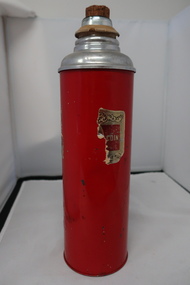
Vacuum Flask
... ...Gold Coin brand...Original box Gold Coin Brand / Vacuum Flask / Superior in Styling / Endurably Heat Preserving. / Trade Mark is Chinese & written in Chinese. ...See KVHS 1282 vacuum flask Gold Coin brand thermos Ron White Base: 'Freezinhot Bottle Made in Hong Kong' is embossed around the perimeter. ...Ron White (1920-2019) worked for the SECV and was superintendent engineer of the Kiewa Hydro Electric Scheme after its completion. He used this 'thermos'. See KVHS 1282Ron White lived in Mt Beauty and worked for the SECV until he retired in 1985. See KVHS 1282Original box Gold Coin Brand / Vacuum Flask / Superior in Styling / Endurably Heat Preserving. / Trade Mark is Chinese & written in Chinese. Bright red steel cylinder with most of the gold label missing. Cork in top. Plastic lid is not the original.Base: 'Freezinhot Bottle Made in Hong Kong' is embossed around the perimeter.vacuum flask, gold coin brand, thermos, ron white -
Clunes Museum
Award - TROPHY
... TIMBER AND GLASS CASE CONTAINING A GOLD COIN PLACED INTO A PIECE OF RED VELVET WHICH IS AFFIXED TO A PIECE OF GREEN VELVET...INDOOR CARPET BOWLS ON TIMBER BELOW GLASS CASE IN GOLD LETTERING: WINNING RINK: M RYAN, L LEASK, L KING, M FREEMAN ON GOLD COIN: VICTORIA 150 GROWING TOGETHER 1964-1965...INDOOR CARPET BOWLS ON TIMBER BELOW GLASS CASE IN GOLD LETTERING: WINNING RINK: M RYAN, L LEASK, L KING, M FREEMAN ON GOLD COIN: VICTORIA 150 GROWING TOGETHER 1964-1965 TIMBER AND GLASS CASE CONTAINING A GOLD COIN PLACED INTO A PIECE OF RED VELVET WHICH IS AFFIXED TO A PIECE OF GREEN VELVET Award TROPHY ...TIMBER AND GLASS CASE CONTAINING A GOLD COIN PLACED INTO A PIECE OF RED VELVET WHICH IS AFFIXED TO A PIECE OF GREEN VELVETON TIMBER ABOVE GLASS CASE IN GOLD LETTERING: C.S.C.C. INDOOR CARPET BOWLS ON TIMBER BELOW GLASS CASE IN GOLD LETTERING: WINNING RINK: M RYAN, L LEASK, L KING, M FREEMAN ON GOLD COIN: VICTORIA 150 GROWING TOGETHER 1964-1965victoria 150, senior citizens, carpet bowls -
 National Wool Museum
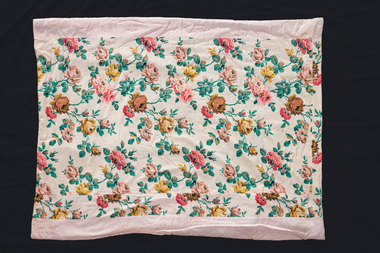
Quilt
... Purchased for a gold coin donation at an opportunity shop in Grovedale....Purchased for a gold coin donation at an opportunity shop in Grovedale. ...Purchased by Ruth Lee around 1993 from an Opportunity Shop in Grovedale. Previously owned by Mrs Wall of Grovedale.Machined cotton and wool wagga, filled with woollen pullovers and other woollens. Purchased for a gold coin donation at an opportunity shop in Grovedale.quilt, wagga, quilting - history -
 Orbost & District Historical Society
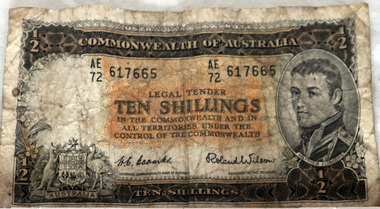
10/- note, June 1954 to February 1966
... It was equal to a half sovereign gold coin. ...It was equal to a half sovereign gold coin. This is an example of Australian pre-decimal currency. currency Australian-ten-shilling-note A brown rectangular paper Australian ten shilling note. ...The 10/- banknote was first issued on 1 May 1913 as a blue banknote payable in gold. It was equal to a half sovereign gold coin. This is an example of Australian pre-decimal currency.A brown rectangular paper Australian ten shilling note. On the obverse side is Matthew Flinders and on the reverseis Parliament House. The signatories are : H. C. Coombs, Governor, Commonwealth Bank of Australia and Roland Wilson, Secretary to the Treasury. The watermark is Captain Cook in left oval and ’HALF’ behind each signature. The serial number is AE 617665 72currency australian-ten-shilling-note -
 Greensborough Historical Society
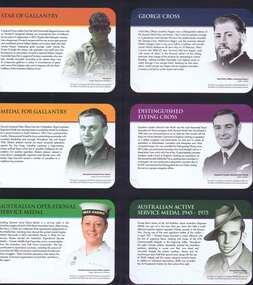
Article - Folder, Royal Australian Mint, Legends of the Anzacs: Medals of Honour, 2017_
... Folder designed to hold a gold coin collection (folder only) commemorating the Medals of Honour awarded over the 100 years of Anzac. ...Folder designed to hold a gold coin collection (folder only) commemorating the Medals of Honour awarded over the 100 years of Anzac. ...Folder designed to hold a gold coin collection (folder only) commemorating the Medals of Honour awarded over the 100 years of Anzac. Includes examples of the recipients.Folder only. 6-fold heavy card folder with string tie, colour illustrations of medals of honour.anzac centenary, medals of honour -
 Broadmeadows Historical Society & Museum
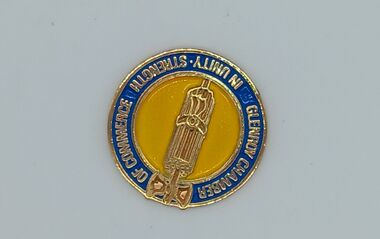
Coin - Commemorative Coins
... 3 Circular Commemorative Gold coloured coins with blue and yellow enameling....Commemorative coins presented to members and/or visitors Commemorative Coin presented by Glenroy Chamber of Commerce Commemorative Coin Glenroy Chamber of Commerce Yellow Blue Around edge: Glenroy Chamber/ of Commerce/ in unity strength 3 Circular Commemorative Gold coloured coins with blue and yellow enameling. ...Commemorative coins presented to members and/or visitorsCommemorative Coin presented by Glenroy Chamber of Commerce3 Circular Commemorative Gold coloured coins with blue and yellow enameling.Around edge: Glenroy Chamber/ of Commerce/ in unity strength commemorative coin, glenroy chamber of commerce, yellow, blue -
 Mont De Lancey
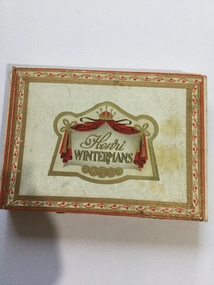
Cigar box, Henri Wintermans
... Henri Winterman logo on lid with a coronet surmounting a pair of stage curtains and five gold coins underneath, all surrounded by a gold border. ...boxes, smoking equipment Henri Winterman logo on lid with a coronet surmounting a pair of stage curtains and five gold coins underneath, all surrounded by a gold border. ...Rectangular, wooden 10 Half Corona cigar box with a Henri Wintermans logo in the centre of the lid and a red, white and gold floral border around the lid and box.Henri Winterman logo on lid with a coronet surmounting a pair of stage curtains and five gold coins underneath, all surrounded by a gold border. "Holland 10 cigars" on the base and "Half Corona" surmounted by a coronet along front edge of the box.boxes, smoking equipment -
Glenelg Shire Council Cultural Collection
Souvenir - Dolphin Dome - Portland, Victoria, n.d
... Dome sits in blue and white clam with 'gold' coins spilling out of it; seaweeds and corals. ...Dome sits in blue and white clam with 'gold' coins spilling out of it; seaweeds and corals. ...Egg-shaped snow-dome, contains two dolphins and an anchor. Dome sits in blue and white clam with 'gold' coins spilling out of it; seaweeds and corals. Switch underneath turns on changing light display.Front: 'Portland Victoria' - black print -
 Vision Australia
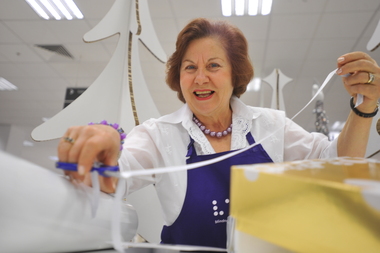
Photograph - Image, 2009 Vision Australia Christmas gift wrapper, 2009
... For each present, a gold coin donation ensures a well wrapped present and that funds are raised for Vision Australia....For each present, a gold coin donation ensures a well wrapped present and that funds are raised for Vision Australia. ...Volunteer gift wrapper gets ready to wrap Christmas presents at Myer Gift Wrap. For each present, a gold coin donation ensures a well wrapped present and that funds are raised for Vision Australia.Coloured photograph of woman in white shirt and purple apron cutting ribbon on gift wrap tablevision australia, fundraising -
 Mont De Lancey
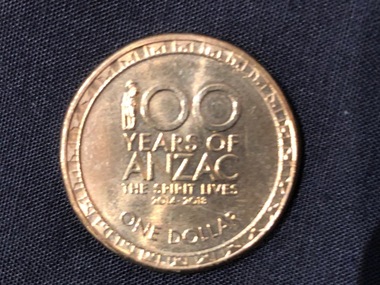
Coin, Australian Mint, 2014
... Round Gold One Dollar Coin...Commemorative Coins "100 Years of ANZAC The Spirt Lives 2014-2018" Round Gold One Dollar Coin Coin Australian Mint ...Round Gold One Dollar Coin"100 Years of ANZAC The Spirt Lives 2014-2018"commemorative coins -
 Bendigo Historical Society Inc.
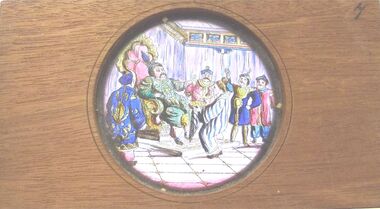
Slide - MAGIC LANTERN COLLECTION: MAGIC LANTERN SLIDE OF CHINESE SCENE
... timber mounted hand painted Lantern Slide depicting the presentation of gold coins ? To a Chinese Emperor ? Number 7 is written in ink on top right corner....timber mounted hand painted Lantern Slide depicting the presentation of gold coins ? To a Chinese Emperor ? Number 7 is written in ink on top right corner. ...Object.MAGIC LANTERN COLLECTION- Magic Lantern slide - rare (19th Century ?) timber mounted hand painted Lantern Slide depicting the presentation of gold coins ? To a Chinese Emperor ? Number 7 is written in ink on top right corner.photography, projectors - still -
Tatura Irrigation & Wartime Camps Museum
CD, M. Hearing, The Search for Hugo's Gold, 2006
... Tells story of 23 gold coins hidden in the wall of a house in Germany that Hugo Wennagel lived in and was a POW in Camp 3. ...Tells story of 23 gold coins hidden in the wall of a house in Germany that Hugo Wennagel lived in and was a POW in Camp 3. ...Tells story of 23 gold coins hidden in the wall of a house in Germany that Hugo Wennagel lived in and was a POW in Camp 3. These coins have been found. Permission given to get them out of , Tel Aviv, to Melbourne and returned to Hugo.CD, red, green, black lettering. Picture of Cogs and coins in the back ground. Inside a CD case with clear front, black back.hugo wennagel, pow camp 3, gold coins hidden in house -
Tatura Irrigation & Wartime Camps Museum
CD, Fred Haering Interview, 2006
... CD includes interview with Fred Haering about the search for Hugo's Gold (Hugo Wennagel). Hugo hid 23 gold coins in a wall in the house he lived in in Germany before the war. ...CD includes interview with Fred Haering about the search for Hugo's Gold (Hugo Wennagel). Hugo hid 23 gold coins in a wall in the house he lived in in Germany before the war. ...CD includes interview with Fred Haering about the search for Hugo's Gold (Hugo Wennagel). Hugo hid 23 gold coins in a wall in the house he lived in in Germany before the war. This tells the story of finding the coins, permission given to get them out of Germany, via Tel Aviv to Melbourne and returned to Hugo.CD, yellow lettering. Blue/pink background. Inside a CD case with clear front, black back.fred haering, hugo's coins -
 Ballarat Heritage Services
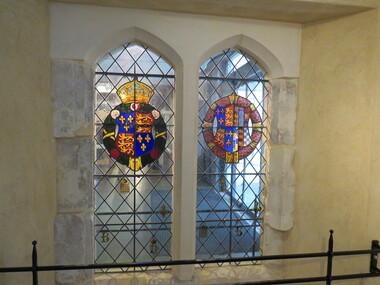
Photograph - Photograph - Colour, Greenwich Chapel and Museum, England
... Many wonderful and intriguing items from gold coins to tiled floors and human skeletons have been found. ...Many wonderful and intriguing items from gold coins to tiled floors and human skeletons have been found. ...Greenwich Palace no longer exists however archaeology had added greatly to our understanding of life at the Tudor Court at Greenwich. Since 1971 there have been well over 20 digs on the site. Many wonderful and intriguing items from gold coins to tiled floors and human skeletons have been found. The first major dig uncovered the structure of the royal apartments next to the river. Not only did it clarify the floor plan but finds included some rare Tudor ceiling decorations, a hoard of gold coins and many personal items such as dice used for gaming. Perhaps the most revealing excavations have been the most recent. In 2005 while monitoring the digging of a drainage trench archaeologists found brickwork and tiles that formed the floor of the east end of the Tudor Chapel Royal where the altar once stood.Photograph of stained glass windows at Greenwich Chapel and Museum, Englandgreewich, stone, museum, chapel, stained glass -
 Ballarat Heritage Services
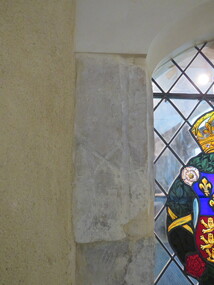
Photograph - Colour, Greenwich Chapel and Museum, England, Mason's Mark on stonework
... Many wonderful and intriguing items from gold coins to tiled floors and human skeletons have been found. ...Many wonderful and intriguing items from gold coins to tiled floors and human skeletons have been found. ...Greenwich Palace no longer exists however archaeology had added greatly to our understanding of life at the Tudor Court at Greenwich. Since 1971 there have been well over 20 digs on the site. Many wonderful and intriguing items from gold coins to tiled floors and human skeletons have been found. The first major dig uncovered the structure of the royal apartments next to the river. Not only did it clarify the floor plan but finds included some rare Tudor ceiling decorations, a hoard of gold coins and many personal items such as dice used for gaming. Perhaps the most revealing excavations have been the most recent. In 2005 while monitoring the digging of a drainage trench archaeologists found brickwork and tiles that formed the floor of the east end of the Tudor Chapel Royal where the altar once stood.greenwich, stone, museum, chapel -
 Ballarat Heritage Services
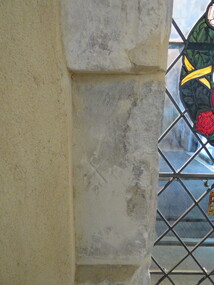
Photograph - Colour, Greenwich Chapel and Museum, England, Mason's Mark on stonework
... Many wonderful and intriguing items from gold coins to tiled floors and human skeletons have been found. ...Many wonderful and intriguing items from gold coins to tiled floors and human skeletons have been found. ...Greenwich Palace no longer exists however archaeology had added greatly to our understanding of life at the Tudor Court at Greenwich. Since 1971 there have been well over 20 digs on the site. Many wonderful and intriguing items from gold coins to tiled floors and human skeletons have been found. The first major dig uncovered the structure of the royal apartments next to the river. Not only did it clarify the floor plan but finds included some rare Tudor ceiling decorations, a hoard of gold coins and many personal items such as dice used for gaming. Perhaps the most revealing excavations have been the most recent. In 2005 while monitoring the digging of a drainage trench archaeologists found brickwork and tiles that formed the floor of the east end of the Tudor Chapel Royal where the altar once stood.greenwich, stone, museum, chapel -
 Ballarat Heritage Services
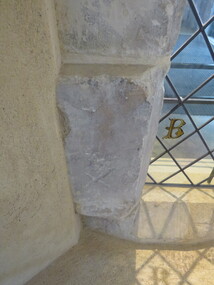
Photograph - Colour, Greenwich Chapel and Museum, England, Mason's Mark on stonework
... Many wonderful and intriguing items from gold coins to tiled floors and human skeletons have been found. ...Many wonderful and intriguing items from gold coins to tiled floors and human skeletons have been found. ...Greenwich Palace no longer exists however archaeology had added greatly to our understanding of life at the Tudor Court at Greenwich. Since 1971 there have been well over 20 digs on the site. Many wonderful and intriguing items from gold coins to tiled floors and human skeletons have been found. The first major dig uncovered the structure of the royal apartments next to the river. Not only did it clarify the floor plan but finds included some rare Tudor ceiling decorations, a hoard of gold coins and many personal items such as dice used for gaming. Perhaps the most revealing excavations have been the most recent. In 2005 while monitoring the digging of a drainage trench archaeologists found brickwork and tiles that formed the floor of the east end of the Tudor Chapel Royal where the altar once stood.greenwich, stone, museum, chapel -
 Ballarat Heritage Services
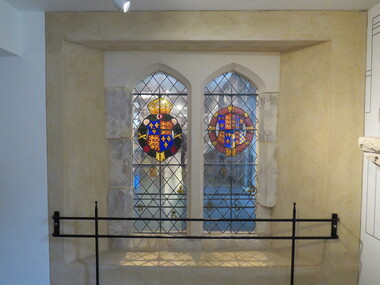
Photograph - Photograph - Colour, Greenwich Chapel and Museum, England, Mason's Mark on stonework, 2017
... Many wonderful and intriguing items from gold coins to tiled floors and human skeletons have been found. ...Many wonderful and intriguing items from gold coins to tiled floors and human skeletons have been found. ...Greenwich Palace no longer exists however archaeology had added greatly to our understanding of life at the Tudor Court at Greenwich. Since 1971 there have been well over 20 digs on the site. Many wonderful and intriguing items from gold coins to tiled floors and human skeletons have been found. The first major dig uncovered the structure of the royal apartments next to the river. Not only did it clarify the floor plan but finds included some rare Tudor ceiling decorations, a hoard of gold coins and many personal items such as dice used for gaming. Perhaps the most revealing excavations have been the most recent. In 2005 while monitoring the digging of a drainage trench archaeologists found brickwork and tiles that formed the floor of the east end of the Tudor Chapel Royal where the altar once stood.Colour photograph of Greenwich Chapel and Museum, England, Mason's Mark on stoneworkgreenwich, stone, museum, chapel -
 Ballarat Heritage Services
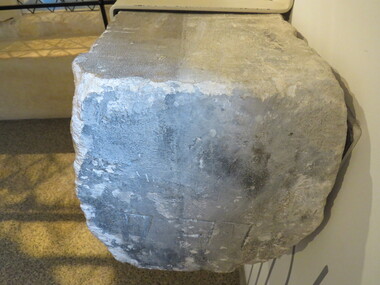
Photograph - Colour, Greenwich Chapel and Museum, England, Mason's Mark on stonework
... Many wonderful and intriguing items from gold coins to tiled floors and human skeletons have been found. ...Many wonderful and intriguing items from gold coins to tiled floors and human skeletons have been found. ...Greenwich Palace no longer exists however archaeology had added greatly to our understanding of life at the Tudor Court at Greenwich. Since 1971 there have been well over 20 digs on the site. Many wonderful and intriguing items from gold coins to tiled floors and human skeletons have been found. The first major dig uncovered the structure of the royal apartments next to the river. Not only did it clarify the floor plan but finds included some rare Tudor ceiling decorations, a hoard of gold coins and many personal items such as dice used for gaming. Perhaps the most revealing excavations have been the most recent. In 2005 while monitoring the digging of a drainage trench archaeologists found brickwork and tiles that formed the floor of the east end of the Tudor Chapel Royal where the altar once stood.greenwich, stone, museum, chapel -
 Ballarat Heritage Services
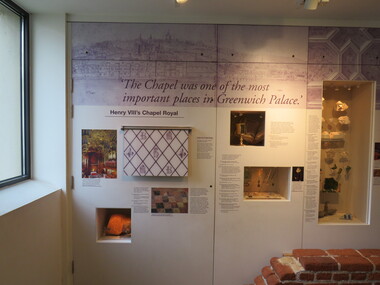
Photograph - Colour, Information panel, Greenwich Chapel and Museum, England, 2016
... Many wonderful and intriguing items from gold coins to tiled floors and human skeletons have been found. ...Many wonderful and intriguing items from gold coins to tiled floors and human skeletons have been found. ...Greenwich Palace no longer exists however archaeology had added greatly to our understanding of life at the Tudor Court at Greenwich. Since 1971 there have been well over 20 digs on the site. Many wonderful and intriguing items from gold coins to tiled floors and human skeletons have been found. The first major dig uncovered the structure of the royal apartments next to the river. Not only did it clarify the floor plan but finds included some rare Tudor ceiling decorations, a hoard of gold coins and many personal items such as dice used for gaming. Perhaps the most revealing excavations have been the most recent. In 2005 while monitoring the digging of a drainage trench archaeologists found brickwork and tiles that formed the floor of the east end of the Tudor Chapel Royal where the altar once stood.greenwich, stone, museum, chapel -
 Ballarat Heritage Services
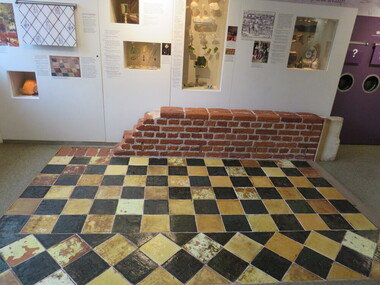
Photograph - Photograph - Colour, Information panel, Greenwich Chapel and Museum, England
... Many wonderful and intriguing items from gold coins to tiled floors and human skeletons have been found. ...Many wonderful and intriguing items from gold coins to tiled floors and human skeletons have been found. ...Greenwich Palace no longer exists however archaeology had added greatly to our understanding of life at the Tudor Court at Greenwich. Since 1971 there have been well over 20 digs on the site. Many wonderful and intriguing items from gold coins to tiled floors and human skeletons have been found. The first major dig uncovered the structure of the royal apartments next to the river. Not only did it clarify the floor plan but finds included some rare Tudor ceiling decorations, a hoard of gold coins and many personal items such as dice used for gaming. Perhaps the most revealing excavations have been the most recent. In 2005 while monitoring the digging of a drainage trench archaeologists found brickwork and tiles that formed the floor of the east end of the Tudor Chapel Royal where the altar once stood.Photograph of interpretation information in Greenwich Chapel and Museumgreenwich, stone, museum, chapel, stone, musuem, chapel -
 Ballarat Heritage Services
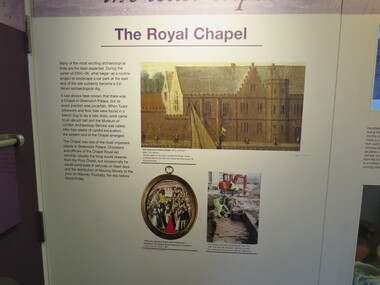
Photograph - Colour, Information panel, Greenwich Chapel and Museum, England
... Many wonderful and intriguing items from gold coins to tiled floors and human skeletons have been found. ...Many wonderful and intriguing items from gold coins to tiled floors and human skeletons have been found. ...Greenwich Palace no longer exists however archaeology had added greatly to our understanding of life at the Tudor Court at Greenwich. Since 1971 there have been well over 20 digs on the site. Many wonderful and intriguing items from gold coins to tiled floors and human skeletons have been found. The first major dig uncovered the structure of the royal apartments next to the river. Not only did it clarify the floor plan but finds included some rare Tudor ceiling decorations, a hoard of gold coins and many personal items such as dice used for gaming. Perhaps the most revealing excavations have been the most recent. In 2005 while monitoring the digging of a drainage trench archaeologists found brickwork and tiles that formed the floor of the east end of the Tudor Chapel Royal where the altar once stood.greenwich, stone, museum, chapel -
 Ballarat Heritage Services
Photograph - Colour, Information panel, Greenwich Chapel and Museum, England
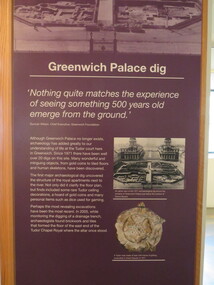
... Many wonderful and intriguing items from gold coins to tiled floors and human skeletons have been found. ...Many wonderful and intriguing items from gold coins to tiled floors and human skeletons have been found. ...Greenwich Palace no longer exists however archaeology had added greatly to our understanding of life at the Tudor Court at Greenwich. Since 1971 there have been well over 20 digs on the site. Many wonderful and intriguing items from gold coins to tiled floors and human skeletons have been found. The first major dig uncovered the structure of the royal apartments next to the river. Not only did it clarify the floor plan but finds included some rare Tudor ceiling decorations, a hoard of gold coins and many personal items such as dice used for gaming. Perhaps the most revealing excavations have been the most recent. In 2005 while monitoring the digging of a drainage trench archaeologists found brickwork and tiles that formed the floor of the east end of the Tudor Chapel Royal where the altar once stood.greenwich, stone, museum, chapel -
 Ballarat Heritage Services
Photograph - Colour, Information panel, Greenwich Chapel and Museum, England
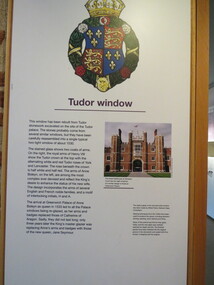
... Many wonderful and intriguing items from gold coins to tiled floors and human skeletons have been found. ...Many wonderful and intriguing items from gold coins to tiled floors and human skeletons have been found. ...Greenwich Palace no longer exists however archaeology had added greatly to our understanding of life at the Tudor Court at Greenwich. Since 1971 there have been well over 20 digs on the site. Many wonderful and intriguing items from gold coins to tiled floors and human skeletons have been found. The first major dig uncovered the structure of the royal apartments next to the river. Not only did it clarify the floor plan but finds included some rare Tudor ceiling decorations, a hoard of gold coins and many personal items such as dice used for gaming. Perhaps the most revealing excavations have been the most recent. In 2005 while monitoring the digging of a drainage trench archaeologists found brickwork and tiles that formed the floor of the east end of the Tudor Chapel Royal where the altar once stood.greenwich, stone, museum, chapel -
 Ballarat Heritage Services
Photograph - Colour, Greenwich Chapel and Museum, England
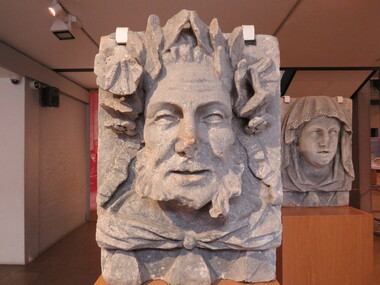
... Many wonderful and intriguing items from gold coins to tiled floors and human skeletons have been found. ...Many wonderful and intriguing items from gold coins to tiled floors and human skeletons have been found. ...Greenwich Palace no longer exists however archaeology had added greatly to our understanding of life at the Tudor Court at Greenwich. Since 1971 there have been well over 20 digs on the site. Many wonderful and intriguing items from gold coins to tiled floors and human skeletons have been found. The first major dig uncovered the structure of the royal apartments next to the river. Not only did it clarify the floor plan but finds included some rare Tudor ceiling decorations, a hoard of gold coins and many personal items such as dice used for gaming. Perhaps the most revealing excavations have been the most recent. In 2005 while monitoring the digging of a drainage trench archaeologists found brickwork and tiles that formed the floor of the east end of the Tudor Chapel Royal where the altar once stood.greenwich, stone, museum, chapel -
 Ballarat Heritage Services
Photograph - Colour, Greenwich Chapel and Museum, England, 2016, 2016
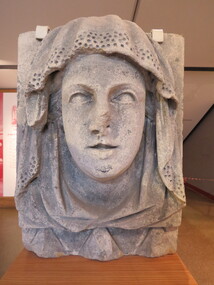
... Many wonderful and intriguing items from gold coins to tiled floors and human skeletons have been found. ...Many wonderful and intriguing items from gold coins to tiled floors and human skeletons have been found. ...Greenwich Palace no longer exists however archaeology had added greatly to our understanding of life at the Tudor Court at Greenwich. Since 1971 there have been well over 20 digs on the site. Many wonderful and intriguing items from gold coins to tiled floors and human skeletons have been found. The first major dig uncovered the structure of the royal apartments next to the river. Not only did it clarify the floor plan but finds included some rare Tudor ceiling decorations, a hoard of gold coins and many personal items such as dice used for gaming. Perhaps the most revealing excavations have been the most recent. In 2005 while monitoring the digging of a drainage trench archaeologists found brickwork and tiles that formed the floor of the east end of the Tudor Chapel Royal where the altar once stood.Colour photograph of a sculptural portrait. greenwich, stone, museum, chapel, portrait, sculpture -
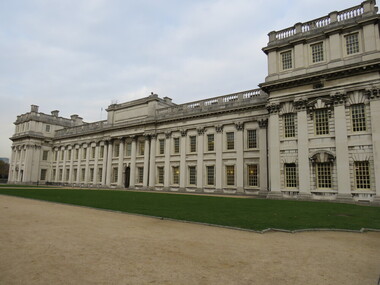 Ballarat Heritage Services
Photograph - Colour, Greenwich Chapel and Museum, England
... Many wonderful and intriguing items from gold coins to tiled floors and human skeletons have been found. ...Many wonderful and intriguing items from gold coins to tiled floors and human skeletons have been found. ...Greenwich Palace no longer exists however archaeology had added greatly to our understanding of life at the Tudor Court at Greenwich. Since 1971 there have been well over 20 digs on the site. Many wonderful and intriguing items from gold coins to tiled floors and human skeletons have been found. The first major dig uncovered the structure of the royal apartments next to the river. Not only did it clarify the floor plan but finds included some rare Tudor ceiling decorations, a hoard of gold coins and many personal items such as dice used for gaming. Perhaps the most revealing excavations have been the most recent. In 2005 while monitoring the digging of a drainage trench archaeologists found brickwork and tiles that formed the floor of the east end of the Tudor Chapel Royal where the altar once stood.greenwich, stone, museum, chapel
