
Showing 22 items matching "golf balls"
-
 Sunshine and District Historical Society Incorporated
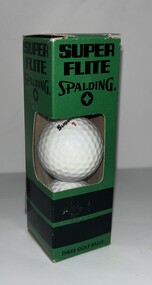
Leisure object - Spalding Golf Balls, Spaldings Australia
... Spalding Golf Balls...This Spalding Box containg three Golf balls was obtained and donated to the Sunshine and District Historical Society for the use of its collection and exhibition display usage...A Square Green Box with three golf balls box has a clear display window displaying three white golf balls displaying two black strpes around the box.it also has bold black printed written text...This Spalding Box containg three Golf balls was obtained and donated to the Sunshine and District Historical Society for the use of its collection and exhibition display usage Spaldings Ballarat Road Sunshine North Golf Super Flite Spalding A Square Green Box with three golf balls box has a clear display window displaying three white golf balls displaying two black strpes around the box.it also has bold black printed written text Leisure object Spalding Golf Balls Spaldings Australia No Spaldimgs Australia Pty Ltd Incorporated ...This Spalding Box containg three Golf balls was obtained and donated to the Sunshine and District Historical Society for the use of its collection and exhibition display usageA Square Green Box with three golf balls box has a clear display window displaying three white golf balls displaying two black strpes around the box.it also has bold black printed written textSuper Flite Spaldingspaldings, ballarat road, sunshine north, golf -
 Heidelberg Golf Club
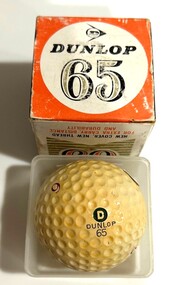
Equipment - Golf Ball, Dunlop, Dunlop 65 6, 1970s
... golf balls...The Dunlop company began manufacturing golf balls in 1930. A wound ball with a softer centre, the Dunlop 65 was named after Sir Henry Cotton played 'the perfect round' of 65 in 1934....The Dunlop company began manufacturing golf balls in 1930. A wound ball with a softer centre, the Dunlop 65 was named after Sir Henry Cotton played 'the perfect round' of 65 in 1934. golf balls memorabilia On Ball: manufacturers marks; "D. ...A Dunlop 65 golf ball, in original box. The Dunlop company began manufacturing golf balls in 1930. A wound ball with a softer centre, the Dunlop 65 was named after Sir Henry Cotton played 'the perfect round' of 65 in 1934.Golf ball in original cardboard box On Ball: manufacturers marks; "D. Dunlop. 65. 6". Box: "Dunlop 65. New cover, new thread, for extra carry, distance and durability" golf balls, memorabilia -
 Tennis Australia
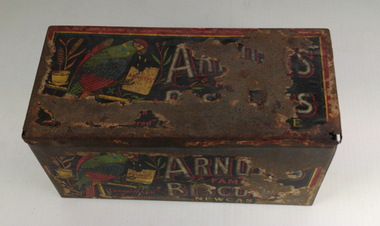
Metal container, Ball, Unknown
... Arnotts Biscuits tin containing 7 tennis balls and 4 golf balls. Materials: Metal, Rubber...Tennis Arnotts Biscuits tin containing 7 tennis balls and 4 golf balls. Materials: Metal, Rubber Metal container, Ball ...Arnotts Biscuits tin containing 7 tennis balls and 4 golf balls. Materials: Metal, Rubbertennis -
 Heidelberg Golf Club
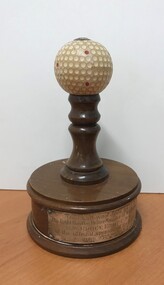
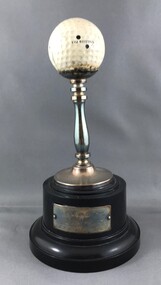
Memorabilia - Commemorative Golf Ball, Heidelberg Golf Club, Ball used at opening of Heidelberg Golf Club 1928, 23/06/1928
... ...golf balls...Heidelberg Golf Club Stanley Bruce HGC Opening 1928 W. E. Hooper golf balls Front plate: "This ball was used by the Right Hon Prime Minister of Australia S.M.Bruce Esq.PC.MC at the official opening of the HGC June 23rd 1928" Rear plate: "Donated by W.E.Hooper, Esq." ...This golf ball was used by the Right Hon Prime Minister of Australia Stanley M. Bruce at the official opening of the Heidelberg Golf Club on June 23rd 1928 The trophy was donated by W.E.Hooper. Golf ball mounted on circular wooden baseFront plate: "This ball was used by the Right Hon Prime Minister of Australia S.M.Bruce Esq.PC.MC at the official opening of the HGC June 23rd 1928" Rear plate: "Donated by W.E.Hooper, Esq." heidelberg golf club, stanley bruce, hgc opening 1928, w. e. hooper, golf balls -
 Heidelberg Golf Club
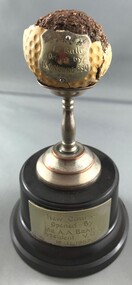
Memorabilia - Commemorative Golf Ball, Heidelberg Golf Club, Hole-in-one - John Wailes 1959, 30/08/1959
... ...golf balls...John Wailes Hole in one golf balls "Hole-in-one - John Wailes - 12th hole, 242 yards, 30/08/1959" Golf ball on silver coloured mount and bakelite base. ...This golf ball was driven by John Wailes on 30/08/1959 for a hole in one on the 242yards 12th hole.Golf ball on silver coloured mount and bakelite base."Hole-in-one - John Wailes - 12th hole, 242 yards, 30/08/1959"john wailes, hole in one, golf balls -
 Heidelberg Golf Club
Memorabilia - Commemorative Golf Ball, Heidelberg Golf Club, New course opening 1967, 18/11/1967
... ...golf balls...HGC new course 1967 golf balls A. A. Brahe H. G. Young On Ball: "1st ball driven by H. ...This golf ball was driven by H. G. Young on opening of the new course. Course opened by Mr A. A. Brahe, President VGA. 18/11/1967 at Heidelberg Golf Club. Mr Brahe was President of the Victorian Golf Association from 1965-70.Golf ball on silver coloured mount and bakelite base.On Ball: "1st ball driven by H. G. Young esq". On base: "New course opened by Mr A. A. Brahe, President VGA. 18.11.1967"hgc new course 1967, golf balls, a. a. brahe, h. g. young -
 Heidelberg Golf Club
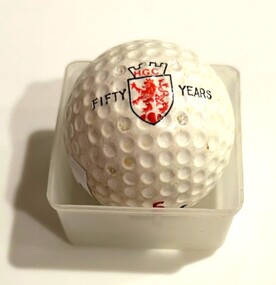
Equipment - Commemorative Golf Ball, Heidelberg Golf Club, Spalding Hot Dot 6: HGC Fifty Years, 1978
... golf balls...A Spalding HOT DOT 6 golf ball, printed with Heidelberg Golf Club logo and "Fifty Years", issued to commemorate the Club's 50th anniversary in 1978. golf balls 50th year memorabilia On Ball: "HGC [logo] Fifty Years" and manufacturers marks Golf ball with logo and commemorative text Spalding Hot Dot 6: HGC Fifty Years Equipment Commemorative Golf Ball Heidelberg Golf Club Spalding ...A Spalding HOT DOT 6 golf ball, printed with Heidelberg Golf Club logo and "Fifty Years", issued to commemorate the Club's 50th anniversary in 1978.Golf ball with logo and commemorative textOn Ball: "HGC [logo] Fifty Years" and manufacturers marksgolf balls, 50th year, memorabilia -
 Heidelberg Golf Club
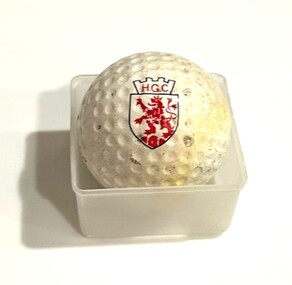
Equipment - Commemorative Golf Ball, Heidelberg Golf Club, Spalding 90 Dot 4, 1978
... golf balls...A Spalding DOT 4 golf ball, printed with Heidelberg Golf Club logo. golf balls memorabilia On Ball: "HGC [logo]" and manufacturers marks Golf ball with logo Spalding 90 Dot 4 Equipment Commemorative Golf Ball Heidelberg Golf Club Spalding ...A Spalding DOT 4 golf ball, printed with Heidelberg Golf Club logo.Golf ball with logo On Ball: "HGC [logo]" and manufacturers marksgolf balls, memorabilia -
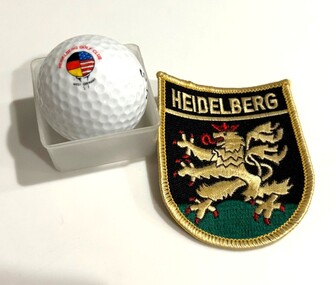 Heidelberg Golf Club
Equipment - Commemorative Golf Ball and Patch, Heidelberg Golf Club, Wilson 432 Ultra 2 and patch, 1990s
... golf balls...Wilson 432 Ultra 2 golf ball, printed with Heidelberg Golf Club (West Germany) logo of a golf ball coloured with German flag on one half and USA flag on opposite half - this would refer to Heidelberg being the headquarters of the American forces in Europe post Worl War II; and cotton patch with the palatine lion logo of Heidelberg (West Germany). golf balls memorabilia Heidelberg (West Germany) Patches On Ball: "Heidelberg Golf Club West Germany [logo]" and manufacturers marks. ...Wilson 432 Ultra 2 golf ball, printed with Heidelberg Golf Club (West Germany) logo of a golf ball coloured with German flag on one half and USA flag on opposite half - this would refer to Heidelberg being the headquarters of the American forces in Europe post Worl War II; and cotton patch with the palatine lion logo of Heidelberg (West Germany).Golf ball with logo and cotton patch with logoOn Ball: "Heidelberg Golf Club West Germany [logo]" and manufacturers marks. Patch: "Heidelberg" and stylised lion.golf balls, memorabilia, heidelberg (west germany), patches -
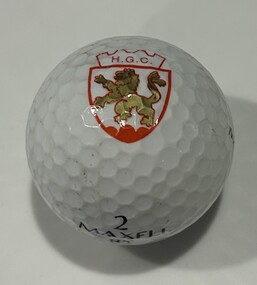 Heidelberg Golf Club
Equipment - Commemorative Golf Ball, Heidelberg Golf Club, MAXFLI HT, 1998
... golf balls...A MAXFLI HT golf ball, printed with Heidelberg Golf Club logo and commemorates the Clubhouse Opening in 1998.. golf balls memorabilia Club House Opening 1998 On Ball: "HGC [logo] "Clubhouse Opening 1998" and manufacturers marks Golf ball with logo MAXFLI HT Equipment Commemorative Golf Ball Heidelberg Golf Club MAXFLI ...A MAXFLI HT golf ball, printed with Heidelberg Golf Club logo and commemorates the Clubhouse Opening in 1998..Golf ball with logo On Ball: "HGC [logo] "Clubhouse Opening 1998" and manufacturers marksgolf balls, memorabilia, club house opening 1998 -
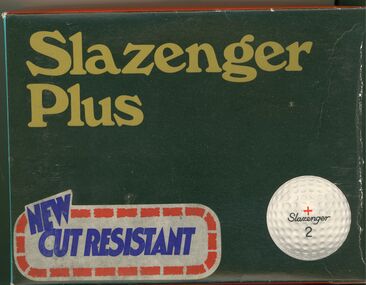 Bendigo Historical Society Inc.
Container - MACKAY COLLECTION: GOLF BALL BOX
... Mackay collection - Cardboard box Slazenger Plus Golf Balls, red,blue and black with gold lettering, contains note reading: From Miss Flora Mackay 93 Forest St Bendigo....RECREATIONS Sports golf Mackay collection - Cardboard box Slazenger Plus Golf Balls, red,blue and black with gold lettering, contains note reading: From Miss Flora Mackay 93 Forest St Bendigo. ...Mackay collection - Cardboard box Slazenger Plus Golf Balls, red,blue and black with gold lettering, contains note reading: From Miss Flora Mackay 93 Forest St Bendigo.recreations, sports, golf -
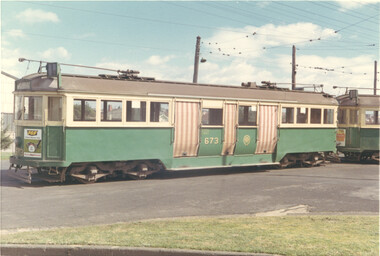 Melbourne Tram Museum
Photograph - W4 class tram 673, Norm Cross, 1970s
... Has an advert for PGF golf balls....Has an advert for PGF golf balls. Yields information about W4 class tram No. 6731970s trams tramways Preston Workshops W4 class tram 673 Colour prints with plain back. ...Colour print of tram W4 class No. 673 at Preston Workshops, possibly just before its disposal to the TMSV in May 1976. Has an advert for PGF golf balls.Yields information about W4 class tram No. 6731970sColour prints with plain back.trams, tramways, preston workshops, w4 class, tram 673 -
 Federation University Historical Collection
Magazine, Nature, 1910, 22/12/1910
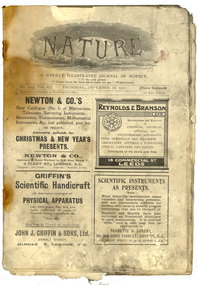
... Johnson on swerve in cricket tennis and golf balls etc & settles an argument I often had re lat dip in of a ball [pist?]. ...Johnson on swerve in cricket tennis and golf balls etc & settles an argument I often had re lat dip in of a ball [pist?]. ...This magazine was taken to Antarctica by Richard W. Richards, a member of Shackleton's expedition. Richards was a member of the Ross Sea Party. The item was returned to Dick Richards after L. Quartermain found it above Richards' bunk in Cape Evans in 1961 when a party were sent down by the New Zealand Government to clear the hut of ice. Richards later gave it to the donor because of the article on the swerve of cricket balls.This copy of Nature was used by Dick Richards when he was marooned at Cape Evans during the Shackleton Antarctic Expedition. The hut used by Richards and his party was also used by Captain Scott. The magazine dates before the use of the hut by Captain Scott so it may be assumed that it belonged to Scott or one of his party. In 1960, during ice being cleared from the hut, the magazine was found above Dick Richards' bunk and returned to him in 1961. It is therefore a remnant of the Shackleton Antarctic Expedition..1) A magazine called 'Nature', a weekly magazine of science, featuring beautiful advertisements and illustrations. .2) A note on a piece of cardboard written on by Dick Richards .3 An envelope addressed to Leslie B. Quartermain of the New Zealand antarctic Society, with the hand written note 'This copy of "Nature" was found embedded in ice in my bunk at C. Evans in Dec 1960..2) This copy of Nture was brought back from above my bunk in Cape Evans by L Quartermain in 1961. his party were sent down by NZ Govt to clear the hut of ice (250 tons removed) and restore to the condition when Scott and ourselves lived in it in 1911 - 12 and 1914 - 17. It contains an article by J.J. Johnson on swerve in cricket tennis and golf balls etc & settles an argument I often had re lat dip in of a ball [pist?]. The black is due to oily blubber smoke which permeated everything at Cape Evans. antarctica, ross sea, cape evans, nature, richards, dick richards, richard w. richards, scott, robert falcon scott, robert scott, scott of the antarctic, holioake, cricket, r.w. richards, microscope -
 Sunshine and District Historical Society Incorporated
Administrative record - City of Sunshine - Commissioner Mr Alexander Alex George Gillon Collection 1976 - 1982 - Report of the forward planning committee meeting 30th April 1981, City of Sunshine, 12th May 1981
... Football Club Application to Extend Buildings at Kinder Smith Reserve Petition Logging in Catchment Areas Matters Raised by the Commissioner Anonymous Letter Dirty Conditions of the Shopping Areas in Glengala Road at the Corners of Links Street and Bell Street Sunshine West Damage to Property by Golf Balls 36 Allison Street Sunshine West Tipping Charges Hulett Street Sunshine Tip Neale Road Semi Trailer Lost ots Load Electricity Deposits Vandalism More Park Esmond Street Ardeer Home Handyman Health Surveyors Conference 28th April 1981...Football Club Application to Extend Buildings at Kinder Smith Reserve Petition Logging in Catchment Areas Matters Raised by the Commissioner Anonymous Letter Dirty Conditions of the Shopping Areas in Glengala Road at the Corners of Links Street and Bell Street Sunshine West Damage to Property by Golf Balls 36 Allison Street Sunshine West Tipping Charges Hulett Street Sunshine Tip Neale Road Semi Trailer Lost ots Load Electricity Deposits Vandalism More Park Esmond Street Ardeer Home Handyman Health Surveyors Conference 28th April 1981 Foolscap sized document. ...Report of the Forward Planning Committee Meeting 30th April 1981 Sunshine Y.C.W. Football Club Application to Extend Buildings at Kinder Smith Reserve Petition Logging in Catchment Areas Matters Raised by the Commissioner Anonymous Letter Dirty Conditions of the Shopping Areas in Glengala Road at the Corners of Links Street and Bell Street Sunshine West Damage to Property by Golf Balls 36 Allison Street Sunshine West Tipping Charges Hulett Street Sunshine Tip Neale Road Semi Trailer Lost ots Load Electricity Deposits Vandalism More Park Esmond Street Ardeer Home Handyman Health Surveyors Conference 28th April 1981sunshine y.c.w. football club, kinder smith reserve, lily street, braybrook, glengala road, links street, bell street, sunshine west, allison street, hulett street, sunshine tip, albion, neale road, deer park, more park, esmond street, ardeer -
 Sunshine and District Historical Society Incorporated
Administrative record - City of Sunshine - Commissioner Mr Alexander Alex George Gillon Collection 1976 - 1982 - Report of forward planning committee meeting 13th November 1980, City of Sunshine, 25th November 1980
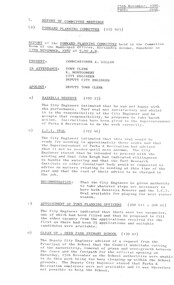
... Albabs Intersection Annual Function of Adjoining Councils Local Government Advisory Board Hearing on Ward Boundries Damage to Property by Golf balls 5 Boa Court Sunshine West Sunshine Golf Club Proposed Purchase of Former Part of Discontinued Road Bridge of Kororoit Creek at Billingham Road Deer Park Shops at Hampshire Road Footpath Footpath Construction and Vehice Crossing Transport Street Braybrook Rear Access to Service Station Corner Ballarat Road and Alford Street Sunshine North Selwyn Park Interference to with Soccer Ground...Albabs Intersection Annual Function of Adjoining Councils Local Government Advisory Board Hearing on Ward Boundries Damage to Property by Golf balls 5 Boa Court Sunshine West Sunshine Golf Club Proposed Purchase of Former Part of Discontinued Road Bridge of Kororoit Creek at Billingham Road Deer Park Shops at Hampshire Road Footpath Footpath Construction and Vehice Crossing Transport Street Braybrook Rear Access to Service Station Corner Ballarat Road and Alford Street Sunshine North Selwyn Park Interference to with Soccer Ground Foolscap sized document. ...Report of Forward Planning Committee Meeting 13th November 1980 Sassella Park ICI Oval Deer Park Primary School Cleanup Traffic Lights Main Road West and Station Road St. Albabs Intersection Annual Function of Adjoining Councils Local Government Advisory Board Hearing on Ward Boundries Damage to Property by Golf balls 5 Boa Court Sunshine West Sunshine Golf Club Proposed Purchase of Former Part of Discontinued Road Bridge of Kororoit Creek at Billingham Road Deer Park Shops at Hampshire Road Footpath Footpath Construction and Vehice Crossing Transport Street Braybrook Rear Access to Service Station Corner Ballarat Road and Alford Street Sunshine North Selwyn Park Interference to with Soccer Groundsassella park, station road, main road west, deer park primary school, ballarat road, deer park, boa court, sunshine west, kororoit creek, billingham road, alford street, sunshine north, selwyn park, selwyn street, albion, sunshine united cricket club, parsons reserve, stanford street, albion rovers soccer & athletic club -
 Bendigo Historical Society Inc.
Photograph - HANRO COLLECTION: PHOTO OF SHOP FRONT DISPLAY WINDOW
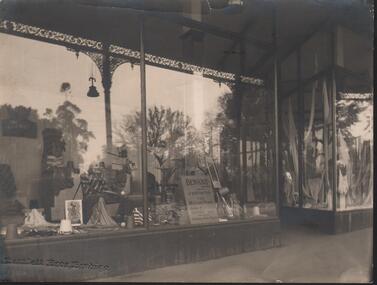
... In the window on the left side wall is a display sign with *Hanro* A stand along display sign with a golfer swinging a club and two golf balls near by. Casual wear and shirts are displayed around with spools of thread. ...In the window on the left side wall is a display sign with *Hanro* A stand along display sign with a golfer swinging a club and two golf balls near by. Casual wear and shirts are displayed around with spools of thread. ...See Item 11000.189Photo of shop Front Display Window: A black and white photo of large open windows with a central door. In the window on the left side wall is a display sign with *Hanro* A stand along display sign with a golfer swinging a club and two golf balls near by. Casual wear and shirts are displayed around with spools of thread. A Chair with cardigans is also displayed. Some plants are in the window and in the front is a sign with *Benknit Sports Wear for men and women, Product of Hanro (Aust) Bendigo Knitting Mills Pty Ltd. In the right window is a display of lingerie with yards of material draped through out the window. At the bottom of the photo is the imprint of the photographer *Bartlett Bros, Bendigo. A small tear at the top middle. The reflections in the windows is of the veranda with a lamp hanging from underneath and trees. On the back is the circular *Royal Historical Society of Victoria Bendigo Branch in blue ink. At the right top side in black ink in *MP368*. Box 116ABartlett Bros, Bendigo.photograph, streetscape, window display, hanro. -
 Maccabi Victoria
Accessory, 2001
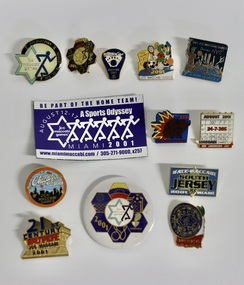
... Pins, badges and fridge magnets JCC MACCABI GAMES 12-17 August, MIAMI 2001. 01: fridge magnet blue & white logo , with website www.miamimaccabi.com & phone 305-271-9000 x257 (x2) 02: badge w logo, 2001 Hebraica & sports depictions - basketball, soccer, 10-pin bowling 03: CHICAGO 2001 JCC MACCABI GAMES - pin in white, yellow, orange, black, blue on gold (x2) 04: MID ISLAND YJCC 2001 JCC MACCABI GAMES pin - character holding several rcquets - tennis, hockey, golf & balls - soccer, basketball, football, bowling, tennis - red, green, blue, yellow, orange, black, white & gold (x2) 05: 2001 JCC MACCABI GAMES Team NYC 92nd STREET Y - sky blue, dark blue, orange and silver pin in plastic bag with manufacturere blurb 06: KATZ-MACCABI SOUTH JERSEY jcc 2001 MIAMI PIN - blue, white, black & gold 07: PHILADELPHIA AUGUST 19-24 2001 jcc maccabi games logo in aqua, royal bue & gold on black & cream 08: 21st CENTURY BALTIMORE JCC MACCABI 2001 - blue & red on gold pin 09: pin the same design as badge 02 - red, yellow, aqua, dark blue, gold on cream - 6 hexagons 10: red, yellow and brown on blue pin in rubber 2001 BUFFALO MACCABI 11: SUFFOLK NY MACCABI 2001 in dark blue, white & gold state map 12: AUGUST 2001 MACCABI GAMES SID JACOBSON JCC red, blue & gold on white calendar & 24-7-365 (could be a sponsor?) ...held in Miami 12-17 August & Philadelphia 19-24 August 2001 JCC Maccabi Games 21 Pins, badges and fridge magnets JCC MACCABI GAMES 12-17 August, MIAMI 2001. 01: fridge magnet blue & white logo , with website www.miamimaccabi.com & phone 305-271-9000 x257 (x2) 02: badge w logo, 2001 Hebraica & sports depictions - basketball, soccer, 10-pin bowling 03: CHICAGO 2001 JCC MACCABI GAMES - pin in white, yellow, orange, black, blue on gold (x2) 04: MID ISLAND YJCC 2001 JCC MACCABI GAMES pin - character holding several rcquets - tennis, hockey, golf & balls - soccer, basketball, football, bowling, tennis - red, green, blue, yellow, orange, black, white & gold (x2) 05: 2001 JCC MACCABI GAMES Team NYC 92nd STREET Y - sky blue, dark blue, orange and silver pin in plastic bag with manufacturere blurb 06: KATZ-MACCABI SOUTH JERSEY jcc 2001 MIAMI PIN - blue, white, black & gold 07: PHILADELPHIA AUGUST 19-24 2001 jcc maccabi games logo in aqua, royal bue & gold on black & cream 08: 21st CENTURY BALTIMORE JCC MACCABI 2001 - blue & red on gold pin 09: pin the same design as badge 02 - red, yellow, aqua, dark blue, gold on cream - 6 hexagons 10: red, yellow and brown on blue pin in rubber 2001 BUFFALO MACCABI 11: SUFFOLK NY MACCABI 2001 in dark blue, white & gold state map 12: AUGUST 2001 MACCABI GAMES SID JACOBSON JCC red, blue & gold on white calendar & 24-7-365 (could be a sponsor?) ...held in Miami 12-17 August & Philadelphia 19-24 August 2001Pins, badges and fridge magnets JCC MACCABI GAMES 12-17 August, MIAMI 2001. 01: fridge magnet blue & white logo , with website www.miamimaccabi.com & phone 305-271-9000 x257 (x2) 02: badge w logo, 2001 Hebraica & sports depictions - basketball, soccer, 10-pin bowling 03: CHICAGO 2001 JCC MACCABI GAMES - pin in white, yellow, orange, black, blue on gold (x2) 04: MID ISLAND YJCC 2001 JCC MACCABI GAMES pin - character holding several rcquets - tennis, hockey, golf & balls - soccer, basketball, football, bowling, tennis - red, green, blue, yellow, orange, black, white & gold (x2) 05: 2001 JCC MACCABI GAMES Team NYC 92nd STREET Y - sky blue, dark blue, orange and silver pin in plastic bag with manufacturere blurb 06: KATZ-MACCABI SOUTH JERSEY jcc 2001 MIAMI PIN - blue, white, black & gold 07: PHILADELPHIA AUGUST 19-24 2001 jcc maccabi games logo in aqua, royal bue & gold on black & cream 08: 21st CENTURY BALTIMORE JCC MACCABI 2001 - blue & red on gold pin 09: pin the same design as badge 02 - red, yellow, aqua, dark blue, gold on cream - 6 hexagons 10: red, yellow and brown on blue pin in rubber 2001 BUFFALO MACCABI 11: SUFFOLK NY MACCABI 2001 in dark blue, white & gold state map 12: AUGUST 2001 MACCABI GAMES SID JACOBSON JCC red, blue & gold on white calendar & 24-7-365 (could be a sponsor?) 13: MEXICO - Philadelphia aug 19-24 2001 & CDI in gold on blue ornate logo over Mexico flag in green, red, white & MEXICO in goldjcc maccabi games 21 -
 Sunshine and District Historical Society Incorporated
Mixed media (collection) - A.G. Spaldings Collection
... . - It was purpose-built to manufacture tennis racquets, balls, and golf equipment, taking advantage of protective tariffs and Australia’s growing sports market. - The factory used Queensland maple and cedar for racquet handles and produced up to 40,000 racquets annually in its early years. - By the 1970s, Spalding had also acquired T.W. .... - It was purpose-built to manufacture tennis racquets, balls, and golf equipment, taking advantage of protective tariffs and Australia’s growing sports market. - The factory used Queensland maple and cedar for racquet handles and produced up to 40,000 racquets annually in its early years. - By the 1970s, Spalding had also acquired T.W. ...Large collection of A.G. Spaldings documents, photographs and objects. This collection has been split into separate catalog numbers and is stored in various different location as per the individual catalog numbersspaldingsspaldings -
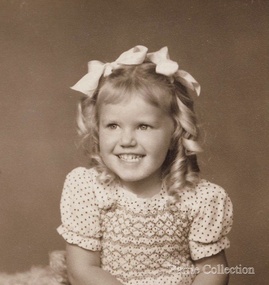 Melton City Libraries
Photograph, Wendy Barrie, Unknown
... Often we would cut across the Common on our way home from school picking up stray golf balls and collecting them from the creek when it dried out. ...Often we would cut across the Common on our way home from school picking up stray golf balls and collecting them from the creek when it dried out. ...Eldest daughter of Edna and Bon Barrie, born on 03 November 1943 in Melbourne, Victoria, Memoirs of Wendy Barrie, recalling the early formative years of life in Melton: In 1949 I started school at Melton State School no 430 and was driven the 2½ miles to there by my parents at first. Later we walked home in the afternoons or were picked up by car as we made our way home along the Western Highway. In 1956 I went to Bacchus Marsh High School. There were 4 students in grade 6 and 3 of us went to the High School. The students from Melton, Melton South and Toolern Vale State Schools went by bus to Bacchus Marsh High School as far a fifth form. My parents drove me to the pick up point and during the five years of travel to High School. The bus travelled via Toolern Vale and later went through Exford and through Parwan. On the return journey in the afternoon the bus went in the reverse direction. The bridge at Exford was an old narrow wooden one, and the students had to get off the bus and walk across, with the driver crossing in the empty bus for safety reasons. There was a travelling allowance paid to parents and it was estimated from the distance the crow flies, a straight line. We lived a Ferris Lane, just where the Harness Racing entrance is now situated about 2 ½ miles by road to school too close to qualify for the subsidy. While at State School Melton we would walk home in a group with the Nixon and Gillespie children, along the main road over the bridge near the Shire Offices and down a hill. I was being dinked on Joyce Gillespie’s bike while holding onto the seat, toppled off the bike striking my chin and teeth on the bitumen and cracking my jaw. I was about 9 years old and stayed a couple of days in the Quamby Hospital in Bacchus Marsh, it seemed like and eternity at the time and quite traumatic being separated from my family. I can remember contemplating how I could get out of the window and run away but realised it was too far to walk home. Often we would cut across the Common on our way home from school picking up stray golf balls and collecting them from the creek when it dried out. We were warned about not accepting lifts from strangers passing along the Melbourne/ Ballarat Road. The only danger we faced was being swooped by the magpies particularly on the open ground on the Common. We were also fairly cautious when the Gypsies camped on the Common in the area just about opposite the small reservoir. “Mum” grandma Myers loved to have us call in on our way home, and usually would cut a slice of Jongebloed’s bread and spread it with home made butter. Sometimes we waited there until we were collected by car, usually driven by our mother. Margaret Nixon and Joyce Gillespie were a few grades ahead of me and Barbara Nixon was born just two months earlier than me. Our mothers were great friends for over 6o years, born in the same month three years apart. They lived within a few days of the same age as each other at the time their deaths. Dad and George Nixon attended Melton school at the same time. Sarah nee Hornbuckle Nixon and my grandfather Frederick Myers Snr were at school together at the same in the 1880s. The Nixon family lived in Keilor Road just past the Toolern Creek near the turnoff. Tom and Ann Collins lived on the southern side of the Western highway and Keilor road intersection. Jim and Ruby Gillespie’s house was further long Keilor road on the right. They backed onto the Myers who lived on the north side of Western Highway east of Myers Gully (Ryans Creek). The Bridge over the Toolern Creek as very narrow and as truck traffic increased there were accidents. One truck took out the side railing and plunged upside down into the bank and into the shallow water. Another fatal accident happened between a car and a truck right in front of the Myers house. Grandfather Fred had been a bike rider all his life, as far as the Riverina in his younger years, wryly made the comment about the drivers the speeding along the Ballarat Road were setting out to kill themselves. The road was busy particularly after the Races at Ballarat when the crowds were hurrying home to Melbourne. Train travel had changed very little from the time my mothers generation to mine. The timetable meant the usual rush to Melton South by bike in her case and if she was running late the train pulled up on the crossing. I was driven to the Station from home past Keith and Mary Gillespie’s house near the Ferris Road rail crossing to Bridge road to Melton South for the 7.32 train. While attending Sunshine High School in 1961 I would meet up with three other students, two of whom I knew from Bacchus Marsh High School days. We usually got into the same compartment on the train, it was a typical country train with a corridor along the side and compartments with a door, roof racks and sometimes heated metal containers for the feet in the winter. Some of the trains came through from Horsham and Ballarat, and the Overland from Adelaide passed through in the evening, we could hear it in the distance from the Ferris Lane home. The carriages had 1st and economy class compartments showing photographs of county scenes and holiday destinations. The engine was the large A class diesel. They are still running to Bacchus Marsh 50 years later, due to the need for the greatly increased number of commuters travelling to work in the city. Sometimes the carriages were pull by a Steam engine, these were a problem in the summer time because the sparks caused fires along the train lines and then quickly spread into the dry grass, crops and stubble. The Motor Train left Spencer Street at 4.23 pm and was the best train for me to catch. Ferris Road was a designated stop and train pulled up on the road crossing. It had steps at the door and rungs to hold while alighting to the ground. The ballast along the tracks was rough and uneven and awkward to land on. The train was painted blue and yellow with the letters VR pained on the front. This saved may parents the afternoon trip to collect me from the Station. On the walk home on the gravel road I would pass Uncle Tom and Aunty May’s house before reaching home. Melva Gillespie was studying at Sunshine Technical School and we sometimes both got off the train at the same time. On other occasions the Motor Train was replaced with a diesel engine with carriages, it was also required to stop and the driver had to be notified in advance. This meant getting into the guards van a Rockbank. It was more difficult alighting from the carriage as the gap was greater and more precarious to swing out and land on the ground. A few times in my last year of study at Melbourne Teachers College in Grattan Street Carlton. I managed to catch the 2.30 pm train to Serviceton, it was express to Melton and was very quick trip. The last train, was the 5.25 pm diesel to Ballarat and I usually caught this train to Melton South Station. On one occasion after being held up on the tram in Bourke street I had to make a mad dash to the platform chasing the train as it was just moving off and yelling to the guard, fortunately I was noticed and the train ground to halt. I scrambled into the end door and took most of the journey home to recover. After the last year at High School I continued to travel on the train, 2 years to Prahran Technical School changing at North Melbourne. There were a lot school children travelling to private schools and some at the primary level and mainly from Bacchus Marsh. Rockbank children also travelled by train from the beginning of their high school years, quite a few went to Sunshine High School. During my third year of teacher training I travelled to Flinders Street to RMIT for ceramics classes and Grattan St Teachers College located in the grounds of Melbourne University. There were many teachers being trained at the Secondary Teachers College due to the baby bulge creating a great shortage of teachers. Sunshine High School was very well represented amongst the different courses in Primary, Secondary and Art and Crafts. I attended Melbourne University lectures, studying a Fine Art subject. Bernard Smith was the most notable of the lecturers. he replaced Professor Joseph Bourke who had taken leave for the years. In 1962 he published the art book “Australian Painting”. The secondary art and craft student teachers from the College were in the majority, taking this subject and were well regarded due to their practical art and craft methods and their teaching round experience. In December 1964 I graduated as a Trained Secondary Teacher – Art and Crafts. The graduating ceremony was held at Wilson Hall. I received my appointment to work at Maryborough High School. Uncle Max and Aunty Rosemary Myers arranged my accommodation. Uncle Max was a teacher at the Maryborough Technical School fat the time. The appointment was suddenly changed when just before the school year was about to start when I received notification that I was now required to move to Warracknabeal High School. I was subject to a bond for the three years of training and three years of teaching and was under an obligation to comply with the directive of the Education Department. My father stood as guarantor when I was accepted as student at the Melbourne Teachers’ College, thus enabling me to receive my teacher training, and a 5 pounds a week allowance for expenses. After teaching for two years at Warracknabeal High School I was fortunate enough the gain a transfer to Sunshine West High School, returning to live at home in Melton and travelling by car to work with a fellow colleague, Jock Smith who lived at Station road Melton. I completed bond obligation and resigned at the end of the year. The employment regulations at that time did not allow the option of leave of absence for, indefinite overseas travel. I returned to Australia in October 1969. Visiting Arthur Hart the Principal of Sunshine High School he arranged with the Education Department for my re-employment at Sunshine High School until the end of the year. In 1970 I was transferred, and returned to Sunshine West High School where I worked for the next three years. In January 1968 I sailed on the “Oriana” to South Hampton with two teaching friends from Warracknabeal High School on a travelling and working holiday. Doreen Kiely, a former Bacchus Marsh High student and fellow train traveller from Bacchus Marsh, was already working in London, had arranged our accommodation at the London Travellers Club Hotel, Braham Gardens, Earls Court SW5. We based our stay at this address in London and travelled around Scotland, Ireland and England. In the summer we took a four month trip around the Continent and the Mediterranean. I registered with The Royal Borough Of Kingston Upon Thames as a Supply teacher, and worked at Chessington School form autumn to spring the following year and living with Mrs Rose Gillies at Kinross Avenue, Worcester Park, Surrey. In the spring of 1969 visiting Norway, Sweden and Finland joining an organised camping group to the Artic Circle, entered Russia at Leningrad (St Petersburg) Moscow, Minsk, to Poland and Czechoslovakia. In August returning to Worcester Park for the flight to Montreal to stay with cousin Lynette and husband Jurgen. A side trip was taken to Toronto, Niagara Falls and New York. The flight home from Montreal to Melbourne took 52 hours. A ½ day break in Vancouver before boarding the Qantas boeing 707 via San Francisco, Honolulu, Fiji, Sydney to Melbourne. Around the world in 21 months. Photographs of Wendy local identities -
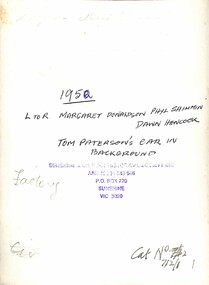 Sunshine and District Historical Society Incorporated
Photograph - A.G. Spaldings Collection, Various
... Spaldings Collection - Newspaper Article - That's a lot of balls, fellahs Gary Buckenara & Tommy Tribe 717.43 - A.G. Spaldings Collection - Golf Illustrated Article - 1943 Memo Defence Contracts Wood Consumption 717.44 - A.G. ...Spaldings Collection - Newspaper Article - That's a lot of balls, fellahs Gary Buckenara & Tommy Tribe 717.43 - A.G. Spaldings Collection - Golf Illustrated Article - 1943 Memo Defence Contracts Wood Consumption 717.44 - A.G. ...A large collection of photos and documents relating to the Spaldings factory in Sunshine. These items were given to the Sunshine & District Historical Society Inc. at a reunion of ex employees of Spaldings held 24th October 2002.717.01 - A.G. Spaldings Collection - L to R Margaret Donaldson, Phyl Shimmin, Dawn Hancock 717.01 - A.G. Spaldings Collection - L to R Margaret Donaldson, Phyl Shimmin, Dawn Hancock Back 717.02 - A.G. Spaldings Collection - Dawn Hancock 717.02 - A.G. Spaldings Collection - Dawn Hancock Back 717.03 - A.G. Spaldings Collection - Gwen Howlett & Phyl Shimmin 717.03 - A.G. Spaldings Collection - Gwen Howlett & Phyl Shimmin Back 717.04 - A.G. Spaldings Collection - Gwen Howlett & Phyl Shimmin 717.04 - A.G. Spaldings Collection - Gwen Howlett & Phyl Shimmin Back 717.05 - A.G. Spaldings Collection - Golf Ball Painting Machine 717.05 - A.G. Spaldings Collection - Golf Ball Painting Machine Back 717.06 - A.G. Spaldings Collection - Golf Ball Painting Machine 717.06 - A.G. Spaldings Collection - Golf Ball Painting Machine Back 717.07 - A.G. Spaldings Collection - Golf Ball Painting Machine Front 717.07 - A.G. Spaldings Collection - Golf Ball Painting Machine Back 717.08 - A.G. Spaldings Collection - Golf Ball Painting Machine 717.08 - A.G. Spaldings Collection - Golf Ball Painting Machine Back 717.09 - A.G. Spaldings Collection - Valda Davies, Maureen Rau, Margaret Baker, Phyl Shimmin, Dorothy Dunn & Dawn Hancock 717.09 - A.G. Spaldings Collection - Valda Davies, Maureen Rau, Margaret Baker, Phyl Shimmin, Dorothy Dunn & Dawn Hancock Back 717.10 - A.G. Spaldings Collection - Faye Unknown, Hanock, Thomson, McDarnid, Flemming, Taylor, Shimmin, Trembath, Dwyer, Omant 717.10 - A.G. Spaldings Collection - Faye Unknown, Hanock, Thomson, McDarnid, Flemming, Taylor, Shimmin, Trembath, Dwyer, Omant, Whiteside, Unknown, Watson & Unknown 717.11 - A.G. Spaldings Collection - Noreen Omant, Dahpne Thomson, Valda Davies, Phyl Shimmin, Iris Handley, M. Memeanett, J. Whiteside, P. Twigg & J. Taylor 717.11 - A.G. Spaldings Collection - Noreen Omant, Dahpne Thomson, Valda Davies, Phyl Shimmin, Iris Handley, M. Memeanett, J. Whiteside, P. Twigg & J. Taylor Back 717.11 - A.G. Spaldings Collection - Noreen Omant, Dahpne Thomson, Valda Davies, Phyl Shimmin, Iris Handley, M. Memmeanett, J. Whiteside, P. Twigg & J. Taylor 717.11 - A.G. Spaldings Collection - Noreen Omant, Dahpne Thomson, Valda Davies, Phyl Shimmin, Iris Handley, M. Memmeanett, J. Whiteside, P. Twigg & J. Taylor Back 717.12 - A.G. Spaldings Collection - Palmer, Watson, Andrews, McKenize, Menhennet, King, Davies, Hanley, Inglis, Hjorth, Shimmin & Omant 717.12 - A.G. Spaldings Collection - Palmer, Watson, Andrews, McKenize, Menhennet, King, Davies, Hanley, Inglis, Hjorth, Shimmin & Omant Back 717.13 - A.G. Spaldings Collection - Phyl Shimmin 717.13 - A.G. Spaldings Collection - Phyl Shimmin Back 717.14 - A.G. Spaldings Collection - Jenny Hill, Doris Leece, Nella Zammit, Vicki Unknown, Karen Millman, Noreen Omant & Phyl Shimmin 717.14 - A.G. Spaldings Collection -- Jenny Hill, Doris Leece, Nella Zammit, Vicki Unknown, Karen Millman, Noreen Omant & Phyl Shimmin Back 717.15 - A.G. Spaldings Collection - Valda Davies, Jack Mawhinney, Phyl Shinnin & Joan Fleming 717.15 - A.G. Spaldings Collection - Valda Davies, Jack Mawhinney, Phyl Shinnin & Joan Fleming Back 717.16 - A.G. Spaldings Collection - Andrews, Kowk, Unkn, Shimmin, Menhennet, McKenzie, Unkn, Unkn, Omant, Inglis, Handley, Watson, Thomson, Taylor & Hjort 717.16 - A.G. Spaldings Collection - Andrews, Kowk, Unknown, Shimmin, Menhennet, McKenzie, Unkn, Unkn, Omant, Inglis, Handley, Watson, Thomson, Taylor & Horth Back 717.17 - A.G. Spaldings Collection - Taylor, Davies, Watson, Thomson, Koek, Omant, Smith, Whitton, Shimmin, Rau, Hampley, Coughlin & Lewis 717.17 - A.G. Spaldings Collection -Taylor, Davies, Watson, Thomson, Koek, Omant, Smith, Whitton, Shimmin, Rau, Hampley, Coughlin & Lewis Back 717.18 - A.G. Spaldings Collection - Ike Burns, Margaret Johnson, Joyce Arnold, Kath Atkins, Max Smith, Phyl Shimmin 717.18 - A.G. Spaldings Collection - Ike Burns, Margaret Johnson, Joyce Arnold, Kath Atkins, Max Smith, Phyl Shimmin Back 717.19 - A.G. Spaldings Collection - Tennis Rackets & Tennis Balls 717.20 - A.G. Spaldings Collection - Tennis Rackets 717.21 - A.G. Spaldings Collection - Tennis Rackets & Basket Balls 717.22 - A.G. Spaldings Collection - Soccer Balls & Bags 717.23 - A.G. Spaldings Collection - John Schmidt, Phyl Simmin, Pieter de Blaun & Arthur Mills 717.23 - A.G. Spaldings Collection - John Schmidt, Phyl Simmin, Pieter de Blaun & Arthur Mills Back 717.24 - A.G. Spaldings Collection - L to R Ron Cameron, Phyl Shimmin, Noel Aldenhoven & Peter Schafer 717.24 - A.G. Spaldings Collection - L to R Ron Cameron, Phyl Shimmin, Noel Aldenhoven & Peter Schafer Back 717.25 - A.G. Spaldings Collection - Van der Hurk, Mills, Tribe, Stucey, Gathercole, May, De Blaun, Shimmin, Omant, Harris, Hume, Clemson & Goudie Back 717.25 - A.G. Spaldings Collection - Van der Hurk, Mills, Tribe, Stucey, Gathercole, May, De Blaun, Shimmin, Omant, Harris, Hume, Clemson & Goudie 717.26 - A.G. Spaldings Collection - Joyce Arnold, Ann Cottee & Margaret Johnson 717.26 - A.G. Spaldings Collection - Joyce Arnold, Ann Cottee & Margaret Johnson Back 717.27 - A.G. Spaldings Collection - Tom Tribe & Barry Priest 717.27 - A.G. Spaldings Collection - Tom Tribe & Barry Priest Back 717.28 - A.G. Spaldings Collection - D. de Blawn, L. Davidson, N. Omant, J. Schmidt, P. Shimmin, P. de Blawn & A. Mills 717.28 - A.G. Spaldings Collection - D. de Blawn, L. Davidson, N. Omant, J. Schmidt, P. Shimmin, P. de Blawn & A. Mills Back 717.29 - A.G. Spaldings Collection - Dave Harris, Noreem Omant & Phyl Shimmin 717.29 - A.G. Spaldings Collection - Dave Harris, Noreem Omant & Phyl Shimmin Back 717.30 - A.G. Spaldings Collection - Factory Maintenance Crew Allan Hariman, Alec Masson, Edgar Schultz & Dave Jones Back 717.30 - A.G. Spaldings Collection - Factory Maintenance Crew Allan Hariman, Alec Masson, Edgar Schultz & Dave Jones 717.31 - A.G. Spaldings Collection - Factory Maintenance Crew Edgar Schultz & Dave Jones Back 717.31 - A.G. Spaldings Collection - Factory Maintenance Crew Edgar Schultz & Dave Jones 717.32 - A.G. Spaldings Collection - Tony Casun (Right) & Unknown (Left) 717.32 - A.G. Spaldings Collection - Tony Casun (Right) & Unknown (Left) Back 717.33 - A.G. Spaldings Collection - Tony Cascun (Middle), Louis (Right), Leone Zerafa (Front) & Unknown (Left) Back 717.33 - A.G. Spaldings Collection - Tony Cascun (Middle), Louis (Right), Leone Zerafa (Front) & Unknown (Left) 717.34 - A.G. Spaldings Collection - Leone Zerafa 717.34 - A.G. Spaldings Collection - Leone Zerafa Back 717.35 - A.G. Spaldings Collection - Spaldings 25 Years Service Roll 717.36 - A.G. Spaldings Collection - 1978 Years Of Service Presentation 717.36 - A.G. Spaldings Collection - 1979 Years Of Service Presentation 717.36 - A.G. Spaldings Collection - 1980 Years Of Service Presentation 717.36 - A.G. Spaldings Collection - 1981 Years Of Service Presentation 717.36 - A.G. Spaldings Collection - 1982 Years Of Service Presentation 717.36 - A.G. Spaldings Collection - 1983 Years Of Service Presentation 717.36 - A.G. Spaldings Collection - 1984 Years Of Service Presentation 717.36 - A.G. Spaldings Collection - 1985 Years Of Service Presentation 717.36 - A.G. Spaldings Collection - 1986 Years Of Service Presentation 717.36 - A.G. Spaldings Collection - 1987 Years Of Service Presentation 717.36 - A.G. Spaldings Collection - 1988 Years Of Service Presentation 717.36 - A.G. Spaldings Collection - 1989 Years Of Service Presentation 717.37 - A.G. Spaldings Collection - Spalding On Q Newsletter Volume 3 No 4 April 1972 717.37 - A.G. Spaldings Collection - Spalding On Q Newsletter Volume 4 No 3 March 1973 717.37 - A.G. Spaldings Collection - Spalding Questor World Newsletter Volume 5 No 9-11 Sept, Oct - Nov 1974 717.37 - A.G. Spaldings Collection - Spalding Questor World Newsletter Volume 7 No 1-3 Jan - March 1976 717.37 - A.G. Spaldings Collection - Spalding Questor World Newsletter Volume 7 No 4-7 April - July 1976 717.37 - A.G. Spaldings Collection - Spalding Spalding Questor World Newsletter Volume 6 No 1-2 Dec 1974 & Jan - Feb 1975 717.37 - A.G. Spaldings Collection - Spalding Spalding Questor World Newsletter Volume 6 No 5-6 May - June 1975 717.37 - A.G. Spaldings Collection - The Spalding Star Newsletter Volume 1 No 1 August 1988 717.37 - A.G. Spaldings Collection - The Spalding Start Newsletter January 1989 717.38 - A.G. Spaldings Collection - 1990 Years Of Service Awards 717.38 - A.G. Spaldings Collection - 1991 Years Of Service Awards 717.38 - A.G. Spaldings Collection - 1992 Years Of Service Awards 717.38 - A.G. Spaldings Collection - 1993 Years Of Service Awards 717.38 - A.G. Spaldings Collection - 1994 Years Of Service Awards 717.38 - A.G. Spaldings Collection - 1995 Years Of Service Awards 717.38 - A.G. Spaldings Collection - 1996 Years Of Service Awards 717.39 - A.G. Spaldings Collection - Social Annual General Meeting Minutes 1953 - 1976 717.40 - A.G. Spaldings Collection - 1976 Price List Effective 1st January 1976 717.40 - A.G. Spaldings Collection - 1976 Price List Effective 1st May 1976 717.40 - A.G. Spaldings Collection - 1977 Price List Effective 1st August 1977 717.40 - A.G. Spaldings Collection - 1977 Price List Effective 1st January 1977 717.40 - A.G. Spaldings Collection - 1978 Export Price List 1st August 1978 717.40 - A.G. Spaldings Collection - 1978 Price List Effective 1st February 1978 717.40 - A.G. Spaldings Collection - 1979 Price List Effective 1st December 1979 717.41 - A.G. Spaldings Collection - The Spalding Social & Sports Club Journal From 1934 717.42 - A.G. Spaldings Collection - Newspaper Article - That's a lot of balls, fellahs Gary Buckenara & Tommy Tribe 717.43 - A.G. Spaldings Collection - Golf Illustrated Article - 1943 Memo Defence Contracts Wood Consumption 717.44 - A.G. Spaldings Collection - Golf Illustrated Article - Spaldings From The Beginning Page 72 717.44 - A.G. Spaldings Collection - Golf Illustrated Article - Spaldings From The Beginning Page 73 717.44 - A.G. Spaldings Collection - Golf Illustrated Article - Spaldings From The Beginning Page 74 717.45 - A.G. Spaldings Collection - The Factory 717.47 - A.G. Spaldings Collection - Reunion 2002 R - L Stan Henry, Mrs. Betty Henry, Frank Saliba, John Willaton & Laurie Mottin 717.48 - A.G. Spaldings Collection - Reunion 2002 R - L Stan Henry, Mrs. Betty Henry, Frank Saliba, Mrs Saliba & Laurie Mottin 717.49 - A.G. Spaldings Collection - Reunion 2002 Norm Carlton 717.50 - A.G. Spaldings Collection - Reunion 2002 L - R Frank Ford & Norm Carlton 717.51 - A.G. Spaldings Collection - Reunion 2002 L - R Frank Ford, Unknown & Norm Carlton 717.52 - A.G. Spaldings Collection - Reunion 2002 L - R Frank Ford, Unknown & Norm Carlton 717.53 - A.G. Spaldings Collection - Reunion 2002 Unknown 717.54 - A.G. Spaldings Collection - Reunion 2002 L - R Noram Carlton & Unknown 717.55 - A.G. Spaldings Collection - Reunion 2002 Unknown 717.56 - A.G. Spaldings Collection - Reunion 2002 L - R Norm Carlton & Phyl Shimmin 717.57 - A.G. Spaldings Collection - Reunion 2002 Unknown 717.58 - A.G. Spaldings Collection - Reunion 2002 Unknown 717.59 - A.G. Spaldings Collection - Reunion 2002 L - R Norm Carlton & Unknown 717.60 - A.G. Spaldings Collection - Reunion 2002 L - R Norm Carlton & Ron Cameron 717.61 - A.G. Spaldings Collection - Reunion 2002 L - R Unknown, Unknown, Unknown & Phyl Shimmin 717.62 - A.G. Spaldings Collection - Reunion 2002 Crowd 717.63 - A.G. Spaldings Collection - Reunion 2002 3rd From Left Norm Carlton & 5th From Left John Willaton 717.64 - A.G. Spaldings Collection - Reunion 2002 Front L - R W. O'Brien, Mrs M. Harrison, D. Parsons & D. Webster 717.65 - A.G. Spaldings Collection - Reunion 2002 Front L - R Les Noble, Wally O'Brien & Unknown 717.66 - A.G. Spaldings Collection - Reunion 2002 Crowd 717.67 - A.G. Spaldings Collection - Reunion 2002 Crowd 717.68 - A.G. Spaldings Collection - Reunion 2002 Eric Wegener At Table 717.69 - A.G. Spaldings Collection - Reunion 2002 Crowd 717.70 - A.G. Spaldings Collection - Reunion 2002 Crowd 717.71 - A.G. Spaldings Collection - Reunion 2002 L - R Unknown, Unknown, Unknown & Unknown 717.72 - A.G. Spaldings Collection - Reunion 2002 Spaldings Products 717.73 - A.G. Spaldings Collection - Reunion 2002 L - R Unknown, Unknown, Unknown & Unknown 717.74 - A.G. Spaldings Collection - Reunion 2002 L - R Unknown, Unknown, Unknown & Unknown 717.75 - A.G. Spaldings Collection - Reunion 2002 L - R Unknown, Unknown, Unknown & Unknown 717.76 - A.G. Spaldings Collection - Reunion 2002 L - R Unknown & Unknown 717.77 - A.G. Spaldings Collection - Reunion 2002 L - R Unknown, Unknown & Unknown 717.78 - A.G. Spaldings Collection - Reunion 2002 L - R Unknown, Unknown, Unknown, Unknown & Unknown 717.79 - A.G. Spaldings Collection - Reunion 2002 Norm Carlton & Unknown 717.80 - A.G. Spaldings Collection - Reunion 2002 L - R Unknown & Unknown 717.81 - A.G. Spaldings Collection - Reunion 2002 Mrs B. Foxcroft 717.82 - A.G. Spaldings Collection - Reunion 2002 2002 Norm Carlton & Unknown 717.85 - A.G. Spaldings Collection - Index Folder (Blank) 717.86 - A.G. Spaldings Collection - Visitors Book 717.86 - A.G. Spaldings Collection - Visitors Book 10th April 2015 717.86 - A.G. Spaldings Collection - Visitors Book 28th April 2015 717.86 - A.G. Spaldings Collection - Visitors Book Schools Exhibition October 2016 717.87 - A.G. Spaldings Collection - Reunion 2002 - Spaldings Reminiscence Day Large Flyer 717.87 - A.G. Spaldings Collection - Reunion 2002 - Spaldings Reminiscence Day Small Flyer 717.87 - A.G. Spaldings Collection - Reunion 2002 Documents - A Glimpse From The Past By Alma Smith 717.87 - A.G. Spaldings Collection - Reunion 2002 Documents - How Tennis Balls Are Made 717.87 - A.G. Spaldings Collection - Reunion 2002 Documents - How Tennis Rackets Are Made 717.87 - A.G. Spaldings Collection - Reunion 2002 Documents - Letter Norm Anderson 717.87 - A.G. Spaldings Collection - Reunion 2002 Documents - Newspaper Article A Tribute To The Past P. Shimmin, R. Cameron & N. Carlton 717.87 - A.G. Spaldings Collection - Reunion 2002 Documents - Newspaper Article Spalding Returns Serve J. May, P. Shimmin, N. Omant & J. Arnold 717.87 - A.G. Spaldings Collection - Reunion 2002 Documents - Reunion Attendence List No 1 717.87 - A.G. Spaldings Collection - Reunion 2002 Documents - Reunion Attendence List No 2 717.87 - A.G. Spaldings Collection - Reunion 2002 Documents - Spaldings Family Planning Reunion D. Coupe, P. Shimmin & R. Cameron 717.87 - A.G. Spaldings Collection - Reunion 2002 Documents - Spaldings Sporting Goods Products 717.87 - A.G. Spaldings Collection - Reunion 2002 Documents - Splading Our Fifty Years In Australia 717.88 - A.G. Spaldings Collection - Spaldings Cricket Team Premiers B Grade Season 1936-37 Team Photographspaldings, ballarat road, sunshine north -
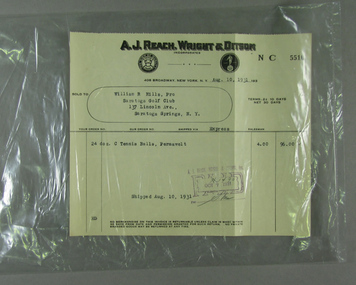 Tennis Australia
Invoice, 10-Aug-31
... An invoice from Reach, Wright & Ditson, addressed to Saratoga Golf Club, for 24 dozen Permawelt tennis balls. Materials: Paper, Ink...Tennis An invoice from Reach, Wright & Ditson, addressed to Saratoga Golf Club, for 24 dozen Permawelt tennis balls. Materials: Paper, Ink Invoice ...An invoice from Reach, Wright & Ditson, addressed to Saratoga Golf Club, for 24 dozen Permawelt tennis balls. Materials: Paper, Inktennis -
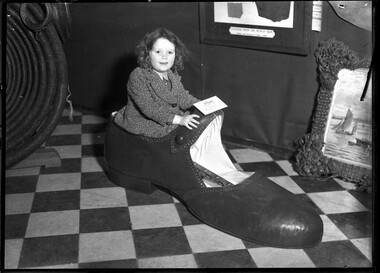 City of Melbourne Libraries
Photograph, Bull, Hugh Jones, 1897-1993, Leather Exhibition, Melbourne Town Hall
... golfers. Further variety is given to the exhibition by the display of antique hides, brightly coloured, with punching balls, boxing gloves and batsman's pads. ...golfers. Further variety is given to the exhibition by the display of antique hides, brightly coloured, with punching balls, boxing gloves and batsman's pads. ...Photographer notations on slide: At the Leather Exhib. at T. Hall Melb 1933 Age Published: Age (Melbourne, Vic.: 1854- ), 1933 THE EXHIBITS. (1933, September 20). The Age (Melbourne, Vic. : 1854 - 1954), p. 16. Retrieved January 25, 2026, from http://nla.gov.au/nla.news-article205109730 Published title: THE EXHIBITS. A COMPREHENSIVE RANGE. Curios, Novelties, Working Displays Published Caption: ONE OF THE NOVELTIES – AN OUTSIZE IN SHOES Research by Project Volunteer, Louise McKenzie: Our photo is dated 20 September 1933, and shows a happy, chubby-faced young girl sitting in a very over-sized girl’s shoe. It is labelled – “Shoe, An Out Size, loaned by Messrs Blackman & Rose”. (1) It is an effective way to capture the attention of the readership and alert them to the Melbourne Leather Show 1933. This show was designed to be a drawcard of extraordinary proportion, and there is no doubt that this leather exhibition was a really big deal for Melbourne. It completely took over the Melbourne Town Hall, and was open from 10.30 am until 10.30 pm. It seemed to contain something for everyone – the military, the man about town, the home handyman, the housewife, the child, the sporting types, the domestic workers, the outdoor enthusiasts, the horseracing fans, car enthusiasts, those wishing to show off the latest fashion – both men and women - and those just intrigued by a lot of fascinating and wide ranging exhibits. One of the most comprehensive descriptions of the Exhibition accompanies the photograph, and is worth quoting in full: “PROMINENT among exhibits which first attract attention in the foyer of the Town Hall is a comprehensive display of leather articles used by the defence forces. A conspicuous legend states that leather plays an important part in national defence, being used for saddlery, tool containers, holdalls, range-finding, surveying and signalling equipment, explosives factories, harness accoutrement, bandsmen's equipment and clothing. Three models of horses and several figures of soldiers wearing leather equipment illustrate the lesson, and a great range of leather goods used in military training and work variegate the display. Nearby are Texas cowboy, buckjumping and breaking-in saddles; whips, a walking stick, made of leather and numerous other curios. The general exhibition occupies the whole floor space of the main Town Hall, and is subdivided by partitions running most of the length of the hall. A bewildering variety, of leather goods presses for close and leisured inspection. Here and there operatives in charge of working machinery give practical demonstrations of factory processes in the production of footwear. Polishing materials are well represented. One attractive exhibit includes two bush huts constructed of leather, with wattle bark for roofing. Opossums, rosellas and a kookaburra add touches of bush realism. Adjacent exhibits include bags, fishing boots, leggings, leather covers in all colours. Factory Processes. One exhibitor has installed an automatic cinema apparatus and screen, which projects various factory processes in making a shoe, the operator being shown at work. Elsewhere an interesting exhibit depicts the five stages in the manufacture of sole leather, and the tanning materials employed. "Very handsome effects are achieved in the interior appointments of motor cars, which are attended by figures of smart chauffeurs in leather coats. Motor-trimming leather is said to be more durable and hygienic than fabric materials, and cheaper. The neat finish of the material, its excellent appearance, certainly make a very favourable impression. It takes the hides of three beasts to cover the cushions, squabs and door panels of a full-sized sedan, while to finish the entire interior, including quarter-panels and head linings would take four or even five. Special Exhibits. Amongst the special sections the display arranged by the handicrafts and home industries- committee of the Country Women's Association of Victoria is a notable one. In all there are about 130 entries which are in four classifications, viz., hand-tooled or embossed leathers, suede, hand-made gloves and undecorated leather. The glove section attracted the most numerous entries, a number being the work of members and craft subscribers of the Country Women's Association. In the leathercraft competition, organised by the Country Women's Association, the judges yesterday awarded the first prize for bookbinding (the only prize given in this division) to Miss M. Alston, of South Yarra. There is also a creditable display of exhibits submitted by boys of the orthopaedic section of the Children's Hospital at Frankston. Amongst the novelties on view in other portions of the exhibition were the following: — Leather coats worn by Sir C. Kingsford Smith on his Atlantic flight. Model Wellington boot, Phar Lap's saddle. Melbourne Cup winner's saddle. Longest whip in world, 108 feet long. (33 metres) [See our photo, to left of Girl in Shoe] Diminutive shoes. Pair of shoes 65 years old. Pair of men's working boots 75 years old. Larwood's, Tate’s and Pataudi’s cricket boots. [Three internationally revered cricketers of the day] (2) Picture frame made of leather bought 63 years ago. [See our photo, to right of Girl in Shoe] Leather frame, powder bowl, &c. Saddle used by world's champion buckjumper in U.S.A. Mexican cowboy outfit. Miniature saddle and bridle. A fireman's helmet made of sole leather. (3) Sample of the leather hat worn by porters at the Billingsgate Fish Market, London. (4) From South Australia there have been obtained sets of harness for donkeys, goats and camels, the equipment being displayed to good advantage on stuffed representations of the animals mentioned. Close to the platform is a glass case containing snow shoes and coats which have been used in Antarctic exploration work. Trade Display. Amongst the trade exhibits may be seen in operation a slipper turn shoe sewing machine, with heeling and channelling facilities, and the various stages in the production of ladies' sandals are shown. There is a wide contrast between sole leather of varying degrees of thickness on view in one stall and the choice samples of ladies' footwear in another — footwear, by the way, which could almost be used as ornaments, so dainty in colour and production are they. Again, there are displays of upholstering leathers of such soft texture that they could he readily mistaken for some of the finest cloth. Those who may be particularly interested in the production of chamois leather may gain an insight into the materials and chemicals used in the "working up” of this variety of leather. Supplies of glace kid (5) are tastefully arranged, and there may also be seen bags of all shapes and sizes, including satchels, suit cases and "sporting" cases, and bags for tennis players and golfers. Further variety is given to the exhibition by the display of antique hides, brightly coloured, with punching balls, boxing gloves and batsman's pads. There are crocodile skins and snake skins so cleverly "Worked up" that one could be almost pardoned for betraying an affection for such unpopular creatures.” “ Another wonderful article on this Exhibition, published the same day in one of the opposition daily newspapers, The Argus, is in the weekly article “Women to Women”, entitled “A Great Victorian Industry: Many Uses for Leather”. This weekly column was penned by Vesta, and she writes, with much purpose: “Yesterday afternoon I paid a hurried visit to the Leather Exhibition now being held in the Melbourne Town Hall and I was disappointed to find that the early visitors to the main exhibition were almost all men. Women, I think, should make a point of seeing every exhibition of our great industries, for women are the buyers of household requisites and goods for their own use and their tastes, and opinion influence also, to a large extent, the purchases of men. So, the welfare of industries is more or less in their hands and it becomes a duty for them to inform themselves fully of the extent and the quality of the manufacturing that is done here. The value of the output of the Australian boot and shoe factories alone was in 1930-31, the latest year for which the figures are given, Stg 3,750,000. Fully two thirds of that amount must have been spent by women on boots and shoes for themselves and their children. In a host of other directions, in the purchase of handbags, travelling bags, belts and straps, cushions, furniture coverings, purses, notebooks, spectacle cases, their annual expenditure must be very high. Their interest, therefore, in this industry is practical, and their support of it should be governed by knowledge of comparable values and qualities of the goods they buy. From the point of view of women, however, the exhibition itself is rather disappointing. There is an amazing collection of good stuff on show, but most of it is not displayed in a fashion that attracts attention. I was surprised, for example, at the range and quality of the leathers displayed, the suppleness of the finer qualities, and the varied range of colours and designs. But they are shown in such a fashion that if one set out deliberately to look for them it would be quite easy to miss most of them.” …It was surprising, too, that no one seemed to have taken advantage of the present fashion of wearing coloured gloves, or the cult of glove making, which the Country Women’s Association has fostered so successfully. Outside the collection of chamois leathers I saw no skins which were suitable to glove making. (6) However, it is perhaps a little unfair to be highly critical of the exhibition, inasmuch as it is the first of its kind. The material is there, undoubtedly, for a splendid show of every phase of this enterprising industry, and I am confident that experience will prove to those concerned that it will be worth while next time to devote a great deal of attention of the method of display.” With further research, it transpires that “Vera” is in fact NZ born Stella May Allen (nee Henderson) (1871-1962), a journalist, the first woman in NZ to begin a law course, in 1890-91). She later worked at a law firm while she completed her degree. Study of the law had always been open to women in NZ, but its practice was still barred to them. Her case “…led to amending legislation in 1896 allowing women to practise as barristers or solicitors. However, on gaining her LL.B. in November 1897 she did not apply for admission to the Bar. Instead, she became the Wellington-based correspondent and leader-writer for the Lyttelton Times. Her appointment, the first for a woman, was not welcomed by the all-male Press Gallery, and special permission had to be obtained from a subcommittee of the House before her presence was accepted. In 1900 she married Edwin Allen, a senior leader-writer for the Wellington Evening Post, and they moved to Australia in 1903 when Edwin Allen took up the post of foreign affairs leader-writer and parliamentary man for the Melbourne Argus. As Patricia Keep notes in her excellent entry of Stella Allan in the Australian Dictionary of Biography: “In 1907 The Argus commissioned her to write a series of articles on the first Australian Women's Work Exhibition held in October. They aroused much interest and next year The Argus invited her to join its full-time staff and begin a weekly section on the particular interests of women. She adopted the nom de plume 'Vesta' and called the column 'Women to Women'. Her work was unique in an Australian daily paper at that time. Her pages extended to cover every aspect of women's affairs, children's interests and community welfare, and 'Vesta' became a household word for authoritative information and advice on such matters. An excellent needlewoman and first-rate cook herself, she thoroughly tutored her staff in the work and needs of women in both country and city, as well as providing the usual training for cadet journalists. She conducted interviews and also visited the country to see at first hand the results of bushfires, mouse plagues, droughts and floods. In 1910 she was one of three women foundation members of the Australian Journalists' Association. “…she found time to become deeply involved in community affairs. She was an original committee-member of the Victorian Association of Crèches and of the Free Kindergarten Union of Victoria, and had much to do with the early days of the Victorian Bush Nursing Association, the Baby Health Centres Association and the Queen Victoria Hospital. She was a member of the National Council of Women, first in New Zealand and then in Melbourne, and of the Country Women's Association from its inception. … in 1924 she was appointed substitute delegate for Australia to the fifth assembly of the League of Nations at Geneva and was a delegate to the second Pan Pacific Women's Conference in Hawaii in 1930. A meeting held in the Melbourne Town Hall in 1938 by representatives of all the main Victorian women's organizations paid special tribute to her work and influence. She retired next year to England where she continued to write for the Argus, contributing articles on the experiences of women and children in wartime.” It is little wonder that “Vesta” was unafraid to take to task both the women of Victoria, and those who created the exhibition! One item which appears to have gone unnoticed, or at least unreported, is a framed article in the background of the photo of the chubby girl in the shoe. The display frame is labelled “Leather from the Human Skin, Tanned and Dressed by French artists.” The exhibition was certainly a cabinet of curiosities! A charming article in The Argus is a nice note on which to end. It gives a quick history and overview of the Australian leather industry and its unprecedented, and possibly unexpected, development and success, and states with pride: “Though Victoria is the largest leather producer in the Commonwealth all tanners in the Commonwealth can look back with pride on the long march of progress.” Footnotes: (1) “Blackman and Rose”. Messrs Blackman and Rose were shoe manufacturers, from 1927 located at 200 Noone Street, Clifton Hill. The Melbourne Circle describes their building as a “fine-looking building in the Federation ‘blood and bandage’ style.” It was built around 1912 for Puttifoot and Bloom, boot manufacturers, and today the building is apartments. (2) These cricketers were household names in the day: Tate: Maurice Tate, “English cricketer of the 1920s and 1930s, and leader of England’s Test bowling attack for a long time during this period. The founder of modern seam bowling. “ Larwood: Harold Larwood, “English right-arm fast bowler and the main exponent of the bowling style known as “bodyline”. Used to considerable effect in the 1932-33 Test series in Australia. Pataudi: Iftikhar A K Pataudi, “an Indian prince who in the 1930s played Test cricket for England, and in the 1940s played Test cricket for India (as Captain) – the only test cricketer to have played for both India and England. (3) “sole” leather “… is the thickest and most resistant material existing in the tanning industry … made from vegetable tanned leathers, usually bovine butts, processed in a special way to make them the hardest type of leather in existence.” (4) The hats worn by porters at Billingsgate Fish Market were also known as a “Bobbin” and look quite squat and rather unsophisticated. They were made of wood and tarred leather, with a “flat, hardened top designed to support large rectangular boxes of fish. The upturned brim protected the porter’s head against fish juice draining from the boxes of fish which would be carried on top of the hat. Some hats featured a small drain hole at the rear to allow this collected juice to drain down the back of the carrier. The hats were made using the ‘cuir bouilli’ technique. The leather was immersed in water which was heated until the leather began to shrink. It was then removed and put on a wooden former. The leather was stitched together to make the hat while still wet, and then held in place until dry.” (See article and photo on the London Museum website) (5) Glace kid – described on the Boston Museum of Fine Arts’ Cameo database as “A smooth glossy leather originally prepared from goat or sheepskin. Early glace kid had a shiny surface that was originally prepared by tawing the skin in a mixture of alum, table salt, flour, and egg yolk. Today, glace kid is prepared from many types of vegetable or chrome tanned leathers. The smooth polished surface is obtained mechanically by shaving, glazing, ironing, and/or rolling the dry leather.” (6) In the 1930s, Melbourne’s glovemaking industry was characterised by local manufacturing, with key producers like Simpson’s Gloves Pty Ltd in Richmond and the Stagg Glove Company in Clifton Hill leading the market. These factories produced high-quality leather gloves, handbags, and specialty gear, often employing a clear gendered division of labour and training young, local women. Museum Victoria holds the Simpson’s Gloves Collection, comprising over 1200 items, and the University of Melbourne Archives holds the company’s business records. References: THE EXHIBITS. (1933, September 20). The Age (Melbourne, Vic. : 1854 - 1954), p. 16. Retrieved January 25, 2026, from http://nla.gov.au/nla.news-article205109730 EXPORT LEATHER. (1929, September 17). The Argus (Melbourne, Vic. : 1848 - 1957), p. 17. Retrieved January 19, 2026, from http://nla.gov.au/nla.news-article4037647 LEATHER EXHIBITION (1933, September 18). The Argus (Melbourne, Vic. : 1848 - 1957), p. 10. Retrieved January 19, 2026, from http://nla.gov.au/nla.news-article11693362 (1933, September 23). The Argus (Melbourne, Vic. : 1848 - 1957), p. 21. Retrieved January 19, 2026, from http://nla.gov.au/nla.news-page522766 WOMEN TO WOMEN (1933, September 20). The Argus (Melbourne, Vic. : 1848 - 1957), p. 13. Retrieved January 19, 2026, from http://nla.gov.au/nla.news-article11694034 Australian Dictionary of Biography, Stella May Allan (1871–1962) https://adb.anu.edu.au/biography/allan-stella-may-4998 WOMEN TO WOMEN (1930, January 22). The Argus (Melbourne, Vic. : 1848 - 1957), p. 13. Retrieved January 19, 2026, from http://nla.gov.au/nla.news-article4063888 Museums Victoria, Simpson’s Gloves, 486-496 Victoria Street, North Richmond, VIC, Australia https://collections.museumsvictoria.com.au/articles/2702 The Argus. (1927, October 31). The Argus (Melbourne, Vic. : 1848 - 1957), p. 20. Retrieved February 7, 2026, from http://nla.gov.au/nla.news-article3888451 Melbourne Circle: stories from the suburbs: “Boots and all in Clifton Hill” https://melbournecircle.net/2015/11/20/bootmakers-of-clifton-hill/ Wikipedia, Maurice Tate, https://en.wikipedia.org/wiki/Maurice_Tate Wikipedia, Harold Larwood, https://en.wikipedia.org/wiki/Harold_Larwood Wikipedia, Iftikhar Ali Khan Pataudi, https://en.wikipedia.org/wiki/Iftikhar_Ali_Khan_Pataudi Buy Leather Online Italy, Sole leather: https://buyleatheronline.com/en/blog/outsole-and-insole-leather-n7 London Museum, Porters hats, https://www.londonmuseum.org.uk/collections/v/object-731122/hat-porters-hat/ Cameo Database, Museum of Fine Arts, Boston, Glace Kid, https://cameo.mfa.org/wiki/Glac%C3%A9_kid VICTORIAN LEATHER HAS WON RENOWN (1937, September 22). The Argus (Melbourne, Vic. : 1848 - 1957), p. 31 (March of Progress Supplement). Retrieved February 7, 2026, from http://nla.gov.au/nla.news-article1108704 Photographer notations on slide: "At the Leather Exhib. at T. Hall Melb 1933 Age B5".displays, melbourne town hall, leather, children, shoes, 1930-1939, industry, hats, gloves
