
Showing 78 items matching "great britain army"
-
 Mrs Aeneas Gunn Memorial Library
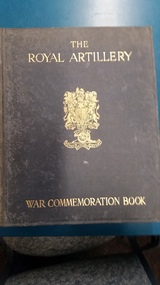
Book, Published on behalf of the R.A. War Commemoration Fund by G. Bell and Sons, The Royal artillery war commemoration book : a regimental record, written and illustrated for the most part by artillerymen, while serving in the line during the great war, 1920
... Great Britain - Army - Royal Artillery......Great Britain. Army. Royal Regiment of Artillery....Great Britain - Army - Royal Artillery World War 1914-1918 - Regimental histories - Great Britain A history of the Royal Artillery during the Great War Ill, p.408. ...A history of the Royal Artillery during the Great WarIll, p.408.non-fictionA history of the Royal Artillery during the Great Wargreat britain - army - royal artillery, world war 1914-1918 - regimental histories - great britain -
 Mrs Aeneas Gunn Memorial Library
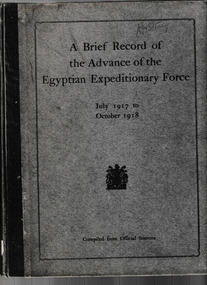
Book, Government Press and Survey of Egypt, A Brief record of the advance of the Egyptian Expeditionary Force under the command of General Sir Edmund H.H. Allenby, G.C.B., G.C.M.G. : July 1917 to October 1918, 1919
... ...Great Britain, Army, Egyption expeditionary force..... : July 1917 to October 1918 Book Government Press and Survey of Egypt Great Britain, Army, Egyption expeditionary force. ...Order of battle of the Egyptian Expeditionary Force with which are included the names of general officers and a brief record of service of the major formations also brief records of the work of various branches of the Army and brief record of the work of the Royal Air Force.Ill, maps, p.113.non-fictionOrder of battle of the Egyptian Expeditionary Force with which are included the names of general officers and a brief record of service of the major formations also brief records of the work of various branches of the Army and brief record of the work of the Royal Air Force.world war 1914-1918 - campaigns - middle east, general sir edward h h allenby -
 National Vietnam Veterans Museum (NVVM)
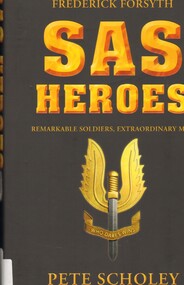
Book, Scholey, Pete, SAS Heroes: Remarkable Soldiers, Extraordinary Men, 2008
... Great Britain. Army. Special Air Service Regiment...Great Britain. Army. Special Air Service Regiment Great Britain. ...Don't look for medals; you're SAS - much more is expected of you.Don't look for medals; you're SAS - much more is expected of you.great britain. army. special air service regiment, great britain. army. special air service -- history. -
 Mrs Aeneas Gunn Memorial Library
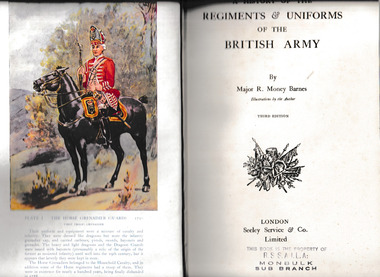
Book, Seeley Service, A history of the regiments and uniforms of the British army, 1954
... Great Britain - Army - History...Great Britain - Army - History Great Britain - Army - Uniforms A history of the regiments and uniforms of the British army with illustrations in colour Index, ill, p.333. ...A history of the regiments and uniforms of the British army with illustrations in colourIndex, ill, p.333.non-fictionA history of the regiments and uniforms of the British army with illustrations in colourgreat britain - army - history, great britain - army - uniforms -
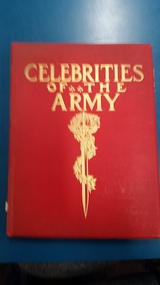 Mrs Aeneas Gunn Memorial Library
Book, G. Newnes, Celebrities of the army, 1900
... Great Britain - Army - Biography...Great Britain - Army - Biography Great Britain - Army - History A collection of biographical sketches of British army commanders Ill,p.144. ...A collection of biographical sketches of British army commandersIll,p.144.non-fictionA collection of biographical sketches of British army commandersgreat britain - army - biography, great britain - army - history -
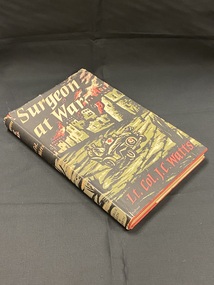 Returned Nurses RSL Sub-branch
Book - Hardcover book, J.C.Watts, Surgeon at War, 1955
... ...Great Britain. Army. -- Surgeons -- Biography...World war two WWII World War 2 Great Britain. Army. -- Surgeons -- Biography Great Britain. ...Colonel Watts experiences as an Army surgical specialist throughout various countries in the Second World war and Korean War.Red hardcover book with black dustjacket. The dustjacket has a drawn image that wraps around the front cover and spine in green red and black, it shows a medical jeep with a driver and three other men going between buildings and strings of barbed wire. non-fictionColonel Watts experiences as an Army surgical specialist throughout various countries in the Second World war and Korean War.world war two, wwii, world war 2, great britain. army. -- surgeons -- biography, great britain. army. -- medical care, korean war -
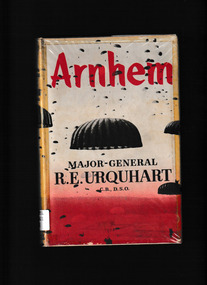 Monbulk RSL Sub Branch
Book, RE Urquhart, Arnhem, 1958
... great britain - army - 1st airborne division...great britain - army - 1st airborne division battle of arnhem 1944 Major-General Urquhart commanded the 1st British Airborne Division in Operation Market Garden, the greatest airbone assault of World War II, the struggle to capture Arnhem and win control of the bridge across the lower Rhine. ...Major-General Urquhart commanded the 1st British Airborne Division in Operation Market Garden, the greatest airbone assault of World War II, the struggle to capture Arnhem and win control of the bridge across the lower Rhine. The story of the 1st Airborne Division at Arnhem involved not only an Airborne Corps of three Divisions but also the bulk of the British 2nd Army in Europe. Gen. Urquhart has told the story of those fateful nine days clearly, frankly and, despite the terrible circumstances, not without humour.Index, maps, ill, p.239.non-fictionMajor-General Urquhart commanded the 1st British Airborne Division in Operation Market Garden, the greatest airbone assault of World War II, the struggle to capture Arnhem and win control of the bridge across the lower Rhine. The story of the 1st Airborne Division at Arnhem involved not only an Airborne Corps of three Divisions but also the bulk of the British 2nd Army in Europe. Gen. Urquhart has told the story of those fateful nine days clearly, frankly and, despite the terrible circumstances, not without humour. great britain - army - 1st airborne division, battle of arnhem 1944 -
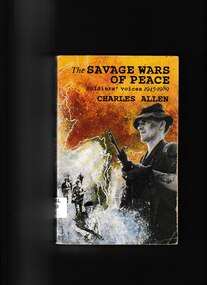 Monbulk RSL Sub Branch
Book, Futura Publications, The savage wars of peace: Soldiers voices 1945-1989, 1990
... great britain - army - military life...great britain - army - military life great britain - military - personal narratives Since the second world war the British army has been engaged in armed conflict around the world in every year except 1968. ...Since the second world war the British army has been engaged in armed conflict around the world in every year except 1968. This book is the fighting soldiers view of these campaigns.Index, ill (plates), p.281.non-fictionSince the second world war the British army has been engaged in armed conflict around the world in every year except 1968. This book is the fighting soldiers view of these campaigns.great britain - army - military life, great britain - military - personal narratives -
 Monbulk RSL Sub Branch
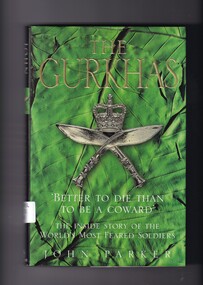
Book, John Parker, The Gurkhas: The inside story of the worlds most feared soldiers, 1999
... great britain - army - history...great britain - army - history ghurkha soldiers The author has travelled in Nepal and met many Gurkhas to investigate the background to their traditional service to Britain and the threat that this is now under. ...The author has travelled in Nepal and met many Gurkhas to investigate the background to their traditional service to Britain and the threat that this is now under. He recounts famous battles when they collected VC's and earned admiration.Index, ill (b/w plates), maps, p.276.non-fictionThe author has travelled in Nepal and met many Gurkhas to investigate the background to their traditional service to Britain and the threat that this is now under. He recounts famous battles when they collected VC's and earned admiration.great britain - army - history, ghurkha soldiers -
 Monbulk RSL Sub Branch
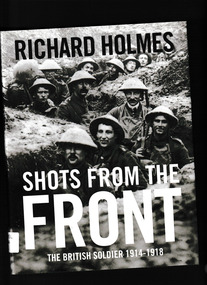
Book, Harper Press, Shots from the front : the British soldier 1914-18, 2008
... ...great britain - army - military life...World War 1914 -1918 - Pictorial works great britain - army - military life Leading military historian Richard Holmes has selected over 200 rare and unusual photographs to illustrate the wide range of the British Army's experience in the First World War - on all fronts, from Mesopotamia (Iraq) and Gallipoli to the Flanders trenches." ...Leading military historian Richard Holmes has selected over 200 rare and unusual photographs to illustrate the wide range of the British Army's experience in the First World War - on all fronts, from Mesopotamia (Iraq) and Gallipoli to the Flanders trenches." "The book's topics include the preparations for war and the mobilisation of 1914; the 'roses of no-man's land' - the contribution made by nurses; 'blighty ones and other ones' - the wounded and their treatment; 'brother lead and sister steel' - soldiers and their weapons; scenes from the battlefield and the campaigns where Tommies fought; the armistice and its aftermath.Ill, p.240.non-fictionLeading military historian Richard Holmes has selected over 200 rare and unusual photographs to illustrate the wide range of the British Army's experience in the First World War - on all fronts, from Mesopotamia (Iraq) and Gallipoli to the Flanders trenches." "The book's topics include the preparations for war and the mobilisation of 1914; the 'roses of no-man's land' - the contribution made by nurses; 'blighty ones and other ones' - the wounded and their treatment; 'brother lead and sister steel' - soldiers and their weapons; scenes from the battlefield and the campaigns where Tommies fought; the armistice and its aftermath.world war 1914 -1918 - pictorial works, great britain - army - military life -
 National Vietnam Veterans Museum (NVVM)
Book, Dunlop, W.A.S, The Fighting Soldier
... Great Britain. Army - Booklets...Great Britain. Army - Booklets manuals Australia. ...The greatest talent of a general is to secure obedience through the affection he inspires.The greatest talent of a general is to secure obedience through the affection he inspires.great britain. army - booklets, manuals, australia. army - booklets, manuals -
 Returned Nurses RSL Sub-branch
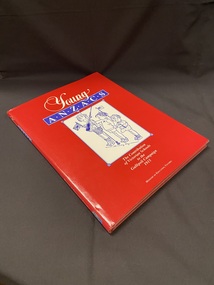
Book - Hardcover book, Ministry of Education, Victoria, Young ANZACS: the contribution of Victorian Schools to the Gallipoli Campaign 1915, 1990
... ...Great Britain Army...Gallipoli ANZAC Great Britain Army Australian and New Zealand Army Corps WW1 WWI World War One 1914-1918 War work Home Front Schools Turkey 'A collection of extracts from the Victorian readers, the School papers, the Educational gazette, and the Record of War Service. ...'A collection of extracts from the Victorian readers, the School papers, the Educational gazette, and the Record of War Service. The events presented (in this book) were duly recorded in the Education Department of Victoria's publications of the time. Seventy-five years after the landing at Gallipoli, this book commemorates those events.' [From inside cover]Hardcover book with maroon cover and 'Young ANZACS' printed across the front in gold. The book is covered with a red dust jacket with an image drawn inside a white rectangle on the front of three young children standing and waving flags.non-fiction'A collection of extracts from the Victorian readers, the School papers, the Educational gazette, and the Record of War Service. The events presented (in this book) were duly recorded in the Education Department of Victoria's publications of the time. Seventy-five years after the landing at Gallipoli, this book commemorates those events.' [From inside cover] gallipoli, anzac, great britain army, australian and new zealand army corps, ww1, wwi, world war one, 1914-1918, war work, home front, schools, turkey -
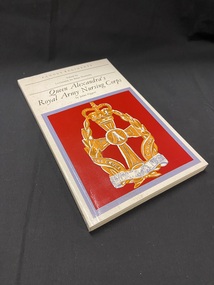 Returned Nurses RSL Sub-branch
Book - Paperback book, Juliet Piggott, Queen Alexandra's Royal Army Nursing Corps, 1975
... ...Great Britain Army Nurses...Military Nursing Great Britain Army Nurses Queen Alexandra's Royal Army Nursing Corps This history of the QARANC records the role that nursing has played in the army from the 17th century until the present day. ...This history of the QARANC records the role that nursing has played in the army from the 17th century until the present day. The author describes the rise of the early army nursing organizations and the genesis of QARANC. Her picture of Florence Nightingale is revealing in that it puts aside the conventional myths and shows us a woman of powerful influence and fierce determination who provided the administrative impetus for the formal advancement of army nursing. [from Trove record]The spine and background of the cover are a cream colour. The title is printed in black text on the spine with the author's name. On the front cover, the lower part of the book displays a red square template with a mauve border, and inside the template is on orange emblem of the Queen Alexander's Royal Army Nursing Corps. Above this image, at the top of the page is the series title, the editor's name, main title and then in small writing, the author's name.non-fictionThis history of the QARANC records the role that nursing has played in the army from the 17th century until the present day. The author describes the rise of the early army nursing organizations and the genesis of QARANC. Her picture of Florence Nightingale is revealing in that it puts aside the conventional myths and shows us a woman of powerful influence and fierce determination who provided the administrative impetus for the formal advancement of army nursing. [from Trove record] military nursing, great britain army nurses, queen alexandra's royal army nursing corps -
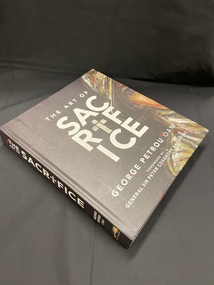 Returned Nurses RSL Sub-branch
Book - Hardcover book, George Petrou OAM, The art of sacrifice, 2021
... ...Great Britain Army...Art and war soldiers in art Australian and New Zealand Army Corps Great Britain Army Grace Wilson Nancy Wake Haunting and poignant, this collection of portraits from renowned Melbourne artist, George Petrou portrays a spirit like no other — the Anzac spirit. ...Haunting and poignant, this collection of portraits from renowned Melbourne artist, George Petrou portrays a spirit like no other — the Anzac spirit. Australians from all walks of life have served our great nation with gallantry and sacrifice — ordinary people who displayed mateship, resilience and devotion to duty. The Art of Sacrifice captures the spirit of service in a fitting tribute to all Anzacs of every generation. Using images of the past and the stories of today, the artist travels Australia and overseas to connect the past and the present in a unique, powerful and evocative collection of outstanding portraits. The Art of Sacrifice is a stunning contribution to the understanding and commemoration of all those who have served our great country. -- Publisher.Large hardcover book with a black cover. The title and the author's name are printed in large white letters on the spine and on the front cover. The title on the cover is printed in large text across four rows in the centre of the space, the first line reads THE ART OF, then the word SACRIFICE is broken into three sections with three letters of the word on each line, the first letter i in sacrifice has been replaced with a crucifix. On the right edge of the cover is a painted partial image of a person's head and shoulders wearing a military hat.non-fiction Haunting and poignant, this collection of portraits from renowned Melbourne artist, George Petrou portrays a spirit like no other — the Anzac spirit. Australians from all walks of life have served our great nation with gallantry and sacrifice — ordinary people who displayed mateship, resilience and devotion to duty. The Art of Sacrifice captures the spirit of service in a fitting tribute to all Anzacs of every generation. Using images of the past and the stories of today, the artist travels Australia and overseas to connect the past and the present in a unique, powerful and evocative collection of outstanding portraits. The Art of Sacrifice is a stunning contribution to the understanding and commemoration of all those who have served our great country. -- Publisher. art and war, soldiers in art, australian and new zealand army corps, great britain army, grace wilson, nancy wake -
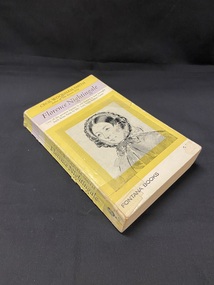 Returned Nurses RSL Sub-branch
Book - Paperback book, Cecil Woodham-Smith, Florence Nightingale 1820-1910, 1951
... ...Great Britain Army Nurses...Florence Nightingale Crimean War Military nursing history Great Britain Army Nurses The biography of Florence Nightingale. ...The biography of Florence Nightingale.Worn paperback book with several pieces of old tape stuck across the cover. Yellow and white cover with an illustrated portrait of Florence Nightingale in a square frame in the centre. The title and author are printed in black at the top of the cover.non-fictionThe biography of Florence Nightingale. florence nightingale, crimean war, military nursing history, great britain army nurses -
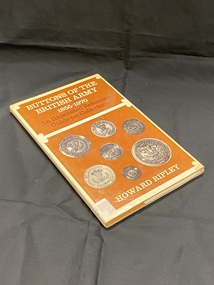 Returned Nurses RSL Sub-branch
Book - Hardcover book, Arms and Armour Press, Buttons of the British Army 1855-1970: an illustrated reference guide for collectors, 1971
... ...Great Britain Army uniforms and insignia...British Army British Army buttons Army buttons Great Britain Army uniforms and insignia military paraphernalia - collectors Military uniforms Over 650 buttons are illustrated in this comprehensive guide to the buttons worn by the regiments of the British Army from the Crimean War up to 1970. - taken from dust-jacket. ...Over 650 buttons are illustrated in this comprehensive guide to the buttons worn by the regiments of the British Army from the Crimean War up to 1970. - taken from dust-jacket.Thin hard cover book with a cream coloured dust jacket. Title and author printed down the spine and a spine label taped to the base. Front cover divided into two brown templates. The top one covers a third of the page and shows the title in cream print and subtitle in black. The bottom template is a larger square and contains examples of seven different silver buttons, with the author's name at the bottom.non-fictionOver 650 buttons are illustrated in this comprehensive guide to the buttons worn by the regiments of the British Army from the Crimean War up to 1970. - taken from dust-jacket.british army, british army buttons, army buttons, great britain army uniforms and insignia, military paraphernalia - collectors, military uniforms -
 Mrs Aeneas Gunn Memorial Library
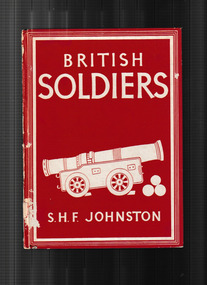
Book, British soldiers, 1944
... Great Britain - History - Military...Great Britain - History - Army...Great Britain - History - Military Great Britain - History - Army A short history of the British army Ill, bib, p.47. ...A short history of the British armyIll, bib, p.47.non-fictionA short history of the British armygreat britain - history - military, great britain - history - army -
 Mrs Aeneas Gunn Memorial Library
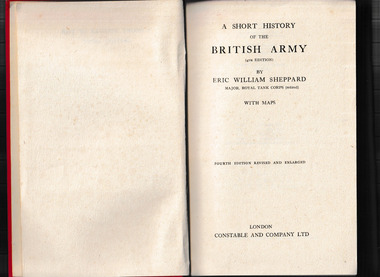
Book, Constable, A short history of the British Army, 1950
... Great Britain - History - Army...Great Britain - History - Army Great Britain - History - Military A history of the British army up to the end of World War II A short history of the British Army Book Constable Eric William Sheppard ...A history of the British army up to the end of World War IInon-fictionA history of the British army up to the end of World War IIgreat britain - history - army, great britain - history - military -
 Bendigo Military Museum
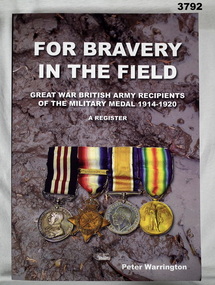
Book - BOOK MM, WW1, Peter Warrington, For Bravery in the Field, 2014
... For Bravery in the Field. Great War British Army Recipients of the Military Medal 1914 - 2910. ...For Bravery in the Field. Great War British Army Recipients of the Military Medal 1914 - 2910. ...For Bravery in the Field. Great War British Army Recipients of the Military Medal 1914 - 2910. A Register.Soft cardboard cover. Black / gold / white print on front, spine & back. Illustrated in colour. Military Medal group on grey / brown background photo of mud on front. 2 black / white colour highlighted photo of soldiers on back. 641 cut, plain, white pages. No illustrations.book, military medal, great war, british -
 Flagstaff Hill Maritime Museum and Village
Domestic object - Can Opener, Bottle Opener & Corkscrew
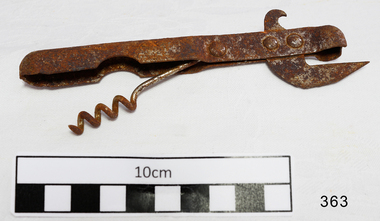
... British. Spoiled food, and the sickness it caused, was a widespread problem. The public would have benefited from canned food, but for decades cans were almost exclusively for the army and the navy. The canning process, with its hours of boiling and steaming, its scrupulous cleanliness, its heated metal, and its need for a great deal of disposable material, made canned food far too expensive for anyone but the military. ...British. Spoiled food, and the sickness it caused, was a widespread problem. The public would have benefited from canned food, but for decades cans were almost exclusively for the army and the navy. The canning process, with its hours of boiling and steaming, its scrupulous cleanliness, its heated metal, and its need for a great deal of disposable material, made canned food far too expensive for anyone but the military. ...It took 15 years to invent the can. It took 100 more to invent a standard way to open it. In the 19th century, decades after the invention of canning, there were virtually no can openers. Canned food, such as sardines, came with its own "key" to peel back the tin lid. Birth of the can One of the oddest things about the can opener is that the can predates it by almost 150 years. Though common today, cans were once military-grade technology. In 1795, Napoleon, to whom the phrase "an army marches on its stomach" is attributed, offered 12,000 francs to anyone who could find a way to preserve food. Without any knowledge of bacteria or their role in food spoilage, scientists didn't even know where to begin. It took 15 years before a chef named Nicholas Appert claimed the prize after successfully jarring food. Soon after that, his countryman Philippe de Girard came up with a variant on Appert's method—metal tins—and sold the idea to the British. Spoiled food, and the sickness it caused, was a widespread problem. The public would have benefited from canned food, but for decades cans were almost exclusively for the army and the navy. The canning process, with its hours of boiling and steaming, its scrupulous cleanliness, its heated metal, and its need for a great deal of disposable material, made canned food far too expensive for anyone but the military. No can openers were needed or even possible. The metal of early cans was too thick to make openers practical. Soldiers and sailors had plenty of sharp objects on hand and made ample use of them when they wanted to eat. During the 19th century, the process of canning was refined and mechanised, and the metal wall of the average can slimmed down enough that a civilian could get it open—if that civilian had the right tool. No one had that tool yet, so early cans had to open themselves. In other words, they came with built-in openers. The result was a confusing but pleasing free-for-all, in terms of product engineering. Each type of food came with its own kind of can, and each kind of can came with its own kind of opener. Tinned fish and meat were often sold in rectangular cans. These cans were fitted with a "key" that would roll down the top of the can. Coffee, beans, and other types of meat were packaged in cylinders with metal strips that could be peeled back with their own kinds of built-in keys. Cans of milk, which didn't need to be completely opened, came with puncture devices. As tinned food became more common, its containers became more regular. A nice cylindrical can became the norm, and, as these cans filled kitchens, more engineers put their minds to finding a convenient way to open all of them. The first standalone can opener worked on a simple principle: point, stab, and pull. From the mid-19th century to the end of World War I, the typical can opener looked roughly like a wrench, if the lower 'jaw' of the wrench were replaced with a blade. People used the blade to puncture the top of the can near its edge, push the upper jaw against the side of the can, and drag the blade through the metal along the rim. Because meat was the first and most popular canned substance, these can openers were often shaped to look like cows and given the nickname 'bully beef can openers'. The bully beef can opener, popular in the mid-19th century, resulted in many lost fingers. Later, a corkscrew was added that was seated in the handle, and could be pulled out for use. Bully beef can openers were so common, effective, and sturdy that they are still frequently available on collectors' sites. Some are advertised as “still working,” and every last one of them is, without a doubt, soaked in the blood of our ancestors. Dragging a sharp blade along the edge of a can is certain to cause injury sooner or later. So once people got a reliable can shape and a reliable way to get the can open, the search was on for a reliable way to get a can open without the possibility of losing a finger. The answer came in 1925, from the Star Can Opener Company of San Francisco. This is probably the first can opener that resembles the one people have in their kitchens today. Instead of using a blade to pry open a metal can, buyers could clamp the edge of the can between two wheels and twist the handle of one of the wheels to move the blade around the lip. The Star can openers weren't perfect. Compared to the bully beef model, they were flimsy and breakable, but they probably prevented a few injuries. Six short years after the Star model came to market, the first electric can opener was invented. It was patented in 1931 by the Bunker Clancey Company of Kansas City, who had already been sued by the Star Can Opener Company for trying sell a double-wheeled can opener like the Star model (the case was dismissed). The electric can opener must have seemed like the wave of the future and a sure-fire seller, but it proved to be too far ahead of its time. In 1931 not that many households had electricity, and those that did weren't interested in buying can openers. The Bunker Clancey Company was subsequently bought by the Rival Company, which still makes small appliances like can openers today. It took another 25 years for electrically powered can openers to become practical. In the 1950s, Walter Hess Bodle and his daughter, Elizabeth Bodle, developed an electric can opener in the family garage. Walter came up with the opener's blades and motor, and Elizabeth sculpted the outside. Their can opener was a free-standing unit that could sit on the kitchen counter. The Udico brand of the Union Die Casting Company put it on the market in time for Christmas in 1956 and had great success with it. Over the next few years it came out in different styles and colours, and, like the bully beef can opener, has become a collector's item. Also like the bully beef model, Udico can openers often still work. They don't make 'em like they used to. Although there have been some design changes and refinements over the last sixty years, there have yet to be any more leaps forward in can opener technology. If you're resentfully opening a can, you are almost certainly doing it using the Star design, manually forcing the can between two wheels, or the Bodle design, clamping the can into a free-standing electrical opener. Whether or not you enjoy your holiday meals, at least you can be happy that you are not getting poisoned by your own food or cutting open your hand with the blade you use to get at it. That's something, right?The can opener, Bottle opener and the corkscrew are still very important and essential items in most kitchens.Metal can opener, chromed, with bottle opener, and a corkscrew seated in the handle.None.flagstaff hill, warrnambool, shipwrecked-coast, flagstaff-hill, flagstaff-hill-maritime-museum, maritime-museum, shipwreck-coast, flagstaff-hill-maritime-village, canning, can opener, corkscrew, bottle opener, kitchen equipment -
 Flagstaff Hill Maritime Museum and Village
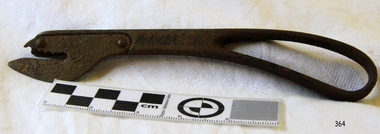
Domestic object - Can Opener
... British. Spoiled food, and the sickness it caused, was a widespread problem. The public would have benefited from canned food, but for decades cans were almost exclusively for the army and the navy. The canning process, with its hours of boiling and steaming, its scrupulous cleanliness, its heated metal, and its need for a great deal of disposable material, made canned food far too expensive for anyone but the military. ...British. Spoiled food, and the sickness it caused, was a widespread problem. The public would have benefited from canned food, but for decades cans were almost exclusively for the army and the navy. The canning process, with its hours of boiling and steaming, its scrupulous cleanliness, its heated metal, and its need for a great deal of disposable material, made canned food far too expensive for anyone but the military. ...It took 15 years to invent the can. It took 100 more to invent a standard way to open it. In the 19th century, decades after the invention of canning, there were virtually no can openers. Canned food, such as sardines, came with its own "key" to peel back the tin lid. Birth of the can One of the oddest things about the can opener is that the can predates it by almost 150 years. Though common today, cans were once military-grade technology. In 1795, Napoleon, to whom the phrase "an army marches on its stomach" is attributed, offered 12,000 francs to anyone who could find a way to preserve food. Without any knowledge of bacteria or their role in food spoilage, scientists didn't even know where to begin. It took 15 years before a chef named Nicholas Appert claimed the prize after successfully jarring food. Soon after that, his countryman Philippe de Girard came up with a variant on Appert's method—metal tins—and sold the idea to the British. Spoiled food, and the sickness it caused, was a widespread problem. The public would have benefited from canned food, but for decades cans were almost exclusively for the army and the navy. The canning process, with its hours of boiling and steaming, its scrupulous cleanliness, its heated metal, and its need for a great deal of disposable material, made canned food far too expensive for anyone but the military. No can openers were needed or even possible. The metal of early cans was too thick to make openers practical. Soldiers and sailors had plenty of sharp objects on hand and made ample use of them when they wanted to eat. During the 19th century, the process of canning was refined and mechanised, and the metal wall of the average can slimmed down enough that a civilian could get it open—if that civilian had the right tool. No one had that tool yet, so early cans had to open themselves. In other words, they came with built-in openers. The result was a confusing but pleasing free-for-all, in terms of product engineering. Each type of food came with its own kind of can, and each kind of can came with its own kind of opener. Tinned fish and meat were often sold in rectangular cans. These cans were fitted with a "key" that would roll down the top of the can. Coffee, beans, and other types of meat were packaged in cylinders with metal strips that could be peeled back with their own kinds of built-in keys. Cans of milk, which didn't need to be completely opened, came with puncture devices. As tinned food became more common, its containers became more regular. A nice cylindrical can became the norm, and, as these cans filled kitchens, more engineers put their minds to finding a convenient way to open all of them. The first standalone can opener worked on a simple principle: point, stab, and pull. From the mid-19th century to the end of World War I, the typical can opener looked roughly like a wrench, if the lower 'jaw' of the wrench were replaced with a blade. People used the blade to puncture the top of the can near its edge, push the upper jaw against the side of the can, and drag the blade through the metal along the rim. Because meat was the first and most popular canned substance, these can openers were often shaped to look like cows and given the nickname 'bully beef can openers'. The bully beef can opener, popular in the mid-19th century, resulted in many lost fingers. Bully beef can openers were so common, effective, and sturdy that they are still frequently available on collectors' sites. Some are advertised as “still working,” and every last one of them is, without a doubt, soaked in the blood of our ancestors. Dragging a sharp blade along the edge of a can is certain to cause injury sooner or later. So once people got a reliable can shape and a reliable way to get the can open, the search was on for a reliable way to get a can open without the possibility of losing a finger. The answer came in 1925, from the Star Can Opener Company of San Francisco. This is probably the first can opener that resembles the one people have in their kitchens today. Instead of using a blade to pry open a metal can, buyers could clamp the edge of the can between two wheels and twist the handle of one of the wheels to move the blade around the lip. The Star can openers weren't perfect. Compared to the bully beef model, they were flimsy and breakable, but they probably prevented a few injuries. Six short years after the Star model came to market, the first electric can opener was invented. It was patented in 1931 by the Bunker Clancey Company of Kansas City, who had already been sued by the Star Can Opener Company for trying sell a double-wheeled can opener like the Star model (the case was dismissed). The electric can opener must have seemed like the wave of the future and a sure-fire seller, but it proved to be too far ahead of its time. In 1931 not that many households had electricity, and those that did weren't interested in buying can openers. The Bunker Clancey Company was subsequently bought by the Rival Company, which still makes small appliances like can openers today. It took another 25 years for electrically powered can openers to become practical. In the 1950s, Walter Hess Bodle and his daughter, Elizabeth Bodle, developed an electric can opener in the family garage. Walter came up with the opener's blades and motor, and Elizabeth sculpted the outside. Their can opener was a free-standing unit that could sit on the kitchen counter. The Udico brand of the Union Die Casting Company put it on the market in time for Christmas in 1956 and had great success with it. Over the next few years it came out in different styles and colours, and, like the bully beef can opener, has become a collector's item. Also like the bully beef model, Udico can openers often still work. They don't make 'em like they used to. Although there have been some design changes and refinements over the last sixty years, there have yet to be any more leaps forward in can opener technology. If you're resentfully opening a can, you are almost certainly doing it using the Star design, manually forcing the can between two wheels, or the Bodle design, clamping the can into a free-standing electrical opener. Whether or not you enjoy your holiday meals, at least you can be happy that you are not getting poisoned by your own food or cutting open your hand with the blade you use to get at it. That's something, right?The can opener is still a very important and essential item in most kitchens.Can opener, right handed, metal, upper blade section serrated, inscription 'Peerless Pat.Feb 11-90'.Peerless Pat.Feb 11-90flagstaff hill, warrnambool, shipwrecked-coast, flagstaff-hill, flagstaff-hill-maritime-museum, maritime-museum, shipwreck-coast, flagstaff-hill-maritime-village, cannning, can opener, kitchen equipment -
 Flagstaff Hill Maritime Museum and Village
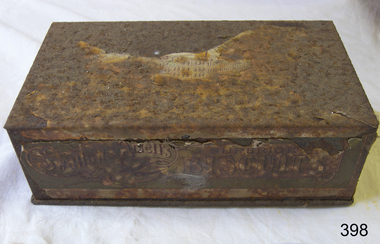
Container - Biscuit Tin, Swallow and Ariell Pty Ltd, Mid-19th to mid-20th century
... Great Britain, Swallow & Ariell was the fifth largest biscuit company in the world, manufacturing over 100 varieties, including the common ship biscuit (an original product) and meat biscuits (apparently taken by Burke and Wills on their ill-fated expedition). The company also boasted popular sideline products, including cakes, plum puddings, ice-cream and dried fruit. Renowned for its patriotic fundraising campaigns during both world wars, it diverted most of its biscuits and plum puddings to the Australian and US services in World War II. Company employees were filmed leaving work in 1905 in the Salvation Army...Great Britain, Swallow & Ariell was the fifth largest biscuit company in the world, manufacturing over 100 varieties, including the common ship biscuit (an original product) and meat biscuits (apparently taken by Burke and Wills on their ill-fated expedition). The company also boasted popular sideline products, including cakes, plum puddings, ice-cream and dried fruit. Renowned for its patriotic fundraising campaigns during both world wars, it diverted most of its biscuits and plum puddings to the Australian and US services in World War II. Company employees were filmed leaving work in 1905 in the Salvation Army ...This tin was made in Melbourne and contained Swallows and Ariells biscuits. The label was written in four languages. The biscuits may have been made for export or perhaps for immigrants now living in Australia. Australia's first biscuit company was founded in 1854 by Thomas Swallow. Within five years he had taken in a partner, T.H. Ariell. After Ariell died in 1875, F.T. Derham was appointed partner and managing director in 1877, a position held by several generations of his descendants. By the early 1880s the Port Melbourne factory extended to 3 acres (1.2 ha), and the company owned flourmills and sugar plantations in the Goulburn Valley and Northern Queensland. With no equal outside Great Britain, Swallow & Ariell was the fifth largest biscuit company in the world, manufacturing over 100 varieties, including the common ship biscuit (an original product) and meat biscuits (apparently taken by Burke and Wills on their ill-fated expedition). The company also boasted popular sideline products, including cakes, plum puddings, ice-cream and dried fruit. Renowned for its patriotic fundraising campaigns during both world wars, it diverted most of its biscuits and plum puddings to the Australian and US services in World War II. Company employees were filmed leaving work in 1905 in the Salvation Army film unit's first sponsored industrial documentary film. The surviving opening sequences are held by ScreenSound Australia. The company was delisted on 5 August 1964 following acquisition of more than 95% of its capital by the Australian Biscuit Co. The factory was later registered by the National Trust and converted into units. https://www.emelbourne.net.au/biogs/EM01456b.htmThis biscuit tin is representative of local Melbourne and Victorian produce. The label was in four languages, perhaps for export or for local immigrants. The firm Swallow and Ariells Pty Ltd was a very early manufacture and was in business for over 100 years.Rectangular tin container with attached lid. Label advertises Swallow and Ariells biscuits. Made in Melbourne. The label is written in four languages. The trademark, a swallow, is on the tin. The tin is very badly corroded.'Swallow and Ariells Superior Melbourne Biscuits' Trademark: image [swallow]flagstaff hill, warrnambool, shipwrecked-coast, flagstaff-hill, flagstaff-hill-maritime-museum, maritime-museum, shipwreck-coast, flagstaff-hill-maritime-village, metal craft, tin ware, biscuit box, biscuit tin, food container, melbourne biscuit maker, swallow, thomas swallow, thomas ariell, ariell -
 Frankston RSL Sub Branch
Medal Set (set of 3)
... Great/war for/civilisation/1914-1919" Set of WW1 medals issued to T. R. Cook, note DCM + MM not included. 1) The 1914-1915 Star. Awarded for service on the establishment of a ship or unit in a theatre of war. A member awarded the 1914 Star could not be awarded the 1914-15 Star (this award). 2) British War Medal. Awarded for service as follows: • Navy - for 28 days mobilised service or to those who lost their lives in active operations before completing that period, between 5 August 1914 and 11 November 1918. • Army ...Thomas Richard Cook Service number: 1732 Rank: Private Roll title: 1 Infantry Battalion - 1 to 8 Reinforcements (December 1914 - August 1915) Conflict: First World War, 1914-1918 Date of embarkation: 10 April 1915 Place of embarkation: Sydney Ship embarked on: HMAT Argyllshire Ship number: A8 Set of WW1 medals issued to T. R. Cook, note DCM + MM not included. 1) The 1914-1915 Star. Awarded for service on the establishment of a ship or unit in a theatre of war. A member awarded the 1914 Star could not be awarded the 1914-15 Star (this award). 2) British War Medal. Awarded for service as follows: • Navy - for 28 days mobilised service or to those who lost their lives in active operations before completing that period, between 5 August 1914 and 11 November 1918. • Army and Air Force - entry into a theatre of war on duty, or who left places of residence and rendered approved overseas service between 5 August 1914 and 11 November 1918. • Mercantile Marine - at least six months service between 5 August 1914 and 11 November 1918. 3) The Victory medal. Awarded for service as follows: • Navy - those who were mobilised and rendered approved service either at sea between 5 August 1914 and 11 November 1918 or on the establishment of a unit within a theatre of military operations. • Army - those who served on the establishment of a unit in a theatre of war. • Air Force - those who served on the establishment of a unit in a theatre of war outside the UK, served with an operational unit in the UK or overseas and had been actively engaged against the enemy, been employed in flying new aircraft to France or served on the complement of aircraft-carrying ships. A member Mentioned in Dispatches for service during World War 1 wears a bronze oak leaf on the ribbon. Only one emblem is worn no matter how many times a member may have been 'mentioned' 1) 1914-15 Star: Star with crown on top, with crossed swords, embossed with "1914-15" on obverse side, "1768/ Gnr T R Cook/ 1/Bn. A.I.F." 2)King George head and mounted warrioir on obverse. 3)Winged Brittania and obverse "The Great/war for/civilisation/1914-1919"medals, 1914 15 star, british war medal, victory medal, ww1 medals -
 Federation University Historical Collection
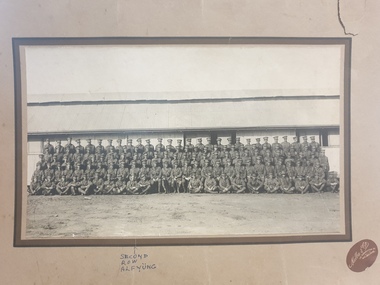
Photograph, Melba & Co, 7th Australian Infantry Training Battalion WW1
... great offensive of 1918, that began with the battle of Amiens on 8 August. The advance by British and empire troops on 8 August was the greatest success in a single day on the Western Front, one that German General Erich Ludendorff described as, "the black day of the German Army in this war". ...great offensive of 1918, that began with the battle of Amiens on 8 August. The advance by British and empire troops on 8 August was the greatest success in a single day on the Western Front, one that German General Erich Ludendorff described as, "the black day of the German Army in this war". ...George Alfred Yung, known as Alf, pictured in the second row, 10th from the left, enlisted on 25/02/1916; embarked on 19/02/1917; was killed during the battle of Menin Gate at Yrpres, Belgium on 20/09/1917. https://www.awm.gov.au/collection/U51447 The 7th Battalion was among the first infantry units raised for the AIF during the First World War. Like the 5th, 6th and 8th Battalions, it was recruited from Victoria and, together with these battalions, formed the 2nd Brigade. The battalion was raised by Lieutenant Colonel H. E. "Pompey" Elliott within a fortnight of the declaration of war in August 1914 and embarked just two months later. After a brief stop in Albany, Western Australia, the battalion proceeded to Egypt, arriving on 2 December. It later took part in the ANZAC landing on 25 April 1915, as part of the second wave. Ten days after the landing, the 2nd Brigade was transferred from ANZAC to Cape Helles to help in the attack on the village of Krithia. The attack captured little ground but cost the brigade almost a third of its strength. The Victorian battalions returned to ANZAC to help defend the beachhead, and in August the 2nd Brigade fought at the battle of Lone Pine. While holding positions captured by the 1st Brigade, four members of the 7th Battalion, Corporal A. S. Burton, Acting Corporal W. Dunstan, Lieutenant W. Symons and Captain F. H. Tubb, earned the Victoria Cross - Burton posthumously. The battalion served at ANZAC until the evacuation in December. After the withdrawal from Gallipoli in December 1915, the battalion returned to Egypt. In March 1916, it sailed for France and the Western Front and entered the front line trenches for the first time on 3 May. The battalion's first major action in France was at Pozieres in the Somme valley where it fought between 23-27 July and 15-21 August. After Pozieres the battalion manned trenches in the Ypres salient in Belgium, before returning to the Somme valley. It saw out the horrendous winter of 1916-1917 rotating between training, working parties and duty in the trenches. In early 1917, the Germans withdrew to the Hindenburg Line and the 7th Battalion participated in the brief advance that followed and then came to a grinding halt before Bullecourt. The battalion was withdrawn from the front line for training on 9 May 1917 and did not return to action until the Ypres offensive of September and October. It fought major battles at Menin Road on 20 September and Broodseinde on 4 October, and then spent much of ensuing winter in the Ypres mud. In March and April 1918 the 7th helped stop the German spring offensive in northern France and later participated in the Allies' own great offensive of 1918, that began with the battle of Amiens on 8 August. The advance by British and empire troops on 8 August was the greatest success in a single day on the Western Front, one that German General Erich Ludendorff described as, "the black day of the German Army in this war". The battalion continued operations until late September 1918. At 11 am on 11 November 1918, the guns fell silent. The November armistice was followed by the peace treaty of Versailles signed on 28 June 1919. In November 1918 members of the AIF began to return to Australia for demobilisation and discharge. In March, the battalion was so reduced that it and the 6th Battalion were amalgamated to form a composite battalion. In turn, this battalion was merged with another, formed from the 5th and 8th Battalions, to form the 2nd Brigade Battalion. https://www.awm.gov.au/collection/U51447army, soldier, alf yung, 7th australian infantry battalion -
 Lara RSL Sub Branch
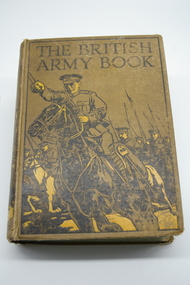
Book, BLACKIE & SON, Ltd, 50 OLD BAILEY, E.C, THE BRITISH ARMY BOOK, Circa WW1
... This book tells of the BRITISH Army from the very earliest times down to the latest actions of the British Army in the great war....This book tells of the BRITISH Army from the very earliest times down to the latest actions of the British Army in the great war. ...This book tells of the BRITISH Army from the very earliest times down to the latest actions of the British Army in the great war.Rectangular in shape.Khaki in colour.The book has 284 pages. THE BRITISH ARMY BOOK is printed on the front cover and the spine.There is also a picture of mounted soldiers riding into battle on the front cover. -
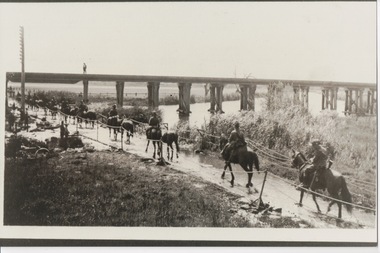 Lara RSL Sub Branch
Photograph, Set 4 photographs. and others for Torquay Light Horse camp, 1940
... army horses bought by Commonwealth purchasing officers from graziers and breeders. These were called “walers” because they were a New South Wales stockhorse type – strong, great-hearted animals with the strains of the thoroughbred and semi-draught to give them speed, strength and stamina. On 1st November, 1914, Australia’s First Infantry Division and the first four Light Horse regiments sailed for England in a fleet of transport ships. The first of the Light Horse arrived at Gallipoli in May without their horses. Back with their horses after Gallipoli, they were formidable combatants across the Sinai and Palestine. Some British...army horses bought by Commonwealth purchasing officers from graziers and breeders. These were called “walers” because they were a New South Wales stockhorse type – strong, great-hearted animals with the strains of the thoroughbred and semi-draught to give them speed, strength and stamina. On 1st November, 1914, Australia’s First Infantry Division and the first four Light Horse regiments sailed for England in a fleet of transport ships. The first of the Light Horse arrived at Gallipoli in May without their horses. Back with their horses after Gallipoli, they were formidable combatants across the Sinai and Palestine. Some British ...These images capture for all time Light Horsemen travelling through Geelong on their way to camp at Torquay for the last Group meeting in Australia . information following - details obtained from .........https://torquayhistory.com/light-horse-brigade/ On Australia Day, 1997, Sir John Young unveiled this plaque on Point Danger, Torquay. Torquay history, Light Horse Training Camp, WW2 Plaque at Pt. Danger Note----- (See images to view plaque) The plaque identifies a significant event in Torquay’s history and the sentiments of ‘change’ for the Light Horse Brigade – from horses to machines. In 1940 the four Light Horse Regiments (4th, 8th, 13th and 20th), some 5000 Light Horse and 2000 horses camped and trained at Torquay. Three other regiments, formerly mounted on horses, were also at Torquay ‘mounted’ on privately owned trucks and cars. Division troops included Artillery, Engineers, Signals, Field Ambulance and other branches of the Army necessary to enable a Division to function. It wasn’t just the sheer numbers of men coming to this little town that made the event significant, it was also the fact that the men of the Light Horse were dramatic, almost glamorous figures and it is easy to see their exploits as some splendid adventure. Horses have played a special role in the story of Australia. They were the only means of transport across this huge country, so it was necessary for everyone to have the ability to ride a horse. When war broke out in 1899 between Britain and the Boers of South Africa (“Boer” was Dutch for “farmer”) Australia sent troops to fight. At first Britain was wary of using untried, unprofessional colonial cavalrymen but soon saw that the slouch-hatted Australian “bushmen” were a match for the fast-moving and unconventional mounted commandos of the Boers. The Australians proved themselves to be expert rough-riding horsemen and good shots. Bush life had hardened them to go for long periods with little food and water. They also showed remarkable ability to find their way in a strange country and use its features for cover, in both attack and defence. By 1914, when Australia joined the war against Germany, there were 23 Light Horse regiments of militia volunteers. Many men from these units joined the Light Horse regiments of the Australian Imperial Force (AIF). Men were given remounts (if not using their own horses) – army horses bought by Commonwealth purchasing officers from graziers and breeders. These were called “walers” because they were a New South Wales stockhorse type – strong, great-hearted animals with the strains of the thoroughbred and semi-draught to give them speed, strength and stamina. On 1st November, 1914, Australia’s First Infantry Division and the first four Light Horse regiments sailed for England in a fleet of transport ships. The first of the Light Horse arrived at Gallipoli in May without their horses. Back with their horses after Gallipoli, they were formidable combatants across the Sinai and Palestine. Some British commanders observed that the light horseman moved with a “lazy, slouching gait, like that of a sleepy tiger” but described how the promise of battle “changes that careless gait, into a live athletic swing that takes him over the ground much quicker than other troops”. They had Light Horse, Torquay, training campdeveloped a reputation as formidable infantrymen. The Turks called them “the White Ghurkas” – a reference to their deadly skill with the bayonet. The Arabs called them “The Kings of the Feathers”. The plume had originally been a battle honour of the Queensland Mounted Infantry for their work in the shearer’s strike of 1891. During WW1 it was adopted by almost all the Light Horse Regiments. It was the proud badge of the light horseman. The most famous of their battles was the attack on Beersheba- the charge of the 4th Light Horse Brigade. Mounted infantrymen and their superb walers had carried out one of the most successful cavalry charges in history – against what seemed impossible odds. They surprised the Turks by charging cavalry-style, when they would normally have ridden close to an objective then dismounted to fight. The fall of Beersheba swung the battle tide against the Turks in Palestine; and changed the history of the Middle East. While 19 men from the Surf Coast Shire served with the 4th Light Horse over the course of WW1, only four were involved in the charge of Beersheba- John GAYLARD, Philip QUINN.(Winchelsea); Wallace FINDLAY (Anglesea); Harry TRIGG (Bambra). After the war, Light Horse units played a key role in the Australian Government’s compulsory military training programme. The Citizen Military Forces (C.M.F.) thrived on the glamour of the wartime Light Horse tradition, ignoring the possibility that motor vehicles would soon replace the horses. When training was no longer compulsory, the C.M.F. regiments declined and horses became more of a luxury during the 1930s depression years of poverty and unemployment. Some regiments were motorised. Then, in 1939, Australia joined Britain in another world war. Training was increased for the militia at both home bases and regional training camps. The camp at Torquay in 1940, commanded by Major General Rankin, was at Divisional strength. By the end of the camp some felt that the Division was ready for active service. Gradually, over the next four years, the Australian Light Horse units were mounted on wheels and tracks and the horses were retired. Six men enlisted at the Torquay camp and another 57 men and women enlisted at Torquay for service in WW2. Those who served in the Militia provided valuable Officers and NCOs and men for the armed services during the war. Each infantry division of the 2nd AIF had a Light Horse regiment attached to it. But the day of the Australian mounted soldier hadn’t quite passed. During World War II, Australia’s 6th Cavalry Regiment formed a mounted unit they called “The Kelly Gang” which did valuable scouting work. In New Guinea, a mounted Light Horse Troop did patrol duty and helped carry supplies. Some fully equipped walers were flown into Borneo for reconnaissance in rugged mountain country. But by the end of the war, in 1945, the horse had disappeared from the Australian Army. References: Australian Light Horse Association www.lighthorse.org.au National Australia Archives Australian War Memorial Surf Coast Shire WW1 memorials www.togethertheyserved.com The Light horse- a Cavalry under Canvas Light Horse, Training Camp, Torquay, WW2 Late in 1939 it was decided to set up a Lighthorse training camp in Torquay to train both men and horses for the battles of the Second World War. Horses, men and equipment came on special trains from all over Victoria and NSW, and as you would expect horseman came from areas such as Omeo and Sale, the Wimmera and the Western District. They arrived at the Geelong racecourse for watering in the Barwon River and then were ridden across the ford at the breakwater and began their 11 mile trek to Torquay. Light Horse, Training Camp, Torquay, WW2 Tent city By the end of January 1940 the camp at Torquay accommodated some 5000 men and 2500 horses of the Second Cavalry Division. The rows of horses, tents and huts near Blackgate Road were quite a sight. While the cavalrymen engaged in exercises on the land and on the beaches, many of the troops took over the Torquay School for special training of men and officers. Mr Bob Pettit local farmer and Councillor for the Barrabool Shire, wrote about the Light horse in the Surf Coast Community News in 1985 saying “They used to travel about the district riding four abreast in one long convoy. To my annoyance they went through my property and shut all the gates behind them. I had certain gates open to let stock in to the water holes and it would take me three -quarters of an hour to follow the horsemen up and put all the gates right again” he continued “the men from the Light Horse were here when the fire went through in March 1940. He recalled an incident when early one morning, as some one blew the bugle, a soldier putting a white sheet on the line frightened the horses. They panicked and ran off in all directions. Six went over the cliff near Bird Rock, five were never found, and the rest were gathered up after nearly a fortnight in the bush around Addiscott and Anglesea" Light Horse, Training Camp, Torquay, WW2, Geelong Parade Geelong parade The training camp culminated in a parade through the streets of Geelong on March 12th 1940. The salute was given at the Town Hall and the troops continued on a route to the You Yang’s for a training exercise. Note-----(see media section for photograph) The Camp was abandoned in mid 1940 as it was deemed unsuitable for training during winter and the cost of a permanent camp could not be justified if it could not be used all year. Historic.......Rare,,,Interpretive.Sepia photographs.set of four ....post card size ....Horses &LighthorsemenNo 1, Lighthorsemen Regiment Geelong 1940......No 2 Light Horse at Breakwater Geelong 1938 to 1940....No 3 Light Horse at Breakwater Geelong 1938 to 1940.....No 4 Light Horse crossing Breakwater camped at Geelong Showgrounds. These markings are on reverse of photographs.light horsemengeelong 1940., world war 2 -
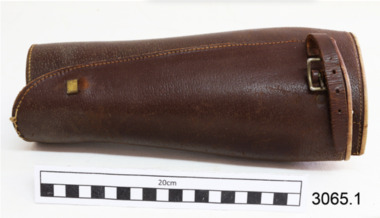 Flagstaff Hill Maritime Museum and Village
Clothing - Leather Leggings, 1899 to 1920
... army from 1899 until 1918. These leggings were worn by soldiers on horseback and are significant as they represent a noteworthy time in Australia's early military history. It was a time when many young men gave their lives during the South African and First World Wars in the defence of the then British Empire as part of the Imperial Forces that were gathered from many British-controlled Colonial countries. flagstaff hill warrnambool flagstaff hill maritime museum shipwreck coast flagstaff hill maritime village great ocean road leggings leather leggings protective leggings protective clothing Australian Mounted Light Horse Units Military Equipment None A pair of two Leather Leggings used by Mounted Australian soldiers during the first world war. ...The subject leather leggings are associated with mounted troops known as the Australian Light Horse that served in the South African War from 1899 to 1902. After the war, Britain wanted to use fewer mounted troops and restructured its force around a style of combat that needed more infantry. But the defence of Australia still relied upon mounted military units as these were more mobile than infantry and could travel faster over long distances. Light Horse brigades in the Australian Imperial Force (AIF) mostly contained recruits who served in the Light Horse regiments of the Citizen Forces. Many young men from rural areas of Australia volunteered for the Light Horse regiments. They had to pass a riding test to join, this test was easier for men from the bush because horses were still the main method of transport on farms and in country towns. The army did not officially accept First Australians into the AIF until May 1917 when enlistment standards were relaxed to include 'half-castes' with a parent of European origin. Indigenous soldiers served as valuable members of the Light Horse and many possessed excellent horse handling skills and specialist tracking knowledge.The subject items are part of the uniform for the Light Horse Units that served in the Australian army from 1899 until 1918. These leggings were worn by soldiers on horseback and are significant as they represent a noteworthy time in Australia's early military history. It was a time when many young men gave their lives during the South African and First World Wars in the defence of the then British Empire as part of the Imperial Forces that were gathered from many British-controlled Colonial countries.A pair of two Leather Leggings used by Mounted Australian soldiers during the first world war. The leggings are dark tan in colour with stitching to attach buckles and fastener straps. The strap buckles are made of brass and the leather legging straps are of same leather as leggings. Noneflagstaff hill, warrnambool, flagstaff hill maritime museum, shipwreck coast, flagstaff hill maritime village, great ocean road, leggings, leather leggings, protective leggings, protective clothing, australian mounted light horse units, military equipment -
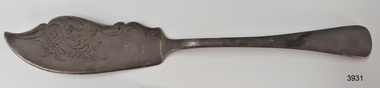 Flagstaff Hill Maritime Museum and Village
Domestic object - Butter Knife, Barker Brothers, Ca. 1885-1895
... British government, in particular the ordinance department. The stamp also connects it to other items in our collection with that stamp. It may have been connected to pre-Federation government organisations and officials such as the army Garrison, government naval vessel, police, lighthouse keepers, harbour masters. The knife is the only example of its kind in our collection, being a decorative silver butter or cheese knife, made by the Barker Brothers of Birmingham. Flagstaff Hill Warrnambool Maritime Village Maritime Museum Flagstaff Hill Maritime Museum & Village Shipwreck coast Great ...This butter or cheese knife is a decorative example of electroplated cutlery that had become an affordable alternative to more expensive silver cutlery in the late 1800s to early 1900s. The knife has stamp marks in the back of its handle that are a combination of letters and symbols used by British silversmiths to identify their workmanship. The design and type of this knife was not normally used by everyday people but rather those of a higher social class with time and money to have a particular decorative knife to serve butter or cheese. The marks on the handle tell that it was made of nickel silver, and electroplated with superior quality Stirling silver. The Barker Brothers of Birmingham made the knife between 1885 and 1907, but most likely before 1895. It was made for the British, or British colonial, people, connected with a government department such as the navy or defence. This story may be slightly inaccurate, as some silversmiths added extra ‘pseudo marks’ to their wares to disguise the quality. THE MARKS and their meaning – - ‘A1’ The silver used in electroplating this knife was the highest level, ‘superior quality’, measured in grams of silver per table spoon or table fork, with ‘A1’ being 2 2/3 grams, and ‘D’ being 0 1/2 grams of silver. - ‘BB’ The Baker Brothers used these initials from 1885 to 1907. - ‘[crown symbol]’ – This symbol is used for Sterling silver but this knife is a metal alloy. The crown is also the town mark of Sheffield (appointed by the Sheffield Assay Office) but this knife was made in Birmingham, which has the town mark of an anchor. The Barker Brothers may have added the crown mark to this electroplated silverware as a ‘pseudo hallmark’, leading the buyer to think that it was actual Sterling silver. The use of pseudo hallmarks by electroplaters of the Victorian era was common practice but it was illegal. In 1895 the unlawful practice was seen as imitating the Sheffield Silver Mark and the law was firmly applied to eradicate the deception, so items with this mark probably date before 1895. - [EPNS] Electro Plated Nickel Silver, called nickel silver or German silver, is a metal alloy that usually combines copper, nickel and zinc (60 percent copper, 20 percent nickel, 20 percent zinc). It has a silver-white appearance and is sometimes referred to as ‘white ware’. It does not contain any silver but is often used as a base for electroplating, when the item is covered with a thin layer of silver to give it the polished appearance of pure silver. It became popular in the late 19th and early 20th century as an affordable substitute for sterling silver. - Broad Arrow - an official stamp that indicates it was once the property of Britain government, either in Britain or one of its colonies, and used in the defence force. In Great Britain, from an 1875 government act, it was, and still, is a crime to forge or wrongfully use, the broad arrow symbol. The BARKER BROTHERS of Birmingham - Barker Brothers were one of the earlies firms of Birmingham silversmiths, established in 1801 by Mary Barker. They became Barker & Creed, then William and Matthias Barker, then from 1885 they were the Barker Brothers. They were operating in Paradise Street in 1871 until in 1903 they moved to Unity Works, Constitution Hill, in Birmingham. The firm also had a showroom at 292 High Holborn, London, from the early 1900s to the 1980s. In 1907 the firm became Barker Brothers Silversmiths Ltd, then in the 1960s they merged with Ellis & Co, becoming Barker Ellis Silver Co. Ltd. In 1979 they were registered in USA as Ellis & Co., Barker Ellis, and Ellis Barker. The business went into administration in 1992, after almost 200 years of production. The firm advertised as specialists in electroplating, and used the trademarks BRITANOID, UNITY PLATE and THE HYGENIA.This knife is historically significant, dated from 1885 to 1907 but most likely pre-1895, and made by the longstanding Birmingham silversmiths, the Barker Brothers, established in 1801. The knife is an example of decorative flatware used by people of ’class’. It also has the broad arrow stamp, connecting it to the British government, in particular the ordinance department. The stamp also connects it to other items in our collection with that stamp. It may have been connected to pre-Federation government organisations and officials such as the army Garrison, government naval vessel, police, lighthouse keepers, harbour masters. The knife is the only example of its kind in our collection, being a decorative silver butter or cheese knife, made by the Barker Brothers of Birmingham. Butter knife, or cheese knife, electroplated nickel silver (EPNS). Upper blade edge has decorative shape and engraved motifs, lower blade edge is bevelled to a cutting edge, and narrow plain handle flares out to a wide, rounded end. Maker’s marks are stamped on the reverse. Made by Barker Brothers of Birmingham in the late-19th century. Stamps: “flagstaff hill, warrnambool, maritime village, maritime museum, flagstaff hill maritime museum & village, shipwreck coast, great ocean road, butter knife, cheese knife, electroplate, electro plate, nickel silver, nickel alloy, alloy composition, copper nickel zinc, german silver, epns, barker brothers, birmingham, london, silversmiths, victorian era, 19th century, a1, bb, crown inside square, broad arrow, flatware, tableware, cutlery, cutler, dining utensils, eating utensils, superior quality, pseudo hallmark, stirling silver, silver-white metal, mary barker, barker & creed, william barker, matthias barker, barker brothers silversmiths, barker ellis silver co, ellis & co, barker ellis, ellis barker, britanoid, unity plate, the hygenia, british, colonial, government use, defence department use, naval use, knife, serving knife -
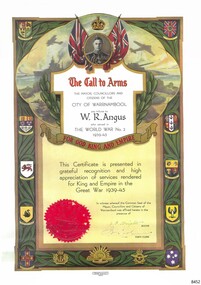 Flagstaff Hill Maritime Museum and Village
Certificate - Call to Arms, Osboldstone & Co. Pty. Ltd, W.R. Angus, ca. 1945
... Great Ocean Road Flagstaff Hill Maritime Museum and Village Dr W R Angus Dr Ryan Warrnambool Base Hospital Nhill Base Hospital Mira hospital Flying Doctor W.R. Angus Collection Australian Department of Defence Australian Army World War II WWII Surgeon Captain Ballarat Bonegilla Certificate Call to Arms Warrnambool Mayor J.F. Knights Warrnambool Town Clerk H.J. Worland" City of Warrnambool World War No. 2' 1939-45 Great War 1939-45 Common Seal of City of Warrnambool Osboldstone & Co. Pty Ltd. 55319 King George VI British ...This copy of the Certificate of Call to Arms was presented to Dr William Roy Angus at the completion of World War II by the May, Councillors and Citizens of Warrnambool in appreciation for his service. It is now part of Flagstaff Hill’s comprehensive W.R. Angus Collection, donated by the family of Dr W R Angus, 1901-1970, surgeon and oculist. During World War II between 1942-45, Dr Angus served with the Australian Department of Defence as a Surgeon Captain in Ballarat, Victoria, and in Bonegilla, N.S.W., completing his service just before the end of the war due to suffering from a heart attack. The Certificate is headed by a crown above the portrait of King George VI, the reigning British monarch at the time of WWII and afterwards. King George was King of the United Kingdom and the Dominions of the British Commonwealth, which is illustrated by the emblems of the Commonwealth countries and of the states of Australia. It also has symbols for the three Australian Military Forces; Navy, Army and Air Vorce. The Certificate also carries the Common Seal of the Mayor, Councillors and Citizens of the City of Warrnambool, and the signatures of the Mayor and Town Clerk. The W.R. Angus Collection: - The W.R. Angus Collection includes historical medical equipment, surgical instruments and material belonging to Dr Edward Ryan and Dr Thomas Francis Ryan, (both of Nhill, Victoria) and Dr Angus’ own belongings. The Collection’s history spans the medical practices of the two Doctors Ryan, from 1885-1926 plus that of Dr Angus, up until 1969. It includes historical medical and surgical equipment and instruments from the doctors Edward and Thomas Ryan of Nhill, Victoria. Dr Angus married Gladys in 1927 at Ballarat, the nearest big city to Nhill where he began as a Medical Assistant. He was also Acting House surgeon at the Nhill hospital where their two daughters were born. During World War II He served as a Military Doctor in the Australian Defence Force. Dr Angus and his family moved to Warrnambool in 1939, where Dr Angus operated his own medical practice. He later added the part-time Port Medical Officer responsibility and was the last person appointed to that position. Both Dr Angus and his wife were very involved in the local community, including the planning stages of the new Flagstaff Hill and the layout of the gardens there. Dr Angus passed away in March 1970.This is an example of objects used by or issued to Doctor Angus during and after his military service as Surgeon Captain in Australia during World War II. The W.R. Angus Collection is significant for still being located at the site it is connected with, Doctor Angus being the last Port Medical Officer in Warrnambool. The Collection includes historical medical objects that date back to the late 1800s.Call to Arms; certificate of service awarded as a tribute to W. R. Angus by the Mayor, Councillors and Citizens of the City of Warrnambool and sealed with Common Seal and the signatures of the Mayor and the Town Clerk. The top of the certificate has a portrait of King George VI below a crown emblem. The border has logos for countries of the British Commonwealth - Canada, South Africa, Inda and New Zealand - and the Australian States of Queensland, South Australia, Victoria, West Australia and Tasmania. The bottom has the badges of the Royal Australian Navy, the Australian Commonwealth Military Forces and the Royal Australian Air Force. The Certificate was printed by Osboldstone & Co. of Melbourne, with the registered serial number 55319. This copy of the original certificate is part of the W. R. Angus Collection.Printed; "The Mayor, Councillors and citizens of the City of Warrnambool pay tribute to W.R. Angus who served in The World War No. 2 1939-45, for God, King and Empire" "This Certificate is presented in grateful recognition and high appreciation of services rendered for King and Empire in the Great War 1939-45." "In witness whereof, the Common Seal of the Mayor, Councillors and Citizens of Warrnambool was affixed hereto in the presence of " (Signatures of "J.F. Knights" [Mayor] "H.J. Worland" [Town Clerk]) Printed under the certificate: "Osboldstone & Co. Pty. Ltd. Printers, Melbourne" and "55319"flagstaff hill, warrnambool, maritime village, maritime museum, shipwreck coast, great ocean road, flagstaff hill maritime museum and village, dr w r angus, dr ryan, warrnambool base hospital, nhill base hospital, mira hospital, flying doctor, w.r. angus collection, australian department of defence, australian army, world war ii, wwii, surgeon captain, ballarat, bonegilla, certificate, call to arms, warrnambool mayor, j.f. knights, warrnambool town clerk, h.j. worland", city of warrnambool, world war no. 2', 1939-45, great war 1939-45, common seal of city of warrnambool, osboldstone & co. pty ltd., 55319, king george vi, british commonwealth, canada, south aftrica, india, new zealand, australian commonwealth military forces -
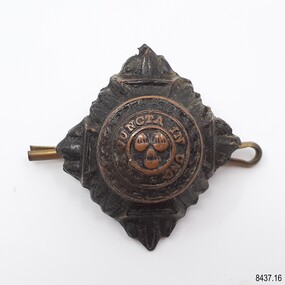 Flagstaff Hill Maritime Museum and Village
Badge - British Military badge collection, British Army Officer, 1914-1918
... Angus Collection badge insignia World War 1 First World War 1914-1918 badge collection Great War pips Order of Bath TRIA JUNCTA IN UNO British Military Officer 1901 British United Kingdom “TRIA JUNCTA IN UNO” [translates to 'three joined in one'] Badge collection; sixteen WWI British Army Officer’s insignia ‘star’ pips. ...Badges or ‘pips’ such as these ones were worn on the should strap of a British Military Officer during World War I to indicate his or her rank. The badge’s Latin inscription “TRIA JUNCTA IN UNO” is a Latin phrase that translates as “three joined into one”. It is the motto of the Order of Bath and refers to the year 1801 when the two Kingdoms of Great Britain (England and Scotland) were united with the Kingdom of Ireland. The three images of ‘crowns’ serve as the ‘star’ on each badge. The badges are worn with the arches in the three crowns pointing to the top. The sixteen badges were collected by Dr William Roy Angus and are now part of Flagstaff Hill’s comprehensive W.R. Angus Collection, donated by the family of Dr W R Angus, 1901-1970, surgeon and oculist. The badges date to the First World War era, when Dr Angus was a youth. He was a Surgeon Captain for the Australian Defence Forces during World War II when he was in his forties. The W.R. Angus Collection: - The W.R. Angus Collection includes historical medical equipment, surgical instruments and material belonging to Dr Edward Ryan and Dr Thomas Francis Ryan, (both of Nhill, Victoria) and Dr Angus’ own belongings. The Collection’s history spans the medical practices of the two Doctors Ryan, from 1885-1926 plus that of Dr Angus, up until 1969. It includes historical medical and surgical equipment and instruments from the doctors Edward and Thomas Ryan of Nhill, Victoria. Dr Angus married Gladys in 1927 at Ballarat, the nearest big city to Nhill where he began as a Medical Assistant. He was also Acting House surgeon at the Nhill hospital where their two daughters were born. During World War II He served as a Military Doctor in the Australian Defence Forces. Dr Angus and his family moved to Warrnambool in 1939, where Dr Angus operated his own medical practice. He later added the part-time Port Medical Officer responsibility and was the last person appointed to that position. Both Dr Angus and his wife were very involved in the local community, including the planning stages of the new Flagstaff Hill and the layout of the gardens there. Dr Angus passed away in March 1970.Dr W R Angus (1901-1970), surgeon and oculist, collected a range of military objects including those he personally used during his time as Surgeon Captain in the Australian Defence Forces in World War II. The objects allow insight into military life in the early-to-mid 20th century. The W.R. Angus Collection is significant for still being located at the site it is connected with, Doctor Angus being the last Port Medical Officer in Warrnambool. The Collection includes historical medical objects that date back to the late 1800s.Badge collection; sixteen WWI British Army Officer’s insignia ‘star’ pips. Brass badges are diamond-shaped. The design has a border of leaves around a wreath around and a Latin inscription that surrounds three crown images.“TRIA JUNCTA IN UNO” [translates to 'three joined in one']flagstaff hill, warrnambool, maritime village, maritime museum, shipwreck coast, great ocean road, flagstaff hill maritime museum and village, dr w r angus, w.r. angus collection, badge, insignia, world war 1, first world war, 1914-1918, badge collection, great war, pips, order of bath, tria juncta in uno, british military officer, 1901, british united kingdom
