
Showing 91 items matching "grow church"
-
 Sunshine and District Historical Society Incorporated
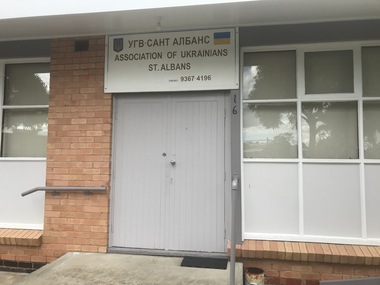
Photograph - St. Albans Photographs 2021, John Alchin, 2021
... ...Grow Church...Albans 2021 Photo 01.JPG 5556.27 - Grow Church 95 Alfrieda St St. Albans 2021 Photo 01.JPG 5556.28 - Jensens Funerals 2 Arthur St St. ...Albans 2021 Photo 01.JPG 5556.27 - Grow Church 95 Alfrieda St St. Albans 2021 Photo 01.JPG 5556.28 - Jensens Funerals 2 Arthur St St. ...These photographs provide a visual record of assorted buildings, street views, and notable locations throughout St. Albans in 2021.This photograph collection documents St. Albans in 2021.5556.01 - Association of Ukrainians 16 Alexina St St. Albans 2021 Photo 01.JPG 5556.02 - Association of Ukrainians 16 Alexina St St. Albans 2021 Photo 02.JPG 5556.03 - Chùa Hoàng Pháp Temple 16 Arthur St St. Albans 2021 Photo 02.JPG 5556.04 - Conrad St 35 - 53 - Shops 2021 Photo 01.JPG 5556.05 - Conrad St 35 - 53 - Shops 2021 Photo 02.JPG 5556.06 - Croatian Seventh-Day Adventist Church West Esplanade St Albans 2021 Photo 01.JPG 5556.07 - Croatian Seventh-day Adventist Church West Esplanade St.Albans 2021.JPG 5556.08 - Douglas Ave 7 - 9 St. Albans - Former Shops 2021.JPG 5556.09 - East Esplanade 2 - 8 St. Albans 2021 Photo 01.JPG 5556.10 - Errington Reserve Adventure Playground 2021 Photo 01.JPG 5556.11 - Errington Reserve Community Sporting Rooms 2021 Photo 01.JPG 5556.12 - Errington Reserve Community Sports Pavilion 2021 Photo 01.JPG 5556.13 - Errington Reserve Memorial Gates 2021 Photo 01.JPG 5556.14 - Errington Reserve Memorial Gates 2021 Photo 03.JPG 5556.15 - Errington Reserve Memorial Gates 2021 Photo 04.JPG 5556.16 - Errington Reserve Memorial Gates 2021 Photo 05.JPG 5556.17 - Errington Reserve Path 2021 Photo 01.JPG 5556.18 - Errington Reserve Scout Club 2021 Photo 01.JPG 5556.19 - Errington Reserve Tennis Club 2021 Photo 01.JPG 5556.20 - Errington Reserve Tennis Club 2021 Photo 02.JPG 5556.21 - Errington Reserve Tennis Club 2021 Photo 03.JPG 5556.22 - Errington Reserve Tennis Club 2021 Photo 04.JPG 5556.23 - Furlong Rd St. Albans - Sunshine Hospital 2021 Photo 01.JPG 5556.24 - Furlong Rd St. Albans - Sunshine Hospital 2021 Photo 02.JPG 5556.25 - Grantham Green Hall St. Albans 2021 Photo 02.JPG 5556.26 - Greek Orthodox Community of St Albans 27 Arthur St St. Albans 2021 Photo 01.JPG 5556.27 - Grow Church 95 Alfrieda St St. Albans 2021 Photo 01.JPG 5556.28 - Jensens Funerals 2 Arthur St St. Albans 2021 Photo 01.JPG 5556.29 - Jensens Funerals 2 Arthur St St. Albans 2021 Photo 02.JPG 5556.30 - John Street St. Albans 2021 Photo 01.JPG 5556.31 - John Street St. Albans 2021 Photo 01John Street St. Albans 2021 Photo 02.JPG 5556.32 - John Street St. Albans 2021 Photo 03.JPG 5556.33 - Spare 5556.34 - Main Rd East 112 - Shop 2021 Photo 01.JPG 5556.35 - Main Rd East 172 - Service Station 2021 Photo 01.JPG 5556.36 - Main Rd East 202 - 206 - Shops 2021 Photo 01.JPG 5556.37 - Main Rd East 216 - 218 - Shops 2021 Photo 01.JPG 5556.38 - Main Rd East 330 St. Albans 2021 Photo 01.JPG 5556.39 - Main Rd West 45 St. Albans - Old Post Office Site 2021 Photo 01.JPG 5556.40 - Main Rd West 171 - 179b - Shops 2021 Photo 01.JPG 5556.41 - McKechnie Reserve St. Albans 2021 Photo 01.JPG 5556.42 - Padley's House Winifred St 2021 Photo 01.JPG 5556.43 - Padley's House Winifred St 2021 Photo 02.JPG 5556.44 - Padley's House Winifred St 2021 Photo 06.JPG 5556.45 - Saint Paraskevi, Saint Barbara and Saint John the Merciful Greek Orthodox Church St. Albans Photo 01.JPG 5556.46 - Serbian Orthodox Church of St George Kate St St. Albans 2021.JPG 5556.47 - St Albans Community Youth Club Main Rd East 2021 Photo 01.JPG 5556.48 - St Albans Community Youth Club Main Rd East 2021 Photo 02.JPG 5556.49 - St. Alban the Martyr Church of England East Esplanade St. Albans 2021 Photo 01.JPG 5556.50 - St. Alban the Martyr Church of England East Esplanade St. Albans 2021 Photo 03.JPG 5556.51 - St. Albans Bingo Centre Mckechnie Street St. Albans 2021 Photo 01.JPG 5556.52 - St. Albans Community Centre - The Bowery Theatre 22 Princess St St. Albans 2021 Photo 01.JPG 5556.53 - St. Albans Community Centre - The Bowery Theatre 22 Princess St St. Albans 2021 Photo 02.JPG 5556.54 - St. Albans Community Hall And Bowery Theatre 2021 Photo 01.JPG 5556.55 - St. Albans Hall East Esplanade St. Albans 2020 Photo 01.JPG 5556.56 - St. Albans Hotel McKechnie St St. Albans 2021 Photo 01.JPG 5556.57 - St. Albans Rail Reserve West Esplanade Grassland Reserve 2021 Photo 01.JPG 5556.58 - St. Albans Sacred Heart Catholic Church 2021 Photo 01.JPG 5556.59 - St. Albans Saint Soccer Club Churchill Reserve St. Albans 2021 Photo 01.JPG 5556.60 - St. Albans Senior Citizen Club 171 William St St. Albans 2021 Photo 02.JPG 5556.61 - St. Albans Senior Citizen Club 171 William St St. Albans 2021 Photo 04.JPG 5556.62 - St. Albans Square 2021 Photo 01.JPG 5556.63 - St. Albans Vietnamese Alliance Church West Esplanade St. Albans 2021 Photo 01.JPG 5556.64 - Stony Creek Head Waters Laurel Street Reserve St. Albans 2021 Photo 01.JPG 5556.65 - Theodore St 57 - 63 St. Albans 2021 Photo 01.JPG 5556.66 - Washington St 16 St. Albans - Half House 2021 Photo 01.JPG 5556.67 - Washington St 27 St. Albans - Half House 2021 Photo 01.JPG 5556.68 - West Esplanade Reserve 2021.JPG 5556.69 - William St 66 St. Albans - Shops 2021 Photo 01.JPG 5556.70 - William St 90 - 92 St. Albans - Shops 2021 Photo 01.JPG 5556.71 - Winifred St 12 St. Albans - Former Shop 2021 Photo 01.JPG arthur padley, alexina street, arthur street, conrad street, west esplanade, douglas avenue, east esplanade, furlong road, alfrieda street, john street, main road east, main road west, association of ukrainians, chùa hoàng pháp temple, croatian seventh-day adventist church, errington reserve, st. albans tennis club, sunshine hospital, grantham green hall, greek orthodox community of st albans, grow church, jensens funerals, kealba hotel, mckechnie reserve, saint paraskevi, saint barbara and saint john the merciful greek orthodox church, serbian orthodox church of st george, kate street, st albans community youth club, st. alban the martyr church of england, st. albans bingo centre, mckechnie street, st. albans community centre, the bowery theatre, st. albans hall, st. albans hotel, st. albans sacred heart catholic church, st. albans saint soccer club, churchill street, st. albans senior citizen club, william street, st. albans square 2021, st. albans vietnamese alliance church, stony creek head waters, laurel street, therodore street, washington street, half houses, winifred street -
 Uniting Church Archives - Synod of Victoria
Banner
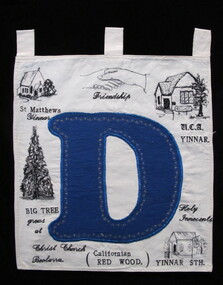
... BN068.19 "D" with machine embroidered church "St Matthews Yinnar", hands "Friendship", building "UCA Yinnar", chuch "Holy Innocents YINNAR STH" "(Californian RED WOOD)", tree "BIG TREE grows at Christ Church Boolarra" ..." D " "St Matthews Yinnar" "Friendship" "UCA Yinnar" " Holy Innocents YINNAR STH" " Californian RED WOOD" " BIG TREE grows at Christ Church Boolarra"...BN068.19 "D" with machine embroidered church "St Matthews Yinnar", hands "Friendship", building "UCA Yinnar", chuch "Holy Innocents YINNAR STH" "(Californian RED WOOD)", tree "BIG TREE grows at Christ Church Boolarra" Banner Banner ...The letters of the completed banner were made by different churches within in the presbytery and spelled a sentence, presumably "BUILD YOUR CHURCH LORD!" Orbost was one of the churches that had the finished banner on display. On of 24 small banners with tabs at the top of each for hanging on a rod. 19 have large blue letters appliqued on them. Twenty two of the banners are roughly square and two are smaller and oblong. Three have no letters and are used as spacers in the four word sentence that the letters make. The banners are decorated with rural and coastal images. BN068.19 "D" with machine embroidered church "St Matthews Yinnar", hands "Friendship", building "UCA Yinnar", chuch "Holy Innocents YINNAR STH" "(Californian RED WOOD)", tree "BIG TREE grows at Christ Church Boolarra" " D " "St Matthews Yinnar" "Friendship" "UCA Yinnar" " Holy Innocents YINNAR STH" " Californian RED WOOD" " BIG TREE grows at Christ Church Boolarra"uniting church adult fellowship -
 Hume City Civic Collection
Photograph, c 1990s
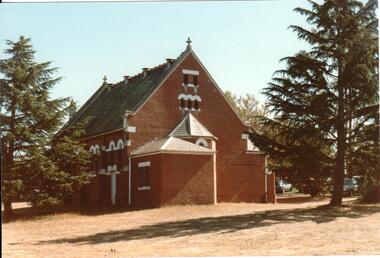
... Church before the extensions were built. The photograph shows the small apse and porch as well as the surrounding conifers which were growing in the church grounds....Church before the extensions were built. The photograph shows the small apse and porch as well as the surrounding conifers which were growing in the church grounds. ...St. Andrew's Uniting Church, formerly the Presbyterian church includes two different church buildings as well as a new addition built at the rear of the 1904 red brick building. A small weather board structure was used as a church until the Romanesque brick building opened in 1904. The new church extensions were completed on 14 December, 1986.A rear view of St. Andrew's Uniting Church before the extensions were built. The photograph shows the small apse and porch as well as the surrounding conifers which were growing in the church grounds.churches, religion, tompkins, f. b., h. w., goyen, w. rev., st. andrew's uniting church, presbyterian church, george evans collection -
 Uniting Church Archives - Synod of Victoria
Banner - Banners
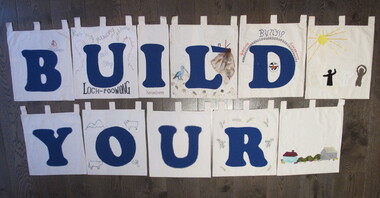
... BN068.2 "U" fabric paint words: "LOCH POOWONG east poowong nyora strezlecki kernang athlone" BN068.3 "I" "Korumburra" BN068.4 "L" with a pelican, fishing boat with a net, shells and sand BN068.5 "D" with the UCA emblem and "BUNYIP Garfield Longwarry" BN068.6 "Y" BN068.7 "O" with fabric paint flag, ram, road and trees and a cow BN068.8 "U" BN068.9 "R" with green and yellow wattle in fabric paint BN068.10 "C" with ric-rac round the letter and three churches appliqued in the top left corner BN068.11 "H" edged with pale blue metallic fabric paint BN068.12 "U" with sunrise over the sea with gold chain sunbeams and sequins BN068.13 "R" with fine blue embroidery at each corner and only two tabs BN068.14 "C" with appliqued boat, sky and sun BN068.15 "H" with a black swan with a red beak BN068.16 "L" with appliqued and fabric painted scene of a beach, hills and city smoke on the horizon BN068.17 "O" with painted corn cobs in each corner BN068.18 "R" with cows, hills, sheep and a sack BN068.19 "D" with machine embroidered church "St Matthews Yinnar", hands "Friendship", building "UCA Yinnar", chuch "Holy Innocents YINNAR STH" "(Californian RED WOOD)", tree "BIG TREE grows at Christ Church Boolarra" BN068.20 "!" ...BN068.2 "U" fabric paint words: "LOCH POOWONG east poowong nyora strezlecki kernang athlone" BN068.3 "I" "Korumburra" BN068.4 "L" with a pelican, fishing boat with a net, shells and sand BN068.5 "D" with the UCA emblem and "BUNYIP Garfield Longwarry" BN068.6 "Y" BN068.7 "O" with fabric paint flag, ram, road and trees and a cow BN068.8 "U" BN068.9 "R" with green and yellow wattle in fabric paint BN068.10 "C" with ric-rac round the letter and three churches appliqued in the top left corner BN068.11 "H" edged with pale blue metallic fabric paint BN068.12 "U" with sunrise over the sea with gold chain sunbeams and sequins BN068.13 "R" with fine blue embroidery at each corner and only two tabs BN068.14 "C" with appliqued boat, sky and sun BN068.15 "H" with a black swan with a red beak BN068.16 "L" with appliqued and fabric painted scene of a beach, hills and city smoke on the horizon BN068.17 "O" with painted corn cobs in each corner BN068.18 "R" with cows, hills, sheep and a sack BN068.19 "D" with machine embroidered church "St Matthews Yinnar", hands "Friendship", building "UCA Yinnar", chuch "Holy Innocents YINNAR STH" "(Californian RED WOOD)", tree "BIG TREE grows at Christ Church Boolarra" BN068.20 "!" ...The letters of the completed banner were made by different churches within in the presbytery of Gippsland and spell a sentence, presumably, "BUILD YOUR CHURCH LORD!" Orbost was one of the churches that had the finished banner on display. 24 small banners with tabs at the top of each for hanging on a rod. 19 have large blue letters appliqued on them. Twenty two of the banners are roughly square and two are smaller and oblong. Three have no letters and are used as spacers in the four word sentence that the letters make. The banners are decorated with rural and coastal images. BN068.1 "B" with an embroidered boat with the number 1 on the sail. BN068.2 "U" fabric paint words: "LOCH POOWONG east poowong nyora strezlecki kernang athlone" BN068.3 "I" "Korumburra" BN068.4 "L" with a pelican, fishing boat with a net, shells and sand BN068.5 "D" with the UCA emblem and "BUNYIP Garfield Longwarry" BN068.6 "Y" BN068.7 "O" with fabric paint flag, ram, road and trees and a cow BN068.8 "U" BN068.9 "R" with green and yellow wattle in fabric paint BN068.10 "C" with ric-rac round the letter and three churches appliqued in the top left corner BN068.11 "H" edged with pale blue metallic fabric paint BN068.12 "U" with sunrise over the sea with gold chain sunbeams and sequins BN068.13 "R" with fine blue embroidery at each corner and only two tabs BN068.14 "C" with appliqued boat, sky and sun BN068.15 "H" with a black swan with a red beak BN068.16 "L" with appliqued and fabric painted scene of a beach, hills and city smoke on the horizon BN068.17 "O" with painted corn cobs in each corner BN068.18 "R" with cows, hills, sheep and a sack BN068.19 "D" with machine embroidered church "St Matthews Yinnar", hands "Friendship", building "UCA Yinnar", chuch "Holy Innocents YINNAR STH" "(Californian RED WOOD)", tree "BIG TREE grows at Christ Church Boolarra" BN068.20 "!" with fabric brown cow in grass BN068.21 spacer with appliqued house, bushes and barn BN068.22 spacer with appliqued sun with ribbon rays and black white and brown figures BN068.23 & BN068.24 spacer with a small UCA red dove in the centre "B U I L D Y O U R C H U R C H L O R D !"uniting church adult fellowship -
 Sunshine and District Historical Society Incorporated
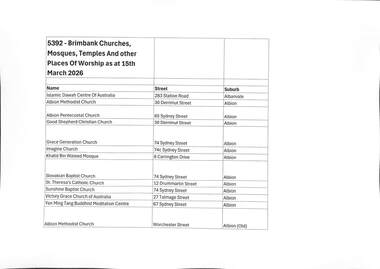
Archive - Brimbank Churches, Mosques, Temples & other Places of Worship, City of Sunshine
... John Anglican Church The Church of Jesus Christ of Latter-day Saints Western Community Alliance Church Avalokitesvara Yuan Tong Monastery ReSoul Church Sion Baptist Chruch Chua Phap Van Buddhist Temple Living Hope Christian Church St Paul's Catholic Church Keilor Christ Church Keilor Uniting Church in Australia St Stephen Bethlehem - Church of the Living God House of Prayer St Mary of the Assumption Parish The City of Refuge, Melbourne Brimbank Anglican Church Vantage Point Church West Campus Arise Church Seventh Day Adventist Reform Movement St Augustine's Catholic Church Resurrection Catholic Parish Church Al Nur Mosque Assembly of Belivers Church Hillsong Church - West Campus Iglesia Ni Cristo - Locale of Melbourne Maidstone Church of Christ Maidstone Church of England Maidstone Methodist Church Maidstone Mosque Maidstone Presbyterian Church Maidstone Salvation Army Church Maidstone Wesleyan Chapel New Apostolic Church Our Ladys Westside Assembly of God Worldwide Missionary Movement Melbourne Ethiopian Orthdox Church Maribyrnong Methodist Church Maribyrnong Methodist Church St Margaret's Catholic Church Hillsong Church Melbourne Greater West Campus Wesleyan Methodist Church Bridge Church West Campus Chùa Hoàng Pháp Chùa Thiện Đức Chua Tu Quang Temple Friendens Kirche Lutheran Church of St. Albans GROW Church Holy Eucharist Jehovah Witnesses Kings Park Filipino Congregation of Jehovah Witnesses Mata Chintapurni Mandir Hindu Temple St Albans Neuma Church Melbourne West Panjan Centre Peace Lutheran Church Russian Orthodox Church (Abroad) Sacred Heart Catholic Church Saint Paraskevi Greek Orthodox Church And Community St. ...John Anglican Church The Church of Jesus Christ of Latter-day Saints Western Community Alliance Church Avalokitesvara Yuan Tong Monastery ReSoul Church Sion Baptist Chruch Chua Phap Van Buddhist Temple Living Hope Christian Church St Paul's Catholic Church Keilor Christ Church Keilor Uniting Church in Australia St Stephen Bethlehem - Church of the Living God House of Prayer St Mary of the Assumption Parish The City of Refuge, Melbourne Brimbank Anglican Church Vantage Point Church West Campus Arise Church Seventh Day Adventist Reform Movement St Augustine's Catholic Church Resurrection Catholic Parish Church Al Nur Mosque Assembly of Belivers Church Hillsong Church - West Campus Iglesia Ni Cristo - Locale of Melbourne Maidstone Church of Christ Maidstone Church of England Maidstone Methodist Church Maidstone Mosque Maidstone Presbyterian Church Maidstone Salvation Army Church Maidstone Wesleyan Chapel New Apostolic Church Our Ladys Westside Assembly of God Worldwide Missionary Movement Melbourne Ethiopian Orthdox Church Maribyrnong Methodist Church Maribyrnong Methodist Church St Margaret's Catholic Church Hillsong Church Melbourne Greater West Campus Wesleyan Methodist Church Bridge Church West Campus Chùa Hoàng Pháp Chùa Thiện Đức Chua Tu Quang Temple Friendens Kirche Lutheran Church of St. Albans GROW Church Holy Eucharist Jehovah Witnesses Kings Park Filipino Congregation of Jehovah Witnesses Mata Chintapurni Mandir Hindu Temple St Albans Neuma Church Melbourne West Panjan Centre Peace Lutheran Church Russian Orthodox Church (Abroad) Sacred Heart Catholic Church Saint Paraskevi Greek Orthodox Church And Community St. ...List of former and current churches in the City of Brimbank. This includes churches in the former City of Sunshine and City of Keilor.This report records current and former churches in the City of Brimbank as of 15th March 2026.Name Islamic Dawah Centre Of Australia Albion Methodist Church Albion Pentecostal Church Good Shepherd Christian Church Grace Generation Church Imagine Church Khalid Bin Waleed Mosque Slovakian Baptist Church St. Theresa's Catholic Church Sunshine Baptist Church Victory Grace Church of Australia Yen Ming Tang Buddhist Meditation Centre Albion Methodist Church Braybrook Methodist Church Braybrook Wesleyan Church Ardeer Ukrainian Catholic Church Chùa Bảo Vương Cyprus Turkish Islamic Community Etinchrist Kingdom Ministries Mother of God Catholic Church Queen of Heaven Church Braybook Presbyterian Church Braybrook Church of England Braybrook Methodist Church Braybrook Salvation Army Church Cao Dai Temple of Melbourne Christ the King Gateway to Glory Church God Is with Us Christian Church INC Liên Trì Tự - Lien Tri Temple Peneil Church Australia Quang Minh Buddhist Temple Samoan Assembly of God St. Andrew’s & St. Peter’s Anglican Church Chùa Ấn Quang Avalokitesvara Yuan Tong Monastery Beautiful Life Church Bosnian Islamic Centre Chùa Lộc Uyển Deer Park Methodist Church Deer Park Preca Centre St Peter Chanel Catholic Church St. John Anglican Church The Church of Jesus Christ of Latter-day Saints Western Community Alliance Church Avalokitesvara Yuan Tong Monastery ReSoul Church Sion Baptist Chruch Chua Phap Van Buddhist Temple Living Hope Christian Church St Paul's Catholic Church Keilor Christ Church Keilor Uniting Church in Australia St Stephen Bethlehem - Church of the Living God House of Prayer St Mary of the Assumption Parish The City of Refuge, Melbourne Brimbank Anglican Church Vantage Point Church West Campus Arise Church Seventh Day Adventist Reform Movement St Augustine's Catholic Church Resurrection Catholic Parish Church Al Nur Mosque Assembly of Belivers Church Hillsong Church - West Campus Iglesia Ni Cristo - Locale of Melbourne Maidstone Church of Christ Maidstone Church of England Maidstone Methodist Church Maidstone Mosque Maidstone Presbyterian Church Maidstone Salvation Army Church Maidstone Wesleyan Chapel New Apostolic Church Our Ladys Westside Assembly of God Worldwide Missionary Movement Melbourne Ethiopian Orthdox Church Maribyrnong Methodist Church Maribyrnong Methodist Church St Margaret's Catholic Church Hillsong Church Melbourne Greater West Campus Wesleyan Methodist Church Bridge Church West Campus Chùa Hoàng Pháp Chùa Thiện Đức Chua Tu Quang Temple Friendens Kirche Lutheran Church of St. Albans GROW Church Holy Eucharist Jehovah Witnesses Kings Park Filipino Congregation of Jehovah Witnesses Mata Chintapurni Mandir Hindu Temple St Albans Neuma Church Melbourne West Panjan Centre Peace Lutheran Church Russian Orthodox Church (Abroad) Sacred Heart Catholic Church Saint Paraskevi Greek Orthodox Church And Community St. Albans St Albans Uniting Church St. Alban the Martyr Church of England St. Albans Croatian Seventh-Day Adventist Church St. Albans Preca Centre St. Albans Slavic Church St. Albans Vietnamese Alliance Church St. George Serbian Orthodox Church St. George's Coptic Orthodox Church - Melbourne St. Paraskevi Greek Orthodox Church St. Albans St. Paul Catholic Church Temple Transform Church United Penticostal Church Western New Community Baptist Church Avalokitesvara Yuan Tong Monastery Chua Hue Quang Temple Church of Christ / Elias Church of St the Prophet (Greek-Melkite) Church of England Cloud Christian Church Community Church Holy Apostles Anglican Church Hope Of Life Community Church Jehovah's Witnesses Kingdom Hall of Jehovah's Witnesses Mara Christian Church of Victoria Inc. Our Lady of the Immaculate Catholic Church Pentecostal Church Plymonth Brethren Church Plymonth Brethren Church Roman Catholic Church Seventh Day Aventist Church St. Marks Church Sunshine Sunshine Methodist Church Sunshine North Sunshine Presbyterian Church Sunshine Roman Catholic Church Sunshine Uniting Church Sunshine Vietnamese Baptist Church Sunshine Wesleyan Methodist Church Tamil Christian Fellowship Melbourne The Salvation Army The Salvation Army Westcare Vietnamese Evangelical Church Voice Of Christ Full Gospel Church Inc. Sunshine Zetseat Ethiopian Evangelical Church Australian Christian Churches Victoria Chua Phap Hoa Buddhist Temple Enjoy Church Faith & Power Ministry Revival Church Iglesia Cristiana Melbourne Murugan Hindu Temple North Sunshine Gospel Hall Pentecostal Missionary Church of Christ (4th Watch) St Bernadette's Parish St. Marys Church of England Sunshine North Presbyterian Church Sunshine North Uniting Church Tabor Romanian Pentecostal Church Western Spanish Seventh-day Adventist Church Ardeer Preca Centre Croatian Catholic Centre, Sunshine Elevation Church, Melbourne West Our Lady of Sorrows' Catholic Church St Anthony’s Greek Orthodox Church St Paul's Church Catholic Church The Potters House Christian Church (Footscray) Emmaus Catholic Church Macedonian Orthodox Cathedral Church - Nativity of The Holy Mother of God (St.Mary) St. Mary's (Holy Mother of God) Macedonian Orthodox Church Sydenham - Caroline Springs Uniting Church Sydenham Baptist Church Sydenham Presbyterian Church The Salvation Army Brimbank City Corps Town Well Uniting Church Sydenham Brimbank Presbyterian Church St. Luke's Anglican Church The Potters House Christian Church Avustralya Nur Vakfi church, churches -
 Flagstaff Hill Maritime Museum and Village
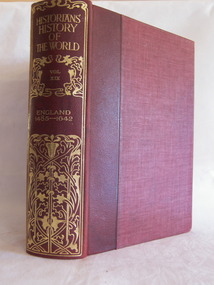
Book - Reference Book/History, Henry Smith Williams, The Historians History of the World Vol 19 set 1 - Edited by Henry Smith Williams L.L.D. Published by “The Times” 1908, 1908
... Church of England. The Elizabethan era is well covered with a chapter on the "Golden Age," including the defeat of the Spanish Armada and the flourishing of English literature and exploration. Volume 19 moves on to the early Stuart period with the transition to the House of Stuart under James I and the growing tensions between the Crown and Parliament that eventually led to revolution....Church of England. The Elizabethan era is well covered with a chapter on the "Golden Age," including the defeat of the Spanish Armada and the flourishing of English literature and exploration. Volume 19 moves on to the early Stuart period with the transition to the House of Stuart under James I and the growing tensions between the Crown and Parliament that eventually led to revolution. ...Henry Smith Williams’ “The Historians' History of the World” is a chronological and geographical "tapestry" of human events, these twenty five volumes occupy a very specific and prestigious place in historical research. Volume 19 is a pivotal component of the series, focusing specifically on a trans-formative era of British history from 1485 to 1642 covering the history of England from the rise of the Tudor Dynasty to the eve of the English Civil War.The Book is part of a 25 volume set with red cloth bindings and gold filigree design to rib.non-fictionHenry Smith Williams’ “The Historians' History of the World” is a chronological and geographical "tapestry" of human events, these twenty five volumes occupy a very specific and prestigious place in historical research. Volume 19 is a pivotal component of the series, focusing specifically on a trans-formative era of British history from 1485 to 1642 covering the history of England from the rise of the Tudor Dynasty to the eve of the English Civil War.flagstaff hill, warrnambool, shipwrecked-coast, flagstaff-hill-maritime-museum, maritime-museum, shipwreck-coast, flagstaff-hill-maritime-village, book, the historians history of the world vol 19 set 1, henry smith williams -
 Federation University Historical Collection
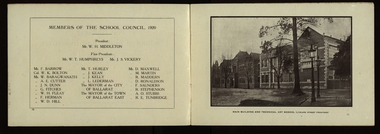
Booklet, The Ballarat School of Mines and Industries 1870-1920 Jubilee Booklet, 1920 (estimated)
... A little more than ten years afterwards a buildnig formerly serving as a Methodist Church was absorbed, while later on, the demand for accomodation increasing, the attack upon the gaol was renewed. The School continued to grow...A little more than ten years afterwards a buildnig formerly serving as a Methodist Church was absorbed, while later on, the demand for accomodation increasing, the attack upon the gaol was renewed. The School continued to grow ...The first school of Mines in Australia was established at Ballarat in 1870. At the time of its jubilee (1930) the following people were members of the School Council: W.H. Middleton (President), W.T. Humphreys (VP), J.S. Vickery (VP), F. Barrow, Col. W.K. Bolton, William Baragwanath, A.E. Cutter, J.N. Dunn, G. Fitches, W.H. Fleay, F. Herman. W.D. Hill, T. Hurley, K. Kean. J. Kelly, L. Lederman, Mayor of Ballarat, Mayour of Ballarat East, D. Maxwell, M. Martin, R. Maddern, D. Ronaldson, F. Saunders, R. Stephenson, A.O. Stubbs, R.E. Tunbridge. The School Staff in 1920 comprised: Herbert H. Smith, Walter Rowbotham, Reginald L. Cutter, M.C. Young, Hilda Wardle, M. Wiliamson, P.S. Richards, L.H. Archibald, J. Woods, Ken Moss, W. Kenneth, Mrs McIlvena. B. Robinson, S. Rowe, E. Hope-Jones, Miss Abrams, L.St.G.P. Austin, Alfred Mica Smith, J.R. Pound, Herbert R. Murphy, N.H. Junner, Maurice Copland, L.H. Archibald, E.J.A. McConnon, Newton King, D.m. Hull, T.R. Gordon, John M. Sutherland, T.K. Jebb, Dick Richards, C. Tonkin, A.W. Steane, J. Paterson, H.W. Malin, R.V. Maddison, S.M. Mayo, F.A. King, W.H. Steane, T.R. Gordon, T.A. Williams, H. Waldron, G. Black, E.J. McConnon, R.V. Duncan. R. Cutter, E.G. Vawdrey, Hilda WardleWhite stapled booklet - landscape format - 20pp + soft covers with blue writing. Includes an historical sketch of the Ballarat School of Mines. Contains images of the school from around 1920. The history outlined in the booklet follows: 'Ballarat has helped to influence the life and destinies of Australia in many ways, the recital of which would perhaps prove tedious to the citizens of less favoured localities! However, it can be said, without much fear of contradiction, that only less known thought Australia than its fame as a gold field is the reputation won for it by its school of Mines, ... Ballarat was still quite a new place when the School was founded, but a very propserous and popular place all the same, with a go-ahead lot of citizens brim full of the spirit of enterprise which seemsto animate mining populations generally. Money was plentiful, and they launched out into ventures, which later, were to develop and take the place of the gold mines, while what is more to the point, they understood the value of education. the old digging days were passing away. So far as Ballarat itself was concerned the day of the cradle and tin dish had already passed into an antiquity "as dead and distant as the age of the Tubal Caon," said dir redmond Barry on declaring the School open. Mining had become a serious business, and the mining engineer, the metallurgist, and the geologist had become a power in the land. In these circumstances the suggestions to found a School of Mines met with ready acceptance. The late Mr James M. Bickett had the honor of bringing forward the proposition at a meeting of the Ballarat Mining Board in October, 1869. it was agreed to, and the Government, having been approached for assistance, granted a lease of the old Supreme Court buildings at a nominal reantal. A modest sum, including 100 pounds from the Borough Council of Ballarat West, was subscribed by a number of sympathisers, and on the 26th October, 1870, the inaugural address was delivered by Sir Redmond Barry, the first President of the School. Classes were commenced on the 23rd January, 1871. The students at first were mostly adults. They were chiefly men emloyed at the mines, who had the wisdom and energy to devote their spare time to study, and, though their attendance was somewhat irregular, they made very good progress. Old prints which have been preserved show them at work at furnaces, big bearded men of the old-fashioned type of miner. It is interesting to note that among those who gave evidence and encouragement was Sir Roderick Murchison, who many years before had advised Cornish miners to emigrate to Australia to search for gold, and who in 1848 was in possession of gold ore sent from this country. Sir Roderick sent a parcel of books for the library, and gave useful advice as to the curriculum which should be adopted. The Museum, which now contains a most valuable collection of minerals, was one of the first things attended to, and the reports presented to the Council from time to time speak of additions being made from all parts of the world. New equipment was constantly being added to the School, a good deal of assay work was done, and some specimens were sent from the East Indies for examination as far back as 1873. By this time there was a difficulty in providing accomodation for the students who wished to enrol, and the number of instructors had grown from two to four. In 1882 the first building was being erected on what was then part of the gaol reserve. A little more than ten years afterwards a buildnig formerly serving as a Methodist Church was absorbed, while later on, the demand for accomodation increasing, the attack upon the gaol was renewed. The School continued to grow in reputation and size, and became the science centre of the district, and in 1889 a learge new building was opened by Sir Alexander Peacock. Students came from over seas as well as from all the States of Australia, and after going through their courses they took with them the name and fame of the old School to all parts of the globe. School of Mines boys have played a great part in developing the mining fields of Western Australia, South Australia, and africa, while old students who have made a name in their profession are constantly dropping in to see how the old place is getting along. It was not to be expected, however, that the Ballarat School would be left without rivals, its very success inspiring competition. Mining Schools were started in other parts of Australia, and, at the same time, Victoria ceased to hold first place as a mining state. On the other hand there was a great advance in manufacturing, and the demand for technicaly trained men became a great and as insistent as ever it had been for trained mining men. The Council was quick to adapt the school to the new conditions, and the result is seen in the institution, which is one of Ballarat's proudest possession. Instruction is given in all branches of technical work, and the classes are filled with students who are building up for Ballarat a reputation as an industrial centre, which promises to equal that which it formerly held as a mining town. Owing to its bracing climate, its abundant opportunities for recreations, and its accessibilty, Ballarat as a city is an ideal place for educational purposed, and is yearly becoming more and more appreciated throughout the State. The chairman of one of Ballarat's biggests industries claims that the workman can do twice the day's work here that he can do in Melbourne. he was a little enthusiastic over it, perhaps, but it is a well-known fact that the healthy and invigourating Ballarat climate is conducive to both physical and mental activity, and the records of the School provide ample proof of it. One of the most interesting and successful branches of the School of Mines and Industries - if the name be enlarged with the enlargement of its scope - is the Technical Art School. "The City of Statues" has from its earliest days been a stronghold of art. Art schools have flourised here, and in 1905 the Education Department came to the conclusion that the best thing to do with them was to place them under the management of the School of Mines Council. A magnificent new Technical Art School was built at a cost of some 12,000 pounds on the site of the old Supreme Court building, and was formally opened on the 23rd July, 1915. The results have not only been justified but surpassed all anticipations. The most comprehensive list of subjects is taught, and this list is constantly added to. Students have flocked to the art School, which may be said to occupy a unique position in Australia, and its record of success is really astonishing. Its students supply art teachers for the newer schools that are being built, and many occupy leading positinos in important business houses. So well is its reputation known that orders are constantly being received, not only from Victoria, but from other States, for honor boards and challenge shields to be designed and made. The most recent addition to the School of Mines and Industries is the Junior Technical School, for which a new building is now being erected on a portion of the gaol site, transferred to the School of Mines Counci by the Government. At the present moment temporary quarters are being occupied. Some students after passing through the Junior School go straight to employment, continuing perhaps to attend the evening trade classes, while others move on to the senior School. In a review of the work of the School of Mines mention must be made of a series of industrial research carried out under supervision of the Principal. One in particular, regarding the suitability of the local ores for the manufacture of pigments attracted much attention, while the experiemtns on the manufacture of white potery from Victorian clayes were considered of sufficient importance by the Federal Advisory Council of Science and Industry to warrant the appointment of a special investigator. The results of these have been most encouraging, and may have far-reaching consequences. The vocational training of returned soldiers also should not be overlooked. The work was taken in hand from the first, before the Repatriation Department gave assistance, and now with the help of the department of the School has become one of the largest vocational training centres in Victoria outside of Melbourne. The soldiers, trained in a variety of occupations, have made remarkable progress, and already considerable numbers have found employment in local workshops and factories. To sum up, the School is divided into the following departments, each well staffed and equipped: - The School of Mines, science, and Engineering; the Techncial Art School, the Boys' Junior Technical School, the Girl's Preparatory Technical Classes, Trade Classes, and the Commercial School. The school of Mines, science and Engineering, comprises the following branches: - Mining, Metallurgy, Geology, Electrical Engineering, Civil Engineering, Mechanical Engineering, Applied Chemistry, and Pharmacy. Battery treatments, Cyanide Testing, Smelting, Assays, and Clay Testing from a regular part of the School's work. Students gaining qualifications obtain concession in their courses at the university, should they proceed there to continue their studies. The technical Art school curriculum includes training in all branches of pictorial and applied art, an Architectural Diploma Course, a Draughtman's Course, technical Art teachers' Course, Photography,Ticket Writing, Art Metal Work, Woodcarving, Needlework, and Leather work. The Trade Classes give instruction in Telephone Mechanics, telegraphy, Carpentry, Cabinet Making, Plumbing, Blacksmithing, Fitting, Electric Wiring, and Printing. Numerous Scholarships are offered every year, and altogether students will find few places to equal the Ballarat School of Mines and Industries as a training place for their life's work. One of the first in the continent to be established, its Jubilee finds it still in the front rank, keeping pace with the times, and offering to the youths of this country the means of taking advantage of Australia's teeming opportunities. william, battery, smith, herbert, drawing from the antique, ballarat school of mines botanical gardens, ballarat school of mines, redmond barry, alfred mica smith, james bickett, museum, dick richards, ballarat junior technical school, s m b, ballarat school of mines and industries, ballarat technical art school, model mine, james m bickett, j m bickett, roderick murchison, vocational training rooms, wesley church, methodist church, alexander peacock, lathes, repatriation, repatriatin department, war service, school council, baragwanath, gold mining, mining laboratory, plaster cast, r.w. richards, anniversary, jubilee -
 The Beechworth Burke Museum
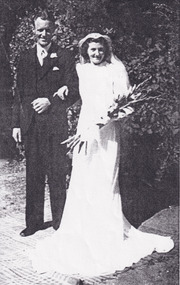
Audio - Oral History, Jennifer Williams, Mrs May Sewell, 23rd November 2000
... May loved growing up and living in Beechworth, and fondly recalls knowing all her neighbours, meeting friends at the pictures, attending girl guides, picking wildflowers around the gorge, participating keenly in the Church of England choir and dances, and the big Easter festivals. ...May loved growing up and living in Beechworth, and fondly recalls knowing all her neighbours, meeting friends at the pictures, attending girl guides, picking wildflowers around the gorge, participating keenly in the Church of England choir and dances, and the big Easter festivals. ...May Sewell was born in Beechworth in 1917, her paternal grandparents had come to Beechworth from Ireland and her maternal grandparents from Scotland. She was the youngest of five siblings and the only one to be born in a hospital rather than at home. May loved growing up and living in Beechworth, and fondly recalls knowing all her neighbours, meeting friends at the pictures, attending girl guides, picking wildflowers around the gorge, participating keenly in the Church of England choir and dances, and the big Easter festivals. May worked various jobs before getting married. After leaving school at fifteen, May learnt dressmaking with Lal Anderson (and was delighted with her wage of two and six pence a week) and then went on to learn tailoring with Mr Charles. May then worked in the dining rooms at the Commercial Hotel and Hotel Nicholas. May was at the Hotel Nicholas for seven years but stopped when she got married as female employees were not asked to stay once they were married. May married her husband in 1944 and had known him since school. They went on to have six children, sadly three did not live past infancy. Her first children were twin girls who died six hours after birth. May briefly discusses the difficulty in grieving her twin daughters, the lack of available support, and the expectancy to carry on. Her next child, a son named Ian James, died when he was only ten months old from a tumour. May described Ian James as a lovely boy. May had multiple connections to the Zwar Brothers' Beechworth Tannery. Her father and then her three brothers worked there, and also her husband for a short period of time. The tannery was a major employer in Beechworth, and May having multiple family members employed by the tannery underlines the significant role of the tannery in Beechworth. May described her husband as very hardworking, he worked as a cleaner overnight at the Ovens and Murray Hospital for the Aged while during the day tended his cattle and sheep farm. This oral history recording was part of a project conducted by Jennifer Williams in the year 2000 to capture the everyday life and struggles in Beechworth during the twentieth century. This project involved recording seventy oral histories on cassette tapes of local Beechworth residents which were then published in a book titled: Listen to what they say: voices of twentieth century Beechworth. These cassette tapes were digitised in July 2021 with funds made available by the Friends of the Burke. Miss May Sewell’s account of her life in Beechworth is historically and socially significant to the cultural heritage of the region. May in reflecting on her experiences of leisure opportunities, town festivals, work available for women, leaving the workforce once married, the tannery, post-natal care, grief and child mortality provide essential historic, economic, social, and healthcare insights. May’s oral history recording is part of a larger collection of oral histories recorded by Jennifer Williams in 2000, collectively they provide invaluable insights into Beechworth during the 20th century, much of the information in these oral histories would be lost if not documented and missed in the interpretation of tangible objects. This is a digital copy of a recording that was originally captured on a cassette tape. The cassette tape is black with a horizontal white strip and is currently stored in a clear flat plastic rectangular container. It holds up 40 minutes of recordings on each side.Mrs May Sewellmay sewell, oral history, jennifer williams, listen to what they say: voices of twentieth century beechworth, beechworth church of england, easter festival, beechworth girl guides, hospital birth 1917, lal anderson, tailor beechworth, commercial hotel, hotel nicholas, zwar brother's beechworth tannery, ovens and murray hospital for the aged, dressmaking beechworth, beechworth cinemas, paul voglis -
 The Beechworth Burke Museum
Audio - Oral History, Jennifer Williams, Mrs Vanessa McDonald, 9 November 2000
... By the late 1850s, Stanley boasted schools, an athenaeum, a church, a weekly newspaper and several hotels and other civic infrastructure to cater for a growing population. ...By the late 1850s, Stanley boasted schools, an athenaeum, a church, a weekly newspaper and several hotels and other civic infrastructure to cater for a growing population. ...Mrs. Vanessa McDonald was born in Beechworth in 1917. Christened, Agnes Bertha Collins, Vanessa changed her name in 1960. Mrs. McDonald's family's connection with gold mining in the district reach back to the first of Beechworth's gold rushes, when her great grandfather, a Dutchman who adopted the name Charles Collins, arrived in 1851-1852. Mrs. McDonald spent her childhood in the isolated hamlet of Stanley, in the area known as 'Little Scotland', where she recalls helping her mother to raise younger siblings, picking apples and walnuts on the family farm, and roaming the hills for wildflowers. As a young woman Mrs. McDonald attended religious and social gatherings in the local community. In 1940 she went to Melbourne to work as a mothercraft nurse during the Second World War. She met her husband at a Beechworth football match and was married at the Stanley Methodist Church in 1941. The gold diggings known as the 'Nine Mile' became the hamlet of Stanley, after the British Prime Minister, Lord Stanley, in 1858. By the late 1850s, Stanley boasted schools, an athenaeum, a church, a weekly newspaper and several hotels and other civic infrastructure to cater for a growing population. The area attracted large numbers of Chinese miners, whose presence was frequently resisted. Like other early Victorian mining settlements, Stanley was a hotbed of political and racial tensions during the gold rush. One side of the Nine Mile Creek was known as 'Little Scotland’, the other, 'Little Ireland'. A number of Christian denominations built congregations and churches in Stanley, including the Church of England, Methodist Church, the Catholic Church, and Presbyterian Church. Stanley became part of the United Shire of Beechworth in 1871. By 1880 timber was being cut and two sawmills were established by 1887. River-dredged gold mining consumed vast amounts of timber from the forests in the area, and in 1931 the first of several softwood plantations began. This oral history recording was part of a project conducted by Jennifer Williams in the year 2000 to capture the everyday life and struggles in Beechworth during the twentieth century. This project involved recording seventy oral histories on cassette tapes of local Beechworth residents which were then published in a book titled: 'Listen to what they say: voices of twentieth century Beechworth'. These cassette tapes were digitised in July 2021 with funds made available by the Friends of the Burke.Following the decline in the mining and associated industries during the early-mid-twentieth century, the Beechworth district experienced a period of general economic decline. On the east side of the Dingle Range, Mrs. McDonald's father, William Henry Collins, felled timber and the family were pioneer apple orchardists. The establishment of apple orchards in Stanley reflects changes to how land was used and contributes to our understanding of the historical development of rural communities following the gold rush. Mrs. McDonald's recollections are significant for understanding family and social life in a small rural town in years leading up to the Great Depression and prior to the Second World War. This oral history recording may be compared with other oral histories and items in the Burke Museum's collection. This oral history account is socially and historically significant as it is a part of a broader collection of interviews conducted by Jennifer Williams which were published in the book 'Listen to what they say: voices of twentieth-century Beechworth.' While the township of Beechworth is known for its history as a gold rush town, these accounts provide a unique insight into the day-to-day life of the town's residents during the 20th century, many of which will have now been lost if they had not been preserved.This is a digital copy of a recording that was originally captured on a cassette tape. The cassette tape is black with a horizontal white strip and is currently stored in a clear flat plastic rectangular container. It holds up 40 minutes of recordings on each side.Mrs Vanessa McDonald /listen to what they say, beechworth, oral history, burke museum, emigration, gold rush immigration, victorian gold rush, mining families, apple orchard, forestry, forest plantation, little scotland, stanley, twentieth century history, regional australia, rural australia, farming, harvest festival, great depression, dingle range, the nine mile, australian wildflowers, high country wildflowers, mothercraft nurse, rural and regional women, social history, collins, mrs. vanessa mcdonald, building community life, shaping cultural and creative life, fruit growers, family history, changes to land use in regional victoria -
 The Beechworth Burke Museum
Photograph - Lantern Slide, c1900
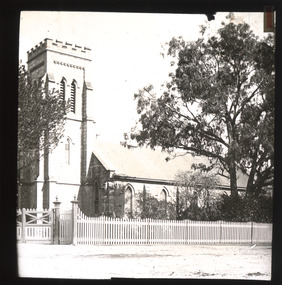
... The Church garden features several significant trees monitored by the Beechworth Treescape Group, including a cork oak growing near the Ford Street entrance, an Atlantic cedar, a bunya or bunya-bunya pine and two kurrajongs. ...The Church garden features several significant trees monitored by the Beechworth Treescape Group, including a cork oak growing near the Ford Street entrance, an Atlantic cedar, a bunya or bunya-bunya pine and two kurrajongs. ...Beechworth's Anglican Church, Christ Church St Peter and St Paul, has served the Beechworth community since 1858 in its present form, following its beginnings in a tent in 1855. The Victorian branch of the National Trust classified the building as regionally significant in 1959 and the organ as of significance to the nation in 1992. Building a place for Anglican worship was a priority in the early days of Beechworth's settlement as the town was a site of regional administration due to its association with the economic and social expansion of Victoria during the Gold Rush period. The Church garden features several significant trees monitored by the Beechworth Treescape Group, including a cork oak growing near the Ford Street entrance, an Atlantic cedar, a bunya or bunya-bunya pine and two kurrajongs. Some of these long-established trees may be visible in this lantern-slide image. Lantern slides, sometimes called 'magic lantern' slides, are glass plates on which an image has been secured for the purpose of projection. Glass slides were etched or hand-painted for this purpose from the Eighteenth Century but the process became more popular and accessible to the public with the development of photographic-emulsion slides used with a 'Magic Lantern' device in the mid-Nineteenth Century. Photographic lantern slides comprise a double-negative emulsion layer (forming a positive image) between thin glass plates that are bound together. A number of processes existed to form and bind the emulsion layer to the base plate, including the albumen, wet plate collodion, gelatine dry plate and woodburytype techniques. Lantern slides and magic lantern technologies are seen as foundational precursors to the development of modern photography and film-making techniques.This glass slide is significant because it provides insight into Beechworth's social amenities and religious infrastructure in the late Nineteenth Century. It is also an example of an early photographic and film-making technology in use in regional Victoria in the time period.Thin translucent sheet of glass with a square image printed on the front and framed in a black backing. It is held together by metals strips to secure the edges of the slide.Obverse: 1 /beechworth, lantern slide, slide, glass slide, plate, burke museum collection, photograph, monochrome, christ church, indigo shire, north-east victoria, churches, architecture, anglican, religion, atlantic cedar, organ, magic lantern, christ church st peter and st paul, beechworth treescape group, cork oak, bunya pine, bunya bunya, kurrajong, quercus suber, cedrus atlantica f. glauca, araucaria bidwillii, brachychiton populneus -
Federation University Historical Collection
Booklet, The Ballarat School of Mines and Industries 1870-1920 Jubilee Booklet, 1920 (estimated)
... A little more than ten years afterwards a buildnig formerly serving as a Methodist Church was absorbed, while later on, the demand for accomodation increasing, the attack upon the gaol was renewed. The School continued to grow...A little more than ten years afterwards a buildnig formerly serving as a Methodist Church was absorbed, while later on, the demand for accomodation increasing, the attack upon the gaol was renewed. The School continued to grow ...The first school of Mines in Australia was established at Ballarat in 1870. At the time of its jubilee (1930) the following people were members of the School Council: W.H. Middleton (President), W.T. Humphreys (VP), J.S. Vickery (VP), F. Barrow, Col. W.K. Bolton, William Baragwanath, A.E. Cutter, J.N. Dunn, G. Fitches, W.H. Fleay, F. Herman. W.D. Hill, T. Hurley, K. Kean. J. Kelly, L. Lederman, Mayor of Ballarat, Mayour of Ballarat East, D. Maxwell, M. Martin, R. Maddern, D. Ronaldson, F. Saunders, R. Stephenson, A.O. Stubbs, R.E. Tunbridge. The School Staff in 1920 comprised: Herbert H. Smith, Walter Rowbotham, Reginald L. Cutter, M.C. Young, Hilda Wardle, M. Wiliamson, P.S. Richards, L.H. Archibald, J. Woods, Ken Moss, W. Kenneth, Mrs McIlvena. B. Robinson, S. Rowe, E. Hope-Jones, Miss Abrams, L.St.G.P. Austin, Alfred Mica Smith, J.R. Pound, Herbert R. Murphy, N.H. Junner, Maurice Copland, L.H. Archibald, E.J.A. McConnon, Newton King, D.m. Hull, T.R. Gordon, John M. Sutherland, T.K. Jebb, Dick Richards, C. Tonkin, A.W. Steane, J. Paterson, H.W. Malin, R.V. Maddison, S.M. Mayo, F.A. King, W.H. Steane, T.R. Gordon, T.A. Williams, H. Waldron, G. Black, E.J. McConnon, R.V. Duncan. R. Cutter, E.G. Vawdrey, Hilda WardleWhite stapled booklet - landscape format - 20pp + soft covers with blue writing. Includes an historical sketch of the Ballarat School of Mines. Contains images of the school from around 1920. The history outlined in the booklet follows: 'Ballarat has helped to influence the life and destinies of Australia in many ways, the recital of which would perhaps prove tedious to the citizens of less favoured localities! However, it can be said, without much fear of contradiction, that only less known thought Australia than its fame as a gold field is the reputation won for it by its school of Mines, ... Ballarat was still quite a new place when the School was founded, but a very propserous and popular place all the same, with a go-ahead lot of citizens brim full of the spirit of enterprise which seemsto animate mining populations generally. Money was plentiful, and they launched out into ventures, which later, were to develop and take the place of the gold mines, while what is more to the point, they understood the value of education. the old digging days were passing away. So far as Ballarat itself was concerned the day of the cradle and tin dish had already passed into an antiquity "as dead and distant as the age of the Tubal Caon," said dir redmond Barry on declaring the School open. Mining had become a serious business, and the mining engineer, the metallurgist, and the geologist had become a power in the land. In these circumstances the suggestions to found a School of Mines met with ready acceptance. The late Mr James M. Bickett had the honor of bringing forward the proposition at a meeting of the Ballarat Mining Board in October, 1869. it was agreed to, and the Government, having been approached for assistance, granted a lease of the old Supreme Court buildings at a nominal reantal. A modest sum, including 100 pounds from the Borough Council of Ballarat West, was subscribed by a number of sympathisers, and on the 26th October, 1870, the inaugural address was delivered by Sir Redmond Barry, the first President of the School. Classes were commenced on the 23rd January, 1871. The students at first were mostly adults. They were chiefly men emloyed at the mines, who had the wisdom and energy to devote their spare time to study, and, though their attendance was somewhat irregular, they made very good progress. Old prints which have been preserved show them at work at furnaces, big bearded men of the old-fashioned type of miner. It is interesting to note that among those who gave evidence and encouragement was Sir Roderick Murchison, who many years before had advised Cornish miners to emigrate to Australia to search for gold, and who in 1848 was in possession of gold ore sent from this country. Sir Roderick sent a parcel of books for the library, and gave useful advice as to the curriculum which should be adopted. The Museum, which now contains a most valuable collection of minerals, was one of the first things attended to, and the reports presented to the Council from time to time speak of additions being made from all parts of the world. New equipment was constantly being added to the School, a good deal of assay work was done, and some specimens were sent from the East Indies for examination as far back as 1873. By this time there was a difficulty in providing accomodation for the students who wished to enrol, and the number of instructors had grown from two to four. In 1882 the first building was being erected on what was then part of the gaol reserve. A little more than ten years afterwards a buildnig formerly serving as a Methodist Church was absorbed, while later on, the demand for accomodation increasing, the attack upon the gaol was renewed. The School continued to grow in reputation and size, and became the science centre of the district, and in 1889 a learge new building was opened by Sir Alexander Peacock. Students came from over seas as well as from all the States of Australia, and after going through their courses they took with them the name and fame of the old School to all parts of the globe. School of Mines boys have played a great part in developing the mining fields of Western Australia, South Australia, and africa, while old students who have made a name in their profession are constantly dropping in to see how the old place is getting along. It was not to be expected, however, that the Ballarat School would be left without rivals, its very success inspiring competition. Mining Schools were started in other parts of Australia, and, at the same time, Victoria ceased to hold first place as a mining state. On the other hand there was a great advance in manufacturing, and the demand for technicaly trained men became a great and as insistent as ever it had been for trained mining men. The Council was quick to adapt the school to the new conditions, and the result is seen in the institution, which is one of Ballarat's proudest possession. Instruction is given in all branches of technical work, and the classes are filled with students who are building up for Ballarat a reputation as an industrial centre, which promises to equal that which it formerly held as a mining town. Owing to its bracing climate, its abundant opportunities for recreations, and its accessibilty, Ballarat as a city is an ideal place for educational purposed, and is yearly becoming more and more appreciated throughout the State. The chairman of one of Ballarat's biggests industries claims that the workman can do twice the day's work here that he can do in Melbourne. he was a little enthusiastic over it, perhaps, but it is a well-known fact that the healthy and invigourating Ballarat climate is conducive to both physical and mental activity, and the records of the School provide ample proof of it. One of the most interesting and successful branches of the School of Mines and Industries - if the name be enlarged with the enlargement of its scope - is the Technical Art School. "The City of Statues" has from its earliest days been a stronghold of art. Art schools have flourised here, and in 1905 the Education Department came to the conclusion that the best thing to do with them was to place them under the management of the School of Mines Council. A magnificent new Technical Art School was built at a cost of some 12,000 pounds on the site of the old Supreme Court building, and was formally opened on the 23rd July, 1915. The results have not only been justified but surpassed all anticipations. The most comprehensive list of subjects is taught, and this list is constantly added to. Students have flocked to the art School, which may be said to occupy a unique position in Australia, and its record of success is really astonishing. Its students supply art teachers for the newer schools that are being built, and many occupy leading positinos in important business houses. So well is its reputation known that orders are constantly being received, not only from Victoria, but from other States, for honor boards and challenge shields to be designed and made. The most recent addition to the School of Mines and Industries is the Junior Technical School, for which a new building is now being erected on a portion of the gaol site, transferred to the School of Mines Counci by the Government. At the present moment temporary quarters are being occupied. Some students after passing through the Junior School go straight to employment, continuing perhaps to attend the evening trade classes, while others move on to the senior School. In a review of the work of the School of Mines mention must be made of a series of industrial research carried out under supervision of the Principal. One in particular, regarding the suitability of the local ores for the manufacture of pigments attracted much attention, while the experiemtns on the manufacture of white potery from Victorian clayes were considered of sufficient importance by the Federal Advisory Council of Science and Industry to warrant the appointment of a special investigator. The results of these have been most encouraging, and may have far-reaching consequences. The vocational training of returned soldiers also should not be overlooked. The work was taken in hand from the first, before the Repatriation Department gave assistance, and now with the help of the department of the School has become one of the largest vocational training centres in Victoria outside of Melbourne. The soldiers, trained in a variety of occupations, have made remarkable progress, and already considerable numbers have found employment in local workshops and factories. To sum up, the School is divided into the following departments, each well staffed and equipped: - The School of Mines, science, and Engineering; the Techncial Art School, the Boys' Junior Technical School, the Girl's Preparatory Technical Classes, Trade Classes, and the Commercial School. The school of Mines, science and Engineering, comprises the following branches: - Mining, Metallurgy, Geology, Electrical Engineering, Civil Engineering, Mechanical Engineering, Applied Chemistry, and Pharmacy. Battery treatments, Cyanide Testing, Smelting, Assays, and Clay Testing from a regular part of the School's work. Students gaining qualifications obtain concession in their courses at the university, should they proceed there to continue their studies. The technical Art school curriculum includes training in all branches of pictorial and applied art, an Architectural Diploma Course, a Draughtman's Course, technical Art teachers' Course, Photography,Ticket Writing, Art Metal Work, Woodcarving, Needlework, and Leather work. The Trade Classes give instruction in Telephone Mechanics, telegraphy, Carpentry, Cabinet Making, Plumbing, Blacksmithing, Fitting, Electric Wiring, and Printing. Numerous Scholarships are offered every year, and altogether students will find few places to equal the Ballarat School of Mines and Industries as a training place for their life's work. One of the first in the continent to be established, its Jubilee finds it still in the front rank, keeping pace with the times, and offering to the youths of this country the means of taking advantage of Australia's teeming opportunities. william, battery, smith, herbert, drawing from the antique, ballarat school of mines botanical gardens, ballarat school of mines, redmond barry, alfred mica smith, james bickett, museum, dick richards, ballarat junior technical school, s m b, ballarat school of mines and industries, ballarat technical art school, model mine, james m bickett, j m bickett, roderick murchison, vocational training rooms, wesley church, methodist church, alexander peacock, lathes, repatriation, repatriatin department, war service, school council, baragwanath, gold mining, mining laboratory, plaster cast, r.w. richards, anniversary, jubilee -
Marysville & District Historical Society
THE TRIANGLE NEWS-VOL 39 NO 27-JULY 20 2012
... church notices...school movie night...upgraded pathways create better access...marysville golf report...marysville saddle trams facility upgrade...gallipoli park...marysville's heart beats strong...community reconstruction and recovery efforts...intrepid triangle bushwalkers...marysville pharmacy...marysville medical clinic...australian citizenship new resident...alexandra junior soccer club...community core staff grow...marysville victoria australia new police station opens what's on when in july triangle community dinner marysville golf club the committee of management of the gallipoli park precinct marysville community market creative triangle marysville & triangle youth group buxton reserve committee murrindindi shire council community visioning day advertisements yea school hall kft plan processing church notices school movie night upgraded pathways create better access marysville golf report marysville saddle trams facility upgrade gallipoli park marysville's heart beats strong community reconstruction and recovery efforts intrepid triangle bushwalkers marysville pharmacy marysville medical clinic australian citizenship new resident alexandra junior soccer club community core staff grow support skills marysville community golf & bowls club trivia and pasta night midnight express dance taggerty hall real estate triangle's history marysville football club marysville community centre THE TRIANGLE NEWS-VOL 39 NO 27-JULY 20 2012 ...marysville, victoria, australia, new police station opens, what's on when in july, triangle community dinner, marysville golf club, the committee of management of the gallipoli park precinct, marysville community market, creative triangle, marysville & triangle youth group, buxton reserve committee, murrindindi shire council, community visioning day, advertisements, yea school hall, kft plan processing, church notices, school movie night, upgraded pathways create better access, marysville golf report, marysville saddle trams facility upgrade, gallipoli park, marysville's heart beats strong, community reconstruction and recovery efforts, intrepid triangle bushwalkers, marysville pharmacy, marysville medical clinic, australian citizenship new resident, alexandra junior soccer club, community core staff grow support skills, marysville community golf & bowls club, trivia and pasta night, midnight express dance, taggerty hall, real estate, triangle's history, marysville football club, marysville community centre -
Marysville & District Historical Society
THE TRIANGLE NEWS-VOL 41 NO 9-MARCH 14 2014
... marysville victoria australia thank you from delice triangle news triangle news new contact details what's on when in March friends of the marysville walks working bee at steavenson falls news from the gallipoli park precinct committee of management marysville community market creative triangle notice of special meeting of council lions rich fruit cake church notices world day of prayer marysville preschool tesselaar bulb fundraiser australian government mobile service centre cancelled mayor's chair buxton park first bootcamp construction of marysville youth space real estate agents forum-growing the rate base advertisements cfa national emergency medal presentation free community event residential and rural real estate marysville real estate intrepid triangle bushwalkers planned burning increases as fire conditions ease buxton hotel chinese night holly eradication program at narbethong marysville region really long lunch a success clean up proves popular across shire marysville preschool long day care and kindergarten marysville beer & platter garden rock 'n roll night at buxton hall south cathedral landcare group trivia night marysville goes to moomba dinner and auction fundraiser marysville & triangle youth marysville brownie guides open gardens marysville murrindindi bushfire community meeting maurice blackburn lawyers regional victoria living expo triangle blackberry action group leukaemia foundation world's greatest shave THE TRIANGLE NEWS-VOL 41 NO 9-MARCH 14 2014 ...marysville, victoria, australia, thank you from delice triangle news, triangle news new contact details, what's on when in march, friends of the marysville walks working bee at steavenson falls, news from the gallipoli park precinct committee of management, marysville community market, creative triangle, notice of special meeting of council, lions rich fruit cake, church notices, world day of prayer, marysville preschool tesselaar bulb fundraiser, australian government mobile service centre cancelled, mayor's chair, buxton park first bootcamp, construction of marysville youth space, real estate agents forum-growing the rate base advertisements, cfa national emergency medal presentation, free community event, residential and rural real estate, marysville real estate, intrepid triangle bushwalkers, planned burning increases as fire conditions ease, buxton hotel chinese night, holly eradication program at narbethong, marysville region really long lunch a success, clean up proves popular across shire, marysville preschool long day care and kindergarten, marysville beer & platter garden, rock 'n roll night at buxton hall, south cathedral landcare group trivia night, marysville goes to moomba, dinner and auction fundraiser, marysville & triangle youth, marysville brownie guides, open gardens marysville, murrindindi bushfire community meeting, maurice blackburn lawyers, regional victoria living expo, triangle blackberry action group, leukaemia foundation, world's greatest shave -
 Flagstaff Hill Maritime Museum and Village
Ceremonial object - Ecclesiastical Linen set, 1907 to mid 20th century
... church purposes in 1855. In 1889 the Farnham Dairy factory relocated to Dennington and the town began to grow as involvement in the dairy industry increased in the area. ...church purposes in 1855. In 1889 the Farnham Dairy factory relocated to Dennington and the town began to grow as involvement in the dairy industry increased in the area. ...The items in this collection of Ecclesiastical Linen were used by St. Andrews Anglican Church on the corner of the Esplanade and 14 Drummond St, Dennington, Victoria. The first Anglican service was conducted on December 22nd, 1907. The church was decommissioned in January 2003. The items donated include Maniples, Chalice Covers, a Goblet Cover, Altar Cloths, Matts, Priest's scarf, armband and sashes, and a bag that is a cover for the Baptismal Towel. HISTORY OF ST ANDREWS, DENNINGTON The land on which St Andrews Church was built in Dennington was surveyed in the 1840s and reserved for church purposes in 1855. In 1889 the Farnham Dairy factory relocated to Dennington and the town began to grow as involvement in the dairy industry increased in the area. In 1896 plans for a church hall on the reserved land were considered and on 22nd December 1907, the first Anglican Service was conducted in Dennington, with 60 people attending. In August 1909 the first building was opened with a midweek evening service conducted by the Rev. J.A. Coe. The Sunday School was opened the following year. In that same year, Nestle took over the Farnham dairy plant. On December 20th, 1914, a new church was opened in memory of Andrew Peacock, who passed away in 1912. The funds had been raised by the community and 150 attended the morning service. The building was described as a simple edifice with a plain exterior and high, wide pointed windows, and a comfortable porch entrance, all of which gave a pleasing impression of light and space. In 1935 the average attendance for morning services was just over 22 people. In 1936 extensive repairs and replacements were carried out. In 1947 the first recorded Pastoral Festival took place and in the same year, a Ladies Guild was formed. In 1954 water services were connected to the church building. Many items of furniture, furnishings and books were donated over the life of the church, including handworked linen items. Further items were added due to the work of the Ladies Guild, as well as donations in memory of church and community members.These items of Ecclesiastical Linen are significant as examples of handworked embroidery and drawn-thread work from the early 20th century. They are also examples of a collection of items used for church services during this period. The Ecclesiastical Linen is also significant for its association with the early development of the local township of Dennington and the importance of setting aside land in the 1850s for the purpose of religious worship. The Ecclesiastical Linen is also significant for its connection to St Andrews Anglican Church, Dennington. The church was funded and attended by the local community in the early 1900s and is now listed on the Victorian Heritage Database (VHD 118083) as a building of historical and social significance. Set of Ecclesiastical Linen. The items were once used in St. Andrew's Anglican Church, Dennington, Victoria, between the years 1907 and 2003. All of the handmade items are in white fabric. Some also have embroidered emblems, tassels and drawn-thread work. White embroidery thread has been used for most of the decorated items, with the following exceptions, which have been embroidered with coloured thread; the communion linen, the Priest's scarf, armband and sash, the altar cloths, mats and a cover for the baptismal towel. Two items have hand written inscriptions.(See individual objects for details)flagstaff hill, warrnambool, maritime museum, shipwreck coast, great ocean road, st andrews anglican church dennington, dennington church, warrnambool church 1907, ecclesiastical linen, linen for religious service, communion linen, priest's sash, baptismal towel, maniple, eucharist, emblem of rope and cross, embroidered religious cloths, embroidered celtic cross, drawn thread, chalice covers, handmade linen, embroidered linen, stylised cross, the english church, ladies guild dennington, nestle, farnham dairy, andrew peacock, victorian heritage register vhr 118083, hand worked linen, handworked embroidery, j.a. coe -
 Flagstaff Hill Maritime Museum and Village
Book - Referance Book, W. Lucas Collins et al, Plinys Letters, 1872
... growing group of people known as "Christians." The Roman aristocracy is also covered, focusing on Roman society and spanning daily gossip, legal trials, descriptions of Roman villas, poetry readings, and social dynamics. Rev. Alfred John Church...growing group of people known as "Christians." The Roman aristocracy is also covered, focusing on Roman society and spanning daily gossip, legal trials, descriptions of Roman villas, poetry readings, and social dynamics. Rev. Alfred John Church ...The subject book is a specific Victorian-era volume designed to bring classical Roman literature to the general public. It is an English overview, paraphrase, and translation of the epistles written by Pliny the Younger (Gaius Plinius Caecilius Secundus), a prominent lawyer, author, and magistrate of Ancient Rome who lived from roughly 61 to 113 AD. Instead of a dry, word-for-word translation, Church and Brodribb provided an accessible narrative that frames Pliny's life through his letters, providing a fascinating window into the Roman Empire.Plinys Letters Author: Alfred Church & W. J. Brodribb Publisher: William Blackwood & Sons Editor: W. Lucas Collins. Date: 1872non-fictionThe subject book is a specific Victorian-era volume designed to bring classical Roman literature to the general public. It is an English overview, paraphrase, and translation of the epistles written by Pliny the Younger (Gaius Plinius Caecilius Secundus), a prominent lawyer, author, and magistrate of Ancient Rome who lived from roughly 61 to 113 AD. Instead of a dry, word-for-word translation, Church and Brodribb provided an accessible narrative that frames Pliny's life through his letters, providing a fascinating window into the Roman Empire.flagstaff hil, warrnambool, flagstaff hill maritime museum, maritime museum, shipwreck coast, flagstaff hill maritime village, great ocean road, book, pattison collection, warrnambool library, warrnambool mechanics’ institute, ralph eric pattison, corangamite regional library service, warrnambool city librarian, mechanics’ institute library, victorian library board, warrnambool books and records, warrnambool children’s library, plinys letters, alfred church & w. j. brodribb, alfred church, w. j. brodribb -
 City of Moorabbin Historical Society (Operating the Box Cottage Museum)
Photograph - Photograph: Horse-drawn Plough at Work, 1969 Geoff Marriott ploughing in his Market Garden, 1969
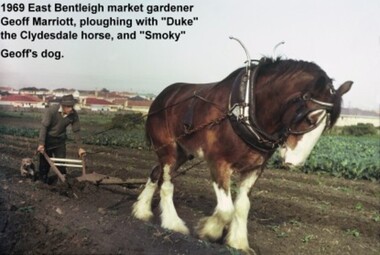
... growing which significantly contributed to the prosperity of the Shire, and its subsequent development into the City of Moorabbin. The photograph of Geoff Marriott of the Marriott family represents a typical example of the MANY early market gardening families, some names less prominent, but who with their labours contributed to the prosperity and the development of the community of the Shire of Moorabbin. This group of early pioneers, over many years, were a singularly important group responsible for the growth of schools, churches ...Members of the Marriott family arrived in Port Phillip in 1857. However it was John and Jane Marriott who in 1876, (after toiling hard since their arrival in1871, for very little gain), first leased, then purchased in 1882, 30 acres with a four-roomed house in East Boundary Road, in the area then called East Brighton. (Now known as East Bentleigh). The land they purchased had previously been a part of the 1841 Dendy Survey. Over the following years, John and his four sons with hard work and determination became prosperous vegetable growers and purchased further land in the area. Following John's retirement and subsequent death in 1903, the land was passed to his sons, and then onto the Marriott grandchildren. The family continued to remain very prosperous and successful vegetable growers. This lovely photo of Geoff Marriott bears testament to just one of the many families steeped in the tradition of vegetable growing which significantly contributed to the prosperity of the Shire, and its subsequent development into the City of Moorabbin. The photograph of Geoff Marriott of the Marriott family represents a typical example of the MANY early market gardening families, some names less prominent, but who with their labours contributed to the prosperity and the development of the community of the Shire of Moorabbin. This group of early pioneers, over many years, were a singularly important group responsible for the growth of schools, churches, the Mechanic's Hall, and were active in local government. Large coloured photograph, taken in 1969, showing Mr Geoff Marriott with his horse-drawn plough pulled by "Duke" the Clydesdale horse, and accompanied by "Smoky", his dog, working in his market garden, Brady Road, East Bentleighhorse, brighton, moorabbin, pioneers, settlers, fruit, markets, vegetables, plough, mayors, moorabbin shire, moorabbin roads board, marriott geoff, marriott john, marriott jane, market gardens, horse drawn plough, city of moorabbin -
 Greensborough Historical Society
Book, Green and growing 150 years: Historical snapshots of All Saints' Anglican Church Greensborough, 2005_
... An anniversary book with general information about the Greensborough area. all saints anglican church greensborough st katherines church st helena 56 pages, colour and black and white photographs. Green and growing 150 years: Historical snapshots of All Saints' Anglican Church Greensborough. ...Anglican services have been held in the Greensborough area since 1839 (at St Katherine's St Helena) with services at All Saints' beginning in 1855. This volume celebrates the 150th anniversary of those first services. It outlines the history of the church and lists the Vicars and organisations associated with All Saints' Greensborough.An anniversary book with general information about the Greensborough area.56 pages, colour and black and white photographs. all saints anglican church greensborough, st katherines church st helena -
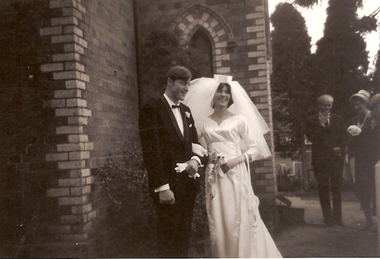 Greensborough Historical Society
Photograph - Digital image, Mrs and Mrs Gary Partington, 1964_10
... Church in October 1964. Background is Uncle Bill Leed and Jessie Scholes. Gary said he had to get his hair to grow with a part in it, he previously on had a crew cut but relatives told him to grow a decent head of hair for his wedding....Church in October 1964. Background is Uncle Bill Leed and Jessie Scholes. Gary said he had to get his hair to grow with a part in it, he previously on had a crew cut but relatives told him to grow a decent head of hair for his wedding. ...Mr and Mrs Gary Partington outside the Greensborough Methodist Church in October 1964. Background is Uncle Bill Leed and Jessie Scholes. Gary said he had to get his hair to grow with a part in it, he previously on had a crew cut but relatives told him to grow a decent head of hair for his wedding.This was one of the last weddings in this Church before its demolition prior to the development of Greensborough Plaza.Digital copy of black and white photographmethodist church greensborough, gary partington -
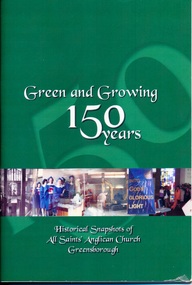 Greensborough Historical Society
Book, Green and growing: 150 years. Historical snapshots of All Saints' Anglican Church Greensborough, 2005_07
... This small book tells the story of All Saints' Anglican Church Greensborough, celebrating its 150th Anniversary in 2005. all saints' anglican church churches 56 p., black & white and col. illus. 2 copies. Green and growing: 150 years. ...This small book tells the story of All Saints' Anglican Church Greensborough, celebrating its 150th Anniversary in 2005.56 p., black & white and col. illus. 2 copies.all saints' anglican church, churches -
 Orbost & District Historical Society
Souvenir - Murray's Snapshots, Murray Views, 8 Murray's Snapshots, c. 1950's
... This item is significant because it was part the growing tourism industry to the Orbost district after W W II. Marlo Railway Orbost Church of England Post Office Nicholson Street Snowy River In green print: For Your Album. ...This is a small souvenir from C. 1950s. The 8 photos show different aspects of the Orbost/Marlo district. In the 1950's tourism by private vehicles was a growing part of the economy in East Gippsland.This item is significant because it was part the growing tourism industry to the Orbost district after W W II.8 small b/w photographs of the Orbost/Marlo district contained within an envelope. The envelope is white, green, brown and red colouring. The envelope is torn and damaged. In green print: For Your Album. In red print: 8 MURRAY'S SNAPSHOTS. Produced By Murray Views Gympie Qld also in red print. A stamp saying Series 1 in blue print. marlo, railway, orbost, church of england, post office, nicholson street, snowy river -
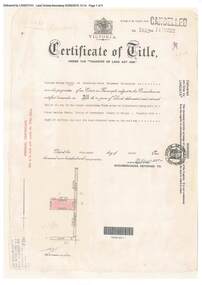 Ringwood and District Historical Society
Document, Certificate of Title - W.G. Carter, Grandview Grove, Warranwood, Victoria, (later Bemboka Road) - part of Crown Section Twenty, Parish of Warrandyte, County of Evelyn - 1947
... growing up, and after Doreen died in 1958. In 1961 Bill sold one of the three acres to one of his seven sisters, Grace, who lived in Kew but later moved to Rosebud and sold the land without ever building on it. During the 1960s, Grandview Grove was renamed Bemboka Road. After retiring as a milkman, Bill moved to Rosebud, Vic, and in 1977, sold the property to the Anglican Church...growing up, and after Doreen died in 1958. In 1961 Bill sold one of the three acres to one of his seven sisters, Grace, who lived in Kew but later moved to Rosebud and sold the land without ever building on it. During the 1960s, Grandview Grove was renamed Bemboka Road. After retiring as a milkman, Bill moved to Rosebud, Vic, and in 1977, sold the property to the Anglican Church ...A4 copies of Landata Victoria Historical Search documents - Vol 7052 Fol 1410222. Includes Carter Family Tree property notes. William George Carter of Grandview Grove Ringwood, Nurseryman, is now the proprietor - three acres or thereabouts shown on map (12202a) - 14th March, 1947. Transfer B284834 Registered 21 September, 1961 - 1 acre shown on map (12202c) north of Plymouth Road. NOTES ON GRANDVIEW GROVE PROPERTY (Carter Family Tree extract) The Grandview Grove property was purchased by William (Bill) and Doreen Carter in 1947 as three acres of uncleared bushland. They had a 2 bedroom fibro-cement house built on the land which they informally called "Willoreen". With Doreen looking after sons Peter (born in 1940) and Robin (born in 1950), Bill worked locally at Croydon Dairy. The family spent much of their spare time clearing the land, where Bill then grew and sold fruit, flowers and berries, particularly strawberries, as a hobby and to supplement their income. Bill continued to do so while Peter and Robin were growing up, and after Doreen died in 1958. In 1961 Bill sold one of the three acres to one of his seven sisters, Grace, who lived in Kew but later moved to Rosebud and sold the land without ever building on it. During the 1960s, Grandview Grove was renamed Bemboka Road. After retiring as a milkman, Bill moved to Rosebud, Vic, and in 1977, sold the property to the Anglican Church, who were looking to invest in the site in anticipation of proposed future residential development in the area. As nearby properties were subdivided during the 1980s, the house, which the Church had initially utilised as low-cost family accommodation, was modified internaly to become a church/Sunday school. By the early 2000s, construction of a contemporary-design church and carparking area between the house and street alignment had been completed but the house remained as a detatched meeting room until falling into disrepair and was eventually demolished around 2010. -
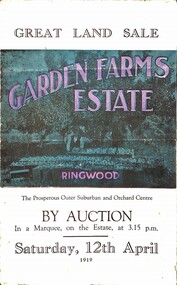 Ringwood and District Historical Society
Pamphlet, G.A. Green, Auction Sale Brochure - Garden Farms Estate, Ringwood, Victoria - 1919, 1919
... Churches, Banks, Telephone Exchange, Weekly General Market, Cool Stores, and good Private and State Schools, etc.; is Electrically lit, has Metropolitan Water Supply, and generally provides so that practically all shopping can be done locally. WHY RINGWOOD MUST GROW...Churches, Banks, Telephone Exchange, Weekly General Market, Cool Stores, and good Private and State Schools, etc.; is Electrically lit, has Metropolitan Water Supply, and generally provides so that practically all shopping can be done locally. WHY RINGWOOD MUST GROW ...Multi-fold brochure advertising public auction of one-acre, 2-acre, 5-acre and 8-acre allotments in Ringwood and Bayswater on Saturday 12th April, 1919. Brochure includes terms of sale, description of subdivision features and local facilities, and photographic images of the area.Subdivison includes Canterbury Road Heathmont, Armstrong Road Heathmont, Armstrong Road Bayswater, Bungalook Road Heathmont, Bungalook Road Bayswater, and Orchard Road Bayswater. Road shown as Bayswater Road to Bayswater became Mountain Highway Bayswater. Vendor: H.E.B.Armstrong, Auctioneers: Coghill & Haughton, 79 Swanston Street Melbourne, Telephone Central 2793, in conjunction with J.B. McAlpin, Ringwood, Opposite Station, Telephone Ringwood 7. (Map) Woodcock & McCormack, Civil Engineers Architects & Surveyors, 430 Little Collins Street, Melbourne, Phone 3241 Central. MOST OF THE MONEY COMES OUT OF THE LAND. And more money can be obtained from anb acre of fruit than from an acre of any other produce. But you do not have to grow fruit on Garden Farms Estate. You can go in for - Outer Suburban Home - Market Garden - Orchard - Pig Raising - Poultry Farm - Small Dairy Farm - Small Fruits - Floral Culture - Scent and Bee Farm - Or just for a Week-end Home. RINGWOOD - THE PLACE TO LIVE. The Beautiful Ringwood District has so many natural attractions, that half a Land Agent's work is done in just showing a prospective buyer round and about. Ringwood has a pull of its own that attracts folk, proved beyond doubt by its rapid development within the last decade (spite the war). First, it is high and healthy, picturesque and undulating, convenient of access, sufficiently close to the Metropolis for City and Business folk to live at Ringwood. Its development is solid, because most of its people are industrious husbandmen, real producers, who have turned idle hills into smiling gardens. These are the kind of real people to live amongst; ones who wear out their spades. The rapidly-developing town has excellent Stores, Trade and Repair Shops Churches, Banks, Telephone Exchange, Weekly General Market, Cool Stores, and good Private and State Schools, etc.; is Electrically lit, has Metropolitan Water Supply, and generally provides so that practically all shopping can be done locally. WHY RINGWOOD MUST GROW. Ringwood is a great centre and must be a greater. Two rapidly-developing railways junction here. The passengers from Ringwood Station cityward, in one year, number 250,000. Ringwood will be the terminus of the Outer Suburban Electric Eastern Railway. Its natural boundaries are the River Yarra on the North, Dandenong Creek on the South, the popular town of Croydon on the East, and the suburb of Mitcham on the West. This is a large territory that is steadily being converted from intense culture, and then it might be called (as regards its gardens) "The Devon Territory of Victoria." ARMSTRONG ROAD. This new road traverses Garden Farms Estate from its northern boundary on the main Canterbury Road, across Dandenong Creek, to its southern boundary on the main Bayswater Road, and will provide a long-desired additional link of communication between Bayswater and Ringwood. The 1-acre building sites on Bayswater Road are within 8 minutes' walk of the Bayswater Railway Station, and the Canterbury Road frontages are only 1-1/2 miles from Ringwood Station, and 1/2 mile from the Railway Station site of Canterbury Road; therefore, the whole Estate is easy of access and there should be a large demand for land so favourably placed. (Image) Cultivation Field - Potatoes on Lot 28 (Image) Picture of Bayswater Creek Flats. (Image) View from "Korumbeen" where Mr. Armstrong lived on Garden Farms Estate. Estate outlined in white ring. (Image) Site of New Bridge over Dandenong Creek. (Image) On one of the timbered lots adjoining railway. (Image) This Dandenong Creek traveres the Estate. (Image) Main Fern Tree Gully Line bisects the Estate. -
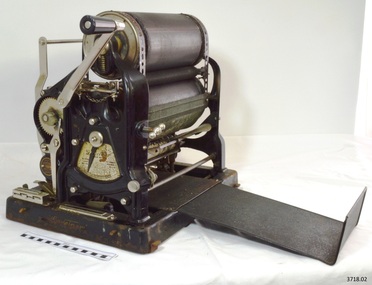 Flagstaff Hill Maritime Museum and Village
Gestetner Machine, c. 1922 - 1929
... The machines were commonly used in small businesses, schools, churches, clubs and other organisations for the wide distribution of a wide variety of information in the form of worksheets, newsletters and more. In 1906 the Gestetner Works were opened in Tottenham Hale, North London, and thousands of people were employed there up until the 1970’s. Due to the fast growing...The machines were commonly used in small businesses, schools, churches, clubs and other organisations for the wide distribution of a wide variety of information in the form of worksheets, newsletters and more. In 1906 the Gestetner Works were opened in Tottenham Hale, North London, and thousands of people were employed there up until the 1970’s. Due to the fast growing ...This Gestetner Cyclostyle duplicating machine was invented and manufactured by David Gestetner. He claimed in 1922, once he had released several models, that if a Gestetner Durotype stencil was used together with his Cyclostyle machine, then 10,000 copies could be made from the one Durotype stencil, an amazing claim for office technology of that era. David Gestetner (1854-1939), was born in Csoma, Hungary. He has been called the “founder of the worldwide office copying and duplicator industry.). He moved to London and in 1879 filed his first copying patent. In 1881 he patented the Cyclostyle stylus (or pen), which was used in conjunction with his Cyclograph device for copying text and images, He established the Gestetner Cyclograph Company in England at this time (1881) to protect his inventions and to produce his products; stencils, stylos (stylus or pen) and ink rollers. HIs inventions included nail-clipper and the ball-point pen (although the latter is more commonly associated with Laszlo Biro). Gestetner’s patented Cyclograph duplicator was used with his Cyclostyle Stylus or pen to write or draw on special thin wax-coated stencil paper (originally used for kite making paper) in the following way; 1. The Cyclostyle stencil was placed on a lower, framed metal plate of the Cyclograph 2. An upper frame was clipped over the top 3. The Cyclostyle pen, with its tip being a small metal-spiked or toothed wheel, was used to write or draw on the stencil, punched small holes into the paper and removed the wax coating in those places 4. The upper frame and stencil was then removed and a piece of blank paper was placed onto the metal plate in the lower frame and the upper frame with stencil was replaced 5. A roller was given an even distribution of Cyclostyle ink and rolled by hand over the stencil in the frame. This forced the ink through the holes in the stencil to and made a copy of the stencil on the paper 6. The upper frame was raised, the printed paper removed and another blank sheet was put into place. The whole process was repeated until enough copies were made. Gestetner’s invention developed further in 1894, with a stencil that could be placed on a screen on a revolving drum. The drum was manually rotated, the stencil then wrapped around another drum and was fed between cloth-covered rollers on which ink was evenly spread. Each revolution of the drum forced ink through the holes in the stencil and transferred the ink onto paper that had been fed between rollers and pressed against the drum. The process was repeated for each page. The paper was still fed and removed manually in this earlier invention but became more automatic in later models. In 1902 Gestetner duplicator model 6 was put onto the market. This model included the improvement of an automatic paper feed that synchronised with the rotation of the stencil. The Gestetner machine was the first office printing machine. It was easily installed and it made exact copies of the sane document quickly, effectively and inexpensively. This changed the way offices operated, making information easily available to many more users. The machines were commonly used in small businesses, schools, churches, clubs and other organisations for the wide distribution of a wide variety of information in the form of worksheets, newsletters and more. In 1906 the Gestetner Works were opened in Tottenham Hale, North London, and thousands of people were employed there up until the 1970’s. Due to the fast growing success of the Gestetner Duplicator machines many international branches for sales and service centres were established. David Gestetner was succeeded by his son Sigmund, followed by his grandson’s David and Jonathan. Further advancement was made by using a manual typewriter with specifically designed stencils. The end product was a printed, typewritten copy similar to the print from newspapers and booklets. In the next few years there were further developments of this revolutionary invention. The Gestetner Cyclostyle duplicator in our Collection is dated c.1922 - 1929 and it uses Gestetner Durotype stencils The 1922 British Industries Fair’s catalogue contained advertising for the Gestetner Rotary Cyclostyle “The World’s Premier Duplicator”, demonstrated at Stand K 86.” A Notice at the foot of the advertisement’s page boasts "Important - D Gestetner's latest invention, the "Durotype" Stencil, enables you to obtain 10,000 copies from one original if desired. It contains no wax of any description, is indestructible, can be stored indefinitely and printed from as required” In 1929 the look of the Gestetner machines changed; American designer Raymond Loewy was invited by Gestetner to improve the look of his duplicators, resulting in a very streamlined appearance. Eventually, around 1960’s, offices replaced their Gestetner with small photocopying machines and printers. Gestetner took over ownership of other office machine companies over time, including Nashua, Rex Rotary, Hanimex and Savin and eventually all came under the holding company name of NRG (Nashuatech, Rex Rotary and Gestetner). In 1996 Ricoh acquired the Gestetner Company, and it was renamed the NRG Group. REFERENCES Cyclostyle, Stencil Duplicating Machines, antique Copying Machines, Early Office Museum, http://www.officemuseum.com/copy_machines.htm Duplicating machines, Wikipedia Duplicator, Collection online, Canada Science and Technology Museums Corporation http://techno-science.ca/en/collection-research/collection-item.php?id=1989.0229.001 Gestetner duplicators, Totterham-Summerhillroad.com http://tottenham-summerhillroad.com/gestetner_duplicators_tottenham.htm Gestetner Duplicator, V&A Museum http://collections.vam.ac.uk/item/O322014/gestetner-duplicator-duplicator-loewy-raymond-fernand/ Gestetner, Grace’s Guide to British Industrial History, http://www.gracesguide.co.uk/Gestetner Duplicating machines such as this one revolutionalised access to copies of printed material, changing the way that educational bodies, offices, small businesses and community clubs and charities operated.Duplicating machine, Gestetner Cyclostyle Durotype, a stencil-method duplicating machine with two rotating drums plus rollers. Hand operated, tabletop office machine. Front has folding Bakelite handle, oil filling hole, calibrating gauge with scale, and copy counting meter. Right side has printed manufacturer’s plate that slides out as a paper output tray. Left side has metal plate with protrusions and perforations, plus another similar plate that is detached. It also has a metal frame attached [that would have been used to hold a paper input board, adjusted for various sizes of paper]. Cover, metal, with folding wooden handle on top, attaches to base with metal clips. Inscriptions printed on machine, mostly in gold-coloured paint. Round metal manufacturing plate is stamped with Serial Number 95759. Made by D. Gestetner, London, c.1922-1929Maker’s plate “MANUFACTURED / BY / D. GESTETNER LTD, / No. 95759 / CYCLOSTYLE WORKS / TOTTENHAM HALE / LONDON, N” Copy counting meter shows “1 4 6 4 8 [space]“ copies. Calibrating gauge has divisions with numbers “0 1 2“, labelled “← [left arrow] “TO PRINT LOWER” and “→ [right arrow], TO PRINT HIGHER”. “The Gestetner”, “Cyclostyle”, “Gestetner” (Trade Mark), Right side print of manufacturing details includes “The / Gestetner / TRADE MARK” And “THE FOLLOWING TRAFE MARKS / - - - OF INK, STENCILS / - - - AND GUARANTEE OF PERFECT / - - - BOTH - - - AND MACHINE” and “CYCLOSTYLE / DUROTYPE / GESTETNER” and “D. Gestetner” flagstaff hill, warrnambool, shipwrecked coast, flagstaff hill maritime museum, maritime museum, shipwreck coast, flagstaff hill maritime village, great ocean road, office machine, copying machine, gestetner machine, duplicating machine, duplicator, stencil machine, gestetner cyclograph company, cyclograph, cyclostyle, d. gestetner ltd, gestetner durotype stencils, gestetner cyclostyle, printing machine, office technology, durotype stencils, david gestetner, raymond loewy, roneo, rotary duplicatorten, mimeo, mimeograph machine, roneograph copier -
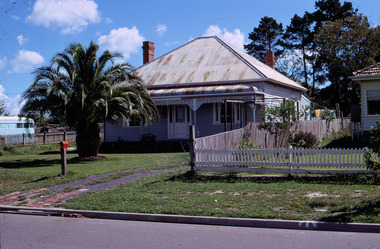 Ringwood and District Historical Society
Photograph, North side of City Road, Ringwood 1969
... growing many wild pumpkins, and I understand that the land had been a rubbish tip in the not so distant past. The park also had a couple of tennis courts. There was no road from Jubilee Park to Reilly St, and Reilly St didn't go all the way through from Wantirna Road to Great Ryrie St. It was broken by a creek. Aquinas College was an orchard. As you proceed up City Road from Wantirna Road, The Salvation Army church...growing many wild pumpkins, and I understand that the land had been a rubbish tip in the not so distant past. The park also had a couple of tennis courts. There was no road from Jubilee Park to Reilly St, and Reilly St didn't go all the way through from Wantirna Road to Great Ryrie St. It was broken by a creek. Aquinas College was an orchard. As you proceed up City Road from Wantirna Road, The Salvation Army church ...Written by Michael Anderson on RDHS Facebook on March 2016 CITY ROAD, RINGWOOD 1959 My family moved to City Road in 1959. At that time, it was a narrow rutted dirt road, with a large drain running on the northern side, and a wide nature strip complete with big wattle trees on the southern side, ideal for playing cricket and other games. There was no Salvation Army Citadel, nor was there a Lutheran Church. As you proceed from Wantirna Road towards Jubilee Park, there were no houses on the right hand side at all until you reached our house, 14 City Road, which at the time was Lot 51. On the corner where the Lutheran Church now stands, there was an old rusty farm gate, attached to a very weathered wooden post. This indicated that at some stage, City Road had been a private road. This rusty old gate was never closed, but it was a remnant of bygone days. Ireland St, Regina St, and Greenwood Avenue south of Haig Street were all narrow dirt roads as well. Jubilee Park Oval was fairly new, and there was no grandstand. The players and staff had to make do with a small wooden building that looked like a garden shed. Just beyond the southern end of the oval were growing many wild pumpkins, and I understand that the land had been a rubbish tip in the not so distant past. The park also had a couple of tennis courts. There was no road from Jubilee Park to Reilly St, and Reilly St didn't go all the way through from Wantirna Road to Great Ryrie St. It was broken by a creek. Aquinas College was an orchard. As you proceed up City Road from Wantirna Road, The Salvation Army church is on the left corner. The Hobbs family lived on that corner, in an old house on a block which was bordered by a huge hedge. The house next door in Wantirna Road, which is also Salvation Army land now, was owned by the Bayliss family. Mrs Bayliss was a teacher at Ringwood High. The first house in City Rd proper was at no. 1 to 5. The Roberts family lived there in an old weatherboard house on an acre of land. Mr Roberts was a carpenter who had built our house at No. 14, and he lived there with his wife and two sons, Graeme and Max. Eventually, they wanted more space, so they moved to the acre. Next door to the Roberts was Ted O'Regan at no. 7 to no. 9. He appears to have been a widower, and he lived by himself in an old wooden house which was surrounded by a large veranda on about 2/3 acre. Next door to Ted O'Regan lived his brother Jack O'Regan at no. 11 on about 1/2 acre, with his wife Edna, his son Alan, and his Daughter Judith. Barney Meadows lived on about 1/2 acre at no. 13. Barney was an old widower, and his front garden had a huge palm tree in it. Next to Barney lived the Reeves at no. 15, and finally there was the McDonald family at no. 17, which is on the corner of Regina St. From then on, City Rd, was a bush block down to Greenwood Ave, and the bush continued up Greenwood Ave to the Williams house, one house block from Haig St. On the right hand side of City Road it was all paddock to Ireland St, and another paddock which ended at our house was over the other side of Ireland St. Both paddocks were developed in about 1961/62, and there are about 12 houses there now, plus the Lutheran Church. When we first moved there, there was a horse and a cow grazing in the paddock beside our house. For the first couple of years, there was a huge bonfire in "our" paddock to mark Guy Fawkes day. It was a lot of fun, although I concede that it might have been a tad dangerous, with 3d. bungers and all that! Next door to us at no. 16 was the Goessling family. From now on the house blocks were normal sized. The Goesslings had one baby girl who was about 9 months old when we first moved in, but they ended up with 4 kids, all of whom would be middle aged now. They were observant Lutherans, but they were there before the church. Next door to the Goesslings at no. 18 was the Weir family on the corner of Regina St. On the other side of Regina St. at no. 20 was the Gowland family, and the last house in the street at no. 22 was owned by Arthur Johnston and his family. Arthur was an Ambulance Driver. Of course, many other people moved in and moved out in all those years. There was one particularly bad week for the street in June 1969. My brother Peter was killed in a work accident on Saturday 7th June. The next Wednesday 11th June Ted O'Regan, who lived diagonally opposite us died. Then on the next Saturday the 14th June, Ted Bell, who lived next door to us at no. 12 died from a heart attack at the age of 47. Three deaths in one week was a bit too much. It was eerie! Our old house is still standing, but I doubt for much longer. It was bought by people who wanted to develop it. Their plans were knocked back, so they sold it again. I would bet that in the not too distant future the house will be a piece of history. City Road was a paradise for kids when we moved in. We had lived in the inner suburbs, so the space and freedom were amazing for us "city slickers." I don't know where you could move to now if you wanted to bring up your children in a similar environment. Somehow, I don't think it would be possible. -
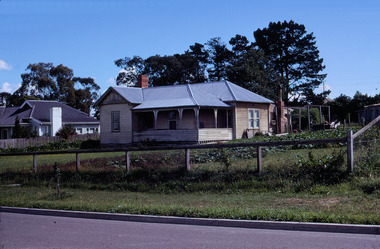 Ringwood and District Historical Society
Photograph, City Road – North Side. Owned by E A (Ted) O’Regan on 23 March 1969
... growing many wild pumpkins, and I understand that the land had been a rubbish tip in the not so distant past. The park also had a couple of tennis courts. There was no road from Jubilee Park to Reilly St, and Reilly St didn't go all the way through from Wantirna Road to Great Ryrie St. It was broken by a creek. Aquinas College was an orchard. As you proceed up City Road from Wantirna Road, The Salvation Army church...growing many wild pumpkins, and I understand that the land had been a rubbish tip in the not so distant past. The park also had a couple of tennis courts. There was no road from Jubilee Park to Reilly St, and Reilly St didn't go all the way through from Wantirna Road to Great Ryrie St. It was broken by a creek. Aquinas College was an orchard. As you proceed up City Road from Wantirna Road, The Salvation Army church ...Written by Michael Anderson on RDHS Facebook on March 2016 CITY ROAD, RINGWOOD 1959 My family moved to City Road in 1959. At that time, it was a narrow rutted dirt road, with a large drain running on the northern side, and a wide nature strip complete with big wattle trees on the southern side, ideal for playing cricket and other games. There was no Salvation Army Citadel, nor was there a Lutheran Church. As you proceed from Wantirna Road towards Jubilee Park, there were no houses on the right hand side at all until you reached our house, 14 City Road, which at the time was Lot 51. On the corner where the Lutheran Church now stands, there was an old rusty farm gate, attached to a very weathered wooden post. This indicated that at some stage, City Road had been a private road. This rusty old gate was never closed, but it was a remnant of bygone days. Ireland St, Regina St, and Greenwood Avenue south of Haig Street were all narrow dirt roads as well. Jubilee Park Oval was fairly new, and there was no grandstand. The players and staff had to make do with a small wooden building that looked like a garden shed. Just beyond the southern end of the oval were growing many wild pumpkins, and I understand that the land had been a rubbish tip in the not so distant past. The park also had a couple of tennis courts. There was no road from Jubilee Park to Reilly St, and Reilly St didn't go all the way through from Wantirna Road to Great Ryrie St. It was broken by a creek. Aquinas College was an orchard. As you proceed up City Road from Wantirna Road, The Salvation Army church is on the left corner. The Hobbs family lived on that corner, in an old house on a block which was bordered by a huge hedge. The house next door in Wantirna Road, which is also Salvation Army land now, was owned by the Bayliss family. Mrs Bayliss was a teacher at Ringwood High. The first house in City Rd proper was at no. 1 to 5. The Roberts family lived there in an old weatherboard house on an acre of land. Mr Roberts was a carpenter who had built our house at No. 14, and he lived there with his wife and two sons, Graeme and Max. Eventually, they wanted more space, so they moved to the acre. Next door to the Roberts was Ted O'Regan at no. 7 to no. 9. He appears to have been a widower, and he lived by himself in an old wooden house which was surrounded by a large veranda on about 2/3 acre. Next door to Ted O'Regan lived his brother Jack O'Regan at no. 11 on about 1/2 acre, with his wife Edna, his son Alan, and his Daughter Judith. Barney Meadows lived on about 1/2 acre at no. 13. Barney was an old widower, and his front garden had a huge palm tree in it. Next to Barney lived the Reeves at no. 15, and finally there was the McDonald family at no. 17, which is on the corner of Regina St. From then on, City Rd, was a bush block down to Greenwood Ave, and the bush continued up Greenwood Ave to the Williams house, one house block from Haig St. On the right hand side of City Road it was all paddock to Ireland St, and another paddock which ended at our house was over the other side of Ireland St. Both paddocks were developed in about 1961/62, and there are about 12 houses there now, plus the Lutheran Church. When we first moved there, there was a horse and a cow grazing in the paddock beside our house. For the first couple of years, there was a huge bonfire in "our" paddock to mark Guy Fawkes day. It was a lot of fun, although I concede that it might have been a tad dangerous, with 3d. bungers and all that! Next door to us at no. 16 was the Goessling family. From now on the house blocks were normal sized. The Goesslings had one baby girl who was about 9 months old when we first moved in, but they ended up with 4 kids, all of whom would be middle aged now. They were observant Lutherans, but they were there before the church. Next door to the Goesslings at no. 18 was the Weir family on the corner of Regina St. On the other side of Regina St. at no. 20 was the Gowland family, and the last house in the street at no. 22 was owned by Arthur Johnston and his family. Arthur was an Ambulance Driver. Of course, many other people moved in and moved out in all those years. There was one particularly bad week for the street in June 1969. My brother Peter was killed in a work accident on Saturday 7th June. The next Wednesday 11th June Ted O'Regan, who lived diagonally opposite us died. Then on the next Saturday the 14th June, Ted Bell, who lived next door to us at no. 12 died from a heart attack at the age of 47. Three deaths in one week was a bit too much. It was eerie! Our old house is still standing, but I doubt for much longer. It was bought by people who wanted to develop it. Their plans were knocked back, so they sold it again. I would bet that in the not too distant future the house will be a piece of history. City Road was a paradise for kids when we moved in. We had lived in the inner suburbs, so the space and freedom were amazing for us "city slickers." I don't know where you could move to now if you wanted to bring up your children in a similar environment. Somehow, I don't think it would be possible. -
Glen Eira Historical Society
Drawing - St. Agnes Church, Booran Road, 116, Glen Huntly
... A 105 Committee pamphlet giving thumbnail sketch of parish and the reasons why the 105 committee was formed for the church repair program and renovation for the growing parish community....A 105 Committee pamphlet giving thumbnail sketch of parish and the reasons why the 105 committee was formed for the church repair program and renovation for the growing parish community. ...A 105 Committee pamphlet giving thumbnail sketch of parish and the reasons why the 105 committee was formed for the church repair program and renovation for the growing parish community.st. agnes’ church, glen huntly, booran road, wright nigel father, barren john, britton cath, cheshire jean, jennings phil, lusk gary, tomlinson mac, agg val, clarke wilf, young george, architectural features, stanistreet john, timber, foundation stores -
Glen Eira Historical Society
Book - Holy Cross Church, Glen Huntly Road, 705, Caulfield South
... His recollections of school and years growing up in South Caulfield and involvement with Holy Cross Parish Kelleher James Henty Hospital Bricker’s Woodyard Brown Blanche Old Caulfield South Market Quinn Mallde Miss Lockhart Street Local History Games Camden Theatre Catholic Church Holy Cross Primary School Book Holy Cross Church, Glen Huntly Road, 705, Caulfield South ...Days At Holy Cross (1929 – 1937) by Bryan J. Kelleher. His recollections of school and years growing up in South Caulfield and involvement with Holy Cross Parishkelleher james, henty hospital, bricker’s woodyard, brown blanche, old caulfield south market, quinn mallde miss, lockhart street, local history, games, camden theatre, catholic church, holy cross primary school -
 Warrnambool and District Historical Society Inc.
Booklet - Duncan McColl personal notebook, Duncan McColl, Grasmere, 1887
... growing and the medicine he is taking. The Grasmere Bible Class was perhaps associated with St. Andrew's Presbyterian Church in Grasmere where a Sunday School had been established in 1887. ...growing and the medicine he is taking. The Grasmere Bible Class was perhaps associated with St. Andrew's Presbyterian Church in Grasmere where a Sunday School had been established in 1887. ...This notebook has handwritten notes commenced in 1887 by Duncan McColl. The notes include lessons on the first 12 chapters of the Acts of the Apostles for the Grasmere Bible Class, other religious passages that appear to be copied from outside sources and some personal notes regarding McColl's potato growing and the medicine he is taking. The Grasmere Bible Class was perhaps associated with St. Andrew's Presbyterian Church in Grasmere where a Sunday School had been established in 1887. Research needs to be undertaken regarding further information on Duncan McColl.This notebook is of interest as an example of the interest in religion by some of the residents of Warrnambool and district in the late 19th century. This is a small notebook with a black cover. There is a postage stamp on the inside front cover. The pages have printed blue and red lines originally intended for the keeping of accounts. The pages contain handwriting in black ink and have been bound with string.Duncan McColl Grasmere Feb.2nd 1887grasmere sunday school, duncan mccoll -
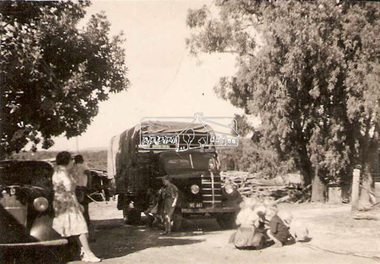 Eltham District Historical Society Inc
Photograph, Len Parker's Bedford truck at the Tosch home in Panton Hill, c.1952
... Church Eltham, Fred aged 44 married Ada aged 35 who was still living and working at the Eltham Hotel. Six years later Ada died from cancer leaving Fred with two small children, Rose five and Len three. Len as a young boy, like his father before him worked the land with horses, growing...Church Eltham, Fred aged 44 married Ada aged 35 who was still living and working at the Eltham Hotel. Six years later Ada died from cancer leaving Fred with two small children, Rose five and Len three. Len as a young boy, like his father before him worked the land with horses, growing ...Len Parker's Bedford truck is featured in one of the public art mosaics in Were Street, Montmorency. Mr Parker by Grace de Visser (EDHS Newsletter No. 249, December 2019) Len Parker was a regular sight around the district for almost 40 years, selling fruit and veggies from the back of his truck to his regular customers between 1939 and 1978, first in a 1927 Chevy then a 1949 Bedford truck. Len’s connection to the Eltham district started long before he was born. His father Fred first came through the district in the early 1900s. With horse and cart buying and selling what was available at the markets using his mothers’ home in North Melbourne as his base. Fred settled and developed a market garden in the rich soil along the creek at Watsons Creek, Christmas Hills in 1903. Ada Watson was almost five years old and one of eight siblings aged two to sixteen, when her Grandfather and Father both named Christopher Watson brought the Eltham Hotel and they moved from Richmond. Ada’s mother was formerly Emily Silk whose parents Martha and John Silk had been farming in Eltham around 1858 and much later a dairy farmer in Fitzroy. In 1917 at St Margaret’s Church Eltham, Fred aged 44 married Ada aged 35 who was still living and working at the Eltham Hotel. Six years later Ada died from cancer leaving Fred with two small children, Rose five and Len three. Len as a young boy, like his father before him worked the land with horses, growing vegetables, mainly potatoes, cabbages, pumpkins, beans, and tomatoes, selling the excess at the market. Len took over from his ageing father Fred, who had established similar rounds selling door to door with a horse and cart. Len preferred mechanical horsepower to the real kind! In 1939 at the age of eighteen Len brought an old 1927 Chevy Truck. He was taught how to drive it and two weeks later got his driver’s Licence. The Chevy truck had an old wagon on the back with no doors, only hessian bags to keep the wind out! Len had paid 75 pounds for it, kept it for ten years and sold it for the same price! Len’s blue 1949 Bedford was brought new in 1950 for 900 pounds with only a tray back on it. Straight away Len had a wooden frame covered with canvas added, with a roll up front and back. In later years, more solid sides replaced the canvas. Benches were added to hold the boxes of fruit and vegetables, with room to move in the middle, a fruit shop on wheels. Len had large scales attached to a box for weighing the fruit and veggies and many a district baby was also weighed on them. Len would stop at customer’s homes, take their orders and with his big cane basket on his arm deliver their order to their door. On his rounds he always wore a big soft back leather apron and a black or navy beret. If it was cold, he wore a ‘bluey’ jacket on his tall slender frame. Len would go to the markets early Thursday morning, only buying what was not grown at home or brought from his brother in law’s orchard. On his way home Len would start his ‘rounds’ in Lower Plenty and then Montmorency and parts of Eltham. Friday’s regulars were in Research, Kangaroo Ground and Panton Hill. Saturdays were Panton Hill and Christmas Hills. When Len retired in 1978, due to changing social times, women were working more and supermarkets starting to take over; his ageing truck was retired too. In 1999 his son Jim had the Bedford restored, Len was very happy to see ‘Beddy’ all shiny and new once again with just a tray back, like when it was new. Jim still drives the ‘Beddy’ to Heritage Truck shows twenty years on. Len married, had five children and lived most of his life, (except during World War 2 when he served in New Guinea), at Watsons Creek, Christmas Hills dying there in 2006 and is buried at the Kangaroo Ground cemetery with his wife of 64 years, Stella nee Tosch 1917 - 2007. Grace de Visser, the author of this article, is the daughter of Len Parker and a descendant of the two former owners of the Eltham Hotel, both named Christopher Watson. bedford truck, len parker, panton hill, tosch property -
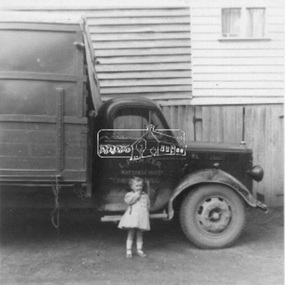 Eltham District Historical Society Inc
Photograph, Len Parker's Bedford truck, c.1962
... Church Eltham, Fred aged 44 married Ada aged 35 who was still living and working at the Eltham Hotel. Six years later Ada died from cancer leaving Fred with two small children, Rose five and Len three. Len as a young boy, like his father before him worked the land with horses, growing...Church Eltham, Fred aged 44 married Ada aged 35 who was still living and working at the Eltham Hotel. Six years later Ada died from cancer leaving Fred with two small children, Rose five and Len three. Len as a young boy, like his father before him worked the land with horses, growing ...Len Parker's Bedford truck is featured in one of the public art mosaics in Were Street, Montmorency. The little girl is Grace de Visser's sister. Mr Parker by Grace de Visser (EDHS Newsletter No. 249, December 2019) Len Parker was a regular sight around the district for almost 40 years, selling fruit and veggies from the back of his truck to his regular customers between 1939 and 1978, first in a 1927 Chevy then a 1949 Bedford truck. Len’s connection to the Eltham district started long before he was born. His father Fred first came through the district in the early 1900s. With horse and cart buying and selling what was available at the markets using his mothers’ home in North Melbourne as his base. Fred settled and developed a market garden in the rich soil along the creek at Watsons Creek, Christmas Hills in 1903. Ada Watson was almost five years old and one of eight siblings aged two to sixteen, when her Grandfather and Father both named Christopher Watson brought the Eltham Hotel and they moved from Richmond. Ada’s mother was formerly Emily Silk whose parents Martha and John Silk had been farming in Eltham around 1858 and much later a dairy farmer in Fitzroy. In 1917 at St Margaret’s Church Eltham, Fred aged 44 married Ada aged 35 who was still living and working at the Eltham Hotel. Six years later Ada died from cancer leaving Fred with two small children, Rose five and Len three. Len as a young boy, like his father before him worked the land with horses, growing vegetables, mainly potatoes, cabbages, pumpkins, beans, and tomatoes, selling the excess at the market. Len took over from his ageing father Fred, who had established similar rounds selling door to door with a horse and cart. Len preferred mechanical horsepower to the real kind! In 1939 at the age of eighteen Len brought an old 1927 Chevy Truck. He was taught how to drive it and two weeks later got his driver’s Licence. The Chevy truck had an old wagon on the back with no doors, only hessian bags to keep the wind out! Len had paid 75 pounds for it, kept it for ten years and sold it for the same price! Len’s blue 1949 Bedford was brought new in 1950 for 900 pounds with only a tray back on it. Straight away Len had a wooden frame covered with canvas added, with a roll up front and back. In later years, more solid sides replaced the canvas. Benches were added to hold the boxes of fruit and vegetables, with room to move in the middle, a fruit shop on wheels. Len had large scales attached to a box for weighing the fruit and veggies and many a district baby was also weighed on them. Len would stop at customer’s homes, take their orders and with his big cane basket on his arm deliver their order to their door. On his rounds he always wore a big soft back leather apron and a black or navy beret. If it was cold, he wore a ‘bluey’ jacket on his tall slender frame. Len would go to the markets early Thursday morning, only buying what was not grown at home or brought from his brother in law’s orchard. On his way home Len would start his ‘rounds’ in Lower Plenty and then Montmorency and parts of Eltham. Friday’s regulars were in Research, Kangaroo Ground and Panton Hill. Saturdays were Panton Hill and Christmas Hills. When Len retired in 1978, due to changing social times, women were working more and supermarkets starting to take over; his ageing truck was retired too. In 1999 his son Jim had the Bedford restored, Len was very happy to see ‘Beddy’ all shiny and new once again with just a tray back, like when it was new. Jim still drives the ‘Beddy’ to Heritage Truck shows twenty years on. Len married, had five children and lived most of his life, (except during World War 2 when he served in New Guinea), at Watsons Creek, Christmas Hills dying there in 2006 and is buried at the Kangaroo Ground cemetery with his wife of 64 years, Stella nee Tosch 1917 - 2007. Grace de Visser, the author of this article, is the daughter of Len Parker and a descendant of the two former owners of the Eltham Hotel, both named Christopher Watson. bedford truck, len parker
