
Showing 9 items matching "hawkesbury river"
-
 Bendigo Historical Society Inc.
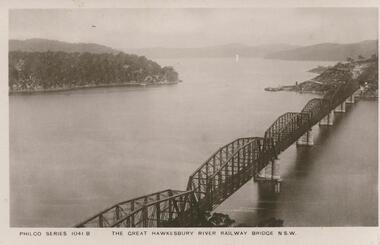
Postcard - THE GREAT HAWKESBURY RIVER RAILWAY BRIDGE N.S.W
... THE GREAT HAWKESBURY RIVER RAILWAY BRIDGE N.S.W....Postcard The Great Hawkesbury River Railway Bridge N.S.W. Rear. Addressed to Miss Absalom c/- Mr Dempsey, Sailors Gully Eaglehawk....Postcard THE GREAT HAWKESBURY RIVER RAILWAY BRIDGE N.S.W. ...Postcard The Great Hawkesbury River Railway Bridge N.S.W. Rear. Addressed to Miss Absalom c/- Mr Dempsey, Sailors Gully Eaglehawk. -
 Robin Boyd Foundation
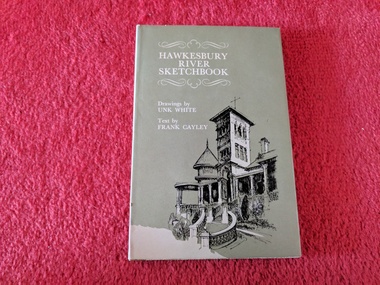
Book, Unk White, Hawkesbury River Sketchbook, 1970
... Hawkesbury River Sketchbook...Hardcover w/ Dust Jacket Hawkesbury River Sketchbook Book Unk White Rigby Limited ...Hardcover w/ Dust JacketDedication written inside front cover - "To Robin, 1971". Also, clipping dated 27/1/71 about Melbourne's Underground Rail Loop Authority citing the value of having Robin Boyd on the Authority.walsh st library -
 Williamstown Historical Society Inc
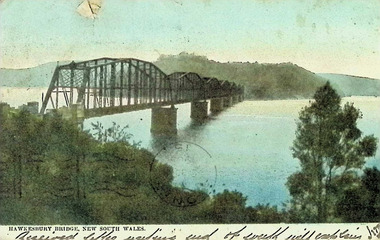
Postcard - Alice Evans Postcard Collection, Hawkesbury Bridge, N.S.W, 04/1905
... ...Hawkesbury River...A coloured postcard of the Hawkesbury Bridge, crossing the river, New South Wales...Alice Evans Postcards Hawkesbury Bridge Hawkesbury River New South Wales Hawkesbury Bridge, New South Wales This postcard forms part of the collection of 142 Postcards. ..."Dear Alice" Is a collection of 142 Postcards from Australia and around world, almost all of which are addressed to Miss Alice Evans, No. 2 Cox Gardens, Williamstown, dated between 1905 - 1909. These postcards form part of a collection found in the ceiling of No. 2 Cox Gardens by a local builder and carpenter Gordon Peterson. Peterson was contracted to demolish the house in the mid 1970's. The cards were held in the Estate of Gordon Peterson, along with a photo of the cottage, before demolition until donation to the historical society by his descendants in 2024. Alice Edith Evans was born in Williamstown in 1885 to parents Benjamin Samuel Evans (1833-1900), a bootmaker from Ruabon, Denbighshire, Wales and Catherine (nee Jones) (1850-1915) from Eaglehawk, near Castlemaine. Alice had three older step sisters, and two younger brothers, Benjamin and Samuel, who sadly died in infancy. Alice’s father, Benjamin, had been married previously, his wife dying during childbirth, leaving him with three daughters to care for. After leaving school, Alice was employed as a clerk with Trevor Jones & Co. (real estate agents), until her declining health prevented her from working. She was an active and well known member of the Welsh Church and Sunday School on Ferguson Street and enjoyed singing and playing in local concerts. Well known in the community, a Grand Benefit Concert was organised in her honour on 9th April, 1910, at the Mechanics Institute, Williamstown. Hosted by Mayor Cr. Wymark, the event featured a delightful program of musical performances, showcasing both individual talents and the Carlton Club Choir. Tragically, Alice passed away due to the effects of her illness on 3rd December 1910, at the age of just 25. She is buried in Williamstown Cemetery. The postcards, written between 1905 to 1909, illustrate the social history of residents and everyday life at the turn of the century, using postcards as a means of communication.This postcard forms part of the collection of 142 Postcards. A coloured postcard of the Hawkesbury Bridge, crossing the river, New South WalesHawkesbury Bridge, New South Walesalice evans postcards, hawkesbury bridge, hawkesbury river, new south wales -
 Lakes Entrance Historical Society
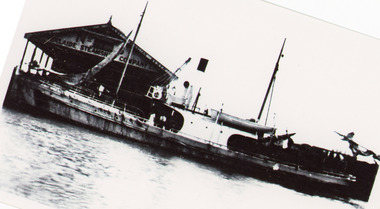
Photograph - SS Charlotte Fenwick, C1900
... S S Charlotte Fenwick in Gippsland waters 1890-1918, went to Hawkesbury River 1918, caught fire and burned to waterline 1920....S S Charlotte Fenwick in Gippsland waters 1890-1918, went to Hawkesbury River 1918, caught fire and burned to waterline 1920. ...Photo location unknown. S S Charlotte Fenwick in Gippsland waters 1890-1918, went to Hawkesbury River 1918, caught fire and burned to waterline 1920.Black and white photograph showing SS Charlotte Fenwick at wharf, with name Adelaide Steamship Company painted on shed on wharf. Victoriaships and shipping, waterways -
 Dandenong/Cranbourne RSL Sub Branch
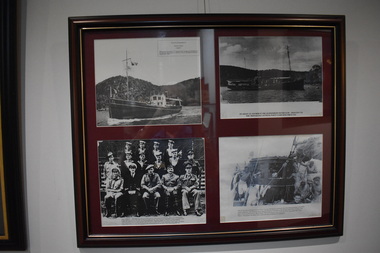
Print - Framed print showing four images
... M V Krait at anchor in the Hawkesbury River in N.S.W. adjacent to the Refuge Bay Jaywick Party Camp-site Circa 1943. ...M V Krait at anchor in the Hawkesbury River in N.S.W. adjacent to the Refuge Bay Jaywick Party Camp-site Circa 1943. ...M.V Krait manned by Naval and Army Personal was responsible for sinking 38,000 tons of Japanese shipping during a wartime raid on Singapore Harbour in September 1943. The crew covered themselves in black stain and wore sarongs to resemble Malay fishermen. Whilst in service she carried a Japanese Flag.Framed print containing 4 photographs. Depicting M.V. Krait and Z Force. Z Force consisted of ten Navy Personal and four Army Personal.Souvenir photograph of Historic Vessel "Krait". M V Krait at anchor in the Hawkesbury River in N.S.W. adjacent to the Refuge Bay Jaywick Party Camp-site Circa 1943. Photograph of the Crew of Krait. Photograph showing the Krait enroute to Singapore. -
 Eltham District Historical Society Inc
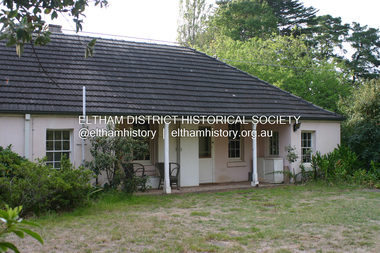
Photograph - Digital Photograph, Alan King, Sweeney's Cottage, Sweeneys Lane, Eltham, 30 January 2008
... Soon James Chandler leased his farm and became a catechist on the Hawkesbury River, so Sweeney was reassigned to a former convict, John Brown, at Liverpool. ...Soon James Chandler leased his farm and became a catechist on the Hawkesbury River, so Sweeney was reassigned to a former convict, John Brown, at Liverpool. ...Part of the original cottage named Culla Hill built by Thomas Sweeney (a former convict) remains as a small section of today’s house. Covered under Heritage Overlay, Nillumbik Planning Scheme National Estate National Trust of Australia (Victoria) Local Sifgnificance Published: Nillumbik Now and Then / Marguerite Marshall 2008; photographs Alan King with Marguerite Marshall.; p19 Thomas Sweeney, a former convict who became a respected citizen, once lived on a property at what is now the corner of Sweeneys Lane and Culla Hill, Eltham. As Sweeney was one of the district’s first settlers, the property is registered by the National Trust. Thomas Sweeney was born in 1802, son of impoverished tenant farmers in Tipperary County, Ireland. He became a ploughman, then at 21 he was sentenced to hang for setting on fire the house of Patrick Guyder at Gullshill. It is said the arson was due to a dispute over undelivered guns to a social justice guerilla group, the White Boys, of which Sweeney was a member. But the sentence was commuted to life transportation to Australia in 1823.1 Apparently in Sydney he became a servant to James Chandler at Botany. Soon James Chandler leased his farm and became a catechist on the Hawkesbury River, so Sweeney was reassigned to a former convict, John Brown, at Liverpool. Later Sweeney was assigned to George Brown of Lake Illawarra. In 1831, Sweeney was granted a ticket-of-leave and bought a boat to carry goods between Illawarra district and Sydney Town. He married his first wife who had come to Australia as a free woman. However she drowned after bearing him a daughter. In 1838, one month after he had received a conditional pardon, Sweeney married a blacksmith’s daughter, Margaret Meehan, newly arrived from Ireland. They then moved to Port Phillip and squatted on the south side of the Yarra River, about seven miles (11km) from Melbourne. Around 1842, Sweeney bought 110 acres (44.5ha) in the parish of Nillumbik for £110. He built a slab hut 12 x 10 feet (3.6m x 3m) and then his homestead, Culla Hill, a typical Tipperary style cottage, now known as Sweeney’s Cottage. It was here that many generations of Sweeneys lived for almost 100 years. Culla Hill became a social centre for the district and the Catholic community used it as a church. Sweeney was apparently on good terms with a tribe of Aborigines living on the river nearby, who helped him build his house.2 Sweeney proved himself a civic-minded leader. In 1844, he led a call for a bridge over the Plenty River. He was on the first school board and supplied the first grain for Eltham’s mill. Sweeney profited during the gold rush, not by gold digging, but by providing supplies for nearby fields and others as far away as Beechworth.3 Thomas Sweeney died in 1867 and was buried at the Eltham Cemetery, leaving two sons, five daughters, and 300 acres (121.4ha), as well as Culla Hill. Culla Hill – by then reduced to 75 acres (30ha) – was sold out of the family in 1939, then renamed Sweeneys. The present Sweeneys Lane, running diagonally through the original holding, was the track to the house. Part of the original cottage remains as a small section of today’s house. The dining-family room fronted by a veranda is original, and although there have been some changes, the cedar door and most of the small 12-paned wooden-framed windows are original. The walls are made of the original hand-made brick. After buying the property in 1952 Mr and Mrs Burston demolished a dilapidated slab hut, a three-roomed detached kitchen and cellar, as materials needed to restore them were very difficult to obtain so soon after the war.4 However the barn remains almost in its original condition. It is believed to have been built from stone quarried on the property. Now roofed with iron sheets it was probably originally thatched. The sandstone barn has a peaked roof supported by the original saplings and a doorway large enough to accommodate a fully loaded wagon.This collection of almost 130 photos about places and people within the Shire of Nillumbik, an urban and rural municipality in Melbourne's north, contributes to an understanding of the history of the Shire. Published in 2008 immediately prior to the Black Saturday bushfires of February 7, 2009, it documents sites that were impacted, and in some cases destroyed by the fires. It includes photographs taken especially for the publication, creating a unique time capsule representing the Shire in the early 21st century. It remains the most recent comprehenesive publication devoted to the Shire's history connecting local residents to the past. nillumbik now and then (marshall-king) collection, culla hill, eltham, sweeney's cottage, sweeneys lane, thomas sweeney -
 Narre Warren and District Family History Group
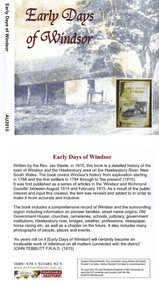
Document, James Steele, Early days of Windsor, 2005
... Jas Steele, in 1915, this book is a detailed history of the town of Windsor and the Hawkesbury area on the Hawkesbury River, New South Wales. The book covers Windsor's history from exploration starting in 1788 and the first settlers in 1794 through to 'the present' (1915). ...Early Days of Windsor Written by the Rev. Jas Steele, in 1915, this book is a detailed history of the town of Windsor and the Hawkesbury area on the Hawkesbury River, New South Wales. The book covers Windsor's history from exploration starting in 1788 and the first settlers in 1794 through to 'the present' (1915). It was first published as a series of articles in the 'Windsor and Richmond Gazette' between August 1914 and February 1915. As a result of the public interest and input this created, the text was revised and added to in order to make it more accurate and inclusive. The book includes a comprehensive record of Windsor and the surrounding region including information on pioneer families, street name origins, Old Government House, churches, cemeteries, schools, judiciary, government institutions, Hawkesbury river, bridges, weather, professions, newspaper, horse racing etc. as well as a chapter on the future. It also includes many photographs of people, places and events. 'As years roll on it [Early Days of Windsor] will certainly become an invaluable work of reference on all matters connected with the district' JOHN TEBBUTT F.R.A.S. (1915)1 optical discnon-fictionEarly Days of Windsor Written by the Rev. Jas Steele, in 1915, this book is a detailed history of the town of Windsor and the Hawkesbury area on the Hawkesbury River, New South Wales. The book covers Windsor's history from exploration starting in 1788 and the first settlers in 1794 through to 'the present' (1915). It was first published as a series of articles in the 'Windsor and Richmond Gazette' between August 1914 and February 1915. As a result of the public interest and input this created, the text was revised and added to in order to make it more accurate and inclusive. The book includes a comprehensive record of Windsor and the surrounding region including information on pioneer families, street name origins, Old Government House, churches, cemeteries, schools, judiciary, government institutions, Hawkesbury river, bridges, weather, professions, newspaper, horse racing etc. as well as a chapter on the future. It also includes many photographs of people, places and events. 'As years roll on it [Early Days of Windsor] will certainly become an invaluable work of reference on all matters connected with the district' JOHN TEBBUTT F.R.A.S. (1915)new south wales, windsor (nsw) history -
 Victorian Railway History Library
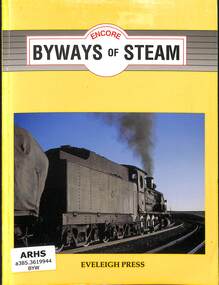
Book, Dunn, Ian, Byways of Steam Encore, 1998
... Railroads - NSW - history Steam locomotives - NSW – pictorial Features – Orange Steam Locomotive Depot, Sydney Railway Station, Hawkesbury River Bridge. The Line to Gwabegar ill, maps, p.112. ...Features – Orange Steam Locomotive Depot, Sydney Railway Station, Hawkesbury River Bridge. The Line to Gwabegarill, maps, p.112.non-fictionFeatures – Orange Steam Locomotive Depot, Sydney Railway Station, Hawkesbury River Bridge. The Line to Gwabegar railroads - nsw - history, steam locomotives - nsw – pictorial -
 Victorian Railway History Library
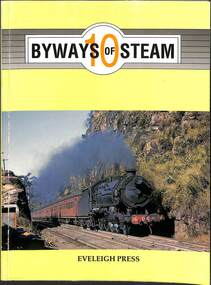
Book, Dunn, Ian, Byways of Steam 10, 1995
... Railroads - NSW - history Steam locomotives - NSW – pictorial Hawkesbury River to Woy Woy; The Cape; The ASM: Telegraph Point; The Merriwa Branch; Our Rail Heritage: Domain of Tunnel Box; NSWR Steam Locomotive Depots: Nevertire and Warren; ill, maps, p.116. ...Hawkesbury River to Woy Woy; The Cape; The ASM: Telegraph Point; The Merriwa Branch; Our Rail Heritage: Domain of Tunnel Box; NSWR Steam Locomotive Depots: Nevertire and Warren;ill, maps, p.116.non-fictionHawkesbury River to Woy Woy; The Cape; The ASM: Telegraph Point; The Merriwa Branch; Our Rail Heritage: Domain of Tunnel Box; NSWR Steam Locomotive Depots: Nevertire and Warren;railroads - nsw - history, steam locomotives - nsw – pictorial
