
Showing 57 items matching "hay stack"
-
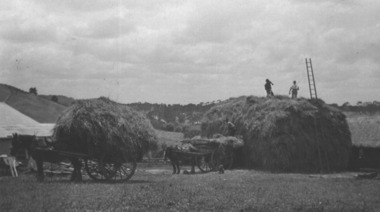 Ballarat Heritage Services
Photograph - Photograph - Black and White, Gervasoni Hay Stack at Yandoit Creek
... Gervasoni Hay Stack at Yandoit Creek......hay stack...Gervasoni Hay Stack at Yandoit Creek Photograph Photograph - Black and White ...Members of the Gervasoni Family building a haystack at their Yandoit Creek farm.gervasoni, yandoit creek, hay, hay stack, farm, farmers, agriculture -
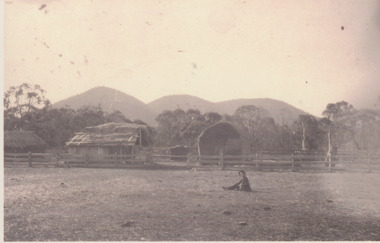 Lakes Entrance Historical Society
Photograph - Farm building and hay stack East Gippsland 1890
... Farm building and hay stack East Gippsland 1890...Sepia toned photograph of bark roofed farm building and hay stack behind three railed post and rail fence, sliprail gateway. ...East Gippsland Victoria Photograph Farm building and hay stack East Gippsland 1890 ...Sepia toned photograph of bark roofed farm building and hay stack behind three railed post and rail fence, sliprail gateway. Boy and dog seated in foreground. High peaks in distance known as The Brothers. East Gippsland Victoriahouses, topography, settlers -
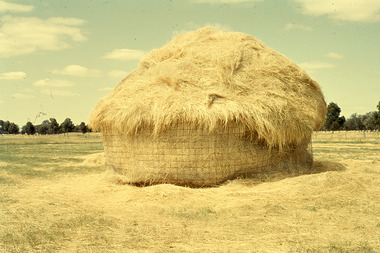 Bendigo Historical Society Inc.
Slide - Mouat Crawford Collection: Farming Life in the Wimmera, c1960s
... ...Hay stack...Circular hay stack with netting around it to hold it in place. ...Farm Hay stack wimmera mouat crawford collection PERUTZ Circular hay stack with netting around it to hold it in place. ...Circular hay stack with netting around it to hold it in place. Markings: circular hay stack. Used as a teaching aid.PERUTZfarm, hay stack, wimmera, mouat crawford collection -
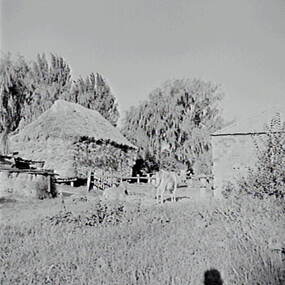 Allan Doney Collection, Bendigo Historical Society Inc.
Negative - Trentham - Hay Stack, Allan Doney, 1950 -1970
... Trentham - Hay Stack...Negative Trentham - Hay Stack Allan Doney ...In the years of Allan Doney’s photography, landmark buildings succumbed to fire, neglect and redevelopment. He photographed the grey sand hills from Bendigo’s mining past, the streetscapes, poppet heads, miners’ cottages, gracious homes with ornate verandahs, trams and much more. Above all, his photographs show how much of the city has survived from the 19th century – and how much has not. Through two decades of great change, Allan Doney was there to capture ways people interacted with it. Although he travelled to many other places in Northern Victoria and beyond in search of subjects for his art, he seemed to always return to Bendigo for inspiration. -
 Allan Doney Collection, Bendigo Historical Society Inc.
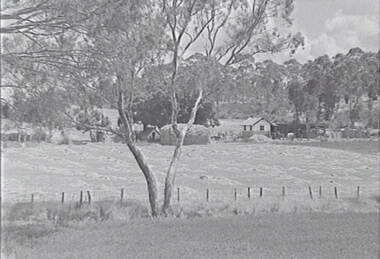
Negative - Farm - Sheds - Hay Stack - Trees, Allan Doney, 1950 -1970
... Farm - Sheds - Hay Stack - Trees...Negative Farm - Sheds - Hay Stack - Trees Allan Doney ...In the years of Allan Doney’s photography, landmark buildings succumbed to fire, neglect and redevelopment. He photographed the grey sand hills from Bendigo’s mining past, the streetscapes, poppet heads, miners’ cottages, gracious homes with ornate verandahs, trams and much more. Above all, his photographs show how much of the city has survived from the 19th century – and how much has not. Through two decades of great change, Allan Doney was there to capture ways people interacted with it. Although he travelled to many other places in Northern Victoria and beyond in search of subjects for his art, he seemed to always return to Bendigo for inspiration. -
 Allan Doney Collection, Bendigo Historical Society Inc.
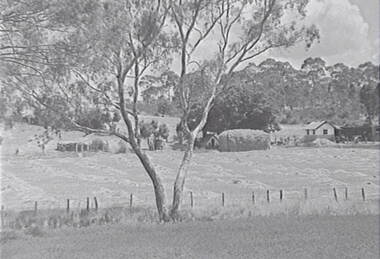
Negative - Farm - Sheds - Hay Stack - Trees, Allan Doney, 1950 -1970
... Farm - Sheds - Hay Stack - Trees...Negative Farm - Sheds - Hay Stack - Trees Allan Doney ...In the years of Allan Doney’s photography, landmark buildings succumbed to fire, neglect and redevelopment. He photographed the grey sand hills from Bendigo’s mining past, the streetscapes, poppet heads, miners’ cottages, gracious homes with ornate verandahs, trams and much more. Above all, his photographs show how much of the city has survived from the 19th century – and how much has not. Through two decades of great change, Allan Doney was there to capture ways people interacted with it. Although he travelled to many other places in Northern Victoria and beyond in search of subjects for his art, he seemed to always return to Bendigo for inspiration. -
 Allan Doney Collection, Bendigo Historical Society Inc.
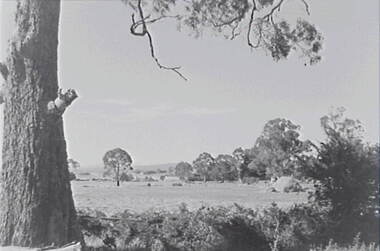
Negative - Glenlyon - Trees - Hay Stack - House, Allan Doney, 1950 -1970
... Glenlyon - Trees - Hay Stack - House...Negative Glenlyon - Trees - Hay Stack - House Allan Doney ...In the years of Allan Doney’s photography, landmark buildings succumbed to fire, neglect and redevelopment. He photographed the grey sand hills from Bendigo’s mining past, the streetscapes, poppet heads, miners’ cottages, gracious homes with ornate verandahs, trams and much more. Above all, his photographs show how much of the city has survived from the 19th century – and how much has not. Through two decades of great change, Allan Doney was there to capture ways people interacted with it. Although he travelled to many other places in Northern Victoria and beyond in search of subjects for his art, he seemed to always return to Bendigo for inspiration. -
 Allan Doney Collection, Bendigo Historical Society Inc.
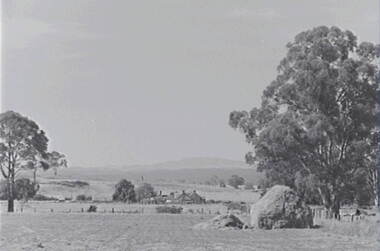
Negative - Glenlyon - Trees - Hay Stack - House, Allan Doney, 1950 -1970
... Glenlyon - Trees - Hay Stack - House...Negative Glenlyon - Trees - Hay Stack - House Allan Doney ...In the years of Allan Doney’s photography, landmark buildings succumbed to fire, neglect and redevelopment. He photographed the grey sand hills from Bendigo’s mining past, the streetscapes, poppet heads, miners’ cottages, gracious homes with ornate verandahs, trams and much more. Above all, his photographs show how much of the city has survived from the 19th century – and how much has not. Through two decades of great change, Allan Doney was there to capture ways people interacted with it. Although he travelled to many other places in Northern Victoria and beyond in search of subjects for his art, he seemed to always return to Bendigo for inspiration. -
 Allan Doney Collection, Bendigo Historical Society Inc.
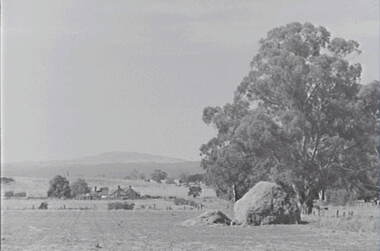
Negative - Glenlyon - Trees - Hay Stack - House, Allan Doney, 1950 -1970
... Glenlyon - Trees - Hay Stack - House...Negative Glenlyon - Trees - Hay Stack - House Allan Doney ...In the years of Allan Doney’s photography, landmark buildings succumbed to fire, neglect and redevelopment. He photographed the grey sand hills from Bendigo’s mining past, the streetscapes, poppet heads, miners’ cottages, gracious homes with ornate verandahs, trams and much more. Above all, his photographs show how much of the city has survived from the 19th century – and how much has not. Through two decades of great change, Allan Doney was there to capture ways people interacted with it. Although he travelled to many other places in Northern Victoria and beyond in search of subjects for his art, he seemed to always return to Bendigo for inspiration. -
 Allan Doney Collection, Bendigo Historical Society Inc.
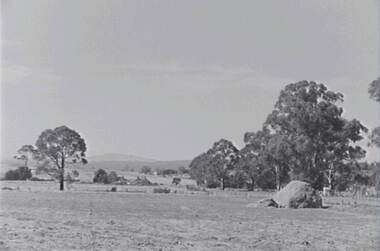
Negative - Glenlyon - Trees - Hay Stack - House, Allan Doney, 1950 -1970
... Glenlyon - Trees - Hay Stack - House...Negative Glenlyon - Trees - Hay Stack - House Allan Doney ...In the years of Allan Doney’s photography, landmark buildings succumbed to fire, neglect and redevelopment. He photographed the grey sand hills from Bendigo’s mining past, the streetscapes, poppet heads, miners’ cottages, gracious homes with ornate verandahs, trams and much more. Above all, his photographs show how much of the city has survived from the 19th century – and how much has not. Through two decades of great change, Allan Doney was there to capture ways people interacted with it. Although he travelled to many other places in Northern Victoria and beyond in search of subjects for his art, he seemed to always return to Bendigo for inspiration. -
 Allan Doney Collection, Bendigo Historical Society Inc.
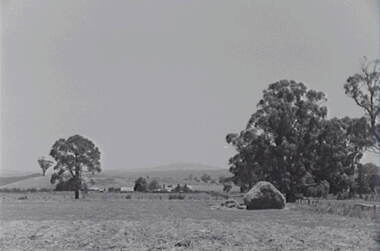
Negative - Glenlyon - Trees - Hay Stack - House, Allan Doney, 1950 -1970
... Glenlyon - Trees - Hay Stack - House...Negative Glenlyon - Trees - Hay Stack - House Allan Doney ...In the years of Allan Doney’s photography, landmark buildings succumbed to fire, neglect and redevelopment. He photographed the grey sand hills from Bendigo’s mining past, the streetscapes, poppet heads, miners’ cottages, gracious homes with ornate verandahs, trams and much more. Above all, his photographs show how much of the city has survived from the 19th century – and how much has not. Through two decades of great change, Allan Doney was there to capture ways people interacted with it. Although he travelled to many other places in Northern Victoria and beyond in search of subjects for his art, he seemed to always return to Bendigo for inspiration. -
 Allan Doney Collection, Bendigo Historical Society Inc.
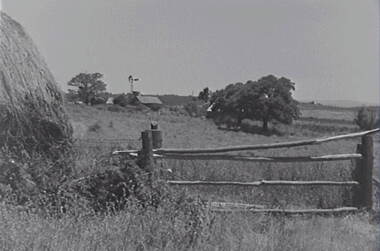
Negative - Glenlyon - Farm - Gate - Hay Stack - Windmill, Allan Doney, 1950 -1970
... Glenlyon - Farm - Gate - Hay Stack - Windmill...Negative Glenlyon - Farm - Gate - Hay Stack - Windmill Allan Doney ...In the years of Allan Doney’s photography, landmark buildings succumbed to fire, neglect and redevelopment. He photographed the grey sand hills from Bendigo’s mining past, the streetscapes, poppet heads, miners’ cottages, gracious homes with ornate verandahs, trams and much more. Above all, his photographs show how much of the city has survived from the 19th century – and how much has not. Through two decades of great change, Allan Doney was there to capture ways people interacted with it. Although he travelled to many other places in Northern Victoria and beyond in search of subjects for his art, he seemed to always return to Bendigo for inspiration. -
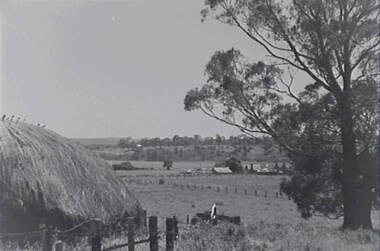 Allan Doney Collection, Bendigo Historical Society Inc.
Negative - Glenlyon - Farm - Hay Stack - Trees, Allan Doney, 1950 -1970
... Glenlyon - Farm - Hay Stack - Trees...Negative Glenlyon - Farm - Hay Stack - Trees Allan Doney ...In the years of Allan Doney’s photography, landmark buildings succumbed to fire, neglect and redevelopment. He photographed the grey sand hills from Bendigo’s mining past, the streetscapes, poppet heads, miners’ cottages, gracious homes with ornate verandahs, trams and much more. Above all, his photographs show how much of the city has survived from the 19th century – and how much has not. Through two decades of great change, Allan Doney was there to capture ways people interacted with it. Although he travelled to many other places in Northern Victoria and beyond in search of subjects for his art, he seemed to always return to Bendigo for inspiration. -
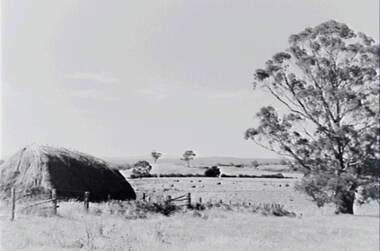 Allan Doney Collection, Bendigo Historical Society Inc.
Negative - Glenlyon - Farm - Hay Stack - Trees, Allan Doney, 1950 -1970
... Glenlyon - Farm - Hay Stack - Trees...Negative Glenlyon - Farm - Hay Stack - Trees Allan Doney ...In the years of Allan Doney’s photography, landmark buildings succumbed to fire, neglect and redevelopment. He photographed the grey sand hills from Bendigo’s mining past, the streetscapes, poppet heads, miners’ cottages, gracious homes with ornate verandahs, trams and much more. Above all, his photographs show how much of the city has survived from the 19th century – and how much has not. Through two decades of great change, Allan Doney was there to capture ways people interacted with it. Although he travelled to many other places in Northern Victoria and beyond in search of subjects for his art, he seemed to always return to Bendigo for inspiration. -
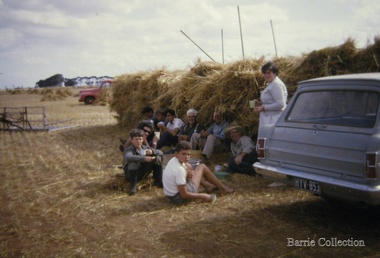 Melton City Libraries
Photograph, Stacking at Ferris Road, Unknown
... Hay stacking at Ferris Road...Agriculture Local Identities Hay stacking at Ferris Road Stacking at Ferris Road Photograph Barrie Collection ...Hay stacking at Ferris Roadagriculture, local identities -
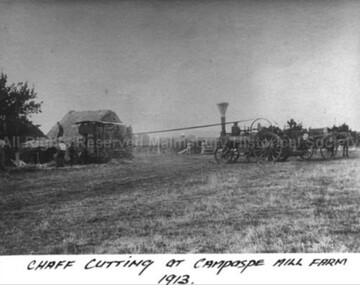 Malmsbury Historical Society
Photograph (Item), B/W Photo Of Chaff Cutting At Campaspe Mill Farm, Malmsbury 1913
... Buildings - "Hay Stack, Chaff Cutter" People - "Ward, Betty (Mrs.)"...Buildings - "Hay Stack, Chaff Cutter" People - "Ward, Betty (Mrs.)" ...Buildings - "Hay Stack, Chaff Cutter" People - "Ward, Betty (Mrs.)" -
 Parks Victoria - Days Mill and Farm
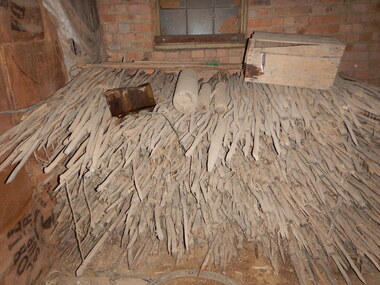
Functional object - HAYSTACK THATCHING STAKES
... FOR ANCHORING THATCH ON HAY STACKES. THEY ARE DRIVEN INTO THE STACK AND STRING IS TIED AROUND THE PROTRUDING END. ...FOR ANCHORING THATCH ON HAY STACKES. THEY ARE DRIVEN INTO THE STACK AND STRING IS TIED AROUND THE PROTRUDING END. ...FOR ANCHORING THATCH ON HAY STACKES. THEY ARE DRIVEN INTO THE STACK AND STRING IS TIED AROUND THE PROTRUDING END. Possibly made on the property.3000 sharpened bush stakes approx 4' 6" long. Many tied in bundles of approx. 40 stakes with binder twine. -
 Clunes Museum
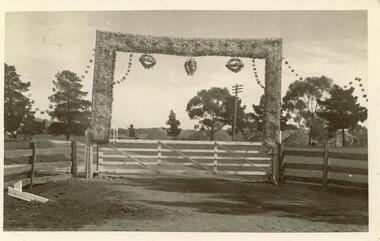
Postcard - PHOTOGRAPH, CLUNES CENTENARY, 1939
... WHITE WOOD GATE WITH DECORATED FRAME HOME WITH HAY STACKS, PINE AND GUMTREES IN BACKGROUND....WHITE WOOD GATE WITH DECORATED FRAME HOME WITH HAY STACKS, PINE AND GUMTREES IN BACKGROUND. CLUNES CENTENARY Postcard PHOTOGRAPH ...PHOTOGRAPH /POSTCARD - DECORATED ENTRANCE TO A PROPERTY FOR CLUNES CENTENARY 1839 - 1939 POST AND RAIL FENCE. WHITE WOOD GATE WITH DECORATED FRAME HOME WITH HAY STACKS, PINE AND GUMTREES IN BACKGROUND.photography, events and celebrations, back to clunes, centenary -
 Melton City Libraries
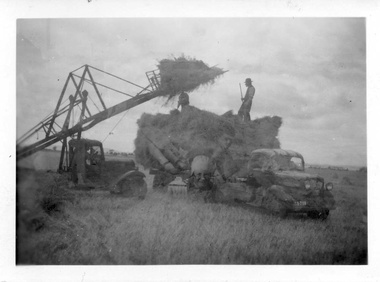
Photograph, Harvesting, 1950
... stack building. The district haystacks had a distinctive shape and could be recognised by their builder. Bill Gillespie’s first operational HAY FORK consisted of a large 13 pronged fork situated forward of the truck cabin. ...Farming in Melton, hay growing and stack building. ...stacking was completed. In its early days farmers travelling along the Western Highway called at the Barrie farm at Ferris Lane to inspect its construction and operation of the invention. It became a widely adopted by farmers throughout the State. It was being used on Wattie Palmer’s farm on Bridge Road Melton South in 1997. Agriculture local identities Farming in Melton, hay ...1950 decade HAY FORK - A local invention. Bill and Arthur Gillespie and Bon Barrie In the early 1950’s Bill Gillespie of Bulmans Lane had been experimenting in developing a machine to improve the collection of hay sheaves at harvesting and stack building time. The ripened crop was cut by a reaper and binder which bundled the storks into sheaves tied with binder twine. The reaper and binder was towed by a tractor by the mid 1940s previously teams of draught horses were used to pull the reaper and binder. A photograph taken at the Barrie farm shows three binders the first being towed with a tractor and the others with horse teams. Two workmen were needed to operate the binder when cutting a crop. The sheaves collected on the binder and released onto the ground and were scattered across the paddocks. Using a conventional two pronged pitch fork the harvest hands collected the sheaves and placed each one cut edge on the ground in an upright position and layered with about 15 sheaves into an apex shape to form was is known as a stook. The shape of the stook allowed for drying and draining of water if rain had occurred. Prior to the invention of the mechanical hayfork this was a laborious task requiring each sheaf to be pitched onto a tray truck and moved to the location of the haystack. The mechanised HAYFORK was operated by one person on tractor greatly reducing the need for gangs of labourers. At harvest time farmers had relied on itinerant teams of workers descending on the district looking for work. The three Barrie brothers on their adjoining farms combined forces to cut their crop at its optimum time while the weather was in their favour. Up to many 20 workers at times formed a team in earlier times. Agricultural university students were also keen to gain practical experience in the field. Each of the brothers had a particular skill, and Tom Barrie was the expert on stack building. The district haystacks had a distinctive shape and could be recognised by their builder. Bill Gillespie’s first operational HAY FORK consisted of a large 13 pronged fork situated forward of the truck cabin. It was attached with iron girders and mounted on the rear of the cabin to the tray of his British Bedford truck. It was constructed in metal and iron and welded in the farmers work sheds. The mechanism was raised and lowered by the driver scooping along the ground to pick up a complete stook to raise high enough to deposit all the sheaves in one stook onto the stack or truck tray. The fork section was released by a rope and operated by the driver in the cabin. This model was trialled on the Barrie farm at Ferris Lane. It proved to be very successful and the Barrie/ Gillespie brothers went on to develop a HAYFORK which attached to a tractor and was operated with a series of levers and was raised and lowered hydraulically. It was detached from the tractor when stacking was completed. In its early days farmers travelling along the Western Highway called at the Barrie farm at Ferris Lane to inspect its construction and operation of the invention. It became a widely adopted by farmers throughout the State. It was being used on Wattie Palmer’s farm on Bridge Road Melton South in 1997. Farming in Melton, hay growing and stack building. agriculture, local identities -
 Lakes Entrance Historical Society
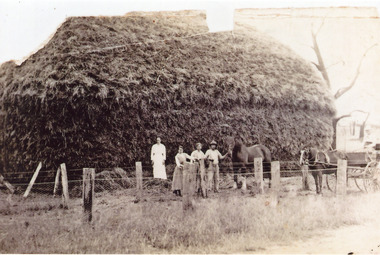
Photograph - Frank Wills and family 1914
... Black and white photograph of Frank Wills and family beside an enormous hay stack. In photo are Jessie, Daisy, mother Frances nee Leatham and Frank holding the bridle of a draught horse. ...Genealogy Black and white photograph of Frank Wills and family beside an enormous hay stack. In photo are Jessie, Daisy, mother Frances nee Leatham and Frank holding the bridle of a draught horse. ...Black and white photograph of Frank Wills and family beside an enormous hay stack. In photo are Jessie, Daisy, mother Frances nee Leatham and Frank holding the bridle of a draught horse. Man sitting in a horse drawn buggy close by. Swan Reach Victoriagenealogy -
 Lake Bolac & District Historical Society
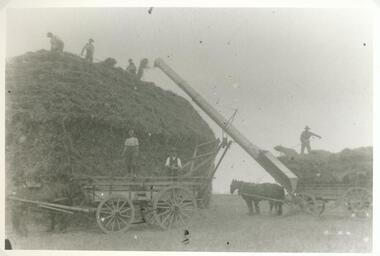
Black and white photograph, Hay stacking at O'Rorke's 1912
... This photo shows hay being stacked on the O'Rorke property in 1912....This photo shows hay being stacked on the O'Rorke property in 1912. black and white photograph Hay stacking at O'Rorke's 1912 Black and white photograph ...This photo shows hay being stacked on the O'Rorke property in 1912.black and white photograph -
 Bendigo Historical Society Inc.
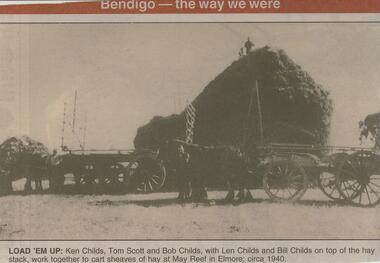
Newspaper - JENNY FOLEY COLLECTION: LOAD 'EM UP
... Load 'em up: Ken Childs, Tom Scott and Bob Childs, with Len Childs and Bill Childs on top of the hay stack, work together to cart sheaves of hay at May Reef in Elmore; circa 1940. ...Load 'em up: Ken Childs, Tom Scott and Bob Childs, with Len Childs and Bill Childs on top of the hay stack, work together to cart sheaves of hay at May Reef in Elmore; circa 1940. ...Bendigo Advertiser ''The way we were'' from 2001. Load 'em up: Ken Childs, Tom Scott and Bob Childs, with Len Childs and Bill Childs on top of the hay stack, work together to cart sheaves of hay at May Reef in Elmore; circa 1940. The clip is in a folder.newspaper, bendigo advertiser, the way we were -
 Sunbury Family History and Heritage Society Inc.
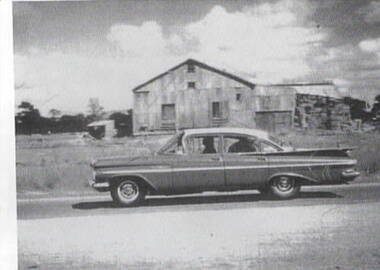
Photograph, Hay shed, c1960s
... A scanned print of an old black and white photograph of a corrugated shed with hay bales stacked at the rear of the building. A 1960s sedan car is parked in front of the building and there is a smaller shed in the background....Hay Shed Railways Sunbury Station Evans Street Horne Street A scanned print of an old black and white photograph of a corrugated shed with hay bales stacked at the rear of the building. A 1960s sedan car is parked in front of the building and there is a smaller shed in the background. ...The hay shed was sited on railway land fronting onto Evans Street and near Station Street. Retail shops including Harris Scarf now occupy the site. The pine trees in the background were along Horne Street.The hay was stored in this building before being transported.Cereal growing was one of the agricultural activities carried out in the Sunbury area.A scanned print of an old black and white photograph of a corrugated shed with hay bales stacked at the rear of the building. A 1960s sedan car is parked in front of the building and there is a smaller shed in the background.hay shed, railways, sunbury station, evans street, horne street -
 Stawell Historical Society Inc
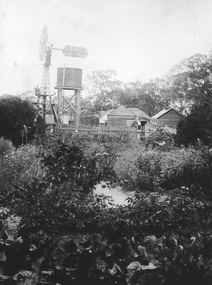
Photograph - Yard Scenes at 'Whitehall', Hutchings Farm “Whitehall” -- 3 Photos
... Three (3) Sepia Photographs. 204 Titled Whitehall Avenue: An avenue with wooden fences including people on on left three on right including one woman. 204.1 Titled Yard at Whitehall: 4 Men with herd of cows in foreground, man in front holding a metal bucket. Large Hay stacks behind. wooden shed with metal roof on right. 204.2 Part of Whitehall: Windmill and wooden buildings behind Wooden Picket fence in background. ...These copies were taken from the Hutchings Family album. stawell 204: Whitehall Avenue 204.1 Yard at Whitehall 204.2: Part of Whitehall All enclosed in a box, which is above a line of solid triangles over a thin line Three (3) Sepia Photographs. 204 Titled Whitehall Avenue: An avenue with wooden fences including people on on left three on right including one woman. 204.1 Titled Yard at Whitehall: 4 Men with herd of cows in foreground, man in front holding a metal bucket. Large Hay stacks behind. wooden shed with metal roof on right. 204.2 Part of Whitehall: Windmill and wooden buildings behind Wooden Picket fence in background. ...Hutchings family property “Whitehall” 3 Scenes Shows large Haystacks Sheds Cows extensive Garden. Avenue of trees. These copies were taken from the Hutchings Family album.Three (3) Sepia Photographs. 204 Titled Whitehall Avenue: An avenue with wooden fences including people on on left three on right including one woman. 204.1 Titled Yard at Whitehall: 4 Men with herd of cows in foreground, man in front holding a metal bucket. Large Hay stacks behind. wooden shed with metal roof on right. 204.2 Part of Whitehall: Windmill and wooden buildings behind Wooden Picket fence in background. 204: Whitehall Avenue 204.1 Yard at Whitehall 204.2: Part of Whitehall All enclosed in a box, which is above a line of solid triangles over a thin linestawell -
 Stawell Historical Society Inc
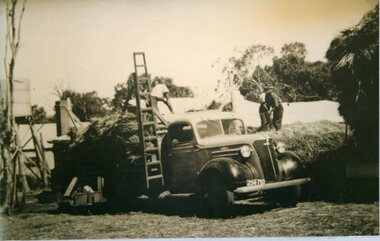
Photograph, Hay carting at Frank Bennett's Farm in Deep Lead
... Hay carting at Frank Bennett's Farm Deep Lead. On the right of Photograph workmen are stacking hay....Hay carting at Frank Bennett's Farm Deep Lead. On the right of Photograph workmen are stacking hay. ...Hay carting at Frank Bennett's Farm Deep Lead. On the right of Photograph workmen are stacking hay.stawell deep lead -
 Bendigo Historical Society Inc.
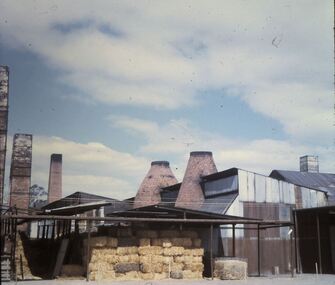
Slide - DIGGERS & MINING: BENDIGO, c1856
... Bendigo Pottery kilns and stacked hay bales. Markings: 3, DEC7M10. Used as a teaching aid....Bendigo Pottery kilns and stacked hay bales. Markings: 3, DEC7M10. Used as a teaching aid. ...Diggers & Mining: Bendigo. Bendigo Pottery kilns and stacked hay bales. Markings: 3, DEC7M10. Used as a teaching aid.Kodachromeeducation, tertiary, bendigo -
 Federation University Historical Collection
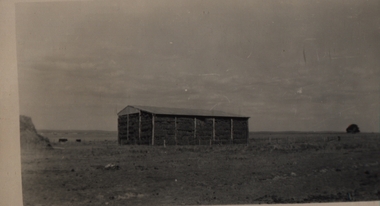
Photograph - Black and White, Chatham-Holmes Collection: Hayshed
... Hay shed: bales stacked in open-sided corrugated roof covered structure. ...Hay shed: bales stacked in open-sided corrugated roof covered structure. ...Hay shed: bales stacked in open-sided corrugated roof covered structure. The layers of hay bales alternate direction.chatham-holmes collection, hay, covered structure, haystack, farm sheds -
 Whitehorse Historical Society Inc.
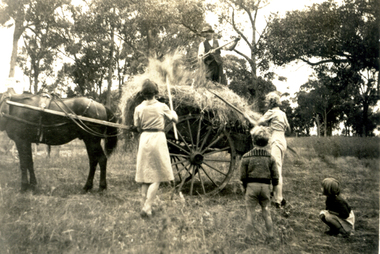
Photograph, Forest Hill Residential Kindergarten - stacking hay, c1938
... Sepia photograph of people stacking hay on a cart at the Forest Hill Residential Kindergarten. ...hay. Forest Hill Residential Kindergarten - stacking hay. Photograph Photograph ...See ND2991 for history of kindergarten.Sepia photograph of people stacking hay on a cart at the Forest Hill Residential Kindergarten. Two women with two children standing by with and a man standing on top of hay.forest hill residential kindergarten, kindergarten -
 Upper Yarra Museum
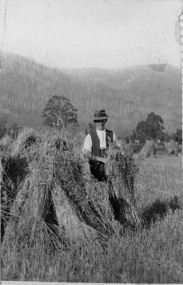
Negative Photographic Reproduction, Stacks of Hay - C McCrae Wesburn
... stack of hay c mccrae wesburn...03032 Stacks of Hay - C McCrae Wesburn Upper Yarra Shire 1888-1988 Centenary collection. ...stack of hay c mccrae wesburn 03032 Stacks of Hay - C McCrae Wesburn Upper Yarra Shire 1888-1988 Centenary collection. ...03032 Stacks of Hay - C McCrae Wesburn Upper Yarra Shire 1888-1988 Centenary collection. Negative, Black & white. Scanned at 600 dpistack of hay c mccrae wesburn -
 Bendigo Historical Society Inc.
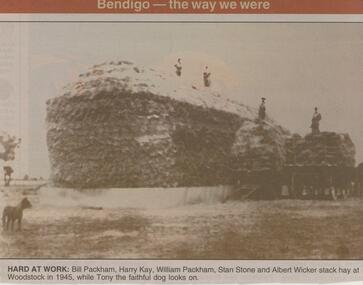
Newspaper - JENNY FOLEY COLLECTION: HARD AT WORK
... Hard at work: Bill Packham, Harry Kay, William Packham, Stan Stone and Albert Wicker stack hay at Woodstock in 1945, while Tony the faithful dog looks on. ...Hard at work: Bill Packham, Harry Kay, William Packham, Stan Stone and Albert Wicker stack hay at Woodstock in 1945, while Tony the faithful dog looks on. ...Bill Packham (1920- 2015 ) was the son of William George and Bertha Packham. He was born at Inglewood and is buried at Newbridge. William George Packham (1883-1970) married Bertha Evlyn Perrett in 1919. Stanley Arthur Stone (1908-1973) married Muriel Ethlyn Leversha (1908-2004) in 1932. Albert Stephen Wicker (1890-1961)Bendigo Advertiser ''The way we were'' from 2002. Hard at work: Bill Packham, Harry Kay, William Packham, Stan Stone and Albert Wicker stack hay at Woodstock in 1945, while Tony the faithful dog looks on. The clip is in a folder.newspaper, bendigo advertiser, the way we were
