
Showing 31 items matching "heavyweight"
-
 Moorabbin Air Museum
Book - Record of development, generally WW2 to approx 1980, and usage and various Nations involvement, plus brief history of individual planes identified by their serial numbers, AVRO's MARITIME HEAVYWEIGHT THE SHACKLETON, AVRO's MARITIME HEAVYWEIGHT THE SHACKLETON, 1990
... AVRO's MARITIME HEAVYWEIGHT THE SHACKLETON...Record of development, generally WW2 to approx 1980, and usage and various Nations involvement, plus brief history of individual planes identified by their serial numbers, AVRO's MARITIME HEAVYWEIGHT THE SHACKLETON...Record of development, generally WW2 to approx 1980, and usage and various Nations involvement, plus brief history of individual planes identified by their serial numbers, AVRO's MARITIME HEAVYWEIGHT THE SHACKLETON Record of development, generally WW2 to approx 1980, and usage and various Nations involvement, plus brief history of individual planes identified by their serial numbers, AVRO's MARITIME HEAVYWEIGHT THE SHACKLETON Cover jacket filled by colour painting of in flight Shackleton passing over surfaced submarine, at sea AVRO's MARITIME HEAVYWEIGHT THE SHACKLETON Book Record of development, generally WW2 to approx 1980, and usage and various Nations involvement, plus brief history of individual planes identified by their serial numbers, AVRO's MARITIME HEAVYWEIGHT THE SHACKLETON Chris Ashworth ...Record of development, generally WW2 to approx 1980, and usage and various Nations involvement, plus brief history of individual planes identified by their serial numbers, AVRO's MARITIME HEAVYWEIGHT THE SHACKLETONCover jacket filled by colour painting of in flight Shackleton passing over surfaced submarine, at seanon-fictionRecord of development, generally WW2 to approx 1980, and usage and various Nations involvement, plus brief history of individual planes identified by their serial numbers, AVRO's MARITIME HEAVYWEIGHT THE SHACKLETON -
 Numurkah & District Historical Society
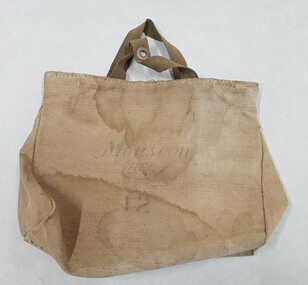
Equipment - Canvas Bag
... Heavyweight canvas bag. Has side gussets and two canvas handles...canvas bag carry bag see photo "Monsoon" brand - very faded Heavyweight canvas bag. Has side gussets and two canvas handles Equipment Canvas Bag ...Heavyweight canvas bag. Has side gussets and two canvas handlessee photo "Monsoon" brand - very fadedcanvas bag, carry bag -
 East Gippsland Family History Group
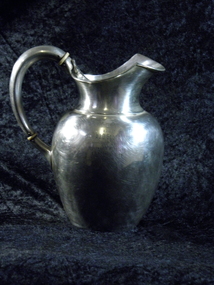
Presentation Ewer
... Scott 1st Prize Heavyweight Wrestling A.N.A. Competition Feb 1926...Scott 1st Prize Heavyweight Wrestling A.N.A. Competition Feb 1926 Presentation silver plated Ewer Presentation Ewer ...Presentation silver plated Ewer Won by A.J.O. Scott 1st Prize Heavyweight Wrestling A.N.A. Competition Feb 1926 -
 Port Melbourne Historical & Preservation Society
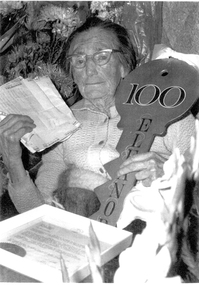
Photograph - 100th birthday celebration of Miss Eleanor Hopkins, 29 May 1967
... Heavyweight B&W lasercopy of 1967 photo taken at 100th birthday celebration for Miss Eleanor HOPKINS of Égmont', 66 Evans Street...celebrations fetes and exhibitions education - kindergartens religion - wesleyan methodist church eleanor hopkins Heavyweight B&W lasercopy of 1967 photo taken at 100th birthday celebration for Miss Eleanor HOPKINS of Égmont', 66 Evans Street Photograph 100th birthday celebration of Miss Eleanor Hopkins ...Heavyweight B&W lasercopy of 1967 photo taken at 100th birthday celebration for Miss Eleanor HOPKINS of Égmont', 66 Evans Streetcelebrations fetes and exhibitions, education - kindergartens, religion - wesleyan methodist church, eleanor hopkins -
Port Melbourne Historical & Preservation Society
Photograph - Nomad aircraft at Fishermen's Bend, 1972
... Heavyweight colour lasercopy A3 size of an ASTA photo of Nomad aircraft showing government Aircraft Factory, West Gate Bridge under construction, beginnings of Webb Dock, piers, foreshore and Fishermens Bend housing c1972...This Nomad, produced at the GAF, was the last official plane off the Fishermens Bend production line. armed services - air force industry - manufacturing transport - aviation and aerodrome fishermans bend government aircraft factory Heavyweight colour lasercopy A3 size of an ASTA photo of Nomad aircraft showing government Aircraft Factory, West Gate Bridge under construction, beginnings of Webb Dock, piers, foreshore and Fishermens Bend housing c1972 Photograph Nomad aircraft at Fishermen's Bend ...This Nomad, produced at the GAF, was the last official plane off the Fishermens Bend production line.Heavyweight colour lasercopy A3 size of an ASTA photo of Nomad aircraft showing government Aircraft Factory, West Gate Bridge under construction, beginnings of Webb Dock, piers, foreshore and Fishermens Bend housing c1972armed services - air force, industry - manufacturing, transport - aviation and aerodrome, fishermans bend, government aircraft factory -
Port Melbourne Historical & Preservation Society
Programme - Program/Menu, Second annual reunion of Worshipful Masters of 1912, Jul 1914
... Eight pages of heavyweight ivory coated stock printed in black sepia and gold. ...Eight pages of heavyweight ivory coated stock printed in black sepia and gold. ...Donated to PMH&PS on closure of SM Lodge May 2000.Program/menu for second annual reunion of the worshipful masters of 1912, held July 1914 in Melbourne. Eight pages of heavyweight ivory coated stock printed in black sepia and gold. Portraits of WMs including T A Quayle of Sandridge Lodge. Held together crudely with masking tape.societies clubs unions and other organisations, social activities, t a quayle -
 Warrnambool and District Historical Society Inc.
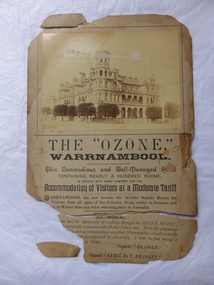
Poster, Ozone Hotel, 1896
... This is an advertising poster made of buff-coloured, heavyweight cardboard. It has a sepia-coloured photograph of the Ozone Hotel at the top and black printed material on the bottom half. ...This is an advertising poster made of buff-coloured, heavyweight cardboard. It has a sepia-coloured photograph of the Ozone Hotel at the top and black printed material on the bottom half. ...This poster advertises the Ozone Hotel in Warrnambool. The poster can be dated to 1896 or thereabouts as it quotes the testimonials of the Governor of Victoria, Lord Brassey and Lady Brassey who stayed at the hotel twice in 1896. The Ozone Hotel, at the corner of Koroit and Kepler Streets, Warrnambool, was opened in 1890 as the Grand Ozone Coffee Palace, a temperance hotel. In 1891 it was granted a colonial wine licence and in 1895 it became known as the Ozone Hotel (a private hotel with superior accommodation). From 1894 to 1907 Thomas Randall was the proprietor. In 1923 the hotel, by then known as Hotel Mansions, became a fully licensed hotel. The building was burnt down in 1929. Although very tattered, this is a significant item. It is an original poster of the Ozone Hotel. The building (Grand Ozone Coffee Palace/Ozone Hotel/Hotel Mansions) was very important in Warrnambool’s history. It was the grandest building ever erected in Warrnambool and a memento of the days when temperance hotels were prevalent in Victoria and tourism was beginning to be important in Warrnambool. This is an advertising poster made of buff-coloured, heavyweight cardboard. It has a sepia-coloured photograph of the Ozone Hotel at the top and black printed material on the bottom half. The poster is completely torn in two with two edge sections also detached. Parts of the top left and bottom left corner are missing. There is evidence of adhesive tape having been used for mending purposes in the past and the whole poster is a little grubby. The paper is now very brittle. ‘The “Ozone” Warrnambool’ ‘This commodious and well-managed hotel containing nearly a hundred rooms, is replete with every comfort for the accommodation of visitors at a moderate tariff …..’ ozone hotel, warrnambool, history of warrnambool -
Moorabbin Air Museum
Book - Aircraft design, Custom Light Planes A Design Guide
... ...Heavyweight...Aircraft design Ideal design The basics A family of design Structural airworthiness requirements Ultralights Middleweight Heavyweight Supersport Contours Overview of design methods for custom light aircraft, circa 1972 Custom Light Planes A Design Guide Book Aircraft design ...Overview of design methods for custom light aircraft, circa 1972non-fictionOverview of design methods for custom light aircraft, circa 1972ideal design, the basics, a family of design, structural airworthiness requirements, ultralights, middleweight, heavyweight, supersport, contours -
 Bendigo Historical Society Inc.
Clothing - WHITE COTTON GIRL'S NIGHTDRESS
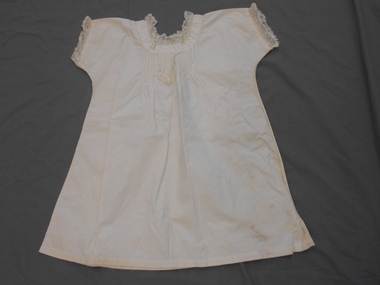
... Back section of nightie gathered at centre back where attached to casing on front of night dress is a centre tab of lace (6cm X 10cm) with six vertical pintucks on either side. No openings. Heavyweight cotton fabric....Back section of nightie gathered at centre back where attached to casing on front of night dress is a centre tab of lace (6cm X 10cm) with six vertical pintucks on either side. No openings. Heavyweight cotton fabric. Clothing WHITE COTTON GIRL'S NIGHTDRESS ...White cotton girl's nightdress with kimono cut short sleeves. Sleeves have 1.2cm casing at hemline with 2.5cm lace trim on edge. U shaped neckline with 2.4cm casing with 2.5cm stand up gathered lace frills. Back section of nightie gathered at centre back where attached to casing on front of night dress is a centre tab of lace (6cm X 10cm) with six vertical pintucks on either side. No openings. Heavyweight cotton fabric.costume, female, white cotton girl's nightdress -
 The Beechworth Burke Museum
Photograph
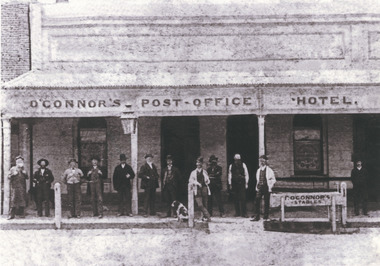
... Obverse: O'Connor's-Post-Office Hotel/ O'Connors Stables/ Reverse: 6418.2/ Post Office Hotel-O'Connor's Camp Street/ copied from the collection of Robert O'Hara Burke Memorial Museum, Beechworth/ Digital Print- Copyright (the digital print is Copyright-the Burke Museum holds this right)/ printed on Epson Matte Heavyweight Photo Paper 167gms A4 Ink jet paper ...hotels album beechworth burke museum post office hotel O'Connor's camp street Obverse: O'Connor's-Post-Office Hotel/ O'Connors Stables/ Reverse: 6418.2/ Post Office Hotel-O'Connor's Camp Street/ copied from the collection of Robert O'Hara Burke Memorial Museum, Beechworth/ Digital Print- Copyright (the digital print is Copyright-the Burke Museum holds this right)/ printed on Epson Matte Heavyweight Photo Paper 167gms A4 Ink jet paper Rectangular black and white rectangular photograph, on matte photographic paper. ...Rectangular black and white rectangular photograph, on matte photographic paper.Obverse: O'Connor's-Post-Office Hotel/ O'Connors Stables/ Reverse: 6418.2/ Post Office Hotel-O'Connor's Camp Street/ copied from the collection of Robert O'Hara Burke Memorial Museum, Beechworth/ Digital Print- Copyright (the digital print is Copyright-the Burke Museum holds this right)/ printed on Epson Matte Heavyweight Photo Paper 167gms A4 Ink jet paper hotels album, beechworth, burke museum, post office hotel, o'connor's, camp street -
 Bendigo Historical Society Inc.
Print - William 'Abednego' Thompson, Bendigo The Right Fist of God
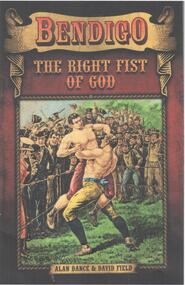
... William Abednego Thompson (11 October 1811 – 23 August 1880), also known as Bendigo Thompson, was an English bare-knuckle boxer who won the heavyweight championship of England from James Burke on 12 February 1839.[3] He was inducted into The Ring magazine Hall of Fame in 1955, the International Boxing Hall of Fame in 1991[3] and the Bare Knuckle Boxing Hall of Fame in 2011. ...William Abednego Thompson (11 October 1811 – 23 August 1880), also known as Bendigo Thompson, was an English bare-knuckle boxer who won the heavyweight championship of England from James Burke on 12 February 1839.[3] He was inducted into The Ring magazine Hall of Fame in 1955, the International Boxing Hall of Fame in 1991[3] and the Bare Knuckle Boxing Hall of Fame in 2011. ...William Abednego Thompson (11 October 1811 – 23 August 1880), also known as Bendigo Thompson, was an English bare-knuckle boxer who won the heavyweight championship of England from James Burke on 12 February 1839.[3] He was inducted into The Ring magazine Hall of Fame in 1955, the International Boxing Hall of Fame in 1991[3] and the Bare Knuckle Boxing Hall of Fame in 2011. His nickname of "Bendigo" lives on in the name of a city and creek in Australia. (Wikipedia)One page photocopy of the front cover of a book ' Bendigo The Right Fist of God, Alan Dance & Daviud Field' Image shows two bare chested men fighting, crowd of observers in background.abednego thompson, william thompson, bendigo, boxer -
 Bendigo Historical Society Inc.
Print - William 'Abednego' Thompson's Fight Records
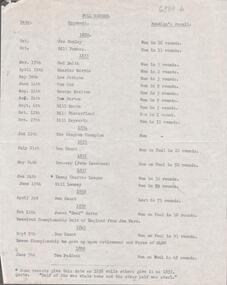
... William Abednego Thompson (11 October 1811 – 23 August 1880), also known as Bendigo Thompson, was an English bare-knuckle boxer who won the heavyweight championship of England from James Burke on 12 February 1839.[3] He was inducted into The Ring magazine Hall of Fame in 1955, the International Boxing Hall of Fame in 1991[3] and the Bare Knuckle Boxing Hall of Fame in 2011. ...William Abednego Thompson (11 October 1811 – 23 August 1880), also known as Bendigo Thompson, was an English bare-knuckle boxer who won the heavyweight championship of England from James Burke on 12 February 1839.[3] He was inducted into The Ring magazine Hall of Fame in 1955, the International Boxing Hall of Fame in 1991[3] and the Bare Knuckle Boxing Hall of Fame in 2011. ...William Abednego Thompson (11 October 1811 – 23 August 1880), also known as Bendigo Thompson, was an English bare-knuckle boxer who won the heavyweight championship of England from James Burke on 12 February 1839.[3] He was inducted into The Ring magazine Hall of Fame in 1955, the International Boxing Hall of Fame in 1991[3] and the Bare Knuckle Boxing Hall of Fame in 2011. His nickname of "Bendigo" lives on in the name of a city and creek in Australia. (Wikipedia)One page flimsy copy of a typed record of William 'Abednego' Thompson's fight record, dating from 1832 to 1850. abednego thompson, william thompson, bendigo, boxer -
 Bendigo Historical Society Inc.
Print - The Naming of Bendigo
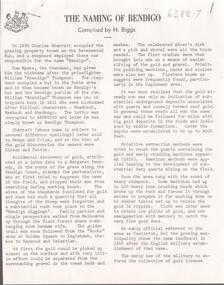
... William Abednego Thompson (11 October 1811 – 23 August 1880), also known as Bendigo Thompson, was an English bare-knuckle boxer who won the heavyweight championship of England from James Burke on 12 February 1839.[3] He was inducted into The Ring magazine Hall of Fame in 1955, the International Boxing Hall of Fame in 1991[3] and the Bare Knuckle Boxing Hall of Fame in 2011. ...William Abednego Thompson (11 October 1811 – 23 August 1880), also known as Bendigo Thompson, was an English bare-knuckle boxer who won the heavyweight championship of England from James Burke on 12 February 1839.[3] He was inducted into The Ring magazine Hall of Fame in 1955, the International Boxing Hall of Fame in 1991[3] and the Bare Knuckle Boxing Hall of Fame in 2011. ...William Abednego Thompson (11 October 1811 – 23 August 1880), also known as Bendigo Thompson, was an English bare-knuckle boxer who won the heavyweight championship of England from James Burke on 12 February 1839.[3] He was inducted into The Ring magazine Hall of Fame in 1955, the International Boxing Hall of Fame in 1991[3] and the Bare Knuckle Boxing Hall of Fame in 2011. His nickname of "Bendigo" lives on in the name of a city and creek in Australia. (Wikipedia)Two printed documents, attached. Front document 'The Naming of Bendigo, compiled by H. Biggs'; document details the founding of Bendigo, gold extraction history and the naming of Bendigo. Second document is a photocopy of an article in the 'Australian Ring, January February 1962' detailing the life of William Thompson 'Bendigo' 'who it is popularly believed but not proven, gave his name to Victoria's city, Bendigo.' Document contains an image of William Thompson, with fists up in boxing position, and his grave at St. Mary's Cemetery, Nottingham, which has a lion sculpture on top. abednego thompson, william thompson, bendigo, boxer -
 Bendigo Historical Society Inc.
Magazine - Naming of Bendigo, Did Boxer Give Name to Victorian City?, 1962
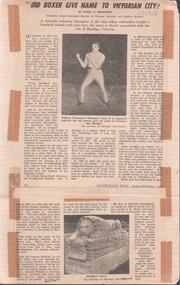
... William Abednego Thompson (11 October 1811 – 23 August 1880), also known as Bendigo Thompson, was an English bare-knuckle boxer who won the heavyweight championship of England from James Burke on 12 February 1839.[3] He was inducted into The Ring magazine Hall of Fame in 1955, the International Boxing Hall of Fame in 1991[3] and the Bare Knuckle Boxing Hall of Fame in 2011. ...William Abednego Thompson (11 October 1811 – 23 August 1880), also known as Bendigo Thompson, was an English bare-knuckle boxer who won the heavyweight championship of England from James Burke on 12 February 1839.[3] He was inducted into The Ring magazine Hall of Fame in 1955, the International Boxing Hall of Fame in 1991[3] and the Bare Knuckle Boxing Hall of Fame in 2011. ...William Abednego Thompson (11 October 1811 – 23 August 1880), also known as Bendigo Thompson, was an English bare-knuckle boxer who won the heavyweight championship of England from James Burke on 12 February 1839.[3] He was inducted into The Ring magazine Hall of Fame in 1955, the International Boxing Hall of Fame in 1991[3] and the Bare Knuckle Boxing Hall of Fame in 2011. His nickname of "Bendigo" lives on in the name of a city and creek in Australia. (Wikipedia)Front cover of forty-two page magazine: pink heading with 'Australian Ring' inscribed in black text. Jan-Feb 1962 and 2/6 in top right hand corner. Photo of two boxers fighting below title, which contains an article on William Thompson, listed on the front page as 'Bold Bendigo'. Article regarding William Thompson ' Did Boxer Give Name to Victorian City?' by James G. Harrison, President Royal Historical Society of Victoria, Bendigo and District Branch, on page 28 and 29, details Thompson's boxing story and allegedly, how his fighting name came to be the name of the city of Bendigo. The text is annotated in dark blue biro, refuting some of the claims made in it regarding the early days on the field, and particularly in relation to Tom Myers. Copy of article attached to foolscap lined paper, with brown adhesive tape, enclosed with magazine. On bottom of page 28, in pen, 'This is in conflict with Richard Grice's letters of the early 1840's. Thos Myers did not employ anyone. Myers worked for Heape and Grice who brought him out from England with them in 1839' ( arrow pointing to text where it is stated that a 'sailor abandoned his calling and followed him....after working for Myers for a year or two') Second annotation in right hand margin: ' An extraordinary confusion of facts! According to James Mouat, a reliable witness of the period, Thos Myers built Bendigo's hut (about early 1840) for Sherritt when he (Myers) was still Heape and Grice's overseer'.abednego thompson, william thompson, bendigo, boxer -
 Bendigo Historical Society Inc.
Document - William 'Abednego' Thompson
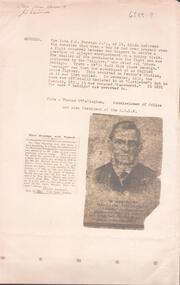
... William Abednego Thompson (11 October 1811 – 23 August 1880), also known as Bendigo Thompson, was an English bare-knuckle boxer who won the heavyweight championship of England from James Burke on 12 February 1839.[3] He was inducted into The Ring magazine Hall of Fame in 1955, the International Boxing Hall of Fame in 1991[3] and the Bare Knuckle Boxing Hall of Fame in 2011. ...William Abednego Thompson (11 October 1811 – 23 August 1880), also known as Bendigo Thompson, was an English bare-knuckle boxer who won the heavyweight championship of England from James Burke on 12 February 1839.[3] He was inducted into The Ring magazine Hall of Fame in 1955, the International Boxing Hall of Fame in 1991[3] and the Bare Knuckle Boxing Hall of Fame in 2011. ...William Abednego Thompson (11 October 1811 – 23 August 1880), also known as Bendigo Thompson, was an English bare-knuckle boxer who won the heavyweight championship of England from James Burke on 12 February 1839.[3] He was inducted into The Ring magazine Hall of Fame in 1955, the International Boxing Hall of Fame in 1991[3] and the Bare Knuckle Boxing Hall of Fame in 2011. His nickname of "Bendigo" lives on in the name of a city and creek in Australia. (Wikipedia)Photocopy, on parchment coloured paper, of two articles regarding how Bendigo was named. Top on page, underneath article: 'Note, refers to Thomas O'Callaghan, Commissioner of Police and also President of the RHSV'. Bottom article, a copy of a letter written to the Bendigo Advertiser by Henry Jackson, View Point, Bendigo on February 21st. 1899, titled 'How Bendigo was Named'. Top left hand corner of page '... unclear, please return to Jim Harrison' written in pencil.abednego thompson, william thompson, bendigo, boxer, thomas o'callaghan, henry jackson, naming of bendigo -
 Bendigo Historical Society Inc.
Newspaper - Naming of Bendigo, 'New Theory on Bendigo's Name'
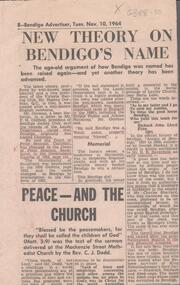
... William Abednego Thompson (11 October 1811 – 23 August 1880), also known as Bendigo Thompson, was an English bare-knuckle boxer who won the heavyweight championship of England from James Burke on 12 February 1839.[3] He was inducted into The Ring magazine Hall of Fame in 1955, the International Boxing Hall of Fame in 1991[3] and the Bare Knuckle Boxing Hall of Fame in 2011. ...William Abednego Thompson (11 October 1811 – 23 August 1880), also known as Bendigo Thompson, was an English bare-knuckle boxer who won the heavyweight championship of England from James Burke on 12 February 1839.[3] He was inducted into The Ring magazine Hall of Fame in 1955, the International Boxing Hall of Fame in 1991[3] and the Bare Knuckle Boxing Hall of Fame in 2011. ...William Abednego Thompson (11 October 1811 – 23 August 1880), also known as Bendigo Thompson, was an English bare-knuckle boxer who won the heavyweight championship of England from James Burke on 12 February 1839.[3] He was inducted into The Ring magazine Hall of Fame in 1955, the International Boxing Hall of Fame in 1991[3] and the Bare Knuckle Boxing Hall of Fame in 2011. His nickname of "Bendigo" lives on in the name of a city and creek in Australia. (Wikipedia)Newspaper article, Bendigo Advertiser, Tuesday November 10th, 1964. 'New Theory on Bendigo's Name'. Newspaper is yellowed. Article discusses the possibility that Bendigo was named after an English racehorse. Sections of the text have been underlined in red pen.abednego thompson, william thompson, bendigo, boxer, naming of bendigo, racehorse -
 Bendigo Historical Society Inc.
Document - Naming of Bendigo, 1970
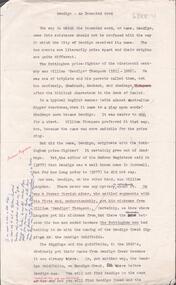
... William Abednego Thompson (11 October 1811 – 23 August 1880), also known as Bendigo Thompson, was an English bare-knuckle boxer who won the heavyweight championship of England from James Burke on 12 February 1839.[3] He was inducted into The Ring magazine Hall of Fame in 1955, the International Boxing Hall of Fame in 1991[3] and the Bare Knuckle Boxing Hall of Fame in 2011. ...William Abednego Thompson (11 October 1811 – 23 August 1880), also known as Bendigo Thompson, was an English bare-knuckle boxer who won the heavyweight championship of England from James Burke on 12 February 1839.[3] He was inducted into The Ring magazine Hall of Fame in 1955, the International Boxing Hall of Fame in 1991[3] and the Bare Knuckle Boxing Hall of Fame in 2011. ...William Abednego Thompson (11 October 1811 – 23 August 1880), also known as Bendigo Thompson, was an English bare-knuckle boxer who won the heavyweight championship of England from James Burke on 12 February 1839.[3] He was inducted into The Ring magazine Hall of Fame in 1955, the International Boxing Hall of Fame in 1991[3] and the Bare Knuckle Boxing Hall of Fame in 2011. His nickname of "Bendigo" lives on in the name of a city and creek in Australia. (Wikipedia)One page typed document, headed 'Bendigo - an Invented Word'. Document is typed on the back of a letter sent to Mr. Harold Curnow, Public Accountant, View Point Bendigo, 24th February 1970, from G.P. McGowan and Associates Pty Ltd. Albury. The document details the naming of Bendigo from the 'nickname' Bendigo, of the former Cornish miner, William Langdon. Langdon 'settled arguments with his fists and understandably got his nickname from William 'Bendigo' Thompson. Annotations in blue and red biro. On left hand side margin: ' If we want to delve a little deeper we only have to look at William Sanders/Sandbach ? ....? not reported in first one after Annals of Bendigo to see that Thomas Myers gave the name of Bendigo to the local man of punches ? and the nickname stuck. Thomas Myers came out to Australia on the same ship as Bendigo'. Annotation on bottom of page ' around the time gold was discovered', in red pen. 'Madron Register' on margin, left hand side. abednego thompson, william thompson, bendigo, boxer, naming of bendigo, thomas myers, harold curnow -
 Bendigo Historical Society Inc.
Document - Bendigo, the Racehorse
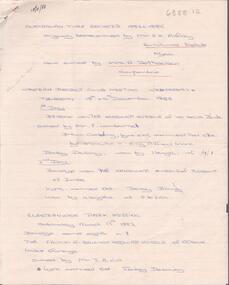
... William Abednego Thompson (11 October 1811 – 23 August 1880), also known as Bendigo Thompson, was an English bare-knuckle boxer who won the heavyweight championship of England from James Burke on 12 February 1839.[3] He was inducted into The Ring magazine Hall of Fame in 1955, the International Boxing Hall of Fame in 1991[3] and the Bare Knuckle Boxing Hall of Fame in 2011. ...William Abednego Thompson (11 October 1811 – 23 August 1880), also known as Bendigo Thompson, was an English bare-knuckle boxer who won the heavyweight championship of England from James Burke on 12 February 1839.[3] He was inducted into The Ring magazine Hall of Fame in 1955, the International Boxing Hall of Fame in 1991[3] and the Bare Knuckle Boxing Hall of Fame in 2011. ...William Abednego Thompson (11 October 1811 – 23 August 1880), also known as Bendigo Thompson, was an English bare-knuckle boxer who won the heavyweight championship of England from James Burke on 12 February 1839.[3] He was inducted into The Ring magazine Hall of Fame in 1955, the International Boxing Hall of Fame in 1991[3] and the Bare Knuckle Boxing Hall of Fame in 2011. His nickname of "Bendigo" lives on in the name of a city and creek in Australia. (Wikipedia)Two page flimsy document. Front page, handwritten record of racehorse 'Bendigo' runs from 1883 to 1885, from the Australian Turf Register. Document attached to letter written to Mrs. A. Rothacker, Serpentine, Vic. December 17th, 1968 and signed by Harold Curnow. Red text carbon copy, thanking Mrs. Rothacker for information regarding the racehorse 'Bendigo'.abednego thompson, william thompson, naming of bendigo, harold curnow, rothacker -
 Bendigo Historical Society Inc.
Document - William "Bendigo' Thompson
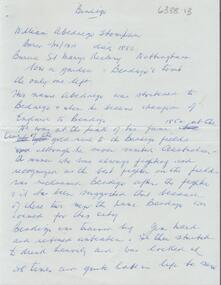
... William Abednego Thompson (11 October 1811 – 23 August 1880), also known as Bendigo Thompson, was an English bare-knuckle boxer who won the heavyweight championship of England from James Burke on 12 February 1839.[3] He was inducted into The Ring magazine Hall of Fame in 1955, the International Boxing Hall of Fame in 1991[3] and the Bare Knuckle Boxing Hall of Fame in 2011. ...William Abednego Thompson (11 October 1811 – 23 August 1880), also known as Bendigo Thompson, was an English bare-knuckle boxer who won the heavyweight championship of England from James Burke on 12 February 1839.[3] He was inducted into The Ring magazine Hall of Fame in 1955, the International Boxing Hall of Fame in 1991[3] and the Bare Knuckle Boxing Hall of Fame in 2011. ...William Abednego Thompson (11 October 1811 – 23 August 1880), also known as Bendigo Thompson, was an English bare-knuckle boxer who won the heavyweight championship of England from James Burke on 12 February 1839.[3] He was inducted into The Ring magazine Hall of Fame in 1955, the International Boxing Hall of Fame in 1991[3] and the Bare Knuckle Boxing Hall of Fame in 2011. His nickname of "Bendigo" lives on in the name of a city and creek in Australia. (Wikipedia)Trifold document, handwritten on blue paper: research related to William Abednego Thompson, born 11/10/1811, died 1880. abednego thompson, william thompson, naming of bendigo, harold curnow -
 Bendigo Historical Society Inc.
Letter - Bendigo the Racehorse
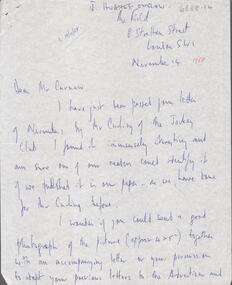
... William Abednego Thompson (11 October 1811 – 23 August 1880), also known as Bendigo Thompson, was an English bare-knuckle boxer who won the heavyweight championship of England from James Burke on 12 February 1839.[3] He was inducted into The Ring magazine Hall of Fame in 1955, the International Boxing Hall of Fame in 1991[3] and the Bare Knuckle Boxing Hall of Fame in 2011. ...William Abednego Thompson (11 October 1811 – 23 August 1880), also known as Bendigo Thompson, was an English bare-knuckle boxer who won the heavyweight championship of England from James Burke on 12 February 1839.[3] He was inducted into The Ring magazine Hall of Fame in 1955, the International Boxing Hall of Fame in 1991[3] and the Bare Knuckle Boxing Hall of Fame in 2011. ...William Abednego Thompson (11 October 1811 – 23 August 1880), also known as Bendigo Thompson, was an English bare-knuckle boxer who won the heavyweight championship of England from James Burke on 12 February 1839.[3] He was inducted into The Ring magazine Hall of Fame in 1955, the International Boxing Hall of Fame in 1991[3] and the Bare Knuckle Boxing Hall of Fame in 2011. His nickname of "Bendigo" lives on in the name of a city and creek in Australia. (Wikipedia)Two letters addressed to Harold Curnow from J. Hughes-Onslow, The Field, 8 Station Street, London, November 14, and December, 1968. First letter, two pages, regarding photograph of racehorse Bendigo. Second letter addresses the fact that the first letter 'may have gone surface mail or got held up in the Christmas rush'.. Attached to back of letters is a carbon copy (red text) of a letter sent to Mr. J. Hughes- Onslow, from Harold Curnow, December 13th. 1968, regarding the horse 'Bendigo' and its ownership. Curnow's letter copy is printed on the back of an advertising flyer 'Accountancy Practices For Sale'. Postcard attached behind letters addressed to Harold Curnow P.O. Box 96, Bendigo, Victoria, Australia. from The Field, 8 Stratton Street, W.1. Handwritten on postcard ' 18 February. Any hope of a photograph of Bendigo?.abednego thompson, william thompson, naming of bendigo, harold curnow -
 Bendigo Historical Society Inc.
Letter - Bendigo the Racehorse
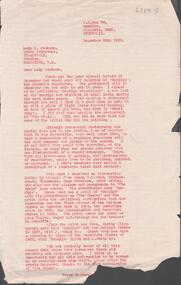
... William Abednego Thompson (11 October 1811 – 23 August 1880), also known as Bendigo Thompson, was an English bare-knuckle boxer who won the heavyweight championship of England from James Burke on 12 February 1839.[3] He was inducted into The Ring magazine Hall of Fame in 1955, the International Boxing Hall of Fame in 1991[3] and the Bare Knuckle Boxing Hall of Fame in 2011. ...William Abednego Thompson (11 October 1811 – 23 August 1880), also known as Bendigo Thompson, was an English bare-knuckle boxer who won the heavyweight championship of England from James Burke on 12 February 1839.[3] He was inducted into The Ring magazine Hall of Fame in 1955, the International Boxing Hall of Fame in 1991[3] and the Bare Knuckle Boxing Hall of Fame in 2011. ...William Abednego Thompson (11 October 1811 – 23 August 1880), also known as Bendigo Thompson, was an English bare-knuckle boxer who won the heavyweight championship of England from James Burke on 12 February 1839.[3] He was inducted into The Ring magazine Hall of Fame in 1955, the International Boxing Hall of Fame in 1991[3] and the Bare Knuckle Boxing Hall of Fame in 2011. His nickname of "Bendigo" lives on in the name of a city and creek in Australia. (Wikipedia)Red text carbon copy of letter sent to Lady N. Jackson, Great Posbrooke, Titchfield, Fareham, Hampshire, W.E. by Harold Curnow, December 20th, 1969. Letter details information regarding the racehorse 'Bendigo'. Harold discusses a photograph of an oil painting of the horse 'Bendigo' that Lady Jackson plans to send to him. abednego thompson, william thompson, naming of bendigo, harold curnow, lady jackson, racehorse -
 Bendigo Historical Society Inc.
Letter - Bendigo the Racehorse, 17th Fabruary 1968
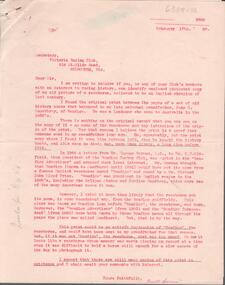
... William Abednego Thompson (11 October 1811 – 23 August 1880), also known as Bendigo Thompson, was an English bare-knuckle boxer who won the heavyweight championship of England from James Burke on 12 February 1839.[3] He was inducted into The Ring magazine Hall of Fame in 1955, the International Boxing Hall of Fame in 1991[3] and the Bare Knuckle Boxing Hall of Fame in 2011. ...William Abednego Thompson (11 October 1811 – 23 August 1880), also known as Bendigo Thompson, was an English bare-knuckle boxer who won the heavyweight championship of England from James Burke on 12 February 1839.[3] He was inducted into The Ring magazine Hall of Fame in 1955, the International Boxing Hall of Fame in 1991[3] and the Bare Knuckle Boxing Hall of Fame in 2011. ...William Abednego Thompson (11 October 1811 – 23 August 1880), also known as Bendigo Thompson, was an English bare-knuckle boxer who won the heavyweight championship of England from James Burke on 12 February 1839.[3] He was inducted into The Ring magazine Hall of Fame in 1955, the International Boxing Hall of Fame in 1991[3] and the Bare Knuckle Boxing Hall of Fame in 2011. His nickname of "Bendigo" lives on in the name of a city and creek in Australia. (Wikipedia)Two letters: red text carbon copy of letter sent to Secretary, Victoria Racing Club, 418 St. Kilda Road, Melbourne, February 17th, 1968 by Harold Curnow. Harold discusses the original print of the racehorse 'Bendigo', that he found 'between the pages of a set of old history books that belonged to my late maternal grandfather, John G. Sauerbray, of Bendigo'. Second letter from Victoria Racing Club, Melbourne to Mr. Harold Curnow, P.O. Box 96, Bendigo. Vic. regarding 'Bendigo' the racehorse and his inability to identify the horse in question. Written in pencil on fleft hand side: 'Question for B'go Ad?'abednego thompson, william thompson, naming of bendigo, harold curnow, racehorse -
 Bendigo Historical Society Inc.
Letter - Bendigo the Racehorse, 17th Fabruary 1968
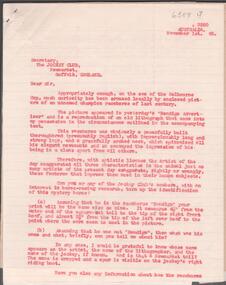
... William Abednego Thompson (11 October 1811 – 23 August 1880), also known as Bendigo Thompson, was an English bare-knuckle boxer who won the heavyweight championship of England from James Burke on 12 February 1839.[3] He was inducted into The Ring magazine Hall of Fame in 1955, the International Boxing Hall of Fame in 1991[3] and the Bare Knuckle Boxing Hall of Fame in 2011. ...William Abednego Thompson (11 October 1811 – 23 August 1880), also known as Bendigo Thompson, was an English bare-knuckle boxer who won the heavyweight championship of England from James Burke on 12 February 1839.[3] He was inducted into The Ring magazine Hall of Fame in 1955, the International Boxing Hall of Fame in 1991[3] and the Bare Knuckle Boxing Hall of Fame in 2011. ...William Abednego Thompson (11 October 1811 – 23 August 1880), also known as Bendigo Thompson, was an English bare-knuckle boxer who won the heavyweight championship of England from James Burke on 12 February 1839.[3] He was inducted into The Ring magazine Hall of Fame in 1955, the International Boxing Hall of Fame in 1991[3] and the Bare Knuckle Boxing Hall of Fame in 2011. His nickname of "Bendigo" lives on in the name of a city and creek in Australia. (Wikipedia)Three letters: red text carbon copy of letter sent by Harold Curnow to (a) The Jockey Club, Newmarket Suffolk England, November1st 1968 (2 letters) and (b) to Mr. B.W.R. Curling, Public Relations Officer, Joint Turf Authorities, 42 Portman Square, London., December 12th., 1968. Fourth letter address to Harold Curnow, Esq., Public Accountant, Colonial Mutual Building, View Point, Bendigo, with information on the racehorse 'Bendigo'. The lithograph of the racehorse 'Bendigo' is mentioned in the letter. One airmail envelope attached to above letter is addressed to Mr. Harold Curnow. Handwritten on back of airmail envelope in blue pen 'The Great Encyclopaedic Dictionary 1965, p 1573, racing calendar, official weekly publication of the Jockey Club and the National Hunt Committee, giving racing new, details of race meetings and future fixtures'. Written on bottom of envelope 'A.G. Doney, 200 Eaglehawk Rd, Long Gully, 32668.'abednego thompson, william thompson, naming of bendigo, harold curnow, racehorse -
 Bendigo Historical Society Inc.
Letter - Bendigo the Racehorse, 17th Fabruary 1968
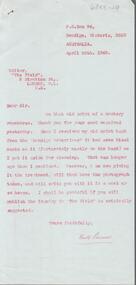
... William Abednego Thompson (11 October 1811 – 23 August 1880), also known as Bendigo Thompson, was an English bare-knuckle boxer who won the heavyweight championship of England from James Burke on 12 February 1839.[3] He was inducted into The Ring magazine Hall of Fame in 1955, the International Boxing Hall of Fame in 1991[3] and the Bare Knuckle Boxing Hall of Fame in 2011. ...William Abednego Thompson (11 October 1811 – 23 August 1880), also known as Bendigo Thompson, was an English bare-knuckle boxer who won the heavyweight championship of England from James Burke on 12 February 1839.[3] He was inducted into The Ring magazine Hall of Fame in 1955, the International Boxing Hall of Fame in 1991[3] and the Bare Knuckle Boxing Hall of Fame in 2011. ...William Abednego Thompson (11 October 1811 – 23 August 1880), also known as Bendigo Thompson, was an English bare-knuckle boxer who won the heavyweight championship of England from James Burke on 12 February 1839.[3] He was inducted into The Ring magazine Hall of Fame in 1955, the International Boxing Hall of Fame in 1991[3] and the Bare Knuckle Boxing Hall of Fame in 2011. His nickname of "Bendigo" lives on in the name of a city and creek in Australia. (Wikipedia)One page carbon copy on pale blue paper, of a letter addressed to Editor, 'The Field' 8 Stratton Street, London., from Harold Curnow, regarding the print of the racehorse 'Bendigo' that Harold Curnow plans to have photographed and sent to the Editor. Copy of letter is printed on the back of a form ' Remittance by Group Employer, Commonwealth of Australia'. abednego thompson, william thompson, naming of bendigo, harold curnow, racehorse -
 Bendigo Historical Society Inc.
Letter - Bendigo the Racehorse, 17th Fabruary 1968
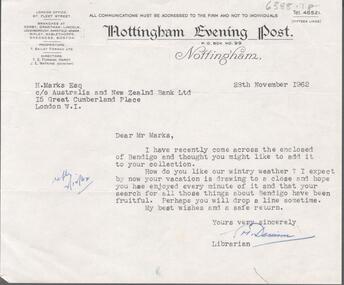
... William Abednego Thompson (11 October 1811 – 23 August 1880), also known as Bendigo Thompson, was an English bare-knuckle boxer who won the heavyweight championship of England from James Burke on 12 February 1839.[3] He was inducted into The Ring magazine Hall of Fame in 1955, the International Boxing Hall of Fame in 1991[3] and the Bare Knuckle Boxing Hall of Fame in 2011. ...William Abednego Thompson (11 October 1811 – 23 August 1880), also known as Bendigo Thompson, was an English bare-knuckle boxer who won the heavyweight championship of England from James Burke on 12 February 1839.[3] He was inducted into The Ring magazine Hall of Fame in 1955, the International Boxing Hall of Fame in 1991[3] and the Bare Knuckle Boxing Hall of Fame in 2011. ...William Abednego Thompson (11 October 1811 – 23 August 1880), also known as Bendigo Thompson, was an English bare-knuckle boxer who won the heavyweight championship of England from James Burke on 12 February 1839.[3] He was inducted into The Ring magazine Hall of Fame in 1955, the International Boxing Hall of Fame in 1991[3] and the Bare Knuckle Boxing Hall of Fame in 2011. His nickname of "Bendigo" lives on in the name of a city and creek in Australia. (Wikipedia)One page letter from Nottingham Evening Post, Nottingham, to H. Marks, c/- Australia and New Zealand Bank Ltd., 15 Great Cumberland Place, London., 28th November, 1962, re 'enclosed of Bendigo' (presumably print of Bendigo, the racehorse) from Denison, Librarian. Written in pen on left hand side 'reply 2/12/62'.abednego thompson, william thompson, naming of bendigo, harold curnow, racehorse -
 Bendigo Historical Society Inc.
Document - COLLMAN & TACCHE - MAP
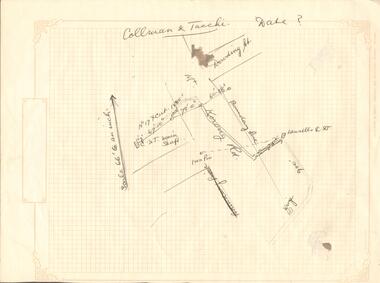
... Hand drawn map on heavyweight decorated graph paper. Map has parts of Mt. ...Hand drawn map on heavyweight decorated graph paper. Map has parts of Mt. ...Hand drawn map on heavyweight decorated graph paper. Map has parts of Mt. Korong Rd. and Dowding St. drawn in. Broken line drawn from Lansells C & T to Iron Pin. Further away another line drawn from C & T Main Shaft to a point 67 ft 10 in. away, then 78 ft 10 in away, then another point 60 ft 3.5 in away. No date on drawing. Drawn on decorated graph paper, Lawson Series printed by Lawson & Bray (Sales) 58 Margaret Street, Sydney.mine, gold, collman & tacche, collman & tacche, map, lansells c & t, mt korong rd, dowding st. -
 Frankston RSL Sub Branch
Collection, Badges
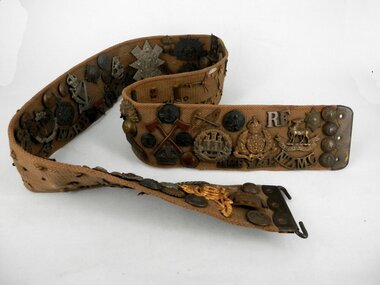
... United States Army standard issue infantry heavyweight webbing waist belt as worn in World War 1. ...United States Army standard issue infantry heavyweight webbing waist belt as worn in World War 1. ...United States Army standard issue infantry heavyweight webbing waist belt as worn in World War 1. This is an example of a 'trophy' belt, complete with a souvenir collection of metal insignia, badges and buttons which are attached to the belt. The belt has brass fittings however the original buckle is missing. There are a total of 83 various allied military insignia, badges and uniform buttons from the World War 1 era, 56 metal insignia and badges and 27 metal buttons which are mostly of Australian, New Zealand, Canadian or British origin. Belt manufactured by M W & S Limited of England in 1915.The reverse side of the belt is stamped "M W & S LTD., 1915" and has an "L" stamp and the Defence Department "/|\". The belt reverse also has the following name in black handwriting "A Paxino 9781 2211". Note A Paxino was associated with Frankston RSL Sub Branch for many years. -
Frankston RSL Sub Branch
Pack, Equipment
... Heavyweight cotton canvas infantryman's pack of the type issued during World War 1. ...Heavyweight cotton canvas infantryman's pack of the type issued during World War 1. ...Heavyweight cotton canvas infantryman's pack of the type issued during World War 1. The pack is rectangular in shape with a top flap that secures at the front with two leather straps and brass buckles. There are two side flaps which secure under this top flap with a steel button and serve as weather protection. There are two leather shoulder straps at the back which are secured to a reinforced base at the top of the pack with a strip of leather and brass buckles and slides, the fixed ends of these straps are attached to the pack by stitched and riveted reinforced leather. At the bottom centre there is a leather loop to allow supporting straps to be secured to the pack. Also attached to each reinforced base at the top of the pack is a short length of leather with a brass buckle for attaching the upper ends of the supporting straps. Inside the flap is a partially obscured maker's stamp which reads 'AUSTRALIA C.G.H.F. 1918' with a broad arrow. A checker's mark of a broad arrow and the initials 'SA' are also stamped on the inside. A name, from a later civilian use, has been printed in black ink on the inside of the flap. Refer < http://www.awm.gov.au/collection/REL38543/ > -
 Australian Army Museum of Western Australia
Photograph
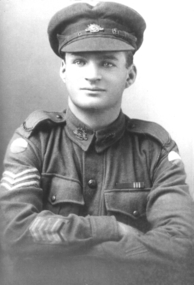
... Before joining the forces he was a prominent amateur boxer, a pupil of the renowned heavyweight Bill Doherty. During WW1 he won the Army lightweight championship, competing against professionals as well as amateurs. ...Before joining the forces he was a prominent amateur boxer, a pupil of the renowned heavyweight Bill Doherty. During WW1 he won the Army lightweight championship, competing against professionals as well as amateurs. ...John Alexander Spence was born in Fremantle 2nd July 1893. In 1912 he joined the Australian Navy as a Stoker and was posted to H.M.A.S. Australia. He was on this ship when it sailed at the head of the convoy into Sydney Harbour in 1913. At the outbreak of WW1, his ship was sent to German New Guinea where he saw conflict with the enemy and received a gunshot wound to his hand. This required him to be returned to Australia and the Naval doctors considered him unfit for further Naval service. When his hand healed Spence joined the AIF on the 2 August 1915 and was posted to the 52nd Battalion and embarked on the “Benalla” on the 1 November 1915. He was promoted to Lance Corporal on the 1 June 1916 on 9 September was promoted to Corporal and the next day to Sergeant. At Messines Ridge he was awarded the Distinguished Conduct Medal. At Dernancourt, a village near Villers he was awarded the Military Medal on 6 April 1918. Subsequently he was badly injured. He had captured four German soldiers and one Officer. While marching them back to the Allied lines the Officer grabbed one of the patrol member’s gun and fired three shots at Sergeant Spence which smashed his hip. Despite his injuries Spence managed to bring the Officer down with a revolver shot. On the 30th April he was repatriated to England and admitted to the Alexandria Hospital at Cosham. He did not return to the western front as his injuries were too severe. He returned to Australia on board the Somalia arriving home on the 21st December 1919. Before joining the forces he was a prominent amateur boxer, a pupil of the renowned heavyweight Bill Doherty. During WW1 he won the Army lightweight championship, competing against professionals as well as amateurs. He defended the title successfully for three successive years. On his discharge from the Army he fought under the name of Sonny Kidson. He also turned to coaching and had remarkable success having coached the Army and Navy boxing teams. John Spence died on the 20 November 1962 at Hollywood Repatriation Hospital aged 69. Post card sized photo of 3400 Sergeant John Alexander Spence DCM, MM, 52 Battalion AIF. Photo shows medal ribbons of Distinguished Conduct Medal (awarded June 1917) and Military Medal (awarded April 1918), 2 wound stripes, 5 service stripes, 52 Battalion AIF colour patch and soft style forage cap.spence, 52 battalion, aif, dcm, mm -
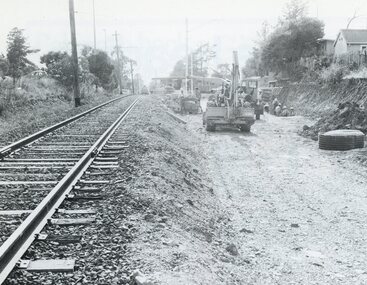 Ringwood and District Historical Society
Photograph, Duplication of the five-kilometre section of railway line between Ringwood and Croydon in 1983
... The new line is being constructed with concrete sleepers and heavyweight rails. The existing line will also be reconstructed using these heavy 60kg per metre rails. ...The new line is being constructed with concrete sleepers and heavyweight rails. The existing line will also be reconstructed using these heavy 60kg per metre rails. ...Digital scanFrom Vicrail News magazine, April 1983. “Duplication of the five-kilometre section of line between Ringwood and Croydon is on the way. Several major works will be undertaken over the next few months so the two tracks can be brought into service later this year. Intensive work on this section follows completion of duplication works between Ringwood and Bayswater on the Belgrave line last December. The completion of this 5.17 kilometre section between Ringwood and Bayswater means that this Belgrave line is now duplicated as far out as Ferntree Gully. Commuters using the Belgrave line now have an improved service with the intro duction in January of an additional evening peak train to Upper Ferntree Gully, two additional peak hour services in the morning from both Belgrave and Upper Ferntree Gully, and with the additional tracks delays on one line will not affect trains travelling in the opposite direction. Commenting on the completion of this stretch of track the Minister of Transport, Mr. Crabb, said a further improvement had been made with the commissioning of boom barriers at the Bedford Road level crossing in Ringwood. "The installation is part of the State Government's $9.4 million four-year plan to equip 70 dangerous level crossings throughout the State with boom barriers", he said. Works to be carried out on the Ringwood/ Croydon section include laying of new track, station works at Croydon and installation of boom barriers at East Ringwood. Already completed are bridge works to cater for double tracks at both Mt. Dandenong and Eastfield Roads between Croydon and East Ringwood and construction of an island platform at East Ringwood station. At several locations alignment of the existing track will be slightly relocated. The new line is being constructed with concrete sleepers and heavyweight rails. The existing line will also be reconstructed using these heavy 60kg per metre rails. Engineering works to be completed include installation of overhead wiring necessary to supply power to trains, construction of two new station buildings and a new platform at Croydon, provision of boom barriers, and pedestrian boom barriers at Dublin Road level crossing. East Ringwood, and replacement of existing timber overhead wire support structures with steel structures. Other works in this program included installation of boom barriers at Bedford Road, Ringwood and Scoresby Road, Bayswater and provision of a new platform for trains going to Melbourne and Heathmont. A new timetable on the Lilydale and Belgrave lines will commence when the Ringwood—Croydon duplication track work is completed.”
