
Showing 100 items matching "henderson house"
-
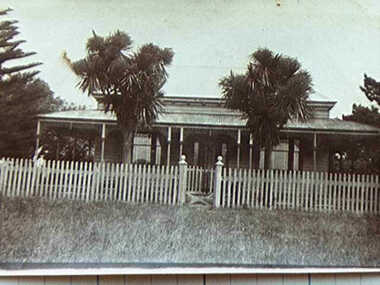 Inverloch Historical Society
000256 - Photograph - Pound Creek - Henderson house - old house - E Henderson
... 000256 - Photograph - Pound Creek - Henderson house - old house - E Henderson...000256 - Photograph - Pound Creek - Henderson house - old house - E Henderson ... -
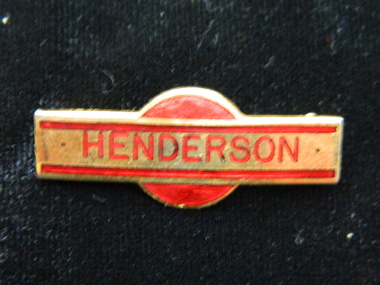 Ballarat Clarendon College
Badge, House Captain's badge
... henderson-house...House captain's badge provided by Ballarat Clarendon College for the Captain of Henderson House. ...House captain's badge provided by Ballarat Clarendon College for the Captain of Henderson House. henderson-house house-captain ballarat-clarendon-college Face: HENDERSON Two gold-plated badges with House name in red lettering. ...House captain's badge provided by Ballarat Clarendon College for the Captain of Henderson House. Two gold-plated badges with House name in red lettering. Rectagular name plate sits on red circle. Gold border to both pieces. Pin fastening fixed across rear. Face: HENDERSONhenderson-house, house-captain, ballarat-clarendon-college -
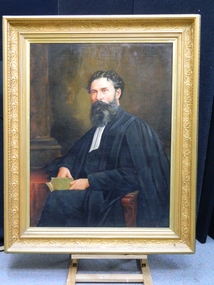 Ballarat Clarendon College
Portrait, William Henderson,1913
... ...henderson-house...It was located in a shed at St Andrews around 1990 and returned to the College per favour of old collegian Clark Chester, former Captain of Henderson House. ...It was located in a shed at St Andrews around 1990 and returned to the College per favour of old collegian Clark Chester, former Captain of Henderson House. william-henderson clark-chester henderson-house ballarat-college st-andrews-kirk Ornate gold framed portrait in oils. ...The first issue of the school magazine The Minervan Nov 1913 records the unveiling of the portrait. See file attached. William Henderson served as the school's first President for many years. Artist James Swinton Diston (1857 - 1940) created the portrait for the family in 1900. It was gifted to the school at an unveiling ceremony held 19 August 1913. The portrait was displayed in the school for many years before being transferred to St Andrews Kirk. It was located in a shed at St Andrews around 1990 and returned to the College per favour of old collegian Clark Chester, former Captain of Henderson House. Ornate gold framed portrait in oils.william-henderson, clark-chester, henderson-house, ballarat-college, st-andrews-kirk -
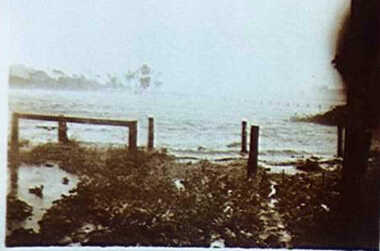 Inverloch Historical Society
Photograph, 1934 Dec - Pound Creek - tidal floods - pig paddock - side of house - Henderson property
... 1934 Dec - Pound Creek - tidal floods - pig paddock - side of house - Henderson property...1934 Dec - Pound Creek - tidal floods - pig paddock - side of house - Henderson property Photograph ... -
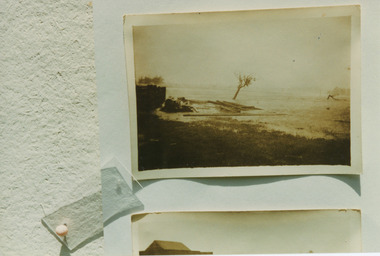 Inverloch Historical Society
000251 - Photograph - 1934 - Pound Creek - Henderson property - floods in front of house - E Henderson
... 000251 - Photograph - 1934 - Pound Creek - Henderson property - floods in front of house - E Henderson...000251 - Photograph - 1934 - Pound Creek - Henderson property - floods in front of house - E Henderson ... -
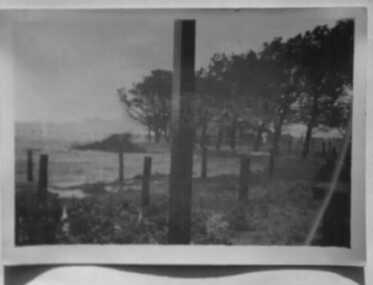 Inverloch Historical Society
000253 - Photograph - 1934 - Pound Creek - Henderson property - floods - water coming around pig paddock side of house - E Henderson
... 000253 - Photograph - 1934 - Pound Creek - Henderson property - floods - water coming around pig paddock side of house - E Henderson...000253 - Photograph - 1934 - Pound Creek - Henderson property - floods - water coming around pig paddock side of house - E Henderson ... -
 Ballarat Clarendon College
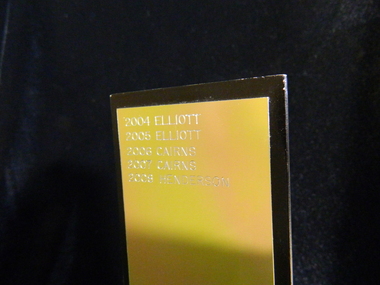
Trophy, House Performing Arts
... ...henderson house...Superseded by plaque from 2010. house-performing-arts trophy elliot house cairns house henderson house Inscribed on tall rectangular plate: 2004 ELLIOTT / 2005 ELLIOTT / 2006 CAIRNS / 2007 CAIRNS / 2008 HENDERSON / 2009 CAIRNS Wooden platform with tall rectangular wooden back to gold coloured plate and gold coloured cast image of two harlequin face masks. ...Trophy awarded to winning house at the House Perfoming Arts festival 2004-2009. Superseded by plaque from 2010.Wooden platform with tall rectangular wooden back to gold coloured plate and gold coloured cast image of two harlequin face masks. Inscribed on tall rectangular plate: 2004 ELLIOTT / 2005 ELLIOTT / 2006 CAIRNS / 2007 CAIRNS / 2008 HENDERSON / 2009 CAIRNShouse-performing-arts, trophy, elliot house, cairns house, henderson house -
 Lakes Entrance Historical Society
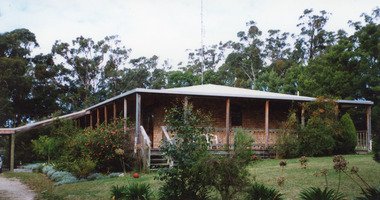
Photograph - Housing, 6 Henderson Road. Toorloo Arm Victoria, 1999 c
... A colour photograph of a brick dwelling at 6 Henderson Road. House has hipped roof, veranda over front and side, five steps from the garden at front and carport at side. ...(Lakes Post 29.9.1999) Houses Architecture A colour photograph of a brick dwelling at 6 Henderson Road. ...Image used by King and Heath, Estate Agents: 'Home for Sale $199,500. (Lakes Post 29.9.1999)A colour photograph of a brick dwelling at 6 Henderson Road. House has hipped roof, veranda over front and side, five steps from the garden at front and carport at side. Toorloo Arm Victoriahouses, architecture -
 Sunshine and District Historical Society Incorporated
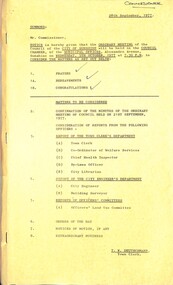
Administrative record - City of Sunshine - Commissioner Mr Alexander Alex George Gillon Collection 1976 - 1982 - Notice of ordinary meeting of the council of the City of Sunshine to be held on 5th October 1977, City of Sunshine, 28th September 1977
... Notice of Ordinary Meeting of the Council of the City of Sunshine to be held on 5th October 1977 Report of the Town Clerk's Department Report of the Town Clerk Private Street Construction Scheme Sheffield Estate and Cumberland Street Area United Grants From Commonwealth Government through State Government House 6 Corio Street Demolishment Alternative Premises for Citizens Advice Bureau Increases Charges at Sunshine Tip Cultural Centre for Western Region Henderson House Footscray Crossing over Railway Line at Ardeer Land Acquisition Maribyrnong Valley Zoning Officer's Committees Reports Method of Presentation Home Help Service Housekeepers Speaking Different Languages Sale of Land Derby Road and Anderson Road to Education Department Report of the Co-Ordinator of Welfare Services The Combined Pensioners Association Report of the Chief Health Inspector Training & Registration of Public Swimming Pool Operators Prosecutions Proceedings Sunshine Magistrate Court Application for Septic Tank Warranties Report of City Engineer Land Use Permit Application Poultry Farming Service Premises and Take Away Food Premise 159 - 161 Rosamond Road Maribyrnong Land Use Permit Application Extension to Existing Holy Eucharist Primary School, Holy Eucharist Church and Holy Eucharist Parish Centre Oleander Drive Land Use Permit Application Service Premises Mitchell Street Land Use Permit Application External Paging System 556 Ballarat Road Land Use Permit Application Car Sales Yard Lots 497 & 498 St. ...Albans Road Lawton Street Braybrook Hampstead Road Emu Street Hook Street Vule Street Neale Road Albanvale Deer Park Suffolk Road Albion Explosive Factory Monsanto Bon Thomas Reserve Quinn Street Fairbairn Pre-School Centre Fairbairn Road Sunshine Indoor Swimming Pool Albion Percy Street Kevin Street Berkshire Road Adelaide Street Notice of Ordinary Meeting of the Council of the City of Sunshine to be held on 5th October 1977 Report of the Town Clerk's Department Report of the Town Clerk Private Street Construction Scheme Sheffield Estate and Cumberland Street Area United Grants From Commonwealth Government through State Government House 6 Corio Street Demolishment Alternative Premises for Citizens Advice Bureau Increases Charges at Sunshine Tip Cultural Centre for Western Region Henderson House Footscray Crossing over Railway Line at Ardeer Land Acquisition Maribyrnong Valley Zoning Officer's Committees Reports Method of Presentation Home Help Service Housekeepers Speaking Different Languages Sale of Land Derby Road and Anderson Road to Education Department Report of the Co-Ordinator of Welfare Services The Combined Pensioners Association Report of the Chief Health Inspector Training & Registration of Public Swimming Pool Operators Prosecutions Proceedings Sunshine Magistrate Court Application for Septic Tank Warranties Report of City Engineer Land Use Permit Application Poultry Farming Service Premises and Take Away Food Premise 159 - 161 Rosamond Road Maribyrnong Land Use Permit Application Extension to Existing Holy Eucharist Primary School, Holy Eucharist Church and Holy Eucharist Parish Centre Oleander Drive Land Use Permit Application Service Premises Mitchell Street Land Use Permit Application External Paging System 556 Ballarat Road Land Use Permit Application Car Sales Yard Lots 497 & 498 St. ...Notice of Ordinary Meeting of the Council of the City of Sunshine to be held on 5th October 1977 Report of the Town Clerk's Department Report of the Town Clerk Private Street Construction Scheme Sheffield Estate and Cumberland Street Area United Grants From Commonwealth Government through State Government House 6 Corio Street Demolishment Alternative Premises for Citizens Advice Bureau Increases Charges at Sunshine Tip Cultural Centre for Western Region Henderson House Footscray Crossing over Railway Line at Ardeer Land Acquisition Maribyrnong Valley Zoning Officer's Committees Reports Method of Presentation Home Help Service Housekeepers Speaking Different Languages Sale of Land Derby Road and Anderson Road to Education Department Report of the Co-Ordinator of Welfare Services The Combined Pensioners Association Report of the Chief Health Inspector Training & Registration of Public Swimming Pool Operators Prosecutions Proceedings Sunshine Magistrate Court Application for Septic Tank Warranties Report of City Engineer Land Use Permit Application Poultry Farming Service Premises and Take Away Food Premise 159 - 161 Rosamond Road Maribyrnong Land Use Permit Application Extension to Existing Holy Eucharist Primary School, Holy Eucharist Church and Holy Eucharist Parish Centre Oleander Drive Land Use Permit Application Service Premises Mitchell Street Land Use Permit Application External Paging System 556 Ballarat Road Land Use Permit Application Car Sales Yard Lots 497 & 498 St. Albans Road Land Use Permit Application Two Illuminated signs 501 Ballarat Road Albion Land Use Permit Application Light Industry Loy 76 Lawton Street Braybrook Enforcement under the Town and Country Planning Act Massage Parlours Cities of Essendon & St. Kilda Land Use Permit Application Service Premises Take Away Food Premise and Caretaker's Residence Addition to Existing Retail Nursery and Bird Aviary Corner Hampstead Road and Emu Street Contract Supply & Maintenance of Vehicles Contract Supply of Tractor & Gang Mower Plan of subdivision Hook Street and Vule Street Plan of Subdivision Stage 26 Albanvale Westerngate Estate Neale Road Bus Routes and Bus Stops Sunshine Bus Lines Suffolk Road Shops Bicycle Racks 407 Ballarat Road (Opposite McDonald) No Standing Anytime Use of Commonwealth Land for Garbage Disposal Purposes Eastern Side of Albion Explosive Factory Monsanto Outfall Drain Brooklyn Telecom Australia Public Telephones in the Maidstone Area Bon Thomas Reserve Development Report of the Building Surveyor Maintenance Organisation Australian Institute of Building Surveyors Annual Conference Fencing Council Contribution towards Shared Fences with Owner Fairbairn Pre-School Centre Fairbairn Road Sunshine West Sunshine Indoor Swimming Pool Sunshine Indoor Swimming Pool Facilities Fencing 34 Adelaide Street Flats Lot 30 Percy Street St. Albans Extension to House 2 Kevin Street Sunshine Installation of Overhead Tank 44 Berkshire Road Sunshine North Report of Land Use Committee Orders of the Day Accounts Submitted for Payment as at 15th September 1977 Notice of Motion Commissioner Gillon to Move Rates Commissioner Gillon to Move Sanitary Commissioner Gillon to Move Valuation city of sunshine, alexander "alex" george gillon, cumberland street, sunshine north, corio street, sunshine, maribyrnong valley, derby road, anderson road, citizens advice bureau, sunshine tip, rosamond road, maribyrnong, holy eucharist primary school, holy eucharist church, holy eucharist parish centre, oleander drive, st. albans, mitchell street, maidstone, ballarat road, st. albans road, lawton street, braybrook, hampstead road, emu street, hook street, vule street, neale road, albanvale, deer park, suffolk road, albion explosive factory, monsanto, bon thomas reserve, quinn street, fairbairn pre-school centre, fairbairn road, sunshine indoor swimming pool, albion, percy street, kevin street, berkshire road, adelaide street -
 Sunshine and District Historical Society Incorporated
Administrative record - City of Sunshine - Commissioner Mr Alexander Alex George Gillon Collection 1976 - 1982 - Minutes of the ordinary meeting of council held on 5th October 1977, City of Sunshine, 5th October 1977
... Minutes of the Ordinary Meeting of Council held on 5th October 1977 Report of the Town Clerk's Department Report of the Town Clerk Private Street Construction Scheme Sheffield Estate and Cumberland Street Area United Grants From Commonwealth Government through State Government House 6 Corio Street Demolishment Alternative Premises for Citizens Advice Bureau Increases Charges at Sunshine Tip Cultural Centre for Western Region Henderson House Footscray Crossing over Railway Line at Ardeer Land Acquisition Maribyrnong Valley Zoning Officer's Committees Reports Method of Presentation Home Help Service Housekeepers Speaking Different Languages Sale of Land Derby Road and Anderson Road to Education Department Report of the Co-Ordinator of Welfare Services The Combined Pensioners Association Report of the Chief Health Inspector Training & Registration of Public Swimming Pool Operators Prosecutions Proceedings Sunshine Magistrate Court Application for Septic Tank Warranties Report of City Engineer Land Use Permit Application Poultry Farming Service Premises and Take Away Food Premise 159 - 161 Rosamond Road Maribyrnong Land Use Permit Application Extension to Existing Holy Eucharist Primary School, Holy Eucharist Church and Holy Eucharist Parish Centre Oleander Drive Land Use Permit Application Service Premises Mitchell Street Land Use Permit Application External Paging System 556 Ballarat Road Land Use Permit Application Car Sales Yard Lots 497 & 498 St. ...Albans Road Lawton Street Braybrook Hampstead Road Emu Street Hook Street Vule Street Albanvale Neale Road Deer Park Suffolk Road Albion Explosive Factory Monsanto Brooklyn Bon Thomas Reserve Quinn Street Fairbairn Pre-School Centre Fairbairn Road Sunshine West Sunshine Indoor Swimming Pool Adelaide Street Percy Street Kevin Street Berkshire Road Minutes of the Ordinary Meeting of Council held on 5th October 1977 Report of the Town Clerk's Department Report of the Town Clerk Private Street Construction Scheme Sheffield Estate and Cumberland Street Area United Grants From Commonwealth Government through State Government House 6 Corio Street Demolishment Alternative Premises for Citizens Advice Bureau Increases Charges at Sunshine Tip Cultural Centre for Western Region Henderson House Footscray Crossing over Railway Line at Ardeer Land Acquisition Maribyrnong Valley Zoning Officer's Committees Reports Method of Presentation Home Help Service Housekeepers Speaking Different Languages Sale of Land Derby Road and Anderson Road to Education Department Report of the Co-Ordinator of Welfare Services The Combined Pensioners Association Report of the Chief Health Inspector Training & Registration of Public Swimming Pool Operators Prosecutions Proceedings Sunshine Magistrate Court Application for Septic Tank Warranties Report of City Engineer Land Use Permit Application Poultry Farming Service Premises and Take Away Food Premise 159 - 161 Rosamond Road Maribyrnong Land Use Permit Application Extension to Existing Holy Eucharist Primary School, Holy Eucharist Church and Holy Eucharist Parish Centre Oleander Drive Land Use Permit Application Service Premises Mitchell Street Land Use Permit Application External Paging System 556 Ballarat Road Land Use Permit Application Car Sales Yard Lots 497 & 498 St. ...Minutes of the Ordinary Meeting of Council held on 5th October 1977 Report of the Town Clerk's Department Report of the Town Clerk Private Street Construction Scheme Sheffield Estate and Cumberland Street Area United Grants From Commonwealth Government through State Government House 6 Corio Street Demolishment Alternative Premises for Citizens Advice Bureau Increases Charges at Sunshine Tip Cultural Centre for Western Region Henderson House Footscray Crossing over Railway Line at Ardeer Land Acquisition Maribyrnong Valley Zoning Officer's Committees Reports Method of Presentation Home Help Service Housekeepers Speaking Different Languages Sale of Land Derby Road and Anderson Road to Education Department Report of the Co-Ordinator of Welfare Services The Combined Pensioners Association Report of the Chief Health Inspector Training & Registration of Public Swimming Pool Operators Prosecutions Proceedings Sunshine Magistrate Court Application for Septic Tank Warranties Report of City Engineer Land Use Permit Application Poultry Farming Service Premises and Take Away Food Premise 159 - 161 Rosamond Road Maribyrnong Land Use Permit Application Extension to Existing Holy Eucharist Primary School, Holy Eucharist Church and Holy Eucharist Parish Centre Oleander Drive Land Use Permit Application Service Premises Mitchell Street Land Use Permit Application External Paging System 556 Ballarat Road Land Use Permit Application Car Sales Yard Lots 497 & 498 St. Albans Road Land Use Permit Application Two Illuminated signs 501 Ballarat Road Albion Land Use Permit Application Light Industry Loy 76 Lawton Street Braybrook Enforcement under the Town and Country Planning Act Massage Parlours Cities of Essendon & St. Kilda Land Use Permit Application Service Premises Take Away Food Premise and Caretaker's Residence Addition to Existing Retail Nursery and Bird Aviary Corner Hampstead Road and Emu Street Contract Supply & Maintenance of Vehicles Contract Supply of Tractor & Gang Mower Plan of subdivision Hook Street and Vule Street Plan of Subdivision Stage 26 Albanvale Westerngate Estate Neale Road Bus Routes and Bus Stops Sunshine Bus Lines Suffolk Road Shops Bicycle Racks 407 Ballarat Road (Opposite McDonald) No Standing Anytime Use of Commonwealth Land for Garbage Disposal Purposes Eastern Side of Albion Explosive Factory Monsanto Outfall Drain Brooklyn Telecom Australia Public Telephones in the Maidstone Area Bon Thomas Reserve Development Report of the Building Surveyor Maintenance Organisation Australian Institute of Building Surveyors Annual Conference Fencing Council Contribution towards Shared Fences with Owner Fairbairn Pre-School Centre Fairbairn Road Sunshine West Sunshine Indoor Swimming Pool Sunshine Indoor Swimming Pool Facilities Fencing 34 Adelaide Street Flats Lot 30 Percy Street St. Albans Extension to House 2 Kevin Street Sunshine Installation of Overhead Tank 44 Berkshire Road Sunshine North Report of Land Use Committee Orders of the Day Accounts Submitted for Payment as at 15th September 1977 Notice of Motion Commissioner Gillon to Move Rates Commissioner Gillon to Move Sanitary Commissioner Gillon to Move Valuation city of sunshine, alexander "alex" george gillon, cumberland street, sunshine north, corio street, sunshine, maribyrnong valley, derby road, anderson road, rosamond road, maribyrnong, holy eucharist primary school, holy eucharist church, holy eucharist parish centre, oleander drive, st. albans, mitchell street, maidstone, ballarat road, albion, st. albans road, lawton street, braybrook, hampstead road, emu street, hook street, vule street, albanvale, neale road, deer park, suffolk road, albion explosive factory, monsanto, brooklyn, bon thomas reserve, quinn street, fairbairn pre-school centre, fairbairn road, sunshine west, sunshine indoor swimming pool, adelaide street, percy street, kevin street, berkshire road -
 Federation University Historical Collection
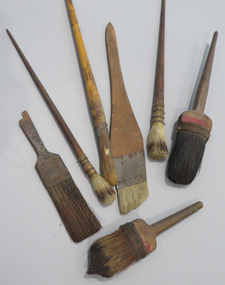
Tool - Brushes, Keith Rash's Sign writing Brushes
... house decoration were overseen by Thomas Raisbeck (1884-1970) from 1915. Classes were then successively taught by former students William Kenneth (Ken) Moss (1889-1921) from 1920 until his untimely death, Albert E. Williams (1899-1986) until 1928, followed by experienced, practising sign writer, Charles Emrys (Angus) Henderson...house decoration were overseen by Thomas Raisbeck (1884-1970) from 1915. Classes were then successively taught by former students William Kenneth (Ken) Moss (1889-1921) from 1920 until his untimely death, Albert E. Williams (1899-1986) until 1928, followed by experienced, practising sign writer, Charles Emrys (Angus) Henderson ...Commercial artist, Keith Edwin Rash (1910-1985), studied at the Ballarat Technical Art School between 1923 and 1929. These artefacts are from his professional practice. Sign writing and ticket-writing bridged art and trade, with hand lettering applied to long-term signage and short-term promotional materials. At the Ballarat Technical Art School, sign writing, ticket writing, and house decoration were overseen by Thomas Raisbeck (1884-1970) from 1915. Classes were then successively taught by former students William Kenneth (Ken) Moss (1889-1921) from 1920 until his untimely death, Albert E. Williams (1899-1986) until 1928, followed by experienced, practising sign writer, Charles Emrys (Angus) Henderson (1899-1976), who had trained under Raisbeck. A number of brushes and sponges used by Ballarat sign writer, Keith Rash, who studied sign writing at the Ballarat School of Mines. signwriting, keith rash, ballarat school of mines, brushes, ballarat technical art school, sign writing, ticket writing -
 Federation University Historical Collection
Document, Ballarat Identities Research Notes
... Henderson...William Irwin...King Billy...Mullawullah...Kopke...Rod Lacey...Peter Lalor...John Dunmore Lang...George Long...Thomas Learmonth...Evan Rowlands...Robert Lewis...F.W. Niven...Ochiltree...Alexander Ocheltree...W.B...Edward G. Ochiltree...Lal Lal Estate...Count O'Loughlin...Martin O'Loughlin...Isiah Pearce...John Permewan...Emanual Steinfeld...James Pinnock...A.J. Pittard...J. Deardem...Rochlitz...William Henry Shaw...William Collard Smith...Henry B. De La Poer Wall...William C. Weir...John Winter...Lauderdale house...Henderson, William Irwin, King Billy, Mullawullah, Kopke, Rod Lacey, Peter Lalor, John Dunmore Lang, George Long, Thomas Learmonth, Evan Rowlands, Robert Lewis, F.W. Niven, Ochiltree, Alexander Ocheltree, W.B, Ochiltree, Edward G. Ochiltree, Lal Lal Estate, Count O'Loughlin, Martin O'Loughlin, Isiah Pearce, John Permewan, Emanual Steinfeld, James Pinnock, A.J. Pittard, J. Deardem, Rochlitz, William Henry Shaw, William Collard Smith, Henry B. De La Poer Wall, William C. Weir, John Winter, Lauderdale House...Henderson William Irwin King Billy Mullawullah Kopke Rod Lacey Peter Lalor John Dunmore Lang George Long Thomas Learmonth Evan Rowlands Robert Lewis F.W. Niven Ochiltree Alexander Ocheltree W.B Edward G. Ochiltree Lal Lal Estate Count O'Loughlin Martin O'Loughlin Isiah Pearce John Permewan Emanual Steinfeld James Pinnock A.J. Pittard J. Deardem Rochlitz William Henry Shaw William Collard Smith Henry B. De La Poer Wall William C. Weir John Winter Lauderdale house ...A folder of notes relating to the Ballarat Biographies including Martha Clendinning, George Clendinning, John Hepburn, Elizabeth Hepburn, Smeaton Estate, William Bailey, Egerton Mine, Redmond Barry, Thomas Bath, Graham Berry, Francis Cane, Thomas Bury, Thomas Carpenter, Charles Gavan Duffy, Henry Dunnsford, Charles Dyte, Stanley Elder, Archibald Fisken, Alexander Greenfield, William Henderson, William Irwin, King Billy, Mullawullah, Kopke, Rod Lacey, Peter Lalor, John Dunmore Lang, George Long, Thomas Learmonth, Evan Rowlands, Robert Lewis, F.W. Niven, Ochiltree, Alexander Ocheltree, W.B, Ochiltree, Edward G. Ochiltree, Lal Lal Estate, Count O'Loughlin, Martin O'Loughlin, Isiah Pearce, John Permewan, Emanual Steinfeld, James Pinnock, A.J. Pittard, J. Deardem, Rochlitz, William Henry Shaw, William Collard Smith, Henry B. De La Poer Wall, William C. Weir, John Winter, Lauderdale Housedianne campbell goldfields lawyers collection, martha clendinning, george clendinning, john hepburn, elizabeth hepburn, smeaton estate, william bailey, egerton mine, redmond barry, thomas bath, graham berry, francis cane, thomas bury, thomas carpenter, charles gavan duffy, henry dunnsford, charles dyte, stanley elder, archibald fisken, alexander greenfield, william henderson, william irwin, king billy, mullawullah, kopke, rod lacey, peter lalor, john dunmore lang, george long, thomas learmonth, evan rowlands, robert lewis, f.w. niven, ochiltree, alexander ocheltree, w.b, edward g. ochiltree, lal lal estate, count o'loughlin, martin o'loughlin, isiah pearce, john permewan, emanual steinfeld, james pinnock, a.j. pittard, j. deardem, rochlitz, william henry shaw, william collard smith, henry b. de la poer wall, william c. weir, john winter, lauderdale house -
Marysville & District Historical Society
Document (Item) - Document-Table, Judith Vimpani, Yarra Track Hostelries- Marysville to Woods Point, Unknown
... henderson drysdale...henry whelan...halfway house...A document outling all the hostelries that existed along the Yarra Track between Marysville and Wood's Point. yarra track marysville wood's point woods point fernshaw paradise plains black spur mount grant george edwards walker family melbourne new chum hit & miss restaurant mr clifford michael woods glen watts tri bhean hotel ewen cameron ewen hugh cameron thomas barton butler's wood's point directory globe hotel swanston street mount juliet ben more & c jordan district jefferson's watts bridge inn matthew jefferson reefer's hotel boyle's hotel william henry johnson samuel boyle black spur hotel fisher's creek narbethong fisher's home hotel black spur inn frederick fisher william hodson wood's point road acheron river acheron bridge hotel john robson granton clifford wilks creek wilks creek hotel patrick maloney steavenson marysville hotel australian hotel junction hotel the dutchman's restaurant henry kuyper william podlech mount arnold mount arnold hotel charles schultz james toohey john gleeson joy burchall ian newman henry brockman belle isle belle elle bellell creek upper yarra guerin's bridge bell's hotel henry petty celia moran ruth petty cumberland creek cumberland creek store and restaurant cumberland creek hotel charles edwin hargreaves annie hargreaves urina hargreaves alice hargreaves healesville josiah hargreaves henderson drysdale henry whelan halfway house thomas smith svendson gosling donovans creek chesterville perry's hotel john perry perry's coach and horses hotel edward courtney scandinavian hotel the swede's walker's hotel jacob burchart golden fleece theodore kappler george koehler's hotel david walker millicent walker elsie jowett bill walker big river royal mail hotel shaw's slingsby davies edwin jones elizabeth jane parker sandridge archibald charles edwin jones matlock alexander myers frank berwick frederick jones ned jones jennie jones sophie milllicent parker jones thomas shaw dorothy walker travellers rest hotel reefton summers john fehring f fehring katerina fehring john christoph blumeyer anne fehring john baker evelyn observer anna katrina baker hannah catherine baker john frederick baker mcmahon's creek oaks the springs st clair sinclair's valley mountain home hotel neilson collins waters jan emma sinclair john sinclair mr cox peter sinclair willie we have missed you hotel spring vale hotel robert matthews thomas crawford A document outlining all the hostelries that existed along the Yarra Track between Marysville and Wood's Point. ...A document outlining all the hostelries that existed along the Yarra Track between Marysville and Wood's Point.A document outling all the hostelries that existed along the Yarra Track between Marysville and Wood's Point.yarra track, marysville, wood's point, woods point, fernshaw, paradise plains, black spur, mount grant, george edwards, walker family, melbourne, new chum, hit & miss restaurant, mr clifford, michael woods, glen watts, tri bhean hotel, ewen cameron, ewen hugh cameron, thomas barton, butler's wood's point directory, globe hotel, swanston street, mount juliet, ben more & c, jordan district, jefferson's watts bridge inn, matthew jefferson, reefer's hotel, boyle's hotel, william henry johnson, samuel boyle, black spur hotel, fisher's creek, narbethong, fisher's home hotel, black spur inn, frederick fisher, william hodson, wood's point road, acheron river, acheron bridge hotel, john robson, granton, clifford, wilks creek, wilks creek hotel, patrick maloney, steavenson, marysville hotel, australian hotel, junction hotel, the dutchman's restaurant, henry kuyper, william podlech, mount arnold, mount arnold hotel, charles schultz, james toohey, john gleeson, joy burchall, ian newman, henry brockman, belle isle, belle elle, bellell creek, upper yarra, guerin's bridge, bell's hotel, henry petty, celia moran, ruth petty, cumberland creek, cumberland creek store and restaurant, cumberland creek hotel, charles edwin hargreaves, annie hargreaves, urina hargreaves, alice hargreaves, healesville, josiah hargreaves, henderson drysdale, henry whelan, halfway house, thomas smith, svendson, gosling, donovans creek, chesterville, perry's hotel, john perry, perry's coach and horses hotel, edward courtney, scandinavian hotel, the swede's, walker's hotel, jacob burchart, golden fleece, theodore kappler, george koehler's hotel, david walker, millicent walker, elsie jowett, bill walker, big river, royal mail hotel, shaw's, slingsby davies, edwin jones, elizabeth jane parker, sandridge, archibald charles edwin jones, matlock, alexander myers, frank berwick frederick jones, ned jones, jennie jones, sophie milllicent parker jones, thomas shaw, dorothy walker, travellers rest hotel, reefton, summers, john fehring, f fehring, katerina fehring, john christoph blumeyer, anne fehring, john baker, evelyn observer, anna katrina baker, hannah catherine baker, john frederick baker, mcmahon's creek, oaks, the springs, st clair, sinclair's valley, mountain home hotel, neilson, collins, waters, jan emma sinclair, john sinclair, mr cox, peter sinclair, willie we have missed you hotel, spring vale hotel, robert matthews, thomas crawford -
 Federation University Historical Collection
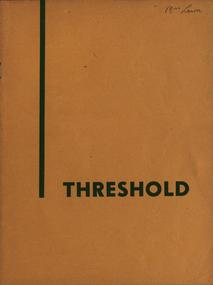
Booklet, Threshold: The Magazine of the Ballarat Girls' Technical School, 1959, 1959
... http://sheilas.org.au/2014/02/a-bonza-joan-kirner/, accessed 06/06/2015 The four houses of the Ballarat Girls' Technical School were Bass House, Sturt House, Flinders House and Mitchell House. ballarat girls' technical school joan hood joan kirner fay moore i.e. harris faye hilton marilyn miller lesley cutts margaret jones moira blair rosemary davies lorraine button vivienne guy lorraine krankovich loralie crabbe beverley davis shirley dean lorrice campbell hilary batt valerie stewat sandra mchenry Joy henderson Orange and green soft covered magazine of 24 pages. ...1959 was the first issue of 'Threshold'. In 1951 thirty girls started a junior technical course for the first time in Ballarat, under the Principal of the Ballarat School of Mines. By 1959 it had increased enormously with an enrolment of 284 students, and its own headmistress. The early school took place in the Dana Street Primary School and a large portion of the Ballarat Technical Art School. It was not thought necessary for girls to produce a magazine, but Joan Hood (Kirner) was determined that the girls would have the same opportunity as the boys. “When I went out teaching, I went to Ballarat Girls Tech, where I met [husband] Ron who was at Ballarat Boys Tech. They were seen as tough schools, and I saw the disadvantage faced by these girls who were at the lowest of the low of the education rung – and yet there were some fantastic girls there who needed equal opportunity. So I think it was teaching that cemented in my mind that people don’t get an even go – and in particular girls. It didn’t take me too long to realise blokes were largely empowered. And it was teaching that cemented how equity and empowerment for women could be achieved through education.” Sarah Capper: You graduated from Melbourne University in 1958, and as mentioned, began work as a teacher in Ballarat. You married Ron in 1960 and received one of those government letters asking you to resign - JK: Yes, I think it burnt a hole in my pocket when I brought it home! We were both teachers, and I said to Ron, “Well, you got married – where’s your letter?!” That really clarified that the world wasn’t quite even, even in this profession that I’d always wanted and loved. I didn’t get superannuation – I think I got something like 100 pounds as pay in lieu of permanent service. And that wasn’t just me – that was a whole generation. Fancy that – that’s what it said – “pay in lieu of permanent service”. So that made me livid. If I hadn’t been a feminist before then, I certainly was by then. I realised the distribution of power was different for women and men. http://sheilas.org.au/2014/02/a-bonza-joan-kirner/, accessed 06/06/2015 The four houses of the Ballarat Girls' Technical School were Bass House, Sturt House, Flinders House and Mitchell House. Orange and green soft covered magazine of 24 pages. Includes a message from the headmistress, Fay Moore, and a photograph of the Magazine Committee featuring teacher Joan Hook (later Joan Kirner, Premier of Victoria). Information and a photograph is given for the following personalities: Sandra McHenry, Sylvia Rowe, Heather Young, Beverley Davis, Lorna Robertson, Janice Hunter, Margaret Ayars, Margaret Veal, Heather O'Brien, Hilary Batt, Leone Davies, Marlene Drever, Janet Smith.ballarat girls' technical school, joan hood, joan kirner, fay moore, i.e. harris, faye hilton, marilyn miller, lesley cutts, margaret jones, moira blair, rosemary davies, lorraine button, vivienne guy, lorraine krankovich, loralie crabbe, beverley davis, shirley dean, lorrice campbell, hilary batt, valerie stewat, sandra mchenry, joy henderson -
 Ballarat Clarendon College
Medal, 1869 (exact); Made prior to November 1869
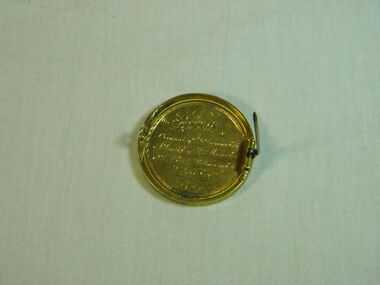
... Henderson Matriculation Examination, Nov 1869'. This gold-plated round-shaped medal has front embossed with Minerva head, name of school and school motto. The rear of the medal is inscribed with names of medal donors. There is a straight metal pin hinged to the right side of the rear of the medal. There is a small catch attached to left side of the rear of the medal. The side edge of the medal is inscribed with name of the recipient and title of the award. The medal is housed ...This medal is one of only a few medals donated by a group of generous gentlemen as tokens of their appreciation of the talent and industry of high achieving students in the years 1869 - 1870. The medal was awarded to Charles J Henderson when he completed his Matriculation Examination at the very young age of 13 years. The 1869 College annual report states that this examination, which granted entry into Melbourne University, was held in Ballarat for the first time in 1869. Candidates had to pass in at least six of the nine possible subjects in order to pass. Charles Henderson (born 3/02/1856) was the eldest son of the Rev. William Henderson of St Anderw's Kirk, Ballarat, distinguished founder of Ballarat College. Charles was only the third student enrolled at Ballarat College in July 1864. The Ballarat College annual report 1869 states the medal was awarded in appreciation of his 'success in passing so creditably the Matriculation examination at the age of thirteen years'. This medal has historic significance because it dates from the first decade of the history of the College. It has social significance because the recipient was the third student enrolled at Ballarat College, the eldest son of the founder of the College. The medal is unique and is one of only a few privately donated between 1869-1870 by a group of gentlemen affiliated with the college.This gold-plated round-shaped medal has front embossed with Minerva head, name of school and school motto. The rear of the medal is inscribed with names of medal donors. There is a straight metal pin hinged to the right side of the rear of the medal. There is a small catch attached to left side of the rear of the medal. The side edge of the medal is inscribed with name of the recipient and title of the award. The medal is housed in a rectangular cardboard box and nestled in cotton wool.The box has a blue lid and white base.Embossed around inner edge of medal front "Studiis Claritudo Venit. Ballarat College". Inscribed on rear of medal 'Presented by T. Cowan Esq.. G. Duncan Esq.. / A. Smith Esq.. W. P Martin Esq.. / J. Bell Esq..J. williamson Esq.. / S. Pike Esq..'; Maker's mark stamped below rear side inscription 'J.T.S'. Inscribed around circumference of medal 'C. J Henderson Matriculation Examination, Nov 1869'.medal, minerva, matriculation, 1869, c j henderson, thomas cowan, james willliamson, gilbert duncan, adam smith, w p martin, john bell, s pike, matriculation examination, gold medal, ballarat college school motto, ballarat college, school motto, studiis claritudo venit -
 Ballarat Clarendon College
Program, Speech Day Christmas 1870, 1870
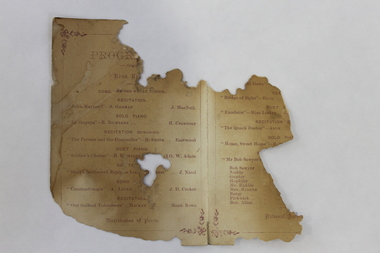
... house before it was demolished. This program was found down behind the mantle of one of the fireplaces. henderson mccoy j-macneil h-crawcour eastwood g-w-adam j-nicol j-d-croker mont-rowe Front: Ballarat College crest / SPEECHDAY / Christmas 1870 / Hall fo the MECHANICS' INSTITUTE / ON / FRIDAY EVENING, DECEMBER 16th / AT HALF-PAST SEVEN O'CLOCK / The Rev William henderson in the Chair / Admit the bearer / R O McCoy PRINCIPAL / EVAN BROTHERS PRINTING.... ...The 1920 Club agreed to have a working bee at Wanliss House to remove fittings for sale from the house before it was demolished. This program was found down behind the mantle of one of the fireplaces. Discoloured and torn fragment of the Ballarat College1870 Speech Day program Front: Ballarat College crest / SPEECHDAY / Christmas 1870 / Hall fo the MECHANICS' INSTITUTE / ON / FRIDAY EVENING, DECEMBER 16th / AT HALF-PAST SEVEN O'CLOCK / The Rev William henderson in the Chair / Admit the bearer / R O McCoy PRINCIPAL / EVAN BROTHERS PRINTING.... Verso: PROGR.... / read R.... / Song - By the whole school / Recitation / 'John Maynard' S Garman ...J MacNeil /Solo Piano / 'La Zingara' B Richards...H Crawcour / Recitation Humurous / 'The farmer and the counsellor' H Smith...Eastwood / Duet piano / 'Soldier's Chorus B Richards... and G W Adam / Re..T.. "Shiel's celebrated reply to...J Nicol / Song / 'Constantinople' A lloyd...J D Croker / Recitation / 'Our Gallant Volunteers ...Mackay...Mont Rowe / Distribution of Prizes henderson, mccoy, j-macneil, h-crawcour, eastwood, g-w-adam, j-nicol, j-d-croker, mont-rowe -
 Flagstaff Hill Maritime Museum and Village
Mangle, late 19th century
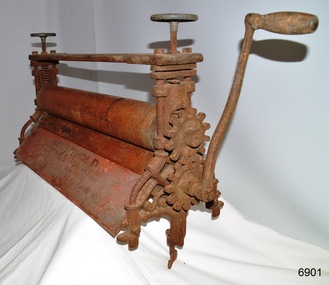
... Henderson when Dr. Angus purchased his home and medical practice in Koroit St, Warrnambool. The wooden rollers date the mangle to one of the earlier models manufactured. ABOUT THE “W.R.ANGUS COLLECTION” Doctor William Roy Angus M.B., B.S., Adel., 1923, F.R.C.S. Edin.,1928 (also known as Dr Roy Angus) was born in Murrumbeena, Victoria in 1901 and lived until 1970. He qualified as a doctor in 1923 at University of Adelaide, was Resident Medical Officer at the Royal Adelaide Hospital in 1924 and for a period was house...Henderson when Dr. Angus purchased his home and medical practice in Koroit St, Warrnambool. The wooden rollers date the mangle to one of the earlier models manufactured. ABOUT THE “W.R.ANGUS COLLECTION” Doctor William Roy Angus M.B., B.S., Adel., 1923, F.R.C.S. Edin.,1928 (also known as Dr Roy Angus) was born in Murrumbeena, Victoria in 1901 and lived until 1970. He qualified as a doctor in 1923 at University of Adelaide, was Resident Medical Officer at the Royal Adelaide Hospital in 1924 and for a period was house ...This mangle, sometimes referred to as a wringer, was donated to Flagstaff Hill Maritime Village by the family of Doctor William Roy Angus, Surgeon and Oculist. It is part of the “W.R. Angus Collection” includes historical medical equipment, surgical instruments and material once belonging to Dr Edward Ryan and Dr Thomas Francis Ryan, (both of Nhill, Victoria) as well as Dr Angus’ own belongings. The Collection’s history spans the medical practices of the two Doctors Ryan, from 1885-1926 plus that of Dr Angus, up until 1969. The mangle was used in laundries to squeeze water from washed items and hasten the drying process. This particular wringer is larger that the usual household design and was possibly amongst the original furnishings of "Birchwood", the 1852 home of Dr Henderson when Dr. Angus purchased his home and medical practice in Koroit St, Warrnambool. The wooden rollers date the mangle to one of the earlier models manufactured. ABOUT THE “W.R.ANGUS COLLECTION” Doctor William Roy Angus M.B., B.S., Adel., 1923, F.R.C.S. Edin.,1928 (also known as Dr Roy Angus) was born in Murrumbeena, Victoria in 1901 and lived until 1970. He qualified as a doctor in 1923 at University of Adelaide, was Resident Medical Officer at the Royal Adelaide Hospital in 1924 and for a period was house surgeon to Sir (then Mr.) Henry Simpson Newland. Dr Angus was briefly an Assistant to Dr Riddell of Kapunda, then commenced private practice at Curramulka, Yorke Peninsula, SA, where he was physician, surgeon and chemist. In 1926, he was appointed as new Medical Assistant to Dr Thomas Francis Ryan (T.F. Ryan, or Tom), in Nhill, Victoria, where his experiences included radiology and pharmacy. In 1927 he was Acting House Surgeon in Dr Tom Ryan’s absence. Dr Angus had become engaged to Gladys Forsyth and they decided he further his studies overseas in the UK in 1927. He studied at London University College Hospital and at Edinburgh Royal Infirmary and in 1928, was awarded FRCS (Fellow from the Royal College of Surgeons), Edinburgh. He worked his passage back to Australia as a Ship’s Surgeon on the on the Australian Commonwealth Line’s T.S.S. Largs Bay. Dr Angus married Gladys in 1929, in Ballarat. (They went on to have one son (Graham 1932, born in SA) and two daughters (Helen (died 12/07/1996) and Berenice (Berry), both born at Mira, Nhill ) According to Berry, her mother Gladys made a lot of their clothes. She was very talented and did some lovely embroidery including lingerie for her trousseau and beautifully handmade baby clothes. Dr Angus was a ‘flying doctor’ for the A.I.M. (Australian Inland Ministry) Aerial Medical Service in 1928 . Its first station was in the remote town of Oodnadatta, where Dr Angus was stationed. He was locum tenens there on North-South Railway at 21 Mile Camp. He took up this ‘flying doctor’ position in response to a call from Dr John Flynn; the organisation was later known as the Flying Doctor Service, then the Royal Flying Doctor Service. A lot of his work during this time involved dental surgery also. Between 1928-1932 he was surgeon at the Curramulka Hospital, Yorke Peninsula, South Australia. In 1933 Dr Angus returned to Nhill and purchased a share of the Nelson Street practice and Mira hospital (a 2 bed ward at the Nelson Street Practice) from Dr Les Middleton one of the Middleton Brothers, the current owners of what previously once Dr Tom Ryan’s practice. Dr Tom and his brother had worked as surgeons included eye surgery. Dr Tom Ryan performed many of his operations in the Mira private hospital on his premises. He had been House Surgeon at the Nhill Hospital 1902-1926. Dr Tom Ryan had one of the only two pieces of radiology equipment in Victoria during his practicing years – The Royal Melbourne Hospital had the other one. Over the years Dr Tom Ryan had gradually set up what was effectively a training school for country general-practitioner-surgeons. Each patient was carefully examined, including using the X-ray machine, and any surgery was discussed and planned with Dr Ryan’s assistants several days in advance. Dr Angus gained experience in using the X-ray machine there during his time as assistant to Dr Ryan. When Dr Angus bought into the Nelson Street premises in Nhill he was also appointed as the Nhill Hospital’s Honorary House Surgeon 1933-1938. His practitioner’s plate from his Nhill surgery is now mounted on the doorway to the Port Medical Office at Flagstaff Hill Maritime Village, Warrnambool. When Dr Angus took up practice in the Dr Edward and Dr Tom Ryan’s old premises he obtained their extensive collection of historical medical equipment and materials spanning 1884-1926. A large part of this collection is now on display at the Port Medical Office at Flagstaff Hill Maritime Village in Warrnambool. In 1939 Dr Angus and his family moved to Warrnambool where he purchased “Birchwood,” the 1852 home and medical practice of Dr John Hunter Henderson, at 214 Koroit Street. (This property was sold in1965 to the State Government and is now the site of the Warrnambool Police Station. and an ALDI sore is on the land that was once their tennis court). The Angus family was able to afford gardeners, cooks and maids; their home was a popular place for visiting dignitaries to stay whilst visiting Warrnambool. Dr Angus had his own silk worm farm at home in a Mulberry tree. His young daughter used his centrifuge for spinning the silk. Dr Angus was appointed on a part-time basis as Port Medical Officer (Health Officer) in Warrnambool and held this position until the 1940’s when the government no longer required the service of a Port Medical Officer in Warrnambool; he was thus Warrnambool’s last serving Port Medical Officer. (Masters of immigrant ships arriving in port reported incidents of diseases, illness and death and the Port Medical Officer made a decision on whether the ship required Quarantine and for how long, in this way preventing contagious illness from spreading from new immigrants to the residents already in the colony.) Dr Angus was a member of the Australian Medical Association, for 35 years and surgeon at the Warrnambool Base Hospital 1939-1942, He served as a Surgeon Captain during WWII1942-45, in Ballarat, Victoria, and in Bonegilla, N.S.W., completing his service just before the end of the war due to suffering from a heart attack. During his convalescence he carved an intricate and ‘most artistic’ chess set from the material that dentures were made from. He then studied ophthalmology at the Royal Melbourne Eye and Ear Hospital and created cosmetically superior artificial eyes by pioneering using the intrascleral cartilage. Angus received accolades from the Ophthalmological Society of Australasia for this work. He returned to Warrnambool to commence practice as an ophthalmologist, pioneering in artificial eye improvements. He was Honorary Consultant Ophthalmologist to Warrnambool Base Hospital for 31 years. He made monthly visits to Portland as a visiting surgeon, to perform eye surgery. He represented the Victorian South-West subdivision of the Australian Medical Association as its secretary between 1949 and 1956 and as chairman from 1956 to 1958. In 1968 Dr Angus was elected member of Spain’s Barraquer Institute of Barcelona after his research work in Intrasclearal cartilage grafting, becoming one of the few Australian ophthalmologists to receive this honour, and in the following year presented his final paper on Living Intrasclearal Cartilage Implants at the Inaugural Meeting of the Australian College of Ophthalmologists in Melbourne In his personal life Dr Angus was a Presbyterian and treated Sunday as a Sabbath, a day of rest. He would visit 3 or 4 country patients on a Sunday, taking his children along ‘for the ride’ and to visit with him. Sunday evenings he would play the pianola and sing Scottish songs to his family. One of Dr Angus’ patients was Margaret MacKenzie, author of a book on local shipwrecks that she’d seen as an eye witness from the late 1880’s in Peterborough, Victoria. In the early 1950’s Dr Angus, painted a picture of a shipwreck for the cover jacket of Margaret’s book, Shipwrecks and More Shipwrecks. She was blind in later life and her daughter wrote the actual book for her. Dr Angus and his wife Gladys were very involved in Warrnambool’s society with a strong interest in civic affairs. He had an interest in people and the community They were both involved in the creation of Flagstaff Hill, including the layout of the gardens. After his death (28th March 1970) his family requested his practitioner’s plate, medical instruments and some personal belongings be displayed in the Port Medical Office surgery at Flagstaff Hill Maritime Village, and be called the “W. R. Angus Collection”. The W.R. Angus Collection is significant for still being located at the site it is connected with, Doctor Angus being the last Port Medical Officer in Warrnambool. The collection of medical instruments and other equipment is culturally significant, being an historical example of medicine from late 19th to mid-20th century. Dr Angus assisted Dr Tom Ryan, a pioneer in the use of X-rays and in ocular surgery. Large mangle (or wringer) with wooden handle, hardwood wooden rollers and metal stand, part of the W.R. Angus Collection. Household clothes mangle with steel ball bearings, made by the American Wringer Co. New York, U.S.A. Brand and details are printed on side. Printed on side; "HOUSEHOLD / CLOTHES MANGLE / STEEL BALL BEARINGS / THE AMERICAN WRINGER Co, NEW YORK, USA” and on top "NO. HARDWOOD ROLLERS 124"flagstaff hill, warrnambool, shipwrecked coast, flagstaff hill maritime museum, maritime museum, shipwreck coast, flagstaff hill maritime village, great ocean road, dr w r angus, dr ryan, surgical instrument, t.s.s. largs bay, warrnambool base hospital, nhill base hospital, mira hospital, flying doctor, clothes mangle, clothes wringer, laundry equipment, the american wringer company, mangle with wooden rollers, mangle with settl bearings -
 Greensborough Historical Society
Certificates and newspaper clippings (copy), Queen's Scout Awards for George and Bryan Henderson, 08/10/1960
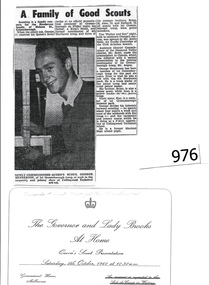
... Collection includes copies of invitations to Government House, newspaper clippings and Queen's Scout certificates. George Henderson was the first Greensborough Scout to be awarded the Queen's Scout badge (1960), followed the next year by his brother Bryan. ...Collection includes copies of invitations to Government House, newspaper clippings and Queen's Scout certificates. George Henderson was the first Greensborough Scout to be awarded the Queen's Scout badge (1960), followed the next year by his brother Bryan. ...Collection includes copies of invitations to Government House, newspaper clippings and Queen's Scout certificates. George Henderson was the first Greensborough Scout to be awarded the Queen's Scout badge (1960), followed the next year by his brother Bryan. The Henderson family were all associated with the scouting movement.A Greensborough family with a strong association with Scouting.Photocopies of certificates, invitations and newspaper clippings.queens scout, bryan henderson, george henderson, scouts - greensborough -
Glenelg Shire Council Cultural Collection
Letter - Letter - Mr William Jones, Launceston, to his daughter Eleanor Rebecca Jones, 01/09/1854
... Henderson. This ship was owned by the Henty brothers.|Displayed in glass bottle in History House for __ years....Henderson. This ship was owned by the Henty brothers.|Displayed in glass bottle in History House for __ years. ...These letters came to Portland on the 'City of Sydney' under Captain Henderson. This ship was owned by the Henty brothers.|Displayed in glass bottle in History House for __ years.Hand-written letter in glass bottle. Letter written by Mr William Jones, Launceston, to his daughter Eleanor Rebecca Jones, staying with Captain James Fawthrop at Windsor Cottage, Portland.Front: - Back: - -
 Phillip Island and District Historical Society Inc.
Photograph - Post Card, Early 1900's
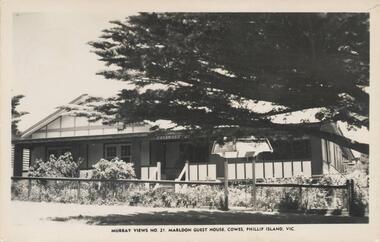
... House, Cowes, Phillip Island, Vic." On Back: "Dear Matre, We are having a nice time here. It is my birthday today and we had a cake with three candles and I got 2 ribbons and some sweeties and some hankies. Will see you on Sat. Love Lyn. Addressed to: Mrs C. Henderson...House, Cowes, Phillip Island, Vic." On Back: "Dear Matre, We are having a nice time here. It is my birthday today and we had a cake with three candles and I got 2 ribbons and some sweeties and some hankies. Will see you on Sat. Love Lyn. Addressed to: Mrs C. Henderson ...One of a collection of photographs purchased by the Society from Jack Day of Mornington.Black & White postacrd of Marldon Guest House. Situated in an elevated position over looking bay in Thompson Avenue, Cowes. House has verandah with garden behind a fence and a pine tree providing shade in the street outside."Murray Views No. 21" "Marldon Guest House, Cowes, Phillip Island, Vic." On Back: "Dear Matre, We are having a nice time here. It is my birthday today and we had a cake with three candles and I got 2 ribbons and some sweeties and some hankies. Will see you on Sat. Love Lyn. Addressed to: Mrs C. Henderson,17 Woodmason Street, Malvern, Melbourne."marldon guest house, cowes, phillip island, jack day collection -
 Eltham District Historical Society Inc
Journal, Peter Doughtery, ArtStreams: Arts in Banyule, Darebin, Manningham, Nillumbik, Whittlesea & Yarra; Vol. 5, No. 6 (sic - 5), Summer Issue 2000, 2000
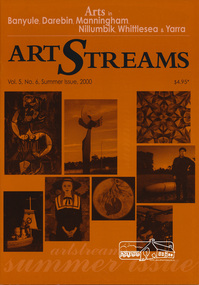
... house studio...syd tunn...ona henderson...." - Eltham District Historical Society Newsletter No. 161, March 2005 art streams public art sentinal river peel manningham artary project plenty views golf park albert tucker barbara tucker kinglake gallery bulleen art & garden centre st andrews gallery steve flanagan eltham wiregrass gallery elizabeth james willy wonka's ice cream gourmet food nillumbik artists' open studios accadia ceramics alan martin alan sartori attunga veronica holland leanne mooney sally nihill bend of islands michael skewes elizabeth vercoe creek house studio syd tunn ona henderson chris pittard mary lou pittard diamond creek living & learning centre drew gregory jane annois jane trikojus jenni mitchell grace mitchell mervyn hannan girraeen studio jill forrest kangaroo studios peter burns jules burns muddy waters studio nel ten wolde overbank end kay steventon kim tarpey reg cox robert phillips studio stained glass studio shan shnookal matthew holderness ray macminn jane viola john hewish open pottery studios linda detoma judith roberts cassandra tobias christian benetto kevina-jo smith julianne piko hugh crosthwaite sarah slater peter doyle stuart sinclair carly young lenister farm not just a pretty place kangaroo house dynamic vegies old bakery cottage bookshop nick charles felicity nottingham michael mcgirr eltham little theatre heidelberg theartre company montsalvat recherche ken eckerall thompsons pharmacy st andrews market 2000 banyule young artists award heide museum of modern art Colour front and back cover with feature articles and literary pieces with photographs and advertisements printed in black and white. 36 pages, 30 cm. ...Vol. 5, No. 6 (5), Summer Issue 2000 CONTENTS John Perceval and Helen Daniel 2 Two who served their communities well Gateway Sculpture Project 3 New public art in Manningham The Artary Project 5 Getting onto the net Tucker: Australian Gothic 6 Albert and Barbara Tucker's gift to Australia Short Story 8 Learning Curves Interview 10 Elizabeth James on drawing Open Studios 12 40 artists welcome the public Banyule Youth Awards 18 Support for emerging young artists Not Just a Pretty Place 20 Nillumbik art in Public Places CD Reviews 22 Book Reviews 23 Australian Classical Music 24 Elizabeth Scarlett Theatre Reviews 25 Artin About 26 Wining & Dining 30 Book Review 32 Artist's Services 32 "Peter Dougherty has been involved in the local art scene for many years. As publisher and editor of the arts magazine Artstreams, his comments on the various branches of the arts are widely respected. His "The Arts" column in the Diamond Valley Leader presents a brief summary for a much wider cross section of the local community. Peter also operates his own gallery and the Artstreams Cafe at the St Andrews market. Peter has a wealth of knowledge about present day and historical aspects of local art and artists." - Eltham District Historical Society Newsletter No. 161, March 2005Colour front and back cover with feature articles and literary pieces with photographs and advertisements printed in black and white. 36 pages, 30 cm. Vol. 1, no. 1 (Nov. 1996) - Vol. 10, no. 5 (summer ed. 2005/06) art streams, public art, sentinal, river peel, manningham, artary project, plenty views golf park, albert tucker, barbara tucker, kinglake gallery, bulleen art & garden centre, st andrews gallery, steve flanagan, eltham wiregrass gallery, elizabeth james, willy wonka's ice cream gourmet food, nillumbik artists' open studios, accadia ceramics, alan martin, alan sartori, attunga, veronica holland, leanne mooney, sally nihill, bend of islands, michael skewes, elizabeth vercoe, creek house studio, syd tunn, ona henderson, chris pittard, mary lou pittard, diamond creek living & learning centre, drew gregory, jane annois, jane trikojus, jenni mitchell, grace mitchell, mervyn hannan, girraeen studio, jill forrest, kangaroo studios, peter burns, jules burns, muddy waters studio, nel ten wolde, overbank end, kay steventon, kim tarpey, reg cox, robert phillips studio, stained glass studio, shan shnookal, matthew holderness, ray macminn, jane viola, john hewish, open pottery studios, linda detoma, judith roberts, cassandra tobias, christian benetto, kevina-jo smith, julianne piko, hugh crosthwaite, sarah slater, peter doyle, stuart sinclair, carly young, lenister farm, not just a pretty place, kangaroo house, dynamic vegies, old bakery cottage bookshop, nick charles, felicity nottingham, michael mcgirr, eltham little theatre, heidelberg theartre company, montsalvat, recherche, ken eckerall, thompsons pharmacy, st andrews market, 2000 banyule young artists award, heide museum of modern art -
 Eltham District Historical Society Inc
Book, Nina Kelabora, Welcome : a gift to you, our new neighbours, from the extended Eltham community / produced by Nina Kelabora (graphic designer) and Lara McKinley (principal photographer), December 2016
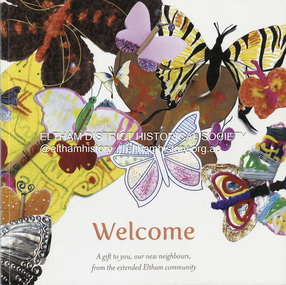
... Artwork • Logo: Welcome to Eltham • 12 artworks by children of the Eltham Child Care Co-Operative (ECCC) o Me at the Immigration Museum by Ethan B. o Immigration Museum by Edie o Me with my family and lots of hearts by Charlotte o My suitcase like the refugees we learnt about with Bec by Jarvis o Me at the football with my friends by Harley o My suitcase if I had to leave the country by Ellen o Me at the park near the library by Chloe o Books at the library by Addison o Ethan’s grandfather who died in the war and this is him in his grave by Ethan o A nursery by Annabel o The age care home we visit by Ari o This is my mum the Ranger by Mia • Butterfly Effect, Ona Henderson 2016, inscribed “Dedicated to Nina, in appreciation of your butterfly effect for ‘Welcome to Eltham’; reproduced p1 • Ona and Sid gifting her artwork for use by the campaign; reproduced p1 • Duat and Iuk, Mandy Nicholson, Wurundjeri woman; reproduced p3 • These hands welcome you to Australia, Mungo, Warrandyte resident; reproduced p9 • The Library by Rose; reproduced p15 • Welcome to Eltham from Maia; reproduced p19 • Billy, Warrandyte resident; reproduced p20 • Through my window, Janet Boddy; reproduced p23 • Eryn and Lachie, Eltham residents; reproduced p25 • Eva, Eltham resident; reproduced p29 • This is the community hall across from my house by Cinta; reproduced p30 • Welcome, Brenda, Eltham resident; reproduced p34 • Flying over Kerry Crescent, Kerry, Eltham resident; reproduced p38 • A dragon called 'fat' from Joe, 6; reproduced p42 • A rainbow-heart-welcome from Trixie, 8; reproduced p42 • A lovely message from Sarah; reproduced p53 • Monique; reproduced p56 • Tom; reproduced p56 • Josh; reproduced p56 • Chloe; reproduced p56 • Jack; reproduced p57 • Mia; reproduced p57 • Ann Curry, Montmorency resident; reproduced p60 • From Mia: "Keep your head up high and be confident. ...Artwork • Logo: Welcome to Eltham • 12 artworks by children of the Eltham Child Care Co-Operative (ECCC) o Me at the Immigration Museum by Ethan B. o Immigration Museum by Edie o Me with my family and lots of hearts by Charlotte o My suitcase like the refugees we learnt about with Bec by Jarvis o Me at the football with my friends by Harley o My suitcase if I had to leave the country by Ellen o Me at the park near the library by Chloe o Books at the library by Addison o Ethan’s grandfather who died in the war and this is him in his grave by Ethan o A nursery by Annabel o The age care home we visit by Ari o This is my mum the Ranger by Mia • Butterfly Effect, Ona Henderson 2016, inscribed “Dedicated to Nina, in appreciation of your butterfly effect for ‘Welcome to Eltham’; reproduced p1 • Ona and Sid gifting her artwork for use by the campaign; reproduced p1 • Duat and Iuk, Mandy Nicholson, Wurundjeri woman; reproduced p3 • These hands welcome you to Australia, Mungo, Warrandyte resident; reproduced p9 • The Library by Rose; reproduced p15 • Welcome to Eltham from Maia; reproduced p19 • Billy, Warrandyte resident; reproduced p20 • Through my window, Janet Boddy; reproduced p23 • Eryn and Lachie, Eltham residents; reproduced p25 • Eva, Eltham resident; reproduced p29 • This is the community hall across from my house by Cinta; reproduced p30 • Welcome, Brenda, Eltham resident; reproduced p34 • Flying over Kerry Crescent, Kerry, Eltham resident; reproduced p38 • A dragon called 'fat' from Joe, 6; reproduced p42 • A rainbow-heart-welcome from Trixie, 8; reproduced p42 • A lovely message from Sarah; reproduced p53 • Monique; reproduced p56 • Tom; reproduced p56 • Josh; reproduced p56 • Chloe; reproduced p56 • Jack; reproduced p57 • Mia; reproduced p57 • Ann Curry, Montmorency resident; reproduced p60 • From Mia: "Keep your head up high and be confident. ...In 2016 the Welcome to Eltham community project started to welcome Syrian refugees into the community and made Welcome Butterflies to say welcome to them. In addition to the physical book, EDHS also holds several hundred digital images pertaining to the development of the Welcome to Eltham campaign, photographs, artworks and graphic designs, which resulted in the publication of this book. EDHS also holds further material from the period 2016 to 2017 associated with the Welcome to Eltham campaign group. Contents: 1. Welcome Book Welcome Book includes selected page extracts and images as published December 2016 Contents: • Greetings to our Country P2 • Offering P8 • Your neighbours P10 • Rotary P39 • Eltham Baptist Church P44 • Eltham Farmers Market stall holders P48 • The Eltham community P54 • Surrounding communities P60 • Our Lady Help of Christians Primary School P64 • Nillumbik Greens P66 • Our Lady Help of Christians Church Eltham P68 • Catholic Care Eltham P70 • St Vincent’s P71 • Montmorency South Primary School P72 • Victoria Police P73 • Catholic Ladies College P74 • Warrandyte P76 • Eltham Toy Library P78 • Eltham-Montmorency Uniting Church P82 • Gingerbread P84 • Scouts P86 • Eltham businesses P89 • Surrounding communities P96 • The Seed P101 2. Administration 1. Welcome to Eltham Infant Plan, Purpose and Scope (Aug. 2016) 2. Circle of Friends; A draft proposal from Welcome to Eltham, 26 August 2016 3. Welcome to Eltham; a resident support group for refugees settling in Eltham (Sep. 2016) 4. Welcome to Eltham; Purpose and Scope (Sep. 2016) 5. Welcome to Eltham Plan (Sep. 2016); 10 pages typed of tasks broken into four categories, 10 pages 6. Welcome to Eltham Team/Volunteer organisation structure, volunteers’ skills assessment and role assignments, strategies, 11 pages 7. Briefing Document: Refugees being welcomed in Eltham, 2 Oct. 2016; 5 pages 8. Public Engagement Plan, 2 Oct. 2016; 2 pages 9. Welcome to Eltham 2016 Review, Values and Structure, 2017 10. Welcome to Eltham Incorporated Financial Report July 2016 – June 2017; 3 pages 11. Letter: Nina Kelabora and Welcome to Eltham Team to Bolton Street Fruit Market re offer to provide fresh fruit, 30 Jun. 2017 12. Welcome to Eltham Incorporated Annual Report 2016–2017; Oct. 2017; 4 pages 13. Certificate: Jagajaga Community Australia Day Award 2018 to Nina Kelabora, signed Jenny Macklin MP, Federal Member for Jagajaga 14. Certificate: Jagajaga Community Australia Day Award 2018 to Welcome to Eltham, signed Jenny Macklin MP, Federal Member for Jagajaga 15. Letter: Simon Le Plastrier, Principal, Eltham College to Nina Kelabora, 20 April 2018 offering congratulations for the work achieved by Welcome to Eltham group 16. Photo: River pebble covered in spray paint of multiple colours. The rock was used to hold down templates for painting butterflies on the footpaths near Andrew park as a counter to protesters assembling for the ‘Battle for Eltham’ demonstration on 5 November 2016 17. Photo: Welcome to Eltham team member, Gillian Essex 18. Photo: Welcome to Eltham team member, Kirsten Bate 19. Photo: Welcome to Eltham team member, Lara McKinley 20. Photo: Welcome to Eltham team member, Nina Kelabora 21. Photo: Welcome to Eltham team member, Sarah Hooten 22. Incorporation • AGM-minutes-2017 • Certificate of Incorporation • Mission and Values • Ordinary Business of the AGM 2017 • Welcome to Eltham Rules 23. Advocacy • Eltham Butterfly Effect Corflute panel design 5 November 2016 Rally • MemeFest PowerPoint presentation 23 November 2016 • Oxfam PowerPoint presentation 16 June 2017 • Eltham Rotary PowerPoint presentation 1 June 2017 • Welcome to Eltham Gift Card artwork 3. Artwork • Logo: Welcome to Eltham • 12 artworks by children of the Eltham Child Care Co-Operative (ECCC) o Me at the Immigration Museum by Ethan B. o Immigration Museum by Edie o Me with my family and lots of hearts by Charlotte o My suitcase like the refugees we learnt about with Bec by Jarvis o Me at the football with my friends by Harley o My suitcase if I had to leave the country by Ellen o Me at the park near the library by Chloe o Books at the library by Addison o Ethan’s grandfather who died in the war and this is him in his grave by Ethan o A nursery by Annabel o The age care home we visit by Ari o This is my mum the Ranger by Mia • Butterfly Effect, Ona Henderson 2016, inscribed “Dedicated to Nina, in appreciation of your butterfly effect for ‘Welcome to Eltham’; reproduced p1 • Ona and Sid gifting her artwork for use by the campaign; reproduced p1 • Duat and Iuk, Mandy Nicholson, Wurundjeri woman; reproduced p3 • These hands welcome you to Australia, Mungo, Warrandyte resident; reproduced p9 • The Library by Rose; reproduced p15 • Welcome to Eltham from Maia; reproduced p19 • Billy, Warrandyte resident; reproduced p20 • Through my window, Janet Boddy; reproduced p23 • Eryn and Lachie, Eltham residents; reproduced p25 • Eva, Eltham resident; reproduced p29 • This is the community hall across from my house by Cinta; reproduced p30 • Welcome, Brenda, Eltham resident; reproduced p34 • Flying over Kerry Crescent, Kerry, Eltham resident; reproduced p38 • A dragon called 'fat' from Joe, 6; reproduced p42 • A rainbow-heart-welcome from Trixie, 8; reproduced p42 • A lovely message from Sarah; reproduced p53 • Monique; reproduced p56 • Tom; reproduced p56 • Josh; reproduced p56 • Chloe; reproduced p56 • Jack; reproduced p57 • Mia; reproduced p57 • Ann Curry, Montmorency resident; reproduced p60 • From Mia: "Keep your head up high and be confident. I'm sure that you will soon find that Eltham is a very nice place and I hope you can have a happy life."; reproduced p77 • Amy; reproduced p79 • Ben; reproduced p80 • Welcome, Kayla, Warrandyte resident; reproduced p94 • Lucas; reproduced p98 • Ale; reproduced p98 • Grace; reproduced p99 • Hugo; reproduced p99 4. Australian-Syrian Charity • ASC – Certificate of Appreciation; Awarded from Australian-Syrian Charity presented to Welcome to Eltham Group by Rev. Fr. Samir Haddad, ASC president, 30 Sep. 2016 including two images of Father Samir and WTE organiser, Nina Kelabora 5. Butterflies • 148 images of handcrafted butterflies and artwork of butterflies edited for reproduction throughout the Welcome to Eltham book and for use on other placards, gift cards and promotional materials including the original source photographs (232 total) • 128 other images of butterflies submitted or photographed installed at various locations around Eltham • 11 images of metal butterfly artworks created by Linda MacAulay and Tim Read showing the works during creation at Bend of Isles and at initial install at the roundabout on Main Road at Luck Street then at the final install to greet the new arrivals and residents alike at St Vincents Aged Care Services (since demolished). 6. Eltham and Surrounds Residents and Local Businesses • 195 photos (157 published in book) submitted by local residents and businesses with people holding Welcome to Eltham placards including: Eltham Farmer’s Market, Eltham Baptist Church, CatholicCare Eltham, Nillumbik Greens, Hurstbridge Wattle Festival, Our Lady Help of Christians Eltham, Our Lady Help of Christians Primary School, Montmorency South Primary School, Warrandyte Primary School, Bronnie Hattam, Mayor, Nillumbik Shire Council, Vicki Ward, MP for Eltham, Jenny Macklin, Member for Jagajaga, Bend of Isles, Eltham Toy Library, Eltham Library, Eltham-Montmorency Uniting Church, Catholic Ladies College (CLC), First Eltham North Scouts, Warrandyte Primary School, Ona Henderson and many individuals and businesses. 7. Events • Alistair Knox Park, 12 August 2016 • Syrian Community Dinner, 30 September 2016 • Pop up Picnic, Eltham North Adventure Playground, 1 October 2016 • Alistair Knox Park, 7 October 2016 • At Our Lady of Help of Christians, 7 October 2016 • Andrew Park Butterfly Effect v Battle for Eltham, 5 November 2016 • City Rally, 5 November 2016 • Eltham Library Children’s Garden, 12 November 2016 • Eltham Festival, 13 November 2016 • Welcome Book Fundraiser, St Margaret’s Church, 11 December 2016 • Nillumbik International Women’s Day Dinner 9 March 2017 • Bush Dance, 17 June 2017 • Eltham Police Morning Tea, 29 July 2017 8. House warmers • Approximately 40 images of gift care items donated (food, drink, blankets, etc) intended as housewarming hampers 9. Media Media Releases • Eltham elders take to social media to welcome refuges, video goes viral; Wednesday 28 October 2016 • Eltham locals use their bodies to say WELCOME to refugees; 1 October 2016 • Community group welcomes Minister’s decision so refugees can call Eltham home; 5 October 2016 • Locals answer far-right “Battle for Eltham” with butterflies: thousand of them; 5 November 2016 Newspaper articles • Group fosters goodwill; organisation works to assist refugees; Brittany Shanahan; Diamond Valley Leader, Wednesday, August 17, 2016, p3 • Refugees are welcome (Gillian); Care is for the elderly alone (Fred); Plenty of positives in plan (Kirstin); Open your hearts and doors (Alison); Flood of families a worry (Cath), Conversations, Diamond Valley Leader, Wednesday, August 17, 2016, p11 • Support refugee housing; Diamond Valley Leader, Pamela Nash via Facebook, Janet R. Body, Eltham, Glenise Michaelson, Montmorency; Letters (online), 5 October 2016 • Refugees find a haven, and, Groups to fundraise for arrivals; Wednesday, October 12, 2016, p5 • Site for resettlement of refugees on a flood plane (Jacquie Bellchambers); Accommodating young families from a foreign culture in an established western culture retirement home will only lead to both parties feeling …. (Margit Alm); Great news for our community … (Nean Tatnal); Conversations, Diamond Valley Leader, Wednesday, October 12, 2016, p19 • Refugee scrap looms; daughter of Eltham aged-care resident upset as extreme group hijacks debate; Brittany Shanahan. Diamond Valley Leader, Wednesday, October 26, 2016, p1 • Many ready to welcome refugees into community (Megan Anne) and others; Conversations, Diamond Valley Leader, Wednesday, October 26, 2016, p20 • On a wing and a prayer; Chris Vedelago, Tammy Mills and Mark Hawthorne; Sunday Age, November 6, 2016, p3. – It was billed as the “Battle for Eltham”, but in te end the butterflies carried the day. • Rally hits trade; Diamond Valley Leader, Wednesday, November 9, 2016, p1 • Protests bad for business; Brittany Shanahan; Diamond Valley Leader, Wednesday, November 9, 2016, p8 • Police earn praise for keeping protest calm; Re: Battle for Eltham rally (Maree Quinlan) and others; Conversations, Diamond Valley Leader, Wednesday, November 9, 2016, p14 • Butterflies to counter anti-Muslim protest; Bianca Hall and Marissa Calligeros, The Age, November 5, 2016 • Rally created challenges but it’s time to move on; Re: Battle for Eltham rally (Local Area Commander Acting Inspector Danielle Leemon) and others; Conversations, Diamond Valley Leader, Wednesday, November 16, 2016, p19 • Praise for warm welcome (Linda Jajawi) and others also photo “Officers from Eltham police station welcomed newly arrived refugees to the community”; Conversations, Diamond Valley Leader, Wednesday, August 9, 2017, p15 • Refugees welcomed; Diamond Valley Leader, n.d. 2017, p12 • Refugee plan riles; Retirement centre residents voice concerns; Brittany Shanahan, Diamond Valley Leader; n.d. 2016 Facebook Responses • Responses top frequent Facebook comments regarding the housing of refugees in aged care at Eltham 10. Placards and Promotional Flyers • Selection of placard images and Welcome to Eltham Gift Card artwork 11. St Vincents • Two hand drawn sketches showing plan views of proposed front and rear units at St Vincents to be used by refugees 12. Videos • Feisties; several local seniors read online comments made by objectors and offer their own opinions; 00.02.28 • Tour of unit at St Vincents, 31 July 2016; 00.00.44 • Drone view of people creating Welcome sign at Eltham North Adventure Playground, 14 September 2016; 00.00.14 • Launching of the butterflies (campaign); Nina Kelabora releases the first butterfly into the wild; 00.00.24 • Gillian Essex, Welcome to Eltham, discussing counter strategy to protest demonstration (Battle for Eltham) scheduled for later in the day; 5 November 2016; 00.01.45 • Glenise Michaelson, Eltham local for 69 years discussing counter strategy to protest demonstration (Battle for Eltham) scheduled for later in the day; 5 November 2016; 00.01.30 • The Butterfly Effect, counter strategy to protesters 5 November 2016 Battle for Eltham rally; 00.02.24 with ten associated photos of the seniors involved; 31 October 2016 • Butterfly art ninjas 1 (15 secs), 2 (26 secs) and 3 (14 secs), showing the butterflies remaining in existence on the paths around Andrew Park, 16 November 2016 • Butterfly capture and release with Nina Kelabora– butterflies around Andrew Park relocated to the Children’s garden at Eltham Library, 17 November 2016; 00.00.28eltham (vic.), welcome to eltham (vic.), syrian refugees, refugees, social life and customs, butterflies, welcome butterflies, nina kelabora collection -
Glen Eira Historical Society
Article - Shoobra Road, 2, Elsternwick
... Hebenstreit Ernest Huldreich Hebenstreit Hans Hebenstreit Netta Henderson Hans Leuba Emma Henderson Emma Shoo bra Road Glenhuntly Road Elsternwick Hohenzollern Caulfield Union Church Orrong Road Curral Street Le Soir Lingerie Gibson Chas Foley Patk. A. Taylor Kath Owen Lnrd. Meshakaw K. Longworth Jim Longworth Linda Architectural Styles Edwardian Style Verandahs Butchers Butcher Shops Brick Houses ...Photocopy of page from book From Jolimont to Yering: Yarra Wine – Two Centuries, about the Hebenstreit family who lived at 2 Shoobra Road. Includes two exterior photographs and photograph of family. One page of typed research notes dated 09/08/2012 by Claire Barton on the residents of 2 Shoobra Road from 1910 to 1960.hebenstreit ernest huldreich, hebenstreit hans, hebenstreit netta, henderson hans, leuba emma, henderson emma, shoo bra road, glenhuntly road, elsternwick, hohenzollern, caulfield union church, orrong road, curral street, le soir lingerie, gibson chas, foley patk. a., taylor kath, owen lnrd., meshakaw k., longworth jim, longworth linda, architectural styles, edwardian style, verandahs, butchers, butcher shops, brick houses -
Glen Eira Historical Society
Document - Kooyong Road, 110, Caulfield North
... House was built in 1936. Kooyong Road Rosemont Farm Howitt Godfrey Dr Settlers Caulfield North Howitt Alfred Henderson Garnet W. ...Copy of typed letter 27/05/1989 from Brighton Historical Society giving details of history/owners/tenants of 110 Kooyong Road, Caulfield North from 1840 to 1985. Accompanied by handwritten working notes naming owners/tenants of property 110 Kooyong Road, North Caulfield from 1936 to 1985. House was built in 1936.kooyong road, rosemont farm, howitt godfrey dr, settlers, caulfield north, howitt alfred, henderson garnet w., henderson m.m. miss, haskin joseph, anstee w.e., holst edward, bullock hilary, landells rosalind, land subdivision -
Glen Eira Historical Society
Document - Leuba, Cecile
... Henderson 2006. The article mentions Sam and Cecile Leuba, and their return to Melbourne from Switzerland and their subsequent decision to rent accommodation at “Aldgate”, Caulfield, 1914 to 1920. Photocopied article, death notice for Bert Parkinson, inserted by Florence Leuba ‘of Aldgate’ Kooyong Road, Caulfield, dated 1917. Hand written research by Claire Barton 23/03/2013, from (a) book ‘From Jolimont to Yering-Yarra Wine- Two centuries’ and (b) Argus newspaper circa 05/05/1917. Leuba Sam Leuba Cecile Pioneers Leuba Emma Hebenstrait Hans ‘Aldgate’ Caulfield House ...Three items about Cecile Leuba and her family. Photocopied article taken from ‘From Jolimont to Yering-Yarra wine- Two Centuries’ by Raymond Henderson 2006. The article mentions Sam and Cecile Leuba, and their return to Melbourne from Switzerland and their subsequent decision to rent accommodation at “Aldgate”, Caulfield, 1914 to 1920. Photocopied article, death notice for Bert Parkinson, inserted by Florence Leuba ‘of Aldgate’ Kooyong Road, Caulfield, dated 1917. Hand written research by Claire Barton 23/03/2013, from (a) book ‘From Jolimont to Yering-Yarra Wine- Two centuries’ and (b) Argus newspaper circa 05/05/1917.leuba sam, leuba cecile, pioneers, leuba emma, hebenstrait hans, ‘aldgate’, caulfield, house names, kooyong road, leuba florence, luba madeline, lueba berthe, leuba anna, parkinson bert, parkinson albert e -
 Warrnambool and District Historical Society Inc.
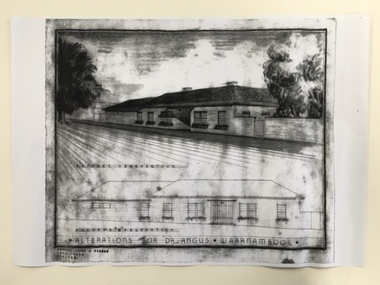
Document, Dr Angus residence plans, 1939
... Henderson (Birchwood). Dr Angus was a dominant figure in medical and community circles in Warrnambool for 30 years, becoming an important ophthalmologist in his later years. Birchwood, with its beautiful gardens, lawns and tennis court was suitable for entertaining and many distinguished people, including Vice-Regal personnel and representatives of the Red Cross stayed at the house. ...Henderson (Birchwood). Dr Angus was a dominant figure in medical and community circles in Warrnambool for 30 years, becoming an important ophthalmologist in his later years. Birchwood, with its beautiful gardens, lawns and tennis court was suitable for entertaining and many distinguished people, including Vice-Regal personnel and representatives of the Red Cross stayed at the house. ...These are plans for alterations to the residence and surgery of Dr Angus in Koroit Street, Warrnambool (Birchwood). Dr William Roy Angus (1901-1970), after several years practising as a doctor in South Australia and northern Victoria, came to Warrnambool in 1939, purchasing the practice of Dr John Hunter Henderson (Birchwood). Dr Angus was a dominant figure in medical and community circles in Warrnambool for 30 years, becoming an important ophthalmologist in his later years. Birchwood, with its beautiful gardens, lawns and tennis court was suitable for entertaining and many distinguished people, including Vice-Regal personnel and representatives of the Red Cross stayed at the house. It was also a meeting place for representatives of the many organizations with which Dr Angus was associated (over 20 groups including the Good Neighbour Council, the Boys’ Club, the Food For Britain appeal, the Historical Society, Rostrum and the National Fitness Council). Birchwood or earlier buildings on the site was used as a residence/surgery by many doctors in Warrnambool, going back to the 1860s and Dr Angus and his family lived there from 1939 to 1967. In 1998 Birchwood was demolished and a new Warrnambool Police Station was built on the site. These plans are of interest as they show the 1939 alterations to the building known as Birchwood in Koroit Street Warrnambool. We have a good floor plan and a drawing of the front of the building so we know what it looked like in the late 1930s. Both Birchwood and Dr Angus are important in Warrnambool’s history. These are four sheets showing alterations for the residence of Dr Angus (Birchwood) in Koroit Street Warrnambool. One sheet shows the front of the house in colour drawn in ink and pencil and paint and there is a copy of this in black and white. The other drawing is of the plans for the house drawn in pencil and ink and with some red and blue colouring. There is another exact copy of this sheet. dr william roy angus, birchwood, history of warrnambool -
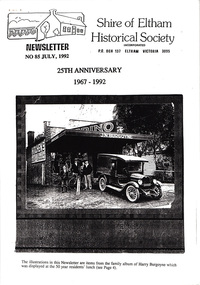 Eltham District Historical Society Inc
Newsletter, Newsletter, No. 85 July 1992
... Contents: • 25th Anniversary 1967-1992 • Twenty Fifth Anniversary Meeting Panel: Images of Eltham with David Armfield, Piers Bateman, Wendi Henderson, Hilary Jackman and Lesly Martin • Andrew Ross School House Museum Project • Lots of Other News • Eltham Heritage Mural • 50 Year Residents’ Lunch • Eltham Cultural Heritage Tour ...Contents: • 25th Anniversary 1967-1992 • Twenty Fifth Anniversary Meeting Panel: Images of Eltham with David Armfield, Piers Bateman, Wendi Henderson, Hilary Jackman and Lesly Martin • Andrew Ross School House Museum Project • Lots of Other News • Eltham Heritage Mural • 50 Year Residents’ Lunch • Eltham Cultural Heritage Tour The Shire of Eltham Historical Society was formed in October 1967. ...Contents: • 25th Anniversary 1967-1992 • Twenty Fifth Anniversary Meeting Panel: Images of Eltham with David Armfield, Piers Bateman, Wendi Henderson, Hilary Jackman and Lesly Martin • Andrew Ross School House Museum Project • Lots of Other News • Eltham Heritage Mural • 50 Year Residents’ Lunch • Eltham Cultural Heritage Tour The Shire of Eltham Historical Society was formed in October 1967. The first newsletter of the Society was issued May 1978 and has been published continuously ever since on a bi-monthly basis. With the cessation of the Shire of Eltham in late 1994, the Society's name was revised to Eltham District Historical Society and this name first appeared with issue No. 103, July 1995. The collection of the Society's newsletters provides a valuable resource on the history of the Society's activities, office bearers and committee members, guest speakers and subjects of historical interest pertinent to the former Shire of Eltham and the Eltham District.A4 photocopied newsletter distributed to membersnewsletter, eltham district historical society, shire of eltham historical society -
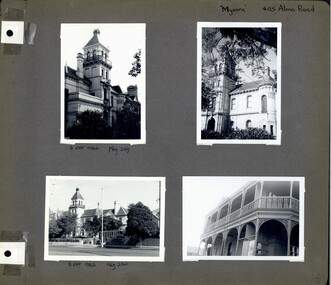 Glen Eira Historical Society
Album - Album page, Myoora, 405 Alma Road, Circa 1972
... Henderson. It was built in 1886 and 1887 for Thomas Christian, who had founded the fabled gold mine, the Day Dawn at Charters Towers. He never occupied the house ...This photograph is part of the Caulfield Historical Album 1972. This album was created in approximately 1972 as part of a project by the Caulfield Historical Society to assist in identifying buildings worthy of preservation. The album is related to a Survey the Caulfield Historical Society developed in collaboration with the National Trust of Australia (Victoria) and Caulfield City Council to identify historic buildings within the City of Caulfield that warranted the protection of a National Trust Classification. Principal photographer thought to be Trevor Hart, member of Caulfield Historical Society. Most photographs were taken between 1966-1972 with a small number of photographs being older and from unknown sources. All photographs are black and white except where stated, with 386 photographs over 198 pages. Myoora - Victorian Heritage Register (VHR) Number H0490 https://vhd.heritagecouncil.vic.gov.au/places/275 Myoora, 405 Alma Road, North Caulfield, was designed by Reed, Henderson & Smart and can be attributed to Anketell Henderson. It was built in 1886 and 1887 for Thomas Christian, who had founded the fabled gold mine, the Day Dawn at Charters Towers. He never occupied the house although his widow lived there for some time. The house was subdivided into three and later six flats. Myoora was one of many large mansions on broad acres with gardens in Caulfield. Perhaps the grandest was Labassa. The mansions date from the 1850s through to the late 1890s. The siting of Myoora on a ridge influenced its planning and composition. A central hall and corridor along the ridge is entered from the centre of the more formal north facade. The entrance is marked by an elaborately detailed tower. A stair turret provides a second accent. The western end of the building is completed by a massively detailed chimney as the service wing. The south facade enjoyed an outlook to port phillip from a two-storey cast iron verandah. Bay windows, chimneys, the tower and the turret and minor details are brought together in a sophisticated asymmetrical composition. This is reflected in the planning. The asymmetry of Myoora pivoting on the tower is the most notable feature of the building. The walls are built of cement rendered brick. The cement render has not been painted. The roof is slate. The balconies and verandah are cast iron. The footings and cellar are bluestone. The architectural firm Reed, Henderson & Smart was very prominent in Victoria in the nineteenth century. Anketell Henderson was an eminent and well respected member of the profession. He worked successfully in London and interstate as well as in Victoria. They were better known for commercial and public buildings. Myoora is an important private commission. The style of Myoora is a combination of details from the Continental and English Renaissance through the boom style and the Queen Anne style. There is also an early influence from the American Romanesque style especially in the stair turret. The latter style was important at the turn of the century and Myoora is a significant precursor. Other buildings of a similar scale survive in Caulfield and elsewhere. Labassa, the most fabulous, is quite different stylistically as are most of the other comparable mansions.Page 6 of Photograph Album including four black and white photographs of the mansion Myoora. Two photographs in the top half of the page are in portrait orientation while the two photographs in the bottom half of the page are in landscape orientation.Handwritten: "Myoora" 405 Alma Rd [top right hand corner] / 8 Oct 1966 Neg 229 [underneath top left photograph] / 8 Oct 1966 Neg 230 [underneath bottom left photograph] / 6 [bottom right]caulfield north, trevor hart, alma road, mansion, myoora, tower, lacework, arched windows, anketell henderson, thomas christian, 1880's, cement rendered brick, slate roof, cast iron verandah, cast iron balconies, bluestone footings, queen anne, american romanesque, bay windows, boom style, continental and english renaissance, cast iron work, reed henderson & smart, flats, gardens, asymmetrical style -
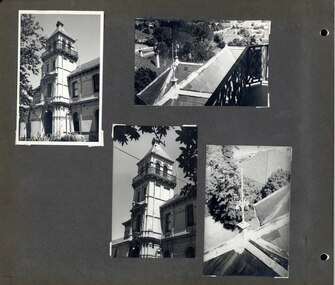 Glen Eira Historical Society
Album - Album page, Myoora, 405 Alma Road, Circa 1972
... Henderson. It was built in 1886 and 1887 for Thomas Christian, who had founded the fabled gold mine, the Day Dawn at Charters Towers. He never occupied the house ...This photograph is part of the Caulfield Historical Album 1972. This album was created in approximately 1972 as part of a project by the Caulfield Historical Society to assist in identifying buildings worthy of preservation. The album is related to a Survey the Caulfield Historical Society developed in collaboration with the National Trust of Australia (Victoria) and Caulfield City Council to identify historic buildings within the City of Caulfield that warranted the protection of a National Trust Classification. Principal photographer thought to be Trevor Hart, member of Caulfield Historical Society. Most photographs were taken between 1966-1972 with a small number of photographs being older and from unknown sources. All photographs are black and white except where stated, with 386 photographs over 198 pages. Myoora - Victorian Heritage Register (VHR) Number H0490 https://vhd.heritagecouncil.vic.gov.au/places/275 Myoora, 405 Alma Road, North Caulfield, was designed by Reed, Henderson & Smart and can be attributed to Anketell Henderson. It was built in 1886 and 1887 for Thomas Christian, who had founded the fabled gold mine, the Day Dawn at Charters Towers. He never occupied the house although his widow lived there for some time. The house was subdivided into three and later six flats. Myoora was one of many large mansions on broad acres with gardens in Caulfield. Perhaps the grandest was Labassa. The mansions date from the 1850s through to the late 1890s. The siting of Myoora on a ridge influenced its planning and composition. A central hall and corridor along the ridge is entered from the centre of the more formal north facade. The entrance is marked by an elaborately detailed tower. A stair turret provides a second accent. The western end of the building is completed by a massively detailed chimney as the service wing. The south facade enjoyed an outlook to port phillip from a two-storey cast iron verandah. Bay windows, chimneys, the tower and the turret and minor details are brought together in a sophisticated asymmetrical composition. This is reflected in the planning. The asymmetry of Myoora pivoting on the tower is the most notable feature of the building. The walls are built of cement rendered brick. The cement render has not been painted. The roof is slate. The balconies and verandah are cast iron. The footings and cellar are bluestone. The architectural firm Reed, Henderson & Smart was very prominent in Victoria in the nineteenth century. Anketell Henderson was an eminent and well respected member of the profession. He worked successfully in London and interstate as well as in Victoria. They were better known for commercial and public buildings. Myoora is an important private commission. The style of Myoora is a combination of details from the Continental and English Renaissance through the boom style and the Queen Anne style. There is also an early influence from the American Romanesque style especially in the stair turret. The latter style was important at the turn of the century and Myoora is a significant precursor. Other buildings of a similar scale survive in Caulfield and elsewhere. Labassa, the most fabulous, is quite different stylistically as are most of the other comparable mansions.Page 7 of Photograph Album including four black and white photographs. Three photos are in a portrait orientation and placed diagonally across the page from the top left hand side to the bottom right hand side. One photograph in a landscape orientation is on the top right hand side of the page. Handwritten: 007 (bottom left hand corner)caulfield north, trevor hart, alma road, mansion, myoora, tower, thomas christian, 1880's, queen anne, cement rendered brick, unpainted, balconies, verandahs, anketell henderson, continental and english renaissance, american romanesque, views, cast iron work, reed henderson & smart, flats, gardens, asymmetrical style, slate roofs -
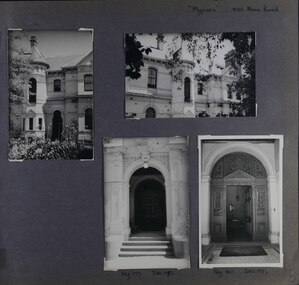 Glen Eira Historical Society
Album - Album page, Myoora, 405 Alma Road, Circa 1972
... Henderson. It was built in 1886 and 1887 for Thomas Christian, who had founded the fabled gold mine, the Day Dawn at Charters Towers. He never occupied the house ...This photograph is part of the Caulfield Historical Album 1972. This album was created in approximately 1972 as part of a project by the Caulfield Historical Society to assist in identifying buildings worthy of preservation. The album is related to a Survey the Caulfield Historical Society developed in collaboration with the National Trust of Australia (Victoria) and Caulfield City Council to identify historic buildings within the City of Caulfield that warranted the protection of a National Trust Classification. Principal photographer thought to be Trevor Hart, member of Caulfield Historical Society. Most photographs were taken between 1966-1972 with a small number of photographs being older and from unknown sources. All photographs are black and white except where stated, with 386 photographs over 198 pages.Myoora - Victorian Heritage Register (VHR) Number H0490 https://vhd.heritagecouncil.vic.gov.au/places/275 (as at 6/10/2020) Myoora, 405 Alma Road, North Caulfield, was designed by Reed, Henderson & Smart and can be attributed to Anketell Henderson. It was built in 1886 and 1887 for Thomas Christian, who had founded the fabled gold mine, the Day Dawn at Charters Towers. He never occupied the house although his widow lived there for some time. The house was subdivided into three and later six flats. Myoora was one of many large mansions on broad acres with gardens in Caulfield. Perhaps the grandest was Labassa. The mansions date from the 1850s through to the late 1890s. The siting of Myoora on a ridge influenced its planning and composition. A central hall and corridor along the ridge is entered from the centre of the more formal north facade. The entrance is marked by an elaborately detailed tower. A stair turret provides a second accent. The western end of the building is completed by a massively detailed chimney as the service wing. The south facade enjoyed an outlook to port phillip from a two-storey cast iron verandah. Bay windows, chimneys, the tower and the turret and minor details are brought together in a sophisticated asymmetrical composition. This is reflected in the planning. The asymmetry of Myoora pivoting on the tower is the most notable feature of the building. The walls are built of cement rendered brick. The cement render has not been painted. The roof is slate. The balconies and verandah are cast iron. The footings and cellar are bluestone. The architectural firm Reed, Henderson & Smart was very prominent in Victoria in the nineteenth century. Anketell Henderson was an eminent and well respected member of the profession. He worked successfully in London and interstate as well as in Victoria. They were better known for commercial and public buildings. Myoora is an important private commission. The style of Myoora is a combination of details from the Continental and English Renaissance through the boom style and the Queen Anne style. There is also an early influence from the American Romanesque style especially in the stair turret. The latter style was important at the turn of the century and Myoora is a significant precursor. Other buildings of a similar scale survive in Caulfield and elsewhere. Labassa, the most fabulous, is quite different stylistically as are most of the other comparable mansions. Stonnington is perhaps closer but relies on different details from the Queen Anne style and lacks any American influence. For its historical associations through its owners and architects, for its style and composition and for its intactness, Myoora is significant at a State level. The craftmanship of Myoora is what could be expected of a building of the time and type. It is relatively intact and in fair condition. The main staircase has been removed, minor alterations to decorative features have occurred and additions have been made to the exterior.Page 8 of Photograph Album including four black and white photographs. Three photos are in a portrait orientation, one on the left hand side of the page with the other two in the bottom part of the page. One photograph in a landscape orientation is on the top right hand side of the page. Handwritten: "Myoora" 405 Alma Rd [top right hand corner] / Neg 179 DEC 1972 [underneath bottom left photograph] / Neg 180 DEC 1972 [underneath bottom right photograph] / 8 [bottom right]caulfield north, trevor hart, alma road, mansion, myoora, tower, thomas christian, 1880's, queen anne, cement rendered brick, unpainted, balconies, verandahs, anketell henderson, continental and english renaissance, american romanesque, views, cast iron work, reed henderson & smart, flats, gardens, asymmetrical style, slate roofs, entrances
