Showing 32 items matching "heroes avenue"
-
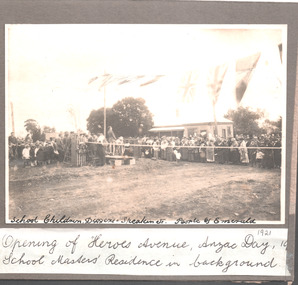
Emerald Museum & Nobelius Heritage ParkPhotograph - Mounted Photograph, 25/4/1921
... ...heroes avenue...Photograph mounted on card of the opening of Heroes Avenue, Emerald on ANZAC Day 1921. Showing opening of Heroes Avenue...People of Emerald. Opening of Heroes Avenue, ANZAC Day 1921, School Masters' Residence in background...Heroes Avenue, Emerald, Victoria, Australia...The trees planted in the Avenue came from the Nobelius Nursery. anzac heroes avenue avenue of honor emerald School Children, Diggers + Speakers ect. ...The object is historically and socially significant as it shows the opening of Heroes Avenue (Avenue of Honor) three years after the end of Word War I. The trees planted in the Avenue came from the Nobelius Nursery.Photograph mounted on card of the opening of Heroes Avenue, Emerald on ANZAC Day 1921. Showing opening of Heroes AvenueSchool Children, Diggers + Speakers ect. People of Emerald. Opening of Heroes Avenue, ANZAC Day 1921, School Masters' Residence in backgroundanzac, heroes avenue, avenue of honor, emerald -
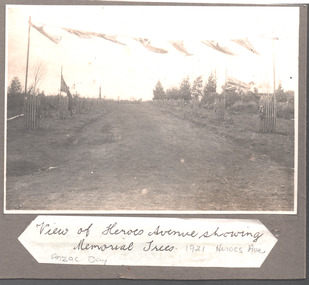
Emerald Museum & Nobelius Heritage ParkPhotograph - Mounted Photograph, 25/4/1921
... ...heroes avenue...Photograph mounted on card of the opening of Heroes Avenue, Emerald on ANZAC Day 1921. Showing The newly planted memorial trees.....View of Heroes Avenue showing Memorial Trees. ANZAC Day 1921 Heroes Ave...Heroes Avenue, Emerald, Victoria, Australia...The trees planted in the Avenue came from the Nobelius Nursery. anzac heroes avenue avenue of honor emerald View of Heroes Avenue showing Memorial Trees. ...The object is historically and socially significant as it shows the opening of Heroes Avenue (Avenue of Honor) three years after the end of Word War I. The trees planted in the Avenue came from the Nobelius Nursery.Photograph mounted on card of the opening of Heroes Avenue, Emerald on ANZAC Day 1921. Showing The newly planted memorial trees..View of Heroes Avenue showing Memorial Trees. ANZAC Day 1921 Heroes Aveanzac, heroes avenue, avenue of honor, emerald -
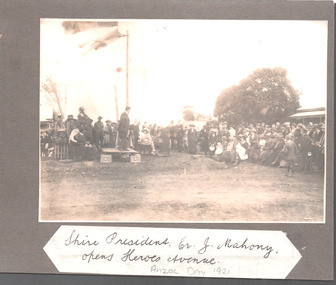
Emerald Museum & Nobelius Heritage ParkPhotograph - Mounted Photograph, 25/4/1921
... ...heroes avenue...Photograph mounted on card of the opening of Heroes Avenue, Emerald on ANZAC Day 1921. Showing Shire President Cr J Mahony opening the Avenue...Shire President Cr J Mahony, opens Heroes Avenue. ANZAC Day 1921...Heroes Avenue, Emerald, Victoria, Australia...The trees planted in the Avenue came from the Nobelius Nursery. anzac heroes avenue avenue of honor emerald Shire President Cr J Mahony, opens Heroes Avenue. ...The object is historically and socially significant as it shows the opening of Heroes Avenue (Avenue of Honor) three years after the end of Word War I. The trees planted in the Avenue came from the Nobelius Nursery.Photograph mounted on card of the opening of Heroes Avenue, Emerald on ANZAC Day 1921. Showing Shire President Cr J Mahony opening the AvenueShire President Cr J Mahony, opens Heroes Avenue. ANZAC Day 1921anzac, heroes avenue, avenue of honor, emerald -
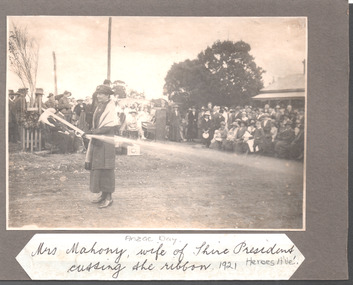
Emerald Museum & Nobelius Heritage ParkPhotograph - Mounted Photograph, 25/4/1921
... ...heroes avenue...Photograph mounted on card of the opening of Heroes Avenue, Emerald on ANZAC Day 1921. Showing Mrs Mahony cutting the ribbon....Heroes Avenue, Emerald, Victoria, Australia...The trees planted in the Avenue came from the Nobelius Nursery. anzac heroes avenue avenue of honor emerald Mrs Mahony, wife of Shire President, cutting the ribbon. ...The object is historically and socially significant as it shows the opening of Heroes Avenue (Avenue of Honor) three years after the end of Word War I. The trees planted in the Avenue came from the Nobelius Nursery.Photograph mounted on card of the opening of Heroes Avenue, Emerald on ANZAC Day 1921. Showing Mrs Mahony cutting the ribbon.Mrs Mahony, wife of Shire President, cutting the ribbon. ANZAC Day 1921 Heroes Aveanzac, heroes avenue, avenue of honor, emerald -
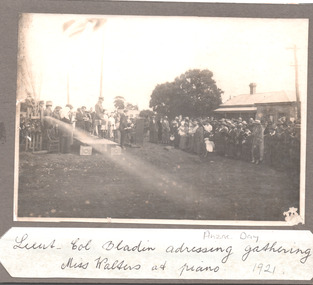
Emerald Museum & Nobelius Heritage ParkPhotograph - Mounted Photograph, 25/4/1921
... ...heroes avenue...Photograph mounted on card of the opening of Heroes Avenue, Emerald on ANZAC Day 1921. Showing Lieutenant-Colonel Bladin addressing the gathering....Heroes Avenue, Emerald, Victoria, Australia...The trees planted in the Avenue came from the Nobelius Nursery. anzac heroes avenue avenue of honor emerald Lieu-Col Bladin adressing gathering Miss Waters at piano. ...The object is historically and socially significant as it shows the opening of Heroes Avenue (Avenue of Honor) three years after the end of Word War I. The trees planted in the Avenue came from the Nobelius Nursery.Photograph mounted on card of the opening of Heroes Avenue, Emerald on ANZAC Day 1921. Showing Lieutenant-Colonel Bladin addressing the gathering.Lieu-Col Bladin adressing gathering Miss Waters at piano. ANZAC Day 1921anzac, heroes avenue, avenue of honor, emerald -

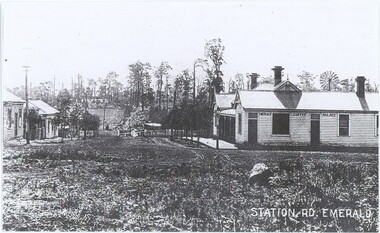
Emerald Museum & Nobelius Heritage ParkPhotograph, Station Rd, Emerald, c. 1907
... Kilvington Drive-Heroes Avenue Corner, Emerald, Victoria, Australia ...There are seven other copies of this photograph in our collection, mostly differing in the placement of the label and the cropping of the photograph. This is itself a copy of the original. One of these copies is also accessioned as VEMUP0456.2. This c. 1907 photograph was taken from the intersection of Beaconsfield Road (now Kilvington Drive) and Station Road (now Puffing Billy Place), looking towards Emerald Railway Station. It looks past the Emerald Coffee Palace, a significant establishment serving coffee, wine, and more - a room in the back was even used as a visiting doctor's surgery. The Coffee Palace was, at the time, owned by the O'Connor family and run by Mrs Greatorex. At this time it was relatively new - the second centre of Emerald, around Kilvington Drive, mostly materialised thanks to the location of the railway station. The location of the railway is visible, but from this angle the station and tracks are not visible. While the annotation lists that the photograph was taken in 1889, the visibility of a gate (contra the annotation) and existence of this second town centre - which grew around the station - suggests that other sources lisitng 1907 are closer to accuracy. Note the posts in front of the Palace - used to tie horses in this time before cars became dominant. There are elevated wires visible running along the left side of the street, which resemble power lines but at this time are more likely to have instead been telegraph cables.This photograph recounts the growth of Emerald's second town centre around the railway station.This item is a black and white copy of an older photograph. It depicts an unpaved street leading down a hill to a gate and fence, with several shops to either side. There is a lamp post on the street corner on the right, and a telegraph line running along the left side. In the background, the slope rises back up to a hill with fields and scattered trees.Bottom-right: "STATION RD. EMERALD" Building in the photograph: "EMERALD COFFEE PALACE" Reverse: "Coffee Palace was guest house / Note no gates this was before the railway Puffing Billy came through. / Note posts to tie horses to outside the palace. / O'Connors owned Coffee Palace. / Windmill in back of Palace - bore for water. 1889."emerald coffee palace, emerald, commerce, 1900s -
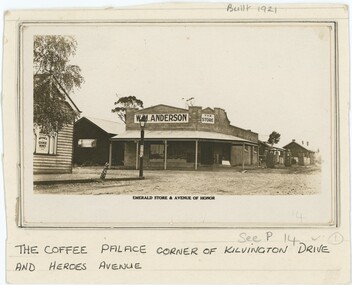
Emerald Museum & Nobelius Heritage ParkPhotograph, Emerald Store & Avenue of Honor, 1920s-1940s
... Anderson's store on the corner of what is now Kilvington Drive and Heroes Avenue. At the time, these may have respectively been Beaconsfield Road and, according to the label, Avenue of Honor. ...Obverse: Backing, Top: "Built 1921" Backing, Bottom: "THE COFFEE PALACE CORNER OF KILVINGTON DRIVE / AND HEROES AVENUE" Photograph, Printed Text Below Image: "EMERALD STORE & AVENUE OF HONOR" Photograph, Sign in Left of Image: "IRVINE'S / CHOICE WINES" Photograph, Sign in Centre-Left of Image: "W. ...Anderson's store on the corner of what is now Kilvington Drive and Heroes Avenue. At the time, these may have respectively been Beaconsfield Road and, according to the label, Avenue of Honor. ...This photograph depicts W. M. Anderson's store on the corner of what is now Kilvington Drive and Heroes Avenue. At the time, these may have respectively been Beaconsfield Road and, according to the label, Avenue of Honor. Anderson's store is believed to have been built by the Stillwell family in 1921, but Anderson had his store at least from 1923 and therefore likely owned it from the point of its first construction. By the late 1940s, Anderson's had become Legge's General Store. It is difficult to determine precisely when within that range this photograph was taken, although one local history page attributes it to the earlier end of the range. We believe Anderson's store was on the corner now occupied by Grace and Louie Booksellers.This photograph captures a now-unfamiliar store in a familiar part of old Emerald, documenting the changes to the commercial landscape over the past century.This black and white photograph is attached to a card backing. The backing is annotated in pen below the photograph, describing its location. Other pencil annotation is present on the obverse and reverse of the backing. The photograph shows a store on the street corner, with a porch shading the walkway in front of the building and other shops along the street. On the corner closer top the camera and across from the store is a lamp post, with another shop besides it. On the photograph paper itself is another annotation, this one printed. Obverse: Backing, Top: "Built 1921" Backing, Bottom: "THE COFFEE PALACE CORNER OF KILVINGTON DRIVE / AND HEROES AVENUE" Photograph, Printed Text Below Image: "EMERALD STORE & AVENUE OF HONOR" Photograph, Sign in Left of Image: "IRVINE'S / CHOICE WINES" Photograph, Sign in Centre-Left of Image: "W. M. ANDERSON" Photograph, Sign in Centre of Image: "THE / STORE" Reverse: "Built in 1921 By Stillwell. / Andersons Store - later Legge's"emerald, 1920s, 1930s, commerce -
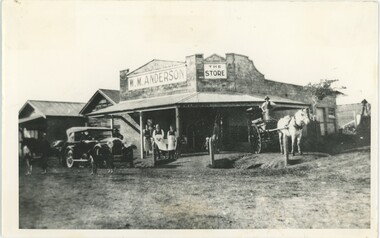
Emerald Museum & Nobelius Heritage ParkPhotograph - W. M. Anderson Store, 1920s-40s
... Anderson's store on the corner of what is now Kilvington Drive and Heroes Avenue. At the time, these may have respectively been Beaconsfield Road and, according to the label, Avenue of Honor. ...A section of handwriting is illegible due to damage, but likely read 'Heroes Avenue' or 'Avenue of Honour'....A section of handwriting is illegible due to damage, but likely read 'Heroes Avenue' or 'Avenue of Honour'. Photograph W. ...This photograph depicts W. M. Anderson's store on the corner of what is now Kilvington Drive and Heroes Avenue. At the time, these may have respectively been Beaconsfield Road and, according to the label, Avenue of Honor. Anderson's store is believed to have been built by the Stillwell family in 1921, but Anderson had his store at least from 1923 and therefore likely owned it from the point of its first construction. By the late 1940s, Anderson's had become Legge's General Store. It is difficult to determine precisely when within that range this photograph was taken. We believe Anderson's store was on the corner now occupied by Grace and Louie Booksellers. Some of the people in the photograph include Bill Anderson with Albert Legge, and Leo Hirst - employees of Anderson - in the center-left, and George Davey standing in the cart.This photograph captures a now-unfamiliar store in a familiar part of old Emerald, documenting the changes to the commercial landscape over the past century.This black and white photograph depicts a store on a street corner, with a porch covering the walkway outside and several signs on the building, along with writing on the end of the porch covering. In the left of the frame is a car, with two dogs, a horse, and a man surrounding it; in the right, a man strands on a horsecart drawn by a white horse. In the center-left are three men wearing aprons with a child besides them, while in the center a woman and child stand in the doorway. In the background, other buildings continue down both streets. The reverse is annotated, and has six rectangular artefacts where adhesive was once applied. A section of handwriting is illegible due to damage, but likely read 'Heroes Avenue' or 'Avenue of Honour'.Reverse: "Built in 1921 / Cr [illegible] & Kilvington / Cross reference 56" Obverse: In Photograph Sign, Left: "W. M. ANDERSON" In Photograph Sign, Right: "THE / STORE" In Photograph, Porch: "W.M.ANDERSON [illegible]"emerald, commerce, 1920s, 1930s, 1940s -
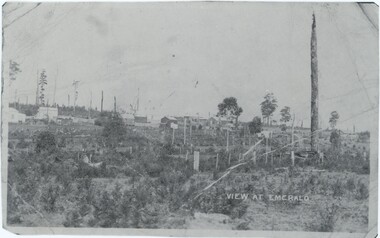
Emerald Museum & Nobelius Heritage ParkPhotograph, View at Emerald, 1898
... Notes associated with this photograph indicate both that it was taken at the end of Heroes Avenue and that it was taken on 'Monbulk Road' - while these notes might simply be incorrect, it may also indicate that this may have been taken at what is now the intersection of Heroes Avenue and either Beaconsfield-Emerald Road or Kilvington Drive, potentially at the time under a different or incorrect name. ...Emerald Museum & Nobelius Heritage Park 5 Crichton Rd Emerald yarra-valley-and-the-dandenong-ranges Notes associated with this photograph indicate both that it was taken at the end of Heroes Avenue and that it was taken on 'Monbulk Road' - while these notes might simply be incorrect, it may also indicate that this may have been taken at what is now the intersection of Heroes Avenue and either Beaconsfield-Emerald Road or Kilvington Drive, potentially at the time under a different or incorrect name. ...Notes associated with this photograph indicate both that it was taken at the end of Heroes Avenue and that it was taken on 'Monbulk Road' - while these notes might simply be incorrect, it may also indicate that this may have been taken at what is now the intersection of Heroes Avenue and either Beaconsfield-Emerald Road or Kilvington Drive, potentially at the time under a different or incorrect name. This photograph was taken in 1898 when Emerald was much less densely occupied as a growing town amidst Nobelius' nursery.This photograph captures a side of Emerald that no longer exists, looking at the growing town from an outside that has long since been encompassed by the town.A black and white photograph of a landscape, with various buildings in the background and the road in the foreground. The photograph is quite small, which means scans of it are at quite a low resolution. There are several markings and copies of fold marks preserved from the original.Label: "VIEW AT EMERALD" Later note, rear of copy: "Heroes Ave end. 1898."emerald, 1890s -
Emerald Museum & Nobelius Heritage ParkPhotograph - Emerald Primary School Class Photograph 1984
... The school was relocated to its current site in Heroes Avenue, Emerald in 1915 and is the largest primary school in the area. ...The school was relocated to its current site in Heroes Avenue, Emerald in 1915 and is the largest primary school in the area. ...Emerald Primary School has been educating the children of the town and district since 1879. The school was relocated to its current site in Heroes Avenue, Emerald in 1915 and is the largest primary school in the area. This is a class photo of Emerald Primary School, Grade 6C, 1984 and it is one of a group of school photographs 1984-1995 held at the Museum.School photographs are not only an important historical record of a school but they are valued by ex-students as a memory of their school days.Formal color photograph of a Grade 6 class at Emerald Primary Schoolemerald primary school, 1984, school photo -
Emerald Museum & Nobelius Heritage ParkPhotograph - Emerald Primary School Class Photographs 1986
... The school was relocated to its current site in Heroes Avenue, Emerald in 1915 and is the largest primary school in the area. ...The school was relocated to its current site in Heroes Avenue, Emerald in 1915 and is the largest primary school in the area. ...Emerald Primary School has been educating the children of the town and district since 1879. The school was relocated to its current site in Heroes Avenue, Emerald in 1915 and is the largest primary school in the area. These photos of seven different classes at Emerald Primary School, 1986, is one of a collection of school photographs 1984-1995 held at the Museum.School photographs are not only an important historical record of a school but they are valued by ex-students as a memory of their school days.Formal color photographs (seven) of class groups at Emerald Primary Schoolemerald primary school, school photo, 1986 -
Emerald Museum & Nobelius Heritage ParkPhotograph - Emerald Primary School Class Photographs 1989, 1989
... The school was relocated to its current site in Heroes Avenue, Emerald in 1915 and is the largest primary school in the area. ...The school was relocated to its current site in Heroes Avenue, Emerald in 1915 and is the largest primary school in the area. ...Emerald Primary School has been educating the children of the town and district since 1879. The school was relocated to its current site in Heroes Avenue, Emerald in 1915 and is the largest primary school in the area. These are class photos of 15 different classes at Emerald Primary School in 1989, and it is one of a group of school photographs 1984-1995 held at the Museum.School photographs are not only an important historical record of a school but they are valued by ex-students as a memory of their school days.Formal color photographs (fifteen) of 1989 classes at Emerald Primary Schoolemerald primary school, school photo, 1988 -
Emerald Museum & Nobelius Heritage ParkPhotograph - Emerald Primary School Class Photographs 1992
... The school was relocated to its current site in Heroes Avenue, Emerald in 1915 and is the largest primary school in the area. ...The school was relocated to its current site in Heroes Avenue, Emerald in 1915 and is the largest primary school in the area. ...Emerald Primary School has been educating the children of the town and district since 1879. The school was relocated to its current site in Heroes Avenue, Emerald in 1915 and is the largest primary school in the area. These photos of 14 different classes at Emerald Primary School, 1992, is one of a collection of school photographs 1984-1995 held at the Museum.School photographs are not only an important historical record of a school but they are valued by ex-students as a memory of their school days.Formal color photographs (14) of class groups at Emerald Primary School in 1992.emerald primary school, school photo, 1992 -
Emerald Museum & Nobelius Heritage ParkPhotograph - Emerald Primary School Teacher Group Photographs 1995
... The school was relocated to its current site in Heroes Avenue, Emerald in 1915 and is the largest primary school in the area. ...The school was relocated to its current site in Heroes Avenue, Emerald in 1915 and is the largest primary school in the area. ...Emerald Primary School has been educating the children of the town and district since 1879. The school was relocated to its current site in Heroes Avenue, Emerald in 1915 and is the largest primary school in the area. These two photos of the teacher group at Emerald Primary School, 1995, is one of a collection of school photographs 1984-1995 held at the Museum.School photographs are not only an important historical record of a school but they are valued by ex-students as a memory of their school days.Formal color photographs (2) of the teachers at Emerald Primary School in 1995.emerald primary school, school photo, 1995 -
Emerald Museum & Nobelius Heritage ParkPhotograph - Emerald Primary School Class Photographs 1988
... The school was relocated to its current site in Heroes Avenue, Emerald in 1915 and is the largest primary school in the area. ...The school was relocated to its current site in Heroes Avenue, Emerald in 1915 and is the largest primary school in the area. ...Emerald Primary School has been educating the children of the town and district since 1879. The school was relocated to its current site in Heroes Avenue, Emerald in 1915 and is the largest primary school in the area. These are class photos of a 1988 Grade 5 class and of a 1988 Grade 6 class of Emerald Primary School and it is one of a group of school photographs 1984-1995 held at the Museum.School photographs are not only an important historical record of a school but they are valued by ex-students as a memory of their school days.Formal color photographs (two) of a 1988 Grade 5 and Grade 6 class at Emerald Primary Schoolemerald primary school, school photo, 1988 -
Emerald Museum & Nobelius Heritage ParkPhotograph - Emerald Primary School Staff and Student Photographs 1990
... The school was relocated to its current site in Heroes Avenue, Emerald in 1915 and is the largest primary school in the area. ...The school was relocated to its current site in Heroes Avenue, Emerald in 1915 and is the largest primary school in the area. ...Emerald Primary School has been educating the children of the town and district since 1879. The school was relocated to its current site in Heroes Avenue, Emerald in 1915 and is the largest primary school in the area. These photos of three different classes at Emerald Primary School and one staff group photo, 1990, is one of a collection of school photographs 1984-1995 held at the Museum.School photographs are not only an important historical record of a school but they are valued by ex-students as a memory of their school days.Formal color photographs (three) of class groups at Emerald Primary School in 1990 and one staff group photo of the same year.emerald primary school, school photo, 1990 -
Emerald Museum & Nobelius Heritage ParkPhotograph - Emerald Primary School Class Photographs 1991
... The school was relocated to its current site in Heroes Avenue, Emerald in 1915 and is the largest primary school in the area. ...The school was relocated to its current site in Heroes Avenue, Emerald in 1915 and is the largest primary school in the area. ...Emerald Primary School has been educating the children of the town and district since 1879. The school was relocated to its current site in Heroes Avenue, Emerald in 1915 and is the largest primary school in the area. These photos of 22 different classes and of one staff group photo at Emerald Primary School, 1991, is one of a collection of school photographs 1984-1995 held at the Museum.School photographs are not only an important historical record of a school but they are valued by ex-students as a memory of their school days.Formal color photographs (22) of class groups and one staff group photo at Emerald Primary School in 1991.emerald primary school, school photo, 1986 -
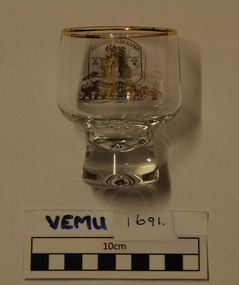
Emerald Museum & Nobelius Heritage ParkEmerald School Centenary Glass
... In 1915 a permanent school was built in Heroes Avenue where it remains today. The celebration of the centenary in 1979 was a large community event involving former and current students and staff as well as local residents....In 1915 a permanent school was built in Heroes Avenue where it remains today. The celebration of the centenary in 1979 was a large community event involving former and current students and staff as well as local residents. ...The first school in the Emerald District No.2110 opened with 25 students in 1879 in a rented room on Avon Rd, East Emerald (now Avonsleigh). That school was closed in 1909 and the Emerald State School No.3381 was opened in the Emerald township. In 1915 a permanent school was built in Heroes Avenue where it remains today. The celebration of the centenary in 1979 was a large community event involving former and current students and staff as well as local residents.This is a souvenir of the centenary celebrations of the Emerald Primary School 1879-1979Set of 3 glasses; one small and two larger ones. Gilt rim and 2 gold emblems on the sides.Emerald Schools' Centenary 1879-1979 on front. Picture on back of bullock dray pulling a large log on a wagon.emerald primary school; -
Emerald Museum & Nobelius Heritage ParkFilm - 16 mm video tape recording, Graeme Legge, Emerald School Centenary 1979, 1979
... The school was relocated to its current site in Heroes Avenue, Emerald in 1915 and is the largest primary school in the area. ...The school was relocated to its current site in Heroes Avenue, Emerald in 1915 and is the largest primary school in the area. ...Emerald Primary School has been educating the children of the town and district since its inception in 1879 in East Emerald (now Avonsleigh). The school was relocated to its current site in Heroes Avenue, Emerald in 1915 and is the largest primary school in the area. The celebration of the centenary in 1979 was a large community event involving former and current students and staff as well as local residents. This recording of the event on film was later updated to a VHS tape. tHistorical view of school life at Emerald in 197916 mm Video recording in plastic caseEmerald School Centenary 1979 - G.Leggeemerald primary school, centenary, 1879-1979 -
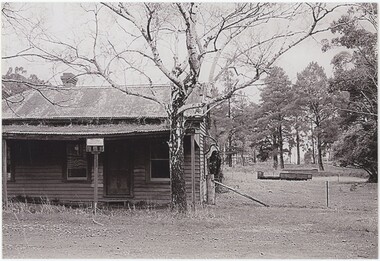
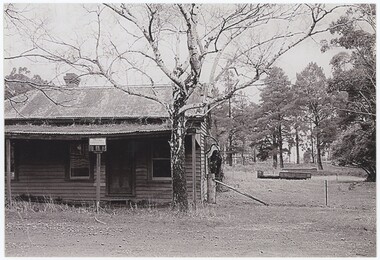
Emerald Museum & Nobelius Heritage ParkPhotograph - Emerald Grocery Near Station, 1901
... Anderson moved to a new and more lasting location - the corner of Kilvington Drive and Heroes Avenue, where until recently a bookshop was located - at the start of the 1920s, but this older store was in a different location closer to the station. ...Anderson moved to a new and more lasting location - the corner of Kilvington Drive and Heroes Avenue, where until recently a bookshop was located - at the start of the 1920s, but this older store was in a different location closer to the station. ...The store in this image belonged to W. M. Anderson, near an Emerald Station which as of 1901 would have been open for less than a year. Anderson moved to a new and more lasting location - the corner of Kilvington Drive and Heroes Avenue, where until recently a bookshop was located - at the start of the 1920s, but this older store was in a different location closer to the station. Two other photos of the same scene are in the collection: VEMUP1011.2 is identical, and VEMUP1011.1 is from a different angle.This image captures an important Emerald institution from the turn of the century, displaying the nature of the town at that time.This black and white photograph features a wooden shop with a corrugated steel roof and porch awning. The shop takes up the left half of the photograph, while the landscape on the right half continues past a wire fence to a flat field, with trees in the far background. In the centre of the foreground, a tree with few leaves stands in front of the building, between it and the road the photographer is standing on. The photograph is printed on modern photograph paper.Reverse, Pen: "Emerald Grocery, Anderson's 1901 Near Station" Reverse, Pencil: "EMERALD GROCERY"emerald, commerce, 1900s -
Emerald Museum & Nobelius Heritage ParkPhotograph - Emerald Grocery Near Station, 1901
... Anderson moved to a new and more lasting location - the corner of Kilvington Drive and Heroes Avenue, where until recently a bookshop was located - at the start of the 1920s, but this older store was in a different location closer to the station. ...Anderson moved to a new and more lasting location - the corner of Kilvington Drive and Heroes Avenue, where until recently a bookshop was located - at the start of the 1920s, but this older store was in a different location closer to the station. ...The store in this image belonged to W. M. Anderson, near an Emerald Station which as of 1901 would have been open for less than a year. Anderson moved to a new and more lasting location - the corner of Kilvington Drive and Heroes Avenue, where until recently a bookshop was located - at the start of the 1920s, but this older store was in a different location closer to the station. Two other photos of the same scene are in the collection: VEMUP1011 is identical, and VEMUP1011.1 is from a different angle.This image captures an important Emerald institution from the turn of the century, displaying the nature of the town at that time.This black and white photograph features a wooden shop with a corrugated steel roof and porch awning. The shop takes up the left half of the photograph, while the landscape on the right half continues past a wire fence to a flat field, with trees in the far background. In the centre of the foreground, a tree with few leaves stands in front of the building, between it and the road the photographer is standing on. The photograph is printed on modern photograph paper.Reverse, Pencil: "EMERALD GROCERY"emerald, commerce, 1900s -
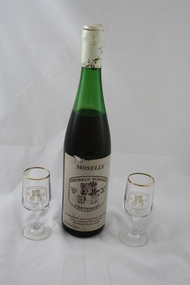
Emerald Museum & Nobelius Heritage ParkSouvenir - Bottle of Wine & two Sherry glasses, Emerald State School Centenary 1979, 1979
... In 1915 a permanent school was built in Heroes Avenue where it remains today. The celebration of the centenary in 1979 was a large community event involving former and current students and staff as well as local residents. ...In 1915 a permanent school was built in Heroes Avenue where it remains today. The celebration of the centenary in 1979 was a large community event involving former and current students and staff as well as local residents. ...The first school in the Emerald District No.2110 opened with 25 students in 1879 in a rented room on Avon Rd, East Emerald (now Avonsleigh). That school was closed in 1909 and the Emerald State School No.3381 was opened in the Emerald township. In 1915 a permanent school was built in Heroes Avenue where it remains today. The celebration of the centenary in 1979 was a large community event involving former and current students and staff as well as local residents. These glasses were made as souvenirs for that event.These glasses are souvenirs of the celebration of the centenary of the Emerald Primary School 1879-1979.Bottle has picture of state school with front gate on it.Sherry glasses have picture of front gate of school with tree growing nearbyEmerald state school inscribed with PS No.2110 1879-1909 . PS3381 1901-1979centenary/ emerald primary school -
Emerald Museum & Nobelius Heritage ParkPhotograph - Emerald Grocery Near Station, 1901
... Anderson moved to a new and more lasting location - the corner of Kilvington Drive and Heroes Avenue, where until recently a bookshop was located - at the start of the 1920s, but this older store was in a different location closer to the station. ...Anderson moved to a new and more lasting location - the corner of Kilvington Drive and Heroes Avenue, where until recently a bookshop was located - at the start of the 1920s, but this older store was in a different location closer to the station. ...The store in this image belonged to W. M. Anderson, near an Emerald Station which as of 1901 would have been open for less than a year. Anderson moved to a new and more lasting location - the corner of Kilvington Drive and Heroes Avenue, where until recently a bookshop was located - at the start of the 1920s, but this older store was in a different location closer to the station. Two other photos of the same scene are in the collection: VEMUP1011 and VEMUP1011.2 are identical copies of a different angle than that shown in VEMU1011.1/.This image captures an important Emerald institution from the turn of the century, displaying the nature of the town at that time.This black and white photograph features a wooden shop with a corrugated steel roof and porch awning. The shop is viewed from an angle, with its side and front taking up the left half of the photograph, while on the right side a dirt road continues out of frame and a flat, tree-scattered landscape stands between this building and the next building along the road. Two trees stand in front of the building, between it and the road the photographer is standing on. The photograph is printed on modern photograph paper.Reverse, Pen: "Emerald Grocer Mr Anderson Station St Emerald / 1901" Obverse, sign on building in photograph: "Cycle Parts / Repairs / Saddlery"emerald, 1900s, commerce -
Emerald Museum & Nobelius Heritage ParkMemorabilia - Commemorative Spoon, 1979
... In 1915 a permanent school was built in Heroes Avenue where it remains today. The celebration of the centenary in 1979 was a large community event involving former and current students and staff as well as local residents. ...In 1915 a permanent school was built in Heroes Avenue where it remains today. The celebration of the centenary in 1979 was a large community event involving former and current students and staff as well as local residents. ...The first school in the Emerald District No.2110 opened in 1879 with 25 students in a rented room on Avon Rd, East Emerald (now Avonsleigh). That school was closed in 1909 and the Emerald State School No.3381 was opened in the Emerald township. In 1915 a permanent school was built in Heroes Avenue where it remains today. The celebration of the centenary in 1979 was a large community event involving former and current students and staff as well as local residents. The donor bought souvenir spoons, including this one, for her children who were students at the time.This spoon commemorates the centenary of the Emerald Primary School 1879-1979.Commemorative silver-plated teaspoon with a round metal green and gold plaque on the handle with an image of the school and commemorative information. The spoon is mounted on a faux velvet cardboard lining in a clear plastic display case.On plaque on handle: 'EMERALD SCHOOL CENTENARY / 1879-1979' On lining at the top in gold lettering: 'Stokes'emerald state school -
Emerald Museum & Nobelius Heritage ParkProgramme, N. K. Gill, Back to Emerald, 1965
... In 1915 a permanent school was built in Heroes Avenue where it remains today. This celebration of Emerald settlement history which took place in 1965 was a fund raiser for the State School and included a procession the highlight of which was a local bullock team. ...In 1915 a permanent school was built in Heroes Avenue where it remains today. This celebration of Emerald settlement history which took place in 1965 was a fund raiser for the State School and included a procession the highlight of which was a local bullock team. ...The first school in the Emerald District No.2110 opened in 1879 with 25 students in a rented room on Avon Rd, East Emerald (now Avonsleigh). That school was closed in 1909 and the Emerald State School No.3381 was opened in the Emerald township. In 1915 a permanent school was built in Heroes Avenue where it remains today. This celebration of Emerald settlement history which took place in 1965 was a fund raiser for the State School and included a procession the highlight of which was a local bullock team. The programme information shows a high level of community involvement in these celebrations.This celebration shows a small community working together to honour their heritage, have fun and support their local school.Four-page programme. Black print on manila coloured paper. On front of programme: ' OFFICIAL PROGRAMME / 'BACK TO EMERALD / Saturday, October 23rd, 1965' [and other printed information]back to emerald, emerald state school, 1965 -
Emerald Museum & Nobelius Heritage ParkFilm - VHS tape recording, Graeme Legge, Emerald School Centenary 1979, 1979
... The school was relocated to its current site in Heroes Avenue, Emerald in 1915 and is the largest primary school in the area. ...The school was relocated to its current site in Heroes Avenue, Emerald in 1915 and is the largest primary school in the area. ...Emerald Primary School (EPS) has been educating the children of the town and district since its inception in 1879 in East Emerald (now Avonsleigh). The school was relocated to its current site in Heroes Avenue, Emerald in 1915 and is the largest primary school in the area. The celebration of the EPS centenary in 1979 was a large community event involving former and current students and staff as well as local residents. VHS (Video Home System) tapes are now discontinued but were the dominant home video format during the 1980s and 1990s. At some point during that time the original film of the 1979 centenary celebrations was transferred to this VHS tape.Historical view of school life at Emerald in 1979VHS (Video Home System) tape in clear plastic containerEmerald School Centenary 1979 - G.Leggeemerald primary school, centenary, 1879-1979 -
Eltham District Historical Society IncNewspaper - News Clipping, Herald, The big Eltham clean-up gets under way, Herald, 4 March, p3, 1965
... Emphasis of the tragic loss of a member of a pioneering family who died whilst helping others in his community Bushfire cfa country fire authority Fire Brigrade Glen Park Road Heroes John Lawrence Coleman North Eltham Victorian Bushfires - 1965 Volunteers William John Elwers Fire Fighter Frank Martin George John Crowe Ken Gaston Orchard Avenue Doug Mummery Helen Oliver Mrs Henry Marsden Mrs Moureen Ellis Newsprint The big Eltham clean-up gets under way, Herald, 4 March, p3 Newspaper News Clipping Herald ...Full page newspaper clipping featuring the March 1965 Victorian bushfires. Items include: Photograph - TWO-WOMAN BUCKET BRIGADE, Mrs Henry Marsden (left) and Mrs Moureen Ellis, whose fire-fighting efforts yesterday were highly praised today by their Eltham neighbours, carry out mopping-up operations Photograph - DOGS MADE HOMELESS by the fire in North Eltham yesterday are being cared for at First-Constable Doug. Mummery's kennels at Eltham and here is kennel maid Helen Oliver, 17, with some of them today. The two basset hounds are owned by Mr Bill Guy who lost about 100 daschund and basset hound puppies and dogs in the fire. Photograph - He died at Eltham [Picture of John Lawrence Coleman] Builder Mr John Lawrence Coleman, 31, of Main Rd., Eltham, one of three men burnt to death yesterday in the fire at North Eltham. The other two were XXXXX, 33 who lives opposite the Colemans and Mr William Elwers, 64 of Batman Rd., Eltham. John Lawrence Coleman (1934-1965) born January 10, was the son of Raymond John Coleman and Hanna May (Gillet) Coleman. He married Margaret Frances Dare in 1955 and was the father of two children. He died whilst attempting to rescue an older man trapped in the bushfire at North Eltham on March 3, 1965 Other news stories of the day: Bushfires rage in Victoria, Snowy: Three dead (1965, March 4). The Canberra Times (ACT : 1926 - 1995), p. 1. Retrieved May 19, 2022, from http://nla.gov.au/nla.news-article131758981 Includes two photos of the fire in North Eltham “Firemen make for safety as fire rages in Upper Glen Park Road, North Eltham, Victoria. The smoke hides a house.” and “A house explodes into flames at North Eltham, Victoria. Firemen said bottled gas went up.” Canberra Times (ACT : 1926 - 1995), Thursday 4 March 1965, page 1 ________________________________________ Firemen make for safety as fire rages in Upper Glen Park Road. North Eltham. Victoria. The smoke hides a house. A house explodes into flames at North Eltham. Victoria. Firemen said bottled gas went up. Bushfires rage in Victoria, Snowy: Three dead MELBOURNE, Wednesday.—Three people died today in a bush» fire which raged through North Eltham, about 15 miles from Melbourne. The victims were three men. A fourth man is feared to be dead. Another bushfire. sparked off by the heatwave sizzling over south-eastern Australia, is burning out of control in the Kosciusko State Park, in the Snowy Mountains. Firefighters fear that if it reaches pine forests up the Yarrangobilly River, they will be powerless to stop it. The three victims of the North Eltbam fire were trapped by flames in a valley. Their bodies were found only a few yards apart. They were named by police tonight as Mr. George Crowe, 78, of North Eltham, William John Ewers, 64, and John Laurence Coleman, 31, both of Eltham. The other two have not been identified. They are believed to be a man aged about 40 and an 18-year-old youth. At least 12 homes were destroyed by the fire, the worst in Victoria since 1962, when eight lives were lost and hundreds of homes burnt down at Warrandyte. At one time the township of Eltham was threatened, but a cool change swept in from the south and held back the wall of flames. More than 100 dogs, worth about £4,000, died when the fire raced through two kennels in Short Street, Eltham. and Upper Glen Park Road, North Eltham. A trickle of water Residents ran into the streets as the blaze raced towards their houses. Others frantically dug firebreaks around their homes. Mrs. Sue Recourt wept when firemen arrived while she was vainly trying to stop the flames with a trickle of water from the garden hose. A stack of firewood was blazing, but the firemen managed to save the house and rescue four goats. Many homes in Eltham were saved after flames had crept to within feet of their fences. Students at North Eltham State School had to be evacuated when the blaze threatened the building. Fire fighters were severely hampered by lack of water and narrow roads. The blaze, which began in above century heat, turned toward Wattle Glen, where two houses were gutted. Then the flames raced towards Hurstbridge to the north. Firemen battling desperately, controlled the fire late this afternoon. Five forest fires were still burning in Victoria tonight. IN VICTORIA THIS WEEK Tragic lack of central fire authority (1965, March 9). The Canberra Times (ACT : 1926 - 1995), p. 2. Retrieved May 19, 2022, from http://nla.gov.au/nla.news-article131759928 Canberra Times (ACT : 1926 - 1995), Tuesday 9 March 1965, page 2 ________________________________________ IN VICTORIA THIS WEEK Tragic lack of central fire authority From Rohan Rivett It was the worst week for Victorian fire fighters since Black Friday 27 years ago. On that day one pilot up in a spotter plane said afterwards: "It seemed at times that half the State was on fire." This time, for three days on end, Gippsland men, women and children had moments of conviction that their towns would have blackened into anonymity before the weekend was out. The week began with horror at Eltham on the North-eastern edge of Melbourne. Eltham today is something of an artists' colony. Oil painters, water colourists, potters and sculptors proliferate. A number of University folk have emulated the example of Professor MacMahon Ball who pioneered the way by moving to Eltham and carving a home out of the bush in the thirties. Innermost Eltham is barely 14 miles from the G.P.O. Farthest Eltham stretches miles beyond. It served to illustrate the tragi-ludicrous truncation of Victoria's fire control. Part of Eltham is under the protection of the Melbourne Fire Brigade. But this responsibility ceases at some invisible and incomprehensible line — apparently determined by the meanderings of the water mains. At this point everybody's property throughout the rest of Eltham is dependent on the Country Fire Authority. Half an hour before midday on Wednesday, a fire suddenly started on the West side of Upper Glen road on the edge of Eltham. Before the fire brigade could arrive, it was burning on a widening front through timber and high grass north of Eltham. Two wind changes in rapid succession saw the fire leaping Diamond Creek. With a freshening wind it struck home after home in three streets. More than one of them exploded suddenly as if hit by an incendiary bomb. There is no piped gas in the Eltham area, hence many housewives use bottle gas. The flames outside caused the bottles to explode. Altogether twelve homes were completely incinerated and four more were badly damaged. Thirty prize dogs perished. About three hours after the fire started it raced suddenly down a gully hillside trapping an elderly man. Two other men apparently raced to the rescue. Flames caught the three men within yards of each other, not 200 yards off the Upper Glen Park Road where safety lay. They were burned to death. Next evening an angry and convincing secretary of the Fire Brigade Union, Mr. W. M. Webber, came on television and appealed to the people of Victoria to end the ridiculous and dangerous dualism in fire-fighting control. The Eltham fire, he said, had precisely illustrated the situation. The Metropolitan Fire Brigade area touched Eltham, but where the fire had gutted and killed, was just outside its area. Mr. Webber said his union had constantly urged one authority for the State with a complete reorganisation of fire protection. On Wednesday the union had repeated its call for an inquiry into fire protection in Victoria to the Chief Secretary, Mr Rylah. "No matter how close the liaison between the two organisations, there are always divided sections of thinking," Mr. Webber told viewers. "I don't know how much tragedy the com-munity can take before it demands that it is properly protected." Rumours that differences in gauge between taps and hose nozzles (as between the two authorities) accentuated the damage were denied by fire chiefs who said that all appliances were now carrying adaptors so that hoses could be linked to mains everywhere. But there is grave concern in the Metropolitan Fire Brigade's higher councils at the action of several Federal authorities with projects in and around Melbourne. They are installing non-standard equipment without reference to the State authorities or any dovetailing of appliances and equipment. Public alarm was not diminished by the publication on Friday and Saturday of a heart tearing letter from the young widow of John Lawrence Coleman, 31 year old father of two, who had died in the flames apparently trying to rescue the old man trapped in the gully. By that time, a Vast area of Gippsland was in flames and the troops had been sent in to back up the overworked and often helpless fire-fighters. By Saturday, the Leader of the Opposition, Mr. Stoneham, who has previously demanded a Royal Commission into fire-fighting arrangements, repeated his demand. To add to the Chief Secretary's worries he was publicly rebuked for allegedly implying on television that lives had been lost at Eltham because people went to the wrong place at the wrong time. In a letter to the Press, Professor MacMahon Ball pointed out that two of the men involved were experienced bushmen who had gone "to help an old man in great danger fully aware of the danger to themselves". As Victoria faced its sixth day of total State-wide fire ban, it looked likely that even official resistance was not going to silence the demand for one central authority to control the fire fiend. At the moment, the 400 square miles where two million Victorians live in Greater Melbourne are divorced from the rest of the State in planning, communications, equipment and control of personnel. No one doubts the whole-hearted co-operation and willingness to back each other up of the M.F.B. and the C.F.A., both at top-level and among the firemen themselves. However, when a city straggles so deeply into the country side, the absence of a single authority, to oversee and analyse the fire threat as a whole, suggests suicidal policy of divide and fuel. Emphasis of the tragic loss of a member of a pioneering family who died whilst helping others in his communitybushfire, cfa, country fire authority, fire brigrade, glen park road, heroes, john lawrence coleman, north eltham, victorian bushfires - 1965, volunteers, william john elwers, fire fighter, frank martin, george john crowe, ken gaston, orchard avenue, doug mummery, helen oliver, mrs henry marsden, mrs moureen ellis -
Eltham District Historical Society IncNewspaper - News Clipping, Herald, He died at Eltham. Herald, March 4, p3, 4 Mar 1965
... Avenue). They were badly burnt and one was found stuck under a fence as though trying to escape. Volunteers John Coleman Jnr, William Elwers and George Crowe were killed trying to protect Eltham from bushfire – they were local heroes. ...Avenue). They were badly burnt and one was found stuck under a fence as though trying to escape. Volunteers John Coleman Jnr, William Elwers and George Crowe were killed trying to protect Eltham from bushfire – they were local heroes. ...John Lawrence Coleman (1934-1965) born January 10, was the son of Raymond John Coleman and Hanna May (Gillet) Coleman. He married Margaret Frances Dare in 1955 and was the father of two children. He died whilst attempting to rescue an older man trapped in the bushfire at North Eltham on March 3, 1965 He died at Eltham (Herald, 4 March 1965, p3) [Picture of John Lawrence Coleman] Builder Mr John Lawrence Coleman, 31, of Main Rd., Eltham, one of three men burnt to death yesterday in the fire at North Eltham. The other two were XXXXX, 33 who lives opposite the Colemans and Mr William Elwers, 64 of Batman Rd., Eltham. * * * Frank Martin was a volunteer with the Eltham rural fire brigade at the time of the 1965 bushfires which burnt Eltham North and Research. Frank was asked to assist with the removal of three bodies from the back gully (now Orchard Avenue). They were badly burnt and one was found stuck under a fence as though trying to escape. Volunteers John Coleman Jnr, William Elwers and George Crowe were killed trying to protect Eltham from bushfire – they were local heroes. At the time, John Coleman Jnr was survived by his wife Margaret and two young children – John 11 and Vicky 2. Margaret Coleman lived in the family home until 1992 when she sold it and moved to Tasmania to be close to her son. She died in 1997 aged 65 years. 75 yr old Ken Gaston grew up on Edendale farm, which was originally a poultry farm but is now owned and run by the Shire of Nillumbik as an educational farm for schools and visitors. He was Captain of the Eltham rural fire brigade in 1965 when John Coleman Jnr was burnt to death in the Eltham North bushfires serving as an unofficial volunteer. He was able to draw where the original Wattletree Road was and at the time was verified with the location of some remaining bitumen and a post from the original bridge over the Diamond Creek located near the junction of the Diamond Creek and another small creek which is further down from Research or Christmas Creek as locals refer to it. The original Main Road ran behind Colemans before the railway line was built beyond Eltham in 1912. (Information recorded by Harry Gilham, President EDHS c.2011) * * * Bushfires rage in Victoria, Snowy: Three dead (1965, March 4). The Canberra Times (ACT : 1926 - 1995), p. 1. Retrieved May 19, 2022, from http://nla.gov.au/nla.news-article131758981 Includes two photos of the fire in North Eltham “Firemen make for safety as fire rages in Upper Glen Park Road, North Eltham, Victoria. The smoke hides a house.” and “A house explodes into flames at North Eltham, Victoria. Firemen said bottled gas went up.” Canberra Times (ACT : 1926 - 1995), Thursday 4 March 1965, page 1 ________________________________________ Firemen make for safety as fire rages in Upper Glen Park Road. North Eltham. Victoria. The smoke hides a house. A house explodes into flames at North Eltham. Victoria. Firemen said bottled gas went up. Bushfires rage in Victoria, Snowy: Three dead MELBOURNE, Wednesday.—Three people died today in a bush» fire which raged through North Eltham, about 15 miles from Melbourne. The victims were three men. A fourth man is feared to be dead. Another bushfire. sparked off by the heatwave sizzling over south-eastern Australia, is burning out of control in the Kosciusko State Park, in the Snowy Mountains. Firefighters fear that if it reaches pine forests up the Yarrangobilly River, they will be powerless to stop it. The three victims of the North Eltbam fire were trapped by flames in a valley. Their bodies were found only a few yards apart. They were named by police tonight as Mr. George Crowe, 78, of North Eltham, William John Ewers, 64, and John Laurence Coleman, 31, both of Eltham. The other two have not been identified. They are believed to be a man aged about 40 and an 18-year-old youth. At least 12 homes were destroyed by the fire, the worst in Victoria since 1962, when eight lives were lost and hundreds of homes burnt down at Warrandyte. At one time the township of Eltham was threatened, but a cool change swept in from the south and held back the wall of flames. More than 100 dogs, worth about £4,000, died when the fire raced through two kennels in Short Street, Eltham. and Upper Glen Park Road, North Eltham. A trickle of water Residents ran into the streets as the blaze raced towards their houses. Others frantically dug firebreaks around their homes. Mrs. Sue Recourt wept when firemen arrived while she was vainly trying to stop the flames with a trickle of water from the garden hose. A stack of firewood was blazing, but the firemen managed to save the house and rescue four goats. Many homes in Eltham were saved after flames had crept to within feet of their fences. Students at North Eltham State School had to be evacuated when the blaze threatened the building. Fire fighters were severely hampered by lack of water and narrow roads. The blaze, which began in above century heat, turned toward Wattle Glen, where two houses were gutted. Then the flames raced towards Hurstbridge to the north. Firemen battling desperately, controlled the fire late this afternoon. Five forest fires were still burning in Victoria tonight. IN VICTORIA THIS WEEK Tragic lack of central fire authority (1965, March 9). The Canberra Times (ACT : 1926 - 1995), p. 2. Retrieved May 19, 2022, from http://nla.gov.au/nla.news-article131759928 Canberra Times (ACT : 1926 - 1995), Tuesday 9 March 1965, page 2 ________________________________________ IN VICTORIA THIS WEEK Tragic lack of central fire authority From Rohan Rivett It was the worst week for Victorian fire fighters since Black Friday 27 years ago. On that day one pilot up in a spotter plane said afterwards: "It seemed at times that half the State was on fire." This time, for three days on end, Gippsland men, women and children had moments of conviction that their towns would have blackened into anonymity before the weekend was out. The week began with horror at Eltham on the North-eastern edge of Melbourne. Eltham today is something of an artists' colony. Oil painters, water colourists, potters and sculptors proliferate. A number of University folk have emulated the example of Professor MacMahon Ball who pioneered the way by moving to Eltham and carving a home out of the bush in the thirties. Innermost Eltham is barely 14 miles from the G.P.O. Farthest Eltham stretches miles beyond. It served to illustrate the tragi-ludicrous truncation of Victoria's fire control. Part of Eltham is under the protection of the Melbourne Fire Brigade. But this responsibility ceases at some invisible and incomprehensible line — apparently determined by the meanderings of the water mains. At this point everybody's property throughout the rest of Eltham is dependent on the Country Fire Authority. Half an hour before midday on Wednesday, a fire suddenly started on the West side of Upper Glen road on the edge of Eltham. Before the fire brigade could arrive, it was burning on a widening front through timber and high grass north of Eltham. Two wind changes in rapid succession saw the fire leaping Diamond Creek. With a freshening wind it struck home after home in three streets. More than one of them exploded suddenly as if hit by an incendiary bomb. There is no piped gas in the Eltham area, hence many housewives use bottle gas. The flames outside caused the bottles to explode. Altogether twelve homes were completely incinerated and four more were badly damaged. Thirty prize dogs perished. About three hours after the fire started it raced suddenly down a gully hillside trapping an elderly man. Two other men apparently raced to the rescue. Flames caught the three men within yards of each other, not 200 yards off the Upper Glen Park Road where safety lay. They were burned to death. Next evening an angry and convincing secretary of the Fire Brigade Union, Mr. W. M. Webber, came on television and appealed to the people of Victoria to end the ridiculous and dangerous dualism in fire-fighting control. The Eltham fire, he said, had precisely illustrated the situation. The Metropolitan Fire Brigade area touched Eltham, but where the fire had gutted and killed, was just outside its area. Mr. Webber said his union had constantly urged one authority for the State with a complete reorganisation of fire protection. On Wednesday the union had repeated its call for an inquiry into fire protection in Victoria to the Chief Secretary, Mr Rylah. "No matter how close the liaison between the two organisations, there are always divided sections of thinking," Mr. Webber told viewers. "I don't know how much tragedy the com-munity can take before it demands that it is properly protected." Rumours that differences in gauge between taps and hose nozzles (as between the two authorities) accentuated the damage were denied by fire chiefs who said that all appliances were now carrying adaptors so that hoses could be linked to mains everywhere. But there is grave concern in the Metropolitan Fire Brigade's higher councils at the action of several Federal authorities with projects in and around Melbourne. They are installing non-standard equipment without reference to the State authorities or any dovetailing of appliances and equipment. Public alarm was not diminished by the publication on Friday and Saturday of a heart tearing letter from the young widow of John Lawrence Coleman, 31 year old father of two, who had died in the flames apparently trying to rescue the old man trapped in the gully. By that time, a Vast area of Gippsland was in flames and the troops had been sent in to back up the overworked and often helpless fire-fighters. By Saturday, the Leader of the Opposition, Mr. Stoneham, who has previously demanded a Royal Commission into fire-fighting arrangements, repeated his demand. To add to the Chief Secretary's worries he was publicly rebuked for allegedly implying on television that lives had been lost at Eltham because people went to the wrong place at the wrong time. In a letter to the Press, Professor MacMahon Ball pointed out that two of the men involved were experienced bushmen who had gone "to help an old man in great danger fully aware of the danger to themselves". As Victoria faced its sixth day of total State-wide fire ban, it looked likely that even official resistance was not going to silence the demand for one central authority to control the fire fiend. At the moment, the 400 square miles where two million Victorians live in Greater Melbourne are divorced from the rest of the State in planning, communications, equipment and control of personnel. No one doubts the whole-hearted co-operation and willingness to back each other up of the M.F.B. and the C.F.A., both at top-level and among the firemen themselves. However, when a city straggles so deeply into the country side, the absence of a single authority, to oversee and analyse the fire threat as a whole, suggests suicidal policy of divide and fuel. Emphasis of the tragic loss of a member of a pioneering family who died whilst helping others in his communitybushfire, cfa, country fire authority, fire brigrade, glen park road, heroes, john lawrence coleman, north eltham, victorian bushfires - 1965, volunteers, william john elwers, fire fighter, frank martin, george john crowe, ken gaston, orchard avenue -
Flagstaff Hill Maritime Museum and VillageVehicle - Vessel, Couta boat, Viator, 1890-1920
... - Frank Ferrier, boat builder, was an owner (son of ‘La Bella’ hero, William Ferrier) - Arthur Rogers owned Viator too, then sold it to Terry Pridmore and Wayne Moorefield - The Viator was stored in a paddock, unused, in Fairmont Avenue, Warrnambool, where it was gradually deteriorating. - 1975 Viator was purchase at a very reasonable price from Pridmore, then donated to Flagstaff Hill Maritime Village. ... - Frank Ferrier, boat builder, was an owner (son of ‘La Bella’ hero, William Ferrier) - Arthur Rogers owned Viator too, then sold it to Terry Pridmore and Wayne Moorefield - The Viator was stored in a paddock, unused, in Fairmont Avenue, Warrnambool, where it was gradually deteriorating. - 1975 Viator was purchase at a very reasonable price from Pridmore, then donated to Flagstaff Hill Maritime Village. ...The historic Victorian ‘couta boat “Viator” was built by renowned boat builder J.R. Jones of Williamstown in Melbourne, between 1890 and 1920. He was one of the early builders of this design. The features of Viator - carvel planked, open cockpit, vertical stem and straight keel, single mast and a pivoting centreboard - are all characteristics of an early Bass Strait ‘couta boat. This has been confirmed by experienced Victorian ‘couta boat restorer Tim Phillips. Viator served as a ‘couta fishing boat in the Warrnambool area until the mid-1930s, then some say she served as a mail ferry across to Portland. Later it was used as a fishing and recreation boat for local families. For years Viator sat in a paddock in East Warrnambool until purchased in 1975 and donated to Flagstaff Hill. ‘COUTA BOATS - The ‘couta design for vessels is believed to have originated at Port Phillip, Victoria, for the purpose of the Barracouta (‘couta) fishing industry, being both fast and seaworthy. , The 'couta fish was an important food fish in Australian waters, supplying Melbourne with plenty of inexpensive fish. VIATORY’S OWNERS - Some of Viator’s history is known: - 1940, registered Port Fairy and owned by G.J. Richards. - 1941-1945, registered in Port Fairy and owned by Jens “Peter” Petersen. - 1950’s “Brusher” Richards of Warrnambool and Port Fairy used it for fishing. - Peter Watson and his son also went fishing in Viator. - Frank Ferrier, boat builder, was an owner (son of ‘La Bella’ hero, William Ferrier) - Arthur Rogers owned Viator too, then sold it to Terry Pridmore and Wayne Moorefield - The Viator was stored in a paddock, unused, in Fairmont Avenue, Warrnambool, where it was gradually deteriorating. - 1975 Viator was purchase at a very reasonable price from Pridmore, then donated to Flagstaff Hill Maritime Village. RESTORATION - Shipwright Erik Mikkelsen soon started restoration on the Viator after it arrived at Flagstaff Hill in 1975. In 2006 the Maritime Museums of Australia awarded a grant to Flagstaff Hill Maritime Village to assist with the restoration and renovation of the Viator. Its restoration continues today in the care of Flagstaff Hill’s boat builder. J R. JONES - boat builder The photograph of the EVA MYRL shows the builder J R Jones with his team of workers. The other photograph shows a vessel built by J R Jones' son, J B Jones of Footscray, and his team of boat boulders. The photograph of the EVA MYRL was taken by E. A. Dond---. The other photograph is of the Sturrock Coot, taken a Albert Park Lake in St Kilda.The Viator is the most significant boat in the Flagstaff Hill's fleet, being the last remaining local 'couta boat and one of few existing examples of this craft. Viator received Heritage status with the Australian Maritime Museums Council and is listed on the Australian Register of Historical Vessels in 2006 (ARHV Number: HV000561). Viator was built in Victoria in the early days by renowned boat builder J.R. Jones, and sailed by fishermen for many years, both local and on the coastal waters of Victoria, and was possibly used for the mail service. It is significant for being used for the fishing trade, for government service, perhaps as a mail boat, and for recreation by local families.Vessel, the ‘Viator’, an historic Victorian ‘couta boat, handmade by renowned boat builder This J.R. Jones 'couta boat, the Viator, was built in Williamstown, c.1890-1920. The single mast vessel has a Caravel hull built from New Zealand Kauri, blackwood, with a red gum keel and a jarrah stem and stern. It has a pivoting centreboard. Two photographs are included; one of the builder with his team, the other is of his son J B Jones, with his team. Marked "Viator" Photograph 1759.2: "E. A. Dond---" (indecipherable". Handwritten on back "Grandfather / J R Jones / Built" Photograph 1759.3; sign within photograph "J B JONES / BUILDER / FOOTSCRAY", stamped in the card, bottom right " ----- / MELBOURNE" and handwritten on the back "I think this is Mr Abel Sturrock Coot Albert Park Lake"flagstaff hill, warrnambool, shipwrecked coast, flagstaff hill maritime museum, maritime museum, shipwreck coast, flagstaff hill maritime village, great ocean road, arhv hv000561, arthur rogers, bass strait ‘couta boat, “brusher” richards of warrnambool and port fairy, clinker hull boat, ‘couta crafted boat c 1890-1905, ‘couta fishing boat, erik mikkelsen shipwright, g.j. richards of port fairy, jens “peter” petersen, john lindsay, old mail boat, pivoting centerboard boat, peter watson, single-masted ketch, terry prodmore and wayne moorefield, vessel viator, viator a historical vessel, victorian ‘couta boat, victorian barracoota boat, warrnambool ‘couta boat, western victoria fishing boat, western victoria mail boat, hv000561, australian register of historical vessels, erik mikkelsen, j b jones, j b jones boat builder, footscray, sturrock coot, sturrock, j r jones, j r jones boat builder, williamstown, eva myrl -
Eltham District Historical Society IncFolder, Eltham Obelisk (later Cenotaph), 1918-2018
... Handwritten notes in pencil (2 pages) by Harry Gilham, Items form the Eltham and Whittlesea Shires The Advertiser newspaper 7 June 1918 - 1919 providing a summary of the formation of the Peace Celebration Committee leading to the establishment of the Avenue of Honour and the Eltham Obelisk and seeking information in lead up to WW1 Centenary, 2013 45. Newspaper article: Memories of our heroes, Diamond Valley Leader, 25 Apr 2018 – also Veteran saluted, featuring article on Army veteran, Glen Ferrarotto. ...heroes, Diamond Valley Leader, 25 Apr 2018 – also Veteran saluted, featuring article on Army veteran, Glen Ferrarotto. Handwritten notes in pencil (2 pages) by Harry Gilham, Items form the Eltham and Whittlesea Shires The Advertiser newspaper 7 June 1918 - 1919 providing a summary of the formation of the Peace Celebration Committee leading to the establishment of the Avenue of Honour and the Eltham Obelisk Newspaper article: Obelisk honors their memory, Diamond Valley News, March 30, 1971, p11...heroes, Diamond Valley Leader, 25 Apr 2018 – also Veteran saluted, featuring article on Army veteran, Glen Ferrarotto. Handwritten notes in pencil (2 pages) by Harry Gilham, Items form the Eltham and Whittlesea Shires The Advertiser newspaper 7 June 1918 - 1919 providing a summary of the formation of the Peace Celebration Committee leading to the establishment of the Avenue of Honour and the Eltham Obelisk Newspaper article: Obelisk honors their memory, Diamond Valley News, March 30, 1971, p11 Eltham Obelisk (later Cenotaph) Folder ...The Eltham Obelisk was originally located at the corner of Bridge and Main Roads in 1919. It commemorated the memory of the Eltham Soldiers who fell in the First World War and complemented the Eltham Avenue of Honour established in 1917 to those that served. In 1943 (WW2) the local community commenced plans to establish the Eltham War Memorial, a living memorial to benefit the children as opposed to a one in stone as per the obelisk. The Eltham War Memorial Trust was established in 1945. In 1947 the Trust intended for the Obelisk to be relocated from Bridge Street and Main Road to the Garden of Remembrance which was planned as part of the Baby Health Centre which was to be the first of three buildings of the Eltham War Memorial to be built in 1951. In 1951 the Eltham RSL was invited to be represented on the Eltham War Memorial Trust. During the period of June through October 1956 the original wooden bridge over the Diamond Creek in Bridge Street was replaced with a new concrete structure. At the same time the intersection of Bridge Street at Main Road was revised necessitating the relocation of the Eltham Obelisk. It was ‘temporarily’ relocated to the front garden of the Eltham RSL Sub-Branch on Main Road for safe keeping. In 2007, a suggestion was proposed by Harry Gilham (President, EDHS) to John Cohen (ERSL) to claim a special site along with the historic Shillinglaw trees on the now vacant former Eltham Shire Office site adjacent to the Eltham War Memorial precinct for relocation of the obelisk. In 2010 following the financial collapse and sale of the Eltham RSL Sub-Branch property and amalgamation with the Montmorency Eltham RSL sub-branch, the location of the obelisk was again in immediate jeopardy and in conjunction with Nillumbik Shire Council, supported by the RSL, the obelisk was relocated in front of the Eltham War Memorial buildings in preparation for the Dawn Service on Anzac Day 2012. The new location resulted in significant impact upon the Eltham War Memorial Garden. Council’s preferred location was near the Eltham Library however that would have cost $39,000. The Eltham War Memorial Garden was subjected to further intrusion in 2014 with a proposed expansion of the War Memorial Terrace. Contents: 1. Newspaper article: Eltham, The Advertiser, 15 Nov 1918 2. Newspaper article: Eltham, The Advertiser, 18 Nov 1918 3. Newspaper article: An Obelisk at Eltham, The Advertiser, 11 Jul 1919 4. Newspaper advertisement: Unveiling of Obelisk at Eltham, The Advertiser, 1 Aug 1919 5. Newspaper article: Eltham Soldiers’ Memorial; Unveiled by Sir William Irvine, The Argus, Monday, 4 Aug 1919, p8 6. Newspaper article: Memorial to the Fallen; Unveiled at Eltham, The Age, Monday, 4th August 1919 7. Newspaper article: Eltham Memorial to Fallen Soldiers, Diamond Creek Valley Advocate, 8 Aug 1919 8. Newspaper article: Programme - Presentation of German Machine Gun at the Obelisk, Eltham on Sunday, 8th August 1920, at 3.30 P.M. 9. Newspaper article: article about presentation of a war trophy, a heavy machine gun placed beside obelisk, The Advertiser, 13 Aug 1920 10. Newspaper article: Eltham: ANZAC Services, The Advertiser, Friday, May 2, 1924 11. Newspaper article: Eltham War Memorial, The Advertiser, Oct 26, 1928 12. Newspaper article: Obelisk honors their memory, Diamond Valley News, March 30, 1971, p11 13. Newspaper article: Eltham Obelisk of 1919, Harry Gilham, August 2000 as well as draft submitted dated 22 Aug 2000 14. Newspaper article: Names renewal, thanks to Barry, Diamond Valley Leader, 18 Apr 2007, p3 with picture featuring Eltham RSL president John Haines and Gwen Rosewall 15. Handwritten note from Harry Gilham (President EDHS) to John Cohen (ERSL) regarding history of Eltham RSL site and 1947 newspaper article "Eltham War Memorial Trust "Garden of Remembrance" referencing relocation of Obelisk to the proposed Garden of Remembrance at the Baby Health Centre (Eltham War Memorial), 24 December 2000. 16. Minutes of Eltham RSL and Community Meeting held at 29 Nyora Road, Eltham, 23 June 2010 (Community meeting re closure of Eltham RSL sub-branch and relocation of the WW1 Obelisk) 17. Newspaper article: RSL branch has a fight on its hands by Alana Schetzer, Heidelberg & Valley Weekly, 3 August 2010, p7 18. Newspaper article: Locals battle state RSL over building, Diamond Valley Leader, 4 August 2010, p7 19. Newspaper article: Move war memorial: RSL, c. Dec. 2010 20. Officers' reports, 11.113/10 Relocation of Eltham RSL Cenotaph, Nillumbik Shire Council Ordinary Meeting, 21 December 2010 21. Newspaper article: New home for cenotaph; Councillors support proposal for relocation to Eltham's War Memorial Hall, Diamond Valley Leader, 12 January 2011 22. Newspaper article: CFA hot for RSL site; MP presses for 'fast-track' purchase, Diamond Valley Leader, 23 February 2011, p1 23. Email Correspondence: EDHS President to NSC General Manager Community and Leisure re RSL Obelisk (Cenotaph) proposed relocation, 24 May 2011 24. Officers' reports, OCM.091/11 Interim Relocation site for the Eltham Cenotaph, Nillumbik Shire Council Ordinary Meeting, 23 August 2011 25. Newspaper article: New home for cenotaph delights war veterans, Diamond Valley Leader, 31 August 2011, p9 26. Newsletter Extract: Eltham RSL and War Memorial, EDHS Newsletter 14 Sep 2011 27. Officers' reports, OCM.004/121 Interim Relocation of the Eltham Cenotaph, Nillumbik Shire Council Ordinary Meeting, 31 January 2012 (includes Funding agreement between NSC and Montmorency-Eltham RSL Sub-branch Inc) 28. Newspaper article: Memorial move lags, Diamond Valley Leader, 1 February 2012 29. Site history of Obelisk and Wall Memorial Hall, Montmorency-Eltham RSL, March 2012 draft 30. Open Letter to the Residents of ELTHAM and MONTMORENCY [And their Surrounding Districts]; Montmorency-Eltham RSL, 19 March 2012 (including drafts) 31. Newspaper advertisement: Open letter to the residents of Eltham and Montmorency, Montmorency Eltham RSL, Diamond Valley News, 21 March 2012 32. Newspaper advertisement: Open letter to the residents of Eltham and Montmorency, Montmorency Eltham RSL, Banyule & Nillumbik Weekly, 27 March 2012, p7 33. Newspaper article: New dawn for tribute, Diamond Valley Leader ca April 2012 34. Email (Copy): Alex Smith (MERSL Ast. Sec.) advising that contractor (Malcorp) will relocate obelisk Monday, April 2, 2012 35. Newspaper article: Memorial Moved, Banyule/Nillumbik Weekly, 10 April 2012 36. Newspaper article: Eltham cenotaph move goes 'like clockwork', Diamond Valley Leader, 11 April 2012 37. Newspaper photo: Veterans (l-r) Alan Field, Max Lowerson and John Cohen will join piper David Cretney to commemorate fallen Diggers, 2012 (standing beside relocated obelisk in front of the Eltham War Memorial complex), c. 11 April 2012 38. Advertisement, Program for Eltham Dawn Service, Diamond Valley Leader, April 2012 39. Program for Montmorency Anzac Day March 2012 (incomplete, some pages duplicated, some pages upside down). 40. Newspaper article: RSL site nets $1.8m, Diamond Valley Leader, 9 May 2012 41. OCM.076/13 Amendment C84 Eltham Cenotaph; 11. Officer's reports, Ordinary Meeting of Council Agenda, 25 June 2013, pp42-44 and Attachment; Amendment C84 Eltham Cenotaph; Citation - Eltham War Memorial (4 pages) 42. Newspaper article: Council seeks to protect cenotaph, Diamond Valley Leader, Wednesday, July 3, 2013, p5 43. Newspaper article: Future safe for war memorial, Diamond Valley Leader, Wednesday, November 13, 2013, p5 44. Handwritten notes in pencil (2 pages) by Harry Gilham, Items form the Eltham and Whittlesea Shires The Advertiser newspaper 7 June 1918 - 1919 providing a summary of the formation of the Peace Celebration Committee leading to the establishment of the Avenue of Honour and the Eltham Obelisk and seeking information in lead up to WW1 Centenary, 2013 45. Newspaper article: Memories of our heroes, Diamond Valley Leader, 25 Apr 2018 – also Veteran saluted, featuring article on Army veteran, Glen Ferrarotto. Contents: Newspaper article: Eltham Obelisk of 1919, Harry Gilham, August 2000 as well as draft submitted dated 22 Aug 2000 Newspaper article: Eltham, The Advertiser 15 Nov 1918 and 18 Nov 1918 Newspaper article: An Obelisk at Eltham, The Advertiser, 11 Jul 1919 Newspaper advertisement: Unveiling of Obelisk at Eltham, The Advertiser, 1 Aug 1919 Newspaper article: Eltham Soldiers’ Memorial; Unveiled by Sir William Irvine, The Argus, Monday, 4 Aug 1919, p8 Newspaper article: Eltham Memorial to Fallen Soldiers, Diamond Creek Valley Advocate, 8 Aug 1919 Newspaper article: Memorial to the Fallen; Unveiled at Eltham, The Age, Monday, 4th August 1919 Newspaper article: Programme - Presentation of German Machine Gun at the Obelisk, Eltham on Sunday, 8th August, 1920, at 3.30 P.M. Newspaper article: article about presentation of a war trophy, a heavy machine gun placed beside obelisk, The Advertiser, 13 Aug 1920 Newspaper article: Eltham: ANZAC Services, The Advertiser, Friday, May 2, 1924 Newspaper article: Eltham War Memorial, The Advertiser, Oct 26, 1928 Handwritten note from Harry Gilham (President EDHS) to John Cohen (ERSL) regarding history of Eltham RSL site and 1947 newspaper article "Eltham War Memorial Trust "Garden of Remembrance" referencing relocation of Obelisk to the proposed Garden of Remembrance at the Baby Health Centre (Eltham War Memorial). Officers' reports, 11.113/10 Relocation of Eltham RSL Cenotaph, Nillumbik Shire Council Ordinary Meeting, 21 December 2010 Email Correspondence: EDHS President to NSC General Manager Community and Leisure re RSL Obelisk (Cenotaph) proposed relocation, 24 May 2011 Newsletter Extract: Eltham RSL and War Memorial, EDHS Newsletter 14 Sep 2011 Officers' reports, OCM.091/11 Interim Relocation site for the Eltham Cenotaph, Nillumbik Shire Council Ordinary Meeting, 23 August 2011 Officers' reports, OCM.004/121 Interim Relocation of the Eltham Cenotaph, Nillumbik Shire Council Ordinary Meeting, 31 January 2012 (includes Funding agreement between NSC and Montmorency-Eltham RSL Sub-branch Inc) Newspaper article: Move war memorial: RSL, c.2011 Newspaper article: Memorial move lags, Diamond Valley Leader, 1 February 2012 Newspaper article: New dawn for tribute, Diamond Valley Leader ca April 2012 Open letter to the residents of Eltham and Montmorency and copies of drafts by the Montmorency Eltham RSL, no date and final version published in Diamond Valley New 21 March 2012 and Banyule & Nillumbik Weekly, 27 March, 2012 Newspaper article: RSL site nets $1.8m, Diamond Valley Leader, 9 May 2012 Newspaper article: Memorial Moved, Banyule/Nillumbik Weekly, 10 April 2012 Newspaper article: Eltham cenotaph move goes 'like clockwork', Diamond Valley Leader, 11 April 2012 Advertisement, Program for Eltham Dawn Service, Diamond Valley Leader, April 2012 Newspaper photo: Veterans (l-r) Alan Field, Max Lowerson and John Cohen will join piper David Cretney to commemorate fallen Diggers, 2012 (standing beside relocated obelisk in front of the Eltham War Memorial complex) Program for Montmorency Anzac Day March 2012 (incomplete, some pages duplicated, some pages upside down). Newspaper article: Plan to expand memorial, Diamond Valley Leader, Sep. 2004, p5 Newspaper article: Names renewal, thanks to Barry, Diamond Valley Leader, 18 Apr 2007, p3 with picture featuring Eltham RSL president John Haines and Gwen Rosewall Letter: EDHS President to Manager Community Participation, Learning and Culture, Nillumbik Shire Council regarding a proposal by the Montmorency-Eltham RSL Sub-branch to expand the area occupied by the relocated obelisk further into the Eltham War Memorial Garden of Remembrance, 18 Aug 2014 Notices of Motion, NOM.001/14 pertaining to memorials Advisory Committee and Montmorency-Eltham RSL to upgrade the Eltham War Memorial site in time for ANZAC Day 2015, Nillumbik Shire Council Ordinary Meeting, 26 August 2014 Agenda: User Groups and Stakeholders Meeting, Proposed Extension to Memorial Terrace, 11 September 2014 EDHS presentation to NSC Policy and Services meeting 9 September 2014 regarding the Montmorency-Eltham RSL proposal to expand/upgrade the Eltham War Memorial Policy and Services reports, PSD.034/14 Eltham War Memorial Building Precinct - Proposed Extension to Memorial Terrace, Nillumbik Shire Council Ordinary Meeting, 9 September 2014 Email (copy): President EDHS re Eltham War Memorial Complex, Main Road, Eltham, 15 Sep 2014 requesting Nillumbik Shire Council place a Heritage Overlay upon the Eltham War Memorial Complex Media Release: Support for cenotaph expansion, Nillumbik Shire Council, Sep 2014 Newspaper article: Council defers RSL war memorial upgrade to see consultation, Diamond Valley News, 17 Sep 2014 Letter (copy): Harry Gilham, Eltham to local press and others, 20 Sep 2014 protesting attempts by the RSL to further expand upon the area already ceded from the Eltham War Memorial for the relocated WW1 obelisk and alter the original vision for an Eltham War Memorial complex. Letter: Alan Field, President, The Eltham Veterans War Memorial Preservation Society Inc. to CEO and Councillors, Nillumbik Shire Council protesting at perceived injustices and ‘veteran bashing’ regarding their previous efforts to relocate ‘their Obelisk and Cenotaph’ to the Eltham War Memorial complex and their frustration in their attempts to further expand upon the Memorial Terrace. Areas of letter are highlighted with handwritten markups and notes. Also notes on loose card and paper with definitions of Memorial, Obelisk, Cenotaph, commentary on establishment of Eltham War Memorial, The Eltham War Memorial Trust and RSL involvement and current actions by RSL in respect to claims in the letter (written by Harry Gilham ?). Policy and Services reports, PS.038/14 Eltham War Memorial Building Precinct - proposed extension to the Eltham Cenotaph Terrace, Nillumbik Shire Council Policy and Services Committee Meeting, 14 October 2014 Newspaper article: Centenary dawn service moves to Petrie Park, Diamond Valley Leader, 22 Oct 2014 Newspaper article: Upset over upgrade; war memorial revamp plans get culled, Diamond Valley Leader, 29 Oct 2014 Newspaper article: Memories of our heroes, Diamond Valley Leader, 25 Apr 2018 – also Veteran saluted, featuring article on Army veteran, Glen Ferrarotto. Handwritten notes in pencil (2 pages) by Harry Gilham, Items form the Eltham and Whittlesea Shires The Advertiser newspaper 7 June 1918 - 1919 providing a summary of the formation of the Peace Celebration Committee leading to the establishment of the Avenue of Honour and the Eltham Obelisk Newspaper article: Obelisk honors their memory, Diamond Valley News, March 30, 1971, p11eltham cenotaph, nillumbik shire council, eltham war memorial, montmorency eltham rsl sub-branch, dawn service, cenotaph, eltham rsl sub-branch, eltham war memorial trust, garden of remembrance, harry gilham collection, john cohen, obelisk, remembrance garden, shillinglaw trees, german machine gun, war memorial, war trophy