
Showing 117 items matching "home dressmaking"
-
 Whitehorse Historical Society Inc.
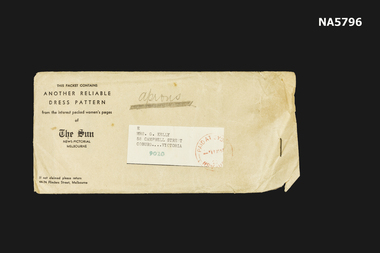
Domestic object - Dressmaking patterns - Sun News Pictorial, The Sun, News Pictorial Melbourne, 1957
... Home dressmaking...Home dressmaking pattern aimed at Newspaper readers...Home dressmaking pattern aimed at Newspaper readers Home dressmaking 'Another reliable dress pattern' from the special interest pages of the Sun News Pictorial, Melbourne C 1957 Newspaper Sun News Pictorial, Women's page Pattern of aprons Domestic object Dressmaking patterns - Sun News Pictorial The Sun, News Pictorial Melbourne ...Home dressmaking pattern aimed at Newspaper readersC 1957 Newspaper Sun News Pictorial, Women's page Pattern of aprons'Another reliable dress pattern' from the special interest pages of the Sun News Pictorial, Melbournehome dressmaking -
 Whitehorse Historical Society Inc.
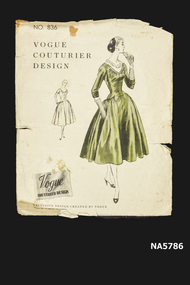
Domestic object - Vogue Couturier Designed Pattern NO. 836, Size 12, Vogue Pattern Service, C 1950's
... ...Home dressmaking...Example of 'couturier' or 'special' home dressmaking pattern, probably used for 'special occasions, i.e., wedding guest...Example of 'couturier' or 'special' home dressmaking pattern, probably used for 'special occasions, i.e., wedding guest Couturier fashion Home dressmaking Various C 1950's - Stylish "designer" dress with 3/4 ruched or plain short sleeves - V neckline with ruching - "Dropped" waistline with ruching - Full gathered skirt Domestic object Vogue Couturier Designed Pattern NO. 836, Size 12 Vogue Pattern Service ...Example of 'couturier' or 'special' home dressmaking pattern, probably used for 'special occasions, i.e., wedding guest C 1950's - Stylish "designer" dress with 3/4 ruched or plain short sleeves - V neckline with ruching - "Dropped" waistline with ruching - Full gathered skirtVariouscouturier fashion, home dressmaking -
 Whitehorse Historical Society Inc.
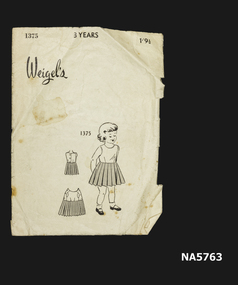
Domestic object - Weigel's Dress Pattern, Mme Weigel Australia, C 1950
... ...Home dressmaking...Domestic dressmaking pattern, illustrating children's fashion of the day. Clothing Home dressmaking Various C 1950s' - Girls (3-year-old) pleated skirt & bodice paper pattern - Instructions included Domestic object Weigel's Dress Pattern Mme Weigel Australia ...Domestic dressmaking pattern, illustrating children's fashion of the day.C 1950s' - Girls (3-year-old) pleated skirt & bodice paper pattern - Instructions includedVariousclothing, home dressmaking -
 Whitehorse Historical Society Inc.
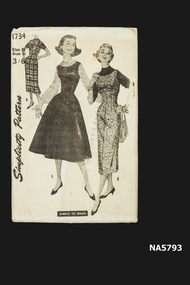
Domestic object - Simplicity Dress pattern, Simplicity Pattern
... Home dressmaking...Domestic dress making Home dressmaking Simple to make Simplicity Dress Pattern No. 1734 Size 12 Bust 32 Ladies slim skirt or flared skirt Pinafore style Domestic object Simplicity Dress pattern Simplicity Pattern ...Domestic dress makingSimplicity Dress Pattern No. 1734 Size 12 Bust 32 Ladies slim skirt or flared skirt Pinafore style Simple to makehome dressmaking -
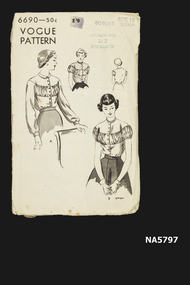 Whitehorse Historical Society Inc.
Domestic object - Vogue Dress Pattern, Vogue
... Home dressmaking...Vogue pattern No. 6690 Ladies long and short sleeved blouses Sewing instructions Home dressmaking Vogue pattern No. 6690 - 50c Vogue Paper Pattern No. 6690 Ladies blouse - long sleeves Low dropper-shoulder yoke Tuck-in style Printed sewing instructions Size 12 Bust 30 Hip 33 Domestic object Vogue Dress Pattern Vogue ...Vogue pattern No. 6690 Ladies long and short sleeved blouses Sewing instructionsVogue Paper Pattern No. 6690 Ladies blouse - long sleeves Low dropper-shoulder yoke Tuck-in style Printed sewing instructions Size 12 Bust 30 Hip 33 Vogue pattern No. 6690 - 50chome dressmaking -
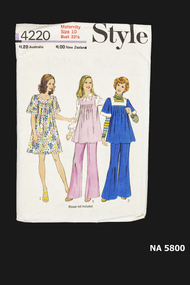 Whitehorse Historical Society Inc.
Domestic object - Style Dress Pattern, Style Patterns
... Home dressmaking...Maternity wear - dress or tunic Flared trousers Short or no sleeves Home dressmaking Style 4220 Prices Aust & NZ Style Dress Pattern NO. 4220 size 10 Bust 32 1/2 Maternity dress or tunic Trousers - flared legs Short or no sleeves 10 pieces Domestic object Style Dress Pattern Style Patterns ...Maternity wear - dress or tunic Flared trousers Short or no sleevesStyle Dress Pattern NO. 4220 size 10 Bust 32 1/2 Maternity dress or tunic Trousers - flared legs Short or no sleeves 10 piecesStyle 4220 Prices Aust & NZhome dressmaking -
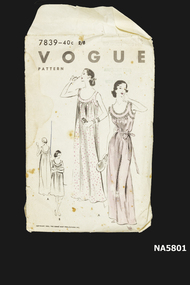 Whitehorse Historical Society Inc.
Domestic object - Vogue Pattern No. 7839, Vogue, USA, C1950
... Home dressmaking pattern..."Easy to make" nightdress Home dressmaking pattern Vogue Pattern - instructions on reverse C 1950 - Vogue Pattern no. 7839 - Nightdress pattern, 2 styles, long & short - Various sizes 12 - 20 Domestic object Vogue Pattern No. 7839 Vogue, USA ..."Easy to make" nightdressC 1950 - Vogue Pattern no. 7839 - Nightdress pattern, 2 styles, long & short - Various sizes 12 - 20Vogue Pattern - instructions on reversehome dressmaking pattern -
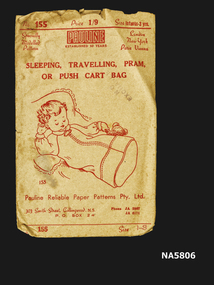 Whitehorse Historical Society Inc.
Domestic object - "Pauline" Paper Pattern No. 155, Pauline Reliable Paper Patterns Pty Ltd, C 1950's
... Home dressmaking...- Example of small pattern production for the home dressmaker - Example of infant clothing of the period Home dressmaking Pqaper pattern Various markings and instructions on reverse C 1950's Pauline's paper pattern No. 155 size 1-3 (age) Paper pattern for infants' sleeping, travelling, pram or pushcart bag Domestic object "Pauline" Paper Pattern No. 155 Pauline Reliable Paper Patterns Pty Ltd ...- Example of small pattern production for the home dressmaker - Example of infant clothing of the periodC 1950's Pauline's paper pattern No. 155 size 1-3 (age) Paper pattern for infants' sleeping, travelling, pram or pushcart bagVarious markings and instructions on reversehome dressmaking, pqaper pattern -
 Whitehorse Historical Society Inc.
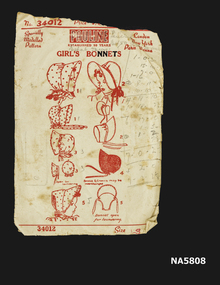
Domestic object - "Pauline" paper pattern, Pauline Reliable Paper Patterns Pty Ltd, C 1950's
... Home dressmaking...- example of small pattern production for the home dressmaker - example of infant clothing for the period Home dressmaking Paper pattern Various with detailed instructions & promotional material c 1950's Pauline's paper pattern No. 34012 for girls' bonnets of 5 various styles. ...- example of small pattern production for the home dressmaker - example of infant clothing for the periodc 1950's Pauline's paper pattern No. 34012 for girls' bonnets of 5 various styles. Instructions on rear of envelopeVarious with detailed instructions & promotional materialhome dressmaking, paper pattern -
 Whitehorse Historical Society Inc.
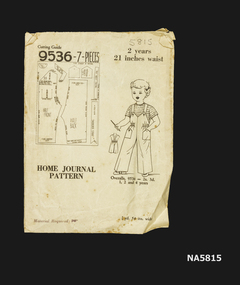
Domestic object - Boys' Overalls - Pattern no. 9536, Australian Home Journal Co. Pty Ltd
... Home dressmaking...Dressmaking Pattern 9536 Boy's overall - 2 years - 21 inch waist Cutting guide - 7 pieces Home dressmaking Boy's overall Home Journal Pattern No. 9536 Home Journal Pattern No. 9536 2-year-old boy's Overall - one piece 21-inch waist -7 pieces Shoulder straps Tucked at waist Suitable for ages 1-4 years Domestic object Boys' Overalls - Pattern no. 9536 Australian Home Journal Co. ...Dressmaking Pattern 9536 Boy's overall - 2 years - 21 inch waist Cutting guide - 7 piecesHome Journal Pattern No. 9536 2-year-old boy's Overall - one piece 21-inch waist -7 pieces Shoulder straps Tucked at waist Suitable for ages 1-4 yearsHome Journal Pattern No. 9536 home dressmaking, boy's overall -
 Whitehorse Historical Society Inc.
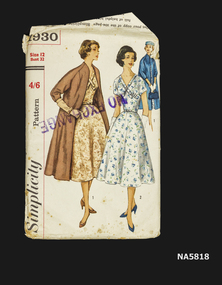
Domestic object - Simplicity Pattern No. 1930, Simplicity Patterns Ltd, 1960
... Home dressmaking...Simplicity Pattern No. 1930 - size 12 Bust 32 Ladies short sleeved dress - flared skirt 3/4 sleeved swing back coat Home dressmaking Simplicity Pattern No. 1930 Simplicity Pattern No. 1930 size 12 Bust 32 Ladies' one-piece dress and coat Short sleeves dress - softly pleated 3/4 sleeved coat - swing back Dress - V-Line neck - flared skirt Coat - softly rounded neckline 15 pieces Domestic object Simplicity Pattern No. 1930 Simplicity Patterns Ltd ...Simplicity Pattern No. 1930 - size 12 Bust 32 Ladies short sleeved dress - flared skirt 3/4 sleeved swing back coatSimplicity Pattern No. 1930 size 12 Bust 32 Ladies' one-piece dress and coat Short sleeves dress - softly pleated 3/4 sleeved coat - swing back Dress - V-Line neck - flared skirt Coat - softly rounded neckline 15 piecesSimplicity Pattern No. 1930home dressmaking -
 Whitehorse Historical Society Inc.
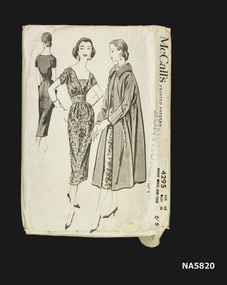
Domestic object - McCalls Pattern No. 4295, McCall's Corporation, 1960's
... HOme dressmaking...McCalls Ladies Dressmaking Pattern No. 4295 Ladies short sleeved, belted dress Swing back coat - long sleeves- collar HOme dressmaking McCalls Pattern No. 4295 size 12 Bust 32 Ladies short sleeved dress with belted waist Ladies swing backed coat, long sleeves, collar 18 pieces Domestic object McCalls Pattern No. 4295 McCall's Corporation ...McCalls Ladies Dressmaking Pattern No. 4295 Ladies short sleeved, belted dress Swing back coat - long sleeves- collarMcCalls Pattern No. 4295 size 12 Bust 32 Ladies short sleeved dress with belted waist Ladies swing backed coat, long sleeves, collar 18 pieceshome dressmaking -
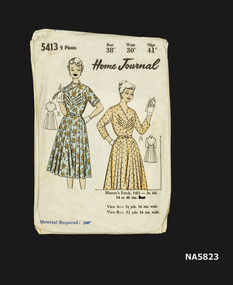 Whitehorse Historical Society Inc.
Domestic object - Home Journal Sewing Pattern No. 5413, Australian Home Journal Co. Pty Ltd, 1960's
... Home dressmaking...Matron's frock Short or 3/4 sleeves, V-neckline Pleating on bodice and skirt Belted waist Home dressmaking 1960's Home Journal Home Journal Sewing Pattern No. 5413 Matron's frock - 34 to 48 ins Bust Short or 3/4 sleeves V-neckline Pleating on Bodice and skirt Belted waist Domestic object Home Journal Sewing Pattern No. 5413 Australian Home Journal Co. ...Matron's frock Short or 3/4 sleeves, V-neckline Pleating on bodice and skirt Belted waistHome Journal Sewing Pattern No. 5413 Matron's frock - 34 to 48 ins Bust Short or 3/4 sleeves V-neckline Pleating on Bodice and skirt Belted waistHome Journalhome dressmaking, 1960's -
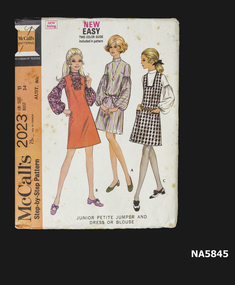 Whitehorse Historical Society Inc.
Domestic object - McCalls Pattern No. 2023, McCalls Patterns, C 1960's
... Home dressmaking...McCalls step-by-step pattern Junior petite jumper and dress or blouse Long sleeved dress with tie belt Short sleeved jumper with pocket Home dressmaking McCalls step by step pattern No 2023 Junior Petite jumper and dress or blouse Size11 Bust 34 - new sizing Long and sleeveless jumper or blouse with set-in sleeves Short sleeved jumper with pocket Long sleeved dress with tie belt Domestic object McCalls Pattern No. 2023 McCalls Patterns ...McCalls step-by-step pattern Junior petite jumper and dress or blouse Long sleeved dress with tie belt Short sleeved jumper with pocketJunior Petite jumper and dress or blouse Size11 Bust 34 - new sizing Long and sleeveless jumper or blouse with set-in sleeves Short sleeved jumper with pocket Long sleeved dress with tie beltMcCalls step by step pattern No 2023home dressmaking -
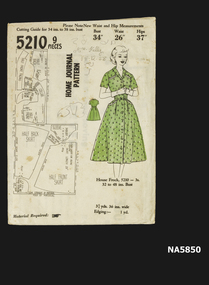 Whitehorse Historical Society Inc.
Domestic object - Home Journal Pattern N0. 5210, Australian Home Journal Co. Pty. Ltd, C 1960's
... Home dressmaking...Home Journal Pattern No. 5210 - 9 pieces Ladies house frock - full skirt, pockets, short sleeves, V-neck collar New measurements 34" Bust, 26" waist, 37" hips Home dressmaking Home Journal Pattern 5210 Home Journal Pattern N0. 5210 Ladies house frock - Bust 34" Waist 26" Hips 37" 9 pieces - short sleeves - pockets on skirt - V-neck collar - Full collar Domestic object Home Journal Pattern N0. 5210 Australian Home Journal Co. ...Home Journal Pattern No. 5210 - 9 pieces Ladies house frock - full skirt, pockets, short sleeves, V-neck collar New measurements 34" Bust, 26" waist, 37" hipsHome Journal Pattern N0. 5210 Ladies house frock - Bust 34" Waist 26" Hips 37" 9 pieces - short sleeves - pockets on skirt - V-neck collar - Full collarHome Journal Pattern 5210home dressmaking -
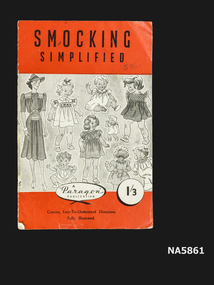 Whitehorse Historical Society Inc.
Domestic object - Smocking Simplified Book, Paragon Art Needlecraft
... Home Dressmaking...Illustrated instructions - smocking stitches Suitable for all clothing Paragon Publication Home Dressmaking Smocking stitches illustrations - all types of clothing Smoking simplified, Paragon Publication Smocking Simplified - Paragon Publication Illustrated instructions - Children's and adults' clothes - Type of stitches illustrated - Advertisement for Clark's Anchor Embroidery Cotteons Domestic object Smocking Simplified Book Paragon Art Needlecraft ...Illustrated instructions - smocking stitches Suitable for all clothing Paragon PublicationSmocking Simplified - Paragon Publication Illustrated instructions - Children's and adults' clothes - Type of stitches illustrated - Advertisement for Clark's Anchor Embroidery CotteonsSmoking simplified, Paragon Publicationhome dressmaking, smocking stitches, illustrations - all types of clothing -
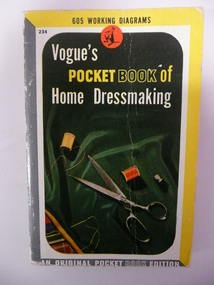 Bendigo Historical Society Inc.
Book - FAVALORO COLLECTION: BOOK, 1944
... Paper back book Vogue's Pocket Book of Home Dressmaking, 196 pages with diagrams & instructions on dressmaking. ...BOOKS Technical dressmaking Paper back book Vogue's Pocket Book of Home Dressmaking, 196 pages with diagrams & instructions on dressmaking. ...Paper back book Vogue's Pocket Book of Home Dressmaking, 196 pages with diagrams & instructions on dressmaking. Interesting note on back cover reads, Send this book to a boy in the armed forces anywhere in the U.S... only 3cbooks, technical, dressmaking -
 Federation University Historical Collection
Document - Document - Letter, Ballarat Junior Technical School: Reference letter for Kyra Sandra Trotter for her new school, 1958
... ...dressmaking...home...Subjects covered in her first year of secondary school and courses available in the girl's section of the Junior Technical School outlined. ballarat junior technical school head master l garner kyra sandra trotter character highly regarded ability excellent first year english social studies arithmetic science art craft decorative needlework dressmaking home management music Cream page, typed. ...Letter from Mr Garner outlining the character and academic ability of Kyra Sandra Trotter. This provided for school she would be attending when the family move to the West. Subjects covered in her first year of secondary school and courses available in the girl's section of the Junior Technical School outlined. Cream page, typed. ballarat junior technical school, head master, l garner, kyra sandra trotter, character highly regarded, ability excellent, first year, english, social studies, arithmetic, science, art, craft, decorative needlework, dressmaking, home management, music -
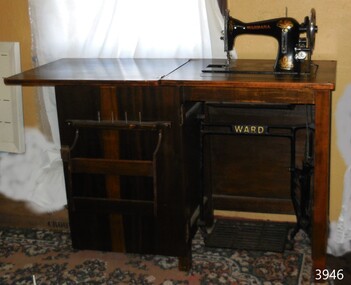 Flagstaff Hill Maritime Museum and Village
Domestic object - Sewing machine in cabinet, Ward Brothers (G & S Ward), ca. 1933
... home industry...clothing...dressmaking...Central Bobbin Made in England North Melbourne C.B. flagstaff hill warrnambool shipwrecked coast flagstaff hill maritime museum maritime museum shipwreck coast flagstaff hill maritime village great ocean road treadle sewing machine home industry clothing dressmaking clothing manufacturer TREADLE: cast into metal ACROSS THE TOPE AND ON THE FOOTPLATE "WARD", "WARD" SERIAL NUMBER stamped into oval plate "28383" DECAL: (Map of Australia ) with images of [two brothers] , "WARDANA" above (logo of the rising sun) DECAL: (Decorative floral design with heraldic-like emblems) above "MADE IN ENGLAND" ARM: "WARDANA" PEDESTAL: "C.B." ...The donor inherited this Wardana machine from her mother, who bought it in about 1933 and used it to sew garments for her sister's dressmaking business in Frankston, Victoria. The donor often used this machine until she purchased an updated model. There were originally three Ward Brothers who owned the North Melbourne sewing machine business but they had a falling out. This machine's decals on the map of Australia only include the two remaining brothers. The Ward Brothers, G & S Ward, established their sewing machine business in North Melbourne in 1888. The cabinets and ironwork of the machines were made in Australia and the Ward Bros. imported their machines from overseas manufacturers in England, America and Germany. The assembled machines were sold under brand names that included Ward, A.N.A. the patriotic-sounding Australian Sewing Machine Company. The "Wardana" was one of their brands.This sewing machine was fabricated in Australia from imported parts from England, giving a snapshot into the early manufacturing industries that were operating at the time just after Federation.Sewing machine in a wooden cabinet with iron foot-operated cast iron treadle mechanism. The hinged cabinet top opens out to form a worktop. The sewing machine lifts out of the cabinet to sit level with the worktop, resting on two supports within the cabinet. The lockable cabinet door opens from right to left revealing fitted shelves and spikes for spools and bobbins. The gold-painted maker's name is cast into the black treadle. The machine has its original instruction book, oil can, and eighteen accessories in an enclosed cardboard box. The round shallow oil bottle has a rubber dispensing tube. Colourful decals decorate the black body of the machine. Inscriptions include a Serial Number stamped on the bed of the machine. The Wardarna Central Bobbin machine was made in England for the Ward Brothers of North Melbourne.TREADLE: cast into metal ACROSS THE TOPE AND ON THE FOOTPLATE "WARD", "WARD" SERIAL NUMBER stamped into oval plate "28383" DECAL: (Map of Australia ) with images of [two brothers] , "WARDANA" above (logo of the rising sun) DECAL: (Decorative floral design with heraldic-like emblems) above "MADE IN ENGLAND" ARM: "WARDANA" PEDESTAL: "C.B." (representing Central Bobbin) "MADE IN ENGLAND" "MADE IN ENGLAND / FOR / WARD BROS / NORTH MELBOURNE" BOOK TITLE: "Instructions for Treadle Machine" ACCESSORIES: some have indecipherable embossed stamps OIL BOTTLE base: (image of log and short lines radiating from a central inscription (indecipherable)sewing machine, domestic, wardana, ward bros., central bobbin, made in england, north melbourne, c.b., flagstaff hill, warrnambool, shipwrecked coast, flagstaff hill maritime museum, maritime museum, shipwreck coast, flagstaff hill maritime village, great ocean road, treadle sewing machine, home industry, clothing, dressmaking, clothing manufacturer -
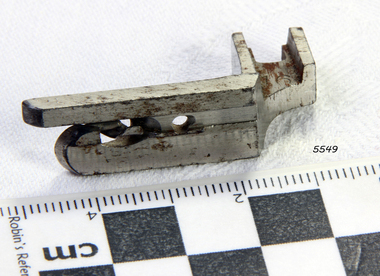 Flagstaff Hill Maritime Museum and Village
Accessory - Hemmer Foot, Joseph Wertheim, ca. 1891
... ...dressmaking...home...Flagstaff Hill Flagstaff Hill Maritime Museum and Village Warrnambool Maritime Museum Maritime Village Great Ocean Road Shipwreck Coast Wertheim sewing machine Victorian era sewing machine accessory Wertheim Sewing Machine and Hapsburg Piano Depot Wertheim Sewing Machines sewing machine foot domestic machines dressmaking home industry fashion Broad Hemmer Foot for a Wertheim sewing machine. ...This sewing machine accessory was donated with our collection's Wertheim sewing machine accessory box. The box contains twelve accessories, the instruction book and the receipt for the purchase of a Wertheim sewing machine. The receipt was written on July 23rd 1891 by the Wertheim distributor in Melbourne, Hugo Wertheim. His business was the Wertheim Sewing Machine and Hapsburg Piano Depot, trading at 173 Williams Street, Melbourne. The purchaser was Mrs Burrowes from Burrumbeet, Victoria, a district northwest of Ballarat. She paid £6-6 (six pounds and six shillings) in cash. The receipt was signed by H. Wertheim and the other signatory looks like John A. Cherry. Hugo Wertheim (1854-1919) was an agent for his father’s cousin Joseph Wertheim, a well-established sewing machine manufacturer in Germany. He was born in Lispenhausen, Germany, and migrated to Melbourne in October 1875, where he opened a merchandising business at 39 Flinders Lane East. He returned to Germany in 1885 to marry Joseph Wertheim's daughter Sophie Emilie. The couple came back to Melbourne, and Hugo quickly established a substantial business selling sewing machines, bicycles, pianos and other mechanical devices, under brands such as Wertheim, Electra, Planet, Griffin and Hapsburg. He exhibited at agricultural shows and in 1901 at the Pan American Exposition, Buffalo, United States of America. One of his staff was O. C. Beale, who later set up his own piano business in New South Wales. Hugo continued to own 25 per cent of one of Beale's companies, which became Wertheim's Queensland business. In 1908 Hugo Wertheim opened a piano factory in Richmond, Melbourne, aiming to produce 2000 pianos and player pianos a year, predominantly using Australian materials. In laying the foundation stone, Prime Minister Alfred Deakin observed that “few men with such opportunities for a life of ease would have embarked on such an enterprise” Hugo died of chronic hepatitis in 1919 at his home in South Yarra. His eldest son, Herbert Joseph (1886-1972), continued the business. The piano factory closed in 1935, becoming a Heinz food processing plant and in 1955, GTV Channel 9 studios and offices. The Wertheim Sewing Machine Company – Joseph Wertheim (1804–1899) founded the company in 1868 in Frankfurt, Germany. At this time Joseph was the Frankfurt city delegate for the Democratic Party. At its height, the Wertheim factory employed approximately 650 workers. The company used a trademark of a dwarf holding a hammer which is known to have been used until at least 1925, however in 1909 a Star of David was also registered. In 1870 a Wertheim subsidiary was formed in Barcelona, Spain. The business imported and sold complete machines, including the English Jones machine. Locals began calling the sewing machines “las rapidas”, and the business became known as “las casa de las rapidas”. In 1915 production began of a totally manufactured Spanish Wertheim machine. Wertheim in Germany continued manufacturing machines until 1932 when the Wertheim family fled to Spain. Despite converting to Christianity from Judaism, they feared the political unrest in Germany during that time. Wertheim Spain became Rapida SA and was then the sole manufacturer of the Wertheim machines. The factory was managed by Karl Wertheim under the alias Carlos Vallin. The sewing machine accessory is part of a donation that connected to domestic life in 1891 during the Victorian era. It is significant for connecting the Melbourne distributor of Wertheim sewing machines, Hugo Wertheim, to Victoria’s northwest district where the purchaser lived. It is also significant for connecting the Melbourne distributor to the importing of goods from the well-known German manufacturer of early domestic sewing machines, Joseph Wertheim. Broad Hemmer Foot for a Wertheim sewing machine. Joseph Wertheim manufacturer, Germany, distributed by Hugo Wertheim William Street Melbourne. Circa 1891flagstaff hill, flagstaff hill maritime museum and village, warrnambool, maritime museum, maritime village, great ocean road, shipwreck coast, wertheim, sewing machine, victorian era, sewing machine accessory, wertheim sewing machine and hapsburg piano depot, wertheim sewing machines, sewing machine foot, domestic machines, dressmaking, home industry, fashion -
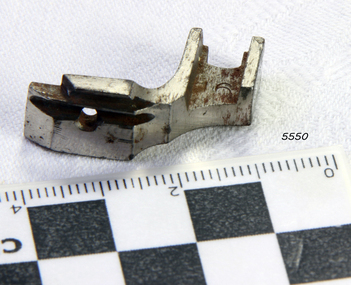 Flagstaff Hill Maritime Museum and Village
Accessory - Small Corder Foot, ca. 1891
... ...dressmaking...home...Flagstaff Hill Flagstaff Hill Maritime Museum and Village Warrnambool Maritime Museum Maritime Village Great Ocean Road Shipwreck Coast Wertheim sewing machine Victorian era sewing machine accessory Wertheim Sewing Machine and Hapsburg Piano Depot Wertheim Sewing Machines sewing machine foot small corder foot domestic machines dressmaking home industry fashion Small corder foot for a Wertheim sewing machine. ...This sewing machine accessory was donated with our collection's Wertheim sewing machine accessory box. The box contains twelve accessories, the instruction book and the receipt for the purchase of a Wertheim sewing machine. The receipt was written on July 23rd 1891 by the Wertheim distributor in Melbourne, Hugo Wertheim. His business was the Wertheim Sewing Machine and Hapsburg Piano Depot, trading at 173 Williams Street, Melbourne. The purchaser was Mrs Burrowes from Burrumbeet, Victoria, a district northwest of Ballarat. She paid £6-6 (six pounds and six shillings) in cash. The receipt was signed by H. Wertheim and the other signatory looks like John A. Cherry. Hugo Wertheim (1854-1919) was an agent for his father’s cousin Joseph Wertheim, a well-established sewing machine manufacturer in Germany. He was born in Lispenhausen, Germany, and migrated to Melbourne in October 1875, where he opened a merchandising business at 39 Flinders Lane East. He returned to Germany in 1885 to marry Joseph Wertheim's daughter Sophie Emilie. The couple came back to Melbourne, and Hugo quickly established a substantial business selling sewing machines, bicycles, pianos and other mechanical devices, under brands such as Wertheim, Electra, Planet, Griffin and Hapsburg. He exhibited at agricultural shows and in 1901 at the Pan American Exposition, Buffalo, United States of America. One of his staff was O. C. Beale, who later set up his own piano business in New South Wales. Hugo continued to own 25 per cent of one of Beale's companies, which became Wertheim's Queensland business. In 1908 Hugo Wertheim opened a piano factory in Richmond, Melbourne, aiming to produce 2000 pianos and player pianos a year, predominantly using Australian materials. In laying the foundation stone, Prime Minister Alfred Deakin observed that “few men with such opportunities for a life of ease would have embarked on such an enterprise” Hugo died of chronic hepatitis in 1919 at his home in South Yarra. His eldest son, Herbert Joseph (1886-1972), continued the business. The piano factory closed in 1935, becoming a Heinz food processing plant and in 1955, GTV Channel 9 studios and offices. The Wertheim Sewing Machine Company – Joseph Wertheim (1804–1899) founded the company in 1868 in Frankfurt, Germany. At this time Joseph was the Frankfurt city delegate for the Democratic Party. At its height, the Wertheim factory employed approximately 650 workers. The company used a trademark of a dwarf holding a hammer which is known to have been used until at least 1925, however in 1909 a Star of David was also registered. In 1870 a Wertheim subsidiary was formed in Barcelona, Spain. The business imported and sold complete machines, including the English Jones machine. Locals began calling the sewing machines “las rapidas”, and the business became known as “las casa de las rapidas”. In 1915 production began of a totally manufactured Spanish Wertheim machine. Wertheim in Germany continued manufacturing machines until 1932 when the Wertheim family fled to Spain. Despite converting to Christianity from Judaism, they feared the political unrest in Germany during that time. Wertheim Spain became Rapida SA and was then the sole manufacturer of the Wertheim machines. The factory was managed by Karl Wertheim under the alias Carlos Vallin.The sewing machine accessory is part of a donation that connected to domestic life in 1891 during the Victorian era. It is significant for connecting the Melbourne distributor of Wertheim sewing machines, Hugo Wertheim, to Victoria’s northwest district where the purchaser lived. It is also significant for connecting the Melbourne distributor to the importing of goods from the well-known German manufacturer of early domestic sewing machines, Joseph Wertheim. Small corder foot for a Wertheim sewing machine. Joseph Wertheim manufacturer, Germany, distributed by Hugo Wertheim William Street Melbourne. Circa 1891flagstaff hill, flagstaff hill maritime museum and village, warrnambool, maritime museum, maritime village, great ocean road, shipwreck coast, wertheim, sewing machine, victorian era, sewing machine accessory, wertheim sewing machine and hapsburg piano depot, wertheim sewing machines, sewing machine foot, small corder foot, domestic machines, dressmaking, home industry, fashion -
 Flagstaff Hill Maritime Museum and Village
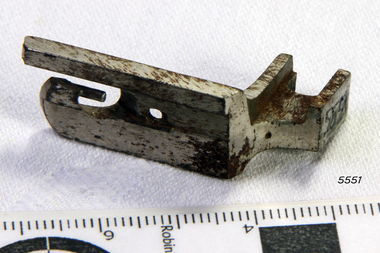
Accessory - Seamer Foot, Joseph Wertheim, ca. 1891
... ...dressmaking...home...Flagstaff Hill Flagstaff Hill Maritime Museum and Village Warrnambool Maritime Museum Maritime Village Great Ocean Road Shipwreck Coast Wertheim sewing machine Victorian era sewing machine accessory Wertheim Sewing Machine and Hapsburg Piano Depot Wertheim Sewing Machines sewing machine foot seamer foot domestic machines dressmaking home industry fashion Seamer foot; feller single seamer for a Wertheim sewing machine. ...This sewing machine accessory was donated with our collection's Wertheim sewing machine accessory box. The box contains twelve accessories, the instruction book and the receipt for the purchase of a Wertheim sewing machine. The receipt was written on July 23rd 1891 by the Wertheim distributor in Melbourne, Hugo Wertheim. His business was the Wertheim Sewing Machine and Hapsburg Piano Depot, trading at 173 Williams Street, Melbourne. The purchaser was Mrs Burrowes from Burrumbeet, Victoria, a district northwest of Ballarat. She paid £6-6 (six pounds and six shillings) in cash. The receipt was signed by H. Wertheim and the other signatory looks like John A. Cherry. Hugo Wertheim (1854-1919) was an agent for his father’s cousin Joseph Wertheim, a well-established sewing machine manufacturer in Germany. He was born in Lispenhausen, Germany, and migrated to Melbourne in October 1875, where he opened a merchandising business at 39 Flinders Lane East. He returned to Germany in 1885 to marry Joseph Wertheim's daughter Sophie Emilie. The couple came back to Melbourne, and Hugo quickly established a substantial business selling sewing machines, bicycles, pianos and other mechanical devices, under brands such as Wertheim, Electra, Planet, Griffin and Hapsburg. He exhibited at agricultural shows and in 1901 at the Pan American Exposition, Buffalo, United States of America. One of his staff was O. C. Beale, who later set up his own piano business in New South Wales. Hugo continued to own 25 per cent of one of Beale's companies, which became Wertheim's Queensland business. In 1908 Hugo Wertheim opened a piano factory in Richmond, Melbourne, aiming to produce 2000 pianos and player pianos a year, predominantly using Australian materials. In laying the foundation stone, Prime Minister Alfred Deakin observed that “few men with such opportunities for a life of ease would have embarked on such an enterprise” Hugo died of chronic hepatitis in 1919 at his home in South Yarra. His eldest son, Herbert Joseph (1886-1972), continued the business. The piano factory closed in 1935, becoming a Heinz food processing plant and in 1955, GTV Channel 9 studios and offices. The Wertheim Sewing Machine Company – Joseph Wertheim (1804–1899) founded the company in 1868 in Frankfurt, Germany. At this time Joseph was the Frankfurt city delegate for the Democratic Party. At its height, the Wertheim factory employed approximately 650 workers. The company used a trademark of a dwarf holding a hammer which is known to have been used until at least 1925, however in 1909 a Star of David was also registered. In 1870 a Wertheim subsidiary was formed in Barcelona, Spain. The business imported and sold complete machines, including the English Jones machine. Locals began calling the sewing machines “las rapidas”, and the business became known as “las casa de las rapidas”. In 1915 production began of a totally manufactured Spanish Wertheim machine. Wertheim in Germany continued manufacturing machines until 1932 when the Wertheim family fled to Spain. Despite converting to Christianity from Judaism, they feared the political unrest in Germany during that time. Wertheim Spain became Rapida SA and was then the sole manufacturer of the Wertheim machines. The factory was managed by Karl Wertheim under the alias Carlos Vallin. The sewing machine accessory is part of a donation that connected to domestic life in 1891 during the Victorian era. It is significant for connecting the Melbourne distributor of Wertheim sewing machines, Hugo Wertheim, to Victoria’s northwest district where the purchaser lived. It is also significant for connecting the Melbourne distributor to the importing of goods from the well-known German manufacturer of early domestic sewing machines, Joseph Wertheim. Seamer foot; feller single seamer for a Wertheim sewing machine. Made by Joseph Wertheim, Germany, and distributed by Hugo Wertheim, William Street Melbourne. Circa 1891flagstaff hill, flagstaff hill maritime museum and village, warrnambool, maritime museum, maritime village, great ocean road, shipwreck coast, wertheim, sewing machine, victorian era, sewing machine accessory, wertheim sewing machine and hapsburg piano depot, wertheim sewing machines, sewing machine foot, seamer foot, domestic machines, dressmaking, home industry, fashion -
 Flagstaff Hill Maritime Museum and Village
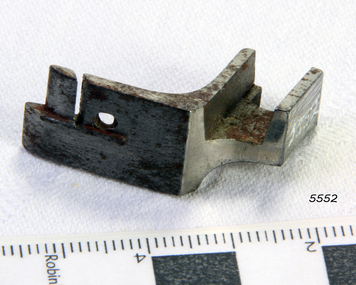
Accessory - Braider foot, Joseph Wertheim, ca. 1891
... ...dressmaking...home...Flagstaff Hill Flagstaff Hill Maritime Museum and Village Warrnambool Maritime Museum Maritime Village Great Ocean Road Shipwreck Coast Wertheim sewing machine Victorian era sewing machine accessory Wertheim Sewing Machine and Hapsburg Piano Depot Wertheim Sewing Machines sewing machine foot seamer foot domestic machines dressmaking home industry fashion Wertheim braider; an accessory for a Wertheim sewing machine. ...This sewing machine accessory was donated with our collection's Wertheim sewing machine accessory box. The box contains twelve accessories, the instruction book and the receipt for the purchase of a Wertheim sewing machine. The receipt was written on July 23rd 1891 by the Wertheim distributor in Melbourne, Hugo Wertheim. His business was the Wertheim Sewing Machine and Hapsburg Piano Depot, trading at 173 Williams Street, Melbourne. The purchaser was Mrs Burrowes from Burrumbeet, Victoria, a district northwest of Ballarat. She paid £6-6 (six pounds and six shillings) in cash. The receipt was signed by H. Wertheim and the other signatory looks like John A. Cherry. Hugo Wertheim (1854-1919) was an agent for his father’s cousin Joseph Wertheim, a well-established sewing machine manufacturer in Germany. He was born in Lispenhausen, Germany, and migrated to Melbourne in October 1875, where he opened a merchandising business at 39 Flinders Lane East. He returned to Germany in 1885 to marry Joseph Wertheim's daughter Sophie Emilie. The couple came back to Melbourne, and Hugo quickly established a substantial business selling sewing machines, bicycles, pianos and other mechanical devices, under brands such as Wertheim, Electra, Planet, Griffin and Hapsburg. He exhibited at agricultural shows and in 1901 at the Pan American Exposition, Buffalo, United States of America. One of his staff was O. C. Beale, who later set up his own piano business in New South Wales. Hugo continued to own 25 per cent of one of Beale's companies, which became Wertheim's Queensland business. In 1908 Hugo Wertheim opened a piano factory in Richmond, Melbourne, aiming to produce 2000 pianos and player pianos a year, predominantly using Australian materials. In laying the foundation stone, Prime Minister Alfred Deakin observed that “few men with such opportunities for a life of ease would have embarked on such an enterprise” Hugo died of chronic hepatitis in 1919 at his home in South Yarra. His eldest son, Herbert Joseph (1886-1972), continued the business. The piano factory closed in 1935, becoming a Heinz food processing plant and in 1955, GTV Channel 9 studios and offices. The Wertheim Sewing Machine Company – Joseph Wertheim (1804–1899) founded the company in 1868 in Frankfurt, Germany. At this time Joseph was the Frankfurt city delegate for the Democratic Party. At its height, the Wertheim factory employed approximately 650 workers. The company used a trademark of a dwarf holding a hammer which is known to have been used until at least 1925, however in 1909 a Star of David was also registered. In 1870 a Wertheim subsidiary was formed in Barcelona, Spain. The business imported and sold complete machines, including the English Jones machine. Locals began calling the sewing machines “las rapidas”, and the business became known as “las casa de las rapidas”. In 1915 production began of a totally manufactured Spanish Wertheim machine. Wertheim in Germany continued manufacturing machines until 1932 when the Wertheim family fled to Spain. Despite converting to Christianity from Judaism, they feared the political unrest in Germany during that time. Wertheim Spain became Rapida SA and was then the sole manufacturer of the Wertheim machines. The factory was managed by Karl Wertheim under the alias Carlos Vallin.The sewing machine accessory is part of a donation that connected to domestic life in 1891 during the Victorian era. It is significant for connecting the Melbourne distributor of Wertheim sewing machines, Hugo Wertheim, to Victoria’s northwest district where the purchaser lived. It is also significant for connecting the Melbourne distributor to the importing of goods from the well-known German manufacturer of early domestic sewing machines, Joseph Wertheim.Wertheim braider; an accessory for a Wertheim sewing machine. Made by Joseph Wertheim, Germany, and distributed by Hugo Wertheim, William Street Melbourne. Circa 1891flagstaff hill, flagstaff hill maritime museum and village, warrnambool, maritime museum, maritime village, great ocean road, shipwreck coast, wertheim, sewing machine, victorian era, sewing machine accessory, wertheim sewing machine and hapsburg piano depot, wertheim sewing machines, sewing machine foot, seamer foot, domestic machines, dressmaking, home industry, fashion -
 Flagstaff Hill Maritime Museum and Village
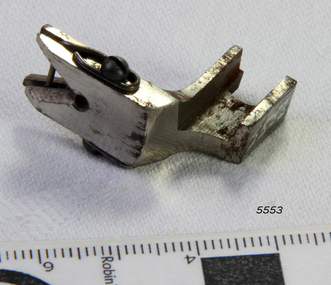
Accessory - Sewing Machine Foot, Joseph Wertheim, ca. 1891
... ...dressmaking...home...Flagstaff Hill Flagstaff Hill Maritime Museum and Village Warrnambool Maritime Museum Maritime Village Great Ocean Road Shipwreck Coast Wertheim sewing machine Victorian era sewing machine accessory Wertheim Sewing Machine and Hapsburg Piano Depot Wertheim Sewing Machines sewing machine foot seamer foot domestic machines dressmaking home industry fashion Foot accessory, metal, for a Wertheim sewing machine. ...This sewing machine accessory was donated with our collection's Wertheim sewing machine accessory box. The box contains twelve accessories, the instruction book and the receipt for the purchase of a Wertheim sewing machine. The receipt was written on July 23rd 1891 by the Wertheim distributor in Melbourne, Hugo Wertheim. His business was the Wertheim Sewing Machine and Hapsburg Piano Depot, trading at 173 Williams Street, Melbourne. The purchaser was Mrs Burrowes from Burrumbeet, Victoria, a district northwest of Ballarat. She paid £6-6 (six pounds and six shillings) in cash. The receipt was signed by H. Wertheim and the other signatory looks like John A. Cherry. Hugo Wertheim (1854-1919) was an agent for his father’s cousin Joseph Wertheim, a well-established sewing machine manufacturer in Germany. He was born in Lispenhausen, Germany, and migrated to Melbourne in October 1875, where he opened a merchandising business at 39 Flinders Lane East. He returned to Germany in 1885 to marry Joseph Wertheim's daughter Sophie Emilie. The couple came back to Melbourne, and Hugo quickly established a substantial business selling sewing machines, bicycles, pianos and other mechanical devices, under brands such as Wertheim, Electra, Planet, Griffin and Hapsburg. He exhibited at agricultural shows and in 1901 at the Pan American Exposition, Buffalo, United States of America. One of his staff was O. C. Beale, who later set up his own piano business in New South Wales. Hugo continued to own 25 per cent of one of Beale's companies, which became Wertheim's Queensland business. In 1908 Hugo Wertheim opened a piano factory in Richmond, Melbourne, aiming to produce 2000 pianos and player pianos a year, predominantly using Australian materials. In laying the foundation stone, Prime Minister Alfred Deakin observed that “few men with such opportunities for a life of ease would have embarked on such an enterprise” Hugo died of chronic hepatitis in 1919 at his home in South Yarra. His eldest son, Herbert Joseph (1886-1972), continued the business. The piano factory closed in 1935, becoming a Heinz food processing plant and in 1955, GTV Channel 9 studios and offices. The Wertheim Sewing Machine Company – Joseph Wertheim (1804–1899) founded the company in 1868 in Frankfurt, Germany. At this time Joseph was the Frankfurt city delegate for the Democratic Party. At its height, the Wertheim factory employed approximately 650 workers. The company used a trademark of a dwarf holding a hammer which is known to have been used until at least 1925, however in 1909 a Star of David was also registered. In 1870 a Wertheim subsidiary was formed in Barcelona, Spain. The business imported and sold complete machines, including the English Jones machine. Locals began calling the sewing machines “las rapidas”, and the business became known as “las casa de las rapidas”. In 1915 production began of a totally manufactured Spanish Wertheim machine. Wertheim in Germany continued manufacturing machines until 1932 when the Wertheim family fled to Spain. Despite converting to Christianity from Judaism, they feared the political unrest in Germany during that time. Wertheim Spain became Rapida SA and was then the sole manufacturer of the Wertheim machines. The factory was managed by Karl Wertheim under the alias Carlos Vallin. The sewing machine accessory is part of a donation that connected to domestic life in 1891 during the Victorian era. It is significant for connecting the Melbourne distributor of Wertheim sewing machines, Hugo Wertheim, to Victoria’s northwest district where the purchaser lived. It is also significant for connecting the Melbourne distributor to the importing of goods from the well-known German manufacturer of early domestic sewing machines, Joseph Wertheim. Foot accessory, metal, for a Wertheim sewing machine. Made by Joseph Wertheim, Germany, and distributed by Hugo Wertheim, William Street Melbourne. Circa 1891flagstaff hill, flagstaff hill maritime museum and village, warrnambool, maritime museum, maritime village, great ocean road, shipwreck coast, wertheim, sewing machine, victorian era, sewing machine accessory, wertheim sewing machine and hapsburg piano depot, wertheim sewing machines, sewing machine foot, seamer foot, domestic machines, dressmaking, home industry, fashion -
 Flagstaff Hill Maritime Museum and Village
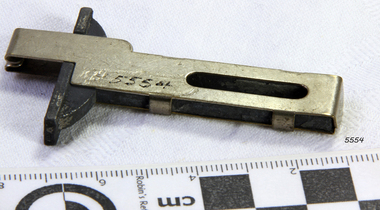
Accessory - Binder, Joseph Wertheim, ca. 1891
... ...dressmaking...home...Flagstaff Hill Flagstaff Hill Maritime Museum and Village Warrnambool Maritime Museum Maritime Village Great Ocean Road Shipwreck Coast Wertheim sewing machine Victorian era sewing machine accessory Wertheim Sewing Machine and Hapsburg Piano Depot Wertheim Sewing Machines sewing machine foot seamer foot domestic machines dressmaking home industry fashion binder Adjustable binder for a Wertheim sewing machine. ...This sewing machine accessory was donated with our collection's Wertheim sewing machine accessory box. The box contains twelve accessories, the instruction book and the receipt for the purchase of a Wertheim sewing machine. The receipt was written on July 23rd 1891 by the Wertheim distributor in Melbourne, Hugo Wertheim. His business was the Wertheim Sewing Machine and Hapsburg Piano Depot, trading at 173 Williams Street, Melbourne. The purchaser was Mrs Burrowes from Burrumbeet, Victoria, a district northwest of Ballarat. She paid £6-6 (six pounds and six shillings) in cash. The receipt was signed by H. Wertheim and the other signatory looks like John A. Cherry. Hugo Wertheim (1854-1919) was an agent for his father’s cousin Joseph Wertheim, a well-established sewing machine manufacturer in Germany. He was born in Lispenhausen, Germany, and migrated to Melbourne in October 1875, where he opened a merchandising business at 39 Flinders Lane East. He returned to Germany in 1885 to marry Joseph Wertheim's daughter Sophie Emilie. The couple came back to Melbourne, and Hugo quickly established a substantial business selling sewing machines, bicycles, pianos and other mechanical devices, under brands such as Wertheim, Electra, Planet, Griffin and Hapsburg. He exhibited at agricultural shows and in 1901 at the Pan American Exposition, Buffalo, United States of America. One of his staff was O. C. Beale, who later set up his own piano business in New South Wales. Hugo continued to own 25 per cent of one of Beale's companies, which became Wertheim's Queensland business. In 1908 Hugo Wertheim opened a piano factory in Richmond, Melbourne, aiming to produce 2000 pianos and player pianos a year, predominantly using Australian materials. In laying the foundation stone, Prime Minister Alfred Deakin observed that “few men with such opportunities for a life of ease would have embarked on such an enterprise” Hugo died of chronic hepatitis in 1919 at his home in South Yarra. His eldest son, Herbert Joseph (1886-1972), continued the business. The piano factory closed in 1935, becoming a Heinz food processing plant and in 1955, GTV Channel 9 studios and offices. The Wertheim Sewing Machine Company – Joseph Wertheim (1804–1899) founded the company in 1868 in Frankfurt, Germany. At this time Joseph was the Frankfurt city delegate for the Democratic Party. At its height, the Wertheim factory employed approximately 650 workers. The company used a trademark of a dwarf holding a hammer which is known to have been used until at least 1925, however in 1909 a Star of David was also registered. In 1870 a Wertheim subsidiary was formed in Barcelona, Spain. The business imported and sold complete machines, including the English Jones machine. Locals began calling the sewing machines “las rapidas”, and the business became known as “las casa de las rapidas”. In 1915 production began of a totally manufactured Spanish Wertheim machine. Wertheim in Germany continued manufacturing machines until 1932 when the Wertheim family fled to Spain. Despite converting to Christianity from Judaism, they feared the political unrest in Germany during that time. Wertheim Spain became Rapida SA and was then the sole manufacturer of the Wertheim machines. The factory was managed by Karl Wertheim under the alias Carlos Vallin.The sewing machine accessory is part of a donation that connected to domestic life in 1891 during the Victorian era. It is significant for connecting the Melbourne distributor of Wertheim sewing machines, Hugo Wertheim, to Victoria’s northwest district where the purchaser lived. It is also significant for connecting the Melbourne distributor to the importing of goods from the well-known German manufacturer of early domestic sewing machines, Joseph Wertheim. Adjustable binder for a Wertheim sewing machine. Made by Joseph Wertheim, Germany, and distributed by Hugo Wertheim, William Street Melbourne. Circa 1891flagstaff hill, flagstaff hill maritime museum and village, warrnambool, maritime museum, maritime village, great ocean road, shipwreck coast, wertheim, sewing machine, victorian era, sewing machine accessory, wertheim sewing machine and hapsburg piano depot, wertheim sewing machines, sewing machine foot, seamer foot, domestic machines, dressmaking, home industry, fashion, binder -
 Flagstaff Hill Maritime Museum and Village
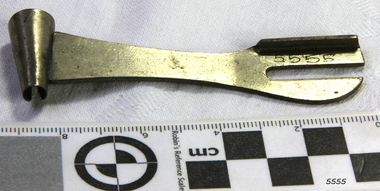
Accessory - Tool Part, Joseph Wertheim, ca. 1891
... ...dressmaking...home...Flagstaff Hill Flagstaff Hill Maritime Museum and Village Warrnambool Maritime Museum Maritime Village Great Ocean Road Shipwreck Coast Wertheim sewing machine Victorian era sewing machine accessory Wertheim Sewing Machine and Hapsburg Piano Depot Wertheim Sewing Machines sewing machine foot seamer foot domestic machines dressmaking home industry fashion Tool part for a Wertheim sewing machine. ...This sewing machine accessory was donated with our collection's Wertheim sewing machine accessory box. The box contains twelve accessories, the instruction book and the receipt for the purchase of a Wertheim sewing machine. The receipt was written on July 23rd 1891 by the Wertheim distributor in Melbourne, Hugo Wertheim. His business was the Wertheim Sewing Machine and Hapsburg Piano Depot, trading at 173 Williams Street, Melbourne. The purchaser was Mrs Burrowes from Burrumbeet, Victoria, a district northwest of Ballarat. She paid £6-6 (six pounds and six shillings) in cash. The receipt was signed by H. Wertheim and the other signatory looks like John A. Cherry. Hugo Wertheim (1854-1919) was an agent for his father’s cousin Joseph Wertheim, a well-established sewing machine manufacturer in Germany. He was born in Lispenhausen, Germany, and migrated to Melbourne in October 1875, where he opened a merchandising business at 39 Flinders Lane East. He returned to Germany in 1885 to marry Joseph Wertheim's daughter Sophie Emilie. The couple came back to Melbourne, and Hugo quickly established a substantial business selling sewing machines, bicycles, pianos and other mechanical devices, under brands such as Wertheim, Electra, Planet, Griffin and Hapsburg. He exhibited at agricultural shows and in 1901 at the Pan American Exposition, Buffalo, United States of America. One of his staff was O. C. Beale, who later set up his own piano business in New South Wales. Hugo continued to own 25 per cent of one of Beale's companies, which became Wertheim's Queensland business. In 1908 Hugo Wertheim opened a piano factory in Richmond, Melbourne, aiming to produce 2000 pianos and player pianos a year, predominantly using Australian materials. In laying the foundation stone, Prime Minister Alfred Deakin observed that “few men with such opportunities for a life of ease would have embarked on such an enterprise” Hugo died of chronic hepatitis in 1919 at his home in South Yarra. His eldest son, Herbert Joseph (1886-1972), continued the business. The piano factory closed in 1935, becoming a Heinz food processing plant and in 1955, GTV Channel 9 studios and offices. The Wertheim Sewing Machine Company – Joseph Wertheim (1804–1899) founded the company in 1868 in Frankfurt, Germany. At this time Joseph was the Frankfurt city delegate for the Democratic Party. At its height, the Wertheim factory employed approximately 650 workers. The company used a trademark of a dwarf holding a hammer which is known to have been used until at least 1925, however in 1909 a Star of David was also registered. In 1870 a Wertheim subsidiary was formed in Barcelona, Spain. The business imported and sold complete machines, including the English Jones machine. Locals began calling the sewing machines “las rapidas”, and the business became known as “las casa de las rapidas”. In 1915 production began of a totally manufactured Spanish Wertheim machine. Wertheim in Germany continued manufacturing machines until 1932 when the Wertheim family fled to Spain. Despite converting to Christianity from Judaism, they feared the political unrest in Germany during that time. Wertheim Spain became Rapida SA and was then the sole manufacturer of the Wertheim machines. The factory was managed by Karl Wertheim under the alias Carlos Vallin. The sewing machine accessory is part of a donation that connected to domestic life in 1891 during the Victorian era. It is significant for connecting the Melbourne distributor of Wertheim sewing machines, Hugo Wertheim, to Victoria’s northwest district where the purchaser lived. It is also significant for connecting the Melbourne distributor to the importing of goods from the well-known German manufacturer of early domestic sewing machines, Joseph Wertheim. Tool part for a Wertheim sewing machine. Made by Joseph Wertheim, Germany, and distributed by Hugo Wertheim, William Street Melbourne. Circa 1891flagstaff hill, flagstaff hill maritime museum and village, warrnambool, maritime museum, maritime village, great ocean road, shipwreck coast, wertheim, sewing machine, victorian era, sewing machine accessory, wertheim sewing machine and hapsburg piano depot, wertheim sewing machines, sewing machine foot, seamer foot, domestic machines, dressmaking, home industry, fashion -
 Flagstaff Hill Maritime Museum and Village
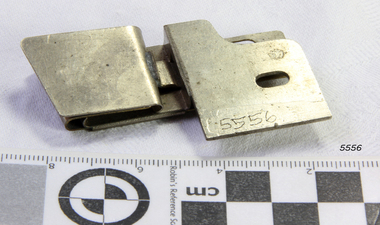
Accessory - Needle Plate, Joseph Wertheim, ca. 1891
... ...dressmaking...home...Flagstaff Hill Flagstaff Hill Maritime Museum and Village Warrnambool Maritime Museum Maritime Village Great Ocean Road Shipwreck Coast Wertheim sewing machine Victorian era sewing machine accessory Wertheim Sewing Machine and Hapsburg Piano Depot Wertheim Sewing Machines needle plate domestic machines dressmaking home industry fashion Adjustable needle plate for a Wertheim sewing machine, made by Joseph Wertheim, Germany, and distributed by Hugo Wertheim, William Street Melbourne. ...This sewing machine accessory was donated with our collection's Wertheim sewing machine accessory box. The box contains twelve accessories, the instruction book and the receipt for the purchase of a Wertheim sewing machine. The receipt was written on July 23rd 1891 by the Wertheim distributor in Melbourne, Hugo Wertheim. His business was the Wertheim Sewing Machine and Hapsburg Piano Depot, trading at 173 Williams Street, Melbourne. The purchaser was Mrs Burrowes from Burrumbeet, Victoria, a district northwest of Ballarat. She paid £6-6 (six pounds and six shillings) in cash. The receipt was signed by H. Wertheim and the other signatory looks like John A. Cherry. Hugo Wertheim (1854-1919) was an agent for his father’s cousin Joseph Wertheim, a well-established sewing machine manufacturer in Germany. He was born in Lispenhausen, Germany, and migrated to Melbourne in October 1875, where he opened a merchandising business at 39 Flinders Lane East. He returned to Germany in 1885 to marry Joseph Wertheim's daughter Sophie Emilie. The couple came back to Melbourne, and Hugo quickly established a substantial business selling sewing machines, bicycles, pianos and other mechanical devices, under brands such as Wertheim, Electra, Planet, Griffin and Hapsburg. He exhibited at agricultural shows and in 1901 at the Pan American Exposition, Buffalo, United States of America. One of his staff was O. C. Beale, who later set up his own piano business in New South Wales. Hugo continued to own 25 per cent of one of Beale's companies, which became Wertheim's Queensland business. In 1908 Hugo Wertheim opened a piano factory in Richmond, Melbourne, aiming to produce 2000 pianos and player pianos a year, predominantly using Australian materials. In laying the foundation stone, Prime Minister Alfred Deakin observed that “few men with such opportunities for a life of ease would have embarked on such an enterprise” Hugo died of chronic hepatitis in 1919 at his home in South Yarra. His eldest son, Herbert Joseph (1886-1972), continued the business. The piano factory closed in 1935, becoming a Heinz food processing plant and in 1955, GTV Channel 9 studios and offices. The Wertheim Sewing Machine Company – Joseph Wertheim (1804–1899) founded the company in 1868 in Frankfurt, Germany. At this time Joseph was the Frankfurt city delegate for the Democratic Party. At its height, the Wertheim factory employed approximately 650 workers. The company used a trademark of a dwarf holding a hammer which is known to have been used until at least 1925, however in 1909 a Star of David was also registered. In 1870 a Wertheim subsidiary was formed in Barcelona, Spain. The business imported and sold complete machines, including the English Jones machine. Locals began calling the sewing machines “las rapidas”, and the business became known as “las casa de las rapidas”. In 1915 production began of a totally manufactured Spanish Wertheim machine. Wertheim in Germany continued manufacturing machines until 1932 when the Wertheim family fled to Spain. Despite converting to Christianity from Judaism, they feared the political unrest in Germany during that time. Wertheim Spain became Rapida SA and was then the sole manufacturer of the Wertheim machines. The factory was managed by Karl Wertheim under the alias Carlos Vallin. The sewing machine accessory is part of a donation that connected to domestic life in 1891 during the Victorian era. It is significant for connecting the Melbourne distributor of Wertheim sewing machines, Hugo Wertheim, to Victoria’s northwest district where the purchaser lived. It is also significant for connecting the Melbourne distributor to the importing of goods from the well-known German manufacturer of early domestic sewing machines, Joseph Wertheim. Adjustable needle plate for a Wertheim sewing machine, made by Joseph Wertheim, Germany, and distributed by Hugo Wertheim, William Street Melbourne. Circa 1891.flagstaff hill, flagstaff hill maritime museum and village, warrnambool, maritime museum, maritime village, great ocean road, shipwreck coast, wertheim, sewing machine, victorian era, sewing machine accessory, wertheim sewing machine and hapsburg piano depot, wertheim sewing machines, needle plate, domestic machines, dressmaking, home industry, fashion -
 Flagstaff Hill Maritime Museum and Village
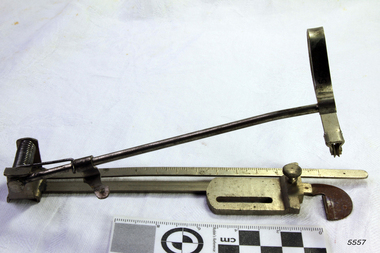
Accessory - Sewing Tuck Marker, Joseph Wertheim, ca. 1891
... ...dressmaking...home...Flagstaff Hill Flagstaff Hill Maritime Museum and Village Warrnambool Maritime Museum Maritime Village Great Ocean Road Shipwreck Coast sewing machine tool sewing machine accessory tucker tuck maker creaser Wertheim Joseph Wertheim Germany Hugo Wertheim Victorian era sewing machine Wertheim Sewing Machine and Hapsburg Piano Depot Wertheim Sewing Machines domestic machines dressmaking home industry fashion Tuck marker or creaser for a Wertheim sewing machine. ...The tuck making tool is part of a set of tools and Instructions for a Wertheim New High Arm Sewing Machine as well as the "B' Medium, Cylinder Arm and Titania Machines. This sewing machine accessory was donated with our collection's Wertheim sewing machine accessory box. The box contains twelve accessories, the instruction book and the receipt for the purchase of a Wertheim sewing machine. The receipt was written on July 23rd 1891 by the Wertheim distributor in Melbourne, Hugo Wertheim. His business was the Wertheim Sewing Machine and Hapsburg Piano Depot, trading at 173 Williams Street, Melbourne. The purchaser was Mrs Burrowes from Burrumbeet, Victoria, a district northwest of Ballarat. She paid £6-6 (six pounds and six shillings) in cash. The receipt was signed by H. Wertheim and the other signatory looks like John A. Cherry. Hugo Wertheim (1854-1919) was an agent for his father’s cousin Joseph Wertheim, a well-established sewing machine manufacturer in Germany. He was born in Lispenhausen, Germany, and migrated to Melbourne in October 1875, where he opened a merchandising business at 39 Flinders Lane East. He returned to Germany in 1885 to marry Joseph Wertheim's daughter Sophie Emilie. The couple came back to Melbourne, and Hugo quickly established a substantial business selling sewing machines, bicycles, pianos and other mechanical devices, under brands such as Wertheim, Electra, Planet, Griffin and Hapsburg. He exhibited at agricultural shows and in 1901 at the Pan American Exposition, Buffalo, United States of America. One of his staff was O. C. Beale, who later set up his own piano business in New South Wales. Hugo continued to own 25 per cent of one of Beale's companies, which became Wertheim's Queensland business. In 1908 Hugo Wertheim opened a piano factory in Richmond, Melbourne, aiming to produce 2000 pianos and player pianos a year, predominantly using Australian materials. In laying the foundation stone, Prime Minister Alfred Deakin observed that “few men with such opportunities for a life of ease would have embarked on such an enterprise” Hugo died of chronic hepatitis in 1919 at his home in South Yarra. His eldest son, Herbert Joseph (1886-1972), continued the business. The piano factory closed in 1935, becoming a Heinz food processing plant and in 1955, GTV Channel 9 studios and offices. The Wertheim Sewing Machine Company – Joseph Wertheim (1804–1899) founded the company in 1868 in Frankfurt, Germany. At this time Joseph was the Frankfurt city delegate for the Democratic Party. At its height, the Wertheim factory employed approximately 650 workers. The company used a trademark of a dwarf holding a hammer which is known to have been used until at least 1925, however in 1909 a Star of David was also registered. In 1870 a Wertheim subsidiary was formed in Barcelona, Spain. The business imported and sold complete machines, including the English Jones machine. Locals began calling the sewing machines “las rapidas”, and the business became known as “las casa de las rapidas”. In 1915 production began of a totally manufactured Spanish Wertheim machine. Wertheim in Germany continued manufacturing machines until 1932 when the Wertheim family fled to Spain. Despite converting to Christianity from Judaism, they feared the political unrest in Germany during that time. Wertheim Spain became Rapida SA and was then the sole manufacturer of the Wertheim machines. The factory was managed by Karl Wertheim under the alias Carlos Vallin. The sewing machine accessory is part of a donation that connected to domestic life in 1891 during the Victorian era. It is significant for connecting the Melbourne distributor of Wertheim sewing machines, Hugo Wertheim, to Victoria’s northwest district where the purchaser lived. It is also significant for connecting the Melbourne distributor to the importing of goods from the well-known German manufacturer of early domestic sewing machines, Joseph Wertheim. Tuck marker or creaser for a Wertheim sewing machine. Made by Joseph Wertheim , Germany, and distributed by Hugo Wertheim, William Street Melbourne. Circa 1891flagstaff hill, flagstaff hill maritime museum and village, warrnambool, maritime museum, maritime village, great ocean road, shipwreck coast, sewing machine tool, sewing machine accessory, tucker, tuck maker, creaser, wertheim, joseph wertheim, germany, hugo wertheim, victorian era, sewing machine, wertheim sewing machine and hapsburg piano depot, wertheim sewing machines, domestic machines, dressmaking, home industry, fashion -
 Flagstaff Hill Maritime Museum and Village
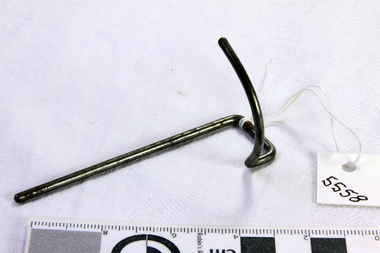
Accessory - Hook, ca. 1891
... ...dressmaking...home...Flagstaff Hill Flagstaff Hill Maritime Museum and Village Warrnambool Maritime Museum Maritime Village Great Ocean Road Shipwreck Coast Wertheim sewing machine Victorian era sewing machine accessory Wertheim Sewing Machine and Hapsburg Piano Depot Wertheim Sewing Machines domestic machines dressmaking home industry fashion Hook; thin metal rod bent at one end into a curved upward arc. ...This sewing machine accessory was donated with our collection's Wertheim sewing machine accessory box. The box contains twelve accessories, the instruction book and the receipt for the purchase of a Wertheim sewing machine. The receipt was written on July 23rd 1891 by the Wertheim distributor in Melbourne, Hugo Wertheim. His business was the Wertheim Sewing Machine and Hapsburg Piano Depot, trading at 173 Williams Street, Melbourne. The purchaser was Mrs Burrowes from Burrumbeet, Victoria, a district northwest of Ballarat. She paid £6-6 (six pounds and six shillings) in cash. The receipt was signed by H. Wertheim and the other signatory looks like John A. Cherry. Hugo Wertheim (1854-1919) was an agent for his father’s cousin Joseph Wertheim, a well-established sewing machine manufacturer in Germany. He was born in Lispenhausen, Germany, and migrated to Melbourne in October 1875, where he opened a merchandising business at 39 Flinders Lane East. He returned to Germany in 1885 to marry Joseph Wertheim's daughter Sophie Emilie. The couple came back to Melbourne, and Hugo quickly established a substantial business selling sewing machines, bicycles, pianos and other mechanical devices, under brands such as Wertheim, Electra, Planet, Griffin and Hapsburg. He exhibited at agricultural shows and in 1901 at the Pan American Exposition, Buffalo, United States of America. One of his staff was O. C. Beale, who later set up his own piano business in New South Wales. Hugo continued to own 25 per cent of one of Beale's companies, which became Wertheim's Queensland business. In 1908 Hugo Wertheim opened a piano factory in Richmond, Melbourne, aiming to produce 2000 pianos and player pianos a year, predominantly using Australian materials. In laying the foundation stone, Prime Minister Alfred Deakin observed that “few men with such opportunities for a life of ease would have embarked on such an enterprise” Hugo died of chronic hepatitis in 1919 at his home in South Yarra. His eldest son, Herbert Joseph (1886-1972), continued the business. The piano factory closed in 1935, becoming a Heinz food processing plant and in 1955, GTV Channel 9 studios and offices. The Wertheim Sewing Machine Company – Joseph Wertheim (1804–1899) founded the company in 1868 in Frankfurt, Germany. At this time Joseph was the Frankfurt city delegate for the Democratic Party. At its height, the Wertheim factory employed approximately 650 workers. The company used a trademark of a dwarf holding a hammer which is known to have been used until at least 1925, however in 1909 a Star of David was also registered. In 1870 a Wertheim subsidiary was formed in Barcelona, Spain. The business imported and sold complete machines, including the English Jones machine. Locals began calling the sewing machines “las rapidas”, and the business became known as “las casa de las rapidas”. In 1915 production began of a totally manufactured Spanish Wertheim machine. Wertheim in Germany continued manufacturing machines until 1932 when the Wertheim family fled to Spain. Despite converting to Christianity from Judaism, they feared the political unrest in Germany during that time. Wertheim Spain became Rapida SA and was then the sole manufacturer of the Wertheim machines. The factory was managed by Karl Wertheim under the alias Carlos Vallin. The sewing machine accessory is part of a donation that connected to domestic life in 1891 during the Victorian era. It is significant for connecting the Melbourne distributor of Wertheim sewing machines, Hugo Wertheim, to Victoria’s northwest district where the purchaser lived. It is also significant for connecting the Melbourne distributor to the importing of goods from the well-known German manufacturer of early domestic sewing machines, Joseph Wertheim. Hook; thin metal rod bent at one end into a curved upward arc. Thais sewing machine part was made for a Wertheim sewing machine by Joseph Wertheim, Germany, and distributed by Hugo Wertheim, William Street Melbourne. Circa 1891.flagstaff hill, flagstaff hill maritime museum and village, warrnambool, maritime museum, maritime village, great ocean road, shipwreck coast, wertheim, sewing machine, victorian era, sewing machine accessory, wertheim sewing machine and hapsburg piano depot, wertheim sewing machines, domestic machines, dressmaking, home industry, fashion -
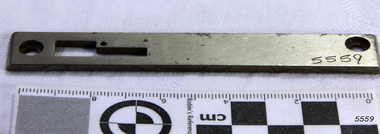 Flagstaff Hill Maritime Museum and Village
Accessory - Needle Plate, Joseph Wertheim, ca. 1891
... ...dressmaking...home...Flagstaff Hill Flagstaff Hill Maritime Museum and Village Warrnambool Maritime Museum Maritime Village Great Ocean Road Shipwreck Coast Wertheim sewing machine Victorian era sewing machine accessory Wertheim Sewing Machine and Hapsburg Piano Depot Wertheim Sewing Machines needle plate domestic machines dressmaking home industry fashion Needle plate for a Wertheim sewing machine, made from a metal bar with machined holes for attaching and adjusting. ...This sewing machine accessory was donated with our collection's Wertheim sewing machine accessory box. The box contains twelve accessories, the instruction book and the receipt for the purchase of a Wertheim sewing machine. The receipt was written on July 23rd 1891 by the Wertheim distributor in Melbourne, Hugo Wertheim. His business was the Wertheim Sewing Machine and Hapsburg Piano Depot, trading at 173 Williams Street, Melbourne. The purchaser was Mrs Burrowes from Burrumbeet, Victoria, a district northwest of Ballarat. She paid £6-6 (six pounds and six shillings) in cash. The receipt was signed by H. Wertheim and the other signatory looks like John A. Cherry. Hugo Wertheim (1854-1919) was an agent for his father’s cousin Joseph Wertheim, a well-established sewing machine manufacturer in Germany. He was born in Lispenhausen, Germany, and migrated to Melbourne in October 1875, where he opened a merchandising business at 39 Flinders Lane East. He returned to Germany in 1885 to marry Joseph Wertheim's daughter Sophie Emilie. The couple came back to Melbourne, and Hugo quickly established a substantial business selling sewing machines, bicycles, pianos and other mechanical devices, under brands such as Wertheim, Electra, Planet, Griffin and Hapsburg. He exhibited at agricultural shows and in 1901 at the Pan American Exposition, Buffalo, United States of America. One of his staff was O. C. Beale, who later set up his own piano business in New South Wales. Hugo continued to own 25 per cent of one of Beale's companies, which became Wertheim's Queensland business. In 1908 Hugo Wertheim opened a piano factory in Richmond, Melbourne, aiming to produce 2000 pianos and player pianos a year, predominantly using Australian materials. In laying the foundation stone, Prime Minister Alfred Deakin observed that “few men with such opportunities for a life of ease would have embarked on such an enterprise” Hugo died of chronic hepatitis in 1919 at his home in South Yarra. His eldest son, Herbert Joseph (1886-1972), continued the business. The piano factory closed in 1935, becoming a Heinz food processing plant and in 1955, GTV Channel 9 studios and offices. The Wertheim Sewing Machine Company – Joseph Wertheim (1804–1899) founded the company in 1868 in Frankfurt, Germany. At this time Joseph was the Frankfurt city delegate for the Democratic Party. At its height, the Wertheim factory employed approximately 650 workers. The company used a trademark of a dwarf holding a hammer which is known to have been used until at least 1925, however in 1909 a Star of David was also registered. In 1870 a Wertheim subsidiary was formed in Barcelona, Spain. The business imported and sold complete machines, including the English Jones machine. Locals began calling the sewing machines “las rapidas”, and the business became known as “las casa de las rapidas”. In 1915 production began of a totally manufactured Spanish Wertheim machine. Wertheim in Germany continued manufacturing machines until 1932 when the Wertheim family fled to Spain. Despite converting to Christianity from Judaism, they feared the political unrest in Germany during that time. Wertheim Spain became Rapida SA and was then the sole manufacturer of the Wertheim machines. The factory was managed by Karl Wertheim under the alias Carlos Vallin. The sewing machine accessory is part of a donation that connected to domestic life in 1891 during the Victorian era. It is significant for connecting the Melbourne distributor of Wertheim sewing machines, Hugo Wertheim, to Victoria’s northwest district where the purchaser lived. It is also significant for connecting the Melbourne distributor to the importing of goods from the well-known German manufacturer of early domestic sewing machines, Joseph Wertheim. Needle plate for a Wertheim sewing machine, made from a metal bar with machined holes for attaching and adjusting. Made by Joseph Wertheim, Germany, and distributed by Hugo Wertheim, William Street Melbourne. Circa 1891.flagstaff hill, flagstaff hill maritime museum and village, warrnambool, maritime museum, maritime village, great ocean road, shipwreck coast, wertheim, sewing machine, victorian era, sewing machine accessory, wertheim sewing machine and hapsburg piano depot, wertheim sewing machines, needle plate, domestic machines, dressmaking, home industry, fashion
